
Research ArticleGeneticsImmunologyInfectious disease
Open Access |  10.1172/jci.insight.187422
Structural modeling and functional characterization of a novel gain-of-function TLR8 variant causing severe inflammatory syndrome
Nikolaos T. Skenteris,1 Elisa Luttermann,2 Sanjana Nair,3,4 Ioannis Evangelakos,5 Maria Pujantell,1,6 Marie Eggers,7,8 Fabian Hausmann,3,4 Marleen Bérouti,9 Benedetta Padoan,1 Felix J. Flomm,1 Janna M. Claussen,1 Benjamin Grünhagel,1 Anika Salfelder,10 Brigitte Beifuss,10 Saskia Biskup,10,11 Patrick Blümke,12 Katrin Rading,5 Heike Hildebrandt,1 Urte Matschl,1 Silke Giesemann-Jansen,1 Jana Hennesen,1 Viacheslav O. Nikolaev,13 Michael Kutsche,5 Christian Kubisch,5 Friedrich Koch-Nolte,6 Nicola M. Tomas,7,8,14 Eva Tolosa,6,15 Marc Lütgehetmann,16 Felix R. Stahl,6 Veit Hornung,9,17 Madeleine J. Bunders,1,7,14,15 Christian Schlein,5 Maya Topf,3,4,18 Ina Kötter,2,7 and Marcus Altfeld1,6,19
1Research Department of Virus Immunology, Leibniz Institute of Virology, Hamburg, Germany.
2Clinic for Rheumatology and Immunology, Auenlandklinik Bad Bramstedt, Bad Bramstedt, Germany.
3Research Department of Integrative Virology, Leibniz Institute of Virology, Hamburg, Germany.
4Centre for Structural Systems Biology, Hamburg, Germany.
5Institute of Human Genetics,
6Institute of Immunology,
7III. Department of Medicine, and
8Hamburg Center for Kidney Health, University Medical Center Hamburg-Eppendorf, Hamburg, Germany.
9Gene Center and Department of Biochemistry, Ludwig Maximilian University of Munich, Munich, Germany.
10Zentrum für Humangenetik, Tübingen, Germany.
11Center for Genomics and Transcriptomics, Tübingen, Germany.
12Technology Platform Next Generation Sequencing, Leibniz Institute of Virology, Hamburg, Germany.
13Institute of Experimental Cardiovascular Research;
14Hamburg Center for Translational Immunology;
15German Center for Child and Adolescent Health (DZKJ), partner site Hamburg; and
16Institute of Medical Microbiology, Virology and Hygiene, University Medical Center Hamburg-Eppendorf, Hamburg, Germany.
17German Center for Child and Adolescent Health (DZKJ), partner site Munich, Munich, Germany.
18Institute for Molecular Virology and Tumorvirology, University Medical Center Hamburg-Eppendorf, Hamburg, Germany.
19German Center for Child and Adolescent Health (DZKJ), partner site Hamburg; Leibniz Institute of Virology, Hamburg, Germany.
Address correspondence to: Marcus Altfeld, Research Department of Virus Immunology, Leibniz Institute of Virology, Martinistraße 52, Hamburg 20251, Germany. Phone: 49.0.40.48051 ext. 221; Email: marcus.altfeld@leibniz-liv.de.
Authorship note: NTS, EL, SN, and IE contributed equally to this work. MT, IK, and MA contributed equally to this work.
Find articles by Skenteris, N. in: PubMed | Google Scholar
1Research Department of Virus Immunology, Leibniz Institute of Virology, Hamburg, Germany.
2Clinic for Rheumatology and Immunology, Auenlandklinik Bad Bramstedt, Bad Bramstedt, Germany.
3Research Department of Integrative Virology, Leibniz Institute of Virology, Hamburg, Germany.
4Centre for Structural Systems Biology, Hamburg, Germany.
5Institute of Human Genetics,
6Institute of Immunology,
7III. Department of Medicine, and
8Hamburg Center for Kidney Health, University Medical Center Hamburg-Eppendorf, Hamburg, Germany.
9Gene Center and Department of Biochemistry, Ludwig Maximilian University of Munich, Munich, Germany.
10Zentrum für Humangenetik, Tübingen, Germany.
11Center for Genomics and Transcriptomics, Tübingen, Germany.
12Technology Platform Next Generation Sequencing, Leibniz Institute of Virology, Hamburg, Germany.
13Institute of Experimental Cardiovascular Research;
14Hamburg Center for Translational Immunology;
15German Center for Child and Adolescent Health (DZKJ), partner site Hamburg; and
16Institute of Medical Microbiology, Virology and Hygiene, University Medical Center Hamburg-Eppendorf, Hamburg, Germany.
17German Center for Child and Adolescent Health (DZKJ), partner site Munich, Munich, Germany.
18Institute for Molecular Virology and Tumorvirology, University Medical Center Hamburg-Eppendorf, Hamburg, Germany.
19German Center for Child and Adolescent Health (DZKJ), partner site Hamburg; Leibniz Institute of Virology, Hamburg, Germany.
Address correspondence to: Marcus Altfeld, Research Department of Virus Immunology, Leibniz Institute of Virology, Martinistraße 52, Hamburg 20251, Germany. Phone: 49.0.40.48051 ext. 221; Email: marcus.altfeld@leibniz-liv.de.
Authorship note: NTS, EL, SN, and IE contributed equally to this work. MT, IK, and MA contributed equally to this work.
Find articles by Luttermann, E. in: PubMed | Google Scholar
1Research Department of Virus Immunology, Leibniz Institute of Virology, Hamburg, Germany.
2Clinic for Rheumatology and Immunology, Auenlandklinik Bad Bramstedt, Bad Bramstedt, Germany.
3Research Department of Integrative Virology, Leibniz Institute of Virology, Hamburg, Germany.
4Centre for Structural Systems Biology, Hamburg, Germany.
5Institute of Human Genetics,
6Institute of Immunology,
7III. Department of Medicine, and
8Hamburg Center for Kidney Health, University Medical Center Hamburg-Eppendorf, Hamburg, Germany.
9Gene Center and Department of Biochemistry, Ludwig Maximilian University of Munich, Munich, Germany.
10Zentrum für Humangenetik, Tübingen, Germany.
11Center for Genomics and Transcriptomics, Tübingen, Germany.
12Technology Platform Next Generation Sequencing, Leibniz Institute of Virology, Hamburg, Germany.
13Institute of Experimental Cardiovascular Research;
14Hamburg Center for Translational Immunology;
15German Center for Child and Adolescent Health (DZKJ), partner site Hamburg; and
16Institute of Medical Microbiology, Virology and Hygiene, University Medical Center Hamburg-Eppendorf, Hamburg, Germany.
17German Center for Child and Adolescent Health (DZKJ), partner site Munich, Munich, Germany.
18Institute for Molecular Virology and Tumorvirology, University Medical Center Hamburg-Eppendorf, Hamburg, Germany.
19German Center for Child and Adolescent Health (DZKJ), partner site Hamburg; Leibniz Institute of Virology, Hamburg, Germany.
Address correspondence to: Marcus Altfeld, Research Department of Virus Immunology, Leibniz Institute of Virology, Martinistraße 52, Hamburg 20251, Germany. Phone: 49.0.40.48051 ext. 221; Email: marcus.altfeld@leibniz-liv.de.
Authorship note: NTS, EL, SN, and IE contributed equally to this work. MT, IK, and MA contributed equally to this work.
Find articles by Nair, S. in: PubMed | Google Scholar
1Research Department of Virus Immunology, Leibniz Institute of Virology, Hamburg, Germany.
2Clinic for Rheumatology and Immunology, Auenlandklinik Bad Bramstedt, Bad Bramstedt, Germany.
3Research Department of Integrative Virology, Leibniz Institute of Virology, Hamburg, Germany.
4Centre for Structural Systems Biology, Hamburg, Germany.
5Institute of Human Genetics,
6Institute of Immunology,
7III. Department of Medicine, and
8Hamburg Center for Kidney Health, University Medical Center Hamburg-Eppendorf, Hamburg, Germany.
9Gene Center and Department of Biochemistry, Ludwig Maximilian University of Munich, Munich, Germany.
10Zentrum für Humangenetik, Tübingen, Germany.
11Center for Genomics and Transcriptomics, Tübingen, Germany.
12Technology Platform Next Generation Sequencing, Leibniz Institute of Virology, Hamburg, Germany.
13Institute of Experimental Cardiovascular Research;
14Hamburg Center for Translational Immunology;
15German Center for Child and Adolescent Health (DZKJ), partner site Hamburg; and
16Institute of Medical Microbiology, Virology and Hygiene, University Medical Center Hamburg-Eppendorf, Hamburg, Germany.
17German Center for Child and Adolescent Health (DZKJ), partner site Munich, Munich, Germany.
18Institute for Molecular Virology and Tumorvirology, University Medical Center Hamburg-Eppendorf, Hamburg, Germany.
19German Center for Child and Adolescent Health (DZKJ), partner site Hamburg; Leibniz Institute of Virology, Hamburg, Germany.
Address correspondence to: Marcus Altfeld, Research Department of Virus Immunology, Leibniz Institute of Virology, Martinistraße 52, Hamburg 20251, Germany. Phone: 49.0.40.48051 ext. 221; Email: marcus.altfeld@leibniz-liv.de.
Authorship note: NTS, EL, SN, and IE contributed equally to this work. MT, IK, and MA contributed equally to this work.
Find articles by Evangelakos, I. in: PubMed | Google Scholar
1Research Department of Virus Immunology, Leibniz Institute of Virology, Hamburg, Germany.
2Clinic for Rheumatology and Immunology, Auenlandklinik Bad Bramstedt, Bad Bramstedt, Germany.
3Research Department of Integrative Virology, Leibniz Institute of Virology, Hamburg, Germany.
4Centre for Structural Systems Biology, Hamburg, Germany.
5Institute of Human Genetics,
6Institute of Immunology,
7III. Department of Medicine, and
8Hamburg Center for Kidney Health, University Medical Center Hamburg-Eppendorf, Hamburg, Germany.
9Gene Center and Department of Biochemistry, Ludwig Maximilian University of Munich, Munich, Germany.
10Zentrum für Humangenetik, Tübingen, Germany.
11Center for Genomics and Transcriptomics, Tübingen, Germany.
12Technology Platform Next Generation Sequencing, Leibniz Institute of Virology, Hamburg, Germany.
13Institute of Experimental Cardiovascular Research;
14Hamburg Center for Translational Immunology;
15German Center for Child and Adolescent Health (DZKJ), partner site Hamburg; and
16Institute of Medical Microbiology, Virology and Hygiene, University Medical Center Hamburg-Eppendorf, Hamburg, Germany.
17German Center for Child and Adolescent Health (DZKJ), partner site Munich, Munich, Germany.
18Institute for Molecular Virology and Tumorvirology, University Medical Center Hamburg-Eppendorf, Hamburg, Germany.
19German Center for Child and Adolescent Health (DZKJ), partner site Hamburg; Leibniz Institute of Virology, Hamburg, Germany.
Address correspondence to: Marcus Altfeld, Research Department of Virus Immunology, Leibniz Institute of Virology, Martinistraße 52, Hamburg 20251, Germany. Phone: 49.0.40.48051 ext. 221; Email: marcus.altfeld@leibniz-liv.de.
Authorship note: NTS, EL, SN, and IE contributed equally to this work. MT, IK, and MA contributed equally to this work.
Find articles by Pujantell, M. in: PubMed | Google Scholar
1Research Department of Virus Immunology, Leibniz Institute of Virology, Hamburg, Germany.
2Clinic for Rheumatology and Immunology, Auenlandklinik Bad Bramstedt, Bad Bramstedt, Germany.
3Research Department of Integrative Virology, Leibniz Institute of Virology, Hamburg, Germany.
4Centre for Structural Systems Biology, Hamburg, Germany.
5Institute of Human Genetics,
6Institute of Immunology,
7III. Department of Medicine, and
8Hamburg Center for Kidney Health, University Medical Center Hamburg-Eppendorf, Hamburg, Germany.
9Gene Center and Department of Biochemistry, Ludwig Maximilian University of Munich, Munich, Germany.
10Zentrum für Humangenetik, Tübingen, Germany.
11Center for Genomics and Transcriptomics, Tübingen, Germany.
12Technology Platform Next Generation Sequencing, Leibniz Institute of Virology, Hamburg, Germany.
13Institute of Experimental Cardiovascular Research;
14Hamburg Center for Translational Immunology;
15German Center for Child and Adolescent Health (DZKJ), partner site Hamburg; and
16Institute of Medical Microbiology, Virology and Hygiene, University Medical Center Hamburg-Eppendorf, Hamburg, Germany.
17German Center for Child and Adolescent Health (DZKJ), partner site Munich, Munich, Germany.
18Institute for Molecular Virology and Tumorvirology, University Medical Center Hamburg-Eppendorf, Hamburg, Germany.
19German Center for Child and Adolescent Health (DZKJ), partner site Hamburg; Leibniz Institute of Virology, Hamburg, Germany.
Address correspondence to: Marcus Altfeld, Research Department of Virus Immunology, Leibniz Institute of Virology, Martinistraße 52, Hamburg 20251, Germany. Phone: 49.0.40.48051 ext. 221; Email: marcus.altfeld@leibniz-liv.de.
Authorship note: NTS, EL, SN, and IE contributed equally to this work. MT, IK, and MA contributed equally to this work.
Find articles by Eggers, M. in: PubMed | Google Scholar
1Research Department of Virus Immunology, Leibniz Institute of Virology, Hamburg, Germany.
2Clinic for Rheumatology and Immunology, Auenlandklinik Bad Bramstedt, Bad Bramstedt, Germany.
3Research Department of Integrative Virology, Leibniz Institute of Virology, Hamburg, Germany.
4Centre for Structural Systems Biology, Hamburg, Germany.
5Institute of Human Genetics,
6Institute of Immunology,
7III. Department of Medicine, and
8Hamburg Center for Kidney Health, University Medical Center Hamburg-Eppendorf, Hamburg, Germany.
9Gene Center and Department of Biochemistry, Ludwig Maximilian University of Munich, Munich, Germany.
10Zentrum für Humangenetik, Tübingen, Germany.
11Center for Genomics and Transcriptomics, Tübingen, Germany.
12Technology Platform Next Generation Sequencing, Leibniz Institute of Virology, Hamburg, Germany.
13Institute of Experimental Cardiovascular Research;
14Hamburg Center for Translational Immunology;
15German Center for Child and Adolescent Health (DZKJ), partner site Hamburg; and
16Institute of Medical Microbiology, Virology and Hygiene, University Medical Center Hamburg-Eppendorf, Hamburg, Germany.
17German Center for Child and Adolescent Health (DZKJ), partner site Munich, Munich, Germany.
18Institute for Molecular Virology and Tumorvirology, University Medical Center Hamburg-Eppendorf, Hamburg, Germany.
19German Center for Child and Adolescent Health (DZKJ), partner site Hamburg; Leibniz Institute of Virology, Hamburg, Germany.
Address correspondence to: Marcus Altfeld, Research Department of Virus Immunology, Leibniz Institute of Virology, Martinistraße 52, Hamburg 20251, Germany. Phone: 49.0.40.48051 ext. 221; Email: marcus.altfeld@leibniz-liv.de.
Authorship note: NTS, EL, SN, and IE contributed equally to this work. MT, IK, and MA contributed equally to this work.
Find articles by Hausmann, F. in: PubMed | Google Scholar
1Research Department of Virus Immunology, Leibniz Institute of Virology, Hamburg, Germany.
2Clinic for Rheumatology and Immunology, Auenlandklinik Bad Bramstedt, Bad Bramstedt, Germany.
3Research Department of Integrative Virology, Leibniz Institute of Virology, Hamburg, Germany.
4Centre for Structural Systems Biology, Hamburg, Germany.
5Institute of Human Genetics,
6Institute of Immunology,
7III. Department of Medicine, and
8Hamburg Center for Kidney Health, University Medical Center Hamburg-Eppendorf, Hamburg, Germany.
9Gene Center and Department of Biochemistry, Ludwig Maximilian University of Munich, Munich, Germany.
10Zentrum für Humangenetik, Tübingen, Germany.
11Center for Genomics and Transcriptomics, Tübingen, Germany.
12Technology Platform Next Generation Sequencing, Leibniz Institute of Virology, Hamburg, Germany.
13Institute of Experimental Cardiovascular Research;
14Hamburg Center for Translational Immunology;
15German Center for Child and Adolescent Health (DZKJ), partner site Hamburg; and
16Institute of Medical Microbiology, Virology and Hygiene, University Medical Center Hamburg-Eppendorf, Hamburg, Germany.
17German Center for Child and Adolescent Health (DZKJ), partner site Munich, Munich, Germany.
18Institute for Molecular Virology and Tumorvirology, University Medical Center Hamburg-Eppendorf, Hamburg, Germany.
19German Center for Child and Adolescent Health (DZKJ), partner site Hamburg; Leibniz Institute of Virology, Hamburg, Germany.
Address correspondence to: Marcus Altfeld, Research Department of Virus Immunology, Leibniz Institute of Virology, Martinistraße 52, Hamburg 20251, Germany. Phone: 49.0.40.48051 ext. 221; Email: marcus.altfeld@leibniz-liv.de.
Authorship note: NTS, EL, SN, and IE contributed equally to this work. MT, IK, and MA contributed equally to this work.
Find articles by Bérouti, M. in: PubMed | Google Scholar
1Research Department of Virus Immunology, Leibniz Institute of Virology, Hamburg, Germany.
2Clinic for Rheumatology and Immunology, Auenlandklinik Bad Bramstedt, Bad Bramstedt, Germany.
3Research Department of Integrative Virology, Leibniz Institute of Virology, Hamburg, Germany.
4Centre for Structural Systems Biology, Hamburg, Germany.
5Institute of Human Genetics,
6Institute of Immunology,
7III. Department of Medicine, and
8Hamburg Center for Kidney Health, University Medical Center Hamburg-Eppendorf, Hamburg, Germany.
9Gene Center and Department of Biochemistry, Ludwig Maximilian University of Munich, Munich, Germany.
10Zentrum für Humangenetik, Tübingen, Germany.
11Center for Genomics and Transcriptomics, Tübingen, Germany.
12Technology Platform Next Generation Sequencing, Leibniz Institute of Virology, Hamburg, Germany.
13Institute of Experimental Cardiovascular Research;
14Hamburg Center for Translational Immunology;
15German Center for Child and Adolescent Health (DZKJ), partner site Hamburg; and
16Institute of Medical Microbiology, Virology and Hygiene, University Medical Center Hamburg-Eppendorf, Hamburg, Germany.
17German Center for Child and Adolescent Health (DZKJ), partner site Munich, Munich, Germany.
18Institute for Molecular Virology and Tumorvirology, University Medical Center Hamburg-Eppendorf, Hamburg, Germany.
19German Center for Child and Adolescent Health (DZKJ), partner site Hamburg; Leibniz Institute of Virology, Hamburg, Germany.
Address correspondence to: Marcus Altfeld, Research Department of Virus Immunology, Leibniz Institute of Virology, Martinistraße 52, Hamburg 20251, Germany. Phone: 49.0.40.48051 ext. 221; Email: marcus.altfeld@leibniz-liv.de.
Authorship note: NTS, EL, SN, and IE contributed equally to this work. MT, IK, and MA contributed equally to this work.
Find articles by Padoan, B. in: PubMed | Google Scholar
1Research Department of Virus Immunology, Leibniz Institute of Virology, Hamburg, Germany.
2Clinic for Rheumatology and Immunology, Auenlandklinik Bad Bramstedt, Bad Bramstedt, Germany.
3Research Department of Integrative Virology, Leibniz Institute of Virology, Hamburg, Germany.
4Centre for Structural Systems Biology, Hamburg, Germany.
5Institute of Human Genetics,
6Institute of Immunology,
7III. Department of Medicine, and
8Hamburg Center for Kidney Health, University Medical Center Hamburg-Eppendorf, Hamburg, Germany.
9Gene Center and Department of Biochemistry, Ludwig Maximilian University of Munich, Munich, Germany.
10Zentrum für Humangenetik, Tübingen, Germany.
11Center for Genomics and Transcriptomics, Tübingen, Germany.
12Technology Platform Next Generation Sequencing, Leibniz Institute of Virology, Hamburg, Germany.
13Institute of Experimental Cardiovascular Research;
14Hamburg Center for Translational Immunology;
15German Center for Child and Adolescent Health (DZKJ), partner site Hamburg; and
16Institute of Medical Microbiology, Virology and Hygiene, University Medical Center Hamburg-Eppendorf, Hamburg, Germany.
17German Center for Child and Adolescent Health (DZKJ), partner site Munich, Munich, Germany.
18Institute for Molecular Virology and Tumorvirology, University Medical Center Hamburg-Eppendorf, Hamburg, Germany.
19German Center for Child and Adolescent Health (DZKJ), partner site Hamburg; Leibniz Institute of Virology, Hamburg, Germany.
Address correspondence to: Marcus Altfeld, Research Department of Virus Immunology, Leibniz Institute of Virology, Martinistraße 52, Hamburg 20251, Germany. Phone: 49.0.40.48051 ext. 221; Email: marcus.altfeld@leibniz-liv.de.
Authorship note: NTS, EL, SN, and IE contributed equally to this work. MT, IK, and MA contributed equally to this work.
Find articles by Flomm, F. in: PubMed | Google Scholar
1Research Department of Virus Immunology, Leibniz Institute of Virology, Hamburg, Germany.
2Clinic for Rheumatology and Immunology, Auenlandklinik Bad Bramstedt, Bad Bramstedt, Germany.
3Research Department of Integrative Virology, Leibniz Institute of Virology, Hamburg, Germany.
4Centre for Structural Systems Biology, Hamburg, Germany.
5Institute of Human Genetics,
6Institute of Immunology,
7III. Department of Medicine, and
8Hamburg Center for Kidney Health, University Medical Center Hamburg-Eppendorf, Hamburg, Germany.
9Gene Center and Department of Biochemistry, Ludwig Maximilian University of Munich, Munich, Germany.
10Zentrum für Humangenetik, Tübingen, Germany.
11Center for Genomics and Transcriptomics, Tübingen, Germany.
12Technology Platform Next Generation Sequencing, Leibniz Institute of Virology, Hamburg, Germany.
13Institute of Experimental Cardiovascular Research;
14Hamburg Center for Translational Immunology;
15German Center for Child and Adolescent Health (DZKJ), partner site Hamburg; and
16Institute of Medical Microbiology, Virology and Hygiene, University Medical Center Hamburg-Eppendorf, Hamburg, Germany.
17German Center for Child and Adolescent Health (DZKJ), partner site Munich, Munich, Germany.
18Institute for Molecular Virology and Tumorvirology, University Medical Center Hamburg-Eppendorf, Hamburg, Germany.
19German Center for Child and Adolescent Health (DZKJ), partner site Hamburg; Leibniz Institute of Virology, Hamburg, Germany.
Address correspondence to: Marcus Altfeld, Research Department of Virus Immunology, Leibniz Institute of Virology, Martinistraße 52, Hamburg 20251, Germany. Phone: 49.0.40.48051 ext. 221; Email: marcus.altfeld@leibniz-liv.de.
Authorship note: NTS, EL, SN, and IE contributed equally to this work. MT, IK, and MA contributed equally to this work.
Find articles by Claussen, J. in: PubMed | Google Scholar
1Research Department of Virus Immunology, Leibniz Institute of Virology, Hamburg, Germany.
2Clinic for Rheumatology and Immunology, Auenlandklinik Bad Bramstedt, Bad Bramstedt, Germany.
3Research Department of Integrative Virology, Leibniz Institute of Virology, Hamburg, Germany.
4Centre for Structural Systems Biology, Hamburg, Germany.
5Institute of Human Genetics,
6Institute of Immunology,
7III. Department of Medicine, and
8Hamburg Center for Kidney Health, University Medical Center Hamburg-Eppendorf, Hamburg, Germany.
9Gene Center and Department of Biochemistry, Ludwig Maximilian University of Munich, Munich, Germany.
10Zentrum für Humangenetik, Tübingen, Germany.
11Center for Genomics and Transcriptomics, Tübingen, Germany.
12Technology Platform Next Generation Sequencing, Leibniz Institute of Virology, Hamburg, Germany.
13Institute of Experimental Cardiovascular Research;
14Hamburg Center for Translational Immunology;
15German Center for Child and Adolescent Health (DZKJ), partner site Hamburg; and
16Institute of Medical Microbiology, Virology and Hygiene, University Medical Center Hamburg-Eppendorf, Hamburg, Germany.
17German Center for Child and Adolescent Health (DZKJ), partner site Munich, Munich, Germany.
18Institute for Molecular Virology and Tumorvirology, University Medical Center Hamburg-Eppendorf, Hamburg, Germany.
19German Center for Child and Adolescent Health (DZKJ), partner site Hamburg; Leibniz Institute of Virology, Hamburg, Germany.
Address correspondence to: Marcus Altfeld, Research Department of Virus Immunology, Leibniz Institute of Virology, Martinistraße 52, Hamburg 20251, Germany. Phone: 49.0.40.48051 ext. 221; Email: marcus.altfeld@leibniz-liv.de.
Authorship note: NTS, EL, SN, and IE contributed equally to this work. MT, IK, and MA contributed equally to this work.
Find articles by Grünhagel, B. in: PubMed | Google Scholar
1Research Department of Virus Immunology, Leibniz Institute of Virology, Hamburg, Germany.
2Clinic for Rheumatology and Immunology, Auenlandklinik Bad Bramstedt, Bad Bramstedt, Germany.
3Research Department of Integrative Virology, Leibniz Institute of Virology, Hamburg, Germany.
4Centre for Structural Systems Biology, Hamburg, Germany.
5Institute of Human Genetics,
6Institute of Immunology,
7III. Department of Medicine, and
8Hamburg Center for Kidney Health, University Medical Center Hamburg-Eppendorf, Hamburg, Germany.
9Gene Center and Department of Biochemistry, Ludwig Maximilian University of Munich, Munich, Germany.
10Zentrum für Humangenetik, Tübingen, Germany.
11Center for Genomics and Transcriptomics, Tübingen, Germany.
12Technology Platform Next Generation Sequencing, Leibniz Institute of Virology, Hamburg, Germany.
13Institute of Experimental Cardiovascular Research;
14Hamburg Center for Translational Immunology;
15German Center for Child and Adolescent Health (DZKJ), partner site Hamburg; and
16Institute of Medical Microbiology, Virology and Hygiene, University Medical Center Hamburg-Eppendorf, Hamburg, Germany.
17German Center for Child and Adolescent Health (DZKJ), partner site Munich, Munich, Germany.
18Institute for Molecular Virology and Tumorvirology, University Medical Center Hamburg-Eppendorf, Hamburg, Germany.
19German Center for Child and Adolescent Health (DZKJ), partner site Hamburg; Leibniz Institute of Virology, Hamburg, Germany.
Address correspondence to: Marcus Altfeld, Research Department of Virus Immunology, Leibniz Institute of Virology, Martinistraße 52, Hamburg 20251, Germany. Phone: 49.0.40.48051 ext. 221; Email: marcus.altfeld@leibniz-liv.de.
Authorship note: NTS, EL, SN, and IE contributed equally to this work. MT, IK, and MA contributed equally to this work.
Find articles by Salfelder, A. in: PubMed | Google Scholar
1Research Department of Virus Immunology, Leibniz Institute of Virology, Hamburg, Germany.
2Clinic for Rheumatology and Immunology, Auenlandklinik Bad Bramstedt, Bad Bramstedt, Germany.
3Research Department of Integrative Virology, Leibniz Institute of Virology, Hamburg, Germany.
4Centre for Structural Systems Biology, Hamburg, Germany.
5Institute of Human Genetics,
6Institute of Immunology,
7III. Department of Medicine, and
8Hamburg Center for Kidney Health, University Medical Center Hamburg-Eppendorf, Hamburg, Germany.
9Gene Center and Department of Biochemistry, Ludwig Maximilian University of Munich, Munich, Germany.
10Zentrum für Humangenetik, Tübingen, Germany.
11Center for Genomics and Transcriptomics, Tübingen, Germany.
12Technology Platform Next Generation Sequencing, Leibniz Institute of Virology, Hamburg, Germany.
13Institute of Experimental Cardiovascular Research;
14Hamburg Center for Translational Immunology;
15German Center for Child and Adolescent Health (DZKJ), partner site Hamburg; and
16Institute of Medical Microbiology, Virology and Hygiene, University Medical Center Hamburg-Eppendorf, Hamburg, Germany.
17German Center for Child and Adolescent Health (DZKJ), partner site Munich, Munich, Germany.
18Institute for Molecular Virology and Tumorvirology, University Medical Center Hamburg-Eppendorf, Hamburg, Germany.
19German Center for Child and Adolescent Health (DZKJ), partner site Hamburg; Leibniz Institute of Virology, Hamburg, Germany.
Address correspondence to: Marcus Altfeld, Research Department of Virus Immunology, Leibniz Institute of Virology, Martinistraße 52, Hamburg 20251, Germany. Phone: 49.0.40.48051 ext. 221; Email: marcus.altfeld@leibniz-liv.de.
Authorship note: NTS, EL, SN, and IE contributed equally to this work. MT, IK, and MA contributed equally to this work.
Find articles by Beifuss, B. in: PubMed | Google Scholar
1Research Department of Virus Immunology, Leibniz Institute of Virology, Hamburg, Germany.
2Clinic for Rheumatology and Immunology, Auenlandklinik Bad Bramstedt, Bad Bramstedt, Germany.
3Research Department of Integrative Virology, Leibniz Institute of Virology, Hamburg, Germany.
4Centre for Structural Systems Biology, Hamburg, Germany.
5Institute of Human Genetics,
6Institute of Immunology,
7III. Department of Medicine, and
8Hamburg Center for Kidney Health, University Medical Center Hamburg-Eppendorf, Hamburg, Germany.
9Gene Center and Department of Biochemistry, Ludwig Maximilian University of Munich, Munich, Germany.
10Zentrum für Humangenetik, Tübingen, Germany.
11Center for Genomics and Transcriptomics, Tübingen, Germany.
12Technology Platform Next Generation Sequencing, Leibniz Institute of Virology, Hamburg, Germany.
13Institute of Experimental Cardiovascular Research;
14Hamburg Center for Translational Immunology;
15German Center for Child and Adolescent Health (DZKJ), partner site Hamburg; and
16Institute of Medical Microbiology, Virology and Hygiene, University Medical Center Hamburg-Eppendorf, Hamburg, Germany.
17German Center for Child and Adolescent Health (DZKJ), partner site Munich, Munich, Germany.
18Institute for Molecular Virology and Tumorvirology, University Medical Center Hamburg-Eppendorf, Hamburg, Germany.
19German Center for Child and Adolescent Health (DZKJ), partner site Hamburg; Leibniz Institute of Virology, Hamburg, Germany.
Address correspondence to: Marcus Altfeld, Research Department of Virus Immunology, Leibniz Institute of Virology, Martinistraße 52, Hamburg 20251, Germany. Phone: 49.0.40.48051 ext. 221; Email: marcus.altfeld@leibniz-liv.de.
Authorship note: NTS, EL, SN, and IE contributed equally to this work. MT, IK, and MA contributed equally to this work.
Find articles by Biskup, S. in: PubMed | Google Scholar
1Research Department of Virus Immunology, Leibniz Institute of Virology, Hamburg, Germany.
2Clinic for Rheumatology and Immunology, Auenlandklinik Bad Bramstedt, Bad Bramstedt, Germany.
3Research Department of Integrative Virology, Leibniz Institute of Virology, Hamburg, Germany.
4Centre for Structural Systems Biology, Hamburg, Germany.
5Institute of Human Genetics,
6Institute of Immunology,
7III. Department of Medicine, and
8Hamburg Center for Kidney Health, University Medical Center Hamburg-Eppendorf, Hamburg, Germany.
9Gene Center and Department of Biochemistry, Ludwig Maximilian University of Munich, Munich, Germany.
10Zentrum für Humangenetik, Tübingen, Germany.
11Center for Genomics and Transcriptomics, Tübingen, Germany.
12Technology Platform Next Generation Sequencing, Leibniz Institute of Virology, Hamburg, Germany.
13Institute of Experimental Cardiovascular Research;
14Hamburg Center for Translational Immunology;
15German Center for Child and Adolescent Health (DZKJ), partner site Hamburg; and
16Institute of Medical Microbiology, Virology and Hygiene, University Medical Center Hamburg-Eppendorf, Hamburg, Germany.
17German Center for Child and Adolescent Health (DZKJ), partner site Munich, Munich, Germany.
18Institute for Molecular Virology and Tumorvirology, University Medical Center Hamburg-Eppendorf, Hamburg, Germany.
19German Center for Child and Adolescent Health (DZKJ), partner site Hamburg; Leibniz Institute of Virology, Hamburg, Germany.
Address correspondence to: Marcus Altfeld, Research Department of Virus Immunology, Leibniz Institute of Virology, Martinistraße 52, Hamburg 20251, Germany. Phone: 49.0.40.48051 ext. 221; Email: marcus.altfeld@leibniz-liv.de.
Authorship note: NTS, EL, SN, and IE contributed equally to this work. MT, IK, and MA contributed equally to this work.
Find articles by Blümke, P. in: PubMed | Google Scholar
1Research Department of Virus Immunology, Leibniz Institute of Virology, Hamburg, Germany.
2Clinic for Rheumatology and Immunology, Auenlandklinik Bad Bramstedt, Bad Bramstedt, Germany.
3Research Department of Integrative Virology, Leibniz Institute of Virology, Hamburg, Germany.
4Centre for Structural Systems Biology, Hamburg, Germany.
5Institute of Human Genetics,
6Institute of Immunology,
7III. Department of Medicine, and
8Hamburg Center for Kidney Health, University Medical Center Hamburg-Eppendorf, Hamburg, Germany.
9Gene Center and Department of Biochemistry, Ludwig Maximilian University of Munich, Munich, Germany.
10Zentrum für Humangenetik, Tübingen, Germany.
11Center for Genomics and Transcriptomics, Tübingen, Germany.
12Technology Platform Next Generation Sequencing, Leibniz Institute of Virology, Hamburg, Germany.
13Institute of Experimental Cardiovascular Research;
14Hamburg Center for Translational Immunology;
15German Center for Child and Adolescent Health (DZKJ), partner site Hamburg; and
16Institute of Medical Microbiology, Virology and Hygiene, University Medical Center Hamburg-Eppendorf, Hamburg, Germany.
17German Center for Child and Adolescent Health (DZKJ), partner site Munich, Munich, Germany.
18Institute for Molecular Virology and Tumorvirology, University Medical Center Hamburg-Eppendorf, Hamburg, Germany.
19German Center for Child and Adolescent Health (DZKJ), partner site Hamburg; Leibniz Institute of Virology, Hamburg, Germany.
Address correspondence to: Marcus Altfeld, Research Department of Virus Immunology, Leibniz Institute of Virology, Martinistraße 52, Hamburg 20251, Germany. Phone: 49.0.40.48051 ext. 221; Email: marcus.altfeld@leibniz-liv.de.
Authorship note: NTS, EL, SN, and IE contributed equally to this work. MT, IK, and MA contributed equally to this work.
Find articles by Rading, K. in: PubMed | Google Scholar
1Research Department of Virus Immunology, Leibniz Institute of Virology, Hamburg, Germany.
2Clinic for Rheumatology and Immunology, Auenlandklinik Bad Bramstedt, Bad Bramstedt, Germany.
3Research Department of Integrative Virology, Leibniz Institute of Virology, Hamburg, Germany.
4Centre for Structural Systems Biology, Hamburg, Germany.
5Institute of Human Genetics,
6Institute of Immunology,
7III. Department of Medicine, and
8Hamburg Center for Kidney Health, University Medical Center Hamburg-Eppendorf, Hamburg, Germany.
9Gene Center and Department of Biochemistry, Ludwig Maximilian University of Munich, Munich, Germany.
10Zentrum für Humangenetik, Tübingen, Germany.
11Center for Genomics and Transcriptomics, Tübingen, Germany.
12Technology Platform Next Generation Sequencing, Leibniz Institute of Virology, Hamburg, Germany.
13Institute of Experimental Cardiovascular Research;
14Hamburg Center for Translational Immunology;
15German Center for Child and Adolescent Health (DZKJ), partner site Hamburg; and
16Institute of Medical Microbiology, Virology and Hygiene, University Medical Center Hamburg-Eppendorf, Hamburg, Germany.
17German Center for Child and Adolescent Health (DZKJ), partner site Munich, Munich, Germany.
18Institute for Molecular Virology and Tumorvirology, University Medical Center Hamburg-Eppendorf, Hamburg, Germany.
19German Center for Child and Adolescent Health (DZKJ), partner site Hamburg; Leibniz Institute of Virology, Hamburg, Germany.
Address correspondence to: Marcus Altfeld, Research Department of Virus Immunology, Leibniz Institute of Virology, Martinistraße 52, Hamburg 20251, Germany. Phone: 49.0.40.48051 ext. 221; Email: marcus.altfeld@leibniz-liv.de.
Authorship note: NTS, EL, SN, and IE contributed equally to this work. MT, IK, and MA contributed equally to this work.
Find articles by Hildebrandt, H. in: PubMed | Google Scholar
1Research Department of Virus Immunology, Leibniz Institute of Virology, Hamburg, Germany.
2Clinic for Rheumatology and Immunology, Auenlandklinik Bad Bramstedt, Bad Bramstedt, Germany.
3Research Department of Integrative Virology, Leibniz Institute of Virology, Hamburg, Germany.
4Centre for Structural Systems Biology, Hamburg, Germany.
5Institute of Human Genetics,
6Institute of Immunology,
7III. Department of Medicine, and
8Hamburg Center for Kidney Health, University Medical Center Hamburg-Eppendorf, Hamburg, Germany.
9Gene Center and Department of Biochemistry, Ludwig Maximilian University of Munich, Munich, Germany.
10Zentrum für Humangenetik, Tübingen, Germany.
11Center for Genomics and Transcriptomics, Tübingen, Germany.
12Technology Platform Next Generation Sequencing, Leibniz Institute of Virology, Hamburg, Germany.
13Institute of Experimental Cardiovascular Research;
14Hamburg Center for Translational Immunology;
15German Center for Child and Adolescent Health (DZKJ), partner site Hamburg; and
16Institute of Medical Microbiology, Virology and Hygiene, University Medical Center Hamburg-Eppendorf, Hamburg, Germany.
17German Center for Child and Adolescent Health (DZKJ), partner site Munich, Munich, Germany.
18Institute for Molecular Virology and Tumorvirology, University Medical Center Hamburg-Eppendorf, Hamburg, Germany.
19German Center for Child and Adolescent Health (DZKJ), partner site Hamburg; Leibniz Institute of Virology, Hamburg, Germany.
Address correspondence to: Marcus Altfeld, Research Department of Virus Immunology, Leibniz Institute of Virology, Martinistraße 52, Hamburg 20251, Germany. Phone: 49.0.40.48051 ext. 221; Email: marcus.altfeld@leibniz-liv.de.
Authorship note: NTS, EL, SN, and IE contributed equally to this work. MT, IK, and MA contributed equally to this work.
Find articles by Matschl, U. in: PubMed | Google Scholar
1Research Department of Virus Immunology, Leibniz Institute of Virology, Hamburg, Germany.
2Clinic for Rheumatology and Immunology, Auenlandklinik Bad Bramstedt, Bad Bramstedt, Germany.
3Research Department of Integrative Virology, Leibniz Institute of Virology, Hamburg, Germany.
4Centre for Structural Systems Biology, Hamburg, Germany.
5Institute of Human Genetics,
6Institute of Immunology,
7III. Department of Medicine, and
8Hamburg Center for Kidney Health, University Medical Center Hamburg-Eppendorf, Hamburg, Germany.
9Gene Center and Department of Biochemistry, Ludwig Maximilian University of Munich, Munich, Germany.
10Zentrum für Humangenetik, Tübingen, Germany.
11Center for Genomics and Transcriptomics, Tübingen, Germany.
12Technology Platform Next Generation Sequencing, Leibniz Institute of Virology, Hamburg, Germany.
13Institute of Experimental Cardiovascular Research;
14Hamburg Center for Translational Immunology;
15German Center for Child and Adolescent Health (DZKJ), partner site Hamburg; and
16Institute of Medical Microbiology, Virology and Hygiene, University Medical Center Hamburg-Eppendorf, Hamburg, Germany.
17German Center for Child and Adolescent Health (DZKJ), partner site Munich, Munich, Germany.
18Institute for Molecular Virology and Tumorvirology, University Medical Center Hamburg-Eppendorf, Hamburg, Germany.
19German Center for Child and Adolescent Health (DZKJ), partner site Hamburg; Leibniz Institute of Virology, Hamburg, Germany.
Address correspondence to: Marcus Altfeld, Research Department of Virus Immunology, Leibniz Institute of Virology, Martinistraße 52, Hamburg 20251, Germany. Phone: 49.0.40.48051 ext. 221; Email: marcus.altfeld@leibniz-liv.de.
Authorship note: NTS, EL, SN, and IE contributed equally to this work. MT, IK, and MA contributed equally to this work.
Find articles by Giesemann-Jansen, S. in: PubMed | Google Scholar
1Research Department of Virus Immunology, Leibniz Institute of Virology, Hamburg, Germany.
2Clinic for Rheumatology and Immunology, Auenlandklinik Bad Bramstedt, Bad Bramstedt, Germany.
3Research Department of Integrative Virology, Leibniz Institute of Virology, Hamburg, Germany.
4Centre for Structural Systems Biology, Hamburg, Germany.
5Institute of Human Genetics,
6Institute of Immunology,
7III. Department of Medicine, and
8Hamburg Center for Kidney Health, University Medical Center Hamburg-Eppendorf, Hamburg, Germany.
9Gene Center and Department of Biochemistry, Ludwig Maximilian University of Munich, Munich, Germany.
10Zentrum für Humangenetik, Tübingen, Germany.
11Center for Genomics and Transcriptomics, Tübingen, Germany.
12Technology Platform Next Generation Sequencing, Leibniz Institute of Virology, Hamburg, Germany.
13Institute of Experimental Cardiovascular Research;
14Hamburg Center for Translational Immunology;
15German Center for Child and Adolescent Health (DZKJ), partner site Hamburg; and
16Institute of Medical Microbiology, Virology and Hygiene, University Medical Center Hamburg-Eppendorf, Hamburg, Germany.
17German Center for Child and Adolescent Health (DZKJ), partner site Munich, Munich, Germany.
18Institute for Molecular Virology and Tumorvirology, University Medical Center Hamburg-Eppendorf, Hamburg, Germany.
19German Center for Child and Adolescent Health (DZKJ), partner site Hamburg; Leibniz Institute of Virology, Hamburg, Germany.
Address correspondence to: Marcus Altfeld, Research Department of Virus Immunology, Leibniz Institute of Virology, Martinistraße 52, Hamburg 20251, Germany. Phone: 49.0.40.48051 ext. 221; Email: marcus.altfeld@leibniz-liv.de.
Authorship note: NTS, EL, SN, and IE contributed equally to this work. MT, IK, and MA contributed equally to this work.
Find articles by Hennesen, J. in: PubMed | Google Scholar
1Research Department of Virus Immunology, Leibniz Institute of Virology, Hamburg, Germany.
2Clinic for Rheumatology and Immunology, Auenlandklinik Bad Bramstedt, Bad Bramstedt, Germany.
3Research Department of Integrative Virology, Leibniz Institute of Virology, Hamburg, Germany.
4Centre for Structural Systems Biology, Hamburg, Germany.
5Institute of Human Genetics,
6Institute of Immunology,
7III. Department of Medicine, and
8Hamburg Center for Kidney Health, University Medical Center Hamburg-Eppendorf, Hamburg, Germany.
9Gene Center and Department of Biochemistry, Ludwig Maximilian University of Munich, Munich, Germany.
10Zentrum für Humangenetik, Tübingen, Germany.
11Center for Genomics and Transcriptomics, Tübingen, Germany.
12Technology Platform Next Generation Sequencing, Leibniz Institute of Virology, Hamburg, Germany.
13Institute of Experimental Cardiovascular Research;
14Hamburg Center for Translational Immunology;
15German Center for Child and Adolescent Health (DZKJ), partner site Hamburg; and
16Institute of Medical Microbiology, Virology and Hygiene, University Medical Center Hamburg-Eppendorf, Hamburg, Germany.
17German Center for Child and Adolescent Health (DZKJ), partner site Munich, Munich, Germany.
18Institute for Molecular Virology and Tumorvirology, University Medical Center Hamburg-Eppendorf, Hamburg, Germany.
19German Center for Child and Adolescent Health (DZKJ), partner site Hamburg; Leibniz Institute of Virology, Hamburg, Germany.
Address correspondence to: Marcus Altfeld, Research Department of Virus Immunology, Leibniz Institute of Virology, Martinistraße 52, Hamburg 20251, Germany. Phone: 49.0.40.48051 ext. 221; Email: marcus.altfeld@leibniz-liv.de.
Authorship note: NTS, EL, SN, and IE contributed equally to this work. MT, IK, and MA contributed equally to this work.
Find articles by Nikolaev, V. in: PubMed | Google Scholar
1Research Department of Virus Immunology, Leibniz Institute of Virology, Hamburg, Germany.
2Clinic for Rheumatology and Immunology, Auenlandklinik Bad Bramstedt, Bad Bramstedt, Germany.
3Research Department of Integrative Virology, Leibniz Institute of Virology, Hamburg, Germany.
4Centre for Structural Systems Biology, Hamburg, Germany.
5Institute of Human Genetics,
6Institute of Immunology,
7III. Department of Medicine, and
8Hamburg Center for Kidney Health, University Medical Center Hamburg-Eppendorf, Hamburg, Germany.
9Gene Center and Department of Biochemistry, Ludwig Maximilian University of Munich, Munich, Germany.
10Zentrum für Humangenetik, Tübingen, Germany.
11Center for Genomics and Transcriptomics, Tübingen, Germany.
12Technology Platform Next Generation Sequencing, Leibniz Institute of Virology, Hamburg, Germany.
13Institute of Experimental Cardiovascular Research;
14Hamburg Center for Translational Immunology;
15German Center for Child and Adolescent Health (DZKJ), partner site Hamburg; and
16Institute of Medical Microbiology, Virology and Hygiene, University Medical Center Hamburg-Eppendorf, Hamburg, Germany.
17German Center for Child and Adolescent Health (DZKJ), partner site Munich, Munich, Germany.
18Institute for Molecular Virology and Tumorvirology, University Medical Center Hamburg-Eppendorf, Hamburg, Germany.
19German Center for Child and Adolescent Health (DZKJ), partner site Hamburg; Leibniz Institute of Virology, Hamburg, Germany.
Address correspondence to: Marcus Altfeld, Research Department of Virus Immunology, Leibniz Institute of Virology, Martinistraße 52, Hamburg 20251, Germany. Phone: 49.0.40.48051 ext. 221; Email: marcus.altfeld@leibniz-liv.de.
Authorship note: NTS, EL, SN, and IE contributed equally to this work. MT, IK, and MA contributed equally to this work.
Find articles by Kutsche, M. in: PubMed | Google Scholar
1Research Department of Virus Immunology, Leibniz Institute of Virology, Hamburg, Germany.
2Clinic for Rheumatology and Immunology, Auenlandklinik Bad Bramstedt, Bad Bramstedt, Germany.
3Research Department of Integrative Virology, Leibniz Institute of Virology, Hamburg, Germany.
4Centre for Structural Systems Biology, Hamburg, Germany.
5Institute of Human Genetics,
6Institute of Immunology,
7III. Department of Medicine, and
8Hamburg Center for Kidney Health, University Medical Center Hamburg-Eppendorf, Hamburg, Germany.
9Gene Center and Department of Biochemistry, Ludwig Maximilian University of Munich, Munich, Germany.
10Zentrum für Humangenetik, Tübingen, Germany.
11Center for Genomics and Transcriptomics, Tübingen, Germany.
12Technology Platform Next Generation Sequencing, Leibniz Institute of Virology, Hamburg, Germany.
13Institute of Experimental Cardiovascular Research;
14Hamburg Center for Translational Immunology;
15German Center for Child and Adolescent Health (DZKJ), partner site Hamburg; and
16Institute of Medical Microbiology, Virology and Hygiene, University Medical Center Hamburg-Eppendorf, Hamburg, Germany.
17German Center for Child and Adolescent Health (DZKJ), partner site Munich, Munich, Germany.
18Institute for Molecular Virology and Tumorvirology, University Medical Center Hamburg-Eppendorf, Hamburg, Germany.
19German Center for Child and Adolescent Health (DZKJ), partner site Hamburg; Leibniz Institute of Virology, Hamburg, Germany.
Address correspondence to: Marcus Altfeld, Research Department of Virus Immunology, Leibniz Institute of Virology, Martinistraße 52, Hamburg 20251, Germany. Phone: 49.0.40.48051 ext. 221; Email: marcus.altfeld@leibniz-liv.de.
Authorship note: NTS, EL, SN, and IE contributed equally to this work. MT, IK, and MA contributed equally to this work.
Find articles by Kubisch, C. in: PubMed | Google Scholar
1Research Department of Virus Immunology, Leibniz Institute of Virology, Hamburg, Germany.
2Clinic for Rheumatology and Immunology, Auenlandklinik Bad Bramstedt, Bad Bramstedt, Germany.
3Research Department of Integrative Virology, Leibniz Institute of Virology, Hamburg, Germany.
4Centre for Structural Systems Biology, Hamburg, Germany.
5Institute of Human Genetics,
6Institute of Immunology,
7III. Department of Medicine, and
8Hamburg Center for Kidney Health, University Medical Center Hamburg-Eppendorf, Hamburg, Germany.
9Gene Center and Department of Biochemistry, Ludwig Maximilian University of Munich, Munich, Germany.
10Zentrum für Humangenetik, Tübingen, Germany.
11Center for Genomics and Transcriptomics, Tübingen, Germany.
12Technology Platform Next Generation Sequencing, Leibniz Institute of Virology, Hamburg, Germany.
13Institute of Experimental Cardiovascular Research;
14Hamburg Center for Translational Immunology;
15German Center for Child and Adolescent Health (DZKJ), partner site Hamburg; and
16Institute of Medical Microbiology, Virology and Hygiene, University Medical Center Hamburg-Eppendorf, Hamburg, Germany.
17German Center for Child and Adolescent Health (DZKJ), partner site Munich, Munich, Germany.
18Institute for Molecular Virology and Tumorvirology, University Medical Center Hamburg-Eppendorf, Hamburg, Germany.
19German Center for Child and Adolescent Health (DZKJ), partner site Hamburg; Leibniz Institute of Virology, Hamburg, Germany.
Address correspondence to: Marcus Altfeld, Research Department of Virus Immunology, Leibniz Institute of Virology, Martinistraße 52, Hamburg 20251, Germany. Phone: 49.0.40.48051 ext. 221; Email: marcus.altfeld@leibniz-liv.de.
Authorship note: NTS, EL, SN, and IE contributed equally to this work. MT, IK, and MA contributed equally to this work.
Find articles by
Koch-Nolte, F.
in:
PubMed
|
Google Scholar
|

1Research Department of Virus Immunology, Leibniz Institute of Virology, Hamburg, Germany.
2Clinic for Rheumatology and Immunology, Auenlandklinik Bad Bramstedt, Bad Bramstedt, Germany.
3Research Department of Integrative Virology, Leibniz Institute of Virology, Hamburg, Germany.
4Centre for Structural Systems Biology, Hamburg, Germany.
5Institute of Human Genetics,
6Institute of Immunology,
7III. Department of Medicine, and
8Hamburg Center for Kidney Health, University Medical Center Hamburg-Eppendorf, Hamburg, Germany.
9Gene Center and Department of Biochemistry, Ludwig Maximilian University of Munich, Munich, Germany.
10Zentrum für Humangenetik, Tübingen, Germany.
11Center for Genomics and Transcriptomics, Tübingen, Germany.
12Technology Platform Next Generation Sequencing, Leibniz Institute of Virology, Hamburg, Germany.
13Institute of Experimental Cardiovascular Research;
14Hamburg Center for Translational Immunology;
15German Center for Child and Adolescent Health (DZKJ), partner site Hamburg; and
16Institute of Medical Microbiology, Virology and Hygiene, University Medical Center Hamburg-Eppendorf, Hamburg, Germany.
17German Center for Child and Adolescent Health (DZKJ), partner site Munich, Munich, Germany.
18Institute for Molecular Virology and Tumorvirology, University Medical Center Hamburg-Eppendorf, Hamburg, Germany.
19German Center for Child and Adolescent Health (DZKJ), partner site Hamburg; Leibniz Institute of Virology, Hamburg, Germany.
Address correspondence to: Marcus Altfeld, Research Department of Virus Immunology, Leibniz Institute of Virology, Martinistraße 52, Hamburg 20251, Germany. Phone: 49.0.40.48051 ext. 221; Email: marcus.altfeld@leibniz-liv.de.
Authorship note: NTS, EL, SN, and IE contributed equally to this work. MT, IK, and MA contributed equally to this work.
Find articles by
Tomas, N.
in:
PubMed
|
Google Scholar
|
1Research Department of Virus Immunology, Leibniz Institute of Virology, Hamburg, Germany.
2Clinic for Rheumatology and Immunology, Auenlandklinik Bad Bramstedt, Bad Bramstedt, Germany.
3Research Department of Integrative Virology, Leibniz Institute of Virology, Hamburg, Germany.
4Centre for Structural Systems Biology, Hamburg, Germany.
5Institute of Human Genetics,
6Institute of Immunology,
7III. Department of Medicine, and
8Hamburg Center for Kidney Health, University Medical Center Hamburg-Eppendorf, Hamburg, Germany.
9Gene Center and Department of Biochemistry, Ludwig Maximilian University of Munich, Munich, Germany.
10Zentrum für Humangenetik, Tübingen, Germany.
11Center for Genomics and Transcriptomics, Tübingen, Germany.
12Technology Platform Next Generation Sequencing, Leibniz Institute of Virology, Hamburg, Germany.
13Institute of Experimental Cardiovascular Research;
14Hamburg Center for Translational Immunology;
15German Center for Child and Adolescent Health (DZKJ), partner site Hamburg; and
16Institute of Medical Microbiology, Virology and Hygiene, University Medical Center Hamburg-Eppendorf, Hamburg, Germany.
17German Center for Child and Adolescent Health (DZKJ), partner site Munich, Munich, Germany.
18Institute for Molecular Virology and Tumorvirology, University Medical Center Hamburg-Eppendorf, Hamburg, Germany.
19German Center for Child and Adolescent Health (DZKJ), partner site Hamburg; Leibniz Institute of Virology, Hamburg, Germany.
Address correspondence to: Marcus Altfeld, Research Department of Virus Immunology, Leibniz Institute of Virology, Martinistraße 52, Hamburg 20251, Germany. Phone: 49.0.40.48051 ext. 221; Email: marcus.altfeld@leibniz-liv.de.
Authorship note: NTS, EL, SN, and IE contributed equally to this work. MT, IK, and MA contributed equally to this work.
Find articles by Tolosa, E. in: PubMed | Google Scholar
1Research Department of Virus Immunology, Leibniz Institute of Virology, Hamburg, Germany.
2Clinic for Rheumatology and Immunology, Auenlandklinik Bad Bramstedt, Bad Bramstedt, Germany.
3Research Department of Integrative Virology, Leibniz Institute of Virology, Hamburg, Germany.
4Centre for Structural Systems Biology, Hamburg, Germany.
5Institute of Human Genetics,
6Institute of Immunology,
7III. Department of Medicine, and
8Hamburg Center for Kidney Health, University Medical Center Hamburg-Eppendorf, Hamburg, Germany.
9Gene Center and Department of Biochemistry, Ludwig Maximilian University of Munich, Munich, Germany.
10Zentrum für Humangenetik, Tübingen, Germany.
11Center for Genomics and Transcriptomics, Tübingen, Germany.
12Technology Platform Next Generation Sequencing, Leibniz Institute of Virology, Hamburg, Germany.
13Institute of Experimental Cardiovascular Research;
14Hamburg Center for Translational Immunology;
15German Center for Child and Adolescent Health (DZKJ), partner site Hamburg; and
16Institute of Medical Microbiology, Virology and Hygiene, University Medical Center Hamburg-Eppendorf, Hamburg, Germany.
17German Center for Child and Adolescent Health (DZKJ), partner site Munich, Munich, Germany.
18Institute for Molecular Virology and Tumorvirology, University Medical Center Hamburg-Eppendorf, Hamburg, Germany.
19German Center for Child and Adolescent Health (DZKJ), partner site Hamburg; Leibniz Institute of Virology, Hamburg, Germany.
Address correspondence to: Marcus Altfeld, Research Department of Virus Immunology, Leibniz Institute of Virology, Martinistraße 52, Hamburg 20251, Germany. Phone: 49.0.40.48051 ext. 221; Email: marcus.altfeld@leibniz-liv.de.
Authorship note: NTS, EL, SN, and IE contributed equally to this work. MT, IK, and MA contributed equally to this work.
Find articles by Lütgehetmann, M. in: PubMed | Google Scholar
1Research Department of Virus Immunology, Leibniz Institute of Virology, Hamburg, Germany.
2Clinic for Rheumatology and Immunology, Auenlandklinik Bad Bramstedt, Bad Bramstedt, Germany.
3Research Department of Integrative Virology, Leibniz Institute of Virology, Hamburg, Germany.
4Centre for Structural Systems Biology, Hamburg, Germany.
5Institute of Human Genetics,
6Institute of Immunology,
7III. Department of Medicine, and
8Hamburg Center for Kidney Health, University Medical Center Hamburg-Eppendorf, Hamburg, Germany.
9Gene Center and Department of Biochemistry, Ludwig Maximilian University of Munich, Munich, Germany.
10Zentrum für Humangenetik, Tübingen, Germany.
11Center for Genomics and Transcriptomics, Tübingen, Germany.
12Technology Platform Next Generation Sequencing, Leibniz Institute of Virology, Hamburg, Germany.
13Institute of Experimental Cardiovascular Research;
14Hamburg Center for Translational Immunology;
15German Center for Child and Adolescent Health (DZKJ), partner site Hamburg; and
16Institute of Medical Microbiology, Virology and Hygiene, University Medical Center Hamburg-Eppendorf, Hamburg, Germany.
17German Center for Child and Adolescent Health (DZKJ), partner site Munich, Munich, Germany.
18Institute for Molecular Virology and Tumorvirology, University Medical Center Hamburg-Eppendorf, Hamburg, Germany.
19German Center for Child and Adolescent Health (DZKJ), partner site Hamburg; Leibniz Institute of Virology, Hamburg, Germany.
Address correspondence to: Marcus Altfeld, Research Department of Virus Immunology, Leibniz Institute of Virology, Martinistraße 52, Hamburg 20251, Germany. Phone: 49.0.40.48051 ext. 221; Email: marcus.altfeld@leibniz-liv.de.
Authorship note: NTS, EL, SN, and IE contributed equally to this work. MT, IK, and MA contributed equally to this work.
Find articles by
Stahl, F.
in:
PubMed
|
Google Scholar
|
1Research Department of Virus Immunology, Leibniz Institute of Virology, Hamburg, Germany.
2Clinic for Rheumatology and Immunology, Auenlandklinik Bad Bramstedt, Bad Bramstedt, Germany.
3Research Department of Integrative Virology, Leibniz Institute of Virology, Hamburg, Germany.
4Centre for Structural Systems Biology, Hamburg, Germany.
5Institute of Human Genetics,
6Institute of Immunology,
7III. Department of Medicine, and
8Hamburg Center for Kidney Health, University Medical Center Hamburg-Eppendorf, Hamburg, Germany.
9Gene Center and Department of Biochemistry, Ludwig Maximilian University of Munich, Munich, Germany.
10Zentrum für Humangenetik, Tübingen, Germany.
11Center for Genomics and Transcriptomics, Tübingen, Germany.
12Technology Platform Next Generation Sequencing, Leibniz Institute of Virology, Hamburg, Germany.
13Institute of Experimental Cardiovascular Research;
14Hamburg Center for Translational Immunology;
15German Center for Child and Adolescent Health (DZKJ), partner site Hamburg; and
16Institute of Medical Microbiology, Virology and Hygiene, University Medical Center Hamburg-Eppendorf, Hamburg, Germany.
17German Center for Child and Adolescent Health (DZKJ), partner site Munich, Munich, Germany.
18Institute for Molecular Virology and Tumorvirology, University Medical Center Hamburg-Eppendorf, Hamburg, Germany.
19German Center for Child and Adolescent Health (DZKJ), partner site Hamburg; Leibniz Institute of Virology, Hamburg, Germany.
Address correspondence to: Marcus Altfeld, Research Department of Virus Immunology, Leibniz Institute of Virology, Martinistraße 52, Hamburg 20251, Germany. Phone: 49.0.40.48051 ext. 221; Email: marcus.altfeld@leibniz-liv.de.
Authorship note: NTS, EL, SN, and IE contributed equally to this work. MT, IK, and MA contributed equally to this work.
Find articles by Hornung, V. in: PubMed | Google Scholar
1Research Department of Virus Immunology, Leibniz Institute of Virology, Hamburg, Germany.
2Clinic for Rheumatology and Immunology, Auenlandklinik Bad Bramstedt, Bad Bramstedt, Germany.
3Research Department of Integrative Virology, Leibniz Institute of Virology, Hamburg, Germany.
4Centre for Structural Systems Biology, Hamburg, Germany.
5Institute of Human Genetics,
6Institute of Immunology,
7III. Department of Medicine, and
8Hamburg Center for Kidney Health, University Medical Center Hamburg-Eppendorf, Hamburg, Germany.
9Gene Center and Department of Biochemistry, Ludwig Maximilian University of Munich, Munich, Germany.
10Zentrum für Humangenetik, Tübingen, Germany.
11Center for Genomics and Transcriptomics, Tübingen, Germany.
12Technology Platform Next Generation Sequencing, Leibniz Institute of Virology, Hamburg, Germany.
13Institute of Experimental Cardiovascular Research;
14Hamburg Center for Translational Immunology;
15German Center for Child and Adolescent Health (DZKJ), partner site Hamburg; and
16Institute of Medical Microbiology, Virology and Hygiene, University Medical Center Hamburg-Eppendorf, Hamburg, Germany.
17German Center for Child and Adolescent Health (DZKJ), partner site Munich, Munich, Germany.
18Institute for Molecular Virology and Tumorvirology, University Medical Center Hamburg-Eppendorf, Hamburg, Germany.
19German Center for Child and Adolescent Health (DZKJ), partner site Hamburg; Leibniz Institute of Virology, Hamburg, Germany.
Address correspondence to: Marcus Altfeld, Research Department of Virus Immunology, Leibniz Institute of Virology, Martinistraße 52, Hamburg 20251, Germany. Phone: 49.0.40.48051 ext. 221; Email: marcus.altfeld@leibniz-liv.de.
Authorship note: NTS, EL, SN, and IE contributed equally to this work. MT, IK, and MA contributed equally to this work.
Find articles by Bunders, M. in: PubMed | Google Scholar
1Research Department of Virus Immunology, Leibniz Institute of Virology, Hamburg, Germany.
2Clinic for Rheumatology and Immunology, Auenlandklinik Bad Bramstedt, Bad Bramstedt, Germany.
3Research Department of Integrative Virology, Leibniz Institute of Virology, Hamburg, Germany.
4Centre for Structural Systems Biology, Hamburg, Germany.
5Institute of Human Genetics,
6Institute of Immunology,
7III. Department of Medicine, and
8Hamburg Center for Kidney Health, University Medical Center Hamburg-Eppendorf, Hamburg, Germany.
9Gene Center and Department of Biochemistry, Ludwig Maximilian University of Munich, Munich, Germany.
10Zentrum für Humangenetik, Tübingen, Germany.
11Center for Genomics and Transcriptomics, Tübingen, Germany.
12Technology Platform Next Generation Sequencing, Leibniz Institute of Virology, Hamburg, Germany.
13Institute of Experimental Cardiovascular Research;
14Hamburg Center for Translational Immunology;
15German Center for Child and Adolescent Health (DZKJ), partner site Hamburg; and
16Institute of Medical Microbiology, Virology and Hygiene, University Medical Center Hamburg-Eppendorf, Hamburg, Germany.
17German Center for Child and Adolescent Health (DZKJ), partner site Munich, Munich, Germany.
18Institute for Molecular Virology and Tumorvirology, University Medical Center Hamburg-Eppendorf, Hamburg, Germany.
19German Center for Child and Adolescent Health (DZKJ), partner site Hamburg; Leibniz Institute of Virology, Hamburg, Germany.
Address correspondence to: Marcus Altfeld, Research Department of Virus Immunology, Leibniz Institute of Virology, Martinistraße 52, Hamburg 20251, Germany. Phone: 49.0.40.48051 ext. 221; Email: marcus.altfeld@leibniz-liv.de.
Authorship note: NTS, EL, SN, and IE contributed equally to this work. MT, IK, and MA contributed equally to this work.
Find articles by Schlein, C. in: PubMed | Google Scholar
1Research Department of Virus Immunology, Leibniz Institute of Virology, Hamburg, Germany.
2Clinic for Rheumatology and Immunology, Auenlandklinik Bad Bramstedt, Bad Bramstedt, Germany.
3Research Department of Integrative Virology, Leibniz Institute of Virology, Hamburg, Germany.
4Centre for Structural Systems Biology, Hamburg, Germany.
5Institute of Human Genetics,
6Institute of Immunology,
7III. Department of Medicine, and
8Hamburg Center for Kidney Health, University Medical Center Hamburg-Eppendorf, Hamburg, Germany.
9Gene Center and Department of Biochemistry, Ludwig Maximilian University of Munich, Munich, Germany.
10Zentrum für Humangenetik, Tübingen, Germany.
11Center for Genomics and Transcriptomics, Tübingen, Germany.
12Technology Platform Next Generation Sequencing, Leibniz Institute of Virology, Hamburg, Germany.
13Institute of Experimental Cardiovascular Research;
14Hamburg Center for Translational Immunology;
15German Center for Child and Adolescent Health (DZKJ), partner site Hamburg; and
16Institute of Medical Microbiology, Virology and Hygiene, University Medical Center Hamburg-Eppendorf, Hamburg, Germany.
17German Center for Child and Adolescent Health (DZKJ), partner site Munich, Munich, Germany.
18Institute for Molecular Virology and Tumorvirology, University Medical Center Hamburg-Eppendorf, Hamburg, Germany.
19German Center for Child and Adolescent Health (DZKJ), partner site Hamburg; Leibniz Institute of Virology, Hamburg, Germany.
Address correspondence to: Marcus Altfeld, Research Department of Virus Immunology, Leibniz Institute of Virology, Martinistraße 52, Hamburg 20251, Germany. Phone: 49.0.40.48051 ext. 221; Email: marcus.altfeld@leibniz-liv.de.
Authorship note: NTS, EL, SN, and IE contributed equally to this work. MT, IK, and MA contributed equally to this work.
Find articles by Topf, M. in: PubMed | Google Scholar
1Research Department of Virus Immunology, Leibniz Institute of Virology, Hamburg, Germany.
2Clinic for Rheumatology and Immunology, Auenlandklinik Bad Bramstedt, Bad Bramstedt, Germany.
3Research Department of Integrative Virology, Leibniz Institute of Virology, Hamburg, Germany.
4Centre for Structural Systems Biology, Hamburg, Germany.
5Institute of Human Genetics,
6Institute of Immunology,
7III. Department of Medicine, and
8Hamburg Center for Kidney Health, University Medical Center Hamburg-Eppendorf, Hamburg, Germany.
9Gene Center and Department of Biochemistry, Ludwig Maximilian University of Munich, Munich, Germany.
10Zentrum für Humangenetik, Tübingen, Germany.
11Center for Genomics and Transcriptomics, Tübingen, Germany.
12Technology Platform Next Generation Sequencing, Leibniz Institute of Virology, Hamburg, Germany.
13Institute of Experimental Cardiovascular Research;
14Hamburg Center for Translational Immunology;
15German Center for Child and Adolescent Health (DZKJ), partner site Hamburg; and
16Institute of Medical Microbiology, Virology and Hygiene, University Medical Center Hamburg-Eppendorf, Hamburg, Germany.
17German Center for Child and Adolescent Health (DZKJ), partner site Munich, Munich, Germany.
18Institute for Molecular Virology and Tumorvirology, University Medical Center Hamburg-Eppendorf, Hamburg, Germany.
19German Center for Child and Adolescent Health (DZKJ), partner site Hamburg; Leibniz Institute of Virology, Hamburg, Germany.
Address correspondence to: Marcus Altfeld, Research Department of Virus Immunology, Leibniz Institute of Virology, Martinistraße 52, Hamburg 20251, Germany. Phone: 49.0.40.48051 ext. 221; Email: marcus.altfeld@leibniz-liv.de.
Authorship note: NTS, EL, SN, and IE contributed equally to this work. MT, IK, and MA contributed equally to this work.
Find articles by Kötter, I. in: PubMed | Google Scholar
1Research Department of Virus Immunology, Leibniz Institute of Virology, Hamburg, Germany.
2Clinic for Rheumatology and Immunology, Auenlandklinik Bad Bramstedt, Bad Bramstedt, Germany.
3Research Department of Integrative Virology, Leibniz Institute of Virology, Hamburg, Germany.
4Centre for Structural Systems Biology, Hamburg, Germany.
5Institute of Human Genetics,
6Institute of Immunology,
7III. Department of Medicine, and
8Hamburg Center for Kidney Health, University Medical Center Hamburg-Eppendorf, Hamburg, Germany.
9Gene Center and Department of Biochemistry, Ludwig Maximilian University of Munich, Munich, Germany.
10Zentrum für Humangenetik, Tübingen, Germany.
11Center for Genomics and Transcriptomics, Tübingen, Germany.
12Technology Platform Next Generation Sequencing, Leibniz Institute of Virology, Hamburg, Germany.
13Institute of Experimental Cardiovascular Research;
14Hamburg Center for Translational Immunology;
15German Center for Child and Adolescent Health (DZKJ), partner site Hamburg; and
16Institute of Medical Microbiology, Virology and Hygiene, University Medical Center Hamburg-Eppendorf, Hamburg, Germany.
17German Center for Child and Adolescent Health (DZKJ), partner site Munich, Munich, Germany.
18Institute for Molecular Virology and Tumorvirology, University Medical Center Hamburg-Eppendorf, Hamburg, Germany.
19German Center for Child and Adolescent Health (DZKJ), partner site Hamburg; Leibniz Institute of Virology, Hamburg, Germany.
Address correspondence to: Marcus Altfeld, Research Department of Virus Immunology, Leibniz Institute of Virology, Martinistraße 52, Hamburg 20251, Germany. Phone: 49.0.40.48051 ext. 221; Email: marcus.altfeld@leibniz-liv.de.
Authorship note: NTS, EL, SN, and IE contributed equally to this work. MT, IK, and MA contributed equally to this work.
Find articles by Altfeld, M. in: PubMed | Google Scholar
Published February 23, 2026 - More info
JCI Insight. 2026;11(4):e187422. https://doi.org/10.1172/jci.insight.187422.
© 2026 Skenteris et al. This work is licensed under the Creative Commons Attribution 4.0 International License. To view a copy of this license, visit http://creativecommons.org/licenses/by/4.0/.
Received: September 24, 2024; Accepted: December 19, 2025


-
Results
Clinical phenotype of study participants. In this study, 2 male siblings were included, denoted as participant 1 (P1, age 27 years) and participant 2 (P2, age 24 years); as well as their mother (M, age 48 years) (Figure 1A). Their heights and weights were normal at birth. Both siblings exhibited severe inflammatory symptoms in the first year of life and were diagnosed with severe anemia requiring red blood cell transfusions. Initially, autoimmune vasculitis was suspected based on recurrent cerebral infarctions and peripheral hypoperfusion. Both siblings displayed an increased susceptibility to infections, with recurring respiratory infections requiring antibiotic treatment. In addition, frequent episodes of high fever were observed without clear signs of infections, suggesting an inflammatory syndrome. Inflammatory markers, such as CRP, were increased in both P1 and P2 (Supplemental Figure 1A; supplemental material available online with this article; https://doi.org/10.1172/jci.insight.187422DS1). Laboratory analyses revealed anemia, thrombocytopenia, and a severe leukopenia (<100 cells per μL). Although small changes in the bone marrow smears were observed in both individuals, erythropoiesis was not decreased, nor thrombopoiesis at early time points. Immunoglobulin deficiencies were observed in P1 (IgA, IgG, and IgM) and in P2 (IgM and IgG) (Supplemental Figure 1B). Furthermore, both siblings presented lymphadenopathy and splenomegaly, and exhibited delayed psychoneuromotor development and intellectual disability. Moreover, spastic hemiparesis resulting from cerebral ischemia limited their mobility.
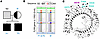 Figure 1
Investigation of the germline TLR8 c.1552G>A (p.A518T) variant. (A) The family tree depicts individuals with the TLR8 variant. Solid black boxes represent males P1 and P2 with the germline variant, while half-black circles indicate heterozygous female carriers. ND, not determined. (B) Sanger sequencing of the family members’ DNA confirms the presence of the TLR8 variant. (C) Leucine-rich repeat (LRR) TLR8 with the Z-loop (PDB ID: 3W3G). The A518 variant in LRR 16 is highlighted in purple. Previously reported variants from Aluri et al. (5), Fejtkova et al. (6), and Liang et al. (8) are denoted in cyan.
Following their initial diagnosis of cerebral vasculitis and polyarteritis nodosa, both individuals underwent immunosuppressive therapies. P1 received treatment with corticosteroids and additional immunosuppressive drugs, including cyclophosphamide, azathioprine, and mycophenolic acid (Supplemental Figure 1C). The therapies had to be discontinued because of either lack of therapeutic response or severe toxicity at the age of 13. From the age of 15 years, P1 received infliximab, resulting in improvement of clinical symptoms lasting up to the present. P2 has been receiving corticosteroids since birth to control inflammatory syndrome and was treated with infliximab since the age of 17 (Supplemental Figure 1C). The latter had to be subsequently switched to adalimumab because of an allergic reaction to infliximab. Furthermore, intravenous immunoglobulin (IVIg) replacement therapy was administered to both siblings due to low serum immunoglobulin levels and recurrent infections. While P1 demonstrated an adequate increase in immunoglobulin levels, allowing for cessation of therapy after 8 years, P2 continues to exhibit low levels of IgM and IgG and receives repeated IVIg injections (Supplemental Figure 1B). In summary, P1 and P2 presented in early childhood with an inflammatory syndrome and immune deficiency, with P2 presenting with a more severe clinical phenotype. The clinical symptoms improved after initiation of immunosuppressive therapy.
Identification of the germline TLR8 c.1552G>A (p.A518T) variant in both siblings and their mother. To identify the underlying cause of the chronic inflammatory syndrome in these two male siblings, targeted exome sequencing was performed and identified a shared hemizygous missense variant (cytogenetic: Xp22.2; chromosome X, position 12920592 [GRCh38.p14], c.1552G>A) in the X chromosome–encoded TLR8 gene (NM_138636.5), for which the mother was heterozygous (Figure 1B). The variant is now registered in the NCBI’s Single Nucleotide Polymorphism Database (dbSNP) and ClinVar with the identifiers rs2147259148 and RCV002263534.1, respectively. The c.1552G>A variant leads to a substitution of threonine (T) for alanine (A) at position 518 in the leucine-rich repeat of the TLR8 protein (NP_619542.1; p.A518T) (Figure 1C). The variant was not present in the Genome Aggregation Database (gnomAD) (20), and it was predicted to be proxy-deleterious by Combined Annotation Dependent Depletion (CADD; GRCh38-v1.4) score (Supplemental Table 1) (21). To complement the analysis, we also applied additional in silico prediction tools. PolyPhen-2 classified the variant as benign in both HumDiv (score: 0.043; sensitivity: 0.94; specificity: 0.83) and HumVar (score: 0.004; sensitivity: 0.98; specificity: 0.35) models (22). Similarly, MutationTaster predicted the variant to be benign (22), and Sorting Intolerant from Tolerant (SIFT) classified it as tolerated (22). While all 3 tools indicated that the variant is unlikely to be deleterious, these prediction tools do not assess potential gain-of-function effects or provide insights into structural or functional changes in protein activity. Further genetic analysis of the subjects revealed a second, not previously reported variant only in P2 in the DnaJ heat shock protein family (Hsp40) member C21 (DNAJC21) gene (chromosome 5, position 34929752–34929753 AC/A [GRCh37.p13], NM_001012339.3:c.-171del, rs1266840568, RCV002263372.13, heterozygous). Given the shared mutation with the TLR8 protein between the two related male individuals, we subsequently investigated the immune implications of the TLR8 A518T variant.
Systemic immune activation in individuals with the TLR8 A518T variant. To further characterize the inflammatory syndrome of the two siblings with the TLR8 A518T variant, plasma profiling was performed at the age of 25 and 22 for P1 and P2, respectively. Significantly elevated levels of several proinflammatory cytokines, including IL-6 and TNF as well as growth factors like GM-CSF and chemokines such as CXCL10, CCL2, CCL19, and CCL20, were detected (Figure 2A and Supplemental Figure 2). Notably, P2 also exhibited increased serum levels of IFN-α (type I IFN) and IFN-λ (type III IFN), while both individuals showed normal levels of IFN-β. Both individuals additionally displayed elevated levels of IFN-γ, the sole member of the type II IFN family. This corresponded to an upregulation in the expression levels of several IFN-stimulated genes (ISGs), as quantified by quantitative PCR in peripheral blood mononuclear cells (PBMCs) from both individuals compared with age-matched controls (Figure 2B). Additionally, elevated mRNA levels of the transcription factor IRF7 were observed in both cases. Notably, the TLR8 mRNA expression levels were comparable between the siblings and the healthy controls. Collectively, these findings suggest systemic inflammation in the siblings with the TLR8 A518T variant. Despite the increased expression of some ISGs in the mother’s cells, X chromosome inactivation analysis performed on the mother’s PBMCs using quantitative PCR for 2 independent X-linked genes, androgen receptor (AR) and retinitis pigmentosa 2 (RP2), revealed a random inactivation pattern, with ratios of 0.53 and 0.49, respectively, making significant skewing or escape from inactivation unlikely (23).
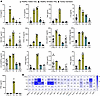 Figure 2
Systemic immune activation in siblings with the TLR8 A518T variant. (A) Plasma analysis of several proinflammatory cytokines, growth factors, and chemokines in family members (P1, P2, and M; performed in quadruplet) in comparison with healthy male individuals less than 30 years old (n = 3–4; technical replicates) and healthy female individuals greater than 40 years old (n = 3–4; technical replicates). Data are expressed as mean with SEM. (B) Gene expression analysis in family members (P1, P2, and M) in comparison with healthy male individuals less than 30 years old (n = 3) and healthy female individuals greater than 40 years old (n = 3) of IFN-stimulating genes (ISGs), cytokines, and transcription factors. The number in the center of each square represents the mean value of relative quantification, while the values above or the asterisks indicate statistical significance. Statistical significance between groups was assessed using a 2-way ANOVA multiple-comparison test. Data represent mean ± SEM. Differences between groups were considered significant at P values less than 0.05 (*P < 0.05, **P ≤ 0.01, ****P ≤ 0.0001).
Altered immune cell composition and innate immune dysregulation in individuals with the TLR8 A518T variant. The clinical immunological profile of individuals carrying the TLR8 A518T variant revealed altered cellular composition and variability among the two affected siblings (P1 and P2) and to a more limited extent in their mother, as summarized in Table 1, Table 2, and Table 3. Both siblings had relatively low to severely decreased numbers of T cells, with CD4+ T cells affected in both participants and CD8+ T cells also affected in P2, resulting in an inverse CD4/CD8 ratio (<2). Additionally, P2 and M had a slight reduction in the frequency of T regulatory cells in the peripheral blood. A dysregulated B cell phenotype was observed in both P1 and P2, with diminished numbers of memory B cells (CD27+CD21+ resting, CD27+CD21– activated, and CD27–CD21– tissue-like memory B cells) and CD27+CD38+ plasmablasts. Both siblings also showed a reduction in activated CD21loCD38– B cells.
Extended immunophenotyping by multiparametric flow cytometry confirmed dysregulation of several immune populations (Supplemental Figures 3–5). P1 and P2 exhibited slightly increased frequencies of CD14+CD16+ intermediate monocytes, while a decreased frequency of non-classical monocytes was observed in P2 (Supplemental Figure 4). A reduction in the frequency of CD141+ dendritic cells and CD123+HLA-DR+ plasmacytoid dendritic cells was observed in both siblings (Supplemental Figure 5), compared with age-matched controls. These analyses demonstrate dysregulation of innate immune cell populations in the individuals carrying the TLR8 A518T variant.
Impaired T and B cell function leading to defective humoral immunity. Previous studies suggested that chronic TLR activation and elevated proinflammatory cytokines can impair B cell development and circulation (24, 25). Flow cytometry analyses revealed that P2 had a lower frequency of CD19+CD20+ B cells, consistent with systemic inflammation (Figure 3A). Both P1 and P2 showed increased frequencies of naive (CD27–IgD+), mature (CD27–CD38int), and transitional (CD27–CD38hi) B cells, alongside reduced frequencies of memory B cells (classical CD27+CD38lo, switched CD27+IgD–, and non-switched CD27+IgD+) and antibody-secreting CD27+CD38hi plasmablasts (Figure 3, B–E), indicating impaired B cell maturation and differentiation. A much milder B cell dysregulation was observed in their asymptomatic mother.
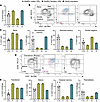 Figure 3
B cell dysregulation in siblings with TLR8 A518T variant. (A) Percentage of CD19+CD20+ B cells in family members relative to healthy male (n = 3) and female (n = 3) individuals (CTR). (B–E) Representative flow cytometry plots, along with the relative frequencies, of B cell subtypes in family members relative to healthy male (n = 3) and female (n = 3) individuals (CTR). Data represent mean ± SEM.
T cell subset analyses revealed T cell exhaustion features, including elevated PD-1 expression and inverted CD4/CD8 ratios (Supplemental Figure 6, A and B). Upon CD3/CD28 stimulation, CD4+ T cells from variant carriers showed reduced viability compared with age-matched controls (Supplemental Figure 6C). While expression levels of ICOS and CD40L on CD4+ T cells and CXCR5+PD-1+ T follicular helper (Tfh) cells were comparable between variant carriers and healthy controls (Supplemental Figure 6, D and E), further immunophenotyping of the CD4+ and CD8+ cell subsets revealed phenotypic heterogeneity among the siblings and their mother, with the latter displaying a profile more similar to that of P2 (Supplemental Figure 6, F and G). Notably, the frequency of CXCR5+PD-1+ Tfh cells was elevated in both P1 and P2, based on analyses of enriched CD4+ T cells (Figure 4 and Supplemental Figure 7), suggesting a skewed T helper cell profile in conjunction with impaired B cell maturation.
 Figure 4
Expansion of T follicular helper cells in siblings with the TLR8 A518T variant. Frequencies of T follicular helper cells (Tfh: CXCR5+PD-1+), along with their representative flow cytometry plots, in family members (P1, P2, and M) relative to healthy male (n = 3) individuals (CTRm). Data represent mean ± SEM for healthy male controls.
Functional assays showed delayed in vitro differentiation of B cells from P1 and P2 into plasmablasts and memory cells following CD40L stimulation, with persistently high levels of naive B cells (Figure 5A and Supplemental Figures 8 and 9) and reduced IgG/IgM production (Figure 5B). Consistent with these findings, P1 — who discontinued IVIg therapy — demonstrated poor antibody responses to several vaccines (Table 2). Altogether, these findings demonstrate that the 2 siblings with the TLR8 A518T variant exhibit a dysregulated immune profile marked by T cell exhaustion, increased frequencies of Tfh cells, and defective B cell maturation and differentiation. These immune alterations result in reduced memory B cells, plasmablasts, and antibody production, and were associated with impaired humoral immunity.
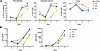 Figure 5
Impaired B cell differentiation, memory and plasmablast formation, and immunoglobulin production in siblings with the TLR8 A518T variant. (A) Quantification of plasmablasts, switched memory, and naive B cells from CD40L-stimulated B cells over time in family members (P1, P2, and M) relative to healthy male (n = 3) individuals (CTRm). (B) Quantification of the secreted IgG and IgM levels in the supernatants of CD40L-stimulated B cells over time in family members (P1, P2, and M) relative to healthy male (n = 3) individuals (CTRm). Data represent mean ± SEM for healthy male controls.
Computational modeling reveals that the A518T variant renders the active state of the TLR8 homodimer structurally more stable. The clinical data illustrated that the TLR8 p.A518T mutation potentially reflected a gain-of-function mutation in TLR8, linked to significant immune dysregulation. To determine whether structural modeling of the TLR8 receptor, using the genetic information, would provide reliable predictions of the functional consequences, we performed structural modeling using MODELLER v10.3 (26). Modeling prediction of proteins encoded by mutated genes on the X chromosome tends to be more accurate in males, particularly for proteins forming homodimers. This is because males have only one X chromosome, resulting in homodimers formed exclusively from 2 copies of the mutated protein, which simplifies the functional prediction. Based on structural studies of TLR8, it has been observed that upon ligand (uridine) binding, conformational changes occur in preformed TLR8 dimers, bringing the C-terminal domains closer together, thus initiating downstream signaling (11, 16). The 3-dimensional structure of the TLR8 protein showed that residue 518 is located on the protein-protein interface, and in close proximity to the uridine-binding site of the homodimer (Figure 6A). The predicted structural model of the variant revealed that substitution of the alanine (A) with threonine (T) formed additional water-mediated hydrogen bonds at the protein-protein interface in the presence of uridine agonist, thereby stabilizing the structure of the active homodimer (Figure 6B).
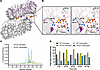 Figure 6
Computational modeling indicates that the TLR8 A518T variant stabilizes the structure of the active conformation of the receptor homodimer. (A) Ribbon diagram of the side view of TLR8 receptor homodimer (PDB ID: 4R08) with the 2 chains colored gray and pink, and residue 518 indicated in a purple halo, positioned at the interface of the homodimer and the uridine residue in ball-and-stick representation in orange with an orange halo. (B) Comparison of hydrogen bonds in the WT protein (left) and A518T variant (right). The hydrogen bonds that are conserved in both proteins are shown as red dashed lines, and the additional hydrogen bonds formed by the A518T variant are shown as black dashed lines and a blue halo. A gray rectangle highlights the differences in hydrogen bonding patterns in the WT and A518T variant proteins. The uridine residue (URI) is represented with ball and stick in orange with an orange halo around it, and the atoms are colored according to the elements with red and blue spheres representing oxygen and nitrogen, respectively. The hydrogen-bonded residues are numbered and shown with ball-and-stick representation with their respective 3-letter codes. (C) Comparison of the Δ vibrational entropy energy of A518T variant with respect to the WT protein in the ligand-bound activated state (green) and the unbound inactivated state (blue) with the residue numbers on the x axis, calculated by DynaMut. (D) Comparison of water-mediated interchain hydrogen bonds in the WT protein in the activated state (dark gray), WT protein in the inactivated state (light gray), A518T variant in the activated state (blue), and A518T variant in the inactivated state (green), based on molecular dynamics simulations with OpenMM.
This finding was supported by the normal mode analysis of the active and the inactive conformations of the TLR8 mutant in regard to the respective WT states, using DynaMut (27). The free energy change (ΔΔG) between the WT TLR8 protein and the variant protein in the inactive conformation was ΔΔG = –0.238 kcal/mol, suggesting that in the latter case the state was destabilized. However, when the variant was introduced into the active conformation of TLR8, the ΔΔG was +0.047 kcal/mol, indicating that the variant was predicted to be stabilizing the structure of the activated homodimer. Further, the analysis showed that changes in vibrational entropy energy were higher in the inactive state compared with the active state, suggesting that the active state conformation of the p.A518T variant was structurally more stable than its lesser stable inactive state (Figure 6C).
In addition to energetic calculations, 100-nanosecond molecular dynamics simulations were carried out with OpenMM (28) to investigate the dynamics of water-mediated hydrogen bonds of the WT and variant proteins across their active and inactive states. These simulations revealed that the number of water-mediated hydrogen bonds at the interface of the TLR8 homodimer increased in the A518T variant compared with the WT protein in the active state, across the entire length of the simulation (Figure 6D). Synchronous with the DynaMut predictions, the A518T variant in the inactivated state had fewer water-mediated interchain hydrogen bonds compared with the WT protein in the inactivated state. This selective increase in inter-protomer water bridging in the activated state of the A518T variant adds further support to the model that the A518T variant conferred a gain of function through an increase in water-mediated hydrogen bonding interactions.
Taken together, these energetic, structural, and dynamic modeling analyses suggested that the A518T variant stabilized the structure of the active state of the TLR8 homodimer, consistent with the inflammatory syndrome observed in the male siblings. These findings highlight the value of structural modeling in predicting the functional consequences of genetic mutations, and offer important insights into the molecular mechanisms underlying disease pathology.
TLR8 A518T variant mediates gain of function following in vitro stimulation with TLR8 agonists. Given the predictions from the structural modeling suggesting enhanced structural stability of the TLR8 A518T variant in its active state, in vitro studies were performed to assess functional consequences. TLR8-mediated signaling through NF-κB induces the production of various proinflammatory cytokines (18). Flow cytometry analysis showed increased mean fluorescence intensity (MFI) of phosphorylated (p–) NF-κB p65 (Ser536) within unstimulated CD45+CD14+ monocytes of family members in comparison with healthy controls (Figure 7A). In contrast, P1 and P2 exhibited reduced TLR8 expression (MFI) in the same cell population, resulting in an overall elevated ratio of p–NF-κB to TLR8 MFI in CD45+CD14+ monocytes (Figure 7B). To further validate these findings of enhanced monocyte activation, we performed RNA sequencing analyses of enriched unstimulated CD14+CD16– cells from family members and healthy male controls. Differential gene expression revealed upregulation of 515 genes in CD14+CD16– cells of P1 and P2 compared with 98 genes in healthy control individuals. Several proinflammatory genes (TNF, IL-6, CCL4), ISGs (OAS1, OAS2, MX1, IFIT1, IFIT3, IFI44L), and genes commonly associated with M1 phenotype of macrophages, like CD80, as well as ubiquitin-related genes, including HERC5, HERC6, and RNF144B, were highly expressed in P1 and P2 compared with healthy control individuals (Figure 7C). Pathway analysis revealed enrichment of cytokine signaling, IFN signaling, and TNF-associated pathways in affected individuals compared with healthy control individuals (Figure 7D). Taken together, these data demonstrated enhanced expression of proinflammatory genes in unstimulated CD14+CD16– cells of the affected siblings, consistent with the clinical presentation. Stimulation of CD14+CD16– monocytes with 1 mg/mL TL8-506 for 4 hours resulted in upregulation of 55 genes in P1 and P2 compared with 9 genes in male controls. Among them were the transcription factors JUN and FOS, involved in macrophage activation, and EGR1 and KLF4, participating in inflammatory processes; heat shock proteins such as HSPA1B and HSPA6; and ISGs like IFIT2 (Supplemental Figure 10A). The most enriched pathways in P1 and P2 included cytokine and IFN signaling, as well as viral ribonucleoprotein (RNP) complex formation (Supplemental Figure 10B).
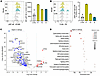 Figure 7
Functional studies demonstrate a gain of function of the TLR8 A518T variant. (A) Histogram plots of p–NF-κB of CD45+CD14+ monocytes from freshly isolated PBMCs in family members relative to healthy males (CTRm; n = 3) (left) with the corresponding MFI (right). Data represent mean ± SEM for healthy male controls. (B) Histogram plots of TLR8 of CD45+CD14+ monocytes from freshly isolated PBMCs in family members relative to healthy males (CTRm; n = 3) (left) and the ratio of ∆ p–NF-κB+ to TLR8+ of CD45+CD14+ monocytes (right). Data represent mean ± SEM for healthy male controls. (C) Volcano plot illustrating differentially expressed genes in unstimulated CD14+CD16– monocytes isolated from healthy male controls (n = 4) compared with family members (P1 and P2). Genes with significant upregulation and downregulation are highlighted based on adjusted P values and fold change thresholds. (D) Bubble plot representing the top enriched pathways identified from the differentially expressed genes. Bubble size corresponds to the percentage of genes involved, and color intensity reflects the significance of pathway enrichment.
To further elucidate the role of the TLR8 A518T variant in TLR8 responses, additional functional in vitro experiments were conducted using BlaER1, a human B cell precursor leukemia cell line that can be transdifferentiated into monocyte/macrophage–like cells. Using the PiggyBac transposon system (29), we generated BlaER1 TLR8–/– cells stably expressing either WT TLR8 protein or the p.A518T variant, along with the previously described gain-of-function variant (p.F494L) (5) and the loss-of-function variant (p.D543A) (30). Western blot analysis of protein extracts from BlaER1 TLR8–/– cells stimulated for 15 minutes with the TLR8 agonist TL8-506 (100 ng/mL) demonstrated increased p–NF-κB p65 (Ser536) in cells expressing the A518T variant relative to WT TLR8 protein (Figure 8A), indicating enhanced activation of downstream signaling. Interestingly, the F494L (gain-of-function) variant remained constitutively activated, as indicated by the presence of p–NF-κB already under unstimulated condition, along with an absence of total NF-κB (Supplemental Figure 11A).
 Figure 8
Stimulation of TLR8 A518T variant induces p–NF-κB and cytokine release. (A) Western blot against TLR8, p–NF-κB, total NF-κB, and γ-tubulin (γ-TUB) in BlaER1 TLR8–/– cells with the insertion of the TLR8 WT protein or the p.A518T and the previously published p.D543A (loss-of-function) TLR8 variants. Cells were stimulated with 100 ng/mL TL8-506 agonist for 15 minutes (left), and the ratio of p–NF-κB to total NF-κB to TLR8 levels, normalized to TLR8 levels, is shown (right). Statistical significance between groups was assessed using a 2-way ANOVA multiple-comparison test. Data represent mean ± SEM of n = 4 experiments. RQ, relative quantification. (B) IL-6 quantification of BlaER1 TLR8–/– cells with the insertion of the TLR8 WT protein or the p.A518T and p.D543A (loss-of-function) variants. Cells were stimulated with 1 μg/mL TL8-506 and 1 μg/mL ORN 06 agonists. Data are presented after the subtraction of the unstimulated measurements. Statistical significance between groups was assessed using a 2-way ANOVA multiple-comparison test. Data represent mean ± SEM of n = 3–4 experiments. Differences between groups were considered significant at P values less than 0.05.
To assess functional consequences for cytokine production, transdifferentiated BlaER1 TLR8–/– cells expressing either the TLR8 WT protein or p.A518T, p.F494L, and p.D543A TLR8 variants were stimulated with TLR8 agonists. Stimulation with either 1 μg/mL TL8-506 or 1 μg/mL ORN 06 (ssRNA with 6 UUGU repeats, requiring both binding sites for TLR8 activation) (12, 31, 32) led to a significant increase in IL-6 secretion in cells expressing the p.A518T variant compared with WT (Figure 8B), consistent with gain of function. Kinetic analyses showed that IL-6 secretion was detectable as early as 2 hours after stimulation with 50 ng/mL TL8-506 (data not shown), and after 4 hours with 100 ng/mL stimulation (Supplemental Figure 11B). TNF secretion was induced as early as 2 hours after stimulation with 100 ng/mL of the TLR8 agonist TL8-506 (Supplemental Figure 11C) and further increased after 4 hours of stimulation with both 50 and 100 ng/mL (Supplemental Figure 11D).
To further validate the functional impact of the TLR8 variants, HEK Blue Null 1 (HEK BN1) cells — lacking endogenous TLR8 — were transfected with TLR8 WT, p.A518T, and known gain-of-function variants (p.F492V and p.G572V), as well as the loss-of-function variant p.D543A, and stimulated with 100 ng/mL TL8-506. Stimulation with TL8-506 resulted in increased NF-κB reporter activity in cells expressing the p.A518T variant compared with WT (Supplemental Figure 11E). In contrast, stimulation with the TLR7-specific agonist CL097 (1 μg/mL) did not induce NF-κB activation in HEK BN1 cells transfected with the TLR8 p.A518T variant compared with cells transfected with the TLR8 p.F492V and p.G572V gain-of-function variants (Supplemental Figure 11F). Consistently, BlaER1 TLR8–/– cells reconstituted with TLR8 WT or the p.A518T variant did not produce IL-6 upon stimulation with CL097 (1 μg/mL; data not shown), indicating that TLR8 p.A518T signaling remained specific to TLR8 activation.
Taken together, these findings demonstrate that the TLR8 A518T variant confers a ligand-dependent gain-of-function phenotype characterized by enhanced NF-κB activation, upregulation of proinflammatory and IFN-stimulated genes, and increased secretion of key cytokines such as IL-6 and TNF upon TLR8, but not TLR7, agonist stimulation, in line with the inflammatory syndrome observed in the two siblings.
Partial reduction of TLR8 protein abundance via proteasomal targeting in cells expressing the TLR8 A518T variant. While functional assays identified the TLR8 A518T variant as a gain-of-function mutation, Western blot analysis quantifying TLR8 protein levels also showed approximately 50% reduction in BlaER1 TLR8–/– cells expressing the p.A518T variant compared with those expressing TLR8 WT protein (Figure 8A and Supplemental Figure 12A), and these reduced levels persisted following stimulation with the 100 ng/mL TL8-506 agonist for 15 minutes (Supplemental Figure 12B). These findings suggest that the A518T variant leads to partial reduction in the abundance of the TLR8 protein. To investigate the potential mechanisms underlying reduced TLR8 A518T protein levels, additional protein turnover and degradation experiments were performed. For protein turnover experiments, HEK BN1 cells were transfected with plasmids encoding TLR8 WT, the p.A518T variant, or the known gain-of-function p.G572V variant (6). Forty-eight hours after transfection, cells were treated with cycloheximide (CHX) for 8 hours to inhibit new protein synthesis (33). Western blot analysis revealed that the TLR8 A518T variant underwent accelerated degradation compared with the TLR8 WT protein, with degradation levels comparable to those of the previously characterized G572V variant, which is known to exhibit faster protein turnover (Figure 9A).
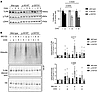 Figure 9
TLR8 A518T variant reduces protein abundance and increases degradation. (A) Western blot against TLR8, γ-TUB, and lactate dehydrogenase A (LDHA) of cycloheximide-incubated (CHX-incubated) HEK BN1 cells expressing TLR8 WT or the p.A518T and the previously published p.G572V (gain-of-function) variants (left), and Western blot quantification (right). Statistical significance between groups was assessed using a 2-way ANOVA multiple-comparison test. Data represent mean ± SEM of n = 4 experiments. (B) Western blot analysis of HA-tagged immunoprecipitated proteins from HEK293T cell extracts treated with (+) or without (–) the proteasome inhibitor MG132 and CHX. Cells were transfected with HA-tagged constructs and subjected to immunoprecipitation using anti-HA antibody. Left: Blots were probed with antibodies against ubiquitin, TLR8, and the HA tag to assess protein ubiquitination, TLR8 levels, and expression of the HA-tagged construct. Right: Quantification of ubiquitin signal normalized to TLR8 (top) and to HA (bottom) signals, showing the relative levels of TLR8 ubiquitination and overall ubiquitination of HA-tagged proteins. Statistical significance was assessed with a 2-way ANOVA multiple-comparison test. Data represent mean ± SEM of n = 3 experiments. Differences between groups were considered significant at P values less than 0.05.
Given that protein degradation primarily occurs via the ubiquitin-proteasome system, we next assessed the mechanism of degradation (34). HA-tagged TLR8 constructs were transfected into HEK293T cells and treated for 6 hours with CHX, the proteasome inhibitor MG132 (35), or both. HA-immunoprecipitation followed by Western blotting showed increased ubiquitination of the TLR8 A518T variant compared with TLR8 WT protein in the presence of MG132, indicating enhanced proteasomal targeting (Figure 9B). To further examine the proteasomal engagement, BlaER1 TLR8–/– cells expressing either TLR8 WT or p.A518T and p.D543A (loss-of-function) variants were treated with the proteasome inhibitor MG132 for 6 hours. Western blot analysis of cell extracts showed rescue of the protein levels for TLR8 p.A518T (Supplemental Figure 12C), further supporting the involvement of proteasomal degradation. Taken together, these results demonstrate that the TLR8 A518T variant undergoes accelerated degradation through increased ubiquitination and enhanced proteasomal targeting, consistent with the lower steady-state protein abundance of the TLR8 A518T variant.


