
Research ArticleImmunology
Open Access |  10.1172/jci.insight.191767
Reduced late endosome/lysosome function promotes SLE through chronic PI3K activity and SHP-1/SHIP-1 defects
SunAh Kang,1 Andrew J. Monteith,1 Liubov Arbeeva,2 Karissa Grier,3 Shruti Saxena Beem,2 Anthony C. Trujillo,2 Xinyun Bi,1 Kai Sun,3 Rebecca E. Sadun,3 Mithu Maheswaranathan,3 Megan E.B. Clowse,3 Saira Z. Sheikh,2 Jennifer L. Rogers,3 and Barbara J. Vilen1
1Department of Microbiology and Immunology and
2Division of Rheumatology, Allergy, and Immunology, Thurston Arthritis Research Center, University of North Carolina, Chapel Hill, North Carolina, USA.
3Division of Rheumatology and Immunology, Duke University Medical Center, Durham, North Carolina, USA.
Address correspondence to: Barbara J. Vilen, Department of Microbiology and Immunology, University of North Carolina at Chapel Hill, Chapel Hill, North Carolina 27599, USA. Email: barb_vilen@med.unc.edu.
Find articles by Kang, S. in: PubMed | Google Scholar
1Department of Microbiology and Immunology and
2Division of Rheumatology, Allergy, and Immunology, Thurston Arthritis Research Center, University of North Carolina, Chapel Hill, North Carolina, USA.
3Division of Rheumatology and Immunology, Duke University Medical Center, Durham, North Carolina, USA.
Address correspondence to: Barbara J. Vilen, Department of Microbiology and Immunology, University of North Carolina at Chapel Hill, Chapel Hill, North Carolina 27599, USA. Email: barb_vilen@med.unc.edu.
Find articles by Monteith, A. in: PubMed | Google Scholar
1Department of Microbiology and Immunology and
2Division of Rheumatology, Allergy, and Immunology, Thurston Arthritis Research Center, University of North Carolina, Chapel Hill, North Carolina, USA.
3Division of Rheumatology and Immunology, Duke University Medical Center, Durham, North Carolina, USA.
Address correspondence to: Barbara J. Vilen, Department of Microbiology and Immunology, University of North Carolina at Chapel Hill, Chapel Hill, North Carolina 27599, USA. Email: barb_vilen@med.unc.edu.
Find articles by Arbeeva, L. in: PubMed | Google Scholar
1Department of Microbiology and Immunology and
2Division of Rheumatology, Allergy, and Immunology, Thurston Arthritis Research Center, University of North Carolina, Chapel Hill, North Carolina, USA.
3Division of Rheumatology and Immunology, Duke University Medical Center, Durham, North Carolina, USA.
Address correspondence to: Barbara J. Vilen, Department of Microbiology and Immunology, University of North Carolina at Chapel Hill, Chapel Hill, North Carolina 27599, USA. Email: barb_vilen@med.unc.edu.
Find articles by Grier, K. in: PubMed | Google Scholar
1Department of Microbiology and Immunology and
2Division of Rheumatology, Allergy, and Immunology, Thurston Arthritis Research Center, University of North Carolina, Chapel Hill, North Carolina, USA.
3Division of Rheumatology and Immunology, Duke University Medical Center, Durham, North Carolina, USA.
Address correspondence to: Barbara J. Vilen, Department of Microbiology and Immunology, University of North Carolina at Chapel Hill, Chapel Hill, North Carolina 27599, USA. Email: barb_vilen@med.unc.edu.
Find articles by Saxena Beem, S. in: PubMed | Google Scholar
1Department of Microbiology and Immunology and
2Division of Rheumatology, Allergy, and Immunology, Thurston Arthritis Research Center, University of North Carolina, Chapel Hill, North Carolina, USA.
3Division of Rheumatology and Immunology, Duke University Medical Center, Durham, North Carolina, USA.
Address correspondence to: Barbara J. Vilen, Department of Microbiology and Immunology, University of North Carolina at Chapel Hill, Chapel Hill, North Carolina 27599, USA. Email: barb_vilen@med.unc.edu.
Find articles by Trujillo, A. in: PubMed | Google Scholar
1Department of Microbiology and Immunology and
2Division of Rheumatology, Allergy, and Immunology, Thurston Arthritis Research Center, University of North Carolina, Chapel Hill, North Carolina, USA.
3Division of Rheumatology and Immunology, Duke University Medical Center, Durham, North Carolina, USA.
Address correspondence to: Barbara J. Vilen, Department of Microbiology and Immunology, University of North Carolina at Chapel Hill, Chapel Hill, North Carolina 27599, USA. Email: barb_vilen@med.unc.edu.
Find articles by Bi, X. in: PubMed | Google Scholar
1Department of Microbiology and Immunology and
2Division of Rheumatology, Allergy, and Immunology, Thurston Arthritis Research Center, University of North Carolina, Chapel Hill, North Carolina, USA.
3Division of Rheumatology and Immunology, Duke University Medical Center, Durham, North Carolina, USA.
Address correspondence to: Barbara J. Vilen, Department of Microbiology and Immunology, University of North Carolina at Chapel Hill, Chapel Hill, North Carolina 27599, USA. Email: barb_vilen@med.unc.edu.
Find articles by Sun, K. in: PubMed | Google Scholar
1Department of Microbiology and Immunology and
2Division of Rheumatology, Allergy, and Immunology, Thurston Arthritis Research Center, University of North Carolina, Chapel Hill, North Carolina, USA.
3Division of Rheumatology and Immunology, Duke University Medical Center, Durham, North Carolina, USA.
Address correspondence to: Barbara J. Vilen, Department of Microbiology and Immunology, University of North Carolina at Chapel Hill, Chapel Hill, North Carolina 27599, USA. Email: barb_vilen@med.unc.edu.
Find articles by Sadun, R. in: PubMed | Google Scholar
1Department of Microbiology and Immunology and
2Division of Rheumatology, Allergy, and Immunology, Thurston Arthritis Research Center, University of North Carolina, Chapel Hill, North Carolina, USA.
3Division of Rheumatology and Immunology, Duke University Medical Center, Durham, North Carolina, USA.
Address correspondence to: Barbara J. Vilen, Department of Microbiology and Immunology, University of North Carolina at Chapel Hill, Chapel Hill, North Carolina 27599, USA. Email: barb_vilen@med.unc.edu.
Find articles by Maheswaranathan, M. in: PubMed | Google Scholar
1Department of Microbiology and Immunology and
2Division of Rheumatology, Allergy, and Immunology, Thurston Arthritis Research Center, University of North Carolina, Chapel Hill, North Carolina, USA.
3Division of Rheumatology and Immunology, Duke University Medical Center, Durham, North Carolina, USA.
Address correspondence to: Barbara J. Vilen, Department of Microbiology and Immunology, University of North Carolina at Chapel Hill, Chapel Hill, North Carolina 27599, USA. Email: barb_vilen@med.unc.edu.
Find articles by Clowse, M. in: PubMed | Google Scholar
1Department of Microbiology and Immunology and
2Division of Rheumatology, Allergy, and Immunology, Thurston Arthritis Research Center, University of North Carolina, Chapel Hill, North Carolina, USA.
3Division of Rheumatology and Immunology, Duke University Medical Center, Durham, North Carolina, USA.
Address correspondence to: Barbara J. Vilen, Department of Microbiology and Immunology, University of North Carolina at Chapel Hill, Chapel Hill, North Carolina 27599, USA. Email: barb_vilen@med.unc.edu.
Find articles by Sheikh, S. in: PubMed | Google Scholar
1Department of Microbiology and Immunology and
2Division of Rheumatology, Allergy, and Immunology, Thurston Arthritis Research Center, University of North Carolina, Chapel Hill, North Carolina, USA.
3Division of Rheumatology and Immunology, Duke University Medical Center, Durham, North Carolina, USA.
Address correspondence to: Barbara J. Vilen, Department of Microbiology and Immunology, University of North Carolina at Chapel Hill, Chapel Hill, North Carolina 27599, USA. Email: barb_vilen@med.unc.edu.
Find articles by Rogers, J. in: PubMed | Google Scholar
1Department of Microbiology and Immunology and
2Division of Rheumatology, Allergy, and Immunology, Thurston Arthritis Research Center, University of North Carolina, Chapel Hill, North Carolina, USA.
3Division of Rheumatology and Immunology, Duke University Medical Center, Durham, North Carolina, USA.
Address correspondence to: Barbara J. Vilen, Department of Microbiology and Immunology, University of North Carolina at Chapel Hill, Chapel Hill, North Carolina 27599, USA. Email: barb_vilen@med.unc.edu.
Find articles by Vilen, B. in: PubMed | Google Scholar
Published February 17, 2026 - More info
JCI Insight. 2026;11(6):e191767. https://doi.org/10.1172/jci.insight.191767.
© 2026 Kang et al. This work is licensed under the Creative Commons Attribution 4.0 International License. To view a copy of this license, visit http://creativecommons.org/licenses/by/4.0/.
Received: January 28, 2025; Accepted: February 4, 2026


-
Results
Multiple hematopoietic cell types exhibit LEL dysfunction. Previous studies showed that bone marrow–derived Mφs (BMMφs) from MRL/lpr mice exhibit diminished LEL acidification (15). In all cell types, peak acidification occurred at 30 minutes, with deacidification beginning at 60 minutes (15). To assess whether impaired acidification was evident in other cell types, we compared the LEL hydrogen ion concentration ([H+]) in splenic hematopoietic cells from MRL/lpr and C57BL/6 (B6) mice of different ages following stimulation with IgG-ICs. [H+] is an inversely related linear readout of pH. In 9- to 10-week-old mice, the LEL [H+] in CD11b+ myeloid cells was comparable in B6 and MRL/lpr mice (Figure 1A); however, as disease progressed, the [H+] was decreased 12.6-fold in 15- to 16-week-old MRL/lpr mice (Figure 1, A–C; see Supplemental Table 1 for fold change and pH values; supplemental material available online with this article; https://doi.org/10.1172/jci.insight.191767DS1). B cells (Figure 1B) and DCs (Figure 1C) from MRL/lpr mice also showed decreased [H+] as disease progressed (B cells: 2.3-fold, 15–18 weeks; DCs: 3-fold, >18 weeks). In comparison with B6 mice, the [H+] was also decreased in LELs of MRL/lpr neutrophils (2.1-fold) and T cells (3.2-fold) at 15–16 weeks (Supplemental Figure 1, A and B).
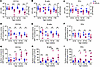 Figure 1
LEL dysfunction is evident in multiple hematopoietic cell types. Splenocytes from C57BL/6 (circles) or MRL/lpr (squares) mice at different ages were stimulated with IgG-ICs (30 μL IgG-ICs per 0.25 × 10⁶ cells). (A–C) LEL pH was measured by flow cytometry 30 minutes after treatment in CD11b+ myeloid cells (CD3–CD19–CD11b+) (A), B cells (CD3–CD19+) (B), and DCs (CD3–CD19–CD11b+CD11chi) (C). Absolute pH was calculated using a standard curve, then converted to [H+] (pH = –log10[H+]). (D–I) Flow cytometry was used to measure LEL hydrolase activity (D–F), and the levels of surface nucleosomes on splenocytes from mice of different ages (G–I). N = 7–11 mice, 5–8 experiments per age group. Statistical analysis used Mann-Whitney test (A–I). *P < 0.05, **P < 0.01, ***P < 0.001. Bars indicate median. See Supplemental Table 1 for absolute pH and fold change calculations.
To corroborate that decreased [H+] (↑pH) in LELs was biologically relevant, we quantified hydrolase activity in hematopoietic cells. The hydrolase activity in B6 CD11b+ myeloid cells (Figure 1D, 9–10 weeks) was comparable to that in cells from MRL/lpr mice; however, MRL/lpr B cells (Figure 1E) and DCs (Figure 1F) had lower hydrolase activity compared with B6 cells (9–10 weeks). Concomitant with declining [H+], hydrolase activity in CD11b+ myeloid cells and B cells from MRL/lpr mice was reduced 2.6- to 6.6-fold as mice aged (12 to >18 weeks), consistent with the idea that reduced [H+] (↑pH) elicits functional consequences in LELs. Despite numerically reduced hydrolase activity in MRL/lpr DCs (3.2- to 4.0-fold; 12 to >18 weeks), the values did not achieve statistical significance (Figure 1F), suggesting that DCs maintain hydrolase activity better than myeloid cells or B cells. This might reflect that as professional antigen-presenting cells, DCs predominantly use cysteine proteases in late endosomes, and their activation occurs at higher pH (5.0–5.5) in comparison with lysosomes of CD11b+ myeloid cells (20).
In MRL/lpr mice, diminished acidification reduces the degradation of LEL cargo (13, 15); however, cell homeostasis is maintained through exocytosis (9). To assess whether diminished LEL acidification and hydrolase activity promote exocytosis, we quantified the levels of surface-bound nucleosome, a nuclear self-antigen in IgG-ICs. We found that splenic CD11b+ myeloid cells from B6 and MRL/lpr mice (9–10 weeks) did not increase surface nucleosome levels, consistent with their ability to acidify and activate hydrolases; however, as MRL/lpr mice aged beyond 18 weeks, the surface nucleosome levels on CD11b+ myeloid cells were 3-fold higher than those in B6 (Figure 1G). B cells and DCs (Figure 1, H and I) from 9- to 10-week-old MRL/lpr mice showed surface nucleosome levels that were 3- and 1.6-fold higher than B6, respectively, suggesting that exocytosis may occur earlier, or that these cells may have lower LEL capacity. As MRL/lpr mice aged beyond 18 weeks, surface nucleosome levels on B cells and DCs were increased further, to 5.8-fold compared with B6. The surface nucleosome levels on T cells and neutrophils (16–17 weeks) from MRL/lpr mice were increased 2.1-fold (compared with B6) (Supplemental Figure 1, C and D). Collectively, data from MRL/lpr mice show reduced LEL function in CD11b+ myeloid cells, DCs, B and T cells, and neutrophils, which worsens as mice progress to end-stage disease.
Diminished LEL acidification is evident in genetically unrelated NZM2410 mice. To assess whether LEL dysfunction was evident in other murine lupus models, we compared B6 and MRL/lpr mice with MRL/MpJ, B6.lpr, NZM2410/J (21), and Sle123 (22). After 30 minutes of IgG-IC stimulation, the [H+] in splenic CD11b+ myeloid cells from MRL/lpr mice was decreased 22.2-fold (P = 0.0035) in comparison with B6 at 30 minutes (t30); in splenic CD11b+ myeloid cells from NZM2410/J, decreased 25.3-fold (P = 0.0023); from B6.Sle123, decreased 16.8-fold (P = 0.0216); from MRL/MpJ, decreased 12.6-fold (P = 0.0060); and from B6.lpr, decreased 1.5-fold (P = 0.5058) (Figure 2A). LEL acidification in B6 B cells was lower than that in myeloid cells; nonetheless, the [H+] in MRL/lpr B cells was still decreased 2.2-fold (P = 0.0271); in NZM2410, 2.1-fold (P = 0.0779); in MRL/MpJ, 1.9-fold (P = 0.1453); and B6.lpr showed a 1.6-fold increase in [H+] (P = 0.1428) (Figure 2B).
![Multiple murine lupus models show diminished [H+] and exocytosis of IgG-ICs](//df6sxcketz7bb.cloudfront.net/manuscripts/191000/191767/small/jci.insight.191767.f2.gif "Multiple murine lupus models show diminished [H+] and exocytosis of IgG-ICs to the plasma membrane.") Figure 2
Figure 2Multiple murine lupus models show diminished [H+] and exocytosis of IgG-ICs to the plasma membrane. Splenocytes from the indicated models were stimulated with IgG-ICs (30 μL IgG-ICs per 0.25 × 10⁶ cells). (A and B) At designated times, LEL pH was measured using flow cytometry in myeloid cells (CD3–CD19–CD11b+) (A) and B cells (CD3–CD19+) (B). vATPase activity in unstimulated samples [t0(CMA)] was inhibited with concanamycin A (CMA; 2 ng/mL). Absolute pH was calculated using a standard curve. (C) BMMφs were preloaded (t0) with Alexa Fluor 488–labeled IgG-ICs, and exocytosis was measured at designated times. Surface-bound fluorescence was assessed by subtraction of internalized fluorescence (surface quenched) from total (unquenched) and normalized to individual t0. Statistical analysis used 2-way ANOVA with multiple comparisons (A–C). Adjusted P values with significance are shown. N ≥ 2 (A and B) and N ≥ 4 (C) from 2–4 separate experiments. Bars, median; boxes, 25th–75th percentiles; whiskers, minimum and maximum values.
Exocytosis signifies undegraded cargo in LELs. To measure exocytosis, we preloaded BMMφs with fluorochrome-tagged IgG-ICs, establishing t0 levels (maximum surface fluorescence). IgG-ICs entered cells through phagocytosis, and after 24 hours of incubation the surface fluorescence was reduced. Fluorescent IgG-ICs that were not degraded returned to the cell surface via exocytosis at 72 hours (t72), resulting in comparable levels of surface fluorescence with t0 level. B6 BMMφs did not undergo exocytosis, showing decreased surface fluorescence at t72 (35-fold decreased, P = 0.0001) compared with t0. MRL/lpr BMMφs at t72 showed increased fluorochrome-tagged IgG-ICs on the cell surface compared with t0 levels (1.7-fold, P ≤ 0.0001), as did NZM2410 (1.3-fold, P = 0.28), MRL/MpJ (1-fold, P = 0.981), and B6.Sle123 (1.1-fold, P = 0.8299), indicative of exocytosis of undegraded LEL cargo (Figure 2C). These data show that diminished acidification is conferred by the MRL/MpJ background or the SLE123 quantitative trait loci. The findings that diminished acidification and exocytosis are evident in genetically unrelated models of lupus raise the possibility that LEL dysfunction might be evident in human SLE.
Active SLE patients show diminished LEL acidification and hydrolase activity. To address whether LEL dysfunction was evident in human SLE, we cross-sectionally analyzed peripheral blood cells from 57 healthy controls (HCs) and 81 SLE patients. Patients were grouped by disease activity (hybrid SELENA-SLEDAI; henceforth SLEDAI) as inactive (SLEDAI ≤ 5, n = 44), moderately active (SLEDAI 6–11, n = 24), or highly active (SLEDAI ≥ 12, n = 13) (23). In our cohort (65% Black, 33% White, 9% Hispanic, 89% female, mean age 40 ± 14 years, mean length of disease 11 ± 9.5 years), all were anti-nuclear antibody positive, 32% had day-of-visit renal involvement, 56% had historic renal disease, and 80% were prescribed hydroxychloroquine (HCQ) (Supplemental Table 2). As in mice, peak acidification of blood hematopoietic cells occurred at 30 minutes, with deacidification beginning at 60 minutes. The [H+] and hydrolase activity in Mo from inactive patients were comparable to those in HCs (Figure 3, A and B, Supplemental Table 3, and Supplemental Figure 2). Mo from moderately active patients showed a 4.2-fold reduction in [H+] (P = 0.0002) and a 2-fold reduction in hydrolase activity (P = 0.04), while highly active patients showed a 6.5-fold reduction in [H+] (P = 0.0004) and a 2.7-fold reduction in hydrolase activity (P = 0.007). B cells from inactive patients showed [H+] comparable to that of HCs (P = 0.14), while hydrolase activity was decreased 2.1-fold (P = 0.03) (Figure 3, C and D). B cells from moderately active patients showed a reduction of 3.2-fold in [H+] (P = 0.007) and of 3.0-fold (P = 0.008) in hydrolase activity, and highly active patients showed a reduction of 4.6-fold in [H+] (P = 0.0009) and of 3.1-fold in hydrolase (P = 0.04). LELs in DCs from HCs and inactive SLE patients showed comparable [H+] (P = 0.99), while hydrolase activity was decreased 2.3-fold (P = 0.03) (Figure 3, E and F). Compared with HCs, DCs from moderately active patients showed a 5.8-fold reduction in [H+] (P = 0.002) with a 2.9-fold decrease in hydrolase activity (P = 0.01), and highly active patients an 8.3-fold reduction in [H+] (P = 0.02) with a 2.4-fold decrease in hydrolase activity (P = 0.01). This shows that, as in murine lupus, reduced LEL acidification (↑pH) and hydrolase activity are evident in Mo, DCs, and B cells from SLE patients with moderately or highly active disease, while acidification in inactive disease is comparable to that in HCs. The exception is DCs and B cells from inactive patients, which show modestly reduced hydrolase activity. This might reflect the differences in hydrolases in late endosomes versus lysosomes, or the duration of sustained activity of hydrolases in DCs and B cells, which predominantly degrade cargo in late endosome.
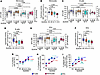 Figure 3
Active SLE patients show diminished LEL acidification and reduced LEL hydrolase activity. Unfractionated blood cells from HCs or SLE patients were stimulated with IgG-ICs (30 μL IgG-ICs per 0.25 × 10⁶ cells). Unstimulated samples (t0) were treated with concanamycin A (20 ng/mL) to inhibit vATPase activity. (A–F) At designated times, LEL pH was measured in each cell type (A, C, and E). Absolute pH was calculated using a standard curve. The LEL hydrolase activity was measured by flow cytometry using an acidotropic substrate that fluoresces upon degradation (B, D, and F). The hydrolase substrate MFI was normalized to t0. (G–I) Trends were assessed using the Cochran-Armitage test to compare the proportion of patients in each disease group with low [H+] (G), low hydrolase activity (H), or low [H+] and hydrolase activity (I) for B cells (circles), monocytes (squares), and DCs (triangles). In A, C, and E: HC, N = 57; SLE, N = 81. In B, D, and F: HC, N = 24; SLE, N = 41; more than 8 experiments. Statistical analysis used Kruskal-Wallis (A–F). Adjusted P values with significance are shown. Bars, median; boxes, 25th–75th percentiles; whiskers, minimum and maximum values.
To assess associations between reduced LEL [H+] and disease activity, we calculated the proportion of patients with low [H+] in each SLEDAI group (SLEDAI ≤ 5, 6–11, or ≥12), then used the Cochran-Armitage test to identify trends between the proportions. The proportion of patients with low [H+] increased as the SLEDAI groups increased in disease activity. Patients with “non-acidic” LELs had [H+] lower than a cutoff that was set at 1.8-fold above the mean [H+] of HCs for each cell type (Mo, P = 0.001; B cells, P = 0.004; DCs P = 0.001) (Figure 3G). These data suggest an association between SLE disease activity and diminished LEL acidification. The proportion of patients whose Mo showed low hydrolase activity also increased across SLEDAI groups (P = 0.02; Figure 3H), except in B cells (P = 0.37) or DCs (P = 0.14), likely because during inactive disease, B cells and DCs have modestly reduced hydrolase activity (Figure 3, D and F). Patients with “low hydrolase” had levels below a cutoff that was established at 1.7-fold above the mean hydrolase of HCs for each cell type. The proportion of patients with low [H+] and low hydrolase increased as the SLEDAI groups increased in disease activity (Mo, P = 0.001; B cells, P = 0.003; DCs, P = 0.01) (Figure 3I). Finally, we estimated the frequency of SLE patients (regardless of disease activity) with diminished LEL acidification. In our cohort of 81 patients, 67% had non-acidic LELs in B cells, 65% in Mo, and 57% in DCs (Supplemental Table 5). These data reveal that LEL dysfunction affects a significant portion of SLE patients and suggest an association between SLEDAI groups and the efficiency of LEL function, especially in Mo.
LEL dysfunction is not associated with HCQ treatment. The mechanism of action of HCQ was initially described as alkalization of LELs, which reduced antigen presentation (24). However, more recent studies show that HCQ-mediated LEL alkalinization is transient, with normal pH restored within 4 hours (25). We reasoned that if HCQ was responsible for disrupting LEL acidification, then regardless of disease activity, non-acidic LELs would be more prevalent among patients prescribed HCQ, compared with those not prescribed HCQ. The data show that 82% of patients with acidic LELs, and 79% of patients with non-acidic LELs (in Mo), were prescribed HCQ. Similar results were found with B cells (74% acidic, 83% non-acidic) and DCs (83% acidic, 78% non-acidic; Table 1). Further, since non-acidic LELs associated with increased disease activity (Figure 3G), we reasoned that if HCQ caused non-acidic LELs, then the proportion of patients prescribed HCQ should increase as disease activity increased. Instead, the proportion prescribed HCQ was similar across SLEDAI groups (82% inactive, 79% moderately active, 69%–77% highly active; Table 1). This suggests that diminished LEL acidification is not a consequence of HCQ, a finding consistent with LEL dysfunction in untreated MRL/lpr mice (13–15). Alternative explanations for the efficacy of HCQ in treating SLE include its ability to intercalate into nucleic acids (26) and inhibit nucleic acid binding to innate cytosolic sensors (27) and endosomal TLRs (28). HCQ also reduces reactive oxygen species (ROS) by blocking NOX2 assembly (29), Ca2+ release from the ER (30), and CD40L expression (31), events that decrease cellular activation and the secretion of inflammatory cytokines.
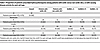 Table 1
Proportion of patients prescribed hydroxychloroquine among patients with acidic versus non-acidic LELs, or with varying disease activity for each cell type
Nuclear self-antigens accumulate on blood Mo, DCs, and B cells during highly active disease. To assess whether SLE patients accumulate nuclear antigens on the plasma membrane, we quantified surface nucleosome on blood cells from SLE patients and HCs. In patients with inactive and moderately active disease, the levels of surface nucleosome on Mo (Figure 4A), B cells (Figure 4B), and DCs (Figure 4C) were comparable to those in HCs. However, in highly active disease, surface nucleosome levels were increased on Mo (1.8-fold), B cells (7.1-fold), and DCs (1.7-fold). Accumulation of surface nuclear antigen on hematopoietic cells was not unique to nucleosome, as highly active SLE patients showed 2.9-fold increased surface dsDNA on Mo (P = 0.03) and 5.3-fold increase on B cells (P ≤ 0.0001) (Supplemental Figure 3, A and B, and Supplemental Table 6). It is also possible that accumulation of surface nucleosome reflected increased FcγR expression; however, the levels of FcγRI, FcγRIIA, FcγRIII, and FcγRIIb on Mo, DCs, and B cells from SLE patients were not different from HC (P = 0.23–0.97) (Supplemental Figure 4). It is noteworthy that some of the anti-FcγRs have epitope specificity for the Fc-binding cleft (blocking antibody) and may not have detected FcγRs that were pre-bound to IgG-ICs. The broad histogram peaks reveal cell-to-cell variability in surface nucleosome, most notably on B cells in highly active disease (Figure 4B). To identify the B cell subset(s) with elevated levels of surface nucleosome, we quantified surface nucleosome on IgD+CD27– resting naive (rNAV) B cells, activated naive (aNAV) B cells, and IgD–CD27– double-negative 1 (DN1) and 2 (DN2) B cells (Supplemental Figure 5) (32). aNAV B cells are the precursors of DN2 cells that differentiate into antibody-secreting cells through extrafollicular response. The frequencies of rNAV, aNAV, DN1, and DN2 B cells in SLE patient and HC blood showed a significant expansion of aNAV and DN2 cells as previously described (32). Comparing surface nucleosome levels with those in HCs, we found that levels on rNAV B cells were increased 2.0- and 4.4-fold in moderately and highly active disease (Figure 4D), while surface nucleosome on aNAV B cells was increased 4.0-, 4.8-, and 14.6-fold across the SLEDAI groups (Figure 4E). In highly active disease, surface nucleosome on DN2 cells was increased 4.1-fold in comparison with HCs (Figure 4F). Although surface nucleosome was elevated on DN1 cells in highly active disease, the levels were not statistically different from those in HCs (P = 0.06; Figure 4G). Thus, during highly active disease, surface nucleosome levels were increased on all cell types; however, the aNAV B cell subset showed the highest levels.
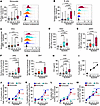 Figure 4
Highly active SLE patients (SLEDAI ≥ 12) show elevated levels of surface nucleosome and circulating immune complexes. (A–G) Unfractionated blood Mo (A), B cells (B), DCs (C), and rNAV (D), aNAV (E), DN2 (F), and DN1 (G) cells were analyzed for surface nucleosome by flow cytometry. Representative histograms show the cell distribution with varying disease activities (gray: isotype control). (H) Plasma circulating immune complex (CIC) levels were measured by IC-mediated internalization of FcγRIIA on neutrophils using flow cytometry and a standard curve. N = 11–41 per disease group; 3 experiments. (I–M) Trends were assessed on B cells (circles), Mo (squares), and DCs (triangles) using the Cochran-Armitage test to compare the proportion of patients in each disease group with high CIC (I), high surface nucleosome (J), low [H+] and high surface nucleosome (K), high CIC and surface nucleosome (L), and low [H+] and high CIC (M). In A–C: HC, N = 48; SLE patient, N = 72; in D–G: HC, N = 19; SLE patient, N = 8–15; 8–48 experiments. Statistical analysis used Kruskal-Wallis (A–H). Adjusted P values with significance are shown. Bars, median; boxes, 25th–75th percentiles; whiskers, minimum and maximum values.
In addition to elevating surface nucleosome, exocytosis also elevates circulating immune complex (CIC) levels. We found that the CIC levels in inactive patients did not change compared with those in HCs; however, in patients with moderately and highly active disease, they were increased 2.2- and 4.7-fold compared with those in HCs (P = 0.009, 0.0009) (Figure 4H and Supplemental Table 8). Patients with “high CIC” showed plasma levels higher than a cutoff established at 1.5-fold above the mean CIC level of HCs. The proportion of patients with elevated CIC also increased over the SLEDAI groups, revealing an association between CIC levels and disease activity (P = 0.01; Figure 4I). To identify whether increasing disease activity was related to LEL dysfunction, we used Cochran-Armitage analysis. For this analysis, patients with “high surface nucleosome” were defined as having cell levels above a cutoff established at 1.8-fold above the mean surface nucleosome level of HC. We found that a significantly higher proportion of patients in highly active disease showed high surface nucleosome on Mo and B cells (Mo, P = 0.02; B cells, P = 0.003) (Figure 4J); however, this trend was not seen with DCs (P = 0.46). In B cells, the trend was corroborated by a high Spearman’s correlation coefficient in patients with highly active disease (r = 0.81, P = 0.004; Supplemental Table 7). We also found that a higher proportion of patients with active disease showed both low [H+] and elevated surface nucleosome on B cells (P = 0.003), Mo (P = 0.01), and DCs (P = 0.03; Figure 4K); or high CIC and increased surface nucleosome on B cells (P = 0.02) and Mo (P = 0.001), but not DCs (P = 0.52) (Figure 4L); or elevated CIC and low [H+] on B cells (P = 0.0001), Mo (P = 0.001), and DCs (P = 0.0001) (Figure 4M). The weaker trend in DCs could reflect that exocytosis occurs after DCs migrate to lymph nodes and complete their maturation (33), since CICs induce CCR7-dependent migration of DCs to lymph nodes in both human and murine lupus (34). In summary, SLEDAI groups with higher disease activity are associated with decreased hydrolase activity and non-acidic LELs in Mo and B cells, and increased surface nucleosome and CIC on Mo, B cells, and DCs. These findings support the idea that LEL dysfunction associates with SLEDAI groups of higher disease activity.
LEL dysfunction is not evident in active rheumatoid arthritis patients. To assess whether reduced LEL [H+] and the accumulation of surface nucleosome were evident in other rheumatic diseases, we analyzed blood hematopoietic cells from active, seropositive rheumatoid arthritis (RA) patients (n = 23; Supplemental Table 9). The [H+] and levels of surface nucleosome on blood hematopoietic cells from active RA patients were not different in comparison with HCs (Supplemental Figure 6). This indicates that the hallmarks of LEL dysfunction are not evident in blood cells from active RA.
Patients with LEL dysfunction are more likely to have renal disease, rash, and arthritis. To identify relationships between clinical symptoms and LEL dysfunction, we separated patients with non-acidic LELs, then calculated the proportion of this group receiving disease-modifying anti-rheumatic drugs (DMARDs; mycophenolic acid, mycophenolate mofetil, azathioprine, methotrexate, tacrolimus) or having clinical manifestations involving kidneys, skin, or joints. Of the patients with non-acidic LELs, 44% showed current renal disease, 35% SLEDAI rash, and 22% SLEDAI arthritis, and 72% were receiving DMARDs (Supplemental Table 5). In addition, we identified patients with each clinical manifestation (renal, skin, joint, or receiving DMARDs), then calculated the proportion of this subgroup with non-acidic LELs. Of those with current renal disease, rash, or arthritis or receiving DMARDS, 92%, 73%, 63%, and 75%, respectively, had non-acidic LELs (Supplemental Table 4). Thus, when patients show clinical manifestations, they are more likely to already exhibit dysfunctional LELs, while patients with non-acidic LELs may not have developed clinical symptoms. This raises the possibility that diminished LEL acidification is coincident with or could precede clinical manifestations.
To identify whether LEL dysfunction associates with renal disease, we grouped SLE patients (regardless of disease activity) into those with active nephritis, those with remission nephritis, and those who never had renal disease (never nephritis), then compared the proportion with non-acidic LELs or increased surface nucleosome. A higher proportion of SLE patients with active renal disease had low [H+] (80%–92%; mean SLEDAI of 11) compared with the proportion of patients who never had nephritis (49%–57%) or who had remission nephritis (45%–55%). This suggests that the function of LELs is restored in remission nephritis. Similarly, more patients with active nephritis showed elevated nucleosome on the surface of B cells (48%; Supplemental Table 10). These findings suggest that LEL dysfunction associates with active nephritis and is characterized by low [H+] in all cell types and the accumulation of surface nucleosome on Mo, DCs, and B cells from highly active patients. Collectively, our findings show that LEL dysfunction associates with active clinical symptoms (SLEDAI rash, arthritis, and nephritis) and is coincidental with, or could precede, these manifestations.
FcγRI is coupled to LEL dysfunction in MRL/lpr mice. Consistent with a role for FcγRI in murine SLE, we previously showed that MRL/lpr mice lacking FcγRI (FcγRI–/–/MRL/lpr) did not develop lupus and exhibited diminished signaling of phosphorylated SykY525 (p-SykY525), p-AktS473, p-AktT308, and p-S6 (13, 14). To assess whether FcγRI–/–/MRL/lpr mice restore LEL function, we used BMMφs and measured acidification ([H+]) and ROS. After 30 minutes of stimulation with IgG-ICs, the [H+] in MRL/lpr BMMφs was reduced 8.3-fold (P = 0.003), while in FcγRI–/–/MRL/lpr BMMφs [H+] was only reduced 1.8-fold (P = 0.0845) (Figure 5A). The levels of ROS in B6 BMMφs were increased 3.8-fold (P < 0.0001) at 15 minutes, returning to 1.4-fold (P = 0.288) at 2 hours (Figure 5B). In MRL/lpr BMMφs, ROS were increased 5.8-fold (P < 0.0001) at 15 minutes and sustained at 7.3-fold (P < 0.0001) at 2 hours (compared with MRL/lpr t0). In FcγRI–/–/MRL/lpr BMMφs ROS were increased 2.7-fold (P = 0.35) at 15 minutes and sustained at 2.7-fold (P = 0.707) at 2 hours (compared with FcγRI–/–/MRL/lpr t0). Thus, loss of FcγRI in MRL/lpr mice reduces the peak ROS levels, but those levels are sustained over 2 hours. We previously identified that FcγRI plays an important role in murine SLE (13), and now show that FcγRI is required for diminished acidification and heightened ROS in MRL/lpr mice, showing a contribution to LEL dysfunction.
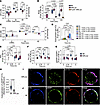 Figure 5
LEL defects are induced by chronic PI3K activation and SHIP-1 defects and evident in FcγRI–/–/MRL/lpr mice. (A–J) BMMφs were stimulated with IgG-ICs (25 μL IgG-ICs per 0.25 × 10⁶ cells). At designated times, LEL pH (A and C), ROS (B), exocytosis (D), PIP3 (E), PI(3,4)P2 (F), and p–SHIP-1Y1022 (G) were measured by flow cytometry. vATPase activity in unstimulated samples [t0(CMA)] was inhibited with concanamycin A (CMA; 2 ng/mL) (A and C). ROS levels (B) were measured using CellROX including t0 samples untreated with IgG-ICs. BMMφs were preloaded (t0) with Alexa Fluor 488–labeled IgG-ICs, and exocytosis was measured at designated times (C). Surface-bound fluorescence was assessed by subtraction of internalized fluorescence (surface quenched) from total (unquenched) and normalized to individual t0. The effect of PI3K was measured using PI3K-p110 inhibitors (p110α, β, and δ) (100 nM, 2 hours before IgG-IC treatment) (C and D). The colocalization of IgG-ICs (red) and p–SHIP-1Y1022 (green) with cholera toxin–positive lipid rafts (CTx, blue) (H) in BMMφs was analyzed by confocal microscopy (I and J). Images were processed using ImageJ (NIH). Representative images are shown. White in merged images depicts colocalized IgG-ICs, p–SHIP-1Y1022, and CTx. Statistical analysis used 2-way ANOVA with multiple comparisons (A–G) and Mann-Whitney test (H). Adjusted P values with significance are shown. N = 2–8, 2–5 experiments (A–H); N = 3, 3 experiments, total of 50 cells per mouse line (H–J). Bars, median; boxes, 25th–75th percentiles; whiskers, minimum and maximum values.
Chronic PI3K activity impairs LEL function. Past studies of LEL dysfunction identified a pathway where the binding of cofilin to phagosomal actin is impaired as a result of heightened cofilin phosphorylation. This diminishes Rab39a cleavage (14), a necessary step in lysosomal acidification (35). Since FcγRI is coupled to the cofilin/actin pathway through PI3K/Akt signaling, we tested whether inhibiting PI3K-p110 activity restored LEL function. BMMφs from B6 and MRL/lpr mice were treated with isoform inhibitors of the PI3K-p110 subunit p110α (PIK-75), p110β (TGX-221), or p110δ (IC87114). In MRL/lpr BMMφs, the [H+] was decreased 9.2-fold (P < 0.0001) in comparison with B6 t30 (Figure 5C). In MRL/lpr BMMφs, the p110α inhibitor did not restore an acidic [H+], instead maintaining 3.9-fold decreased [H+] (P = 0.0001) in comparison with B6 t30. In contrast, treatment with inhibitors of p110β or p110δ increased the [H+] to levels comparable to B6 t30 levels (1.1-fold, P = 0.2503; 1.1-fold, P = 0.2812). Inhibiting PI3K-p110β or -p110δ, but not PI3K-p110α, in MRL/lpr BMMφs also prevented exocytosis (Figure 5D). The levels of fluorochrome-tagged IgG-ICs on MRL/lpr BMMφs were 3.8-fold higher than those on untreated B6 BMMφs (P = 0.0389). However, after treatment with p110β or p110δ inhibitors, [H+] levels were comparable or below the levels in B6 BMMφs. In contrast, the levels of exocytosis in MRL/lpr BMMφs treated with the p110α inhibitor were not different from those in untreated MRL/lpr (P = 0.5). These data demonstrate that chronic PI3K activity of p110β and p110δ in MRL/lpr BMMφs contributes to diminished LEL acidification and reduced degradation of IgG-ICs. It also corroborates previous data showing reduced lupus nephritis, B cell expansion, BAFF, and autoantibody production in FcγRI–/–/MRL/lpr mice (13).
To understand how PI3K activity contributes to LEL dysfunction, we analyzed the products of PI3K activation in IgG-IC–stimulated B6 and MRL/lpr BMMφs. PI3K activation converts PI(4,5)P2 to PI(3,4,5)P3 (PIP3) (Figure 5E). In B6 BMMφs, basal levels of PIP3 increased 2.5-fold (P = 0.013) after 15 minutes of stimulation, then returned to basal levels. In MRL/lpr BMMφs, basal levels of PIP3 were increased 1.6-fold (compared with B6 t0). Following 15 minutes of stimulation, PIP3 levels further increased 1.4-fold (P = 0.179) to levels that were 2.3-fold (P = 0.04) higher than B6 t0. At 6 hours, PIP3 levels remained relatively high at 1.7-fold (P = 0.08) compared with B6 t0. The elevated basal levels, and low IgG-IC–induced levels, of PIP3 suggest sustained PI3K activity in MRL/lpr mice. Alternatively, diminished phosphatase activity could heighten PIP3. To gain insight into phosphatases regulating PIP3 levels, we examined other phosphoinositide products. Activation of SHIP-1 dephosphorylates PIP3 to produce PI(3,4)P2 (36). PI(3,4)P2 levels were transiently increased over 1 hour (1.8-fold, P ≤ 0.0001) in B6 BMMφs, but unchanged in MRL/lpr (1.0-fold, P = 0.79) (Figure 5F). Reduced formation of PI(3,4)P2 following IgG-IC stimulation of MRL/lpr BMMφs suggests impaired SHIP-1 activity.
To assess whether phosphorylation of SHIP-1 reflected the phosphoinositide products, we compared levels of p–SHIP-1Y1022 in B6 and MRL/lpr BMMφs (Figure 5G). B6 BMMφs increased p–SHIP-1Y1022 1.9-fold (P ≤ 0.0001 compared with B6 t0) after 1 hour of stimulation, which returned to baseline by 5 hours. Unstimulated MRL/lpr BMMφs had slightly higher basal p–SHIP-1Y1022 (1.25-fold, P = 0.74 compared with B6) that remained unchanged over 5 hours (1.2-fold; P > 0.99 compared with MRL/lpr t0). The results support the idea that impaired SHIP-1 phosphorylation could account for the sustained PIP3 levels in MRL/lpr BMMφs. They also raised the possibility that impaired phosphorylation of SHIP-1 in MRL/lpr BMMφs could reflect decreased recruitment of SHIP-1 to the plasma membrane to localize with FcγRIIb (36). To assess this, we used confocal microscopy to quantify the levels of p–SHIP-1Y1022 colocalized with cholera toxin–stained (CTx-stained) membrane lipid rafts (Figure 5, H–J). Following 1 hour of stimulation with IgG-ICs, the levels of p–SHIP-1Y1022 colocalized with CTx-positive lipid rafts on the plasma membrane of MRL/lpr BMMφs (Figure 5I) were 2.7-fold decreased (P < 0.0001) compared with B6 (Figure 5J). Taken together, these results demonstrate that MRL/lpr BMMφs show decreased SHIP-1 phosphorylation and fail to localize p–SHIP-1 to the lipid rafts and the site of FcγRI.
Diminished SHIP activity in non-autoimmune mice partially impairs LEL function. Src homology 2–containing inositol phosphatase-1 (SHIP-1; Inpp5d) is activated by phosphorylation at Y1022 (37) and recruited to FcγRI through ITIM-containing FcγRIIb. We hypothesized that if SHIP-1 was unable to efficiently dephosphorylate PIP3 in MRL/lpr BMMφs and consequently induce LEL dysfunction, then B6 BMMφs deficient in SHIP-1 (B6.SHIP-1–/–) should recapitulate LEL dysfunction in MRL/lpr mice. Following stimulation with IgG-ICs, B6.SHIP-1–/– BMMφs showed a 3.7-fold decrease (P = 0.01) in [H+] at 30 minutes, while MRL/lpr showed a 10.3-fold decrease (P < 0.0001) (compared with B6 t0), suggesting that SHIP-1 deficiency does not fully recapitulate diminished acidification in MRL/lpr mice (Figure 6A). Similarly, at 60 minutes after stimulation, the B6.SHIP-1–/– BMMφs did not show increased [H+], confirming that delayed acidification was not occurring (data not shown). When BMMφs were stimulated with IgG-ICs for 15 minutes, ROS levels in B6.SHIP-1–/– BMMφs increased 3.3-fold (P = 0.03) in comparison with B6.SHIP-1–/– at t0, while MRL/lpr showed 2.1-fold increase (P = 0.03) and B6 showed 2.0-fold increase (P = 0.03) in comparison with their individual t0 (Figure 6B). At 2 hours, ROS declined in B6.SHIP-1–/– (1.6-fold, P = 0.72) and B6 (1.3-fold, P = 0.28) BMMφs compared with their individual t0, while in MRL/lpr, ROS levels remained high (2.0-fold, P = 0.04). This indicates that SHIP-1 deficiency does not recapitulate the elevated levels of sustained ROS seen in MRL/lpr mice. We then assessed whether SHIP-1 deficiency increased exocytosis of undegraded IgG-ICs (Figure 6C). MRL/lpr BMMφs showed slightly higher levels (1.2-fold) of fluorochrome-labeled IgG-ICs at 72 hours compared with preloaded levels at t0 (P = 0.76), indicating exocytosis of IgG-ICs to the plasma membrane (Figure 6C and Figure 2C). In contrast, B6 and B6.SHIP-1–/– BMMφs showed surface fluorescence comparable to or below t0, consistent with IgG-IC degradation. Like B6.SHIP-1–/–, B6 BMMφs treated with a SHIP-1 inhibitor (3AC) showed modestly decreased [H+] and significantly elevated but not sustained ROS, with no exocytosis (Figure 6, A–C). Together, the data show that the SHIP-1 deficiency is not sufficient to recapitulate the LEL dysfunction of MRL/lpr mice.
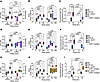 Figure 6
Deficiency in SHP-1 and inhibition of SHIP-1 in B6 mice phenocopy the LEL dysfunction seen in MRL/lpr. To assess the effects of SHIP-1 and/or SHP-1 on LEL defects, BMMφs from B6, B6.SHIP-1–/–, and B6.SHP-1–/– mice were treated or not treated with inhibitors of SHP-1 (10 μM NSC-87877, 3 hours before IgG-IC treatment) or SHIP-1 (50 nM 3AC, 48 hours before IgG-IC treatment). The effects of single deficiency of SHIP-1 (A–C) or SHP-1 (D–F) or double deficiency (G and H) were analyzed. BMMφs were stimulated with IgG-ICs (25 μL IgG-ICs per 0.25 × 10⁶ cells) with or without inhibitors. At designated times, LEL pH (A, D, and G), ROS (B, E, and H), and exocytosis (C, F, and I) were measured by flow cytometry. Absolute pH was calculated using a standard curve (A, D, and G). vATPase activity in unstimulated samples [t0(CMA)] was inhibited with concanamycin A (CMA; 2 ng/mL). ROS levels (B, E, and H) were measured using CellROX including t0 samples untreated with IgG-ICs, and fold of B6 t0 was graphed. BMMφs were preloaded (t0) with Alexa Fluor 488–labeled IgG-ICs, and exocytosis was measured at designated times (C, F, and I). Surface-bound fluorescence was assessed by subtraction of internalized fluorescence (surface quenched) from total (unquenched) and normalized to individual t0. Statistical analysis used Kruskal-Wallis test with multiple comparisons. Adjusted P values with significance are shown. N = 4–12; 3–4 experiments. Bars, median; boxes, 25th–75th percentiles; whiskers, minimum and maximum values.
SHP-1 (Ptpn6), a protein tyrosine phosphatase that dephosphorylates the FcγR γ chain (FcRγ; FCER1G) immunoreceptor tyrosine–based activation motif (ITAM) (YxxL/I) (38), decreases Syk recruitment (39) and dampens FcγRI signal transduction (40). If heightened PI3K activity in LEL dysfunction occurs through sustained FcγRI signaling, then B6.SHP-1–deficient mice (B6.SHP-1fl/fl × B6.Rosa26-CreERT2) should recapitulate the LEL defect seen in MRL/lpr BMMφs. Tamoxifen treatment of SHP-1–deficient mice efficiently excised SHP-1 (Supplemental Figure 7). Following 30 minutes of stimulation with IgG-ICs, B6.SHP-1–/– BMMφs showed 3.9-fold (P = 0.03) lower [H+] compared with 10.3-fold (P = 0.0003) lower in MRL/lpr (compared with B6 t30; Figure 6D). After 15 minutes of IgG-IC stimulation, acute ROS levels in B6.SHP-1–/– BMMφs were increased 6.5-fold (P = 0.02) compared with a 2.1-fold (P = 0.03) increase in MRL/lpr (Figure 6E). At 2 hours, sustained ROS in B6.SHP-1–/– BMMφs were 8.5-fold over t0 (P = 0.005), while levels in MRL/lpr were sustained at 2.0-fold (P = 0.04), indicating that SHP-1 deficiency heightens and sustains ROS. B6.SHP-1–/– BMMφs did not show exocytosis of undegraded IgG-ICs (Figure 6F). Like the B6.SHP-1–/– BMMφs, B6 BMMφs treated with an SHP-1 inhibitor (NSC-87877) showed modestly decreased [H+], slightly elevated acute ROS, and no exocytosis (Figure 6, D–F). Together, the data show that SHP-1 deficiency or inhibitors of SHP-1 activity are not sufficient to fully recapitulate the LEL dysfunction of MRL/lpr mice.
Phosphorylation of SHP-1 at Y564 (p–SHP-1) is necessary for phosphatase activity (41). Stimulation of B6 and MRL/lpr BMMφs with IgG-IC (15 minutes to 5 hours) induced comparable p–SHP-1Y564 at all time points (Supplemental Figure 8A). Since FcγRI constitutively resides within lipid rafts (42), SHP-1 must localize to lipid rafts to dephosphorylate the FcγRI ITAM (43). We used confocal microscopy to assess colocalization of p–SHP-1Y564 with CTx-stained membrane lipid rafts in B6 and MRL/lpr BMMφs following IgG-IC stimulation. We found comparable colocalization of p–SHP-1Y564 with lipid rafts in B6 and MRL/lpr BMMφs (Supplemental Figure 8, B and C). Thus, reduced SHP-1 phosphorylation, or intracellular pSHP-1Y564 mislocalization, does not impair LEL function in MRL/lpr BMMφs.
Reduced SHIP-1 and SHP-1 activity impairs LEL function. To assess whether deficiency in both SHP-1 and SHIP-1 recapitulates LEL dysfunction in MRL/lpr mice, we treated B6.SHIP-1–/– BMMφs with the SHP-1/2 inhibitor NSC-87877. After stimulation with IgG-ICs (30 minutes), B6.SHIP-1–/– BMMφs treated with SHP-1/2 inhibitor showed 4.5-fold (P = 0.05) lower [H+], while MRL/lpr BMMφs showed 10.3-fold (P = 0.0001) lower [H+], compared with B6 t30 (Figure 6G). Further, B6.SHIP-1–/– BMMφs treated with SHP-1/2 inhibitor showed a 2.7-fold increase in ROS (15 minutes, P = 0.04), while MRL/lpr BMMφs showed a 2.1-fold (P = 0.03) increase compared with untreated cells (Figure 6H). Sustained ROS (2 hours) in B6.SHIP-1–/– BMMφs treated with SHP-1/2 inhibitor were also elevated (2.2-fold increase, P = 0.065), while MRL/lpr levels were increased 2.0-fold (P = 0.04). Although treatment of B6.SHIP-1–/– BMMφs with SHP-1/2 inhibitor diminished acidification and heightened ROS, it did not induce exocytosis of undegraded IgG-ICs (Figure 6I).
To corroborate these findings, we treated B6.SHP-1–/– BMMφs with SHIP-1 inhibitor (3AC). Compared with B6, IgG-IC stimulation of B6.SHP-1–/– BMMφs with SHIP-1 inhibitor showed a 9.1-fold lower [H+] at 30 minutes (P = 0.003), while [H+] was 10.3-fold increased in MRL/lpr BMMφs (P = 0.0001; Figure 6G). Additionally, B6.SHP-1–/– BMMφs treated with SHIP-1 inhibitor for 15 minutes showed 8.4-fold heightened ROS (P = 0.002), while MRL/lpr showed 2.1-fold (P = 0.03; Figure 6H). Levels of sustained ROS (2 hours) were 10.7-fold increased in B6.SHP-1–/– BMMφs treated with SHIP-1 inhibitor (P = 0.001), whereas they were 2.0-fold increased in MRL/lpr (P = 0.04). The dual deficiency of SHP-1 and SHIP-1 induced a 2.6-fold increase in the exocytosis of undegraded IgG-ICs (P = 0.02; Figure 6I). Thus, LEL dysfunction in B6.SHP-1–/– BMMφs treated with SHIP-1 inhibitor recapitulated MRL/lpr, while B6.SHIP-1–/– with SHP-1/2 inhibitor was less effective. One possibility is that although heightened ROS is necessary, it is not sufficient to drive LEL dysfunction, while diminished acidification plays a more important role. Collectively, the data show that defects in SHP-1 and SHIP-1 contribute to LEL dysfunction in MRL/lpr mice, suggesting that these phosphatases play direct or indirect roles in disabling LEL function in lupus. Whether other phosphatases in the PI3K/Akt pathway, such as PTEN or Akt phosphatases (PP2A, PHLPP1/2), also play similar roles is unclear.
![Multiple murine lupus models show diminished [H+] and exocytosis of IgG-ICs](http://df6sxcketz7bb.cloudfront.net/manuscripts/191000/191767/small/jci.insight.191767.f2.gif "Multiple murine lupus models show diminished [H+] and exocytosis of IgG-ICs to the plasma membrane.")


