
Research ArticleAIDS/HIVImmunology
Open Access |  10.1172/jci.insight.198185
Ex vivo–expanded allogeneic Vδ2 T cells specifically reduce reservoirs of HIV-1 following latency reversal
Brendan T. Mann,1 Marta Sanz,1 Alisha Chitrakar,1 Kayley Langlands,2 Marc Siegel,2 and Natalia Soriano-Sarabia1,2
1Department of Microbiology, Immunology and Tropical Medicine, and
2Department of Medicine, The George Washington University, Washington, DC, USA.
Address correspondence to: Natalia Soriano-Sarabia, The George Washington University, 2300 I St. NW., Washington, DC, 20037, USA. Phone: 202.994.2266; Email: nataliasorsar@gmail.com or nataliasorsar@gwu.edu.
Find articles by Mann, B. in: PubMed | Google Scholar
1Department of Microbiology, Immunology and Tropical Medicine, and
2Department of Medicine, The George Washington University, Washington, DC, USA.
Address correspondence to: Natalia Soriano-Sarabia, The George Washington University, 2300 I St. NW., Washington, DC, 20037, USA. Phone: 202.994.2266; Email: nataliasorsar@gmail.com or nataliasorsar@gwu.edu.
Find articles by Sanz, M. in: PubMed | Google Scholar
1Department of Microbiology, Immunology and Tropical Medicine, and
2Department of Medicine, The George Washington University, Washington, DC, USA.
Address correspondence to: Natalia Soriano-Sarabia, The George Washington University, 2300 I St. NW., Washington, DC, 20037, USA. Phone: 202.994.2266; Email: nataliasorsar@gmail.com or nataliasorsar@gwu.edu.
Find articles by Chitrakar, A. in: PubMed | Google Scholar
1Department of Microbiology, Immunology and Tropical Medicine, and
2Department of Medicine, The George Washington University, Washington, DC, USA.
Address correspondence to: Natalia Soriano-Sarabia, The George Washington University, 2300 I St. NW., Washington, DC, 20037, USA. Phone: 202.994.2266; Email: nataliasorsar@gmail.com or nataliasorsar@gwu.edu.
Find articles by Langlands, K. in: PubMed | Google Scholar
1Department of Microbiology, Immunology and Tropical Medicine, and
2Department of Medicine, The George Washington University, Washington, DC, USA.
Address correspondence to: Natalia Soriano-Sarabia, The George Washington University, 2300 I St. NW., Washington, DC, 20037, USA. Phone: 202.994.2266; Email: nataliasorsar@gmail.com or nataliasorsar@gwu.edu.
Find articles by Siegel, M. in: PubMed | Google Scholar
1Department of Microbiology, Immunology and Tropical Medicine, and
2Department of Medicine, The George Washington University, Washington, DC, USA.
Address correspondence to: Natalia Soriano-Sarabia, The George Washington University, 2300 I St. NW., Washington, DC, 20037, USA. Phone: 202.994.2266; Email: nataliasorsar@gmail.com or nataliasorsar@gwu.edu.
Find articles by Soriano-Sarabia, N. in: PubMed | Google Scholar
Published February 10, 2026 - More info
JCI Insight. 2026;11(6):e198185. https://doi.org/10.1172/jci.insight.198185.
© 2026 Mann et al. This work is licensed under the Creative Commons Attribution 4.0 International License. To view a copy of this license, visit http://creativecommons.org/licenses/by/4.0/.
Received: September 2, 2025; Accepted: February 4, 2026

-
Results
Comparable cytotoxic phenotype between expanded Vδ2 T cells from PWOH and ART-suppressed PWH. HIV-1 infection results in the specific depletion of peripheral Vδ2 T cells through direct infection and gp120-mediated induction of apoptosis (35, 40). Although the frequency of Vδ2 T cells does not recover after durable viral suppression with ART, our work showed reconstitution of ex vivo N-BP–expanded Vδ2 T cells comparable with HIV-seronegative controls (27). For this study, PBMCs were isolated from a cohort of PWOH with a median age of 53 years old (IQR, 32–60) and even proportion (50%) of women and men. Additionally, PBMCs were isolated from a cohort of ART-suppressed PWH with a median age of 46 years old (IQR, 31–48) and slightly skewed toward male donors (62.5%) compared with female donors (37.5%). The median time since initiating ART was 8.1 years (IQR, 7.1–11.8) with a record of durable suppression for a median of 6.9 years (IQR, 3.8–8.0) (Table 1). Vδ2 T cells were specifically expanded with 3 μM alendronate (ALN) and 500 U/mL IL-2 for 14 days before being phenotyped by flow cytometry. Confirming our previous studies (27), Vδ2 T cells from PWH experienced a lower expansion compared with PWOH (mean 84.2 versus 26.5, or mean fold expansion of 59.1 versus 90.7, respectively. Mann-Whitney U test, P < 0.001). We focused on well-established markers associated with Vδ2 T cell cytotoxicity such as CD8, CD56, CD16, NK group 2 members NKG2D and NKG2A, and TNFSF ligands FasL and TRAIL (Supplemental Figure 1). In agreement with previous reports from our group and others (27, 37, 41), ART-suppressed PWH had a lower ex vivo frequency of Vδ2 T cells compared with controls (mean 0.7% versus 2.3%, P = 0.019; Figure 1A). Vδ2 T cells from both ART-suppressed PWH and PWOH expanded after 14 days in culture (Figure 1, B and C). As expected, the mean frequency of expanded Vδ2 T cells from PWH was lower than PWOH (mean 26.6% versus 82.3%, respectively; P < 0.001) and was not associated with biological sex or age of the donors (Supplemental Figure 2, A and B).
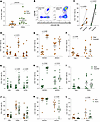 Figure 1
Comparison of pre- and post-Vδ2 T cell expansion between ART-suppressed PWH and PWOH. (A) Ex vivo (Basal) Vδ2 T cell frequencies. ART-suppressed PWH (n = 9), PWOH (n = 16). (B and C) Representative plots and quantification of Vδ2 T cells as a percentage of total live cells before (basal, circle) and after expansion (expanded, triangle) for 14 days. (D–I) Changes in cytotoxic markers in ART-suppressed PWH (D–F) and PWOH (G–I). (J–L) Comparison of expanded Vδ2 T cell phenotypes between ART-suppressed PWH (orange) and PWOH (green). Mann-Whitney U test (A and J–L). Wilcoxon matched pairs signed rank test (C–I).
Expansion coincided with increased expression of CD56 and NKG2D (Figure 1, D and E) and decreased FasL expression (Figure 1F) in PWH, whereas in PWOH, we also observed an increase in CD16 and NKG2A (Figure 1, G and H) and no change in FasL or TRAIL (Figure 1I). CD16 was only upregulated in Vδ2 T cells expanded from PWOH (Figure 1, D and G).
The phenotype of expanded Vδ2 T cells was comparable between the 2 groups, with the only differences being a higher frequency of NKG2A and TRAIL-expressing cells in ART-suppressed PWH compared with PWOH (mean 68% versus 45%, P = 0.012; mean 0.76% versus 0.33%, P = 0.004; Figure 1, J–L).
Lastly, we did not find correlations between basal or expanded frequencies and phenotypes of our ART-suppressed donors and relevant clinical characteristics such as time since diagnosis, time on ART, time suppressed, or CD4 counts at the time of donation (not shown). These results confirm and expand our previous study that Vδ2 T cells can be robustly expanded from healthy PWOH that share phenotypic similarities with Vδ2 T cells expanded from ART-suppressed PWH (27).
Ex vivo–expanded allogeneic Vδ2 T cells specifically kill both HIV-infected CD4+ T cells and MDMs. HIV-infected cells avoid recognition and killing by CD8+ T cells and NK cells through both viral and cell intrinsic mechanisms (13–16). Our previous studies show that autologous Vδ2 T cells from ART-suppressed PWH can inhibit active viral replication by specifically targeting infected CD4+ T cells (35, 37). Due to the MHC-independent nature of γδ T cell recognition, we hypothesized that allogeneic Vδ2 T cells would retain their ability to kill HIV-infected CD4+ T cells and macrophages. We modified a previously published method to generate CD4+ T cells and MDMs infected with HIVBAL (15). Expanded allogeneic Vδ2 T cells were cocultured at different E:T ratios with either CD4+ T cells or MDMs for 18 hours, and intracellular HIVp24 production was analyzed by flow cytometry (Figure 2A). Coculture of infected CD4+ T cells with expanded allogeneic Vδ2 T cells from E:T ratios ranging from 1:5 through 50:1 resulted in a reduction in HIVp24+ target cells in a dose-dependent manner (Figure 2, B and C). A higher production of indicators of cell-killing IL-2, FasL, IFN-γ, perforin, and granulysin was observed in the supernatant of Vδ2 T cells cocultured with HIV-infected cells versus uninfected CD4+ T cells (Figure 2D).
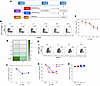 Figure 2
Allogeneic Vδ2 T cells kill HIV-infected CD4+ T cells and MDMs. (A) Schematic representation of CD4+ T cells and MDM target cell generation and Vδ2 T cell expansion. Target cells were infected with HIVBAL prior to coculture with expanded allogeneic Vδ2 T cells. (B and C) Representative zebra plots and quantification of dose-dependent Vδ2 T cell-mediated killing of HIV-infected CD4+ T cells (n = 4). (D) Production of cytokine and cytotoxic soluble factors in supernatants from allogeneic Vδ2 T cells cocultured with either HIV-infected (HIV+) or uninfected (HIV–) CD4+ T cells at a 10:1 ratio and normalized to Vδ2 T cell monoculture controls. (E and F) Representative zebra plots and quantification of dose-dependent Vδ2 T cell-mediated killing of HIV-infected MDM cells (n = 4). (G) Head-to-head comparison of allogeneic Vδ2 T cell killing between HIV-infected CD4+ T cells (red) and MDMs (blue). (H) Viability of uninfected CD4+ T cell controls alone or cocultured with allogeneic Vδ2 T cells at 1 10:1 E:T ratio.
Although we observed similar pattern of dose-dependent killing of HIV-infected MDMs, elimination plateaued between an E:T ratio of 5:1 and 10:1 (Figure 2, E and F). To test whether MDMs are resistant to Vδ2 T killing, we conducted a side-by side comparison between MDMs and CD4+ T cells from the same donors infected with HIVBAL. Comparison between CD4 and MDM killing revealed resistance to Vδ2 T cell killing at the 1:1 E:T ratio. However, this resistance was overcome when higher 5:1 and 10:1 ratios were applied (Figure 2G). Importantly, viability of uninfected CD4+ T cells was consistently high between cocultures with allogeneic Vδ2 T cells and monoculture controls (Figure 2H). These results demonstrate that ex vivo–expanded allogeneic Vδ2 T cells can specifically recognize and kill HIV-infected cells that may serve as latent reservoirs, including those resistant to killing by other effector cell types (15, 16).
Ex vivo–expanded allogeneic Vδ2 T cells reduce the CD4+ T cell reservoir following latency reversal. To assess whether allogeneic Vδ2 T cells can specifically eliminate latent reservoirs of HIV-1, we utilized an adapted version of the more clinically relevant LCA previously published by our group (37, 39). Total CD4+ T cells from ART-suppressed PWH were isolated, and viral transcription was induced by PHA and IL-2 for 18 hours. Following latency reversal, CD4+ T cells were cocultured with expanded allogeneic Vδ2 T cells for additional 18 hours (Figure 3A). Vδ2 T cells were then depleted from cultures (Figure 3B) to prevent nonspecific interactions with allogeneic feeder cells that are required to propagate viral outgrowth (37). Remaining CD4+ T cells were cultured for 19 days with allogeneic, activated CD4+ T cell feeders added on day 8. We detected positive viral outgrowth from CD4+ T cells cultured alone in 57.1% (8 of 14) of ART-suppressed PWH with a mean of 15.6 wells (1 × 10⁶ cells/well) plated and 3.1 positive wells (Figure 3C). Coculture with allogeneic Vδ2 T cells resulted in a reduction in the number of positive viral outgrowth wells when compared with CD4+ T cell monoculture controls (mean 1.9 versus 5.5 wells, respectively; P = 0.0156; Figure 3D), with 3 cases where no virus was recovered upon coculture. Lastly, we conducted a direct head-to-head comparison of autologous versus allogeneic Vδ2 T cells in 3 donors and found a comparable capacity to reduce the reactivated latent reservoir (Figure 3E). Together these findings demonstrate that allogeneic Vδ2 T cells can specifically recognize and eliminate the primary latent cellular reservoir of HIV-1 following viral reactivation.
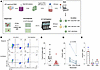 Figure 3
Allogeneic Vδ2 T cells eliminate reactivated latently infected CD4+ T cells. (A) Schematic representation of the latency clearance assay. (B) Purity of cocultures upon Vδ2 T cell depletion. (C) Total number of wells plated per assay (1 × 10⁶ CD4+ T cells/well) versus the total number of HIVp24+ wells from reactivated CD4+ T cell cultures at day 19 of outgrowth (n = 16). (D) Results of the LCA. Quantification of total HIVp24 positive wells in CD4+ T cells cultured alone compared with CD4+ T cells cocultured and depleted of allogeneic Vδ2 T cells following viral reactivation (n = 10). (E) Head-to-head comparison showing comparable reduction in HIVp24 wells between autologous versus allogeneic Vδ2 T cells (n = 3).


