
Immunology
Abstract
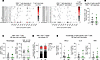
BACKGROUND Among people living with HIV (PLWH), immunological nonresponders (INR) fail to adequately restore CD4+ T cell counts despite effective antiretroviral therapy (ART), placing them at greater risk for adverse outcomes and reduced vaccine efficacy. We aimed to study the robustness and longevity of vaccine-induced virus-specific cellular immune responses in INR.METHODS Virus-specific CD8+ T cell responses were analyzed in INR (CD4+ T cell count < 300 cells/μL) and immunological responders (IR) (CD4+ T cell count > 500 cells/μL), receiving ART, and HIV-uninfected controls following COVID-19 mRNA vaccination and infection. Virus-specific CD8+ T cells were characterized using peptide-loaded MHC I tetramer technology, after in vitro expansion and cytokine production assays. Virus-specific CD4+ T cells and IgG levels were determined by activation-induced marker (AIM) assay and ELISA, respectively.RESULTS We demonstrated that, while long-lasting virus-specific cellular immune responses were generated in INR, CD8+ T cell immunity remained limited compared with robust CD4+ T cell reactivity. CD8+ T cell responses in INR exhibited reduced breadth and frequency, accompanied by altered memory differentiation and suboptimal activation and effector response upon antigen exposure. This deficiency correlated with low CD4+ T cell counts, independent of other disease markers, highlighting the pivotal role of CD4+ T cells in orchestrating vaccine-induced immunity. Notably, repeated booster vaccinations enhanced virus-specific CD8+ T cell responses.CONCLUSION INR elicit limited vaccine-induced virus-specific CD8+ T cell immunity, but booster vaccinations can enhance these responses, suggesting better immune outcomes with tailored vaccination strategies.FUNDING Helmholtz Society, German Research Foundation, Federal Ministry of Education and Research.
Authors
Vivien Karl, Anne Graeser, Anastasia Kremser, Liane Bauersfeld, Florian Emmerich, Nadine Herkt, Siegbert Rieg, Susanne Usadel, Bertram Bengsch, Tobias Boettler, Hendrik Luxenburger, Christoph Neumann-Haefelin, Matthias C. Müller, Robert Thimme, Maike Hofmann

Abstract
Primary exposure to influenza antigens during infancy shapes the humoral response to subsequent exposures. Development of a universal vaccine approach to protect newborns against influenza would represent a major step forward. In our previous study, we showed vaccination of newborn African green monkeys (AGMs) with an adjuvanted hemagglutinin (HA) stem nanoparticle induced robust IgG responses with broad recognition across HAs. Here, we examined the cellular responses in the lung-draining lymph node of these vaccinated newborn AGMs following challenge with a heterologous H1N1 virus. Our results show that vaccination is associated with early HA stem IgG+ B cell and antibody-secreting cell responses following infection, consistent with a rapidly recalled memory response. In addition, there was evidence of an increase in both HA stem– and head–specific plasma cells in vaccinated animals, suggesting a vaccine-engendered benefit for novel antibodies targeting HA epitopes. Finally, challenge was associated with preferential increases in antibodies that cross-react with H5 HA, suggesting improved protection against this divergent strain. Overall, these findings indicate that HA stem with AddaVax as adjuvant generates a stem-specific cross-reactive memory pool in newborn AGMs with the potential to be rapidly recalled upon infection.
Authors
Kali F. Crofts, Beth C. Holbrook, Courtney L. Page, Maya Sangesland, Masaru Kanekiyo, Martha Alexander-Miller
Abstract
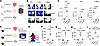
Despite the widespread use of adenovirus, mRNA, and protein-based vaccines during the COVID-19 pandemic, their relative immunological profiles and protective efficacies remain incompletely defined. Here, we compared antigen kinetics, innate and adaptive immune responses, and protective efficacy following Ad5, mRNA, and protein vaccination in mice. Ad5 induced the most sustained antigen expression, but mRNA induced the most potent IFN responses, associated with robust antigen presentation and costimulation. Unlike Ad5 vaccines, which were hindered by preexisting vector immunity, mRNA vaccines retained efficacy after repeated use. As a single-dose regimen, Ad5 vaccines elicited higher immune responses. However, as a prime-boost regimen, and particularly in Ad5 seropositive mice, mRNA vaccines were more immunogenic than the other vaccine platforms. These findings highlight strengths of each vaccine platform and underscore the importance of host serostatus in determining optimal vaccine performance.
Authors
Bakare Awakoaiye, Shiyi Li, Sarah Sanchez, Tanushree Dangi, Nahid Irani, Laura Arroyo, Gabriel Arellano, Shadi Mohammadabadi, Malika Aid, Pablo Penaloza-MacMaster

Abstract
Prolonged and dysregulated neutrophilic inflammation causes tissue damage in chronic inflammatory diseases, including antibody-mediated glomerulonephritis (AGN). An increase in glycolysis, supported by enhanced glucose uptake, is a hallmark of hyperneutrophilic inflammation. Neutrophils upregulate glucose transporter 1–mediated (Glut1-mediated) glucose incorporation for renal antimicrobial activities. However, little is known about the role of neutrophil-specific Glut1 function in the pathogenesis of AGN. Using a well-vetted mouse model of AGN, we show that neutrophils upregulate Glut1 expression and function in the nephritic kidney. We demonstrate that Glut1 function in the hematopoietic cells during the early stage of the disease is necessary for kidney pathology. Most importantly, neutrophil-intrinsic Glut1 function is critical for AGN. While neutrophil-specific Glut1 ablation diminished the expression of tissue-damaging effector molecules in both the early and late stages, renal cytokines’ and chemokines’ production were compromised only in the late stage of the disease. Consequently, Glut1 inhibitor treatment ameliorated renal pathology in AGN mice. These data identify a Glut1-driven inflammatory circuit in neutrophils, which is amenable to therapeutic targeting in AGN.
Authors
Hossein Rahimi, Wonseok Choi, Doureradjou Peroumal, Shuxia Wang, Partha S. Biswas
Abstract
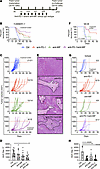
Macrophage migration inhibitory factor (MIF) is an upstream regulatory cytokine that is associated with advanced disease and poor outcomes in multiple cancer types, including melanoma. We investigated whether anti-MIF therapy could enhance the antitumor effects of the immune checkpoint inhibitor anti–programmed cell death 1 (anti–PD-1) in 2 murine tumor models. The therapeutic efficacy of anti-MIF, alone or combined with anti–PD-1, was tested in the YUMMER1.7 melanoma and MC38 colorectal cancer models. Tumor growth and survival were assessed in untreated Mif-knockout (KO) and low-expression human MIF allele (CATT5) mice and compared with wild-type (WT) or high-expression MIF allele (CATT7) mice. Tumor-bearing animals underwent cytokine profiling, tumor immunohistochemistry, flow cytometry, and scRNA-Seq. We also correlated functional variant MIF alleles with melanoma incidence and progression in patients. Our results showed that combined anti-MIF and anti–PD-1 significantly reduced tumor growth, improved survival, and promoted tumor regression, accompanied by enhanced TH1 cytokine levels, increased macrophage activation–related cytokines, and increased type 1 conventional dendritic cells. scRNA-Seq analysis revealed an expansion of intratumor Cd74/C1q/Aif1-expressing macrophages, which exhibited an antitumor phenotype, in response to anti-MIF therapy. MIF-KO and CATT5 mice exhibited reduced tumor burdens compared with WT or CATT7 mice alone and in the presence of anti–PD-1. In patients with melanoma, the high-MIF expression genotype (-173C/C) occurred at higher frequencies compared with healthy controls. These findings highlight that the addition of anti-MIF to anti–PD-1 reduces tumor growth, enhances antitumor responses, prolongs survival, and augments key intratumor immune cell populations involved in immune activation against tumors. This approach merits further consideration for clinical trial development.
Authors
Thuy T. Tran, Gabriela Athziri Sánchez-Zuno, Lais Osmani, Jasmine Caulfield, Caroline Naomi Valdez, Marta Piecychna, Lin Leng, Michelle E. Armstrong, Seamas C. Donnelly, Carlo B. Bifulco, Terri Clister, Rajan P. Kulkarni, Lin Zhang, Mario Sznol, Lucia Jilaveanu, Harriet M. Kluger, Insoo Kang, Richard Bucala
Abstract
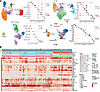
Chronic lung allograft dysfunction (CLAD) is the leading cause of mortality after lung transplantation, yet its molecular mechanisms remain poorly understood. To elucidate the pathogenesis of CLAD, we conducted a comprehensive single-cell transcriptomic analysis of CLAD lungs, integrating our generated datasets with approximately 1.6 million cells from 15 published studies of other fibrotic lung diseases. By applying pseudo-bulk approaches to mitigate batch effects, we identified molecular signatures specific to CLAD and those shared with idiopathic pulmonary fibrosis, COVID-19, and other fibrotic conditions. Our analysis revealed CLAD-specific cellular subsets including Fibro.AT2 cells, exhausted CD8+ T cells, and superactivated macrophages while suggesting that pathogenic keratin 17–positive, keratin 5–negative (KRT17+KRT5−) cells represent a common fibrotic mechanism across fibrotic lung diseases. Additionally, we performed donor-recipient cell deconvolution in lung allografts, uncovering distinct transcriptional programs and intercellular crosstalk between donor- and recipient-derived cells that drive allograft fibrosis. Recipient-derived stromal and immune cells showed enhanced pro-fibrotic and allograft rejection pathways compared with their donor counterparts. By leveraging insights from other fibrotic diseases to elucidate CLAD-specific mechanisms, our study provides a molecular framework for understanding CLAD pathogenesis and identifies potential therapeutic targets for this treatment-refractory condition.
Authors
Yuanqing Yan, Taisuke Kaihou, Emilia Lecuona, Xin Wu, Masahiko Shigemura, Haiying Sun, Chitaru Kurihara, Ruli Gao, Felix L. Nunez-Santana, G.R. Scott Budinger, Ankit Bharat
Abstract
High-affinity antibody production depends on CD4+ T-follicular helper (Tfh) cells. In humans, peripheral blood Tfh cells are heterogenous, as evidenced by differential expression of the chemokine receptors, CXCR3 and CCR6, which to date have served to classify three subsets, pTfh1, pTfh2 and pTfh17. Although pTfh1 responses dominate during blood-stage Plasmodium infections, a clear association with protective antibody responses remains to be described. We hypothesise that pTfh cells exhibit greater phenotypic and functional heterogeneity than that described by CXCR3/CCR6 alone, and that these more nuanced pTfh subsets play distinct roles during Plasmodium infection. We map pTfh cell heterogeneity in healthy individuals prior to and during controlled human malaria infection (CHMI) using parallel scRNA-seq and VDJ-seq. We uncover two pTfh1 subsets or differential phenotypic states, distinguishable by CCR7 expression. Prior to infection, Tfh1-CCR7neg cells exhibit higher baseline expression of inflammatory cytokines and genes associated with cytotoxicity. While Tfh1-CCR7pos cells have higher GC signatures. Indeed, during CHMI, Tfh1-CCR7pos, Tfh1-CCR7neg, and Tfh2 cells, all clonally expand and become activated. However, only Tfh1-CCR7pos and Tfh2 cells positively associate with protective antibody production. Hence, our data reveal further complexity amongst human Tfh cells, and highlight two distinct subsets associated with antibody-mediated immunity to malaria.
Authors
Megan S.F. Soon, Damian A. Oyong, Nicholas L. Dooley, Reena Mukhiya, Zuleima Pava, Dean Andrew, Jessica R. Loughland, James S. McCarthy, Jo-Anne Chan, James G. Beeson, Christian Engwerda, Ashraful Haque, Michelle J. Boyle
Abstract
IgA protects the body from invaders in the mucosal sites, but its role in allergic diseases, such as hay fever, is poorly understood. We demonstrate an increased susceptibility to cedar pollen-induced hay fever associated with increasing pollen penetration into the body in IgA-deficient mice, indicating that IgA prevents pollen invasion on the mucosa. We identified Bryostatin 1, an anti-carcinogenic Protein kinase C (PKC) δ activator, as an IgA/IgE class-switching regulator in B cells. Bryostatin 1 enhanced IgA production through induction of germline transcript (GLT) α via PKCδ-MEK/ERK-RUNX1 pathway and suppressed IgE by reducing GLTε through the PKCδ-STAT5-ID2 pathway. Production of Th2 cytokines and eosinophils infiltration in the lungs was also reduced. Furthermore, hay fever alleviation by Bryostatin 1 demonstrated diminished symptoms in mice in vivo three months subsequent to nasal administration.
Authors
Naoki Morita, Kohta Yamamoto, Ryutaro Tamano, Peng Gao, Takahiro Nagatake, Takenori Inomata, Tianxiang Huang, Yasuhiro Yamada, Takahiro Adachi, Manabu Sugai, Keiichi I. Nakayama, Hirotatsu Kojima, Reiko Shinkura
Abstract
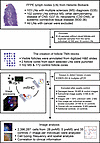
The efficacy of anti-CD20 therapies places B cells and their interaction with T cells at the center of attention for multiple sclerosis (MS) pathogenesis. Follicular T helper cells (Tfh), which guide B cell maturation in germinal centers within lymph nodes (LNs), are elevated in the circulation and cerebrospinal fluid of patients with MS (pwMS). However, the LN spatial landscape has remained largely without investigation for pwMS. Using cyclic immunofluorescence, we assessed cell abundance and spatial connections in FFPE LNs of 33 pwMS and 35 non-MS controls. The presence of EBV was analyzed through EBER immunostaining and multiplex quantitative PCR. Our analysis showed that Tfh cells were expanded in LNs of pwMS and accumulated especially in the mantle zone and B cell follicles compared with controls. The Tfh/T follicular regulator ratio was increased in pwMS, while B cell ratios were similar between the cohorts. The interaction of Tfh cells with follicular B cells was higher in pwMS. Interestingly, Tfh accumulation was also observed in 5 prediagnostic MS cases. No signs of EBV latency were detected in either group. These findings highlight LNs as a site of early and persistent immune activation in pwMS, with therapeutic implications to be further addressed.
Authors
Joona Sarkkinen, Eliisa Kekäläinen, Leo Hannolainen, Ada Junquera, Johannes Dunkel, Maria F. Perdomo, Mikko I. Mäyränpää, Sini M. Laakso

Abstract
Epigenetic scarring of terminally dysfunctional (TDysf) CD8+ T cells hinders long-term protection and response to immune checkpoint blockade during chronic infections and cancer. We developed a faithful in vitro model for CD8+ T cell terminal dysfunction as a platform to advance T cell immunotherapy. Using TCR-transgenic CD8+ T cells, we found that 1-week peptide stimulation, mimicking conditions in previous models, failed to induce a stable exhaustion program. In contrast, prolonged stimulation for 2–3 weeks induced T cell dysfunction but triggered activation-induced cell death, precluding long-term investigation of exhaustion programs. To better mimic in vivo exhaustion, we provided post-effector, chronic TGF-β1 signals, enabling survival of chronically stimulated CD8+ T cells for over 3 weeks. These conditions induced a state of terminal dysfunction, marked by a stable loss of effector, cytotoxicity, and memory programs, along with mitochondrial stress and impaired protein translation. Importantly, transcriptomic and epigenetic analyses verified the development of terminal exhaustion-specific signatures in TDysf cells. Adoptive transfer of TDysf cells revealed their inability to recall effector functions or proliferate after acute lymphocytic choriomeningitis virus rechallenge. This tractable model system enables investigation of molecular pathways driving T cell terminal dysfunction and discovery of therapeutic targets for cancer or chronic infections.
Authors
Amir Yousif, Abbey A. Saadey, Ava Lowin, Asmaa M. Yousif, Ankita Saini, Madeline R. Allison, Kelley Ptak, Eugene M. Oltz, Hazem E. Ghoneim
No posts were found with this tag.


