
Research ArticleImmunology
Open Access |  10.1172/jci.insight.188125
Intranodal expansion of follicular T helper cells in patients with multiple sclerosis
Joona Sarkkinen,1 Eliisa Kekäläinen,1,2,3 Leo Hannolainen,4 Ada Junquera,5 Johannes Dunkel,6,7 Maria F. Perdomo,4 Mikko I. Mäyränpää,6,7 and Sini M. Laakso1,8
1Translational Immunology Research Program and
2Department of Bacteriology and Immunology, University of Helsinki, Helsinki, Finland.
3HUS Diagnostic Center, Clinical Microbiology, Helsinki University Hospital, Helsinki, Finland.
4Department of Virology, University of Helsinki and Helsinki University Hospital, Helsinki, Finland.
5Research Program in Systems Oncology and
6Department of Pathology, University of Helsinki, Helsinki, Finland.
7Pathology, HUS Diagnostic Center, Helsinki, Finland.
8Department of Neurology, Brain Center, Helsinki University Hospital, Helsinki, Finland.
Address correspondence to: Joona Sarkkinen, Biomedicum, Haartmaninkatu 8, PO Box 63, 00290 Helsinki, Finland. Email: joona.sarkkinen@helsinki.fi.
Find articles by Sarkkinen, J. in: PubMed | Google Scholar
1Translational Immunology Research Program and
2Department of Bacteriology and Immunology, University of Helsinki, Helsinki, Finland.
3HUS Diagnostic Center, Clinical Microbiology, Helsinki University Hospital, Helsinki, Finland.
4Department of Virology, University of Helsinki and Helsinki University Hospital, Helsinki, Finland.
5Research Program in Systems Oncology and
6Department of Pathology, University of Helsinki, Helsinki, Finland.
7Pathology, HUS Diagnostic Center, Helsinki, Finland.
8Department of Neurology, Brain Center, Helsinki University Hospital, Helsinki, Finland.
Address correspondence to: Joona Sarkkinen, Biomedicum, Haartmaninkatu 8, PO Box 63, 00290 Helsinki, Finland. Email: joona.sarkkinen@helsinki.fi.
Find articles by Kekäläinen, E. in: PubMed | Google Scholar
1Translational Immunology Research Program and
2Department of Bacteriology and Immunology, University of Helsinki, Helsinki, Finland.
3HUS Diagnostic Center, Clinical Microbiology, Helsinki University Hospital, Helsinki, Finland.
4Department of Virology, University of Helsinki and Helsinki University Hospital, Helsinki, Finland.
5Research Program in Systems Oncology and
6Department of Pathology, University of Helsinki, Helsinki, Finland.
7Pathology, HUS Diagnostic Center, Helsinki, Finland.
8Department of Neurology, Brain Center, Helsinki University Hospital, Helsinki, Finland.
Address correspondence to: Joona Sarkkinen, Biomedicum, Haartmaninkatu 8, PO Box 63, 00290 Helsinki, Finland. Email: joona.sarkkinen@helsinki.fi.
Find articles by Hannolainen, L. in: PubMed | Google Scholar
1Translational Immunology Research Program and
2Department of Bacteriology and Immunology, University of Helsinki, Helsinki, Finland.
3HUS Diagnostic Center, Clinical Microbiology, Helsinki University Hospital, Helsinki, Finland.
4Department of Virology, University of Helsinki and Helsinki University Hospital, Helsinki, Finland.
5Research Program in Systems Oncology and
6Department of Pathology, University of Helsinki, Helsinki, Finland.
7Pathology, HUS Diagnostic Center, Helsinki, Finland.
8Department of Neurology, Brain Center, Helsinki University Hospital, Helsinki, Finland.
Address correspondence to: Joona Sarkkinen, Biomedicum, Haartmaninkatu 8, PO Box 63, 00290 Helsinki, Finland. Email: joona.sarkkinen@helsinki.fi.
Find articles by Junquera, A. in: PubMed | Google Scholar
1Translational Immunology Research Program and
2Department of Bacteriology and Immunology, University of Helsinki, Helsinki, Finland.
3HUS Diagnostic Center, Clinical Microbiology, Helsinki University Hospital, Helsinki, Finland.
4Department of Virology, University of Helsinki and Helsinki University Hospital, Helsinki, Finland.
5Research Program in Systems Oncology and
6Department of Pathology, University of Helsinki, Helsinki, Finland.
7Pathology, HUS Diagnostic Center, Helsinki, Finland.
8Department of Neurology, Brain Center, Helsinki University Hospital, Helsinki, Finland.
Address correspondence to: Joona Sarkkinen, Biomedicum, Haartmaninkatu 8, PO Box 63, 00290 Helsinki, Finland. Email: joona.sarkkinen@helsinki.fi.
Find articles by Dunkel, J. in: PubMed | Google Scholar
1Translational Immunology Research Program and
2Department of Bacteriology and Immunology, University of Helsinki, Helsinki, Finland.
3HUS Diagnostic Center, Clinical Microbiology, Helsinki University Hospital, Helsinki, Finland.
4Department of Virology, University of Helsinki and Helsinki University Hospital, Helsinki, Finland.
5Research Program in Systems Oncology and
6Department of Pathology, University of Helsinki, Helsinki, Finland.
7Pathology, HUS Diagnostic Center, Helsinki, Finland.
8Department of Neurology, Brain Center, Helsinki University Hospital, Helsinki, Finland.
Address correspondence to: Joona Sarkkinen, Biomedicum, Haartmaninkatu 8, PO Box 63, 00290 Helsinki, Finland. Email: joona.sarkkinen@helsinki.fi.
Find articles by Perdomo, M. in: PubMed | Google Scholar
1Translational Immunology Research Program and
2Department of Bacteriology and Immunology, University of Helsinki, Helsinki, Finland.
3HUS Diagnostic Center, Clinical Microbiology, Helsinki University Hospital, Helsinki, Finland.
4Department of Virology, University of Helsinki and Helsinki University Hospital, Helsinki, Finland.
5Research Program in Systems Oncology and
6Department of Pathology, University of Helsinki, Helsinki, Finland.
7Pathology, HUS Diagnostic Center, Helsinki, Finland.
8Department of Neurology, Brain Center, Helsinki University Hospital, Helsinki, Finland.
Address correspondence to: Joona Sarkkinen, Biomedicum, Haartmaninkatu 8, PO Box 63, 00290 Helsinki, Finland. Email: joona.sarkkinen@helsinki.fi.
Find articles by Mäyränpää, M. in: PubMed | Google Scholar
1Translational Immunology Research Program and
2Department of Bacteriology and Immunology, University of Helsinki, Helsinki, Finland.
3HUS Diagnostic Center, Clinical Microbiology, Helsinki University Hospital, Helsinki, Finland.
4Department of Virology, University of Helsinki and Helsinki University Hospital, Helsinki, Finland.
5Research Program in Systems Oncology and
6Department of Pathology, University of Helsinki, Helsinki, Finland.
7Pathology, HUS Diagnostic Center, Helsinki, Finland.
8Department of Neurology, Brain Center, Helsinki University Hospital, Helsinki, Finland.
Address correspondence to: Joona Sarkkinen, Biomedicum, Haartmaninkatu 8, PO Box 63, 00290 Helsinki, Finland. Email: joona.sarkkinen@helsinki.fi.
Find articles by Laakso, S. in: PubMed | Google Scholar
Published October 8, 2025 - More info
JCI Insight. 2025;10(19):e188125. https://doi.org/10.1172/jci.insight.188125.
© 2025 Sarkkinen et al. This work is licensed under the Creative Commons Attribution 4.0 International License. To view a copy of this license, visit http://creativecommons.org/licenses/by/4.0/.
Received: October 15, 2024; Accepted: August 20, 2025

-
Results
Characteristics of the dataset and main cell subtypes. Archival LN samples from 61 pwMS and 86 controls were collected from the Helsinki Biobank (Figure 1 and Supplemental Figure 1A; supplemental material available online with this article; https://doi.org/10.1172/jci.insight.188125DS1). For downstream analyses, B cell–rich follicles from each sample were selected to construct tissue microarrays (TMAs), enabling high-throughput comparison across the cohort. After exclusion of, e.g., low-quality images (Figure 1), we used data from 28 pwMS who were diagnosed with MS after LN removal (mean disease duration 15 years), 5 individuals from whom the LN was taken before MS diagnosis (preMS; mean 5.5 years preceding), and 35 non-MS controls. Most of the pwMS had either relapsing-remitting MS (RRMS) (52%) or secondary progressive MS (SPMS) (39%), while 3 patients (9%) had primary progressive MS (PPMS). The majority of LNs were axillary (82% in pwMS and 89% in controls) and originally removed for diagnostic purposes, most commonly because of local malignancy of the breast. Controls were matched for age, sex, anatomical location, and presence of malignancy (Table 1 and Supplemental Table 1).
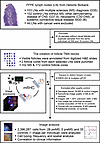 Figure 1
The study design. A flow diagram shows the sample selection and illustrates the analysis workflow. H&E, hematoxylin and eosin; pwMS, patients with MS, sample taken after MS diagnosis; preMS, sample taken before clinical MS diagnosis; qPCR, quantitative PCR.
To investigate whether MS-related immune dysregulation could be detected in the LN microenvironment, we performed mfIHC on B cell follicles from 33 pwMS and 35 matched controls (Figure 1). After artifact removal, over 2.3 million single cells were identified and analyzed (Supplemental Figure 1, B–E). The major immune cell types included CD4+ T helper (Th) cells, FOXP3+ regulatory T (Treg) cells, CD8+ T (Tc) cells, CD20+ B cells, follicular dendritic cells, epithelial cells, and Pnad+ high endothelial venules. No significant differences were observed in the abundance of these major cell types between pwMS and controls, clinical variables, or anatomical location of the LNs, when normalized to tissue area (Supplemental Figure 1, F and G).
Tfh cells are increased in LNs of pwMS. We next focused on more specific subsets of T and B cells, analyzing LNs from the 35 controls and the 28 pwMS whose LNs were collected after MS diagnosis. Follicular T cells were defined based on expression of programmed cell death 1 (PD-1), ICOS, and BCL6, which are characteristic markers of Tfh and Tfr cells (13), though Tfr cells may also be PD-1 negative (22) (Figure 2A). Tfh cells were defined as PD-1+BCL6+ICOS+/– Th cells. We also identified a population of follicular PD-1+BCL6– Th cells that we named “Tfh-like” cells. These cells potentially represent early (pre-Tfh) or noncanonical Tfh cells that have not yet fully upregulated BCL6 (23, 24). Although CXCR5 is a canonical marker for follicular localization, its inconsistent staining in archival samples limited its use; nonetheless, the spatial analysis verified follicular positioning of these cells. The pwMS had more Tfh (Padj = 5.5 × 10⁻⁸) and Tfh-like cells (Padj = 7.7 × 10⁻¹²) per square millimeter than controls, alongside a modest reduction in PD-1–BCL6–ICOS– Th cells (Padj = 0.043) (Figure 2B). Numbers of ICOS+ Th cells, potentially representing activated nonfollicular Th cells, were unchanged.
 Figure 2
Tfh cells are increased in pwMS. (A) mfIHC images with scale bars demonstrate the localization of the cell types of interest with the selected markers. Images in the middle and bottom left are magnified from the top image (red rectangle), whereas the bottom right image is magnified from the bottom left (blue rectangle). The orange color in the bottom right image shows PD-1+ (red) and ICOS+ (yellow) Tfh cells with nuclear BCL6+ (blue) staining. (B) Box plots of Th, Treg, and Tc cell subsets between pwMS and controls. (C) Box plots of B cell subsets between pwMS and controls. Box plots show the interquartile range, median (line), and minimum and maximum (whiskers). The Benjamini-Hochberg–corrected (BH-corrected) unpaired Wilcoxon test was used in B and C, and Padj values < 0.05 are shown.
Among Treg cells, PD-1+BCL6+ cells (considered Tfr cells, Padj = 7.6 × 10⁻⁵) and PD-1+BCL6– cells (PD-1+ Treg cells, Padj = 0.0078) were elevated in pwMS, whereas PD-1– Tfr and PD-1–BCL6– Treg cells showed no group differences (Figure 2B and Supplemental Figure 2A). Similarly, we identified PD-1+BCL6+ Tc cells, consistent with follicular cytotoxic T (Tfc) cells (25). These cells were significantly increased in pwMS (Padj = 4.2 × 10⁻⁶), as were BCL6–PD-1+ Tc cells (Padj = 4.3 × 10⁻⁸), whereas PD-1– Tc cells showed no significant difference (Figure 2B and Supplemental Figure 2A).
We next analyzed the follicular B cell subsets. CD20+ B cells were categorized into BCL6+ or BCL6–CD21+ follicular B (FoB), CD27+ memory B (MB), and CD21–CD27– naive B cells. However, no significant differences were detected between pwMS and controls (Figure 2C).
LNs contain follicles in 2 main forms: primary follicles, which are composed of resting, naive B cells and lack signs of antigenic stimulation, and secondary follicles, which emerge following antigen exposure and contain active GCs where B cells proliferate, mutate, and undergo selection. Since our dataset had heterogeneity and contained both types, we next classified the images into primary (without GCs) and secondary follicles (with identifiable GCs), based on BCL6, Ki67, and PD-1 expression (Methods and Supplemental Figure 2B). When we analyzed the resting primary follicles, only Tfh-like cells were modestly increased in pwMS, whereas all other analyzed cell populations were equal between pwMS and controls. In secondary follicles, the pwMS had increased numbers of Tfh-like, Tfh, PD-1+ Tfr, and PD-1+ Tc populations compared with controls (Supplemental Figure 2C).
In summary, pwMS exhibited a clear increase in follicular T cell subsets, particularly Tfh, Tfr, and Tfc-like cells in active GCs, suggesting chronic local immune activation within the LN follicles despite comparable B cell subset distributions. These observations were not dependent on the participants’ possible malignancy, MS type, immunosuppressive treatment, or age (Supplemental Figure 2D).
Tfh cells accumulate in the mantle zone in pwMS. Tfh cells at different developmental stages localize to distinct regions within the LN follicle. Immature pre-Tfh cells migrate from the T cell–rich zone to the follicular mantle, guided by the stimulation from their cognate B cells. In contrast, fully differentiated effector Tfh cells are predominantly found within the B cell–rich GCs, where they provide contact-dependent help to B cells to generate long-lived humoral responses (23). To dissect if the altered proportions of follicular T cell populations could reflect different developmental trajectories in pwMS, we next analyzed the follicular cell type abundance and spatial proximities in the follicle and mantle zone separately. Since our images included B cell–rich follicles (CD20+CD21+), surrounding mantle zones (CD20+CD21–), and adjacent T cell–dominated regions (CD3+CD4+/CD8+), we first manually annotated these areas based on CD21, CD20, and CD4 staining patterns (Figure 3A) and focused our analysis on mantle zones and follicles. To minimize the potential effects of anatomical variation on spatial immune cell composition, we limited the analysis to axillary LNs (26 pwMS and 31 controls).
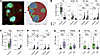 Figure 3
Expanded Tfh cells also accumulate in the mantle zone in pwMS. (A) A multiplex immunofluorescent image and Voronoi plot demonstrate the spatial analysis. (B–D) Frequencies of (B) CD4+ T cell, (C) FOXP3+ T regulatory cell, and (D) CD8+ T cell subsets in mantle zone and follicle with box plots. (E) Box plots of Tfh-to-Tfr ratio in mantle zone and follicle. (F) The follicle–mantle zone ratios of Tfh-like and Tfh cells using box plots. Box plots of B cell subsets between pwMS and controls. Box plots show the interquartile range, median (line), and minimum and maximum (whiskers). The BH-corrected unpaired Wilcoxon test was used in B–E. Padj < 0.10 are shown.
In both the mantle zone and the follicle, the proportion of Tfh cells (mantle Padj = 2.5 × 10⁻⁹, follicle Padj = 0.0045) and Tfh-like cells (mantle Padj = 3.8 × 10⁻¹¹, follicle Padj = 0.00041) was larger in pwMS than in controls, whereas ICOS+ Th and PD-1–BCL6–ICOS– Th cells were present in similar proportions (Figure 3B). Similarly, pwMS had an increased proportion of PD-1+ Tfr cells in the follicle (Padj = 0.013) and PD-1–BCL6– Treg cells in the mantle zone (Padj = 0.043), while PD-1– Tfr cells were comparable between the pwMS and controls (Figure 3C and Supplemental Figure 3A). In addition, Tfc cells and PD-1+ Tc cells were more frequent in pwMS in both the mantle zone (Padj = 0.0003; Padj = 0.0003) and follicle (Padj = 0.087; Padj = 0.0003, Figure 3D). We also observed a reduced proportion of naive B cells in the follicle in pwMS (Padj = 0.04), while the proportions of other B cell subsets were relatively similar between the cohorts (Supplemental Figure 3B).
As a proxy for Tfr cell control over Tfh cells, we calculated the Tfh-to-Tfr ratio separately within the mantle zones and follicles. For this, all FOXP3+ Treg cells were pooled within each respective compartment. The Tfh-to-Tfr ratio was increased in pwMS within the mantle zone (Padj = 2.4 × 10⁻⁶), while no difference in this ratio was observed in the follicle between pwMS and controls (Figure 3E). We then compared the relative positioning of follicular T cells between the follicle and mantle zone (follicle-to-mantle ratio). In both cohorts, Tfh and Tfh-like cells were enriched in the follicle; however, pwMS had a lower follicle-to-mantle ratio for Tfh-like cells (Padj = 0.014) and a trend toward a decreased ratio for Tfh cells (Padj = 0.064, Figure 3F). In contrast, FOXP3+ Treg cells are more frequently located in the mantle zone in both pwMS and control LNs, with no difference between the cohorts (Supplemental Figure 3C). For Tfr subsets specifically, the follicle-to-mantle ratio could not be reliably calculated because of low cell numbers.
Together, these findings suggest altered spatial organization of follicular T cell subsets in pwMS, characterized by accumulation of Tfh-like cells at the mantle zone, most likely reflecting an accumulation of pre-Tfh cells. In the same microanatomical niche, the ratio of Treg cells to follicular effectors was lower in pwMS.
Tfh cells have increased interactions with FoB cells in MS LNs. Given the observed abundance of Tfh and Tfh-like cells in MS LNs, we next analyzed spatial interactions between follicular T cells and B cells, which are crucial for the GC response and its control. First, we calculated the average shortest spatial distances between the cell types, as described previously (26), to comprehend cellular organization in the LN cortex. Each cell’s identity was defined by a combination of marker expression (Figure 2A) and anatomical location (Figure 3A). Notably, within the follicle, Tfh cells, Tfh-like cells, and BCL6+ FoB cells were often found in close proximity to each other (Figure 4A). Given that preselection for the GC occurs outside the GC, we observed several follicular T cell subsets near naive B cells and MB cells in the mantle zone. Tfh cells also play a role in activating other T cell subsets (13). Consistent with this, we identified a separate cluster comprising Tfh, Tfh-like, Tfc, and PD-1+ Tc cells that were spatially adjacent, suggesting broader roles in shaping T cell responses in LNs.
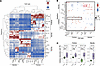 Figure 4
Tfh cells interact more with FoB cells in pwMS. (A) Clustered heatmap of average shortest distances between cell types. The cell types were determined using a marker profile and spatial location combination. The black rectangle emphasizes the proximity of FoB, Tfh, and Tfh-like cells in the follicle. The red rectangle highlights that naive B and MB cells are close to several follicular T cell subsets in the mantle zone. (B) Spatial interactions between different cell types that are significantly (Wilcoxon P value < 0.05) enriched (red) or decreased (blue) in pwMS compared with controls. Insignificant interactions are not shown. Increased spatial interactions in pwMS within follicular T cells and between B and follicular T cells are highlighted with red (follicle) and black rectangles (mantle zone), respectively. (C) Spatial interactions between Tfh cells and B cell subsets in the follicle and mantle zone using box plots. Box plots of B cell subsets between pwMS and controls. Box plots show the interquartile range, median (line), and minimum and maximum (whiskers). The BH-corrected unpaired Wilcoxon test was used in C.
To evaluate whether the spatial interactions were altered in pwMS, we quantified the 10 spatially nearest neighbors for each cell. We applied a permutation-based test (27) to determine whether certain cell types were more frequently found near others than expected by chance. Tfh and Tfh-like cells exhibited increased spatial interactions between FoB (BCL6+/–), naive B, and MB cells, as well as with several follicular T cell subsets in the follicle of pwMS compared with controls. Similarly, Tfh cells had increased interactions with naive and MB cells in the mantle zone in pwMS (Figure 4B).
To focus on follicles with actively ongoing GC reactions — where interactions between Tfh and B cells are biologically most relevant — we restricted the analysis to samples containing GCs with a Ki67-positive staining pattern (i.e., secondary follicles; Supplemental Figure 2C). Here, the FoB cells are considered functionally engaged GC B cells. Within these samples, Tfh cells in pwMS showed stronger spatial interactions with naive B cells both in the mantle zone (Padj = 0.00065) and in the follicle (Padj = 0.026) and with BCL6+ GC B cells (Padj = 0.00042) and BCL6– GC B cells (Padj = 0.0091, Figure 4C). Tfh-like cells had increased interactions with BCL6+ GC B cells (Padj = 0.00051) and BCL6– GC B cells (Padj = 0.002) in pwMS, suggesting that they may contribute to GC response despite lacking canonical BCL6 expression (Supplemental Figure 4).
Expansion of Tfh cells is also seen before MS diagnosis. To explore whether Tfh cell expansion precedes clinical MS onset, we analyzed LNs from 5 individuals who were later diagnosed with MS (preMS). These individuals were 20- to 50-year-old women who either were cancer free or had a local cancer. Later, they were diagnosed with RRMS (n = 3), SPMS (n = 1), or PPMS (n = 1). LNs represented various anatomical locations, and in 3 of the individuals, the LNs were taken within 2 years of MS onset (Supplemental Table 1).
The preMS samples had increased numbers of Tfh-like cells (Padj = 3.6 × 10⁻⁴), while Tfh cells showed a trend of elevation compared with controls (Padj = 0.071). In addition, Tfc (Padj = 0.022), PD-1+ Tc (Padj = 0.022), PD-1+ Treg (Padj = 0.023), and PD-1+ Tfr cells (Padj = 0.029) were more prevalent in preMS than in controls but present in similar numbers compared to pwMS (Supplemental Figure 5A). In contrast, naive B cells (Padj = 0.022) were decreased in preMS compared with controls (Supplemental Figure 5B).
Given the heterogeneity of preMS samples, which included images with (n = 3) and without (n = 2) GCs, we then limited the analysis to only follicles with GCs. In this subset, Tfh-like cells (Padj = 0.021) and Tfh cells (Padj = 0.021) remained elevated compared with controls, while other cell types did not differ significantly (Supplemental Figure 5C).
Spatial compartmentalization revealed further distinctions. Tfh-like cells were increased in the mantle zone (Padj = 0.043), whereas Tfh cells were elevated in the follicle (Padj = 0.041) in preMS compared with controls (Figure 5A). While we did not see a difference in the relative positioning of Tfh or Tfr cells in preMS samples using the follicle-mantle ratio, the Tfh-to-Tfr ratio was elevated in the mantle zone of preMS LNs (Padj = 0.014). This suggests that the regulation of Tfh cells is decreased before MS diagnosis, similar to what was seen in pwMS (Figure 5B).
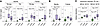 Figure 5
Increased Tfh cells are also in LNs before MS diagnosis. (A) Box plots of the proportion of Tfh-like cells and Tfh cells in the mantle zone and follicle in controls, preMS samples, and pwMS. (B) Box plots of Tfh-to-Tfr ratio in the mantle zone and follicle in controls, preMS, and pwMS. (C) Spatial interactions between Tfh cells and BCL6+/– GC B cells in follicles with active GCs using box plots. Box plots of B cell subsets between pwMS and controls. Box plots show the interquartile range, median (line), and minimum and maximum (whiskers). In all, the BH-corrected unpaired Wilcoxon test was used and P values < 0.05 are shown.
Finally, we performed spatial proximity analysis for samples with GCs. Tfh had increased interaction with both BCL6+ (Padj = 0.029) and BCL6– GC B cells (Padj = 0.018) in preMS samples compared with controls (Figure 5C), while interactions of Tfh cells with naive B cells or Tfr cells in the mantle zone or follicle were similar. Additionally, Tfh-like cells had increased interactions with BCL6– GC B cells in preMS (Supplemental Figure 5D).
Together, these results indicate that Tfh cell expansion and altered spatial interactions with B cells are already evident in LNs before MS diagnosis, supporting immune dysregulation in LNs as an early event in MS pathogenesis.
EBV latency not detected in LNs of pwMS or controls. As we recently detected alterations in GC reaction together with EBV-driven B cell dysregulation in dcLNs in early MS (12), we were interested in whether latent EBV infection could be driving the detected immune alterations in LNs of pwMS. The EBER-ISH test is a diagnostic technique used to detect EBV infection by identifying the presence of EBV-encoded small RNAs (EBER1 and EBER2) in tissue samples. These RNAs are highly expressed in B cells latently infected with EBV, making them reliable markers for the virus (28). We thus performed EBER-ISH on the constructed TMA sections. Both MS and control samples were largely negative (Figure 6A and Supplemental Figure 6A). Three pwMS samples showed higher numbers of EBER-positive cells than controls, but these individuals did not differ in clinical characteristics. The preMS samples had similar numbers of EBER-positive cells as pwMS and controls.
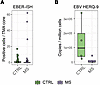 Figure 6
Detection of EBV in FFPE LNs. (A) Box plot of EBER-positive cells in each TMA core between pwMS and controls. (B) Box plot of EBV copies per million cells between pwMS and controls using HERQ-9 multiplexed qPCR. For this, tissue sections from each TMA block were divided into 2 pieces. Box plots of B cell subsets between pwMS and controls. Box plots show the interquartile range, median (line), and minimum and maximum (whiskers). The BH-corrected unpaired Wilcoxon test was used in A and B.
We next applied multiplex quantitative PCR (HERQ-9) (29) to the TMA sections to detect EBV and other common herpesviruses (Supplemental Figure 6B). EBV DNA was again only sporadically detected, with no significant differences between MS and control groups (Figure 6B). HHV-6B and HHV-7 were also detected, with HHV-7 more frequently observed in controls (Supplemental Figure 6C). All other herpesviruses tested negative. Thus, no major differences in herpesvirus latency were detected in FFPE LNs between patients and controls.


