
Physician-Scientist Development
Open Access |  10.1172/jci.insight.208965
Predoctoral grant writing among physician-scientist trainees: a national survey of barriers and facilitators of success
Brian J. Thomas,1,2 Tiger Zhang,3 Daniel C. Brock,2,4 Timothy J. Ley,5 W. David Arnold,1,6 and Cynthia Y. Tang2,3,7
1Tom and Anne Smith MD-PhD Program, University of Missouri School of Medicine, Columbia, Missouri, USA.
2American Physician Scientists Association, Westford, Massachusetts, USA.
3University of North Carolina School of Medicine, Chapel Hill, North Carolina, USA.
4Medical Scientist Training Program, Baylor College of Medicine, Houston, Texas, USA.
5Division of Oncology, Department of Medicine, Washington University, St. Louis, Missouri, USA.
6Department of Physical Medicine and Rehabilitation, University of Missouri, Columbia, Missouri, USA.
7Department of Anesthesiology, Academic Career Enrichment Scholars Program, Duke University Medical Center, Durham, North Carolina, USA.
Address correspondence to: Cynthia Y. Tang, Duke University Medical Center, 2301 Erwin Rd., Durham, North Carolina 27705, USA. Phone: 208.446.7024; Email: cynthia.tang@duke.edu.
Find articles by Thomas, B. in: PubMed | Google Scholar
1Tom and Anne Smith MD-PhD Program, University of Missouri School of Medicine, Columbia, Missouri, USA.
2American Physician Scientists Association, Westford, Massachusetts, USA.
3University of North Carolina School of Medicine, Chapel Hill, North Carolina, USA.
4Medical Scientist Training Program, Baylor College of Medicine, Houston, Texas, USA.
5Division of Oncology, Department of Medicine, Washington University, St. Louis, Missouri, USA.
6Department of Physical Medicine and Rehabilitation, University of Missouri, Columbia, Missouri, USA.
7Department of Anesthesiology, Academic Career Enrichment Scholars Program, Duke University Medical Center, Durham, North Carolina, USA.
Address correspondence to: Cynthia Y. Tang, Duke University Medical Center, 2301 Erwin Rd., Durham, North Carolina 27705, USA. Phone: 208.446.7024; Email: cynthia.tang@duke.edu.
Find articles by Zhang, T. in: PubMed | Google Scholar
1Tom and Anne Smith MD-PhD Program, University of Missouri School of Medicine, Columbia, Missouri, USA.
2American Physician Scientists Association, Westford, Massachusetts, USA.
3University of North Carolina School of Medicine, Chapel Hill, North Carolina, USA.
4Medical Scientist Training Program, Baylor College of Medicine, Houston, Texas, USA.
5Division of Oncology, Department of Medicine, Washington University, St. Louis, Missouri, USA.
6Department of Physical Medicine and Rehabilitation, University of Missouri, Columbia, Missouri, USA.
7Department of Anesthesiology, Academic Career Enrichment Scholars Program, Duke University Medical Center, Durham, North Carolina, USA.
Address correspondence to: Cynthia Y. Tang, Duke University Medical Center, 2301 Erwin Rd., Durham, North Carolina 27705, USA. Phone: 208.446.7024; Email: cynthia.tang@duke.edu.
Find articles by Brock, D. in: PubMed | Google Scholar
1Tom and Anne Smith MD-PhD Program, University of Missouri School of Medicine, Columbia, Missouri, USA.
2American Physician Scientists Association, Westford, Massachusetts, USA.
3University of North Carolina School of Medicine, Chapel Hill, North Carolina, USA.
4Medical Scientist Training Program, Baylor College of Medicine, Houston, Texas, USA.
5Division of Oncology, Department of Medicine, Washington University, St. Louis, Missouri, USA.
6Department of Physical Medicine and Rehabilitation, University of Missouri, Columbia, Missouri, USA.
7Department of Anesthesiology, Academic Career Enrichment Scholars Program, Duke University Medical Center, Durham, North Carolina, USA.
Address correspondence to: Cynthia Y. Tang, Duke University Medical Center, 2301 Erwin Rd., Durham, North Carolina 27705, USA. Phone: 208.446.7024; Email: cynthia.tang@duke.edu.
Find articles by
Ley, T.
in:
PubMed
|
Google Scholar
|

1Tom and Anne Smith MD-PhD Program, University of Missouri School of Medicine, Columbia, Missouri, USA.
2American Physician Scientists Association, Westford, Massachusetts, USA.
3University of North Carolina School of Medicine, Chapel Hill, North Carolina, USA.
4Medical Scientist Training Program, Baylor College of Medicine, Houston, Texas, USA.
5Division of Oncology, Department of Medicine, Washington University, St. Louis, Missouri, USA.
6Department of Physical Medicine and Rehabilitation, University of Missouri, Columbia, Missouri, USA.
7Department of Anesthesiology, Academic Career Enrichment Scholars Program, Duke University Medical Center, Durham, North Carolina, USA.
Address correspondence to: Cynthia Y. Tang, Duke University Medical Center, 2301 Erwin Rd., Durham, North Carolina 27705, USA. Phone: 208.446.7024; Email: cynthia.tang@duke.edu.
Find articles by Arnold, W. in: PubMed | Google Scholar
1Tom and Anne Smith MD-PhD Program, University of Missouri School of Medicine, Columbia, Missouri, USA.
2American Physician Scientists Association, Westford, Massachusetts, USA.
3University of North Carolina School of Medicine, Chapel Hill, North Carolina, USA.
4Medical Scientist Training Program, Baylor College of Medicine, Houston, Texas, USA.
5Division of Oncology, Department of Medicine, Washington University, St. Louis, Missouri, USA.
6Department of Physical Medicine and Rehabilitation, University of Missouri, Columbia, Missouri, USA.
7Department of Anesthesiology, Academic Career Enrichment Scholars Program, Duke University Medical Center, Durham, North Carolina, USA.
Address correspondence to: Cynthia Y. Tang, Duke University Medical Center, 2301 Erwin Rd., Durham, North Carolina 27705, USA. Phone: 208.446.7024; Email: cynthia.tang@duke.edu.
Find articles by Tang, C. in: PubMed | Google Scholar
Published September 1, 2026 - More info
JCI Insight. 2026;11(19):e208965. https://doi.org/10.1172/jci.insight.208965.
© 2026 Thomas et al. This work is licensed under the Creative Commons Attribution 4.0 International License. To view a copy of this license, visit http://creativecommons.org/licenses/by/4.0/.


-
Results
Study population.
We received 342 total responses to the survey. Nine were excluded owing to lack of consent or ineligibility for applying for an F30/F31 grant. Incomplete and nonsensical responses were excluded, leaving 256 complete responses. Survey census and demographic data are provided in Table 1 and Supplemental Table 1 (supplemental material available online with this article; https://doi.org/10.1172/jci.insight.208965DS1). Of the 256 responses included in the analyses, 46% (119 of 256) had not yet submitted a grant and 54% (137 of 256) had submitted a grant (117 F30s, 20 F31s). Of those who had submitted, 12% (16 of 137) did not receive an award and did not resubmit, 44% (60 of 137) did not receive an award but resubmitted or were planning to resubmit, and 45% (61 of 137) received an award either during their first submission or resubmission. Of respondents, 73% (187 of 256) were part of an NIH-funded medical scientist training program (MSTP), and 27% (69 of 256) were part of a non-NIH-funded MD/DO-PhD program (Table 1). The distribution of responses of participants from an MSTP and non-MSTP is broadly consistent with the national MD-PhD trainee population (ref. 9; 2025 AAMC FACTS, ref. 10). The overall demographics of the study population were similar to those of previous reports (11) and for current dual-degree matriculants (10). There were no demographic differences among those who submitted and those who did not submit a grant. Furthermore, there was no difference in demographics between those who submitted and were awarded a grant versus those who did not receive an award (Supplemental Table 1).
Interest and motivations for predoctoral grant writing.
While MD/DO-PhD trainees are eligible to apply for both NIH F30 and F31 grants, the F30 grants specifically serve to enhance integrated research and clinical training of those who wish to have careers as physician-scientists (https://grants.nih.gov/). Analysis of publicly available data through NIH RePORTER (https://reporter.nih.gov/) demonstrate that the number of F30 applications have risen by 39% from 545 in 2017 to 760 in 2025 (Figure 1A). When compared with a 13% increase in total student enrollment over this period (5,408 in 2017 to 6,159 in 2025; ref. 10), the size of the increase suggests an increasing proportion of F30 applicants (Supplemental Figure 1A). Despite the increasing percentage of applicants, the number of awards has remained relatively constant since 2017; consequently, success rates have declined from a high of approximately 42% in 2018 to a low of 32% in 2025 (Figure 1A). For F31 grants, applications and awards have generally shown an appreciable and equitable rise since 2018; however, they exhibited a sharp decline in awards in 2025, leading to a decade’s low success rate of 23.5% (Supplemental Figure 1B; NIH RePORTER).
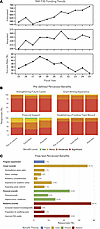 Figure 1
National NIH F30 trends and perceived predoctoral grant writing benefits. (A) Total number of NIH F30 grants submitted and reviewed, number of newly awarded F30 grants, and F30 success rate calculated as percentage of F30s awarded relative to those submitted by year (2015–2025). Fiscal year is reported on the x axis. Data were extracted from NIH RePORTER. (B) Applicant-perceived benefits of submitting a predoctoral grant from 4 predefined questions. Bars represent the percentage of respondents that reported a given benefit (y axis). Data are reported for those that submitted, planned to submit, or were awarded. (C) Free-text responses of applicant-perceived benefits. Subcategories are reported under major categories. Bars represent the percentage of respondents that reported a given benefit (x axis).
To understand the motivations of applicants and potential applicants, we assessed the perceived benefits for applying for NIH predoctoral grants (Figure 1, B and C). Of survey respondents, 230 ranked 4 predefined perceived benefits of applying for an F award from 1, signifying no benefit, to 4, signifying significant benefit. Of these, 95% (218 of 230) identified grant writing experience, 95% (219 of 230) identified establishing a funding track record for future grants, 94% (217 of 230) identified strengthening their CV for their future career, and 73% (168 of 230) identified financial support as either a moderate or significant benefit. These self-identified benefits were perceived similarly between the submission and award groups (Figure 1B). In addition, 35 individuals provided free-text responses describing additional benefits to grant writing. Of these, 24% (10 of 35) noted improvement in their dissertation and PhD efficiency, 14% (6 of 35) indicated an additional institutional allowance or stipend bonus, 12% (5 of 35) noted grant writing experience for an academic career, 9.5% (4 of 35) found increased confidence, 7.1% (3 of 35) indicated expanding their network, and 7.1% (3 of 35) used the process as preparation for their qualifying exam. Others noted that grant writing provided inspiration for considering nonacademic career paths, status and prestige, demonstration of the value of their research, increased knowledge of their research subject, increased competitiveness for residency, opportunity to extend their PhD training to complete a more robust project, healthcare coverage, personal growth, and increased subject knowledge. Three respondents noted that submitting an F30 was a program requirement (Figure 1C).
Barriers to predoctoral grant submission and resubmission.
Despite these reported benefits, NIH predoctoral grants often take an extensive amount of time, effort, and guidance to complete, requiring collaboration among the applicant, the mentoring team, and the institution. To identify barriers that limit grant submission or resubmission, we asked survey respondents who did not plan to apply to or resubmit a predoctoral grant to identify their reasons, using a prespecified list (Figure 2A). Of 26 respondents who noted that they did not plan to apply at all, 19% (5 of 26) identified structural factors, including not having enough resources (8%, 2 of 26) or an unsupportive mentor (8%, 2 of 26). Capacity and effort constraints were noted in 38% (10 of 26) of responses, including not having enough time to complete a proposal (27%, 7 of 26). Eligibility was noted in 57% (15 of 26) of responses, including being too late to submit because of the 48-month postmatriculation limit (23%, 6 of 26) or other reasons for being ineligible (34%, 9 of 26). Personal factors were noted in 47% (12 of 26) of responses, including already having other funding or scholarships (31%, 8 of 26).
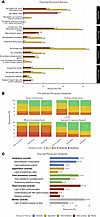 Figure 2
Perceived barriers to submission and obstacles to predoctoral grant writing. (A) Self-reported barriers that prevented grant submission or resubmission or (B and C) obstacles that presented difficulty during grant writing for those who submitted or planned to submit. (A) Free-text responses of applicant-perceived barriers to submission and resubmission by category. Red bar: no submission; yellow bar: no resubmission. (B) Applicant-perceived obstacles of submitting a predoctoral grant from 4 predefined responses. Bars represent the percentage of respondents that reported a given obstacle (y axis). Data are reported for those that submitted, planned to submit, or were awarded. Statistical analysis was performed using a χ2 test. (C) Free text responses of applicant-perceived obstacles.
Of 16 respondents who applied but were not awarded and noted they did not plan to resubmit, 50% (8 of 16) identified structural factors, 69% (11 of 16) identified capacity and effort constraints, 44% (7 of 16) identified eligibility, and 81% (13 of 16) identified personal factors. For these potential reapplicants, the most common reasons provided in free-text responses for not applying included not having enough time to complete a proposal (63%, 10 of 16), already having other funding (56%, 9 of 16), having an unsupportive mentor (38%, 6 of 16), or being too late to resubmit (44%, 7 of 16).
Challenges during predoctoral grant writing.
To identify obstacles limiting successful grant writing, respondents were asked to rank 4 predefined perceived obstacles from 1, signifying not an obstacle, to 4, signifying a significant obstacle (Figure 2B). Of 230 respondents who either submitted or were planning to submit a predoctoral grant, 75% (173 of 230) identified the effort required to complete the grant, 26% (60 of 230) identified finding collaborators, 23% (55 of 230) identified sponsor or cosponsor support, and 23% (54 of 230) identified access to resources as either a moderate or significant obstacle. Compared with those who submitted a grant, a higher percentage of those who planned to but had not yet submitted identified finding collaborators (40%, 37 of 93 vs. 17%, 23 of 137; P = 0.0002) as either a moderate or significant obstacle. Of applicants who submitted, compared with those who received an award, those who did not receive an award had a higher percentage that identified sponsor or cosponsor support (29% vs. 9.8%; P = 0.011) as either a moderate or significant obstacle.
Of the 230 respondents, 64 reported additional perceived obstacles in free-text format (Figure 2C). The most reported obstacle was time limitation (22%, 14 of 64), where respondents felt constrained by the 48-month window to first submission (9.4%, 6 of 64), often citing insufficient timing to generate preliminary data, particularly for course-heavy PhDs or programs that complete 3 preclinical/clinical years prior to beginning the PhD. They also cited the time required to assemble the grant application (15.4%, 10 of 64) as a barrier that took away time from other responsibilities. The second most common barrier was lack of mentorship (26.6%, 17 of 64), which included lack of mentor time, support, or feedback; lack of mentor experience or success with MD/PhD or DO/PhD trainees or writing NIH grants; and lack of grant writing–specific mentorship. Third was a lack of institutional support (21.9%, 14 of 64), which included lack of supplemental tuition beyond the 60% provided by the F30, lack of institutional grant writing courses, not having a track record of awarded F30s, being a smaller program, lack of examples from prior applicants, and, most commonly reported, challenges with internal administrative offices (20.3%, 13 of 64). Additional barriers included lack of NIH communication and resources (10.9%, 7 of 64), application components (10.9%, 7 of 64), understanding the grant process (6.3%, 4 of 64), and personal wellbeing (3.1%, 2 of 64). Reported lack of NIH resources included limited funding opportunities, funding uncertainty, and difficulty contacting the NIH for information and feedback. For application components, respondents listed preliminary data (6.3%, 4 of 64), research plan, and lack of a personal research record as obstacles.
Predoctoral grant writing resource availability and utility.
To identify resource utility, survey respondents were asked what resources were offered and used, what resources were the most useful during grant writing, and what resources they wished they had access to (Figure 3). Of 230 respondents who either submitted or were planning to submit a predoctoral grant, 204 answered questions about resources that were available or that were used (Figure 3A). Overall, 74% (151 of 204) of respondents reported that their programs or institutions offered grant writing workshops, 75% (153 of 204) offered grant writing information sessions, 52% (106 of 204) offered additional advising, 41% (84 of 204) offered mock review sessions, and 84% (171 of 204) offered example successful grants. When compared with other resources available at their institution (e.g., graduate schools), respondents reported their dual-degree programs had higher rates of offering successful example grants (81%, 165 of 204 vs. 29%, 59 of 204), grant writing information sessions (59%, 120 of 204 vs. 38%, 78 of 204), and additional advising (41%, 84 of 204 vs. 23%, 47 of 204).
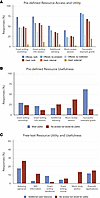 Figure 3
Resource utility and usefulness. Reported resource utility and usefulness for those who submitted or planned to submit a grant. (A) Resource availability offered by dual-degree program, institution, or both and utilization reported as internal, external (outside program or institution), or both. (B) Self-reported resource usefulness and unavailable resources that respondents felt would be useful. (C) Free-text responses of additional used resources and additional unavailable resources that respondents wish they had. Categories reporting ≥5 percent are reported. For all, resource type is reported on the x axis and the percentage of respondents is reported on the y axis.
In terms of resources used by applicants, successful example grants were the most often used resource (69%, 141 of 204), followed by information sessions (59%, 120 of 204), grant writing workshops (50%, 102 of 204), additional advising (37%, 75 of 204), and mock review sessions (27%, 54 of 204). Respondents overwhelmingly used resources available through their program or institution over external resources, with successful example grants being the most used external resource (20%, 41 of 204). Few applicants reported access to no resources (1%, 2 of 204) or used no resources (10%, 20 of 204), and 51% (104 of 204) did not use any external resources. Of 230 respondents who either submitted or were planning to submit a predoctoral grant, 137 also answered questions about peer access; 96% (132 of 137) had access to successfully funded peer applications, while 99% (136 of 137) had access to any peer resource.
These 204 respondents also answered questions about resources they found the most useful and resources that were desirable but unavailable (Figure 3B). For usefulness, successful grants were the most common reported resource (63%, 129 of 204), followed by grant writing workshops (30%, 61 of 204) and grant writing information sessions (22%, 45 of 204). For desirable but unavailable resources, mock review sessions were the most commonly selected (38%, 78 of 204), followed by additional advising (26%, 53 of 204) and grant writing workshops (24%). Of the 204 respondents, 67 provided additional free-text feedback on resources that were used, and 52 respondents provided additional free-text input on desirable but unavailable resources (Figure 3C). These responses largely aligned with the checkbox data above, with a focus on mentoring and advising resources, mock study sections, and access to successful applications, particularly in the NIH center that they were applying to and for nonbasic science projects. Notably, 9% of free-text respondents directly mentioned the book, A Practical Guide to Writing a Ruth L. Kirschstein NRSA Grant.
Perceived application strengths and weaknesses.
Grant applicants were also asked about the perceived strengths and weaknesses of their application. Respondents who were awarded an NIH predoctoral grant were given the opportunity to provide free-text responses to their perceived strengths of their applications (Supplemental Figure 2A). Of 61 respondents who received an award on first submission, 60 provided additional free-text responses. These respondents noted that their research plan (35%, 21 of 60), which included impact, novelty, and strong preliminary data; applicant profile (35%, 21 of 60), which included their narrative and background, strong academic performance record, and publication record; mentor team (33%, 20 of 60); training plan (17%, 18 of 60); and institutional support/environment (10%, 6 of 60) were strong in their applications. Writing and formatting skills were noted by 8% (5 of 60). For resubmissions, 24 of 25 respondents who were ultimately awarded provided free-text responses regarding what the biggest driving factor was to turn their resubmission into a successful application. Of these, 46% (11 of 24) attributed their strengths to their improved research plan, 29% (7 of 24) noted strong preliminary data, 25% (6 of 24) noted mentorship and improved mentor team, 17% (4 of 24) noted improved training plan, and 29% (7 of 24) reported addressing all reviewer comments as a driving factor to success.
Respondents who submitted an NIH predoctoral grant, regardless of award, were also given the opportunity to provide free-text responses to the perceived pitfalls of their applications (Supplemental Figure 2B). Overall, of first-time submitters, 117 respondents attributed their pitfalls to their research strategies and aims (55%, 65 of 117), which included a poorly developed research plan and aims (26%, 33 of 117), insufficient preliminary data (7.4%, 10 of 117), and overly ambitious aims/scope (12%, 13 of 117). Lack of mentorship (26%, 30 of 117) was the next most cited pitfall, which involved the sponsor lacking experience with training dual-degree students, mentor lack of funding, and overall inadequate mentorship. Insufficient training plans were attributed by 14% (19 of 117) of respondents. 11% (13 of 117) of respondents received feedback that their applicant profile was weak, with 8.1% (10 of 117) noting limited or no prior publications. Compared with the 60 applicants who received an award on first submission, applicants who did not receive an award described pitfalls involving mentorship at a higher frequency (37%, 21 of 57 vs. 15%, 9 of 60; P = 0.013), including noting a lack of mentor funding (12%, 7 of 57 vs. 0%, 0 of 60; P = 0.005). Perceived pitfalls from 32 respondents who resubmitted and were not awarded were also assessed. Responses aligned with their first submission pitfalls with slightly less emphasis on mentorship.

Article tools
- Download citation information
- Send a comment
- Terms of use
- Standard abbreviations
- Need help? Email the journal
Related Collection:
Article
-
The national MD-PhD program outcomes study: Relationships between medical specialty, training duration, research effort, and career paths
-
The national MD-PhD program outcomes study: Outcomes variation by sex, race, and ethnicity
-
Mind the gap: Expediting gender parity in MD-PhD admissions
-
Trends in NIH-supported career development funding: implications for institutions, trainees, and the future research workforce
-
Pearls of wisdom for aspiring physician-scientist residency applicants and program directors
-
New insights into an old question: can the MD-PhD physician-scientist pipeline be improved?
-
Gaps between college and starting an MD-PhD program are adding years to physician-scientist training time
-
Predoctoral MD-PhD grants as indicators of future NIH funding success
-
Sociodemographic factors and research experience impact MD-PhD program acceptance
-
Interventions to support fellowship application success among predoctoral physician-scientists
-
Training the physician-scientist: views from program directors and aspiring young investigators
-
The National MD-PhD Program Outcomes Study: career paths followed by Black and Hispanic graduates
-
Is it time to reduce the length of postgraduate training for physician-scientists in internal medicine?
-
Dispelling the myth: comparable duration and impact of research training for MD-PhD and PhD graduates
-
More women than ever are entering MD-PhD programs. What lies ahead for them?
-
The financial impact of MD-PhD training compared with MD training for academic physicians
-
Science: our past, our present, and always our future
-
The physician-scientist: looking back, looking forward
-
Paving the physician-scientist career path: from grassroots gathering to national forum
-
A study of MD-PhD pre-health advising identifies challenges to building a robust MD-PhD applicant pool
-
Admissions to MD-PhD programs: how well do application metrics predict short- or long-term physician-scientist outcomes?
-
Development and evaluation of a symposium model for building physician-scientist skills, connections, and persistence
-
An insider’s guide to understanding and obtaining an NIH K career development award
-
Dual-degree pathways in the residency match: a comparative analysis of application behaviors and outcomes
-
Comparing MD-PhD trainee experiences by disciplinary background
-
From improvised to intentional: re-imagining the physician-scientist career path
-
Residency matches of MD-PhD versus MD-only students: compatibility with continued research momentum
-
Stabilizing and strengthening the US physician-scientist faculty workforce in academic medicine: a proposed institutional framework
-
Navigating physician-scientist careers: insights from American Board of Internal Medicine Research Pathway graduates


