
Research ArticleBone biologyCell biologyNeuroscience
Open Access |  10.1172/jci.insight.197475
Reduced osteogenic factors and early osteoblast senescence in SOD1(G93A) ALS mouse model
Burak Özkan,1 Jan-Moritz Ramge,2 Diana Wiesner,3 Jelena Scekic-Zahirovic,3 Stefano Antonucci,1 Sandra Nungeß,2 Dorothea Gebauer,2 Anita Ignatius,2 Jochen H. Weishaupt,1,3 Melanie Haffner-Luntzer,2 and Francesco Roselli1,3
1Department of Neurology, Ulm University, Ulm, Germany.
2Institute of Orthopaedic Research and Biomechanics, Ulm University Medical Center, Ulm, Germany.
3German Center for Neurodegenerative Diseases (DZNE)–Ulm, Ulm, Germany.
Address correspondence to: Francesco Roselli or Melanie Haffner-Luntzer, Center for Biomedical Research (ZBF), Helmholtzstrasse 8/1, 89081 Ulm, Germany. Phone: 0049.0731.500.63147; Email: francesco.roselli@uni-ulm.de (FR). Phone: 0049.0731.500.55324; Email: melanie.haffner-luntzer@uni-ulm.de (MHL).
Authorship note: MHL and FR have been designated as co–senior authors.
Find articles by Özkan, B. in: PubMed | Google Scholar
1Department of Neurology, Ulm University, Ulm, Germany.
2Institute of Orthopaedic Research and Biomechanics, Ulm University Medical Center, Ulm, Germany.
3German Center for Neurodegenerative Diseases (DZNE)–Ulm, Ulm, Germany.
Address correspondence to: Francesco Roselli or Melanie Haffner-Luntzer, Center for Biomedical Research (ZBF), Helmholtzstrasse 8/1, 89081 Ulm, Germany. Phone: 0049.0731.500.63147; Email: francesco.roselli@uni-ulm.de (FR). Phone: 0049.0731.500.55324; Email: melanie.haffner-luntzer@uni-ulm.de (MHL).
Authorship note: MHL and FR have been designated as co–senior authors.
Find articles by Ramge, J. in: PubMed | Google Scholar
1Department of Neurology, Ulm University, Ulm, Germany.
2Institute of Orthopaedic Research and Biomechanics, Ulm University Medical Center, Ulm, Germany.
3German Center for Neurodegenerative Diseases (DZNE)–Ulm, Ulm, Germany.
Address correspondence to: Francesco Roselli or Melanie Haffner-Luntzer, Center for Biomedical Research (ZBF), Helmholtzstrasse 8/1, 89081 Ulm, Germany. Phone: 0049.0731.500.63147; Email: francesco.roselli@uni-ulm.de (FR). Phone: 0049.0731.500.55324; Email: melanie.haffner-luntzer@uni-ulm.de (MHL).
Authorship note: MHL and FR have been designated as co–senior authors.
Find articles by Wiesner, D. in: PubMed | Google Scholar
1Department of Neurology, Ulm University, Ulm, Germany.
2Institute of Orthopaedic Research and Biomechanics, Ulm University Medical Center, Ulm, Germany.
3German Center for Neurodegenerative Diseases (DZNE)–Ulm, Ulm, Germany.
Address correspondence to: Francesco Roselli or Melanie Haffner-Luntzer, Center for Biomedical Research (ZBF), Helmholtzstrasse 8/1, 89081 Ulm, Germany. Phone: 0049.0731.500.63147; Email: francesco.roselli@uni-ulm.de (FR). Phone: 0049.0731.500.55324; Email: melanie.haffner-luntzer@uni-ulm.de (MHL).
Authorship note: MHL and FR have been designated as co–senior authors.
Find articles by Scekic-Zahirovic, J. in: PubMed | Google Scholar
1Department of Neurology, Ulm University, Ulm, Germany.
2Institute of Orthopaedic Research and Biomechanics, Ulm University Medical Center, Ulm, Germany.
3German Center for Neurodegenerative Diseases (DZNE)–Ulm, Ulm, Germany.
Address correspondence to: Francesco Roselli or Melanie Haffner-Luntzer, Center for Biomedical Research (ZBF), Helmholtzstrasse 8/1, 89081 Ulm, Germany. Phone: 0049.0731.500.63147; Email: francesco.roselli@uni-ulm.de (FR). Phone: 0049.0731.500.55324; Email: melanie.haffner-luntzer@uni-ulm.de (MHL).
Authorship note: MHL and FR have been designated as co–senior authors.
Find articles by Antonucci, S. in: PubMed | Google Scholar
1Department of Neurology, Ulm University, Ulm, Germany.
2Institute of Orthopaedic Research and Biomechanics, Ulm University Medical Center, Ulm, Germany.
3German Center for Neurodegenerative Diseases (DZNE)–Ulm, Ulm, Germany.
Address correspondence to: Francesco Roselli or Melanie Haffner-Luntzer, Center for Biomedical Research (ZBF), Helmholtzstrasse 8/1, 89081 Ulm, Germany. Phone: 0049.0731.500.63147; Email: francesco.roselli@uni-ulm.de (FR). Phone: 0049.0731.500.55324; Email: melanie.haffner-luntzer@uni-ulm.de (MHL).
Authorship note: MHL and FR have been designated as co–senior authors.
Find articles by Nungeß, S. in: PubMed | Google Scholar
1Department of Neurology, Ulm University, Ulm, Germany.
2Institute of Orthopaedic Research and Biomechanics, Ulm University Medical Center, Ulm, Germany.
3German Center for Neurodegenerative Diseases (DZNE)–Ulm, Ulm, Germany.
Address correspondence to: Francesco Roselli or Melanie Haffner-Luntzer, Center for Biomedical Research (ZBF), Helmholtzstrasse 8/1, 89081 Ulm, Germany. Phone: 0049.0731.500.63147; Email: francesco.roselli@uni-ulm.de (FR). Phone: 0049.0731.500.55324; Email: melanie.haffner-luntzer@uni-ulm.de (MHL).
Authorship note: MHL and FR have been designated as co–senior authors.
Find articles by Gebauer, D. in: PubMed | Google Scholar
1Department of Neurology, Ulm University, Ulm, Germany.
2Institute of Orthopaedic Research and Biomechanics, Ulm University Medical Center, Ulm, Germany.
3German Center for Neurodegenerative Diseases (DZNE)–Ulm, Ulm, Germany.
Address correspondence to: Francesco Roselli or Melanie Haffner-Luntzer, Center for Biomedical Research (ZBF), Helmholtzstrasse 8/1, 89081 Ulm, Germany. Phone: 0049.0731.500.63147; Email: francesco.roselli@uni-ulm.de (FR). Phone: 0049.0731.500.55324; Email: melanie.haffner-luntzer@uni-ulm.de (MHL).
Authorship note: MHL and FR have been designated as co–senior authors.
Find articles by Ignatius, A. in: PubMed | Google Scholar
1Department of Neurology, Ulm University, Ulm, Germany.
2Institute of Orthopaedic Research and Biomechanics, Ulm University Medical Center, Ulm, Germany.
3German Center for Neurodegenerative Diseases (DZNE)–Ulm, Ulm, Germany.
Address correspondence to: Francesco Roselli or Melanie Haffner-Luntzer, Center for Biomedical Research (ZBF), Helmholtzstrasse 8/1, 89081 Ulm, Germany. Phone: 0049.0731.500.63147; Email: francesco.roselli@uni-ulm.de (FR). Phone: 0049.0731.500.55324; Email: melanie.haffner-luntzer@uni-ulm.de (MHL).
Authorship note: MHL and FR have been designated as co–senior authors.
Find articles by Weishaupt, J. in: PubMed | Google Scholar
1Department of Neurology, Ulm University, Ulm, Germany.
2Institute of Orthopaedic Research and Biomechanics, Ulm University Medical Center, Ulm, Germany.
3German Center for Neurodegenerative Diseases (DZNE)–Ulm, Ulm, Germany.
Address correspondence to: Francesco Roselli or Melanie Haffner-Luntzer, Center for Biomedical Research (ZBF), Helmholtzstrasse 8/1, 89081 Ulm, Germany. Phone: 0049.0731.500.63147; Email: francesco.roselli@uni-ulm.de (FR). Phone: 0049.0731.500.55324; Email: melanie.haffner-luntzer@uni-ulm.de (MHL).
Authorship note: MHL and FR have been designated as co–senior authors.
Find articles by Haffner-Luntzer, M. in: PubMed | Google Scholar
1Department of Neurology, Ulm University, Ulm, Germany.
2Institute of Orthopaedic Research and Biomechanics, Ulm University Medical Center, Ulm, Germany.
3German Center for Neurodegenerative Diseases (DZNE)–Ulm, Ulm, Germany.
Address correspondence to: Francesco Roselli or Melanie Haffner-Luntzer, Center for Biomedical Research (ZBF), Helmholtzstrasse 8/1, 89081 Ulm, Germany. Phone: 0049.0731.500.63147; Email: francesco.roselli@uni-ulm.de (FR). Phone: 0049.0731.500.55324; Email: melanie.haffner-luntzer@uni-ulm.de (MHL).
Authorship note: MHL and FR have been designated as co–senior authors.
Find articles by
Roselli, F.
in:
PubMed
|
Google Scholar
|

Published January 22, 2026 - More info
JCI Insight. 2026;11(5):e197475. https://doi.org/10.1172/jci.insight.197475.
© 2026 Özkan et al. This work is licensed under the Creative Commons Attribution 4.0 International License. To view a copy of this license, visit http://creativecommons.org/licenses/by/4.0/.
Received: July 2, 2025; Accepted: January 14, 2026

-
Results
Reduced bone mechanical resilience at presymptomatic and symptomatic stages in the SOD1 ALS mouse. We set out to investigate the overall structural properties of long bones in the SOD1(G93A) ALS mouse model using their biomechanical features as entry points. We considered two time points along the progression of SOD1 ALS mice: presymptomatic (before diffuse denervation occurs, P45) and symptomatic (evidence of overt symptoms, P110) (18). We took the femora into consideration and performed 3-point bending tests. Representative load-displacement curves from the 3-point bending tests at P45 and P110 are shown in Figure 1, A and B, and illustrate the lower slope and peak force in SOD1 femora compared with wild type (WT), consistent with the reduced bending stiffness and maximum bending force quantified in Figure 1, C and D. At P45, SOD1 bones already exhibited a significant reduction in flexural rigidity (E*I) compared with those of same-aged WT littermates (P < 0.01; Figure 1C), indicating a compromised resistance to mechanical stress. Compared with P45, WT P110 displayed a significant increase in the flexural rigidity, in agreement with the accumulation of bone mass into early adulthood. However, femora of SOD1 animals at P110 displayed only a trend toward lower E*I than WT (Figure 1C), indicating that over time SOD1 animals display accrual of bone resiliency, although not in all cases comparable to WT.
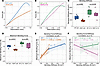 Figure 1
Altered bone biomechanical properties in SOD1(G93A) mice at presymptomatic and symptomatic stages. (A and B) Representative 3-point bending force–deformation curves at P45 (A) and P110 (B). (C and D) Bending stiffness (flexural rigidity, E*I) (C) and maximum bending force (D) of femora from wild-type (WT) and SOD1(G93A) mice at presymptomatic (P45) and symptomatic (P110) stages. SOD1 mice show significantly reduced bending stiffness and maximum bending force at both time points. (E and F) Correlation analysis between bending stiffness and maximum bending force at P45 (E) and P110 (F). At P110, SOD1 mice display an inverse correlation (r = –0.81, P = 0.05), indicating pathological decoupling of normally related parameters. n = 5–7 per group. Statistical significance was determined using 1-way ANOVA followed by Šidák’s multiple-comparison test.
In agreement with flexural rigidity, the maximal bending force was significantly decreased in the bones of SOD1 mice at P45 (Figure 1D); again, while both WT and SOD1 displayed higher values at P110 compared with P45, SOD1 bones showed a significantly lower bending force (P < 0.05; Figure 1D), implying a reduced load-bearing capacity at both disease stages.
It is normally expected that bending stiffness and maximum bending force display a linear correlation, with increased stiffness leading to higher maximum bending force (19). When we tested this relationship in WT and SOD1 mice (Figure 1, E and F), we found a significant direct linear correlation between the two measures at the age of P45, although the range of stiffness was substantially left-shifted for SOD1 mice and the slope was steeper in SOD1 mice (Figure 1E). On the other hand, at P110 SOD1 animals displayed a strong trend (P = 0.05) toward an inverse correlation between bending stiffness and maximum bending force (Figure 1F), indicating a decoupling between these two measures.
Taken together, these data show an early alteration of bone biomechanics in SOD1 animals, and a substantial decoupling of biomechanical parameters at symptomatic stages. Interestingly, the mismatch between biomechanics (bending stiffness and maximum force) and micro-CT results indicates a simultaneous involvement of bone architecture and of bone matrix composition.
Presymptomatic trabecular thinning and reduced mineralization precede cortical thinning at symptomatic stage. To determine the architectural basis of the mechanical impairment in SOD1 bones, we performed high-resolution micro-CT imaging of trabecular and compact cortical compartments at P45 and P110 (Figure 2A). Trabecular tissue mineral density (Figure 2B) and trabecular bone volume ratio (Figure 2C) were significantly lower in SOD1 mice than in WT at both P45 and P110 (and with a significant decrease in trabecular number at P110 [Figure 2D]), indicating an early-onset and persistent deficit in mineralization (Figure 2, B and C).
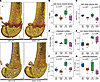 Figure 2
Early trabecular thinning and reduced mineralization precede cortical bone loss in SOD1(G93A) mice. (A) Representative 3D micro-CT reconstructions of distal femora from WT and SOD1(G93A) mice at presymptomatic (P45) and symptomatic (P110) stages. In the representative 3D renderings, weakly mineralized bone is displayed in red, whereas moderately mineralized bone is displayed in yellow and highly mineralized bone in blue. Scale bars: 500 μm. (B–G) Quantitative micro-CT analysis showing trabecular tissue mineral density (Tb.TMD) (B), bone volume fraction (bone volume/tissue volume [BV/TV, percent]) (C), trabecular number (Tb.N) (D), cortical tissue mineral density (Ct.TMD) (E), cortical thickness (Ct.Th) (F), and trabecular thickness (Tb.Th) (G). SOD1 mice display reduced trabecular parameters at both time points, while cortical changes appear later at P110. n = 7–9 per group. Statistical significance was determined using 1-way ANOVA followed by Šidák’s multiple-comparison test.
On the other hand, cortical tissue mineral density was unchanged at both time points (Figure 2E). Cortical thickness was not reduced at P45, but displayed a significant decline observable at P110 (Figure 2F). On the other hand, trabecular thickness (but not trabecular number; Figure 2D) was reduced at both P45 and P110 (Figure 2G). Trabecular number was comparable between WT and SOD1 mice at P45 but was significantly lower at P110, suggesting that the complete loss of individual trabeculae occurs later in disease progression (Figure 2D).
Taken together, these findings highlight the early reductions in trabecular mineralization and thickness at P45 followed by a more pervasive bone involvement at P110, including trabecular loss and cortical thinning. These structural deficiencies provide an architectural basis for the impaired flexural rigidity and reduced maximum force observed in SOD1(G93A) and confirm the occurrence of early bone structural involvement in ALS, before the appearance of substantial neuromuscular junction denervation.
Loss of osteoblasts at presymptomatic stage in the SOD1 bones. We set out to complement the microstructural analysis of the mineralized compartment of the bone (Figures 1 and 2) with the histological analysis of the bone cellular component. Immunohistochemistry against RUNX2 was exploited to highlight the osteoblast population, and on transmitted-light micrographs the number of RUNX2-positive osteoblasts and their surface contacting the bone matrix were quantified. DAB-positive osteoblasts were specifically quantified on the bone surface, and, as anticipated, RUNX2-positive osteoblasts formed a single-cell layer lining the bone trabeculae (Figure 3A). Interestingly, at presymptomatic stage the SOD1 bones already displayed a significant loss of osteoblasts, and a similarly large loss was observed at P110 (a decrease in osteoblasts was also observed in WT between P45 and P110, in agreement with bone maturation during early adulthood; Figure 3, A, C, and D).
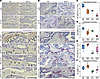 Figure 3
Imbalance of osteoblast and osteoclast cells in SOD1(G93A) mice at presymptomatic and symptomatic stages. (A and B) Representative immunohistochemical images of RUNX2-positive osteoblasts (A, brown staining) and TRAP-positive osteoclasts (B, red staining) in trabecular bone from WT and SOD1 mice at P45 and P110. Sections were counterstained with hematoxylin. Upper panels show an overview at ×20 original magnification; lower panels show higher magnification. Scale bars: 50 μm (A), 100 μm (B). (C–F) Quantification of osteoblast number (N.Ob) (C) and surface (Ob.S) (D) and osteoclast number (N.Oc) (E) and surface (Oc.S) (F) per bone perimeter (B.Pm). BS, bone surface. SOD1 mice show reduced osteoblast parameters and increased osteoclast activity. Box plots show median, quartiles, and range. n = 7–9 per group. Statistical significance was determined using 1-way ANOVA followed by Šidák’s multiple-comparison test.
Reciprocally, the number of osteoclasts (revealed by staining for tartrate-resistant acid phosphatase [TRAP]) displayed a minor increase at P45 (strong trend, P = 0.06) and a more substantial elevation at P110 (Figure 3, B and E); likewise, the extent of bone-facing surface of osteoclasts was increased both at P45 and at P110 (Figure 3, B and F). In line with these findings, serum C-terminal telopeptide of type I collagen (CTX-I)) showed a trend toward higher values and N-terminal propeptide of type I procollagen (PINP) levels were significantly increased in SOD1 mice at P110, consistent with a high-turnover state at the symptomatic stage (Supplemental Figure 1, A and B; supplemental material available online with this article; https://doi.org/10.1172/jci.insight.197475DS1).
Taken together, the histological data indicate a substantial deficit in bone deposition at P45 in conditions of small increase in bone resorption, followed by an intense bone degradation and dramatic loss of bone mass at P110. Thus, the early bone phenotype appears to be related to reduced bone deposition rather than active bone remodeling.
Bone bulk transcriptome reveals disruption of bone remodeling regulators, IL-6 signaling, and cellular senescence in SOD1 animals. In order to gain mechanistic and molecular insights into the processes shaping the alterations in bone architecture and cellular components already in presymptomatic SOD1 animals, we performed a bulk RNA-seq of RNA originating from the femur compact and trabecular bone, after extensive washing of bone marrow (Figure 4A). We considered 6 WT and 6 SOD1 samples, but 3 SOD1 samples did not pass quality control for overall low RNA quality/yield. Principal component analysis (PCA) (Figure 4B) revealed a clear segregation between genotypes, with PC1, distinguishing the genotypes, representing 80% of the variability. Differential gene expression analysis identified 489 upregulated and 248 downregulated genes (Figure 4C), pointing to widespread transcriptional dysregulation in SOD1 bones. The top 10 upregulated genes included ferritin light chain (Ftl2; involved in the suppression of osteoblast function) (20) and Eno1b (promoting glycolytic metabolism, also associated with increased bone resorption) (21), with other top genes related to cell adhesion, signaling, and transcriptional regulation (such as Hmgba1, Ceacam2, and Ppp1r3c). Conversely, among the top 10 downregulated genes, there were several major histocompatibility complex genes, two genes involved in interferon signaling (Oasl2 and Ifi204), and a metabolic regulator of phagocytes (Tbc1d1). Interestingly, aside from protein-coding genes, a number of pseudogenes were also upregulated in SOD1 samples, most notably two — Atp6rs2 and Atpv0c-ps2 — related to ATPases necessary for vacuole acidification.
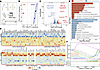 Figure 4
Transcriptomic profiling of femoral bone reveals impaired osteogenesis, enhanced resorption, and cellular senescence signatures in presymptomatic SOD1(G93A) mice. (A) Experimental pipeline showing femoral bone processing and RNA-seq workflow. (B) Principal component analysis (PCA) of WT (n = 6) and SOD1 (n = 3) bone samples showing clear segregation with PC1 accounting for 80.61% of variance. (C) Volcano plot displaying differentially expressed genes with 489 upregulated and 248 downregulated genes in SOD1 bones (adjusted P < 0.05, |log2FC| > 1). (D) Gene Ontology (GO) enrichment analysis showing upregulation of bone resorption pathways and downregulation of osteogenic processes. (E) Heatmaps of selected genes from enriched GO categories. (F) Gene set enrichment analysis (GSEA) revealing significant downregulation of proliferation, immune response, and bone repair pathways in SOD1 bones. Differential expression analysis was performed using DESeq2 with adjusted P < 0.05 and |log2FC| > 1. GO and GSEA analyses were performed with q value less than 0.05. Heatmap values represent z scores.
The comprehensive survey of Gene Ontology (GO) categories revealed the significant upregulation of multiple GO terms related to bone loss (such as negative regulation of bone mineralization, bone resorption, and osteoclast differentiation; Figure 4D) as well as the downregulation of multiple GO groups related to bone buildup (such as ossification, bone development and mineralization, positive regulation of osteoblast differentiation, and derepression of osteoclasts; Figure 4D). Intriguingly, some opposite GO categories also appeared: among the upregulated modules we identified the negative regulation of bone resorption (including the strong osteoprotective gene osteoprotegerin/Tnfrsf11b and the osteoclast differentiation suppressor genes Gpr137 and Gpr137b); the same category also appeared in the downregulated set, but with a different subset of corresponding genes (including P2rx7, an inducer of the multinucleated phenotype of osteoclasts, ref. 22; and Ship1/Inpp5d, a suppressor of bone mineralization, ref. 23).
Among the transcriptional modules detected by the GO analysis, 5 groups displayed a strong differential induction between SOD1 and WT bones; two of these groups, namely bone development genes (38 genes) and osteoblast differentiation genes (30 genes downregulated in SOD1 bones) (Figure 4E), supported the model of reduced bone deposition in the early stages of disease progression. Among the SOD1-downregulated genes we identified several soluble paracrine/endocrine mediators of bone deposition, including the pro-anabolic Igf1 and its binding protein Igfbp5, the pro-osteogenic Tgfb1 (24), and the pro-osteogenic Il18 (25), as well as the promoters of osteoblast proliferation Notch1 and Notch2 (26). Conversely, the remaining 3 categories were upregulated in SOD1 and included osteoclast differentiation genes (19 genes), bone resorption inducers (4 genes), and negative regulators of ossification (22 genes). Among the latter, SOD1 bones expressed higher levels of the suppressor of osteoblast differentiation and BMP signaling Gdf10/Bmp3b (27, 28) and Bmp3 (28) as well as the osteoclast differentiation inducers Bmp2 (29, 30).
Finally, we calculated the enrichment score for multiple functional pathways by gene set enrichment analysis (GSEA), which considers not only the list of altered genes, like in the GO analysis, but also the extent of their fold change (FC). Among the most significantly downregulated ones in SOD1 mice, we identified the E2F transcriptional network (Figure 4F), involved in cell senescence (31), and the G2M checkpoint, pointing to decreased proliferation of bone cells; furthermore, we identified the downregulation of mTOR and PI3K signaling (FDR 0.001 and 0.005, respectively), coherent with the catabolic state of the bone, and, interestingly, the downregulation of IL-6 signaling (which is normally required for appropriate bone repair) (13) and of complement (also involved in bone repair) (32).
Conversely, only a small number of pathways appeared upregulated in the SOD1 animals — including oxidative phosphorylation, pointing toward the involvement of mitochondrial biogenesis (FDR = 0.036; Figure 4F).
Taken together, the results of the bone bulk transcriptome confirm the reduced bone deposition and increased bone resorption but also the upregulation of some counter-regulatory proteins (such as osteoprotegerin) ongoing in the SOD1 bones and indicate cell senescence and metabolic reprogramming (highlighted by E2F, oxidative phosphorylation, and glycolysis genes), and the dysregulation of several mediators, such as Igf1, Notch, Tgfb1, and Bmp/Gdf10 signaling, as mechanistic bases for the bone phenotype.
Osteoblasts from SOD1 animals exhibit defects in differentiation and extracellular matrix organization in vitro. The bulk bone transcriptome identifies at the molecular level several pathogenic pathways potentially involved in the early disruption of bone architecture in ALS animals. However, whether these mechanistic events are set in motion by external triggers, such as muscle dysfunction or hypothalamic alteration, or are intrinsic to bone cell lineages, has not been addressed. To investigate this point, we isolated osteoblasts from femora of WT or SOD1 animals at the age of P45, and we maintained them in culture for 6 weeks (Figure 5A), to wash out, at least in part, systemic influences. We cultured samples from 6 WT and 6 SOD1 animals, but 3 WT samples did not pass quality control for excessive ribosomal RNA contamination and/or insufficient RNA quantity. We then performed bulk RNA-seq to characterize their transcriptomic landscape.
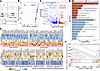 Figure 5
Transcriptomic analysis of cultured osteoblasts from the P45 time point reveals defects in signaling, proliferation, and differentiation. (A) Schematic representation of experimental design for primary osteoblast isolation and culture from WT and SOD1(G93A) mice at P45. (B) PCA of WT (n = 3) and SOD1 (n = 6) osteoblasts showing clear transcriptional separation with PC1 accounting for 92.4% of variance. (C) Volcano plot showing 1,921 upregulated and 2,074 downregulated genes in SOD1 samples (adjusted P < 0.05, |log2FC| > 1). (D) GO enrichment analysis identifying key transcriptional alterations in SOD1 osteoblasts. (E) Heatmaps displaying normalized expression (z scores) of representative genes. (F) GSEA highlighting upregulated unfolded protein response and downregulated proliferation pathways in SOD1 osteoblasts. Differential expression analysis was performed using DESeq2 with adjusted P < 0.05 and |log2FC| > 1. GO and GSEA analyses were performed with q value less than 0.05.
PCA demonstrated a stark distinction of SOD1 and WT osteoblasts, with the first principal component accounting for more than 92% of the overall variance (Figure 5B). Differential gene expression analysis revealed 1,921 upregulated and 2,074 downregulated genes in SOD1 osteoblasts (adjusted P < 0.05, |log2FC| > 1; Figure 5C).
Among the top downregulated genes, several key genes involved in osteogenesis and bone turnover were decreased in SOD1 osteoblasts. Notably, a significant downregulation of Fc receptor subunits (Fcgr2b and Fcgr3) was also detected, possibly connected to the role of immune complexes in regulating osteoblast maturation (33), together with the downregulation of subunits of the complement protein C1q (C1qc, C1qa). Furthermore, several genes involved in adhesion to matrix were also downregulated (Itgb2, Clec4n, Adgre1). On the other hand, among the top upregulated genes, we observed the glucose and glutamate degradative enzyme Ogdhl1 (pointing to a shift toward anaerobic metabolism), and Ttc39b (possibly involved in lipid metabolism). Among the transcription factors, we identified the upregulation of Schlafen family member 5 (Slfn5), promoting osteoblast differentiation (34), but at the same time also the upregulation of Ikzf1, whose upregulation may interfere with osteoblast lineage progression. The top upregulated genes also included the inflammasome component Nlrp3 and the complement receptor C5ar2, whose upregulation promotes inflammation in bone tissue, accelerating bone resorption (35).
Considering a broader set of GO categories (Figure 5D), SOD1 osteoblasts displayed gene signatures for competing or contrasting pathways: while BMP signaling was upregulated (at multiple levels), a simultaneous upregulation of suppressors of osteoblast differentiation was observed. Likewise, although anti-apoptotic programs were downregulated overall, cell division was also reduced, indicating an overall decrease in cell turnover or fitness. Most notably, downregulation of bone mineralization and ossification was observed. Thus, despite the upregulation of bone buildup gene modules, an overall downregulation of bone deposition modules was observed.
The detailed scrutiny of the altered GO modules (Figure 5E) revealed, among others, 5 distinct modules related to bone metabolism: SOD1 osteoblasts displayed the distinct upregulation of multiple genes related to the regulation of BMP signaling such as the osteogenic suppressors Smurf1 and Smurf2, and in particular the upregulation of multiple Smad genes (Smad3, Smad7, and Smad9). Overall, SOD1 osteoblasts showed the upregulation of genes suppressing osteoblast differentiation and bone deposition, such as Fgfr1. On the other hand, 2 downregulated gene modules in SOD1 osteoblasts included multiple genes involved in cell proliferation (24 genes, most notably Notch1) and ossification (31 genes). In the latter, several anabolic genes (Igf1, Igf2, Igfbp2, Igfbp5) and collagen genes (Col11a2, Col13a1) were included.
Furthermore, pathway analysis in SOD1 osteoblasts revealed enrichment of PI3K-Akt and Wnt signaling in osteoblast cell culture (Supplemental Figure 2). Among bulk bone samples, oxidative phosphorylation was one of the few pathways significantly upregulated in SOD1 mice (Figure 4F). These changes indicate altered WNT/PI3K-Akt activity and mitochondrial stress already at the presymptomatic stage.
Finally, pathway analysis in GSEA (Figure 5F) highlighted the upregulation of unfolded protein response in SOD1 osteoblasts (a signature of cell response to misfolded SOD1) (36), coherent with the Smad upregulation (37). Conversely, among the pathways with negative correlation with genotypes (i.e., downregulated in SOD1), we identified IL-JAK signaling (related to bone morphogenesis), E2F (associated with senescence), complement, and G2M checkpoint; most notably, these categories also appeared in the bone bulk transcriptome.
We expanded our in vitro assessment of bone deposition/resorption processes with an assay directed at exploring osteoclast function and differentiation. We differentiated bone marrow cells from WT and SOD1(G93A) mice at P45 and P110 under osteoclastogenic conditions and quantified TRAP-positive multinucleated cells. SOD1-derived cultures from P45 mice displayed significantly higher osteoclast numbers compared with WT (Supplemental Figure 1, C and D); a similar trend was also observed for cells isolated at P110.
Taken together, the transcriptome data of the osteoblasts cultured for 6 weeks in vitro demonstrate a number of alterations in bone deposition and remodeling pathways, in particular BMP signaling, indicating at least a strong contribution of cell-autonomous disturbances to the overall bone phenotype. Two major disturbances in core cell biology, namely misfolded protein response and E2F transcription factor pathway activation, may underlie the altered bone-related phenotypes and indicate that cell stress and cell senescence may contribute to the SOD1-associated bone phenotype.
Increased cell senescence in presymptomatic ALS bones. We set out to explore the hypothesis of an ongoing accelerated senescence in the SOD1 bone cells, considering bulk bone and in vitro osteoblast transcriptomes. First, we exploited the recent demonstration of the age-dependent upregulation of the ectodysplasin A2 receptor (EDA2R) (38). Eda2r itself was significantly upregulated in both the bulk bone and osteoblasts from SOD1 animals (Figure 6A). Next, we defined the gene set predicted to be associated with Eda2r (GeneMANIA; Figure 6B) (39) and assessed the expression of these genes in the transcriptome datasets (Figure 6C). Several of the genes included in the Eda2r network were significantly altered in the ALS bone: the most notable is Tnfrsf14 (HVEM), the receptor for LIGHT/TNFSF14, whose ligand deficiency has been shown to impair osteoblast differentiation and decrease bone mass (41). Interestingly, the Eda2r gene network signature in cultured osteoblasts only partially overlapped the bulk-bone one: C1qb was also downregulated in the cultured cells, together with Tnfrsf14; on the other hand, Tnfrsf11a (Rank) was strongly downregulated in the osteoblasts (but barely in the bulk bone), and other genes (Acan, Gpr82, Tnfrsf19, previously associated with bone mass) (42) displayed opposite upregulation. Taken together, the Eda2r gene signature supports the accelerated aging phenotype but with uneven representation in bulk bone and cultured cells, possibly indicating non-cell-autonomous mechanisms.
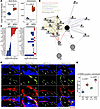 Figure 6
Transcriptomic alterations and cellular senescence in SOD1(G93A) bulk bones and osteoblasts. (A) Eda2r expression in bulk bone and cultured osteoblasts at presymptomatic stage (P45). Eda2r is significantly upregulated in SOD1(G93A) mice compared with WT controls in both conditions. (B) GeneMANIA network analysis illustrating interactions among significantly regulated genes from bulk bone RNA-seq. (C) Comparison of log2 fold changes for network genes between bulk bone and osteoblasts. (D) Immunofluorescence staining for p16INK4a (green) and RUNX2 (red) combined with DAPI (blue) in WT and SOD1 femoral bone sections at P45 and P110 stages. Arrows indicate osteoblasts; B denotes bone trabeculae. Scale bar: 20 μm. (E) Quantification of p16INK4a-positive osteoblasts showing progressive senescence in SOD1 mice. n = 3 per group. Statistical significance was determined using 1-way ANOVA followed by Šidák’s multiple-comparison test.
To independently evaluate the occurrence of increased senescence in the bones from ALS mice, we investigated the p16INK4a protein expression levels (an established marker of cellular senescence) (43) in femur histological samples from WT and SOD1 mice at presymptomatic (P45) and symptomatic (P110) stages. Regardless of age or genotype, p16INK4a immunoreactivity was primarily observed in the cellular layer adjacent to the mineralized matrix, indicating that it corresponds to osteoblasts (Figure 6D).
Notably, already at P45, SOD1 bones displayed a trend toward an increased percentage of p16INK4a-positive osteoblasts compared with WT, although they did not reach statistical significance (P = 0.0698; Figure 6E). At the symptomatic stage (P110), SOD1 mice exhibited a significantly higher percentage of p16INK4a-positive osteoblasts compared with age-matched WT controls (P = 0.0005; Figure 6E). WT animals also displayed an age-dependent increase in p16INK4a expression from P45 to P110 (P = 0.0011), consistent with the natural progression of cellular senescence during aging (44).
These findings align with transcriptomic data showing downregulation of E2F targets and G2M checkpoint in SOD1 bone and osteoblast cell culture and support the hypothesis that cellular senescence contributes to impaired bone formation in presymptomatic and symptomatic stages of ALS.
BMP signaling stimulation rescues osteogenic differentiation in SOD1 osteoblasts. The simultaneous detection of reduced osteoblast differentiation and increased senescence in both bulk bone and cultured osteoblast transcriptomes raised the hypothesis that increasing pro-osteogenic signaling may restore both phenotypes, since several transcription factors inducing osteogenic differentiation under BMP signaling (most notably ID1 and RUNX2) (45) are also suppressors of senescence (46, 47). To test the hypothesis, we cultured osteoblasts from WT or SOD1 animals in vitro for 6 weeks, and then we exposed them to BMP2 (or vehicle) for 7 days longer (Figure 7).
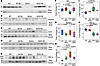 Figure 7
BMP2 treatment restores stress response and signaling deficits in SOD1(G93A) osteoblasts. Western blot analysis and quantification of ID1 (A and F), RUNX2 (B and G), ALPL (C and H), phosphorylated eIF2α (D and I), and IRE1α (E and J) in primary osteoblasts from WT and SOD1 mice with and without BMP2 treatment. BMP2 restores ID1 expression in SOD1 osteoblasts. RUNX2 and ALPL showed no significant change in WT and SOD1 osteoblasts after BMP2 treatment. Each dot represents an individual biological replicate. n = 5–8 per group. Statistical significance was determined using 1-way ANOVA followed by Šidák’s multiple-comparison test.
First we assessed the protein level of the pro-osteogenic transcription factors ID1 and RUNX2. We detected a strong decrease in ID1 protein levels (matching the findings of the RNA-seq datasets) in vehicle-treated SOD1 osteoblasts compared with WT (Figure 7, A and F). Notably, the reduced ID1 expression in the SOD1 samples was rescued by BMP2 treatment. On the other hand, RUNX2 levels were largely unaffected by SOD1 expression or BMP2 treatment (Figure 7, B and G). Furthermore, we assessed the expression of alkaline phosphatase (ALPL), which is normally secreted into the bone matrix by osteoblasts to allow bone mineralization to take place. In WT osteoblasts, ALPL levels were stimulated by BMP2 treatment (Figure 7, C and H); conversely, osteoblasts from SOD1 animals displayed a very large variation of ALPL expression (on average, significantly higher than in WT), and showed a trend toward normalization upon BMP2 treatment.
We further considered a second hallmark of senescence, namely the phosphorylation of the translation factor eIF2α (48), also related to the unfolded protein response upregulated in SOD1 animals (49). Osteoblasts from the SOD1 animals did display increased levels of phosphorylated eIF2α (Figure 7, D and I) that were rescued by the BMP2 treatment; no effect of BMP2 was observed in the WT osteoblasts. Finally, we explored a potential mechanistic link between the unfolded protein response and ID1-related senescence, considering the expression of the ER stress/unfolded protein response component IRE1α (Figure 7, E and J), since IRE1α can degrade Id1 mRNA (50). Levels of IRE1α were substantially reduced in SOD1 osteoblasts compared with WT, but they were not modified by BMP2 treatment (Figure 7, E and J). Thus, cultured osteoblasts display two hallmarks of senescence (reduced ID1 expression and increased eIF2α phosphorylation), which can be corrected by stimulation of BMP signaling independently of the ER stress response.


