
Research ArticleCell biologyOncology
Open Access |  10.1172/jci.insight.193221
Therapeutic targeting of YOD1 disrupts the PAX-FOXO1/N-Myc feedback loop in rhabdomyosarcoma
Wenwen Ying,1,2 Jiayi Yu,3 Xiaomin Wang,1 Jiayi Liu,1 Boyu Deng,1 Xuejing Shao,1,4 Jinhu Wang,5 Ting Tao,5 Ji Cao,1,2 Qiaojun He,1,2,6 Bo Yang,1,2,6 Yifan Chen,1 and Meidan Ying1,3,4,5,6
1Institute of Pharmacology and Toxicology, Zhejiang Province Key Laboratory of Anti-Cancer Drug Research, College of Pharmaceutical Sciences, and
2The Innovation Institute for Artificial Intelligence in Medicine, Zhejiang University, Hangzhou, China.
3School of Pharmacy, Hangzhou Medical College, Hangzhou, Zhejiang, China.
4Nanhu Brain-computer Interface Institute, Hangzhou, China.
5Department of Surgical Oncology, Children’s Hospital, Zhejiang University School of Medicine, National Clinical Research Center for Child Health, Hangzhou, China.
6School of Medicine, Hangzhou City University, Hangzhou, Zhejiang, China.
Address correspondence to: Meidan Ying or Yifan Chen, Institute of Pharmacology & Toxicology, College of Pharmaceutical Sciences, Zhejiang University, Rm 115, Hangzhou, 310058, China. Phone: 86.571.88208401; Email: mying@zju.edu.cn (MY); chenyifan96@zju.edu.cn (YC).
Find articles by Ying, W. in: PubMed | Google Scholar
1Institute of Pharmacology and Toxicology, Zhejiang Province Key Laboratory of Anti-Cancer Drug Research, College of Pharmaceutical Sciences, and
2The Innovation Institute for Artificial Intelligence in Medicine, Zhejiang University, Hangzhou, China.
3School of Pharmacy, Hangzhou Medical College, Hangzhou, Zhejiang, China.
4Nanhu Brain-computer Interface Institute, Hangzhou, China.
5Department of Surgical Oncology, Children’s Hospital, Zhejiang University School of Medicine, National Clinical Research Center for Child Health, Hangzhou, China.
6School of Medicine, Hangzhou City University, Hangzhou, Zhejiang, China.
Address correspondence to: Meidan Ying or Yifan Chen, Institute of Pharmacology & Toxicology, College of Pharmaceutical Sciences, Zhejiang University, Rm 115, Hangzhou, 310058, China. Phone: 86.571.88208401; Email: mying@zju.edu.cn (MY); chenyifan96@zju.edu.cn (YC).
Find articles by Yu, J. in: PubMed | Google Scholar
1Institute of Pharmacology and Toxicology, Zhejiang Province Key Laboratory of Anti-Cancer Drug Research, College of Pharmaceutical Sciences, and
2The Innovation Institute for Artificial Intelligence in Medicine, Zhejiang University, Hangzhou, China.
3School of Pharmacy, Hangzhou Medical College, Hangzhou, Zhejiang, China.
4Nanhu Brain-computer Interface Institute, Hangzhou, China.
5Department of Surgical Oncology, Children’s Hospital, Zhejiang University School of Medicine, National Clinical Research Center for Child Health, Hangzhou, China.
6School of Medicine, Hangzhou City University, Hangzhou, Zhejiang, China.
Address correspondence to: Meidan Ying or Yifan Chen, Institute of Pharmacology & Toxicology, College of Pharmaceutical Sciences, Zhejiang University, Rm 115, Hangzhou, 310058, China. Phone: 86.571.88208401; Email: mying@zju.edu.cn (MY); chenyifan96@zju.edu.cn (YC).
Find articles by Wang, X. in: PubMed | Google Scholar
1Institute of Pharmacology and Toxicology, Zhejiang Province Key Laboratory of Anti-Cancer Drug Research, College of Pharmaceutical Sciences, and
2The Innovation Institute for Artificial Intelligence in Medicine, Zhejiang University, Hangzhou, China.
3School of Pharmacy, Hangzhou Medical College, Hangzhou, Zhejiang, China.
4Nanhu Brain-computer Interface Institute, Hangzhou, China.
5Department of Surgical Oncology, Children’s Hospital, Zhejiang University School of Medicine, National Clinical Research Center for Child Health, Hangzhou, China.
6School of Medicine, Hangzhou City University, Hangzhou, Zhejiang, China.
Address correspondence to: Meidan Ying or Yifan Chen, Institute of Pharmacology & Toxicology, College of Pharmaceutical Sciences, Zhejiang University, Rm 115, Hangzhou, 310058, China. Phone: 86.571.88208401; Email: mying@zju.edu.cn (MY); chenyifan96@zju.edu.cn (YC).
Find articles by Liu, J. in: PubMed | Google Scholar
1Institute of Pharmacology and Toxicology, Zhejiang Province Key Laboratory of Anti-Cancer Drug Research, College of Pharmaceutical Sciences, and
2The Innovation Institute for Artificial Intelligence in Medicine, Zhejiang University, Hangzhou, China.
3School of Pharmacy, Hangzhou Medical College, Hangzhou, Zhejiang, China.
4Nanhu Brain-computer Interface Institute, Hangzhou, China.
5Department of Surgical Oncology, Children’s Hospital, Zhejiang University School of Medicine, National Clinical Research Center for Child Health, Hangzhou, China.
6School of Medicine, Hangzhou City University, Hangzhou, Zhejiang, China.
Address correspondence to: Meidan Ying or Yifan Chen, Institute of Pharmacology & Toxicology, College of Pharmaceutical Sciences, Zhejiang University, Rm 115, Hangzhou, 310058, China. Phone: 86.571.88208401; Email: mying@zju.edu.cn (MY); chenyifan96@zju.edu.cn (YC).
Find articles by Deng, B. in: PubMed | Google Scholar
1Institute of Pharmacology and Toxicology, Zhejiang Province Key Laboratory of Anti-Cancer Drug Research, College of Pharmaceutical Sciences, and
2The Innovation Institute for Artificial Intelligence in Medicine, Zhejiang University, Hangzhou, China.
3School of Pharmacy, Hangzhou Medical College, Hangzhou, Zhejiang, China.
4Nanhu Brain-computer Interface Institute, Hangzhou, China.
5Department of Surgical Oncology, Children’s Hospital, Zhejiang University School of Medicine, National Clinical Research Center for Child Health, Hangzhou, China.
6School of Medicine, Hangzhou City University, Hangzhou, Zhejiang, China.
Address correspondence to: Meidan Ying or Yifan Chen, Institute of Pharmacology & Toxicology, College of Pharmaceutical Sciences, Zhejiang University, Rm 115, Hangzhou, 310058, China. Phone: 86.571.88208401; Email: mying@zju.edu.cn (MY); chenyifan96@zju.edu.cn (YC).
Find articles by Shao, X. in: PubMed | Google Scholar
1Institute of Pharmacology and Toxicology, Zhejiang Province Key Laboratory of Anti-Cancer Drug Research, College of Pharmaceutical Sciences, and
2The Innovation Institute for Artificial Intelligence in Medicine, Zhejiang University, Hangzhou, China.
3School of Pharmacy, Hangzhou Medical College, Hangzhou, Zhejiang, China.
4Nanhu Brain-computer Interface Institute, Hangzhou, China.
5Department of Surgical Oncology, Children’s Hospital, Zhejiang University School of Medicine, National Clinical Research Center for Child Health, Hangzhou, China.
6School of Medicine, Hangzhou City University, Hangzhou, Zhejiang, China.
Address correspondence to: Meidan Ying or Yifan Chen, Institute of Pharmacology & Toxicology, College of Pharmaceutical Sciences, Zhejiang University, Rm 115, Hangzhou, 310058, China. Phone: 86.571.88208401; Email: mying@zju.edu.cn (MY); chenyifan96@zju.edu.cn (YC).
Find articles by Wang, J. in: PubMed | Google Scholar
1Institute of Pharmacology and Toxicology, Zhejiang Province Key Laboratory of Anti-Cancer Drug Research, College of Pharmaceutical Sciences, and
2The Innovation Institute for Artificial Intelligence in Medicine, Zhejiang University, Hangzhou, China.
3School of Pharmacy, Hangzhou Medical College, Hangzhou, Zhejiang, China.
4Nanhu Brain-computer Interface Institute, Hangzhou, China.
5Department of Surgical Oncology, Children’s Hospital, Zhejiang University School of Medicine, National Clinical Research Center for Child Health, Hangzhou, China.
6School of Medicine, Hangzhou City University, Hangzhou, Zhejiang, China.
Address correspondence to: Meidan Ying or Yifan Chen, Institute of Pharmacology & Toxicology, College of Pharmaceutical Sciences, Zhejiang University, Rm 115, Hangzhou, 310058, China. Phone: 86.571.88208401; Email: mying@zju.edu.cn (MY); chenyifan96@zju.edu.cn (YC).
Find articles by
Tao, T.
in:
PubMed
|
Google Scholar
|

1Institute of Pharmacology and Toxicology, Zhejiang Province Key Laboratory of Anti-Cancer Drug Research, College of Pharmaceutical Sciences, and
2The Innovation Institute for Artificial Intelligence in Medicine, Zhejiang University, Hangzhou, China.
3School of Pharmacy, Hangzhou Medical College, Hangzhou, Zhejiang, China.
4Nanhu Brain-computer Interface Institute, Hangzhou, China.
5Department of Surgical Oncology, Children’s Hospital, Zhejiang University School of Medicine, National Clinical Research Center for Child Health, Hangzhou, China.
6School of Medicine, Hangzhou City University, Hangzhou, Zhejiang, China.
Address correspondence to: Meidan Ying or Yifan Chen, Institute of Pharmacology & Toxicology, College of Pharmaceutical Sciences, Zhejiang University, Rm 115, Hangzhou, 310058, China. Phone: 86.571.88208401; Email: mying@zju.edu.cn (MY); chenyifan96@zju.edu.cn (YC).
Find articles by Cao, J. in: PubMed | Google Scholar
1Institute of Pharmacology and Toxicology, Zhejiang Province Key Laboratory of Anti-Cancer Drug Research, College of Pharmaceutical Sciences, and
2The Innovation Institute for Artificial Intelligence in Medicine, Zhejiang University, Hangzhou, China.
3School of Pharmacy, Hangzhou Medical College, Hangzhou, Zhejiang, China.
4Nanhu Brain-computer Interface Institute, Hangzhou, China.
5Department of Surgical Oncology, Children’s Hospital, Zhejiang University School of Medicine, National Clinical Research Center for Child Health, Hangzhou, China.
6School of Medicine, Hangzhou City University, Hangzhou, Zhejiang, China.
Address correspondence to: Meidan Ying or Yifan Chen, Institute of Pharmacology & Toxicology, College of Pharmaceutical Sciences, Zhejiang University, Rm 115, Hangzhou, 310058, China. Phone: 86.571.88208401; Email: mying@zju.edu.cn (MY); chenyifan96@zju.edu.cn (YC).
Find articles by He, Q. in: PubMed | Google Scholar
1Institute of Pharmacology and Toxicology, Zhejiang Province Key Laboratory of Anti-Cancer Drug Research, College of Pharmaceutical Sciences, and
2The Innovation Institute for Artificial Intelligence in Medicine, Zhejiang University, Hangzhou, China.
3School of Pharmacy, Hangzhou Medical College, Hangzhou, Zhejiang, China.
4Nanhu Brain-computer Interface Institute, Hangzhou, China.
5Department of Surgical Oncology, Children’s Hospital, Zhejiang University School of Medicine, National Clinical Research Center for Child Health, Hangzhou, China.
6School of Medicine, Hangzhou City University, Hangzhou, Zhejiang, China.
Address correspondence to: Meidan Ying or Yifan Chen, Institute of Pharmacology & Toxicology, College of Pharmaceutical Sciences, Zhejiang University, Rm 115, Hangzhou, 310058, China. Phone: 86.571.88208401; Email: mying@zju.edu.cn (MY); chenyifan96@zju.edu.cn (YC).
Find articles by Yang, B. in: PubMed | Google Scholar
1Institute of Pharmacology and Toxicology, Zhejiang Province Key Laboratory of Anti-Cancer Drug Research, College of Pharmaceutical Sciences, and
2The Innovation Institute for Artificial Intelligence in Medicine, Zhejiang University, Hangzhou, China.
3School of Pharmacy, Hangzhou Medical College, Hangzhou, Zhejiang, China.
4Nanhu Brain-computer Interface Institute, Hangzhou, China.
5Department of Surgical Oncology, Children’s Hospital, Zhejiang University School of Medicine, National Clinical Research Center for Child Health, Hangzhou, China.
6School of Medicine, Hangzhou City University, Hangzhou, Zhejiang, China.
Address correspondence to: Meidan Ying or Yifan Chen, Institute of Pharmacology & Toxicology, College of Pharmaceutical Sciences, Zhejiang University, Rm 115, Hangzhou, 310058, China. Phone: 86.571.88208401; Email: mying@zju.edu.cn (MY); chenyifan96@zju.edu.cn (YC).
Find articles by Chen, Y. in: PubMed | Google Scholar
1Institute of Pharmacology and Toxicology, Zhejiang Province Key Laboratory of Anti-Cancer Drug Research, College of Pharmaceutical Sciences, and
2The Innovation Institute for Artificial Intelligence in Medicine, Zhejiang University, Hangzhou, China.
3School of Pharmacy, Hangzhou Medical College, Hangzhou, Zhejiang, China.
4Nanhu Brain-computer Interface Institute, Hangzhou, China.
5Department of Surgical Oncology, Children’s Hospital, Zhejiang University School of Medicine, National Clinical Research Center for Child Health, Hangzhou, China.
6School of Medicine, Hangzhou City University, Hangzhou, Zhejiang, China.
Address correspondence to: Meidan Ying or Yifan Chen, Institute of Pharmacology & Toxicology, College of Pharmaceutical Sciences, Zhejiang University, Rm 115, Hangzhou, 310058, China. Phone: 86.571.88208401; Email: mying@zju.edu.cn (MY); chenyifan96@zju.edu.cn (YC).
Find articles by Ying, M. in: PubMed | Google Scholar
Published December 16, 2025 - More info
JCI Insight. 2026;11(3):e193221. https://doi.org/10.1172/jci.insight.193221.
© 2025 Ying et al. This work is licensed under the Creative Commons Attribution 4.0 International License. To view a copy of this license, visit http://creativecommons.org/licenses/by/4.0/.
Received: March 11, 2025; Accepted: December 9, 2025

-
Results
Reciprocal transcriptional activation of PAX3-FOXO1 and N-Myc in the malignant progression of RMS. To investigate the contribution of N-Myc to FP-RMS pathogenesis, we established stably expressing experimental models in fusion-negative RMS (FN-RMS) RD cells and NIH-3T3 mouse embryonic fibroblasts via lentiviral transduction (Supplemental Figure 1A; supplemental material available online with this article; https://doi.org/10.1172/jci.insight.193221DS1). Initial characterization revealed that N-Myc or PAX3-FOXO1 overexpression alone slightly increased the clonogenic capacity of either cell line. However, coexpression of N-Myc with PAX3-FOXO1 significantly enhanced the clonogenic ability driven by PAX3-FOXO1, increasing colony formation by an average of 2.18-fold in RD cells and 2.32-fold in NIH-3T3 cells, relative to the group expressing only PAX3-FOXO1 (Figure 1A). Surprisingly, in the pooled polyclonal populations, the cotransfection of PAX3-FOXO1 and N-Myc led to higher protein levels of each other compared with their individual transfection (Supplemental Figure 1B), suggesting a potential reciprocal regulatory relationship between these 2 proteins.
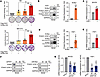 Figure 1
Reciprocal transcriptional activation of PAX3-FOXO1 and N-Myc in the malignant progression of RMS. (A) Colony formation assay (SRB) of RD and NIH-3T3 cells transduced with lentiviruses expressing the indicated constructs: empty vector, N-Myc alone, PAX3-FOXO1 (P3F1) alone, or N-Myc and P3F1 together. The bar graph shows the colony formation rate, presented as the ratio of colonies in each overexpression group to the empty vector control. Data represent the mean ± SD. n = 3. **P < 0.01 by 1-way ANOVA with Tukey’s multiple-comparison test. (B) Overexpression of P3F1 in RH30 cells and its effect on N-Myc protein levels, as determined by Western blot. (C) Overexpression of P3F1 in RH30 cells and its effect on MYCN mRNA levels, as assessed by RT-qPCR. (D) Overexpression of N-Myc in RH30 cells and its effect on P3F1 protein levels, as determined by Western blot. (E) Overexpression of N-Myc in RH30 cells and its effect on P3F1 mRNA levels, as assessed by RT-qPCR. (B–E) Quantitative analysis of the P3F1/GAPDH or N-Myc/GAPDH protein ratio from multiple independent experiments. Data are presented as mean ± SD. n = 3. *P < 0.05, **P < 0.01, ***P < 0.001 by 2-tailed Student’s t test. (F) RH30 cells were infected with lentiviruses expressing shP3F1 or shMYCN, and the protein levels of N-Myc and PAX3-FOXO1 were analyzed by Western blot. Data are representative of 3 independent experiments. (G) RH30 cells were infected with lentiviruses expressing shP3F1 or shMYCN, and the mRNA levels of P3F1 and MYCN were analyzed by qRT-PCR. Data represent the mean ± SD. n = 3. **P < 0.01, ***P < 0.001 by 1-way ANOVA with Dunnett’s multiple-comparison test.
To examine whether PAX3-FOXO1 and N-Myc can mutually regulate each other, we first overexpressed PAX3-FOXO1 in RH30 cells and observed a consequent increase in both the protein and mRNA levels of endogenous N-Myc (Figure 1, B and C). Furthermore, we overexpressed N-Myc and found that it similarly enhanced the expression of PAX3-FOXO1 at both the protein and transcript levels (Figure 1, D and E). These findings suggest that N-Myc acts not only as a downstream effector but also as an upstream transcriptional regulator of PAX3-FOXO1, indicating that the 2 proteins can mutually regulate each other to form a positive feedback loop.
To establish the existence of a mutual regulatory circuit, we also individually knocked down PAX3-FOXO1 and MYCN in RH30 cells and then detected the protein levels and mRNA levels of both genes. The results showed that knockdown of either PAX3-FOXO1 or N-Myc strongly reduced the protein (Figure 1F) and mRNA (Figure 1G) levels of the other. These reciprocal effects, observed upon the perturbation of either oncogene, demonstrate that PAX3-FOXO1 and N-Myc engage in a positive feedback loop, validating their transcriptional interdependence and underscoring their potential critical role in RMS pathogenesis.
PAX-FOXO1/N-Myc positive feedback loop drives global transcriptional reprogramming in RMS. Based on the reciprocal regulation between PAX3-FOXO1 and N-Myc, we next investigated the global transcriptional changes in this interaction. We generated RD cell models expressing N-Myc alone, PAX3-FOXO1 alone, or both genes simultaneously, with an empty vector as a negative control. In these models, we confirmed that coexpression of both genes induced an enhanced proclonogenic phenotype, as we previously observed. We then analyzed these cells by RNA sequencing (RNA-seq). The results demonstrated that PAX3-FOXO1 overexpression effectively activated its downstream targets by examining the enrichment of a defined PAX3-FOXO1 gene set, confirming the successful establishment of the model (Supplemental Figure 2A). In contrast, N-Myc alone only partially activated a subset of its target genes, which is consistent with the lower viral titer used for its transduction. We then performed gene set enrichment analysis (GSEA) to examine how the transcriptome of the PAX3-FOXO1 and N-Myc coexpression group changed compared with the single-gene expression groups. As shown in Figure 2A, the coexpression group exhibited enrichment of 17 Hallmark pathways compared with N-Myc alone and 14 pathways compared with PAX3-FOXO1 alone. A Venn intersection of these 2 sets revealed 11 overlapped pathways, suggesting they are uniquely activated by the coexpression (Figure 2A). These included cancer-associated pathways such as KRAS signaling, EMT, and JAK/STAT signaling (Figure 2B). To further identify the specific genes coregulated by PAX3-FOXO1 and N-Myc, we analyzed differentially expressed genes (DEGs) in the coexpression group versus each single-expression group, using the empty vector control as baseline. The number of DEGs in the PAX3-FOXO1+N-Myc group far exceeded that in either single-expression group. Among the upregulated genes, only 23.2% (13 of 56) overlapped with the PAX3-FOXO1–alone group and 7.1% (4 of 56) with the N-Myc–alone group (Supplemental Figure 2B), indicating that the majority of gene activation is unique to the coexpression condition. This distinct transcriptional signature was further visualized by heatmap analysis (Figure 2C and Supplemental Table 1). Together, these transcriptomic profiles suggest that coexpression of PAX3-FOXO1 and N-Myc not only regulates the classical downstream targets of each gene but also activates many other tumor-related pathways.
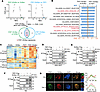 Figure 2
PAX-FOXO1/N-Myc positive feedback loop drives global transcriptional reprogramming in RMS. (A) Identification of a Hallmark gene signature coregulated by PAX3-FOXO1+N-Myc. GSEA was performed on transcriptomic data from RD cells comparing the PAX3-FOXO1+N-Myc group versus N-Myc– or P3F1-alone groups. Significantly enriched Hallmark pathways (FDR < 0.05, |NES| > 1) from both comparisons are displayed in the scatter plot. NES, normalized enrichment score. The coregulated signature was defined as the intersection of significant pathways from the 2 comparisons. n = 3. (B) Combined bar and line graph representing the 11 overlapping Hallmark pathways. Bars show the NES, and the line shows the –log10(FDR) for each pathway. (C) Heatmap displaying gene expression clusters. Cluster A denotes genes specifically activated in the PAX3-FOXO1+N-Myc group. n = 3. (D) Immunoprecipitations (IP) by anti-FLAG beads from HEK-293T cells transfected with vector or N-Myc-HA along with vector or P3F1-FLAG for 48 hours were analyzed by immunoblot (IB). (E) IPs by anti-FLAG beads from HEK-293T cells transfected with vector or P3F1-HA along with vector or N-Myc-Flag for 48 hours were analyzed by IB. (F) IPs by anti-FLAG beads from RD cells transfected with vector or N-Myc-HA along with vector or P3F1-FLAG for 48 hours were analyzed by IB. Data are representative of 3 independent experiments. (G) Immunofluorescence analysis showing subcellular colocalization of P3F1 (green) and N-Myc (red) in HeLa and RD cells. HeLa was used as a tool cell. Cells were infected with GFP-P3F1 and N-Myc-HA for 48 hours. Nuclei were stained with DAPI (blue). Colocalization was analyzed using ImageJ. Scale bar: 10 μm.
To elucidate the mechanism underlying the extensive transcriptional reprogramming driven by PAX3-FOXO1 and N-Myc coexpression, we investigated their potential physical and functional interplay. Coimmunoprecipitation (co-IP) assays in different cell models confirmed a direct protein-protein interaction between PAX3-FOXO1 and N-Myc (Figure 2, D–F), an association that was also observed for the PAX7-FOXO1 fusion (Supplemental Figure 2C). Given that N-Myc is known to engage with a multitude of protein partners (17), we sought to delineate the interaction domain. Notably, N-Myc remained capable of binding PAX3-FOXO1 even upon truncation of its primary DNA-binding domain (Supplemental Figure 2D), suggesting that their cooperation may operate through a DNA-binding-independent mechanism. This finding led us to hypothesize that the assembly of PAX3-FOXO1 and N-Myc into higher-order biomolecular condensates via phase separation could facilitate their transcriptional synergy, as recently demonstrated for MYC (18). In support of this model, we observed robust colocalization of PAX3-FOXO1 and N-Myc within discrete nuclear condensates (Figure 2G), indicating that phase separation may indeed govern the functional interplay between these 2 oncoproteins. Collectively, our findings position the PAX-FOXO1/N-Myc positive feedback loop as a central driver of global transcriptional reprogramming in RMS, potentially mediated through the formation of phase-separated oncogenic condensates.
The DUB YOD1 dictates both PAX3-FOXO1 and N-Myc protein stability in RMS. The reciprocal regulation between PAX3-FOXO1 and N-Myc, which activates many pro-oncogenic signals and further enhances the malignant phenotype of RMS, underscores the importance of simultaneously targeting both proteins in RMS therapy. Given the challenges in directly inhibiting transcription factors pharmacologically, we adopted an alternative approach focused on modulating their protein stability through the ubiquitin-proteasome system. DUBs are enzymes that remove ubiquitin from proteins, thereby enhancing their stability by preventing proteasomal degradation (19). To systematically identify the DUBs that regulate the stability of PAX3-FOXO1 and N-Myc, we established stable cell models coexpressing each oncoprotein with an EGFP reporter. We then performed a functional siRNA-based screen targeting 98 known human DUBs, using EGFP fluorescence intensity as a quantitative and real-time proxy for oncoprotein abundance (Figure 3A). In the PAX3-FOXO1 screen, siRNA-mediated knockdown of YOD1, PARP11, and JOSD2 led to the reduction in fusion protein levels, each decreasing fluorescence by more than 60%. A parallel screen in N-Myc–expressing cells confirmed the known regulator USP7 (20), thereby validating our experimental system. Cross-referencing the top candidate DUBs from both screens revealed YOD1 as the sole enzyme implicated in stabilizing both PAX3-FOXO1 and N-Myc (Figure 3B), suggesting that YOD1 could be a potential DUB of both PAX3-FOXO1 and N-Myc proteins.
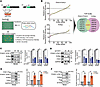 Figure 3
The deubiquitinase YOD1 dictates both PAX3-FOXO1 and N-Myc protein stability in RMS. (A) Schematic diagram of the GFP fluorescence reporting system for screening deubiquitinases (DUBs) that regulate the stability of PAX3-FOXO1 and N-Myc. (B) Relative fluorescence signal intensity of PAX3-FOXO1 or N-Myc. HEK-293T cells overexpressing GFP-PAX3-FOXO1 or GFP-N-Myc were transfected with siRNAs targeting 98 DUBs. The inhibition rates of the 7 most potent DUB siRNAs were shown to markedly reduce the GFP fluorescence intensity. The Venn diagram displays 7 potential DUB siRNAs with the greatest ability to inhibit the fluorescence intensity of PAX3-FOXO1 and N-Myc effectively. The area of overlap reflects only YOD1 that is present in the 2 protein screening species. (C and D) Effect of YOD1 knockdown on endogenous P3F1 and N-Myc protein levels. RH30 and RH41 cells were infected with shYOD1 lentivirus and protein levels were assessed by Western blotting. Quantitative analysis of the P3F1/GAPDH or N-Myc/GAPDH protein ratio from multiple independent experiments. Data represent the mean ± SD. n = 3. *P < 0.05, **P < 0.01, ***P < 0.001 by 1-way ANOVA with Dunnett’s multiple-comparison test. (E and F) The effect of YOD1 on endogenous P3F1 and N-Myc protein levels was determined by Western blotting. Quantitative analysis of the P3F1/GAPDH or N-Myc/GAPDH protein ratio from multiple independent experiments. Data are presented as mean ± SD; n = 3. *P < 0.05, **P < 0.01 by 2-tailed Student’s t test.
To further explore whether YOD1 could regulate the protein stability of both PAX3-FOXO1 and N-Myc, we knocked down YOD1 in 2 PAX3-FOXO1– and N-Myc–positive RMS cell lines, RH30 and RH41 cells. The results showed that knocking down YOD1 caused a reduction in the protein levels of PAX3-FOXO1 and N-Myc (Figure 3, C and D). Conversely, overexpression of YOD1 in the above 2 cell lines led to an obvious increase in the abundance of both PAX3-FOXO1 and N-Myc (Figure 3, E and F). These results suggest that YOD1 may contribute to the stabilization of both PAX3-FOXO1 and N-Myc, supporting its potential role as a DUB involved in the posttranslational regulation of these 2 oncogenic proteins.
YOD1 serves as a critical DUB in regulating PAX3-FOXO1 and N-Myc stability. YOD1, also known as OTUD2, is a DUB within the OTU family, characterized by its ability to cleave specific ubiquitin chains, thereby modulating protein stability and function (21). To further verify whether YOD1 acts as the DUB for PAX3-FOXO1 and N-Myc, we first examined their interaction by exogenously expressing YOD1 alongside PAX3-FOXO1 and PAX7-FOXO. Our findings demonstrate that overexpressed YOD1 could interact with both PAX3-FOXO1 and PAX7-FOXO1 (Figure 4A). Similarly, a direct biochemical association was confirmed between YOD1 and N-Myc (Figure 4B). These findings collectively establish YOD1 as a binding partner for these key oncogenic transcription factors.
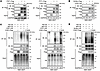 Figure 4
YOD1 serves as a critical DUB in regulating PAX3-FOXO1 and N-Myc stability. (A and B) The physical interactions between PAX-FOXO1, N-Myc, and YOD1 detected by IP. HEK-293T cells were cotransfected with PAX-FOXO1-FLAG (P3F1 or P7F1) or N-Myc-FLAG and YOD1-HA as indicated. Cell extracts were immunoprecipitated with anti-FLAG beads, and anti-HA antibody was used for detection. (C and D) The deubiquitinating effect of YOD1 on PAX-FOXO1 and N-Myc in cells were cotransfected with PAX-FOXO1-HA (P3F1 or P7F1) or N-Myc-HA, YOD1-FLAG, and His-Ub as indicated, and then treated with MG132 (8 μmol/L) for 12 hours. Cell extracts were immunoprecipitated with anti-HA beads, and the ubiquitination of PAX-FOXO1 and N-Myc was detected by Western blotting with an anti-His antibody. All data are representative of a minimum of 3 independent repeats. All co-IP experiments were performed by expression of proteins in transiently transfected HEK-293T cells.
DUBs counterbalance ubiquitin ligase activity by removing ubiquitin chains from substrate proteins, thereby rescuing them from proteasomal degradation. To determine whether YOD1 exhibits deubiquitinating activity toward PAX-FOXO1 and N-Myc, we performed cellular deubiquitination assays. Overexpression of wild-type YOD1 obviously reduced the ubiquitination levels of both PAX3-FOXO1 and PAX7-FOXO1. In contrast, the catalytically inactive YOD1-C160S mutant (22) failed to decrease ubiquitination, underscoring the essential role of YOD1’s enzymatic activity in regulating PAX3-FOXO1 stability (Figure 4C). A consistent effect was observed for N-Myc, where the catalytic mutant also abrogated deubiquitination (Figure 4D). Taken together, these results establish YOD1 as a functional DUB that directly deubiquitinates and stabilizes both PAX3-FOXO1 and PAX7-FOXO1 fusion proteins and N-Myc, highlighting its role as a common regulatory node in the posttranslational control of these oncogenic drivers.
Depletion of YOD1 inhibits the growth of RMS both in vitro and in vivo. Considering YOD1’s pivotal role in regulating the protein stability of the PAX-FOXO1 fusion and N-Myc, we proceeded to investigate the potential of YOD1 inhibition to counteract the malignant phenotypes of RMS. We first assessed the impact of YOD1 knockdown on clonogenicity across a panel of FP-RMS and FN-RMS cell lines, as well as patient-derived cells (PDCs) (Supplemental Figure 3A). The results demonstrated that YOD1 knockdown strongly impaired colony formation in FP-RMS models, including RH30, RH41, and RMS 73, whereas minimal effects were observed in FN-RMS cells (RD and RMS 1) (Figure 5A and Supplemental Figure 3, B and C). To rule out potential off-target effects or toxicity associated with constitutive shRNA expression, we established a doxycycline-inducible (DOX-inducible) Tet-On shRNA system for conditional YOD1 knockdown in RH30 and RH41 cells. DOX treatment led to efficient and reproducible downregulation of YOD1 protein (Figure 5B and Supplemental Figure 3D). Consistent with the above results, inducible YOD1 depletion suppressed both cellular proliferation and clonogenic potential in these FP-RMS lines (Figure 5, C and D, and Supplemental Figure 3E). To further investigate whether the suppression of clonogenicity following YOD1 knockdown is dependent on PAX3-FOXO1 and N-Myc, we performed a rescue experiment in the RH30-tet-shYOD1 cell model. Specifically, after inducing YOD1 knockdown with DOX, we reintroduced exogenous PAX3-FOXO1 and N-Myc via transient overexpression (Figure 5E). Colony formation assays revealed that restoring the expression of PAX3-FOXO1 and N-Myc significantly attenuated the clonogenic impairment caused by YOD1 depletion (Figure 5F). These results suggest that the anticlonogenic effect of YOD1 inhibition is highly correlated with the downregulation of PAX3-FOXO1 and N-Myc, reinforcing their functional importance in FP-RMS pathogenesis.
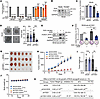 Figure 5
Depletion of YOD1 inhibits the growth of RMS both in vitro and in vivo. (A) Colony formation assay in FP-RMS (RH30, RH41) and FN-RMS (RD) cell lines, along with patient-derived cells RMS 73 (FP-RMS) and RMS 1 (FN-RMS), after YOD1 knockdown. Data represent the mean ± SD. n = 3. (B) Western blot confirming YOD1 knockdown in RH30 Tet-On shYOD1 cells with or without doxycycline (DOX, 2 μg/mL). (C and D) Clonogenic ability of RH30 Tet-On shYOD1 cells assessed by SRB (C) and soft agar assays (D). Colony numbers quantified with ImageJ. (E) Western blot analysis verifying the exogenous expression of PAX3-FOXO1 and N-Myc in the RH30-tet-shYOD1 cell model. (F) Colony formation assays assessing the rescue of clonogenic ability. Cells were subjected to the following conditions: overexpression of PAX3-FOXO1 and N-Myc without DOX induction, and overexpression of PAX3-FOXO1 and N-Myc combined with DOX-induced YOD1 knockdown. (G) Tet-On shCtrl or Tet-On shYOD1 images of RH30 xenograft tumors with or without DOX feeding (endpoint). The presence of a mouse tail indicates that the tumor did not grow. (H) Tumor volume of Tet-On shCtrl or Tet-On shYOD1 with or without DOX feeding tumors of RH30 xenografts (mean ± SEM, n = 6). (I) Tumor weight of mice in indicated groups (at the endpoint) of RH30 xenografts (means ± SEM, n = 6). (J) Body weight of mice in indicated groups (mean ± SEM, n = 6). (K) The inhibition ratio and T/C value of shYOD1 on RH30 xenograft. *P < 0.05; **P < 0.01; ***P < 0.001 by 1-way ANOVA with Dunnett’s multiple-comparison test (A), 2-tailed Student’s t test (C, D, F, I, and K), or 2-way ANOVA with Tukey’s multiple-comparison test (H and J). NS, P > 0.05. RTV, relative tumor volume; T/C, treatment/control.
To evaluate the therapeutic potential of YOD1 inhibition in FP-RMS in vivo, we established a xenograft model by subcutaneously implanting RH30 cells into nude mice. The mice were then divided into 2 groups: one transfected with a scramble control and the other with shYOD1. Depletion of YOD1 resulted in a profound suppression of tumor growth, achieving an inhibition rate of 91.37% compared with the control group. Importantly, this potent antitumor effect was well tolerated, as evidenced by no major change in mouse body weight throughout the treatment period (Figure 5, G–K). These findings suggest that shYOD1 effectively suppresses FP-RMS tumor growth, thereby underscoring the therapeutic potential of YOD1 itself.
YOD1 inhibitor G5 can inhibit the malignant phenotypes of FP-RMS cells. Building on our previous finding that G5 can inhibit YOD1’s activity and promote the degradation of PML/RARα (23), we further explored G5’s inhibitory effect on FP-RMS by targeting YOD1 enzymatic activity. We first examined G5’s impact on YOD1’s activity in vitro using a ubiquitin–7-amino-4-methylcoumarin (Ub-AMC) assay. We tested G5’s inhibitory effect at concentrations of 25 μM, 50 μM, and 100 μM on recombinant GST-YOD1, with GST-YOD1-C160S as a negative control. The results showed that G5 could effectively suppress YOD1’s catalytic activity in a dose-dependent manner (Figure 6A). These results indicate that G5 can block YOD1’s enzymatic activity. We then employed microscale thermophoresis (MST) to directly assess the physical interaction between YOD1 and G5. Recombinant human YOD1 protein was fluorescently labeled and titrated with a dilution series of G5. MST analysis revealed a dose-dependent binding curve, with a calculated dissociation constant (Kd) in the 1.09 (±0.52) × 10–6 M range (Figure 6B). This robust binding affinity demonstrates a direct and specific molecular interaction between G5 and YOD1. Next, we found that G5 potently rescued the deubiquitylation of PAX3-FOXO1 and N-Myc proteins (Figure 6C). Furthermore, G5 treatment significantly reduced the protein levels of PAX3-FOXO1 and N-Myc in RH30 and RH41 cells (Figure 6, D and E). The simultaneous targeting of the stability of PAX3-FOXO1 and N-Myc suggests that G5 may offer a promising therapeutic approach for diseases characterized by the dysregulation of ubiquitin-dependent processes involving PAX3-FOXO1 and N-Myc.
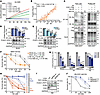 Figure 6
YOD1 inhibitor G5 can inhibit the malignant phenotypes of FP-RMS cells. (A) In vitro deubiquitinating activity of GST-YOD1 incubated with G5 (25–100 μM) using Ub-AMC; GST-YOD1-C160S served as negative control. (B) Microscale thermophoresis (MST) was used to determine the dissociation constant (Kd) between G5 and YOD1. (C) YOD1-mediated deubiquitination of PAX3-FOXO1 (P3F1) and N-Myc in HEK-293T cells cotransfected with His-Ub and YOD1-FLAG, treated with 0.5 μM G5 for 12 hours; IP: HA, IB as shown. Data represent 3 experiments. (D and E) Western blot and quantification of P3F1 and N-Myc in RH30 and RH41 cells after 24-hour G5 treatment. Protein levels normalized to GAPDH. Data are presented as mean ± SD; n = 3. (F) IC50 of G5 was determined in RH30, RH41, RD, and PLA-802 cell lines following 72-hour treatment. (G) RH30, RH41, RMS 73 patient-derived cells (PDCs) and RD cells were seeded in 6-well plates with different concentrations of G5 treatment for 14 days. Data represent the mean ± SD. n = 3. (H) Dose-response of FP-RMS (n = 6) and FN-RMS (n = 12) PDCs to G5. Cell viability was measured by CellTiter-Glo assay after 72-hour treatment with the indicated concentrations of G5, and the percentage inhibition of proliferation was calculated. (I) Western blot analysis confirming the knockout of YOD1 (using 2 distinct sgRNAs) and subsequent overexpression of PAX3-FOXO1 and N-Myc in RD cells. (J) Proliferation inhibition rate in YOD1 wild-type (WT) and knockout (KO) RD cells expressing PAX3-FOXO1 and N-Myc following 72-hour treatment with G5. n = 3. *P < 0.05; **P < 0.01; ***P < 0.001 by 2-tailed Student’s t test (D and E), 1-way ANOVA with Dunnett’s multiple-comparison test (G), or 2-way ANOVA with Dunnett’s multiple-comparison test (J). NS, P > 0.05.
To evaluate the therapeutic potential of G5 in FP-RMS, we conducted comparative analyses across RMS subtypes: FP-RMS RH30 and RH41 cells (high endogenous N-Myc) versus FN-RMS RD and PLA-802 cells (low endogenous N-Myc) (Supplemental Figure 3A). Strikingly, G5 exhibited much higher inhibitory efficacy in FP-RMS cells (IC50 RH30, 3.94 nM; RH41, 7.58 nM) than in FN-RMS models (IC50 RD, 23.65 nM; PLA-802, 31.93 nM) (Figure 6F). Moreover, both colony formation and apoptosis assays demonstrated that G5 exerts greater efficacy in FP-RMS compared with FN-RMS (Figure 6G and Supplemental Figure 4A). To further validate the selectivity of G5 in models with higher clinical relevance, we evaluated its antiproliferative effects on a panel of RMS PDC models, encompassing 6 FP- and 12 FN-RMS samples (Supplemental Table 2). The PDCs were treated with a gradient of G5 concentrations, and cell viability was assessed to determine dose-response relationships (Figure 6H). Consistent with the results obtained in RMS cell lines, FP-RMS PDCs exhibited greater sensitivity to G5 treatment compared with their FN-RMS counterparts. These results suggest that G5 may selectively target FP-RMS by downregulating PAX3-FOXO1 and N-Myc, representing a potential therapeutic strategy for FP-RMS.
To establish whether the antitumor effect of G5 on FP-RMS is correlated with YOD1 inhibition, we attempted to generate YOD1-knockout (YOD1-KO) cells in the fusion-positive RH30 background. However, consistent with the essential role of YOD1 in FP-RMS survival, we were unable to obtain viable YOD1-KO RH30 clones, suggesting that complete YOD1 ablation may be lethal in this context. As an alternative strategy, we introduced exogenous PAX3-FOXO1 and N-Myc into a YOD1-KO fusion-negative RD cell line to reconstitute a molecular context resembling FP-RMS (Figure 6I and Supplemental Figure 4B). The results demonstrated that G5 treatment exerted a markedly weaker inhibitory effect on YOD1-KO cells reconstituted with PAX3-FOXO1 and N-Myc compared with their YOD1–wild-type counterparts (Figure 6J). The above results indicate that the efficiency of G5 in FP-RMS is highly correlated with YOD1 inhibition.
YOD1 inhibitor G5 inhibits FP-RMS tumor growth in vivo. To evaluate the in vivo antitumor efficacy of G5 on RMS, we established 2 FP-RMS (RMS 16 and RMS 73) tumor models and 1 FN-RMS (RMS 1) tumor model, and compared their responses to G5 treatment (Supplemental Table 2). The expression levels of MYCN and the presence of PAX-FOXO1 gene fusions in these tissue samples were determined by RNA-seq combined with STAR-Fusion analysis (Supplemental Figure 5A). To ensure the pathological fidelity of these models, we performed transcriptomic sequencing followed by principal component analysis (PCA) on tumor tissues from the patient-derived xenografts (PDXs) and their corresponding patient samples. The analysis revealed a high degree of transcriptional concordance between each PDX model and its original patient tumor, confirming that the PDXs may recapitulate the molecular features of human RMS in vivo (Supplemental Figure 5B). Our results revealed that G5 significant suppressed the tumor growth in mice with FP-RMS–PDX tumors, achieving an inhibition rate of 69.92% in RMS 16 and 72.94% in RMS 73 (Figure 7, A and B). In contrast, G5 had no major effect on the growth of FN-RMS–PDX tumors (Figure 7C). Additionally, G5 treatment did not induce any observable changes in mouse body weights (Figure 7D), indicating that G5 has a favorable selectivity profile, particularly for FP-RMS in vivo.
 Figure 7
YOD1 inhibitor G5 inhibits FP-RMS tumor growth in vivo. (A–C) The in vivo effect of G5 on the RMS PDX model (intraperitoneal injections, every other day, 20 mg/kg) for indicated days. Tumor volume of indicated groups was measured every 2 days, mean ± SEM, sample FP-RMS 16, and FN-RMS 1, n = 4; FP-RMS 73, n = 5). ***P < 0.001 by 2-way ANOVA. NS, P > 0.05. (D) Body weight of mice in indicated groups (at the endpoint) (mean ± SEM). Differences evaluated by 2-tailed Student’s t test. NS, P > 0.05. (E) Proteins extracted from PDX tumors of FP-RMS. (F) RNA-seq GSEA of a tumor isolated from in vivo subcutaneous xenograft model of FP-RMS after treatment with G5 versus control.
To determine whether the inhibitory effects of G5 on FP-RMS tumors are attributable to the reduction in PAX3-FOXO1 and N-Myc, we first assessed the protein levels within the above tumors. Our results showed a strong downregulation of PAX3-FOXO1, PAX7-FOXO1, and N-Myc in G5-treated PDX tumors (Figure 7E). In parallel, we conducted RNA-seq analysis on tumor samples obtained from G5-treated mice and control mice, revealing transcriptional profiles altered by G5 treatment (Supplemental Figure 5C). GSEA revealed that G5 treatment downregulated the targets of PAX-FOXO1 and N-Myc, consistent with our in vitro findings (Figure 7F). Additionally, Kyoto Encyclopedia of Genes and Genomes (KEGG) pathway analysis demonstrated that G5 treatment led to the inhibition of various oncogenic signaling pathways and changes in the expression profiles of oncogenes (Supplemental Figure 5D). Notably, within the TGF-β signaling pathway, the expression levels of ACVR1, SMAD1, SMAD6, and TGIF1 genes, which are implicated in tumorigenesis (24, 25), were obviously modified (Supplemental Figure 5, E and F). These changes inversely correlated with tumor progression, suggesting attenuation of oncogenic processes. Collectively, G5 exhibited potent antitumor activity in FP-RMS PDX models, with therapeutic effects associated with modulation of PAX-FOXO1 and N-Myc protein networks by YOD1 inhibition, supporting further therapeutic potential of the YOD1 inhibition strategy in PAX-FOXO1 FP-RMS.


