
Research ArticleCell biologyEndocrinologyMuscle biology
Open Access |  10.1172/jci.insight.193208
Role of progesterone action in inguinal hernia formation via skeletal muscle fibrosis and atrophy
Tianming You,1 Mehrdad Zandigohar,2 Tanvi Potluri,1 Natalie Piehl,1 John S. Coon V,1 Elizabeth Baker,1 Maya Kafali,1 Yang Dai,2 Jonah J. Stulberg,3 David J. Escobar,4 Richard L. Lieber,5,6,7 Hong Zhao,1 and Serdar E. Bulun1
1Department of Obstetrics & Gynecology, Feinberg School of Medicine, Northwestern University, Chicago, Illinois, USA.
2Department of Biomedical Engineering, University of Illinois Chicago, Chicago, Illinois, USA.
3Department of Surgery, McGovern Medical School at the University of Texas Health Sciences Center, Houston, Texas, USA.
4Department of Pathology, Feinberg School of Medicine, and
5Departments of Physical Medicine and Rehabilitation and Biomedical Engineering, Northwestern University, Chicago, Illinois, USA.
6Research Service, Hines VA Medical Center, Maywood, Illinois, USA.
7Shirley Ryan AbilityLab, Chicago, Illinois, USA.
Address correspondence to: Serdar E. Bulun or Hong Zhao, Department of Obstetrics & Gynecology, Feinberg School of Medicine, Northwestern University, Chicago, Illinois, 60611, USA. Phone: 312.472.3980; Email: s-bulun@northwestern.edu (SEB). Phone: 312.503.0780; Email: h-zhao@northwestern.edu (HZ).
Authorship note: HZ and SEB are co-supervisors of this work.
Find articles by You, T. in: PubMed | Google Scholar
1Department of Obstetrics & Gynecology, Feinberg School of Medicine, Northwestern University, Chicago, Illinois, USA.
2Department of Biomedical Engineering, University of Illinois Chicago, Chicago, Illinois, USA.
3Department of Surgery, McGovern Medical School at the University of Texas Health Sciences Center, Houston, Texas, USA.
4Department of Pathology, Feinberg School of Medicine, and
5Departments of Physical Medicine and Rehabilitation and Biomedical Engineering, Northwestern University, Chicago, Illinois, USA.
6Research Service, Hines VA Medical Center, Maywood, Illinois, USA.
7Shirley Ryan AbilityLab, Chicago, Illinois, USA.
Address correspondence to: Serdar E. Bulun or Hong Zhao, Department of Obstetrics & Gynecology, Feinberg School of Medicine, Northwestern University, Chicago, Illinois, 60611, USA. Phone: 312.472.3980; Email: s-bulun@northwestern.edu (SEB). Phone: 312.503.0780; Email: h-zhao@northwestern.edu (HZ).
Authorship note: HZ and SEB are co-supervisors of this work.
Find articles by
Zandigohar, M.
in:
PubMed
|
Google Scholar
|

1Department of Obstetrics & Gynecology, Feinberg School of Medicine, Northwestern University, Chicago, Illinois, USA.
2Department of Biomedical Engineering, University of Illinois Chicago, Chicago, Illinois, USA.
3Department of Surgery, McGovern Medical School at the University of Texas Health Sciences Center, Houston, Texas, USA.
4Department of Pathology, Feinberg School of Medicine, and
5Departments of Physical Medicine and Rehabilitation and Biomedical Engineering, Northwestern University, Chicago, Illinois, USA.
6Research Service, Hines VA Medical Center, Maywood, Illinois, USA.
7Shirley Ryan AbilityLab, Chicago, Illinois, USA.
Address correspondence to: Serdar E. Bulun or Hong Zhao, Department of Obstetrics & Gynecology, Feinberg School of Medicine, Northwestern University, Chicago, Illinois, 60611, USA. Phone: 312.472.3980; Email: s-bulun@northwestern.edu (SEB). Phone: 312.503.0780; Email: h-zhao@northwestern.edu (HZ).
Authorship note: HZ and SEB are co-supervisors of this work.
Find articles by
Potluri, T.
in:
PubMed
|
Google Scholar
|
1Department of Obstetrics & Gynecology, Feinberg School of Medicine, Northwestern University, Chicago, Illinois, USA.
2Department of Biomedical Engineering, University of Illinois Chicago, Chicago, Illinois, USA.
3Department of Surgery, McGovern Medical School at the University of Texas Health Sciences Center, Houston, Texas, USA.
4Department of Pathology, Feinberg School of Medicine, and
5Departments of Physical Medicine and Rehabilitation and Biomedical Engineering, Northwestern University, Chicago, Illinois, USA.
6Research Service, Hines VA Medical Center, Maywood, Illinois, USA.
7Shirley Ryan AbilityLab, Chicago, Illinois, USA.
Address correspondence to: Serdar E. Bulun or Hong Zhao, Department of Obstetrics & Gynecology, Feinberg School of Medicine, Northwestern University, Chicago, Illinois, 60611, USA. Phone: 312.472.3980; Email: s-bulun@northwestern.edu (SEB). Phone: 312.503.0780; Email: h-zhao@northwestern.edu (HZ).
Authorship note: HZ and SEB are co-supervisors of this work.
Find articles by Piehl, N. in: PubMed | Google Scholar
1Department of Obstetrics & Gynecology, Feinberg School of Medicine, Northwestern University, Chicago, Illinois, USA.
2Department of Biomedical Engineering, University of Illinois Chicago, Chicago, Illinois, USA.
3Department of Surgery, McGovern Medical School at the University of Texas Health Sciences Center, Houston, Texas, USA.
4Department of Pathology, Feinberg School of Medicine, and
5Departments of Physical Medicine and Rehabilitation and Biomedical Engineering, Northwestern University, Chicago, Illinois, USA.
6Research Service, Hines VA Medical Center, Maywood, Illinois, USA.
7Shirley Ryan AbilityLab, Chicago, Illinois, USA.
Address correspondence to: Serdar E. Bulun or Hong Zhao, Department of Obstetrics & Gynecology, Feinberg School of Medicine, Northwestern University, Chicago, Illinois, 60611, USA. Phone: 312.472.3980; Email: s-bulun@northwestern.edu (SEB). Phone: 312.503.0780; Email: h-zhao@northwestern.edu (HZ).
Authorship note: HZ and SEB are co-supervisors of this work.
Find articles by Coon V, J. in: PubMed | Google Scholar
1Department of Obstetrics & Gynecology, Feinberg School of Medicine, Northwestern University, Chicago, Illinois, USA.
2Department of Biomedical Engineering, University of Illinois Chicago, Chicago, Illinois, USA.
3Department of Surgery, McGovern Medical School at the University of Texas Health Sciences Center, Houston, Texas, USA.
4Department of Pathology, Feinberg School of Medicine, and
5Departments of Physical Medicine and Rehabilitation and Biomedical Engineering, Northwestern University, Chicago, Illinois, USA.
6Research Service, Hines VA Medical Center, Maywood, Illinois, USA.
7Shirley Ryan AbilityLab, Chicago, Illinois, USA.
Address correspondence to: Serdar E. Bulun or Hong Zhao, Department of Obstetrics & Gynecology, Feinberg School of Medicine, Northwestern University, Chicago, Illinois, 60611, USA. Phone: 312.472.3980; Email: s-bulun@northwestern.edu (SEB). Phone: 312.503.0780; Email: h-zhao@northwestern.edu (HZ).
Authorship note: HZ and SEB are co-supervisors of this work.
Find articles by Baker, E. in: PubMed | Google Scholar
1Department of Obstetrics & Gynecology, Feinberg School of Medicine, Northwestern University, Chicago, Illinois, USA.
2Department of Biomedical Engineering, University of Illinois Chicago, Chicago, Illinois, USA.
3Department of Surgery, McGovern Medical School at the University of Texas Health Sciences Center, Houston, Texas, USA.
4Department of Pathology, Feinberg School of Medicine, and
5Departments of Physical Medicine and Rehabilitation and Biomedical Engineering, Northwestern University, Chicago, Illinois, USA.
6Research Service, Hines VA Medical Center, Maywood, Illinois, USA.
7Shirley Ryan AbilityLab, Chicago, Illinois, USA.
Address correspondence to: Serdar E. Bulun or Hong Zhao, Department of Obstetrics & Gynecology, Feinberg School of Medicine, Northwestern University, Chicago, Illinois, 60611, USA. Phone: 312.472.3980; Email: s-bulun@northwestern.edu (SEB). Phone: 312.503.0780; Email: h-zhao@northwestern.edu (HZ).
Authorship note: HZ and SEB are co-supervisors of this work.
Find articles by Kafali, M. in: PubMed | Google Scholar
1Department of Obstetrics & Gynecology, Feinberg School of Medicine, Northwestern University, Chicago, Illinois, USA.
2Department of Biomedical Engineering, University of Illinois Chicago, Chicago, Illinois, USA.
3Department of Surgery, McGovern Medical School at the University of Texas Health Sciences Center, Houston, Texas, USA.
4Department of Pathology, Feinberg School of Medicine, and
5Departments of Physical Medicine and Rehabilitation and Biomedical Engineering, Northwestern University, Chicago, Illinois, USA.
6Research Service, Hines VA Medical Center, Maywood, Illinois, USA.
7Shirley Ryan AbilityLab, Chicago, Illinois, USA.
Address correspondence to: Serdar E. Bulun or Hong Zhao, Department of Obstetrics & Gynecology, Feinberg School of Medicine, Northwestern University, Chicago, Illinois, 60611, USA. Phone: 312.472.3980; Email: s-bulun@northwestern.edu (SEB). Phone: 312.503.0780; Email: h-zhao@northwestern.edu (HZ).
Authorship note: HZ and SEB are co-supervisors of this work.
Find articles by
Dai, Y.
in:
PubMed
|
Google Scholar
|
1Department of Obstetrics & Gynecology, Feinberg School of Medicine, Northwestern University, Chicago, Illinois, USA.
2Department of Biomedical Engineering, University of Illinois Chicago, Chicago, Illinois, USA.
3Department of Surgery, McGovern Medical School at the University of Texas Health Sciences Center, Houston, Texas, USA.
4Department of Pathology, Feinberg School of Medicine, and
5Departments of Physical Medicine and Rehabilitation and Biomedical Engineering, Northwestern University, Chicago, Illinois, USA.
6Research Service, Hines VA Medical Center, Maywood, Illinois, USA.
7Shirley Ryan AbilityLab, Chicago, Illinois, USA.
Address correspondence to: Serdar E. Bulun or Hong Zhao, Department of Obstetrics & Gynecology, Feinberg School of Medicine, Northwestern University, Chicago, Illinois, 60611, USA. Phone: 312.472.3980; Email: s-bulun@northwestern.edu (SEB). Phone: 312.503.0780; Email: h-zhao@northwestern.edu (HZ).
Authorship note: HZ and SEB are co-supervisors of this work.
Find articles by Stulberg, J. in: PubMed | Google Scholar
1Department of Obstetrics & Gynecology, Feinberg School of Medicine, Northwestern University, Chicago, Illinois, USA.
2Department of Biomedical Engineering, University of Illinois Chicago, Chicago, Illinois, USA.
3Department of Surgery, McGovern Medical School at the University of Texas Health Sciences Center, Houston, Texas, USA.
4Department of Pathology, Feinberg School of Medicine, and
5Departments of Physical Medicine and Rehabilitation and Biomedical Engineering, Northwestern University, Chicago, Illinois, USA.
6Research Service, Hines VA Medical Center, Maywood, Illinois, USA.
7Shirley Ryan AbilityLab, Chicago, Illinois, USA.
Address correspondence to: Serdar E. Bulun or Hong Zhao, Department of Obstetrics & Gynecology, Feinberg School of Medicine, Northwestern University, Chicago, Illinois, 60611, USA. Phone: 312.472.3980; Email: s-bulun@northwestern.edu (SEB). Phone: 312.503.0780; Email: h-zhao@northwestern.edu (HZ).
Authorship note: HZ and SEB are co-supervisors of this work.
Find articles by Escobar, D. in: PubMed | Google Scholar
1Department of Obstetrics & Gynecology, Feinberg School of Medicine, Northwestern University, Chicago, Illinois, USA.
2Department of Biomedical Engineering, University of Illinois Chicago, Chicago, Illinois, USA.
3Department of Surgery, McGovern Medical School at the University of Texas Health Sciences Center, Houston, Texas, USA.
4Department of Pathology, Feinberg School of Medicine, and
5Departments of Physical Medicine and Rehabilitation and Biomedical Engineering, Northwestern University, Chicago, Illinois, USA.
6Research Service, Hines VA Medical Center, Maywood, Illinois, USA.
7Shirley Ryan AbilityLab, Chicago, Illinois, USA.
Address correspondence to: Serdar E. Bulun or Hong Zhao, Department of Obstetrics & Gynecology, Feinberg School of Medicine, Northwestern University, Chicago, Illinois, 60611, USA. Phone: 312.472.3980; Email: s-bulun@northwestern.edu (SEB). Phone: 312.503.0780; Email: h-zhao@northwestern.edu (HZ).
Authorship note: HZ and SEB are co-supervisors of this work.
Find articles by
Lieber, R.
in:
PubMed
|
Google Scholar
|
1Department of Obstetrics & Gynecology, Feinberg School of Medicine, Northwestern University, Chicago, Illinois, USA.
2Department of Biomedical Engineering, University of Illinois Chicago, Chicago, Illinois, USA.
3Department of Surgery, McGovern Medical School at the University of Texas Health Sciences Center, Houston, Texas, USA.
4Department of Pathology, Feinberg School of Medicine, and
5Departments of Physical Medicine and Rehabilitation and Biomedical Engineering, Northwestern University, Chicago, Illinois, USA.
6Research Service, Hines VA Medical Center, Maywood, Illinois, USA.
7Shirley Ryan AbilityLab, Chicago, Illinois, USA.
Address correspondence to: Serdar E. Bulun or Hong Zhao, Department of Obstetrics & Gynecology, Feinberg School of Medicine, Northwestern University, Chicago, Illinois, 60611, USA. Phone: 312.472.3980; Email: s-bulun@northwestern.edu (SEB). Phone: 312.503.0780; Email: h-zhao@northwestern.edu (HZ).
Authorship note: HZ and SEB are co-supervisors of this work.
Find articles by
Zhao, H.
in:
PubMed
|
Google Scholar
|
1Department of Obstetrics & Gynecology, Feinberg School of Medicine, Northwestern University, Chicago, Illinois, USA.
2Department of Biomedical Engineering, University of Illinois Chicago, Chicago, Illinois, USA.
3Department of Surgery, McGovern Medical School at the University of Texas Health Sciences Center, Houston, Texas, USA.
4Department of Pathology, Feinberg School of Medicine, and
5Departments of Physical Medicine and Rehabilitation and Biomedical Engineering, Northwestern University, Chicago, Illinois, USA.
6Research Service, Hines VA Medical Center, Maywood, Illinois, USA.
7Shirley Ryan AbilityLab, Chicago, Illinois, USA.
Address correspondence to: Serdar E. Bulun or Hong Zhao, Department of Obstetrics & Gynecology, Feinberg School of Medicine, Northwestern University, Chicago, Illinois, 60611, USA. Phone: 312.472.3980; Email: s-bulun@northwestern.edu (SEB). Phone: 312.503.0780; Email: h-zhao@northwestern.edu (HZ).
Authorship note: HZ and SEB are co-supervisors of this work.
Find articles by
Bulun, S.
in:
PubMed
|
Google Scholar
|
Published June 12, 2025 - More info
JCI Insight. 2025;10(14):e193208. https://doi.org/10.1172/jci.insight.193208.
© 2025 You et al. This work is licensed under the Creative Commons Attribution 4.0 International License. To view a copy of this license, visit http://creativecommons.org/licenses/by/4.0/.
Received: March 7, 2025; Accepted: June 6, 2025

-
Results
Effect of E2/ESR1-induced PGR expression on LAM fibroblast proliferation in Aromhum mice and human hernia tissue. We previously demonstrated that both local E2 and fibroblast ESR1 levels are significantly increased in the LAM tissue of Aromhum mice compared with WT mice (12, 19). Further analysis via immunohistochemistry (IHC) revealed the presence of PGR protein expression in the stroma of Aromhum LAM, but little to no expression in WT LAM (Figure 1A). Additionally, serum P4 levels in both WT and Aromhum mice were comparable to those found in human males (Figure 1B) (27).
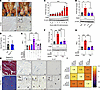 Figure 1
Effect of E2/ESR1-induced PGR expression on LAM fibroblast proliferation in Aromhum mice and human hernia tissue. (A) Representative hernia images (yellow arrows) and IHC staining for PGR expression in the LAM of WT and Aromhum mice. Normal extent of LAM (solid red) and scrotum (solid blue), as well as extent of herniated LAM (dotted red) and scrotum (dotted blue) are highlighted. (B) Serum progesterone (P4) levels of WT and Aromhum mice (n = 9–11/group, mean ± SEM, t test). (C and D) Immunoblot analysis of PGR expression in primary Aromhum LAM fibroblasts (C) over 24-hour time course after E2 treatment and (D) after administration of E2 and/or fulvestrant (Ful) (n = 3/group, mean ± SEM, 1-way ANOVA). (E) EdU analysis of cell proliferation in primary Aromhum LAM fibroblasts after administration of E2, R5020, and/or various progesterone antagonists (mifepristone [RU486], ulipristal acetate [UPA], onapristone [ZK299]) (RFU = relative fluorescence units; n = 4/group, mean ± SEM, 1-way ANOVA). (F) Immunoblot analysis of PGR expression in primary Aromhum LAM fibroblasts administration of nontargeting (Ctrl) or Pgr siRNA (n = 3/group, mean ± SEM, 2-way ANOVA). (G) EdU analysis of cell proliferation in primary Aromhum LAM fibroblasts after administration of E2 and R5020 with or without nontargeting (Ctrl) or Pgr siRNA (n = 4/group, mean ± SEM, 2-way ANOVA). (H) Representative images of Masson’s trichrome staining and IHC staining for ESR1, PGR, and Ki-67 in human LAM tissues from inguinal hernia sites and adjacent healthy muscle tissues. Red arrows show atrophying myofibers in herniated LAM tissue. (I) Spearman’s (rs) correlation between PGR, ESR1, and Ki-67 scores (n = 43, P < 0.0001 for each comparison). Scale bars: 50 μm. *P < 0.05; **P < 0.01; ***P < 0.001.
To determine whether the increase in stromal LAM PGR expression is due to E2/ESR1 signaling in fibroblasts, primary fibroblasts from the LAM of Aromhum mice were isolated and cultured in the presence of E2 and/or fulvestrant, an E2/ESR1 antagonist. A 24-hour time-course treatment with E2 induced PGR protein expression in cultured LAM fibroblasts (Figure 1C). Administration of fulvestrant concurrently with E2 fully prevented this induction (Figure 1D).
To determine whether PGR signaling affects primary LAM fibroblasts, we treated LAM fibroblasts with both E2 and R5020, a synthetic progesterone analogue, and measured cell proliferation via incorporation of EdU into DNA. Simultaneous treatment with both E2 and R5020 significantly increased fibroblast proliferation, whereas neither E2 nor R5020 alone achieved the same effect (Figure 1E). Furthermore, concurrent administration of P4/PGR antagonists mifepristone (RU486), ulipristal acetate (UPA), or onapristone (ZK299) completely prevented E2/R5020-induced cell proliferation (Figure 1E). siRNA knockdown of PGR in LAM fibroblasts had a similar attenuating effect on E2/R5020-induced cell proliferation (Figure 1, F and G). Taken together, these results provide evidence for the importance of PGR signaling in the activation and proliferation of LAM fibroblasts of Aromhum mice.
We also sought to determine whether the positive correlation between ESR1 expression, PGR expression, and fibroblast proliferation was present in the abdominal muscle of human patients with inguinal hernias. LAM biopsies were obtained from 43 men undergoing hernia repair surgery (28–80 years of age). These biopsies included tissue directly from the herniated LAM and matched healthy LAM tissue adjacent to the hernia site. Regression analysis revealed a significant correlation between the expression of stromal ESR1 and PGR on IHC as well as a significant correlation between PGR expression and cell proliferation, as measured by stromal Ki-67 expression on IHC (Figure 1, H and I). These findings suggest that both the E2/ESR1-induced expression of PGR and the E2/P4-induced increase in cell proliferation seen in LAM fibroblasts of Aromhum mice may also occur in human tissue.
Inhibition of P4/PGR signaling prevents hernia development and delays further hernia enlargement in Aromhum mice. To determine whether P4/PGR antagonists can prevent hernia development, we treated Aromhum mice and WT littermates with RU486 or UPA starting at 3–4 weeks of age, prior to hernia formation (Figure 2A). ZK299 was not used due to its hepatotoxicity (28). During the 12-week treatment period, vehicle-treated (Veh-treated) Aromhum mice spontaneously developed large scrotal hernias (>200 mm2). Treatment of Aromhum mice with RU486 significantly reduced average hernia size or prevented hernia development entirely (Figure 2, B and C). WT littermates treated with Veh or RU486 did not exhibit changes in scrotal size. Histological analysis of LAM tissue after the 12-week treatment period showed significantly decreased fibrosis and increased average myofiber diameter in RU486-treated Aromhum mice compared with their Veh-treated counterparts (Figure 2, C–E).
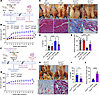 Figure 2
Treatment with progesterone antagonist RU486 prevents hernia development and delays further hernia enlargement in Aromhum mice. (A) Schematic for 12-week RU486 or UPA (Supplemental Figure 2) treatment in 4-week-old WT and Aromhum mice for the prevention of hernia development. Created with BioRender.com. (B) Scrotal/hernia area measurements of WT and Aromhum mice treated with RU486 as in A (n = 9–10/group, mean ± SEM, repeated-measures ANOVA). (C) Representative images of LAM morphology and Masson’s trichrome staining in WT and Aromhum mice after 12-week RU486 preventive treatment. Bilateral scrotal hernias (yellow arrows) and atrophying myofibers in herniated LAM tissue (red arrows) are highlighted for vehicle-treated Aromhum mice. (D and E) Quantification of (D) fibrotic area and (E) minimum Feret diameter in LAM tissues after 12-week RU486 preventive treatment (n = 6–8/group, mean ± SEM, 2-way ANOVA). (F) Schematic for 12-week RU486 or UPA (Supplemental Figure 2) treatment in 6- to 10-week-old Aromhum mice with established scrotal hernias. Created with BioRender.com. (G) Scrotal/hernia area measurements of Aromhum mice treated with RU486 as in F (n = 10–11/group, mean ± SEM, multiple t test). (H) Representative images of LAM morphology and Masson’s trichrome staining after 12 weeks of RU486 treatment of established hernias in Aromhum mice. Bilateral scrotal hernias (yellow arrows) and atrophying myofibers in herniated LAM tissue (red arrows) are highlighted for vehicle-treated Aromhum mice. (I and J) Quantification of (I) fibrotic area and (J) minimum Feret diameter in LAM tissues after 12-week RU486 treatment of established hernias in Aromhum mice (n = 8/group, mean ± SEM, t test). Scale bars: 50 μm. *P < 0.05; **P < 0.01; ****P < 0.0001.
We also sought to determine whether RU486 or UPA treatment could stall or reverse hernia growth after hernias have already developed. Aromhum mice were allowed to develop small-to-medium sized hernias (150–200 mm2) before being treated with RU486 or UPA for 12 weeks (Figure 2F). While the hernias of the Veh-treated Aromhum mice continued to grow during this time, the hernias of RU486-treated Aromhum mice remained roughly the same size, indicating that P4/PGR antagonists could stall hernia growth (Figure 2, G and H). Histological analysis of LAM tissue after the 12-week treatment period also showed decreased LAM fibrosis and increased LAM average myofiber diameter (Figure 2, H–J).
In these experiments, IHC analysis showed significantly increased stromal/fibroblast PGR expression in Aromhum LAM compared with WT LAM, with RU486 having no effect on PGR expression (Supplemental Figure 1; supplemental material available online with this article; https://doi.org/10.1172/jci.insight.193208DS1).
Similarly to RU486, treatment of Aromhum mice with UPA starting before hernia onset also resulted in decreased hernia size and LAM fibrosis, as well as increased LAM average myofiber diameter (Supplemental Figure 2, A–E). UPA treatment of Aromhum mice with established hernias also stalled further hernia growth and had similar findings on histology (Supplemental Figure 2, F–J). Taken together, the results from these experiments suggest that inhibition of PGR signaling in LAM fibroblasts prevents hernia development and stalls established hernia growth by attenuating LAM fibrosis and muscle atrophy.
Inhibition of P4/PGR signaling prevents exogenous E2- plus P4-induced hernia development in WT mice. Although RU486 and UPA prevented hernia development in Aromhum mice, neither RU486 nor UPA are specific PGR antagonists; both drugs have mild affinity for other steroid hormone receptors such as glucocorticoid receptor (29, 30). Previous studies demonstrated that prolonged E2 administration could induce development of scrotal hernias in male mice (31). We sought to define the role of P4/PGR signaling in hernia development by administering E2 and/or P4 to WT mice for 12 weeks starting at 8–10 weeks of age (Figure 3A). WT mice given E2 alone began to develop small scrotal hernias (~150 mm2) after approximately 10 weeks of treatment, while WT mice given Veh or P4 alone did not develop hernias during the full 12-week treatment. Interestingly, WT mice given both E2 and P4 (EP) developed much larger scrotal hernias (>200 mm2) after only approximately 4 weeks of treatment. Concurrent administration of RU486 in these EP-treated mice prevented hernia development (Figure 3, B and C).
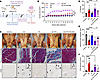 Figure 3
RU486 treatment prevents exogenous E2/P4-induced hernia development in WT mice. (A) Schematic for induced hernia development in WT mice by administration of E2, P4, and/or RU486. Created with BioRender.com. (B) Scrotal/hernia area measurements in WT mice treated with E2, P4, and/or RU486 as in A (n = 10–14/group, mean ± SEM, repeated-measures ANOVA). (C) Representative images of LAM morphology, Masson’s trichrome staining, and IHC staining for PGR in WT mice after 12 weeks of E2, P4, and/or RU486 treatment. Bilateral scrotal hernias (yellow arrows) and atrophying myofibers in herniated LAM tissue (red arrows) are highlighted for E2- and E2/P4-treated mice. (D–F) Quantification of (D) fibrotic area, (E) minimum Feret diameter, and (F) stromal PGR expression in WT mice after 12 weeks of E2, P4, and/or RU486 treatment (n = 7–10/group, mean ± SEM, 1-way ANOVA). Scale bars: 50 μm. *P < 0.05; **P < 0.01; ****P < 0.0001.
Histological examination of LAM tissue after 12 weeks showed that treatment with both E2 alone and EP resulted in significantly increased LAM fibrosis and decreased average myofiber diameter compared with treatment with Veh. These effects were attenuated by RU486 (Figure 3, C–E). Importantly, the LAM of E2- and EP-treated mice had increased PGR expression in the stromal compartment, indicating that E2 induces expression of PGR in LAM fibroblasts in vivo (Figure 3, C and F). Taken together, these results demonstrate the central role of P4/PGR signaling in LAM fibrosis, atrophy, and hernia development, while also confirming that the attenuating effects of RU486 treatment are mediated by P4/PGR.
LAM tissue from EP-induced hernia mice contains a unique population of Pgr+ fibroblasts. To determine the mechanisms through which P4/PGR signaling causes LAM fibrosis, muscle atrophy, and hernia development, we performed snRNA-seq of the LAM of WT mice after 10 weeks of treatment with Veh, EP, and E2 plus P4 plus RU486 (EPR) (Supplemental Figure 3A). LAM tissue was harvested from treated WT mice (n = 3–4 per group) and dissociated into single-nuclei suspensions, capturing the nuclei of both mononucleated and multinucleated cells.
After integration of nuclei data from all samples, cell type annotation was performed utilizing top differentially expressed genes (DEGs) as well as known marker genes (Figure 4, A and B). We identified all expected major cell types in LAM tissue, with the greatest proportion of nuclei from type I myofibers (Myh7, Tpm3), type IIa myofibers (Myh1, Myh2), type IIb myofibers (Myh4, Actn3), fibroblasts (Fbn1, Fap, Itgbl1), and mesothelial-like cells (Wt1, Upk3b). Other identified cell types included muscle stem cells, vascular smooth muscle cells, endothelial/lymphatic endothelial cells, immune cells (macrophages, B cells), Schwann cells, adipocytes, and neuromuscular junction–associated nuclei (Figure 4, A and B, and Supplemental Figure 3B).
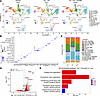 Figure 4
Single-nuclei RNA sequencing analysis reveals a unique population of Pgr+ fibroblasts, increased mesothelial-like cells, and decreased myofibers in the LAM of mice with E2/P4-induced hernias. (A) Weighted nearest neighbor (WNN) UMAP plots showing cell types in the LAM of WT mice treated with vehicle (Veh), E2 + P4 (EP), and E2 + P4 + RU486 (EPR), normalized to 10,000 cells per sample to disclose proportional differences. Pgr+ fibroblasts in EP LAM (red) are highlighted. NMJ, neuromuscular junction; SMC, smooth muscle cell; MuSC, muscle stem cell. (B) Dot plot showing the expression of known marker genes for individual cell types. Size of dots corresponds to frequency of expression within a cell group. Dot intensity corresponds to average expression level within the cell group. (C) Compositional makeup of the total cell population from Veh-, EP-, and EPR-treated LAM, represented as the proportion of total cells. Red and cyan asterisks indicate significantly increased or decreased cell types (comprising >1% of total EP LAM cells) in EP LAM compared with Veh and EPR LAM, respectively. Black arrows show increased Pgr+ fibroblast population in EP LAM (fold change > 1.5, permutation test with FDR correction, P < 0.05 for EP vs. Veh or EPR). (D) Volcano plot showing upregulated and downregulated genes in Pgr+ fibroblasts compared to other LAM cell types (fold change > 1.5, Wilcoxon’s rank-sum test, P < 0.05). (E) Gene Ontology (GO) processes enriched in Pgr+ fibroblasts represented by odds ratio. n = 3–4/group.
By aggregating the expression values of all nuclei within each treatment group, we performed “pseudo-bulk” analysis to investigate differences in gene expression between Veh, EP, and EPR groups at the level of the entire LAM (32). We found 885 upregulated genes specific to EP LAM, whereas Veh and EPR LAM had considerable overlap in gene expression, with 107 common upregulated genes (Supplemental Figure 4, A and B). EP LAM had several upregulated genes involved in fibrosis (Fgf1, Pdgfc, Pdgfd, Tgfbr2, Bnc2, Plod2) (33–37) as well as several downregulated genes involved in normal skeletal muscle function (Myh1, Myh4, Ttn, Dmd) (38–40) (Supplemental Figure 4C). Pathway analysis of EP LAM revealed enrichment of genes involved in TGF-β receptor (TGFBR), platelet-derived growth factor receptor (PDGFR), epidermal growth factor receptor (EGFR), and interleukin-6–mediated (IL-6–mediated) signaling, suggesting that at the overall tissue level, EP LAM is more proinflammatory and profibrotic compared with Veh and EPR LAM (Supplemental Figure 4D).
At the individual cell/nucleus level, the LAM of WT mice in the EP group displayed noticeable differences in cell type distribution compared with the Veh and EPR groups (Figure 4A). Cell type proportions for Veh, EP, and EPR LAM were analyzed as the proportion of the total number of cells per sample (Figure 4C). Of the cell types in each treatment group that made up a significant number (>1%) of the total cell population, EP LAM contained significantly higher proportions of mesothelial-like cells and B cells compared with both Veh and EPR LAM, as well as significantly lower proportions of type I, type IIa, and type IIb myofibers (Figure 4C and Supplemental Figure 5, A and B). Cell type proportions in Veh and EPR LAM looked similar overall, except for a higher proportion of M2 macrophages in Veh LAM among the cells with significant (>1%) numbers (Supplemental Figure 5C).
Importantly, we identified a unique population of fibroblasts that was only present in significant numbers (>1%) in EP LAM. These fibroblasts were characterized by high expression of Pgr and thus termed “Pgr+ fibroblasts” (Figure 4C). Other fibroblasts that did not express Pgr were termed Pgr– fibroblasts. DEG analysis of Pgr+ fibroblasts versus other cell types found in the LAM revealed several upregulated fibrosis-associated genes, including multiple collagens (Col1a2, Col3a1, Col12a1), ligands/receptors for profibrotic signaling pathways (Tgfb2, Tgfbr1, Tgfbr2, Pdgfra) (34, 35), and profibrotic transcription factors (Bnc2) (36) (Figure 4D). Pgr+ fibroblasts also exhibited the highest expression of Esr1 and Pgr of any cell type (Figure 4, B and D). Pathway analysis of Pgr+ fibroblasts revealed enrichment of genes associated with TGF-β, PDGF, and intracellular steroid hormone signaling pathways, as well as enrichment of genes associated with collagen fibril organization and ECM organization (Figure 4E). Taken together, these results suggest that the extensive LAM fibrosis in EP mice is driven, at least in part, by a unique population of fibroblasts that are highly activated and responsive to both E2 and P4.
Pgr+ fibroblasts may communicate with Pgr– fibroblasts and mesothelial-like cells to promote profibrotic behavior. To determine how Pgr+ fibroblasts and other cell types interact, we surveyed intercellular communication networks using CellChat (41). The probability of communication between 2 cell groups was visualized with circle plots, with thicker lines between cell types representing a higher degree of inferred communication. Outgoing ligands/communication from Pgr+ fibroblasts to other cell types was assessed by designating Pgr+ fibroblasts as the central node in our dataset. In EP LAM, Pgr+ fibroblasts had the highest probability of communication with Pgr– fibroblasts and mesothelial-like cells, followed by communication with myofibers (Figure 5A and Supplemental Figure 6A). The probability of this communication was much lower in Veh and EPR LAM (Figure 5A). Similar surveys of intercellular communication networks were performed with Pgr– fibroblasts and mesothelial-like cells as the central nodes. These cell types exhibited the highest communication probability with themselves and each other, especially in EP LAM (Figure 5, B and C, and Supplemental Figure 6, B and C). However, communication initiating from Pgr– fibroblasts and mesothelial-like cells to Pgr+ fibroblasts was limited, suggesting that Pgr+ fibroblasts are upstream regulators of Pgr– fibroblasts and mesothelial-like cells.
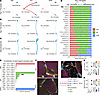 Figure 5
Pgr+ fibroblasts may communicate with Pgr– fibroblasts and mesothelial-like cells to promote profibrotic behavior. (A–C) Visualization of cell-cell communication between Pgr+ fibroblasts, Pgr– fibroblasts, and mesothelial-like cells using CellChat, comparing communication networks between Vehicle (Veh), E2 + P4 (EP), and E2 + P4 + RU486 (EPR) LAM. Circle plots with (A) Pgr+ fibroblasts, (B) Pgr– fibroblasts, and (C) mesothelial-like cells as the central outgoing nodes. Interactions between pairs of cell types are depicted by a line connecting the 2 cell types, with line thickness indicating the strength of the interaction. (D) Signaling pathways enriched within the Pgr+ fibroblast, Pgr– fibroblast, and mesothelial-like communication network of Veh, EP, and EPR LAM. Black arrow emphasizes the TGF-β pathway. (E) Relative contribution of TGF-β pathway ligand-receptor pairs in Veh (red), EP (green), and EPR (blue) LAM. Upregulated Tgfb2-(Tgfbr1+Tgfbr2) interaction in EP LAM is highlighted (black arrow). (F) Xenium-based spatial transcriptomics showing localization of Tgfb2-expressing Pgr+ fibroblasts (Fbn1+ or Itgbl1+, Pgr+; red dashed circle) with Tgfbr2-expressing Pgr– fibroblasts (Fbn1+ or Itgbl1+, Pgr–; light gray dashed circle), and mesothelial-like cells (Wt1+; cyan dashed circle) in EP LAM, but not in the Veh or EPR LAM controls. The software uses DAPI to determine the extent of the nucleus (light blue staining). Colored dots, each representing an individual mRNA transcript of a gene, are emphasized with similarly colored arrows. (G and H) Comparison of Tgfb2 and Tgfbr2 expression in Veh, EP, and EPR LAM for (G) Pgr– fibroblasts and (H) mesothelial-like cells on Xenium-based spatial transcriptomics. Scale bars: 20 μm. n = 3–4/group.
Information flow for significant signaling pathways between these 3 cell types was also assessed (Figure 5D). Some pathways (e.g., ANGPT, ncWNT, chemerin) maintained similar information flow in Veh, EP, and EPR LAM, suggesting that these signaling pathways do not change significantly between healthy and fibrotic LAM. Other pathways had significantly higher information flow in EP LAM compared with Veh and EPR LAM, including several fibrosis-associated signaling pathways (TGF-β, PDGF, FGF) and ECM-associated signaling pathways (MMP, collagen).
The TGF-β signaling pathway, a well-established driver of fibroblast activation and fibrosis (42), was highly predominant in EP LAM compared with other signaling pathways (Figure 5D). Several TGF-β–related ligands/receptors (Tgfb2, Tgfbr1, Tgfbr2) were also upregulated in Pgr+ fibroblasts (Figure 4D). For these reasons, we utilized CellChat to determine the relative contribution of each TGF-β pathway ligand-receptor (L-R) pair utilized in communication between Pgr+ fibroblasts, Pgr– fibroblasts, and mesothelial-like cells (Figure 5E). In this pathway, a TGF-β ligand binds to a complex consisting of 2 receptor isoforms [L-(R+R)] (42). The Tgfb2-(Acvr1+Tgfbr1) interaction exhibited a consistently high contribution across Veh, EP, and EPR LAM, suggesting a similar basal level of signaling activity involving this L-R pair (Figure 5E). However, the Tgfb2-(Tgfbr1+Tgfbr2) interaction demonstrated a significantly higher relative contribution in EP LAM compared with Veh and EPR LAM (Figure 5E). This higher contribution was further supported by DEG analysis, which showed upregulation in EP LAM of Tgfbr2 in Pgr+ fibroblasts, Pgr– fibroblasts, and mesothelial-like cells, as well as Tgfb2 in Pgr+ fibroblasts and Pgr– fibroblasts (Figure 4D and Supplemental Figure 7, A and B). Additionally, inferred motif activity of the TGF-β downstream transcription factors Smad2 and Smad3 was increased in EP LAM compared with Veh and EPR LAM in Pgr– fibroblasts and mesothelial-like cells (Supplemental Figure 7, C and D) (42). Pgr+ fibroblasts in EP LAM also exhibited high inferred motif activity of Smad2/Smad3, consistent with the other mentioned cell types in this communication network (Supplemental Figure 7E). These findings suggest that the Tgfb2-(Tgfbr1+Tgfbr2) L-R pair may play a larger role in communication between these cell types in EP LAM.
Additionally, we performed Xenium-based spatial transcriptomics to further analyze the expression of Tgfb2 and Tgfbr2 in these cell types (Supplemental Figure 8, A and B). In our spatial transcriptomics dataset, Pgr+ fibroblasts were only found in EP LAM, and Pgr– fibroblasts and mesothelial-like cells were increased in EP LAM compared with Veh and EPR LAM (Supplemental Figure 8, C and D). Spatially resolved expression of Tgfb2 and Tgfbr2 was significantly increased in EP LAM compared with Veh and EPR LAM, with particularly high expression in the inferior LAM portion where herniation occurs (Supplemental Figure 8, E and F). Spatial transcriptomics also showed Pgr+ fibroblasts (Fbn1+ or Itgbl1+, Pgr+) expressing Tgfb2 in close proximity with Pgr– fibroblasts (Fbn1+ or Itgbl1+, Pgr–) and mesothelial-like cells (Wt1+) expressing Tgfbr2 in EP LAM, providing further evidence for the importance of TGF-β pathway signaling among these 3 cell types (Figure 5F). This colocalization was not present in Veh or EPR LAM (Figure 5F). The expression levels of Tgfb2 and Tgfbr2 in our spatial transcriptomics dataset were also higher in Pgr– fibroblasts and mesothelial-like cells in EP LAM compared with Veh and EPR LAM (Figure 5, G and H). These findings provide further evidence for the potential role of TGF-β2/TGFBR2 signaling in mediating communication between these cell types.
We further sought to characterize the difference between Pgr– fibroblasts and mesothelial-like cells in EP LAM compared to Veh and EPR LAM. DEG analysis revealed several upregulated profibrotic genes in EP LAM for these cell types, including Zbtb16, Sfrp4, and Plod2 (37, 43, 44) in Pgr–fibroblasts and Thbs1, Pim1, and Foxo1 (45–47) in mesothelial-like cells (Supplemental Figure 9, A and B). Pgr– fibroblasts and mesothelial-like cells in EP LAM also had increased expression of Pdgfc and Pdgfd, encoding 2 growth factors involved in fibroblast activation (34, 48, 49). Pathway analysis revealed an enrichment of genes associated with response to TGF-β, the PDGFR signaling pathway, cell migration, and epithelial-mesenchymal transition for both Pgr– fibroblasts and mesothelial-like cells in EP LAM (Supplemental Figure 9C). Pgr– fibroblasts were also enriched in genes associated with ECM organization and collagen fibril organization (Supplemental Figure 9C). Collectively, these results suggest that cell-cell communication among Pgr+ fibroblasts, Pgr– fibroblasts, and mesothelial-like cells via the TGF-β pathway contributes to activation and profibrotic gene expression of these cells in EP LAM.
Pgr+ fibroblasts, Pgr– fibroblasts, and mesothelial-like cells may contribute to atrophy of LAM myofibers in EP-induced hernia mice. Because our CellChat analysis showed that Pgr+ fibroblasts, Pgr– fibroblasts, and mesothelial-like cells also communicate extensively with myofibers (Supplemental Figure 6), we sought to determine whether this communication affects myofiber behavior. Cell-cell communication probabilities were analyzed by pairing ligands from Pgr+ fibroblasts, Pgr– fibroblasts, and mesothelial-like cells with receptors from type I, type IIa, and type IIb myofibers (Figure 6, A–C). Within this network, the TGF-β signaling pathway was also one of several pathways that showed higher information flow in EP LAM compared with Veh and EPR LAM (Figure 6D).
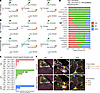 Figure 6
Pgr+ fibroblasts, Pgr– fibroblasts, and mesothelial-like cells may contribute to atrophy of myofibers in EP LAM. (A–C) Visualization of cell-cell communication using CellChat, comparing communication networks between Vehicle (Veh), E2 + P4 (EP), and E2 + P4 + RU486 (EPR) LAM. Circle plots visualizing networks with outgoing communication from (A) Pgr+ fibroblasts, (B) Pgr– fibroblasts, and (C) mesothelial-like cells to type I/IIa/IIb myofibers. Interactions between pairs of cell types are depicted by a line connecting the 2 cell types, with line thickness indicating the strength of the interaction. (D) Signaling pathways enriched in Veh, EP, and EPR LAM within the communication network between non-myofibers (Pgr+ fibroblasts, Pgr– fibroblasts, mesothelial-like cells) and type I/IIa/IIb myofibers. Black arrow emphasizes the TGF-β pathway. (E) Relative contribution of TGF-β pathway ligand-receptor pairs in Veh (red), EP (green), and EPR (blue) LAM. Upregulated Tgfb2-(Tgfbr1+Tgfbr2) interaction in EP LAM is highlighted (black arrow). (F) Xenium-based spatial transcriptomics of Veh, EP, and EPR LAM showing expression of Tgfbr2 and muscle atrophy markers (Fbxo32, Trim63) in type I (Myh7+; pink dashed circle) and type II myofibers (Myh2+, orange dashed circle). Upper row images show expression of cell-type marker genes, while lower row images show expression of Tgfbr2 and muscle atrophy marker genes (Fbxo32, Trim63). The software uses DAPI to determine the extent of the nucleus (light blue staining). Colored dots, each representing an individual mRNA transcript of a gene, are emphasized with similarly colored arrows. Scale bars: 20 μm. n = 3–4/group.
Because TGF-β signaling has also been shown to contribute to myofiber atrophy, we further characterized this pathway within the network (42). Inspection of the relative contribution of each L-R pair within this pathway revealed that all 3 treatment groups once again had high basal levels of signaling activity involving the Tgfb2-(Acvr1+Tgfbr1) interaction, while EP LAM had increased signaling activity involving the Tgfb2-(Tgfbr1+Tgfbr2) interaction (Figure 6E). Myofibers from EP LAM had significantly higher expression of Tgfbr2 and higher inferred Smad2/Smad3 motif activity compared with myofibers in Veh and EPR LAM, suggesting that the Tgfb2-(Tgfbr1+Tgfbr2) L-R pair may play a more prominent role within EP LAM myofibers (Supplemental Figure 10, A and B) (42). Spatial transcriptomics showed myofibers expressing Tgfbr2 in EP LAM, but not in Veh or EPR LAM (Figure 6F). Notably, these Tgfbr2+ myofibers also expressed Fbxo32 and Trim63, 2 well-known muscle atrophy–associated genes (Figure 6F) (50–52).
We further characterized gene expression differences of type I, type IIa, and type IIb myofibers in EP LAM compared to Veh and EPR LAM. DEG analysis showed that in EP LAM, myofibers had high expression levels of atrophy-associated genes, including Fbxo32, Trim63, Pdk4, Foxo1, and Foxo3 (Supplemental Figure 11, A–C) (50–53). Pathway analysis of all 3 myofiber types also showed enrichment of genes involved in protein ubiquitination and catabolism (Supplemental Figure 11D). Myofibers in EP LAM were also enriched in genes associated with response to TGF-β signaling (Supplemental Figure 11D). Taken together, these findings, along with the decreased myofiber cross-sectional area (CSA) (Figure 3, C and E) and proportion (Figure 4C and Supplemental Figure 5, A and B) in EP LAM compared with Veh and EPR LAM, suggest that EP LAM myofibers are undergoing atrophy and that Pgr+ fibroblasts, Pgr– fibroblasts, and mesothelial-like cells may contribute to this process through TGF-β pathway signaling.
Increased expression of TGF-β pathway–related genes and myofiber atrophy–associated genes in human hernia tissue. To determine whether the changes in gene expression and cell-cell communication found in mice also occur in humans, we employed multiplex RNA in situ hybridization on herniated/fibrotic LAM tissue and matched adjacent healthy LAM tissue from male patients. Utilizing this approach, we identified PGR+ fibroblasts (FBN1+, PGR+), PGR– fibroblasts (FBN1+, PGR–), and mesothelial-like cells (WT1+) in herniated LAM tissue (Figure 7, A and B). Furthermore, we identified PGR– fibroblasts and mesothelial-like cells that expressed TGFBR2 and PGR+/PGR– fibroblasts that expressed TGFB2 (Figure 7, A and B). Expression levels of both TGFBR2 and TGFB2 were significantly increased in herniated LAM tissue compared with matched healthy LAM tissue (Figure 7, D and E), suggesting that increased TGF-β signaling in LAM tissue may contribute to hernia development in humans.
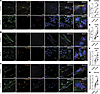 Figure 7
Increased expression of TGF-β pathway–related genes and myofiber atrophy–associated genes in human hernia tissue. (A–C) Representative RNAscope images from herniated and adjacent healthy LAM tissue from male patients showing (A) expression of TGFBR2 (magenta arrow) in fibroblasts (FBN1+, green arrow) and mesothelial-like cells (WT1+, orange arrow), (B) expression of TGFB2 (orange arrow) in PGR+ (FBN1+, green arrow; PGR+, magenta arrow) and PGR– (FBN1+, green arrow; PGR–) fibroblasts, and (C) expression of TRIM63 (orange arrow) and FBXO32 (magenta arrow) in myofibers (green outline in autofluorescent (AF) channel). (D–G) Quantification of expression levels of (D) TGFBR2, (E) TGFB2, (F) TRIM63, and (G) FBXO32 in healthy and herniated LAM tissue from male patients (n = 5–6/group, paired t test). Scale bars: 25 μm and 5 μm (INSERT). *P < 0.05, **P < 0.01.
We also analyzed the expression of FBXO32 and TRIM63 in the myofibers of both healthy and herniated LAM tissue (Figure 7C). Expression levels of both FBXO32 and TRIM63 were significantly increased in herniated LAM tissue compared with matched healthy LAM tissue (Figure 7, F and G). Taken together, the increased expression of TGFB2, TGFBR2, FBXO32, and TRIM63 provides additional evidence for the role of TGF-β signaling as a potential downstream mechanism for EP-induced abdominal fibrosis and muscle atrophy.


