
Research ArticleEndocrinologyImmunology
Open Access |  10.1172/jci.insight.192755
Anti-CD3 mAb treatment reshapes infiltrating T and β cells in the islets in autoimmune diabetes
Ying Wu,1 Maxwell Spurrell,1 Ana Lledó-Delgado,1 Songyan Deng,1 Dejiang Wang,2,3 Yang Liu,2,3,4 Mahsa Nouri Barkestani,1 Ana Luisa Perdigoto,1,5 and Kevan C. Herold1,5
1Department of Immunobiology,
2Department of Pathology,
3Cancer Center,
4Department of Neurology, and
5Department of Internal Medicine, Yale School of Medicine, Yale University, New Haven, Connecticut, USA.
Address correspondence to: Kevan C. Herold, Department of Immunobiology, Yale University, 300 George Street, #353E, New Haven, Connecticut 06520, USA. Phone: 203.785.6507; Email: kevan.herold@yale.edu.
Find articles by Wu, Y. in: PubMed | Google Scholar
1Department of Immunobiology,
2Department of Pathology,
3Cancer Center,
4Department of Neurology, and
5Department of Internal Medicine, Yale School of Medicine, Yale University, New Haven, Connecticut, USA.
Address correspondence to: Kevan C. Herold, Department of Immunobiology, Yale University, 300 George Street, #353E, New Haven, Connecticut 06520, USA. Phone: 203.785.6507; Email: kevan.herold@yale.edu.
Find articles by Spurrell, M. in: PubMed | Google Scholar
1Department of Immunobiology,
2Department of Pathology,
3Cancer Center,
4Department of Neurology, and
5Department of Internal Medicine, Yale School of Medicine, Yale University, New Haven, Connecticut, USA.
Address correspondence to: Kevan C. Herold, Department of Immunobiology, Yale University, 300 George Street, #353E, New Haven, Connecticut 06520, USA. Phone: 203.785.6507; Email: kevan.herold@yale.edu.
Find articles by Lledó-Delgado, A. in: PubMed | Google Scholar
1Department of Immunobiology,
2Department of Pathology,
3Cancer Center,
4Department of Neurology, and
5Department of Internal Medicine, Yale School of Medicine, Yale University, New Haven, Connecticut, USA.
Address correspondence to: Kevan C. Herold, Department of Immunobiology, Yale University, 300 George Street, #353E, New Haven, Connecticut 06520, USA. Phone: 203.785.6507; Email: kevan.herold@yale.edu.
Find articles by
Deng, S.
in:
PubMed
|
Google Scholar
|

1Department of Immunobiology,
2Department of Pathology,
3Cancer Center,
4Department of Neurology, and
5Department of Internal Medicine, Yale School of Medicine, Yale University, New Haven, Connecticut, USA.
Address correspondence to: Kevan C. Herold, Department of Immunobiology, Yale University, 300 George Street, #353E, New Haven, Connecticut 06520, USA. Phone: 203.785.6507; Email: kevan.herold@yale.edu.
Find articles by Wang, D. in: PubMed | Google Scholar
1Department of Immunobiology,
2Department of Pathology,
3Cancer Center,
4Department of Neurology, and
5Department of Internal Medicine, Yale School of Medicine, Yale University, New Haven, Connecticut, USA.
Address correspondence to: Kevan C. Herold, Department of Immunobiology, Yale University, 300 George Street, #353E, New Haven, Connecticut 06520, USA. Phone: 203.785.6507; Email: kevan.herold@yale.edu.
Find articles by Liu, Y. in: PubMed | Google Scholar
1Department of Immunobiology,
2Department of Pathology,
3Cancer Center,
4Department of Neurology, and
5Department of Internal Medicine, Yale School of Medicine, Yale University, New Haven, Connecticut, USA.
Address correspondence to: Kevan C. Herold, Department of Immunobiology, Yale University, 300 George Street, #353E, New Haven, Connecticut 06520, USA. Phone: 203.785.6507; Email: kevan.herold@yale.edu.
Find articles by Barkestani, M. in: PubMed | Google Scholar
1Department of Immunobiology,
2Department of Pathology,
3Cancer Center,
4Department of Neurology, and
5Department of Internal Medicine, Yale School of Medicine, Yale University, New Haven, Connecticut, USA.
Address correspondence to: Kevan C. Herold, Department of Immunobiology, Yale University, 300 George Street, #353E, New Haven, Connecticut 06520, USA. Phone: 203.785.6507; Email: kevan.herold@yale.edu.
Find articles by Perdigoto, A. in: PubMed | Google Scholar
1Department of Immunobiology,
2Department of Pathology,
3Cancer Center,
4Department of Neurology, and
5Department of Internal Medicine, Yale School of Medicine, Yale University, New Haven, Connecticut, USA.
Address correspondence to: Kevan C. Herold, Department of Immunobiology, Yale University, 300 George Street, #353E, New Haven, Connecticut 06520, USA. Phone: 203.785.6507; Email: kevan.herold@yale.edu.
Find articles by
Herold, K.
in:
PubMed
|
Google Scholar
|
Published January 23, 2026 - More info
JCI Insight. 2026;11(2):e192755. https://doi.org/10.1172/jci.insight.192755.
© 2025 Wu et al. This work is licensed under the Creative Commons Attribution 4.0 International License. To view a copy of this license, visit http://creativecommons.org/licenses/by/4.0/.
Received: February 28, 2025; Accepted: December 5, 2025

-
Results
Insulitis in islets from remitter NOD mice after anti-CD3 treatment. We treated NOD mice with newly confirmed hyperglycemia with FcR non-binding anti-CD3 mAb at a lower dose than has conventionally been used to evaluate the effects of antibody treatment, with the goal of modeling treatment of patients. At this dosing (5 μg/d for 3 or 4 days), hyperglycemia was reversed and persisted in about 60% of mice by day 30 (Figure 1A).
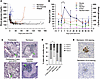 Figure 1
Peripheral blood and islet-infiltrating cells in remitter NOD mice after anti-CD3 mAb treatment. (A) Newly diabetic NOD mice (n = 24) were treated with the F(ab′)2 fragments of anti-CD3 mAb 145-2C11 (5 μg/d for 3 or 4 days, i.p.) and were considered in remission with blood glucose lower than 250 mg/dL for ≥9 weeks after the treatment (remission: n = 14; non-response: n = 8; relapse: n = 2). Glucose levels after anti-CD3 mAb treatment are shown. (B) CD8+ T cells from blood of NOD mice with remission after anti-CD3 treatment were examined for expression of PD-1, KLRG1, and TIGIT by flow cytometry (dashed line = 250 mg/dL for blood glucose level) (*P = 0.0133 for PD-1 expression and *P = 0.0294 for TIGIT expression at day 7 vs. day 0, ANOVA for repeated measures with Dunnett’s multiple-comparison test). (C) Representative H&E images show insulitis in islets from an untreated prediabetic NOD mouse (insulitis score = 2), a remitter NOD mouse after anti-CD3 treatment (insulitis score = 2), a prediabetic NOD mouse 3 days after anti-CD3 treatment (insulitis score = 1), and an untreated diabetic NOD mouse (insulitis score = 3) (green arrows point at infiltrates). Original magnification, ×10. (D) Bar chart showing insulitis scores of untreated prediabetic (Pre DM; DM, diabetes mellitus) NOD mice (14 islets from 3 mice), prediabetic NOD mice 3 days after anti-CD3 treatment (46 islets from 3 mice), anti-CD3–treated remitter NOD mice (17 islets from 4 mice), and untreated diabetic (Untx DM) NOD mice (19 islets from 5 mice). A significant difference was found comparing all the 4 conditions (χ2 test, P < 0.0001). Insulitis was significantly lower 3 days after treatment in anti-CD3–treated prediabetic versus untreated prediabetic NOD mice (χ2 test, *P = 0.018). (E) Immunohistochemical images showing islets from a remitter NOD mouse stained by anti-CD3 (in brown) and anti-CD19, respectively. Original magnification, ×10.
This treatment resulted in changes of CD8+ T cells in the peripheral blood that were similar to those in patients. We found increased expression of KLRG1 and TIGIT on CD8+ T cells in the peripheral blood, and, as had been seen in some patients, there was an abrupt increase of PD-1 expression acutely after treatment. These changes in phenotype declined to pretreatment levels by day 50 (Figure 1B) (5, 6).
We examined the histology of the islets after reversal of hyperglycemia. Consistent with studies by Chatenoud et al. (7, 8), we observed significantly reduced insulitis in the islets from NOD mice 3 days after anti-CD3 treatment when compared with untreated prediabetic mice (P = 0.018) (Figure 1, C and D). At later times, with anti-CD3 mAb–induced remission, we found infiltration of T cells into the islets of NOD mice (Figure 1, C and E). We identified islets with focal and peripheral infiltration but did not find a difference in the severity of insulitis in the mice with remission after anti-CD3 mAb compared with untreated prediabetic mice (Figure 1D).
Although immune cells reappeared in the islets, diabetes did not recur after treatment. To identify the composition of these non-pathogenic islet-infiltrating cells, we performed single-cell RNA-Seq (scRNA-Seq) analysis of the islets from NOD mice in remission and compared them with those in prediabetic mice that were not treated with anti-CD3 mAb. We also studied paired pancreatic lymph nodes (ppLNs) from the same mice (experimental design shown in Figure 2A).
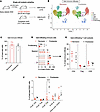 Figure 2
Single-cell RNA-Seq analysis of islets from anti-CD3–treated remitter NOD mice. (A) Islets and ppLNs freshly isolated from anti-CD3–treated remitter (n = 5) or prediabetic NOD mice (n = 4) were processed and analyzed by scRNA-Seq. (B) UMAP visualization of immune cell clusters in the islets and ppLNs, integrated from all the mice in single-cell analysis. The ovals identify proliferating cells that are identified in F. (C) Percentage of all the immune cells infiltrating islets of remitter or prediabetic NOD mice. Immune cells were identified based on expression of Ptprc (encoding CD45). Each symbol represents 1 individual mouse. No significant difference was found between the 2 conditions. (D) Percentage of each immune cell cluster (proliferating, myeloid, T or B cells; T cells were identified based on expression of Cd3e/g/d) among total islet infiltrates in remitter or prediabetic NOD (proliferating cluster: *P = 0.026; all other clusters: NS, unpaired, 2-tailed t test). (E) Islet-infiltrating T cells were subgrouped into CD4+, Treg, and CD8+ cells. No significant difference was found in percentage of each T subset among islet immune infiltrates between the 2 conditions. (F) Scatterplot showing percentage of each proliferating subset among total CD45+ immune cells in the islets (****P < 0.0001, 2-way ANOVA). All data are shown as mean ± SEM.
Major clusters of immune cells were visualized using uniform manifold approximation and projection (UMAP) and annotated based on canonical markers (Figure 2B and Supplemental Figure 1A; supplemental material available online with this article; https://doi.org/10.1172/jci.insight.192755DS1). The scRNA-Seq analysis was performed using a total of 11,645 and 8,200 islet-infiltrating CD45+ immune cells from remitter and prediabetic control mice, respectively, and a total of 15,044 and 9,199 immune cells from ppLNs of the same mice. The frequencies of the major immune cell populations in the islets from anti-CD3–treated NOD remitters were similar to those in the ppLNs, consisting of T cells, B cells, myeloid cells, Tregs, and a cluster of mixed immune cells showing proliferating features (i.e., Stmn1, Birc5, Lmnb1, Ki67, Nuf2, or Kif4; Figure 2A and Supplemental Figure 1A). B cells and myeloid cells were clustered as a single population and defined by canonical markers (Figure 2B and Supplemental Figure 1A). In accord with the previously reported histologic data, by transcriptome analysis, the islet infiltrates of remitted NOD mice were dominated by CD4+ and CD8+ T cells, but there were no significant differences in their frequency in the islets from remitters and prediabetic mice (Figure 2, C–E) (7, 8). However, there was a significantly reduced frequency of proliferating cells in the islets from mice with remission (P < 0.05) (Figure 2D). This proliferative cluster was a mixed population, predominantly composed of T cells with a small part of B and myeloid cells. The majority of the proliferating cells in the islets of prediabetic NOD mice were CD8+ T cells, and this population was significantly reduced in frequency in the islets of remitter NOD mice (Figure 2F). Interestingly, these findings were restricted to the islets, as we did not find these same differences in the frequency of T and B cells or in proliferating cells in the ppLNs (Supplemental Figure 1C).
Transcriptional features and repertoire of islet-infiltrating CD4+ T cells. We compared gene expression in the islet-infiltrating CD4+ T cells from the treated remitter and prediabetic NOD mice (Figure 3, A and B). There were 177 differentially expressed genes (DEGs) identified, which included significantly reduced (i.e., adjusted P value < 0.05) expression of genes of the CD3 complex (Cd3e/g); chemokines, cytokines, and ligands (Ccl5, Cxcr3, Ccr8, Ccr2, Cxcr6); and IFN-γ and type II interferon genes (Ifng, Isg15, Isg20) (Figure 3B and Supplemental Table 1). Curiously, genes associated with immune regulation (Pdcd1, Tigit, Lag3, Il10) were also significantly reduced in remitter NOD compared with prediabetic control mice (Figure 3B). Ingenuity Pathway Analysis (IPA) of the DEGs showed that only the integrin-linked kinase (ILK) pathway, which is associated with cell migration, was increased in the remitter mice (z score = 2.24, P = 0.0002).
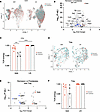 Figure 3
Transcriptional features of islet-infiltrating CD4+ T cells. (A) UMAP showing CD4+ T cells in the islets or ppLNs of anti-CD3–treated remitter and prediabetic NOD mice, colored by conditions. (B) Volcano plot showing differentially expressed genes (DEGs) of islet-infiltrating CD4+ T cells between remitter and prediabetic NOD (adjusted P values < 0.05). Upregulated genes of note in remitters are highlighted in red and downregulated genes in blue. (C) Repertoire diversity of CD4+ T cells measured by Shannon entropy index (entropy index scaled to 1; mean ± SEM). Each symbol represents 1 individual mouse (***P < 0.001, ****P < 0.0001, 2-way ANOVA with Tukey’s multiple-comparison test). (D) UMAP showing Tregs in the islets or ppLNs of anti-CD3–treated remitter and prediabetic NOD mice, colored by conditions. (E) Volcano plot showing DEGs of islet-infiltrating Tregs between remitter and prediabetic NOD (adjusted P values < 0.05). (F) Repertoire diversity of Tregs measured by Shannon entropy index (entropy index scaled to 1). Each symbol represents 1 individual mouse (mean ± SEM).
In the ppLNs from the same mice, we found 367 DEGs in the CD4+ T cells between remitter and prediabetic NOD mice (Supplemental Table 2). The expression of some genes associated with CD4+ T cell activation and survival (Bmpr1a, Gpr68) was significantly increased, whereas others (Tcf7, Il7r, Sell) were reduced (Supplemental Figure 3B). Likewise, an IPA analysis showed that pathways associated with CD4+ T cell activation and effector function were significantly increased in the ppLNs (i.e., z score > 2, P < 0.05), whereas, surprisingly in remitters, PPAR, PTEN, and PD-1/PD-L1 signaling, associated with T cell regulation, was significantly reduced (i.e., z score <–2, P < 0.05) (Supplemental Figure 3C).
We compared the repertoire of the islet-infiltrating CD4+ T cells in the remitters and prediabetic mice to that of the ppLNs using 5′ sequencing. There was significantly decreased entropy in the islet-infiltrating CD4+ T cells of the prediabetic mice versus ppLNs (P < 0.0001), consistent with clonal expansion of the cells in the islets. In addition, we found significantly increased entropy among the islet-infiltrating CD4+ T cells in remitters when comparing the islets of remitters versus prediabetic controls (P < 0.001) (Figure 3C).
The frequency of islet-infiltrating Tregs (identified by expression of Cd4, Foxp3, Il2ra, Ctla4, Ikzf2, and Lag3; Supplemental Figure 1A) was similar in the remitters and the prediabetic mice, but we found 32 DEGs in the islet-infiltrating Tregs (Figure 3, D and E, and Supplemental Table 3). These differences included increased expression of Hexb (for CD4+ T cell activation) (9) and Cdk8 (an inhibitor of Treg differentiation) (10), whereas other genes associated with Tregs (Lag3, Lgals1) and chemokine receptors (Cxcr6 and Ccr2) showed significantly reduced expression (Figure 3E). Repertoire analysis also showed a numerically greater T cell receptor (TCR) diversity among this subset of CD4+ T cells in the islet-infiltrating Tregs from remitters, but this difference was not statistically significant (Figure 3F). In the ppLNs from the same mice, we found similar frequencies of Tregs and 8 DEGs between remitters and prediabetic mice (Supplemental Table 4). We did not identify any pathways with significant differences by IPA analysis.
Transcriptional features and repertoire of islet-infiltrating CD8+ T cells. We identified a greater number of DEGs (i.e., 714) among the CD8+ T cells that infiltrate the islets from remitters versus prediabetic NOD mice (Figure 4, A and B, and Supplemental Table 5). In the remitters, there was significantly reduced expression of genes in cell proliferation pathways such as Mki67, Nuf2, Kif4, Stmn1, Birc5, Nkg7, and Lmnb1. There was significantly reduced expression of genes associated with terminally differentiated effector CD8+ cells such as Ifng, Gzma, Fasl, and Tnfsf10 as well as Gzmb. We confirmed the latter finding by flow cytometry indicating that these cells had reduced cytolytic activity, by comparing anti-CD3–treated prediabetic versus untreated prediabetic NOD mice (Figure 4C) (11).
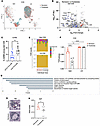 Figure 4
Changes in intra-islet CD8+ T cells after anti-CD3 mAb treatment. (A) UMAP showing CD8+ T cells in islets or ppLNs of anti-CD3–treated remitter and prediabetic NOD mice, colored by conditions. (B) Volcano plot showing DEGs of islet-infiltrating CD8+ T cells between remitter and prediabetic NOD (adjusted P values < 0.05). Upregulated genes of note in remitters are highlighted in red and downregulated genes in blue. (C) Bar chart showing percentage of granzyme B+ islet-infiltrating CD8+ T cells of anti-CD3–treated versus untreated prediabetic NOD mice by flow cytometry. Each symbol represents an individual mouse (**P = 0.008, unpaired, 2-tailed t test). (D) Ingenuity Pathway Analysis of islet-infiltrating CD8+ T cells in remitter versus prediabetic NOD mice (z scores ≤ –2, P values < 0.05). (E) Bar graphs showing TCR clonotype frequencies of CD8+ T cells. Raw count of each clonotype was divided by total count, and result is shown with normalization by scaling to 1. Each bar represents 1 individual mouse. Colors denote clonotype size based on raw count. (F) Repertoire diversity of CD8+ T cells was measured by Shannon entropy index (entropy index scaled to 1; data shown as mean ± SEM). Each symbol represents 1 individual mouse (*P = 0.038, ****P < 0.0001, 2-way ANOVA with Tukey’s multiple-comparison test). (G and H) Spatial-ATAC-seq of islets from remitter and prediabetic mice. (G) H&E images feature 1 representative islet of either condition with similar degree of insulitis (original magnification, ×10). (H) Summary bar charts showing gene scores for Tcf7 expression (a total of 10 islets from 3 remitter NOD mice and a total of 8 islets from 3 prediabetic NOD mice evaluated by 3 repeated measurements with mixtures of islets from both groups; *P = 0.034, Mann-Whitney test). Data are shown as mean ± SEM.
Interestingly, multiple genes that identify T cell stemness, such as Lef1, Ccr7, Sell (Cd62l), Bach2, Il7r, Tcf7, Klf2, Cd69, and Nsg2, were significantly increased, and the expression of Irf8 (12), which drives the effector differentiation of CD8+ T cells, was significantly reduced (Figure 4B). Surprisingly, some genes whose expression was associated with CD8+ T cell exhaustion or non-responsiveness in CD8+ cells in the peripheral blood, such as Pdcd1, Tigit, and Klrg1 (Figure 1B), as well as Lag3, Cd38, and Havcr2 (encoding Tim3), were significantly reduced in the islet-infiltrating cells (Figure 4B).
An IPA analysis showed that pathways related to cellular metabolism and expansion, including oxidative phosphorylation, mitochondrial activity, and electron transport pathways, were significantly reduced in the remitters (Figure 4D). Integrin signaling was also significantly decreased, consistent with reduced expression of Ccl3, Ccl4, Ccl5, and Cxcr6 (Figure 4, B and D). In the ppLNs, we identified 119 DEGs in CD8+ T cells from remitter versus prediabetic mice, but we did not find any shared pathways between the islets and lymph nodes (Supplemental Table 6).
Like the CD4+ cells, the repertoire of the islet-infiltrating CD8+ T cells showed significantly reduced entropy in comparison with ppLNs of the prediabetic mice (P < 0.0001). There was significantly greater entropy in the anti-CD3–treated remitter versus prediabetic mice in the islets (P < 0.0001). The counterparts in the ppLNs were all single clones (P < 0.001) (Figure 4, E and F). Therefore, these data indicate that, overall, the expansion of selected CD4+ or CD8+ T cells that was seen in the prediabetic mice was reduced in the CD8+ T cells after anti-CD3 mAb treatment.
TCF1 (encoded by Tcf7), a transcription factor whose expression is epigenetically regulated by Notch binding and is associated with self-renewal and stemness of T cells, was increased (13, 14). To confirm the expression level of Tcf7 between the 2 conditions in situ, we performed spatial assay for transposase-accessible chromatin using sequencing (ATAC-seq) (spatial-ATAC-seq) of islets from the remitters and prediabetic mice with similar degree of insulitis. We generated a computational metric, “gene score,” that estimates a gene’s activity or expression level based on the chromatin accessibility of its regulatory regions. We found a significantly higher gene score of Tcf7 in the islets from the remitters versus prediabetic mice (P = 0.034) (Figure 4, G and H).
Autoantigen-reactive CD8+ T cells in the islets. To specifically identify the effects on autoantigen-specific cells, we studied CD8+ T cells that recognize NRPV7+, residues 206–214 of IGRP, using the TCR Vβ chain sequence as a barcode. We identified likely clonotypes of IGRP-specific CD8+ T cells by matching our single-cell TCR sequences with that of published datasets (15). We found a similar frequency of the NRPV7-recognizing CD8+ T cells in the islets of remitters and prediabetic NOD mice by scRNA-Seq (Figure 5A) or by flow cytometry (Figure 5B). In both groups of mice, the frequency of IGRP-specific CD8+ T cells was higher in the islets than in the ppLNs.
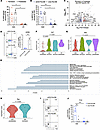 Figure 5
Autoantigen-reactive CD8+ T cells in islets show transcriptional features of exhaustion and stemness. (A) Percentage of NRPV7+ T cells among CD8+ T cells in islets or ppLNs of anti-CD3–treated remitter or prediabetic NOD mice by scRNA-seq analysis. Each symbol represents 1 mouse. Comparison between sites was performed by Mann-Whitney test (remission, *P = 0.016; prediabetes, *P = 0.029). (B) Percentage of NRPV7+ cells among CD8+ T cells by site by flow cytometry. Prediabetic NOD mice were treated with F(ab′)2 fragments of anti-CD3 mAb 145-2C11. Two weeks after the treatment, islets and ppLNs were isolated for flow cytometry in comparison with counterparts from age-matched untreated prediabetic NOD mice. Each symbol represents 1 mouse (*P < 0.05, **P < 0.01). (C) Volcano plot showing DEGs of islet-infiltrating NRPV7+ CD8+ T cells between remitter and prediabetic NOD (P < 0.05). Upregulated genes are highlighted in red and downregulated genes in blue. (D) Staining for and percentage of granzyme B+ NRPV7+ cells among CD8+ T cells determined by flow cytometry using mice described in B (**P = 0.002, unpaired, 2-tailed t test). (E) Ingenuity Pathway Analysis of NRPV7+ CD8+ T cells in remitter versus prediabetic NOD mice (z scores ≤–2, P < 0.05). (F–H) Violin plots showing single-cell expression levels of Tcf7, Klf2, and Tox in NRPV7+ CD8+ T cells (n = 4–5 mice/group). P values reflect pairwise comparisons. (I) Representative flow plots showing population of islet NRPV7+TOX+ cells among CD8+ T cells. (J) Summary bar charts showing percentage of TOX expression among NRPV7-tet+ CD8+ T cells in the islets and ppLNs of anti-CD3–treated versus untreated prediabetic NOD mice. Each symbol represents 1 mouse. All data in summary bar charts are shown as mean ± SEM.
There were 690 DEGs in the IGRP-specific CD8+ T cells from the anti-CD3–treated remitters compared with these cells in the islets of prediabetic mice (Figure 5C and Supplemental Table 7). As in the other CD8+ T cells, the expression of granzyme B was significantly reduced in the islet NRPV7+ cells after treatment (Figure 5D), which we confirmed by flow cytometry. An IPA analysis revealed downregulated pathways associated with mitochondrial activity, antigen presentation, IFN and TNF signaling, apoptosis, and cell cycle (Figure 5E). Neddylation associated with CD8+ T cell proliferation, cytokine production, and cytotoxic activity was also significantly reduced (z score = –3.9, P < 0.0001) (16).
In the prediabetic mice and consistent with previous reports by Gearty et al., the NRPV7-specific cells in the ppLNs had significantly higher expression of Tcf7 (encoding TCF1) and lower levels of Entpd1 (encoding CD39) than those in the islets (P = 0.0001) (15). However, an increased level of expression of Tcf7 in these cells in the islets was found after anti-CD3 mAb in comparison with these cells in the islets in prediabetic mice (P = 0.0075). The expression levels of Tcf7 in the antigen-specific cells in the islets were similar to expression in corresponding lymph nodes (Figure 5F). We also observed a similar pattern for transcription factor Klf2, which sustains ground-state pluripotency (Figure 5G) (17).
Expression of Tox in the islet-infiltrating IGRP-specific CD8+ T cells was also significantly increased after anti-CD3 mAb treatment versus prediabetic mice (Figure 5, C and H). We confirmed the higher expression by flow cytometry (Figure 5, I and J). The single-cell analysis showed that the subset of islet-infiltrating IGRP-specific CD8+ cells that coexpressed Tcf7 and Tox was significantly higher in remitter mice compared with prediabetic mice, also confirmed by flow cytometry (P = 0.04) (Supplemental Figure 6).
Differentiation of T cells after anti-CD3 mAb treatment. These findings suggested that the differentiation of CD4+ and CD8+ T cells was affected by anti-CD3 mAb treatment. To assess the trajectory of cell differentiation, we performed a pseudotime analysis of the 2 cell subtypes. Islet-infiltrating CD4+ T cells were separated into 5 subsets by clustering using Monocle 3 (Figure 6A). Feature plots showed that subsets 1, 2, and 3 were at an earlier stage of differentiation, evident by expression of Sell (CD62L) and other genes, whereas subsets 4 and 5 were at later stages and showed signs of activation and effector function as evident by expression of genes such as Cd40lg (CD40L) and Ifng (IFN-γ) (Figure 6A). The same clustering and expression patterns were used for the paired lymph nodes (Supplemental Figure 4A). We defined pseudotime trajectory to start at early stages 1–3 and continue to late stages 4–5 (Figure 6B). In the islets, there was a statistically significant difference in the distribution of the cells when the remitters were compared with the prediabetic mice using Kolmogorov-Smirnov test (P = 2.7 × 10⁻¹⁰) (Figure 6C), with a lower cell density at late state in the remitters. The differences in the corresponding ppLNs were also statistically significant (P = 0.018) but less than in the islets (Supplemental Figure 4C).
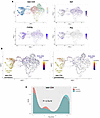 Figure 6
Differentiation of islet CD4+ T cells is modified by anti-CD3 treatment. (A) UMAP showing clustering of islet CD4+ T cells and feature plots showing expressions of Sell, Cd40lg, and Ifng. (B) UMAP visualization of single-cell trajectory of CD4+ T cells in the islets of anti-CD3–treated remitter or prediabetic NOD mice (colors denote pseudotime values). (C) Density distribution graph showing how the concentration of CD4+ T cells in the islets distributed along a pseudotime trajectory (colors denote conditions). Density values are scaled to 1 (islet, P = 2.7 × 10⁻¹⁰, asymptotic 2-sample Kolmogorov-Smirnov test; ppLN, P = 0.018; asymptotic 2-sample Kolmogorov-Smirnov test).
The CD8+ T cells in the islets were separated into 2 subsets by clustering using Monocle 3, in which subset 1 was enriched with expression of genes such as Sell (CD62l) and Ccr7, whereas subset 2 was enriched with effector genes, such as Ifng, Gzmk, and Ccl5 (Figure 7A). We defined pseudotime trajectory from subset 1 (early-state) to subset 2 (late-state) (Figure 7B and Supplemental Figure 5B). There was a significant difference in the distribution of CD8+ cells in the remitter compared with the prediabetic mice with a greater proportion of cells in the early state versus late state using Kolmogorov-Smirnov test (P < 2.2 × 10⁻¹⁶) (Figure 7E). In prediabetic mice, Tcf7 expression declined between the early- and late-state cells (q = 4.68 × 10⁻¹⁹), whereas it was unchanged in the remitters (Figure 7, C and D). The same clustering and expression patterns were used for the CD8+ T cells from ppLNs (Supplemental Figure 5A). We did not find this contrasting pattern of Tcf7 expression in ppLN CD8+ cells between the 2 categories of mice (Supplemental Figure 5C).
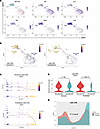 Figure 7
Differentiation of islet CD8+ T cells is modified by anti-CD3 treatment. (A) UMAP showing clustering of islet CD8+ T cells and feature plots showing expressions of Sell, Ccr7, Ifng, Gzmk, and Ccl5. (B) UMAP visualization of single-cell trajectory of CD8+ T cells in the islets of anti-CD3–treated remitter or prediabetic NOD mice (colors denote pseudotime values). (C) Tcf7 expression of islet CD8+ cells along trajectory in the 2 conditions (expression level shown on a log scale starting from 0.3). (D) Violin plots showing single-cell expression of Tcf7 in early- or late-state islet CD8+ T cells from remitter and prediabetic NOD mice (expression level shown on a log scale starting from 0.3; filled dot in each violin plot represents the mean value of expression). (E) Density distribution graphs showing how the concentration of CD8+ T cells in the islets distributed along a pseudotime trajectory (colors denote conditions). Density values are scaled to 1 (islet, P < 2.2 × 10⁻¹⁶, asymptotic 2-sample Kolmogorov-Smirnov test).
Effects of anti-CD3 mAb treatment on β cells. The changes in immune cells by anti-CD3 mAb may have affected β cells, which are also a source of inflammatory mediators. The β cells were identified by expression of canonical markers (Ins1, Ins2). The frequency of β cells among endocrine cells in the islets of remitters was higher than that in prediabetic mice (P = 0.045), indicating a significantly increased mass of these cells after anti-CD3 mAb treatment (Figure 8A). We found 2,225 DEGs (P < 0.05) when the β cells from the anti-CD3–treated NOD remitters were compared with those from the prediabetic mice (Supplemental Table 8). There was significantly increased expression of genes that promote proliferation and survival in the β cells of remitters, such as Spp1, Manf, and Nupr1 (Figure 8B) (18–20). Consistent with this, expression of Cd274 (encoding PD-L1) was also reduced in remitters (log2 fold change in remitters: –0.892, P = 0.035), but the difference was not statistically significant after FDR correction. IPA analysis indicated that β cells of remitted mice also showed significantly increased expression of genes associated with protein sorting, while expression of genes associated with type I interferon signaling was significantly reduced (Figure 8C).
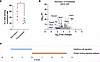 Figure 8
Effects of anti-CD3 mAb treatment on β cells. (A) Percentage of β cells among endocrine cells in the islets of remitter or prediabetic NOD mice by scRNA-Seq analysis. Each symbol represents 1 individual mouse (*P = 0.045, unpaired, 2-tailed t test). Data are shown as mean ± SEM. (B) Volcano plot showing DEGs of β cells in the islets of anti-CD3–treated remitter versus prediabetic NOD mice (P values < 0.05). Upregulated genes of note in remitters are highlighted in red and downregulated genes in blue. (C) Ingenuity Pathway Analysis of β cells in the islets of remitter versus prediabetic NOD mice (P values < 0.05).
The pathogenicity of diabetogenic immune cells from anti-CD3 mAb–treated remitter mice is restrained. Our studies suggested that potentially diabetogenic T cells persisted in the anti-CD3 mAb–treated mice and had features of T stem cell–like memory (Tscm) cells but were impaired in their ability to cause disease. To test their pathogenic potential, we transferred splenocytes from anti-CD3–treated remitter mice into NOD/SCID recipients. In comparison with splenocytes from untreated diabetic or prediabetic NOD donors, cells from remitters showed a significantly reduced ability to transfer disease into NOD/SCID hosts (remitter NOD vs. prediabetic NOD, P = 0.021) (Figure 9A).
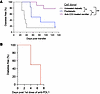 Figure 9
Pathogenicity of diabetogenic immune cells from anti-CD3 mAb–treated remitter NOD mice. (A) Spleen cells (15 × 106) from untreated diabetic (gray, n = 9), prediabetic (blue, n = 6), and anti-CD3–treated remitter (pink, n = 7) NOD donors were transferred to NOD/SCID recipients. The time to hyperglycemia is shown. Data are from 3 independent experiments (untreated diabetic vs. prediabetic: *P = 0.045; prediabetic vs. remitter: *P = 0.021; untreated diabetic vs. remitter: **P = 0.001, log-rank tests). (B) Anti-CD3–treated remitter NOD mice rapidly developed autoimmune diabetes after treatment with anti–PD-L1 mAb (n = 4).
We also treated anti-CD3–treated remitter NOD mice with anti–PD-L1 mAb and followed the mice for development of hyperglycemia. We observed a rapid precipitation of autoimmune diabetes in these mice (median time = 5.5 days) (Figure 9B). These results suggest that the diabetogenic T cells are restrained after anti-CD3 mAb treatment but can rapidly precipitate disease if a checkpoint is inhibited.


