
Research ArticleDevelopmentEndocrinology
Open Access |  10.1172/jci.insight.189343
Neonatal diabetes–associated missense PDX1 variant disrupts chromatin association and protein-protein interaction
Xiaodun Yang,1 Angela Zanfardino,2 Riccardo Schiaffini,3 Jeff Ishibashi,1 Bareket Daniel,1 Matthew W. Haemmerle,1 Novella Rapini,3 Alessia Piscopo,2 Emanuele Miraglia del Giudice,4 Maria Cristina Digilio,5 Raffaele Iorio,6 Mafalda Mucciolo,7 Stefano Cianfarani,3,8,9 Dario Iafusco,2 Fabrizio Barbetti,10 and Doris A. Stoffers1
1Institute for Diabetes, Obesity and Metabolism, Department of Medicine, University of Pennsylvania, Philadelphia, Pennsylvania, USA.
2Regional Center for Pediatric Diabetes, Department of Pediatrics, University of Campania Luigi Vanvitelli, Naples, Italy.
3Diabetology and Growth Disorders Unit, Bambino Gesù Children’s Hospital, IRCCS, Rome, Italy.
4Department of Pediatrics, University of Campania “Luigi Vanvitelli,” Caserta CE, Italy.
5Medical Genetics Unit and Medical Genetics and Rare Disease Research Division, Bambino Gesù Children Hospital, IRCCS, Rome, Italy.
6Department of Translational Medical Science, Section of Pediatrics, University of Naples Federico II, Naples, Italy.
7Translational Cytogenomics Research Unit, Bambino Gesù Children’s Hospital, IRCCS, Rome, Italy.
8Department of Systems Medicine, University of Rome “Tor Vergata,” Rome, Italy.
9Department of Women’s and Children’s Health, Karolinska Institutet, Stockholm, Sweden.
10Clinical Laboratory Unit, Bambino Gesù Children’s Hospital, IRCCS, Rome, Italy.
Authorship note: XY and AZ contributed equally to this work and are co–first authors.
Find articles by Yang, X. in: PubMed | Google Scholar
1Institute for Diabetes, Obesity and Metabolism, Department of Medicine, University of Pennsylvania, Philadelphia, Pennsylvania, USA.
2Regional Center for Pediatric Diabetes, Department of Pediatrics, University of Campania Luigi Vanvitelli, Naples, Italy.
3Diabetology and Growth Disorders Unit, Bambino Gesù Children’s Hospital, IRCCS, Rome, Italy.
4Department of Pediatrics, University of Campania “Luigi Vanvitelli,” Caserta CE, Italy.
5Medical Genetics Unit and Medical Genetics and Rare Disease Research Division, Bambino Gesù Children Hospital, IRCCS, Rome, Italy.
6Department of Translational Medical Science, Section of Pediatrics, University of Naples Federico II, Naples, Italy.
7Translational Cytogenomics Research Unit, Bambino Gesù Children’s Hospital, IRCCS, Rome, Italy.
8Department of Systems Medicine, University of Rome “Tor Vergata,” Rome, Italy.
9Department of Women’s and Children’s Health, Karolinska Institutet, Stockholm, Sweden.
10Clinical Laboratory Unit, Bambino Gesù Children’s Hospital, IRCCS, Rome, Italy.
Authorship note: XY and AZ contributed equally to this work and are co–first authors.
Find articles by Zanfardino, A. in: PubMed | Google Scholar
1Institute for Diabetes, Obesity and Metabolism, Department of Medicine, University of Pennsylvania, Philadelphia, Pennsylvania, USA.
2Regional Center for Pediatric Diabetes, Department of Pediatrics, University of Campania Luigi Vanvitelli, Naples, Italy.
3Diabetology and Growth Disorders Unit, Bambino Gesù Children’s Hospital, IRCCS, Rome, Italy.
4Department of Pediatrics, University of Campania “Luigi Vanvitelli,” Caserta CE, Italy.
5Medical Genetics Unit and Medical Genetics and Rare Disease Research Division, Bambino Gesù Children Hospital, IRCCS, Rome, Italy.
6Department of Translational Medical Science, Section of Pediatrics, University of Naples Federico II, Naples, Italy.
7Translational Cytogenomics Research Unit, Bambino Gesù Children’s Hospital, IRCCS, Rome, Italy.
8Department of Systems Medicine, University of Rome “Tor Vergata,” Rome, Italy.
9Department of Women’s and Children’s Health, Karolinska Institutet, Stockholm, Sweden.
10Clinical Laboratory Unit, Bambino Gesù Children’s Hospital, IRCCS, Rome, Italy.
Authorship note: XY and AZ contributed equally to this work and are co–first authors.
Find articles by Schiaffini, R. in: PubMed | Google Scholar
1Institute for Diabetes, Obesity and Metabolism, Department of Medicine, University of Pennsylvania, Philadelphia, Pennsylvania, USA.
2Regional Center for Pediatric Diabetes, Department of Pediatrics, University of Campania Luigi Vanvitelli, Naples, Italy.
3Diabetology and Growth Disorders Unit, Bambino Gesù Children’s Hospital, IRCCS, Rome, Italy.
4Department of Pediatrics, University of Campania “Luigi Vanvitelli,” Caserta CE, Italy.
5Medical Genetics Unit and Medical Genetics and Rare Disease Research Division, Bambino Gesù Children Hospital, IRCCS, Rome, Italy.
6Department of Translational Medical Science, Section of Pediatrics, University of Naples Federico II, Naples, Italy.
7Translational Cytogenomics Research Unit, Bambino Gesù Children’s Hospital, IRCCS, Rome, Italy.
8Department of Systems Medicine, University of Rome “Tor Vergata,” Rome, Italy.
9Department of Women’s and Children’s Health, Karolinska Institutet, Stockholm, Sweden.
10Clinical Laboratory Unit, Bambino Gesù Children’s Hospital, IRCCS, Rome, Italy.
Authorship note: XY and AZ contributed equally to this work and are co–first authors.
Find articles by Ishibashi, J. in: PubMed | Google Scholar
1Institute for Diabetes, Obesity and Metabolism, Department of Medicine, University of Pennsylvania, Philadelphia, Pennsylvania, USA.
2Regional Center for Pediatric Diabetes, Department of Pediatrics, University of Campania Luigi Vanvitelli, Naples, Italy.
3Diabetology and Growth Disorders Unit, Bambino Gesù Children’s Hospital, IRCCS, Rome, Italy.
4Department of Pediatrics, University of Campania “Luigi Vanvitelli,” Caserta CE, Italy.
5Medical Genetics Unit and Medical Genetics and Rare Disease Research Division, Bambino Gesù Children Hospital, IRCCS, Rome, Italy.
6Department of Translational Medical Science, Section of Pediatrics, University of Naples Federico II, Naples, Italy.
7Translational Cytogenomics Research Unit, Bambino Gesù Children’s Hospital, IRCCS, Rome, Italy.
8Department of Systems Medicine, University of Rome “Tor Vergata,” Rome, Italy.
9Department of Women’s and Children’s Health, Karolinska Institutet, Stockholm, Sweden.
10Clinical Laboratory Unit, Bambino Gesù Children’s Hospital, IRCCS, Rome, Italy.
Authorship note: XY and AZ contributed equally to this work and are co–first authors.
Find articles by Daniel, B. in: PubMed | Google Scholar
1Institute for Diabetes, Obesity and Metabolism, Department of Medicine, University of Pennsylvania, Philadelphia, Pennsylvania, USA.
2Regional Center for Pediatric Diabetes, Department of Pediatrics, University of Campania Luigi Vanvitelli, Naples, Italy.
3Diabetology and Growth Disorders Unit, Bambino Gesù Children’s Hospital, IRCCS, Rome, Italy.
4Department of Pediatrics, University of Campania “Luigi Vanvitelli,” Caserta CE, Italy.
5Medical Genetics Unit and Medical Genetics and Rare Disease Research Division, Bambino Gesù Children Hospital, IRCCS, Rome, Italy.
6Department of Translational Medical Science, Section of Pediatrics, University of Naples Federico II, Naples, Italy.
7Translational Cytogenomics Research Unit, Bambino Gesù Children’s Hospital, IRCCS, Rome, Italy.
8Department of Systems Medicine, University of Rome “Tor Vergata,” Rome, Italy.
9Department of Women’s and Children’s Health, Karolinska Institutet, Stockholm, Sweden.
10Clinical Laboratory Unit, Bambino Gesù Children’s Hospital, IRCCS, Rome, Italy.
Authorship note: XY and AZ contributed equally to this work and are co–first authors.
Find articles by Haemmerle, M. in: PubMed | Google Scholar
1Institute for Diabetes, Obesity and Metabolism, Department of Medicine, University of Pennsylvania, Philadelphia, Pennsylvania, USA.
2Regional Center for Pediatric Diabetes, Department of Pediatrics, University of Campania Luigi Vanvitelli, Naples, Italy.
3Diabetology and Growth Disorders Unit, Bambino Gesù Children’s Hospital, IRCCS, Rome, Italy.
4Department of Pediatrics, University of Campania “Luigi Vanvitelli,” Caserta CE, Italy.
5Medical Genetics Unit and Medical Genetics and Rare Disease Research Division, Bambino Gesù Children Hospital, IRCCS, Rome, Italy.
6Department of Translational Medical Science, Section of Pediatrics, University of Naples Federico II, Naples, Italy.
7Translational Cytogenomics Research Unit, Bambino Gesù Children’s Hospital, IRCCS, Rome, Italy.
8Department of Systems Medicine, University of Rome “Tor Vergata,” Rome, Italy.
9Department of Women’s and Children’s Health, Karolinska Institutet, Stockholm, Sweden.
10Clinical Laboratory Unit, Bambino Gesù Children’s Hospital, IRCCS, Rome, Italy.
Authorship note: XY and AZ contributed equally to this work and are co–first authors.
Find articles by Rapini, N. in: PubMed | Google Scholar
1Institute for Diabetes, Obesity and Metabolism, Department of Medicine, University of Pennsylvania, Philadelphia, Pennsylvania, USA.
2Regional Center for Pediatric Diabetes, Department of Pediatrics, University of Campania Luigi Vanvitelli, Naples, Italy.
3Diabetology and Growth Disorders Unit, Bambino Gesù Children’s Hospital, IRCCS, Rome, Italy.
4Department of Pediatrics, University of Campania “Luigi Vanvitelli,” Caserta CE, Italy.
5Medical Genetics Unit and Medical Genetics and Rare Disease Research Division, Bambino Gesù Children Hospital, IRCCS, Rome, Italy.
6Department of Translational Medical Science, Section of Pediatrics, University of Naples Federico II, Naples, Italy.
7Translational Cytogenomics Research Unit, Bambino Gesù Children’s Hospital, IRCCS, Rome, Italy.
8Department of Systems Medicine, University of Rome “Tor Vergata,” Rome, Italy.
9Department of Women’s and Children’s Health, Karolinska Institutet, Stockholm, Sweden.
10Clinical Laboratory Unit, Bambino Gesù Children’s Hospital, IRCCS, Rome, Italy.
Authorship note: XY and AZ contributed equally to this work and are co–first authors.
Find articles by Piscopo, A. in: PubMed | Google Scholar
1Institute for Diabetes, Obesity and Metabolism, Department of Medicine, University of Pennsylvania, Philadelphia, Pennsylvania, USA.
2Regional Center for Pediatric Diabetes, Department of Pediatrics, University of Campania Luigi Vanvitelli, Naples, Italy.
3Diabetology and Growth Disorders Unit, Bambino Gesù Children’s Hospital, IRCCS, Rome, Italy.
4Department of Pediatrics, University of Campania “Luigi Vanvitelli,” Caserta CE, Italy.
5Medical Genetics Unit and Medical Genetics and Rare Disease Research Division, Bambino Gesù Children Hospital, IRCCS, Rome, Italy.
6Department of Translational Medical Science, Section of Pediatrics, University of Naples Federico II, Naples, Italy.
7Translational Cytogenomics Research Unit, Bambino Gesù Children’s Hospital, IRCCS, Rome, Italy.
8Department of Systems Medicine, University of Rome “Tor Vergata,” Rome, Italy.
9Department of Women’s and Children’s Health, Karolinska Institutet, Stockholm, Sweden.
10Clinical Laboratory Unit, Bambino Gesù Children’s Hospital, IRCCS, Rome, Italy.
Authorship note: XY and AZ contributed equally to this work and are co–first authors.
Find articles by Miraglia del Giudice, E. in: PubMed | Google Scholar
1Institute for Diabetes, Obesity and Metabolism, Department of Medicine, University of Pennsylvania, Philadelphia, Pennsylvania, USA.
2Regional Center for Pediatric Diabetes, Department of Pediatrics, University of Campania Luigi Vanvitelli, Naples, Italy.
3Diabetology and Growth Disorders Unit, Bambino Gesù Children’s Hospital, IRCCS, Rome, Italy.
4Department of Pediatrics, University of Campania “Luigi Vanvitelli,” Caserta CE, Italy.
5Medical Genetics Unit and Medical Genetics and Rare Disease Research Division, Bambino Gesù Children Hospital, IRCCS, Rome, Italy.
6Department of Translational Medical Science, Section of Pediatrics, University of Naples Federico II, Naples, Italy.
7Translational Cytogenomics Research Unit, Bambino Gesù Children’s Hospital, IRCCS, Rome, Italy.
8Department of Systems Medicine, University of Rome “Tor Vergata,” Rome, Italy.
9Department of Women’s and Children’s Health, Karolinska Institutet, Stockholm, Sweden.
10Clinical Laboratory Unit, Bambino Gesù Children’s Hospital, IRCCS, Rome, Italy.
Authorship note: XY and AZ contributed equally to this work and are co–first authors.
Find articles by Digilio, M. in: PubMed | Google Scholar
1Institute for Diabetes, Obesity and Metabolism, Department of Medicine, University of Pennsylvania, Philadelphia, Pennsylvania, USA.
2Regional Center for Pediatric Diabetes, Department of Pediatrics, University of Campania Luigi Vanvitelli, Naples, Italy.
3Diabetology and Growth Disorders Unit, Bambino Gesù Children’s Hospital, IRCCS, Rome, Italy.
4Department of Pediatrics, University of Campania “Luigi Vanvitelli,” Caserta CE, Italy.
5Medical Genetics Unit and Medical Genetics and Rare Disease Research Division, Bambino Gesù Children Hospital, IRCCS, Rome, Italy.
6Department of Translational Medical Science, Section of Pediatrics, University of Naples Federico II, Naples, Italy.
7Translational Cytogenomics Research Unit, Bambino Gesù Children’s Hospital, IRCCS, Rome, Italy.
8Department of Systems Medicine, University of Rome “Tor Vergata,” Rome, Italy.
9Department of Women’s and Children’s Health, Karolinska Institutet, Stockholm, Sweden.
10Clinical Laboratory Unit, Bambino Gesù Children’s Hospital, IRCCS, Rome, Italy.
Authorship note: XY and AZ contributed equally to this work and are co–first authors.
Find articles by Iorio, R. in: PubMed | Google Scholar
1Institute for Diabetes, Obesity and Metabolism, Department of Medicine, University of Pennsylvania, Philadelphia, Pennsylvania, USA.
2Regional Center for Pediatric Diabetes, Department of Pediatrics, University of Campania Luigi Vanvitelli, Naples, Italy.
3Diabetology and Growth Disorders Unit, Bambino Gesù Children’s Hospital, IRCCS, Rome, Italy.
4Department of Pediatrics, University of Campania “Luigi Vanvitelli,” Caserta CE, Italy.
5Medical Genetics Unit and Medical Genetics and Rare Disease Research Division, Bambino Gesù Children Hospital, IRCCS, Rome, Italy.
6Department of Translational Medical Science, Section of Pediatrics, University of Naples Federico II, Naples, Italy.
7Translational Cytogenomics Research Unit, Bambino Gesù Children’s Hospital, IRCCS, Rome, Italy.
8Department of Systems Medicine, University of Rome “Tor Vergata,” Rome, Italy.
9Department of Women’s and Children’s Health, Karolinska Institutet, Stockholm, Sweden.
10Clinical Laboratory Unit, Bambino Gesù Children’s Hospital, IRCCS, Rome, Italy.
Authorship note: XY and AZ contributed equally to this work and are co–first authors.
Find articles by Mucciolo, M. in: PubMed | Google Scholar
1Institute for Diabetes, Obesity and Metabolism, Department of Medicine, University of Pennsylvania, Philadelphia, Pennsylvania, USA.
2Regional Center for Pediatric Diabetes, Department of Pediatrics, University of Campania Luigi Vanvitelli, Naples, Italy.
3Diabetology and Growth Disorders Unit, Bambino Gesù Children’s Hospital, IRCCS, Rome, Italy.
4Department of Pediatrics, University of Campania “Luigi Vanvitelli,” Caserta CE, Italy.
5Medical Genetics Unit and Medical Genetics and Rare Disease Research Division, Bambino Gesù Children Hospital, IRCCS, Rome, Italy.
6Department of Translational Medical Science, Section of Pediatrics, University of Naples Federico II, Naples, Italy.
7Translational Cytogenomics Research Unit, Bambino Gesù Children’s Hospital, IRCCS, Rome, Italy.
8Department of Systems Medicine, University of Rome “Tor Vergata,” Rome, Italy.
9Department of Women’s and Children’s Health, Karolinska Institutet, Stockholm, Sweden.
10Clinical Laboratory Unit, Bambino Gesù Children’s Hospital, IRCCS, Rome, Italy.
Authorship note: XY and AZ contributed equally to this work and are co–first authors.
Find articles by Cianfarani, S. in: PubMed | Google Scholar
1Institute for Diabetes, Obesity and Metabolism, Department of Medicine, University of Pennsylvania, Philadelphia, Pennsylvania, USA.
2Regional Center for Pediatric Diabetes, Department of Pediatrics, University of Campania Luigi Vanvitelli, Naples, Italy.
3Diabetology and Growth Disorders Unit, Bambino Gesù Children’s Hospital, IRCCS, Rome, Italy.
4Department of Pediatrics, University of Campania “Luigi Vanvitelli,” Caserta CE, Italy.
5Medical Genetics Unit and Medical Genetics and Rare Disease Research Division, Bambino Gesù Children Hospital, IRCCS, Rome, Italy.
6Department of Translational Medical Science, Section of Pediatrics, University of Naples Federico II, Naples, Italy.
7Translational Cytogenomics Research Unit, Bambino Gesù Children’s Hospital, IRCCS, Rome, Italy.
8Department of Systems Medicine, University of Rome “Tor Vergata,” Rome, Italy.
9Department of Women’s and Children’s Health, Karolinska Institutet, Stockholm, Sweden.
10Clinical Laboratory Unit, Bambino Gesù Children’s Hospital, IRCCS, Rome, Italy.
Authorship note: XY and AZ contributed equally to this work and are co–first authors.
Find articles by Iafusco, D. in: PubMed | Google Scholar
1Institute for Diabetes, Obesity and Metabolism, Department of Medicine, University of Pennsylvania, Philadelphia, Pennsylvania, USA.
2Regional Center for Pediatric Diabetes, Department of Pediatrics, University of Campania Luigi Vanvitelli, Naples, Italy.
3Diabetology and Growth Disorders Unit, Bambino Gesù Children’s Hospital, IRCCS, Rome, Italy.
4Department of Pediatrics, University of Campania “Luigi Vanvitelli,” Caserta CE, Italy.
5Medical Genetics Unit and Medical Genetics and Rare Disease Research Division, Bambino Gesù Children Hospital, IRCCS, Rome, Italy.
6Department of Translational Medical Science, Section of Pediatrics, University of Naples Federico II, Naples, Italy.
7Translational Cytogenomics Research Unit, Bambino Gesù Children’s Hospital, IRCCS, Rome, Italy.
8Department of Systems Medicine, University of Rome “Tor Vergata,” Rome, Italy.
9Department of Women’s and Children’s Health, Karolinska Institutet, Stockholm, Sweden.
10Clinical Laboratory Unit, Bambino Gesù Children’s Hospital, IRCCS, Rome, Italy.
Authorship note: XY and AZ contributed equally to this work and are co–first authors.
Find articles by
Barbetti, F.
in:
PubMed
|
Google Scholar
|

1Institute for Diabetes, Obesity and Metabolism, Department of Medicine, University of Pennsylvania, Philadelphia, Pennsylvania, USA.
2Regional Center for Pediatric Diabetes, Department of Pediatrics, University of Campania Luigi Vanvitelli, Naples, Italy.
3Diabetology and Growth Disorders Unit, Bambino Gesù Children’s Hospital, IRCCS, Rome, Italy.
4Department of Pediatrics, University of Campania “Luigi Vanvitelli,” Caserta CE, Italy.
5Medical Genetics Unit and Medical Genetics and Rare Disease Research Division, Bambino Gesù Children Hospital, IRCCS, Rome, Italy.
6Department of Translational Medical Science, Section of Pediatrics, University of Naples Federico II, Naples, Italy.
7Translational Cytogenomics Research Unit, Bambino Gesù Children’s Hospital, IRCCS, Rome, Italy.
8Department of Systems Medicine, University of Rome “Tor Vergata,” Rome, Italy.
9Department of Women’s and Children’s Health, Karolinska Institutet, Stockholm, Sweden.
10Clinical Laboratory Unit, Bambino Gesù Children’s Hospital, IRCCS, Rome, Italy.
Authorship note: XY and AZ contributed equally to this work and are co–first authors.
Find articles by Stoffers, D. in: PubMed | Google Scholar
Published June 9, 2025 - More info
JCI Insight. 2025;10(11):e189343. https://doi.org/10.1172/jci.insight.189343.
© 2025 Yang et al. This work is licensed under the Creative Commons Attribution 4.0 International License. To view a copy of this license, visit http://creativecommons.org/licenses/by/4.0/.
Received: November 21, 2024; Accepted: April 17, 2025

-
Introduction
Neonatal diabetes mellitus (NDM) is currently defined as persistent hyperglycemia with onset in the first 6 months of life (1). Remission of diabetes is observed in about 50%–60% of patients (transient NDM [TNDM]), while the permanent NDM (PNDM) is diagnosed in the remaining 40%–50%. In countries with a low consanguinity rate, heterozygous mutations of the KCNJ11, INS, and ABCC8 account for about 65% of patients with PNDM (1). In contrast, recessive genes are rarely involved. Here we describe an Italian patient with neonatal diabetes, severe exocrine pancreas insufficiency, and gallbladder malformation. The initial presentation of the patient was puzzling, with icterus, acholic stools, hypoalbuminemia, and anemia in addition to NDM. However, both hyperbilirubinemia and anemia resolved by the age of 4 months. Genetic analysis identified biallelic variants of PDX1 (or IPF1), a gene known to cause pancreas agenesis or PNDM (2–7).
The patient, the second child of nonconsanguineous parents (Figure 1A), presented with low birth weight (1,180 g; < third percentile) and length 40 cm (< third percentile) (8). On day 2 of life, plasma glucose was 482 mg/dL (26.7 mmol/L) and C-peptide undetectable (0.02 ng/mL) (Figure 1C). Abdominal ultrasound revealed a small and dysmorphic gallbladder with apparently normal liver and spleen; the pancreas could not be visualized. Further investigations showed a low fecal elastase (7 μg/g) (Figure 1C) and abnormal steatocrit (23%), both indicative of severe exocrine pancreas insufficiency. Nuclear magnetic resonance of the abdomen showed an enlarged liver and a small and dysmorphic gallbladder; head of the pancreas was visible, while body and tail could not be identified. I.v. insulin was initially administered along with ursodeoxycholic acid (UDCA), fat-soluble vitamins, total parenteral nutrition (TPN), and pancreatic enzymes. Detailed description of insulin therapy with sensor augmented pump initially and hybrid-closed loop device later has been reported elsewhere (8).
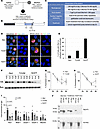 Figure 1
PDX1 N196T missense mutation identified in a pediatric patient with neonatal diabetes impairs its localization, DNA binding, and protein-protein interaction. (A) Family history of the patient. (B) Human PDX1 protein structure. NLS, nuclear localization signal. (C) Clinical information of the patient. (D) PDX1 protein localization during interphase and mitotic phase in MIN6 cells. White arrow shows the N197T variant partially localized in the cytoplasm during interphase, while both PDX1 and T152M localized exclusively in nuclei. Scale bar: 5 µm. (E) Quantification of the percentage of cells with PDX1 localized in the cytoplasm (Pdx1, n = 30 cells; T152M, n = 26 cells; N197T, n = 24 cells). (F–H) Representative Western blot image showing protein levels after cycloheximide (CHX) treatment (F) in MIN6 cells, with quantification shown (G and H). For each vector, protein levels were first normalized to Ran and then to its level at 0 hours. One-way repeated-measures ANOVA, n = 4–7. (I) ChIP-qPCR showing Pdx1, T152M, and N197T variants binding on Pdx1, Nkx6.1, insulin 1, insulin 2, and albumin gene promoters in MIN6 cells. Student’s t test, n = 4–5. (J) Coimmunoprecipitation and Western blot showing N197T, but not T152M, disrupting PDX1-ONECUT1 (OC1) interaction in 293T cells (n = 3).
-
Results
Two PDX1 (NM_000209) variants were identified in the patient by a next-generation sequencing (NGS) gene panel (Supplemental Figure 1A; supplemental material available online with this article; https://doi.org/10.1172/jci.insight.189343DS1) and confirmed by Sanger sequencing: c.452C>T, p. Thr151Met (p. T151M, paternal; rs565726855) and c. 587A>C, p. Asn196Thr (p. N196T, maternal; rs771543377) (Figure 1, A and B). Both were present in gnomAD database (minor allele frequency: 0.000007131 and 0.00002790, respectively) and were classified as variants of uncertain significance (VUS) according to American College of Medical Genetics and Genomics (ACMG) rules. The patient’s father, carrying a normal PDX1 allele and the T151M variant, is nondiabetic. The patient’s mother, carrying a normal PDX1 allele and the N196T variant, only had gestational diabetes (Figure 1A). The patient, a compound heterozygote carrying both PDX1 variants, developed permanent NDM. The clinical and genetic data indicate that both T151M and N196T variants are disease-causing. Therefore, we performed functional analyses of these variants.
To examine how the mutations affect PDX1 functions, we expressed hemagglutinin-tagged (HA-tagged) mouse Pdx1 Thr152Met (T152M) and Asn197Thr (N197T), homologous to human PDX1 T151M and N196T, respectively (Supplemental Figure 1B), in mouse insulinoma MIN6 cells and examined protein localization, protein stability, and DNA binding. We found that the Pdx1 N197T variant, but not T152M, partially impaired its nuclear localization during interphase (Figure 1, D and E). Neither of the 2 variants substantially affected PDX1 protein stability (Figure 1, F–H). Both variants reduced PDX1 binding to the Pdx1 gene promoter (Figure 1I). Patients with ONECUT1 (OC1) mutations develop gallbladder agenesis/hypoplasia (9), which was also present in the pediatric patient in our study. To examine whether the mutations affect the interaction between PDX1 and OC1, we coexpressed HA-tagged mouse Pdx1 variants and Flag-tagged mouse Oc1 in human embryonic kidney 293T cells and found that Pdx1 N197T, but not T152M, disrupted the PDX1-OC1 interaction (Figure 1J).
Though both variants are disease causing and may impair pancreas development, we hypothesized that the N197T variant causes both pancreas hypoplasia and gallbladder malformation due to its altered nuclear localization, reduced chromatin association with Pdx1 promoter, and disruption in the PDX1-OC1 interaction. We therefore used CRISPR/Cas9 to generate E18 mouse embryos harboring the Pdx1 N197T variant to examine its roles in the development of the pancreas and other digestive organs in vivo. We collected 37 live E18 embryos with a range of genotypes that included WT alleles, the N197 variant and deletions around the protospacer adjacent motif (PAM) sequence (Table 1 and Supplemental Figure 2), and 1 dead embryo. Embryos with a WT allele plus the Pdx1 N197T variant or a deletion had normal pancreas development. Embryos carrying one Pdx1 N197T allele and an indel (inferred null) allele exhibited pancreas agenesis (Figure 2, A and B, and Supplemental Figure 2) and marked reductions in plasma insulin levels (Figure 2C), indicating that the Pdx1 N197T variant is insufficient for normal pancreas development. Notably, the in-frame deletion of 6 bases encoding amino acids 196 and 197, which occurred more frequently than other deletions, was also unable to support pancreas development (Figure 2, A and B, and Table 1), further underscoring the importance of residue 197 for normal pancreas development. There were comparable PDX1 protein levels in the proximal duodenum in samples carrying the Pdx1 N197T variant compared with those carrying WT alleles (Figure 2D), and nuclear localization was not noticeably impaired. The Pdx1 N197T variant also caused marked reductions in the number of enteroendocrine cells in the proximal duodenum (Figure 2E). The junction between the stomach and duodenum (Supplemental Figure 1C) and liver and gallbladder structure (Supplemental Figure 1D) appeared normal.
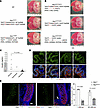 Figure 2
Mouse Pdx1 N197T causes pancreas agenesis and reduced generation of duodenal enteroendocrine cells in vivo. (A and B) Representative sample images and genotype information. The protein products of Pdx1del(6), Pdx1del(11), Pdx1del(22) are shown in the round brackets. Scale bar: 1 mm. (C) Plasma insulin levels (Normal: n = 6, Hypoplasia: n = 1, Agenesis: n = 21; Student’s t test). The dashed line indicates 0.05 ng/mL. (D) Comparable PDX1 protein localization and levels in the proximal duodenum samples with different genotypes. (E) Serotonin+ cells in duodenum (Student’s t test, n = 3). White arrows show the junction between stomach and duodenum. In the Pdx1+/– group, the genotypes of the 3 samples are Pdx1+/del(10), Pdx1+/del(6), and Pdx1+/del(6). In the Pdx1N197T/– group, the genotypes of the 3 samples are Pdx1N197T/del(11), Pdx1N197T/del(5), and Pdx1N197T/del(6) (Supplemental Figure 2). del, deletion. Scale bar: 20 µm (D), 200 µm (E).


