
Research ArticleInfectious diseaseNeuroscience
Open Access |  10.1172/jci.insight.184530
Virus-induced RGMa expression drives neurodegeneration in HTLV-1–associated myelopathy
Natsumi Araya,1 Makoto Yamagishi,2 Makoto Nakashima,1 Naomi Asahara,3 Kazuhiro Kiyohara,3 Satoko Aratani,1,4 Naoko Yagishita,1 Erika Horibe,1 Izumi Ishizaki,5 Toshiki Watanabe,6 Tomoo Sato,1,7 Kaoru Uchimaru,5 and Yoshihisa Yamano1,7
1Department of Rare Diseases Research, Institute of Medical Science, St. Marianna University School of Medicine, Kanagawa, Japan.
2Laboratory of Viral Oncology and Genomics, Department of Computational Biology and Medical Sciences, Graduate School of Frontier Sciences, The University of Tokyo, Tokyo, Japan.
3Neuroscience Unit Research Division, Mitsubishi Tanabe Pharma Corporation, Kanagawa, Japan.
4LSI Medience Co., Tokyo, Japan.
5Laboratory of Tumor Cell Biology, Department of Computational Biology and Medical Sciences, Graduate School of Frontier Sciences, The University of Tokyo, Tokyo, Japan.
6Department of Hematology/Oncology, and
7Department of Neurology, St. Marianna University School of Medicine, Kanagawa, Japan.
Address correspondence to: Yoshihisa Yamano, Department of Neurology, Department of Rare Diseases Research, Institute of Medical Science, St. Marianna University School of Medicine, 2-16-1 Sugao, Miyamae-ku, Kawasaki, Kanagawa, 216-8511, Japan. Phone: 81.44.977.8111; Email: yyamano@marianna-u.ac.jp.
Authorship note: NA and MY contributed equally to this work and are co–first authors.
Find articles by Araya, N. in: PubMed | Google Scholar
1Department of Rare Diseases Research, Institute of Medical Science, St. Marianna University School of Medicine, Kanagawa, Japan.
2Laboratory of Viral Oncology and Genomics, Department of Computational Biology and Medical Sciences, Graduate School of Frontier Sciences, The University of Tokyo, Tokyo, Japan.
3Neuroscience Unit Research Division, Mitsubishi Tanabe Pharma Corporation, Kanagawa, Japan.
4LSI Medience Co., Tokyo, Japan.
5Laboratory of Tumor Cell Biology, Department of Computational Biology and Medical Sciences, Graduate School of Frontier Sciences, The University of Tokyo, Tokyo, Japan.
6Department of Hematology/Oncology, and
7Department of Neurology, St. Marianna University School of Medicine, Kanagawa, Japan.
Address correspondence to: Yoshihisa Yamano, Department of Neurology, Department of Rare Diseases Research, Institute of Medical Science, St. Marianna University School of Medicine, 2-16-1 Sugao, Miyamae-ku, Kawasaki, Kanagawa, 216-8511, Japan. Phone: 81.44.977.8111; Email: yyamano@marianna-u.ac.jp.
Authorship note: NA and MY contributed equally to this work and are co–first authors.
Find articles by Yamagishi, M. in: PubMed | Google Scholar
1Department of Rare Diseases Research, Institute of Medical Science, St. Marianna University School of Medicine, Kanagawa, Japan.
2Laboratory of Viral Oncology and Genomics, Department of Computational Biology and Medical Sciences, Graduate School of Frontier Sciences, The University of Tokyo, Tokyo, Japan.
3Neuroscience Unit Research Division, Mitsubishi Tanabe Pharma Corporation, Kanagawa, Japan.
4LSI Medience Co., Tokyo, Japan.
5Laboratory of Tumor Cell Biology, Department of Computational Biology and Medical Sciences, Graduate School of Frontier Sciences, The University of Tokyo, Tokyo, Japan.
6Department of Hematology/Oncology, and
7Department of Neurology, St. Marianna University School of Medicine, Kanagawa, Japan.
Address correspondence to: Yoshihisa Yamano, Department of Neurology, Department of Rare Diseases Research, Institute of Medical Science, St. Marianna University School of Medicine, 2-16-1 Sugao, Miyamae-ku, Kawasaki, Kanagawa, 216-8511, Japan. Phone: 81.44.977.8111; Email: yyamano@marianna-u.ac.jp.
Authorship note: NA and MY contributed equally to this work and are co–first authors.
Find articles by Nakashima, M. in: PubMed | Google Scholar
1Department of Rare Diseases Research, Institute of Medical Science, St. Marianna University School of Medicine, Kanagawa, Japan.
2Laboratory of Viral Oncology and Genomics, Department of Computational Biology and Medical Sciences, Graduate School of Frontier Sciences, The University of Tokyo, Tokyo, Japan.
3Neuroscience Unit Research Division, Mitsubishi Tanabe Pharma Corporation, Kanagawa, Japan.
4LSI Medience Co., Tokyo, Japan.
5Laboratory of Tumor Cell Biology, Department of Computational Biology and Medical Sciences, Graduate School of Frontier Sciences, The University of Tokyo, Tokyo, Japan.
6Department of Hematology/Oncology, and
7Department of Neurology, St. Marianna University School of Medicine, Kanagawa, Japan.
Address correspondence to: Yoshihisa Yamano, Department of Neurology, Department of Rare Diseases Research, Institute of Medical Science, St. Marianna University School of Medicine, 2-16-1 Sugao, Miyamae-ku, Kawasaki, Kanagawa, 216-8511, Japan. Phone: 81.44.977.8111; Email: yyamano@marianna-u.ac.jp.
Authorship note: NA and MY contributed equally to this work and are co–first authors.
Find articles by Asahara, N. in: PubMed | Google Scholar
1Department of Rare Diseases Research, Institute of Medical Science, St. Marianna University School of Medicine, Kanagawa, Japan.
2Laboratory of Viral Oncology and Genomics, Department of Computational Biology and Medical Sciences, Graduate School of Frontier Sciences, The University of Tokyo, Tokyo, Japan.
3Neuroscience Unit Research Division, Mitsubishi Tanabe Pharma Corporation, Kanagawa, Japan.
4LSI Medience Co., Tokyo, Japan.
5Laboratory of Tumor Cell Biology, Department of Computational Biology and Medical Sciences, Graduate School of Frontier Sciences, The University of Tokyo, Tokyo, Japan.
6Department of Hematology/Oncology, and
7Department of Neurology, St. Marianna University School of Medicine, Kanagawa, Japan.
Address correspondence to: Yoshihisa Yamano, Department of Neurology, Department of Rare Diseases Research, Institute of Medical Science, St. Marianna University School of Medicine, 2-16-1 Sugao, Miyamae-ku, Kawasaki, Kanagawa, 216-8511, Japan. Phone: 81.44.977.8111; Email: yyamano@marianna-u.ac.jp.
Authorship note: NA and MY contributed equally to this work and are co–first authors.
Find articles by Kiyohara, K. in: PubMed | Google Scholar
1Department of Rare Diseases Research, Institute of Medical Science, St. Marianna University School of Medicine, Kanagawa, Japan.
2Laboratory of Viral Oncology and Genomics, Department of Computational Biology and Medical Sciences, Graduate School of Frontier Sciences, The University of Tokyo, Tokyo, Japan.
3Neuroscience Unit Research Division, Mitsubishi Tanabe Pharma Corporation, Kanagawa, Japan.
4LSI Medience Co., Tokyo, Japan.
5Laboratory of Tumor Cell Biology, Department of Computational Biology and Medical Sciences, Graduate School of Frontier Sciences, The University of Tokyo, Tokyo, Japan.
6Department of Hematology/Oncology, and
7Department of Neurology, St. Marianna University School of Medicine, Kanagawa, Japan.
Address correspondence to: Yoshihisa Yamano, Department of Neurology, Department of Rare Diseases Research, Institute of Medical Science, St. Marianna University School of Medicine, 2-16-1 Sugao, Miyamae-ku, Kawasaki, Kanagawa, 216-8511, Japan. Phone: 81.44.977.8111; Email: yyamano@marianna-u.ac.jp.
Authorship note: NA and MY contributed equally to this work and are co–first authors.
Find articles by Aratani, S. in: PubMed | Google Scholar
1Department of Rare Diseases Research, Institute of Medical Science, St. Marianna University School of Medicine, Kanagawa, Japan.
2Laboratory of Viral Oncology and Genomics, Department of Computational Biology and Medical Sciences, Graduate School of Frontier Sciences, The University of Tokyo, Tokyo, Japan.
3Neuroscience Unit Research Division, Mitsubishi Tanabe Pharma Corporation, Kanagawa, Japan.
4LSI Medience Co., Tokyo, Japan.
5Laboratory of Tumor Cell Biology, Department of Computational Biology and Medical Sciences, Graduate School of Frontier Sciences, The University of Tokyo, Tokyo, Japan.
6Department of Hematology/Oncology, and
7Department of Neurology, St. Marianna University School of Medicine, Kanagawa, Japan.
Address correspondence to: Yoshihisa Yamano, Department of Neurology, Department of Rare Diseases Research, Institute of Medical Science, St. Marianna University School of Medicine, 2-16-1 Sugao, Miyamae-ku, Kawasaki, Kanagawa, 216-8511, Japan. Phone: 81.44.977.8111; Email: yyamano@marianna-u.ac.jp.
Authorship note: NA and MY contributed equally to this work and are co–first authors.
Find articles by Yagishita, N. in: PubMed | Google Scholar
1Department of Rare Diseases Research, Institute of Medical Science, St. Marianna University School of Medicine, Kanagawa, Japan.
2Laboratory of Viral Oncology and Genomics, Department of Computational Biology and Medical Sciences, Graduate School of Frontier Sciences, The University of Tokyo, Tokyo, Japan.
3Neuroscience Unit Research Division, Mitsubishi Tanabe Pharma Corporation, Kanagawa, Japan.
4LSI Medience Co., Tokyo, Japan.
5Laboratory of Tumor Cell Biology, Department of Computational Biology and Medical Sciences, Graduate School of Frontier Sciences, The University of Tokyo, Tokyo, Japan.
6Department of Hematology/Oncology, and
7Department of Neurology, St. Marianna University School of Medicine, Kanagawa, Japan.
Address correspondence to: Yoshihisa Yamano, Department of Neurology, Department of Rare Diseases Research, Institute of Medical Science, St. Marianna University School of Medicine, 2-16-1 Sugao, Miyamae-ku, Kawasaki, Kanagawa, 216-8511, Japan. Phone: 81.44.977.8111; Email: yyamano@marianna-u.ac.jp.
Authorship note: NA and MY contributed equally to this work and are co–first authors.
Find articles by Horibe, E. in: PubMed | Google Scholar
1Department of Rare Diseases Research, Institute of Medical Science, St. Marianna University School of Medicine, Kanagawa, Japan.
2Laboratory of Viral Oncology and Genomics, Department of Computational Biology and Medical Sciences, Graduate School of Frontier Sciences, The University of Tokyo, Tokyo, Japan.
3Neuroscience Unit Research Division, Mitsubishi Tanabe Pharma Corporation, Kanagawa, Japan.
4LSI Medience Co., Tokyo, Japan.
5Laboratory of Tumor Cell Biology, Department of Computational Biology and Medical Sciences, Graduate School of Frontier Sciences, The University of Tokyo, Tokyo, Japan.
6Department of Hematology/Oncology, and
7Department of Neurology, St. Marianna University School of Medicine, Kanagawa, Japan.
Address correspondence to: Yoshihisa Yamano, Department of Neurology, Department of Rare Diseases Research, Institute of Medical Science, St. Marianna University School of Medicine, 2-16-1 Sugao, Miyamae-ku, Kawasaki, Kanagawa, 216-8511, Japan. Phone: 81.44.977.8111; Email: yyamano@marianna-u.ac.jp.
Authorship note: NA and MY contributed equally to this work and are co–first authors.
Find articles by Ishizaki, I. in: PubMed | Google Scholar
1Department of Rare Diseases Research, Institute of Medical Science, St. Marianna University School of Medicine, Kanagawa, Japan.
2Laboratory of Viral Oncology and Genomics, Department of Computational Biology and Medical Sciences, Graduate School of Frontier Sciences, The University of Tokyo, Tokyo, Japan.
3Neuroscience Unit Research Division, Mitsubishi Tanabe Pharma Corporation, Kanagawa, Japan.
4LSI Medience Co., Tokyo, Japan.
5Laboratory of Tumor Cell Biology, Department of Computational Biology and Medical Sciences, Graduate School of Frontier Sciences, The University of Tokyo, Tokyo, Japan.
6Department of Hematology/Oncology, and
7Department of Neurology, St. Marianna University School of Medicine, Kanagawa, Japan.
Address correspondence to: Yoshihisa Yamano, Department of Neurology, Department of Rare Diseases Research, Institute of Medical Science, St. Marianna University School of Medicine, 2-16-1 Sugao, Miyamae-ku, Kawasaki, Kanagawa, 216-8511, Japan. Phone: 81.44.977.8111; Email: yyamano@marianna-u.ac.jp.
Authorship note: NA and MY contributed equally to this work and are co–first authors.
Find articles by Watanabe, T. in: PubMed | Google Scholar
1Department of Rare Diseases Research, Institute of Medical Science, St. Marianna University School of Medicine, Kanagawa, Japan.
2Laboratory of Viral Oncology and Genomics, Department of Computational Biology and Medical Sciences, Graduate School of Frontier Sciences, The University of Tokyo, Tokyo, Japan.
3Neuroscience Unit Research Division, Mitsubishi Tanabe Pharma Corporation, Kanagawa, Japan.
4LSI Medience Co., Tokyo, Japan.
5Laboratory of Tumor Cell Biology, Department of Computational Biology and Medical Sciences, Graduate School of Frontier Sciences, The University of Tokyo, Tokyo, Japan.
6Department of Hematology/Oncology, and
7Department of Neurology, St. Marianna University School of Medicine, Kanagawa, Japan.
Address correspondence to: Yoshihisa Yamano, Department of Neurology, Department of Rare Diseases Research, Institute of Medical Science, St. Marianna University School of Medicine, 2-16-1 Sugao, Miyamae-ku, Kawasaki, Kanagawa, 216-8511, Japan. Phone: 81.44.977.8111; Email: yyamano@marianna-u.ac.jp.
Authorship note: NA and MY contributed equally to this work and are co–first authors.
Find articles by Sato, T. in: PubMed | Google Scholar
1Department of Rare Diseases Research, Institute of Medical Science, St. Marianna University School of Medicine, Kanagawa, Japan.
2Laboratory of Viral Oncology and Genomics, Department of Computational Biology and Medical Sciences, Graduate School of Frontier Sciences, The University of Tokyo, Tokyo, Japan.
3Neuroscience Unit Research Division, Mitsubishi Tanabe Pharma Corporation, Kanagawa, Japan.
4LSI Medience Co., Tokyo, Japan.
5Laboratory of Tumor Cell Biology, Department of Computational Biology and Medical Sciences, Graduate School of Frontier Sciences, The University of Tokyo, Tokyo, Japan.
6Department of Hematology/Oncology, and
7Department of Neurology, St. Marianna University School of Medicine, Kanagawa, Japan.
Address correspondence to: Yoshihisa Yamano, Department of Neurology, Department of Rare Diseases Research, Institute of Medical Science, St. Marianna University School of Medicine, 2-16-1 Sugao, Miyamae-ku, Kawasaki, Kanagawa, 216-8511, Japan. Phone: 81.44.977.8111; Email: yyamano@marianna-u.ac.jp.
Authorship note: NA and MY contributed equally to this work and are co–first authors.
Find articles by Uchimaru, K. in: PubMed | Google Scholar
1Department of Rare Diseases Research, Institute of Medical Science, St. Marianna University School of Medicine, Kanagawa, Japan.
2Laboratory of Viral Oncology and Genomics, Department of Computational Biology and Medical Sciences, Graduate School of Frontier Sciences, The University of Tokyo, Tokyo, Japan.
3Neuroscience Unit Research Division, Mitsubishi Tanabe Pharma Corporation, Kanagawa, Japan.
4LSI Medience Co., Tokyo, Japan.
5Laboratory of Tumor Cell Biology, Department of Computational Biology and Medical Sciences, Graduate School of Frontier Sciences, The University of Tokyo, Tokyo, Japan.
6Department of Hematology/Oncology, and
7Department of Neurology, St. Marianna University School of Medicine, Kanagawa, Japan.
Address correspondence to: Yoshihisa Yamano, Department of Neurology, Department of Rare Diseases Research, Institute of Medical Science, St. Marianna University School of Medicine, 2-16-1 Sugao, Miyamae-ku, Kawasaki, Kanagawa, 216-8511, Japan. Phone: 81.44.977.8111; Email: yyamano@marianna-u.ac.jp.
Authorship note: NA and MY contributed equally to this work and are co–first authors.
Find articles by Yamano, Y. in: PubMed | Google Scholar
Published April 30, 2025 - More info
JCI Insight. 2025;10(11):e184530. https://doi.org/10.1172/jci.insight.184530.
© 2025 Araya et al. This work is licensed under the Creative Commons Attribution 4.0 International License. To view a copy of this license, visit http://creativecommons.org/licenses/by/4.0/.
Received: July 9, 2024; Accepted: April 17, 2025

-
Results
Neuronal cell damage induced by HAM-PBMCs. To investigate the potential neurotoxic effects of PBMCs derived from patients with HAM (HAM-PBMCs), we measured the concentration of NF-L in the supernatant when the human neuronal cell line NB-1 was cocultured with HAM-PBMCs (n = 7) in comparison to coculture with PBMCs from healthy donors (HD-PBMCs, n = 7). The concentration of NF-L in the culture supernatant was measured as a marker for neuronal damage. Results showed a significantly increased concentration of NF-L in cocultures with HAM-PBMCs compared with those with HD-PBMCs (P = 0.0038, Figure 1A), indicating a neurotoxic effect exerted by HAM-PBMCs.
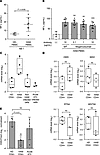 Figure 1
Neuropathic effects of HAM-PBMCs. (A) The concentration of NF-L (pg/mL) in the supernatant when NB-1 cells were cocultured with HAM-PBMCs (n = 7) or HD-PBMCs (n = 7). (B) The concentration of NF-L (pg/mL) in the supernatant when NB-1 cells were cocultured with HAM-PBMCs (n = 9) and with mogamulizumab (antiCCR4) in a dose-dependent manner for 72 hours. (C) The comparison of RGMA mRNA gene expression levels using DNA microarray among normal CD4+ T cells (HD CD4+: n = 4), HAM patient–derived CD4+ T cells (HAM CD4+: n = 4), ACs (n = 2), and smoldering/chronic-type-ATL patient–derived (n = 3) HTLV-1–infected CD4+ T cells (Non-HAM infected CD4+ T cells: n = 5), and acute-type-ATL patient–derived HTLV-1–infected CD4+ T cells (Acute ATL infected cells: n = 3). (D) The comparison of the expression levels of the genes associated with the inhibition of neuroregeneration (OMG, MAG, RTN4, and WNT5A) between HD CD4+ (n = 4) and HAM CD4+ T cells (n = 4). (E) The enrichment levels of H3K27me3 –2916 bp upstream from the TSS of the RGMA gene locus in HD CD4+ (n = 3), HAM CD4+ (n = 4), and acute-ATL infected cells (n = 4). Data are shown as mean ± SD. **P < 0.01; ***P < 0.001 by unpaired t test (A and D) or 1-way ANOVA with Dunnett’s multiple-comparison test (B, C, and E). NF-L, neurofilament light chain.
To ascertain the importance of HTLV-1–infected T cells among HAM-PBMCs in causing neuronal cell damage, we measured the NF-L concentration in the medium of NB-1 cells cocultured with HAM-PBMCs in the presence or absence of an anti-CCR4 antibody (mogamulizumab), which is known to deplete HTLV-1–infected T cells (12, 13). In vitro treatment with mogamulizumab significantly reduced the NF-L concentration compared with the negative control (human IgG), indicating the critical role of HTLV-1–infected T cells in HAM-PBMCs in inducing neuronal cell damage (Figure 1B).
To identify the causative factors behind the observed neuronal cell damage induced by HAM-PBMCs, we conducted a comprehensive analysis of gene expression profiles in HAM CD4+ T cells, the major reservoir of HTLV-1, using DNA microarray. Among the genes associated with the inhibition of neuroregeneration via Rho signal transduction pathways (14, 15), the expression levels of RGMA were significantly elevated solely in HAM CD4+ T cells when compared with CD4+ T cells from HDs (non–HTLV-1–infected CD4+ T cells), HTLV-1–infected cells from asymptomatic carriers (ACs), and patients with smoldering/chronic-type adult T cell leukemia (ATL), as well as HTLV-1–infected cells from patients with acute ATL (P < 0.05) (Figure 1C). Additionally, in previously reported transcriptome data (16), RGMA gene expression was found to be elevated in HAM CD4+ T cells compared with CD4+ T cells from HDs (data not shown). However, the expression levels of other related genes such as oligodendrocyte myelin glycoprotein (OMG), myelin-associated glycoprotein (MAG), reticulon 4 (RTN4), and WNT5A, did not exhibit significant differences between HAM CD4+ T cells and HD CD4+ T cells (Figure 1D). In our pursuit of understanding the mechanism behind the specific expression of RGMA in HAM CD4+ T cells, we investigated histone H3 lysine 27 trimethylation (H3K27me3), a known gene-silencing marker, at the promoters of all genes via H3K27me3 ChIP-on-chip. The analysis of H3K27me3 levels at the RGMA promoter locus, situated –2916 bp upstream from the transcription start site (TSS), revealed a significant decrease in H3K27me3 levels in HAM CD4+ T cells compared with HD CD4+ T cells and acute-type ATL cells (Figure 1E). This finding suggests that the RGMA gene is expressed in HTLV-1–infected CD4+ T cells from patients with HAM through epigenetic deregulation of H3K27me3.
Elevated RGMa expression in HTLV-1–infected T cells of patients with HAM. To further validate the elevated expression levels of RGMA in HAM CD4+ T cells, we conducted quantitative reverse transcriptase PCR (qRT-PCR). The results confirmed a significant 16.4-fold increase in RGMA mRNA expression in HAM CD4+ T cells (n = 6) compared with HD CD4+ T cells (n = 6) (P = 0.0227, Figure 2A). Subsequent efforts to verify RGMa protein expression through flow cytometric analysis of ex vivo PBMCs derived from patients with HAM did not demonstrate an increase in expression (data not shown). This led to the hypothesis that RGMa protein expression may become more apparent following the in vitro culture of HAM-PBMCs. Flow cytometric analysis of PBMCs from HDs or patients with HAM cultured for 2 days revealed observable RGMa protein expression in HAM CD4+ cells, notably within cells characterized by the HTLV-1 infection marker CCR4 (Figure 2B). This finding was supported by multiple HAM-PBMC samples (Figure 2C), showing that RGMa expression was predominantly elevated in CD4+CCR4+ cells as compared with CD4+CCR4– cells, with a significant variance in the percentage of RGMa-expressing cells (CCR4– cells = 1.288% ± 0.923%, CCR4+ cells = 2.984% ± 2.569%, P < 0.05; Figure 2C). Moreover, the percentage of RGMa protein–expressing CD4+CCR4+ cells from patients with HAM was significantly higher than that observed in cells from HDs (HD = 0.231% ± 0.156%, HAM = 2.984% ± 2.569%, P = 0.0383; Figure 2D). These findings indicate a marked increase in RGMa expression levels specifically in HTLV-1–infected T cells from patients with HAM, with further elevation upon cell culture.
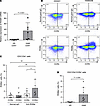 Figure 2
An increase in RGMA gene expression levels in HAM CD4+ T cells. (A) The validation of RGMA mRNA gene expression levels using qRT-PCR in HD CD4+ (n = 6) and HAM CD4+ T cells (n = 6). (B) Expression of RGMa protein in CD3+CD4+CCR4+ T cells from HAM-PBMCs. Representative dot plots of CCR4 and normal goat IgG (upper) or RGMa expression (bottom) in CD3+CD4+ gated cells from HD-PBMCs (left) or HAM-PBMCs (right) cultured for 2 days. (C) Graph shows the percentage of RGMa protein–expressing cells in CCR4– cells or CCR4+ cells in CD3+CD4+ gated cells from HAM-PBMCs (n = 8) cultured for 2 days, compared with the isotype control, normal goat IgG. (D) Graph shows the percentage of RGMa protein–expressing cells among CD3+CD4+CCR4+ gated cells from HD-PBMCs (n = 5) or HAM-PBMCs (n = 8) cultured for 2 days. Data are shown as mean ± SD. *P < 0.05; **P < 0.01 by unpaired t test (A and D) or 1-way ANOVA with Dunnett’s multiple-comparison test.
HTLV-1 Tax–dependent induction of RGMa. Given that in vitro culture of HAM-PBMCs is known to induce the expression of HTLV-1–encoded genes, particularly HTLV-1 Tax (13), we examined the relationship between the expression levels of the RGMA gene and those of HTLV-1−encoded genes, Tax and HBZ, under cell culture conditions using qRT-PCR. A significant elevation in RGMA gene expression was observed after 24 hours of incubation, alongside an increase in Tax gene expression. Conversely, HBZ gene expression did not exhibit a significant increase after 24 hours (Figure 3A). RGMA and Tax gene expression demonstrated a decrease after 48 and 72 hours relative to their levels at 24 hours, suggesting a link between Tax and RGMA gene induction.
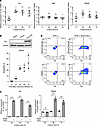 Figure 3
RGMA gene induction is HTLV-1 Tax dependent. (A) Tax (left), HBZ (middle), and RGMA (right) gene expression levels in cultured HAM-PBMCs (n = 7) in a time-dependent manner. RPL19 was used as an internal control. (B) Tax-dependent RGMA mRNA gene induction in Jurkat cells, which were infected with lentivirus carrying the Tax gene. Top: Tax expression in the Jurkat cells was confirmed by Western blotting. β-Actin was measured as an internal control. Bottom: The induction levels of the RGMA gene were evaluated by qRT-PCR in a time-dependent manner (n = 3). (C) Tax-dependent RGMA mRNA gene induction in JPX9 cells treated with 20 μM CdCl2 in a time-dependent manner. Tax mRNA (upper) and RGMA mRNA (bottom) were measured by qRT-PCR (n = 3). GAPDH was measured as an internal control. (D) Tax-dependent RGMa protein induction in JPX9 cells treated with 20 μM CdCl2 for 3 days. Dot plots of Tax and normal goat IgG (upper) or RGMa expression (bottom) in JPX9 cells. JPX9(-), untreated JPX9 cells; 20 μM CdCl2 JPX9, CdCl2-supplemented JPX9 cells. Data are shown as mean ± SD. *P < 0.05; **P < 0.01; ***P < 0.001 by 1-way ANOVA with Dunnett’s multiple-comparison test (A), 2-sided Student’s t test (B), or an unpaired t test (C). Experiments were performed in triplicate (B and C).
To elucidate whether Tax could directly induce RGMA gene expression, we constructed a Tax-inducing lentiviral vector and integrated Tax-coding cDNA into Jurkat cells, a T cell acute lymphoblastic leukemia cell line. Western blotting confirmed the induction of Tax protein in Jurkat cells (Figure 3B). Introduction of Tax via lentivirus led to a time-dependent increase in RGMA gene expression in Jurkat cells (P < 0.05) (Figure 3B). This finding was further explored using the JPX9 cell line, which expresses Tax protein upon cadmium chloride (CdCl2) treatment. Treatment of JPX9 cells with CdCl2 resulted in a significant increase in Tax gene expression after 24 hours, followed by an elevation in RGMA gene expression after 48 hours (Figure 3C). Additionally, flow cytometric analysis of JPX9 cells 3 days after CdCl2 addition revealed specific RGMa protein expression in the Tax-expressing cell population (Figure 3D).
Tax and Sp1 cooperatively activate RGMA transcription via upstream regulatory elements. We hypothesized that a region approximately 2916 bp upstream of the RGMA gene, where H3K27me3 modification is characteristically removed in HAM-CD4+ T cells (Figure 1E), acts as a regulatory domain for RGMA gene expression. Given our previous report that Tax forms a complex with specificity protein 1 (Sp1) to synergistically activate the transcription of target genes (13), we employed the transcription factor binding prediction software JASPAR (17) to analyze Sp1 binding sites within the region from –3016 bp to –2816 bp. This analysis identified 4 Sp1 binding sites (–3007 to –2997 bp, –3006 to –2998 bp, –2986 to –2976 bp, and –2999 bp to –2991 bp) (Supplemental Figure 1; supplemental material available online with this article; https://doi.org/10.1172/jci.insight.184530DS1). Subsequently, we performed reporter assays using cells transfected with the RGMA-Luc luciferase reporter plasmid, which encompasses the –3500 to +100 bp region of the RGMA gene, to investigate the effects of Sp1 and Tax on the transcriptional activation of RGMA. The data showed that cotransfection with Sp1 activated the luciferase reporter, and further cotransfection with Tax synergistically increased the reporter activity in a Tax concentration–dependent manner. Importantly, the reporter activation by Tax was not observed with the nuclear localization–deficient Tax C29A mutant (18), demonstrating that Tax activates the RGMA transcriptional regulatory region within the nucleus (Figure 4A). Moreover, we evaluated whether Tax and Sp1 localized to the region predicted by JASPAR using ChIP-qPCR with JPX9 cells expressing Tax (amplification region: –3028 bp to –2879 bp from the RGMA TSS). The enrichment of this genomic region was significantly increased by antibodies specific for Tax and Sp1 compared with control IgG (Figure 4B). These findings underscore that Tax, in conjunction with Sp1, localizes near the –3000 bp region upstream of the RGMA TSS, synergistically boosting RGMA transcriptional activity and thereby significantly increasing RGMA mRNA expression.
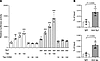 Figure 4
Tax and Sp1 cooperatively enhance RGMA transcription. (A) Coactivation of the RGMA transcriptional regulatory region by Sp1 and Tax. HEK293 cells were transfected with 10 ng of RGMA-Luc reporter plasmid, 300 ng of Sp1 expression plasmid, and 0–300 ng of either Tax or Tax C29A expression plasmid, as indicated. Values were normalized to β-galactosidase activity as an internal control (n = 4). (B) ChIP-qPCR analysis of the predicted Sp1 binding region upstream of the RGMA locus in JPX9 cells following treatment with 20 μM CdCl2 for 48 hours. Tax and Sp1 binding were evaluated in comparison to mouse IgG and rabbit IgG, respectively. The immunoprecipitated DNA was normalized to input DNA (n = 4). Data are shown as mean ± SD. *P < 0.05; **P < 0.01; ***P < 0.001 by 1-way ANOVA with Dunnett’s multiple-comparison test (A) or 2-sided Student’s t test (B). Experiments were performed in triplicate.
Reversal of neuronal cell damage induced by HTLV-1–mediated RGMa through inhibitory antibodies. To elucidate the contribution of RGMa to neuronal cell damage in the context of HTLV-1 infection, we assessed the neurotoxic effects of Tax expression induction in JPX9 cells on cocultured NB-1 human neuronal cells. We observed a significant reduction in the average neurite length of NB-1 cells cocultured with Tax-expressing JPX9 cells (P < 0.01, Figure 5A). This reduction in neurite length was alleviated in a dose-dependent manner by the treatment with unasnemab, a neutralizing antibody against RGMa (P < 0.01). Additionally, the evaluation of NF-L concentration in the culture medium of NB-1 cells cocultured with PBMCs from patients with HAM revealed an increase in NF-L levels, indicative of neuronal damage. This increase was significantly reversed by unasnemab treatment in a dose-dependent fashion, beginning at a concentration of 0.001 μg/mL (P < 0.05, Figure 5B), with human IgG serving as a negative control. These results provide strong evidence that HTLV-1–infected cells in HAM may induce neuronal damage through RGMa expression, highlighting the potential of RGMa inhibition as a therapeutic strategy for mitigating neuronal damage in HTLV-1–associated neurological disorders.
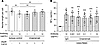 Figure 5
Neuronal cell damage mediated by RGMa. (A) Neurite length of cocultured NB-1 cells when exposed to Tax-inducing JPX9 cells treated with unasnemab in a dose-dependent manner for 48 hours. Palivizumab was used as a negative control. Data are shown as mean ± SEM (n = 6). Experiments were performed in triplicate. (B) The concentration of NF-L (pg/mL) in the supernatant when NB-1 cells were cocultured with HAM-PBMCs (n = 9) and with unasnemab in a dose-dependent manner for 72 hours. Normal human IgG (IgG) was used as a control. Data are shown as mean ± SD. *P < 0.05; **P < 0.01; ***P < 0.001 by 2-way ANOVA followed by Fisher’s least significant difference (LSD) post hoc test (A) or 1-way ANOVA with Dunnett’s multiple-comparison test (B). NF-L, neurofilament light chain.


