
Submit a comment
Abstract
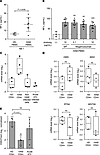
Human T-lymphotropic virus type 1–associated (HTLV-1–associated) myelopathy (HAM, also known as tropical spastic paraparesis) is a rare neurodegenerative disease with largely elusive molecular mechanisms, impeding targeted therapeutic advancements. This study aimed to identify the critical molecule responsible for neuronal damage in HAM, its source, and the regulatory mechanisms controlling its expression. Utilizing patient-derived cells and established cell lines, we discovered that HTLV-1 Tax, in conjunction with specificity protein 1 (Sp1), enhanced the expression of repulsive guidance molecule A (RGMa), a protein known to contribute to neuronal damage. RGMa expression was specifically upregulated in HTLV-1–infected cells from patients with HAM, particularly in those expressing HTLV-1 Tax. Furthermore, in CD4+ cells from patients with HAM, the level of H3K27me3 methylation upstream of the RGMA gene locus was reduced, making RGMA more prone to constitutive expression. We demonstrated that HTLV-1–infected cells in HAM inflict neuronal damage via RGMa. Crucially, the neutralizing antibody against RGMa, unasnemab (MT-3921), effectively mitigated this damage in a dose-responsive manner, highlighting RGMa’s pivotal role in neuronal damage and its potential as a therapeutic target for alleviating neuronal damage in HAM.
Authors
Natsumi Araya, Makoto Yamagishi, Makoto Nakashima, Naomi Asahara, Kazuhiro Kiyohara, Satoko Aratani, Naoko Yagishita, Erika Horibe, Izumi Ishizaki, Toshiki Watanabe, Tomoo Sato, Kaoru Uchimaru, Yoshihisa Yamano
Guidelines
The Editorial Board will only consider comments that are deemed relevant and of interest to readers. The Journal will not post data that have not been subjected to peer review; or a comment that is essentially a reiteration of another comment.
- Comments appear on the Journal’s website and are linked from the original article’s web page.
- Authors are notified by email if their comments are posted.
- The Journal reserves the right to edit comments for length and clarity.
- No appeals will be considered.
- Comments are not indexed in PubMed.
Specific requirements
- Maximum length, 400 words
- Entered as plain text or HTML
- Author’s name and email address, to be posted with the comment
- Declaration of all potential conflicts of interest (even if these are not ultimately posted); see the Journal’s conflict-of-interest policy
- Comments may not include figures


