
Abstract
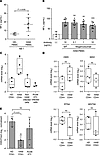
Human T-lymphotropic virus type 1–associated (HTLV-1–associated) myelopathy (HAM, also known as tropical spastic paraparesis) is a rare neurodegenerative disease with largely elusive molecular mechanisms, impeding targeted therapeutic advancements. This study aimed to identify the critical molecule responsible for neuronal damage in HAM, its source, and the regulatory mechanisms controlling its expression. Utilizing patient-derived cells and established cell lines, we discovered that HTLV-1 Tax, in conjunction with specificity protein 1 (Sp1), enhanced the expression of repulsive guidance molecule A (RGMa), a protein known to contribute to neuronal damage. RGMa expression was specifically upregulated in HTLV-1–infected cells from patients with HAM, particularly in those expressing HTLV-1 Tax. Furthermore, in CD4+ cells from patients with HAM, the level of H3K27me3 methylation upstream of the RGMA gene locus was reduced, making RGMA more prone to constitutive expression. We demonstrated that HTLV-1–infected cells in HAM inflict neuronal damage via RGMa. Crucially, the neutralizing antibody against RGMa, unasnemab (MT-3921), effectively mitigated this damage in a dose-responsive manner, highlighting RGMa’s pivotal role in neuronal damage and its potential as a therapeutic target for alleviating neuronal damage in HAM.
Authors
Natsumi Araya, Makoto Yamagishi, Makoto Nakashima, Naomi Asahara, Kazuhiro Kiyohara, Satoko Aratani, Naoko Yagishita, Erika Horibe, Izumi Ishizaki, Toshiki Watanabe, Tomoo Sato, Kaoru Uchimaru, Yoshihisa Yamano
This file is in Adobe Acrobat (PDF) format. If you have not installed and configured the Adobe Acrobat Reader on your system.
Having trouble reading a PDF?
PDFs are designed to be printed out and read, but if you prefer to read them online, you may find it easier if you increase the view size to 125%.
Having trouble saving a PDF?
Many versions of the free Acrobat Reader do not allow Save. You must instead save the PDF from the JCI Online page you downloaded it from. PC users: Right-click on the Download link and choose the option that says something like "Save Link As...". Mac users should hold the mouse button down on the link to get these same options.
Having trouble printing a PDF?
- Try printing one page at a time or to a newer printer.
- Try saving the file to disk before printing rather than opening it "on the fly." This requires that you configure your browser to "Save" rather than "Launch Application" for the file type "application/pdf", and can usually be done in the "Helper Applications" options.
- Make sure you are using the latest version of Adobe's Acrobat Reader.


