
Research ArticleCell biologyNeuroscience
Open Access |  10.1172/jci.insight.184231
Developmental progression of respiratory dysfunction in a mouse model of Dravet syndrome
Brenda M. Milla, Eliandra N. da Silva, Cleyton R. Sobrinho, Monica L. Strain, and Daniel K. Mulkey
Department of Physiology and Neurobiology, University of Connecticut, Storrs, Connecticut, USA.
Address correspondence to: Daniel K. Mulkey, Department of Physiology and Neurobiology, University of Connecticut, 75 N. Eagleville Rd., Unit 3156, Storrs, Connecticut, 06269, USA. Phone:860.486.5700; daniel.mulkey@uconn.edu.
Find articles by Milla, B. in: PubMed | Google Scholar
Department of Physiology and Neurobiology, University of Connecticut, Storrs, Connecticut, USA.
Address correspondence to: Daniel K. Mulkey, Department of Physiology and Neurobiology, University of Connecticut, 75 N. Eagleville Rd., Unit 3156, Storrs, Connecticut, 06269, USA. Phone:860.486.5700; daniel.mulkey@uconn.edu.
Find articles by da Silva, E. in: PubMed | Google Scholar
Department of Physiology and Neurobiology, University of Connecticut, Storrs, Connecticut, USA.
Address correspondence to: Daniel K. Mulkey, Department of Physiology and Neurobiology, University of Connecticut, 75 N. Eagleville Rd., Unit 3156, Storrs, Connecticut, 06269, USA. Phone:860.486.5700; daniel.mulkey@uconn.edu.
Find articles by Sobrinho, C. in: PubMed | Google Scholar
Department of Physiology and Neurobiology, University of Connecticut, Storrs, Connecticut, USA.
Address correspondence to: Daniel K. Mulkey, Department of Physiology and Neurobiology, University of Connecticut, 75 N. Eagleville Rd., Unit 3156, Storrs, Connecticut, 06269, USA. Phone:860.486.5700; daniel.mulkey@uconn.edu.
Find articles by Strain, M. in: PubMed | Google Scholar
Department of Physiology and Neurobiology, University of Connecticut, Storrs, Connecticut, USA.
Address correspondence to: Daniel K. Mulkey, Department of Physiology and Neurobiology, University of Connecticut, 75 N. Eagleville Rd., Unit 3156, Storrs, Connecticut, 06269, USA. Phone:860.486.5700; daniel.mulkey@uconn.edu.
Find articles by Mulkey, D. in: PubMed | Google Scholar
Published September 9, 2025 - More info
JCI Insight. 2025;10(20):e184231. https://doi.org/10.1172/jci.insight.184231.
© 2025 Milla et al. This work is licensed under the Creative Commons Attribution 4.0 International License. To view a copy of this license, visit http://creativecommons.org/licenses/by/4.0/.
Received: June 25, 2024; Accepted: September 4, 2025


-
Results
Respiratory phenotype of neonatal Scn1a+/– mouse pups on a mixed background. Scn1a+/– mice (50% C57BL/6J:50% 129/SvJ background) were obtained at the expected frequency and are similar to control animals in terms of weight (Scn1a+/+ 7.1 ± 0.30 g; Scn1a+/– 7.8 ± 0.2 g; T32 = 1.9 [where 32 = degrees of freedom], P = 0.0589) during the first 2 weeks of life. However, despite their normal appearance, previous work suggests 2-week-old Scn1a+/– mice are prone to febrile seizures (9), a hallmark feature of DS potentially triggered by heat-induced respiratory alkalosis (10, 11). Prompted by this observation, we characterized baseline breathing and the CO2 ventilatory response in 2-week-old mice of each genotype. Note that all in vivo experiments were performed during a time of day associated with SUDEP in people (12), while controlling for state of arousal by assessing breathing only when mice appeared to be in a state of quiet wakefulness. We found that approximately 2-week-old Scn1a+/– mice show fairly normal respiratory activity under room air conditions (n = 10, mixed sex per genotype); baseline parameters of interest include respiratory frequency (Scn1a+/+ 238 ± 6.1 bpm; Scn1a+/– 221 ± 5.5 bpm) and tidal volume, which was higher in Scn1a+/– mice (Scn1a+/+ 0.04 ± 0.001 μL/g; Scn1a+/– 0.05 ± 0.002 μL/g) but otherwise normal minute ventilation (Scn1a+/+ 10.2 ± 0.4 μL/min/g; Scn1a+/– 10.7 ± 0.4 μL/min/g) (Figure 1, A–D). However, at this same developmental time point, Scn1a+/– mice showed a diminished capacity to increase respiratory frequency in response to a modest 3% increase in CO2 (Scn1a+/+ 257 ± 4.6 bpm vs. Scn1a+/– 224 ± 7.7 bpm; F1,22 =5.498, P = 0.0069) (Figure 1E). This chemoreceptor deficit normalized at higher levels of CO2 (5% and 7% CO2) such that respiratory frequency (7% CO2 P = 0.45), title volume (7% CO2 P = 0.82), and minute ventilation — the product of respiratory frequency and tidal volume — measured over CO2 levels ranging from 0% to 7% (CO2 slope Scn1a+/+ 1.0 ± 0.1 vs. Scn1a+/– 1.1 ± 0.2; P = 0.60) were similar between genotypes (Figure 1, E–G). Since Scn1a+/– mice do not exhibit overt seizures at this developmental time point, it is tempting to speculate that loss of Scn1a directly disrupts central chemoreceptor function. However, we also found that seizure-free Scn1a+/– mice on a pure 129/SvJ background show normal central (Supplemental Figure 1; supplemental material available online with this article; https://doi.org/10.1172/jci.insight.184231DS1) and peripheral (Supplemental Figure 2) chemoreflexes at between 3 and 7 weeks of age. Together, these results suggest that Nav1.1 deficiency in the absence of seizures does not result in a respiratory phenotype but may predispose the respiratory system to disfunction following even modest seizure activity. These results also support the possibility that altered respiratory function can serve as an early indicator for increased SUDEP risk.
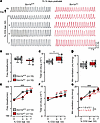 Figure 1
Two-week-old Scn1a+/– mice show a blunted ventilatory response to moderate hypercapnia (3% CO2). (A) Traces of respiratory activity from a control and Scn1a+/– mouse during exposure to room air and graded increases in CO2 (balance O2). (B–D) Summary data (n = 10/genotype) plotted as mean ± maximum/minimum show small increases in tidal volume (C) (T16 = 2.6) in Scn1a+/– mice but otherwise normal respiratory frequency (B) (P = 0.06) and minute ventilation (D) (P = 0.36) between genotypes under room air conditions (unpaired t test). (E–G) Summary data (n = 12/genotype) plotted as mean ± SEM of frequency (E) (P = 0.0069 for 3% CO2 frequency), tidal volume (F) (P = 1.0), and minute ventilation (G) (P = 0.20) show that Scn1a+/– mice fail to increase respiratory frequency in response to a modest increase in CO2 (3%) by an amount proportional to control; however, genotype differences were negated at higher CO2 levels. Means were compared using repeated measures 2-way ANOVA followed by Tukey’s or Dunnett’s multiple-comparison test and slopes of minute ventilation response to 0%–7% CO2 were compared using 1-way ANCOVA. *P < 0.05, **P < 0.01 with Tukey’s multiple-comparison test for differences between genotypes; ##P < 0.01, ###P < 0.001, ####P < 0.0001 with Dunnett’s multiple-comparison test for within-genotype differences from control.
Respiratory phenotype of juvenile and adult Scn1a+/– mice on a mixed background. To determine whether breathing problems in Scn1a+/– mice worsen with disease progression and contribute to SUDEP, we characterized baseline breathing and CO2 chemoreception in each genotype at 3 weeks of age. Furthermore, since the murine peripheral chemoreflex has matured by this stage of development (13), we also characterized the hypoxic ventilatory response. Note that 3-week-old mice of both genotypes showed comparable levels of metabolic activity across the 24-hour light/dark cycle (Supplemental Figure 3). Importantly, this time point also coincides with rapid onset of spontaneous seizures and SUDEP, so we divided the Scn1a+/– group into 2 cohorts based on whether animals succumb to SUDEP within 4 days of an experiment (these cohorts are termed Scn1a+/– survived and Scn1a+/– SUDEP mice). Consistent with the possibility that breathing problems worsen with disease progression and contribute to mortality, we found that Scn1a+/– SUDEP mice exhibit diminished breathing under baseline conditions and in response to hypercapnia (Figure 2A) and hypoxia. For example, in room air Scn1a+/– SUDEP mice (n = 20) show a reduced respiratory frequency compared with control (n = 17) or Scn1a+/– survived (n = 15) mice (F2,49 = 4.310, P = 0.016) (Figure 2B). Other baseline parameters, including tidal volume (P = 0.8176) (Figure 2C) and minute ventilation (P = 0.1124) (Figure 2D), were similar between groups. Scn1a+/– SUDEP mice also failed to increase respiratory frequency in response to graded increases in CO2 (Figure 2E) and despite the otherwise normal tidal volume response to high CO2 (Figure 2F), this resulted in diminished minute ventilation at both moderate and high levels of CO2 (F2,33 = 17.4, P = 0.008) (Figure 2G). We also noted that both cohorts of Scn1a+/– mice show diminished respiratory frequency under 100% O2 conditions compared with control (Scn1a+/– survived F2,33 = 29.33, P = 0.02 and Scn1a+/– SUDEP, P = 0.0006) (Figure 2E). Since breathing pure O2 will inhibit peripheral chemoreceptor drive, this finding suggests enhanced peripheral chemoreceptor drive helps both groups of Scn1a+/– mice maintain normal minute ventilation under room air conditions.
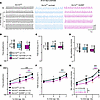 Figure 2
Three-week old Scn1a+/– mice that die prematurely show a pronounced central chemoreceptor deficit. Scn1a+/– mice begin to develop seizures and die at approximately 3 weeks of age (29). Therefore, for this analysis, we separated Scn1a+/– mice into 2 cohorts based on whether or not they died within 5 days of this experiment; these groups are termed Scn1a+/– survived and Scn1a+/– SUDEP. (A) Traces of respiratory activity from Scn1a+/+ (n = 17), Scn1a+/– survived (n = 15), and Scn1a+/– SUDEP (n = 20) mice during exposure to room air and graded increases in CO2 (balance O2). (B–D) Summary data plotted as mean ± maximum/minimum show that Scn1a+/– SUDEP mice have a lower respiratory frequency (B) but otherwise similar tidal volume (C) (P = 0.82) and minute ventilation (D) (P = 0.1124) as compared with control or Scn1a+/– survived mice under room air conditions (1-way ANOVA followed by Tukey’s multiple-comparison test). (E and F) Summary data plotted as mean ± SEM of frequency (E) (P < 0.0001), tidal volume (F) (P = 0.055) and minute ventilation (G) (P = 0.0008) show that Scn1a+/– SUDEP mice have a reduced respiratory response to graded increases in CO2 that is mediated primarily by a blunted frequency response. Means were compared using repeated measures 2-way ANOVA followed by Tukey’s or Dunnett’s multiple-comparison test and slopes of minute ventilation 0%–7% CO2 responses were compared using 1-way ANCOVA. Orange asterisks represent differences between Scn1a+/– cohorts. *P < 0.05, **P < 0.01, ***P < 0.001, ****P < 0.0001 with Tukey’s multiple-comparison test for differences between genotypes; #P < 0.05, ##P < 0.01, ###P < 0.001, ####P < 0.0001 with Dunnett’s multiple-comparison test for within-genotype differences from control.
To explore this possibility further, we characterized the hypoxic ventilatory response in 3-week-old mice of each genotype. Considering the hypoxic ventilatory response consists of an early excitatory response that peaks at approximately 1 minute, followed by a ventilatory reduction phase that reaches a nadir (above pre-hypoxic levels) at approximately 3 minutes in hypoxia (14), and since each phase of this response reflects different but interrelated mechanisms (14), respiratory activity during each phase of a 5-minute exposure to 10% hypoxia was analyzed separately. Despite the apparent compensatory role of peripheral chemoreceptor drive under baseline conditions, Scn1a+/– SUDEP mice failed to increase minute ventilation early during hypoxia exposure (2.6 ± 0.15 μL/min/g; n = 9) by an amount proportional to control (3.5 ± 0.17 μL/min/g; n = 10) (F2,38 = 8.3, P = 0.0036) but not different from Scn1a+/– survived mice (3.24 ± 0.27 mL/min/g, n = 6, P = 0.21) (Figure 3, A–E). This was also evidenced by a diminished slope of the minute ventilatory response to early hypoxia in control mice (m = 1.5 ± 0.2) compared with Scn1a+/– SUDEP mice (m = 0.92 ± 0.16, P = 0.0427). This respiratory deficit was mediated by diminished respiratory frequency (Scn1a+/– SUDEP 271.1 ± 7.3 bpm vs. control 306.6 ± 4.5 bpm; F2,38 = 12.17, P = 0.0029) but not tidal volume (P = 0.138) (Figure 3, C and D). Scn1a+/– SUDEP mice also showed diminished minute ventilatory output (2.1 ± 0.06 mL/min/g, n = 14) during the later phase of the hypoxic challenge compared with control (2.4 ± 0.06 mL/min/g, n = 13; F2,38 = 8.3; P = 0.0007) or Scn1a+/– survived mice (2.3 ± 0.09 mL/min/g, n = 14; F2,38 = 8.3, P = 0.03) (Figure 3E), due largely to attenuation of respiratory frequency (F2,38 = 12.17, P < 0.0001) (Figure 3, C and D).
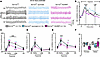 Figure 3
Three-week old Scn1a+/– SUDEP mice show a blunted hypoxic ventilatory response. (A) Traces of respiratory activity from 3-week-old Scn1a+/+ (n = 13), Scn1a+/– survived (n = 14), and Scn1a+/– SUDEP (n = 14) mice in room air or during the early (90 seconds of hypoxia) and late phase (3.5–4.5 minutes) of exposure to hypoxia (10% O2/95% N2). (B) Traces of minute ventilation show the time course of the hypoxic response for each genotype. Note the transition to hypoxia typically corresponded to brief behavior artifacts that were omitted from analysis. (C–E) Summary data from control and each Scn1a+/– mouse cohort show respiratory frequency (C), tidal volume (D), and minute ventilation (E) in air (before and 10 minutes after hypoxia) and during the early and late phase of exposure to hypoxia. Scn1a+/– SUDEP mice show a diminished minute ventilatory response to both early and late phases of the hypoxia response (F2,38 = 8.3; early P = 0.004; late P = 0.0007). This peripheral chemoreceptor deficit is primarily mediated by a blunted frequency response (C). (F) Summary data plotted as mean ± maximum/minimum show the number of sighs detected in control and Scn1a+/– mice of each sex during 5 minutes of hypoxia. Means were compared using repeated measures mixed effects model followed by Tukey’s or Dunnett’s multiple-comparison test. Orange asterisks represents differences between Scn1a+/– cohorts. *P < 0.05, **P < 0.01, ***P < 0.001, ****P < 0.0001 with Tukey’s multiple-comparison test for differences between genotypes; #P < 0.05, ##P < 0.01, ###P < 0.001, ####P < 0.0001 with Dunnett’s multiple-comparison test for within-genotype differences from control.
Interestingly, hypoxia also elicits sigh activity to promote gas exchange (15), and while SUDEP tends to occur more frequently in men (16, 17), we found that 3-week-old Scn1a+/– SUDEP female mice showed fewer sighs (9.4 ± 0.8 sighs, n = 7) compared with age-matched male Scn1a+/– SUDEP mice (13.7 ± 1.5 sighs, n = 6) or control or Scn1a–/+ survived mice of either sex (F5,33 = 4.855, P = 0.0019) (Figure 3F). It should be noted that Scn1a–/+ mice that live to 5–7 weeks of age recover a normal hypoxic ventilatory response (Supplemental Figure 4), whereas their ventilatory response to CO2 remains diminished compared with control (Supplemental Figure 5). Together, these results identify a strong correlation between altered central and peripheral chemoreception and increased SUDEP propensity.
RTN neurons are hyperexcitable in slices from Scn1a+/– mice on a mixed background. RTN neurons are a likely basis for chemoreceptor deficits in models of chronic epilepsy (18) and DS (8); therefore, we characterized functional properties of RTN neurons in brain slices from control and Scn1a+/– mice approximately 2 weeks of age. Considering Nav1.1 channels are highly expressed by ventral parafacial inhibitory neurons and to a lesser extent RTN neurons at this developmental time point (8), and since some inhibitory parafacial neurons limit activity of RTN neurons during hypocapnia (low CO2/H+) and augment output of the RTN during high CO2/H+ by a mechanism involving disinhibition (19), we expect RTN neurons in slices from Scn1a+/– mice to show increased activity under low physiological levels of CO2 but otherwise respond normally to high CO2/H+ when activity of inhibitory neurons is suppressed. RTN neurons are identified in the cell-attached voltage clamp mode (Vhold –60 mV) by their location in the ventral parafacial region (Figure 4A) and their characteristic CO2/H+-dependent firing behavior (8); they are spontaneously active under control conditions (5% CO2, pH 7.3) and respond to 10% CO2 (pH 7.0) with at least a 0.8 Hz increase in firing rate. Chemosensitive RTN neurons also have been shown to express the transcription factor Phox2b (19–21); therefore, at the end of each experiment, we filled most recorded cells with Lucifer yellow for later immunohistochemical confirmation of Phox2b expression (Figure 4B). Consistent with expectations, RTN neurons in slices from Scn1a+/– mice showed increased activity under control conditions (Scn1a+/– 2.6 ± 0.3 Hz vs. Scn1a+/+ 0.9 ± 0.1 Hz; T17 = 4.4, P = 0.0004) (Figure 4, C and D) and during exposure to 3% CO2 as compared with neurons from control mice (Scn1a+/– 1.5 ± 0.3 Hz vs. Scn1a+/+ 0.2 ± 0.1 Hz; F1,72 = 45.23, P = 0.0002) (Figure 4, F and G). Also as predicted, RTN neurons in slices from each genotype showed comparable responses to 10% CO2 (CO2/H+ Δ in firing rate: Scn1a+/– 1.2 ± 0.1 Hz vs. Scn1a+/+ 1.6 ± 0.1 Hz; T17 = 1.922, P = 0.078) (Figure 4E) and this resulted in a similar CO2/H+ response profile between 3% and 10% CO2 (slope: Scn1a+/– 0.19 ± 0.05 vs. Scn1a+/+ 0.27 ± 0.02) (Figure 4G). These results show that disruption of RTN neural function precedes manifestation of respiratory symptoms by approximately 1 week.
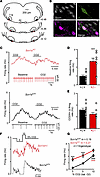 Figure 4
RTN neurons in slices from Scn1a+/– mice are hyperexcitable under control conditions and during hypocapnia. (A) Computer-assisted plot shows the location of RTN neurons from each genotype in the ventral parafacial region. Py, pyramidal tract; 7 N, facial motor nucleus. Numbers to the right of each section designate millimeters from bregma. (B) Double immunolabeling shows a Lucifer yellow–filled (LY-filled) CO2/H+-sensitive RTN neuron recorded in a slice from a Scn1a+/– mouse is Phox2b immunoreactive. DAPI was used to visualize the cell nucleus. Scale bar: 20 μm. We confirmed Phox2b immunoreactivity in RTN neurons from control (n = 10) and Scn1a+/– (n = 11) tissue. (C) Traces of firing rate and segments of holding current from RTN neurons in slices from control (black) and Scn1a+/– (red) mice show examples of spontaneous activity under control conditions (5% CO2, pH 7.3) and that neurons from both genotypes respond to 10% CO2 with a washable and repeatable increase in activity (pH 7.0). (D and E) Summary data show that RTN neurons in Scn1a+/– tissue exhibit high baseline activity (D) but respond to 10% CO2 by an amount similar to control neurons (E). (F) Traces of firing rate from RTN neurons in slices from control (black) and Scn1a+/– (red) mice show that exposure to 3% CO2 strongly inhibits control neurons but causes only a modest inhibition of neurons in Scn1a+/– tissue. (G) Summary data (n = 13/ genotype) show that RTN neurons in slices from Scn1a+/– mice are more excitable at 3% and 5% CO2. Means were compared using 2-way ANOVA followed by Šídák’s multiple-comparison test and slopes of neural activity between 3% and 10% CO2 were compared using 1-way ANCOVA. ***P < 0.001 for differences between genotypes; ####P < 0.0001 for genotype differences from control.
Pharmacological activation of Nav1.1 rescues RTN neural activity deficits by promoting inhibitory synaptic input. The above results are consistent with the possibility that diminished Nav1.1 function preferentially suppresses activity of inhibitory neurons early in development (22). Based on this, we wanted to determine whether targeted activation of Nav1.1 channels can rescue activity deficits exhibited by RTN neurons in Scn1a+/– mice. Consistent with expectations, we found that bath application of Hm1a (50 nM) — a compound that selectively increases Nav1.1 channel activity by decreasing voltage-dependent inactivation (23) — decreased baseline activity of RTN neurons in slices from Scn1a+/– mice by 52% to a level similar to control neurons (Scn1a+/– Hm1a 0.8 ± 0.2 Hz vs. Scn1a+/+ 1.0 ± 0.2 Hz; T15 = 0.73, P = 0.47) (Figure 5, A and B). We also found that Hm1a increased the hypercapnic response of RTN neurons in slices from Scn1a+/– mice by 57% (T7 = 2.6, P = 0.03) (Figure 5, A and C). Conversely, Hm1a had negligible effect on baseline activity (T8 = 1.8, P = 0.1124) or CO2/H+ sensitivity (T8 = 1.5, P = 0.17) of RTN neurons in slices from control mice (Figure 5, A–C). Although not shown, we confirmed that bath application of Hm1a decreased the spontaneous inhibitory postsynaptic current interevent interval from 8.0 ± 2.5 seconds to 4.8 ± 2.1 seconds (T3,4, P = 0.04) but with no change in amplitude (T2,4, P = 0.09). These results show that Hm1a increased synaptic inhibition of RTN neurons in slices from Scn1a+/– mice. Together, these results suggest Hm1a preferentially rescues contributions of inhibitory synaptic drive to baseline activity and CO2/H+-dependent disinhibition of RTN neurons.
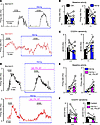 Figure 5
Hm1a normalizes baseline activity and increases hypercapnic sensitivity of RTN neurons by increasing inhibitory synaptic drive. (A–C) Representative traces of firing rate from RTN neurons in slices from control (black) and Scn1a+/– (red) mice (A) and summary data show that bath application of Hm1a (50 μM) decreased baseline activity (B) and increased the firing response to 10% CO2 (C) of RTN neurons in slices from Scn1a+/– mice. In contrast to this, Hm1a minimally affected baseline activity and CO2/H+ sensitivity of RTN neurons in slices from control mice (A–C). (D–F) Traces of firing rate from RTN neurons in slices from control (black) and Scn1a+/– (red) mice (D) and summary data show that application of gabazine (GZ; 50 μM), picrotoxin (PX; 50 μM), and strychnine (ST; 1 μM) to inhibit GABAA and glycine receptors effectively reversed the effects of Hm1a on baseline activity (E) and CO2 sensitivity (F) of RTN neurons in slices from Scn1a+/– mice. Comparisons were made using a paired t test within genotypes and an unpaired t test across genotypes. *P < 0.05.
To further test this possibility, we determined whether the effects of Hm1a on activity of RTN neurons in slices from Scn1a+/– mice could be reversed by bath application of a cocktail of GABAA (50 μM each of gabazine and picrotoxin) and glycine (1 μM strychnine) receptor blockers. Consistent with expectations, we found that RTN neurons in slices from Scn1a+/– mice in the continued presence of Hm1a (50 μM), subsequent bath application of cocktail of inhibitory receptor blockers increased baseline activity (Hm1a 0.17 ± 0.1 Hz vs. cocktail 0.71 ± 0.1 Hz; T6 = 5.068, P = 0.002) (Figure 5, D and E) and decreased the hypercapnic response (Hm1a 1.1 ± 0.11 Hz vs. cocktail 0.73 ± 0.10 Hz; T6 = 2.8, P = 0.03) (Figure 5, D and F). Control neurons did not show a marked increase in baseline activity following blockade of inhibitory receptors in the presence of Hm1a (P = 0.068) (Figure 5E). However, consistent with the possibility that disinhibition contributes to RTN chemoreception (24), we found that the firing response of control neurons to 10% CO2 was blunted in the cocktail of inhibitory receptor blockers plus Hm1a (control 1.8 ± 0.3 Hz vs. cocktail 1.2 ± 0.17 Hz; T7 = 2.5, P = 0.04) (Figure 5F). These results suggest Hm1a normalizes baseline activity and CO2/H+ sensitivity in part by increasing inhibitory synaptic drive of RTN neurons.
Pharmacological activation of Nav1.1 increases repetitive firing capacity of RTN neurons. RTN neurons also express Nav1.1 channels at this stage of development (8, 19), so we wanted to determine whether Hm1a improves the ability of RTN neurons to maintain spike discharge during sustained depolarizations. We recorded repetitive firing behavior of RTN neurons in slices from each genotype in whole-cell current-clamp mode during duration step (1 second) depolarizations (20–140 pA; Δ 20 pA) from a holding potential of –80 mV. This hyperpolarized holding potential was used to maximize the proportion of Nav1.1 channels available to contribute to firing behavior. We found that properties (threshold, spike amplitude, and maximum rate of depolarization) of the first spike elicited by a +120 pA depolarizing step was similar between genotypes (Supplemental Figure 6) and showed similar repetitive firing responses to modest depolarizing current injections (Figure 6, A and B). However, RTN neurons in slices from Scn1a+/– mice were more prone to depolarizing block during larger sustained depolarizing current steps compared with RTN neurons in control tissue. For example, the number of spikes elicited by a +120 pA current step (1 second) was 10 ± 0.8 for Scn1a+/+ controls (n = 8) compared with 6.4 ± 0.6 for Scn1a+/– (n = 9; F7,105 = 0.89, P = 0.03), but during larger depolarizations RTN neurons from both genotypes showed pronounced spike amplitude and frequency decrement consistent with depolarizing block (Figure 6, A and B). We also found that RTN neurons in slices from Scn1a+/– mice have a limited ability to respond to 1-second-long trains of depolarizing pulses (140–200 pA) when delivered at high frequency. For example, RTN neurons in slices from each genotype showed a similar low failure rate (depolarizing stimulus that does not elicit an action potential) when stimulated at between 10 and 20 Hz. However, RTN neurons in slices from Scn1a+/– mice failed more frequently than neurons in control tissue at 50 Hz stimulation (Supplemental Figure 7). Considering Nav1.1 channel inactivation is an important determinant of depolarizing block (25), and since Hm1a decreases Nav1.1 channel inactivation (23), these results provide clarity regarding the preferential effects of Hm1a on RTN neurons in Scn1a+/– tissue compared with control. Also consistent with this possibility, we show that bath application of Hm1a rescued the ability of RTN neurons in Scn1a+/– tissue to maintain spike discharge during large, sustained depolarizations. For example, Hm1a increased the number of spikes elicited by RTN neurons in slices from Scn1a+/– mice during a +140 pA current step (1 second) from 5.9 ± 0.95 to 13.7 ± 1.5 (F7,119 = 5.3, P = 0.0046) (Figure 6, A and B). Passive electrical properties, including resting membrane potential (Scn1a+/+ –52 ± 2.1 mV vs. Scn1a+/– –48 ± 1.4 mV; P > 0.05) and input resistances (Scn1a+/+ 831 ± 66 MΩ vs. Scn1a+/– 781 ± 42 MΩ; P > 0.05), were similar between genotypes (Figure 6C).
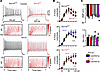 Figure 6
Hm1a improves the ability of RTN neurons in slices from control and Scn1a+/– mice to maintain repetitive firing behavior during sustained depolarization. (A) Segments of membrane potential and summary data plotted as spike discharge heatmaps (30-ms bins) from RTN neurons in slices from Scn1a+/+ (black, n = 8) and Scn1a+/– (red, n = 9) mice during depolarizing current injections (20 to 140 pA; 1-second duration) from a holding potential of –80 mV before and 10 minutes following bath application of Hm1a (50 μM). (B) Summary data plotted as mean ± SEM number of action potentials evoked by depolarizing current injection shows that under control conditions RTN neurons in slices from both genotypes have a diminished capacity to maintain firing during larger step depolarizations, with RTN neurons in slices from Scn1a+/– mice being significantly diminished compared with control during +120 pA steps. Hm1a improves sustained firing behavior of RTN neurons in slices from Scn1a+/– mice at +120 pA (F7,119 = 5.3) and +140 pA but not Scn1a+/+ neurons (F7,112 = 2.5, P = 0.48). Comparisons were made using 2-way ANOVA with Šídák’s multiple-comparison test. (C) Summary data (plotted as mean ± SEM) show that RTN neurons in slices from Scn1a+/+ and Scn1a+/– mice have similar resting membrane potential and input resistance (measured during –60 pA steps) under control conditions and during incubation in Hm1a. *P < 0.05, **P < 0.01.


