

Abstract
Spinal cord injury (SCI) evokes profound dysfunction in hollow organs such as the urinary bladder and gut. Current treatments are limited by a lack of molecular data to inform novel therapeutic avenues. Previously, we showed that systemic treatment with the neuroprotective agent inosine improved bladder function following SCI in rats. Here, we applied integrated multi-omics analysis to explore molecular alterations in the bladder over time and their sensitivity to inosine following SCI. Canonical signaling pathways regulated by SCI included those associated with protein synthesis, neuroplasticity, wound healing, and neurotransmitter degradation. Upstream regulator and causal network analysis predicted multiple effectors of DNA damage response signaling following injury, including poly-ADP ribose phosphorylase-1 (PARP1). Markers of DNA damage (γH2AX, ATM/ATR substrates) and PARP activity were increased in bladder tissue following SCI and attenuated with inosine treatment. Inosine treatment also attenuated oxidative DNA damage in rat bladder cells in vitro. Proteomics analysis suggested that SCI induced changes in protein synthesis–, neuroplasticity-, and oxidative stress–associated pathways, a subset of which were shown in transcriptomics data to be inosine sensitive. These findings provide insights into the molecular landscape of the bladder following SCI and identify key inosine-sensitive pathways associated with injury.
Authors
Ali Hashemi Gheinani, Bryan S. Sack, Alexander Bigger-Allen, Hatim Thaker, Hussein Atta, George Lambrinos, Kyle Costa, Claire Doyle, Mehrnaz Gharaee-Kermani, Susan Patalano, Mary Piper, Justin F. Cotellessa, Dijana Vitko, Haiying Li, Manubhai Kadayil Prabhakaran, Vivian Cristofaro, John Froehlich, Richard S. Lee, Wei Yang, Maryrose P. Sullivan, Jill A. Macoska, Rosalyn M. Adam
Abstract
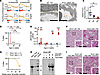
DNA repair is essential for preserving genome integrity. Podocytes, postmitotic epithelial cells of the kidney filtration unit, bear limited regenerative capacity, yet their survival is indispensable for kidney health. Podocyte loss is a hallmark of the aging process and of many diseases, but the underlying factors remain unclear. We investigated the consequences of DNA damage in a podocyte-specific knockout mouse model for DNA excision repair protein Ercc1 and in cultured podocytes under genomic stress. Furthermore, we characterized DNA damage-related alterations in mouse and human renal tissue of different ages and patients with minimal change disease and focal segmental glomerulosclerosis. Ercc1 knockout resulted in accumulation of DNA damage and ensuing albuminuria and kidney disease. Podocytes reacted to genomic stress by activating mTOR complex 1 (mTORC1) signaling in vitro and in vivo. This was abrogated by inhibiting DNA damage signaling through DNA-dependent protein kinase (DNA-PK) and ataxia teleangiectasia mutated (ATM) kinases, and inhibition of mTORC1 modulated the development of glomerulosclerosis. Perturbed DNA repair gene expression and genomic stress in podocytes were also detected in focal segmental glomerulosclerosis. Beyond that, DNA damage signaling occurred in podocytes of healthy aging mice and humans. We provide evidence that genome maintenance in podocytes is linked to the mTORC1 pathway and is involved in the aging process as well as the development of glomerulosclerosis.
Authors
Fabian Braun, Amrei M. Mandel, Linda Blomberg, Milagros N. Wong, Georgia Chatzinikolaou, David H. Meyer, Anna Reinelt, Viji Nair, Roman Akbar-Haase, Phillip J. McCown, Fabian Haas, He Chen, Mahdieh Rahmatollahi, Damian Fermin, Robin Ebbestad, Gisela G. Slaats, Tillmann Bork, Christoph Schell, Sybille Koehler, Paul T. Brinkkoetter, Maja T. Lindenmeyer, Clemens D. Cohen, Martin Kann, David Unnersjö-Jess, Wilhelm Bloch, Matthew G. Sampson, Martijn E.T. Dollé, Victor G. Puelles, Matthias Kretzler, George A. Garinis, Tobias B. Huber, Bernhard Schermer, Thomas Benzing, Björn Schumacher, Christine E. Kurschat

Abstract
JAK inhibitors (JAKi) are widely used antiinflammatory drugs. Recent data suggest that JAKi have superior effects on pain reduction in rheumatoid arthritis (RA). However, the underlying mechanisms for this observation are not fully understood. We investigated whether JAKi can act directly on human sensory neurons. We analyzed RNA-seq datasets of sensory neurons and found that they expressed JAK1 and STAT3. Addition of cell-free RA synovial fluid to human induced pluripotent stem cell–derived (iPSC-derived) sensory neurons led to phosphorylation of STAT3 (pSTAT3), which was completely blocked by the JAKi tofacitinib. Compared with paired serum, RA synovial fluid was enriched for the STAT3 signalling cytokines IL-6, IL-11, LIF, IFN-α, and IFN-β, with their requisite receptors present in peripheral nerves postmortem. Accordingly, these recombinant cytokines induced pSTAT3 in iPSC-derived sensory neurons. Furthermore, IL-6 + sIL-6R and LIF upregulated expression of pain-relevant genes with STAT3-binding sites, an effect that was blocked by tofacitinib. LIF also induced neuronal sensitization, highlighting this molecule as a putative pain mediator. Finally, over time, tofacitinib reduced the firing rate of sensory neurons stimulated with RA synovial fluid. Together, these data indicate that JAKi can act directly on human sensory neurons, providing a potential mechanistic explanation for their suggested superior analgesic properties.
Authors
Yuening Li, Elizabeth H. Gray, Rosie Ross, Irene Zebochin, Amy Lock, Laura Fedele, Louisa Janice Kamajaya, Rebecca J. Marrow, Sarah Ryan, Pascal Röderer, Oliver Brüstle, Susan John, Franziska Denk, Leonie S. Taams

Abstract
Benign prostatic hyperplasia (BPH) is the most common urologic condition in elderly men, characterized by the reactivation of developmental programs such as prostatic budding and branching. However, the molecular mechanisms underlying this reactivation in BPH remain unclear. In this study, we identified T-lymphoma invasion and metastasis-inducing protein-1 (TIAM1) as a critical regulator of prostatic budding and branching. By generating an unbiased BPH transcriptomic signature from patient datasets, we discovered an upregulation of TIAM1, which was subsequently validated at the protein level. Functional assays using organoid cultures derived from human prostatic cell lines revealed that TIAM1 is essential for prostatic budding and branching. Additionally, the BPH transcriptomic signature identified NSC23766, a small molecule inhibitor of TIAM1/RAC1 signaling, as a therapeutic proof-of-concept agent for BPH. Genetic knockdown of TIAM1 in human prostatic cell lines markedly reduced organoid branching, an effect mirrored by administration of NSC23766. The translational relevance of these findings is underscored by the growth inhibition observed in patient-derived BPH organoids treated with NSC23766. In conclusion, our findings identify TIAM1 as a key driver of prostatic branching and growth, and they suggest that targeting TIAM1/RAC1 signaling could be a promising therapeutic strategy for BPH.
Authors
Hamed Khedmatgozar, Sayanika Dutta, Michael Dominguez, Murugananthkumar Raju, Girijesh Kumar Patel, Daniel Latour, Melanie K. Johnson, Mohamed Fokar, Irfan Warraich, Allan Haynes Jr., Barry J. Maurer, Werner de Riese, Luis Brandi, Robert J. Matusik, Srinivas Nandana, Manisha Tripathi

Abstract
Dysregulation of T follicular helper (Tfh) and T follicular regulatory (Tfr) cell homeostasis in germinal centers (GCs) can lead to antibody-mediated autoimmunity. While IL-1β modulates the GC response via IL-1R1 and IL-1R2 receptors on follicular T cells in animal models, its role in humans remains unclear. We analyzed Tfh and Tfr phenotypes in human secondary lymphoid organs (tonsils, spleen, and mesenteric lymph nodes) using flow cytometry, single-cell transcriptomics, and in vitro culture, comparing findings with samples from autoimmune patients. We observed organ-specific Tfh/Tfr phenotypes according to activation status and IL-1 receptor expression. An excess of IL-1R1 over IL-1R2 expression promoted a unique activated Tfr subset with Treg and GC-Tfh features. IL-1β signaling via IL-1R1 enhanced follicular T cell activation and Tfh-to-Tfr differentiation, while IL-1β inhibition upregulated IL-1R1, indicating a tightly regulated process. In autoimmune patients, high IL-1β and circulating Tfr levels correlated with increased autoantibody production, linking inflammation, IL-1β signaling, and Tfr/Tfh balance. Our findings highlight the critical role of IL-1β in follicular T cell activation and suggest that targeting IL-1β signaling in Tfh and Tfr cells could be a promising strategy for treating antibody-mediated autoimmune diseases.
Authors
Romain Vaineau, Raphaël Jeger-Madiot, Samir Ali-Moussa, Laura Prudhomme, Hippolyte Debarnot, Nicolas Coatnoan, Johanna Dubois, Marie Binvignat, Hélène Vantomme, Bruno Gouritin, Gwladys Fourcade, Paul Engeroff, Aude Belbézier, Romain Luscan, Françoise Denoyelle, Roberta Lorenzon, Claire Ribet, Michelle Rosenzwajg, Bertrand Bellier, David Klatzmann, Nicolas Tchitchek, Stéphanie Graff-Dubois

Abstract
Many chemotherapeutic agents impair cancer growth by inducing DNA damage. The impact of these agents on mutagenesis in normal cells, including sperm, is largely unknown. Here, we applied high-fidelity duplex sequencing to 94 samples from 36 individuals exposed to diverse chemotherapies and 32 controls. We found that in many of the sperm samples from men exposed to chemotherapy, the mutation burden was elevated as compared with controls and the expected burden based on trio studies, with 1 patient having a more than 10-fold increase over that expected for age. Saliva from this same individual also had a markedly higher mutation burden. We then validated this finding using other tissues, also finding an increased mutation burden in the blood and liver of many patients exposed to chemotherapy as compared with unexposed controls. Similarly, mice treated with 3 cycles of cisplatin had an increased mutation burden in sperm but also in the liver and hematopoietic progenitor cells. These results suggest an association between cancer therapies and mutation burden, with implications for counseling patients with cancer considering banking sperm before therapy and for cancer survivors considering the trade-offs of using banked sperm as compared with conceiving naturally.
Authors
Shany Picciotto, Camilo Arenas-Gallo, Amos Toren, Ruty Mehrian-Shai, Bryan Daly, Stephen Rhodes, Megan Prunty, Ruolin Liu, Anyull Bohorquez, Marta Grońska-Pęski, Shana Melanaphy, Pamela Callum, Emilie Lassen, Anne-Bine Skytte, Rebecca C. Obeng, Christopher Barbieri, Molly Gallogly, Brenda Cooper, Katherine Daunov, Lydia Beard, Koen van Besien, Joshua Halpern, Quintin Pan, Gilad D. Evrony, Viktor A. Adalsteinsson, Jonathan E. Shoag
Abstract
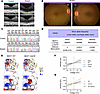
Inherited retinal degenerations (IRDs) are important causes of progressive, irreversible blindness. Hereditary macular diseases, in particular, are significant in their effect on the specialized, central cone photoreceptor–rich macula responsible for high resolution vision. Autosomal dominant Best vitelliform macular dystrophy (BVMD), caused by variants in the BEST1 gene, is one of the most common inherited macular dystrophies. Gene therapies have emerged as promising treatments for IRDs, but a lack of suitable animal models has hindered progress both in treatments and in understanding the mechanisms underlying macular diseases. Here, we report a Macaca fascicularis carrying a heterozygous potential pathogenic BEST1p.Q327E variant that disrupts the BEST1 ion channel by destabilizing the A195 helix, mirroring the structural perturbations seen in certain human pathological mutants. Longitudinal imaging over 2 years revealed progressive macular changes, including subfoveal cleft enlargement, lipid-rich deposit accumulation, retinal pigment epithelium (RPE) disruption, and central-to-peripheral photoreceptor degeneration, recapitulating early human BVMD pathology. Histopathology demonstrated diminished BEST1 expression, attenuation of the RPE-photoreceptor interface, and 2 distinct types of lipid deposits, including heretofore unappreciated cone mitochondrial-enriched lesions, highlighting selective cone mitochondria vulnerability. This is, to our knowledge, the first nonhuman primate model of inherited macular dystrophy, and it links BEST1 mutations, mitochondrial dysfunction, and progressive macular degeneration, offering new insights into BVMD pathophysiology and highlighting its utility for studying disease progression and potential therapeutic interventions.
Authors
Wei Yi, Mingming Xu, Ying Xue, Yingxue Cao, Ziqi Yang, Lingli Zhou, Yang Zhou, Le Shi, Xiaomei Mai, Zehui Sun, Wenjie Qing, Yuying Li, Aolun Qing, Kaiwen Zhang, Lechun Ou, Shoudeng Chen, Elia J. Duh, Xialin Liu

Abstract
Proprotein convertase subtilisin/kexin type 9 (PCSK9) induces the hepatic degradation of the low-density lipoprotein receptor (LDLR), thereby increasing the concentration of LDL-cholesterol in the blood. Beyond its effects on LDL, recent studies have reported pleiotropic effects of PCSK9, notably in septic shock, vascular inflammation, viral infection, and cancer. While the functional and structural integrity of peripheral nerves are critically influenced by circulating lipids, the effect of PCSK9 on the peripheral nervous system remains unknown. In this study, we investigated the consequences of PCSK9 deficiency on peripheral nerves. We found that PCSK9 deletion in mice leads to peripheral neuropathy, characterized by reduced thermal and mechanical pain sensations. PCSK9-deficient mice also presented with skin structural changes, including a reduction in nociceptive Schwann cell number, axonal swelling of Remak fibers, and hypomyelination of small nerve fibers. Interestingly, the peripheral nerves of PCSK9-deficient mice showed an upregulation of CD36, a fatty acid transporter, which correlated with increased nerve lipid content, structural mitochondrial abnormalities, and acylcarnitine accumulation. Our findings demonstrate that PCSK9 plays a critical role in peripheral nerves by regulating lipid homeostasis and that its deficiency results in symptoms related to peripheral neuropathy.
Authors
Ali K. Jaafar, Aurélie Paulo-Ramos, Guillaume Rastoldo, Bryan Veeren, Cynthia Planesse, Matthieu Bringart, Philippe Rondeau, Kévin Chemello, Olivier Meilhac, Gilles C. Lambert, Steeve Bourane
Abstract
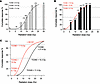
Single-dose radiotherapy (SDRT) is a highly curative modality that may transform radiotherapy practice. Unfortunately, only ~50% of oligometastatic lesions are SDRT treatable due to adjacent radiosensitive normal organs at risk. Here, we address the extent to which an antiangiogenic drug, VEGFR2-antagonist DC101, radiosensitizes SDRT using murine MCA/129 fibrosarcomas and Lewis lung carcinomas, which display a dose range for SDRT lesional eradication virtually identical to that employed clinically (10–30 Gy). SDRT induces unique tumor cure, stimulating rapid endothelial acid sphingomyelinase (ASMase)/ceramide signaling that yields marked vasoconstriction and perfusion defects in tumor xenografts and human oligometastases. Ensuing tumor parenchymal oxidative damage initiates a SUMO stress response (SSR), which inactivates multiple homologous recombination repair enzymes, radiosensitizing all tumor types. While VEGF inhibits neo-angiogenic ASMase, optimal radiosensitization occurs only upon antiangiogenic drug delivery at ~1 hour preceding SDRT. Obeying these principles, we find DC101 radiosensitizes SSR, DNA double-strand break unrepair, and tumor cure by 4–8 Gy at all clinically relevant doses. Critically, DC101 fails to sensitize small intestinal endothelial injury or lethality from the gastrointestinal–acute radiation syndrome. Whereas normal tissues appear not to be under VEGF regulation nor sensitized by our approach, its application might render many currently intractable oligometastatic lesions susceptible to SDRT eradication.
Authors
Jin Cheng, Liyang Zhao, Sahra Bodo, Prashanth K.B. Nagesh, Rajvir Singh, Adam O. Michel, Regina Feldman, Zhigang Zhang, Simon Powell, Zvi Fuks, Richard Kolesnick
Abstract
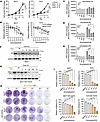
Estrogen receptor α (ER) is a critical driver of tumorigenesis and tumor progression in most breast cancers. Endocrine therapies (ET) targeting ER are central to treating hormone receptor–positive breast cancer, but resistance poses a clinical challenge. Some resistance mechanisms, particularly those involving estrogen-independent activity such as the ESR1 mutations, rely on ER signaling, supporting the need for next-generation ET. We investigated the preclinical efficacy of imlunestrant, an oral selective ER degrader, in ER-positive breast cancer preclinical models, including models harboring the Y537S ESR1 mutation, an activating mutation. Imlunestrant demonstrated antagonistic activity and effective degradation of both WT and mutant ER, resulting in cell growth suppression. In vivo, imlunestrant outperformed fulvestrant, leading to tumor regression in a patient-derived xenograft harboring the Y537S ESR1 mutation. Cyclic mutiplexed immunofluorescence and transcriptomic analysis revealed enhanced cell cycle arrest and downregulation of estrogen-responsive genes with imlunestrant treatment. Additionally, a genome-wide CRISPR knock–out screen identified several vulnerabilities that were either persistent or acquired after imlunestrant treatment, providing a rationale for future studies of combination treatments with imlunestrant. Collectively, these results highlight the on-target and selective activity of imlunestrant, which can circumvent resistance engendered by the Y537S ESR1 mutation.
Authors
Shira Sherman, Zachary M. Sandusky, Douglas Russo, David Zak, Agostina Nardone, Delia Friel, Francisco Hermida-Prado, Capucine Heraud, Genevra Kuziel, Ana Verma, Giorgio Gaglia, Sheheryar Kabraji, Quang-De Nguyen, Sandro Santagata, Sean W. Fanning, Rinath Jeselsohn
No posts were found with this tag.


