
Research ArticleGeneticsOphthalmology
Open Access |  10.1172/jci.insight.190807
A spontaneous nonhuman primate model of inherited retinal degeneration
Wei Yi,1 Mingming Xu,1 Ying Xue,1,2 Yingxue Cao,1,3 Ziqi Yang,1 Lingli Zhou,1,3 Yang Zhou,1 Le Shi,1,3 Xiaomei Mai,1 Zehui Sun,1 Wenjie Qing,1 Yuying Li,1 Aolun Qing,1 Kaiwen Zhang,1 Lechun Ou,1 Shoudeng Chen,4 Elia J. Duh,3 and Xialin Liu1
1State Key Laboratory of Ophthalmology, Zhongshan Ophthalmic Center, Sun Yat-sen University, Guangdong Provincial Key Laboratory of Ophthalmology and Visual Science, Guangzhou, China.
2Department of Ophthalmology, Affiliated Hospital of Nantong University, Nantong, China.
3Department of Ophthalmology, Johns Hopkins School of Medicine, Baltimore, Maryland, USA.
4Central Laboratory, the Fifth Affiliated Hospital, Sun Yat-sen University, Zhuhai, Guangdong, China.
Address correspondence to: Xialin Liu, Zhongshan Ophthalmic Center, Tianhe District, Guangzhou 510060, China. Email: liuxl28@mail.sysu.edu.cn. Or to: Elia J. Duh, 400 N. Broadway, Baltimore, MD 21287, U.S.A. Email: eduh@jhmi.edu. Or to: Wei Yi, Email: yiwei7@mail.sysu.edu.cn.
Authorship note: WY, MX, and YX contributed equally to this work.
Find articles by Yi, W. in: PubMed | Google Scholar
1State Key Laboratory of Ophthalmology, Zhongshan Ophthalmic Center, Sun Yat-sen University, Guangdong Provincial Key Laboratory of Ophthalmology and Visual Science, Guangzhou, China.
2Department of Ophthalmology, Affiliated Hospital of Nantong University, Nantong, China.
3Department of Ophthalmology, Johns Hopkins School of Medicine, Baltimore, Maryland, USA.
4Central Laboratory, the Fifth Affiliated Hospital, Sun Yat-sen University, Zhuhai, Guangdong, China.
Address correspondence to: Xialin Liu, Zhongshan Ophthalmic Center, Tianhe District, Guangzhou 510060, China. Email: liuxl28@mail.sysu.edu.cn. Or to: Elia J. Duh, 400 N. Broadway, Baltimore, MD 21287, U.S.A. Email: eduh@jhmi.edu. Or to: Wei Yi, Email: yiwei7@mail.sysu.edu.cn.
Authorship note: WY, MX, and YX contributed equally to this work.
Find articles by Xu, M. in: PubMed | Google Scholar
1State Key Laboratory of Ophthalmology, Zhongshan Ophthalmic Center, Sun Yat-sen University, Guangdong Provincial Key Laboratory of Ophthalmology and Visual Science, Guangzhou, China.
2Department of Ophthalmology, Affiliated Hospital of Nantong University, Nantong, China.
3Department of Ophthalmology, Johns Hopkins School of Medicine, Baltimore, Maryland, USA.
4Central Laboratory, the Fifth Affiliated Hospital, Sun Yat-sen University, Zhuhai, Guangdong, China.
Address correspondence to: Xialin Liu, Zhongshan Ophthalmic Center, Tianhe District, Guangzhou 510060, China. Email: liuxl28@mail.sysu.edu.cn. Or to: Elia J. Duh, 400 N. Broadway, Baltimore, MD 21287, U.S.A. Email: eduh@jhmi.edu. Or to: Wei Yi, Email: yiwei7@mail.sysu.edu.cn.
Authorship note: WY, MX, and YX contributed equally to this work.
Find articles by Xue, Y. in: PubMed | Google Scholar
1State Key Laboratory of Ophthalmology, Zhongshan Ophthalmic Center, Sun Yat-sen University, Guangdong Provincial Key Laboratory of Ophthalmology and Visual Science, Guangzhou, China.
2Department of Ophthalmology, Affiliated Hospital of Nantong University, Nantong, China.
3Department of Ophthalmology, Johns Hopkins School of Medicine, Baltimore, Maryland, USA.
4Central Laboratory, the Fifth Affiliated Hospital, Sun Yat-sen University, Zhuhai, Guangdong, China.
Address correspondence to: Xialin Liu, Zhongshan Ophthalmic Center, Tianhe District, Guangzhou 510060, China. Email: liuxl28@mail.sysu.edu.cn. Or to: Elia J. Duh, 400 N. Broadway, Baltimore, MD 21287, U.S.A. Email: eduh@jhmi.edu. Or to: Wei Yi, Email: yiwei7@mail.sysu.edu.cn.
Authorship note: WY, MX, and YX contributed equally to this work.
Find articles by Cao, Y. in: PubMed | Google Scholar
1State Key Laboratory of Ophthalmology, Zhongshan Ophthalmic Center, Sun Yat-sen University, Guangdong Provincial Key Laboratory of Ophthalmology and Visual Science, Guangzhou, China.
2Department of Ophthalmology, Affiliated Hospital of Nantong University, Nantong, China.
3Department of Ophthalmology, Johns Hopkins School of Medicine, Baltimore, Maryland, USA.
4Central Laboratory, the Fifth Affiliated Hospital, Sun Yat-sen University, Zhuhai, Guangdong, China.
Address correspondence to: Xialin Liu, Zhongshan Ophthalmic Center, Tianhe District, Guangzhou 510060, China. Email: liuxl28@mail.sysu.edu.cn. Or to: Elia J. Duh, 400 N. Broadway, Baltimore, MD 21287, U.S.A. Email: eduh@jhmi.edu. Or to: Wei Yi, Email: yiwei7@mail.sysu.edu.cn.
Authorship note: WY, MX, and YX contributed equally to this work.
Find articles by Yang, Z. in: PubMed | Google Scholar
1State Key Laboratory of Ophthalmology, Zhongshan Ophthalmic Center, Sun Yat-sen University, Guangdong Provincial Key Laboratory of Ophthalmology and Visual Science, Guangzhou, China.
2Department of Ophthalmology, Affiliated Hospital of Nantong University, Nantong, China.
3Department of Ophthalmology, Johns Hopkins School of Medicine, Baltimore, Maryland, USA.
4Central Laboratory, the Fifth Affiliated Hospital, Sun Yat-sen University, Zhuhai, Guangdong, China.
Address correspondence to: Xialin Liu, Zhongshan Ophthalmic Center, Tianhe District, Guangzhou 510060, China. Email: liuxl28@mail.sysu.edu.cn. Or to: Elia J. Duh, 400 N. Broadway, Baltimore, MD 21287, U.S.A. Email: eduh@jhmi.edu. Or to: Wei Yi, Email: yiwei7@mail.sysu.edu.cn.
Authorship note: WY, MX, and YX contributed equally to this work.
Find articles by
Zhou, L.
in:
PubMed
|
Google Scholar
|

1State Key Laboratory of Ophthalmology, Zhongshan Ophthalmic Center, Sun Yat-sen University, Guangdong Provincial Key Laboratory of Ophthalmology and Visual Science, Guangzhou, China.
2Department of Ophthalmology, Affiliated Hospital of Nantong University, Nantong, China.
3Department of Ophthalmology, Johns Hopkins School of Medicine, Baltimore, Maryland, USA.
4Central Laboratory, the Fifth Affiliated Hospital, Sun Yat-sen University, Zhuhai, Guangdong, China.
Address correspondence to: Xialin Liu, Zhongshan Ophthalmic Center, Tianhe District, Guangzhou 510060, China. Email: liuxl28@mail.sysu.edu.cn. Or to: Elia J. Duh, 400 N. Broadway, Baltimore, MD 21287, U.S.A. Email: eduh@jhmi.edu. Or to: Wei Yi, Email: yiwei7@mail.sysu.edu.cn.
Authorship note: WY, MX, and YX contributed equally to this work.
Find articles by Zhou, Y. in: PubMed | Google Scholar
1State Key Laboratory of Ophthalmology, Zhongshan Ophthalmic Center, Sun Yat-sen University, Guangdong Provincial Key Laboratory of Ophthalmology and Visual Science, Guangzhou, China.
2Department of Ophthalmology, Affiliated Hospital of Nantong University, Nantong, China.
3Department of Ophthalmology, Johns Hopkins School of Medicine, Baltimore, Maryland, USA.
4Central Laboratory, the Fifth Affiliated Hospital, Sun Yat-sen University, Zhuhai, Guangdong, China.
Address correspondence to: Xialin Liu, Zhongshan Ophthalmic Center, Tianhe District, Guangzhou 510060, China. Email: liuxl28@mail.sysu.edu.cn. Or to: Elia J. Duh, 400 N. Broadway, Baltimore, MD 21287, U.S.A. Email: eduh@jhmi.edu. Or to: Wei Yi, Email: yiwei7@mail.sysu.edu.cn.
Authorship note: WY, MX, and YX contributed equally to this work.
Find articles by Shi, L. in: PubMed | Google Scholar
1State Key Laboratory of Ophthalmology, Zhongshan Ophthalmic Center, Sun Yat-sen University, Guangdong Provincial Key Laboratory of Ophthalmology and Visual Science, Guangzhou, China.
2Department of Ophthalmology, Affiliated Hospital of Nantong University, Nantong, China.
3Department of Ophthalmology, Johns Hopkins School of Medicine, Baltimore, Maryland, USA.
4Central Laboratory, the Fifth Affiliated Hospital, Sun Yat-sen University, Zhuhai, Guangdong, China.
Address correspondence to: Xialin Liu, Zhongshan Ophthalmic Center, Tianhe District, Guangzhou 510060, China. Email: liuxl28@mail.sysu.edu.cn. Or to: Elia J. Duh, 400 N. Broadway, Baltimore, MD 21287, U.S.A. Email: eduh@jhmi.edu. Or to: Wei Yi, Email: yiwei7@mail.sysu.edu.cn.
Authorship note: WY, MX, and YX contributed equally to this work.
Find articles by Mai, X. in: PubMed | Google Scholar
1State Key Laboratory of Ophthalmology, Zhongshan Ophthalmic Center, Sun Yat-sen University, Guangdong Provincial Key Laboratory of Ophthalmology and Visual Science, Guangzhou, China.
2Department of Ophthalmology, Affiliated Hospital of Nantong University, Nantong, China.
3Department of Ophthalmology, Johns Hopkins School of Medicine, Baltimore, Maryland, USA.
4Central Laboratory, the Fifth Affiliated Hospital, Sun Yat-sen University, Zhuhai, Guangdong, China.
Address correspondence to: Xialin Liu, Zhongshan Ophthalmic Center, Tianhe District, Guangzhou 510060, China. Email: liuxl28@mail.sysu.edu.cn. Or to: Elia J. Duh, 400 N. Broadway, Baltimore, MD 21287, U.S.A. Email: eduh@jhmi.edu. Or to: Wei Yi, Email: yiwei7@mail.sysu.edu.cn.
Authorship note: WY, MX, and YX contributed equally to this work.
Find articles by
Sun, Z.
in:
PubMed
|
Google Scholar
|
1State Key Laboratory of Ophthalmology, Zhongshan Ophthalmic Center, Sun Yat-sen University, Guangdong Provincial Key Laboratory of Ophthalmology and Visual Science, Guangzhou, China.
2Department of Ophthalmology, Affiliated Hospital of Nantong University, Nantong, China.
3Department of Ophthalmology, Johns Hopkins School of Medicine, Baltimore, Maryland, USA.
4Central Laboratory, the Fifth Affiliated Hospital, Sun Yat-sen University, Zhuhai, Guangdong, China.
Address correspondence to: Xialin Liu, Zhongshan Ophthalmic Center, Tianhe District, Guangzhou 510060, China. Email: liuxl28@mail.sysu.edu.cn. Or to: Elia J. Duh, 400 N. Broadway, Baltimore, MD 21287, U.S.A. Email: eduh@jhmi.edu. Or to: Wei Yi, Email: yiwei7@mail.sysu.edu.cn.
Authorship note: WY, MX, and YX contributed equally to this work.
Find articles by Qing, W. in: PubMed | Google Scholar
1State Key Laboratory of Ophthalmology, Zhongshan Ophthalmic Center, Sun Yat-sen University, Guangdong Provincial Key Laboratory of Ophthalmology and Visual Science, Guangzhou, China.
2Department of Ophthalmology, Affiliated Hospital of Nantong University, Nantong, China.
3Department of Ophthalmology, Johns Hopkins School of Medicine, Baltimore, Maryland, USA.
4Central Laboratory, the Fifth Affiliated Hospital, Sun Yat-sen University, Zhuhai, Guangdong, China.
Address correspondence to: Xialin Liu, Zhongshan Ophthalmic Center, Tianhe District, Guangzhou 510060, China. Email: liuxl28@mail.sysu.edu.cn. Or to: Elia J. Duh, 400 N. Broadway, Baltimore, MD 21287, U.S.A. Email: eduh@jhmi.edu. Or to: Wei Yi, Email: yiwei7@mail.sysu.edu.cn.
Authorship note: WY, MX, and YX contributed equally to this work.
Find articles by Li, Y. in: PubMed | Google Scholar
1State Key Laboratory of Ophthalmology, Zhongshan Ophthalmic Center, Sun Yat-sen University, Guangdong Provincial Key Laboratory of Ophthalmology and Visual Science, Guangzhou, China.
2Department of Ophthalmology, Affiliated Hospital of Nantong University, Nantong, China.
3Department of Ophthalmology, Johns Hopkins School of Medicine, Baltimore, Maryland, USA.
4Central Laboratory, the Fifth Affiliated Hospital, Sun Yat-sen University, Zhuhai, Guangdong, China.
Address correspondence to: Xialin Liu, Zhongshan Ophthalmic Center, Tianhe District, Guangzhou 510060, China. Email: liuxl28@mail.sysu.edu.cn. Or to: Elia J. Duh, 400 N. Broadway, Baltimore, MD 21287, U.S.A. Email: eduh@jhmi.edu. Or to: Wei Yi, Email: yiwei7@mail.sysu.edu.cn.
Authorship note: WY, MX, and YX contributed equally to this work.
Find articles by Qing, A. in: PubMed | Google Scholar
1State Key Laboratory of Ophthalmology, Zhongshan Ophthalmic Center, Sun Yat-sen University, Guangdong Provincial Key Laboratory of Ophthalmology and Visual Science, Guangzhou, China.
2Department of Ophthalmology, Affiliated Hospital of Nantong University, Nantong, China.
3Department of Ophthalmology, Johns Hopkins School of Medicine, Baltimore, Maryland, USA.
4Central Laboratory, the Fifth Affiliated Hospital, Sun Yat-sen University, Zhuhai, Guangdong, China.
Address correspondence to: Xialin Liu, Zhongshan Ophthalmic Center, Tianhe District, Guangzhou 510060, China. Email: liuxl28@mail.sysu.edu.cn. Or to: Elia J. Duh, 400 N. Broadway, Baltimore, MD 21287, U.S.A. Email: eduh@jhmi.edu. Or to: Wei Yi, Email: yiwei7@mail.sysu.edu.cn.
Authorship note: WY, MX, and YX contributed equally to this work.
Find articles by Zhang, K. in: PubMed | Google Scholar
1State Key Laboratory of Ophthalmology, Zhongshan Ophthalmic Center, Sun Yat-sen University, Guangdong Provincial Key Laboratory of Ophthalmology and Visual Science, Guangzhou, China.
2Department of Ophthalmology, Affiliated Hospital of Nantong University, Nantong, China.
3Department of Ophthalmology, Johns Hopkins School of Medicine, Baltimore, Maryland, USA.
4Central Laboratory, the Fifth Affiliated Hospital, Sun Yat-sen University, Zhuhai, Guangdong, China.
Address correspondence to: Xialin Liu, Zhongshan Ophthalmic Center, Tianhe District, Guangzhou 510060, China. Email: liuxl28@mail.sysu.edu.cn. Or to: Elia J. Duh, 400 N. Broadway, Baltimore, MD 21287, U.S.A. Email: eduh@jhmi.edu. Or to: Wei Yi, Email: yiwei7@mail.sysu.edu.cn.
Authorship note: WY, MX, and YX contributed equally to this work.
Find articles by Ou, L. in: PubMed | Google Scholar
1State Key Laboratory of Ophthalmology, Zhongshan Ophthalmic Center, Sun Yat-sen University, Guangdong Provincial Key Laboratory of Ophthalmology and Visual Science, Guangzhou, China.
2Department of Ophthalmology, Affiliated Hospital of Nantong University, Nantong, China.
3Department of Ophthalmology, Johns Hopkins School of Medicine, Baltimore, Maryland, USA.
4Central Laboratory, the Fifth Affiliated Hospital, Sun Yat-sen University, Zhuhai, Guangdong, China.
Address correspondence to: Xialin Liu, Zhongshan Ophthalmic Center, Tianhe District, Guangzhou 510060, China. Email: liuxl28@mail.sysu.edu.cn. Or to: Elia J. Duh, 400 N. Broadway, Baltimore, MD 21287, U.S.A. Email: eduh@jhmi.edu. Or to: Wei Yi, Email: yiwei7@mail.sysu.edu.cn.
Authorship note: WY, MX, and YX contributed equally to this work.
Find articles by Chen, S. in: PubMed | Google Scholar
1State Key Laboratory of Ophthalmology, Zhongshan Ophthalmic Center, Sun Yat-sen University, Guangdong Provincial Key Laboratory of Ophthalmology and Visual Science, Guangzhou, China.
2Department of Ophthalmology, Affiliated Hospital of Nantong University, Nantong, China.
3Department of Ophthalmology, Johns Hopkins School of Medicine, Baltimore, Maryland, USA.
4Central Laboratory, the Fifth Affiliated Hospital, Sun Yat-sen University, Zhuhai, Guangdong, China.
Address correspondence to: Xialin Liu, Zhongshan Ophthalmic Center, Tianhe District, Guangzhou 510060, China. Email: liuxl28@mail.sysu.edu.cn. Or to: Elia J. Duh, 400 N. Broadway, Baltimore, MD 21287, U.S.A. Email: eduh@jhmi.edu. Or to: Wei Yi, Email: yiwei7@mail.sysu.edu.cn.
Authorship note: WY, MX, and YX contributed equally to this work.
Find articles by Duh, E. in: PubMed | Google Scholar
1State Key Laboratory of Ophthalmology, Zhongshan Ophthalmic Center, Sun Yat-sen University, Guangdong Provincial Key Laboratory of Ophthalmology and Visual Science, Guangzhou, China.
2Department of Ophthalmology, Affiliated Hospital of Nantong University, Nantong, China.
3Department of Ophthalmology, Johns Hopkins School of Medicine, Baltimore, Maryland, USA.
4Central Laboratory, the Fifth Affiliated Hospital, Sun Yat-sen University, Zhuhai, Guangdong, China.
Address correspondence to: Xialin Liu, Zhongshan Ophthalmic Center, Tianhe District, Guangzhou 510060, China. Email: liuxl28@mail.sysu.edu.cn. Or to: Elia J. Duh, 400 N. Broadway, Baltimore, MD 21287, U.S.A. Email: eduh@jhmi.edu. Or to: Wei Yi, Email: yiwei7@mail.sysu.edu.cn.
Authorship note: WY, MX, and YX contributed equally to this work.
Find articles by Liu, X. in: PubMed | Google Scholar
Published May 6, 2025 - More info
JCI Insight. 2025;10(12):e190807. https://doi.org/10.1172/jci.insight.190807.
© 2025 Yi et al. This work is licensed under the Creative Commons Attribution 4.0 International License. To view a copy of this license, visit http://creativecommons.org/licenses/by/4.0/.
Received: January 2, 2025; Accepted: May 1, 2025

-
Results
Identification of a macaque with a heterozygous deleterious BEST1p.Q327E variant. In a previous population screening of a Macaca fascicularis (crab-eating macaque) cohort from South China that included fundus photography and SD-OCT examination (16), we identified a 6.8-year-old male (approximately in late adolescence) exhibiting macular abnormalities. SD-OCT imaging revealed an enlarged subfoveal cleft and reduced reflectivity in the foveal outer retinal layers (Figure 1A), despite otherwise normal findings on color fundus photography (Figure 1B).
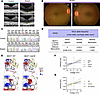 Figure 1
Identification of a macaque with a heterozygous deleterious BEST1p.Q327E variant. (A) SD-OCT imaging reveals a small subfoveal cleft (as indicated by the yellow arrow) in the abnormal animal (6.8 years old), compared with the age-matched normal macaque (6.8 years old). (B) Fundus images from the mutant macaque did not show significant pathologic changes, including vitelliform lesion. (C) Sanger sequencing showed that the abnormal Macaca fascicularis carries a heterozygous BEST1p.Q327E variant. (D) The allele frequency of the BEST1:c.C979G: p.Q327E variant in Homo sapiens, Macaca mulatta, and Macaca fascicularis. (E) Structural modeling of the human Bestrophin-1 (hBest1) pentamer structure (PDB: 8D1K) showed that substitution of the glutamine (Q) side chain to glutamic acid (E) increases negative charge and enhances its electrostatic interactions with the main chain of K194 in the adjacent protomer. Q327/E327 in protomer 1 and adjacent protomer 5 are showcased with a protein electrostatic potential rendering, ranging from red (–50) to blue (50). (F) Current-voltage relationship of HEK293T cells transiently expressing WT or BEST1 variants, measured by whole-cell patch clamping for calcium-activated chloride ion conductance. The Q327E and A195V exhibited smaller currents compared with the WT. The mock group transfected with empty vectors showed the lowest current signal. Data are presented as mean ± SEM. n = 6–9. P < 0.001 for both Q327E and A195V, compared with WT mfBest1. P values were calculated using 2-way ANOVA. (G) Cotransfection of Q327E and WT BEST1 plasmids in a 1:1 ratio significantly reduced the current from WT BEST1. Data are presented as mean ± SEM. n = 6–10. P < 0.001 for Q327E+WT compared with WT mfBest1. P values were calculated using 2-way ANOVA.
We conjectured that this young individual might represent an early-stage case of inherited macular dystrophy. We therefore conducted whole-genome sequencing of the abnormal animal, along with 29 randomly selected individuals from the macaque cohort. Our analysis focused on the single nucleotide variants (SNVs) in genes associated with inherited macular dystrophies, including BEST1, ABCA4, EFEMP1, ELOVL4, IMPG1, PROML1, PRPH2, RS1, and TIMP3 (17, 18). Notably, a heterozygous BEST1p.Q327E variant was exclusively detected in the abnormal animal. Sanger sequencing further validated the presence of this variant (Figure 1C). This mutation substitutes glutamine (Q) with glutamic acid (E) at residue 327. The high conservation of the Q327 residue across vertebrates underscores its critical role in BEST1 function (Supplemental Figure 1A; supplemental material available online with this article; https://doi.org/10.1172/jci.insight.190807DS1).
The BEST1p.Q327E variant has not been previously reported in human patient databases such as Clinvar and The Human Gene Mutation Database (HGMD). To determine its potential pathogenicity, we examined allele frequency (AF) in the population. According to American College of Medical Genetics and Genomics (ACMG) guidelines for interpreting sequence variants in inherited Mendelian diseases, an AF < 0.05 is considered a critical threshold for identifying potentially pathogenic variants. A recent study profiling the pathogenicity of SNVs in rhesus macaque cohorts suggests an AF of 0.038 in the rhesus macaque population (mCED database) and 5.1 × 10⁻³ in the human population (gnomAD database) as stringent cutoffs (19). The AF of BEST1p.Q327E is 0 in gnomAD and 0.00137 in mCED (Figure 1D), both well below the established cutoffs. Additional Sanger sequencing of 100 randomly selected crab-eating macaques from the population revealed no other individuals carrying the BEST1p.Q327E variant, resulting in an AF of 0.0038 (Figure 1D). These findings support the classification of BEST1p.Q327E as a rare, putative pathogenic variant.
To explore the potential functional consequence of Q327E, we performed in silico structural modeling based on the crystallographic structure of human BEST1 (20). The substitution of the glutamine side chain to glutamic acid increases a negative charge, enhancing its electrostatic interactions with the backbone of K194 in the adjacent protomer (Figure 1E). This alteration could potentially cause the helix spanning residues 194–195 to shift away from the ion trafficking center, which affect the aperture conformation of the BEST1 ion channel. We investigated whether known human Best mutations could induce similar disruptions in the stability of the A195 helix. Interestingly, our structural modeling revealed that several previously reported pathogenic mutants of human Best disease, specifically A195V, M325H, and I201T (21–23), could have a similar impact (Supplemental Figure 1, B–E).
In silico predictions suggested that the Q327E variant could impair channel function. To validate this hypothesis, we conducted whole-cell patch to assess calcium-activated chloride ion conductance in HEK293T cells transiently expressing WT or BEST1 variants, including Q327E and A195V. Compared with the robust chloride ion conductance observed with WT BEST1, both the Q327E and A195V nearly abolished chloride ion currents (Figure 1F). Cotransfection of Q327E and WT BEST1 plasmids in a 1:1 ratio significantly reduced the current from WT BEST1 (Figure 1G), confirming that the heterozygous BEST1 Q327E mutation is sufficient to impair overall BEST1 channel function, consistent with the dominant inheritance pattern. These findings demonstrate that this animal carries a deleterious BEST1p.Q327E variant.
Progressive clinical phenotypes of stage 1 BVMD in the mutant macaque. Human BEST1 mutations are associated with diverse clinical presentations of BVMD. In the previtelliform stage (Stage 1), patients often present with a normal fundus or subtle alterations in the RPE. Patients may progress to Stage 2 with characteristic vitelliform deposits at different ages, from early adolescence to over 50 years of age (6, 24, 25). Recent advances in high-resolution SD-OCT imaging have identified early-stage changes, including subretinal material accumulation, alterations of the RPE and inner/outer segment (IS/OS) junctions, and macular retinal thickness, even in the absence of overt vitelliform lesions (25–28).
We next conducted longitudinal SD-OCT examination of the Q327E mutant macaque over two years, revealing progressive structural changes consistent with early BVMD. Subfoveal cleft enlargement and accumulation of subretinal deposits were observed (Figure 2A). The cleft area increased during the first year and further expanded during the second year in the right eye (Figure 2B). Foveal retinal thickness decreased in both eyes over two years (Figure 2C), consistent with cone degeneration. In contrast, peripapillary retinal nerve fiber layer thickness (RNFLT) remained unaffected throughout the follow-up period (Figure 2D and Supplemental Figure 2A), consistent with preservation of inner retinal cell integrity.
 Figure 2
The Q327-mutant macaque exhibited clinical manifestations of Stage 1 Best vitelliform macular dystrophy. (A) SD-OCT scans of the mutant macaque and an age-matched control over 26 months of follow up. The mutant animal exhibited a progressively enlarging subfoveal cleft (area outlined in yellow) in both eyes. Deposits in the subfoveal cleft were also observed (white arrows). The first month SD-OCT image in A is the same as the mutant SD-OCT image shown in Figure 1A. (B) The subfoveal cleft areas from both eyes of the mutant macaque were enlarged during the 26 months of follow up. (C) Total retinal thickness of the mutant macaque decreased over time in both eyes, while that of the control remained unaltered. (D) The thickness of the parapapillary retinal nerve fiber layer remained unchanged in both the mutant and age-matched control macaque. (E) Blue light fundus autofluorescence (B-AF) examinations disclosed a slight increase in the size of the autofluorescence lesion in the right eye over 19 months from the seventh-month follow-up visit to the 26th-month follow-up visit. The autofluorescence lesion in the left eye was not as prominent.The red box indicates the enlarged area in the adjacent image. (F) Representative ERG waveforms of mutant animal and control, including scotopic 0.01, photopic 10.0, and the photopic negative response (PhNR). ONL, outer nuclear layer; B-AF, blue light fundus autofluorescence; ERG, electrophysiology.
Blue light fundus autofluorescence (B-AF) imaging showed irregular hyperfluorescence in the macula of the right eye, consistent with RPE changes (Figure 2E). Fundus imaging remained normal without classic vitelliform deposits at the last visit at age 8.9 years (Supplemental Figure 2B). Similarly, full-field electroretinography (ffERG) responses, including scotopic, photopic, and photopic negative responses (PhNR), were comparable between mutant and control animals (Figure 2F), consistent with early-stage BVMD phenotypes in human patients (29).
In summary, the Q327E-mutant macaque exhibited progressive clinical phenotypes highly resembling the early-stage BVMD observed in human patients, which may recapitulate a pathological progression from the previtelliform stage to early vitelliform stage.
Central-to-peripheral pattern of macular degeneration. Given the known pan-RPE expression of BEST1, we investigated the spatial progression of RPE and photoreceptor disruption in the Q327E mutant macaque using OCT-based thickness measurements in foveal (1 mm), parafoveal (2.22 mm), and perifoveal (3.45 mm) regions of the macula (Figure 3A). The thickness of outer nuclear layer (ONL), which contains the cell bodies of photoreceptors, and the thickness of the hyperreflective RPE-IZ layer, which includes the RPE-Bruch’s membrane (BM) complex and the RPE-photoreceptor interdigitation zone (30) were measured, respectively (Figure 3A).
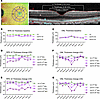 Figure 3
Change in outer nuclear layer and RPE thickness over time in the Q327-mutant macaque. (A) Schematic diagram showing the four directions and anatomical subdivisions of the retina (left panel) and associated segmentation (right panel) for analysis. The retina was divided into nasal (N), inferior (I), temporal (T), and superior (S), relative to the fovea (no. 1), parafoveal region (no. 2), and perifoveal region (no. 3). The OCT boundaries used to measure total retinal thickness, thickness of the ONL, and thickness of the RPE-IZ region, respectively, are denoted (right panel). In this study, the fovea was defined as a 1.0 mm diameter ring centered on the foveola, the parafovea was defined as an annulus centered on the fovea between circles with diameters of 1.0 mm and 2.22 mm, and the perifovea was defined as an annulus centered on the fovea between the circles with diameters of 2.22 mm and 3.45 mm. The position of the foveola was determined by manually determining the central fovea on the horizontal scans. (B and C) The baseline thickness of RPE-IZ (B) and ONL (C) in the first OCT examination from the mutant macaque and the age-matched control macaque. (D–G) The thickness change of RPE-IZ and ONL during the follow-up visits compared to the initial examination are displayed. RPE-IZ, the RPE-Bruch’s membrane (BM) complex and the RPE-photoreceptor interdigitation zone; ONL, the outer nuclear layer.
At the initial visit, thickness of the RPE-IZ was slightly reduced across the macula in both eyes, with the foveal center of the right eye most affected (Figure 3B), aligning with the B-AF observations (Figure 2E). ONL thickness across the macula, however, remained comparable to the age-matched control, suggesting photoreceptors were preserved at the initial visit (Figure 3C).
Over the two-year observation period, RPE-IZ thinning progressively advanced across the macula. In the right eye, RPE-IZ thickness declined rapidly during the first year, followed by a slower rate of thinning in the second year (Figure 3D). In the left eye, RPE thinning occurred more gradually in the first year but accelerated significantly in the second year (Figure 3E). By the end of the observation period, RPE thinning was evident throughout the macula in both eyes.
Although RPE-IZ thinning occurred broadly across the macula, ONL thinning followed a distinct central-to-peripheral gradient in both eyes, with the macular center being the most pronounced (Figure 3, F and G). In the right eye, ONL thickness declined more rapidly during the first year compared with the second year, mirroring the time course of RPE-IZ thinning and subfoveal cleft enlargement (Figure 3F). In contrast, the left eye exhibited a slower ONL thinning pattern during the first year, with an accelerated decline at the macular center during the second year (Figure 3G). These observations suggest that ONL thinning, indicative of photoreceptor degeneration, was secondary to RPE-IZ disruption in this mutant macaque and was most pronounced in the macular center. The increased vulnerability of photoreceptors in the central macula to progressive degeneration during the previtelliform stage likely contributes to the development of the characteristic vitelliform lesion observed in the foveal region of BVMD patients during the vitelliform stage.
Histopathological analysis reveals characteristic pathogenic features of BVMD. Histopathological analysis performed postmortem after the unexpected death of the macaque revealed hallmark pathogenic features consistent with clinical observations from OCT imaging. The mutant animal exhibited a prominent subfoveal cleft between the RPE and ONL, in contrast with an age-matched control. Autofluorescent deposits were also noted within the cleft (Figure 4A).
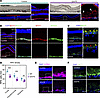 Figure 4
Histopathologic analysis reveals typical pathogenic features of BVMD. (A) Bright field and immunostaining imaging showing neuroretina detachment from the RPE in the mutant fovea, forming a cleft with the accumulation of autofluorescent deposits within it. Autofluorescence was detected at 555 nm (red), and nuclei were stained with DAPI (blue). (B) Immunostaining for BEST1 protein (red) and RPE cell marker RPE65 (green), with nuclei stained with DAPI (blue). (C) DAPI staining highlights fragmented RPE nuclei in the mutant animal. Fragmented nuclei are indicated by red arrowheads, while normal nuclei are indicated by yellow arrowheads. Costaining with RPE65 was performed to identify the nuclei of RPE cells. (D) The density of RPE cells was significantly reduced in the fovea and parafoveal/perifoveal regions and unchanged in the periphery in the mutant macaque. Each data point represents one fluorescent image. (E) Immunostaining for EZRIN (pink) indicated the absence of RPE apical microvilli in the macular region of the mutant retina. (F) Immunostaining for MCT1 (green) showed decreased signals in the apical surface and processes of the RPE and photoreceptor outer segments in the mutant macaque macula. Statistical significance was determined by 2-way ANOVA and Šidák’s post hoc comparisons. (***P < 0.001).
To assess BEST1 expression in the RPE, we performed immunostaining of retinal sections. In the control animal, BEST1 protein was predominantly localized in the basolateral plasma membrane of RPEs (Figure 4B). However, in the Q327E-mutant macaque, BEST1 signal was significantly reduced in the fovea (Figure 4B). Decreased BEST1 signal was also noted in the parafoveal and peripheral regions of the retina (Supplemental Figure 3, A and B), suggesting an overall decrease in BEST1 levels in the mutant animal.
As our in silico mutation analysis revealed no direct steric clash caused by Q327E, we next investigated whether Q327E affects BEST1 protein stability. In 293T cells with transient expression of WT BEST1 and BEST1-Q327E, no significant difference in protein levels was observed (Supplemental Figure 3C). In ARPE-19 cells with stable lentiviral expression, the Q327E mutant exhibited significantly lower BEST1 protein levels compared with cells expressing WT BEST1 (Supplemental Figure 3D). This reduction under long-term physiological conditions may be attributed to altered mobility and stability of the A195 helix, a structural component required for BEST1 pentamer assembly. Disruptions in this region could promote protein misfolding, decreased stability, and increased degradation, leading to progressive decline in BEST1 levels over time. These in vitro findings align with pathological observations in the mutant animal, supporting that Q327E induces protein instability.
Consistent with the OCT imaging measurements, the ONL was thinner in the of the mutant animal (Figure 4, B and C). Some RPE nuclei exhibited signs of disintegration and rupture (Figure 4C). Quantification of RPE density, as indicated by RPE nuclei, revealed a significant reduction in the mutant animal in the foveal, parafoveal, and perifoveal regions of the macula, indicating mild loss of RPE across the macula (Figure 4D).
Previous studies have shown that BEST1 mutations disrupt the RPE-photoreceptor interface in rodent and canine models (12, 31). To further investigate this, we examined the structures of RPE apical projections using immunostaining for EZRIN and MCT1. EZRIN marks the apical microvilli of RPE, while MCT1 labels the apical processes of the RPE and photoreceptor outer segments (32, 33). In the control animal, strong EZRIN and MCT1 signal were observed, and the EZRIN-MCT1 labeled RPE-photoreceptor interface spanned 10–20 micrometers (Figure 4, E and F). However, in the macular regions of the mutant animal, both EZRIN and MCT1 signals were almost absent (Figure 4, E and F), suggesting retraction of RPE microvilli and disorganization of photoreceptor outer segment structures. The disruption of the EZRIN- or MCT1-labeled RPE-photoreceptor interface in the Q327E mutant animal could contribute to the 10–20 micrometer thinning of the RPE-IZ measured in the OCT imaging (Figure 3, D and E).
Collectively, these findings demonstrate that the mutant macaque exhibits characteristic pathological features of BVMD, including a prominent subfoveal cleft with hyperautofluorescent deposits, aberrant BEST1 expression, macular photoreceptor loss, disrupted RPE-photoreceptor interfaces, and RPE degeneration.
Mitochondrial-containing lipid deposits contribute to the spatial selectivity of macular lesions in BVMD. Given that increased autofluorescence signals often indicate lipid deposits, we used neutral lipid dye BODIPY to examine the lipid compositions of these lesions. In the macular region of the mutant macaque, BODIPY staining revealed two distinct types of lipid-enriched deposits with high BODIPY signal, located either beneath or above the photoreceptor outer-segment region (Figure 5, A and B).
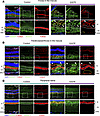 Figure 5
The Q327 mutant macaque exhibits mitochondrial-negative and -positive lipid deposits in the macula. (A–C) Representative images from immunostaining of BODIPY (green), TOM20 (red), and DAPI (blue) in different retinal regions, including fovea, parafovea/perifovea, and periphery. The bottom row shows zoomed-in views of the areas indicated by boxes in the top row. (A and B) In the fovea (A) and parafovea/perifovea (B), there was the accumulation of 2 types of BODIPY high deposits: deposits beneath the outer segments were TOM20 negative (indicated by yellow circles), while deposits above the outer segments were TOM20 positive (indicated by the white arrowheads). Mitochondria in the inner-segment region of photoreceptors, with low BODIPY signal, are outlined in white. A wavy distribution pattern of mitochondria was observed in the mutant animal. (C) The peripheral retina of the mutant animal showed a normally organized ellipsoid zone band with mitochondria, and deposits were rarely detected. TOM20, Translocase of outer mitochondrial membrane 20; EZ, ellipsoid zone; OS, outer segments; IS, inner segments.
The first type of deposit, situated between the outer-segments and RPE cells, has been observed in BEST1-mutant canines and patients with BVMD (12, 34) and likely represents unphagocytosed photoreceptor membrane discs due to impaired RPE function (35, 36). The second type of deposit, found between the outer segments and the photoreceptor nuclear (Figure 5, A and B), has not been previously reported in BVMD and other maculopathies. H&E and oil red O staining further validated the presence and lipid-rich nature of these deposits (Supplemental Figure 4, A and B).
Given that the second type of deposits were in the region corresponding to the inner segments of the photoreceptors, which contain abundant mitochondria, we performed TOM20 immunostaining, a marker for the outer-mitochondrial membrane, to further characterize the nature of the deposit. The first type of deposit beneath the outer-segments was TOM20 negative, confirming it as outer-segment fragments. In contrast, the second type of deposit above the outer segments was TOM20 positive (Figure 5, A and B).
In the foveal center, where the photoreceptors are exclusively cones, these mitochondrial deposits were highly abundant, exhibiting a round, swollen morphology, suggesting that they were damaged (Figure 5A). Below these swollen mitochondrial deposits, we observed thin mitochondria with low BODIPY signal, resembling the morphology of cone mitochondria in the control fovea. However, these thin mitochondria were much less abundant in the mutant fovea compared with the control fovea (Figure 5A). These observations suggest that most cone mitochondria in the fovea were disrupted and the lipid-enriched second type of mitochondria deposits may represent accumulated damaged cone mitochondria.
In the parafoveal and perifoveal regions, where both cones and rods are present, the swollen mitochondria and BODIPY-high deposits were less prominent compared with the fovea center (Figure 5B). Wheat Germ Agglutinin (WGA) staining, which binds to glycoproteins on cell membranes, revealed that these deposits were enclosed within photoreceptor membranes, indicating that the damaged mitochondria remained intracellular (Supplemental Figure 4C). Beneath the round mitochondrial deposits in these regions, the remaining thin mitochondria with low BODIPY signal were arranged in a wave-like pattern, contrasting with the straight mitochondrial-enriched zone observed in the control retina (Figure 5B). This wave-like pattern may be due to the mechanical compression exerted by the two types of deposits.
In contrast with the macula, the periphery, where cones are sparse, showed normal outer segments and ellipsoid zone morphology, with barely any observed deposits (Figure 5C). These observations demonstrate a central-to-peripheral gradient of mitochondrial damage in photoreceptors, with the foveal center being the most severely affected. Considering the central-to-peripheral gradient of cone distribution and the exclusive presence of cones in the fovea, mitochondria in cones, rather than rods, appear to be especially vulnerable in BVMD. This selective vulnerability of cone mitochondria could contribute to the central-to-peripheral pattern of outer nuclear layer thinning observed in OCT measurements. Furthermore, the accumulation of damaged cone mitochondria and outer-segment fragments likely disrupts the microstructure of the outer retinal layers, which may ultimately lead to neurosensory retinal detachment from the RPE, contributing to the formation of the subretinal cleft.
Alterations in outer retinal microstructure during disease progression. Histopathological analysis revealed RPE interface disruption alongside the accumulation of mitochondrial-positive deposits and outer segment deposits. In OCT imaging, from the outer to inner retina, the hyperreflective RPE-IZ layer includes the RPE-BM complex and RPE-PR interface (interdigitation zone, IZ), and the hyperreflective ellipsoid zone (EZ) includes photoreceptor mitochondria (Figure 6A). To investigate how these microstructures evolve during disease progression, we retrospectively analyzed macular OCT images from follow-up visits.
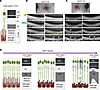 Figure 6
Alteration of outer retinal bands of OCT scans during disease progression in the Q327 mutant macaque. (A) Schematic representation of the structure of photoreceptor cells and RPE cells and their corresponding bands in the OCT image. ONL, outer nuclear layer; ELM, external limiting membrane; MZ, myoid zone of the photoreceptors; EZ, ellipsoid zone of the photoreceptors; OS, outer-segments; RPE-IZ, the RPE-Bruch’s membrane (BM) complex and the RPE-photoreceptor interface (interdigitation zone, IZ). (B and C) Longitudinal OCT scans show changes in the outer retinal bands (scanning locations indicated as red lines in the B-AF images on top) during follow-up imaging of the left (B) and right (C) eyes. The RPE-IZ shows early attenuation with time and the EZ showed a wave-like pattern following the RPE-IZ attenuation, with hyperreflective deposits appearing above the RPE-IZ band beneath the waves at some locations (yellow arrows). The schematic B-AF images are the same as the 26th month B-AF image shown in the Figure 2E. (D) Hypothesis for the early progression of Best disease. The RPE-photoreceptor interface is the first to be damaged, leading to cellular dysfunction. The accumulation of membrane discs beneath the OS and damaged cone mitochondria in the macula further exacerbates the damage. This results in the death of RPE and photoreceptor cells in the macula. Corresponding changes in OCT imaging include initial thinning of RPE-IZ, followed by distortion of EZ band, accumulation of deposits, and thinning of the ONL, progressing in a center-to-peripheral pattern in the macula.
In the Q327E mutant left eye, the outer retinal layers initially appeared relatively intact at the first month, with a straight EZ and a defined RPE-IZ layer consisting of both the IZ and the RPE-BM complex hyporeflective zones (Figure 6B). By the seventh month, the RPE-IZ showed slight attenuation. At the 13th month, the IZ band had almost disappeared and the EZ was slightly attenuated. By the 26th month, the EZ band showed a wave-like pattern. Beneath the waves of EZ and above the RPE-BM complex, hyperreflective signals resembling type 1 deposits identified in histopathology were observed (Figure 6B).
In the mutant right eye at baseline, the RPE-IZ already showed compromised integrity, with incomplete hyperreflective signals from the IZ, while the EZ layer appeared straight (Figure 6C). By the 7th month, the integrity of the EZ layer began to decrease and showed a wave-like pattern. Hyperreflective signals, similar to type 1 deposits, were observed beneath the wavy EZ (Figure 6C).
In summary, the RPE-PR interface was the earliest structure to show disruption during disease progression. This disruption likely impaired the renewal of photoreceptor membrane discs, leading to mitochondrial damage and accumulation, particularly in cones. Over time, this resulted in selective degeneration and loss of the central macula, with thinning of the ONL. The accumulation of type 1 deposits beneath the outer segments and mitochondrial deposits above the EZ likely drives retinal detachment from the RPE. These processes ultimately create a subretinal cleft containing two distinct types of deposits, which may contribute to the formation of vitelliform lesions in the central macula (Figure 6D).


