
Clinical Research and Public HealthClinical ResearchNephrology
Open Access |  10.1172/jci.insight.199060
Impact of older donor age in kidney transplants in a biopsy-based observational study
Katelynn Madill-Thomsen,1 Martina Mackova,1 Jessica Chang,1 Enver Akalin,2 Tarek Alhamad,3 Sanjiv Anand,4 Miha Arnol,5 Rajendra Baliga,6 Mirosław Banasik,7 Christopher Blosser,8 Georg Böhmig,9 Daniel Brennan,10 Jonathan Bromberg,11 Klemens Budde,12 Andrzej Chamienia,13 Kevin V. Chow,14 Michał Ciszek,15 Declan de Freitas,16 Dominika Dęborska-Materkowska,15 Alicja Dębska-Ślizień,13 Arjang Djamali,17 Leszek Domański,18 Magdalena Durlik,15 Gunilla Einecke,19 Farsad Eskandary,9 Richard Fatica,20 Iman Francis,21 Justyna Fryc,22 John Gill,23 Jagbir Gill,23 Maciej Glyda,24 Sita Gourishankar,25 Marta Gryczman,18 Gaurav Gupta,26 Petra Hruba,27 Peter Hughes,14 Arksarapuk Jittirat,28 Zeljka Jurekovic,29 Layla Kamal,26 Mahmoud Kamel,6 Sam Kant,10 Nika Kojc,30 Joanna Konopa,13 James Lan,23 Roslyn Mannon,31 Arthur Matas,32 Joanna Mazurkiewicz,18 Marius Miglinas,33 Thomas Mueller,34 Marek Myślak,18 Beata Naumnik,22 Anita Patel,21 Agnieszka Perkowska-Ptasińska,15 Michael Picton,16 Grzegorz Piecha,35 Emillio Poggio,20 Silvie Rajnochova Bloudickova,27 Thomas Schachtner,34 Sung Shin,36 Soroush Shojai,25 Majid Sikosana,25 Janka Slatinská,27 Katarzyna Smykal-Jankowiak,24 Ashish Solanki,10 Zeljka Veceric Haler,30 Ondrej Viklicky,27 Ksenija Vucur Simic,29 Matthew R. Weir,11 Andrzej Wiecek,35 Zbigniew Włodarczyk,37 Ziad Zaky,20 and Philip F. Halloran1,25
1Alberta Transplant Applied Genomics Centre, Edmonton, Alberta, Canada.
2Montefiore Medical Center, Bronx, New York, USA.
3Washington University at St. Louis, St. Louis, Missouri, USA.
4Intermountain Transplant Services, Murray, Utah, USA.
5University of Ljubljana, Ljubljana, Slovenia.
6Tampa General Hospital, Tampa, Florida, USA.
7Medical University of Wrocław, Wrocław. Poland.
8University of Washington, Seattle, Washington, USA.
9Medical University of Vienna, Vienna, Austria.
10Johns Hopkins University School of Medicine, Baltimore, Maryland, USA.
11University of Maryland, Baltimore, Maryland, USA.
12Charite-Medical University of Berlin, Berlin, Germany.
13Medical University of Gdańsk, Gdańsk, Poland.
14The Royal Melbourne Hospital, Parkville, Australia.
15Warsaw Medical University, Warsaw, Poland.
16Manchester Royal Infirmary, Manchester, United Kingdom.
17University of Wisconsin, Madison, Wisconsin, USA.
18Pomeranian Medical University, Szczecin, Poland.
19Medical University of Hannover, Hannover, Germany.
20Cleveland Clinic Foundation, Cleveland, Ohio, USA.
21Henry Ford Transplant Institute, Detroit, Michigan, USA.
22Medical University in Bialystok, Białystok, Poland.
23St. Paul’s Hospital, Vancouver, British Columbia, Canada.
24Wojewodzki Hospital, Poznan, Poland.
25University of Alberta, Edmonton, Alberta, Canada.
26Virginia Commonwealth University, Richmond, Virginia, USA.
27Institute for Experimental and Clinical Medicine, Prague, Czech Republic.
28University Hospital Cleveland Medical Center, Cleveland, Ohio, USA.
29University Hospital Merkur, Zagreb, Croatia.
30University of Ljubljana, Ljubljana, Slovenia.
31University of Alabama at Birmingham, Birmingham, Alabama, USA.
32University on Minnesota, Minneapolis, Minnesota, USA.
33Vilnius University Hospital Santaros Klinikos, Vilnius, Lithuania.
34University Hospital Zurich, Zurich, Switzerland.
35Silesian Medical University, Katowice, Poland.
36University of Ulsan College of Medicine/Asan Medical Center, Seoul, South Korea.
37University Hospital no. 1, Bydgoszcz, Poland.
Address correspondence to: Philip F. Halloran, Alberta Transplant Applied Genomics Centre, #250 Heritage Medical Research Centre, University of Alberta, Edmonton, Alberta, T6G 2S2, Canada. Phone: 780.492.6160; Email: phallora@ualberta.ca.
Find articles by Madill-Thomsen, K. in: PubMed | Google Scholar
1Alberta Transplant Applied Genomics Centre, Edmonton, Alberta, Canada.
2Montefiore Medical Center, Bronx, New York, USA.
3Washington University at St. Louis, St. Louis, Missouri, USA.
4Intermountain Transplant Services, Murray, Utah, USA.
5University of Ljubljana, Ljubljana, Slovenia.
6Tampa General Hospital, Tampa, Florida, USA.
7Medical University of Wrocław, Wrocław. Poland.
8University of Washington, Seattle, Washington, USA.
9Medical University of Vienna, Vienna, Austria.
10Johns Hopkins University School of Medicine, Baltimore, Maryland, USA.
11University of Maryland, Baltimore, Maryland, USA.
12Charite-Medical University of Berlin, Berlin, Germany.
13Medical University of Gdańsk, Gdańsk, Poland.
14The Royal Melbourne Hospital, Parkville, Australia.
15Warsaw Medical University, Warsaw, Poland.
16Manchester Royal Infirmary, Manchester, United Kingdom.
17University of Wisconsin, Madison, Wisconsin, USA.
18Pomeranian Medical University, Szczecin, Poland.
19Medical University of Hannover, Hannover, Germany.
20Cleveland Clinic Foundation, Cleveland, Ohio, USA.
21Henry Ford Transplant Institute, Detroit, Michigan, USA.
22Medical University in Bialystok, Białystok, Poland.
23St. Paul’s Hospital, Vancouver, British Columbia, Canada.
24Wojewodzki Hospital, Poznan, Poland.
25University of Alberta, Edmonton, Alberta, Canada.
26Virginia Commonwealth University, Richmond, Virginia, USA.
27Institute for Experimental and Clinical Medicine, Prague, Czech Republic.
28University Hospital Cleveland Medical Center, Cleveland, Ohio, USA.
29University Hospital Merkur, Zagreb, Croatia.
30University of Ljubljana, Ljubljana, Slovenia.
31University of Alabama at Birmingham, Birmingham, Alabama, USA.
32University on Minnesota, Minneapolis, Minnesota, USA.
33Vilnius University Hospital Santaros Klinikos, Vilnius, Lithuania.
34University Hospital Zurich, Zurich, Switzerland.
35Silesian Medical University, Katowice, Poland.
36University of Ulsan College of Medicine/Asan Medical Center, Seoul, South Korea.
37University Hospital no. 1, Bydgoszcz, Poland.
Address correspondence to: Philip F. Halloran, Alberta Transplant Applied Genomics Centre, #250 Heritage Medical Research Centre, University of Alberta, Edmonton, Alberta, T6G 2S2, Canada. Phone: 780.492.6160; Email: phallora@ualberta.ca.
Find articles by Mackova, M. in: PubMed | Google Scholar
1Alberta Transplant Applied Genomics Centre, Edmonton, Alberta, Canada.
2Montefiore Medical Center, Bronx, New York, USA.
3Washington University at St. Louis, St. Louis, Missouri, USA.
4Intermountain Transplant Services, Murray, Utah, USA.
5University of Ljubljana, Ljubljana, Slovenia.
6Tampa General Hospital, Tampa, Florida, USA.
7Medical University of Wrocław, Wrocław. Poland.
8University of Washington, Seattle, Washington, USA.
9Medical University of Vienna, Vienna, Austria.
10Johns Hopkins University School of Medicine, Baltimore, Maryland, USA.
11University of Maryland, Baltimore, Maryland, USA.
12Charite-Medical University of Berlin, Berlin, Germany.
13Medical University of Gdańsk, Gdańsk, Poland.
14The Royal Melbourne Hospital, Parkville, Australia.
15Warsaw Medical University, Warsaw, Poland.
16Manchester Royal Infirmary, Manchester, United Kingdom.
17University of Wisconsin, Madison, Wisconsin, USA.
18Pomeranian Medical University, Szczecin, Poland.
19Medical University of Hannover, Hannover, Germany.
20Cleveland Clinic Foundation, Cleveland, Ohio, USA.
21Henry Ford Transplant Institute, Detroit, Michigan, USA.
22Medical University in Bialystok, Białystok, Poland.
23St. Paul’s Hospital, Vancouver, British Columbia, Canada.
24Wojewodzki Hospital, Poznan, Poland.
25University of Alberta, Edmonton, Alberta, Canada.
26Virginia Commonwealth University, Richmond, Virginia, USA.
27Institute for Experimental and Clinical Medicine, Prague, Czech Republic.
28University Hospital Cleveland Medical Center, Cleveland, Ohio, USA.
29University Hospital Merkur, Zagreb, Croatia.
30University of Ljubljana, Ljubljana, Slovenia.
31University of Alabama at Birmingham, Birmingham, Alabama, USA.
32University on Minnesota, Minneapolis, Minnesota, USA.
33Vilnius University Hospital Santaros Klinikos, Vilnius, Lithuania.
34University Hospital Zurich, Zurich, Switzerland.
35Silesian Medical University, Katowice, Poland.
36University of Ulsan College of Medicine/Asan Medical Center, Seoul, South Korea.
37University Hospital no. 1, Bydgoszcz, Poland.
Address correspondence to: Philip F. Halloran, Alberta Transplant Applied Genomics Centre, #250 Heritage Medical Research Centre, University of Alberta, Edmonton, Alberta, T6G 2S2, Canada. Phone: 780.492.6160; Email: phallora@ualberta.ca.
Find articles by
Chang, J.
in:
PubMed
|
Google Scholar
|

1Alberta Transplant Applied Genomics Centre, Edmonton, Alberta, Canada.
2Montefiore Medical Center, Bronx, New York, USA.
3Washington University at St. Louis, St. Louis, Missouri, USA.
4Intermountain Transplant Services, Murray, Utah, USA.
5University of Ljubljana, Ljubljana, Slovenia.
6Tampa General Hospital, Tampa, Florida, USA.
7Medical University of Wrocław, Wrocław. Poland.
8University of Washington, Seattle, Washington, USA.
9Medical University of Vienna, Vienna, Austria.
10Johns Hopkins University School of Medicine, Baltimore, Maryland, USA.
11University of Maryland, Baltimore, Maryland, USA.
12Charite-Medical University of Berlin, Berlin, Germany.
13Medical University of Gdańsk, Gdańsk, Poland.
14The Royal Melbourne Hospital, Parkville, Australia.
15Warsaw Medical University, Warsaw, Poland.
16Manchester Royal Infirmary, Manchester, United Kingdom.
17University of Wisconsin, Madison, Wisconsin, USA.
18Pomeranian Medical University, Szczecin, Poland.
19Medical University of Hannover, Hannover, Germany.
20Cleveland Clinic Foundation, Cleveland, Ohio, USA.
21Henry Ford Transplant Institute, Detroit, Michigan, USA.
22Medical University in Bialystok, Białystok, Poland.
23St. Paul’s Hospital, Vancouver, British Columbia, Canada.
24Wojewodzki Hospital, Poznan, Poland.
25University of Alberta, Edmonton, Alberta, Canada.
26Virginia Commonwealth University, Richmond, Virginia, USA.
27Institute for Experimental and Clinical Medicine, Prague, Czech Republic.
28University Hospital Cleveland Medical Center, Cleveland, Ohio, USA.
29University Hospital Merkur, Zagreb, Croatia.
30University of Ljubljana, Ljubljana, Slovenia.
31University of Alabama at Birmingham, Birmingham, Alabama, USA.
32University on Minnesota, Minneapolis, Minnesota, USA.
33Vilnius University Hospital Santaros Klinikos, Vilnius, Lithuania.
34University Hospital Zurich, Zurich, Switzerland.
35Silesian Medical University, Katowice, Poland.
36University of Ulsan College of Medicine/Asan Medical Center, Seoul, South Korea.
37University Hospital no. 1, Bydgoszcz, Poland.
Address correspondence to: Philip F. Halloran, Alberta Transplant Applied Genomics Centre, #250 Heritage Medical Research Centre, University of Alberta, Edmonton, Alberta, T6G 2S2, Canada. Phone: 780.492.6160; Email: phallora@ualberta.ca.
Find articles by Akalin, E. in: PubMed | Google Scholar
1Alberta Transplant Applied Genomics Centre, Edmonton, Alberta, Canada.
2Montefiore Medical Center, Bronx, New York, USA.
3Washington University at St. Louis, St. Louis, Missouri, USA.
4Intermountain Transplant Services, Murray, Utah, USA.
5University of Ljubljana, Ljubljana, Slovenia.
6Tampa General Hospital, Tampa, Florida, USA.
7Medical University of Wrocław, Wrocław. Poland.
8University of Washington, Seattle, Washington, USA.
9Medical University of Vienna, Vienna, Austria.
10Johns Hopkins University School of Medicine, Baltimore, Maryland, USA.
11University of Maryland, Baltimore, Maryland, USA.
12Charite-Medical University of Berlin, Berlin, Germany.
13Medical University of Gdańsk, Gdańsk, Poland.
14The Royal Melbourne Hospital, Parkville, Australia.
15Warsaw Medical University, Warsaw, Poland.
16Manchester Royal Infirmary, Manchester, United Kingdom.
17University of Wisconsin, Madison, Wisconsin, USA.
18Pomeranian Medical University, Szczecin, Poland.
19Medical University of Hannover, Hannover, Germany.
20Cleveland Clinic Foundation, Cleveland, Ohio, USA.
21Henry Ford Transplant Institute, Detroit, Michigan, USA.
22Medical University in Bialystok, Białystok, Poland.
23St. Paul’s Hospital, Vancouver, British Columbia, Canada.
24Wojewodzki Hospital, Poznan, Poland.
25University of Alberta, Edmonton, Alberta, Canada.
26Virginia Commonwealth University, Richmond, Virginia, USA.
27Institute for Experimental and Clinical Medicine, Prague, Czech Republic.
28University Hospital Cleveland Medical Center, Cleveland, Ohio, USA.
29University Hospital Merkur, Zagreb, Croatia.
30University of Ljubljana, Ljubljana, Slovenia.
31University of Alabama at Birmingham, Birmingham, Alabama, USA.
32University on Minnesota, Minneapolis, Minnesota, USA.
33Vilnius University Hospital Santaros Klinikos, Vilnius, Lithuania.
34University Hospital Zurich, Zurich, Switzerland.
35Silesian Medical University, Katowice, Poland.
36University of Ulsan College of Medicine/Asan Medical Center, Seoul, South Korea.
37University Hospital no. 1, Bydgoszcz, Poland.
Address correspondence to: Philip F. Halloran, Alberta Transplant Applied Genomics Centre, #250 Heritage Medical Research Centre, University of Alberta, Edmonton, Alberta, T6G 2S2, Canada. Phone: 780.492.6160; Email: phallora@ualberta.ca.
Find articles by Alhamad, T. in: PubMed | Google Scholar
1Alberta Transplant Applied Genomics Centre, Edmonton, Alberta, Canada.
2Montefiore Medical Center, Bronx, New York, USA.
3Washington University at St. Louis, St. Louis, Missouri, USA.
4Intermountain Transplant Services, Murray, Utah, USA.
5University of Ljubljana, Ljubljana, Slovenia.
6Tampa General Hospital, Tampa, Florida, USA.
7Medical University of Wrocław, Wrocław. Poland.
8University of Washington, Seattle, Washington, USA.
9Medical University of Vienna, Vienna, Austria.
10Johns Hopkins University School of Medicine, Baltimore, Maryland, USA.
11University of Maryland, Baltimore, Maryland, USA.
12Charite-Medical University of Berlin, Berlin, Germany.
13Medical University of Gdańsk, Gdańsk, Poland.
14The Royal Melbourne Hospital, Parkville, Australia.
15Warsaw Medical University, Warsaw, Poland.
16Manchester Royal Infirmary, Manchester, United Kingdom.
17University of Wisconsin, Madison, Wisconsin, USA.
18Pomeranian Medical University, Szczecin, Poland.
19Medical University of Hannover, Hannover, Germany.
20Cleveland Clinic Foundation, Cleveland, Ohio, USA.
21Henry Ford Transplant Institute, Detroit, Michigan, USA.
22Medical University in Bialystok, Białystok, Poland.
23St. Paul’s Hospital, Vancouver, British Columbia, Canada.
24Wojewodzki Hospital, Poznan, Poland.
25University of Alberta, Edmonton, Alberta, Canada.
26Virginia Commonwealth University, Richmond, Virginia, USA.
27Institute for Experimental and Clinical Medicine, Prague, Czech Republic.
28University Hospital Cleveland Medical Center, Cleveland, Ohio, USA.
29University Hospital Merkur, Zagreb, Croatia.
30University of Ljubljana, Ljubljana, Slovenia.
31University of Alabama at Birmingham, Birmingham, Alabama, USA.
32University on Minnesota, Minneapolis, Minnesota, USA.
33Vilnius University Hospital Santaros Klinikos, Vilnius, Lithuania.
34University Hospital Zurich, Zurich, Switzerland.
35Silesian Medical University, Katowice, Poland.
36University of Ulsan College of Medicine/Asan Medical Center, Seoul, South Korea.
37University Hospital no. 1, Bydgoszcz, Poland.
Address correspondence to: Philip F. Halloran, Alberta Transplant Applied Genomics Centre, #250 Heritage Medical Research Centre, University of Alberta, Edmonton, Alberta, T6G 2S2, Canada. Phone: 780.492.6160; Email: phallora@ualberta.ca.
Find articles by Anand, S. in: PubMed | Google Scholar
1Alberta Transplant Applied Genomics Centre, Edmonton, Alberta, Canada.
2Montefiore Medical Center, Bronx, New York, USA.
3Washington University at St. Louis, St. Louis, Missouri, USA.
4Intermountain Transplant Services, Murray, Utah, USA.
5University of Ljubljana, Ljubljana, Slovenia.
6Tampa General Hospital, Tampa, Florida, USA.
7Medical University of Wrocław, Wrocław. Poland.
8University of Washington, Seattle, Washington, USA.
9Medical University of Vienna, Vienna, Austria.
10Johns Hopkins University School of Medicine, Baltimore, Maryland, USA.
11University of Maryland, Baltimore, Maryland, USA.
12Charite-Medical University of Berlin, Berlin, Germany.
13Medical University of Gdańsk, Gdańsk, Poland.
14The Royal Melbourne Hospital, Parkville, Australia.
15Warsaw Medical University, Warsaw, Poland.
16Manchester Royal Infirmary, Manchester, United Kingdom.
17University of Wisconsin, Madison, Wisconsin, USA.
18Pomeranian Medical University, Szczecin, Poland.
19Medical University of Hannover, Hannover, Germany.
20Cleveland Clinic Foundation, Cleveland, Ohio, USA.
21Henry Ford Transplant Institute, Detroit, Michigan, USA.
22Medical University in Bialystok, Białystok, Poland.
23St. Paul’s Hospital, Vancouver, British Columbia, Canada.
24Wojewodzki Hospital, Poznan, Poland.
25University of Alberta, Edmonton, Alberta, Canada.
26Virginia Commonwealth University, Richmond, Virginia, USA.
27Institute for Experimental and Clinical Medicine, Prague, Czech Republic.
28University Hospital Cleveland Medical Center, Cleveland, Ohio, USA.
29University Hospital Merkur, Zagreb, Croatia.
30University of Ljubljana, Ljubljana, Slovenia.
31University of Alabama at Birmingham, Birmingham, Alabama, USA.
32University on Minnesota, Minneapolis, Minnesota, USA.
33Vilnius University Hospital Santaros Klinikos, Vilnius, Lithuania.
34University Hospital Zurich, Zurich, Switzerland.
35Silesian Medical University, Katowice, Poland.
36University of Ulsan College of Medicine/Asan Medical Center, Seoul, South Korea.
37University Hospital no. 1, Bydgoszcz, Poland.
Address correspondence to: Philip F. Halloran, Alberta Transplant Applied Genomics Centre, #250 Heritage Medical Research Centre, University of Alberta, Edmonton, Alberta, T6G 2S2, Canada. Phone: 780.492.6160; Email: phallora@ualberta.ca.
Find articles by Arnol, M. in: PubMed | Google Scholar
1Alberta Transplant Applied Genomics Centre, Edmonton, Alberta, Canada.
2Montefiore Medical Center, Bronx, New York, USA.
3Washington University at St. Louis, St. Louis, Missouri, USA.
4Intermountain Transplant Services, Murray, Utah, USA.
5University of Ljubljana, Ljubljana, Slovenia.
6Tampa General Hospital, Tampa, Florida, USA.
7Medical University of Wrocław, Wrocław. Poland.
8University of Washington, Seattle, Washington, USA.
9Medical University of Vienna, Vienna, Austria.
10Johns Hopkins University School of Medicine, Baltimore, Maryland, USA.
11University of Maryland, Baltimore, Maryland, USA.
12Charite-Medical University of Berlin, Berlin, Germany.
13Medical University of Gdańsk, Gdańsk, Poland.
14The Royal Melbourne Hospital, Parkville, Australia.
15Warsaw Medical University, Warsaw, Poland.
16Manchester Royal Infirmary, Manchester, United Kingdom.
17University of Wisconsin, Madison, Wisconsin, USA.
18Pomeranian Medical University, Szczecin, Poland.
19Medical University of Hannover, Hannover, Germany.
20Cleveland Clinic Foundation, Cleveland, Ohio, USA.
21Henry Ford Transplant Institute, Detroit, Michigan, USA.
22Medical University in Bialystok, Białystok, Poland.
23St. Paul’s Hospital, Vancouver, British Columbia, Canada.
24Wojewodzki Hospital, Poznan, Poland.
25University of Alberta, Edmonton, Alberta, Canada.
26Virginia Commonwealth University, Richmond, Virginia, USA.
27Institute for Experimental and Clinical Medicine, Prague, Czech Republic.
28University Hospital Cleveland Medical Center, Cleveland, Ohio, USA.
29University Hospital Merkur, Zagreb, Croatia.
30University of Ljubljana, Ljubljana, Slovenia.
31University of Alabama at Birmingham, Birmingham, Alabama, USA.
32University on Minnesota, Minneapolis, Minnesota, USA.
33Vilnius University Hospital Santaros Klinikos, Vilnius, Lithuania.
34University Hospital Zurich, Zurich, Switzerland.
35Silesian Medical University, Katowice, Poland.
36University of Ulsan College of Medicine/Asan Medical Center, Seoul, South Korea.
37University Hospital no. 1, Bydgoszcz, Poland.
Address correspondence to: Philip F. Halloran, Alberta Transplant Applied Genomics Centre, #250 Heritage Medical Research Centre, University of Alberta, Edmonton, Alberta, T6G 2S2, Canada. Phone: 780.492.6160; Email: phallora@ualberta.ca.
Find articles by Baliga, R. in: PubMed | Google Scholar
1Alberta Transplant Applied Genomics Centre, Edmonton, Alberta, Canada.
2Montefiore Medical Center, Bronx, New York, USA.
3Washington University at St. Louis, St. Louis, Missouri, USA.
4Intermountain Transplant Services, Murray, Utah, USA.
5University of Ljubljana, Ljubljana, Slovenia.
6Tampa General Hospital, Tampa, Florida, USA.
7Medical University of Wrocław, Wrocław. Poland.
8University of Washington, Seattle, Washington, USA.
9Medical University of Vienna, Vienna, Austria.
10Johns Hopkins University School of Medicine, Baltimore, Maryland, USA.
11University of Maryland, Baltimore, Maryland, USA.
12Charite-Medical University of Berlin, Berlin, Germany.
13Medical University of Gdańsk, Gdańsk, Poland.
14The Royal Melbourne Hospital, Parkville, Australia.
15Warsaw Medical University, Warsaw, Poland.
16Manchester Royal Infirmary, Manchester, United Kingdom.
17University of Wisconsin, Madison, Wisconsin, USA.
18Pomeranian Medical University, Szczecin, Poland.
19Medical University of Hannover, Hannover, Germany.
20Cleveland Clinic Foundation, Cleveland, Ohio, USA.
21Henry Ford Transplant Institute, Detroit, Michigan, USA.
22Medical University in Bialystok, Białystok, Poland.
23St. Paul’s Hospital, Vancouver, British Columbia, Canada.
24Wojewodzki Hospital, Poznan, Poland.
25University of Alberta, Edmonton, Alberta, Canada.
26Virginia Commonwealth University, Richmond, Virginia, USA.
27Institute for Experimental and Clinical Medicine, Prague, Czech Republic.
28University Hospital Cleveland Medical Center, Cleveland, Ohio, USA.
29University Hospital Merkur, Zagreb, Croatia.
30University of Ljubljana, Ljubljana, Slovenia.
31University of Alabama at Birmingham, Birmingham, Alabama, USA.
32University on Minnesota, Minneapolis, Minnesota, USA.
33Vilnius University Hospital Santaros Klinikos, Vilnius, Lithuania.
34University Hospital Zurich, Zurich, Switzerland.
35Silesian Medical University, Katowice, Poland.
36University of Ulsan College of Medicine/Asan Medical Center, Seoul, South Korea.
37University Hospital no. 1, Bydgoszcz, Poland.
Address correspondence to: Philip F. Halloran, Alberta Transplant Applied Genomics Centre, #250 Heritage Medical Research Centre, University of Alberta, Edmonton, Alberta, T6G 2S2, Canada. Phone: 780.492.6160; Email: phallora@ualberta.ca.
Find articles by Banasik, M. in: PubMed | Google Scholar
1Alberta Transplant Applied Genomics Centre, Edmonton, Alberta, Canada.
2Montefiore Medical Center, Bronx, New York, USA.
3Washington University at St. Louis, St. Louis, Missouri, USA.
4Intermountain Transplant Services, Murray, Utah, USA.
5University of Ljubljana, Ljubljana, Slovenia.
6Tampa General Hospital, Tampa, Florida, USA.
7Medical University of Wrocław, Wrocław. Poland.
8University of Washington, Seattle, Washington, USA.
9Medical University of Vienna, Vienna, Austria.
10Johns Hopkins University School of Medicine, Baltimore, Maryland, USA.
11University of Maryland, Baltimore, Maryland, USA.
12Charite-Medical University of Berlin, Berlin, Germany.
13Medical University of Gdańsk, Gdańsk, Poland.
14The Royal Melbourne Hospital, Parkville, Australia.
15Warsaw Medical University, Warsaw, Poland.
16Manchester Royal Infirmary, Manchester, United Kingdom.
17University of Wisconsin, Madison, Wisconsin, USA.
18Pomeranian Medical University, Szczecin, Poland.
19Medical University of Hannover, Hannover, Germany.
20Cleveland Clinic Foundation, Cleveland, Ohio, USA.
21Henry Ford Transplant Institute, Detroit, Michigan, USA.
22Medical University in Bialystok, Białystok, Poland.
23St. Paul’s Hospital, Vancouver, British Columbia, Canada.
24Wojewodzki Hospital, Poznan, Poland.
25University of Alberta, Edmonton, Alberta, Canada.
26Virginia Commonwealth University, Richmond, Virginia, USA.
27Institute for Experimental and Clinical Medicine, Prague, Czech Republic.
28University Hospital Cleveland Medical Center, Cleveland, Ohio, USA.
29University Hospital Merkur, Zagreb, Croatia.
30University of Ljubljana, Ljubljana, Slovenia.
31University of Alabama at Birmingham, Birmingham, Alabama, USA.
32University on Minnesota, Minneapolis, Minnesota, USA.
33Vilnius University Hospital Santaros Klinikos, Vilnius, Lithuania.
34University Hospital Zurich, Zurich, Switzerland.
35Silesian Medical University, Katowice, Poland.
36University of Ulsan College of Medicine/Asan Medical Center, Seoul, South Korea.
37University Hospital no. 1, Bydgoszcz, Poland.
Address correspondence to: Philip F. Halloran, Alberta Transplant Applied Genomics Centre, #250 Heritage Medical Research Centre, University of Alberta, Edmonton, Alberta, T6G 2S2, Canada. Phone: 780.492.6160; Email: phallora@ualberta.ca.
Find articles by
Blosser, C.
in:
PubMed
|
Google Scholar
|
1Alberta Transplant Applied Genomics Centre, Edmonton, Alberta, Canada.
2Montefiore Medical Center, Bronx, New York, USA.
3Washington University at St. Louis, St. Louis, Missouri, USA.
4Intermountain Transplant Services, Murray, Utah, USA.
5University of Ljubljana, Ljubljana, Slovenia.
6Tampa General Hospital, Tampa, Florida, USA.
7Medical University of Wrocław, Wrocław. Poland.
8University of Washington, Seattle, Washington, USA.
9Medical University of Vienna, Vienna, Austria.
10Johns Hopkins University School of Medicine, Baltimore, Maryland, USA.
11University of Maryland, Baltimore, Maryland, USA.
12Charite-Medical University of Berlin, Berlin, Germany.
13Medical University of Gdańsk, Gdańsk, Poland.
14The Royal Melbourne Hospital, Parkville, Australia.
15Warsaw Medical University, Warsaw, Poland.
16Manchester Royal Infirmary, Manchester, United Kingdom.
17University of Wisconsin, Madison, Wisconsin, USA.
18Pomeranian Medical University, Szczecin, Poland.
19Medical University of Hannover, Hannover, Germany.
20Cleveland Clinic Foundation, Cleveland, Ohio, USA.
21Henry Ford Transplant Institute, Detroit, Michigan, USA.
22Medical University in Bialystok, Białystok, Poland.
23St. Paul’s Hospital, Vancouver, British Columbia, Canada.
24Wojewodzki Hospital, Poznan, Poland.
25University of Alberta, Edmonton, Alberta, Canada.
26Virginia Commonwealth University, Richmond, Virginia, USA.
27Institute for Experimental and Clinical Medicine, Prague, Czech Republic.
28University Hospital Cleveland Medical Center, Cleveland, Ohio, USA.
29University Hospital Merkur, Zagreb, Croatia.
30University of Ljubljana, Ljubljana, Slovenia.
31University of Alabama at Birmingham, Birmingham, Alabama, USA.
32University on Minnesota, Minneapolis, Minnesota, USA.
33Vilnius University Hospital Santaros Klinikos, Vilnius, Lithuania.
34University Hospital Zurich, Zurich, Switzerland.
35Silesian Medical University, Katowice, Poland.
36University of Ulsan College of Medicine/Asan Medical Center, Seoul, South Korea.
37University Hospital no. 1, Bydgoszcz, Poland.
Address correspondence to: Philip F. Halloran, Alberta Transplant Applied Genomics Centre, #250 Heritage Medical Research Centre, University of Alberta, Edmonton, Alberta, T6G 2S2, Canada. Phone: 780.492.6160; Email: phallora@ualberta.ca.
Find articles by Böhmig, G. in: PubMed | Google Scholar
1Alberta Transplant Applied Genomics Centre, Edmonton, Alberta, Canada.
2Montefiore Medical Center, Bronx, New York, USA.
3Washington University at St. Louis, St. Louis, Missouri, USA.
4Intermountain Transplant Services, Murray, Utah, USA.
5University of Ljubljana, Ljubljana, Slovenia.
6Tampa General Hospital, Tampa, Florida, USA.
7Medical University of Wrocław, Wrocław. Poland.
8University of Washington, Seattle, Washington, USA.
9Medical University of Vienna, Vienna, Austria.
10Johns Hopkins University School of Medicine, Baltimore, Maryland, USA.
11University of Maryland, Baltimore, Maryland, USA.
12Charite-Medical University of Berlin, Berlin, Germany.
13Medical University of Gdańsk, Gdańsk, Poland.
14The Royal Melbourne Hospital, Parkville, Australia.
15Warsaw Medical University, Warsaw, Poland.
16Manchester Royal Infirmary, Manchester, United Kingdom.
17University of Wisconsin, Madison, Wisconsin, USA.
18Pomeranian Medical University, Szczecin, Poland.
19Medical University of Hannover, Hannover, Germany.
20Cleveland Clinic Foundation, Cleveland, Ohio, USA.
21Henry Ford Transplant Institute, Detroit, Michigan, USA.
22Medical University in Bialystok, Białystok, Poland.
23St. Paul’s Hospital, Vancouver, British Columbia, Canada.
24Wojewodzki Hospital, Poznan, Poland.
25University of Alberta, Edmonton, Alberta, Canada.
26Virginia Commonwealth University, Richmond, Virginia, USA.
27Institute for Experimental and Clinical Medicine, Prague, Czech Republic.
28University Hospital Cleveland Medical Center, Cleveland, Ohio, USA.
29University Hospital Merkur, Zagreb, Croatia.
30University of Ljubljana, Ljubljana, Slovenia.
31University of Alabama at Birmingham, Birmingham, Alabama, USA.
32University on Minnesota, Minneapolis, Minnesota, USA.
33Vilnius University Hospital Santaros Klinikos, Vilnius, Lithuania.
34University Hospital Zurich, Zurich, Switzerland.
35Silesian Medical University, Katowice, Poland.
36University of Ulsan College of Medicine/Asan Medical Center, Seoul, South Korea.
37University Hospital no. 1, Bydgoszcz, Poland.
Address correspondence to: Philip F. Halloran, Alberta Transplant Applied Genomics Centre, #250 Heritage Medical Research Centre, University of Alberta, Edmonton, Alberta, T6G 2S2, Canada. Phone: 780.492.6160; Email: phallora@ualberta.ca.
Find articles by Brennan, D. in: PubMed | Google Scholar
1Alberta Transplant Applied Genomics Centre, Edmonton, Alberta, Canada.
2Montefiore Medical Center, Bronx, New York, USA.
3Washington University at St. Louis, St. Louis, Missouri, USA.
4Intermountain Transplant Services, Murray, Utah, USA.
5University of Ljubljana, Ljubljana, Slovenia.
6Tampa General Hospital, Tampa, Florida, USA.
7Medical University of Wrocław, Wrocław. Poland.
8University of Washington, Seattle, Washington, USA.
9Medical University of Vienna, Vienna, Austria.
10Johns Hopkins University School of Medicine, Baltimore, Maryland, USA.
11University of Maryland, Baltimore, Maryland, USA.
12Charite-Medical University of Berlin, Berlin, Germany.
13Medical University of Gdańsk, Gdańsk, Poland.
14The Royal Melbourne Hospital, Parkville, Australia.
15Warsaw Medical University, Warsaw, Poland.
16Manchester Royal Infirmary, Manchester, United Kingdom.
17University of Wisconsin, Madison, Wisconsin, USA.
18Pomeranian Medical University, Szczecin, Poland.
19Medical University of Hannover, Hannover, Germany.
20Cleveland Clinic Foundation, Cleveland, Ohio, USA.
21Henry Ford Transplant Institute, Detroit, Michigan, USA.
22Medical University in Bialystok, Białystok, Poland.
23St. Paul’s Hospital, Vancouver, British Columbia, Canada.
24Wojewodzki Hospital, Poznan, Poland.
25University of Alberta, Edmonton, Alberta, Canada.
26Virginia Commonwealth University, Richmond, Virginia, USA.
27Institute for Experimental and Clinical Medicine, Prague, Czech Republic.
28University Hospital Cleveland Medical Center, Cleveland, Ohio, USA.
29University Hospital Merkur, Zagreb, Croatia.
30University of Ljubljana, Ljubljana, Slovenia.
31University of Alabama at Birmingham, Birmingham, Alabama, USA.
32University on Minnesota, Minneapolis, Minnesota, USA.
33Vilnius University Hospital Santaros Klinikos, Vilnius, Lithuania.
34University Hospital Zurich, Zurich, Switzerland.
35Silesian Medical University, Katowice, Poland.
36University of Ulsan College of Medicine/Asan Medical Center, Seoul, South Korea.
37University Hospital no. 1, Bydgoszcz, Poland.
Address correspondence to: Philip F. Halloran, Alberta Transplant Applied Genomics Centre, #250 Heritage Medical Research Centre, University of Alberta, Edmonton, Alberta, T6G 2S2, Canada. Phone: 780.492.6160; Email: phallora@ualberta.ca.
Find articles by Bromberg, J. in: PubMed | Google Scholar
1Alberta Transplant Applied Genomics Centre, Edmonton, Alberta, Canada.
2Montefiore Medical Center, Bronx, New York, USA.
3Washington University at St. Louis, St. Louis, Missouri, USA.
4Intermountain Transplant Services, Murray, Utah, USA.
5University of Ljubljana, Ljubljana, Slovenia.
6Tampa General Hospital, Tampa, Florida, USA.
7Medical University of Wrocław, Wrocław. Poland.
8University of Washington, Seattle, Washington, USA.
9Medical University of Vienna, Vienna, Austria.
10Johns Hopkins University School of Medicine, Baltimore, Maryland, USA.
11University of Maryland, Baltimore, Maryland, USA.
12Charite-Medical University of Berlin, Berlin, Germany.
13Medical University of Gdańsk, Gdańsk, Poland.
14The Royal Melbourne Hospital, Parkville, Australia.
15Warsaw Medical University, Warsaw, Poland.
16Manchester Royal Infirmary, Manchester, United Kingdom.
17University of Wisconsin, Madison, Wisconsin, USA.
18Pomeranian Medical University, Szczecin, Poland.
19Medical University of Hannover, Hannover, Germany.
20Cleveland Clinic Foundation, Cleveland, Ohio, USA.
21Henry Ford Transplant Institute, Detroit, Michigan, USA.
22Medical University in Bialystok, Białystok, Poland.
23St. Paul’s Hospital, Vancouver, British Columbia, Canada.
24Wojewodzki Hospital, Poznan, Poland.
25University of Alberta, Edmonton, Alberta, Canada.
26Virginia Commonwealth University, Richmond, Virginia, USA.
27Institute for Experimental and Clinical Medicine, Prague, Czech Republic.
28University Hospital Cleveland Medical Center, Cleveland, Ohio, USA.
29University Hospital Merkur, Zagreb, Croatia.
30University of Ljubljana, Ljubljana, Slovenia.
31University of Alabama at Birmingham, Birmingham, Alabama, USA.
32University on Minnesota, Minneapolis, Minnesota, USA.
33Vilnius University Hospital Santaros Klinikos, Vilnius, Lithuania.
34University Hospital Zurich, Zurich, Switzerland.
35Silesian Medical University, Katowice, Poland.
36University of Ulsan College of Medicine/Asan Medical Center, Seoul, South Korea.
37University Hospital no. 1, Bydgoszcz, Poland.
Address correspondence to: Philip F. Halloran, Alberta Transplant Applied Genomics Centre, #250 Heritage Medical Research Centre, University of Alberta, Edmonton, Alberta, T6G 2S2, Canada. Phone: 780.492.6160; Email: phallora@ualberta.ca.
Find articles by
Budde, K.
in:
PubMed
|
Google Scholar
|
1Alberta Transplant Applied Genomics Centre, Edmonton, Alberta, Canada.
2Montefiore Medical Center, Bronx, New York, USA.
3Washington University at St. Louis, St. Louis, Missouri, USA.
4Intermountain Transplant Services, Murray, Utah, USA.
5University of Ljubljana, Ljubljana, Slovenia.
6Tampa General Hospital, Tampa, Florida, USA.
7Medical University of Wrocław, Wrocław. Poland.
8University of Washington, Seattle, Washington, USA.
9Medical University of Vienna, Vienna, Austria.
10Johns Hopkins University School of Medicine, Baltimore, Maryland, USA.
11University of Maryland, Baltimore, Maryland, USA.
12Charite-Medical University of Berlin, Berlin, Germany.
13Medical University of Gdańsk, Gdańsk, Poland.
14The Royal Melbourne Hospital, Parkville, Australia.
15Warsaw Medical University, Warsaw, Poland.
16Manchester Royal Infirmary, Manchester, United Kingdom.
17University of Wisconsin, Madison, Wisconsin, USA.
18Pomeranian Medical University, Szczecin, Poland.
19Medical University of Hannover, Hannover, Germany.
20Cleveland Clinic Foundation, Cleveland, Ohio, USA.
21Henry Ford Transplant Institute, Detroit, Michigan, USA.
22Medical University in Bialystok, Białystok, Poland.
23St. Paul’s Hospital, Vancouver, British Columbia, Canada.
24Wojewodzki Hospital, Poznan, Poland.
25University of Alberta, Edmonton, Alberta, Canada.
26Virginia Commonwealth University, Richmond, Virginia, USA.
27Institute for Experimental and Clinical Medicine, Prague, Czech Republic.
28University Hospital Cleveland Medical Center, Cleveland, Ohio, USA.
29University Hospital Merkur, Zagreb, Croatia.
30University of Ljubljana, Ljubljana, Slovenia.
31University of Alabama at Birmingham, Birmingham, Alabama, USA.
32University on Minnesota, Minneapolis, Minnesota, USA.
33Vilnius University Hospital Santaros Klinikos, Vilnius, Lithuania.
34University Hospital Zurich, Zurich, Switzerland.
35Silesian Medical University, Katowice, Poland.
36University of Ulsan College of Medicine/Asan Medical Center, Seoul, South Korea.
37University Hospital no. 1, Bydgoszcz, Poland.
Address correspondence to: Philip F. Halloran, Alberta Transplant Applied Genomics Centre, #250 Heritage Medical Research Centre, University of Alberta, Edmonton, Alberta, T6G 2S2, Canada. Phone: 780.492.6160; Email: phallora@ualberta.ca.
Find articles by Chamienia, A. in: PubMed | Google Scholar
1Alberta Transplant Applied Genomics Centre, Edmonton, Alberta, Canada.
2Montefiore Medical Center, Bronx, New York, USA.
3Washington University at St. Louis, St. Louis, Missouri, USA.
4Intermountain Transplant Services, Murray, Utah, USA.
5University of Ljubljana, Ljubljana, Slovenia.
6Tampa General Hospital, Tampa, Florida, USA.
7Medical University of Wrocław, Wrocław. Poland.
8University of Washington, Seattle, Washington, USA.
9Medical University of Vienna, Vienna, Austria.
10Johns Hopkins University School of Medicine, Baltimore, Maryland, USA.
11University of Maryland, Baltimore, Maryland, USA.
12Charite-Medical University of Berlin, Berlin, Germany.
13Medical University of Gdańsk, Gdańsk, Poland.
14The Royal Melbourne Hospital, Parkville, Australia.
15Warsaw Medical University, Warsaw, Poland.
16Manchester Royal Infirmary, Manchester, United Kingdom.
17University of Wisconsin, Madison, Wisconsin, USA.
18Pomeranian Medical University, Szczecin, Poland.
19Medical University of Hannover, Hannover, Germany.
20Cleveland Clinic Foundation, Cleveland, Ohio, USA.
21Henry Ford Transplant Institute, Detroit, Michigan, USA.
22Medical University in Bialystok, Białystok, Poland.
23St. Paul’s Hospital, Vancouver, British Columbia, Canada.
24Wojewodzki Hospital, Poznan, Poland.
25University of Alberta, Edmonton, Alberta, Canada.
26Virginia Commonwealth University, Richmond, Virginia, USA.
27Institute for Experimental and Clinical Medicine, Prague, Czech Republic.
28University Hospital Cleveland Medical Center, Cleveland, Ohio, USA.
29University Hospital Merkur, Zagreb, Croatia.
30University of Ljubljana, Ljubljana, Slovenia.
31University of Alabama at Birmingham, Birmingham, Alabama, USA.
32University on Minnesota, Minneapolis, Minnesota, USA.
33Vilnius University Hospital Santaros Klinikos, Vilnius, Lithuania.
34University Hospital Zurich, Zurich, Switzerland.
35Silesian Medical University, Katowice, Poland.
36University of Ulsan College of Medicine/Asan Medical Center, Seoul, South Korea.
37University Hospital no. 1, Bydgoszcz, Poland.
Address correspondence to: Philip F. Halloran, Alberta Transplant Applied Genomics Centre, #250 Heritage Medical Research Centre, University of Alberta, Edmonton, Alberta, T6G 2S2, Canada. Phone: 780.492.6160; Email: phallora@ualberta.ca.
Find articles by Chow, K. in: PubMed | Google Scholar
1Alberta Transplant Applied Genomics Centre, Edmonton, Alberta, Canada.
2Montefiore Medical Center, Bronx, New York, USA.
3Washington University at St. Louis, St. Louis, Missouri, USA.
4Intermountain Transplant Services, Murray, Utah, USA.
5University of Ljubljana, Ljubljana, Slovenia.
6Tampa General Hospital, Tampa, Florida, USA.
7Medical University of Wrocław, Wrocław. Poland.
8University of Washington, Seattle, Washington, USA.
9Medical University of Vienna, Vienna, Austria.
10Johns Hopkins University School of Medicine, Baltimore, Maryland, USA.
11University of Maryland, Baltimore, Maryland, USA.
12Charite-Medical University of Berlin, Berlin, Germany.
13Medical University of Gdańsk, Gdańsk, Poland.
14The Royal Melbourne Hospital, Parkville, Australia.
15Warsaw Medical University, Warsaw, Poland.
16Manchester Royal Infirmary, Manchester, United Kingdom.
17University of Wisconsin, Madison, Wisconsin, USA.
18Pomeranian Medical University, Szczecin, Poland.
19Medical University of Hannover, Hannover, Germany.
20Cleveland Clinic Foundation, Cleveland, Ohio, USA.
21Henry Ford Transplant Institute, Detroit, Michigan, USA.
22Medical University in Bialystok, Białystok, Poland.
23St. Paul’s Hospital, Vancouver, British Columbia, Canada.
24Wojewodzki Hospital, Poznan, Poland.
25University of Alberta, Edmonton, Alberta, Canada.
26Virginia Commonwealth University, Richmond, Virginia, USA.
27Institute for Experimental and Clinical Medicine, Prague, Czech Republic.
28University Hospital Cleveland Medical Center, Cleveland, Ohio, USA.
29University Hospital Merkur, Zagreb, Croatia.
30University of Ljubljana, Ljubljana, Slovenia.
31University of Alabama at Birmingham, Birmingham, Alabama, USA.
32University on Minnesota, Minneapolis, Minnesota, USA.
33Vilnius University Hospital Santaros Klinikos, Vilnius, Lithuania.
34University Hospital Zurich, Zurich, Switzerland.
35Silesian Medical University, Katowice, Poland.
36University of Ulsan College of Medicine/Asan Medical Center, Seoul, South Korea.
37University Hospital no. 1, Bydgoszcz, Poland.
Address correspondence to: Philip F. Halloran, Alberta Transplant Applied Genomics Centre, #250 Heritage Medical Research Centre, University of Alberta, Edmonton, Alberta, T6G 2S2, Canada. Phone: 780.492.6160; Email: phallora@ualberta.ca.
Find articles by Ciszek, M. in: PubMed | Google Scholar
1Alberta Transplant Applied Genomics Centre, Edmonton, Alberta, Canada.
2Montefiore Medical Center, Bronx, New York, USA.
3Washington University at St. Louis, St. Louis, Missouri, USA.
4Intermountain Transplant Services, Murray, Utah, USA.
5University of Ljubljana, Ljubljana, Slovenia.
6Tampa General Hospital, Tampa, Florida, USA.
7Medical University of Wrocław, Wrocław. Poland.
8University of Washington, Seattle, Washington, USA.
9Medical University of Vienna, Vienna, Austria.
10Johns Hopkins University School of Medicine, Baltimore, Maryland, USA.
11University of Maryland, Baltimore, Maryland, USA.
12Charite-Medical University of Berlin, Berlin, Germany.
13Medical University of Gdańsk, Gdańsk, Poland.
14The Royal Melbourne Hospital, Parkville, Australia.
15Warsaw Medical University, Warsaw, Poland.
16Manchester Royal Infirmary, Manchester, United Kingdom.
17University of Wisconsin, Madison, Wisconsin, USA.
18Pomeranian Medical University, Szczecin, Poland.
19Medical University of Hannover, Hannover, Germany.
20Cleveland Clinic Foundation, Cleveland, Ohio, USA.
21Henry Ford Transplant Institute, Detroit, Michigan, USA.
22Medical University in Bialystok, Białystok, Poland.
23St. Paul’s Hospital, Vancouver, British Columbia, Canada.
24Wojewodzki Hospital, Poznan, Poland.
25University of Alberta, Edmonton, Alberta, Canada.
26Virginia Commonwealth University, Richmond, Virginia, USA.
27Institute for Experimental and Clinical Medicine, Prague, Czech Republic.
28University Hospital Cleveland Medical Center, Cleveland, Ohio, USA.
29University Hospital Merkur, Zagreb, Croatia.
30University of Ljubljana, Ljubljana, Slovenia.
31University of Alabama at Birmingham, Birmingham, Alabama, USA.
32University on Minnesota, Minneapolis, Minnesota, USA.
33Vilnius University Hospital Santaros Klinikos, Vilnius, Lithuania.
34University Hospital Zurich, Zurich, Switzerland.
35Silesian Medical University, Katowice, Poland.
36University of Ulsan College of Medicine/Asan Medical Center, Seoul, South Korea.
37University Hospital no. 1, Bydgoszcz, Poland.
Address correspondence to: Philip F. Halloran, Alberta Transplant Applied Genomics Centre, #250 Heritage Medical Research Centre, University of Alberta, Edmonton, Alberta, T6G 2S2, Canada. Phone: 780.492.6160; Email: phallora@ualberta.ca.
Find articles by de Freitas, D. in: PubMed | Google Scholar
1Alberta Transplant Applied Genomics Centre, Edmonton, Alberta, Canada.
2Montefiore Medical Center, Bronx, New York, USA.
3Washington University at St. Louis, St. Louis, Missouri, USA.
4Intermountain Transplant Services, Murray, Utah, USA.
5University of Ljubljana, Ljubljana, Slovenia.
6Tampa General Hospital, Tampa, Florida, USA.
7Medical University of Wrocław, Wrocław. Poland.
8University of Washington, Seattle, Washington, USA.
9Medical University of Vienna, Vienna, Austria.
10Johns Hopkins University School of Medicine, Baltimore, Maryland, USA.
11University of Maryland, Baltimore, Maryland, USA.
12Charite-Medical University of Berlin, Berlin, Germany.
13Medical University of Gdańsk, Gdańsk, Poland.
14The Royal Melbourne Hospital, Parkville, Australia.
15Warsaw Medical University, Warsaw, Poland.
16Manchester Royal Infirmary, Manchester, United Kingdom.
17University of Wisconsin, Madison, Wisconsin, USA.
18Pomeranian Medical University, Szczecin, Poland.
19Medical University of Hannover, Hannover, Germany.
20Cleveland Clinic Foundation, Cleveland, Ohio, USA.
21Henry Ford Transplant Institute, Detroit, Michigan, USA.
22Medical University in Bialystok, Białystok, Poland.
23St. Paul’s Hospital, Vancouver, British Columbia, Canada.
24Wojewodzki Hospital, Poznan, Poland.
25University of Alberta, Edmonton, Alberta, Canada.
26Virginia Commonwealth University, Richmond, Virginia, USA.
27Institute for Experimental and Clinical Medicine, Prague, Czech Republic.
28University Hospital Cleveland Medical Center, Cleveland, Ohio, USA.
29University Hospital Merkur, Zagreb, Croatia.
30University of Ljubljana, Ljubljana, Slovenia.
31University of Alabama at Birmingham, Birmingham, Alabama, USA.
32University on Minnesota, Minneapolis, Minnesota, USA.
33Vilnius University Hospital Santaros Klinikos, Vilnius, Lithuania.
34University Hospital Zurich, Zurich, Switzerland.
35Silesian Medical University, Katowice, Poland.
36University of Ulsan College of Medicine/Asan Medical Center, Seoul, South Korea.
37University Hospital no. 1, Bydgoszcz, Poland.
Address correspondence to: Philip F. Halloran, Alberta Transplant Applied Genomics Centre, #250 Heritage Medical Research Centre, University of Alberta, Edmonton, Alberta, T6G 2S2, Canada. Phone: 780.492.6160; Email: phallora@ualberta.ca.
Find articles by Dęborska-Materkowska, D. in: PubMed | Google Scholar
1Alberta Transplant Applied Genomics Centre, Edmonton, Alberta, Canada.
2Montefiore Medical Center, Bronx, New York, USA.
3Washington University at St. Louis, St. Louis, Missouri, USA.
4Intermountain Transplant Services, Murray, Utah, USA.
5University of Ljubljana, Ljubljana, Slovenia.
6Tampa General Hospital, Tampa, Florida, USA.
7Medical University of Wrocław, Wrocław. Poland.
8University of Washington, Seattle, Washington, USA.
9Medical University of Vienna, Vienna, Austria.
10Johns Hopkins University School of Medicine, Baltimore, Maryland, USA.
11University of Maryland, Baltimore, Maryland, USA.
12Charite-Medical University of Berlin, Berlin, Germany.
13Medical University of Gdańsk, Gdańsk, Poland.
14The Royal Melbourne Hospital, Parkville, Australia.
15Warsaw Medical University, Warsaw, Poland.
16Manchester Royal Infirmary, Manchester, United Kingdom.
17University of Wisconsin, Madison, Wisconsin, USA.
18Pomeranian Medical University, Szczecin, Poland.
19Medical University of Hannover, Hannover, Germany.
20Cleveland Clinic Foundation, Cleveland, Ohio, USA.
21Henry Ford Transplant Institute, Detroit, Michigan, USA.
22Medical University in Bialystok, Białystok, Poland.
23St. Paul’s Hospital, Vancouver, British Columbia, Canada.
24Wojewodzki Hospital, Poznan, Poland.
25University of Alberta, Edmonton, Alberta, Canada.
26Virginia Commonwealth University, Richmond, Virginia, USA.
27Institute for Experimental and Clinical Medicine, Prague, Czech Republic.
28University Hospital Cleveland Medical Center, Cleveland, Ohio, USA.
29University Hospital Merkur, Zagreb, Croatia.
30University of Ljubljana, Ljubljana, Slovenia.
31University of Alabama at Birmingham, Birmingham, Alabama, USA.
32University on Minnesota, Minneapolis, Minnesota, USA.
33Vilnius University Hospital Santaros Klinikos, Vilnius, Lithuania.
34University Hospital Zurich, Zurich, Switzerland.
35Silesian Medical University, Katowice, Poland.
36University of Ulsan College of Medicine/Asan Medical Center, Seoul, South Korea.
37University Hospital no. 1, Bydgoszcz, Poland.
Address correspondence to: Philip F. Halloran, Alberta Transplant Applied Genomics Centre, #250 Heritage Medical Research Centre, University of Alberta, Edmonton, Alberta, T6G 2S2, Canada. Phone: 780.492.6160; Email: phallora@ualberta.ca.
Find articles by Dębska-Ślizień, A. in: PubMed | Google Scholar
1Alberta Transplant Applied Genomics Centre, Edmonton, Alberta, Canada.
2Montefiore Medical Center, Bronx, New York, USA.
3Washington University at St. Louis, St. Louis, Missouri, USA.
4Intermountain Transplant Services, Murray, Utah, USA.
5University of Ljubljana, Ljubljana, Slovenia.
6Tampa General Hospital, Tampa, Florida, USA.
7Medical University of Wrocław, Wrocław. Poland.
8University of Washington, Seattle, Washington, USA.
9Medical University of Vienna, Vienna, Austria.
10Johns Hopkins University School of Medicine, Baltimore, Maryland, USA.
11University of Maryland, Baltimore, Maryland, USA.
12Charite-Medical University of Berlin, Berlin, Germany.
13Medical University of Gdańsk, Gdańsk, Poland.
14The Royal Melbourne Hospital, Parkville, Australia.
15Warsaw Medical University, Warsaw, Poland.
16Manchester Royal Infirmary, Manchester, United Kingdom.
17University of Wisconsin, Madison, Wisconsin, USA.
18Pomeranian Medical University, Szczecin, Poland.
19Medical University of Hannover, Hannover, Germany.
20Cleveland Clinic Foundation, Cleveland, Ohio, USA.
21Henry Ford Transplant Institute, Detroit, Michigan, USA.
22Medical University in Bialystok, Białystok, Poland.
23St. Paul’s Hospital, Vancouver, British Columbia, Canada.
24Wojewodzki Hospital, Poznan, Poland.
25University of Alberta, Edmonton, Alberta, Canada.
26Virginia Commonwealth University, Richmond, Virginia, USA.
27Institute for Experimental and Clinical Medicine, Prague, Czech Republic.
28University Hospital Cleveland Medical Center, Cleveland, Ohio, USA.
29University Hospital Merkur, Zagreb, Croatia.
30University of Ljubljana, Ljubljana, Slovenia.
31University of Alabama at Birmingham, Birmingham, Alabama, USA.
32University on Minnesota, Minneapolis, Minnesota, USA.
33Vilnius University Hospital Santaros Klinikos, Vilnius, Lithuania.
34University Hospital Zurich, Zurich, Switzerland.
35Silesian Medical University, Katowice, Poland.
36University of Ulsan College of Medicine/Asan Medical Center, Seoul, South Korea.
37University Hospital no. 1, Bydgoszcz, Poland.
Address correspondence to: Philip F. Halloran, Alberta Transplant Applied Genomics Centre, #250 Heritage Medical Research Centre, University of Alberta, Edmonton, Alberta, T6G 2S2, Canada. Phone: 780.492.6160; Email: phallora@ualberta.ca.
Find articles by
Djamali, A.
in:
PubMed
|
Google Scholar
|
1Alberta Transplant Applied Genomics Centre, Edmonton, Alberta, Canada.
2Montefiore Medical Center, Bronx, New York, USA.
3Washington University at St. Louis, St. Louis, Missouri, USA.
4Intermountain Transplant Services, Murray, Utah, USA.
5University of Ljubljana, Ljubljana, Slovenia.
6Tampa General Hospital, Tampa, Florida, USA.
7Medical University of Wrocław, Wrocław. Poland.
8University of Washington, Seattle, Washington, USA.
9Medical University of Vienna, Vienna, Austria.
10Johns Hopkins University School of Medicine, Baltimore, Maryland, USA.
11University of Maryland, Baltimore, Maryland, USA.
12Charite-Medical University of Berlin, Berlin, Germany.
13Medical University of Gdańsk, Gdańsk, Poland.
14The Royal Melbourne Hospital, Parkville, Australia.
15Warsaw Medical University, Warsaw, Poland.
16Manchester Royal Infirmary, Manchester, United Kingdom.
17University of Wisconsin, Madison, Wisconsin, USA.
18Pomeranian Medical University, Szczecin, Poland.
19Medical University of Hannover, Hannover, Germany.
20Cleveland Clinic Foundation, Cleveland, Ohio, USA.
21Henry Ford Transplant Institute, Detroit, Michigan, USA.
22Medical University in Bialystok, Białystok, Poland.
23St. Paul’s Hospital, Vancouver, British Columbia, Canada.
24Wojewodzki Hospital, Poznan, Poland.
25University of Alberta, Edmonton, Alberta, Canada.
26Virginia Commonwealth University, Richmond, Virginia, USA.
27Institute for Experimental and Clinical Medicine, Prague, Czech Republic.
28University Hospital Cleveland Medical Center, Cleveland, Ohio, USA.
29University Hospital Merkur, Zagreb, Croatia.
30University of Ljubljana, Ljubljana, Slovenia.
31University of Alabama at Birmingham, Birmingham, Alabama, USA.
32University on Minnesota, Minneapolis, Minnesota, USA.
33Vilnius University Hospital Santaros Klinikos, Vilnius, Lithuania.
34University Hospital Zurich, Zurich, Switzerland.
35Silesian Medical University, Katowice, Poland.
36University of Ulsan College of Medicine/Asan Medical Center, Seoul, South Korea.
37University Hospital no. 1, Bydgoszcz, Poland.
Address correspondence to: Philip F. Halloran, Alberta Transplant Applied Genomics Centre, #250 Heritage Medical Research Centre, University of Alberta, Edmonton, Alberta, T6G 2S2, Canada. Phone: 780.492.6160; Email: phallora@ualberta.ca.
Find articles by Domański, L. in: PubMed | Google Scholar
1Alberta Transplant Applied Genomics Centre, Edmonton, Alberta, Canada.
2Montefiore Medical Center, Bronx, New York, USA.
3Washington University at St. Louis, St. Louis, Missouri, USA.
4Intermountain Transplant Services, Murray, Utah, USA.
5University of Ljubljana, Ljubljana, Slovenia.
6Tampa General Hospital, Tampa, Florida, USA.
7Medical University of Wrocław, Wrocław. Poland.
8University of Washington, Seattle, Washington, USA.
9Medical University of Vienna, Vienna, Austria.
10Johns Hopkins University School of Medicine, Baltimore, Maryland, USA.
11University of Maryland, Baltimore, Maryland, USA.
12Charite-Medical University of Berlin, Berlin, Germany.
13Medical University of Gdańsk, Gdańsk, Poland.
14The Royal Melbourne Hospital, Parkville, Australia.
15Warsaw Medical University, Warsaw, Poland.
16Manchester Royal Infirmary, Manchester, United Kingdom.
17University of Wisconsin, Madison, Wisconsin, USA.
18Pomeranian Medical University, Szczecin, Poland.
19Medical University of Hannover, Hannover, Germany.
20Cleveland Clinic Foundation, Cleveland, Ohio, USA.
21Henry Ford Transplant Institute, Detroit, Michigan, USA.
22Medical University in Bialystok, Białystok, Poland.
23St. Paul’s Hospital, Vancouver, British Columbia, Canada.
24Wojewodzki Hospital, Poznan, Poland.
25University of Alberta, Edmonton, Alberta, Canada.
26Virginia Commonwealth University, Richmond, Virginia, USA.
27Institute for Experimental and Clinical Medicine, Prague, Czech Republic.
28University Hospital Cleveland Medical Center, Cleveland, Ohio, USA.
29University Hospital Merkur, Zagreb, Croatia.
30University of Ljubljana, Ljubljana, Slovenia.
31University of Alabama at Birmingham, Birmingham, Alabama, USA.
32University on Minnesota, Minneapolis, Minnesota, USA.
33Vilnius University Hospital Santaros Klinikos, Vilnius, Lithuania.
34University Hospital Zurich, Zurich, Switzerland.
35Silesian Medical University, Katowice, Poland.
36University of Ulsan College of Medicine/Asan Medical Center, Seoul, South Korea.
37University Hospital no. 1, Bydgoszcz, Poland.
Address correspondence to: Philip F. Halloran, Alberta Transplant Applied Genomics Centre, #250 Heritage Medical Research Centre, University of Alberta, Edmonton, Alberta, T6G 2S2, Canada. Phone: 780.492.6160; Email: phallora@ualberta.ca.
Find articles by Durlik, M. in: PubMed | Google Scholar
1Alberta Transplant Applied Genomics Centre, Edmonton, Alberta, Canada.
2Montefiore Medical Center, Bronx, New York, USA.
3Washington University at St. Louis, St. Louis, Missouri, USA.
4Intermountain Transplant Services, Murray, Utah, USA.
5University of Ljubljana, Ljubljana, Slovenia.
6Tampa General Hospital, Tampa, Florida, USA.
7Medical University of Wrocław, Wrocław. Poland.
8University of Washington, Seattle, Washington, USA.
9Medical University of Vienna, Vienna, Austria.
10Johns Hopkins University School of Medicine, Baltimore, Maryland, USA.
11University of Maryland, Baltimore, Maryland, USA.
12Charite-Medical University of Berlin, Berlin, Germany.
13Medical University of Gdańsk, Gdańsk, Poland.
14The Royal Melbourne Hospital, Parkville, Australia.
15Warsaw Medical University, Warsaw, Poland.
16Manchester Royal Infirmary, Manchester, United Kingdom.
17University of Wisconsin, Madison, Wisconsin, USA.
18Pomeranian Medical University, Szczecin, Poland.
19Medical University of Hannover, Hannover, Germany.
20Cleveland Clinic Foundation, Cleveland, Ohio, USA.
21Henry Ford Transplant Institute, Detroit, Michigan, USA.
22Medical University in Bialystok, Białystok, Poland.
23St. Paul’s Hospital, Vancouver, British Columbia, Canada.
24Wojewodzki Hospital, Poznan, Poland.
25University of Alberta, Edmonton, Alberta, Canada.
26Virginia Commonwealth University, Richmond, Virginia, USA.
27Institute for Experimental and Clinical Medicine, Prague, Czech Republic.
28University Hospital Cleveland Medical Center, Cleveland, Ohio, USA.
29University Hospital Merkur, Zagreb, Croatia.
30University of Ljubljana, Ljubljana, Slovenia.
31University of Alabama at Birmingham, Birmingham, Alabama, USA.
32University on Minnesota, Minneapolis, Minnesota, USA.
33Vilnius University Hospital Santaros Klinikos, Vilnius, Lithuania.
34University Hospital Zurich, Zurich, Switzerland.
35Silesian Medical University, Katowice, Poland.
36University of Ulsan College of Medicine/Asan Medical Center, Seoul, South Korea.
37University Hospital no. 1, Bydgoszcz, Poland.
Address correspondence to: Philip F. Halloran, Alberta Transplant Applied Genomics Centre, #250 Heritage Medical Research Centre, University of Alberta, Edmonton, Alberta, T6G 2S2, Canada. Phone: 780.492.6160; Email: phallora@ualberta.ca.
Find articles by Einecke, G. in: PubMed | Google Scholar
1Alberta Transplant Applied Genomics Centre, Edmonton, Alberta, Canada.
2Montefiore Medical Center, Bronx, New York, USA.
3Washington University at St. Louis, St. Louis, Missouri, USA.
4Intermountain Transplant Services, Murray, Utah, USA.
5University of Ljubljana, Ljubljana, Slovenia.
6Tampa General Hospital, Tampa, Florida, USA.
7Medical University of Wrocław, Wrocław. Poland.
8University of Washington, Seattle, Washington, USA.
9Medical University of Vienna, Vienna, Austria.
10Johns Hopkins University School of Medicine, Baltimore, Maryland, USA.
11University of Maryland, Baltimore, Maryland, USA.
12Charite-Medical University of Berlin, Berlin, Germany.
13Medical University of Gdańsk, Gdańsk, Poland.
14The Royal Melbourne Hospital, Parkville, Australia.
15Warsaw Medical University, Warsaw, Poland.
16Manchester Royal Infirmary, Manchester, United Kingdom.
17University of Wisconsin, Madison, Wisconsin, USA.
18Pomeranian Medical University, Szczecin, Poland.
19Medical University of Hannover, Hannover, Germany.
20Cleveland Clinic Foundation, Cleveland, Ohio, USA.
21Henry Ford Transplant Institute, Detroit, Michigan, USA.
22Medical University in Bialystok, Białystok, Poland.
23St. Paul’s Hospital, Vancouver, British Columbia, Canada.
24Wojewodzki Hospital, Poznan, Poland.
25University of Alberta, Edmonton, Alberta, Canada.
26Virginia Commonwealth University, Richmond, Virginia, USA.
27Institute for Experimental and Clinical Medicine, Prague, Czech Republic.
28University Hospital Cleveland Medical Center, Cleveland, Ohio, USA.
29University Hospital Merkur, Zagreb, Croatia.
30University of Ljubljana, Ljubljana, Slovenia.
31University of Alabama at Birmingham, Birmingham, Alabama, USA.
32University on Minnesota, Minneapolis, Minnesota, USA.
33Vilnius University Hospital Santaros Klinikos, Vilnius, Lithuania.
34University Hospital Zurich, Zurich, Switzerland.
35Silesian Medical University, Katowice, Poland.
36University of Ulsan College of Medicine/Asan Medical Center, Seoul, South Korea.
37University Hospital no. 1, Bydgoszcz, Poland.
Address correspondence to: Philip F. Halloran, Alberta Transplant Applied Genomics Centre, #250 Heritage Medical Research Centre, University of Alberta, Edmonton, Alberta, T6G 2S2, Canada. Phone: 780.492.6160; Email: phallora@ualberta.ca.
Find articles by Eskandary, F. in: PubMed | Google Scholar
1Alberta Transplant Applied Genomics Centre, Edmonton, Alberta, Canada.
2Montefiore Medical Center, Bronx, New York, USA.
3Washington University at St. Louis, St. Louis, Missouri, USA.
4Intermountain Transplant Services, Murray, Utah, USA.
5University of Ljubljana, Ljubljana, Slovenia.
6Tampa General Hospital, Tampa, Florida, USA.
7Medical University of Wrocław, Wrocław. Poland.
8University of Washington, Seattle, Washington, USA.
9Medical University of Vienna, Vienna, Austria.
10Johns Hopkins University School of Medicine, Baltimore, Maryland, USA.
11University of Maryland, Baltimore, Maryland, USA.
12Charite-Medical University of Berlin, Berlin, Germany.
13Medical University of Gdańsk, Gdańsk, Poland.
14The Royal Melbourne Hospital, Parkville, Australia.
15Warsaw Medical University, Warsaw, Poland.
16Manchester Royal Infirmary, Manchester, United Kingdom.
17University of Wisconsin, Madison, Wisconsin, USA.
18Pomeranian Medical University, Szczecin, Poland.
19Medical University of Hannover, Hannover, Germany.
20Cleveland Clinic Foundation, Cleveland, Ohio, USA.
21Henry Ford Transplant Institute, Detroit, Michigan, USA.
22Medical University in Bialystok, Białystok, Poland.
23St. Paul’s Hospital, Vancouver, British Columbia, Canada.
24Wojewodzki Hospital, Poznan, Poland.
25University of Alberta, Edmonton, Alberta, Canada.
26Virginia Commonwealth University, Richmond, Virginia, USA.
27Institute for Experimental and Clinical Medicine, Prague, Czech Republic.
28University Hospital Cleveland Medical Center, Cleveland, Ohio, USA.
29University Hospital Merkur, Zagreb, Croatia.
30University of Ljubljana, Ljubljana, Slovenia.
31University of Alabama at Birmingham, Birmingham, Alabama, USA.
32University on Minnesota, Minneapolis, Minnesota, USA.
33Vilnius University Hospital Santaros Klinikos, Vilnius, Lithuania.
34University Hospital Zurich, Zurich, Switzerland.
35Silesian Medical University, Katowice, Poland.
36University of Ulsan College of Medicine/Asan Medical Center, Seoul, South Korea.
37University Hospital no. 1, Bydgoszcz, Poland.
Address correspondence to: Philip F. Halloran, Alberta Transplant Applied Genomics Centre, #250 Heritage Medical Research Centre, University of Alberta, Edmonton, Alberta, T6G 2S2, Canada. Phone: 780.492.6160; Email: phallora@ualberta.ca.
Find articles by Fatica, R. in: PubMed | Google Scholar
1Alberta Transplant Applied Genomics Centre, Edmonton, Alberta, Canada.
2Montefiore Medical Center, Bronx, New York, USA.
3Washington University at St. Louis, St. Louis, Missouri, USA.
4Intermountain Transplant Services, Murray, Utah, USA.
5University of Ljubljana, Ljubljana, Slovenia.
6Tampa General Hospital, Tampa, Florida, USA.
7Medical University of Wrocław, Wrocław. Poland.
8University of Washington, Seattle, Washington, USA.
9Medical University of Vienna, Vienna, Austria.
10Johns Hopkins University School of Medicine, Baltimore, Maryland, USA.
11University of Maryland, Baltimore, Maryland, USA.
12Charite-Medical University of Berlin, Berlin, Germany.
13Medical University of Gdańsk, Gdańsk, Poland.
14The Royal Melbourne Hospital, Parkville, Australia.
15Warsaw Medical University, Warsaw, Poland.
16Manchester Royal Infirmary, Manchester, United Kingdom.
17University of Wisconsin, Madison, Wisconsin, USA.
18Pomeranian Medical University, Szczecin, Poland.
19Medical University of Hannover, Hannover, Germany.
20Cleveland Clinic Foundation, Cleveland, Ohio, USA.
21Henry Ford Transplant Institute, Detroit, Michigan, USA.
22Medical University in Bialystok, Białystok, Poland.
23St. Paul’s Hospital, Vancouver, British Columbia, Canada.
24Wojewodzki Hospital, Poznan, Poland.
25University of Alberta, Edmonton, Alberta, Canada.
26Virginia Commonwealth University, Richmond, Virginia, USA.
27Institute for Experimental and Clinical Medicine, Prague, Czech Republic.
28University Hospital Cleveland Medical Center, Cleveland, Ohio, USA.
29University Hospital Merkur, Zagreb, Croatia.
30University of Ljubljana, Ljubljana, Slovenia.
31University of Alabama at Birmingham, Birmingham, Alabama, USA.
32University on Minnesota, Minneapolis, Minnesota, USA.
33Vilnius University Hospital Santaros Klinikos, Vilnius, Lithuania.
34University Hospital Zurich, Zurich, Switzerland.
35Silesian Medical University, Katowice, Poland.
36University of Ulsan College of Medicine/Asan Medical Center, Seoul, South Korea.
37University Hospital no. 1, Bydgoszcz, Poland.
Address correspondence to: Philip F. Halloran, Alberta Transplant Applied Genomics Centre, #250 Heritage Medical Research Centre, University of Alberta, Edmonton, Alberta, T6G 2S2, Canada. Phone: 780.492.6160; Email: phallora@ualberta.ca.
Find articles by Francis, I. in: PubMed | Google Scholar
1Alberta Transplant Applied Genomics Centre, Edmonton, Alberta, Canada.
2Montefiore Medical Center, Bronx, New York, USA.
3Washington University at St. Louis, St. Louis, Missouri, USA.
4Intermountain Transplant Services, Murray, Utah, USA.
5University of Ljubljana, Ljubljana, Slovenia.
6Tampa General Hospital, Tampa, Florida, USA.
7Medical University of Wrocław, Wrocław. Poland.
8University of Washington, Seattle, Washington, USA.
9Medical University of Vienna, Vienna, Austria.
10Johns Hopkins University School of Medicine, Baltimore, Maryland, USA.
11University of Maryland, Baltimore, Maryland, USA.
12Charite-Medical University of Berlin, Berlin, Germany.
13Medical University of Gdańsk, Gdańsk, Poland.
14The Royal Melbourne Hospital, Parkville, Australia.
15Warsaw Medical University, Warsaw, Poland.
16Manchester Royal Infirmary, Manchester, United Kingdom.
17University of Wisconsin, Madison, Wisconsin, USA.
18Pomeranian Medical University, Szczecin, Poland.
19Medical University of Hannover, Hannover, Germany.
20Cleveland Clinic Foundation, Cleveland, Ohio, USA.
21Henry Ford Transplant Institute, Detroit, Michigan, USA.
22Medical University in Bialystok, Białystok, Poland.
23St. Paul’s Hospital, Vancouver, British Columbia, Canada.
24Wojewodzki Hospital, Poznan, Poland.
25University of Alberta, Edmonton, Alberta, Canada.
26Virginia Commonwealth University, Richmond, Virginia, USA.
27Institute for Experimental and Clinical Medicine, Prague, Czech Republic.
28University Hospital Cleveland Medical Center, Cleveland, Ohio, USA.
29University Hospital Merkur, Zagreb, Croatia.
30University of Ljubljana, Ljubljana, Slovenia.
31University of Alabama at Birmingham, Birmingham, Alabama, USA.
32University on Minnesota, Minneapolis, Minnesota, USA.
33Vilnius University Hospital Santaros Klinikos, Vilnius, Lithuania.
34University Hospital Zurich, Zurich, Switzerland.
35Silesian Medical University, Katowice, Poland.
36University of Ulsan College of Medicine/Asan Medical Center, Seoul, South Korea.
37University Hospital no. 1, Bydgoszcz, Poland.
Address correspondence to: Philip F. Halloran, Alberta Transplant Applied Genomics Centre, #250 Heritage Medical Research Centre, University of Alberta, Edmonton, Alberta, T6G 2S2, Canada. Phone: 780.492.6160; Email: phallora@ualberta.ca.
Find articles by Fryc, J. in: PubMed | Google Scholar
1Alberta Transplant Applied Genomics Centre, Edmonton, Alberta, Canada.
2Montefiore Medical Center, Bronx, New York, USA.
3Washington University at St. Louis, St. Louis, Missouri, USA.
4Intermountain Transplant Services, Murray, Utah, USA.
5University of Ljubljana, Ljubljana, Slovenia.
6Tampa General Hospital, Tampa, Florida, USA.
7Medical University of Wrocław, Wrocław. Poland.
8University of Washington, Seattle, Washington, USA.
9Medical University of Vienna, Vienna, Austria.
10Johns Hopkins University School of Medicine, Baltimore, Maryland, USA.
11University of Maryland, Baltimore, Maryland, USA.
12Charite-Medical University of Berlin, Berlin, Germany.
13Medical University of Gdańsk, Gdańsk, Poland.
14The Royal Melbourne Hospital, Parkville, Australia.
15Warsaw Medical University, Warsaw, Poland.
16Manchester Royal Infirmary, Manchester, United Kingdom.
17University of Wisconsin, Madison, Wisconsin, USA.
18Pomeranian Medical University, Szczecin, Poland.
19Medical University of Hannover, Hannover, Germany.
20Cleveland Clinic Foundation, Cleveland, Ohio, USA.
21Henry Ford Transplant Institute, Detroit, Michigan, USA.
22Medical University in Bialystok, Białystok, Poland.
23St. Paul’s Hospital, Vancouver, British Columbia, Canada.
24Wojewodzki Hospital, Poznan, Poland.
25University of Alberta, Edmonton, Alberta, Canada.
26Virginia Commonwealth University, Richmond, Virginia, USA.
27Institute for Experimental and Clinical Medicine, Prague, Czech Republic.
28University Hospital Cleveland Medical Center, Cleveland, Ohio, USA.
29University Hospital Merkur, Zagreb, Croatia.
30University of Ljubljana, Ljubljana, Slovenia.
31University of Alabama at Birmingham, Birmingham, Alabama, USA.
32University on Minnesota, Minneapolis, Minnesota, USA.
33Vilnius University Hospital Santaros Klinikos, Vilnius, Lithuania.
34University Hospital Zurich, Zurich, Switzerland.
35Silesian Medical University, Katowice, Poland.
36University of Ulsan College of Medicine/Asan Medical Center, Seoul, South Korea.
37University Hospital no. 1, Bydgoszcz, Poland.
Address correspondence to: Philip F. Halloran, Alberta Transplant Applied Genomics Centre, #250 Heritage Medical Research Centre, University of Alberta, Edmonton, Alberta, T6G 2S2, Canada. Phone: 780.492.6160; Email: phallora@ualberta.ca.
Find articles by Gill, J. in: PubMed | Google Scholar
1Alberta Transplant Applied Genomics Centre, Edmonton, Alberta, Canada.
2Montefiore Medical Center, Bronx, New York, USA.
3Washington University at St. Louis, St. Louis, Missouri, USA.
4Intermountain Transplant Services, Murray, Utah, USA.
5University of Ljubljana, Ljubljana, Slovenia.
6Tampa General Hospital, Tampa, Florida, USA.
7Medical University of Wrocław, Wrocław. Poland.
8University of Washington, Seattle, Washington, USA.
9Medical University of Vienna, Vienna, Austria.
10Johns Hopkins University School of Medicine, Baltimore, Maryland, USA.
11University of Maryland, Baltimore, Maryland, USA.
12Charite-Medical University of Berlin, Berlin, Germany.
13Medical University of Gdańsk, Gdańsk, Poland.
14The Royal Melbourne Hospital, Parkville, Australia.
15Warsaw Medical University, Warsaw, Poland.
16Manchester Royal Infirmary, Manchester, United Kingdom.
17University of Wisconsin, Madison, Wisconsin, USA.
18Pomeranian Medical University, Szczecin, Poland.
19Medical University of Hannover, Hannover, Germany.
20Cleveland Clinic Foundation, Cleveland, Ohio, USA.
21Henry Ford Transplant Institute, Detroit, Michigan, USA.
22Medical University in Bialystok, Białystok, Poland.
23St. Paul’s Hospital, Vancouver, British Columbia, Canada.
24Wojewodzki Hospital, Poznan, Poland.
25University of Alberta, Edmonton, Alberta, Canada.
26Virginia Commonwealth University, Richmond, Virginia, USA.
27Institute for Experimental and Clinical Medicine, Prague, Czech Republic.
28University Hospital Cleveland Medical Center, Cleveland, Ohio, USA.
29University Hospital Merkur, Zagreb, Croatia.
30University of Ljubljana, Ljubljana, Slovenia.
31University of Alabama at Birmingham, Birmingham, Alabama, USA.
32University on Minnesota, Minneapolis, Minnesota, USA.
33Vilnius University Hospital Santaros Klinikos, Vilnius, Lithuania.
34University Hospital Zurich, Zurich, Switzerland.
35Silesian Medical University, Katowice, Poland.
36University of Ulsan College of Medicine/Asan Medical Center, Seoul, South Korea.
37University Hospital no. 1, Bydgoszcz, Poland.
Address correspondence to: Philip F. Halloran, Alberta Transplant Applied Genomics Centre, #250 Heritage Medical Research Centre, University of Alberta, Edmonton, Alberta, T6G 2S2, Canada. Phone: 780.492.6160; Email: phallora@ualberta.ca.
Find articles by Gill, J. in: PubMed | Google Scholar
1Alberta Transplant Applied Genomics Centre, Edmonton, Alberta, Canada.
2Montefiore Medical Center, Bronx, New York, USA.
3Washington University at St. Louis, St. Louis, Missouri, USA.
4Intermountain Transplant Services, Murray, Utah, USA.
5University of Ljubljana, Ljubljana, Slovenia.
6Tampa General Hospital, Tampa, Florida, USA.
7Medical University of Wrocław, Wrocław. Poland.
8University of Washington, Seattle, Washington, USA.
9Medical University of Vienna, Vienna, Austria.
10Johns Hopkins University School of Medicine, Baltimore, Maryland, USA.
11University of Maryland, Baltimore, Maryland, USA.
12Charite-Medical University of Berlin, Berlin, Germany.
13Medical University of Gdańsk, Gdańsk, Poland.
14The Royal Melbourne Hospital, Parkville, Australia.
15Warsaw Medical University, Warsaw, Poland.
16Manchester Royal Infirmary, Manchester, United Kingdom.
17University of Wisconsin, Madison, Wisconsin, USA.
18Pomeranian Medical University, Szczecin, Poland.
19Medical University of Hannover, Hannover, Germany.
20Cleveland Clinic Foundation, Cleveland, Ohio, USA.
21Henry Ford Transplant Institute, Detroit, Michigan, USA.
22Medical University in Bialystok, Białystok, Poland.
23St. Paul’s Hospital, Vancouver, British Columbia, Canada.
24Wojewodzki Hospital, Poznan, Poland.
25University of Alberta, Edmonton, Alberta, Canada.
26Virginia Commonwealth University, Richmond, Virginia, USA.
27Institute for Experimental and Clinical Medicine, Prague, Czech Republic.
28University Hospital Cleveland Medical Center, Cleveland, Ohio, USA.
29University Hospital Merkur, Zagreb, Croatia.
30University of Ljubljana, Ljubljana, Slovenia.
31University of Alabama at Birmingham, Birmingham, Alabama, USA.
32University on Minnesota, Minneapolis, Minnesota, USA.
33Vilnius University Hospital Santaros Klinikos, Vilnius, Lithuania.
34University Hospital Zurich, Zurich, Switzerland.
35Silesian Medical University, Katowice, Poland.
36University of Ulsan College of Medicine/Asan Medical Center, Seoul, South Korea.
37University Hospital no. 1, Bydgoszcz, Poland.
Address correspondence to: Philip F. Halloran, Alberta Transplant Applied Genomics Centre, #250 Heritage Medical Research Centre, University of Alberta, Edmonton, Alberta, T6G 2S2, Canada. Phone: 780.492.6160; Email: phallora@ualberta.ca.
Find articles by Glyda, M. in: PubMed | Google Scholar
1Alberta Transplant Applied Genomics Centre, Edmonton, Alberta, Canada.
2Montefiore Medical Center, Bronx, New York, USA.
3Washington University at St. Louis, St. Louis, Missouri, USA.
4Intermountain Transplant Services, Murray, Utah, USA.
5University of Ljubljana, Ljubljana, Slovenia.
6Tampa General Hospital, Tampa, Florida, USA.
7Medical University of Wrocław, Wrocław. Poland.
8University of Washington, Seattle, Washington, USA.
9Medical University of Vienna, Vienna, Austria.
10Johns Hopkins University School of Medicine, Baltimore, Maryland, USA.
11University of Maryland, Baltimore, Maryland, USA.
12Charite-Medical University of Berlin, Berlin, Germany.
13Medical University of Gdańsk, Gdańsk, Poland.
14The Royal Melbourne Hospital, Parkville, Australia.
15Warsaw Medical University, Warsaw, Poland.
16Manchester Royal Infirmary, Manchester, United Kingdom.
17University of Wisconsin, Madison, Wisconsin, USA.
18Pomeranian Medical University, Szczecin, Poland.
19Medical University of Hannover, Hannover, Germany.
20Cleveland Clinic Foundation, Cleveland, Ohio, USA.
21Henry Ford Transplant Institute, Detroit, Michigan, USA.
22Medical University in Bialystok, Białystok, Poland.
23St. Paul’s Hospital, Vancouver, British Columbia, Canada.
24Wojewodzki Hospital, Poznan, Poland.
25University of Alberta, Edmonton, Alberta, Canada.
26Virginia Commonwealth University, Richmond, Virginia, USA.
27Institute for Experimental and Clinical Medicine, Prague, Czech Republic.
28University Hospital Cleveland Medical Center, Cleveland, Ohio, USA.
29University Hospital Merkur, Zagreb, Croatia.
30University of Ljubljana, Ljubljana, Slovenia.
31University of Alabama at Birmingham, Birmingham, Alabama, USA.
32University on Minnesota, Minneapolis, Minnesota, USA.
33Vilnius University Hospital Santaros Klinikos, Vilnius, Lithuania.
34University Hospital Zurich, Zurich, Switzerland.
35Silesian Medical University, Katowice, Poland.
36University of Ulsan College of Medicine/Asan Medical Center, Seoul, South Korea.
37University Hospital no. 1, Bydgoszcz, Poland.
Address correspondence to: Philip F. Halloran, Alberta Transplant Applied Genomics Centre, #250 Heritage Medical Research Centre, University of Alberta, Edmonton, Alberta, T6G 2S2, Canada. Phone: 780.492.6160; Email: phallora@ualberta.ca.
Find articles by Gourishankar, S. in: PubMed | Google Scholar
1Alberta Transplant Applied Genomics Centre, Edmonton, Alberta, Canada.
2Montefiore Medical Center, Bronx, New York, USA.
3Washington University at St. Louis, St. Louis, Missouri, USA.
4Intermountain Transplant Services, Murray, Utah, USA.
5University of Ljubljana, Ljubljana, Slovenia.
6Tampa General Hospital, Tampa, Florida, USA.
7Medical University of Wrocław, Wrocław. Poland.
8University of Washington, Seattle, Washington, USA.
9Medical University of Vienna, Vienna, Austria.
10Johns Hopkins University School of Medicine, Baltimore, Maryland, USA.
11University of Maryland, Baltimore, Maryland, USA.
12Charite-Medical University of Berlin, Berlin, Germany.
13Medical University of Gdańsk, Gdańsk, Poland.
14The Royal Melbourne Hospital, Parkville, Australia.
15Warsaw Medical University, Warsaw, Poland.
16Manchester Royal Infirmary, Manchester, United Kingdom.
17University of Wisconsin, Madison, Wisconsin, USA.
18Pomeranian Medical University, Szczecin, Poland.
19Medical University of Hannover, Hannover, Germany.
20Cleveland Clinic Foundation, Cleveland, Ohio, USA.
21Henry Ford Transplant Institute, Detroit, Michigan, USA.
22Medical University in Bialystok, Białystok, Poland.
23St. Paul’s Hospital, Vancouver, British Columbia, Canada.
24Wojewodzki Hospital, Poznan, Poland.
25University of Alberta, Edmonton, Alberta, Canada.
26Virginia Commonwealth University, Richmond, Virginia, USA.
27Institute for Experimental and Clinical Medicine, Prague, Czech Republic.
28University Hospital Cleveland Medical Center, Cleveland, Ohio, USA.
29University Hospital Merkur, Zagreb, Croatia.
30University of Ljubljana, Ljubljana, Slovenia.
31University of Alabama at Birmingham, Birmingham, Alabama, USA.
32University on Minnesota, Minneapolis, Minnesota, USA.
33Vilnius University Hospital Santaros Klinikos, Vilnius, Lithuania.
34University Hospital Zurich, Zurich, Switzerland.
35Silesian Medical University, Katowice, Poland.
36University of Ulsan College of Medicine/Asan Medical Center, Seoul, South Korea.
37University Hospital no. 1, Bydgoszcz, Poland.
Address correspondence to: Philip F. Halloran, Alberta Transplant Applied Genomics Centre, #250 Heritage Medical Research Centre, University of Alberta, Edmonton, Alberta, T6G 2S2, Canada. Phone: 780.492.6160; Email: phallora@ualberta.ca.
Find articles by Gryczman, M. in: PubMed | Google Scholar
1Alberta Transplant Applied Genomics Centre, Edmonton, Alberta, Canada.
2Montefiore Medical Center, Bronx, New York, USA.
3Washington University at St. Louis, St. Louis, Missouri, USA.
4Intermountain Transplant Services, Murray, Utah, USA.
5University of Ljubljana, Ljubljana, Slovenia.
6Tampa General Hospital, Tampa, Florida, USA.
7Medical University of Wrocław, Wrocław. Poland.
8University of Washington, Seattle, Washington, USA.
9Medical University of Vienna, Vienna, Austria.
10Johns Hopkins University School of Medicine, Baltimore, Maryland, USA.
11University of Maryland, Baltimore, Maryland, USA.
12Charite-Medical University of Berlin, Berlin, Germany.
13Medical University of Gdańsk, Gdańsk, Poland.
14The Royal Melbourne Hospital, Parkville, Australia.
15Warsaw Medical University, Warsaw, Poland.
16Manchester Royal Infirmary, Manchester, United Kingdom.
17University of Wisconsin, Madison, Wisconsin, USA.
18Pomeranian Medical University, Szczecin, Poland.
19Medical University of Hannover, Hannover, Germany.
20Cleveland Clinic Foundation, Cleveland, Ohio, USA.
21Henry Ford Transplant Institute, Detroit, Michigan, USA.
22Medical University in Bialystok, Białystok, Poland.
23St. Paul’s Hospital, Vancouver, British Columbia, Canada.
24Wojewodzki Hospital, Poznan, Poland.
25University of Alberta, Edmonton, Alberta, Canada.
26Virginia Commonwealth University, Richmond, Virginia, USA.
27Institute for Experimental and Clinical Medicine, Prague, Czech Republic.
28University Hospital Cleveland Medical Center, Cleveland, Ohio, USA.
29University Hospital Merkur, Zagreb, Croatia.
30University of Ljubljana, Ljubljana, Slovenia.
31University of Alabama at Birmingham, Birmingham, Alabama, USA.
32University on Minnesota, Minneapolis, Minnesota, USA.
33Vilnius University Hospital Santaros Klinikos, Vilnius, Lithuania.
34University Hospital Zurich, Zurich, Switzerland.
35Silesian Medical University, Katowice, Poland.
36University of Ulsan College of Medicine/Asan Medical Center, Seoul, South Korea.
37University Hospital no. 1, Bydgoszcz, Poland.
Address correspondence to: Philip F. Halloran, Alberta Transplant Applied Genomics Centre, #250 Heritage Medical Research Centre, University of Alberta, Edmonton, Alberta, T6G 2S2, Canada. Phone: 780.492.6160; Email: phallora@ualberta.ca.
Find articles by Gupta, G. in: PubMed | Google Scholar
1Alberta Transplant Applied Genomics Centre, Edmonton, Alberta, Canada.
2Montefiore Medical Center, Bronx, New York, USA.
3Washington University at St. Louis, St. Louis, Missouri, USA.
4Intermountain Transplant Services, Murray, Utah, USA.
5University of Ljubljana, Ljubljana, Slovenia.
6Tampa General Hospital, Tampa, Florida, USA.
7Medical University of Wrocław, Wrocław. Poland.
8University of Washington, Seattle, Washington, USA.
9Medical University of Vienna, Vienna, Austria.
10Johns Hopkins University School of Medicine, Baltimore, Maryland, USA.
11University of Maryland, Baltimore, Maryland, USA.
12Charite-Medical University of Berlin, Berlin, Germany.
13Medical University of Gdańsk, Gdańsk, Poland.
14The Royal Melbourne Hospital, Parkville, Australia.
15Warsaw Medical University, Warsaw, Poland.
16Manchester Royal Infirmary, Manchester, United Kingdom.
17University of Wisconsin, Madison, Wisconsin, USA.
18Pomeranian Medical University, Szczecin, Poland.
19Medical University of Hannover, Hannover, Germany.
20Cleveland Clinic Foundation, Cleveland, Ohio, USA.
21Henry Ford Transplant Institute, Detroit, Michigan, USA.
22Medical University in Bialystok, Białystok, Poland.
23St. Paul’s Hospital, Vancouver, British Columbia, Canada.
24Wojewodzki Hospital, Poznan, Poland.
25University of Alberta, Edmonton, Alberta, Canada.
26Virginia Commonwealth University, Richmond, Virginia, USA.
27Institute for Experimental and Clinical Medicine, Prague, Czech Republic.
28University Hospital Cleveland Medical Center, Cleveland, Ohio, USA.
29University Hospital Merkur, Zagreb, Croatia.
30University of Ljubljana, Ljubljana, Slovenia.
31University of Alabama at Birmingham, Birmingham, Alabama, USA.
32University on Minnesota, Minneapolis, Minnesota, USA.
33Vilnius University Hospital Santaros Klinikos, Vilnius, Lithuania.
34University Hospital Zurich, Zurich, Switzerland.
35Silesian Medical University, Katowice, Poland.
36University of Ulsan College of Medicine/Asan Medical Center, Seoul, South Korea.
37University Hospital no. 1, Bydgoszcz, Poland.
Address correspondence to: Philip F. Halloran, Alberta Transplant Applied Genomics Centre, #250 Heritage Medical Research Centre, University of Alberta, Edmonton, Alberta, T6G 2S2, Canada. Phone: 780.492.6160; Email: phallora@ualberta.ca.
Find articles by Hruba, P. in: PubMed | Google Scholar
1Alberta Transplant Applied Genomics Centre, Edmonton, Alberta, Canada.
2Montefiore Medical Center, Bronx, New York, USA.
3Washington University at St. Louis, St. Louis, Missouri, USA.
4Intermountain Transplant Services, Murray, Utah, USA.
5University of Ljubljana, Ljubljana, Slovenia.
6Tampa General Hospital, Tampa, Florida, USA.
7Medical University of Wrocław, Wrocław. Poland.
8University of Washington, Seattle, Washington, USA.
9Medical University of Vienna, Vienna, Austria.
10Johns Hopkins University School of Medicine, Baltimore, Maryland, USA.
11University of Maryland, Baltimore, Maryland, USA.
12Charite-Medical University of Berlin, Berlin, Germany.
13Medical University of Gdańsk, Gdańsk, Poland.
14The Royal Melbourne Hospital, Parkville, Australia.
15Warsaw Medical University, Warsaw, Poland.
16Manchester Royal Infirmary, Manchester, United Kingdom.
17University of Wisconsin, Madison, Wisconsin, USA.
18Pomeranian Medical University, Szczecin, Poland.
19Medical University of Hannover, Hannover, Germany.
20Cleveland Clinic Foundation, Cleveland, Ohio, USA.
21Henry Ford Transplant Institute, Detroit, Michigan, USA.
22Medical University in Bialystok, Białystok, Poland.
23St. Paul’s Hospital, Vancouver, British Columbia, Canada.
24Wojewodzki Hospital, Poznan, Poland.
25University of Alberta, Edmonton, Alberta, Canada.
26Virginia Commonwealth University, Richmond, Virginia, USA.
27Institute for Experimental and Clinical Medicine, Prague, Czech Republic.
28University Hospital Cleveland Medical Center, Cleveland, Ohio, USA.
29University Hospital Merkur, Zagreb, Croatia.
30University of Ljubljana, Ljubljana, Slovenia.
31University of Alabama at Birmingham, Birmingham, Alabama, USA.
32University on Minnesota, Minneapolis, Minnesota, USA.
33Vilnius University Hospital Santaros Klinikos, Vilnius, Lithuania.
34University Hospital Zurich, Zurich, Switzerland.
35Silesian Medical University, Katowice, Poland.
36University of Ulsan College of Medicine/Asan Medical Center, Seoul, South Korea.
37University Hospital no. 1, Bydgoszcz, Poland.
Address correspondence to: Philip F. Halloran, Alberta Transplant Applied Genomics Centre, #250 Heritage Medical Research Centre, University of Alberta, Edmonton, Alberta, T6G 2S2, Canada. Phone: 780.492.6160; Email: phallora@ualberta.ca.
Find articles by
Hughes, P.
in:
PubMed
|
Google Scholar
|
1Alberta Transplant Applied Genomics Centre, Edmonton, Alberta, Canada.
2Montefiore Medical Center, Bronx, New York, USA.
3Washington University at St. Louis, St. Louis, Missouri, USA.
4Intermountain Transplant Services, Murray, Utah, USA.
5University of Ljubljana, Ljubljana, Slovenia.
6Tampa General Hospital, Tampa, Florida, USA.
7Medical University of Wrocław, Wrocław. Poland.
8University of Washington, Seattle, Washington, USA.
9Medical University of Vienna, Vienna, Austria.
10Johns Hopkins University School of Medicine, Baltimore, Maryland, USA.
11University of Maryland, Baltimore, Maryland, USA.
12Charite-Medical University of Berlin, Berlin, Germany.
13Medical University of Gdańsk, Gdańsk, Poland.
14The Royal Melbourne Hospital, Parkville, Australia.
15Warsaw Medical University, Warsaw, Poland.
16Manchester Royal Infirmary, Manchester, United Kingdom.
17University of Wisconsin, Madison, Wisconsin, USA.
18Pomeranian Medical University, Szczecin, Poland.
19Medical University of Hannover, Hannover, Germany.
20Cleveland Clinic Foundation, Cleveland, Ohio, USA.
21Henry Ford Transplant Institute, Detroit, Michigan, USA.
22Medical University in Bialystok, Białystok, Poland.
23St. Paul’s Hospital, Vancouver, British Columbia, Canada.
24Wojewodzki Hospital, Poznan, Poland.
25University of Alberta, Edmonton, Alberta, Canada.
26Virginia Commonwealth University, Richmond, Virginia, USA.
27Institute for Experimental and Clinical Medicine, Prague, Czech Republic.
28University Hospital Cleveland Medical Center, Cleveland, Ohio, USA.
29University Hospital Merkur, Zagreb, Croatia.
30University of Ljubljana, Ljubljana, Slovenia.
31University of Alabama at Birmingham, Birmingham, Alabama, USA.
32University on Minnesota, Minneapolis, Minnesota, USA.
33Vilnius University Hospital Santaros Klinikos, Vilnius, Lithuania.
34University Hospital Zurich, Zurich, Switzerland.
35Silesian Medical University, Katowice, Poland.
36University of Ulsan College of Medicine/Asan Medical Center, Seoul, South Korea.
37University Hospital no. 1, Bydgoszcz, Poland.
Address correspondence to: Philip F. Halloran, Alberta Transplant Applied Genomics Centre, #250 Heritage Medical Research Centre, University of Alberta, Edmonton, Alberta, T6G 2S2, Canada. Phone: 780.492.6160; Email: phallora@ualberta.ca.
Find articles by Jittirat, A. in: PubMed | Google Scholar
1Alberta Transplant Applied Genomics Centre, Edmonton, Alberta, Canada.
2Montefiore Medical Center, Bronx, New York, USA.
3Washington University at St. Louis, St. Louis, Missouri, USA.
4Intermountain Transplant Services, Murray, Utah, USA.
5University of Ljubljana, Ljubljana, Slovenia.
6Tampa General Hospital, Tampa, Florida, USA.
7Medical University of Wrocław, Wrocław. Poland.
8University of Washington, Seattle, Washington, USA.
9Medical University of Vienna, Vienna, Austria.
10Johns Hopkins University School of Medicine, Baltimore, Maryland, USA.
11University of Maryland, Baltimore, Maryland, USA.
12Charite-Medical University of Berlin, Berlin, Germany.
13Medical University of Gdańsk, Gdańsk, Poland.
14The Royal Melbourne Hospital, Parkville, Australia.
15Warsaw Medical University, Warsaw, Poland.
16Manchester Royal Infirmary, Manchester, United Kingdom.
17University of Wisconsin, Madison, Wisconsin, USA.
18Pomeranian Medical University, Szczecin, Poland.
19Medical University of Hannover, Hannover, Germany.
20Cleveland Clinic Foundation, Cleveland, Ohio, USA.
21Henry Ford Transplant Institute, Detroit, Michigan, USA.
22Medical University in Bialystok, Białystok, Poland.
23St. Paul’s Hospital, Vancouver, British Columbia, Canada.
24Wojewodzki Hospital, Poznan, Poland.
25University of Alberta, Edmonton, Alberta, Canada.
26Virginia Commonwealth University, Richmond, Virginia, USA.
27Institute for Experimental and Clinical Medicine, Prague, Czech Republic.
28University Hospital Cleveland Medical Center, Cleveland, Ohio, USA.
29University Hospital Merkur, Zagreb, Croatia.
30University of Ljubljana, Ljubljana, Slovenia.
31University of Alabama at Birmingham, Birmingham, Alabama, USA.
32University on Minnesota, Minneapolis, Minnesota, USA.
33Vilnius University Hospital Santaros Klinikos, Vilnius, Lithuania.
34University Hospital Zurich, Zurich, Switzerland.
35Silesian Medical University, Katowice, Poland.
36University of Ulsan College of Medicine/Asan Medical Center, Seoul, South Korea.
37University Hospital no. 1, Bydgoszcz, Poland.
Address correspondence to: Philip F. Halloran, Alberta Transplant Applied Genomics Centre, #250 Heritage Medical Research Centre, University of Alberta, Edmonton, Alberta, T6G 2S2, Canada. Phone: 780.492.6160; Email: phallora@ualberta.ca.
Find articles by Jurekovic, Z. in: PubMed | Google Scholar
1Alberta Transplant Applied Genomics Centre, Edmonton, Alberta, Canada.
2Montefiore Medical Center, Bronx, New York, USA.
3Washington University at St. Louis, St. Louis, Missouri, USA.
4Intermountain Transplant Services, Murray, Utah, USA.
5University of Ljubljana, Ljubljana, Slovenia.
6Tampa General Hospital, Tampa, Florida, USA.
7Medical University of Wrocław, Wrocław. Poland.
8University of Washington, Seattle, Washington, USA.
9Medical University of Vienna, Vienna, Austria.
10Johns Hopkins University School of Medicine, Baltimore, Maryland, USA.
11University of Maryland, Baltimore, Maryland, USA.
12Charite-Medical University of Berlin, Berlin, Germany.
13Medical University of Gdańsk, Gdańsk, Poland.
14The Royal Melbourne Hospital, Parkville, Australia.
15Warsaw Medical University, Warsaw, Poland.
16Manchester Royal Infirmary, Manchester, United Kingdom.
17University of Wisconsin, Madison, Wisconsin, USA.
18Pomeranian Medical University, Szczecin, Poland.
19Medical University of Hannover, Hannover, Germany.
20Cleveland Clinic Foundation, Cleveland, Ohio, USA.
21Henry Ford Transplant Institute, Detroit, Michigan, USA.
22Medical University in Bialystok, Białystok, Poland.
23St. Paul’s Hospital, Vancouver, British Columbia, Canada.
24Wojewodzki Hospital, Poznan, Poland.
25University of Alberta, Edmonton, Alberta, Canada.
26Virginia Commonwealth University, Richmond, Virginia, USA.
27Institute for Experimental and Clinical Medicine, Prague, Czech Republic.
28University Hospital Cleveland Medical Center, Cleveland, Ohio, USA.
29University Hospital Merkur, Zagreb, Croatia.
30University of Ljubljana, Ljubljana, Slovenia.
31University of Alabama at Birmingham, Birmingham, Alabama, USA.
32University on Minnesota, Minneapolis, Minnesota, USA.
33Vilnius University Hospital Santaros Klinikos, Vilnius, Lithuania.
34University Hospital Zurich, Zurich, Switzerland.
35Silesian Medical University, Katowice, Poland.
36University of Ulsan College of Medicine/Asan Medical Center, Seoul, South Korea.
37University Hospital no. 1, Bydgoszcz, Poland.
Address correspondence to: Philip F. Halloran, Alberta Transplant Applied Genomics Centre, #250 Heritage Medical Research Centre, University of Alberta, Edmonton, Alberta, T6G 2S2, Canada. Phone: 780.492.6160; Email: phallora@ualberta.ca.
Find articles by Kamal, L. in: PubMed | Google Scholar
1Alberta Transplant Applied Genomics Centre, Edmonton, Alberta, Canada.
2Montefiore Medical Center, Bronx, New York, USA.
3Washington University at St. Louis, St. Louis, Missouri, USA.
4Intermountain Transplant Services, Murray, Utah, USA.
5University of Ljubljana, Ljubljana, Slovenia.
6Tampa General Hospital, Tampa, Florida, USA.
7Medical University of Wrocław, Wrocław. Poland.
8University of Washington, Seattle, Washington, USA.
9Medical University of Vienna, Vienna, Austria.
10Johns Hopkins University School of Medicine, Baltimore, Maryland, USA.
11University of Maryland, Baltimore, Maryland, USA.
12Charite-Medical University of Berlin, Berlin, Germany.
13Medical University of Gdańsk, Gdańsk, Poland.
14The Royal Melbourne Hospital, Parkville, Australia.
15Warsaw Medical University, Warsaw, Poland.
16Manchester Royal Infirmary, Manchester, United Kingdom.
17University of Wisconsin, Madison, Wisconsin, USA.
18Pomeranian Medical University, Szczecin, Poland.
19Medical University of Hannover, Hannover, Germany.
20Cleveland Clinic Foundation, Cleveland, Ohio, USA.
21Henry Ford Transplant Institute, Detroit, Michigan, USA.
22Medical University in Bialystok, Białystok, Poland.
23St. Paul’s Hospital, Vancouver, British Columbia, Canada.
24Wojewodzki Hospital, Poznan, Poland.
25University of Alberta, Edmonton, Alberta, Canada.
26Virginia Commonwealth University, Richmond, Virginia, USA.
27Institute for Experimental and Clinical Medicine, Prague, Czech Republic.
28University Hospital Cleveland Medical Center, Cleveland, Ohio, USA.
29University Hospital Merkur, Zagreb, Croatia.
30University of Ljubljana, Ljubljana, Slovenia.
31University of Alabama at Birmingham, Birmingham, Alabama, USA.
32University on Minnesota, Minneapolis, Minnesota, USA.
33Vilnius University Hospital Santaros Klinikos, Vilnius, Lithuania.
34University Hospital Zurich, Zurich, Switzerland.
35Silesian Medical University, Katowice, Poland.
36University of Ulsan College of Medicine/Asan Medical Center, Seoul, South Korea.
37University Hospital no. 1, Bydgoszcz, Poland.
Address correspondence to: Philip F. Halloran, Alberta Transplant Applied Genomics Centre, #250 Heritage Medical Research Centre, University of Alberta, Edmonton, Alberta, T6G 2S2, Canada. Phone: 780.492.6160; Email: phallora@ualberta.ca.
Find articles by Kamel, M. in: PubMed | Google Scholar
1Alberta Transplant Applied Genomics Centre, Edmonton, Alberta, Canada.
2Montefiore Medical Center, Bronx, New York, USA.
3Washington University at St. Louis, St. Louis, Missouri, USA.
4Intermountain Transplant Services, Murray, Utah, USA.
5University of Ljubljana, Ljubljana, Slovenia.
6Tampa General Hospital, Tampa, Florida, USA.
7Medical University of Wrocław, Wrocław. Poland.
8University of Washington, Seattle, Washington, USA.
9Medical University of Vienna, Vienna, Austria.
10Johns Hopkins University School of Medicine, Baltimore, Maryland, USA.
11University of Maryland, Baltimore, Maryland, USA.
12Charite-Medical University of Berlin, Berlin, Germany.
13Medical University of Gdańsk, Gdańsk, Poland.
14The Royal Melbourne Hospital, Parkville, Australia.
15Warsaw Medical University, Warsaw, Poland.
16Manchester Royal Infirmary, Manchester, United Kingdom.
17University of Wisconsin, Madison, Wisconsin, USA.
18Pomeranian Medical University, Szczecin, Poland.
19Medical University of Hannover, Hannover, Germany.
20Cleveland Clinic Foundation, Cleveland, Ohio, USA.
21Henry Ford Transplant Institute, Detroit, Michigan, USA.
22Medical University in Bialystok, Białystok, Poland.
23St. Paul’s Hospital, Vancouver, British Columbia, Canada.
24Wojewodzki Hospital, Poznan, Poland.
25University of Alberta, Edmonton, Alberta, Canada.
26Virginia Commonwealth University, Richmond, Virginia, USA.
27Institute for Experimental and Clinical Medicine, Prague, Czech Republic.
28University Hospital Cleveland Medical Center, Cleveland, Ohio, USA.
29University Hospital Merkur, Zagreb, Croatia.
30University of Ljubljana, Ljubljana, Slovenia.
31University of Alabama at Birmingham, Birmingham, Alabama, USA.
32University on Minnesota, Minneapolis, Minnesota, USA.
33Vilnius University Hospital Santaros Klinikos, Vilnius, Lithuania.
34University Hospital Zurich, Zurich, Switzerland.
35Silesian Medical University, Katowice, Poland.
36University of Ulsan College of Medicine/Asan Medical Center, Seoul, South Korea.
37University Hospital no. 1, Bydgoszcz, Poland.
Address correspondence to: Philip F. Halloran, Alberta Transplant Applied Genomics Centre, #250 Heritage Medical Research Centre, University of Alberta, Edmonton, Alberta, T6G 2S2, Canada. Phone: 780.492.6160; Email: phallora@ualberta.ca.
Find articles by Kant, S. in: PubMed | Google Scholar
1Alberta Transplant Applied Genomics Centre, Edmonton, Alberta, Canada.
2Montefiore Medical Center, Bronx, New York, USA.
3Washington University at St. Louis, St. Louis, Missouri, USA.
4Intermountain Transplant Services, Murray, Utah, USA.
5University of Ljubljana, Ljubljana, Slovenia.
6Tampa General Hospital, Tampa, Florida, USA.
7Medical University of Wrocław, Wrocław. Poland.
8University of Washington, Seattle, Washington, USA.
9Medical University of Vienna, Vienna, Austria.
10Johns Hopkins University School of Medicine, Baltimore, Maryland, USA.
11University of Maryland, Baltimore, Maryland, USA.
12Charite-Medical University of Berlin, Berlin, Germany.
13Medical University of Gdańsk, Gdańsk, Poland.
14The Royal Melbourne Hospital, Parkville, Australia.
15Warsaw Medical University, Warsaw, Poland.
16Manchester Royal Infirmary, Manchester, United Kingdom.
17University of Wisconsin, Madison, Wisconsin, USA.
18Pomeranian Medical University, Szczecin, Poland.
19Medical University of Hannover, Hannover, Germany.
20Cleveland Clinic Foundation, Cleveland, Ohio, USA.
21Henry Ford Transplant Institute, Detroit, Michigan, USA.
22Medical University in Bialystok, Białystok, Poland.
23St. Paul’s Hospital, Vancouver, British Columbia, Canada.
24Wojewodzki Hospital, Poznan, Poland.
25University of Alberta, Edmonton, Alberta, Canada.
26Virginia Commonwealth University, Richmond, Virginia, USA.
27Institute for Experimental and Clinical Medicine, Prague, Czech Republic.
28University Hospital Cleveland Medical Center, Cleveland, Ohio, USA.
29University Hospital Merkur, Zagreb, Croatia.
30University of Ljubljana, Ljubljana, Slovenia.
31University of Alabama at Birmingham, Birmingham, Alabama, USA.
32University on Minnesota, Minneapolis, Minnesota, USA.
33Vilnius University Hospital Santaros Klinikos, Vilnius, Lithuania.
34University Hospital Zurich, Zurich, Switzerland.
35Silesian Medical University, Katowice, Poland.
36University of Ulsan College of Medicine/Asan Medical Center, Seoul, South Korea.
37University Hospital no. 1, Bydgoszcz, Poland.
Address correspondence to: Philip F. Halloran, Alberta Transplant Applied Genomics Centre, #250 Heritage Medical Research Centre, University of Alberta, Edmonton, Alberta, T6G 2S2, Canada. Phone: 780.492.6160; Email: phallora@ualberta.ca.
Find articles by Kojc, N. in: PubMed | Google Scholar
1Alberta Transplant Applied Genomics Centre, Edmonton, Alberta, Canada.
2Montefiore Medical Center, Bronx, New York, USA.
3Washington University at St. Louis, St. Louis, Missouri, USA.
4Intermountain Transplant Services, Murray, Utah, USA.
5University of Ljubljana, Ljubljana, Slovenia.
6Tampa General Hospital, Tampa, Florida, USA.
7Medical University of Wrocław, Wrocław. Poland.
8University of Washington, Seattle, Washington, USA.
9Medical University of Vienna, Vienna, Austria.
10Johns Hopkins University School of Medicine, Baltimore, Maryland, USA.
11University of Maryland, Baltimore, Maryland, USA.
12Charite-Medical University of Berlin, Berlin, Germany.
13Medical University of Gdańsk, Gdańsk, Poland.
14The Royal Melbourne Hospital, Parkville, Australia.
15Warsaw Medical University, Warsaw, Poland.
16Manchester Royal Infirmary, Manchester, United Kingdom.
17University of Wisconsin, Madison, Wisconsin, USA.
18Pomeranian Medical University, Szczecin, Poland.
19Medical University of Hannover, Hannover, Germany.
20Cleveland Clinic Foundation, Cleveland, Ohio, USA.
21Henry Ford Transplant Institute, Detroit, Michigan, USA.
22Medical University in Bialystok, Białystok, Poland.
23St. Paul’s Hospital, Vancouver, British Columbia, Canada.
24Wojewodzki Hospital, Poznan, Poland.
25University of Alberta, Edmonton, Alberta, Canada.
26Virginia Commonwealth University, Richmond, Virginia, USA.
27Institute for Experimental and Clinical Medicine, Prague, Czech Republic.
28University Hospital Cleveland Medical Center, Cleveland, Ohio, USA.
29University Hospital Merkur, Zagreb, Croatia.
30University of Ljubljana, Ljubljana, Slovenia.
31University of Alabama at Birmingham, Birmingham, Alabama, USA.
32University on Minnesota, Minneapolis, Minnesota, USA.
33Vilnius University Hospital Santaros Klinikos, Vilnius, Lithuania.
34University Hospital Zurich, Zurich, Switzerland.
35Silesian Medical University, Katowice, Poland.
36University of Ulsan College of Medicine/Asan Medical Center, Seoul, South Korea.
37University Hospital no. 1, Bydgoszcz, Poland.
Address correspondence to: Philip F. Halloran, Alberta Transplant Applied Genomics Centre, #250 Heritage Medical Research Centre, University of Alberta, Edmonton, Alberta, T6G 2S2, Canada. Phone: 780.492.6160; Email: phallora@ualberta.ca.
Find articles by Konopa, J. in: PubMed | Google Scholar
1Alberta Transplant Applied Genomics Centre, Edmonton, Alberta, Canada.
2Montefiore Medical Center, Bronx, New York, USA.
3Washington University at St. Louis, St. Louis, Missouri, USA.
4Intermountain Transplant Services, Murray, Utah, USA.
5University of Ljubljana, Ljubljana, Slovenia.
6Tampa General Hospital, Tampa, Florida, USA.
7Medical University of Wrocław, Wrocław. Poland.
8University of Washington, Seattle, Washington, USA.
9Medical University of Vienna, Vienna, Austria.
10Johns Hopkins University School of Medicine, Baltimore, Maryland, USA.
11University of Maryland, Baltimore, Maryland, USA.
12Charite-Medical University of Berlin, Berlin, Germany.
13Medical University of Gdańsk, Gdańsk, Poland.
14The Royal Melbourne Hospital, Parkville, Australia.
15Warsaw Medical University, Warsaw, Poland.
16Manchester Royal Infirmary, Manchester, United Kingdom.
17University of Wisconsin, Madison, Wisconsin, USA.
18Pomeranian Medical University, Szczecin, Poland.
19Medical University of Hannover, Hannover, Germany.
20Cleveland Clinic Foundation, Cleveland, Ohio, USA.
21Henry Ford Transplant Institute, Detroit, Michigan, USA.
22Medical University in Bialystok, Białystok, Poland.
23St. Paul’s Hospital, Vancouver, British Columbia, Canada.
24Wojewodzki Hospital, Poznan, Poland.
25University of Alberta, Edmonton, Alberta, Canada.
26Virginia Commonwealth University, Richmond, Virginia, USA.
27Institute for Experimental and Clinical Medicine, Prague, Czech Republic.
28University Hospital Cleveland Medical Center, Cleveland, Ohio, USA.
29University Hospital Merkur, Zagreb, Croatia.
30University of Ljubljana, Ljubljana, Slovenia.
31University of Alabama at Birmingham, Birmingham, Alabama, USA.
32University on Minnesota, Minneapolis, Minnesota, USA.
33Vilnius University Hospital Santaros Klinikos, Vilnius, Lithuania.
34University Hospital Zurich, Zurich, Switzerland.
35Silesian Medical University, Katowice, Poland.
36University of Ulsan College of Medicine/Asan Medical Center, Seoul, South Korea.
37University Hospital no. 1, Bydgoszcz, Poland.
Address correspondence to: Philip F. Halloran, Alberta Transplant Applied Genomics Centre, #250 Heritage Medical Research Centre, University of Alberta, Edmonton, Alberta, T6G 2S2, Canada. Phone: 780.492.6160; Email: phallora@ualberta.ca.
Find articles by Lan, J. in: PubMed | Google Scholar
1Alberta Transplant Applied Genomics Centre, Edmonton, Alberta, Canada.
2Montefiore Medical Center, Bronx, New York, USA.
3Washington University at St. Louis, St. Louis, Missouri, USA.
4Intermountain Transplant Services, Murray, Utah, USA.
5University of Ljubljana, Ljubljana, Slovenia.
6Tampa General Hospital, Tampa, Florida, USA.
7Medical University of Wrocław, Wrocław. Poland.
8University of Washington, Seattle, Washington, USA.
9Medical University of Vienna, Vienna, Austria.
10Johns Hopkins University School of Medicine, Baltimore, Maryland, USA.
11University of Maryland, Baltimore, Maryland, USA.
12Charite-Medical University of Berlin, Berlin, Germany.
13Medical University of Gdańsk, Gdańsk, Poland.
14The Royal Melbourne Hospital, Parkville, Australia.
15Warsaw Medical University, Warsaw, Poland.
16Manchester Royal Infirmary, Manchester, United Kingdom.
17University of Wisconsin, Madison, Wisconsin, USA.
18Pomeranian Medical University, Szczecin, Poland.
19Medical University of Hannover, Hannover, Germany.
20Cleveland Clinic Foundation, Cleveland, Ohio, USA.
21Henry Ford Transplant Institute, Detroit, Michigan, USA.
22Medical University in Bialystok, Białystok, Poland.
23St. Paul’s Hospital, Vancouver, British Columbia, Canada.
24Wojewodzki Hospital, Poznan, Poland.
25University of Alberta, Edmonton, Alberta, Canada.
26Virginia Commonwealth University, Richmond, Virginia, USA.
27Institute for Experimental and Clinical Medicine, Prague, Czech Republic.
28University Hospital Cleveland Medical Center, Cleveland, Ohio, USA.
29University Hospital Merkur, Zagreb, Croatia.
30University of Ljubljana, Ljubljana, Slovenia.
31University of Alabama at Birmingham, Birmingham, Alabama, USA.
32University on Minnesota, Minneapolis, Minnesota, USA.
33Vilnius University Hospital Santaros Klinikos, Vilnius, Lithuania.
34University Hospital Zurich, Zurich, Switzerland.
35Silesian Medical University, Katowice, Poland.
36University of Ulsan College of Medicine/Asan Medical Center, Seoul, South Korea.
37University Hospital no. 1, Bydgoszcz, Poland.
Address correspondence to: Philip F. Halloran, Alberta Transplant Applied Genomics Centre, #250 Heritage Medical Research Centre, University of Alberta, Edmonton, Alberta, T6G 2S2, Canada. Phone: 780.492.6160; Email: phallora@ualberta.ca.
Find articles by
Mannon, R.
in:
PubMed
|
Google Scholar
|
1Alberta Transplant Applied Genomics Centre, Edmonton, Alberta, Canada.
2Montefiore Medical Center, Bronx, New York, USA.
3Washington University at St. Louis, St. Louis, Missouri, USA.
4Intermountain Transplant Services, Murray, Utah, USA.
5University of Ljubljana, Ljubljana, Slovenia.
6Tampa General Hospital, Tampa, Florida, USA.
7Medical University of Wrocław, Wrocław. Poland.
8University of Washington, Seattle, Washington, USA.
9Medical University of Vienna, Vienna, Austria.
10Johns Hopkins University School of Medicine, Baltimore, Maryland, USA.
11University of Maryland, Baltimore, Maryland, USA.
12Charite-Medical University of Berlin, Berlin, Germany.
13Medical University of Gdańsk, Gdańsk, Poland.
14The Royal Melbourne Hospital, Parkville, Australia.
15Warsaw Medical University, Warsaw, Poland.
16Manchester Royal Infirmary, Manchester, United Kingdom.
17University of Wisconsin, Madison, Wisconsin, USA.
18Pomeranian Medical University, Szczecin, Poland.
19Medical University of Hannover, Hannover, Germany.
20Cleveland Clinic Foundation, Cleveland, Ohio, USA.
21Henry Ford Transplant Institute, Detroit, Michigan, USA.
22Medical University in Bialystok, Białystok, Poland.
23St. Paul’s Hospital, Vancouver, British Columbia, Canada.
24Wojewodzki Hospital, Poznan, Poland.
25University of Alberta, Edmonton, Alberta, Canada.
26Virginia Commonwealth University, Richmond, Virginia, USA.
27Institute for Experimental and Clinical Medicine, Prague, Czech Republic.
28University Hospital Cleveland Medical Center, Cleveland, Ohio, USA.
29University Hospital Merkur, Zagreb, Croatia.
30University of Ljubljana, Ljubljana, Slovenia.
31University of Alabama at Birmingham, Birmingham, Alabama, USA.
32University on Minnesota, Minneapolis, Minnesota, USA.
33Vilnius University Hospital Santaros Klinikos, Vilnius, Lithuania.
34University Hospital Zurich, Zurich, Switzerland.
35Silesian Medical University, Katowice, Poland.
36University of Ulsan College of Medicine/Asan Medical Center, Seoul, South Korea.
37University Hospital no. 1, Bydgoszcz, Poland.
Address correspondence to: Philip F. Halloran, Alberta Transplant Applied Genomics Centre, #250 Heritage Medical Research Centre, University of Alberta, Edmonton, Alberta, T6G 2S2, Canada. Phone: 780.492.6160; Email: phallora@ualberta.ca.
Find articles by Matas, A. in: PubMed | Google Scholar
1Alberta Transplant Applied Genomics Centre, Edmonton, Alberta, Canada.
2Montefiore Medical Center, Bronx, New York, USA.
3Washington University at St. Louis, St. Louis, Missouri, USA.
4Intermountain Transplant Services, Murray, Utah, USA.
5University of Ljubljana, Ljubljana, Slovenia.
6Tampa General Hospital, Tampa, Florida, USA.
7Medical University of Wrocław, Wrocław. Poland.
8University of Washington, Seattle, Washington, USA.
9Medical University of Vienna, Vienna, Austria.
10Johns Hopkins University School of Medicine, Baltimore, Maryland, USA.
11University of Maryland, Baltimore, Maryland, USA.
12Charite-Medical University of Berlin, Berlin, Germany.
13Medical University of Gdańsk, Gdańsk, Poland.
14The Royal Melbourne Hospital, Parkville, Australia.
15Warsaw Medical University, Warsaw, Poland.
16Manchester Royal Infirmary, Manchester, United Kingdom.
17University of Wisconsin, Madison, Wisconsin, USA.
18Pomeranian Medical University, Szczecin, Poland.
19Medical University of Hannover, Hannover, Germany.
20Cleveland Clinic Foundation, Cleveland, Ohio, USA.
21Henry Ford Transplant Institute, Detroit, Michigan, USA.
22Medical University in Bialystok, Białystok, Poland.
23St. Paul’s Hospital, Vancouver, British Columbia, Canada.
24Wojewodzki Hospital, Poznan, Poland.
25University of Alberta, Edmonton, Alberta, Canada.
26Virginia Commonwealth University, Richmond, Virginia, USA.
27Institute for Experimental and Clinical Medicine, Prague, Czech Republic.
28University Hospital Cleveland Medical Center, Cleveland, Ohio, USA.
29University Hospital Merkur, Zagreb, Croatia.
30University of Ljubljana, Ljubljana, Slovenia.
31University of Alabama at Birmingham, Birmingham, Alabama, USA.
32University on Minnesota, Minneapolis, Minnesota, USA.
33Vilnius University Hospital Santaros Klinikos, Vilnius, Lithuania.
34University Hospital Zurich, Zurich, Switzerland.
35Silesian Medical University, Katowice, Poland.
36University of Ulsan College of Medicine/Asan Medical Center, Seoul, South Korea.
37University Hospital no. 1, Bydgoszcz, Poland.
Address correspondence to: Philip F. Halloran, Alberta Transplant Applied Genomics Centre, #250 Heritage Medical Research Centre, University of Alberta, Edmonton, Alberta, T6G 2S2, Canada. Phone: 780.492.6160; Email: phallora@ualberta.ca.
Find articles by Mazurkiewicz, J. in: PubMed | Google Scholar
1Alberta Transplant Applied Genomics Centre, Edmonton, Alberta, Canada.
2Montefiore Medical Center, Bronx, New York, USA.
3Washington University at St. Louis, St. Louis, Missouri, USA.
4Intermountain Transplant Services, Murray, Utah, USA.
5University of Ljubljana, Ljubljana, Slovenia.
6Tampa General Hospital, Tampa, Florida, USA.
7Medical University of Wrocław, Wrocław. Poland.
8University of Washington, Seattle, Washington, USA.
9Medical University of Vienna, Vienna, Austria.
10Johns Hopkins University School of Medicine, Baltimore, Maryland, USA.
11University of Maryland, Baltimore, Maryland, USA.
12Charite-Medical University of Berlin, Berlin, Germany.
13Medical University of Gdańsk, Gdańsk, Poland.
14The Royal Melbourne Hospital, Parkville, Australia.
15Warsaw Medical University, Warsaw, Poland.
16Manchester Royal Infirmary, Manchester, United Kingdom.
17University of Wisconsin, Madison, Wisconsin, USA.
18Pomeranian Medical University, Szczecin, Poland.
19Medical University of Hannover, Hannover, Germany.
20Cleveland Clinic Foundation, Cleveland, Ohio, USA.
21Henry Ford Transplant Institute, Detroit, Michigan, USA.
22Medical University in Bialystok, Białystok, Poland.
23St. Paul’s Hospital, Vancouver, British Columbia, Canada.
24Wojewodzki Hospital, Poznan, Poland.
25University of Alberta, Edmonton, Alberta, Canada.
26Virginia Commonwealth University, Richmond, Virginia, USA.
27Institute for Experimental and Clinical Medicine, Prague, Czech Republic.
28University Hospital Cleveland Medical Center, Cleveland, Ohio, USA.
29University Hospital Merkur, Zagreb, Croatia.
30University of Ljubljana, Ljubljana, Slovenia.
31University of Alabama at Birmingham, Birmingham, Alabama, USA.
32University on Minnesota, Minneapolis, Minnesota, USA.
33Vilnius University Hospital Santaros Klinikos, Vilnius, Lithuania.
34University Hospital Zurich, Zurich, Switzerland.
35Silesian Medical University, Katowice, Poland.
36University of Ulsan College of Medicine/Asan Medical Center, Seoul, South Korea.
37University Hospital no. 1, Bydgoszcz, Poland.
Address correspondence to: Philip F. Halloran, Alberta Transplant Applied Genomics Centre, #250 Heritage Medical Research Centre, University of Alberta, Edmonton, Alberta, T6G 2S2, Canada. Phone: 780.492.6160; Email: phallora@ualberta.ca.
Find articles by Miglinas, M. in: PubMed | Google Scholar
1Alberta Transplant Applied Genomics Centre, Edmonton, Alberta, Canada.
2Montefiore Medical Center, Bronx, New York, USA.
3Washington University at St. Louis, St. Louis, Missouri, USA.
4Intermountain Transplant Services, Murray, Utah, USA.
5University of Ljubljana, Ljubljana, Slovenia.
6Tampa General Hospital, Tampa, Florida, USA.
7Medical University of Wrocław, Wrocław. Poland.
8University of Washington, Seattle, Washington, USA.
9Medical University of Vienna, Vienna, Austria.
10Johns Hopkins University School of Medicine, Baltimore, Maryland, USA.
11University of Maryland, Baltimore, Maryland, USA.
12Charite-Medical University of Berlin, Berlin, Germany.
13Medical University of Gdańsk, Gdańsk, Poland.
14The Royal Melbourne Hospital, Parkville, Australia.
15Warsaw Medical University, Warsaw, Poland.
16Manchester Royal Infirmary, Manchester, United Kingdom.
17University of Wisconsin, Madison, Wisconsin, USA.
18Pomeranian Medical University, Szczecin, Poland.
19Medical University of Hannover, Hannover, Germany.
20Cleveland Clinic Foundation, Cleveland, Ohio, USA.
21Henry Ford Transplant Institute, Detroit, Michigan, USA.
22Medical University in Bialystok, Białystok, Poland.
23St. Paul’s Hospital, Vancouver, British Columbia, Canada.
24Wojewodzki Hospital, Poznan, Poland.
25University of Alberta, Edmonton, Alberta, Canada.
26Virginia Commonwealth University, Richmond, Virginia, USA.
27Institute for Experimental and Clinical Medicine, Prague, Czech Republic.
28University Hospital Cleveland Medical Center, Cleveland, Ohio, USA.
29University Hospital Merkur, Zagreb, Croatia.
30University of Ljubljana, Ljubljana, Slovenia.
31University of Alabama at Birmingham, Birmingham, Alabama, USA.
32University on Minnesota, Minneapolis, Minnesota, USA.
33Vilnius University Hospital Santaros Klinikos, Vilnius, Lithuania.
34University Hospital Zurich, Zurich, Switzerland.
35Silesian Medical University, Katowice, Poland.
36University of Ulsan College of Medicine/Asan Medical Center, Seoul, South Korea.
37University Hospital no. 1, Bydgoszcz, Poland.
Address correspondence to: Philip F. Halloran, Alberta Transplant Applied Genomics Centre, #250 Heritage Medical Research Centre, University of Alberta, Edmonton, Alberta, T6G 2S2, Canada. Phone: 780.492.6160; Email: phallora@ualberta.ca.
Find articles by Mueller, T. in: PubMed | Google Scholar
1Alberta Transplant Applied Genomics Centre, Edmonton, Alberta, Canada.
2Montefiore Medical Center, Bronx, New York, USA.
3Washington University at St. Louis, St. Louis, Missouri, USA.
4Intermountain Transplant Services, Murray, Utah, USA.
5University of Ljubljana, Ljubljana, Slovenia.
6Tampa General Hospital, Tampa, Florida, USA.
7Medical University of Wrocław, Wrocław. Poland.
8University of Washington, Seattle, Washington, USA.
9Medical University of Vienna, Vienna, Austria.
10Johns Hopkins University School of Medicine, Baltimore, Maryland, USA.
11University of Maryland, Baltimore, Maryland, USA.
12Charite-Medical University of Berlin, Berlin, Germany.
13Medical University of Gdańsk, Gdańsk, Poland.
14The Royal Melbourne Hospital, Parkville, Australia.
15Warsaw Medical University, Warsaw, Poland.
16Manchester Royal Infirmary, Manchester, United Kingdom.
17University of Wisconsin, Madison, Wisconsin, USA.
18Pomeranian Medical University, Szczecin, Poland.
19Medical University of Hannover, Hannover, Germany.
20Cleveland Clinic Foundation, Cleveland, Ohio, USA.
21Henry Ford Transplant Institute, Detroit, Michigan, USA.
22Medical University in Bialystok, Białystok, Poland.
23St. Paul’s Hospital, Vancouver, British Columbia, Canada.
24Wojewodzki Hospital, Poznan, Poland.
25University of Alberta, Edmonton, Alberta, Canada.
26Virginia Commonwealth University, Richmond, Virginia, USA.
27Institute for Experimental and Clinical Medicine, Prague, Czech Republic.
28University Hospital Cleveland Medical Center, Cleveland, Ohio, USA.
29University Hospital Merkur, Zagreb, Croatia.
30University of Ljubljana, Ljubljana, Slovenia.
31University of Alabama at Birmingham, Birmingham, Alabama, USA.
32University on Minnesota, Minneapolis, Minnesota, USA.
33Vilnius University Hospital Santaros Klinikos, Vilnius, Lithuania.
34University Hospital Zurich, Zurich, Switzerland.
35Silesian Medical University, Katowice, Poland.
36University of Ulsan College of Medicine/Asan Medical Center, Seoul, South Korea.
37University Hospital no. 1, Bydgoszcz, Poland.
Address correspondence to: Philip F. Halloran, Alberta Transplant Applied Genomics Centre, #250 Heritage Medical Research Centre, University of Alberta, Edmonton, Alberta, T6G 2S2, Canada. Phone: 780.492.6160; Email: phallora@ualberta.ca.
Find articles by Myślak, M. in: PubMed | Google Scholar
1Alberta Transplant Applied Genomics Centre, Edmonton, Alberta, Canada.
2Montefiore Medical Center, Bronx, New York, USA.
3Washington University at St. Louis, St. Louis, Missouri, USA.
4Intermountain Transplant Services, Murray, Utah, USA.
5University of Ljubljana, Ljubljana, Slovenia.
6Tampa General Hospital, Tampa, Florida, USA.
7Medical University of Wrocław, Wrocław. Poland.
8University of Washington, Seattle, Washington, USA.
9Medical University of Vienna, Vienna, Austria.
10Johns Hopkins University School of Medicine, Baltimore, Maryland, USA.
11University of Maryland, Baltimore, Maryland, USA.
12Charite-Medical University of Berlin, Berlin, Germany.
13Medical University of Gdańsk, Gdańsk, Poland.
14The Royal Melbourne Hospital, Parkville, Australia.
15Warsaw Medical University, Warsaw, Poland.
16Manchester Royal Infirmary, Manchester, United Kingdom.
17University of Wisconsin, Madison, Wisconsin, USA.
18Pomeranian Medical University, Szczecin, Poland.
19Medical University of Hannover, Hannover, Germany.
20Cleveland Clinic Foundation, Cleveland, Ohio, USA.
21Henry Ford Transplant Institute, Detroit, Michigan, USA.
22Medical University in Bialystok, Białystok, Poland.
23St. Paul’s Hospital, Vancouver, British Columbia, Canada.
24Wojewodzki Hospital, Poznan, Poland.
25University of Alberta, Edmonton, Alberta, Canada.
26Virginia Commonwealth University, Richmond, Virginia, USA.
27Institute for Experimental and Clinical Medicine, Prague, Czech Republic.
28University Hospital Cleveland Medical Center, Cleveland, Ohio, USA.
29University Hospital Merkur, Zagreb, Croatia.
30University of Ljubljana, Ljubljana, Slovenia.
31University of Alabama at Birmingham, Birmingham, Alabama, USA.
32University on Minnesota, Minneapolis, Minnesota, USA.
33Vilnius University Hospital Santaros Klinikos, Vilnius, Lithuania.
34University Hospital Zurich, Zurich, Switzerland.
35Silesian Medical University, Katowice, Poland.
36University of Ulsan College of Medicine/Asan Medical Center, Seoul, South Korea.
37University Hospital no. 1, Bydgoszcz, Poland.
Address correspondence to: Philip F. Halloran, Alberta Transplant Applied Genomics Centre, #250 Heritage Medical Research Centre, University of Alberta, Edmonton, Alberta, T6G 2S2, Canada. Phone: 780.492.6160; Email: phallora@ualberta.ca.
Find articles by Naumnik, B. in: PubMed | Google Scholar
1Alberta Transplant Applied Genomics Centre, Edmonton, Alberta, Canada.
2Montefiore Medical Center, Bronx, New York, USA.
3Washington University at St. Louis, St. Louis, Missouri, USA.
4Intermountain Transplant Services, Murray, Utah, USA.
5University of Ljubljana, Ljubljana, Slovenia.
6Tampa General Hospital, Tampa, Florida, USA.
7Medical University of Wrocław, Wrocław. Poland.
8University of Washington, Seattle, Washington, USA.
9Medical University of Vienna, Vienna, Austria.
10Johns Hopkins University School of Medicine, Baltimore, Maryland, USA.
11University of Maryland, Baltimore, Maryland, USA.
12Charite-Medical University of Berlin, Berlin, Germany.
13Medical University of Gdańsk, Gdańsk, Poland.
14The Royal Melbourne Hospital, Parkville, Australia.
15Warsaw Medical University, Warsaw, Poland.
16Manchester Royal Infirmary, Manchester, United Kingdom.
17University of Wisconsin, Madison, Wisconsin, USA.
18Pomeranian Medical University, Szczecin, Poland.
19Medical University of Hannover, Hannover, Germany.
20Cleveland Clinic Foundation, Cleveland, Ohio, USA.
21Henry Ford Transplant Institute, Detroit, Michigan, USA.
22Medical University in Bialystok, Białystok, Poland.
23St. Paul’s Hospital, Vancouver, British Columbia, Canada.
24Wojewodzki Hospital, Poznan, Poland.
25University of Alberta, Edmonton, Alberta, Canada.
26Virginia Commonwealth University, Richmond, Virginia, USA.
27Institute for Experimental and Clinical Medicine, Prague, Czech Republic.
28University Hospital Cleveland Medical Center, Cleveland, Ohio, USA.
29University Hospital Merkur, Zagreb, Croatia.
30University of Ljubljana, Ljubljana, Slovenia.
31University of Alabama at Birmingham, Birmingham, Alabama, USA.
32University on Minnesota, Minneapolis, Minnesota, USA.
33Vilnius University Hospital Santaros Klinikos, Vilnius, Lithuania.
34University Hospital Zurich, Zurich, Switzerland.
35Silesian Medical University, Katowice, Poland.
36University of Ulsan College of Medicine/Asan Medical Center, Seoul, South Korea.
37University Hospital no. 1, Bydgoszcz, Poland.
Address correspondence to: Philip F. Halloran, Alberta Transplant Applied Genomics Centre, #250 Heritage Medical Research Centre, University of Alberta, Edmonton, Alberta, T6G 2S2, Canada. Phone: 780.492.6160; Email: phallora@ualberta.ca.
Find articles by Patel, A. in: PubMed | Google Scholar
1Alberta Transplant Applied Genomics Centre, Edmonton, Alberta, Canada.
2Montefiore Medical Center, Bronx, New York, USA.
3Washington University at St. Louis, St. Louis, Missouri, USA.
4Intermountain Transplant Services, Murray, Utah, USA.
5University of Ljubljana, Ljubljana, Slovenia.
6Tampa General Hospital, Tampa, Florida, USA.
7Medical University of Wrocław, Wrocław. Poland.
8University of Washington, Seattle, Washington, USA.
9Medical University of Vienna, Vienna, Austria.
10Johns Hopkins University School of Medicine, Baltimore, Maryland, USA.
11University of Maryland, Baltimore, Maryland, USA.
12Charite-Medical University of Berlin, Berlin, Germany.
13Medical University of Gdańsk, Gdańsk, Poland.
14The Royal Melbourne Hospital, Parkville, Australia.
15Warsaw Medical University, Warsaw, Poland.
16Manchester Royal Infirmary, Manchester, United Kingdom.
17University of Wisconsin, Madison, Wisconsin, USA.
18Pomeranian Medical University, Szczecin, Poland.
19Medical University of Hannover, Hannover, Germany.
20Cleveland Clinic Foundation, Cleveland, Ohio, USA.
21Henry Ford Transplant Institute, Detroit, Michigan, USA.
22Medical University in Bialystok, Białystok, Poland.
23St. Paul’s Hospital, Vancouver, British Columbia, Canada.
24Wojewodzki Hospital, Poznan, Poland.
25University of Alberta, Edmonton, Alberta, Canada.
26Virginia Commonwealth University, Richmond, Virginia, USA.
27Institute for Experimental and Clinical Medicine, Prague, Czech Republic.
28University Hospital Cleveland Medical Center, Cleveland, Ohio, USA.
29University Hospital Merkur, Zagreb, Croatia.
30University of Ljubljana, Ljubljana, Slovenia.
31University of Alabama at Birmingham, Birmingham, Alabama, USA.
32University on Minnesota, Minneapolis, Minnesota, USA.
33Vilnius University Hospital Santaros Klinikos, Vilnius, Lithuania.
34University Hospital Zurich, Zurich, Switzerland.
35Silesian Medical University, Katowice, Poland.
36University of Ulsan College of Medicine/Asan Medical Center, Seoul, South Korea.
37University Hospital no. 1, Bydgoszcz, Poland.
Address correspondence to: Philip F. Halloran, Alberta Transplant Applied Genomics Centre, #250 Heritage Medical Research Centre, University of Alberta, Edmonton, Alberta, T6G 2S2, Canada. Phone: 780.492.6160; Email: phallora@ualberta.ca.
Find articles by
Perkowska-Ptasińska, A.
in:
PubMed
|
Google Scholar
|
1Alberta Transplant Applied Genomics Centre, Edmonton, Alberta, Canada.
2Montefiore Medical Center, Bronx, New York, USA.
3Washington University at St. Louis, St. Louis, Missouri, USA.
4Intermountain Transplant Services, Murray, Utah, USA.
5University of Ljubljana, Ljubljana, Slovenia.
6Tampa General Hospital, Tampa, Florida, USA.
7Medical University of Wrocław, Wrocław. Poland.
8University of Washington, Seattle, Washington, USA.
9Medical University of Vienna, Vienna, Austria.
10Johns Hopkins University School of Medicine, Baltimore, Maryland, USA.
11University of Maryland, Baltimore, Maryland, USA.
12Charite-Medical University of Berlin, Berlin, Germany.
13Medical University of Gdańsk, Gdańsk, Poland.
14The Royal Melbourne Hospital, Parkville, Australia.
15Warsaw Medical University, Warsaw, Poland.
16Manchester Royal Infirmary, Manchester, United Kingdom.
17University of Wisconsin, Madison, Wisconsin, USA.
18Pomeranian Medical University, Szczecin, Poland.
19Medical University of Hannover, Hannover, Germany.
20Cleveland Clinic Foundation, Cleveland, Ohio, USA.
21Henry Ford Transplant Institute, Detroit, Michigan, USA.
22Medical University in Bialystok, Białystok, Poland.
23St. Paul’s Hospital, Vancouver, British Columbia, Canada.
24Wojewodzki Hospital, Poznan, Poland.
25University of Alberta, Edmonton, Alberta, Canada.
26Virginia Commonwealth University, Richmond, Virginia, USA.
27Institute for Experimental and Clinical Medicine, Prague, Czech Republic.
28University Hospital Cleveland Medical Center, Cleveland, Ohio, USA.
29University Hospital Merkur, Zagreb, Croatia.
30University of Ljubljana, Ljubljana, Slovenia.
31University of Alabama at Birmingham, Birmingham, Alabama, USA.
32University on Minnesota, Minneapolis, Minnesota, USA.
33Vilnius University Hospital Santaros Klinikos, Vilnius, Lithuania.
34University Hospital Zurich, Zurich, Switzerland.
35Silesian Medical University, Katowice, Poland.
36University of Ulsan College of Medicine/Asan Medical Center, Seoul, South Korea.
37University Hospital no. 1, Bydgoszcz, Poland.
Address correspondence to: Philip F. Halloran, Alberta Transplant Applied Genomics Centre, #250 Heritage Medical Research Centre, University of Alberta, Edmonton, Alberta, T6G 2S2, Canada. Phone: 780.492.6160; Email: phallora@ualberta.ca.
Find articles by Picton, M. in: PubMed | Google Scholar
1Alberta Transplant Applied Genomics Centre, Edmonton, Alberta, Canada.
2Montefiore Medical Center, Bronx, New York, USA.
3Washington University at St. Louis, St. Louis, Missouri, USA.
4Intermountain Transplant Services, Murray, Utah, USA.
5University of Ljubljana, Ljubljana, Slovenia.
6Tampa General Hospital, Tampa, Florida, USA.
7Medical University of Wrocław, Wrocław. Poland.
8University of Washington, Seattle, Washington, USA.
9Medical University of Vienna, Vienna, Austria.
10Johns Hopkins University School of Medicine, Baltimore, Maryland, USA.
11University of Maryland, Baltimore, Maryland, USA.
12Charite-Medical University of Berlin, Berlin, Germany.
13Medical University of Gdańsk, Gdańsk, Poland.
14The Royal Melbourne Hospital, Parkville, Australia.
15Warsaw Medical University, Warsaw, Poland.
16Manchester Royal Infirmary, Manchester, United Kingdom.
17University of Wisconsin, Madison, Wisconsin, USA.
18Pomeranian Medical University, Szczecin, Poland.
19Medical University of Hannover, Hannover, Germany.
20Cleveland Clinic Foundation, Cleveland, Ohio, USA.
21Henry Ford Transplant Institute, Detroit, Michigan, USA.
22Medical University in Bialystok, Białystok, Poland.
23St. Paul’s Hospital, Vancouver, British Columbia, Canada.
24Wojewodzki Hospital, Poznan, Poland.
25University of Alberta, Edmonton, Alberta, Canada.
26Virginia Commonwealth University, Richmond, Virginia, USA.
27Institute for Experimental and Clinical Medicine, Prague, Czech Republic.
28University Hospital Cleveland Medical Center, Cleveland, Ohio, USA.
29University Hospital Merkur, Zagreb, Croatia.
30University of Ljubljana, Ljubljana, Slovenia.
31University of Alabama at Birmingham, Birmingham, Alabama, USA.
32University on Minnesota, Minneapolis, Minnesota, USA.
33Vilnius University Hospital Santaros Klinikos, Vilnius, Lithuania.
34University Hospital Zurich, Zurich, Switzerland.
35Silesian Medical University, Katowice, Poland.
36University of Ulsan College of Medicine/Asan Medical Center, Seoul, South Korea.
37University Hospital no. 1, Bydgoszcz, Poland.
Address correspondence to: Philip F. Halloran, Alberta Transplant Applied Genomics Centre, #250 Heritage Medical Research Centre, University of Alberta, Edmonton, Alberta, T6G 2S2, Canada. Phone: 780.492.6160; Email: phallora@ualberta.ca.
Find articles by Piecha, G. in: PubMed | Google Scholar
1Alberta Transplant Applied Genomics Centre, Edmonton, Alberta, Canada.
2Montefiore Medical Center, Bronx, New York, USA.
3Washington University at St. Louis, St. Louis, Missouri, USA.
4Intermountain Transplant Services, Murray, Utah, USA.
5University of Ljubljana, Ljubljana, Slovenia.
6Tampa General Hospital, Tampa, Florida, USA.
7Medical University of Wrocław, Wrocław. Poland.
8University of Washington, Seattle, Washington, USA.
9Medical University of Vienna, Vienna, Austria.
10Johns Hopkins University School of Medicine, Baltimore, Maryland, USA.
11University of Maryland, Baltimore, Maryland, USA.
12Charite-Medical University of Berlin, Berlin, Germany.
13Medical University of Gdańsk, Gdańsk, Poland.
14The Royal Melbourne Hospital, Parkville, Australia.
15Warsaw Medical University, Warsaw, Poland.
16Manchester Royal Infirmary, Manchester, United Kingdom.
17University of Wisconsin, Madison, Wisconsin, USA.
18Pomeranian Medical University, Szczecin, Poland.
19Medical University of Hannover, Hannover, Germany.
20Cleveland Clinic Foundation, Cleveland, Ohio, USA.
21Henry Ford Transplant Institute, Detroit, Michigan, USA.
22Medical University in Bialystok, Białystok, Poland.
23St. Paul’s Hospital, Vancouver, British Columbia, Canada.
24Wojewodzki Hospital, Poznan, Poland.
25University of Alberta, Edmonton, Alberta, Canada.
26Virginia Commonwealth University, Richmond, Virginia, USA.
27Institute for Experimental and Clinical Medicine, Prague, Czech Republic.
28University Hospital Cleveland Medical Center, Cleveland, Ohio, USA.
29University Hospital Merkur, Zagreb, Croatia.
30University of Ljubljana, Ljubljana, Slovenia.
31University of Alabama at Birmingham, Birmingham, Alabama, USA.
32University on Minnesota, Minneapolis, Minnesota, USA.
33Vilnius University Hospital Santaros Klinikos, Vilnius, Lithuania.
34University Hospital Zurich, Zurich, Switzerland.
35Silesian Medical University, Katowice, Poland.
36University of Ulsan College of Medicine/Asan Medical Center, Seoul, South Korea.
37University Hospital no. 1, Bydgoszcz, Poland.
Address correspondence to: Philip F. Halloran, Alberta Transplant Applied Genomics Centre, #250 Heritage Medical Research Centre, University of Alberta, Edmonton, Alberta, T6G 2S2, Canada. Phone: 780.492.6160; Email: phallora@ualberta.ca.
Find articles by Poggio, E. in: PubMed | Google Scholar
1Alberta Transplant Applied Genomics Centre, Edmonton, Alberta, Canada.
2Montefiore Medical Center, Bronx, New York, USA.
3Washington University at St. Louis, St. Louis, Missouri, USA.
4Intermountain Transplant Services, Murray, Utah, USA.
5University of Ljubljana, Ljubljana, Slovenia.
6Tampa General Hospital, Tampa, Florida, USA.
7Medical University of Wrocław, Wrocław. Poland.
8University of Washington, Seattle, Washington, USA.
9Medical University of Vienna, Vienna, Austria.
10Johns Hopkins University School of Medicine, Baltimore, Maryland, USA.
11University of Maryland, Baltimore, Maryland, USA.
12Charite-Medical University of Berlin, Berlin, Germany.
13Medical University of Gdańsk, Gdańsk, Poland.
14The Royal Melbourne Hospital, Parkville, Australia.
15Warsaw Medical University, Warsaw, Poland.
16Manchester Royal Infirmary, Manchester, United Kingdom.
17University of Wisconsin, Madison, Wisconsin, USA.
18Pomeranian Medical University, Szczecin, Poland.
19Medical University of Hannover, Hannover, Germany.
20Cleveland Clinic Foundation, Cleveland, Ohio, USA.
21Henry Ford Transplant Institute, Detroit, Michigan, USA.
22Medical University in Bialystok, Białystok, Poland.
23St. Paul’s Hospital, Vancouver, British Columbia, Canada.
24Wojewodzki Hospital, Poznan, Poland.
25University of Alberta, Edmonton, Alberta, Canada.
26Virginia Commonwealth University, Richmond, Virginia, USA.
27Institute for Experimental and Clinical Medicine, Prague, Czech Republic.
28University Hospital Cleveland Medical Center, Cleveland, Ohio, USA.
29University Hospital Merkur, Zagreb, Croatia.
30University of Ljubljana, Ljubljana, Slovenia.
31University of Alabama at Birmingham, Birmingham, Alabama, USA.
32University on Minnesota, Minneapolis, Minnesota, USA.
33Vilnius University Hospital Santaros Klinikos, Vilnius, Lithuania.
34University Hospital Zurich, Zurich, Switzerland.
35Silesian Medical University, Katowice, Poland.
36University of Ulsan College of Medicine/Asan Medical Center, Seoul, South Korea.
37University Hospital no. 1, Bydgoszcz, Poland.
Address correspondence to: Philip F. Halloran, Alberta Transplant Applied Genomics Centre, #250 Heritage Medical Research Centre, University of Alberta, Edmonton, Alberta, T6G 2S2, Canada. Phone: 780.492.6160; Email: phallora@ualberta.ca.
Find articles by Bloudickova, S. in: PubMed | Google Scholar
1Alberta Transplant Applied Genomics Centre, Edmonton, Alberta, Canada.
2Montefiore Medical Center, Bronx, New York, USA.
3Washington University at St. Louis, St. Louis, Missouri, USA.
4Intermountain Transplant Services, Murray, Utah, USA.
5University of Ljubljana, Ljubljana, Slovenia.
6Tampa General Hospital, Tampa, Florida, USA.
7Medical University of Wrocław, Wrocław. Poland.
8University of Washington, Seattle, Washington, USA.
9Medical University of Vienna, Vienna, Austria.
10Johns Hopkins University School of Medicine, Baltimore, Maryland, USA.
11University of Maryland, Baltimore, Maryland, USA.
12Charite-Medical University of Berlin, Berlin, Germany.
13Medical University of Gdańsk, Gdańsk, Poland.
14The Royal Melbourne Hospital, Parkville, Australia.
15Warsaw Medical University, Warsaw, Poland.
16Manchester Royal Infirmary, Manchester, United Kingdom.
17University of Wisconsin, Madison, Wisconsin, USA.
18Pomeranian Medical University, Szczecin, Poland.
19Medical University of Hannover, Hannover, Germany.
20Cleveland Clinic Foundation, Cleveland, Ohio, USA.
21Henry Ford Transplant Institute, Detroit, Michigan, USA.
22Medical University in Bialystok, Białystok, Poland.
23St. Paul’s Hospital, Vancouver, British Columbia, Canada.
24Wojewodzki Hospital, Poznan, Poland.
25University of Alberta, Edmonton, Alberta, Canada.
26Virginia Commonwealth University, Richmond, Virginia, USA.
27Institute for Experimental and Clinical Medicine, Prague, Czech Republic.
28University Hospital Cleveland Medical Center, Cleveland, Ohio, USA.
29University Hospital Merkur, Zagreb, Croatia.
30University of Ljubljana, Ljubljana, Slovenia.
31University of Alabama at Birmingham, Birmingham, Alabama, USA.
32University on Minnesota, Minneapolis, Minnesota, USA.
33Vilnius University Hospital Santaros Klinikos, Vilnius, Lithuania.
34University Hospital Zurich, Zurich, Switzerland.
35Silesian Medical University, Katowice, Poland.
36University of Ulsan College of Medicine/Asan Medical Center, Seoul, South Korea.
37University Hospital no. 1, Bydgoszcz, Poland.
Address correspondence to: Philip F. Halloran, Alberta Transplant Applied Genomics Centre, #250 Heritage Medical Research Centre, University of Alberta, Edmonton, Alberta, T6G 2S2, Canada. Phone: 780.492.6160; Email: phallora@ualberta.ca.
Find articles by Schachtner, T. in: PubMed | Google Scholar
1Alberta Transplant Applied Genomics Centre, Edmonton, Alberta, Canada.
2Montefiore Medical Center, Bronx, New York, USA.
3Washington University at St. Louis, St. Louis, Missouri, USA.
4Intermountain Transplant Services, Murray, Utah, USA.
5University of Ljubljana, Ljubljana, Slovenia.
6Tampa General Hospital, Tampa, Florida, USA.
7Medical University of Wrocław, Wrocław. Poland.
8University of Washington, Seattle, Washington, USA.
9Medical University of Vienna, Vienna, Austria.
10Johns Hopkins University School of Medicine, Baltimore, Maryland, USA.
11University of Maryland, Baltimore, Maryland, USA.
12Charite-Medical University of Berlin, Berlin, Germany.
13Medical University of Gdańsk, Gdańsk, Poland.
14The Royal Melbourne Hospital, Parkville, Australia.
15Warsaw Medical University, Warsaw, Poland.
16Manchester Royal Infirmary, Manchester, United Kingdom.
17University of Wisconsin, Madison, Wisconsin, USA.
18Pomeranian Medical University, Szczecin, Poland.
19Medical University of Hannover, Hannover, Germany.
20Cleveland Clinic Foundation, Cleveland, Ohio, USA.
21Henry Ford Transplant Institute, Detroit, Michigan, USA.
22Medical University in Bialystok, Białystok, Poland.
23St. Paul’s Hospital, Vancouver, British Columbia, Canada.
24Wojewodzki Hospital, Poznan, Poland.
25University of Alberta, Edmonton, Alberta, Canada.
26Virginia Commonwealth University, Richmond, Virginia, USA.
27Institute for Experimental and Clinical Medicine, Prague, Czech Republic.
28University Hospital Cleveland Medical Center, Cleveland, Ohio, USA.
29University Hospital Merkur, Zagreb, Croatia.
30University of Ljubljana, Ljubljana, Slovenia.
31University of Alabama at Birmingham, Birmingham, Alabama, USA.
32University on Minnesota, Minneapolis, Minnesota, USA.
33Vilnius University Hospital Santaros Klinikos, Vilnius, Lithuania.
34University Hospital Zurich, Zurich, Switzerland.
35Silesian Medical University, Katowice, Poland.
36University of Ulsan College of Medicine/Asan Medical Center, Seoul, South Korea.
37University Hospital no. 1, Bydgoszcz, Poland.
Address correspondence to: Philip F. Halloran, Alberta Transplant Applied Genomics Centre, #250 Heritage Medical Research Centre, University of Alberta, Edmonton, Alberta, T6G 2S2, Canada. Phone: 780.492.6160; Email: phallora@ualberta.ca.
Find articles by Shin, S. in: PubMed | Google Scholar
1Alberta Transplant Applied Genomics Centre, Edmonton, Alberta, Canada.
2Montefiore Medical Center, Bronx, New York, USA.
3Washington University at St. Louis, St. Louis, Missouri, USA.
4Intermountain Transplant Services, Murray, Utah, USA.
5University of Ljubljana, Ljubljana, Slovenia.
6Tampa General Hospital, Tampa, Florida, USA.
7Medical University of Wrocław, Wrocław. Poland.
8University of Washington, Seattle, Washington, USA.
9Medical University of Vienna, Vienna, Austria.
10Johns Hopkins University School of Medicine, Baltimore, Maryland, USA.
11University of Maryland, Baltimore, Maryland, USA.
12Charite-Medical University of Berlin, Berlin, Germany.
13Medical University of Gdańsk, Gdańsk, Poland.
14The Royal Melbourne Hospital, Parkville, Australia.
15Warsaw Medical University, Warsaw, Poland.
16Manchester Royal Infirmary, Manchester, United Kingdom.
17University of Wisconsin, Madison, Wisconsin, USA.
18Pomeranian Medical University, Szczecin, Poland.
19Medical University of Hannover, Hannover, Germany.
20Cleveland Clinic Foundation, Cleveland, Ohio, USA.
21Henry Ford Transplant Institute, Detroit, Michigan, USA.
22Medical University in Bialystok, Białystok, Poland.
23St. Paul’s Hospital, Vancouver, British Columbia, Canada.
24Wojewodzki Hospital, Poznan, Poland.
25University of Alberta, Edmonton, Alberta, Canada.
26Virginia Commonwealth University, Richmond, Virginia, USA.
27Institute for Experimental and Clinical Medicine, Prague, Czech Republic.
28University Hospital Cleveland Medical Center, Cleveland, Ohio, USA.
29University Hospital Merkur, Zagreb, Croatia.
30University of Ljubljana, Ljubljana, Slovenia.
31University of Alabama at Birmingham, Birmingham, Alabama, USA.
32University on Minnesota, Minneapolis, Minnesota, USA.
33Vilnius University Hospital Santaros Klinikos, Vilnius, Lithuania.
34University Hospital Zurich, Zurich, Switzerland.
35Silesian Medical University, Katowice, Poland.
36University of Ulsan College of Medicine/Asan Medical Center, Seoul, South Korea.
37University Hospital no. 1, Bydgoszcz, Poland.
Address correspondence to: Philip F. Halloran, Alberta Transplant Applied Genomics Centre, #250 Heritage Medical Research Centre, University of Alberta, Edmonton, Alberta, T6G 2S2, Canada. Phone: 780.492.6160; Email: phallora@ualberta.ca.
Find articles by Shojai, S. in: PubMed | Google Scholar
1Alberta Transplant Applied Genomics Centre, Edmonton, Alberta, Canada.
2Montefiore Medical Center, Bronx, New York, USA.
3Washington University at St. Louis, St. Louis, Missouri, USA.
4Intermountain Transplant Services, Murray, Utah, USA.
5University of Ljubljana, Ljubljana, Slovenia.
6Tampa General Hospital, Tampa, Florida, USA.
7Medical University of Wrocław, Wrocław. Poland.
8University of Washington, Seattle, Washington, USA.
9Medical University of Vienna, Vienna, Austria.
10Johns Hopkins University School of Medicine, Baltimore, Maryland, USA.
11University of Maryland, Baltimore, Maryland, USA.
12Charite-Medical University of Berlin, Berlin, Germany.
13Medical University of Gdańsk, Gdańsk, Poland.
14The Royal Melbourne Hospital, Parkville, Australia.
15Warsaw Medical University, Warsaw, Poland.
16Manchester Royal Infirmary, Manchester, United Kingdom.
17University of Wisconsin, Madison, Wisconsin, USA.
18Pomeranian Medical University, Szczecin, Poland.
19Medical University of Hannover, Hannover, Germany.
20Cleveland Clinic Foundation, Cleveland, Ohio, USA.
21Henry Ford Transplant Institute, Detroit, Michigan, USA.
22Medical University in Bialystok, Białystok, Poland.
23St. Paul’s Hospital, Vancouver, British Columbia, Canada.
24Wojewodzki Hospital, Poznan, Poland.
25University of Alberta, Edmonton, Alberta, Canada.
26Virginia Commonwealth University, Richmond, Virginia, USA.
27Institute for Experimental and Clinical Medicine, Prague, Czech Republic.
28University Hospital Cleveland Medical Center, Cleveland, Ohio, USA.
29University Hospital Merkur, Zagreb, Croatia.
30University of Ljubljana, Ljubljana, Slovenia.
31University of Alabama at Birmingham, Birmingham, Alabama, USA.
32University on Minnesota, Minneapolis, Minnesota, USA.
33Vilnius University Hospital Santaros Klinikos, Vilnius, Lithuania.
34University Hospital Zurich, Zurich, Switzerland.
35Silesian Medical University, Katowice, Poland.
36University of Ulsan College of Medicine/Asan Medical Center, Seoul, South Korea.
37University Hospital no. 1, Bydgoszcz, Poland.
Address correspondence to: Philip F. Halloran, Alberta Transplant Applied Genomics Centre, #250 Heritage Medical Research Centre, University of Alberta, Edmonton, Alberta, T6G 2S2, Canada. Phone: 780.492.6160; Email: phallora@ualberta.ca.
Find articles by Sikosana, M. in: PubMed | Google Scholar
1Alberta Transplant Applied Genomics Centre, Edmonton, Alberta, Canada.
2Montefiore Medical Center, Bronx, New York, USA.
3Washington University at St. Louis, St. Louis, Missouri, USA.
4Intermountain Transplant Services, Murray, Utah, USA.
5University of Ljubljana, Ljubljana, Slovenia.
6Tampa General Hospital, Tampa, Florida, USA.
7Medical University of Wrocław, Wrocław. Poland.
8University of Washington, Seattle, Washington, USA.
9Medical University of Vienna, Vienna, Austria.
10Johns Hopkins University School of Medicine, Baltimore, Maryland, USA.
11University of Maryland, Baltimore, Maryland, USA.
12Charite-Medical University of Berlin, Berlin, Germany.
13Medical University of Gdańsk, Gdańsk, Poland.
14The Royal Melbourne Hospital, Parkville, Australia.
15Warsaw Medical University, Warsaw, Poland.
16Manchester Royal Infirmary, Manchester, United Kingdom.
17University of Wisconsin, Madison, Wisconsin, USA.
18Pomeranian Medical University, Szczecin, Poland.
19Medical University of Hannover, Hannover, Germany.
20Cleveland Clinic Foundation, Cleveland, Ohio, USA.
21Henry Ford Transplant Institute, Detroit, Michigan, USA.
22Medical University in Bialystok, Białystok, Poland.
23St. Paul’s Hospital, Vancouver, British Columbia, Canada.
24Wojewodzki Hospital, Poznan, Poland.
25University of Alberta, Edmonton, Alberta, Canada.
26Virginia Commonwealth University, Richmond, Virginia, USA.
27Institute for Experimental and Clinical Medicine, Prague, Czech Republic.
28University Hospital Cleveland Medical Center, Cleveland, Ohio, USA.
29University Hospital Merkur, Zagreb, Croatia.
30University of Ljubljana, Ljubljana, Slovenia.
31University of Alabama at Birmingham, Birmingham, Alabama, USA.
32University on Minnesota, Minneapolis, Minnesota, USA.
33Vilnius University Hospital Santaros Klinikos, Vilnius, Lithuania.
34University Hospital Zurich, Zurich, Switzerland.
35Silesian Medical University, Katowice, Poland.
36University of Ulsan College of Medicine/Asan Medical Center, Seoul, South Korea.
37University Hospital no. 1, Bydgoszcz, Poland.
Address correspondence to: Philip F. Halloran, Alberta Transplant Applied Genomics Centre, #250 Heritage Medical Research Centre, University of Alberta, Edmonton, Alberta, T6G 2S2, Canada. Phone: 780.492.6160; Email: phallora@ualberta.ca.
Find articles by Slatinská, J. in: PubMed | Google Scholar
1Alberta Transplant Applied Genomics Centre, Edmonton, Alberta, Canada.
2Montefiore Medical Center, Bronx, New York, USA.
3Washington University at St. Louis, St. Louis, Missouri, USA.
4Intermountain Transplant Services, Murray, Utah, USA.
5University of Ljubljana, Ljubljana, Slovenia.
6Tampa General Hospital, Tampa, Florida, USA.
7Medical University of Wrocław, Wrocław. Poland.
8University of Washington, Seattle, Washington, USA.
9Medical University of Vienna, Vienna, Austria.
10Johns Hopkins University School of Medicine, Baltimore, Maryland, USA.
11University of Maryland, Baltimore, Maryland, USA.
12Charite-Medical University of Berlin, Berlin, Germany.
13Medical University of Gdańsk, Gdańsk, Poland.
14The Royal Melbourne Hospital, Parkville, Australia.
15Warsaw Medical University, Warsaw, Poland.
16Manchester Royal Infirmary, Manchester, United Kingdom.
17University of Wisconsin, Madison, Wisconsin, USA.
18Pomeranian Medical University, Szczecin, Poland.
19Medical University of Hannover, Hannover, Germany.
20Cleveland Clinic Foundation, Cleveland, Ohio, USA.
21Henry Ford Transplant Institute, Detroit, Michigan, USA.
22Medical University in Bialystok, Białystok, Poland.
23St. Paul’s Hospital, Vancouver, British Columbia, Canada.
24Wojewodzki Hospital, Poznan, Poland.
25University of Alberta, Edmonton, Alberta, Canada.
26Virginia Commonwealth University, Richmond, Virginia, USA.
27Institute for Experimental and Clinical Medicine, Prague, Czech Republic.
28University Hospital Cleveland Medical Center, Cleveland, Ohio, USA.
29University Hospital Merkur, Zagreb, Croatia.
30University of Ljubljana, Ljubljana, Slovenia.
31University of Alabama at Birmingham, Birmingham, Alabama, USA.
32University on Minnesota, Minneapolis, Minnesota, USA.
33Vilnius University Hospital Santaros Klinikos, Vilnius, Lithuania.
34University Hospital Zurich, Zurich, Switzerland.
35Silesian Medical University, Katowice, Poland.
36University of Ulsan College of Medicine/Asan Medical Center, Seoul, South Korea.
37University Hospital no. 1, Bydgoszcz, Poland.
Address correspondence to: Philip F. Halloran, Alberta Transplant Applied Genomics Centre, #250 Heritage Medical Research Centre, University of Alberta, Edmonton, Alberta, T6G 2S2, Canada. Phone: 780.492.6160; Email: phallora@ualberta.ca.
Find articles by Smykal-Jankowiak, K. in: PubMed | Google Scholar
1Alberta Transplant Applied Genomics Centre, Edmonton, Alberta, Canada.
2Montefiore Medical Center, Bronx, New York, USA.
3Washington University at St. Louis, St. Louis, Missouri, USA.
4Intermountain Transplant Services, Murray, Utah, USA.
5University of Ljubljana, Ljubljana, Slovenia.
6Tampa General Hospital, Tampa, Florida, USA.
7Medical University of Wrocław, Wrocław. Poland.
8University of Washington, Seattle, Washington, USA.
9Medical University of Vienna, Vienna, Austria.
10Johns Hopkins University School of Medicine, Baltimore, Maryland, USA.
11University of Maryland, Baltimore, Maryland, USA.
12Charite-Medical University of Berlin, Berlin, Germany.
13Medical University of Gdańsk, Gdańsk, Poland.
14The Royal Melbourne Hospital, Parkville, Australia.
15Warsaw Medical University, Warsaw, Poland.
16Manchester Royal Infirmary, Manchester, United Kingdom.
17University of Wisconsin, Madison, Wisconsin, USA.
18Pomeranian Medical University, Szczecin, Poland.
19Medical University of Hannover, Hannover, Germany.
20Cleveland Clinic Foundation, Cleveland, Ohio, USA.
21Henry Ford Transplant Institute, Detroit, Michigan, USA.
22Medical University in Bialystok, Białystok, Poland.
23St. Paul’s Hospital, Vancouver, British Columbia, Canada.
24Wojewodzki Hospital, Poznan, Poland.
25University of Alberta, Edmonton, Alberta, Canada.
26Virginia Commonwealth University, Richmond, Virginia, USA.
27Institute for Experimental and Clinical Medicine, Prague, Czech Republic.
28University Hospital Cleveland Medical Center, Cleveland, Ohio, USA.
29University Hospital Merkur, Zagreb, Croatia.
30University of Ljubljana, Ljubljana, Slovenia.
31University of Alabama at Birmingham, Birmingham, Alabama, USA.
32University on Minnesota, Minneapolis, Minnesota, USA.
33Vilnius University Hospital Santaros Klinikos, Vilnius, Lithuania.
34University Hospital Zurich, Zurich, Switzerland.
35Silesian Medical University, Katowice, Poland.
36University of Ulsan College of Medicine/Asan Medical Center, Seoul, South Korea.
37University Hospital no. 1, Bydgoszcz, Poland.
Address correspondence to: Philip F. Halloran, Alberta Transplant Applied Genomics Centre, #250 Heritage Medical Research Centre, University of Alberta, Edmonton, Alberta, T6G 2S2, Canada. Phone: 780.492.6160; Email: phallora@ualberta.ca.
Find articles by Solanki, A. in: PubMed | Google Scholar
1Alberta Transplant Applied Genomics Centre, Edmonton, Alberta, Canada.
2Montefiore Medical Center, Bronx, New York, USA.
3Washington University at St. Louis, St. Louis, Missouri, USA.
4Intermountain Transplant Services, Murray, Utah, USA.
5University of Ljubljana, Ljubljana, Slovenia.
6Tampa General Hospital, Tampa, Florida, USA.
7Medical University of Wrocław, Wrocław. Poland.
8University of Washington, Seattle, Washington, USA.
9Medical University of Vienna, Vienna, Austria.
10Johns Hopkins University School of Medicine, Baltimore, Maryland, USA.
11University of Maryland, Baltimore, Maryland, USA.
12Charite-Medical University of Berlin, Berlin, Germany.
13Medical University of Gdańsk, Gdańsk, Poland.
14The Royal Melbourne Hospital, Parkville, Australia.
15Warsaw Medical University, Warsaw, Poland.
16Manchester Royal Infirmary, Manchester, United Kingdom.
17University of Wisconsin, Madison, Wisconsin, USA.
18Pomeranian Medical University, Szczecin, Poland.
19Medical University of Hannover, Hannover, Germany.
20Cleveland Clinic Foundation, Cleveland, Ohio, USA.
21Henry Ford Transplant Institute, Detroit, Michigan, USA.
22Medical University in Bialystok, Białystok, Poland.
23St. Paul’s Hospital, Vancouver, British Columbia, Canada.
24Wojewodzki Hospital, Poznan, Poland.
25University of Alberta, Edmonton, Alberta, Canada.
26Virginia Commonwealth University, Richmond, Virginia, USA.
27Institute for Experimental and Clinical Medicine, Prague, Czech Republic.
28University Hospital Cleveland Medical Center, Cleveland, Ohio, USA.
29University Hospital Merkur, Zagreb, Croatia.
30University of Ljubljana, Ljubljana, Slovenia.
31University of Alabama at Birmingham, Birmingham, Alabama, USA.
32University on Minnesota, Minneapolis, Minnesota, USA.
33Vilnius University Hospital Santaros Klinikos, Vilnius, Lithuania.
34University Hospital Zurich, Zurich, Switzerland.
35Silesian Medical University, Katowice, Poland.
36University of Ulsan College of Medicine/Asan Medical Center, Seoul, South Korea.
37University Hospital no. 1, Bydgoszcz, Poland.
Address correspondence to: Philip F. Halloran, Alberta Transplant Applied Genomics Centre, #250 Heritage Medical Research Centre, University of Alberta, Edmonton, Alberta, T6G 2S2, Canada. Phone: 780.492.6160; Email: phallora@ualberta.ca.
Find articles by Veceric Haler, Z. in: PubMed | Google Scholar
1Alberta Transplant Applied Genomics Centre, Edmonton, Alberta, Canada.
2Montefiore Medical Center, Bronx, New York, USA.
3Washington University at St. Louis, St. Louis, Missouri, USA.
4Intermountain Transplant Services, Murray, Utah, USA.
5University of Ljubljana, Ljubljana, Slovenia.
6Tampa General Hospital, Tampa, Florida, USA.
7Medical University of Wrocław, Wrocław. Poland.
8University of Washington, Seattle, Washington, USA.
9Medical University of Vienna, Vienna, Austria.
10Johns Hopkins University School of Medicine, Baltimore, Maryland, USA.
11University of Maryland, Baltimore, Maryland, USA.
12Charite-Medical University of Berlin, Berlin, Germany.
13Medical University of Gdańsk, Gdańsk, Poland.
14The Royal Melbourne Hospital, Parkville, Australia.
15Warsaw Medical University, Warsaw, Poland.
16Manchester Royal Infirmary, Manchester, United Kingdom.
17University of Wisconsin, Madison, Wisconsin, USA.
18Pomeranian Medical University, Szczecin, Poland.
19Medical University of Hannover, Hannover, Germany.
20Cleveland Clinic Foundation, Cleveland, Ohio, USA.
21Henry Ford Transplant Institute, Detroit, Michigan, USA.
22Medical University in Bialystok, Białystok, Poland.
23St. Paul’s Hospital, Vancouver, British Columbia, Canada.
24Wojewodzki Hospital, Poznan, Poland.
25University of Alberta, Edmonton, Alberta, Canada.
26Virginia Commonwealth University, Richmond, Virginia, USA.
27Institute for Experimental and Clinical Medicine, Prague, Czech Republic.
28University Hospital Cleveland Medical Center, Cleveland, Ohio, USA.
29University Hospital Merkur, Zagreb, Croatia.
30University of Ljubljana, Ljubljana, Slovenia.
31University of Alabama at Birmingham, Birmingham, Alabama, USA.
32University on Minnesota, Minneapolis, Minnesota, USA.
33Vilnius University Hospital Santaros Klinikos, Vilnius, Lithuania.
34University Hospital Zurich, Zurich, Switzerland.
35Silesian Medical University, Katowice, Poland.
36University of Ulsan College of Medicine/Asan Medical Center, Seoul, South Korea.
37University Hospital no. 1, Bydgoszcz, Poland.
Address correspondence to: Philip F. Halloran, Alberta Transplant Applied Genomics Centre, #250 Heritage Medical Research Centre, University of Alberta, Edmonton, Alberta, T6G 2S2, Canada. Phone: 780.492.6160; Email: phallora@ualberta.ca.
Find articles by Viklicky, O. in: PubMed | Google Scholar
1Alberta Transplant Applied Genomics Centre, Edmonton, Alberta, Canada.
2Montefiore Medical Center, Bronx, New York, USA.
3Washington University at St. Louis, St. Louis, Missouri, USA.
4Intermountain Transplant Services, Murray, Utah, USA.
5University of Ljubljana, Ljubljana, Slovenia.
6Tampa General Hospital, Tampa, Florida, USA.
7Medical University of Wrocław, Wrocław. Poland.
8University of Washington, Seattle, Washington, USA.
9Medical University of Vienna, Vienna, Austria.
10Johns Hopkins University School of Medicine, Baltimore, Maryland, USA.
11University of Maryland, Baltimore, Maryland, USA.
12Charite-Medical University of Berlin, Berlin, Germany.
13Medical University of Gdańsk, Gdańsk, Poland.
14The Royal Melbourne Hospital, Parkville, Australia.
15Warsaw Medical University, Warsaw, Poland.
16Manchester Royal Infirmary, Manchester, United Kingdom.
17University of Wisconsin, Madison, Wisconsin, USA.
18Pomeranian Medical University, Szczecin, Poland.
19Medical University of Hannover, Hannover, Germany.
20Cleveland Clinic Foundation, Cleveland, Ohio, USA.
21Henry Ford Transplant Institute, Detroit, Michigan, USA.
22Medical University in Bialystok, Białystok, Poland.
23St. Paul’s Hospital, Vancouver, British Columbia, Canada.
24Wojewodzki Hospital, Poznan, Poland.
25University of Alberta, Edmonton, Alberta, Canada.
26Virginia Commonwealth University, Richmond, Virginia, USA.
27Institute for Experimental and Clinical Medicine, Prague, Czech Republic.
28University Hospital Cleveland Medical Center, Cleveland, Ohio, USA.
29University Hospital Merkur, Zagreb, Croatia.
30University of Ljubljana, Ljubljana, Slovenia.
31University of Alabama at Birmingham, Birmingham, Alabama, USA.
32University on Minnesota, Minneapolis, Minnesota, USA.
33Vilnius University Hospital Santaros Klinikos, Vilnius, Lithuania.
34University Hospital Zurich, Zurich, Switzerland.
35Silesian Medical University, Katowice, Poland.
36University of Ulsan College of Medicine/Asan Medical Center, Seoul, South Korea.
37University Hospital no. 1, Bydgoszcz, Poland.
Address correspondence to: Philip F. Halloran, Alberta Transplant Applied Genomics Centre, #250 Heritage Medical Research Centre, University of Alberta, Edmonton, Alberta, T6G 2S2, Canada. Phone: 780.492.6160; Email: phallora@ualberta.ca.
Find articles by Vucur Simic, K. in: PubMed | Google Scholar
1Alberta Transplant Applied Genomics Centre, Edmonton, Alberta, Canada.
2Montefiore Medical Center, Bronx, New York, USA.
3Washington University at St. Louis, St. Louis, Missouri, USA.
4Intermountain Transplant Services, Murray, Utah, USA.
5University of Ljubljana, Ljubljana, Slovenia.
6Tampa General Hospital, Tampa, Florida, USA.
7Medical University of Wrocław, Wrocław. Poland.
8University of Washington, Seattle, Washington, USA.
9Medical University of Vienna, Vienna, Austria.
10Johns Hopkins University School of Medicine, Baltimore, Maryland, USA.
11University of Maryland, Baltimore, Maryland, USA.
12Charite-Medical University of Berlin, Berlin, Germany.
13Medical University of Gdańsk, Gdańsk, Poland.
14The Royal Melbourne Hospital, Parkville, Australia.
15Warsaw Medical University, Warsaw, Poland.
16Manchester Royal Infirmary, Manchester, United Kingdom.
17University of Wisconsin, Madison, Wisconsin, USA.
18Pomeranian Medical University, Szczecin, Poland.
19Medical University of Hannover, Hannover, Germany.
20Cleveland Clinic Foundation, Cleveland, Ohio, USA.
21Henry Ford Transplant Institute, Detroit, Michigan, USA.
22Medical University in Bialystok, Białystok, Poland.
23St. Paul’s Hospital, Vancouver, British Columbia, Canada.
24Wojewodzki Hospital, Poznan, Poland.
25University of Alberta, Edmonton, Alberta, Canada.
26Virginia Commonwealth University, Richmond, Virginia, USA.
27Institute for Experimental and Clinical Medicine, Prague, Czech Republic.
28University Hospital Cleveland Medical Center, Cleveland, Ohio, USA.
29University Hospital Merkur, Zagreb, Croatia.
30University of Ljubljana, Ljubljana, Slovenia.
31University of Alabama at Birmingham, Birmingham, Alabama, USA.
32University on Minnesota, Minneapolis, Minnesota, USA.
33Vilnius University Hospital Santaros Klinikos, Vilnius, Lithuania.
34University Hospital Zurich, Zurich, Switzerland.
35Silesian Medical University, Katowice, Poland.
36University of Ulsan College of Medicine/Asan Medical Center, Seoul, South Korea.
37University Hospital no. 1, Bydgoszcz, Poland.
Address correspondence to: Philip F. Halloran, Alberta Transplant Applied Genomics Centre, #250 Heritage Medical Research Centre, University of Alberta, Edmonton, Alberta, T6G 2S2, Canada. Phone: 780.492.6160; Email: phallora@ualberta.ca.
Find articles by Weir, M. in: PubMed | Google Scholar
1Alberta Transplant Applied Genomics Centre, Edmonton, Alberta, Canada.
2Montefiore Medical Center, Bronx, New York, USA.
3Washington University at St. Louis, St. Louis, Missouri, USA.
4Intermountain Transplant Services, Murray, Utah, USA.
5University of Ljubljana, Ljubljana, Slovenia.
6Tampa General Hospital, Tampa, Florida, USA.
7Medical University of Wrocław, Wrocław. Poland.
8University of Washington, Seattle, Washington, USA.
9Medical University of Vienna, Vienna, Austria.
10Johns Hopkins University School of Medicine, Baltimore, Maryland, USA.
11University of Maryland, Baltimore, Maryland, USA.
12Charite-Medical University of Berlin, Berlin, Germany.
13Medical University of Gdańsk, Gdańsk, Poland.
14The Royal Melbourne Hospital, Parkville, Australia.
15Warsaw Medical University, Warsaw, Poland.
16Manchester Royal Infirmary, Manchester, United Kingdom.
17University of Wisconsin, Madison, Wisconsin, USA.
18Pomeranian Medical University, Szczecin, Poland.
19Medical University of Hannover, Hannover, Germany.
20Cleveland Clinic Foundation, Cleveland, Ohio, USA.
21Henry Ford Transplant Institute, Detroit, Michigan, USA.
22Medical University in Bialystok, Białystok, Poland.
23St. Paul’s Hospital, Vancouver, British Columbia, Canada.
24Wojewodzki Hospital, Poznan, Poland.
25University of Alberta, Edmonton, Alberta, Canada.
26Virginia Commonwealth University, Richmond, Virginia, USA.
27Institute for Experimental and Clinical Medicine, Prague, Czech Republic.
28University Hospital Cleveland Medical Center, Cleveland, Ohio, USA.
29University Hospital Merkur, Zagreb, Croatia.
30University of Ljubljana, Ljubljana, Slovenia.
31University of Alabama at Birmingham, Birmingham, Alabama, USA.
32University on Minnesota, Minneapolis, Minnesota, USA.
33Vilnius University Hospital Santaros Klinikos, Vilnius, Lithuania.
34University Hospital Zurich, Zurich, Switzerland.
35Silesian Medical University, Katowice, Poland.
36University of Ulsan College of Medicine/Asan Medical Center, Seoul, South Korea.
37University Hospital no. 1, Bydgoszcz, Poland.
Address correspondence to: Philip F. Halloran, Alberta Transplant Applied Genomics Centre, #250 Heritage Medical Research Centre, University of Alberta, Edmonton, Alberta, T6G 2S2, Canada. Phone: 780.492.6160; Email: phallora@ualberta.ca.
Find articles by Wiecek, A. in: PubMed | Google Scholar
1Alberta Transplant Applied Genomics Centre, Edmonton, Alberta, Canada.
2Montefiore Medical Center, Bronx, New York, USA.
3Washington University at St. Louis, St. Louis, Missouri, USA.
4Intermountain Transplant Services, Murray, Utah, USA.
5University of Ljubljana, Ljubljana, Slovenia.
6Tampa General Hospital, Tampa, Florida, USA.
7Medical University of Wrocław, Wrocław. Poland.
8University of Washington, Seattle, Washington, USA.
9Medical University of Vienna, Vienna, Austria.
10Johns Hopkins University School of Medicine, Baltimore, Maryland, USA.
11University of Maryland, Baltimore, Maryland, USA.
12Charite-Medical University of Berlin, Berlin, Germany.
13Medical University of Gdańsk, Gdańsk, Poland.
14The Royal Melbourne Hospital, Parkville, Australia.
15Warsaw Medical University, Warsaw, Poland.
16Manchester Royal Infirmary, Manchester, United Kingdom.
17University of Wisconsin, Madison, Wisconsin, USA.
18Pomeranian Medical University, Szczecin, Poland.
19Medical University of Hannover, Hannover, Germany.
20Cleveland Clinic Foundation, Cleveland, Ohio, USA.
21Henry Ford Transplant Institute, Detroit, Michigan, USA.
22Medical University in Bialystok, Białystok, Poland.
23St. Paul’s Hospital, Vancouver, British Columbia, Canada.
24Wojewodzki Hospital, Poznan, Poland.
25University of Alberta, Edmonton, Alberta, Canada.
26Virginia Commonwealth University, Richmond, Virginia, USA.
27Institute for Experimental and Clinical Medicine, Prague, Czech Republic.
28University Hospital Cleveland Medical Center, Cleveland, Ohio, USA.
29University Hospital Merkur, Zagreb, Croatia.
30University of Ljubljana, Ljubljana, Slovenia.
31University of Alabama at Birmingham, Birmingham, Alabama, USA.
32University on Minnesota, Minneapolis, Minnesota, USA.
33Vilnius University Hospital Santaros Klinikos, Vilnius, Lithuania.
34University Hospital Zurich, Zurich, Switzerland.
35Silesian Medical University, Katowice, Poland.
36University of Ulsan College of Medicine/Asan Medical Center, Seoul, South Korea.
37University Hospital no. 1, Bydgoszcz, Poland.
Address correspondence to: Philip F. Halloran, Alberta Transplant Applied Genomics Centre, #250 Heritage Medical Research Centre, University of Alberta, Edmonton, Alberta, T6G 2S2, Canada. Phone: 780.492.6160; Email: phallora@ualberta.ca.
Find articles by Włodarczyk, Z. in: PubMed | Google Scholar
1Alberta Transplant Applied Genomics Centre, Edmonton, Alberta, Canada.
2Montefiore Medical Center, Bronx, New York, USA.
3Washington University at St. Louis, St. Louis, Missouri, USA.
4Intermountain Transplant Services, Murray, Utah, USA.
5University of Ljubljana, Ljubljana, Slovenia.
6Tampa General Hospital, Tampa, Florida, USA.
7Medical University of Wrocław, Wrocław. Poland.
8University of Washington, Seattle, Washington, USA.
9Medical University of Vienna, Vienna, Austria.
10Johns Hopkins University School of Medicine, Baltimore, Maryland, USA.
11University of Maryland, Baltimore, Maryland, USA.
12Charite-Medical University of Berlin, Berlin, Germany.
13Medical University of Gdańsk, Gdańsk, Poland.
14The Royal Melbourne Hospital, Parkville, Australia.
15Warsaw Medical University, Warsaw, Poland.
16Manchester Royal Infirmary, Manchester, United Kingdom.
17University of Wisconsin, Madison, Wisconsin, USA.
18Pomeranian Medical University, Szczecin, Poland.
19Medical University of Hannover, Hannover, Germany.
20Cleveland Clinic Foundation, Cleveland, Ohio, USA.
21Henry Ford Transplant Institute, Detroit, Michigan, USA.
22Medical University in Bialystok, Białystok, Poland.
23St. Paul’s Hospital, Vancouver, British Columbia, Canada.
24Wojewodzki Hospital, Poznan, Poland.
25University of Alberta, Edmonton, Alberta, Canada.
26Virginia Commonwealth University, Richmond, Virginia, USA.
27Institute for Experimental and Clinical Medicine, Prague, Czech Republic.
28University Hospital Cleveland Medical Center, Cleveland, Ohio, USA.
29University Hospital Merkur, Zagreb, Croatia.
30University of Ljubljana, Ljubljana, Slovenia.
31University of Alabama at Birmingham, Birmingham, Alabama, USA.
32University on Minnesota, Minneapolis, Minnesota, USA.
33Vilnius University Hospital Santaros Klinikos, Vilnius, Lithuania.
34University Hospital Zurich, Zurich, Switzerland.
35Silesian Medical University, Katowice, Poland.
36University of Ulsan College of Medicine/Asan Medical Center, Seoul, South Korea.
37University Hospital no. 1, Bydgoszcz, Poland.
Address correspondence to: Philip F. Halloran, Alberta Transplant Applied Genomics Centre, #250 Heritage Medical Research Centre, University of Alberta, Edmonton, Alberta, T6G 2S2, Canada. Phone: 780.492.6160; Email: phallora@ualberta.ca.
Find articles by Zaky, Z. in: PubMed | Google Scholar
1Alberta Transplant Applied Genomics Centre, Edmonton, Alberta, Canada.
2Montefiore Medical Center, Bronx, New York, USA.
3Washington University at St. Louis, St. Louis, Missouri, USA.
4Intermountain Transplant Services, Murray, Utah, USA.
5University of Ljubljana, Ljubljana, Slovenia.
6Tampa General Hospital, Tampa, Florida, USA.
7Medical University of Wrocław, Wrocław. Poland.
8University of Washington, Seattle, Washington, USA.
9Medical University of Vienna, Vienna, Austria.
10Johns Hopkins University School of Medicine, Baltimore, Maryland, USA.
11University of Maryland, Baltimore, Maryland, USA.
12Charite-Medical University of Berlin, Berlin, Germany.
13Medical University of Gdańsk, Gdańsk, Poland.
14The Royal Melbourne Hospital, Parkville, Australia.
15Warsaw Medical University, Warsaw, Poland.
16Manchester Royal Infirmary, Manchester, United Kingdom.
17University of Wisconsin, Madison, Wisconsin, USA.
18Pomeranian Medical University, Szczecin, Poland.
19Medical University of Hannover, Hannover, Germany.
20Cleveland Clinic Foundation, Cleveland, Ohio, USA.
21Henry Ford Transplant Institute, Detroit, Michigan, USA.
22Medical University in Bialystok, Białystok, Poland.
23St. Paul’s Hospital, Vancouver, British Columbia, Canada.
24Wojewodzki Hospital, Poznan, Poland.
25University of Alberta, Edmonton, Alberta, Canada.
26Virginia Commonwealth University, Richmond, Virginia, USA.
27Institute for Experimental and Clinical Medicine, Prague, Czech Republic.
28University Hospital Cleveland Medical Center, Cleveland, Ohio, USA.
29University Hospital Merkur, Zagreb, Croatia.
30University of Ljubljana, Ljubljana, Slovenia.
31University of Alabama at Birmingham, Birmingham, Alabama, USA.
32University on Minnesota, Minneapolis, Minnesota, USA.
33Vilnius University Hospital Santaros Klinikos, Vilnius, Lithuania.
34University Hospital Zurich, Zurich, Switzerland.
35Silesian Medical University, Katowice, Poland.
36University of Ulsan College of Medicine/Asan Medical Center, Seoul, South Korea.
37University Hospital no. 1, Bydgoszcz, Poland.
Address correspondence to: Philip F. Halloran, Alberta Transplant Applied Genomics Centre, #250 Heritage Medical Research Centre, University of Alberta, Edmonton, Alberta, T6G 2S2, Canada. Phone: 780.492.6160; Email: phallora@ualberta.ca.
Find articles by Halloran, P. in: PubMed | Google Scholar
Published May 7, 2026 - More info
JCI Insight. 2026;11(12):e199060. https://doi.org/10.1172/jci.insight.199060.
© 2026 Madill-Thomsen et al. This work is licensed under the Creative Commons Attribution 4.0 International License. To view a copy of this license, visit http://creativecommons.org/licenses/by/4.0/.
Received: December 29, 2025; Accepted: April 30, 2026

-
Results
Study population. The CONSORT diagram and study design are shown in Figure 1. Demographics for this study population of 4,502 biopsies from 3,611 patients are shown in Supplemental Table 1, as previously published (23, 36). Mean donor age was 43 years (671 donors were ≥50 years; mean, 59 years), and mean recipient age was 50 years; mean TxBx was 1,182 days or 3.2 years (median, 367 days).
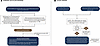 Figure 1
Consort diagram and study design for these analyses presented in the 4502 population. (A) CONSORT diagram showing biopsy inclusion for the INTERCOMEX and Trifecta-Kidney study (N = 3,570) dataset. (B) Study design.
As described in the Methods, we visualized the distribution of the 4,502 biopsies in the injury principal component analysis (PCA) model (Supplemental Figure 1, A and B; supplemental material available online with this article; https://doi.org/10.1172/jci.insight.199060DS1). We calculated injury PC1 (all injury), injury PC2 (early vs. late), and injury PC3 (epithelial remodeling), and assigned each biopsy to an injury archetype group: normal, AKI1, AKI2 (typical AKI), mild CKD, and CKDAKI (CKD with AKI transcripts) (37). We also visualized the rejection PCA model in Supplemental Figure 1, C and D.
Relationship of donor age to other predictive variables in the biopsy population. We studied the relationship of donor age to recipient age at transplant, donor type (DDvLD), and TxBx. An additional feature — biopsy for indication versus protocol — did not emerge as predictive, presumably because 82% of biopsies were for indications, and this variable was dropped from the analyses.
Donor age correlated with recipient age (Figure 2A, ρ = 0.38, P < 1.04 × 10⁻¹⁶), reflecting allocation policies that give young kidneys to young recipients and thus allocate older kidneys to older recipients.
 Figure 2
Scatterplot of time of biopsy after transplant, donor age, and recipient age in biopsies with available data. (A) Recipient age versus donor age (N = 1,802). (B) time of biopsy after transplant versus donor age (N = 1,802). (C) time of biopsy after transplant versus recipient age (N = 2,669). (D) eGFR versus donor age in all biopsies with available data for eGFR, time after transplant, and donor age (N = 2,669). (E) eGFR versus donor age in the early (≤42 days) biopsies (N = 270 of 2,669 from C and D). (F) eGFR versus donor age in the late (>1 year) biopsies (N = 911 of 2,669 from C and D). All P values reported on figure are for the regressions.
TxBx correlated negatively with both donor age (Figure 2B, ρ = –0.19, P = 2.05 × 10⁻¹³) and recipient age (Figure 2C, ρ = –0.25, P < 2.2 × 10⁻¹⁶), indicating that transplants from older donors and/or recipients undergo more biopsies in the first weeks after transplant.
As expected, donor age was strongly anticorrelated with eGFR in all biopsies, in early biopsies (≤42 days), and in late biopsies (>1 year, Figure 2, D–F).
We assessed the effect of deceased donation (DD) versus living donation (LD) on TxBx, eGFR, and molecular injury and rejection (Table 1). (There were too few transplants recorded as being donation after cardiac death to analyze separately.) Compared with LD, DD kidneys were slightly later, had lower eGFR, had more positive injury PC3/epithelial remodeling, and had increased molecular injury: IRRATs, TAL_New4-failed repair, and injury PC1. However, DD kidneys did differ from LD in molecular rejection (here represented as rejection PC1).
 Table 1
Examining the relationship of donor type to molecular injury and rejection scores and to eGFR (N with available data from 4,502)
Multivariate adaptive regression splines analysis. The strong relationship of donor age to the other predictive variables (recipient age, donor type, and TxBx) required the use of multivariate adaptive regression splines (MARS) analysis. This defined the relative association of each variable with the measurements at the time of biopsy — eGFR, molecular injury, and molecular rejection — holding the other predictive variables constant. (In some cases, interactions between variables were significant but this had little effect.)
Table 2 shows the relative importance in the cross-validated model of each predictive variable — TxBx, donor age, DDvLD, and recipient age — for predicting eGFR, IRRATs, injury PC1/2/3, and rejection PC1. Donor age was the only variable important in predicting eGFR. Donor age, TxBx, and DDvLD were all important for predicting expression of IRRATs and were also important for predicting injury PC1. TxBx was the only predictor of injury PC2. However, donor age was the major predictor of positive injury PC3. On the other hand, donor age had no positive or negative effect on rejection PC1, which anticorrelated with recipient age as expected.
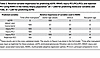 Table 2
Relative variable importance for predicting eGFR; IRRAT; injury PC1/PC2/PC3; and rejection PC1 using MARS in the kidney biopsy populationA (N = 1,668 for predicting molecular variables and TxBx, N = 1,287 for predicting eGFR)
Having established the major associations in the cross-validated model, we used the full model in MARS analysis to visualize the shape of the relationships between predictive variables and the injury or rejection features of the kidneys (Figure 3). The red lines indicate the relationship between the x and y variables when all other predictor variables are held constant at their mean values using MARS analysis. The teal lines indicate simple univariate restricted cubic splines, shown for comparison, which generally agreed with MARS analyses.
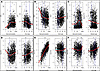 Figure 3
Partial dependence plots of multivariate adaptive regression spline models predicting clinical and injury-related variables, with log(days after transplant) and donor age as predictors. N = 1,802 samples with complete data. Predicted variables include (A) estimated glomerular filtration rate (GFR), (B) IRRATs, (C) rejection principal component 1 (PC1), (D) injury PC1, (E) injury principal component 2 (PC2), and (F) injury principal component 3 (PC3). Points represent individual biopsies. Red lines denote the fitted multivariate adaptive regression spline (MARS) partial dependence segments. Teal lines represent restricted cubic splines (3 knots). Blue dashed vertical lines indicate segment boundaries selected by MARS, with corresponding values shown above each panel. Predictor variables used in the models were log10(time after transplant), donor age, recipient age, and living versus deceased donors (0/1).
In Figure 3A, eGFR was initially low, reflecting peritransplant injury, and recovered to a plateau around day 72. Donor age >30 years was associated with decreased eGFR, as expected.
In Figure 3B, the IRRAT score (AKI transcripts) (24) was highest early, reflecting peritransplant injury, and fell until plateauing at day 30, echoing eGFR trends. Donor age >30 years was associated with increased IRRAT scores. The TAL_New4-failed repair transcript scores performed very similarly to the IRRAT scores (Supplemental Figure 2), being highest early and falling until day 39; donor age >30 increased the failed repair transcript scores. Thus, as previously reported (23), IRRATs and TAL_New4 performed similarly, despite annotation in different systems, being strongly induced in early transplant biopsies before plateauing after about 6 weeks.
Because there was no positive or negative association of donor age with rejection, we examined the association of recipient age with rejection PC1 (Figure 3C). Rejection PC1 correlated strongly with TxBx, as in previous studies (36), peaking at around 1,000 days. Rejection PC1 declined steadily with recipient age.
The time course of injury PC1 was V-shaped (Figure 3D), higher in the earliest biopsies reflecting peritransplant injury, declining to a minimum at day 38, and then rising again in late biopsies, compatible with CKD changes.
The injury PC2 score correlated strongly with TxBx (Figure 3E), consistent with Table 2. Donor age had little correlation with injury PC2.
The injury PC3 score was less affected by time, although slightly higher early after transplant (Figure 3F). However, older donor age strongly increased injury PC3, particularly after age 60 years.
Correlation of donor age with specific injury scores after time correction. We used linear regression to explore the correlation of donor age with injury archetype scores and selected scores representing CKD changes after correcting for time (Table 3). Donor age was strongly positively correlated with the CKDAKI and AKI1 archetype scores and correlated negatively with the mild CKD, AKI2, and normal scores (Table 3).
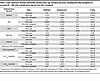 Table 3
Linear regression showing relationships between donor age and injury AA scores, including time after transplant as a covariate (N = 1,802 with available donor age and time after transplant)
Donor age was positively correlated with various CKD scores, including both the probability of fibrosis (ci>1Prob) and probability of histologic atrophy (ct>1Prob) classifier scores. Donor age was strongly correlated with expression of CXCL6, a chemokine that we previously found to be associated with CKDAKI and EMT (Table 3) but not AKI (23, 38) and strongly correlated with the CKDAKI score (ρ = 0.75) (23, 38).
Correlation of recipient age with specific rejection scores after time correction. We assessed the correlation of recipient age with rejection archetype scores (Supplemental Table 2) in a time-correlated model. Recipient age had a strong anticorrelation with rejection archetype scores, specifically T cell–mediated rejection 1 (TCMR1), TCMR2, and fully developed antibody-mediated rejection (FABMR) scores and correlated positively with the No Rejection score (Supplemental Table 2).
Defining the time at which donor age effects operate. We visualized the strength of the donor age correlations with AKI-related scores, CKD-related scores, and eGFR at various times after transplant in Figure 4.
 Figure 4
Changes in Spearman correlations over time between donor age and injury-related variables in biopsies classified as no rejection by our archetypal analysis. (A) The sample distribution’s probability density and correlation between donor age and injury PC scores, IRRATs, MKI67, and TAL_New4 (N = 1,021). (B) Sample distribution and correlation between donor age and ci>1Prob, ct>1Prob, CKDAKI, and CXCL6 (N = 1,021). (C) Sample distribution and correlation between donor age and eGFR (N = 767).
In Figure 4A, older donor age correlated with increased injury/failed-repair IRRAT and TAL_New4 genes most strongly at the intermediate times, peaking around 100 days, with lower correlations immediately after transplant and minimal correlations at late times. This was unexpected, given that the highest expression of IRRAT and TAL_New4 was immediately after transplant in Figure 3 and Supplemental Figure 2. Donor age also correlated with injury PC1 most strongly in the intermediate interval, like the IRRAT and TAL_New4 scores. Thus, the effect of older donor age is not on the early induction of molecular injury but much later, compatible with failed repair.
In contrast, donor age correlated strongly with injury PC3 in the early and late periods but much less at intermediate times. As in the MARS results, donor age had little effect on injury PC2.
Mitosis is an early transient event in acute injury (39) and correlates with negative injury PC2 in transplant biopsies (23). There was little relationship of donor age with expression of mitosis-associated gene MKI67, aside from weak anticorrelation at intermediate times.
Figure 4B explores the effect of time after transplant on the correlations of donor age with 4 chronic injury features: the 2 atrophy-fibrosis classifiers (ci>1Prob and ct>1Prob), the CKDAKI score, and chemokine CXCL6. All showed strong correlations at early and intermediate times after transplant that weakened at later times. The high correlation of donor age with chronicity features immediately after transplant suggests that these chronicity changes reflect aging in the donor kidney before transplantation, whereas the chronicity features at later times are mainly affected by rejection and other stresses, independent of donor age.
In Figure 4C, older donor age correlated negatively with eGFR immediately after transplant and through the first year and weakened at later times, similar to the correlations with chronicity features.
Supplemental Table 3 explores details of the correlations of donor age with various molecular injury measurements in 3 distinct time periods: early (≤42 days), intermediate (>42 days to ≤1 year), and late (>1 year). These results in the whole population were similar to results in biopsies with minimal rejection (Supplemental Table 4). As in Figure 4, donor age correlated with chronicity features early but with AKI/failed repair features at intermediate times.
In summary, older donor age correlated most strongly with AKI/failed repair genes at intermediate times after transplant, not at earlier times after transplant when expression of these genes was the highest, suggesting that older donor age increases failed repair of the injuries sustained in donation and transplantation. Older donor age correlated with chronicity features and low eGFR at early and intermediate times, suggesting pretransplant aging in the donor. Donor age had minimal correlations in late biopsies, despite the rising chronic injury scores in these biopsies.
Genes and gene set enrichment analysis terms correlating with donor age. Table 4 shows the top 20 genes (by P value) increased with donor age. Where annotated in our previous studies, some genes were noted to be injury-induced (potentially representing failed repair), e.g., AKAP12 (P = 2.8E-23). Other donor-age correlated genes included the negative regulator of growth CDKN1A and cell junction gene protocadherins PCDHA1 and PCDHB2, both of which correlated with injury PC3.
In gene set enrichment analysis (GSEA), the top pathways and gene sets in the genes positively enriched in biopsies with donor age ≥50 versus <50 years were dominated by the acute injury/failed repair gene sets (e.g., TAL_New4, IRITD3, and IRRATs) and EMT (Table 5).
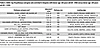 Table 5
GSEA: top 10 pathways and gene sets enriched in biopsies with donor age ≥50 years old (N = 810) versus donor age <50 years old (N = 1,103)
Quantifying the contributions of donor age to injury PCA, eGFR, and 3-year survival. Having demonstrated the strong statistical relationship of donor age with failed repair and chronicity scores, we measured the actual net contribution of donor age to injury in the population.
We examined the strength and direction of the correlations of donor age (blue) with direction of injury archetype scores (black) and the injury input variables (red) for the injury PCA (23) (Figure 5, A and B). Donor age had weak relationships to positive injury PC1, negative PC2, and positive PC3, consistent with the correlations reported above but weaker than the other factors shown, suggesting that donor age makes relatively small contributions to total injury changes.
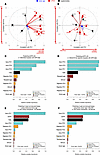 Figure 5
Relationships between injury and rejection molecular features as well as donor age, recipient age, and time after transplant with injury PC1/2/3, and variable importance in predicting eGFR and 3-year postbiopsy graft survival. Factor maps in the N = 4,502 kidney transplant biopsy population showing the correlations between the input variables (red circles) and the principal components in the N = 4,502 kidney transplant biopsy population. Supplemental variables are shown in black. Donor age was also a supplemental variable and is shown in blue. The correlations between the PCA input variables and the PC scores are shown as factor maps in (A) PC2 versus PC1 and (B) PC2 versus PC3. C–F show relative variable importance plots from random survival forest analyses using injury PC1, PC2, and PC3; rejection PC1, PC2, and PC3; donor age; eGFR; recipient age; deceased donor status (DDvLD); and time of biopsy after transplant (TxBx) as predictors for eGFR and 3-year postbiopsy death-censored survival (1 random biopsy per transplant). (C) Selected variables predicting eGFR in all 4,502 biopsies; (D) predicting eGFR in 2,479 no rejection biopsies; (E) predicting 3-year survival after biopsy, including eGFR as an input variable and using donor age as a continuous variable; and (F) predicting 3-year survival after biopsy, including eGFR as an input variable and using donor age as a binary variable.
We examined the relative contribution of donor age, recipient age, TxBx, injury PC1/2/3, and rejection PC1/2/3 to predictions of eGFR in a multivariate random forest in all biopsies (Figure 5C) or in no rejection biopsies (Figure 5D). Injury PC1, PC2, and PC3 were dominant in the prediction of eGFR in all biopsies and in no rejection biopsies. Donor age, rejection PC1/2/3, deceased donor status (DDvLD), and recipient age were all relatively unimportant determinants of eGFR.
Similarly, we assessed the relative contribution of donor age and other variables to the prediction of 3-year graft loss after biopsy (Figure 5, E and F). Injury PC1, eGFR, TxBx, and injury PC3 all strongly predicted survival, but donor age, recipient age, rejection PCs, or deceased donor status had only minimal contributions. The findings were similar whether donor age was a continuous variable (Figure 5E) or a dichotomous variable (≥50 vs. <50 years) (Figure 5F).
In univariate or multivariate analyses, neither donor age (P = 0.48) nor recipient age (P = 0.13) was significantly associated with 3-year postbiopsy survival.
Relative contribution of donor age to molecular injury and eGFR. The fact that donor age (univariate or multivariate) had minimal effect on survival was puzzling given the strong statistical associations of donor age with variables that strongly affect survival: IRRAT, injury PC1 and PC3, and eGFR. We examined the relative contribution of donor age to variance in IRRAT (Table 6) and found that donor age made little net contribution to total variance in IRRAT scores (1.4%) or TAL_New4-failed repair scores (2.1%). Similarly, donor age accounts for relatively little of the variance in injury PC1 (0.7%), injury PC3 (3.4%), or eGFR (9%) (data not shown).
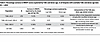 Table 6
Percentage variance in IRRAT scores explained by TxBx and donor age, in all biopsies with available TxBx and donor age data (N = 1,802)
Thus, donor age at transplantation had strong interactions with injury measurements and eGFR but little quantitative effect on the observed injury scores, eGFR, or risk of failure.


