
Research ArticleGeneticsHematology
Open Access |  10.1172/jci.insight.195682
Pyruvate kinase deficiency modifies sickle hemoglobin carrier and sickle cell disease phenotypes in mice
Xunde Wang,1 Meghann Smith,2 Sayuri Kamimura,2 Quan Li,3 Niharika Shah,4 Martha Quezado,4 Luis E.F. Almeida,2 Sebastian Vogel,2 Mickias B. Tegegn,1 Kevin Y. Sun,1 Rafael Villasmil,5 Chengyu Liu,6 William A. Eaton,3 Swee Lay Thein,1 and Zenaide M.N. Quezado1,2
1Sickle Cell Branch, National Heart Lung and Blood Institute,
2Department of Perioperative Medicine, National Institutes of Health Clinical Center,
3Laboratory of Chemical Physics, National Institute of Diabetes and Digestive and Kidney Diseases,
4Laboratory of Pathology, National Cancer Institute,
5Flow Cytometry Core Facility, National Eye Institute, and
6National Heart Lung and Blood Institute, NIH, Bethesda, Maryland, USA.
Address correspondence to: Zenaide (Zena) M.N. Quezado, Department of Perioperative Medicine, NIH Clinical Center, NIH, Bethesda, Maryland, 20892, USA. Email: zquezado@nih.gov. Or to: Swee Lay Thein, Sickle Cell Branch, National Heart Lung and Blood Institute, NIH, Bethesda, Maryland, 20892, USA. Email: sweelay.thein@nih.gov.
Authorship note: XW and MS have been designated as co–first authors. SLT and ZMNQ have been designated as co–senior authors.
Find articles by Wang, X. in: PubMed | Google Scholar
1Sickle Cell Branch, National Heart Lung and Blood Institute,
2Department of Perioperative Medicine, National Institutes of Health Clinical Center,
3Laboratory of Chemical Physics, National Institute of Diabetes and Digestive and Kidney Diseases,
4Laboratory of Pathology, National Cancer Institute,
5Flow Cytometry Core Facility, National Eye Institute, and
6National Heart Lung and Blood Institute, NIH, Bethesda, Maryland, USA.
Address correspondence to: Zenaide (Zena) M.N. Quezado, Department of Perioperative Medicine, NIH Clinical Center, NIH, Bethesda, Maryland, 20892, USA. Email: zquezado@nih.gov. Or to: Swee Lay Thein, Sickle Cell Branch, National Heart Lung and Blood Institute, NIH, Bethesda, Maryland, 20892, USA. Email: sweelay.thein@nih.gov.
Authorship note: XW and MS have been designated as co–first authors. SLT and ZMNQ have been designated as co–senior authors.
Find articles by Smith, M. in: PubMed | Google Scholar
1Sickle Cell Branch, National Heart Lung and Blood Institute,
2Department of Perioperative Medicine, National Institutes of Health Clinical Center,
3Laboratory of Chemical Physics, National Institute of Diabetes and Digestive and Kidney Diseases,
4Laboratory of Pathology, National Cancer Institute,
5Flow Cytometry Core Facility, National Eye Institute, and
6National Heart Lung and Blood Institute, NIH, Bethesda, Maryland, USA.
Address correspondence to: Zenaide (Zena) M.N. Quezado, Department of Perioperative Medicine, NIH Clinical Center, NIH, Bethesda, Maryland, 20892, USA. Email: zquezado@nih.gov. Or to: Swee Lay Thein, Sickle Cell Branch, National Heart Lung and Blood Institute, NIH, Bethesda, Maryland, 20892, USA. Email: sweelay.thein@nih.gov.
Authorship note: XW and MS have been designated as co–first authors. SLT and ZMNQ have been designated as co–senior authors.
Find articles by Kamimura, S. in: PubMed | Google Scholar
1Sickle Cell Branch, National Heart Lung and Blood Institute,
2Department of Perioperative Medicine, National Institutes of Health Clinical Center,
3Laboratory of Chemical Physics, National Institute of Diabetes and Digestive and Kidney Diseases,
4Laboratory of Pathology, National Cancer Institute,
5Flow Cytometry Core Facility, National Eye Institute, and
6National Heart Lung and Blood Institute, NIH, Bethesda, Maryland, USA.
Address correspondence to: Zenaide (Zena) M.N. Quezado, Department of Perioperative Medicine, NIH Clinical Center, NIH, Bethesda, Maryland, 20892, USA. Email: zquezado@nih.gov. Or to: Swee Lay Thein, Sickle Cell Branch, National Heart Lung and Blood Institute, NIH, Bethesda, Maryland, 20892, USA. Email: sweelay.thein@nih.gov.
Authorship note: XW and MS have been designated as co–first authors. SLT and ZMNQ have been designated as co–senior authors.
Find articles by Li, Q. in: PubMed | Google Scholar
1Sickle Cell Branch, National Heart Lung and Blood Institute,
2Department of Perioperative Medicine, National Institutes of Health Clinical Center,
3Laboratory of Chemical Physics, National Institute of Diabetes and Digestive and Kidney Diseases,
4Laboratory of Pathology, National Cancer Institute,
5Flow Cytometry Core Facility, National Eye Institute, and
6National Heart Lung and Blood Institute, NIH, Bethesda, Maryland, USA.
Address correspondence to: Zenaide (Zena) M.N. Quezado, Department of Perioperative Medicine, NIH Clinical Center, NIH, Bethesda, Maryland, 20892, USA. Email: zquezado@nih.gov. Or to: Swee Lay Thein, Sickle Cell Branch, National Heart Lung and Blood Institute, NIH, Bethesda, Maryland, 20892, USA. Email: sweelay.thein@nih.gov.
Authorship note: XW and MS have been designated as co–first authors. SLT and ZMNQ have been designated as co–senior authors.
Find articles by Shah, N. in: PubMed | Google Scholar
1Sickle Cell Branch, National Heart Lung and Blood Institute,
2Department of Perioperative Medicine, National Institutes of Health Clinical Center,
3Laboratory of Chemical Physics, National Institute of Diabetes and Digestive and Kidney Diseases,
4Laboratory of Pathology, National Cancer Institute,
5Flow Cytometry Core Facility, National Eye Institute, and
6National Heart Lung and Blood Institute, NIH, Bethesda, Maryland, USA.
Address correspondence to: Zenaide (Zena) M.N. Quezado, Department of Perioperative Medicine, NIH Clinical Center, NIH, Bethesda, Maryland, 20892, USA. Email: zquezado@nih.gov. Or to: Swee Lay Thein, Sickle Cell Branch, National Heart Lung and Blood Institute, NIH, Bethesda, Maryland, 20892, USA. Email: sweelay.thein@nih.gov.
Authorship note: XW and MS have been designated as co–first authors. SLT and ZMNQ have been designated as co–senior authors.
Find articles by Quezado, M. in: PubMed | Google Scholar
1Sickle Cell Branch, National Heart Lung and Blood Institute,
2Department of Perioperative Medicine, National Institutes of Health Clinical Center,
3Laboratory of Chemical Physics, National Institute of Diabetes and Digestive and Kidney Diseases,
4Laboratory of Pathology, National Cancer Institute,
5Flow Cytometry Core Facility, National Eye Institute, and
6National Heart Lung and Blood Institute, NIH, Bethesda, Maryland, USA.
Address correspondence to: Zenaide (Zena) M.N. Quezado, Department of Perioperative Medicine, NIH Clinical Center, NIH, Bethesda, Maryland, 20892, USA. Email: zquezado@nih.gov. Or to: Swee Lay Thein, Sickle Cell Branch, National Heart Lung and Blood Institute, NIH, Bethesda, Maryland, 20892, USA. Email: sweelay.thein@nih.gov.
Authorship note: XW and MS have been designated as co–first authors. SLT and ZMNQ have been designated as co–senior authors.
Find articles by
Almeida, L.
in:
PubMed
|
Google Scholar
|

1Sickle Cell Branch, National Heart Lung and Blood Institute,
2Department of Perioperative Medicine, National Institutes of Health Clinical Center,
3Laboratory of Chemical Physics, National Institute of Diabetes and Digestive and Kidney Diseases,
4Laboratory of Pathology, National Cancer Institute,
5Flow Cytometry Core Facility, National Eye Institute, and
6National Heart Lung and Blood Institute, NIH, Bethesda, Maryland, USA.
Address correspondence to: Zenaide (Zena) M.N. Quezado, Department of Perioperative Medicine, NIH Clinical Center, NIH, Bethesda, Maryland, 20892, USA. Email: zquezado@nih.gov. Or to: Swee Lay Thein, Sickle Cell Branch, National Heart Lung and Blood Institute, NIH, Bethesda, Maryland, 20892, USA. Email: sweelay.thein@nih.gov.
Authorship note: XW and MS have been designated as co–first authors. SLT and ZMNQ have been designated as co–senior authors.
Find articles by
Vogel, S.
in:
PubMed
|
Google Scholar
|
1Sickle Cell Branch, National Heart Lung and Blood Institute,
2Department of Perioperative Medicine, National Institutes of Health Clinical Center,
3Laboratory of Chemical Physics, National Institute of Diabetes and Digestive and Kidney Diseases,
4Laboratory of Pathology, National Cancer Institute,
5Flow Cytometry Core Facility, National Eye Institute, and
6National Heart Lung and Blood Institute, NIH, Bethesda, Maryland, USA.
Address correspondence to: Zenaide (Zena) M.N. Quezado, Department of Perioperative Medicine, NIH Clinical Center, NIH, Bethesda, Maryland, 20892, USA. Email: zquezado@nih.gov. Or to: Swee Lay Thein, Sickle Cell Branch, National Heart Lung and Blood Institute, NIH, Bethesda, Maryland, 20892, USA. Email: sweelay.thein@nih.gov.
Authorship note: XW and MS have been designated as co–first authors. SLT and ZMNQ have been designated as co–senior authors.
Find articles by Tegegn, M. in: PubMed | Google Scholar
1Sickle Cell Branch, National Heart Lung and Blood Institute,
2Department of Perioperative Medicine, National Institutes of Health Clinical Center,
3Laboratory of Chemical Physics, National Institute of Diabetes and Digestive and Kidney Diseases,
4Laboratory of Pathology, National Cancer Institute,
5Flow Cytometry Core Facility, National Eye Institute, and
6National Heart Lung and Blood Institute, NIH, Bethesda, Maryland, USA.
Address correspondence to: Zenaide (Zena) M.N. Quezado, Department of Perioperative Medicine, NIH Clinical Center, NIH, Bethesda, Maryland, 20892, USA. Email: zquezado@nih.gov. Or to: Swee Lay Thein, Sickle Cell Branch, National Heart Lung and Blood Institute, NIH, Bethesda, Maryland, 20892, USA. Email: sweelay.thein@nih.gov.
Authorship note: XW and MS have been designated as co–first authors. SLT and ZMNQ have been designated as co–senior authors.
Find articles by Sun, K. in: PubMed | Google Scholar
1Sickle Cell Branch, National Heart Lung and Blood Institute,
2Department of Perioperative Medicine, National Institutes of Health Clinical Center,
3Laboratory of Chemical Physics, National Institute of Diabetes and Digestive and Kidney Diseases,
4Laboratory of Pathology, National Cancer Institute,
5Flow Cytometry Core Facility, National Eye Institute, and
6National Heart Lung and Blood Institute, NIH, Bethesda, Maryland, USA.
Address correspondence to: Zenaide (Zena) M.N. Quezado, Department of Perioperative Medicine, NIH Clinical Center, NIH, Bethesda, Maryland, 20892, USA. Email: zquezado@nih.gov. Or to: Swee Lay Thein, Sickle Cell Branch, National Heart Lung and Blood Institute, NIH, Bethesda, Maryland, 20892, USA. Email: sweelay.thein@nih.gov.
Authorship note: XW and MS have been designated as co–first authors. SLT and ZMNQ have been designated as co–senior authors.
Find articles by
Villasmil, R.
in:
PubMed
|
Google Scholar
|
1Sickle Cell Branch, National Heart Lung and Blood Institute,
2Department of Perioperative Medicine, National Institutes of Health Clinical Center,
3Laboratory of Chemical Physics, National Institute of Diabetes and Digestive and Kidney Diseases,
4Laboratory of Pathology, National Cancer Institute,
5Flow Cytometry Core Facility, National Eye Institute, and
6National Heart Lung and Blood Institute, NIH, Bethesda, Maryland, USA.
Address correspondence to: Zenaide (Zena) M.N. Quezado, Department of Perioperative Medicine, NIH Clinical Center, NIH, Bethesda, Maryland, 20892, USA. Email: zquezado@nih.gov. Or to: Swee Lay Thein, Sickle Cell Branch, National Heart Lung and Blood Institute, NIH, Bethesda, Maryland, 20892, USA. Email: sweelay.thein@nih.gov.
Authorship note: XW and MS have been designated as co–first authors. SLT and ZMNQ have been designated as co–senior authors.
Find articles by
Liu, C.
in:
PubMed
|
Google Scholar
|
1Sickle Cell Branch, National Heart Lung and Blood Institute,
2Department of Perioperative Medicine, National Institutes of Health Clinical Center,
3Laboratory of Chemical Physics, National Institute of Diabetes and Digestive and Kidney Diseases,
4Laboratory of Pathology, National Cancer Institute,
5Flow Cytometry Core Facility, National Eye Institute, and
6National Heart Lung and Blood Institute, NIH, Bethesda, Maryland, USA.
Address correspondence to: Zenaide (Zena) M.N. Quezado, Department of Perioperative Medicine, NIH Clinical Center, NIH, Bethesda, Maryland, 20892, USA. Email: zquezado@nih.gov. Or to: Swee Lay Thein, Sickle Cell Branch, National Heart Lung and Blood Institute, NIH, Bethesda, Maryland, 20892, USA. Email: sweelay.thein@nih.gov.
Authorship note: XW and MS have been designated as co–first authors. SLT and ZMNQ have been designated as co–senior authors.
Find articles by Eaton, W. in: PubMed | Google Scholar
1Sickle Cell Branch, National Heart Lung and Blood Institute,
2Department of Perioperative Medicine, National Institutes of Health Clinical Center,
3Laboratory of Chemical Physics, National Institute of Diabetes and Digestive and Kidney Diseases,
4Laboratory of Pathology, National Cancer Institute,
5Flow Cytometry Core Facility, National Eye Institute, and
6National Heart Lung and Blood Institute, NIH, Bethesda, Maryland, USA.
Address correspondence to: Zenaide (Zena) M.N. Quezado, Department of Perioperative Medicine, NIH Clinical Center, NIH, Bethesda, Maryland, 20892, USA. Email: zquezado@nih.gov. Or to: Swee Lay Thein, Sickle Cell Branch, National Heart Lung and Blood Institute, NIH, Bethesda, Maryland, 20892, USA. Email: sweelay.thein@nih.gov.
Authorship note: XW and MS have been designated as co–first authors. SLT and ZMNQ have been designated as co–senior authors.
Find articles by Thein, S. in: PubMed | Google Scholar
1Sickle Cell Branch, National Heart Lung and Blood Institute,
2Department of Perioperative Medicine, National Institutes of Health Clinical Center,
3Laboratory of Chemical Physics, National Institute of Diabetes and Digestive and Kidney Diseases,
4Laboratory of Pathology, National Cancer Institute,
5Flow Cytometry Core Facility, National Eye Institute, and
6National Heart Lung and Blood Institute, NIH, Bethesda, Maryland, USA.
Address correspondence to: Zenaide (Zena) M.N. Quezado, Department of Perioperative Medicine, NIH Clinical Center, NIH, Bethesda, Maryland, 20892, USA. Email: zquezado@nih.gov. Or to: Swee Lay Thein, Sickle Cell Branch, National Heart Lung and Blood Institute, NIH, Bethesda, Maryland, 20892, USA. Email: sweelay.thein@nih.gov.
Authorship note: XW and MS have been designated as co–first authors. SLT and ZMNQ have been designated as co–senior authors.
Find articles by Quezado, Z. in: PubMed | Google Scholar
Published January 20, 2026 - More info
JCI Insight. 2026;11(4):e195682. https://doi.org/10.1172/jci.insight.195682.
© 2026 Wang et al. This work is licensed under the Creative Commons Attribution 4.0 International License. To view a copy of this license, visit http://creativecommons.org/licenses/by/4.0/.
Received: May 15, 2025; Accepted: January 2, 2026


-
Results
AA, AS, and SS Townes mice with Pklr-null mutations are viable, lack PKR expression, and have intact expression of other PK isoforms. Townes AA (βA/βA, controls), AS (βA/βS, HbS carrier), and SS (βS/βS, SCD) mice with coinheritance of Pklr(WT/13ntdel), Pklr(13ntdel/13ntdel), Pklr(WT/246ntdel), and Pklr(246ntdel/246ntdel) mutations were viable. However, those with Pklr(WT/246ntdel) and Pklr(246ntdel/246ntdel) mutations displayed decreased reproductive capacity; hence, some outcome measures for complete absence of PKR were assessed only in mice with coinheritance of Pklr(13ntdel/13ntdel). We confirmed that mice with coinheritance of both Pklr-null mutant alleles lacked expression of PKR but retained expression of PKL (Supplemental Figure 1, A–D; supplemental material available online with this article; https://doi.org/10.1172/jci.insight.195682DS1) and of the pyruvate kinase muscle isoform (PKM; Supplemental Figure 2, A and B). Supplemental Tables 1 and 2 list mean ± SD for all outcome measurements and P values of comparisons examining the effects of coinheritance of Pklr null mutations [Pklr(13ntdel/13ntdel) or Pklr(246ntdel/246ntdel)] in AA, AS, and SS mice versus their respective Pklr(WT/WT) counterparts.
Coinheritance of PKR deficiency [Pklr(13ntdel/13ntdel) or Pklr(246ntdel/246ntdel)] differentially affects blood levels of ATP and 2,3-DPG in AA, AS, and SS mice. We measured ATP and 2,3-DPG blood levels as an indirect measure of PKR activity in AA, AS, and SS mice with and without Pklr mutations (Figure 1 and Supplemental Table 1). Consistent with our previous reports (24, 25), among Pklr(WT/WT), SSPklr(WT/WT) had higher blood ATP (Figure 1A), lower 2,3-DPG (Figure 1D), and higher ATP/2,3-DPG ratio (Figure 1G) compared with AAPklr(WT/WT) (P = 0.0015, < 0.0001, and < 0.0001, respectively) and ASPklr(WT/WT) animals (P = 0.0002, < 0.0001, and < 0.0001, respectively, Supplemental Table 1).
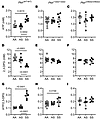 Figure 1
Coinheritance of Pklr-null mutations [Pklr(13ntdel/13ntdel) or Pklr(246ntdel/246ntdel)] specific for the RBC pyruvate kinase isoform (PKR) differentially alters ATP and 2,3-diphosphoglycerate (2,3-DPG) levels in AA, AS, and SS mice. Data are shown as scatter dot plots illustrating individual mouse measurements, with overlaid bars representing the least-squares mean ± 95% CI. Data were analyzed using a 2-way ANOVA, and P values were adjusted for multiple comparisons using the Tukey method. All experimental groups included balanced number of age- and sex-matched mice. SSPklr(WT/WT) mice had higher ATP (A), lower 2,3-DPG (D), and higher ATP/2,3-DPG ratio (G) compared with AAPklr(WT/WT) and ASPklr(WT/WT) animals (all P ≤ 0.0015). (A–C) The effect of Pklr mutations on ATP levels varied according to sickle genotype (P = 0.005 for genotype-by-Pklr mutation interactions). PKR-deficient AA and AS mice [Pklr(13ntdel/13ntdel) or Pklr(246ntdel/246ntdel)] had higher ATP levels compared with AAPklr(WT/WT) and ASPklr(WT/WT) respectively (all P ≤ 0.0112, A–C). Conversely, PKR-deficient SS mice had similar blood ATP levels compared with SSPklr(WT/WT) (P ≥ 0.7318, A–C). Pklr mutations also altered 2,3-DPG levels differentially depending on the sickle genotype (P < 0.0001 for genotype-by-Pklr mutation interactions). PKR-deficient [Pklr(13ntdel/13ntdel) or Pklr(246ntdel/246ntdel)] AA and AS mice had similar 2,3-DPG levels compared with AAPklr(WT/WT) and ASPklr(WT/WT), respectively (all, P ≥ 0.6275, D–F). Conversely, PKR-deficient SS [SSPklr(13ntdel/13ntdel) and SSPklr(246ntdel/246ntdel)] mice had higher 2,3-DPG levels compared with SSPklr(WT/WT) (P = 0.0145 and P = 0.0048, respectively; D–F). (G–I) As a result, PKR-deficient AA and AS mice [Pklr(13ntdel/13ntdel) or Pklr(246ntdel/246ntdel)] had higher ATP/2,3-DPG ratios compared with AAPklr(WT/WT) and ASPklr(WT/WT) (P = 0.0171 and P = 0.0007 for AA and P = 0.0134 and P = 0.0023 for AS, respectively; G–I). In contrast, PKR-deficient SS mice had lower ATP/2,3-DPG ratio compared with SSPklr(WT/WT) (P = 0.0020 and P = 0.0123, respectively; G–I).
Coinheritance of PKR deficiency influenced ATP and 2,3-DPG levels in AA and AS mice in a similar manner, yet it affected SS mice in a significantly different pattern (sickle genotype-by-Pklr mutation interactions P = 0.005 for ATP and P < 0.0001 for 2,3-DPG). PKR-deficient AA and AS mice had elevated ATP, similar 2,3-DPG, and higher ATP/2,3-DPG ratios compared with their WT counterparts [AAPklr(WT/WT) and ASPklr(WT/WT)] respectively (Figure 1, A–I, and Supplemental Table 1). Conversely, PKR-deficient SS mice had similar ATP, higher 2,3-DPG, and lower ATP/2,3-DPG ratio compared with SSPklr(WT/WT) (Figure 1 and Supplemental Table 1).
Coinheritance of PKR deficiency [Pklr(13ntdel/13ntdel) or Pklr(246ntdel/246ntdel)] differentially affects blood cell counts and hematologic indices in AA, AS, and SS Townes mice. We next investigated the effect of PKR deficiency on hematologic parameters (Figures 2 and 3, and Supplemental Table 1). Coinheritance of PKR deficiency did not significantly affect WBC, RBC, hemoglobin or hematocrit in SS mice, as those outcomes were similar in SSPklr(WT/WT) and PKR-deficient SS mice [Pklr(13ntdel/13ntdel) and Pklr(246ntdel/246ntdel)] (Figure 2, A–L, and Supplemental Table 1). In contrast, PKR-deficient AA and AS mice [Pklr(13ntdel/13ntdel) and Pklr(246ntdel/246ntdel)] developed severe anemia shown by lower RBC, hemoglobin and hematocrit compared with AAPklr(WT/WT) and ASPklr(WT/WT), respectively (Figure 2, D–L, and Supplemental Table 1). Both AA and AS mice were similarly affected by PKR deficiency.
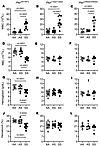 Figure 2
Coinheritance of Pklr-null mutations [Pklr(13ntdel/13ntdel) or Pklr(246ntdel/246ntdel)] specific for the RBC pyruvate kinase isoform (PKR) differentially affects blood cell counts in AA, AS, and SS Townes mice. Data are shown as scatter dot plots illustrating individual mouse measurements, with overlaid bars representing the least-squares mean ± 95% CI. Data were analyzed using a 2-way ANOVA, and P values were adjusted for multiple comparisons using the Tukey method. All experimental groups included balanced number of age- and sex-matched mice. As expected, SSPklr(WT/WT) mice had leukocytosis (A) and anemia shown by lower RBC (D), hemoglobin (G), and hematocrit (J) compared with AAPklr(WT/WT) and ASPklr(WT/WT). PKR-deficient [Pklr(13ntdel/13ntdel) and Pklr(246ntdel/246ntdel)] AA, AS, or SS mice had similar WBC counts compared with their respective Pklr(WT/WT) counterparts, A–C. In AA, AS, and SS mice, Pklr null mutations [Pklr(13ntdel/13ntdel) or Pklr(246ntdel/246ntdel)] yielded no significant changes in WBC (A–C). However, AA and AS mice with Pklr null mutations [AAPklr(13ntdel/13ntdel), AAPklr(246ntdel/246ntdel), ASPklr(13ntdel/13ntdel), ASPklr(246ntdel/246ntdel)] developed anemia as shown by lower RBC counts (D–F), hemoglobin (G–I), and hematocrit (J–L) compared with AAPklr(WT/WT) and ASPklr(WT/WT). In contrast, PKR-deficient SS mice [SSPklr(13ntdel/13ntdel) or SSPklr(246ntdel/246ntdel)] had similar RBC, hemoglobin, and hematocrit compared with SSPklr(WT/WT) (D–L).
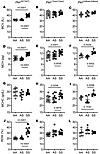 Figure 3
Coinheritance of Pklr-null mutations [Pklr(13ntdel/13ntdel) or Pklr(246ntdel/246ntdel)] specific for the RBC pyruvate kinase isoform (PKR) differentially affects hematologic indices in AA, AS, and SS Townes mice. Data are shown as scatter dot plots illustrating individual mouse measurements, with overlaid bars representing the least-squares mean ± 95% CI. Data were analyzed using a 2-way ANOVA, and P values were adjusted for multiple comparisons using the Tukey method. All experimental groups included balanced number of age- and sex-matched mice. Among animals with Pklr(WT/WT), SSPklr(WT/WT) mice had higher mean corpuscular volume (MCV, A), mean corpuscular hemoglobin (MCH, D), and red blood cell distribution width (RDW, J) (all P < 0.0001) and similar MCHC (G) compared with AAPklr(WT/WT) and ASPklr(WT/WT). AA and AS mice with Pklr-null mutations [AAPklr(13ntdel/13ntdel), AAPklr(246ntdel/246ntdel), ASPklr(13ntdel/13ntdel), or ASPklr(246ntdel/246ntdel)] had higher MCV, MCH, and RDW and lower mean corpuscular hemoglobin concentration (MCHC) compared with AAPklr(WT/WT) and ASPklr(WT/WT) (A, B, D, E, G, H, J, and K). In contrast, SSPklr(13ntdel/13ntdel) and SSPklr(246ntdel/246ntdel)) had higher MCV (C) but similar MCH (F), MCHC (I), and RDW (L) compared with SSPklr(WT/WT).
PKR deficiency minimally affected hematologic indices in SS mice. While PKR-deficient SS mice had further elevations in mean corpuscular volume (MCV, P < 0.005; Figure 3, A–C, and Supplemental Table 1), they exhibited similar mean corpuscular hemoglobin (MCH), mean corpuscular hemoglobin concentration (MCHC), and RBC distribution width (RDW) compared with SSPklr(WT/WT) (Figure 3, D–L, and Supplemental Table 1). Conversely, PKR deficiency changed all hematological indices in AA and AS mice. Both PKR-deficient AA and AS were similarly affected, with elevated MCV, MCH, and RDW and lower MCHC compared with AAPklr(WT/WT) and ASPklr(WT/WT), respectively (Figure 3, A–L, and Supplemental Table 1). These findings indicate that PKR deficiency differentially influenced hematologic parameters in AA and AS compared with SS mice (sickle genotype-by-Pklr mutation interactions, P ≤ 0.0217 for blood counts and hematological indices).
Lastly, PKR-deficiency yielded no significant changes in WBC (Figure 2, A–C, and Supplemental Table 1) or platelet counts (data not shown) in AA, AS, and SS mice.
Coinheritance of PKR deficiency [Pklr(13ntdel/13ntdel) or Pklr(246ntdel/246ntdel)] modulates sickling kinetics in AS and SS mice. When deoxygenated, RBCs containing HbS form polymers leading to sickling. As expected, RBCs from SSPklr(WT/WT) mice had a higher percentage of sickled RBCs, larger area under the sickling curve (AUSC), and a shorter T50 (time in which 50% of RBCs are sickled) compared with ASPklr(WT/WT) (all P < 0.0001, Figure 4, A, D, and G). Surprisingly, PKR deficiency reduced sickling both in AS and SS mice as shown by a lower fraction of sickled RBCs compared with their WT counterparts ASPklr(WT/WT) and SSPklr(WT/WT) (all P ≤ 0.0338; Figure 4, A–C, and Supplemental Table 1). The effect on the AUSC was specific to the Pklr mutation, in that PKR-deficient AS and SS mice carrying Pklr(13ntdel/13ntdel) exhibited a smaller AUSC compared with ASPklr(WT/WT) and SSPklr(WT/WT), respectively (P = 0.0389 and P = 0.0359; Figure 4, D–F, and Supplemental Table 1). Conversely, no significant changes in AUSC were observed in AS or SS mice carrying the Pklr(246ntdel/246ntdel) mutation. Lastly, while PKR deficiency did not affect T50 in SS mice, ASPklr(13ntdel/13ntdel) and ASPklr(246ntdel/246ntdel) did not reach T50, indicating that less than 50% of the RBCs sickled by the end of the sickling assay time (Figure 4, G–I, and Supplemental Table 1).
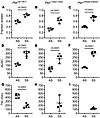 Figure 4
Coinheritance of Pklr-null mutations [Pklr(13ntdel/13ntdel) or Pklr(246ntdel/246ntdel)] specific for the RBC pyruvate kinase isoform (PKR) affects sickling kinetics in AS and SS mice. Data are shown as scatter dot plots illustrating individual mouse measurements, with overlaid bars representing the least-squares mean ± 95% CI. Data were analyzed using a 2-way ANOVA, and P values were adjusted for multiple comparisons using the Tukey method. All experimental groups included a balanced number of age- and sex-matched mice. When deoxygenated, RBCs from SSPklr(WT/WT) mice had a higher percentage of sickled RBC (A), larger area under the sickling curve (AUSC, D), and a shorter T50 (time when 50% of RBCs are sickled, G) compared with ASPklr(WT/WT). Surprisingly, coinheritance of Pklr(13ntdel/13ntdel) or Pklr(246ntdel/246ntdel) in AS and SS mice decreased sickling as indicated by a decrease in the fraction of sickled RBC compared with ASPklr(WT/WT) and Pklr(WT/WT) (A–C). Additionally, ASPklr(13ntdel/13ntdel) and SSPklr(13ntdel/13ntdel), but not ASPklr(246ntdel/246ntdel) or SSPklr(246ntdel/246ntdel), had a lower AUSC compared with ASPklr(WT/WT) and SSPklr(WT/WT) (D–F). While PKR deficiency [Pklr(246ntdel/246ntdel) or Pklr(246ntdel/246ntdel)] did not affect T50 in SS mice, RBCs from ASPklr(13ntdel/13ntdel) and ASPklr(246ntdel/246ntdel) did not reach T50 during the time limit of the assay, suggesting a prolongation of T50 (G–I)
Coinheritance of PKR deficiency [Pklr(13ntdel/13ntdel) or Pklr(246ntdel/246ntdel)] enhances extramedullary hematopoiesis in AA, AS, and SS mice. As previously reported (26), SSPklr(WT/WT) mice display enhanced extramedullary hematopoiesis as shown by increased spleen/body weight ratio compared with AAPklr(WT/WT) and ASPklr(WT/WT) (P < 0.0001; Figure 5, A–C, and Supplemental Table 1). PKR deficiency was associated with increased extramedullary hematopoiesis in all genotypes. PKR-deficient AA, AS, and SS mice had increased spleen/body weight ratio compared with their respective Pklr(WT/WT) counterparts (all P < 0.0001; Figure 5, A–C).
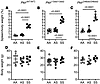 Figure 5
Coinheritance of Pklr-null mutations [Pklr(13ntdel/13ntdel) or Pklr(246ntdel/246ntdel)] specific for the RBC pyruvate kinase isoform (PKR) enhances extramedullary hematopoiesis in AA, AS, and SS mice. Data are shown as scatter dot plots illustrating individual mouse measurements, with overlaid bars representing the least-squares mean ± 95% CI. Data were analyzed using a 2-way ANOVA, and P values were adjusted for multiple comparisons using the Tukey method. All experimental groups included a balanced number of age- and sex-matched mice. SSPklr(WT/WT) mice had higher spleen to body weight ratio compared with AAPklr(WT/WT) and ASPklr(WT/WT, (both P < 0.0001; A). PKR deficiency in AA, AS, SS mice was associated with an increase in spleen/body weight ratio compared with their respective Pklr(WT/WT) (all P < 0.0001; A–C) indicating a significant increase in extramedullary hematopoiesis. Of note, AA, AS, or SS mice with PKR deficiency had no significant changes in body weight (D–F).
Regardless of genotype, males were heavier than female mice (P < 0.001, data not shown), and overall, PKR-deficient AA, AS, or SS mice had no significant changes in body weight (Figure 5, D–F).
Coinheritance of PKR deficiency [Pklr(13ntdel/13ntdel)] affects mitochondrial content and function in circulating RBCs from AA, AS, and SS mice. Using flow cytometry and mitochondrial markers, we examined mitochondrial mass (MitoTracker Green), membrane potential (MitoTracker Deep Red), and superoxide (MitoSOX) content in immature (TER119+ and CD71hi, which are predominantly reticulocytes) and mature (TER119+ and CD71low) RBCs from AA, AS, and SS mice with and without PKR deficiency (Figure 6, Figure 7, and Supplemental Figure 3). As previously shown (26, 27), SSPklr(WT/WT) mice have a higher percentage of circulating immature RBCs (predominantly reticulocytes, 24%) compared with AAPklr(WT/WT) (4%) and ASPklr(WT/WT) (3%), (all P < 0.0001; Figure 6A, and Supplemental Table 2).
![Coinheritance of Pklr-null mutation [Pklr(13ntdel/13ntdel)] specific for th](//df6sxcketz7bb.cloudfront.net/manuscripts/195000/195682/small/jci.insight.195682.f6.gif "Coinheritance of Pklr-null mutation [Pklr(13ntdel/13ntdel)] specific for the RBC pyruvate kinase isoform (PKR) affects mitochondrial content and function in circulating immature RBCs from AA, AS, and SS mice.") Figure 6
Figure 6Coinheritance of Pklr-null mutation [Pklr(13ntdel/13ntdel)] specific for the RBC pyruvate kinase isoform (PKR) affects mitochondrial content and function in circulating immature RBCs from AA, AS, and SS mice. Data are shown as scatter dot plots illustrating individual mouse measurements, with overlaid bars representing the least-squares mean ± 95% CI. Data were analyzed using a 2-way ANOVA, and P values were adjusted for multiple comparisons using the Tukey method. All experimental groups included a balanced number of age- and sex-matched mice. Flow cytometric analysis of mitochondria in circulating immature RBCs (CD71hi expression; A and B), which are predominantly reticulocytes, was carried out using MitoTracker Green (geometric mean fluorescence intensity, gMFI; C and D), MitoTracker Deep Red (E and F), and MitoSOX probes (G and H), which reflect mitochondrial mass, membrane potential, and superoxide content respectively. (A) SSPklr(WT/WT) mice had a higher percentage of circulating immature RBCs (reticulocytes, approximately 24%) compared with AAPklr(WT/WT) (4%) and ASPklr(WT/WT) (3%). Immature RBCs from SSPklr(WT/WT) displayed reduced mitochondrial mass (C), membrane potential (E), and superoxide content (G) compared with AAPklr(WT/WT) and ASPklr(WT/WT). PKR-deficient [Pklr(13ntdel/13ntdel)] AA, AS, and SS mice had a higher percentage of immature RBCs compared with their respective Pklr(WT/WT) counterpart (P < 0.0001, P < 0.0001, and P = 0.0099; A and B). Immature RBCs from PKR-deficient AA and AS mice had reduced mitochondrial mass (C and D) and mitochondrial polarization (E and F) (all P ≤ 0.0034) but similar superoxide content (G and H) compared with AAPklr(WT/WT) and ASPklr(WT/WT). In contrast, immature RBCs, from PKR-deficient SS had no significant changes in mitochondrial content or function compared with SSPklr(WT/WT) mice (C–H).
![Coinheritance of Pklr-null mutation [Pklr(13ntdel/13ntdel)] specific for th](//df6sxcketz7bb.cloudfront.net/manuscripts/195000/195682/small/jci.insight.195682.f7.gif "Coinheritance of Pklr-null mutation [Pklr(13ntdel/13ntdel)] specific for the RBC pyruvate kinase isoform (PKR) affects mitochondrial content and function in circulating mature RBCs from AA, AS, and SS mice.") Figure 7
Figure 7Coinheritance of Pklr-null mutation [Pklr(13ntdel/13ntdel)] specific for the RBC pyruvate kinase isoform (PKR) affects mitochondrial content and function in circulating mature RBCs from AA, AS, and SS mice. Data are shown as scatter dot plots illustrating individual mouse measurements, with overlaid bars representing the least-squares mean ± 95% CI. Data were analyzed using a 2-way ANOVA, and P values were adjusted for multiple comparisons using the Tukey method. All experimental groups included balanced number of age- and sex-matched mice. Flow cytometric analysis of mitochondria in circulating mature RBCs (CD71low expression) was carried out using MitoTracker Green (geometric mean fluorescence intensity, gMFI; C and D) and MitoTracker Deep Red (E and F), and MitoSOX probes (G and H), which reflect mitochondrial mass, membrane potential, and superoxide content respectively. SSPklr(WT/WT) mice had a lower percentage of circulating mature RBCs (A), which contained higher degree of polarized mitochondria (E), and superoxide content (G) compared with AAPklr(WT/WT). PKR deficient AA, AS, and SS mice had lower percentage of circulating mature RBCs compared with their respective Pklr(WT/WT) counterparts, (P < 0.0001, P < 0.0001, and P = 0.0101; A and B). RBCs from PKR-deficient AA mice exhibited elevated mitochondrial membrane potential (P = 0.0143; E and F), and superoxide content (P = 0.0054; G and H) compared with AAPklr(WT/WT), suggesting that functional mitochondria were retained in those mature RBCs. PKR-deficient AS had higher RBC mitochondrial superoxide content (P = 0.0212; G and H) compared with ASPklr(WT/WT). Lastly, mature RBCs from PKR-deficient SS mice had elevated mitochondrial mass (P = 0.0041; C and D) and further elevations in mitochondrial polarization (P = 0.0007; E and F) and superoxide content (P = 0.0002; G and H) compared with SSPklr(WT/WT).
PKR-deficient [Pklr(13ntdel/13ntdel)] AA, AS, and SS mice showed an elevated percentage of immature RBCs compared with their respective Pklr(WT/WT) counterpart (P < 0.0001, P < 0.0001 and P = 0.0099, respectively; Figure 6, A and B, and Supplemental Table 2). Immature RBCs from PKR-deficient AA and AS mice showed reduced mitochondrial mass and mitochondrial polarization (all P ≤ 0.0034) but had similar superoxide content compared with AAPklr(WT/WT) and ASPklr(WT/WT) (Figure 6, C–H, Supplemental Figure 3, and Supplemental Table 2). In contrast, immature RBCs from PKR-deficient SS mice showed no significant changes in mitochondrial content or function compared with SSPklr(WT/WT) mice (Figure 6, C–H, Supplemental Figure 3, and Supplemental Table 2).
As we had previously shown (26, 28) mature RBCs from SSPklr(WT/WT) contained a higher degree of polarized mitochondria (P = 0.0324) and superoxide content (P = 0.0105) compared with AAPklr(WT/WT) (Figure 7, A, E, and G, and Supplemental Table 2), indicating mitochondrial retention.
PKR deficiency was associated with a decrease in mature RBCs. PKR-deficient AA, AS, and SS mice had a lower percentage of mature RBCs compared with their respective Pklr(WT/WT) counterparts (P < 0.0001, P < 0.0001 and P = 0.0101, respectively; Figure 7, A–C, and Supplemental Table 2). PKR-deficient AA mice exhibited elevated mitochondrial membrane potential (P = 0.0143; Figure 7, E and F; Supplemental Figure 3; and Supplemental Table 2), and superoxide content (P = 0.0054; Figure 7, G and H, and Supplemental Figure 3) compared with AAPklr(WT/WT), indicating that mitochondria were retained in those mature RBCs. PKR-deficient AS had higher RBC mitochondrial superoxide content (P = 0.0212; Figure 7, G and H, Supplemental Figure 3, and Supplemental Table 2) compared with ASPklr(WT/WT). Lastly, mature RBCs from PKR-deficient SS mice had elevated mass and further elevations in mitochondrial polarization and superoxide content (P = 0.0041, P = 0.0007, and P = 0.0002, respectively; Figure 7, C–H, Supplemental Figure 3, and Supplemental Table 2) compared with SSPklr(WT/WT).
Using whole blood transmission electron microscopy (TEM) images (8 images per each mouse), we determined the average number of mitochondria per mature RBC (Supplemental Figure 4) (24, 29–31). While RBCs from SSPklr(WT/WT) mice exhibited a higher average number of mitochondria per RBC compared with AAPklr(WT/WT) (P = 0.0084) and ASPklr(WT/WT) (P = 0.0128; Supplemental Figure 4A), PKR deficiency independently increased RBC mitochondrial retention in all genotypes. PKR-deficient AA, AS, and SS mice had a higher average number of mitochondria per RBC compared with their respective Pklr(WT/WT) counterpart (P = 0.0010, P = 0.0016, and P = 0.0378, respectively; Supplemental Figure 4, A–H, and Supplemental Table 2).
Coinheritance of PKR deficiency differentially affects liver and spleen histopathology in AA, AS, and SS mice. As previously reported SSPklr(WT/WT) mice display marked hepatic inflammation (lymphocytes and macrophage infiltration), necrosis, and iron deposition (hemosiderin pigmentation in macrophages) (32), findings which were not present in AAPklr(WT/WT) or ASPklr(WT/WT) (Figure 8). PKR-deficient AA and AS mice [Pklr (13ntdel/13ntdel) or Pklr(246ntdel/246ntdel)] developed substantial spleen and liver iron deposits, as well as marked hepatic inflammation, and increased extramedullary hematopoiesis compared with AAPklr(WT/WT) or ASPklr(WT/WT) (Figure 8). In contrast, PKR-deficient SS mice showed no significant changes in liver or spleen histopathology compared with SSPklr(WT/WT) (Figure 8). PKR-deficient AA, AS, and SS mice displayed no significant changes on kidney pathology (data not shown).
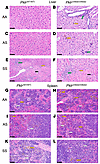 Figure 8
Coinheritance of Pklr-null mutations [Pklr(13ntdel/13ntdel) or Pklr(246ntdel/246ntdel)] specific for the RBC pyruvate kinase isoform (PKR) differentially affects liver and spleen histopathology in AA, AS, and SS mice. Each panel shows representative H&E-stained sections of liver and spleen from Pklr(WT/WT)and Pklr(246ntdel/246ntdel). Yellow arrows indicate hemosiderin pigmentation in macrophages, green arrows lymphocytic infiltration (inflammation), black arrow necrosis, and white arrows extramedullary hematopoiesis. Mice with Pklr(13ntdel/13ntdel) and Pklr(246ntdel/246ntdel) had similar histopathology; for simplicity, we only display representative images for Pklr(246ntdel/246ntdel) mice. Compared with AAPklr(WT/WT) (A) and ASPklr(WT/WT) (C), and SSPklr(WT/WT) (E) mice displayed marked hepatic inflammation (lymphocytes and macrophage infiltration), necrosis, and iron deposition (hemosiderin pigmentation in macrophages). PKR-deficient AA (B and H) and AS mice (D and J) developed substantial liver and spleen iron deposition, as well as marked hepatic inflammation, and increased extramedullary hematopoiesis compared with AAPklr(WT/WT) (A and G) or ASPklr(WT/WT) (C and I). In contrast, PKR-deficient SS (F and L) showed no significant changes in liver or spleen histopathology compared with SSPklr(WT/WT mice (E and K). Liver and spleen histopathology from 5 to 12 mice per each genotype were examined.
Coinheritance of PKR deficiency mildly affects biochemical parameters in AA, AS, and SS mice. Overall, PKR-deficient AA, AS, and SS, mice had higher total bilirubin (P < 0.0001, for overall Pklr mutation effect) and blood urea nitrogen (BUN, P = 0.0299) compared with Pklr(WT/WT) counterparts (Supplemental Figure 5, A–F, and Supplemental Table 2). Lastly, AAPklr(13ntdel/13ntdel) had higher protein (P = 0.0063) and globulin (P = 0.0122) levels compared with AAPklr(WT/WT) (Supplemental Figures 5, G, I, J, and L, and Supplemental Table 2).
Coinheritance of PKR deficiency differentially affects grip force in AA, AS, and SS mice. Overall, controlling for Pklr mutations and sickle genotype, females had higher grip force compared with males (P < 0.0001; Supplemental Figure 6). Among females, SSPklr(WT/WT) and ASPklr(WT/WT) mice had lower grip force in the forelimbs and all limbs compared with AA Pklr(WT/WT) (Supplemental Figure 6, A and D). PKR-deficient AA, but not AS or SS females, had lower all-limbs grip force compared with AAPklr(WT/WT) (P = 0.0015; Supplemental Figure 6, D and F, and Supplemental Table 2).
Coinheritance of Pklr(WT/13ntdel) or Pklr(WT/246ntdel) did not alter the phenotype of AA, AS, and SS mice. AA, AS, and SS mice with coinheritance of Pklr(WT/13ntdel) or Pklr(WT/246ntdel) mutations displayed similar ATP and 2,3-DPG levels, hematological and biochemical parameters, sickling kinetics, spleen and body weight, grip force profile, and mitochondrial content and function in mature and immature RBCs compared with Pklr(WT/WT) controls (Supplemental Figures 5–13).
![Coinheritance of Pklr-null mutation [Pklr(13ntdel/13ntdel)] specific for th](http://df6sxcketz7bb.cloudfront.net/manuscripts/195000/195682/small/jci.insight.195682.f6.gif "Coinheritance of Pklr-null mutation [Pklr(13ntdel/13ntdel)] specific for the RBC pyruvate kinase isoform (PKR) affects mitochondrial content and function in circulating immature RBCs from AA, AS, and SS mice.")
![Coinheritance of Pklr-null mutation [Pklr(13ntdel/13ntdel)] specific for th](http://df6sxcketz7bb.cloudfront.net/manuscripts/195000/195682/small/jci.insight.195682.f7.gif "Coinheritance of Pklr-null mutation [Pklr(13ntdel/13ntdel)] specific for the RBC pyruvate kinase isoform (PKR) affects mitochondrial content and function in circulating mature RBCs from AA, AS, and SS mice.")


