
Research ArticleImmunologyInflammation
Open Access |  10.1172/jci.insight.194201
Delineating the short- and long-term impact of ionizing radiation on antigen-inexperienced CD8+ T cell subsets
Mohammad Heidarian,1,2 Shravan K. Kannan,1,3 Whitney Swanson,4 Thomas S. Griffith,4,5,6 John T. Harty,1,2,3 and Vladimir P. Badovinac1,2,3
1Department of Pathology,
2Experimental Pathology Graduate Program, and
3Interdisciplinary Graduate Program in Immunology, University of Iowa, Iowa City, Iowa, USA.
4Department of Urology and
5Center for Immunology, University of Minnesota, Minneapolis, Minnesota, USA.
6Minneapolis VA Health Care System, Minneapolis, Minnesota, USA.
Address correspondence to: Vladimir P. Badovinac, Department of Pathology, The University of Iowa, 1020 Medical Laboratories, 25 S. Grand Avenue, Iowa City, Iowa 52246, USA. Phone: 319.384.2930; Email: Vladimir-badovinac@uiowa.edu.
Find articles by Heidarian, M. in: PubMed | Google Scholar
1Department of Pathology,
2Experimental Pathology Graduate Program, and
3Interdisciplinary Graduate Program in Immunology, University of Iowa, Iowa City, Iowa, USA.
4Department of Urology and
5Center for Immunology, University of Minnesota, Minneapolis, Minnesota, USA.
6Minneapolis VA Health Care System, Minneapolis, Minnesota, USA.
Address correspondence to: Vladimir P. Badovinac, Department of Pathology, The University of Iowa, 1020 Medical Laboratories, 25 S. Grand Avenue, Iowa City, Iowa 52246, USA. Phone: 319.384.2930; Email: Vladimir-badovinac@uiowa.edu.
Find articles by Kannan, S. in: PubMed | Google Scholar
1Department of Pathology,
2Experimental Pathology Graduate Program, and
3Interdisciplinary Graduate Program in Immunology, University of Iowa, Iowa City, Iowa, USA.
4Department of Urology and
5Center for Immunology, University of Minnesota, Minneapolis, Minnesota, USA.
6Minneapolis VA Health Care System, Minneapolis, Minnesota, USA.
Address correspondence to: Vladimir P. Badovinac, Department of Pathology, The University of Iowa, 1020 Medical Laboratories, 25 S. Grand Avenue, Iowa City, Iowa 52246, USA. Phone: 319.384.2930; Email: Vladimir-badovinac@uiowa.edu.
Find articles by Swanson, W. in: PubMed | Google Scholar
1Department of Pathology,
2Experimental Pathology Graduate Program, and
3Interdisciplinary Graduate Program in Immunology, University of Iowa, Iowa City, Iowa, USA.
4Department of Urology and
5Center for Immunology, University of Minnesota, Minneapolis, Minnesota, USA.
6Minneapolis VA Health Care System, Minneapolis, Minnesota, USA.
Address correspondence to: Vladimir P. Badovinac, Department of Pathology, The University of Iowa, 1020 Medical Laboratories, 25 S. Grand Avenue, Iowa City, Iowa 52246, USA. Phone: 319.384.2930; Email: Vladimir-badovinac@uiowa.edu.
Find articles by
Griffith, T.
in:
PubMed
|
Google Scholar
|

1Department of Pathology,
2Experimental Pathology Graduate Program, and
3Interdisciplinary Graduate Program in Immunology, University of Iowa, Iowa City, Iowa, USA.
4Department of Urology and
5Center for Immunology, University of Minnesota, Minneapolis, Minnesota, USA.
6Minneapolis VA Health Care System, Minneapolis, Minnesota, USA.
Address correspondence to: Vladimir P. Badovinac, Department of Pathology, The University of Iowa, 1020 Medical Laboratories, 25 S. Grand Avenue, Iowa City, Iowa 52246, USA. Phone: 319.384.2930; Email: Vladimir-badovinac@uiowa.edu.
Find articles by
Harty, J.
in:
PubMed
|
Google Scholar
|
1Department of Pathology,
2Experimental Pathology Graduate Program, and
3Interdisciplinary Graduate Program in Immunology, University of Iowa, Iowa City, Iowa, USA.
4Department of Urology and
5Center for Immunology, University of Minnesota, Minneapolis, Minnesota, USA.
6Minneapolis VA Health Care System, Minneapolis, Minnesota, USA.
Address correspondence to: Vladimir P. Badovinac, Department of Pathology, The University of Iowa, 1020 Medical Laboratories, 25 S. Grand Avenue, Iowa City, Iowa 52246, USA. Phone: 319.384.2930; Email: Vladimir-badovinac@uiowa.edu.
Find articles by
Badovinac, V.
in:
PubMed
|
Google Scholar
|
Published August 5, 2025 - More info
JCI Insight. 2025;10(18):e194201. https://doi.org/10.1172/jci.insight.194201.
© 2025 Heidarian et al. This work is licensed under the Creative Commons Attribution 4.0 International License. To view a copy of this license, visit http://creativecommons.org/licenses/by/4.0/.
Received: April 4, 2025; Accepted: July 31, 2025

-
Results
Ag-inexperienced CD8+ T cells are rapidly lost but gradually restored following sublethal WBI. Bona fide TMEM cells undergo a permanent attrition following exposure to a 5 Gy dose of WBI (41). To compare the kinetic of loss and recovery of Ag-inexperienced CD8+ T cells and bona fide TMEM cells that are cognate Ag-experienced cells, we exposed lymphocytic choriomeningitis virus–experienced (LCMV-experienced) P14 chimeric mice to either mock or sublethal WBI (Figure 1A). To enumerate TN cells, we used a surrogate marker approach by which TN cells can be distinguished from CD8+ T cells with Ag-experienced/memory phenotype based on higher expression of CD8α and lower expression of CD11a, a component of integrin molecule lymphocyte function-associated antigen 1(42, 43). TN cells demonstrated a tissue-wide and dose-dependent depletion as early as 1 day after exposure to different doses of WBI (Supplemental Figure 1; supplemental material available online with this article; https://doi.org/10.1172/jci.insight.194201DS1). Consistent with the previous results (41), the number of TN cells, but not memory P14 cells, started to increase between day 10 (D10) and D20 after WBI and steadily rose to repopulate the TN compartment (Figure 1, B–D). We also investigated the numerical changes to TVM T cells in the same hosts following WBI. TVM cells are Ag-inexperienced CD8+ T cells that express many markers found on bona fide TMEM cells despite lacking prior Ag exposure (27). CD49d, an integrin upregulated only on effector and Ag-experienced memory CD8+ T cells, is a key marker used to distinguish TVM cells from true Ag-experienced and TMEM cells (44–46). Despite sharing the memory phenotype with bona fide TMEM cells, TVM cells followed a similar pattern of gradual numerical recovery as the TN cells. In fact, the TVM cells appeared to be overrepresented in irradiated hosts for extended periods after WBI (Figure 1E). These findings indicated that unlike bona fide TMEM cells, the Ag-inexperienced CD8+ T compartment, namely TN and TVM cells, numerically recover following WBI.
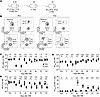 Figure 1
Numbers of Ag-inexperienced and memory CD8+ T cells are differentially altered following WBI. (A) Experimental design: 104 naive Thy1.1+ P14 CD8+ T cells were adoptively transferred into Thy1.2+ naive hosts, followed by LCMV-Armstrong infection to generate memory P14 CD8+ T cells. At 45 days later, the memory P14 chimeric mice were exposed to mock (0 Gy) or 5 Gy dose of WBI. Analysis was performed on the indicated time points after irradiation from peripheral blood lymphocytes (PBL). Dx, days after WBI. (B) Representative flow plots of naive (TN) and virtual memory (TVM) CD8+ T cells and memory P14 cells from D20 after WBI 0 Gy and 5 Gy mice. Numbers of (C) TN cells, (D) memory P14 cells, and (E top panel) TVM cells were assessed at indicated time points in PBL analysis. (E bottom panel) Frequency of TVM cells of total CD8+ T cells was also determined. Data in A–E are representative of 2 independent experiments with n = 5–10 mice per group in each experiment. Statistical significance was determined by 2-way ANOVA with Bonferroni’s multiple comparisons post hoc test using GraphPad Prism. Graphs show the mean ± SEM with each symbol representing 1 mouse. Individual P values are noted on respective graphs or are summarized as follows: *P < 0.05, **P < 0.01, ***P < 0.001.
We next investigated the loss and recovery of Ag-inexperienced CD8+ T cells in specific pathogen–free (SPF) mice following WBI (Figure 2A). To define TN and TVM cells, we used a different gating strategy where TN (CD44lo) and TVM (CD44hiCD49dlo) were distinguished from true Ag-experienced (CD44hiCD49dhi) CD8+ T cells in SPF mice (Figure 2B). Following a WBI-mediated loss of TN cells, vigorous proliferation of TN cells ensued, as demonstrated by a substantial increase in the expression of Ki67 in TN cells, leading to a substantial numerical recovery of TN cells between D10 and D25 after WBI and ultimately returning to the baseline values by D60 (Figure 2C). TVM cells also demonstrated a similar pattern of loss and recovery as TN cells; however, the overrepresentation of TVM was only observed until the TN pool was fully reconstituted (Figure 2D). These data collectively suggest that TN and TVM cells, despite their phenotypic differences, follow a similar numerical drop and recovery following WBI in hosts with pathogen a history of pathogen exposure and SPF hosts.
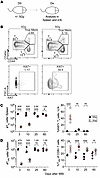 Figure 2
Naive and virtual memory CD8+ T cells follow similar kinetic of loss and recovery following WBI. (A) Experimental design: specific pathogen–free (SPF) mice were subjected to either 0 Gy or 5 Gy dose of WBI. At indicated time points, mice were euthanized for cellular analysis. iLN, inguinal lymph node. (B) Representative flow plots of naive (TN), virtual memory (TVM), and true memory CD8+ T cells and Ki67 expression by TN cells in 0 Gy and 5 Gy mice at D25 after WBI. FSC, forward scatter. (C) Number of TN cells per spleen (left) and frequency of Ki67+ TN cells in inguinal lymph node at indicated time points. (D) Number of TVM cells (left) and frequency of TVM cells of total CD8+ T cells per spleen at indicated time points. Data in A–D are representative of 2 independent experiments with n = 4–5 mice per group at each time point. Statistical significance was determined by 2-way ANOVA with Bonferroni’s multiple comparisons post hoc test using GraphPad Prism at each time point. Graphs show the mean ± SEM with each symbol representing 1 mouse. Individual P values are noted on respective graphs or are summarized as follows: *P < 0.05, **P < 0.01, ***P < 0.001.
Recovery of TN cells requires de novo thymic output. We next sought to determine the in vivo origin of the emerging TN cells that gradually replenish after WBI. Specifically, we asked the question whether the TN cells that survived the radiation exposure had the capacity to repopulate the TN compartment. To this end, we obtained thymectomized mice that had their thymi removed at 6 weeks of age. These athymic mice allowed us to examine the impact of IR-exposed TN cells versus new thymic emigrants on the numerical recovery of TN cells after WBI. The euthymic and athymic mice were exposed to mock (0 Gy), 2 Gy, and 5 Gy doses of WBI, and the number of TN cells and B cells were longitudinally monitored in the PBL (Figure 3A). It was noted that the 5 Gy dose of WBI was no longer sublethal for the athymic mice, as more than 50% of the mice had died by D36 after WBI. Consistent with previous results, TN cells experienced a dose-dependent numerical decline followed by a gradual recovery in euthymic mice (Figure 3, B and D). However, the number of TN cells in athymic mice stayed low for more than 2 months and never returned to the pre-WBI levels. The sustained loss was specific to TN cells as B cells from both euthymic and athymic mice demonstrated similar kinetics of numerical loss and recovery after WBI (Figure 3, C and E). These data suggest the peripheral TN cells that survive IR exposure cannot adequately repopulate the TN compartment after WBI.
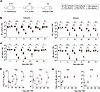 Figure 3
Thymus is required for naive CD8+ T cell numerical recovery. (A) Experimental design: thymectomized and euthymic SPF mice were subjected to 0 Gy, 2 Gy, or 5 Gy dose of WBI and cellular analysis was performed in PBL longitudinally. (B) Number of naive (TN) CD8+ T cells in blood of euthymic (left) and athymic mice (right) at indicated time points. (C) Number of CD19+ B cells in blood of euthymic (left) and athymic mice (right) at indicated time points. Number of TN cells (D) and B cells (E) at each indicated time point was divided to the pre-WBI (D-1) number from the same mouse, and the mean of this ratio was plotted for 2 Gy (left) and 5 Gy (right) euthymic and athymic mice. Data in A–E are representative of 2 independent experiments with n = 2–5 mice per group in each experiment. Statistical significance was determined by 2-way ANOVA with Bonferroni’s multiple comparisons post hoc test. Graphs in B and C show the mean ± SEM, with each symbol representing 1 mouse. Graphs in D and E show the mean ± SD. Individual P values are noted on respective graphs or are summarized as follows: *P < 0.05, **P < 0.01, ***P < 0.001.
Previous results highlighted how the TN subset repopulation was impaired in the absence of thymic emigrants after WBI. If the TN subset recovery was mainly mediated by after WBI thymic emigrants, thymic reconstitution should occur prior to numerical recovery of TN cells. Hence, we next investigated the kinetic of loss and recovery of thymocytes following WBI (Supplemental Figure 2A). In agreement with previous reports (47), thymocytes were rapidly lost following a 5 Gy dose of WBI, with the double-positive (DP) thymocytes being the most radiation-sensitive subset and effectively abrogated at D3 after WBI while other subsets were numerically unaltered at this time point. Interestingly, DP cells from 5 Gy hosts were rapidly restored by D10 and demonstrated similar fold change to 0 Gy controls as double-negative, single-positive CD4, and single-positive CD8 thymocytes until full recovery was observed by D60 (Supplemental Figure 2, B–D). The substantial increase in thymocyte numbers occurred between D3 and D10 after WBI, which preceded the marked increase in TN numbers, observed after D10 after WBI. These data indicate that the recovery of TN cells does not occur until the number of thymocytes is sufficiently restored following WBI.
Lymphopenia can induce robust proliferation of CD8+ T cells through HP (48). While IR can induce TN cell death either directly through irreversible DNA damage or indirectly via heightened inflammatory signals and a plethora of cytokines released in response to IR-induced cell death (49, 50), little is known about the fate of the TN cells that survive the initial IR exposure and early IR-driven inflammation. We next asked whether exposure to IR or early IR-mediated inflammation affected the ability of TN cells that survive high doses of IR to undergo HP following RIL. We adoptively transferred Thy1.1+ naive P14 cells, which cannot be de novo–generated by thymopoiesis, to Thy1.2+ hosts, followed by 0 or 5 Gy WBI 2 days later, and assessed the number of endogenous TN and P14 cells at D4 and D34 after WBI (Figure 4, A and B). As expected, the number of P14 and endogenous TN cells did not change between D4 and D34 in 0 Gy hosts. While a significant 15-fold increase in the number of endogenous TN cells occurred in this 30-day period, the number of P14 cells, as a surrogate for IR-experienced TN cells, remained low (Figure 4C). Conversely, when Thy1.1+ naive P14 cells were adoptively transferred once there was an established RIL but P14 cells were not directly exposed to IR (Figure 4D), the number of naive P14 cells increased over time through vigorous cell proliferation similar to the endogenous TN cells (Figure 4, E and F). These data collectively demonstrate that the direct exposure to high dose of IR or the early IR-induced inflammation following WBI impaired the capacity of IR-experienced TN cells to respond to homeostatic cues as the environment after WBI is permissive for proliferation of radiation-inexperienced TN cells.
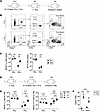 Figure 4
WBI-surviving naive CD8+ T cells exhibit diminished proliferative capacity. (A) Experimental design: 106 naive Thy1.1+ P14 CD8+ T cells were adoptively transferred into Thy1.2+ naive hosts followed by exposure to 0 Gy or 5 Gy dose of WBI 2 days later. Spleens were harvested and analyzed at indicated time points. (B) Representative flow plots of P14 CD8+ T cells and endogenous naive (TN) and virtual memory (TVM) CD8+ T cells in 0 Gy and 5 Gy mice at D34 after WBI. (C) Number of endogenous TN cells (left) and P14 cells (right) in 0 Gy and 5 Gy hosts at indicated time points after WBI. (D) Experimental design: 7.5 × 10⁵ naive P14 CD8+ T cells were adoptively transferred to Thy1.2+ naive hosts that had undergone 0 Gy or 5 Gy WBI 2 days prior. Longitudinal blood analysis was performed at indicated time points. (E) Number of endogenous TN cells (left) and naive P14 cells (right) in 0 Gy and 5 Gy hosts at indicated time points after WBI. (F) Frequency of P14 and TN cells that express Ki67 in 0 Gy and 5 Gy hosts at D10 after WBI. Data in A–F are representative of 2 independent experiments with n = 5–8 mice per group in each experiment. Statistical significance was determined by 2-way ANOVA with Bonferroni’s multiple comparisons post hoc test using GraphPad Prism. Graphs show the mean ± SEM with each symbol representing 1 mouse. Individual P values are noted on respective graphs or are summarized as follows: **P < 0.01, ***P < 0.001.
After recovery TN cells display altered phenotypic and clonal composition. Thus far we have investigated the numerical changes to TN cells following WBI and the factors that influence the efficacy of the after WBI TN reconstitution. We next turned our focus to assessing the qualitative changes that may also occur to the composition of TN cells following recovery from WBI. Recent studies have demonstrated the impact of homeostatic cues in shaping the phenotypic and functional heterogeneity of the TN population. Specifically, Ly6C expression demarcates a subpopulation of TN cells with enhanced cognate Ag-mediated effector function and Ag-independent bystander responses (51–53). We sought to define any potential changes to the phenotype of TN cells throughout the recovery process after WBI (Figure 5A). D30 TN cells were clustered based on expression of Ly6C, CD122, CD44, CD62L, CD127, CD11a, and CD49d using FlowSOM, and these clusters were projected into t-distributed stochastic neighbor embedding (t-SNE) plots for further analysis (Figure 5B). Although clusters 1 and 2 together accounted for the majority of the naive CD8+ T cells in both groups, cluster 1 was more enriched within 5 Gy TN cells whereas cluster 2 was more abundant within 0 Gy TN cells (Figure 5, B and C). Both clusters similarly expressed CD127 and CD62L, 2 canonical markers of TN cells; however, Ly6C and CD122 expression was significantly higher in cells within cluster 2, suggesting the representation of Ly6C+CD122+ TN cells was increased in 5 Gy mice (Figure 5D). Our longitudinal PBL analysis of the frequency of Ly6C+ and Ly6C+CD122+ TN cells revealed the enrichment of these subpopulations lasts up to D60 after WBI and was not due to preferential post-WBI survival (Figure 5, E and F). These findings showed the post-WBI TN subset undergoes lasting phenotypic alterations.
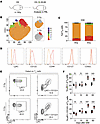 Figure 5
Phenotypic composition of TN cells undergoes lasting alterations following numerical recovery from WBI. (A) Experimental design: SPF mice were subjected to 0 Gy or 5 Gy dose of WBI, and cellular analysis was performed in PBL longitudinally. (B) Left: t-SNE analysis of PBL displaying FlowSOM defined clusters among D30 naive (TN: CD44loCD8α+) CD8+ T cells based on expression of CD8α, CD11a, CD44, CD62L, CD49d, Ly6C, CD127, CD122. Right: clusters that are most robustly enriched in 0 Gy (top) and 5 Gy (bottom) groups. (C) Cluster distribution among TN cells of 0 Gy and 5 Gy mice. (D) Histograms of Ly6C, CD122, CD44, CD127, and CD62L surface expression comparing clusters 1 and 2. (E) Representative flow plots and (F) frequency of Ly6C+ and Ly6C+CD122+ TN cells at indicated time points after WBI. Data in A–F are representative of 2 independent experiments with n = 5–7 mice per group in each experiment. Statistical significance was determined by 2-way ANOVA with Bonferroni’s multiple comparisons post hoc test using GraphPad Prism. Graphs show the mean ± SEM with each symbol representing 1 mouse. Individual P values are noted on respective graphs or are summarized as follows: ***P < 0.001.
Given the propensity of TN cells with higher affinity for self-peptide–MHC ligands to undergo HP following RIL than low-affinity TN cells, we next investigated to what extent the clonal diversity of the TN subset changes once numerical recovery is achieved. To this end, TCRβ variable chain isotype frequencies within the TN population of 0 Gy and 5 Gy mice were compared early (D3) and late (D60) after WBI (Supplemental Figure 3, A and B). Importantly, the TCR Vβ profile of 0 Gy splenic TN cells examined at 4 time points indicated a very stable pool with little to no change to the “status quo” TN diversity within this period (Supplemental Figure 3C). This assessment enabled us to determine whether TN cells expressing distinct Vβ chains were differentially lost (D3) or recovered (D60) following WBI. While the frequency of cells expressing Vβ3, Vβ5.1/5.2, Vβ6, and Vβ10b did not change after the number of TN cells acutely reduced, Vβ6 and Vβ5.1/5.2 cells were differentially recovered, leading to the underrepresentation of the former and overrepresentation of the latter population at D60 after WBI. Additionally, TN cells expressing Vβ2, Vβ8.1 /8.2, Vβ8.3, Vβ11, Vβ13, and Vβ14 were all differentially susceptible to WBI-induced loss, and the frequency of Vβ8.1/8.2 and Vβ13 expressing cells still remained lower than 0 Gy counterparts 60 days after WBI (Supplemental Figure 3D). These data collectively indicated the altered clonal diversity within the TN repertoire after recovery from WBI.
Both newly emerging and radiation-survived naive CD8+ T cells can differentiate into TVM cells. Our data in Figures 1 and 2 show the reconstitution of the bulk TN population was concomitant with reconstitution and transient overrepresentation of the TVM population. This observation prompted us to explore the potential for distinct changes within individual Ag-specific CD8+ T cell populations with respect to their numerical recovery and phenotypic change following WBI. Using a p:MHC I tetramer-based enrichment method (31, 54), we analyzed the precursor frequency and phenotype of 4 endogenous CD8+ T populations specific for ovalbumin (OVA257-264), LCMV-derived GP33-41, vaccinia virus-derived B8R20-27, and Plasmodium-derived GAP5040-48 epitopes in SPF hosts that underwent 0 or 5 Gy dose of WBI 28 days prior (Figure 6, A–C). Precursor numbers in 0 Gy hosts were consistent with previous analyses that reported various population sizes for each Ag-specific population with GAP5040-48–specific CD8+ T cells constituting the largest pool of Ag-specific cells followed by B8R20-27–, GP33-41–, and OVA257-264–specific repertoires (55, 56) (Figure 6D). Importantly, all 4 populations from 5 Gy mice showed a similar drop in population size compared to the 0 Gy mice. Additionally, phenotypic analysis of the populations with enough recovered cells (3 out of 4) showed an increased fraction of cells with TVM phenotype, suggesting that following WBI, TN cells can acquire a TVM phenotype independent of their Ag specificity (Figure 6E). To formally show the capacity of TN cells to give rise to TVM progeny following WBI, we analyzed the number of P14 cells with TVM phenotype following transfer of naive P14 cells 2 days after 0 or 5 Gy WBI (Figure 6F). In 5 Gy recipients, endogenous TVM cells and P14 cells with a TVM phenotype gradually increased in number over time, whereas their levels remained stable in 0 Gy recipients (Figure 6G). These data suggest that radiation-inexperienced TN cells can acquire a TVM phenotype following RIL.
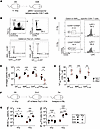 Figure 6
Acquisition of virtual memory phenotype by a fraction of proliferating TN cells after WBI. (A) Experimental design: Thy1.2+ hosts were subjected to 0 Gy or 5 Gy dose of WBI. At 28 days later, the number and phenotype of Ag-specific CD8+ T cells specific for GP33-41, B8R20-27, GAP41-48, and OVA257-264 were determined using pMHC class I tetramer-based enrichment from spleens. (B) Representative flow plots showing gating strategy used to detect Ag-specific CD8+ T cell precursors and (C) virtual memory phenotype (CD44hiCD49loLy6C+) from Ag-specific CD8+ T cell precursors in 0 Gy and 5 Gy mice. (D) Absolute number and (E) frequency of virtual memory phenotype of Db-restricted GP33-41– and GAP5040-48–specific and Kb-restricted B8R20-27– and OVA257-264–specific CD8+ T cells. (F) Experimental design: 7.5 × 10⁵ naive P14 CD8+ T cells were adoptively transferred to Thy1.2+ naive hosts that had undergone 0 Gy or 5 Gy WBI 2 days prior. Longitudinal blood analysis was performed at indicated time points. (G) Number of endogenous (left) and P14 (right) virtual memory (TVM) CD8+ T cells in 0 Gy and 5 Gy hosts at indicated time points after WBI. Data in A–E are from a single experiment, and F and G are representative of 2 independent experiments with n = 5–8 mice per group in each experiment. Statistical significance was determined by unpaired multiple t tests with Holm-Šídák multiple-comparison post hoc test or 2-way ANOVA with Bonferroni’s multiple comparisons post hoc test using GraphPad Prism. Graphs show the mean ± SEM with each symbol representing 1 mouse. Individual P values are noted on respective graphs or are summarized as follows: *P < 0.05, **P < 0.01, ***P < 0.001.
Given the capacity of radiation-inexperienced TN and TVM cells to generate TVM cells, we last asked whether TN and TVM cells that survived IR exposure can give rise to more TVM cells following WBI (Figure 7A). To this end, we tracked the number of TVM cells in PBL after euthymic and athymic mice were exposed to 0, 2, and 5 Gy doses of WBI. Interestingly, both euthymic and athymic mice were able to reconstitute their TVM compartment to pre-WBI numbers (Figure 7, B and D), which was in sharp contrast with the diminished repopulation of TN cells in athymic mice (Figure 7, B and D). Although the gradual repopulation of TVM cells contributed to an increase in total CD8+ T cell numbers of both euthymic and athymic mice (Figure 7C), this was not sufficient to fully restore the CD8+ T cell numbers to the pre-WBI baseline in athymic mice (Figure 7E). These data collectively suggest that TVM cells can arise from radiation-experienced TN and TVM cells.
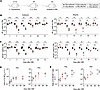 Figure 7
Repopulation of the virtual memory subset can occur in the absence of thymus. (A) Experimental design: same as Figure 3A. (B) Number of virtual memory (TVM) CD8+ T cells in blood of euthymic (left) and athymic mice (right) at indicated time points. (C) Number of total CD8+ T cells in blood of euthymic (left) and athymic mice (right) at indicated time points. Number of TVM (D) and total CD8+ T cells (E) at each indicated time point was divided to the pre-WBI (D-1) number from the same mouse, and the mean ± SD of this ratio was plotted for 2 Gy (left) and 5 Gy (right) euthymic and athymic mice. Data in A–E are representative of 2 independent experiments with n = 2–5 mice per group in each experiment. Statistical significance was determined by 2-way ANOVA with Bonferroni’s multiple comparisons post hoc test. Graphs in B and C show the mean ± SEM with each symbol representing 1 mouse. Graphs in D and E show the mean ± SD. Individual P values are noted on respective graphs or are summarized as follows: *P < 0.05, **P < 0.01, ***P < 0.001.


