
Research ArticleNeuroscienceOphthalmology
Open Access |  10.1172/jci.insight.192799
A porcine commotio retinae model for preclinical evaluation of posttraumatic photoreceptor degeneration
Juan Amaral,1 Irina Bunea,2 Arvydas Maminishkis,1 Maria M. Campos,3 Francesca Barone,2 Rohan Gupta,2 Mitra Farnoodian,2 Jonathan Newport,4 M. Joseph Phillips,5,6 Ruchi Sharma,2 David M. Gamm,5,6,7 Kapil Bharti,2 and Richard J. Blanch8,9,10
1National Eye Institute (NEI)/Translational Research Core/Ophthalmic Genetics and Visual Function Branch (OGVFB), Bethesda, Maryland, USA.
2NEI/Ocular and Stem Cell Translational Research Section/OGVFB, Bethesda, Maryland, USA.
3NEI/Biological Imaging Core/Histology Core, Bethesda, Maryland, USA.
4NEI/Laboratory of Sensorimotor Research, Bethesda, Maryland, USA.
5Waisman Center,
6McPherson Eye Research Institute, and
7Department of Ophthalmology, University of Wisconsin–Madison, Madison, Wisconsin, USA.
8Academic Department of Military Surgery and Trauma/Royal Centre for Defense Medicine, Birmingham, United Kingdom.
9Neuroscience and Ophthalmology, School of Infection, Inflammation, and Immunology, University of Birmingham, Birmingham, United Kingdom.
10Department of Ophthalmology, University Hospitals Birmingham NHS Foundation Trust, Birmingham, United Kingdom.
Address correspondence to: Kapil Bharti, NIH Clinical Center 10 Center Drive, Building 10, Room 10B10, Bethesda, Maryland 20892, USA. Phone: 301.451.9372; Email: kapil.bharti@nih.gov. Or to: Richard J. Blanch, Neuroscience and Ophthalmology, Institute of Inflammation and Ageing, University of Birmingham, Mindelsohn Way, Birmingham B15 2TH, United Kingdom. Phone: 44.0.121.414.3344; Email: blanchrj@bham.ac.uk.
Find articles by Amaral, J. in: PubMed | Google Scholar
1National Eye Institute (NEI)/Translational Research Core/Ophthalmic Genetics and Visual Function Branch (OGVFB), Bethesda, Maryland, USA.
2NEI/Ocular and Stem Cell Translational Research Section/OGVFB, Bethesda, Maryland, USA.
3NEI/Biological Imaging Core/Histology Core, Bethesda, Maryland, USA.
4NEI/Laboratory of Sensorimotor Research, Bethesda, Maryland, USA.
5Waisman Center,
6McPherson Eye Research Institute, and
7Department of Ophthalmology, University of Wisconsin–Madison, Madison, Wisconsin, USA.
8Academic Department of Military Surgery and Trauma/Royal Centre for Defense Medicine, Birmingham, United Kingdom.
9Neuroscience and Ophthalmology, School of Infection, Inflammation, and Immunology, University of Birmingham, Birmingham, United Kingdom.
10Department of Ophthalmology, University Hospitals Birmingham NHS Foundation Trust, Birmingham, United Kingdom.
Address correspondence to: Kapil Bharti, NIH Clinical Center 10 Center Drive, Building 10, Room 10B10, Bethesda, Maryland 20892, USA. Phone: 301.451.9372; Email: kapil.bharti@nih.gov. Or to: Richard J. Blanch, Neuroscience and Ophthalmology, Institute of Inflammation and Ageing, University of Birmingham, Mindelsohn Way, Birmingham B15 2TH, United Kingdom. Phone: 44.0.121.414.3344; Email: blanchrj@bham.ac.uk.
Find articles by Bunea, I. in: PubMed | Google Scholar
1National Eye Institute (NEI)/Translational Research Core/Ophthalmic Genetics and Visual Function Branch (OGVFB), Bethesda, Maryland, USA.
2NEI/Ocular and Stem Cell Translational Research Section/OGVFB, Bethesda, Maryland, USA.
3NEI/Biological Imaging Core/Histology Core, Bethesda, Maryland, USA.
4NEI/Laboratory of Sensorimotor Research, Bethesda, Maryland, USA.
5Waisman Center,
6McPherson Eye Research Institute, and
7Department of Ophthalmology, University of Wisconsin–Madison, Madison, Wisconsin, USA.
8Academic Department of Military Surgery and Trauma/Royal Centre for Defense Medicine, Birmingham, United Kingdom.
9Neuroscience and Ophthalmology, School of Infection, Inflammation, and Immunology, University of Birmingham, Birmingham, United Kingdom.
10Department of Ophthalmology, University Hospitals Birmingham NHS Foundation Trust, Birmingham, United Kingdom.
Address correspondence to: Kapil Bharti, NIH Clinical Center 10 Center Drive, Building 10, Room 10B10, Bethesda, Maryland 20892, USA. Phone: 301.451.9372; Email: kapil.bharti@nih.gov. Or to: Richard J. Blanch, Neuroscience and Ophthalmology, Institute of Inflammation and Ageing, University of Birmingham, Mindelsohn Way, Birmingham B15 2TH, United Kingdom. Phone: 44.0.121.414.3344; Email: blanchrj@bham.ac.uk.
Find articles by
Maminishkis, A.
in:
PubMed
|
Google Scholar
|

1National Eye Institute (NEI)/Translational Research Core/Ophthalmic Genetics and Visual Function Branch (OGVFB), Bethesda, Maryland, USA.
2NEI/Ocular and Stem Cell Translational Research Section/OGVFB, Bethesda, Maryland, USA.
3NEI/Biological Imaging Core/Histology Core, Bethesda, Maryland, USA.
4NEI/Laboratory of Sensorimotor Research, Bethesda, Maryland, USA.
5Waisman Center,
6McPherson Eye Research Institute, and
7Department of Ophthalmology, University of Wisconsin–Madison, Madison, Wisconsin, USA.
8Academic Department of Military Surgery and Trauma/Royal Centre for Defense Medicine, Birmingham, United Kingdom.
9Neuroscience and Ophthalmology, School of Infection, Inflammation, and Immunology, University of Birmingham, Birmingham, United Kingdom.
10Department of Ophthalmology, University Hospitals Birmingham NHS Foundation Trust, Birmingham, United Kingdom.
Address correspondence to: Kapil Bharti, NIH Clinical Center 10 Center Drive, Building 10, Room 10B10, Bethesda, Maryland 20892, USA. Phone: 301.451.9372; Email: kapil.bharti@nih.gov. Or to: Richard J. Blanch, Neuroscience and Ophthalmology, Institute of Inflammation and Ageing, University of Birmingham, Mindelsohn Way, Birmingham B15 2TH, United Kingdom. Phone: 44.0.121.414.3344; Email: blanchrj@bham.ac.uk.
Find articles by Campos, M. in: PubMed | Google Scholar
1National Eye Institute (NEI)/Translational Research Core/Ophthalmic Genetics and Visual Function Branch (OGVFB), Bethesda, Maryland, USA.
2NEI/Ocular and Stem Cell Translational Research Section/OGVFB, Bethesda, Maryland, USA.
3NEI/Biological Imaging Core/Histology Core, Bethesda, Maryland, USA.
4NEI/Laboratory of Sensorimotor Research, Bethesda, Maryland, USA.
5Waisman Center,
6McPherson Eye Research Institute, and
7Department of Ophthalmology, University of Wisconsin–Madison, Madison, Wisconsin, USA.
8Academic Department of Military Surgery and Trauma/Royal Centre for Defense Medicine, Birmingham, United Kingdom.
9Neuroscience and Ophthalmology, School of Infection, Inflammation, and Immunology, University of Birmingham, Birmingham, United Kingdom.
10Department of Ophthalmology, University Hospitals Birmingham NHS Foundation Trust, Birmingham, United Kingdom.
Address correspondence to: Kapil Bharti, NIH Clinical Center 10 Center Drive, Building 10, Room 10B10, Bethesda, Maryland 20892, USA. Phone: 301.451.9372; Email: kapil.bharti@nih.gov. Or to: Richard J. Blanch, Neuroscience and Ophthalmology, Institute of Inflammation and Ageing, University of Birmingham, Mindelsohn Way, Birmingham B15 2TH, United Kingdom. Phone: 44.0.121.414.3344; Email: blanchrj@bham.ac.uk.
Find articles by Barone, F. in: PubMed | Google Scholar
1National Eye Institute (NEI)/Translational Research Core/Ophthalmic Genetics and Visual Function Branch (OGVFB), Bethesda, Maryland, USA.
2NEI/Ocular and Stem Cell Translational Research Section/OGVFB, Bethesda, Maryland, USA.
3NEI/Biological Imaging Core/Histology Core, Bethesda, Maryland, USA.
4NEI/Laboratory of Sensorimotor Research, Bethesda, Maryland, USA.
5Waisman Center,
6McPherson Eye Research Institute, and
7Department of Ophthalmology, University of Wisconsin–Madison, Madison, Wisconsin, USA.
8Academic Department of Military Surgery and Trauma/Royal Centre for Defense Medicine, Birmingham, United Kingdom.
9Neuroscience and Ophthalmology, School of Infection, Inflammation, and Immunology, University of Birmingham, Birmingham, United Kingdom.
10Department of Ophthalmology, University Hospitals Birmingham NHS Foundation Trust, Birmingham, United Kingdom.
Address correspondence to: Kapil Bharti, NIH Clinical Center 10 Center Drive, Building 10, Room 10B10, Bethesda, Maryland 20892, USA. Phone: 301.451.9372; Email: kapil.bharti@nih.gov. Or to: Richard J. Blanch, Neuroscience and Ophthalmology, Institute of Inflammation and Ageing, University of Birmingham, Mindelsohn Way, Birmingham B15 2TH, United Kingdom. Phone: 44.0.121.414.3344; Email: blanchrj@bham.ac.uk.
Find articles by
Gupta, R.
in:
PubMed
|
Google Scholar
|
1National Eye Institute (NEI)/Translational Research Core/Ophthalmic Genetics and Visual Function Branch (OGVFB), Bethesda, Maryland, USA.
2NEI/Ocular and Stem Cell Translational Research Section/OGVFB, Bethesda, Maryland, USA.
3NEI/Biological Imaging Core/Histology Core, Bethesda, Maryland, USA.
4NEI/Laboratory of Sensorimotor Research, Bethesda, Maryland, USA.
5Waisman Center,
6McPherson Eye Research Institute, and
7Department of Ophthalmology, University of Wisconsin–Madison, Madison, Wisconsin, USA.
8Academic Department of Military Surgery and Trauma/Royal Centre for Defense Medicine, Birmingham, United Kingdom.
9Neuroscience and Ophthalmology, School of Infection, Inflammation, and Immunology, University of Birmingham, Birmingham, United Kingdom.
10Department of Ophthalmology, University Hospitals Birmingham NHS Foundation Trust, Birmingham, United Kingdom.
Address correspondence to: Kapil Bharti, NIH Clinical Center 10 Center Drive, Building 10, Room 10B10, Bethesda, Maryland 20892, USA. Phone: 301.451.9372; Email: kapil.bharti@nih.gov. Or to: Richard J. Blanch, Neuroscience and Ophthalmology, Institute of Inflammation and Ageing, University of Birmingham, Mindelsohn Way, Birmingham B15 2TH, United Kingdom. Phone: 44.0.121.414.3344; Email: blanchrj@bham.ac.uk.
Find articles by Farnoodian, M. in: PubMed | Google Scholar
1National Eye Institute (NEI)/Translational Research Core/Ophthalmic Genetics and Visual Function Branch (OGVFB), Bethesda, Maryland, USA.
2NEI/Ocular and Stem Cell Translational Research Section/OGVFB, Bethesda, Maryland, USA.
3NEI/Biological Imaging Core/Histology Core, Bethesda, Maryland, USA.
4NEI/Laboratory of Sensorimotor Research, Bethesda, Maryland, USA.
5Waisman Center,
6McPherson Eye Research Institute, and
7Department of Ophthalmology, University of Wisconsin–Madison, Madison, Wisconsin, USA.
8Academic Department of Military Surgery and Trauma/Royal Centre for Defense Medicine, Birmingham, United Kingdom.
9Neuroscience and Ophthalmology, School of Infection, Inflammation, and Immunology, University of Birmingham, Birmingham, United Kingdom.
10Department of Ophthalmology, University Hospitals Birmingham NHS Foundation Trust, Birmingham, United Kingdom.
Address correspondence to: Kapil Bharti, NIH Clinical Center 10 Center Drive, Building 10, Room 10B10, Bethesda, Maryland 20892, USA. Phone: 301.451.9372; Email: kapil.bharti@nih.gov. Or to: Richard J. Blanch, Neuroscience and Ophthalmology, Institute of Inflammation and Ageing, University of Birmingham, Mindelsohn Way, Birmingham B15 2TH, United Kingdom. Phone: 44.0.121.414.3344; Email: blanchrj@bham.ac.uk.
Find articles by Newport, J. in: PubMed | Google Scholar
1National Eye Institute (NEI)/Translational Research Core/Ophthalmic Genetics and Visual Function Branch (OGVFB), Bethesda, Maryland, USA.
2NEI/Ocular and Stem Cell Translational Research Section/OGVFB, Bethesda, Maryland, USA.
3NEI/Biological Imaging Core/Histology Core, Bethesda, Maryland, USA.
4NEI/Laboratory of Sensorimotor Research, Bethesda, Maryland, USA.
5Waisman Center,
6McPherson Eye Research Institute, and
7Department of Ophthalmology, University of Wisconsin–Madison, Madison, Wisconsin, USA.
8Academic Department of Military Surgery and Trauma/Royal Centre for Defense Medicine, Birmingham, United Kingdom.
9Neuroscience and Ophthalmology, School of Infection, Inflammation, and Immunology, University of Birmingham, Birmingham, United Kingdom.
10Department of Ophthalmology, University Hospitals Birmingham NHS Foundation Trust, Birmingham, United Kingdom.
Address correspondence to: Kapil Bharti, NIH Clinical Center 10 Center Drive, Building 10, Room 10B10, Bethesda, Maryland 20892, USA. Phone: 301.451.9372; Email: kapil.bharti@nih.gov. Or to: Richard J. Blanch, Neuroscience and Ophthalmology, Institute of Inflammation and Ageing, University of Birmingham, Mindelsohn Way, Birmingham B15 2TH, United Kingdom. Phone: 44.0.121.414.3344; Email: blanchrj@bham.ac.uk.
Find articles by Phillips, M. in: PubMed | Google Scholar
1National Eye Institute (NEI)/Translational Research Core/Ophthalmic Genetics and Visual Function Branch (OGVFB), Bethesda, Maryland, USA.
2NEI/Ocular and Stem Cell Translational Research Section/OGVFB, Bethesda, Maryland, USA.
3NEI/Biological Imaging Core/Histology Core, Bethesda, Maryland, USA.
4NEI/Laboratory of Sensorimotor Research, Bethesda, Maryland, USA.
5Waisman Center,
6McPherson Eye Research Institute, and
7Department of Ophthalmology, University of Wisconsin–Madison, Madison, Wisconsin, USA.
8Academic Department of Military Surgery and Trauma/Royal Centre for Defense Medicine, Birmingham, United Kingdom.
9Neuroscience and Ophthalmology, School of Infection, Inflammation, and Immunology, University of Birmingham, Birmingham, United Kingdom.
10Department of Ophthalmology, University Hospitals Birmingham NHS Foundation Trust, Birmingham, United Kingdom.
Address correspondence to: Kapil Bharti, NIH Clinical Center 10 Center Drive, Building 10, Room 10B10, Bethesda, Maryland 20892, USA. Phone: 301.451.9372; Email: kapil.bharti@nih.gov. Or to: Richard J. Blanch, Neuroscience and Ophthalmology, Institute of Inflammation and Ageing, University of Birmingham, Mindelsohn Way, Birmingham B15 2TH, United Kingdom. Phone: 44.0.121.414.3344; Email: blanchrj@bham.ac.uk.
Find articles by
Sharma, R.
in:
PubMed
|
Google Scholar
|
1National Eye Institute (NEI)/Translational Research Core/Ophthalmic Genetics and Visual Function Branch (OGVFB), Bethesda, Maryland, USA.
2NEI/Ocular and Stem Cell Translational Research Section/OGVFB, Bethesda, Maryland, USA.
3NEI/Biological Imaging Core/Histology Core, Bethesda, Maryland, USA.
4NEI/Laboratory of Sensorimotor Research, Bethesda, Maryland, USA.
5Waisman Center,
6McPherson Eye Research Institute, and
7Department of Ophthalmology, University of Wisconsin–Madison, Madison, Wisconsin, USA.
8Academic Department of Military Surgery and Trauma/Royal Centre for Defense Medicine, Birmingham, United Kingdom.
9Neuroscience and Ophthalmology, School of Infection, Inflammation, and Immunology, University of Birmingham, Birmingham, United Kingdom.
10Department of Ophthalmology, University Hospitals Birmingham NHS Foundation Trust, Birmingham, United Kingdom.
Address correspondence to: Kapil Bharti, NIH Clinical Center 10 Center Drive, Building 10, Room 10B10, Bethesda, Maryland 20892, USA. Phone: 301.451.9372; Email: kapil.bharti@nih.gov. Or to: Richard J. Blanch, Neuroscience and Ophthalmology, Institute of Inflammation and Ageing, University of Birmingham, Mindelsohn Way, Birmingham B15 2TH, United Kingdom. Phone: 44.0.121.414.3344; Email: blanchrj@bham.ac.uk.
Find articles by
Gamm, D.
in:
PubMed
|
Google Scholar
|
1National Eye Institute (NEI)/Translational Research Core/Ophthalmic Genetics and Visual Function Branch (OGVFB), Bethesda, Maryland, USA.
2NEI/Ocular and Stem Cell Translational Research Section/OGVFB, Bethesda, Maryland, USA.
3NEI/Biological Imaging Core/Histology Core, Bethesda, Maryland, USA.
4NEI/Laboratory of Sensorimotor Research, Bethesda, Maryland, USA.
5Waisman Center,
6McPherson Eye Research Institute, and
7Department of Ophthalmology, University of Wisconsin–Madison, Madison, Wisconsin, USA.
8Academic Department of Military Surgery and Trauma/Royal Centre for Defense Medicine, Birmingham, United Kingdom.
9Neuroscience and Ophthalmology, School of Infection, Inflammation, and Immunology, University of Birmingham, Birmingham, United Kingdom.
10Department of Ophthalmology, University Hospitals Birmingham NHS Foundation Trust, Birmingham, United Kingdom.
Address correspondence to: Kapil Bharti, NIH Clinical Center 10 Center Drive, Building 10, Room 10B10, Bethesda, Maryland 20892, USA. Phone: 301.451.9372; Email: kapil.bharti@nih.gov. Or to: Richard J. Blanch, Neuroscience and Ophthalmology, Institute of Inflammation and Ageing, University of Birmingham, Mindelsohn Way, Birmingham B15 2TH, United Kingdom. Phone: 44.0.121.414.3344; Email: blanchrj@bham.ac.uk.
Find articles by Bharti, K. in: PubMed | Google Scholar
1National Eye Institute (NEI)/Translational Research Core/Ophthalmic Genetics and Visual Function Branch (OGVFB), Bethesda, Maryland, USA.
2NEI/Ocular and Stem Cell Translational Research Section/OGVFB, Bethesda, Maryland, USA.
3NEI/Biological Imaging Core/Histology Core, Bethesda, Maryland, USA.
4NEI/Laboratory of Sensorimotor Research, Bethesda, Maryland, USA.
5Waisman Center,
6McPherson Eye Research Institute, and
7Department of Ophthalmology, University of Wisconsin–Madison, Madison, Wisconsin, USA.
8Academic Department of Military Surgery and Trauma/Royal Centre for Defense Medicine, Birmingham, United Kingdom.
9Neuroscience and Ophthalmology, School of Infection, Inflammation, and Immunology, University of Birmingham, Birmingham, United Kingdom.
10Department of Ophthalmology, University Hospitals Birmingham NHS Foundation Trust, Birmingham, United Kingdom.
Address correspondence to: Kapil Bharti, NIH Clinical Center 10 Center Drive, Building 10, Room 10B10, Bethesda, Maryland 20892, USA. Phone: 301.451.9372; Email: kapil.bharti@nih.gov. Or to: Richard J. Blanch, Neuroscience and Ophthalmology, Institute of Inflammation and Ageing, University of Birmingham, Mindelsohn Way, Birmingham B15 2TH, United Kingdom. Phone: 44.0.121.414.3344; Email: blanchrj@bham.ac.uk.
Find articles by
Blanch, R.
in:
PubMed
|
Google Scholar
|
Published January 13, 2026 - More info
JCI Insight. 2026;11(4):e192799. https://doi.org/10.1172/jci.insight.192799.
© 2026 Amaral et al. This work is licensed under the Creative Commons Attribution 4.0 International License. To view a copy of this license, visit http://creativecommons.org/licenses/by/4.0/.
Received: February 25, 2025; Accepted: January 2, 2026

-
Results
Development of a pressure application device for inducing closed-globe CR injury. To develop a reproducible closed-globe CR porcine model that mimics human macular CR injury, we developed a pressure application device (PAD) that injures the eye using a fixed-diameter projectile impact. To induce injury, PAD delivers predetermined energy by propelling a plastic projectile (~12 mm) toward the pig eye at a measured speed using a laser-guided mechanism. The PAD was designed as a closed pneumatic system that operates using compressed nitrogen gas to generate precise pressure, measured in pounds per square inch (psi), that can be reproducibly applied to a propel a plastic ball at a specific speed, measured in m/s. To accurately target the injury location at the visual streak, the eye fundus was visualized using binocular indirect ophthalmoscopy, and different projectile impact areas (cornea, limbus, and sclera) were tested. The plastic ball is “loaded” into an acceleration tube using the loading port, then propelled using pressure from the compressed nitrogen gas and a solenoid-actuated fast-opening valve with remote trigger; the tube is aimed at the desired location using the laser beam (Figure 1A, Supplemental Video 1, and Supplemental Figure 1, A and B; supplemental material available online with this article; https://doi.org/10.1172/jci.insight.192799DS1). The impact of the plastic ball transfers its kinetic energy to the eye, modeling blunt-force or concussive injury such as after a blast (Figure 1B). To determine projectile speed reproducibility, we evaluated linearity between psi and projectile speed (Supplemental Figure 1B) and confirmed a linear relationship between psi and the projectile speed within the range of pressures tested for the projectile release (Figure 1C). These data confirm our ability to deliver the projectile consistently at a specific speed.
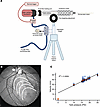 Figure 1
Development of a pressure application device for inducing closed-globe commotio retinae in porcine eyes. (A) The pressure application device (PAD) contains a plastic tube, a projectile loading port, and an aiming laser beam. The PAD connects to a nitrogen tank and a pressure manometer, allowing control of pressure (measured in psi) used to propel the projectile (~12 mm/0.75 g). A remote trigger releases the pressure to propel the projectile. (B) Porcine fundus infrared photograph showing the visual streak (white dashed circle). “1” indicates the site of projectile impact on peripheral retina. “2” (semicircles) indicates the projected path of the shockwave generated by the impact, leading to indirect visual streak damage. (C) Graph shows the average of projectile speed (m/s) measurements as a function of nitrogen gas pressures (psi) ranging from 10.0 to 25.0 psi (gauge pressure). Results were analyzed using 1-way ANOVA. The standard deviation of the mean was used to estimate uncertainty in projectile speed for each tank pressure.
Ex vivo evaluation of PAD-induced CR. To develop an animal model with reproducible macular CR injury, we set out to optimize the injury location that would consistently induce damage to the ellipsoid zone (inner/ outer segments of the photoreceptors) and photoreceptor outer nuclear layer (ONL) in the pig’s visual streak. With the goal of reducing the number of animals, we chose to perform initial testing of optimal injury location and projectile speed ex vivo on cadaveric pig eyes. Since slaughterhouse eyes lack the orbital support (muscle, fat, ligaments, optic nerve) to reduce artificiality of an ex vivo model and to mimic as closely possible the in vivo environment, we developed a 3D-printed pig skull in which we mounted the cadaveric pig eyes. A high-resolution computed tomography (CT) scan of a pig head was performed and was used to construct a 3D image of the pig skull using the CT scan software (Figure 2A). This 3D image was used to 3D-print a pig skull. The skull was printed commercially using material that has similar mechanical properties to bone (https://www.anatomicalworldwide.com) (Figure 2B). A ballistic gel (see Methods) made from synthetic gelatin was used to fill the 3D-printed pig skull, mimicking the elastic properties of the orbital and cranial tissues, thus explicitly helping to assess the impact of projectile kinetic energy transfer to the eye simulating what happens in a live animal and human injury. Freshly obtained cadaveric pig eyes were placed in the eye sockets of the 3D-printed pig skull (Figure 2C and Supplemental Figure 2, A and B). Despite lacking anatomical structures around the eye (muscles, blood vessels, and the fat deposits), these cadaveric eyes provided the first best approximation of injury location and impact intensity, allowing us to rule out conditions incompatible with our goal of central retinal injury with minimal corneal damage. PAD was used to deliver projectiles at different speeds to determine the optimal speed and the optimal impact location (Figure 2C). Injury damage was evaluated by gross evaluation in dissected eyes and by histology (Figure 2, D–H, and Supplemental Figures 2 and 3). We first tested the hypothesis that direct corneal impacts can lead to visual streak damage. With projectile speed of 40.5 m/s, although we detected damage to the retina and the visual streak, the impact caused retinal folds and discernible damage to the cornea with epithelial displacement (Figure 2, D and E, Supplemental Figure 2, C and D, and Supplemental Table 1). Since retinal folds were not a desired outcome and corneal damage would preclude longitudinal live imaging, we did not pursue this approach further. Next, we asked whether projectile impacts at the limbus would damage the retina. Unexpectedly, limbal impacts with projectile speed of 40.5 m/s induced only a peripheral damage to the cornea, and a peripheral retinal dialysis (retinal tear at the ora serrata) was also seen (Supplemental Figure 2, E and F, and Supplemental Table 1). This led us to test whether direct scleral impacts could result in desired retinal damage. With progressively increasing projectile speed from 33 to 40 m/s, damage to the retina at the impact site increased from displacement of retinal layers at 33 m/s to edema and fibrosis at 35.7 m/s to almost complete retinal atrophy at 40 m/s (Supplemental Figure 3, A–E). In comparison, in the visual streak, projectile speeds at and below 39.5 m/s caused desired damage to the ellipsoid zone and the ONL, whereas speed of 40 m/s or more caused atrophic changes and retinal folds, as well as random preservation of retinal structures outside the impact area (Figure 2, F–H; Supplemental Figure 3, F–J; and Supplemental Table 1). Based on our analysis of cadaveric pig eyes, we hypothesized that living pig eyes would be more sensitive to scleral damage, so relatively lower velocities would be required to damage the visual streak area and minimize collateral damage to the anterior segment of the eye that would preclude longitudinal post-injury evaluations.
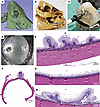 Figure 2
Ex vivo evaluation of CR injury using 3D-printed porcine skull. (A) CT scan–assisted 3D rendering of a pig skull. (B) 3D-printed model of a pig skull from 3D rendering generated in A. (C) 3D-printed pig skull with a fitted cadaveric pig eye in the orbit along with non-gelatin-based 10% ballistic gel. The PAD laser (green) is aimed at the cadaveric pig eye (arrowhead). (D) Gross specimen view after the CR injury showing the impact area in the sclera (*) and a surrounding whitened area (#). (E) Hematoxylin and eosin–stained (H&E-stained) sections from retinal region corresponding to the corneal impact (#) showing retinal folds in the visual streak. Arrowhead shows the impact direction in the cornea. (F–H) H&E-stained eye section showing the scleral impact zone (arrowhead, F), impacted retina (*) in lower (F) and higher (G) magnifications, and retinal region with folds (#) surrounding the impact area, in lower (F) and higher (H) magnifications. Scale bars: 100 μm in E, G, and H; 2 mm in F. N = 3 eyes per condition.
Acute outer blood-retinal barrier damage in PAD-induced CR. Based on our ex vivo analysis, we began testing on living pig eyes with projectile impact speed of 35.7 m/s. Five pigs were enrolled in this study. In all cases, fundus examination immediately after injury revealed the presence of preretinal hemorrhage at the area of impact (zone 1) and retinal whitening adjacent to it (zone 2) (Figure 3A). There was extensive outer blood-retinal barrier (oBRB) breakdown at zone 1 extending into zone 2, as evidenced by fluorescein leakage within a minute after dye injection continuing until the 10-minute evaluation time point (Figure 3, B and C, left). ICGA changes were minimal, suggesting no disruptions in retinal or deeper choroidal vessels (Figure 3, B and C, right). Fluorescein leakage subsided within 8–11 days after injury, suggesting a transient disruption of the oBRB with no additional changes in ICGA (Figure 3, D and E). OCT examination immediately after the injury revealed retinal detachment and subretinal fluid accumulation at the site of impact extending into zone 2 (Figure 3, F and G). OCT analysis also revealed extensive ellipsoid zone disruption extending from zone 2 into the visual streak (zone 3) (Figure 3, F and G). Quantification of OCT data revealed a range of sizes for different zones, illustrated in Figure 3F (zone 1: 2.0–4.0 mm; zone 2: 3.0–8.0 mm; zone 3: 2.0–8.0 mm). These findings were confirmed by histological analysis of the cadaveric pig eyes 4 days after the CR injury, revealing preretinal hemorrhage and extensive retinal damage with retinal atrophy in zone 1, thinning of outer retina and layer disorganization in zone 2, and photoreceptor disruption extending away from this area (Figure 3H). Follow-up by OCT confirmed FA/ICGA findings revealing subretinal fluid accumulation seen at day 0 (Figure 3, I and J) that was resolved in the first 2 weeks (Figure 3K). Interestingly, disruptions of the ellipsoid zone seen on day 0 persisted beyond day 14 (Figure 3, J–L). These findings were further confirmed by histological analysis of the retina (Figure 3, M and N), where photoreceptor outer segment shortening and ONL thinning and disruptions were evident. mfERG analysis showed reduced signal in the visual streak, confirming functional defects in cone photoreceptors (Figure 3, O and P, and Supplemental Figure 4). Overall, our data suggest that with impact speed up to 35.7 m/s, there was an acute oBRB breakdown that recovered by day 11, while the ellipsoid zone disruptions persisted.
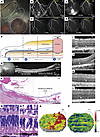 Figure 3
Short-term evaluation of pig eyes with CR injury. (A) High magnification of color fundus photograph of CR-injured eye showing: 1, preretinal hemorrhage at the impact site; 2, the whitening zone; 3, the adjacent visual streak. (B–E) FA images (left panels) show fluorescein dye leakage in early phase (1 minute) on day 0 (B) and late phase (10 minutes) on day 0 after injury (C), but not on day 8 after injury (D, early phase; E, late phase). ICGA images (right panels) show no dye leakage on day 0 after injury (B, early phase; C, late phase) and day 8 (D, early phase; E, late phase). Scale bars: 2 mm. (F) Schematic depicting the 3 distinct zones seen on color fundus and OCT images: impact zone showing hematoma (zone 1); whitening zone with extensive outer blood retina barrier (oBRB) damage and subretinal fluid (SRF) accumulation (zone 2); and zone with ellipsoid zone (EZ) disruption (zone 3). (G and H) OCT (G) and H&E staining (H) depicting the 3 zones described in F. Scale bars: 500 μm. (I–L) Higher-magnification OCT images: at baseline (BL) showing the ellipsoid zone (arrowhead, I); SRF accumulation on day 0 after CR injury (J); and fluid resorption by day 11 but missing ellipsoid zone (arrowhead, K), which persists on day 14 (L). Scale bars: 500 μm. (M and N) H&E section depicting healthy retina at baseline (BL) (M), and disruptions of ONL and photoreceptor outer segments (arrowhead) 11 days after CR injury (N). Scale bars: 20 μm. (O and P) mfERG signal heatmap at baseline (BL) (O) and day 11 (P) after injury showing the visual streak (vs) (dotted circle) and surrounding areas retina light response. Nine eyes were used for short-term evaluation of CR injury. NFL, nerve fiber layer; IPL, inner plexiform layer; INL, inner nuclear layer; ONL, outer nuclear layer; RPE, retinal pigment epithelium.
Long-term photoreceptor damage in PAD-induced CR. Short-term evaluation of the CR injury provided findings that were consistent with the patient data in terms of specificity of damage to photoreceptors (7, 38–43). Short-term evaluation also revealed acute oBRB damage not previously described for CR patients. With the goal of developing a suitable large-animal model for testing potential therapies, next we set out to determine whether PAD-induced CR injury at a projectile speed of 35.7 m/s persists in the longer term. Five pigs were enrolled in this part of the study and evaluated for up to 60 days after injury. As seen in the short-term studies, in all cases there was preretinal hemorrhage (zone 1) and retinal whitening — likely associated with an acute oBRB breakdown, which progressively healed by 16 days, as confirmed by fluorescein angiographs (Figure 4, A, B, D, and E). ICGA changes continued to be unremarkable by day 16 of evaluation, suggesting no damage to retinal or choroidal vessels (Figure 4, B and E). OCT analysis confirmed subretinal edema on day 0 in zone 2, which reabsorbed by day 16 (Figure 4, C and F). Surprisingly, the ellipsoid zone disruption evident in higher magnifications at day 15 recovered by day 30 (compare Figure 4G with Figure 4, H and I). This transient structural defect and its recovery were corroborated by initial loss and subsequent recovery of the mfERG signal, measured over the visual streak area (Figure 4, J–L). Because of this finding, we decided to increase the projectile impact speed to 39.5 m/s. Expectedly, higher speed caused deeper impact that was evident even at the 60-day follow-up, and there was no recovery of the ellipsoid zone on OCT (Figure 4, M and P). However, this high impact led to higher variability in structural damage to the retina with larger areas of retinal atrophy and relatively smaller ellipsoid zone disruption areas as assessed by OCT (compare Figure 4M with Figure 4P), variable non-perfusion of the choriocapillaris as seen by OCTA (compare Figure 4N with Figure 4Q), and variable functional changes in the visual streak as seen by mfERG (compare Figure 4O with Figure 4R). This variability, combined with the evidence of collateral damage to the posterior lens capsule and anterior segment (Supplemental Figure 5), prompted us to seek an alternative impact method to generate more reproducible, long-term, and specific injury to the photoreceptors without extensive anterior segment collateral damage.
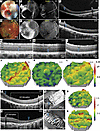 Figure 4
CR injury recovery in the long-term evaluation. (A–F) Color fundus (A and D), late-phase (10 minutes) FA (B and E, left panels), ICGA (B and E, right panels), and OCT (C and F) of post-injury eyes on day 0 (A–C) and day 16 (D–F) of evaluation of the same eye. “1” marks the area of impact showing preretinal hemorrhage. Whitened area in color fundus images corresponds to subretinal fluid accumulation on day 0, which is resolved by day 16 (arrowheads in C and F). Scale bars: 2 mm in A, B, D, and E; 500 μm in C and F. (G–L) OCT (G–I) and mfERG (J–L) analysis shows recovery of ellipsoid zone (EZ) (compare arrowheads in G–I) and recovery of mfERG signal in the visual streak (dashed ovals, J–L) by day 30 in eyes injured with a projectile speed of 35.7 m/s. Scale bars: 50 μm. (M–R) Comparative analysis at 60 days after injury using OCT (M and P), OCT angiography (N and Q), and mfERG (O and R) of 2 eyes injured with a projectile speed of 39.5 m/s highlights variability in damage to the outer retina and to the ellipsoid zone (arrowheads in M and P) and to the choriocapillaris (arrowheads in N and Q), and the variable signal in the visual streak (VS; dashed ovals) (O and R). Scale bars: 1 mm in M and P, 500 μm in N and Q. Seven eyes were used for this evaluation.
Scleral patch improves reproducibility of the CR injury. During post hoc analysis of evaluated eyes and based on literature evidence of variable scleral thickness in pigs, we asked whether we could control variability in injury extent by temporarily adding a scleral patch to the injury location (44). We used a commercially available cadaveric human scleral patch and glued it to the posterior sclera by disinsertion of the median rectus and release of the limbal traction (see Methods for surgery details). After the impact, the cadaveric scleral patch was removed, and the median rectus was resutured back to the sclera (Figure 5, A–D, and Supplemental Figure 6).
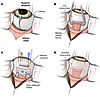 Figure 5
Surgical technique for cadaveric scleral patch placement. (A) Nasal sclera is exposed using limbal traction sutures. (B) The nasal conjunctiva is incised to expose and isolate the medial rectus muscle using hooks; dashed line marks the planned muscle transection site. (C) Scleral traction sutures are used to increase exposure of nasal sclera. A piece of cadaveric sclera is temporarily glued to the sclera, and the area of impact is marked (black circle). (D) After impact, the cadaveric sclera is removed, median rectus muscle is sutured back to its insertion, and conjunctiva is replaced and sutured (also see Supplemental Figure 6).
Four pigs were subjected to a projectile impact at a speed of 39.5 m/s and monitored for up to 60 days after injury. As seen with injury without the scleral patch, preretinal hemorrhage (zone 1) and retinal whitening (zone 2) seen immediately after the impact were also seen with the scleral patch, by color fundus photography (Figure 6A). FA confirmed that retinal whitening was caused by oBRB disruption (Figure 6B, left). As with the CR injury without the scleral patch, ICGA showed no signal, suggesting no damage to the choroidal vessels (Figure 6B, right). Edema seen on day 0 by OCT analysis resolved by day 30, suggesting that the oBRB heals by this time (Figure 6, C–E). In contrast, the ellipsoid zone disruption continued beyond day 30 until the day 60 evaluation time point (Figure 6, D–F). OCTA revealed a non-statistically-significant decrease in choriocapillaris density in the first 15 days after injury, with partial recovery by 60 days (Figure 6, G–J).
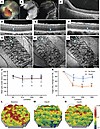 Figure 6
Long-term evaluation of CR injury induced with a cadaveric scleral patch support. (A) Color fundus image shows the area of impact with preretinal hemorrhage and the surrounding area of retinal whitening. (B) Late-phase (10 minutes) FA and ICGA show blocked fluorescence signal due to hemorrhage. Scale bars: 2 mm. (C) OCT showing subretinal fluid corresponding to the whitening area in A. Scale bar: 500 μm. (D–I) OCT images (D–F) and corresponding OCTA images (G–I) depicting the presence of ellipsoid zone and choriocapillaris, respectively, at baseline (D, arrowhead) and clear absence of ellipsoid zone at 30 days (E, arrowhead) and 60 days (F, arrowhead) after injury. Minimal changes are seen in choriocapillaris (compare G–I, arrowheads). Scale bars: 500 μm. (J) Median grayscale values intensity graph of OCTA signal intensity up to 60 days after CR injury. Results were analyzed using 1-way ANOVA. (K) Graph showing ONL thickness at baseline and 15, 30, and 60 days after projectile impact at 39.5 m/s on eyes with no scleral patch versus with scleral patch impacts. Data are presented as a percentage of average thickness of the same location at baseline. ANOVA (Friedman test compared with baseline) was used for statistical analysis. *P < 0.05, **P < 0.01. (L–N) mfERG heatmaps at baseline (L) and 30 days (M) and 60 days (N) after CR injury depicting changes in mfERG sensitivity throughout the evaluation time. Visual streak is highlighted by dashed ovals. Four eyes were used for this evaluation.
To confirm reproducibility of this approach, we compared OCT data across 4 eyes. As expected, by day 60, edema seen after projectile impact was reabsorbed (Supplemental Figure 7). The area of the impact showed noticeable retinal degeneration, and the adjacent area showed progressively improving retinal thickness with consistently missing ellipsoid zone (Supplemental Figure 7). To quantify changes seen in OCT, we performed segmentation of retinal layers using our recently published artificial intelligence–based algorithm for OCT segmentation (34). Segmentation analysis confirmed that use of the scleral patch resulted in a milder (~20%) reduction in ONL thicknesses as compared with injury without the patch (~50% reduction in ONL thickness) (Figure 6K). mfERG heatmap analysis showed a corresponding decrease in signal, persisting up to 60 days (Figure 6, L–N), consistent with longer-term photoreceptor damage. Our results indicate that the addition of a scleral patch to the impact area generated reproducible visual streak lesions and yielded a model that allows better understanding of human CR injuries and will help develop effective therapies for photoreceptor degeneration.
Histological evaluation of PAD-induced CR injury to the retina. To further evaluate the impact of CR injury on porcine retina, we performed histological analysis of eyes at the end of 60 days of longitudinal live imaging. Consistent with the OCT data (Figure 7A), histological (Figure 7, B–F) and immunostaining analysis provides qualitative analysis of 3 distinct areas of injury (Figure 7, G–J): the impact zone, a transition zone, and the ellipsoid zone disruption area. In the impact zone, H&E staining showed complete atrophy of both inner and outer retinal layers (compare Figure 7, B, C, and F); immunostaining further confirmed missing signals for cone photoreceptors (peanut agglutinin [PNA]) and retinal pigment epithelium (RPE) (RPE65) (compare Figure 7, G–J). In the transition zone, H&E and immunostaining showed partial preservation of the inner retina and rosette-like structures with disruptions in outer retinal layers including the RPE, photoreceptor outer segment (POS), and ONL; and barely visible RPE layer with faint RPE65 immunostaining and no PNA signal, suggesting missing cone photoreceptor outer segments (compare Figure 7, B, D, and F, with Figure 7, H and J). The ellipsoid zone disruption area had a thinned ONL lacking PNA signal but relatively intact RPE and inner nuclear layer (compare Figure 7, B, E, and F, with Figure 7, I and J). Overall, this histological analysis (H&E and immunostaining) corroborated our in vivo structural and functional evaluations, confirming the loss of photoreceptors for the evaluation period of up to 60 days in PAD-induced closed-globe CR injury.
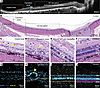 Figure 7
Histological analysis of CR model porcine eyes. (A and B) Terminal point OCT (A; arrowhead marks the transition zone) and corresponding H&E-stained section (B) showing the impact area with complete retinal atrophy, the transition zone with significant outer retina damage, and an area with ellipsoid zone (EZ) disruption. Scale bars: 500 μm in A, 1,000 μm in B. (C–J) Higher-magnification views of the impact area (C and G) showing complete retinal atrophy (arrowhead), the transition zone (D and H) showing outer and inner retina layer degeneration (arrowheads), (E and I) showing degenerated photoreceptor outer segments and EZ disruption (arrowhead) with relatively preserved photoreceptor outer nuclear layer (ONL), and control retina (F and J), stained with H&E (C–F) or stained for cone photoreceptors (PNA, magenta), RPE (RPE65, yellow), and nuclei (DAPI, cyan) (G–J). Scale bars: 50 μm.


