
Research ArticleGeneticsOncology
Open Access |  10.1172/jci.insight.191990
An integrated single-cell and spatial transcriptomic atlas of thyroid cancer progression identifies prognostic fibroblast subpopulations
Matthew A. Loberg,1 George J. Xu,1 Sheau-Chiann Chen,2 Hua-Chang Chen,2 Claudia C. Wahoski,1 Kailey P. Caroland,1 Megan L. Tigue,1 Heather A. Hartmann,1 Jean-Nicolas Gallant,3 Courtney J. Phifer,1 Andres A. Ocampo,4 Dayle K. Wang,4 Reilly G. Fankhauser,4 Kirti A. Karunakaran,1 Chia-Chin Wu,5 Maxime Tarabichi,6,7 Sophia M. Shaddy,8 James L. Netterville,3,9 Sarah L. Rohde,3,9 Carmen C. Solórzano,9,10 Lindsay A. Bischoff,4 Naira Baregamian,9,10 Barbara A. Murphy,4,9 Jennifer H. Choe,4 Jennifer R. Wang,11 Eric C. Huang,8 Quanhu Sheng,2 Luciane T. Kagohara,12,13,14 Elizabeth M. Jaffee,12,13,14 Ryan H. Belcher,3,15 Ken S. Lau,16,17 Fei Ye,2 Ethan Lee,16,18 and Vivian L. Weiss1,9,16,18
1Department of Pathology, Microbiology, and Immunology;
2Department of Biostatistics;
3Department of Otolaryngology – Head and Neck Surgery; and
4Department of Medicine, Vanderbilt University Medical Center, Nashville, Tennessee, USA.
5Department of Genomic Medicine, The University of Texas MD Anderson Cancer Center, Houston, Texas, USA.
6The Francis Crick Institute, London, United Kingdom.
7Institute of Interdisciplinary Research (IRIBHM), Universite Libre de Bruxelles, Brussels, Belgium.
8Department of Laboratory Medicine and Pathology, University of Washington School of Medicine, Seattle, Washington, USA.
9Vanderbilt Ingram Cancer Center and
10Department of Surgery, Vanderbilt University Medical Center, Nashville, Tennessee, USA.
11Department of Head and Neck Surgery, The University of Texas MD Anderson Cancer Center, Houston, Texas, USA.
12Department of Oncology, Johns Hopkins University School of Medicine, Baltimore, Maryland, USA.
13Convergence Institute, Johns Hopkins University, Baltimore, Maryland, USA.
14Bloomberg-Kimmel Immunotherapy Institute, Johns Hopkins University School of Medicine, Baltimore, Maryland, USA.
15Vanderbilt Division of Pediatric Otolaryngology – Head and Neck Surgery, Monroe Carell Jr. Children’s Hospital at Vanderbilt, Nashville, Tennessee, USA.
16Department of Cell and Developmental Biology, Vanderbilt University, Nashville, Tennessee, USA.
17Epithelial Biology Center, Vanderbilt University Medical Center, Nashville, Tennessee, USA.
18Department of Pharmacology, Vanderbilt University, Nashville, Tennessee, USA.
Address correspondence to: Vivian L. Weiss, Medical Center North 1161 21st Ave. South room/suite C3324, Nashville, Tennessee, 37232, USA. Phone: 615.875.3002; Email: Vivian.l.weiss@vumc.org.
Find articles by Loberg, M. in: PubMed | Google Scholar
1Department of Pathology, Microbiology, and Immunology;
2Department of Biostatistics;
3Department of Otolaryngology – Head and Neck Surgery; and
4Department of Medicine, Vanderbilt University Medical Center, Nashville, Tennessee, USA.
5Department of Genomic Medicine, The University of Texas MD Anderson Cancer Center, Houston, Texas, USA.
6The Francis Crick Institute, London, United Kingdom.
7Institute of Interdisciplinary Research (IRIBHM), Universite Libre de Bruxelles, Brussels, Belgium.
8Department of Laboratory Medicine and Pathology, University of Washington School of Medicine, Seattle, Washington, USA.
9Vanderbilt Ingram Cancer Center and
10Department of Surgery, Vanderbilt University Medical Center, Nashville, Tennessee, USA.
11Department of Head and Neck Surgery, The University of Texas MD Anderson Cancer Center, Houston, Texas, USA.
12Department of Oncology, Johns Hopkins University School of Medicine, Baltimore, Maryland, USA.
13Convergence Institute, Johns Hopkins University, Baltimore, Maryland, USA.
14Bloomberg-Kimmel Immunotherapy Institute, Johns Hopkins University School of Medicine, Baltimore, Maryland, USA.
15Vanderbilt Division of Pediatric Otolaryngology – Head and Neck Surgery, Monroe Carell Jr. Children’s Hospital at Vanderbilt, Nashville, Tennessee, USA.
16Department of Cell and Developmental Biology, Vanderbilt University, Nashville, Tennessee, USA.
17Epithelial Biology Center, Vanderbilt University Medical Center, Nashville, Tennessee, USA.
18Department of Pharmacology, Vanderbilt University, Nashville, Tennessee, USA.
Address correspondence to: Vivian L. Weiss, Medical Center North 1161 21st Ave. South room/suite C3324, Nashville, Tennessee, 37232, USA. Phone: 615.875.3002; Email: Vivian.l.weiss@vumc.org.
Find articles by Xu, G. in: PubMed | Google Scholar
1Department of Pathology, Microbiology, and Immunology;
2Department of Biostatistics;
3Department of Otolaryngology – Head and Neck Surgery; and
4Department of Medicine, Vanderbilt University Medical Center, Nashville, Tennessee, USA.
5Department of Genomic Medicine, The University of Texas MD Anderson Cancer Center, Houston, Texas, USA.
6The Francis Crick Institute, London, United Kingdom.
7Institute of Interdisciplinary Research (IRIBHM), Universite Libre de Bruxelles, Brussels, Belgium.
8Department of Laboratory Medicine and Pathology, University of Washington School of Medicine, Seattle, Washington, USA.
9Vanderbilt Ingram Cancer Center and
10Department of Surgery, Vanderbilt University Medical Center, Nashville, Tennessee, USA.
11Department of Head and Neck Surgery, The University of Texas MD Anderson Cancer Center, Houston, Texas, USA.
12Department of Oncology, Johns Hopkins University School of Medicine, Baltimore, Maryland, USA.
13Convergence Institute, Johns Hopkins University, Baltimore, Maryland, USA.
14Bloomberg-Kimmel Immunotherapy Institute, Johns Hopkins University School of Medicine, Baltimore, Maryland, USA.
15Vanderbilt Division of Pediatric Otolaryngology – Head and Neck Surgery, Monroe Carell Jr. Children’s Hospital at Vanderbilt, Nashville, Tennessee, USA.
16Department of Cell and Developmental Biology, Vanderbilt University, Nashville, Tennessee, USA.
17Epithelial Biology Center, Vanderbilt University Medical Center, Nashville, Tennessee, USA.
18Department of Pharmacology, Vanderbilt University, Nashville, Tennessee, USA.
Address correspondence to: Vivian L. Weiss, Medical Center North 1161 21st Ave. South room/suite C3324, Nashville, Tennessee, 37232, USA. Phone: 615.875.3002; Email: Vivian.l.weiss@vumc.org.
Find articles by Chen, S. in: PubMed | Google Scholar
1Department of Pathology, Microbiology, and Immunology;
2Department of Biostatistics;
3Department of Otolaryngology – Head and Neck Surgery; and
4Department of Medicine, Vanderbilt University Medical Center, Nashville, Tennessee, USA.
5Department of Genomic Medicine, The University of Texas MD Anderson Cancer Center, Houston, Texas, USA.
6The Francis Crick Institute, London, United Kingdom.
7Institute of Interdisciplinary Research (IRIBHM), Universite Libre de Bruxelles, Brussels, Belgium.
8Department of Laboratory Medicine and Pathology, University of Washington School of Medicine, Seattle, Washington, USA.
9Vanderbilt Ingram Cancer Center and
10Department of Surgery, Vanderbilt University Medical Center, Nashville, Tennessee, USA.
11Department of Head and Neck Surgery, The University of Texas MD Anderson Cancer Center, Houston, Texas, USA.
12Department of Oncology, Johns Hopkins University School of Medicine, Baltimore, Maryland, USA.
13Convergence Institute, Johns Hopkins University, Baltimore, Maryland, USA.
14Bloomberg-Kimmel Immunotherapy Institute, Johns Hopkins University School of Medicine, Baltimore, Maryland, USA.
15Vanderbilt Division of Pediatric Otolaryngology – Head and Neck Surgery, Monroe Carell Jr. Children’s Hospital at Vanderbilt, Nashville, Tennessee, USA.
16Department of Cell and Developmental Biology, Vanderbilt University, Nashville, Tennessee, USA.
17Epithelial Biology Center, Vanderbilt University Medical Center, Nashville, Tennessee, USA.
18Department of Pharmacology, Vanderbilt University, Nashville, Tennessee, USA.
Address correspondence to: Vivian L. Weiss, Medical Center North 1161 21st Ave. South room/suite C3324, Nashville, Tennessee, 37232, USA. Phone: 615.875.3002; Email: Vivian.l.weiss@vumc.org.
Find articles by Chen, H. in: PubMed | Google Scholar
1Department of Pathology, Microbiology, and Immunology;
2Department of Biostatistics;
3Department of Otolaryngology – Head and Neck Surgery; and
4Department of Medicine, Vanderbilt University Medical Center, Nashville, Tennessee, USA.
5Department of Genomic Medicine, The University of Texas MD Anderson Cancer Center, Houston, Texas, USA.
6The Francis Crick Institute, London, United Kingdom.
7Institute of Interdisciplinary Research (IRIBHM), Universite Libre de Bruxelles, Brussels, Belgium.
8Department of Laboratory Medicine and Pathology, University of Washington School of Medicine, Seattle, Washington, USA.
9Vanderbilt Ingram Cancer Center and
10Department of Surgery, Vanderbilt University Medical Center, Nashville, Tennessee, USA.
11Department of Head and Neck Surgery, The University of Texas MD Anderson Cancer Center, Houston, Texas, USA.
12Department of Oncology, Johns Hopkins University School of Medicine, Baltimore, Maryland, USA.
13Convergence Institute, Johns Hopkins University, Baltimore, Maryland, USA.
14Bloomberg-Kimmel Immunotherapy Institute, Johns Hopkins University School of Medicine, Baltimore, Maryland, USA.
15Vanderbilt Division of Pediatric Otolaryngology – Head and Neck Surgery, Monroe Carell Jr. Children’s Hospital at Vanderbilt, Nashville, Tennessee, USA.
16Department of Cell and Developmental Biology, Vanderbilt University, Nashville, Tennessee, USA.
17Epithelial Biology Center, Vanderbilt University Medical Center, Nashville, Tennessee, USA.
18Department of Pharmacology, Vanderbilt University, Nashville, Tennessee, USA.
Address correspondence to: Vivian L. Weiss, Medical Center North 1161 21st Ave. South room/suite C3324, Nashville, Tennessee, 37232, USA. Phone: 615.875.3002; Email: Vivian.l.weiss@vumc.org.
Find articles by Wahoski, C. in: PubMed | Google Scholar
1Department of Pathology, Microbiology, and Immunology;
2Department of Biostatistics;
3Department of Otolaryngology – Head and Neck Surgery; and
4Department of Medicine, Vanderbilt University Medical Center, Nashville, Tennessee, USA.
5Department of Genomic Medicine, The University of Texas MD Anderson Cancer Center, Houston, Texas, USA.
6The Francis Crick Institute, London, United Kingdom.
7Institute of Interdisciplinary Research (IRIBHM), Universite Libre de Bruxelles, Brussels, Belgium.
8Department of Laboratory Medicine and Pathology, University of Washington School of Medicine, Seattle, Washington, USA.
9Vanderbilt Ingram Cancer Center and
10Department of Surgery, Vanderbilt University Medical Center, Nashville, Tennessee, USA.
11Department of Head and Neck Surgery, The University of Texas MD Anderson Cancer Center, Houston, Texas, USA.
12Department of Oncology, Johns Hopkins University School of Medicine, Baltimore, Maryland, USA.
13Convergence Institute, Johns Hopkins University, Baltimore, Maryland, USA.
14Bloomberg-Kimmel Immunotherapy Institute, Johns Hopkins University School of Medicine, Baltimore, Maryland, USA.
15Vanderbilt Division of Pediatric Otolaryngology – Head and Neck Surgery, Monroe Carell Jr. Children’s Hospital at Vanderbilt, Nashville, Tennessee, USA.
16Department of Cell and Developmental Biology, Vanderbilt University, Nashville, Tennessee, USA.
17Epithelial Biology Center, Vanderbilt University Medical Center, Nashville, Tennessee, USA.
18Department of Pharmacology, Vanderbilt University, Nashville, Tennessee, USA.
Address correspondence to: Vivian L. Weiss, Medical Center North 1161 21st Ave. South room/suite C3324, Nashville, Tennessee, 37232, USA. Phone: 615.875.3002; Email: Vivian.l.weiss@vumc.org.
Find articles by Caroland, K. in: PubMed | Google Scholar
1Department of Pathology, Microbiology, and Immunology;
2Department of Biostatistics;
3Department of Otolaryngology – Head and Neck Surgery; and
4Department of Medicine, Vanderbilt University Medical Center, Nashville, Tennessee, USA.
5Department of Genomic Medicine, The University of Texas MD Anderson Cancer Center, Houston, Texas, USA.
6The Francis Crick Institute, London, United Kingdom.
7Institute of Interdisciplinary Research (IRIBHM), Universite Libre de Bruxelles, Brussels, Belgium.
8Department of Laboratory Medicine and Pathology, University of Washington School of Medicine, Seattle, Washington, USA.
9Vanderbilt Ingram Cancer Center and
10Department of Surgery, Vanderbilt University Medical Center, Nashville, Tennessee, USA.
11Department of Head and Neck Surgery, The University of Texas MD Anderson Cancer Center, Houston, Texas, USA.
12Department of Oncology, Johns Hopkins University School of Medicine, Baltimore, Maryland, USA.
13Convergence Institute, Johns Hopkins University, Baltimore, Maryland, USA.
14Bloomberg-Kimmel Immunotherapy Institute, Johns Hopkins University School of Medicine, Baltimore, Maryland, USA.
15Vanderbilt Division of Pediatric Otolaryngology – Head and Neck Surgery, Monroe Carell Jr. Children’s Hospital at Vanderbilt, Nashville, Tennessee, USA.
16Department of Cell and Developmental Biology, Vanderbilt University, Nashville, Tennessee, USA.
17Epithelial Biology Center, Vanderbilt University Medical Center, Nashville, Tennessee, USA.
18Department of Pharmacology, Vanderbilt University, Nashville, Tennessee, USA.
Address correspondence to: Vivian L. Weiss, Medical Center North 1161 21st Ave. South room/suite C3324, Nashville, Tennessee, 37232, USA. Phone: 615.875.3002; Email: Vivian.l.weiss@vumc.org.
Find articles by Tigue, M. in: PubMed | Google Scholar
1Department of Pathology, Microbiology, and Immunology;
2Department of Biostatistics;
3Department of Otolaryngology – Head and Neck Surgery; and
4Department of Medicine, Vanderbilt University Medical Center, Nashville, Tennessee, USA.
5Department of Genomic Medicine, The University of Texas MD Anderson Cancer Center, Houston, Texas, USA.
6The Francis Crick Institute, London, United Kingdom.
7Institute of Interdisciplinary Research (IRIBHM), Universite Libre de Bruxelles, Brussels, Belgium.
8Department of Laboratory Medicine and Pathology, University of Washington School of Medicine, Seattle, Washington, USA.
9Vanderbilt Ingram Cancer Center and
10Department of Surgery, Vanderbilt University Medical Center, Nashville, Tennessee, USA.
11Department of Head and Neck Surgery, The University of Texas MD Anderson Cancer Center, Houston, Texas, USA.
12Department of Oncology, Johns Hopkins University School of Medicine, Baltimore, Maryland, USA.
13Convergence Institute, Johns Hopkins University, Baltimore, Maryland, USA.
14Bloomberg-Kimmel Immunotherapy Institute, Johns Hopkins University School of Medicine, Baltimore, Maryland, USA.
15Vanderbilt Division of Pediatric Otolaryngology – Head and Neck Surgery, Monroe Carell Jr. Children’s Hospital at Vanderbilt, Nashville, Tennessee, USA.
16Department of Cell and Developmental Biology, Vanderbilt University, Nashville, Tennessee, USA.
17Epithelial Biology Center, Vanderbilt University Medical Center, Nashville, Tennessee, USA.
18Department of Pharmacology, Vanderbilt University, Nashville, Tennessee, USA.
Address correspondence to: Vivian L. Weiss, Medical Center North 1161 21st Ave. South room/suite C3324, Nashville, Tennessee, 37232, USA. Phone: 615.875.3002; Email: Vivian.l.weiss@vumc.org.
Find articles by Hartmann, H. in: PubMed | Google Scholar
1Department of Pathology, Microbiology, and Immunology;
2Department of Biostatistics;
3Department of Otolaryngology – Head and Neck Surgery; and
4Department of Medicine, Vanderbilt University Medical Center, Nashville, Tennessee, USA.
5Department of Genomic Medicine, The University of Texas MD Anderson Cancer Center, Houston, Texas, USA.
6The Francis Crick Institute, London, United Kingdom.
7Institute of Interdisciplinary Research (IRIBHM), Universite Libre de Bruxelles, Brussels, Belgium.
8Department of Laboratory Medicine and Pathology, University of Washington School of Medicine, Seattle, Washington, USA.
9Vanderbilt Ingram Cancer Center and
10Department of Surgery, Vanderbilt University Medical Center, Nashville, Tennessee, USA.
11Department of Head and Neck Surgery, The University of Texas MD Anderson Cancer Center, Houston, Texas, USA.
12Department of Oncology, Johns Hopkins University School of Medicine, Baltimore, Maryland, USA.
13Convergence Institute, Johns Hopkins University, Baltimore, Maryland, USA.
14Bloomberg-Kimmel Immunotherapy Institute, Johns Hopkins University School of Medicine, Baltimore, Maryland, USA.
15Vanderbilt Division of Pediatric Otolaryngology – Head and Neck Surgery, Monroe Carell Jr. Children’s Hospital at Vanderbilt, Nashville, Tennessee, USA.
16Department of Cell and Developmental Biology, Vanderbilt University, Nashville, Tennessee, USA.
17Epithelial Biology Center, Vanderbilt University Medical Center, Nashville, Tennessee, USA.
18Department of Pharmacology, Vanderbilt University, Nashville, Tennessee, USA.
Address correspondence to: Vivian L. Weiss, Medical Center North 1161 21st Ave. South room/suite C3324, Nashville, Tennessee, 37232, USA. Phone: 615.875.3002; Email: Vivian.l.weiss@vumc.org.
Find articles by Gallant, J. in: PubMed | Google Scholar
1Department of Pathology, Microbiology, and Immunology;
2Department of Biostatistics;
3Department of Otolaryngology – Head and Neck Surgery; and
4Department of Medicine, Vanderbilt University Medical Center, Nashville, Tennessee, USA.
5Department of Genomic Medicine, The University of Texas MD Anderson Cancer Center, Houston, Texas, USA.
6The Francis Crick Institute, London, United Kingdom.
7Institute of Interdisciplinary Research (IRIBHM), Universite Libre de Bruxelles, Brussels, Belgium.
8Department of Laboratory Medicine and Pathology, University of Washington School of Medicine, Seattle, Washington, USA.
9Vanderbilt Ingram Cancer Center and
10Department of Surgery, Vanderbilt University Medical Center, Nashville, Tennessee, USA.
11Department of Head and Neck Surgery, The University of Texas MD Anderson Cancer Center, Houston, Texas, USA.
12Department of Oncology, Johns Hopkins University School of Medicine, Baltimore, Maryland, USA.
13Convergence Institute, Johns Hopkins University, Baltimore, Maryland, USA.
14Bloomberg-Kimmel Immunotherapy Institute, Johns Hopkins University School of Medicine, Baltimore, Maryland, USA.
15Vanderbilt Division of Pediatric Otolaryngology – Head and Neck Surgery, Monroe Carell Jr. Children’s Hospital at Vanderbilt, Nashville, Tennessee, USA.
16Department of Cell and Developmental Biology, Vanderbilt University, Nashville, Tennessee, USA.
17Epithelial Biology Center, Vanderbilt University Medical Center, Nashville, Tennessee, USA.
18Department of Pharmacology, Vanderbilt University, Nashville, Tennessee, USA.
Address correspondence to: Vivian L. Weiss, Medical Center North 1161 21st Ave. South room/suite C3324, Nashville, Tennessee, 37232, USA. Phone: 615.875.3002; Email: Vivian.l.weiss@vumc.org.
Find articles by Phifer, C. in: PubMed | Google Scholar
1Department of Pathology, Microbiology, and Immunology;
2Department of Biostatistics;
3Department of Otolaryngology – Head and Neck Surgery; and
4Department of Medicine, Vanderbilt University Medical Center, Nashville, Tennessee, USA.
5Department of Genomic Medicine, The University of Texas MD Anderson Cancer Center, Houston, Texas, USA.
6The Francis Crick Institute, London, United Kingdom.
7Institute of Interdisciplinary Research (IRIBHM), Universite Libre de Bruxelles, Brussels, Belgium.
8Department of Laboratory Medicine and Pathology, University of Washington School of Medicine, Seattle, Washington, USA.
9Vanderbilt Ingram Cancer Center and
10Department of Surgery, Vanderbilt University Medical Center, Nashville, Tennessee, USA.
11Department of Head and Neck Surgery, The University of Texas MD Anderson Cancer Center, Houston, Texas, USA.
12Department of Oncology, Johns Hopkins University School of Medicine, Baltimore, Maryland, USA.
13Convergence Institute, Johns Hopkins University, Baltimore, Maryland, USA.
14Bloomberg-Kimmel Immunotherapy Institute, Johns Hopkins University School of Medicine, Baltimore, Maryland, USA.
15Vanderbilt Division of Pediatric Otolaryngology – Head and Neck Surgery, Monroe Carell Jr. Children’s Hospital at Vanderbilt, Nashville, Tennessee, USA.
16Department of Cell and Developmental Biology, Vanderbilt University, Nashville, Tennessee, USA.
17Epithelial Biology Center, Vanderbilt University Medical Center, Nashville, Tennessee, USA.
18Department of Pharmacology, Vanderbilt University, Nashville, Tennessee, USA.
Address correspondence to: Vivian L. Weiss, Medical Center North 1161 21st Ave. South room/suite C3324, Nashville, Tennessee, 37232, USA. Phone: 615.875.3002; Email: Vivian.l.weiss@vumc.org.
Find articles by Ocampo, A. in: PubMed | Google Scholar
1Department of Pathology, Microbiology, and Immunology;
2Department of Biostatistics;
3Department of Otolaryngology – Head and Neck Surgery; and
4Department of Medicine, Vanderbilt University Medical Center, Nashville, Tennessee, USA.
5Department of Genomic Medicine, The University of Texas MD Anderson Cancer Center, Houston, Texas, USA.
6The Francis Crick Institute, London, United Kingdom.
7Institute of Interdisciplinary Research (IRIBHM), Universite Libre de Bruxelles, Brussels, Belgium.
8Department of Laboratory Medicine and Pathology, University of Washington School of Medicine, Seattle, Washington, USA.
9Vanderbilt Ingram Cancer Center and
10Department of Surgery, Vanderbilt University Medical Center, Nashville, Tennessee, USA.
11Department of Head and Neck Surgery, The University of Texas MD Anderson Cancer Center, Houston, Texas, USA.
12Department of Oncology, Johns Hopkins University School of Medicine, Baltimore, Maryland, USA.
13Convergence Institute, Johns Hopkins University, Baltimore, Maryland, USA.
14Bloomberg-Kimmel Immunotherapy Institute, Johns Hopkins University School of Medicine, Baltimore, Maryland, USA.
15Vanderbilt Division of Pediatric Otolaryngology – Head and Neck Surgery, Monroe Carell Jr. Children’s Hospital at Vanderbilt, Nashville, Tennessee, USA.
16Department of Cell and Developmental Biology, Vanderbilt University, Nashville, Tennessee, USA.
17Epithelial Biology Center, Vanderbilt University Medical Center, Nashville, Tennessee, USA.
18Department of Pharmacology, Vanderbilt University, Nashville, Tennessee, USA.
Address correspondence to: Vivian L. Weiss, Medical Center North 1161 21st Ave. South room/suite C3324, Nashville, Tennessee, 37232, USA. Phone: 615.875.3002; Email: Vivian.l.weiss@vumc.org.
Find articles by Wang, D. in: PubMed | Google Scholar
1Department of Pathology, Microbiology, and Immunology;
2Department of Biostatistics;
3Department of Otolaryngology – Head and Neck Surgery; and
4Department of Medicine, Vanderbilt University Medical Center, Nashville, Tennessee, USA.
5Department of Genomic Medicine, The University of Texas MD Anderson Cancer Center, Houston, Texas, USA.
6The Francis Crick Institute, London, United Kingdom.
7Institute of Interdisciplinary Research (IRIBHM), Universite Libre de Bruxelles, Brussels, Belgium.
8Department of Laboratory Medicine and Pathology, University of Washington School of Medicine, Seattle, Washington, USA.
9Vanderbilt Ingram Cancer Center and
10Department of Surgery, Vanderbilt University Medical Center, Nashville, Tennessee, USA.
11Department of Head and Neck Surgery, The University of Texas MD Anderson Cancer Center, Houston, Texas, USA.
12Department of Oncology, Johns Hopkins University School of Medicine, Baltimore, Maryland, USA.
13Convergence Institute, Johns Hopkins University, Baltimore, Maryland, USA.
14Bloomberg-Kimmel Immunotherapy Institute, Johns Hopkins University School of Medicine, Baltimore, Maryland, USA.
15Vanderbilt Division of Pediatric Otolaryngology – Head and Neck Surgery, Monroe Carell Jr. Children’s Hospital at Vanderbilt, Nashville, Tennessee, USA.
16Department of Cell and Developmental Biology, Vanderbilt University, Nashville, Tennessee, USA.
17Epithelial Biology Center, Vanderbilt University Medical Center, Nashville, Tennessee, USA.
18Department of Pharmacology, Vanderbilt University, Nashville, Tennessee, USA.
Address correspondence to: Vivian L. Weiss, Medical Center North 1161 21st Ave. South room/suite C3324, Nashville, Tennessee, 37232, USA. Phone: 615.875.3002; Email: Vivian.l.weiss@vumc.org.
Find articles by Fankhauser, R. in: PubMed | Google Scholar
1Department of Pathology, Microbiology, and Immunology;
2Department of Biostatistics;
3Department of Otolaryngology – Head and Neck Surgery; and
4Department of Medicine, Vanderbilt University Medical Center, Nashville, Tennessee, USA.
5Department of Genomic Medicine, The University of Texas MD Anderson Cancer Center, Houston, Texas, USA.
6The Francis Crick Institute, London, United Kingdom.
7Institute of Interdisciplinary Research (IRIBHM), Universite Libre de Bruxelles, Brussels, Belgium.
8Department of Laboratory Medicine and Pathology, University of Washington School of Medicine, Seattle, Washington, USA.
9Vanderbilt Ingram Cancer Center and
10Department of Surgery, Vanderbilt University Medical Center, Nashville, Tennessee, USA.
11Department of Head and Neck Surgery, The University of Texas MD Anderson Cancer Center, Houston, Texas, USA.
12Department of Oncology, Johns Hopkins University School of Medicine, Baltimore, Maryland, USA.
13Convergence Institute, Johns Hopkins University, Baltimore, Maryland, USA.
14Bloomberg-Kimmel Immunotherapy Institute, Johns Hopkins University School of Medicine, Baltimore, Maryland, USA.
15Vanderbilt Division of Pediatric Otolaryngology – Head and Neck Surgery, Monroe Carell Jr. Children’s Hospital at Vanderbilt, Nashville, Tennessee, USA.
16Department of Cell and Developmental Biology, Vanderbilt University, Nashville, Tennessee, USA.
17Epithelial Biology Center, Vanderbilt University Medical Center, Nashville, Tennessee, USA.
18Department of Pharmacology, Vanderbilt University, Nashville, Tennessee, USA.
Address correspondence to: Vivian L. Weiss, Medical Center North 1161 21st Ave. South room/suite C3324, Nashville, Tennessee, 37232, USA. Phone: 615.875.3002; Email: Vivian.l.weiss@vumc.org.
Find articles by Karunakaran, K. in: PubMed | Google Scholar
1Department of Pathology, Microbiology, and Immunology;
2Department of Biostatistics;
3Department of Otolaryngology – Head and Neck Surgery; and
4Department of Medicine, Vanderbilt University Medical Center, Nashville, Tennessee, USA.
5Department of Genomic Medicine, The University of Texas MD Anderson Cancer Center, Houston, Texas, USA.
6The Francis Crick Institute, London, United Kingdom.
7Institute of Interdisciplinary Research (IRIBHM), Universite Libre de Bruxelles, Brussels, Belgium.
8Department of Laboratory Medicine and Pathology, University of Washington School of Medicine, Seattle, Washington, USA.
9Vanderbilt Ingram Cancer Center and
10Department of Surgery, Vanderbilt University Medical Center, Nashville, Tennessee, USA.
11Department of Head and Neck Surgery, The University of Texas MD Anderson Cancer Center, Houston, Texas, USA.
12Department of Oncology, Johns Hopkins University School of Medicine, Baltimore, Maryland, USA.
13Convergence Institute, Johns Hopkins University, Baltimore, Maryland, USA.
14Bloomberg-Kimmel Immunotherapy Institute, Johns Hopkins University School of Medicine, Baltimore, Maryland, USA.
15Vanderbilt Division of Pediatric Otolaryngology – Head and Neck Surgery, Monroe Carell Jr. Children’s Hospital at Vanderbilt, Nashville, Tennessee, USA.
16Department of Cell and Developmental Biology, Vanderbilt University, Nashville, Tennessee, USA.
17Epithelial Biology Center, Vanderbilt University Medical Center, Nashville, Tennessee, USA.
18Department of Pharmacology, Vanderbilt University, Nashville, Tennessee, USA.
Address correspondence to: Vivian L. Weiss, Medical Center North 1161 21st Ave. South room/suite C3324, Nashville, Tennessee, 37232, USA. Phone: 615.875.3002; Email: Vivian.l.weiss@vumc.org.
Find articles by
Wu, C.
in:
PubMed
|
Google Scholar
|

1Department of Pathology, Microbiology, and Immunology;
2Department of Biostatistics;
3Department of Otolaryngology – Head and Neck Surgery; and
4Department of Medicine, Vanderbilt University Medical Center, Nashville, Tennessee, USA.
5Department of Genomic Medicine, The University of Texas MD Anderson Cancer Center, Houston, Texas, USA.
6The Francis Crick Institute, London, United Kingdom.
7Institute of Interdisciplinary Research (IRIBHM), Universite Libre de Bruxelles, Brussels, Belgium.
8Department of Laboratory Medicine and Pathology, University of Washington School of Medicine, Seattle, Washington, USA.
9Vanderbilt Ingram Cancer Center and
10Department of Surgery, Vanderbilt University Medical Center, Nashville, Tennessee, USA.
11Department of Head and Neck Surgery, The University of Texas MD Anderson Cancer Center, Houston, Texas, USA.
12Department of Oncology, Johns Hopkins University School of Medicine, Baltimore, Maryland, USA.
13Convergence Institute, Johns Hopkins University, Baltimore, Maryland, USA.
14Bloomberg-Kimmel Immunotherapy Institute, Johns Hopkins University School of Medicine, Baltimore, Maryland, USA.
15Vanderbilt Division of Pediatric Otolaryngology – Head and Neck Surgery, Monroe Carell Jr. Children’s Hospital at Vanderbilt, Nashville, Tennessee, USA.
16Department of Cell and Developmental Biology, Vanderbilt University, Nashville, Tennessee, USA.
17Epithelial Biology Center, Vanderbilt University Medical Center, Nashville, Tennessee, USA.
18Department of Pharmacology, Vanderbilt University, Nashville, Tennessee, USA.
Address correspondence to: Vivian L. Weiss, Medical Center North 1161 21st Ave. South room/suite C3324, Nashville, Tennessee, 37232, USA. Phone: 615.875.3002; Email: Vivian.l.weiss@vumc.org.
Find articles by Tarabichi, M. in: PubMed | Google Scholar
1Department of Pathology, Microbiology, and Immunology;
2Department of Biostatistics;
3Department of Otolaryngology – Head and Neck Surgery; and
4Department of Medicine, Vanderbilt University Medical Center, Nashville, Tennessee, USA.
5Department of Genomic Medicine, The University of Texas MD Anderson Cancer Center, Houston, Texas, USA.
6The Francis Crick Institute, London, United Kingdom.
7Institute of Interdisciplinary Research (IRIBHM), Universite Libre de Bruxelles, Brussels, Belgium.
8Department of Laboratory Medicine and Pathology, University of Washington School of Medicine, Seattle, Washington, USA.
9Vanderbilt Ingram Cancer Center and
10Department of Surgery, Vanderbilt University Medical Center, Nashville, Tennessee, USA.
11Department of Head and Neck Surgery, The University of Texas MD Anderson Cancer Center, Houston, Texas, USA.
12Department of Oncology, Johns Hopkins University School of Medicine, Baltimore, Maryland, USA.
13Convergence Institute, Johns Hopkins University, Baltimore, Maryland, USA.
14Bloomberg-Kimmel Immunotherapy Institute, Johns Hopkins University School of Medicine, Baltimore, Maryland, USA.
15Vanderbilt Division of Pediatric Otolaryngology – Head and Neck Surgery, Monroe Carell Jr. Children’s Hospital at Vanderbilt, Nashville, Tennessee, USA.
16Department of Cell and Developmental Biology, Vanderbilt University, Nashville, Tennessee, USA.
17Epithelial Biology Center, Vanderbilt University Medical Center, Nashville, Tennessee, USA.
18Department of Pharmacology, Vanderbilt University, Nashville, Tennessee, USA.
Address correspondence to: Vivian L. Weiss, Medical Center North 1161 21st Ave. South room/suite C3324, Nashville, Tennessee, 37232, USA. Phone: 615.875.3002; Email: Vivian.l.weiss@vumc.org.
Find articles by Shaddy, S. in: PubMed | Google Scholar
1Department of Pathology, Microbiology, and Immunology;
2Department of Biostatistics;
3Department of Otolaryngology – Head and Neck Surgery; and
4Department of Medicine, Vanderbilt University Medical Center, Nashville, Tennessee, USA.
5Department of Genomic Medicine, The University of Texas MD Anderson Cancer Center, Houston, Texas, USA.
6The Francis Crick Institute, London, United Kingdom.
7Institute of Interdisciplinary Research (IRIBHM), Universite Libre de Bruxelles, Brussels, Belgium.
8Department of Laboratory Medicine and Pathology, University of Washington School of Medicine, Seattle, Washington, USA.
9Vanderbilt Ingram Cancer Center and
10Department of Surgery, Vanderbilt University Medical Center, Nashville, Tennessee, USA.
11Department of Head and Neck Surgery, The University of Texas MD Anderson Cancer Center, Houston, Texas, USA.
12Department of Oncology, Johns Hopkins University School of Medicine, Baltimore, Maryland, USA.
13Convergence Institute, Johns Hopkins University, Baltimore, Maryland, USA.
14Bloomberg-Kimmel Immunotherapy Institute, Johns Hopkins University School of Medicine, Baltimore, Maryland, USA.
15Vanderbilt Division of Pediatric Otolaryngology – Head and Neck Surgery, Monroe Carell Jr. Children’s Hospital at Vanderbilt, Nashville, Tennessee, USA.
16Department of Cell and Developmental Biology, Vanderbilt University, Nashville, Tennessee, USA.
17Epithelial Biology Center, Vanderbilt University Medical Center, Nashville, Tennessee, USA.
18Department of Pharmacology, Vanderbilt University, Nashville, Tennessee, USA.
Address correspondence to: Vivian L. Weiss, Medical Center North 1161 21st Ave. South room/suite C3324, Nashville, Tennessee, 37232, USA. Phone: 615.875.3002; Email: Vivian.l.weiss@vumc.org.
Find articles by Netterville, J. in: PubMed | Google Scholar
1Department of Pathology, Microbiology, and Immunology;
2Department of Biostatistics;
3Department of Otolaryngology – Head and Neck Surgery; and
4Department of Medicine, Vanderbilt University Medical Center, Nashville, Tennessee, USA.
5Department of Genomic Medicine, The University of Texas MD Anderson Cancer Center, Houston, Texas, USA.
6The Francis Crick Institute, London, United Kingdom.
7Institute of Interdisciplinary Research (IRIBHM), Universite Libre de Bruxelles, Brussels, Belgium.
8Department of Laboratory Medicine and Pathology, University of Washington School of Medicine, Seattle, Washington, USA.
9Vanderbilt Ingram Cancer Center and
10Department of Surgery, Vanderbilt University Medical Center, Nashville, Tennessee, USA.
11Department of Head and Neck Surgery, The University of Texas MD Anderson Cancer Center, Houston, Texas, USA.
12Department of Oncology, Johns Hopkins University School of Medicine, Baltimore, Maryland, USA.
13Convergence Institute, Johns Hopkins University, Baltimore, Maryland, USA.
14Bloomberg-Kimmel Immunotherapy Institute, Johns Hopkins University School of Medicine, Baltimore, Maryland, USA.
15Vanderbilt Division of Pediatric Otolaryngology – Head and Neck Surgery, Monroe Carell Jr. Children’s Hospital at Vanderbilt, Nashville, Tennessee, USA.
16Department of Cell and Developmental Biology, Vanderbilt University, Nashville, Tennessee, USA.
17Epithelial Biology Center, Vanderbilt University Medical Center, Nashville, Tennessee, USA.
18Department of Pharmacology, Vanderbilt University, Nashville, Tennessee, USA.
Address correspondence to: Vivian L. Weiss, Medical Center North 1161 21st Ave. South room/suite C3324, Nashville, Tennessee, 37232, USA. Phone: 615.875.3002; Email: Vivian.l.weiss@vumc.org.
Find articles by Rohde, S. in: PubMed | Google Scholar
1Department of Pathology, Microbiology, and Immunology;
2Department of Biostatistics;
3Department of Otolaryngology – Head and Neck Surgery; and
4Department of Medicine, Vanderbilt University Medical Center, Nashville, Tennessee, USA.
5Department of Genomic Medicine, The University of Texas MD Anderson Cancer Center, Houston, Texas, USA.
6The Francis Crick Institute, London, United Kingdom.
7Institute of Interdisciplinary Research (IRIBHM), Universite Libre de Bruxelles, Brussels, Belgium.
8Department of Laboratory Medicine and Pathology, University of Washington School of Medicine, Seattle, Washington, USA.
9Vanderbilt Ingram Cancer Center and
10Department of Surgery, Vanderbilt University Medical Center, Nashville, Tennessee, USA.
11Department of Head and Neck Surgery, The University of Texas MD Anderson Cancer Center, Houston, Texas, USA.
12Department of Oncology, Johns Hopkins University School of Medicine, Baltimore, Maryland, USA.
13Convergence Institute, Johns Hopkins University, Baltimore, Maryland, USA.
14Bloomberg-Kimmel Immunotherapy Institute, Johns Hopkins University School of Medicine, Baltimore, Maryland, USA.
15Vanderbilt Division of Pediatric Otolaryngology – Head and Neck Surgery, Monroe Carell Jr. Children’s Hospital at Vanderbilt, Nashville, Tennessee, USA.
16Department of Cell and Developmental Biology, Vanderbilt University, Nashville, Tennessee, USA.
17Epithelial Biology Center, Vanderbilt University Medical Center, Nashville, Tennessee, USA.
18Department of Pharmacology, Vanderbilt University, Nashville, Tennessee, USA.
Address correspondence to: Vivian L. Weiss, Medical Center North 1161 21st Ave. South room/suite C3324, Nashville, Tennessee, 37232, USA. Phone: 615.875.3002; Email: Vivian.l.weiss@vumc.org.
Find articles by Solórzano, C. in: PubMed | Google Scholar
1Department of Pathology, Microbiology, and Immunology;
2Department of Biostatistics;
3Department of Otolaryngology – Head and Neck Surgery; and
4Department of Medicine, Vanderbilt University Medical Center, Nashville, Tennessee, USA.
5Department of Genomic Medicine, The University of Texas MD Anderson Cancer Center, Houston, Texas, USA.
6The Francis Crick Institute, London, United Kingdom.
7Institute of Interdisciplinary Research (IRIBHM), Universite Libre de Bruxelles, Brussels, Belgium.
8Department of Laboratory Medicine and Pathology, University of Washington School of Medicine, Seattle, Washington, USA.
9Vanderbilt Ingram Cancer Center and
10Department of Surgery, Vanderbilt University Medical Center, Nashville, Tennessee, USA.
11Department of Head and Neck Surgery, The University of Texas MD Anderson Cancer Center, Houston, Texas, USA.
12Department of Oncology, Johns Hopkins University School of Medicine, Baltimore, Maryland, USA.
13Convergence Institute, Johns Hopkins University, Baltimore, Maryland, USA.
14Bloomberg-Kimmel Immunotherapy Institute, Johns Hopkins University School of Medicine, Baltimore, Maryland, USA.
15Vanderbilt Division of Pediatric Otolaryngology – Head and Neck Surgery, Monroe Carell Jr. Children’s Hospital at Vanderbilt, Nashville, Tennessee, USA.
16Department of Cell and Developmental Biology, Vanderbilt University, Nashville, Tennessee, USA.
17Epithelial Biology Center, Vanderbilt University Medical Center, Nashville, Tennessee, USA.
18Department of Pharmacology, Vanderbilt University, Nashville, Tennessee, USA.
Address correspondence to: Vivian L. Weiss, Medical Center North 1161 21st Ave. South room/suite C3324, Nashville, Tennessee, 37232, USA. Phone: 615.875.3002; Email: Vivian.l.weiss@vumc.org.
Find articles by Bischoff, L. in: PubMed | Google Scholar
1Department of Pathology, Microbiology, and Immunology;
2Department of Biostatistics;
3Department of Otolaryngology – Head and Neck Surgery; and
4Department of Medicine, Vanderbilt University Medical Center, Nashville, Tennessee, USA.
5Department of Genomic Medicine, The University of Texas MD Anderson Cancer Center, Houston, Texas, USA.
6The Francis Crick Institute, London, United Kingdom.
7Institute of Interdisciplinary Research (IRIBHM), Universite Libre de Bruxelles, Brussels, Belgium.
8Department of Laboratory Medicine and Pathology, University of Washington School of Medicine, Seattle, Washington, USA.
9Vanderbilt Ingram Cancer Center and
10Department of Surgery, Vanderbilt University Medical Center, Nashville, Tennessee, USA.
11Department of Head and Neck Surgery, The University of Texas MD Anderson Cancer Center, Houston, Texas, USA.
12Department of Oncology, Johns Hopkins University School of Medicine, Baltimore, Maryland, USA.
13Convergence Institute, Johns Hopkins University, Baltimore, Maryland, USA.
14Bloomberg-Kimmel Immunotherapy Institute, Johns Hopkins University School of Medicine, Baltimore, Maryland, USA.
15Vanderbilt Division of Pediatric Otolaryngology – Head and Neck Surgery, Monroe Carell Jr. Children’s Hospital at Vanderbilt, Nashville, Tennessee, USA.
16Department of Cell and Developmental Biology, Vanderbilt University, Nashville, Tennessee, USA.
17Epithelial Biology Center, Vanderbilt University Medical Center, Nashville, Tennessee, USA.
18Department of Pharmacology, Vanderbilt University, Nashville, Tennessee, USA.
Address correspondence to: Vivian L. Weiss, Medical Center North 1161 21st Ave. South room/suite C3324, Nashville, Tennessee, 37232, USA. Phone: 615.875.3002; Email: Vivian.l.weiss@vumc.org.
Find articles by Baregamian, N. in: PubMed | Google Scholar
1Department of Pathology, Microbiology, and Immunology;
2Department of Biostatistics;
3Department of Otolaryngology – Head and Neck Surgery; and
4Department of Medicine, Vanderbilt University Medical Center, Nashville, Tennessee, USA.
5Department of Genomic Medicine, The University of Texas MD Anderson Cancer Center, Houston, Texas, USA.
6The Francis Crick Institute, London, United Kingdom.
7Institute of Interdisciplinary Research (IRIBHM), Universite Libre de Bruxelles, Brussels, Belgium.
8Department of Laboratory Medicine and Pathology, University of Washington School of Medicine, Seattle, Washington, USA.
9Vanderbilt Ingram Cancer Center and
10Department of Surgery, Vanderbilt University Medical Center, Nashville, Tennessee, USA.
11Department of Head and Neck Surgery, The University of Texas MD Anderson Cancer Center, Houston, Texas, USA.
12Department of Oncology, Johns Hopkins University School of Medicine, Baltimore, Maryland, USA.
13Convergence Institute, Johns Hopkins University, Baltimore, Maryland, USA.
14Bloomberg-Kimmel Immunotherapy Institute, Johns Hopkins University School of Medicine, Baltimore, Maryland, USA.
15Vanderbilt Division of Pediatric Otolaryngology – Head and Neck Surgery, Monroe Carell Jr. Children’s Hospital at Vanderbilt, Nashville, Tennessee, USA.
16Department of Cell and Developmental Biology, Vanderbilt University, Nashville, Tennessee, USA.
17Epithelial Biology Center, Vanderbilt University Medical Center, Nashville, Tennessee, USA.
18Department of Pharmacology, Vanderbilt University, Nashville, Tennessee, USA.
Address correspondence to: Vivian L. Weiss, Medical Center North 1161 21st Ave. South room/suite C3324, Nashville, Tennessee, 37232, USA. Phone: 615.875.3002; Email: Vivian.l.weiss@vumc.org.
Find articles by Murphy, B. in: PubMed | Google Scholar
1Department of Pathology, Microbiology, and Immunology;
2Department of Biostatistics;
3Department of Otolaryngology – Head and Neck Surgery; and
4Department of Medicine, Vanderbilt University Medical Center, Nashville, Tennessee, USA.
5Department of Genomic Medicine, The University of Texas MD Anderson Cancer Center, Houston, Texas, USA.
6The Francis Crick Institute, London, United Kingdom.
7Institute of Interdisciplinary Research (IRIBHM), Universite Libre de Bruxelles, Brussels, Belgium.
8Department of Laboratory Medicine and Pathology, University of Washington School of Medicine, Seattle, Washington, USA.
9Vanderbilt Ingram Cancer Center and
10Department of Surgery, Vanderbilt University Medical Center, Nashville, Tennessee, USA.
11Department of Head and Neck Surgery, The University of Texas MD Anderson Cancer Center, Houston, Texas, USA.
12Department of Oncology, Johns Hopkins University School of Medicine, Baltimore, Maryland, USA.
13Convergence Institute, Johns Hopkins University, Baltimore, Maryland, USA.
14Bloomberg-Kimmel Immunotherapy Institute, Johns Hopkins University School of Medicine, Baltimore, Maryland, USA.
15Vanderbilt Division of Pediatric Otolaryngology – Head and Neck Surgery, Monroe Carell Jr. Children’s Hospital at Vanderbilt, Nashville, Tennessee, USA.
16Department of Cell and Developmental Biology, Vanderbilt University, Nashville, Tennessee, USA.
17Epithelial Biology Center, Vanderbilt University Medical Center, Nashville, Tennessee, USA.
18Department of Pharmacology, Vanderbilt University, Nashville, Tennessee, USA.
Address correspondence to: Vivian L. Weiss, Medical Center North 1161 21st Ave. South room/suite C3324, Nashville, Tennessee, 37232, USA. Phone: 615.875.3002; Email: Vivian.l.weiss@vumc.org.
Find articles by Choe, J. in: PubMed | Google Scholar
1Department of Pathology, Microbiology, and Immunology;
2Department of Biostatistics;
3Department of Otolaryngology – Head and Neck Surgery; and
4Department of Medicine, Vanderbilt University Medical Center, Nashville, Tennessee, USA.
5Department of Genomic Medicine, The University of Texas MD Anderson Cancer Center, Houston, Texas, USA.
6The Francis Crick Institute, London, United Kingdom.
7Institute of Interdisciplinary Research (IRIBHM), Universite Libre de Bruxelles, Brussels, Belgium.
8Department of Laboratory Medicine and Pathology, University of Washington School of Medicine, Seattle, Washington, USA.
9Vanderbilt Ingram Cancer Center and
10Department of Surgery, Vanderbilt University Medical Center, Nashville, Tennessee, USA.
11Department of Head and Neck Surgery, The University of Texas MD Anderson Cancer Center, Houston, Texas, USA.
12Department of Oncology, Johns Hopkins University School of Medicine, Baltimore, Maryland, USA.
13Convergence Institute, Johns Hopkins University, Baltimore, Maryland, USA.
14Bloomberg-Kimmel Immunotherapy Institute, Johns Hopkins University School of Medicine, Baltimore, Maryland, USA.
15Vanderbilt Division of Pediatric Otolaryngology – Head and Neck Surgery, Monroe Carell Jr. Children’s Hospital at Vanderbilt, Nashville, Tennessee, USA.
16Department of Cell and Developmental Biology, Vanderbilt University, Nashville, Tennessee, USA.
17Epithelial Biology Center, Vanderbilt University Medical Center, Nashville, Tennessee, USA.
18Department of Pharmacology, Vanderbilt University, Nashville, Tennessee, USA.
Address correspondence to: Vivian L. Weiss, Medical Center North 1161 21st Ave. South room/suite C3324, Nashville, Tennessee, 37232, USA. Phone: 615.875.3002; Email: Vivian.l.weiss@vumc.org.
Find articles by Wang, J. in: PubMed | Google Scholar
1Department of Pathology, Microbiology, and Immunology;
2Department of Biostatistics;
3Department of Otolaryngology – Head and Neck Surgery; and
4Department of Medicine, Vanderbilt University Medical Center, Nashville, Tennessee, USA.
5Department of Genomic Medicine, The University of Texas MD Anderson Cancer Center, Houston, Texas, USA.
6The Francis Crick Institute, London, United Kingdom.
7Institute of Interdisciplinary Research (IRIBHM), Universite Libre de Bruxelles, Brussels, Belgium.
8Department of Laboratory Medicine and Pathology, University of Washington School of Medicine, Seattle, Washington, USA.
9Vanderbilt Ingram Cancer Center and
10Department of Surgery, Vanderbilt University Medical Center, Nashville, Tennessee, USA.
11Department of Head and Neck Surgery, The University of Texas MD Anderson Cancer Center, Houston, Texas, USA.
12Department of Oncology, Johns Hopkins University School of Medicine, Baltimore, Maryland, USA.
13Convergence Institute, Johns Hopkins University, Baltimore, Maryland, USA.
14Bloomberg-Kimmel Immunotherapy Institute, Johns Hopkins University School of Medicine, Baltimore, Maryland, USA.
15Vanderbilt Division of Pediatric Otolaryngology – Head and Neck Surgery, Monroe Carell Jr. Children’s Hospital at Vanderbilt, Nashville, Tennessee, USA.
16Department of Cell and Developmental Biology, Vanderbilt University, Nashville, Tennessee, USA.
17Epithelial Biology Center, Vanderbilt University Medical Center, Nashville, Tennessee, USA.
18Department of Pharmacology, Vanderbilt University, Nashville, Tennessee, USA.
Address correspondence to: Vivian L. Weiss, Medical Center North 1161 21st Ave. South room/suite C3324, Nashville, Tennessee, 37232, USA. Phone: 615.875.3002; Email: Vivian.l.weiss@vumc.org.
Find articles by Huang, E. in: PubMed | Google Scholar
1Department of Pathology, Microbiology, and Immunology;
2Department of Biostatistics;
3Department of Otolaryngology – Head and Neck Surgery; and
4Department of Medicine, Vanderbilt University Medical Center, Nashville, Tennessee, USA.
5Department of Genomic Medicine, The University of Texas MD Anderson Cancer Center, Houston, Texas, USA.
6The Francis Crick Institute, London, United Kingdom.
7Institute of Interdisciplinary Research (IRIBHM), Universite Libre de Bruxelles, Brussels, Belgium.
8Department of Laboratory Medicine and Pathology, University of Washington School of Medicine, Seattle, Washington, USA.
9Vanderbilt Ingram Cancer Center and
10Department of Surgery, Vanderbilt University Medical Center, Nashville, Tennessee, USA.
11Department of Head and Neck Surgery, The University of Texas MD Anderson Cancer Center, Houston, Texas, USA.
12Department of Oncology, Johns Hopkins University School of Medicine, Baltimore, Maryland, USA.
13Convergence Institute, Johns Hopkins University, Baltimore, Maryland, USA.
14Bloomberg-Kimmel Immunotherapy Institute, Johns Hopkins University School of Medicine, Baltimore, Maryland, USA.
15Vanderbilt Division of Pediatric Otolaryngology – Head and Neck Surgery, Monroe Carell Jr. Children’s Hospital at Vanderbilt, Nashville, Tennessee, USA.
16Department of Cell and Developmental Biology, Vanderbilt University, Nashville, Tennessee, USA.
17Epithelial Biology Center, Vanderbilt University Medical Center, Nashville, Tennessee, USA.
18Department of Pharmacology, Vanderbilt University, Nashville, Tennessee, USA.
Address correspondence to: Vivian L. Weiss, Medical Center North 1161 21st Ave. South room/suite C3324, Nashville, Tennessee, 37232, USA. Phone: 615.875.3002; Email: Vivian.l.weiss@vumc.org.
Find articles by
Sheng, Q.
in:
PubMed
|
Google Scholar
|
1Department of Pathology, Microbiology, and Immunology;
2Department of Biostatistics;
3Department of Otolaryngology – Head and Neck Surgery; and
4Department of Medicine, Vanderbilt University Medical Center, Nashville, Tennessee, USA.
5Department of Genomic Medicine, The University of Texas MD Anderson Cancer Center, Houston, Texas, USA.
6The Francis Crick Institute, London, United Kingdom.
7Institute of Interdisciplinary Research (IRIBHM), Universite Libre de Bruxelles, Brussels, Belgium.
8Department of Laboratory Medicine and Pathology, University of Washington School of Medicine, Seattle, Washington, USA.
9Vanderbilt Ingram Cancer Center and
10Department of Surgery, Vanderbilt University Medical Center, Nashville, Tennessee, USA.
11Department of Head and Neck Surgery, The University of Texas MD Anderson Cancer Center, Houston, Texas, USA.
12Department of Oncology, Johns Hopkins University School of Medicine, Baltimore, Maryland, USA.
13Convergence Institute, Johns Hopkins University, Baltimore, Maryland, USA.
14Bloomberg-Kimmel Immunotherapy Institute, Johns Hopkins University School of Medicine, Baltimore, Maryland, USA.
15Vanderbilt Division of Pediatric Otolaryngology – Head and Neck Surgery, Monroe Carell Jr. Children’s Hospital at Vanderbilt, Nashville, Tennessee, USA.
16Department of Cell and Developmental Biology, Vanderbilt University, Nashville, Tennessee, USA.
17Epithelial Biology Center, Vanderbilt University Medical Center, Nashville, Tennessee, USA.
18Department of Pharmacology, Vanderbilt University, Nashville, Tennessee, USA.
Address correspondence to: Vivian L. Weiss, Medical Center North 1161 21st Ave. South room/suite C3324, Nashville, Tennessee, 37232, USA. Phone: 615.875.3002; Email: Vivian.l.weiss@vumc.org.
Find articles by Kagohara, L. in: PubMed | Google Scholar
1Department of Pathology, Microbiology, and Immunology;
2Department of Biostatistics;
3Department of Otolaryngology – Head and Neck Surgery; and
4Department of Medicine, Vanderbilt University Medical Center, Nashville, Tennessee, USA.
5Department of Genomic Medicine, The University of Texas MD Anderson Cancer Center, Houston, Texas, USA.
6The Francis Crick Institute, London, United Kingdom.
7Institute of Interdisciplinary Research (IRIBHM), Universite Libre de Bruxelles, Brussels, Belgium.
8Department of Laboratory Medicine and Pathology, University of Washington School of Medicine, Seattle, Washington, USA.
9Vanderbilt Ingram Cancer Center and
10Department of Surgery, Vanderbilt University Medical Center, Nashville, Tennessee, USA.
11Department of Head and Neck Surgery, The University of Texas MD Anderson Cancer Center, Houston, Texas, USA.
12Department of Oncology, Johns Hopkins University School of Medicine, Baltimore, Maryland, USA.
13Convergence Institute, Johns Hopkins University, Baltimore, Maryland, USA.
14Bloomberg-Kimmel Immunotherapy Institute, Johns Hopkins University School of Medicine, Baltimore, Maryland, USA.
15Vanderbilt Division of Pediatric Otolaryngology – Head and Neck Surgery, Monroe Carell Jr. Children’s Hospital at Vanderbilt, Nashville, Tennessee, USA.
16Department of Cell and Developmental Biology, Vanderbilt University, Nashville, Tennessee, USA.
17Epithelial Biology Center, Vanderbilt University Medical Center, Nashville, Tennessee, USA.
18Department of Pharmacology, Vanderbilt University, Nashville, Tennessee, USA.
Address correspondence to: Vivian L. Weiss, Medical Center North 1161 21st Ave. South room/suite C3324, Nashville, Tennessee, 37232, USA. Phone: 615.875.3002; Email: Vivian.l.weiss@vumc.org.
Find articles by Jaffee, E. in: PubMed | Google Scholar
1Department of Pathology, Microbiology, and Immunology;
2Department of Biostatistics;
3Department of Otolaryngology – Head and Neck Surgery; and
4Department of Medicine, Vanderbilt University Medical Center, Nashville, Tennessee, USA.
5Department of Genomic Medicine, The University of Texas MD Anderson Cancer Center, Houston, Texas, USA.
6The Francis Crick Institute, London, United Kingdom.
7Institute of Interdisciplinary Research (IRIBHM), Universite Libre de Bruxelles, Brussels, Belgium.
8Department of Laboratory Medicine and Pathology, University of Washington School of Medicine, Seattle, Washington, USA.
9Vanderbilt Ingram Cancer Center and
10Department of Surgery, Vanderbilt University Medical Center, Nashville, Tennessee, USA.
11Department of Head and Neck Surgery, The University of Texas MD Anderson Cancer Center, Houston, Texas, USA.
12Department of Oncology, Johns Hopkins University School of Medicine, Baltimore, Maryland, USA.
13Convergence Institute, Johns Hopkins University, Baltimore, Maryland, USA.
14Bloomberg-Kimmel Immunotherapy Institute, Johns Hopkins University School of Medicine, Baltimore, Maryland, USA.
15Vanderbilt Division of Pediatric Otolaryngology – Head and Neck Surgery, Monroe Carell Jr. Children’s Hospital at Vanderbilt, Nashville, Tennessee, USA.
16Department of Cell and Developmental Biology, Vanderbilt University, Nashville, Tennessee, USA.
17Epithelial Biology Center, Vanderbilt University Medical Center, Nashville, Tennessee, USA.
18Department of Pharmacology, Vanderbilt University, Nashville, Tennessee, USA.
Address correspondence to: Vivian L. Weiss, Medical Center North 1161 21st Ave. South room/suite C3324, Nashville, Tennessee, 37232, USA. Phone: 615.875.3002; Email: Vivian.l.weiss@vumc.org.
Find articles by Belcher, R. in: PubMed | Google Scholar
1Department of Pathology, Microbiology, and Immunology;
2Department of Biostatistics;
3Department of Otolaryngology – Head and Neck Surgery; and
4Department of Medicine, Vanderbilt University Medical Center, Nashville, Tennessee, USA.
5Department of Genomic Medicine, The University of Texas MD Anderson Cancer Center, Houston, Texas, USA.
6The Francis Crick Institute, London, United Kingdom.
7Institute of Interdisciplinary Research (IRIBHM), Universite Libre de Bruxelles, Brussels, Belgium.
8Department of Laboratory Medicine and Pathology, University of Washington School of Medicine, Seattle, Washington, USA.
9Vanderbilt Ingram Cancer Center and
10Department of Surgery, Vanderbilt University Medical Center, Nashville, Tennessee, USA.
11Department of Head and Neck Surgery, The University of Texas MD Anderson Cancer Center, Houston, Texas, USA.
12Department of Oncology, Johns Hopkins University School of Medicine, Baltimore, Maryland, USA.
13Convergence Institute, Johns Hopkins University, Baltimore, Maryland, USA.
14Bloomberg-Kimmel Immunotherapy Institute, Johns Hopkins University School of Medicine, Baltimore, Maryland, USA.
15Vanderbilt Division of Pediatric Otolaryngology – Head and Neck Surgery, Monroe Carell Jr. Children’s Hospital at Vanderbilt, Nashville, Tennessee, USA.
16Department of Cell and Developmental Biology, Vanderbilt University, Nashville, Tennessee, USA.
17Epithelial Biology Center, Vanderbilt University Medical Center, Nashville, Tennessee, USA.
18Department of Pharmacology, Vanderbilt University, Nashville, Tennessee, USA.
Address correspondence to: Vivian L. Weiss, Medical Center North 1161 21st Ave. South room/suite C3324, Nashville, Tennessee, 37232, USA. Phone: 615.875.3002; Email: Vivian.l.weiss@vumc.org.
Find articles by
Lau, K.
in:
PubMed
|
Google Scholar
|
1Department of Pathology, Microbiology, and Immunology;
2Department of Biostatistics;
3Department of Otolaryngology – Head and Neck Surgery; and
4Department of Medicine, Vanderbilt University Medical Center, Nashville, Tennessee, USA.
5Department of Genomic Medicine, The University of Texas MD Anderson Cancer Center, Houston, Texas, USA.
6The Francis Crick Institute, London, United Kingdom.
7Institute of Interdisciplinary Research (IRIBHM), Universite Libre de Bruxelles, Brussels, Belgium.
8Department of Laboratory Medicine and Pathology, University of Washington School of Medicine, Seattle, Washington, USA.
9Vanderbilt Ingram Cancer Center and
10Department of Surgery, Vanderbilt University Medical Center, Nashville, Tennessee, USA.
11Department of Head and Neck Surgery, The University of Texas MD Anderson Cancer Center, Houston, Texas, USA.
12Department of Oncology, Johns Hopkins University School of Medicine, Baltimore, Maryland, USA.
13Convergence Institute, Johns Hopkins University, Baltimore, Maryland, USA.
14Bloomberg-Kimmel Immunotherapy Institute, Johns Hopkins University School of Medicine, Baltimore, Maryland, USA.
15Vanderbilt Division of Pediatric Otolaryngology – Head and Neck Surgery, Monroe Carell Jr. Children’s Hospital at Vanderbilt, Nashville, Tennessee, USA.
16Department of Cell and Developmental Biology, Vanderbilt University, Nashville, Tennessee, USA.
17Epithelial Biology Center, Vanderbilt University Medical Center, Nashville, Tennessee, USA.
18Department of Pharmacology, Vanderbilt University, Nashville, Tennessee, USA.
Address correspondence to: Vivian L. Weiss, Medical Center North 1161 21st Ave. South room/suite C3324, Nashville, Tennessee, 37232, USA. Phone: 615.875.3002; Email: Vivian.l.weiss@vumc.org.
Find articles by Ye, F. in: PubMed | Google Scholar
1Department of Pathology, Microbiology, and Immunology;
2Department of Biostatistics;
3Department of Otolaryngology – Head and Neck Surgery; and
4Department of Medicine, Vanderbilt University Medical Center, Nashville, Tennessee, USA.
5Department of Genomic Medicine, The University of Texas MD Anderson Cancer Center, Houston, Texas, USA.
6The Francis Crick Institute, London, United Kingdom.
7Institute of Interdisciplinary Research (IRIBHM), Universite Libre de Bruxelles, Brussels, Belgium.
8Department of Laboratory Medicine and Pathology, University of Washington School of Medicine, Seattle, Washington, USA.
9Vanderbilt Ingram Cancer Center and
10Department of Surgery, Vanderbilt University Medical Center, Nashville, Tennessee, USA.
11Department of Head and Neck Surgery, The University of Texas MD Anderson Cancer Center, Houston, Texas, USA.
12Department of Oncology, Johns Hopkins University School of Medicine, Baltimore, Maryland, USA.
13Convergence Institute, Johns Hopkins University, Baltimore, Maryland, USA.
14Bloomberg-Kimmel Immunotherapy Institute, Johns Hopkins University School of Medicine, Baltimore, Maryland, USA.
15Vanderbilt Division of Pediatric Otolaryngology – Head and Neck Surgery, Monroe Carell Jr. Children’s Hospital at Vanderbilt, Nashville, Tennessee, USA.
16Department of Cell and Developmental Biology, Vanderbilt University, Nashville, Tennessee, USA.
17Epithelial Biology Center, Vanderbilt University Medical Center, Nashville, Tennessee, USA.
18Department of Pharmacology, Vanderbilt University, Nashville, Tennessee, USA.
Address correspondence to: Vivian L. Weiss, Medical Center North 1161 21st Ave. South room/suite C3324, Nashville, Tennessee, 37232, USA. Phone: 615.875.3002; Email: Vivian.l.weiss@vumc.org.
Find articles by Lee, E. in: PubMed | Google Scholar
1Department of Pathology, Microbiology, and Immunology;
2Department of Biostatistics;
3Department of Otolaryngology – Head and Neck Surgery; and
4Department of Medicine, Vanderbilt University Medical Center, Nashville, Tennessee, USA.
5Department of Genomic Medicine, The University of Texas MD Anderson Cancer Center, Houston, Texas, USA.
6The Francis Crick Institute, London, United Kingdom.
7Institute of Interdisciplinary Research (IRIBHM), Universite Libre de Bruxelles, Brussels, Belgium.
8Department of Laboratory Medicine and Pathology, University of Washington School of Medicine, Seattle, Washington, USA.
9Vanderbilt Ingram Cancer Center and
10Department of Surgery, Vanderbilt University Medical Center, Nashville, Tennessee, USA.
11Department of Head and Neck Surgery, The University of Texas MD Anderson Cancer Center, Houston, Texas, USA.
12Department of Oncology, Johns Hopkins University School of Medicine, Baltimore, Maryland, USA.
13Convergence Institute, Johns Hopkins University, Baltimore, Maryland, USA.
14Bloomberg-Kimmel Immunotherapy Institute, Johns Hopkins University School of Medicine, Baltimore, Maryland, USA.
15Vanderbilt Division of Pediatric Otolaryngology – Head and Neck Surgery, Monroe Carell Jr. Children’s Hospital at Vanderbilt, Nashville, Tennessee, USA.
16Department of Cell and Developmental Biology, Vanderbilt University, Nashville, Tennessee, USA.
17Epithelial Biology Center, Vanderbilt University Medical Center, Nashville, Tennessee, USA.
18Department of Pharmacology, Vanderbilt University, Nashville, Tennessee, USA.
Address correspondence to: Vivian L. Weiss, Medical Center North 1161 21st Ave. South room/suite C3324, Nashville, Tennessee, 37232, USA. Phone: 615.875.3002; Email: Vivian.l.weiss@vumc.org.
Find articles by Weiss, V. in: PubMed | Google Scholar
Published January 9, 2026 - More info
JCI Insight. 2026;11(1):e191990. https://doi.org/10.1172/jci.insight.191990.
© 2025 Loberg et al. This work is licensed under the Creative Commons Attribution 4.0 International License. To view a copy of this license, visit http://creativecommons.org/licenses/by/4.0/.
Received: February 4, 2025; Accepted: November 17, 2025

-
Results
Generation of thyroid cancer single-cell atlas. We integrated published thyroid cancer single-cell RNA-sequencing samples from 7 papers with samples across the histologic and mutational landscape of thyroid cancer progression, including 20 normal thyroids/paratumor samples, 39 papillary thyroid cancers (PTCs; the most common WDTC), and 22 ATCs (Figure 1A and Supplemental Table 1; supplemental material available online with this article; https://doi.org/10.1172/jci.insight.191990DS1) (26–32). In total, 423,733 cells were integrated and clustered to identify broad cell populations (Figure 1B). Tumor, normal, and microenvironment populations expressing canonical marker genes were identified across samples from all 7 papers, including stromal cells with expression of fibroblast markers DCN and COL1A1 (Figure 1, C–E, and Supplemental Figure 1, A–C). Most paratumor samples (15/17, 88%) had a low frequency (0%–7%) of PTC cells, consistent with their tumor-adjacent location. We further confirmed that thyrocyte and tumor cell populations had expected gene expression patterns by mapping previously developed thyroid differentiation score (TDS) and tumor scores (29, 33). TDS showed the highest enrichment in thyrocytes, a gradient in PTC cells, and no enrichment in ATC, consistent with dedifferentiation as tumors progress. BRAF score, designed to identify BRAFV600E PTCs (33), was the highest in the PTC cluster. A 12-gene signature designed to distinguish ATC tumor cells from PTC tumor cells (29) identified both ATC cells as well as stromal cells, in line with the dedifferentiated mesenchymal phenotype of ATC tumor cells (Supplemental Figure 1, D and E). Together, we generated an integrated thyroid cancer atlas that includes samples across a spectrum of thyroid cancer dedifferentiation.
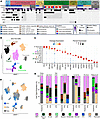 Figure 1
Integrated single-cell atlas of thyroid cancer progression. (A) Oncoplot for thyroid cancer publicly available single-cell RNA-sequencing samples: Luo et al. (26), Pu et al. (27), Lu et al. (28), Han et al. (29), Hong et al. (30), Lee et al. (31), Wang et al. (32). (B) Uniform manifold approximation and projection (UMAP) plot depicting the single-cell atlas labeled by broad cell type. (C) Scaled dot plot showing canonical markers for broad populations from B. (D) UMAP colored by tumor histology with broad groupings of ATC (blue), PTC (light orange), or paratumor/normal (Para, gray). (E) Bar plots showing overall broad cell type composition for each paper in the single-cell atlas split by tumor histology group. pDC, plasmacytoid dendritic cell; NK/T, natural killer/T cell.
Identification of CAF and perivascular subpopulations. To identify fibroblast subpopulations, we performed subclustering of 24,463 stromal cells in the single-cell atlas and identified 6 main clusters (Figure 2A). We proceeded with analysis of clusters 0–4, as cluster 5 was largely from 1 metastatic lymph node sample from Pu et al. (Figure 2, B and C, and Supplemental Figure 2A). We confirmed broad expression of VIM and PDGFRB across clusters, consistent with their mesenchymal phenotype (Figure 2D). We observed expression of perivascular markers RGS5 and NOTCH3 in clusters 4, 3, and 0 whereas pan-fibroblast markers DCN and PDGFRA were expressed mainly by clusters 1 and 2, with some expression in cluster 4 (Figure 2, E and F). We thus hypothesized that our stromal subclustering identifies both CAF and perivascular populations. To better classify these populations, we generated Seurat module scores (34) for published CAF and perivascular marker genes from diverse tumor types (8–15, 35, 36). Among hypothesized CAFs, cluster 1 showed enrichment of each iCAF gene set tested, whereas cluster 2 showed higher scores for matrix CAFs, myCAFs, and TGF-β–CAF gene sets. Within the hypothesized perivascular cell clusters, there was broad enrichment of perivascular gene sets, with cluster 3 having higher module scores for smooth muscle cells (SMCs) and cluster 0 having higher scores for pericyte gene sets. Cluster 4 showed enrichment for all perivascular gene sets but had no previously defined phenotype from the literature (Figure 3, A and B). We next performed differential gene expression analysis to identify marker genes of each stromal subcluster (Supplemental Table 2 and Supplemental Figure 2B). Top marker genes of clusters included known iCAF marker genes CXCL12 and APOD (cluster 1), the myCAF gene periostin (POSTN) and the activated CAF gene fibroblast activation protein α (FAP) (cluster 2), APOE (cluster 4), pericyte markers HIGD1B and COX4I2 (cluster 0), and SMC markers ACTA2 and TAGLN (cluster 3). In addition to marking SMCs, ACTA2 and TAGLN have been described as myCAF markers (13) and were also expressed by cluster 2 (Figure 3, C–E). Based on the concordance of published gene sets and our differential gene expression analysis, we labeled cluster 1 as iCAFs, cluster 2 as myCAFs, and cluster 0 as pericytes. Because cluster 3 expressed perivascular and SMC markers, we labeled it as vascular SMCs (vSMCs). We labeled cluster 4 as APOE+ perivascular-like (APOE+ PVL) based on its moderate expression of perivascular marker genes (Figure 3F). Gene ontology analysis of the marker genes for each population highlighted the broad roles of each population in matrix remodeling (Supplemental Figure 2C). Analysis of signaling pathway activation highlighted known fibroblast activating pathways TGF-β and WNT signaling in myCAFs, estrogen and androgen signaling in iCAFs, and tumor necrosis factor-related apoptosis-induced ligand (TRAIL) signaling in perivascular populations, consistent with the recently established role of TRAIL in facilitating crosstalk between endothelial cells and perivascular cells (Supplemental Figure 2D) (37). In conclusion, we identified myCAF, iCAF, and perivascular subpopulations that align with published gene sets for these populations.
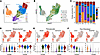 Figure 2
Stromal subclustering identifies broad CAF and perivascular populations. (A and B) UMAP showing subclustering of the broad stromal cluster from Figure 1B colored by (A) cluster and (B) paper. (C) Bar plots showing cluster proportion for each paper. (D–F) UMAP of stromal subclustering depicting expression of (D) mesenchymal marker genes, (E) perivascular marker genes, and (F) pan-fibroblast marker genes with violin plots below each UMAP showing expression by cluster. The width of each violin depicts the density of cells at each expression level.
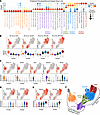 Figure 3
Defining CAF and perivascular subpopulations. (A) Scaled dot plot showing module scores for published CAF and perivascular populations by stromal subcluster. (B) UMAP of stromal subclustering showing module scores for CAF and perivascular-like (immature perivascular-like CAF, iPVCAF; differentiated perivascular-like CAF, dPVCAF) populations from Wu et al. (11) with violin plots below depicting expression by stromal subcluster. (C–E) UMAP showing marker genes of stromal subclusters with violin plots below. (F) Diagram outlining labeling of stromal subclustering into broad CAF and perivascular-like (PVL) groups with identification of individual clusters as iCAF, myCAF, APOE+ PVL, pericyte, and vSMC. OV, ovarian cancer; BRCA, breast cancer; TN BRCA, triple-negative breast cancer; PDAC, pancreatic ductal adenocarcinoma; ESCC, esophageal squamous cell carcinoma; mCAF, matrix CAF; meCAF, metabolic CAF; tCAF, tumor-like CAF; dCAF, dividing CAF; ecmCAF, extracellular matrix CAF; hsp-tCAF, heat shock protein tumor-like CAF.
myCAFs are associated with aggressive tumors. We next sought to determine the association of stromal subclusters with tumor histology and disease progression. We observed that myCAFs are predominantly found in malignant samples, with a subset of ATCs having the highest proportion of myCAFs (Figure 4, A and B, and Supplemental Figure 3A). Consistent with our prior work deconvoluting immune niches in bulk RNA-sequencing data (25), myCAF-rich tumors correlated with increased frequency of myeloid immune cells and anaplastic tumor cells (Supplemental Figure 3B). Differential abundance testing confirmed enrichment of myCAFs in malignant samples and ATCs and identified a robust pericyte signal in PTC. iCAFs showed enrichment in paratumors and in ATC relative to PTC (Figure 4C). iCAFs are commonly thought to be tumor distant (38), aligning with their presence in paratumor sampling. As previous studies have associated CAFs and desmoplastic stroma with BRAFV600E PTCs (25, 39), we scored PTCs based on expression of genes from The Cancer Genome Atlas (TCGA) BRAF-RAS score (BRS) (33). PTCs with myCAFs had higher median BRAF scores than PTCs without myCAFs (P = 0.017), and PTCs with high median BRAF scores showed broad enrichment of stromal populations, including myCAFs (Figure 4, D and E). To determine how myCAF phenotypes shift as tumors dedifferentiate from PTC to ATC, we performed differential gene expression analysis of myCAFs based on sample histology. myCAFs in PTC showed a classic myofibroblast phenotype identified in pancreatic cancer (13, 38), with ACTA2, TAGLN, and collagen gene expression. RGS5 was also upregulated in PTC myCAFs, suggesting a potential pericyte precursor for this population, consistent with the abundance of pericytes observed in differential abundance analysis and further supported by trajectory analysis (Figure 4F and Supplemental Figure 3, C and D). In contrast, ATC myCAFs exhibited upregulation of immune modulating genes (Figure 4F).
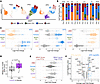 Figure 4
myCAFs are enriched in anaplastic and BRAF-like papillary thyroid cancer. (A) Stromal subclustering UMAP split by tumor histology (para, paratumor/normal samples). (B) Bar plots showing stromal cell type proportion for each tumor histology by paper. (C) Milo differential abundance testing of CAF and perivascular stromal cell populations between PTC and ATC samples (left), paratumor/normal and ATC samples (middle), and paratumor/normal and PTC samples (right). Individual dots depict neighborhoods calculated by Milo. Coloring of individual neighborhoods as dark gray (normal/paratumor), light orange (PTC), or blue (ATC) indicates differential abundance with a spatial false discovery rate (FDR) of less than 0.1. (D) Box plot depicting the median BRAF module score of PTC cells for individual PTC samples split by whether the sample contains myCAFs. P value calculated with Wilcoxon rank-sum test. (E) Milo differential abundance testing of CAF and perivascular stromal cell populations between PTC tumors split based on BRAF score high (median BRAF score for PTC cells within the tumor greater than 50th percentile) or BRAF score low (median BRAF score for PTC cells within the tumor less than 50th percentile). Coloring of individual neighborhoods as red (BRAF score low) or blue (BRAF score high) indicates differential abundance with a spatial FDR of less than 0.1. (F) Volcano plot showing differentially expressed genes between PTC myCAFs (left, light orange) and ATC myCAFs (right, blue). Colored dots indicate genes with an absolute log2 fold-change ≥ 1.0 and adjusted P < 0.05.
To validate the association of myCAFs with aggressive tumors, we used single-sample gene set variation analysis (GSVA) to predict abundance of CAF and perivascular subpopulations in 4 large adult thyroid cancer bulk RNA-sequencing cohorts (25, 31, 33). We correlated stromal GSVA scores with our previously published MAP score, which identifies aggressive, fibroblast-rich tumors (25). Across cohorts, MAP score was correlated with myCAF GSVA scores and the expression of myCAF-associated genes (Figure 5A and Supplemental Figure 4A). To validate that myCAFs are enriched in tumors with increased stroma and matrix remodeling, we identified a positive correlation (Spearman’s rho 0.45, P < 0.001) between myCAF score in the TCGA cohort and a fibrosis score previously generated from histology imaging data (Figure 5B) (39). Next, we assessed the predicted abundance of stromal cells across benign, WDTC, and ATC in these cohorts. myCAF scores and myCAF marker genes were upregulated in BRAF-like WDTCs and ATCs across VUMC/UW, TCGA, and Chungnam/Seoul National University Hospitals (CNUH/SNUH) cohorts. Aggressive PTCs from MD Anderson showed increased FAP expression in BRAFV600E tumors (P = 0.028) (Figure 5, C–E). Additionally, we tested myCAF abundance in a pediatric thyroid cancer sequencing cohort from St. Jude’s Research Hospital (Figure 6A). In contrast with adult thyroid cancers, pediatric thyroid cancers are commonly driven by fusions, with fusion-driven disease having an increased risk of metastasis and treatment resistance relative to BRAF- or RAS-mutated tumors (40, 41). Despite these genetic differences, characterizing pediatric thyroid cancers by BRS showed an association between BRAF-like pediatric thyroid cancers and myCAFs. BRAF-like pediatric tumors were also associated with higher MAP scores and lower TDS, consistent with previous studies in adult cohorts (Figure 6, B and C) (25, 33, 42). By mutation, RET fusion-driven tumors had increased myCAFs and expression of POSTN and FAP relative to non-RET fusion-driven tumors (Figure 6D). Together, we identified enrichment of myCAFs in BRAF-like tumors across both adult and pediatric thyroid cancers.
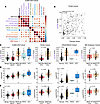 Figure 5
myCAF gene signatures are upregulated in malignant tumors across thyroid cancer bulk RNA-sequencing cohorts. (A) Corrplot showing Spearman’s rho correlations between single-sample GSVA (ssGSVA) scores for stromal subpopulations, ssGSVA MAP score, and expression of marker genes for stromal subpopulations in the Vanderbilt University/University of Washington bulk RNA-sequencing cohort (VUMC/UW cohort). Axes are ordered by hierarchical clustering. Boxes indicate hierarchical clustering groups. Significance levels indicate *P < 0.05, **P < 0.01, or ***P < 0.001. (B) Spearman’s rho correlation of myCAF ssGSVA score and a fibrosis score derived from H&E imaging data of TCGA PTCs (39). (C–E) Box plots showing (C) myCAF score or log2-transformed expression of CAF marker genes (D) FAP and (E) POSTN by diagnosis across 4 distinct bulk RNA-sequencing cohorts. P values calculated with Wilcoxon rank-sum test. Kruskal-Wallis test with subsequent pairwise Wilcoxon rank-sum tests with Bonferroni’s correction was used when comparing more than 2 groups. PDTC, poorly differentiated thyroid cancer; CNUH/SNUH, Chungnam/Seoul National University Hospitals.
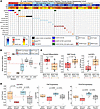 Figure 6
myCAFs are increased in pediatric thyroid cancers with RET fusions. (A) Oncoplot of St. Jude Children’s Research Hospital pediatric PTC sequencing cohort. (B) Box plots showing BRAF-RAS score (BRS) by driver mutation. (C) Box plots showing thyroid differentiation score (TDS, left), MAP score (middle), and myCAF score (right) by BRS categorization. P values calculated with Wilcoxon rank-sum test. (D) Box plots showing myCAF score (left), FAP expression (middle), and POSTN expression (right) by driver mutation category. P values calculated with Wilcoxon rank-sum test with Bonferroni correction.
In contrast with myCAFs, iCAFs and perivascular subpopulations did not show clear shifts in predicted abundance with tumor dedifferentiation (Supplemental Figure 4, B–E). iCAFs were increased in VUMC/UW ATCs relative to WDTCs (P = 0.0019) and in BRAF-like WDTCs in TCGA cohort relative to RAS-like WDTCs (P < 0.001), but the CNUH/SNUH cohort showed the highest predicted iCAF levels in benign thyroids. However, many benign and malignant surgically removed thyroids have background autoimmune inflammatory processes (e.g., Hashimoto thyroiditis). To assess whether increased iCAF infiltrate in benign thyroids was related to autoimmune disease, we evaluated the predicted abundance of iCAFs in benign lesions from the VUMC/UW cohort that underwent detailed pathologic and clinical evaluation. Among VUMC/UW benign thyroids, there was a higher predicted abundance of iCAFs (P = 0.0015), but not myCAFs, in patients with confirmed Hashimoto thyroiditis, as compared with non-autoimmune benign thyroid nodules (Supplemental Figure 4F). These data indicate that autoimmune conditions may have fibroblasts with inflammatory phenotypes similar to iCAFs.
We next assessed the association of stromal populations with features of aggressive disease and patient outcomes. In malignant samples in the VUMC/UW cohort, myCAF score was associated with worse progression-free survival (PFS) and overall survival (OS; Figure 7, A and B). We also observed worse PFS in myCAF-high tumors in a cohort of aggressive PTCs (P = 0.045; Figure 7C), indicating that decreases in survival in myCAF-rich tumors are not solely driven by ATC. TCGA cohort was designed to consist of indolent PTCs with few survival events (33). However, we identified that TCGA PTCs with aggressive histologic subtypes (tall cell or diffuse sclerosing) had the highest myCAF scores (P < 0.001, Figure 7D), and “intermediate- or high-risk” PTCs, as designated by the 2009 American Thyroid Association guidelines (43), had higher myCAF scores than “low-risk” PTCs (P < 0.001, Figure 7E). Additionally, in both TCGA and VUMC/UW cohorts, tumors with extrathyroidal extension (P < 0.001 TCGA; P < 0.001 VUMC/UW) or lymph node metastases (P < 0.001 TCGA; P < 0.001 VUMC/UW) had higher myCAF scores (Figure 7, F and G). Increased myCAF score in primary tumors with distant metastases was also observed in the VUMC/UW cohort (P = 0.034; Figure 7H), and lymph node metastases had higher myCAF scores than primary malignant tumors in the VUMC/UW cohort (P = 0.036; Figure 7I). Finally, we identified increased myCAFs in tumors with known high-risk mutations as well as in tumors with aggressive disease (P = 0.012) and high MAP scores (P < 0.001), as categorized by our previous work (Figure 7, J–L) (25). In total, we identified myCAFs as enriched in malignant samples and ATCs across our single-cell atlas and identified association with ATC, PFS, OS, and aggressive WDTC features in bulk RNA-sequencing cohorts.
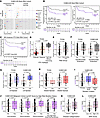 Figure 7
myCAFs are associated with aggressive thyroid cancer tumor phenotypes. (A) PFS (left) and OS (right) forest plots with IQR hazard ratios and 95% confidence intervals for the VUMC/UW bulk RNA-sequencing cohort split into malignant samples (top) or WDTCs (bottom). Hazard ratios are shown for BRAFV600E mutation and stromal cell ssGSVA scores. (B) PFS (left) and OS (right) survival curves showing the VUMC/UW malignant cohort split into myCAF-high/low by 50th percentile myCAF score. (C) PFS curve of MD Anderson PTC bulk RNA-sequencing cohort split into myCAF-high/low by 50th percentile myCAF score. P values for B and C calculated with log-rank test. (D–H) Box plots depicting primary tumor myCAF score in (D) TCGA PTCs stratified by histology subtype, (E) TCGA PTCs stratified by risk group as defined by the 2009 American Thyroid Association guidelines (43), (F) TCGA PTCs (left) and VUMC/UW malignant cohort (right) stratified by the presence or absence of extrathyroidal extension, (G) TCGA PTCs (left) and VUMC/UW malignant cohort (right) stratified by the presence or absence of lymph node spread, and (H) TCGA PTCs (left) and VUMC/UW malignant cohort (right) stratified by the presence or absence of distant metastasis. (I–L) myCAF score in the VUMC/UW malignant cohort stratified by (I) sample location, (J) presence or absence of indicated high-risk mutations, (K) disease categorization into indolent or aggressive as previously defined (25), and (L) MAP score. P values for D–L calculated with Wilcoxon rank-sum test with Bonferroni correction when more than 2 groups tested.
myCAFs are enriched in epithelial ATCs but not mesenchymal ATCs. Our previous work utilizing MAP score initially identified 2 ATC subsets with unique stromal infiltration, high-MAP ATCs with robust CAF infiltrate and low-MAP ATCs with minimal CAF infiltrate (25). To further refine these subsets and investigate which ATCs are associated with myCAF infiltrate, we performed subclustering of the ATC tumor cell clusters in our single-cell atlas. ATC tumor cells largely clustered by sample, consistent with the heterogeneity in gene expression and copy number alterations that is a hallmark of ATC (Figure 8A) (20, 28). However, distinguishing clusters by the presence or absence of BRAFV600E mutation indicated that despite the heterogeneity of these tumors, BRAFV600E and BRAF WT ATCs have distinct gene expression patterns (Figure 8B). Through differential abundance and differential gene expression analysis, we identified epithelial ATCs, enriched for high-MAP tumors with BRAFV600E, and mesenchymal ATCs, enriched for low-MAP tumors and BRAF WT tumors. Specifically, we identified that epithelial ATCs are often BRAFV600E mutant with a more epithelial, keratin-rich gene expression program and a robust CAF infiltrate. Rather than having robust CAF recruitment, mesenchymal ATCs are typically BRAF WT ATCs that demonstrate a highly mesenchymal gene program, expressing their own array of extracellular matrix genes (Figure 8, C–F, and Supplemental Figure 5, A–C). As identified by Lu et al., mesenchymal ATCs also express CDK6 (28). Consistent with their mesenchymal gene expression, TGF-β signaling was activated in BRAF WT ATCs whereas MAPK signaling was activated in BRAFV600E ATCs (Supplemental Figure 5D). To confirm that these BRAF WT mesenchymal tumor cells are not fibroblasts, we performed copy number inference (44) and observed FAP-expressing clusters with aneuploid tumor cells. In contrast, BRAFV600E tumors had diploid clusters of FAP-expressing CAFs (Supplemental Figure 5, E–H).
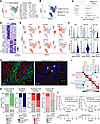 Figure 8
myCAFs are enriched in epithelial ATCs. (A and B) UMAP showing subclustering of ATC tumor cells colored by (A) sample (tumor label) or (B) BRAFV600E mutation status. (C) Milo differential abundance testing of CAF and perivascular stromal cell populations between BRAF WT and BRAFV600E ATC tumors. Individual dots depict neighborhoods calculated by Milo. Coloring of individual neighborhoods as dark blue (BRAFV600E) or light blue (BRAF WT) indicates differential abundance with a spatial FDR of less than 0.1. (D) Heatmap showing scaled expression of the top 10 differentially expressed genes with expression in at least 80% of cells in the population of interest between BRAF WT and BRAFV600E ATCs. (E) UMAP of ATC subclustering colored by expression of myCAF genes (top row) or epithelial keratins (bottom row). (F) Violin plots of expression of genes from E in ATC tumor cells split by BRAF status. (G) Representative multiplex immunofluorescence images from staining of 33 ATCs in the VUMC/UW cohort for pan-cytokeratin (PanCK, green) and FAP (red). Left: representative image of ATC with PanCK+ tumor cells and tumor-adjacent FAP+ fibroblasts. Right: representative image of ATC with no PanCK staining, FAP+ tumor cells, and minimal stromal FAP staining. White arrows point to malignant nuclei with membranous FAP staining. (H) Bar plots showing pathologist scoring of multiplex immunofluorescence. Tumors are split by BRAF status. P values calculated with Fisher’s exact test. (I) Corrplot showing Spearman’s rho correlations for ATC multiplex immunofluorescence staining samples comparing PanCK tumor cell intensity, FAP tumor cell intensity, FAP fibroblast intensity, ssGSVA scores for stromal subpopulations, ssGSVA MAP score, BRAF score, and RAS score in the VUMC/UW ATC cohort. Axes ordered by hierarchical clustering. Boxes indicate hierarchical clustering groups. Significance levels indicate *P < 0.05, **P < 0.01, or ***P < 0.001. (J) PFS (left) and OS (right) survival curves showing VUMC/UW ATCs split by 50th percentile myCAF score. P values calculated by log-rank test.
To morphologically visualize and confirm these differences, we performed multiplex immunofluorescence for pan-cytokeratin and FAP across 33 ATCs (19 BRAF WT, 14 BRAFV600E) from the VUMC/UW bulk RNA-sequencing cohort. We histologically confirmed these 2 distinct ATC patterns: (a) epithelial ATCs had pan-cytokeratin-expressing tumor cells with extensive FAP+ tumor-adjacent stroma (epithelial ATCs); and (b) mesenchymal ATCs had pan-cytokeratin-negative tumor cells with frequent FAP expression and few fibroblasts (mesenchymal ATCs) (Figure 8G). Quantification indicated that BRAFV600E tumors had greater tumor pan-cytokeratin intensity (P = 0.0026), a tumor-adjacent fibroblast pattern (P = 0.019), and a trend toward greater fibroblast FAP intensity (P = 0.11). In contrast, BRAF WT tumors had greater intensity of FAP tumor staining (P = 0.027), indicating that BRAFV600E ATCs were predominantly “epithelial” whereas BRAF WT were “mesenchymal,” though the relationship was not mutually exclusive (Figure 8H).
We next correlated these staining data to MAP score and stromal GSVA scores. MAP score previously separated ATCs into CAF-rich (MAP-high) and CAF-depleted (MAP-low) tumors (25). We observed that ATC fibroblast FAP staining had a significant correlation with myCAF score, MAP score, and greater BRAF-like phenotype, but not other stromal populations. Pan-cytokeratin intensity had a significant correlation with BRAF-like phenotype (Figure 8I). Although our survival analysis across bulk RNA-sequencing cohorts indicates that CAF-rich tumors have worse outcomes, that may not be the case within universally aggressive ATCs (19). When comparing PFS and OS between myCAF-high and myCAF-low ATCs, we observed no difference, and multivariable Cox regression indicated differential interaction between myCAFs and outcome by tumor histology (Figure 8J and Supplemental Figure 6). Importantly, this is a historic, retrospective ATC cohort, and these patients did not receive targeted therapy or immunotherapy. Overall, we have identified 2 distinct ATCs: an epithelial ATC, commonly BRAFV600E, with keratin expression and fibroblast infiltrate, and a mesenchymal ATC with few fibroblasts.
Spatial mapping of CAFs in tumor progression. Based on the clinical relevance of CAFs in tumor progression, we investigated the spatial localization of CAF populations. We generated spatial transcriptomic data across the spectrum of disease progression, including 8 RET fusion-driven pediatric PTCs, 5 BRAFV600E PTCs, and 15 ATC samples, 7 of which spatially capture WDTC as it dedifferentiates into ATC (Supplemental Figure 7, A and B). In BRAF WT ATCs, we observed ubiquitous CDK6 expression and heterogeneous expression of CAF markers in tumor cell regions, consistent with tumor cell expression of a CAF-like mesenchymal profile (Supplemental Figure 7, C–E).
Because our spatial transcriptomics data contain multiple cells for each spatial barcode, we used our single-cell atlas to dissect the localization of individual cell types as a percentage of each spatial barcode. Spatial mapping of tumor cell and CAF subpopulations revealed a striking pattern of tumor-adjacent myCAFs and tumor-distant iCAFs across pediatric PTCs, adult PTCs, and ATCs (Figure 9A). We quantified the minimum distance of myCAFs and iCAFs from tumor cells in PTCs and BRAFV600E ATC samples containing both myCAFs and iCAFs (n = 18). iCAFs were farther from tumor cells across samples as compared with myCAFs (P = 0.0047, Figure 9, B and C). IHC for the myCAF protein POSTN and the iCAF protein APOD confirmed the tumor-adjacent myCAF and tumor-distant iCAF localization and the increased abundance of both populations in PTC and ATC stroma relative to stroma in benign thyroid nodules (Figure 9D and Supplemental Figure 8, A–D). Additionally, APOD staining was observed in the stroma of Hashimoto thyroiditis (Supplemental Figure 8E). In 1 pediatric PTC with background Hashimoto thyroiditis, we observed spatial mapping of iCAFs to surrounding areas of lymphocytic thyroiditis, and 2 single-cell paratumor samples with background Hashimoto thyroiditis had interactions between iCAFs and immune cell populations, further supporting fibroblast infiltrates with iCAF-like inflammatory phenotypes in thyroid autoimmune disease (Supplemental Figure 9).
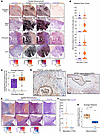 Figure 9
Spatial localization of CAF populations in thyroid cancer progression. (A) Spatial feature plots of myCAF (purple), iCAF (orange), and tumor cell (black) RCTD scores and myCAF (POSTN, purple) and iCAF (APOD, orange) marker gene expression. Tumor cell deconvolution is the sum of PTC and ATC deconvolution. From top to bottom samples shown are a pediatric PTC (Peds04), adult PTC (Thy7), adult PTC/ATC (Thy5), and adult ATC (Thy4). (B) Violin plots pertaining to samples from A showing the minimum Euclidean distance from a spatial barcode with at least 10% tumor RCTD for each spatial barcode with at least 10% myCAF RCTD (purple) or iCAF RCTD (orange). (C) Box plot showing the average of spatial barcode minimal Euclidean distances from B for myCAF (purple) and iCAF (orange) across 18 spatial transcriptomics samples with BRAFV600E or a RET fusion and the presence of both myCAF and iCAF RCTD populations. P value calculated with paired t test. (D) Representative images of IHC for POSTN (left) and APOD (right) at the invasive edge of PTC. (E) Spatial feature plots of 2 mixed PTC/ATC samples (Thy6, Thy11) showing ATC (blue), PTC (light orange), and myCAF (purple) RCTD or myCAF (POSTN, purple) marker gene expression. (F) Violin plots pertaining to samples from E showing the minimum Euclidean distance from a spatial barcode with at least 10% myCAF RCTD for each spatial barcode with at least 10% PTC RCTD (light orange) or ATC RCTD (blue). (G) Box plot showing the average of spatial barcode minimal Euclidean distances from F for PTC (light orange) and ATC (blue) across 5 mixed PTC/ATC tumors with BRAFV600E mutations. P value calculated with paired t test.
To comprehensively understand the stromal picture of thyroid tumors, we explored the spatial localization of myCAFs, pericytes, and vSMC. For evaluation of myCAFs, we assessed 5 BRAFV600E samples with PTC tumor cells dedifferentiating into ATC. We observed abundant myCAFs with POSTN expression infiltrating ATC regions but only lining the periphery of PTC regions (Figure 9E and Supplemental Figure 10A). Distance quantification indicated closer proximity of ATC cells to myCAFs across all 5 tumors (P = 0.034; Figure 9, F and G), quantitatively confirming increased myCAF infiltration as tumors progress from PTC to ATC. Because pericytes were upregulated in PTC single-cell samples, we next evaluated PTC specimens with adjacent stroma. As expected, myCAFs mapped to the invasive perimeter of PTC areas. In contrast with myCAFs, pericytes mapped within central areas of PTC (Figure 10, A–D, and Supplemental Figure 10, B–E). This association with pericytes was quantitatively confirmed using spatial cross-correlation analysis across 12 PTCs with mapping of both pericyte and myCAF populations (P = 0.024; Figure 10, E and F). Pathologist annotation of PTC regions demonstrated pericyte deconvolution was concentrated within the papillary vascular cores of PTC (P = 0.029; Figure 10, G and H). IHC further confirmed RGS5+ pericytes within the papillary fibrovascular core of PTCs (Figure 10I). vSMCs localized to large perivascular areas (pathologist annotated) on 5 tumors (Figure 10, J–M, and Supplemental Figure 10, F–H). IHC confirmed αSMA+ vSMCs lining large vessels within tumors (Figure 10N). In conclusion, we spatially mapped key stromal cell populations in thyroid cancer and identified a robust increase in tumor-adjacent myCAFs with dedifferentiation in BRAFV600E tumors.
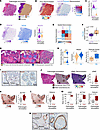 Figure 10
Spatial localization of perivascular populations in thyroid cancer. (A–E) Spatial analysis of representative PTC Thy15 showing (A) pathologist annotation of PTC and stromal spatial barcodes, (B) spatial feature plots of PTC and myCAF/pericyte RCTD scores, (C) violin plots of myCAF and pericyte RCTD scores stratified by pathologist annotation, (D) spatial feature plots and violin plots depicting myCAF (POSTN) and pericyte (RGS5) marker gene expression stratified by pathologist annotation, and (E) a heatmap of MERINGUE spatial cross-correlation of myCAF, PTC, and pericyte RCTD scores (ordered by hierarchical clustering). (F) Box plot showing pericyte spatial cross-correlation with myCAF and PTC across 12 PTC samples containing PTC and stromal regions. P value calculated with paired t test. (G) Pathologist annotation of representative PTC regions into predominantly tumor cell or a mix of tumor and fibrovascular cells. Left/middle: zoomed-in hematoxylin and eosin staining (left) with labeled spatial barcodes (middle). Right: zoomed-out hematoxylin and eosin staining with a sample of the spatial barcodes labeled. (H) Violin plots showing PTC and pericyte RCTD scores (left) and pericyte marker RGS5 expression (middle) stratified by pathologist annotation from G. Right: box plots depicting average pericyte RCTD deconvolution scores in PTC or PTC/fibrovascular component mix regions across five samples (Thy15-17, Peds07-08). P value calculated with paired t test. (I) Representative RGS5 IHC of PTC. (J) Pathologist spatial annotation of large perivascular areas (PVAs) (left) and spatial feature plot of vSMC RCTD scores (middle). Right: violin plot of vSMC RCTD score stratified by pathologist large PVA annotation. (K and L) Spatial feature plots (left) and associated violin plots (right) for vSMC marker genes (K) ACTA2 and (L) TAGLN. (M) Box plots showing average vSMC RCTD score (left) or vSMC marker gene expression (right) for 5 tumors stratified by pathologist annotation (Supplemental Figure 10F). P values calculated with paired t test. (N) IHC of αSMA in a representative PTC. Black arrow highlights a large PVA.
myCAFs abut invasive tumor cells. CAFs are known to modulate tumor cell behavior to support cellular invasion. Our group recently discovered a CAF-adjacent leading-edge tumor cell population, found in BRAFV600E ATC with epithelioid/squamous morphology, as well as in invasive PTC. The leading-edge tumor cells showed strong expression of TNC (45) and striking phenotypic resemblance to a laminin subunit beta 3–positive (LAMB3+) TNC+ partial epithelial-mesenchymal transition (pEMT) phenotype described in head and neck squamous cell carcinoma (46). Thus, we investigated a potential interaction between invasive pEMT cells and myCAFs in PTC and ATC. Subclustering PTC cells identified a population with enrichment of the pEMT signature from Puram et al. (46) and increased interactions with myCAFs (P = 0.015; Figure 11, A–C, and Supplemental Figure 11, A and B). Spatial mapping of pEMT-PTC cells across pediatric and adult PTCs, as well as PTCs dedifferentiating into ATCs, highlighted a LAMB3+ pEMT invasive cellular population directly abutting myCAFs, which we further confirmed with IHC for LAMB3 (Figure 11, D–F, and Supplemental Figure 11C). We performed spatial ligand-receptor interaction analysis across 4 PTCs with robust pEMT-PTC populations. All 4 showed increased interaction between pEMT-PTC cells and myCAFs relative to non-pEMT-PTC cells (P = 0.13). The top upregulated signaling pathways included collagen, laminin, and tenascin, consistent with our recent work highlighting interaction between tumor-derived tenascin-c and myCAF-derived WNT ligands that drives tumor invasion (Figure 11, G and H, and Supplemental Figure 11, D–F) (45).
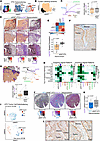 Figure 11
Spatial mapping reveals a pEMT phenotype in invasive tumor cells. (A) UMAP of PTC tumor cell subclustering showing subclusters, pEMT score, and TDS. (B) UMAP labeling PTC subclusters as PTC or pEMT-PTC. (C) Interaction weights between myCAFs and other populations in PTC samples. Left: representative PTC WJL from Luo et al. Line widths depict interaction weights. Right: Box plot depicting interaction weights between myCAFs and PTC or pEMT-PTC in 11 PTC samples containing each population. P value calculated with paired t test. (D) Spatial feature plots of PTC, pEMT-PTC, and myCAF RCTD scores for representative pediatric PTC (Peds08, top), adult PTC (Thy7, middle), and adult mixed PTC/ATC (Thy5, bottom). (E) Spatial cross-correlation analysis between myCAF, PTC, and pEMT-PTC RCTD scores. Top: heatmap showing spatial cross-correlation ordered by hierarchical clustering for representative PTC Peds08. Bottom: box plot showing myCAF spatial cross-correlation with PTC and pEMT-PTC across 12 PTC samples containing PTC and pEMT-PTC cells. P value calculated with paired t test. (F) Representative LAMB3 IHC at the leading edge of PTC. (G) Spatial ligand-receptor interaction weights in PTC. Left: labeling of spatial barcodes by the population with the highest RCTD score in representative PTC Thy7. Right: spatial ligand-receptor interaction weights between labeled populations on the left (line widths indicate interaction weights). Bottom: Box plot showing myCAF interaction weights with PTC and pEMT-PTC across 4 PTCs with sufficient pEMT-PTC spatial barcodes for ligand-receptor interaction analysis. P value calculated with Wilcoxon signed-rank test. (H) Heatmap showing the top 10 signaling patterns in PTC Thy7. Spatial barcode populations at bottom. (I) UMAP of ATC tumor cell subclustering colored by pEMT scores for 2 ATCs with pEMT tumor cell populations. (J) Spatial feature plots of Thy4 with RCTD scores generated by replacing tumor cell clusters with Lu et al. ATC09 subclustering. (K) Box plot showing myCAF spatial cross-correlation with ATC and pEMT-ATC across 7 BRAFV600E ATC samples with pEMT and myCAF populations. P value calculated with paired t test. (L) Representative LAMB3 IHC in BRAFV600E ATC.
Because ATC tumors subcluster by sample, we looked for pEMT populations within individual BRAFV600E tumor samples. In 2 ATCs we identified a subset of tumor cells with enrichment of pEMT genes and increased interaction with myCAFs (Figure 11I and Supplemental Figure 11, G and H). Spatial mapping of ATC and pEMT-ATC tumor cells highlighted a pEMT leading-edge phenotype intermixed with myCAFs in BRAFV600E ATCs (Figure 11, J and K). IHC for LAMB3 further confirmed a myCAF-adjacent leading-edge pEMT phenotype (Figure 11L). The pEMT gene signature used to identify leading-edge cells was associated with aggressive tumor phenotypes across bulk RNA-sequencing cohorts (Supplemental Figure 12). Together, we show tumor-adjacent myCAFs directly communicating with invasive, pEMT-like tumor cells in both aggressive PTCs and ATCs (Figure 12).


