
Research ArticleGeneticsHematologyImmunology
Open Access |  10.1172/jci.insight.191813
A TMPRSS6-inhibiting mAb improves disease in a β-thalassemia mouse model and reduces iron in healthy humans
Heinrich E. Lob,1 Nikhil Singh,1 Kusha Mohammadi,1 Larisa Ivanova,1 Beth Crowell,1 Hyon J. Kim,1 Leah Kravets,1 Nanditha M. Das,1 Yonaton Ray,1 Jee Hae Kim,1 Sylvie Rottey,2 Emily Labriola-Tompkins,1 Hazem E. Hassan,1 Lorna Farrelly,1 Harvey F. Chin,1 Marilena Preda,1 Leigh Spencer Noakes,1 Kei Saotome,1 Matthew Franklin,1 Marc W. Retter,1 Elif Karayusuf,1 John J. Flanagan,1 William Olson,1 Kalyan C. Nannuru,1 Vincent Idone,1 Michael E. Burczynski,1 Olivier A. Harari,1 Lorah Perlee,1 Griet Van Lancker,2 Andrew J. Murphy,1 Aris N. Economides,1 and Sarah J. Hatsell1
1Regeneron Pharmaceuticals, Tarrytown, New York, USA.
2Drug Research Unit Ghent, Ghent University Hospital, Ghent, Belgium.
Address correspondence to: H.E. Lob, Regeneron Pharmaceuticals Inc., 777 Old Saw Mill River Rd., Tarrytown, New York, 10591, USA. Email: Heinrich.lob@regeneron.com.
Find articles by Lob, H. in: PubMed | Google Scholar
1Regeneron Pharmaceuticals, Tarrytown, New York, USA.
2Drug Research Unit Ghent, Ghent University Hospital, Ghent, Belgium.
Address correspondence to: H.E. Lob, Regeneron Pharmaceuticals Inc., 777 Old Saw Mill River Rd., Tarrytown, New York, 10591, USA. Email: Heinrich.lob@regeneron.com.
Find articles by Singh, N. in: PubMed | Google Scholar
1Regeneron Pharmaceuticals, Tarrytown, New York, USA.
2Drug Research Unit Ghent, Ghent University Hospital, Ghent, Belgium.
Address correspondence to: H.E. Lob, Regeneron Pharmaceuticals Inc., 777 Old Saw Mill River Rd., Tarrytown, New York, 10591, USA. Email: Heinrich.lob@regeneron.com.
Find articles by Mohammadi, K. in: PubMed | Google Scholar
1Regeneron Pharmaceuticals, Tarrytown, New York, USA.
2Drug Research Unit Ghent, Ghent University Hospital, Ghent, Belgium.
Address correspondence to: H.E. Lob, Regeneron Pharmaceuticals Inc., 777 Old Saw Mill River Rd., Tarrytown, New York, 10591, USA. Email: Heinrich.lob@regeneron.com.
Find articles by Ivanova, L. in: PubMed | Google Scholar
1Regeneron Pharmaceuticals, Tarrytown, New York, USA.
2Drug Research Unit Ghent, Ghent University Hospital, Ghent, Belgium.
Address correspondence to: H.E. Lob, Regeneron Pharmaceuticals Inc., 777 Old Saw Mill River Rd., Tarrytown, New York, 10591, USA. Email: Heinrich.lob@regeneron.com.
Find articles by Crowell, B. in: PubMed | Google Scholar
1Regeneron Pharmaceuticals, Tarrytown, New York, USA.
2Drug Research Unit Ghent, Ghent University Hospital, Ghent, Belgium.
Address correspondence to: H.E. Lob, Regeneron Pharmaceuticals Inc., 777 Old Saw Mill River Rd., Tarrytown, New York, 10591, USA. Email: Heinrich.lob@regeneron.com.
Find articles by Kim, H. in: PubMed | Google Scholar
1Regeneron Pharmaceuticals, Tarrytown, New York, USA.
2Drug Research Unit Ghent, Ghent University Hospital, Ghent, Belgium.
Address correspondence to: H.E. Lob, Regeneron Pharmaceuticals Inc., 777 Old Saw Mill River Rd., Tarrytown, New York, 10591, USA. Email: Heinrich.lob@regeneron.com.
Find articles by Kravets, L. in: PubMed | Google Scholar
1Regeneron Pharmaceuticals, Tarrytown, New York, USA.
2Drug Research Unit Ghent, Ghent University Hospital, Ghent, Belgium.
Address correspondence to: H.E. Lob, Regeneron Pharmaceuticals Inc., 777 Old Saw Mill River Rd., Tarrytown, New York, 10591, USA. Email: Heinrich.lob@regeneron.com.
Find articles by
Das, N.
in:
PubMed
|
Google Scholar
|

1Regeneron Pharmaceuticals, Tarrytown, New York, USA.
2Drug Research Unit Ghent, Ghent University Hospital, Ghent, Belgium.
Address correspondence to: H.E. Lob, Regeneron Pharmaceuticals Inc., 777 Old Saw Mill River Rd., Tarrytown, New York, 10591, USA. Email: Heinrich.lob@regeneron.com.
Find articles by Ray, Y. in: PubMed | Google Scholar
1Regeneron Pharmaceuticals, Tarrytown, New York, USA.
2Drug Research Unit Ghent, Ghent University Hospital, Ghent, Belgium.
Address correspondence to: H.E. Lob, Regeneron Pharmaceuticals Inc., 777 Old Saw Mill River Rd., Tarrytown, New York, 10591, USA. Email: Heinrich.lob@regeneron.com.
Find articles by Kim, J. in: PubMed | Google Scholar
1Regeneron Pharmaceuticals, Tarrytown, New York, USA.
2Drug Research Unit Ghent, Ghent University Hospital, Ghent, Belgium.
Address correspondence to: H.E. Lob, Regeneron Pharmaceuticals Inc., 777 Old Saw Mill River Rd., Tarrytown, New York, 10591, USA. Email: Heinrich.lob@regeneron.com.
Find articles by Rottey, S. in: PubMed | Google Scholar
1Regeneron Pharmaceuticals, Tarrytown, New York, USA.
2Drug Research Unit Ghent, Ghent University Hospital, Ghent, Belgium.
Address correspondence to: H.E. Lob, Regeneron Pharmaceuticals Inc., 777 Old Saw Mill River Rd., Tarrytown, New York, 10591, USA. Email: Heinrich.lob@regeneron.com.
Find articles by Labriola-Tompkins, E. in: PubMed | Google Scholar
1Regeneron Pharmaceuticals, Tarrytown, New York, USA.
2Drug Research Unit Ghent, Ghent University Hospital, Ghent, Belgium.
Address correspondence to: H.E. Lob, Regeneron Pharmaceuticals Inc., 777 Old Saw Mill River Rd., Tarrytown, New York, 10591, USA. Email: Heinrich.lob@regeneron.com.
Find articles by Hassan, H. in: PubMed | Google Scholar
1Regeneron Pharmaceuticals, Tarrytown, New York, USA.
2Drug Research Unit Ghent, Ghent University Hospital, Ghent, Belgium.
Address correspondence to: H.E. Lob, Regeneron Pharmaceuticals Inc., 777 Old Saw Mill River Rd., Tarrytown, New York, 10591, USA. Email: Heinrich.lob@regeneron.com.
Find articles by Farrelly, L. in: PubMed | Google Scholar
1Regeneron Pharmaceuticals, Tarrytown, New York, USA.
2Drug Research Unit Ghent, Ghent University Hospital, Ghent, Belgium.
Address correspondence to: H.E. Lob, Regeneron Pharmaceuticals Inc., 777 Old Saw Mill River Rd., Tarrytown, New York, 10591, USA. Email: Heinrich.lob@regeneron.com.
Find articles by Chin, H. in: PubMed | Google Scholar
1Regeneron Pharmaceuticals, Tarrytown, New York, USA.
2Drug Research Unit Ghent, Ghent University Hospital, Ghent, Belgium.
Address correspondence to: H.E. Lob, Regeneron Pharmaceuticals Inc., 777 Old Saw Mill River Rd., Tarrytown, New York, 10591, USA. Email: Heinrich.lob@regeneron.com.
Find articles by Preda, M. in: PubMed | Google Scholar
1Regeneron Pharmaceuticals, Tarrytown, New York, USA.
2Drug Research Unit Ghent, Ghent University Hospital, Ghent, Belgium.
Address correspondence to: H.E. Lob, Regeneron Pharmaceuticals Inc., 777 Old Saw Mill River Rd., Tarrytown, New York, 10591, USA. Email: Heinrich.lob@regeneron.com.
Find articles by Spencer Noakes, L. in: PubMed | Google Scholar
1Regeneron Pharmaceuticals, Tarrytown, New York, USA.
2Drug Research Unit Ghent, Ghent University Hospital, Ghent, Belgium.
Address correspondence to: H.E. Lob, Regeneron Pharmaceuticals Inc., 777 Old Saw Mill River Rd., Tarrytown, New York, 10591, USA. Email: Heinrich.lob@regeneron.com.
Find articles by Saotome, K. in: PubMed | Google Scholar
1Regeneron Pharmaceuticals, Tarrytown, New York, USA.
2Drug Research Unit Ghent, Ghent University Hospital, Ghent, Belgium.
Address correspondence to: H.E. Lob, Regeneron Pharmaceuticals Inc., 777 Old Saw Mill River Rd., Tarrytown, New York, 10591, USA. Email: Heinrich.lob@regeneron.com.
Find articles by Franklin, M. in: PubMed | Google Scholar
1Regeneron Pharmaceuticals, Tarrytown, New York, USA.
2Drug Research Unit Ghent, Ghent University Hospital, Ghent, Belgium.
Address correspondence to: H.E. Lob, Regeneron Pharmaceuticals Inc., 777 Old Saw Mill River Rd., Tarrytown, New York, 10591, USA. Email: Heinrich.lob@regeneron.com.
Find articles by Retter, M. in: PubMed | Google Scholar
1Regeneron Pharmaceuticals, Tarrytown, New York, USA.
2Drug Research Unit Ghent, Ghent University Hospital, Ghent, Belgium.
Address correspondence to: H.E. Lob, Regeneron Pharmaceuticals Inc., 777 Old Saw Mill River Rd., Tarrytown, New York, 10591, USA. Email: Heinrich.lob@regeneron.com.
Find articles by Karayusuf, E. in: PubMed | Google Scholar
1Regeneron Pharmaceuticals, Tarrytown, New York, USA.
2Drug Research Unit Ghent, Ghent University Hospital, Ghent, Belgium.
Address correspondence to: H.E. Lob, Regeneron Pharmaceuticals Inc., 777 Old Saw Mill River Rd., Tarrytown, New York, 10591, USA. Email: Heinrich.lob@regeneron.com.
Find articles by Flanagan, J. in: PubMed | Google Scholar
1Regeneron Pharmaceuticals, Tarrytown, New York, USA.
2Drug Research Unit Ghent, Ghent University Hospital, Ghent, Belgium.
Address correspondence to: H.E. Lob, Regeneron Pharmaceuticals Inc., 777 Old Saw Mill River Rd., Tarrytown, New York, 10591, USA. Email: Heinrich.lob@regeneron.com.
Find articles by Olson, W. in: PubMed | Google Scholar
1Regeneron Pharmaceuticals, Tarrytown, New York, USA.
2Drug Research Unit Ghent, Ghent University Hospital, Ghent, Belgium.
Address correspondence to: H.E. Lob, Regeneron Pharmaceuticals Inc., 777 Old Saw Mill River Rd., Tarrytown, New York, 10591, USA. Email: Heinrich.lob@regeneron.com.
Find articles by Nannuru, K. in: PubMed | Google Scholar
1Regeneron Pharmaceuticals, Tarrytown, New York, USA.
2Drug Research Unit Ghent, Ghent University Hospital, Ghent, Belgium.
Address correspondence to: H.E. Lob, Regeneron Pharmaceuticals Inc., 777 Old Saw Mill River Rd., Tarrytown, New York, 10591, USA. Email: Heinrich.lob@regeneron.com.
Find articles by
Idone, V.
in:
PubMed
|
Google Scholar
|
1Regeneron Pharmaceuticals, Tarrytown, New York, USA.
2Drug Research Unit Ghent, Ghent University Hospital, Ghent, Belgium.
Address correspondence to: H.E. Lob, Regeneron Pharmaceuticals Inc., 777 Old Saw Mill River Rd., Tarrytown, New York, 10591, USA. Email: Heinrich.lob@regeneron.com.
Find articles by Burczynski, M. in: PubMed | Google Scholar
1Regeneron Pharmaceuticals, Tarrytown, New York, USA.
2Drug Research Unit Ghent, Ghent University Hospital, Ghent, Belgium.
Address correspondence to: H.E. Lob, Regeneron Pharmaceuticals Inc., 777 Old Saw Mill River Rd., Tarrytown, New York, 10591, USA. Email: Heinrich.lob@regeneron.com.
Find articles by Harari, O. in: PubMed | Google Scholar
1Regeneron Pharmaceuticals, Tarrytown, New York, USA.
2Drug Research Unit Ghent, Ghent University Hospital, Ghent, Belgium.
Address correspondence to: H.E. Lob, Regeneron Pharmaceuticals Inc., 777 Old Saw Mill River Rd., Tarrytown, New York, 10591, USA. Email: Heinrich.lob@regeneron.com.
Find articles by Perlee, L. in: PubMed | Google Scholar
1Regeneron Pharmaceuticals, Tarrytown, New York, USA.
2Drug Research Unit Ghent, Ghent University Hospital, Ghent, Belgium.
Address correspondence to: H.E. Lob, Regeneron Pharmaceuticals Inc., 777 Old Saw Mill River Rd., Tarrytown, New York, 10591, USA. Email: Heinrich.lob@regeneron.com.
Find articles by Van Lancker, G. in: PubMed | Google Scholar
1Regeneron Pharmaceuticals, Tarrytown, New York, USA.
2Drug Research Unit Ghent, Ghent University Hospital, Ghent, Belgium.
Address correspondence to: H.E. Lob, Regeneron Pharmaceuticals Inc., 777 Old Saw Mill River Rd., Tarrytown, New York, 10591, USA. Email: Heinrich.lob@regeneron.com.
Find articles by
Murphy, A.
in:
PubMed
|
Google Scholar
|
1Regeneron Pharmaceuticals, Tarrytown, New York, USA.
2Drug Research Unit Ghent, Ghent University Hospital, Ghent, Belgium.
Address correspondence to: H.E. Lob, Regeneron Pharmaceuticals Inc., 777 Old Saw Mill River Rd., Tarrytown, New York, 10591, USA. Email: Heinrich.lob@regeneron.com.
Find articles by
Economides, A.
in:
PubMed
|
Google Scholar
|
1Regeneron Pharmaceuticals, Tarrytown, New York, USA.
2Drug Research Unit Ghent, Ghent University Hospital, Ghent, Belgium.
Address correspondence to: H.E. Lob, Regeneron Pharmaceuticals Inc., 777 Old Saw Mill River Rd., Tarrytown, New York, 10591, USA. Email: Heinrich.lob@regeneron.com.
Find articles by
Hatsell, S.
in:
PubMed
|
Google Scholar
|
Published June 23, 2025 - More info
JCI Insight. 2025;10(12):e191813. https://doi.org/10.1172/jci.insight.191813.
© 2025 Lob et al. This work is licensed under the Creative Commons Attribution 4.0 International License. To view a copy of this license, visit http://creativecommons.org/licenses/by/4.0/.
Received: January 28, 2025; Accepted: May 1, 2025

-
Results
REGN7999 binds to several different forms of TMPRSS6 and blunts its activity in vitro. To inhibit TMPRSS6, we generated a human mAb, REGN7999. We assessed the ability of REGN7999 to block TMPRSS6-mediated cleavage and release of HJV from the cell membrane. REGN7999 blunted soluble HJV levels in the supernatant of cells overexpressing HJV and TMPRSS6, confirming that this mAb blocks the function of TMPRSS6 (Supplemental Figure 1, A and B; supplemental material available online with this article; https://doi.org/10.1172/jci.insight.191813DS1). We confirmed these findings by measuring retention of cell surface HJV by flow cytometry. Isotype control-treated HEK293.hHJV.hTMPRSS6 or HEK293.hHJV.mTMPRSS6 cells lacked HJV surface staining (Supplemental Figure 1, C and D). Cells treated with aprotinin (a protease inhibitor used as a positive control) or REGN7999 had high staining for HJV, showing that aprotinin and REGN7999 prevent cleavage of HJV.
REGN7999 binds murine, cynomolgus monkey, and all tested human TMPRSS6 reference and commonly occurring TMPRSS6 variants (V736A, K253E, and P555S) (26, 28) with similar EC50 (Supplemental Figure 2), and it inhibits TMPRSS6 activity by > 90%. The IC50 ranged from 4.10 to 6.92 nM dependent on species and variant (Supplemental Figure 3), while the isotype control Ab showed little to no inhibition of TMPRSS6 cleavage activity.
To investigate the mechanism of inhibition, we used cryogenic electron microscopy (Cryo-EM) to determine a structure of TMPRSS6 in complex with the Fab fragment of REGN7999. We found that REGN7999 does not appear to directly occlude the catalytic triad and likely inhibits TMPRSS6 activity allosterically by binding the LDLRA2-domain and part of the catalytic domain (Supplemental Figure 4).
REGN7999 lowered serum iron and increased serum hepcidin in preclinical studies. We tested whether REGN7999 reduces serum iron and increases hepcidin levels in rodents and nonhuman primates (NHPs). Three days after a 5 mg/kg injection of REGN7999, WT mice showed significant increases in serum hepcidin (Figure 1A) and decreases in serum iron (Figure 1B), versus isotype control, demonstrating that REGN7999 is efficacious in vivo. In cynomolgus monkeys, REGN7999 administration led to a significant drop of transferrin saturation and serum iron in the first 24 hours (Figure 1C and Supplemental Figure 5A). Serum hepcidin concentrations in cynomolgus monkeys were highly variable but similar throughout the study across subjects. In primates, circadian regulation of hepcidin expression and diurnal alterations in iron uptake contribute to hepcidin variations (29–31), which were also observed in the NHPs used in this study (Supplemental Figure 5B).
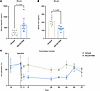 Figure 1
TMPRSS6 inhibition modulates iron levels in mice and nonhuman primates. (A and B) Serum hepcidin and serum iron in C57BL/6 3 days after injection with REGN7999 or isotype control. (C) Iron saturation in primates after 1 bolus injection of REGN7999 or isotype control. Significance at P < 0.05 by Student’s t test (2-tailed).
REGN7999 increases hepcidin in Hbbth3/+ mice. Given the reductions in serum iron and increases in hepcidin levels in nonthalassemic rodents and NHPs, we tested whether REGN7999 can normalize iron levels (or iron homeostasis) in a mouse model of β-thalassemia. We used Hbbth3/+ mice, a mouse model of β-thalassemia intermedia. These animals display increased reticulocyte count, low RBC count, and low hemoglobin, and they show a significant liver iron overload (32). We injected REGN7999 into Hbbth3/+ mice for up to 12 weeks (10 mg/kg weekly; in the first week the mice received 2 injections). Body and liver weights remained similar between the groups (Supplemental Figure 6, A and B). As anticipated, REGN7999 significantly elevated serum hepcidin and hepatic HAMP1 expression in Hbbth3/+ mice compared with isotype control (Figure 2, A and B), while serum iron was significantly reduced (Figure 2C). Alanine and aspartate aminotransferases were similar between WT and Hbbth3/+ mice and REGN7999 treatment did not increase markers of liver damage (Supplemental Figure 7, A and B).
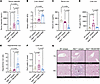 Figure 2
REGN7999 normalizes liver iron loading in Hbbth3/+ mice after 8 weeks. (A–C) Serum hepcidin, liver Hamp1 (presented as -DCt), and serum iron of Hbbth3/+ or WT mice after 12 weeks of treatment with REGN7999 or isotype control. (D–F) Liver iron content and the ratio of hepcidin/liver iron of the same groups of mice measured using a modified version of Bothwell and Torrance (49) (D and E) or Perl’s stain (F). (G) Representative images from these livers at 10× and 40× magnification. Scale bars: 100 μm (top row), 50 μm (bottom row). Blue stain indicates iron accumulation. P < 0.05 was significantly different. Significance was determined by 1-way ANOVA with Tukey’s multiple-comparison test.
REGN7999 reduces liver iron but not splenic iron in Hbbth3/+ mice. Liver and splenic iron overload are hallmarks of β-thalassemia and are replicated in Hbbth3/+ mice. Treatment with REGN7999 reduced hepatic iron (Figure 2, D, F, and G). The hepcidin/liver iron ratio was significantly increased after REGN7999 treatment (Figure 2E). Treatment with REGN7999 did not significantly reduce splenic iron concentration; however, as the spleen is significantly reduced in size, the total amount of splenic iron is lowered (Supplemental Figure 8, A–D). This suggests that iron is retained within the spleen, presumably in spleen-resident macrophages (see below).
Furthermore, we tested whether REGN7999 blocks iron uptake, by measuring duodenal iron. We found that duodenal iron was unchanged, suggesting that, despite high hepcidin and likely low ferroportin expression, some iron still enters the body (Supplemental Figure 8, E and F).
REGN7999 normalizes erythropoiesis in Hbbth3/+ mice. Compared with WT littermates, Hbbth3/+ mice have reduced RBC numbers, smaller mean RBC corpuscular volume (MCV), and lower hematocrit and hemoglobin, while their reticulocyte number is significantly increased. Whereas treatment with isotype-control had no effect on the RBC parameters, REGN7999 treatment normalized RBC (Figure 3A) and reticulocyte numbers (Figure 3B), indicating improved erythropoiesis (Table 1).
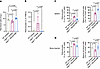 Figure 3
REGN7999 treatment improves erythropoiesis in Hbbth3/+ mice. (A and B) Complete blood count (CBC) was performed to monitor RBCs (A) and reticulocytes (B) in Hbbth3/+ mice and control littermates after 8 weeks of treatment. (C and D) Flow cytometry in spleen and bone marrow to measure reticulocytes and mature RBCs was performed to confirm the CBC findings. Significance (P < 0.05) was determined by 1-way ANOVA with Tukey’s multiple-comparison test.
The spleen is a site of secondary erythropoiesis in β-thalassemia, with splenomegaly being a marker of extramedullary hematopoiesis. Notably, splenomegaly is considered a clinically relevant phenotype (16) and is frequently surgically addressed with splenectomy. Mirroring patients with β-thalassemia, the spleens of Hbbth3/+ mice were approximately 4-fold heavier than WT spleens. Treatment with REGN7999 reduced spleen weights to WT levels (Supplemental Figure 8C).
In order to understand whether this effect is due to normalized erythropoiesis, we used flow cytometry to assess erythroblast maturation in the spleen and at the primary site of erythropoiesis, bone marrow. Spleens and bone marrow of Hbbth3/+ mice had increased numbers of reticulocytes compared with WT littermates, whereas Hbbth3/+ mice treated with REGN7999 displayed normalized reticulocyte numbers (Figure 3C). Hbbth3/+ mice also display a significant reduction of mature RBCs compared with WT mice, mirroring what is observed in human β-thalassemia. Treatment with REGN7999 normalizes the number of mature RBCs in spleens and bone marrow in Hbbth3/+mice (Figure 3D). These results are consistent with a mechanism whereby inhibition of TMPRSS6 normalizes erythropoiesis in thalassemic mice.
REGN7999 extends RBC lifespan and improves RBC health in Hbbth3/+ mice. The increase in RBCs and reduction of reticulocytes suggests that mature RBCs live longer in response to TMPRSS6 inhibition. Previous studies suggest that iron restriction blunts oxidative stress and slows RBC senescence (33, 34). We used carboxy-H2DCFDA to measure oxidative stress in blood, spleen, and bone marrow, and we found that oxidative stress was elevated in the blood (Figure 4A) and spleens (Supplemental Figure 9A) but not in the bone marrow of Hbbth3/+ mice (Supplemental Figure 9B). Treatment with REGN7999 blunted the increase in oxidative stress in blood (Figure 4A) and spleens (Supplemental Figure 9A).
 Figure 4
REGN7999 treatment results in healthier RBCs. In all studies, we compared Hbbth3/+ mice with WT littermates after or during treatment with REGN7999 or isotype control. (A) Carboxy-H2DCFDA levels in whole blood of Hbbth3/+ or littermate WT controls to measure oxidative stress. (B) Annexin V staining in whole blood to discover RBC senescence. (C) Biotinylated RBCs measured over 28 days (week 8–12 of the study) to determine RBC turnover. (D and E) Serum bilirubin levels and liver Hmox1 mRNA were measured to determine RBC destruction. (F) The distance that the test mice ran during a forced exhaustion run. (G) The ratios of blood lactate levels measured directly at exhaustion and running distance to receive lactate produced per meter running. Carboxy-H2DCFDA, 6-carboxy-2’,7’-dichlorodihydrofluorescein diacetate. Significance was given at P < 0.05 and determined by 1-way ANOVA (A, B, and D–G) or 2-way ANOVA (C) with Tukey’s multiple-comparison test.
Increased oxidative stress causes damage to the cell membrane, which in turn may accelerate RBC senescence. Damage to the cell membrane can be measured via annexin V binding. Hbbth3/+ RBCs display significantly increased annexin V binding compared with RBCs from WT mice, suggesting elevated RBC senescence in blood (Figure 4B), spleen, and bone marrow (Supplemental Figure 9, C and D). REGN7999 treatment blunted annexin V staining on the extracellular side of Hbbth3/+ RBCs in blood and spleens (Figure 4B and Supplemental Figure 9C). Similar results were seen in bone marrow, but the level of correction did not reach statistical significance (Supplemental Figure 9D).
We next assessed whether REGN7999 treatment would extend the RBC life span. For this, we injected NHS-PEG-NHS-biotin into mice, labeling RBCs and allowing an estimate of cell turnover. In line with a prior study (23), Hbbth3/+ mice showed a significant reduction of biotinylated RBCs after 14 days; at the end of the experiment (28 days), these animals only had approximately 30% of biotinylated RBCs. In WT animals, approximately 50% of RBCs were still labeled with biotin. Hbbth3/+ mice treated with REGN7999 showed virtually the same levels of biotinylated RBCs as WT mice, indicating normalization of RBC turnover (Figure 4C). This improvement of RBC survival was further supported by reduced bilirubin levels and lower expression levels of hepatic Hmox1 in Hbbth3/+ mice treated with REGN7999 (Figure 4, D and E).
REGN7999 improves anaerobic capacity in Hbbth3/+ mice. RBCs of Hbbth3/+ mice treated with REGN7999 are healthier than untreated mice. However, it remained unknown whether treatment translates to a functional improvement of RBCs. As REGN7999 treatment led to changes in RBC size and survival, we tested whether there was a functional correlate in terms of oxygen delivery into tissues. In a treadmill exhaustion run (Supplemental Figure 10A), Hbbth3/+ mice ran significantly less than WT mice, suggesting that these mice reached exhaustion faster (Figure 4F and Supplemental Figure 10, B and C). Hbbth3/+ mice treated with REGN7999 ran a similar distance as WT animals, indicating that the improvement of RBC health translates to improved tissue oxygen delivery and exercise capacity (Figure 4F). C57BL/6 mice injected with REGN7999 showed no difference in running distance compared with isotype-treated C57BL/6 mice (Supplemental Figure 10D).
We further assessed the anaerobic capacity of Hbbth3/+ mice and their response to REGN7999 by measuring blood lactate immediately after exhaustion running. In isotype-treated Hbbth3/+ mice, exhaustion running resulted in higher serum lactate levels, despite their running less distance than REGN7999-treated Hbbth3/+ mice (Figure 4G). This result is in line with the observed improvements in RBC health. Moreover, at baseline, Hbbth3/+ mice have elevated blood lactate levels (Supplemental Figure 10E). Hence, we tested whether Hbbth3/+ mice have ineffective lactate removal. A lactate tolerance test and measurements of hepatic lactate dehydrogenase (LDH) activity did not show differences between Hbbth3/+ mice and WT littermates, indicating that removal of lactate is unaffected (Supplemental Figure 10, F and G). Conversely, LDH activity in erythrocytes is significantly increased in Hbbth3/+ mice, suggesting that RBCs of β-thalassemia mice produce more lactate, especially during exhaustion running; inhibition of TMPRSS6 with REGN7999 improves this (Supplemental Figure 10H).
REGN7999 increases bone mineral density. Secondary to ineffective erythropoiesis and poor bone marrow health, many patients with β-thalassemia experience lower bone quality and have a ~44% higher fracture risk (21, 35). Thus, we tested whether increasing the effectiveness of erythropoiesis and extending the RBC lifespan leads to improvements in bone density by measuring bone mineral density and content as well as bone volume in mice treated with REGN7999 versus isotype-control over an 8-week period. At baseline, Hbbth3/+ mice display a significant reduction in bone mineral content, bone mineral density, and bone volume compared with WT littermates. In Hbbth3/+ mice injected with REGN7999, bone mineral content and bone mineral density were restored to WT levels, and bone volume was at a similar level of the WT controls yet not significantly different to Hbbth3/+ mice treated with isotype control (Figure 5). The improvement in bone quality becomes apparent by 4-weeks after treatment, which coincides with the time that improvements in erythropoiesis are observed (Supplemental Figure 11).
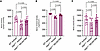 Figure 5
REGN7999 treatment improves bone health in β-thalassemia after 8 weeks of treatment. (A–C) Bone mineral content, bone mineral density, and total bone volume were measured with μCT in WT or Hbbth3/+ mice after treatment with REGN7999 or isotype control. Significance (P < 0.05) was determined by 1-way ANOVA with Tukey’s multiple-comparison test.
Compared with Acvr2b(L79D)-Fc, REGN7999 reduces hepatic iron and improves ineffective erythropoiesis. We compared the effects of REGN7999 with those obtained with Acvr2b(L79D)-Fc, as it has been reported to improve ineffective erythropoiesis and increase hemoglobin in mice and humans (20, 36–38). Since REGN7999 improves ineffective erythropoiesis and RBC lifespan and health, we performed a comparative analysis between REGN7999 and Acvr2b(L79D)-Fc. After 8 weeks of treatment with either protein, we found that only REGN7999 reduced serum and liver iron (Figure 6, A–C); Acvr2b(L79D)-Fc had no effect on the iron parameters. Furthermore, unlike REGN7999, Acvr2b(L79D)-Fc did not reduce spleen weight (Supplemental Figure 12).
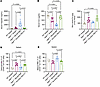 Figure 6
Compared with Acvr2b(L79D)-Fc, REGN7999 treatment reduces liver iron and improves ineffective erythropoiesis after 8 weeks. (A–C) Serum hepcidin, serum iron, and liver iron content in Hbbth3/+ mice or littermate WT controls measured after 8 weeks of treatment of with REGN7999, Acvr2b(L79D)-Fc, or mAb isotype control. (D and E) Splenic reticulocytes and mature RBCs as measured by flow cytometry in the same animals. Significance was given at P < 0.05 and determined by 1-way ANOVA with Tukey’s multiple-comparison test.
Hematologic analysis shows that, like REGN7999, Acvr2b(L79D)-Fc significantly increases hemoglobin levels and RBC size. However, whereas REGN7999 significantly increases RBC count, Acvr2b(L79D)-Fc does not (Table 2). This difference is also evident by flow cytometry, which shows increased splenic mature RBCs after REGN7999 treatment but not after Acvr2b(L79D)-Fc treatment (Figure 6E). Lastly, reticulocyte counts were only reduced in mice that received REGN7999 (Figure 6D).
 Table 2
REGN7999 treatment increases RBC count but not hemoglobin levels in Hbbth3/+ mice when compared with Acvr2b(L79D)-Fc
REGN7999 has an acceptable safety profile in healthy human volunteers. Encouraged by these preclinical data, we tested REGN7999 in healthy human volunteers in a single ascending dose a first-in-human study with 6:2 randomization to REGN7999 or placebo for each of 5 i.v. and 3 s.c. cohorts (clinicaltrials.gov; NCT05481333) (Supplemental Figure 13). In this single-center trial, a total of 64 healthy participants were randomized. Participants were balanced between the REGN7999 and placebo cohorts for age, sex, race, ethnicity, body weight, height, and baseline hematinic laboratory values (Table 3).
The incidence of treatment-emergent adverse effects (TEAE) was similar between the REGN7999 group and placebo group, with 91.7% of participants and 87.5% of participants reporting at least 1 TEAE, respectively (Table 4). None of the healthy participants experienced serious adverse events or deaths or developed symptomatic anemia (Table 4). Notably, there was no evidence of a relationship between dose and incidence of TEAEs in the s.c. or i.v. cohorts. TEAEs were generally mild to moderate in severity, with 2 severe TEAEs (migraine [placebo i.v. in a patient with a history of migraine] and ureterolithiasis [R7999 100 mg i.v. in a patient with a history of urolithiasis]). Both severe TEAEs were not considered related to study drug and resolved by the end of the follow-up period. The most commonly treatment-related adverse effects were headache (41.7% for pooled REGN7999 and 31.3% for pooled placebo), fatigue, nausea, and diarrhea (Table 5).
 Table 5
Treatment-emergent adverse events in the first-in-human study by system organ class and preferred term.
Single administrations of REGN7999 increase serum hepcidin and ferritin and decrease serum iron and transferrin saturation. Following single administrations of REGN7999, serum iron acutely decreased from baseline by 54.8%–71.7% in all groups within 1 day following treatment. Return to baseline was dose dependent, independent of route of administration (Figure 7, A and B, and Supplemental Figure 14, A and B).
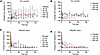 Figure 7
REGN7999 administration reduces serum iron and increases hepcidin in healthy clinical trial participants. (A and B) In the first-in-human study, REGN7999 reduced serum iron independent of i.v. (A) or s.c. (B) injection. (C and D) In contrast, serum hepcidin levels increased in a dose-dependent manner after i.v. (C) and s.c. (D) injection.
Hepcidin concentrations in serum showed acute increases in mean percent change from baseline, by 220%–516% in the i.v. cohorts and 259% to 534% in the s.c. cohorts within 4 days following treatment (Figure 7, C and D, and Supplemental Figure 14, C and D). This initial increase was followed by a rapid decrease, with subsequent maintenance of a sustained elevation from baseline with the highest i.v. and highest s.c. doses returning to baseline by day 106 and 92, respectively (Figure 7, C and D). The placebo arms had transient increases (138% and 40% for the placebo i.v. and s.c. cohorts, respectively), followed by stabilization below the baseline value, potentially driven by minor physiologic iron deficiency induced by study blood draws.
Transferrin saturation was similarly reduced by REGN7999 treatment, with deep initial reductions within 4 days following treatment, ranging from –50.7% to –72.2% in the REGN7999 i.v. cohorts and –52.6% to –71.8% in the REGN7999 s.c. cohorts, followed by gradual return to baseline (Figure 8 and Supplemental Figure 15, A and B). The 900 mg i.v. REGN7999 cohort and 900 mg s.c. REGN7999 cohort remained below baseline at the cessation of follow-up. The placebo i.v. and s.c. groups had fluctuations in the initial days from administration and maintained higher or at-baseline levels through end-of-study (EOS).
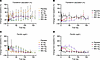 Figure 8
REGN7999 administration reduces transferrin saturation and increases serum ferritin in healthy clinical trial participants. (A and B) REGN7999 administration in the first-in-human study reduced transferrin saturation independent of i.v. (A) or s.c. (B) administration. (C and D) In contrast, serum ferritin levels increased in a dose-dependent manner after i.v. (C) and s.c. (D) administration.
In normal homeostasis and in most iron-deficiency anemia patients, serum ferritin correlates with transferrin saturation, with decreased serum ferritin reflecting reduced intracellular iron stores. Following REGN7999 treatment, however, ferritin concentrations in serum initially increased 19.6%–70.9% in the i.v. cohorts and 40.1%–69% in s.c. cohorts within 4 days following treatment before returning to baseline (Figure 8 and Supplemental Figure 15, C and D). A dose-dependent increase was also observed in the duration of the change from baseline in mean ferritin concentration. In the highest REGN7999 i.v. dose cohorts of 300 mg and 900 mg, mean ferritin concentrations returned to baseline by day 92 and day 107, respectively. In the highest REGN7999 s.c. dose cohorts of 300 mg and 900 mg, mean ferritin concentrations returned to baseline by day 78 and day 92, respectively (Figure 8).
REGN7999 induces expected changes to erythropoiesis in healthy participants. Iron deficiency anemia is associated with impaired erythropoiesis that manifests as low reticulocyte counts, low RBC count, decreased reticulocyte and RBC hemoglobin, and microcytosis. Participants exposed to single doses of REGN7999 showed expected changes in erythropoiesis, consistent with the prolonged iron restriction induced by REGN7999 in non-iron-overloaded participants.
Reticulocyte count initially decreased from day 2 through day 8 followed by a return to baseline within 64 days across all REGN i.v. and s.c. dose cohorts, corresponding to recovery of serum iron and transferrin saturation. The maximum mean percent change from baseline occurred at the 900 mg dose level and was –14.8% (day 50) for the 900 mg i.v. cohort and –11.4% (day 36) for the 900 mg s.c. cohort. Similarly, dose-dependent decreases in reticulocyte hemoglobin began within 4 days after REGN7999 administration. In the placebo group, reticulocyte hemoglobin fluctuated within 3% of baseline values.
Decreases in MCV, reticulocyte count, and reticulocyte hemoglobin through EOS were consistent across i.v. and s.c. dose cohorts (Supplemental Figure 16). The MCH fluctuated within the first 22 days followed by a transient dose-dependent decrease below baseline values in i.v. and s.c. REGN7999 dose cohorts (–10.1% and –7.9%, respectively). In the placebo group, there was a modest decrease in MCH with values fluctuating within 2% of baseline.
RBC counts decreased beginning day 4 (from –1.2% to –5.9% in the i.v. cohorts and –1.4% to –6.0% in the s.c. cohorts) and returned to baseline around day 64.
In evaluating hemoglobin over time, there were no early discernable treatment differences between REGN7999 i.v. and s.c. doses and placebo (Figure 9). However, the highest i.v. and s.c. REGN7999 doses had late reductions in mean hemoglobin (up to –8.9% in the highest i.v. dose and up to –11.9% in the highest s.c. dose), with the nadir occurring at day 36 for the highest i.v. and day 64 for the highest s.c. dose.
 Figure 9
REGN7999 administration transiently reduces hemoglobin in healthy clinical trial participants. (A and B) REGN7999 administration in the first-in-human study was associated with dose-dependent reductions in hemoglobin in non-iron-overloaded participants, independent of i.v. (A) or s.c. (B) administration.
Overall, in healthy volunteers, REGN7999 had an acceptable safety profile and caused rapid increases in serum hepcidin, with corresponding decreases in serum iron and transferrin saturation, though with increases in serum ferritin. This led to expected changes in hematologic parameters consistent with those associated with the development of iron deficiency anemia.


