
Research ArticleCell biologyNeuroscience
Open Access |  10.1172/jci.insight.191347
Deletion of SH2D5 alleviates epileptic seizures and NMDAR expression via autophagic degradation of STAT1
Haokun Guo,1,2,3,4 Hui Zhang,2,3 Chenlu Zhang,5 Yuanyuan Shen,2 Liumi Jiang,2,3 Min Yang,2,3 Yuansong Zhang,3,4,6 Ningning Zhang,7 Ruirui Zhang,7 Ran Yu,8 Yong Yang,8 and Xin Tian1,2,3,4
1Department of Geriatrics,
2Department of Neurology, and
3Department of Epilepsy Center, The First Affiliated Hospital of Chongqing Medical University, Chongqing, China.
4Key Laboratory of Major Brain Disease and Aging Research, Ministry of Education, Chongqing Medical University, Chongqing, China.
5The First Clinical Medical College of Shanxi Medical University, First Hospital of Shanxi Medical University, Taiyuan, Shanxi, China.
6Institute for Brain Science and Disease, Chongqing Medical University, Chongqing, China.
7The Second Hospital & Clinical Medical School, Lanzhou University, Lanzhou, China.
8Department of Neurology, The Affiliated Hospital of Qingdao University, Qingdao, China.
Address correspondence to: Xin Tian, The First Affiliated Hospital of Chongqing Medical University, No. 1 Youyi Rd., Chongqing, China 400016. Phone: 86.023.89012009; Email: xintian@cqmu.edu.cn. Or to: Yong Yang, The Affiliated Hospital of Qingdao University, No. 16, Jiangsu Rd., Qingdao, China 266000. Phone: 86.0532.82911315; Email: yangyongdoc@126.com.
Authorship note: HG, HZ, and CZ contributed equally to this work.
Find articles by Guo, H. in: PubMed | Google Scholar
1Department of Geriatrics,
2Department of Neurology, and
3Department of Epilepsy Center, The First Affiliated Hospital of Chongqing Medical University, Chongqing, China.
4Key Laboratory of Major Brain Disease and Aging Research, Ministry of Education, Chongqing Medical University, Chongqing, China.
5The First Clinical Medical College of Shanxi Medical University, First Hospital of Shanxi Medical University, Taiyuan, Shanxi, China.
6Institute for Brain Science and Disease, Chongqing Medical University, Chongqing, China.
7The Second Hospital & Clinical Medical School, Lanzhou University, Lanzhou, China.
8Department of Neurology, The Affiliated Hospital of Qingdao University, Qingdao, China.
Address correspondence to: Xin Tian, The First Affiliated Hospital of Chongqing Medical University, No. 1 Youyi Rd., Chongqing, China 400016. Phone: 86.023.89012009; Email: xintian@cqmu.edu.cn. Or to: Yong Yang, The Affiliated Hospital of Qingdao University, No. 16, Jiangsu Rd., Qingdao, China 266000. Phone: 86.0532.82911315; Email: yangyongdoc@126.com.
Authorship note: HG, HZ, and CZ contributed equally to this work.
Find articles by Zhang, H. in: PubMed | Google Scholar
1Department of Geriatrics,
2Department of Neurology, and
3Department of Epilepsy Center, The First Affiliated Hospital of Chongqing Medical University, Chongqing, China.
4Key Laboratory of Major Brain Disease and Aging Research, Ministry of Education, Chongqing Medical University, Chongqing, China.
5The First Clinical Medical College of Shanxi Medical University, First Hospital of Shanxi Medical University, Taiyuan, Shanxi, China.
6Institute for Brain Science and Disease, Chongqing Medical University, Chongqing, China.
7The Second Hospital & Clinical Medical School, Lanzhou University, Lanzhou, China.
8Department of Neurology, The Affiliated Hospital of Qingdao University, Qingdao, China.
Address correspondence to: Xin Tian, The First Affiliated Hospital of Chongqing Medical University, No. 1 Youyi Rd., Chongqing, China 400016. Phone: 86.023.89012009; Email: xintian@cqmu.edu.cn. Or to: Yong Yang, The Affiliated Hospital of Qingdao University, No. 16, Jiangsu Rd., Qingdao, China 266000. Phone: 86.0532.82911315; Email: yangyongdoc@126.com.
Authorship note: HG, HZ, and CZ contributed equally to this work.
Find articles by Zhang, C. in: PubMed | Google Scholar
1Department of Geriatrics,
2Department of Neurology, and
3Department of Epilepsy Center, The First Affiliated Hospital of Chongqing Medical University, Chongqing, China.
4Key Laboratory of Major Brain Disease and Aging Research, Ministry of Education, Chongqing Medical University, Chongqing, China.
5The First Clinical Medical College of Shanxi Medical University, First Hospital of Shanxi Medical University, Taiyuan, Shanxi, China.
6Institute for Brain Science and Disease, Chongqing Medical University, Chongqing, China.
7The Second Hospital & Clinical Medical School, Lanzhou University, Lanzhou, China.
8Department of Neurology, The Affiliated Hospital of Qingdao University, Qingdao, China.
Address correspondence to: Xin Tian, The First Affiliated Hospital of Chongqing Medical University, No. 1 Youyi Rd., Chongqing, China 400016. Phone: 86.023.89012009; Email: xintian@cqmu.edu.cn. Or to: Yong Yang, The Affiliated Hospital of Qingdao University, No. 16, Jiangsu Rd., Qingdao, China 266000. Phone: 86.0532.82911315; Email: yangyongdoc@126.com.
Authorship note: HG, HZ, and CZ contributed equally to this work.
Find articles by Shen, Y. in: PubMed | Google Scholar
1Department of Geriatrics,
2Department of Neurology, and
3Department of Epilepsy Center, The First Affiliated Hospital of Chongqing Medical University, Chongqing, China.
4Key Laboratory of Major Brain Disease and Aging Research, Ministry of Education, Chongqing Medical University, Chongqing, China.
5The First Clinical Medical College of Shanxi Medical University, First Hospital of Shanxi Medical University, Taiyuan, Shanxi, China.
6Institute for Brain Science and Disease, Chongqing Medical University, Chongqing, China.
7The Second Hospital & Clinical Medical School, Lanzhou University, Lanzhou, China.
8Department of Neurology, The Affiliated Hospital of Qingdao University, Qingdao, China.
Address correspondence to: Xin Tian, The First Affiliated Hospital of Chongqing Medical University, No. 1 Youyi Rd., Chongqing, China 400016. Phone: 86.023.89012009; Email: xintian@cqmu.edu.cn. Or to: Yong Yang, The Affiliated Hospital of Qingdao University, No. 16, Jiangsu Rd., Qingdao, China 266000. Phone: 86.0532.82911315; Email: yangyongdoc@126.com.
Authorship note: HG, HZ, and CZ contributed equally to this work.
Find articles by Jiang, L. in: PubMed | Google Scholar
1Department of Geriatrics,
2Department of Neurology, and
3Department of Epilepsy Center, The First Affiliated Hospital of Chongqing Medical University, Chongqing, China.
4Key Laboratory of Major Brain Disease and Aging Research, Ministry of Education, Chongqing Medical University, Chongqing, China.
5The First Clinical Medical College of Shanxi Medical University, First Hospital of Shanxi Medical University, Taiyuan, Shanxi, China.
6Institute for Brain Science and Disease, Chongqing Medical University, Chongqing, China.
7The Second Hospital & Clinical Medical School, Lanzhou University, Lanzhou, China.
8Department of Neurology, The Affiliated Hospital of Qingdao University, Qingdao, China.
Address correspondence to: Xin Tian, The First Affiliated Hospital of Chongqing Medical University, No. 1 Youyi Rd., Chongqing, China 400016. Phone: 86.023.89012009; Email: xintian@cqmu.edu.cn. Or to: Yong Yang, The Affiliated Hospital of Qingdao University, No. 16, Jiangsu Rd., Qingdao, China 266000. Phone: 86.0532.82911315; Email: yangyongdoc@126.com.
Authorship note: HG, HZ, and CZ contributed equally to this work.
Find articles by Yang, M. in: PubMed | Google Scholar
1Department of Geriatrics,
2Department of Neurology, and
3Department of Epilepsy Center, The First Affiliated Hospital of Chongqing Medical University, Chongqing, China.
4Key Laboratory of Major Brain Disease and Aging Research, Ministry of Education, Chongqing Medical University, Chongqing, China.
5The First Clinical Medical College of Shanxi Medical University, First Hospital of Shanxi Medical University, Taiyuan, Shanxi, China.
6Institute for Brain Science and Disease, Chongqing Medical University, Chongqing, China.
7The Second Hospital & Clinical Medical School, Lanzhou University, Lanzhou, China.
8Department of Neurology, The Affiliated Hospital of Qingdao University, Qingdao, China.
Address correspondence to: Xin Tian, The First Affiliated Hospital of Chongqing Medical University, No. 1 Youyi Rd., Chongqing, China 400016. Phone: 86.023.89012009; Email: xintian@cqmu.edu.cn. Or to: Yong Yang, The Affiliated Hospital of Qingdao University, No. 16, Jiangsu Rd., Qingdao, China 266000. Phone: 86.0532.82911315; Email: yangyongdoc@126.com.
Authorship note: HG, HZ, and CZ contributed equally to this work.
Find articles by Zhang, Y. in: PubMed | Google Scholar
1Department of Geriatrics,
2Department of Neurology, and
3Department of Epilepsy Center, The First Affiliated Hospital of Chongqing Medical University, Chongqing, China.
4Key Laboratory of Major Brain Disease and Aging Research, Ministry of Education, Chongqing Medical University, Chongqing, China.
5The First Clinical Medical College of Shanxi Medical University, First Hospital of Shanxi Medical University, Taiyuan, Shanxi, China.
6Institute for Brain Science and Disease, Chongqing Medical University, Chongqing, China.
7The Second Hospital & Clinical Medical School, Lanzhou University, Lanzhou, China.
8Department of Neurology, The Affiliated Hospital of Qingdao University, Qingdao, China.
Address correspondence to: Xin Tian, The First Affiliated Hospital of Chongqing Medical University, No. 1 Youyi Rd., Chongqing, China 400016. Phone: 86.023.89012009; Email: xintian@cqmu.edu.cn. Or to: Yong Yang, The Affiliated Hospital of Qingdao University, No. 16, Jiangsu Rd., Qingdao, China 266000. Phone: 86.0532.82911315; Email: yangyongdoc@126.com.
Authorship note: HG, HZ, and CZ contributed equally to this work.
Find articles by Zhang, N. in: PubMed | Google Scholar
1Department of Geriatrics,
2Department of Neurology, and
3Department of Epilepsy Center, The First Affiliated Hospital of Chongqing Medical University, Chongqing, China.
4Key Laboratory of Major Brain Disease and Aging Research, Ministry of Education, Chongqing Medical University, Chongqing, China.
5The First Clinical Medical College of Shanxi Medical University, First Hospital of Shanxi Medical University, Taiyuan, Shanxi, China.
6Institute for Brain Science and Disease, Chongqing Medical University, Chongqing, China.
7The Second Hospital & Clinical Medical School, Lanzhou University, Lanzhou, China.
8Department of Neurology, The Affiliated Hospital of Qingdao University, Qingdao, China.
Address correspondence to: Xin Tian, The First Affiliated Hospital of Chongqing Medical University, No. 1 Youyi Rd., Chongqing, China 400016. Phone: 86.023.89012009; Email: xintian@cqmu.edu.cn. Or to: Yong Yang, The Affiliated Hospital of Qingdao University, No. 16, Jiangsu Rd., Qingdao, China 266000. Phone: 86.0532.82911315; Email: yangyongdoc@126.com.
Authorship note: HG, HZ, and CZ contributed equally to this work.
Find articles by Zhang, R. in: PubMed | Google Scholar
1Department of Geriatrics,
2Department of Neurology, and
3Department of Epilepsy Center, The First Affiliated Hospital of Chongqing Medical University, Chongqing, China.
4Key Laboratory of Major Brain Disease and Aging Research, Ministry of Education, Chongqing Medical University, Chongqing, China.
5The First Clinical Medical College of Shanxi Medical University, First Hospital of Shanxi Medical University, Taiyuan, Shanxi, China.
6Institute for Brain Science and Disease, Chongqing Medical University, Chongqing, China.
7The Second Hospital & Clinical Medical School, Lanzhou University, Lanzhou, China.
8Department of Neurology, The Affiliated Hospital of Qingdao University, Qingdao, China.
Address correspondence to: Xin Tian, The First Affiliated Hospital of Chongqing Medical University, No. 1 Youyi Rd., Chongqing, China 400016. Phone: 86.023.89012009; Email: xintian@cqmu.edu.cn. Or to: Yong Yang, The Affiliated Hospital of Qingdao University, No. 16, Jiangsu Rd., Qingdao, China 266000. Phone: 86.0532.82911315; Email: yangyongdoc@126.com.
Authorship note: HG, HZ, and CZ contributed equally to this work.
Find articles by Yu, R. in: PubMed | Google Scholar
1Department of Geriatrics,
2Department of Neurology, and
3Department of Epilepsy Center, The First Affiliated Hospital of Chongqing Medical University, Chongqing, China.
4Key Laboratory of Major Brain Disease and Aging Research, Ministry of Education, Chongqing Medical University, Chongqing, China.
5The First Clinical Medical College of Shanxi Medical University, First Hospital of Shanxi Medical University, Taiyuan, Shanxi, China.
6Institute for Brain Science and Disease, Chongqing Medical University, Chongqing, China.
7The Second Hospital & Clinical Medical School, Lanzhou University, Lanzhou, China.
8Department of Neurology, The Affiliated Hospital of Qingdao University, Qingdao, China.
Address correspondence to: Xin Tian, The First Affiliated Hospital of Chongqing Medical University, No. 1 Youyi Rd., Chongqing, China 400016. Phone: 86.023.89012009; Email: xintian@cqmu.edu.cn. Or to: Yong Yang, The Affiliated Hospital of Qingdao University, No. 16, Jiangsu Rd., Qingdao, China 266000. Phone: 86.0532.82911315; Email: yangyongdoc@126.com.
Authorship note: HG, HZ, and CZ contributed equally to this work.
Find articles by Yang, Y. in: PubMed | Google Scholar
1Department of Geriatrics,
2Department of Neurology, and
3Department of Epilepsy Center, The First Affiliated Hospital of Chongqing Medical University, Chongqing, China.
4Key Laboratory of Major Brain Disease and Aging Research, Ministry of Education, Chongqing Medical University, Chongqing, China.
5The First Clinical Medical College of Shanxi Medical University, First Hospital of Shanxi Medical University, Taiyuan, Shanxi, China.
6Institute for Brain Science and Disease, Chongqing Medical University, Chongqing, China.
7The Second Hospital & Clinical Medical School, Lanzhou University, Lanzhou, China.
8Department of Neurology, The Affiliated Hospital of Qingdao University, Qingdao, China.
Address correspondence to: Xin Tian, The First Affiliated Hospital of Chongqing Medical University, No. 1 Youyi Rd., Chongqing, China 400016. Phone: 86.023.89012009; Email: xintian@cqmu.edu.cn. Or to: Yong Yang, The Affiliated Hospital of Qingdao University, No. 16, Jiangsu Rd., Qingdao, China 266000. Phone: 86.0532.82911315; Email: yangyongdoc@126.com.
Authorship note: HG, HZ, and CZ contributed equally to this work.
Find articles by Tian, X. in: PubMed | Google Scholar
Published August 22, 2025 - More info
JCI Insight. 2025;10(16):e191347. https://doi.org/10.1172/jci.insight.191347.
© 2025 Guo et al. This work is licensed under the Creative Commons Attribution 4.0 International License. To view a copy of this license, visit http://creativecommons.org/licenses/by/4.0/.
Received: January 15, 2025; Accepted: July 3, 2025


-
Results
SH2D5 localization and expression in the epileptic brain. To investigate the potential involvement of SH2D5 in epilepsy, we first assessed the localization of SH2D5 in epileptic brain tissues via immunofluorescence. To establish a typical epilepsy mouse model, kainic acid (KA) was used to induce status epilepticus (SE), followed by a latent period. In the hippocampi and cortex of mice with KA-induced epilepsy, SH2D5 colocalized primarily with the neuronal marker protein NeuN but not with glial fibrillary acidic protein (GFAP) (Figure 1A and Supplemental Figure 1A; supplemental material available online with this article; https://doi.org/10.1172/jci.insight.191347DS1). In temporal lobe samples obtained from patients with temporal lobe epilepsy (TLE) undergoing lesion resection, SH2D5 was also predominantly expressed in neurons (Figure 1B).
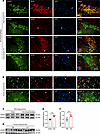 Figure 1
Distribution and expression of SH2D5 in epileptic brain tissues. (A) Representative immunofluorescence images of SH2D5 expression in mice with epilepsy. Scale bar: 50 μm. (B) Representative immunofluorescence images of SH2D5 expression in patients with TLE. Scale bar: 100 μm. Arrowheads: the cell that expresses SH2D5. (C and E) Representative images (C) and quantification (E) of SH2D5 expression in the hippocampi of mice with epilepsy. (D and F) Representative images (D) and quantification (F) of SH2D5 expression in patients with TLE. The data are presented as mean ± SEM. Unpaired t test in E and F. **P < 0.01.
We also assessed the protein expression level of SH2D5 in epileptic brain tissues. SH2D5 protein expression in the hippocampus and cortex was elevated in mice with KA-induced epilepsy compared with control mice (Figure 1, C and E, and Supplemental Figure 1, B and C). We also detected increased expression of SH2D5 in the temporal lobe tissues of patients with TLE compared with those of control patients who experienced traumatic brain injury (TBI) but did not exhibit epilepsy symptoms (Figure 1, D and F). Detailed information on the 2 groups of patients is included in Supplemental Table 1. The change in SH2D5 expression in the epileptic brain indicates the potential involvement of SH2D5 in epilepsy.
Sh2d5 KO alleviates epileptic activity. To investigate whether the upregulation of the SH2D5 protein contributes to the development of epilepsy, we examined its effect on epileptic activity in Sh2d5-KO mice. Homozygous Sh2d5fl/fl mice were obtained through the breeding of heterozygous Sh2d5fl/– mice (Figure 2A). The genotype was confirmed via PCR (Figure 2B). To specifically knock out Sh2d5 in the neurons of the hippocampus, AAV-hSyn-Cre was injected into the hippocampi of Sh2d5fl/fl mice. Three weeks later, Western blotting revealed a greater-than 50% reduction in SH2D5 expression in the Sh2d5-KO mice (Figure 2, D and E).
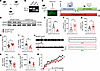 Figure 2
Sh2d5 KO affects seizure susceptibility and severity. (A) Schematic representation of transgenic Sh2d5 mouse breeding. (B) Representative image showing the genotyping of transgenic Sh2d5 mice. (C) Schematic representation of the epilepsy experimental protocol. (D and E) Representative Western blot image (D) and quantification (E) of the SH2D5 protein level after the transfection of hSyn-Cre AAV. (F–I) Quantification of the latency to seizure onset (F), the latency to SE onset (G), the latency to the first SRS (H), and the total number of SRSs within 4 weeks (I) after KA treatment. (J) Representative images of LFP recordings from mice 5 weeks after KA treatment. (K and L) Quantitative analysis of LFPs. (M) Quantitative analysis of PTZ-induced epileptic seizures. The data are presented as mean ± SEM. Unpaired t test in E–I, K, and L; 2-way ANOVA with Tukey’s multiple-comparison test in M. *P < 0.05, **P < 0.01, and ***P < 0.001.
A behavioral study was conducted on KA-induced epilepsy model and pentylenetetrazol (PTZ) kindling model to investigate the effect of SH2D5 on epilepsy development (Figure 2C). In the KA-induced epilepsy model, compared with control mice, Sh2d5-KO mice exhibited a prolonged latency to seizure onset and SE onset in the acute phase after KA administration (Figure 2, F and G). After SE onset, the brain is gradually functionally altered, leading to the generation of SRSs (12). Epileptic seizures were monitored via video recording during the first 4 weeks after SE induction, and local field potentials (LFPs) were recorded for 2 hours during the fifth week after SE induction (Figure 2C). Compared with the control group, the Sh2d5-KO group presented a prolonged latency to the first SRS and a reduced number of SRSs within 4 weeks (Figure 2, H and I). Moreover, LFP recording within 30 minutes revealed that Sh2d5-KO mice presented a significant reduction in both the duration and frequency of seizure-like events (SLEs) (Figure 2, J–L). In addition, we confirmed the effect of Sh2d5 KO on epilepsy development in PTZ kindling model. The results revealed that Sh2d5 KO delayed seizure kindling (Figure 2M). Taken together, these findings suggest that Sh2d5 KO can reduce seizure susceptibility and alleviate epilepsy development.
SH2D5 regulates excitatory synaptic transmission and the number of functional synapses. Epilepsy is thought to result from an imbalance between excitatory and inhibitory neural activity, as well as abnormalities in intrinsic neuronal excitability (13). We utilized whole-cell patch-clamp recording to evaluate the activity of pyramidal neurons in the CA1 region. Mg2+ was removed from the extracellular solution of the hippocampal slices to induce seizure-like activity. We found that the resting membrane potential (RMP) (Figure 3A), action potential (AP) firing rate, and AP threshold (Figure 3, B–D) were unaltered in Sh2d5-KO mice, and this suggests that SH2D5 does not modulate intrinsic neuronal excitability. To elucidate the role of SH2D5 in synaptic transmission, we measured spontaneous postsynaptic currents. Our investigation revealed that the frequency and amplitude of spontaneous inhibitory postsynaptic currents (sIPSCs) were unaltered in Sh2d5-KO mice (Figure 3, E–G). However, Sh2d5 KO led to a reduction in both the frequency and amplitude of spontaneous excitatory postsynaptic currents (sEPSCs) (Figure 3, H–J). Our findings suggest that SH2D5 can regulate excitatory postsynaptic transmission.
 Figure 3
SH2D5 regulates glutamatergic synaptic transmission. (A) Resting membrane potential of hippocampal CA1 neurons. (B and C) Representative traces of AP spikes following current injection (90 pA) (B) and quantification of AP spikes in hippocampal CA1 neurons following current injection (–50 pA to 130 pA) (C). (D) Threshold for single APs evoked by a rheobase current. (E–G) Representative traces of sIPSCs of CA1 neurons (E) and quantification of the amplitude and frequency of sIPSCs (F and G). (H–J) Representative traces of sEPSCs of CA1 neurons (H) and quantification of the amplitude and frequency of sEPSCs (I and J). The data are presented as mean ± SEM. Unpaired t test in A, D, F, G, I, and J; 2-way ANOVA with Tukey’s multiple-comparison test in C. *P < 0.05, **P < 0.01.
Changes in sEPSC frequency are generally attributed to changes in neurotransmitter release or the number of functional synapses (14). The paired-pulse ratio (PPR) is an indirect indicator of presynaptic release probability. We found that there was no difference in the PPR between the Sh2d5-KO and control groups (Figure 4, A and B). Moreover, we examined the number of functional excitatory synapses, which is correlated with parameters reflecting the morphology of dendritic spines, including the proportion of mature dendritic spines, dendritic complexity, and spine density. Golgi staining revealed that the density of dendritic spines was lower on hippocampal neurons in Sh2d5-KO mice than on those in control mice (Figure 4, C and D). We furtherly examined dendritic spine morphology on cultured primary neurons. Compared with those of control mice, the neurons of Sh2d5-KO mice exhibited not only a reduced density of dendritic spines but also significantly fewer stubby and mushroom-shaped spines, along with an increase in the number of filopodia-like protrusions (Figure 4, E–G). These findings suggest that SH2D5 can modulate the number of functional synapses.
 Figure 4
SH2D5 regulates the number of functional synapses. (A and B) Representative traces of PPR (A) and quantification (B) of the PPR. (C and D) Representative images and quantification of Golgi staining of CA1 neurons and the spine density in Sh2d5-KO mice. Scale bars: 100 μm (left) and 5 μm (right). (E) Representative immunofluorescence images of mature neurons. The images on the right are magnified at 4×. Scale bars: 20 μm (left) and 5 μm (right). (F) Determination of the dendritic spine density. (G) Quantitative analysis of dendritic spine maturity. Spines were categorized as stubby, mushroom, long thin (length > 1 μm, head diameter > 1 μm), and filopodia (length > 2 μm). Stubby and mushroom spines are mature, while long thin and filopodia spines are immature. The data are presented as mean ± SEM. Unpaired t tests are shown in B, D, F, and G. ***P < 0.001.
SH2D5 regulates NMDAR-mediated synaptic transmission. Hippocampal lysates from WT mice with KA-induced epilepsy were subjected to immunoprecipitation (IP) using an anti-SH2D5 antibody, and interacting proteins were subsequently identified by IP–mass spectrometry (IP-MS) to explore the molecular mechanisms underlying SH2D5-mediated regulation of epileptic activity and synaptic transmission. Gene Ontology (GO) enrichment analysis revealed that the potential interacting proteins were enriched primarily in functions related to synaptic activity (Figure 5A). Kyoto Encyclopedia of Genes and Genomes (KEGG) pathway analysis revealed that the potential interacting proteins were associated with glutamatergic synapses (Figure 5B). These findings support the electrophysiological findings that SH2D5 regulates excitatory synaptic transmission. Furthermore, to determine the type of excitatory synaptic receptor modulated by SH2D5, the protein levels of AMPAR and NMDAR subunits in epileptic hippocampal tissue were assessed. Western blotting demonstrated that Sh2d5 KO resulted in a significant decrease in the total protein levels of the GluN1, GluN2A, and GluN2B subunits in epileptic hippocampal tissue. However, Sh2d5 KO had no discernible effect on the total protein levels of AMPAR subunits (Figure 5, C and D). Furthermore, given that membrane proteins play roles in synaptic transmission, the membrane fraction of hippocampal samples was extracted, and the levels of synaptic receptor subunits were measured. NMDAR subunit expression in the membrane fraction of hippocampal tissues from Sh2d5-KO mice was reduced, whereas no significant change in AMPAR subunit expression was detected (Figure 5, E and F). Functionally, we observed a reduction in the amplitude of NMDAR–evoked EPSCs (NMDAR-eEPSCs) in hippocampal slices from Sh2d5-KO mice (Figure 5, G and H). Taken together, these findings suggest that SH2D5 regulates NMDAR-mediated synaptic transmission in epilepsy.
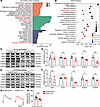 Figure 5
SH2D5 primarily affects the function and expression of NMDARs. (A) GO enrichment analysis of the IP-MS data. The proteins outlined in red are related to synapses. (B) KEGG pathway analysis of the IP-MS data. The proteins outlined in red are related to glutamatergic synapses. (C and D) Representative Western blot images (C) and quantification (D) of total glutamatergic receptor protein expression in the hippocampal tissue of Sh2d5-KO mice with epilepsy. (E and F) Representative Western blot images (E) and quantification (F) of glutamatergic receptor protein expression in the membrane fraction of hippocampal tissue from Sh2d5-KO mice with epilepsy. (G and H) Representative traces of NMDAR–evoked EPSCs (G) and quantification (H) of the amplitude of the NMDAR-eEPSCs. The data are presented as mean ± SEM. Unpaired t test in D, F, and H. *P < 0.05, **P < 0.01 and ***P < 0.001.
STAT1 mediates the SH2D5-induced regulation of NMDAR expression and epileptic activity. To explore how SH2D5 regulates NMDAR expression, hippocampal proteins were extracted from Sh2d5 KO and control mice, both subjected to KA-induced epilepsy, and subjected to liquid chromatography–tandem MS (LC–MS/MS) analysis. In total, 5,314 distinct proteins were identified. KEGG pathway analysis revealed that the differentially expressed proteins were related to various pathways (Figure 6A). We specifically focused on the JAK/STAT pathway because numerous reports have highlighted its potential role in the transcriptional regulation of NMDARs (15). According to a volcano plot, the protein STAT1 of the JAK/STAT pathway was specifically differentially expressed between Sh2d5-KO mice and control mice (Figure 6B). To confirm the interaction between SH2D5 and STAT1, we assessed their colocalization via fluorescence staining and their interactions via co-IP analysis (Supplemental Figure 2, A–C). Furthermore, as STAT1 has been reported to regulate the transcription of NMDARs (16), we examined the transcriptional levels of NMDARs. Similar to the Western blotting results shown in Figure 5, C and D, quantitative PCR (qPCR) analysis revealed a significant decrease in the mRNA level of NMDARs in Sh2d5-KO mice with epilepsy (Figure 6C), suggesting that SH2D5 may modulate the transcription of NMDARs. Functionally, the protein levels of STAT1 and dimerized STAT1 were increased in the hippocampi of Sh2d5-KO mice with epilepsy (Figure 6, D and E). STAT3, a member of the STAT protein family, has been reported to regulate NMDAR transcription (17) and is regulated by SH2D5 in hepatocellular carcinoma (18). We also evaluated the expression of both total and phosphorylated STAT3 in Sh2d5-KO and control mice. No significant differences in total STAT3 protein, p-705-STAT3, or p-727-STAT3 levels were observed (Figure 6, F and G). These findings indicate that SH2D5 may be involved in NMDAR transcription through STAT1.
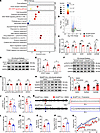 Figure 6
SH2D5 modulates NMDAR transcript levels via STAT1. (A) KEGG pathway analysis of the LC–MS/MS quantitative proteomics data from Sh2d5-KO and control mice with epilepsy. The proteins outlined in red are related to the JAK/STAT signaling pathway. (B) Volcanic map of differentially expressed proteins identified by LC-MS/MS quantitative proteomics. (C) Verification of changes in glutamatergic receptor levels via qPCR. (D and E) Representative Western blot images (D) and quantification (E) of STAT1 and STAT1 dimer levels. (F and G) Representative Western blot images (F) and quantification (G) of p-STAT3-705, p-STAT3-727, and STAT3 levels. (H and I) Representative Western blot images (H) and quantification (I) of the protein levels of NMDARs after inhibition of STAT1 by fludarabine. (J–M) Quantification of the latency to seizure onset (J), latency to SE onset (K), latency to the first SRS (L), and total number of SRSs within 4 weeks (M) after KA treatment. (N) Representative images of LFP recordings taken 5 weeks after KA treatment. (O and P) Quantitative analysis of LFP recordings. (Q) Quantification of PTZ kindling–induced epileptic seizures. The data are presented as mean ± SEM. Unpaired t test in C, E, G, I–M, O, and P; 2-way ANOVA with Tukey’s multiple-comparison test in Q. *P < 0.05, **P < 0.01, and ***P < 0.001.
To further confirm that STAT1 functionally participates in the regulation of epilepsy by SH2D5, we performed a rescue experiment in which STAT1 was inhibited with fludarabine. We found that i.p. injection of fludarabine resulted in a significant increase in the protein expression of NMDARs in the hippocampi of Sh2d5-KO mice with KA-induced epilepsy (Figure 6, H and I). A behavioral study revealed that Sh2d5-KO mice treated with fludarabine presented a shorter latency to seizure onset, SE onset, and the first SRS (Figure 6, J–L) and an increased number of SRSs (Figure 6M) than did those treated with dimethyl sulfoxide (DMSO). LFP analysis of mice with KA-induced epilepsy revealed that Sh2d5-KO mice treated with fludarabine presented significant increases in the frequency of SLEs and the duration of SLEs (Figure 6, N–P). In the PTZ kindling epilepsy model, the epileptic activity of the mice in the fludarabine group was greater than that of the mice in the control group (Figure 6Q). Collectively, these findings suggest that STAT1 plays an important role in the regulation of epileptic activity by SH2D5.
SH2D5-mediated autophagy modulates the expression of STAT1. As shown above, Sh2d5 KO upregulated STAT1 protein expression levels; therefore, we next explored the mechanism by which SH2D5 regulates STAT1 protein levels. We first investigated whether SH2D5 regulates the mRNA expression of STAT1 in brain tissue from epileptic mice via qPCR. The absence of SH2D5 did not significantly affect the mRNA level of STAT1 (Figure 7A). Next, we investigated the effect of SH2D5 on the posttranscriptional stability of STAT1. Primary hippocampal neurons from Sh2d5fl/fl mice were transfected with AAV-hSyn-Cre. A cycloheximide (CHX) chase assay was used to assess the stability of STAT1. Our results revealed that Sh2d5 KO significantly prolonged the half-life of STAT1 (Figure 7, B and C), indicating that SH2D5 may regulate STAT1 protein degradation. To confirm these results, we investigated the degradation of STAT1 by the 2 most common degradation pathways — the ubiquitination and lysosomal pathways. We observed that chloroquine (CQ; a lysosomal inhibitor) significantly increased STAT1 protein levels, whereas the administration of MG132 (a ubiquitination inhibitor) did not (Figure 7D). In addition, Sh2d5 KO decreased the levels of the autophagy-related protein Beclin1 and the LC3-II/LC3-I ratio (Figure 7, E, F, H, and I). Immunofluorescence staining also revealed a significant reduction in the mean fluorescence intensity of LC3 relative to that of NeuN in the hippocampal CA1 region in Sh2d5-KO mice (Figure 7G). A rescue experiment in which Sh2d5-KO mice were treated with the autophagy agonist RAPA revealed a notable reduction in the protein level of STAT1 (Figure 7, J and K) and a significant increase in the protein expression of NMDARs (Figure 7, L and M), which further confirmed the role of SH2D5 in regulating autophagy. To date, the mechanism of SH2D5 regulating autophagy has not been reported. Previous studies have shown that knockdown of SH2D5 reduced the level of RAC1-GTPase (9), and others have suggested that autophagy can be increased through the RAC1 (19, 20). Therefore, we checked the role of RAC pathway agonist SEW2871 in Sh2d5-KO mice. We found that SEW2871 significantly increased the LC3II/LC3I ratio and the expression level of Beclin1 in the hippocampal tissue, whereas it reduced the level of STAT1 protein (Supplemental Figure 2, D–G). Taken together, these findings suggest that SH2D5 regulates STAT1 expression via the modulation of autophagy.
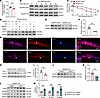 Figure 7
SH2D5-mediated autophagy modulates the expression of STAT1. (A) Quantification of STAT1 mRNA levels via qPCR. (B and C) Representative Western blot images (B) and quantification (C) of the protein level of STAT1 at different timepoints after CHX treatment. (D) Western blot images showing the STAT1 protein levels in the CQ, MG132, and DMSO treatment groups. (E and F) Representative Western blot images (E) and quantification (F) of the protein level of Beclin1. (G) Representative immunofluorescence images showing SH2D5 and LC3 colocalization. Scale bar: 100 μm. Arrowheads: the cell that expresses LC3. (H and I) Representative Western blot images (H) and quantification (I) of LC3-II/LC3-I levels. (J and K) Representative Western blot images (J) and quantification (K) of STAT1 levels after RAPA administration. (L and M) Representative Western blot images (L) and quantification (M) of GluN1, GluN2A, and GluN2B levels after RAPA administration. The data are presented as mean ± SEM. Unpaired t test in A, F, I, K, and M; 2-way ANOVA with Tukey’s multiple-comparison test in C. ***P < 0.001.


