
Research ArticleCardiologyVascular biology
Open Access |  10.1172/jci.insight.189850
Atrial fibrillation–induced neurocognitive and vascular dysfunction is averted by mitochondrial oxidative stress reduction
Pavithran Guttipatti,1 Ruiping Ji,1 Najla Saadallah,1 Uma Mahesh R. Avula,1,2 Deniz Z. Sonmez,1 Albert Fang,1 Eric Li,1 Amar D. Desai,1 Samantha Parsons,1 Parmanand Dasrat,1 Christine Sison,1 Yanping Sun,3 Chris N. Goulbourne,4 Steven R. Reiken,5 and Elaine Y. Wan1
1Division of Cardiology, Department of Medicine, Vagelos College of Physicians and Surgeons, Columbia University, New York, New York, USA.
2Department of Medicine, University of Mississippi, Jackson, Mississippi, USA.
3Oncology Precision Therapeutics and Imaging Core, Herbert Irving Comprehensive Cancer Center, Columbia University, New York, New York, USA.
4Center for Dementia Research, Nathan S. Kline Institute for Psychiatric Research, Orangeburg, New York, USA.
5Department of Physiology and Cellular Biophysics and Clyde & Helen Wu Center for Molecular Cardiology, Vagelos College of Physicians and Surgeons, Columbia University, New York, New York, USA.
Address correspondence to: Elaine Y. Wan, Columbia University, 630 W. 168th Street PH8-406, New York, New York, 10032, USA. Phone: 347.351.5088; Email: eyw2003@cumc.columbia.edu.
Find articles by Guttipatti, P. in: PubMed | Google Scholar
1Division of Cardiology, Department of Medicine, Vagelos College of Physicians and Surgeons, Columbia University, New York, New York, USA.
2Department of Medicine, University of Mississippi, Jackson, Mississippi, USA.
3Oncology Precision Therapeutics and Imaging Core, Herbert Irving Comprehensive Cancer Center, Columbia University, New York, New York, USA.
4Center for Dementia Research, Nathan S. Kline Institute for Psychiatric Research, Orangeburg, New York, USA.
5Department of Physiology and Cellular Biophysics and Clyde & Helen Wu Center for Molecular Cardiology, Vagelos College of Physicians and Surgeons, Columbia University, New York, New York, USA.
Address correspondence to: Elaine Y. Wan, Columbia University, 630 W. 168th Street PH8-406, New York, New York, 10032, USA. Phone: 347.351.5088; Email: eyw2003@cumc.columbia.edu.
Find articles by Ji, R. in: PubMed | Google Scholar
1Division of Cardiology, Department of Medicine, Vagelos College of Physicians and Surgeons, Columbia University, New York, New York, USA.
2Department of Medicine, University of Mississippi, Jackson, Mississippi, USA.
3Oncology Precision Therapeutics and Imaging Core, Herbert Irving Comprehensive Cancer Center, Columbia University, New York, New York, USA.
4Center for Dementia Research, Nathan S. Kline Institute for Psychiatric Research, Orangeburg, New York, USA.
5Department of Physiology and Cellular Biophysics and Clyde & Helen Wu Center for Molecular Cardiology, Vagelos College of Physicians and Surgeons, Columbia University, New York, New York, USA.
Address correspondence to: Elaine Y. Wan, Columbia University, 630 W. 168th Street PH8-406, New York, New York, 10032, USA. Phone: 347.351.5088; Email: eyw2003@cumc.columbia.edu.
Find articles by Saadallah, N. in: PubMed | Google Scholar
1Division of Cardiology, Department of Medicine, Vagelos College of Physicians and Surgeons, Columbia University, New York, New York, USA.
2Department of Medicine, University of Mississippi, Jackson, Mississippi, USA.
3Oncology Precision Therapeutics and Imaging Core, Herbert Irving Comprehensive Cancer Center, Columbia University, New York, New York, USA.
4Center for Dementia Research, Nathan S. Kline Institute for Psychiatric Research, Orangeburg, New York, USA.
5Department of Physiology and Cellular Biophysics and Clyde & Helen Wu Center for Molecular Cardiology, Vagelos College of Physicians and Surgeons, Columbia University, New York, New York, USA.
Address correspondence to: Elaine Y. Wan, Columbia University, 630 W. 168th Street PH8-406, New York, New York, 10032, USA. Phone: 347.351.5088; Email: eyw2003@cumc.columbia.edu.
Find articles by
Avula, U.
in:
PubMed
|
Google Scholar
|

1Division of Cardiology, Department of Medicine, Vagelos College of Physicians and Surgeons, Columbia University, New York, New York, USA.
2Department of Medicine, University of Mississippi, Jackson, Mississippi, USA.
3Oncology Precision Therapeutics and Imaging Core, Herbert Irving Comprehensive Cancer Center, Columbia University, New York, New York, USA.
4Center for Dementia Research, Nathan S. Kline Institute for Psychiatric Research, Orangeburg, New York, USA.
5Department of Physiology and Cellular Biophysics and Clyde & Helen Wu Center for Molecular Cardiology, Vagelos College of Physicians and Surgeons, Columbia University, New York, New York, USA.
Address correspondence to: Elaine Y. Wan, Columbia University, 630 W. 168th Street PH8-406, New York, New York, 10032, USA. Phone: 347.351.5088; Email: eyw2003@cumc.columbia.edu.
Find articles by Sonmez, D. in: PubMed | Google Scholar
1Division of Cardiology, Department of Medicine, Vagelos College of Physicians and Surgeons, Columbia University, New York, New York, USA.
2Department of Medicine, University of Mississippi, Jackson, Mississippi, USA.
3Oncology Precision Therapeutics and Imaging Core, Herbert Irving Comprehensive Cancer Center, Columbia University, New York, New York, USA.
4Center for Dementia Research, Nathan S. Kline Institute for Psychiatric Research, Orangeburg, New York, USA.
5Department of Physiology and Cellular Biophysics and Clyde & Helen Wu Center for Molecular Cardiology, Vagelos College of Physicians and Surgeons, Columbia University, New York, New York, USA.
Address correspondence to: Elaine Y. Wan, Columbia University, 630 W. 168th Street PH8-406, New York, New York, 10032, USA. Phone: 347.351.5088; Email: eyw2003@cumc.columbia.edu.
Find articles by Fang, A. in: PubMed | Google Scholar
1Division of Cardiology, Department of Medicine, Vagelos College of Physicians and Surgeons, Columbia University, New York, New York, USA.
2Department of Medicine, University of Mississippi, Jackson, Mississippi, USA.
3Oncology Precision Therapeutics and Imaging Core, Herbert Irving Comprehensive Cancer Center, Columbia University, New York, New York, USA.
4Center for Dementia Research, Nathan S. Kline Institute for Psychiatric Research, Orangeburg, New York, USA.
5Department of Physiology and Cellular Biophysics and Clyde & Helen Wu Center for Molecular Cardiology, Vagelos College of Physicians and Surgeons, Columbia University, New York, New York, USA.
Address correspondence to: Elaine Y. Wan, Columbia University, 630 W. 168th Street PH8-406, New York, New York, 10032, USA. Phone: 347.351.5088; Email: eyw2003@cumc.columbia.edu.
Find articles by Li, E. in: PubMed | Google Scholar
1Division of Cardiology, Department of Medicine, Vagelos College of Physicians and Surgeons, Columbia University, New York, New York, USA.
2Department of Medicine, University of Mississippi, Jackson, Mississippi, USA.
3Oncology Precision Therapeutics and Imaging Core, Herbert Irving Comprehensive Cancer Center, Columbia University, New York, New York, USA.
4Center for Dementia Research, Nathan S. Kline Institute for Psychiatric Research, Orangeburg, New York, USA.
5Department of Physiology and Cellular Biophysics and Clyde & Helen Wu Center for Molecular Cardiology, Vagelos College of Physicians and Surgeons, Columbia University, New York, New York, USA.
Address correspondence to: Elaine Y. Wan, Columbia University, 630 W. 168th Street PH8-406, New York, New York, 10032, USA. Phone: 347.351.5088; Email: eyw2003@cumc.columbia.edu.
Find articles by
Desai, A.
in:
PubMed
|
Google Scholar
|
1Division of Cardiology, Department of Medicine, Vagelos College of Physicians and Surgeons, Columbia University, New York, New York, USA.
2Department of Medicine, University of Mississippi, Jackson, Mississippi, USA.
3Oncology Precision Therapeutics and Imaging Core, Herbert Irving Comprehensive Cancer Center, Columbia University, New York, New York, USA.
4Center for Dementia Research, Nathan S. Kline Institute for Psychiatric Research, Orangeburg, New York, USA.
5Department of Physiology and Cellular Biophysics and Clyde & Helen Wu Center for Molecular Cardiology, Vagelos College of Physicians and Surgeons, Columbia University, New York, New York, USA.
Address correspondence to: Elaine Y. Wan, Columbia University, 630 W. 168th Street PH8-406, New York, New York, 10032, USA. Phone: 347.351.5088; Email: eyw2003@cumc.columbia.edu.
Find articles by
Parsons, S.
in:
PubMed
|
Google Scholar
|
1Division of Cardiology, Department of Medicine, Vagelos College of Physicians and Surgeons, Columbia University, New York, New York, USA.
2Department of Medicine, University of Mississippi, Jackson, Mississippi, USA.
3Oncology Precision Therapeutics and Imaging Core, Herbert Irving Comprehensive Cancer Center, Columbia University, New York, New York, USA.
4Center for Dementia Research, Nathan S. Kline Institute for Psychiatric Research, Orangeburg, New York, USA.
5Department of Physiology and Cellular Biophysics and Clyde & Helen Wu Center for Molecular Cardiology, Vagelos College of Physicians and Surgeons, Columbia University, New York, New York, USA.
Address correspondence to: Elaine Y. Wan, Columbia University, 630 W. 168th Street PH8-406, New York, New York, 10032, USA. Phone: 347.351.5088; Email: eyw2003@cumc.columbia.edu.
Find articles by
Dasrat, P.
in:
PubMed
|
Google Scholar
|
1Division of Cardiology, Department of Medicine, Vagelos College of Physicians and Surgeons, Columbia University, New York, New York, USA.
2Department of Medicine, University of Mississippi, Jackson, Mississippi, USA.
3Oncology Precision Therapeutics and Imaging Core, Herbert Irving Comprehensive Cancer Center, Columbia University, New York, New York, USA.
4Center for Dementia Research, Nathan S. Kline Institute for Psychiatric Research, Orangeburg, New York, USA.
5Department of Physiology and Cellular Biophysics and Clyde & Helen Wu Center for Molecular Cardiology, Vagelos College of Physicians and Surgeons, Columbia University, New York, New York, USA.
Address correspondence to: Elaine Y. Wan, Columbia University, 630 W. 168th Street PH8-406, New York, New York, 10032, USA. Phone: 347.351.5088; Email: eyw2003@cumc.columbia.edu.
Find articles by Sison, C. in: PubMed | Google Scholar
1Division of Cardiology, Department of Medicine, Vagelos College of Physicians and Surgeons, Columbia University, New York, New York, USA.
2Department of Medicine, University of Mississippi, Jackson, Mississippi, USA.
3Oncology Precision Therapeutics and Imaging Core, Herbert Irving Comprehensive Cancer Center, Columbia University, New York, New York, USA.
4Center for Dementia Research, Nathan S. Kline Institute for Psychiatric Research, Orangeburg, New York, USA.
5Department of Physiology and Cellular Biophysics and Clyde & Helen Wu Center for Molecular Cardiology, Vagelos College of Physicians and Surgeons, Columbia University, New York, New York, USA.
Address correspondence to: Elaine Y. Wan, Columbia University, 630 W. 168th Street PH8-406, New York, New York, 10032, USA. Phone: 347.351.5088; Email: eyw2003@cumc.columbia.edu.
Find articles by Sun, Y. in: PubMed | Google Scholar
1Division of Cardiology, Department of Medicine, Vagelos College of Physicians and Surgeons, Columbia University, New York, New York, USA.
2Department of Medicine, University of Mississippi, Jackson, Mississippi, USA.
3Oncology Precision Therapeutics and Imaging Core, Herbert Irving Comprehensive Cancer Center, Columbia University, New York, New York, USA.
4Center for Dementia Research, Nathan S. Kline Institute for Psychiatric Research, Orangeburg, New York, USA.
5Department of Physiology and Cellular Biophysics and Clyde & Helen Wu Center for Molecular Cardiology, Vagelos College of Physicians and Surgeons, Columbia University, New York, New York, USA.
Address correspondence to: Elaine Y. Wan, Columbia University, 630 W. 168th Street PH8-406, New York, New York, 10032, USA. Phone: 347.351.5088; Email: eyw2003@cumc.columbia.edu.
Find articles by Goulbourne, C. in: PubMed | Google Scholar
1Division of Cardiology, Department of Medicine, Vagelos College of Physicians and Surgeons, Columbia University, New York, New York, USA.
2Department of Medicine, University of Mississippi, Jackson, Mississippi, USA.
3Oncology Precision Therapeutics and Imaging Core, Herbert Irving Comprehensive Cancer Center, Columbia University, New York, New York, USA.
4Center for Dementia Research, Nathan S. Kline Institute for Psychiatric Research, Orangeburg, New York, USA.
5Department of Physiology and Cellular Biophysics and Clyde & Helen Wu Center for Molecular Cardiology, Vagelos College of Physicians and Surgeons, Columbia University, New York, New York, USA.
Address correspondence to: Elaine Y. Wan, Columbia University, 630 W. 168th Street PH8-406, New York, New York, 10032, USA. Phone: 347.351.5088; Email: eyw2003@cumc.columbia.edu.
Find articles by Reiken, S. in: PubMed | Google Scholar
1Division of Cardiology, Department of Medicine, Vagelos College of Physicians and Surgeons, Columbia University, New York, New York, USA.
2Department of Medicine, University of Mississippi, Jackson, Mississippi, USA.
3Oncology Precision Therapeutics and Imaging Core, Herbert Irving Comprehensive Cancer Center, Columbia University, New York, New York, USA.
4Center for Dementia Research, Nathan S. Kline Institute for Psychiatric Research, Orangeburg, New York, USA.
5Department of Physiology and Cellular Biophysics and Clyde & Helen Wu Center for Molecular Cardiology, Vagelos College of Physicians and Surgeons, Columbia University, New York, New York, USA.
Address correspondence to: Elaine Y. Wan, Columbia University, 630 W. 168th Street PH8-406, New York, New York, 10032, USA. Phone: 347.351.5088; Email: eyw2003@cumc.columbia.edu.
Find articles by
Wan, E.
in:
PubMed
|
Google Scholar
|
Published October 7, 2025 - More info
JCI Insight. 2025;10(22):e189850. https://doi.org/10.1172/jci.insight.189850.
© 2025 Guttipatti et al. This work is licensed under the Creative Commons Attribution 4.0 International License. To view a copy of this license, visit http://creativecommons.org/licenses/by/4.0/.
Received: December 5, 2024; Accepted: September 30, 2025


-
Results
Impaired visual discrimination learning and cognitive flexibility in DTG-AF mice. Our DTG-AF mice express a FLAG-tagged mutated human NaV1.5 channel with an Ala-substitution at position F1759, under a modified heart-specific α-MHC promoter that leads to expression in the heart but not brain as confirmed by anti-FLAG antibody in 5 mice (Figure 1A). Cardiac expression of mutated NaV1.5 in DTG-AF mice leads to substantial AF (Figure 1, B and C). To assess cognitive function in DTG-AF mice, we used the automated touch screen test to assess visual discrimination and learning (12). The touch screen test offers a method to assay perceptual processing and learning of stimulus-reward relationships, and it has potential for translation, given similarity to human cognitive tests such as the Cambridge Neuropsychological Test Automated Battery (CANTAB) (13). After an initial pretraining phase, mice are placed in a chamber where they are presented with 2 different visual stimuli on touch screens (Figure 1D). Upon selection of the correct stimuli a reward is presented, while incorrect responses lead to a correction trial where stimuli are represented until a correct response is achieved. Two- to 8-month-old male and female mice were subjected to 30 trials daily until they reach a success criterion of 80% initial correct responses over 30 trials for 2 consecutive days. DTG-AF mice required a significant increased number of trials by 57% to reach criterion compared with littermate single transgenic and transgene negative control mice, henceforth referred to as controls (Figure 1E) (mean 265 ± 30 versus 417 ± 40), suggesting deficits in acquisition of learning. DTG-AF mice also made 63% more errors before reaching criterion (Figure 1F) (92 ± 12 versus 150 ± 17), took 41% more days to reach criterion (Supplemental Figure 1, A and B; supplemental material available online with this article; https://doi.org/10.1172/jci.insight.189850DS1) (11.6 ± 1.7 versus 16.4 ± 1.7), and needed 50% more correction trials (Supplemental Figure 1C) (190 ± 28 versus 285 ± 32). The touch screen test also assessed other metrics of cognition, such as number of inactive touches made during screen time-out periods between trials indicative of perseverative behavior. A perseveration index was also calculated based on the number of correction trials a mouse experiences per error. However, DTG-AF mice did not show changes in inactive touches or perseveration index compared with controls (Supplemental Figure 1, D and E). The latency regarding collection of a reward after a correct response was also not significantly different between groups (Supplemental Figure 1F), although the spread in the controls may prevent interpretation.
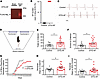 Figure 1
Impaired visual learning and cognitive flexibility in DTG-AF mice. (A) Transgenic NaV1.5 channels are not expressed in brain. Representative anti-FLAG antibody immunoblot of homogenates from brain and heart of DTG-AF compared with control (–). (B) Limb lead ECG 2 minute recording shows control mice (n = 12) has 0% AF burden, whereas DTG-AF (n = 15) mice have 100% AF burden. (C) Representative limb lead ECG tracings of control and DTG-AF mice. Scale bar: 100 ms. (D) Schematic depiction of mouse in touch screen testing apparatus from above… (E) DTG-AF mice require significantly greater trials to achieve criterion performance than control (unpaired 2-tailed t test, P < 0.05) (n = 15 control, n = 24 DTG-AF mice). (F) DTG-AF make significantly greater errors when learning. (G) Percentage of mice reaching criterion each day after the correct stimulus is reversed. DTG-AF perform significantly worse than control mice (log-rank Mantel-Cox, χ2 = 5.42, P = 0.02) (n = 14 control, n = 19 DTG-AF). (H) DTG-AF mice require more days to learn the reversed stimulus than control (P < 0.05). (I) Analysis of early reversal learning shows DTG-AF mice require more days to reach 50% chance performance than control (P < 0.05). Data are shown as mean ± SEM, *P < 0.05.
After initial learning, the touch screen test was used to assess cognitive flexibility by reversing the correct stimulus that provides reward (12–14). Analysis of percentage of mice reaching the criterion of 80% accuracy with the reversed stimulus per day demonstrated DTG-AF mice performing significantly worse than controls (Figure 1G) and requiring more days to learn the new stimulus (Figure 1H) (12.4 ± 0.9 versus 16.7 ± 1.5). The number of trials, errors, and correction trials was not significantly different between DTG-AF and control mice in reversal (Supplemental Figure 2). We also conducted a further analysis of the days required for mice to achieve 50% accuracy, representative of the early stage of retraining when the original stimulus is unlearned and chance level reached (15, 16). Congruently, DTG-AF mice required 1.5 times the days to unlearn the original stimulus (Figure 1I) (5.4 ± 0.6 versus 8.2 ± 1.0). Taken together, these data suggest that DTG-AF mice show cognitive impairments in the domain of visual learning, along with reduced cognitive flexibility and learning adaptability.
Ventriculomegaly and increased left frontal lobe diffusion in DTG-AF mouse brains. Given the cognitive deficits observed in DTG-AF mice, we investigated whether cerebral imaging would reveal infarcts similar to the increased asymptomatic silent cerebral infarcts (SCIs) seen in patients with AF (17, 18). T2-weighted MRI and diffusion weighted imaging (DWI) of controls, and DTG-AF mice did not reveal any hypointense or hyperintense lesions that could be consistent with infarcts. However, DTG-AF mice did have significantly enlarged lateral ventricle volumes normalized to brain size (Figure 2, A and B) (1.27 ± 0.17 versus 1.83 ± 0.19). This has been similarly reported in older patients with AF, whom have been shown to have significantly faster annual increase in lateral ventricle volume than patients without AF, independent of cerebral infarcts (19). We additionally quantified apparent diffusion coefficient (ADC) in different brain regions from DWI. Clinically, reduced ADC is seen in the acute setting at sites of ischemic stroke due to loss of Na+/K+-ATPase activity and cell swelling that restricts water diffusion (20). However, ADC has also been studied chronically in aging, with some analyses reporting increased ADC in older patients while other studies report constant values (21–24). We found that the DTG-AF mice showed significantly increased ADC in the left frontal lobe compared with controls (5.86 × 10⁻⁴ ± 0.14 × 10⁻⁴ versus 6.33 × 10⁻⁴ ± 0.16 × 10⁻⁴ mm2/sec), while other brain regions such as the thalamus and hippocampus did not (Figure 2C). While the mechanism behind increased ADC is unclear, it has been suggested that structural changes that allow for increased water movement, such as loss of myelination or blood-brain barrier damage leading to vasogenic edema, may be involved (21, 25). We additionally performed brain perfusion imaging using dynamic T2-weighted contrast-enhanced MRI but did not note any significant differences between controls and DTG-AF mice (not shown). Given the lack of infarcts on brain imaging, we investigated other mechanisms that may explain cognitive decline in our animal model.
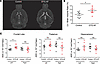 Figure 2
Ventriculomegaly and increased ADC in left frontal lobe of DTG-AF mice on brain MRI. (A) Representative T2-weighted axial brain MRI images of control and DTG-AF mice demonstrating lateral ventricle enlargement. (B) Quantification of lateral ventricle (LV) brain volume ratio shows ventriculomegaly in DTG-AF mice. Unpaired 2-tailed t test, P < 0.05 (n = 7 control, n = 7 DTG-AF mice). (C) Average ADC (apparent diffusion coefficient) values in the frontal lobe, thalamus, and hippocampus for the left and right hemisphere from diffusion weighted imaging. Left frontal lobe of DTG-AF mice shows greater diffusion than in control mice. Unpaired 2-tailed t test, P < 0.05 (n = 7 control, n = 7 DTG-AF mice). Data are shown as mean ± SEM, *P < 0.05.
Vascular structural and ultrastructural remodeling in DTG-AF mice. While arrhythmias may alter the hemodynamic output from the heart, the ability of the macrovascular and microvascular circulation to autoregulate is an important homeostatic mechanism that may compensate for changes in pressure (26). Cerebral vessels are known to autoregulate to maintain flow to the brain (26, 27). We asked whether AF results in changes in microvasculature, such as resistance arteries, that may play a role in cognitive decline. We performed histology on mesenteric resistance arteries as well as brain pial arteries stained for elastin from DTG-AF and control mice. We found mesenteric and brain pial arteries in DTG-AF mice demonstrated ~1.5× thicker walls than control arteries (Figure 3, A–D) (mesenteric: 26.1 ± 4.2 versus 38.4 ± 3.3 μm, brain pial: 10.0 ± 0.7 versus 16.3 ± 1.6 μm). Wall thickness was predominated by the smooth muscle–containing tunica media. We also noted substantial heterogeneity in the thickness of DTG-AF mesenteric arteries, suggesting that AF may lead to variable remodeling of the arteries, perhaps due to variations in hemodynamic forces experienced during AF. In order to assess the structural basis of vascular alterations in DTG-AF mice, we performed transmission electron microscopy on isolated mesenteric arteries and brain pial arteries. The architecture of DTG-AF mesenteric arteries showed typical internal elastic lamina and multiple layers of smooth muscle cells akin to control (Figure 4A). Pial arteries showed similarly preserved structure with endothelial cells forming the tunica intima and smooth muscles cells in the tunica media without disruption of macrostructure (Figure 4D). Higher-magnification analysis also demonstrated preserved actin filaments and dense bodies within smooth muscle cells. However, mitochondria throughout the vessel walls in both pial and mesenteric arteries were of significantly larger size than controls (Figure 4, B, C, E, and F) (mesenteric: 119,703 ± 7,387 versus 149,829 ± 5,578 nm2, brain pial: 126,396 ± 6,931 versus 173,951 ± 14,602 nm2). We have previously demonstrated mitochondrial dysfunction in the cardiomyocytes in DTG-AF mice (11, 28), and our results here suggest further mitochondrial involvement in vasculature. Coexpression of mCAT in DTG-AF mice (mCAT-DTG-AF mice) in order to reduce ROS significantly decreased mitochondrial size in mesenteric arteries and, in pial arteries, resulted in mitochondria nonsignificantly different from control (Figure 4, B, C, E, and F) (mesenteric mCAT-DTG-AF: 90,083 ± 5,658 nm2, brain pial: 140,941 ± 16,467 nm2). Notably, the mutant NaV1.5 channel in DTG-AF mice is selectively expressed in the heart (9), suggesting that mitochondrial dysfunction in the vessels arises secondary to systemic effects of AF. We next asked whether these organelle- and tissue-level structural alterations in DTG-AF arteries lead to vascular functional changes.
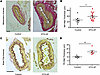 Figure 3
Vascular remodeling in DTG-AF brain and pial arteries. (A and B) Elastin-stained transverse sections of mesenteric arteries (MA) demonstrating increased wall thickness and enlarged tunica media in DTG-AF mice compared with controls (unpaired 2-tailed t test, P < 0.05) (n = 8 control vessels from 5 mice, n = 16 DTG-AF vessels from 6 mice). Scale bar: 20 μm. (C and D) Brain pial arteries (PA) show increased wall thickness in DTG-AF mice than control on histology (P = 0.01) (n = 5 control vessels from 3 mice, n = 6 DTG-AF vessels from 2 mice). Scale bar: 20 μm. Data are shown as mean ± SEM, *P < 0.05, **P < 0.01.
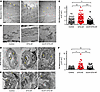 Figure 4
Vascular ultrastructural alterations in DTG-AF vessels. (A) Transmission electron microscopy (TEM) of mesenteric arteries in cross section with internal elastic lamina (yellow arrowhead) and smooth muscle cell layers (asterisk) labeled. Scale bar: 5 μm. (B) Higher magnification of mesenteric arteries with mitochondria visualized surrounded by actin filaments. DTG-AF vessels show enlarged mitochondria, while expression of mCAT results in smaller mitochondria. Scale bar: 500 nm. (C) Quantification of individual mitochondrial size in mesenteric arteries (1-way ANOVA with Tukey’s multiple-comparison test, n = 168 control mitochondria from n = 3 mice, n = 440 DTG-AF mitochondria from n = 5 mice, n = 171 mCAT-DTG-AF mitochondria from n = 2 mice). (D) TEM of cross-sections of brain pial arteries showing normal architecture with endothelial cell nucleus (labeled as “E”) and smooth muscle cell nucleus (labeled as “S”) shown. Scale bar: 5 μm. (E) Higher magnification of brain pial arteries demonstrating enlarged mitochondria in DTG-AF vessels compared with control. Arrows demarcate enlarged mitochondria. Scale bar: 500 nm. (F) Quantification of individual mitochondrial size in pial arteries (1-way ANOVA with Tukey’s multiple-comparison test, n = 142 control mitochondria from n = 3 mice, n = 160 DTG-AF mitochondria from n = 5 mice, n = 69 mCAT-DTG-AF mitochondria from n = 2 mice). Data are shown as mean ± SEM, *P < 0.05, **P < 0.01, ***P < 0.001.
Loss of myogenic tone in arteries from DTG-AF mice. We isolated mesenteric resistance arteries from 3-month-old controls and DTG-AF mice and performed ex vivo pressure response studies as previously described (29). In response to increasing intraluminal pressures of 40, 80, and 120 mmHg, control arteries exhibited a typical myogenic tone response and constriction (Figure 5A). However, DTG-AF arteries did not show this myogenic response, and the level of constriction at 80 mmHg and 120 mmHg was significantly lower than control arteries (Figure 5A) (80 mmHg: 0.27 ± 0.03 versus 0.12 ± 0.01, 120 mmHg: 0.33 ± 0.02 versus 0.07 ± 0.01). We additionally assessed the wall thickness of arteries at varying pressures in a passive state in the absence of Ca2+. DTG-AF mice consistently demonstrated thicker arterial walls than controls, most significant at low and high pressures (Figure 5B). Reduced constriction in DTG-AF mice may be due to dysfunction in constriction of thickened artery, such as reduction in vascular smooth muscle cell contractility. DTG-AF mesenteric arteries also demonstrate altered response to increasing pressure in a passive state, measured as increased distensibility than control arteries (Figure 5C), suggesting changes in mechanical properties.
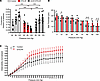 Figure 5
Loss of myogenic tone and increased arterial wall thickness in DTG-AF mice correctable with mCAT. (A) Myogenic tone of third-order mesenteric arteries measured ex vivo as fraction of active diameter to maximal passive diameter in the absence of Ca2+, at each intraluminal pressure. Control mice demonstrate typical myogenic response of increased constriction with increased intraluminal pressure. DTG-AF mice have significantly reduced constriction at 80 mmHg and 120 mmHg, which is prevented in mCAT-DTG-AF mice. Two-way repeated-measures ANOVA with Tukey’s multiple-comparison test: 80 mmHg control versus DTG-AF P < 0.001, DTG-AF versus mCAT-DTG-AF P < 0.001, mCAT-DTG-AF versus control P = NS, 120 mm Hg control versus DTG-AF P < 0.001, DTG-AF versus mCAT-DTG-AF P < 0.001, mCAT-DTG-AF versus control P = NS (n = 9 control, n = 9 DTG-AF, n = 9 mCAT-DTG-AF mesenteric arteries). (B) Wall thickness of mesenteric arteries at increasing intraluminal pressures. DTG-AF vessels are significantly thicker than control vessels, particularly at low and high ends of pressure, and mCAT coexpression normalizes wall thickness. Two-way repeated-measures ANOVA with Tukey’s multiple-comparison test, all significant comparisons denoted with *P < 0.05 (n = 3 control, n = 3 DTG-AF, n = 3 mCAT-DTG-AF vessels). (C) Distensibility studies via measuring vessel diameter under varying pressures in Ca2+ free solution reveals significantly differing effect of pressure on distensibility in DTG-AF mice. Generalized estimating equations (P < 0.05) (n = 4 control and n = 7 DTG-AF vessels). Data are shown as mean ± SEM, *P < 0.05, ***P < 0.001.
The mitochondrial enlargement in DTG-AF vessels seen on electron microscopy was suggestive of increased oxidative stress that leads to mitochondrial dysfunction. We have previously demonstrated mitochondrial derangements in cardiomyocytes of DTG-AF mice and shown that expression of mCAT reduced ROS and significantly reduced AF burden and atrial remodeling (11, 28). We asked whether attenuating mitochondrial oxidative stress via coexpression of mCAT (mCAT-DTG-AF mice) would be able to prevent the vascular dysfunction seen in DTG-AF mice. We demonstrated that expression of mCAT prevented the loss of myogenic tone (Figure 5A) (mCAT-DTG-AF: 80 mmHg, 0.27 ± 0.02; 120 mmHg, 0.30 ± 0.03). Furthermore, wall thickness changes were also prevented with mCAT coexpression (Figure 5B). These results suggest that AF results in vascular remodeling with mitochondrial dysfunction, increased wall thickness and distensibility, and deficient myogenic autoregulation. However, attenuation of mitochondrial oxidative stress is sufficient to prevent vascular dysfunction and maintain normal myogenic tone.
mCAT expression improves learning and cognitive flexibility in DTG-AF mice. We further sought to determine whether reducing mitochondrial ROS by expression of mCAT would attenuate the development of cognitive dysfunction. We performed touch screen behavioral testing on triple transgenic mCAT-DTG-AF mice and compared against DTG-AF and control mice from Figure 1. In line with our prior study, mCAT-DTG-AF mice have significantly reduced AF burden compared with DTG-AF mice (Supplemental Figure 3). We found mCAT-DTG-AF mice required a significantly fewer number of trials to reach criterion than DTG-AF mice and achieved the same performance as controls (Figure 6A) (mCAT-DTG-AF 244 ± 25, DTG-AF [from Figure 1] 417 ± 40, Control [from Figure 1] 265 ± 30). mCAT-DTG-AF mice also made 45% fewer errors during learning than DTG-AF mice (Figure 6B) (mCAT-DTG-AF 82 ± 10, DTG-AF 150 ± 17, Control 92 ± 12). Survival analysis of percentage of mice reaching criterion shows mCAT-DTG-AF mice reached criterion faster than DTG-AF mice in 25% fewer days (Figure 6, C and D) (mCAT-DTG-AF 10.5 ± 1.5, DTG-AF 16.4 ± 1.7, Control 11.6 ± 1.7). The improved performance of mCAT-DTG-AF mice was also evident in requiring fewer correction trials (Figure 6E) (mCAT-DTG-AF 163 ± 20, DTG-AF 285 ± 32, Control 190 ± 28). On additional metrics, mCAT-DTG-AF mice made significantly fewer inactive touches than DTG-AF mice but did not show any differences in perseveration index or reward collection latency (Supplemental Figure 4, A–C). We also performed reversal learning on mCAT-DTG-AF mice, and we found improved cognitive flexibility compared with DTG-AF mice and on par with controls mice, based on percentage of mice reaching reversal criterion per day (Figure 6F), total days to criterion (Figure 6G) (mCAT-DTG-AF 10.3 ± 0.9, DTG-AF 16.7 ± 1.5, Control 12.4 ± 0.9), total trials to criterion (Supplemental Figure 5A), a trend in total errors to criterion (Supplemental Figure 5B), and total correction trials to criterion (Supplemental Figure 5C). On early reversal analysis, mCAT-DTG-AF mice also took 0.6× fewer days to reach 50% chance and unlearn the original stimulus than DTG-AF mice (Figure 6H) (mCAT-DTG-AF 5.2 ± 0.5, DTG-AF 8.2 ± 1.0, Control 5.4 ± 0.6). Taken together, these data show that cognitive deficits in the visual learning domain of our mouse model of AF can be prevented by attenuating mitochondrial oxidative stress. These results were also consistent on subanalysis of a narrower age range of mice 2–4 months old (Supplemental Figure 6). We also performed subanalysis of male versus female mice for sex differences and found that male DTG-AF predominantly showed cognitive decline in touch screen testing and required significantly greater trials to reach criterion and made more errors than female DTG-AF mice (Supplemental Figure 7, A–I). We implanted s.c. ECG telemeters in male and female DTG-AF mice and found that male mice demonstrated a 3-fold higher burden of AF (Supplemental Figure 7J), which may explain this difference in cognitive performance.
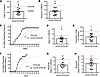 Figure 6
Impaired visual learning and cognitive flexibility in DTG-AF mice rescuable by mCAT. Data from Figure 1 visualized as dashed lines depicting the means of control and DTG-AF groups alongside mCAT-DTG-AF mice. Asterisks represent comparison between mCAT-DTG-AF and DTG-AF groups. (A) Expression of mCAT results in significantly improved performance in trials to criterion than DTG-AF with no difference from control. One-way ANOVA and Tukey’s test: DTG-AF versus mCAT-DTG-AF, P < 0.01; mCAT-DTG-AF versus control, P = NS) (n = 15 control, n = 24 DTG-AF, n = 17 mCAT-DTG-AF mice). (B) mCAT expression reduces the number of errors made by DTG-AF mice. (C) Percentage of mice reaching criterion at each day with mCAT-DTG-AF mice performing significantly better than DTG-AF mice (log-rank Mantel-Cox test, χ2 = 6.23, P = 0.01) and nonsignificantly different than control (χ2 = 0.43, P = 0.51) (*P < 0.02 per α corrected for multiple comparisons with Bonferroni’s). DTG-AF data from Figure 1 translucent. (D) mCAT expression improves days required to reach criterion compared with DTG-AF. (E) Correction trials to criterion demonstrate a similar pattern. (F) Percentage of mice reaching criterion each day after the correct stimulus is reversed. mCAT coexpression significantly improves number of mice reaching criterion each day compared with DTG-AF. Log-rank Mantel-Cox (DTG-AF versus mCAT-DTG-AF χ2 = 13.30, P <0.001) (mCAT-DTG-AF versus control χ2 = 2.18, P = 0.14) (n = 14 control, n = 19 DTG-AF, n = 15 mCAT-DTG-AF) (**P < 0.003 per α corrected for multiple comparisons with Bonferroni’s test). (G) mCAT coexpression significantly reduces days required to learn the reversed criterion. (H) Analysis of early reversal shows mCAT-DTG-AF mice unlearn the original criterion and reach 50% chance performance faster than DTG-AF and same as control mice. Data are shown as mean ± SEM, *P < 0.05, **P < 0.01, except as noted in F.
We further tested the performance of DTG-AF and mCAT-DTG-AF mice in another behavioral assay utilizing the open field test, where mice were placed in an empty, walled chamber and their movement was monitored to measure exploratory behavior and locomotor activity (30, 31) (Supplemental Figure 8A). DTG-AF mice did not show significantly different center time or vertical movements than controls mice (Supplemental Figure 8,C and D), suggesting that AF burden did not affect exploratory behavior or emotional anxiety in these mice. However, in a subgroup analysis of mice older than 6 months, the DTG-AF group demonstrated significantly greater vertical movements than controls, which was prevented in the mCAT-DTG-AF group (Supplemental Figure 9, A–C). This suggests that aging may lead DTG-AF mice to lose the self-preservation instinct to limit exploration of an unfamiliar environment, and such behavior can be prevented by reducing mitochondrial oxidative stress.
Reduced cerebral perfusion in DTG-AF mice is restored via mCAT expression or ranolazine treatment. Our data suggest that DTG-AF mice demonstrate vascular dysfunction and reduced cognitive performance that are improved by mCAT expression. To determine if mCAT expression is indeed improving cognitive performance via reducing AF burden and vascular dysfunction, we investigated brain perfusion via laser speckle contrast imaging (Figure 7A). We found that DTG-AF mice had significantly reduced cerebral perfusion compared with controls, while mCAT-DTG-AF showed perfusion no different from controls (Figure 7B) (Control 857 ± 39, DTG-AF 730 ± 29, mCAT-DTG-AF 836 ± 44 flux units). The distribution of flux values in DTG-AF mice were leftward shifted, with greater areas of cerebrum receiving lower perfusion, which was corrected with mCAT expression (Figure 7C). Importantly, DTG-AF mice injected with ranolazine to pharmacologically convert to sinus rhythm showed significantly improved brain perfusion compared with the untreated DTG-AF mice (Figure 7D) (DTG-AF + Ranolazine 851 ± 16 versus DTG-AF 730 ± 29 flux units). The distribution of flux values in DTG-AF mice cardioverted with ranolazine showed a correction of the leftward shift in perfusion of untreated DTG-AF mice (Figure 7E). Since it is possible that the slightly reduced LVEF may be a contributing factor to cognitive dysfunction, we cannot definitively link causality between AF and cognitive dysfunction. However, we performed further testing using echocardiography to assess DTG-AF heart function in atrial fibrillation and after injection with ranolazine to cardiovert the mice to normal sinus rhythm. We found that there were no significant differences in the heart function, which was slightly reduced (Supplemental Figure 10).
 Figure 7
Reduced cerebral perfusion in DTG-AF mice is restored via mCAT expression or ranolazine treatment. (A) Representative images from laser speckle contrast imaging of the cerebrum in control (n = 11 mice), DTG-AF (n = 11), mCAT-DTG-AF (n = 7), and DTG-AF mice treated with ranolazine (n = 7). (B) Quantification of mean flux across the cerebrum. DTG-AF mice demonstrate significantly reduced perfusion in the cerebrum compared with controls, while mCAT-DTG-AF mice show normalized perfusion no different from controls (1-way ANOVA with Tukey’s test: control versus DTG-AF P < 0.05, control versus mCAT-DTG-AF P = NS). (C) Distribution of flux values reveals leftward shift in DTG-AF brains with greater area of cerebrum receiving lower perfusion (2-way ANOVA with Tukey’s multiple-comparison test). Asterisks denote control versus DTG-AF (*P < 0.05, **P < 0.01) while daggers denote DTG-AF versus mCAT-DTG-AF (†P < 0.05); all control versus mCAT-DTG-AF comparisons P = NS. (D) DTG-AF mice treated with ranolazine injection to convert to sinus rhythm demonstrate significantly improved brain perfusion (unpaired 2-tailed t test, **P < 0.01). (E) Distribution of flux values reveals correction of leftward shift in perfusion in DTG-AF mice treated with ranolazine (2-way ANOVA with Šídák’s test, **P < 0.01, ***P < 0.001). Data are shown as mean ± SEM.


