
Research ArticleGeneticsNeuroscience
Open Access |  10.1172/jci.insight.187039
In utero rescue of neurological dysfunction in a mouse model of Wiedemann-Steiner syndrome
Tinna Reynisdottir,1 Kimberley J. Anderson,1,2 Katrin Möller,1 Stefán Pétursson,1 Andrew Brinn,3 Katheryn P. Franklin,3 Juan Ouyang,1 Asbjorg O. Snorradottir,4,5 Cathleen M. Lutz,6 Aamir R. Zuberi,6 Valerie B. DeLeon,3 and Hans T. Bjornsson1,2,7
1Louma G. Laboratory of Epigenetic Research, Faculty of Medicine, University of Iceland, Reykjavik, Iceland.
2Department of Genetics and Molecular Medicine, Landspitali University Hospital, Reykjavik, Iceland.
3Department of Anthropology, University of Florida, Gainesville, USA.
4Faculty of Medicine, University of Iceland, Reykjavik, Iceland.
5Department of Pathology, Landspitali University Hospital, Reykjavik, Iceland.
6The Jackson Laboratory, Bar Harbor, Maine, USA.
7McKusick-Nathans Departments of Genetic Medicine and Pediatrics, Johns Hopkins University, Baltimore, Maryland, USA.
Address correspondence to: Hans Tomas Bjornsson, Sturlugata 8, 101 Reykjavik, Iceland. Phone: 354.5435070; Email: htb@hi.is.
Find articles by Reynisdottir, T. in: PubMed | Google Scholar
1Louma G. Laboratory of Epigenetic Research, Faculty of Medicine, University of Iceland, Reykjavik, Iceland.
2Department of Genetics and Molecular Medicine, Landspitali University Hospital, Reykjavik, Iceland.
3Department of Anthropology, University of Florida, Gainesville, USA.
4Faculty of Medicine, University of Iceland, Reykjavik, Iceland.
5Department of Pathology, Landspitali University Hospital, Reykjavik, Iceland.
6The Jackson Laboratory, Bar Harbor, Maine, USA.
7McKusick-Nathans Departments of Genetic Medicine and Pediatrics, Johns Hopkins University, Baltimore, Maryland, USA.
Address correspondence to: Hans Tomas Bjornsson, Sturlugata 8, 101 Reykjavik, Iceland. Phone: 354.5435070; Email: htb@hi.is.
Find articles by Anderson, K. in: PubMed | Google Scholar
1Louma G. Laboratory of Epigenetic Research, Faculty of Medicine, University of Iceland, Reykjavik, Iceland.
2Department of Genetics and Molecular Medicine, Landspitali University Hospital, Reykjavik, Iceland.
3Department of Anthropology, University of Florida, Gainesville, USA.
4Faculty of Medicine, University of Iceland, Reykjavik, Iceland.
5Department of Pathology, Landspitali University Hospital, Reykjavik, Iceland.
6The Jackson Laboratory, Bar Harbor, Maine, USA.
7McKusick-Nathans Departments of Genetic Medicine and Pediatrics, Johns Hopkins University, Baltimore, Maryland, USA.
Address correspondence to: Hans Tomas Bjornsson, Sturlugata 8, 101 Reykjavik, Iceland. Phone: 354.5435070; Email: htb@hi.is.
Find articles by Möller, K. in: PubMed | Google Scholar
1Louma G. Laboratory of Epigenetic Research, Faculty of Medicine, University of Iceland, Reykjavik, Iceland.
2Department of Genetics and Molecular Medicine, Landspitali University Hospital, Reykjavik, Iceland.
3Department of Anthropology, University of Florida, Gainesville, USA.
4Faculty of Medicine, University of Iceland, Reykjavik, Iceland.
5Department of Pathology, Landspitali University Hospital, Reykjavik, Iceland.
6The Jackson Laboratory, Bar Harbor, Maine, USA.
7McKusick-Nathans Departments of Genetic Medicine and Pediatrics, Johns Hopkins University, Baltimore, Maryland, USA.
Address correspondence to: Hans Tomas Bjornsson, Sturlugata 8, 101 Reykjavik, Iceland. Phone: 354.5435070; Email: htb@hi.is.
Find articles by Pétursson, S. in: PubMed | Google Scholar
1Louma G. Laboratory of Epigenetic Research, Faculty of Medicine, University of Iceland, Reykjavik, Iceland.
2Department of Genetics and Molecular Medicine, Landspitali University Hospital, Reykjavik, Iceland.
3Department of Anthropology, University of Florida, Gainesville, USA.
4Faculty of Medicine, University of Iceland, Reykjavik, Iceland.
5Department of Pathology, Landspitali University Hospital, Reykjavik, Iceland.
6The Jackson Laboratory, Bar Harbor, Maine, USA.
7McKusick-Nathans Departments of Genetic Medicine and Pediatrics, Johns Hopkins University, Baltimore, Maryland, USA.
Address correspondence to: Hans Tomas Bjornsson, Sturlugata 8, 101 Reykjavik, Iceland. Phone: 354.5435070; Email: htb@hi.is.
Find articles by Brinn, A. in: PubMed | Google Scholar
1Louma G. Laboratory of Epigenetic Research, Faculty of Medicine, University of Iceland, Reykjavik, Iceland.
2Department of Genetics and Molecular Medicine, Landspitali University Hospital, Reykjavik, Iceland.
3Department of Anthropology, University of Florida, Gainesville, USA.
4Faculty of Medicine, University of Iceland, Reykjavik, Iceland.
5Department of Pathology, Landspitali University Hospital, Reykjavik, Iceland.
6The Jackson Laboratory, Bar Harbor, Maine, USA.
7McKusick-Nathans Departments of Genetic Medicine and Pediatrics, Johns Hopkins University, Baltimore, Maryland, USA.
Address correspondence to: Hans Tomas Bjornsson, Sturlugata 8, 101 Reykjavik, Iceland. Phone: 354.5435070; Email: htb@hi.is.
Find articles by Franklin, K. in: PubMed | Google Scholar
1Louma G. Laboratory of Epigenetic Research, Faculty of Medicine, University of Iceland, Reykjavik, Iceland.
2Department of Genetics and Molecular Medicine, Landspitali University Hospital, Reykjavik, Iceland.
3Department of Anthropology, University of Florida, Gainesville, USA.
4Faculty of Medicine, University of Iceland, Reykjavik, Iceland.
5Department of Pathology, Landspitali University Hospital, Reykjavik, Iceland.
6The Jackson Laboratory, Bar Harbor, Maine, USA.
7McKusick-Nathans Departments of Genetic Medicine and Pediatrics, Johns Hopkins University, Baltimore, Maryland, USA.
Address correspondence to: Hans Tomas Bjornsson, Sturlugata 8, 101 Reykjavik, Iceland. Phone: 354.5435070; Email: htb@hi.is.
Find articles by Ouyang, J. in: PubMed | Google Scholar
1Louma G. Laboratory of Epigenetic Research, Faculty of Medicine, University of Iceland, Reykjavik, Iceland.
2Department of Genetics and Molecular Medicine, Landspitali University Hospital, Reykjavik, Iceland.
3Department of Anthropology, University of Florida, Gainesville, USA.
4Faculty of Medicine, University of Iceland, Reykjavik, Iceland.
5Department of Pathology, Landspitali University Hospital, Reykjavik, Iceland.
6The Jackson Laboratory, Bar Harbor, Maine, USA.
7McKusick-Nathans Departments of Genetic Medicine and Pediatrics, Johns Hopkins University, Baltimore, Maryland, USA.
Address correspondence to: Hans Tomas Bjornsson, Sturlugata 8, 101 Reykjavik, Iceland. Phone: 354.5435070; Email: htb@hi.is.
Find articles by Snorradottir, A. in: PubMed | Google Scholar
1Louma G. Laboratory of Epigenetic Research, Faculty of Medicine, University of Iceland, Reykjavik, Iceland.
2Department of Genetics and Molecular Medicine, Landspitali University Hospital, Reykjavik, Iceland.
3Department of Anthropology, University of Florida, Gainesville, USA.
4Faculty of Medicine, University of Iceland, Reykjavik, Iceland.
5Department of Pathology, Landspitali University Hospital, Reykjavik, Iceland.
6The Jackson Laboratory, Bar Harbor, Maine, USA.
7McKusick-Nathans Departments of Genetic Medicine and Pediatrics, Johns Hopkins University, Baltimore, Maryland, USA.
Address correspondence to: Hans Tomas Bjornsson, Sturlugata 8, 101 Reykjavik, Iceland. Phone: 354.5435070; Email: htb@hi.is.
Find articles by
Lutz, C.
in:
PubMed
|
Google Scholar
|

1Louma G. Laboratory of Epigenetic Research, Faculty of Medicine, University of Iceland, Reykjavik, Iceland.
2Department of Genetics and Molecular Medicine, Landspitali University Hospital, Reykjavik, Iceland.
3Department of Anthropology, University of Florida, Gainesville, USA.
4Faculty of Medicine, University of Iceland, Reykjavik, Iceland.
5Department of Pathology, Landspitali University Hospital, Reykjavik, Iceland.
6The Jackson Laboratory, Bar Harbor, Maine, USA.
7McKusick-Nathans Departments of Genetic Medicine and Pediatrics, Johns Hopkins University, Baltimore, Maryland, USA.
Address correspondence to: Hans Tomas Bjornsson, Sturlugata 8, 101 Reykjavik, Iceland. Phone: 354.5435070; Email: htb@hi.is.
Find articles by Zuberi, A. in: PubMed | Google Scholar
1Louma G. Laboratory of Epigenetic Research, Faculty of Medicine, University of Iceland, Reykjavik, Iceland.
2Department of Genetics and Molecular Medicine, Landspitali University Hospital, Reykjavik, Iceland.
3Department of Anthropology, University of Florida, Gainesville, USA.
4Faculty of Medicine, University of Iceland, Reykjavik, Iceland.
5Department of Pathology, Landspitali University Hospital, Reykjavik, Iceland.
6The Jackson Laboratory, Bar Harbor, Maine, USA.
7McKusick-Nathans Departments of Genetic Medicine and Pediatrics, Johns Hopkins University, Baltimore, Maryland, USA.
Address correspondence to: Hans Tomas Bjornsson, Sturlugata 8, 101 Reykjavik, Iceland. Phone: 354.5435070; Email: htb@hi.is.
Find articles by DeLeon, V. in: PubMed | Google Scholar
1Louma G. Laboratory of Epigenetic Research, Faculty of Medicine, University of Iceland, Reykjavik, Iceland.
2Department of Genetics and Molecular Medicine, Landspitali University Hospital, Reykjavik, Iceland.
3Department of Anthropology, University of Florida, Gainesville, USA.
4Faculty of Medicine, University of Iceland, Reykjavik, Iceland.
5Department of Pathology, Landspitali University Hospital, Reykjavik, Iceland.
6The Jackson Laboratory, Bar Harbor, Maine, USA.
7McKusick-Nathans Departments of Genetic Medicine and Pediatrics, Johns Hopkins University, Baltimore, Maryland, USA.
Address correspondence to: Hans Tomas Bjornsson, Sturlugata 8, 101 Reykjavik, Iceland. Phone: 354.5435070; Email: htb@hi.is.
Find articles by Bjornsson, H. in: PubMed | Google Scholar
Published September 16, 2025 - More info
JCI Insight. 2025;10(20):e187039. https://doi.org/10.1172/jci.insight.187039.
© 2025 Tinna Reynisdottir et al. This work is licensed under the Creative Commons Attribution 4.0 International License. To view a copy of this license, visit http://creativecommons.org/licenses/by/4.0/.
Received: September 12, 2024; Accepted: September 9, 2025


-
Results
Targeted KO of Kmt2a recapitulates key features of WDSTS. WDSTS broadly affects patients with common clinical features within and outside the nervous system. To get an unbiased view of WDSTS phenotypes, we have summarized available data from an ongoing RARE-X WDSTS collection. The majority of the patients exhibit neurological issues (93.8%), most commonly intellectual disability and/or developmental delay, with a large part exhibiting behavioral and/or psychiatric problems (75.8%). Other common features include growth retardation (95.4%), dental and/or oral problems (79.4%), and hypotonia (60.0%). Distinctive features of WDSTS also include digestive system issues (76.9, most commonly constipation) and hypertrichosis cubiti (57%) (Table 1).
To elucidate whether WDSTS shows in utero neurological malleability in response to genetic rescue, we created a mouse model (Kmt2a+/LSL) with a heterozygous LSL cassette insertion in intron 1 of Kmt2a (Figure 1A). The LSL cassette induces an early poly-A signal leading to immediate truncation of the mRNA transcript in intron 1 of the affected allele, allowing rescue of expression the of normal transcript with exposure to Cre-recombinase. The mouse model was created by the Jackson laboratory who tested functionality of the cassette mice by breeding Kmt2a+/LSL mice to a Sox2-Cre containing mouse model, which demonstrated that loxP sites were functional. To further verify the orientation and completeness of the cassette, we performed Oxford Nanopore Technologies (ONT) long-read sequencing on genomic DNA (gDNA) from Kmt2a+/LSL mice, from which single reads revealed the entirety of the cassette integrated into intron 1 of Kmt2a in the correct orientation (Figure 1A). Since this experiment provides whole-genome coverage, we also interrogated 2 predicted potential off-target sites from cassette integration and observe no obvious variants or indels at these sites (Supplemental Figure 1, A–D; supplemental material available online with this article; https://doi.org/10.1172/jci.insight.187039DS1). The offspring of the Kmt2a+/LSL mice show skewing from the expected Mendelian ratio with a significant bias against the inheritance of the mutant allele (P < 0.01, chi-squared test), with 40.9% (90 of 220) Kmt2a+/LSL mice born and 59.1% (130 of 220) Kmt2a+/+ WT littermates. Similar to other Kmt2a-deficient models (11), Kmt2a+/LSL mice demonstrate lethality in homozygosity, with no Kmt2aLSL/LSL mice born (Supplemental Figure 1, E and F). As predicted, the Kmt2a+/LSL mice demonstrate ~50% reduction of Kmt2a mRNA transcripts as quantified by quantitative PCR (qPCR) (n = 3–7, unpaired t test, P < 0.05; Figure 1B). In addition to observing the appropriate integration of the LSL cassette, we observed characteristic WDSTS phenotypes of the Kmt2a+/LSL mice, supporting the notion that these mice adequately recapitulate the human disease. As previously reported in Kmt2a+/– mice (11), Kmt2a+/LSL mice exhibit growth deficiency with reduced weight compared with Kmt2a+/+ littermates (unpaired t test, P < 0.001; Figure 1C and Supplemental Figure 2, A and B), alongside hemopoietic abnormalities (11), including a decreased lymphocyte percentage, an increase in monocyte percentages and an increase in platelet distribution width (Supplemental Figure 3). Given the consistent description of hypertrichosis in individuals with WDSTS (17), we decided to explore the skin histology of newborn P1 pups. Kmt2a+/LSL mice show an increased hair follicle count on the abdomen compared with their Kmt2a+/+ littermates (unpaired t test, P < 0.05; Figure 1D), while there was no significant increase in hair follicle count on their back. Furthermore, we did not observe any obvious differences in hair regrowth upon removal of hair from the backs of the Kmt2a+/LSL mice compared with their WT littermates (Supplemental Figure 2C). This suggests that the basis of hypertrichosis in WDSTS involves an increased number of hair follicles rather than faster growth of individual hairs. Since severe constipation and other GI symptoms are common phenotypes in patients with WDSTS, we stained the distal colon sections of Kmt2a+/+ and Kmt2a+/LSL mice for Calretinin, a clinical diagnostic marker for Hirschsprung’s disease (HD) that marks ganglion cells (18). Our results showed positive staining in both genotypes, indicating normal presence of ganglions and nerve fibers in our WDSTS model (Supplemental Figure 2D). Obviously, this does not rule out more subtle abnormalities of the enteric nervous system or problems relating to the function of the intestinal smooth muscle.
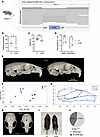 Figure 1
A Wiedemann-Steiner syndrome mouse model (Kmt2a+/LSL) recapitulates core phenotypes seen in individuals with WDSTS. (A) Schematic figure of Kmt2a+/LSL mouse model with a heterozygous loxP-stop-loxP cassette inserted in intron 1 of Kmt2a showing ONT sequencing reads of the cassette. Each line represents an individual long read including several that span the entire cassette as well as boundaries on either side allowing verification of its orientation. (B) Relative total Kmt2a mRNA expression is decreased in Kmt2a+/LSL mice compared with Kmt2a+/+ littermates (P1, n = 7 Kmt2a+/+ and n = 3 Kmt2a+/LSL, unpaired t test). (C) Kmt2a+/LSL mice weigh significantly less compared with Kmt2a+/+ littermates (8-week-old, n = 24 Kmt2a+/+ and n = 19 Kmt2a+/LSL, unpaired t test). (D) Hair follicle count per mm of skin is decreased on abdomen but not on the back of newborn Kmt2a+/LSL pups compared with littermates (P0, n = 3 Kmt2a+/+ and n = 4 Kmt2a+/LSL, unpaired t test). (E) Representative CT images of Kmt2a+/+ and Kmt2a+/LSL mice from lateral view, the depicting the craniofacial phenotype of 2- to 3.5-month-old mice. (F) PCA plot of the craniofacial structure showing a distinct separation of the genotypes along PC1 (n = 6 Kmt2a+/+ and n = 6 Kmt2a+/LSL, 1-way Procrustes ANOVA). (G) The Kmt2a+/LSL mice are positioned at the negative end of PC1 and characterized by increased height and width of the neurocranium, a shortened midface, and ventral bowing of the cranium. (H) Representative figure of the gap within the interfrontal suture in the Kmt2a+/LSL mice (right) compared with wild type (left). (I) Representative figure of the white abdominal spot of a Kmt2a+/LSL mouse next to a WT littermate (2- to 3-month-old). (J) The majority of Kmt2a+/LSL mice (n = 40, 57.5%) present with a white abdominal spot, a phenotype not present in Kmt2a+/+ littermates. *P < 0.05, **P < 0.01, ***P < 0.001, ****P < 0.0001.
To evaluate whether craniofacial abnormalities are present, we performed CT scans on the Kmt2a+/LSL mice and their Kmt2a+/+ littermates (n = 6 per genotype; Figure 1E). A 1-way Procrustes ANOVA yielded a significant effect of genotype on shape, and a principal components analysis (PCA) showed a clear separation between the groups along PC1, which describes 91.9% of the symmetric shape variance (P < 0.001, Figure 1F). Principal Components Analysis (PCA) showed a clear separation between the groups along PC1, which describes 91.9% of the symmetric shape variance (Figure 1F). The Kmt2a+/LSL mice show increased height and width of the neurocranium and ventral bowing of the cranium compared with littermates (Figure 1G). Additionally, we observed a prominent gap at the interfrontal suture in the Kmt2a+/LSL mice, which was not observed in any of the Kmt2a+/+ littermates (Figure 1H). Similar craniofacial defects observed in a mouse model of Kabuki syndrome (9) have been linked to neural crest defects (19–21). Given the shared characteristics of these syndromes, it raises the question whether neural crest defects could also contribute to abnormalities found in WDSTS. Interestingly, in our model, a majority (57.5%) of the Kmt2a+/LSL mice present with a white abdominal spot, ranging from few distinct hairs to spots ~1-2 cm in length, most common along the midline (Figure 1, I and J, and Supplemental Figure 2E), suggestive of defects in the melanoblast migration from the neural crest (22). In contrast, we have never observed such a white spot in WT littermates.
Observed neurological defects in the Kmt2a+/LSL mouse model. Consistent with the hypotonia observed in some patients with WDSTS, Kmt2a+/LSL mice exhibit significantly longer surface righting time compared with Kmt2a+/+ littermates, indicating a lack of core strength and coordination (unpaired t test, P < 0.01; Figure 2A) and a significant decrease in hindlimb suspension time compared with Kmt2a+/+, indicative of increased fatigue in hindlimbs (unpaired t test, P < 0.05; Figure 2B), tested on P6 pups (n = 14–27). Next, we tested the social communication abilities of the pups by characterizing the isolation-induced ultrasonic vocalization (USV) of P7 pups when removed from the dam. Defects in whistle-like USVs by pups have been shown to be a consistent feature in mouse models of Autism spectrum disorder (ASD) (23–25). We found that the Kmt2a+/LSL pups showed a decreased percentage of isolation-induced USVs (n = 7 for Kmt2a+/LSL pups and n = 20 for Kmt2a+/+ pups, unpaired t test, P < 0.01; Figure 2C), suggesting defects in their neurodevelopment consistent with an ASD phenotype. Assessing the anxiety-like behavior of adult mice in an open field test, we did not observe a significant difference in the time spent in center of the platform between genotypes (Supplemental Figure 2, F–H). The visuospatial memory function in adult Kmt2a+/LSL mice was tested in an open Y maze. The Kmt2a+/LSL mice did not exhibit a significant decrease in the number of arms entered during the test time, suggesting the adult mice do not exhibit a gross motor phenotype (unpaired t test, P = 0.1576; Figure 2D). However, the Kmt2a+/LSL mice demonstrate significant deficits in spontaneous alternations compared with Kmt2a+/+ littermates, indicative of defective working memory reliant on the hippocampus and prefrontal cortex (n = 18–24 per genotype, unpaired t test, P < 0.05; Figure 2E) (26, 27). These findings are in concordance with previous studies describing the importance of Kmt2a for memory consolidation (12).
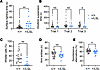 Figure 2
Behavioral abnormalities observed in the Kmt2a+/LSL mouse model. (A) Surface righting time in Kmt2a+/LSL mice compared with their WT littermates (P6, n = 27 Kmt2a+/+ and n = 14 Kmt2a+/LSL). (B) Hindlimb suspension time in hypotonia tests for both genotypes (P6, n = 29 Kmt2a+/+ n = 15, Kmt2a+/LSL). (C) Percentage of isolation-induced USV whistle calls for the Kmt2a+/+ and Kmt2a+/LSL pups (P7, n = 5 Kmt2a+/+, n = 4, Kmt2a+/LSL). (D) Comparison of total arm entries in a Y-maze between adult Kmt2a+/LSL mice and their WT littermates (8- to 10-week-old, n = 24 for Kmt2a+/+, n = 18 for Kmt2a+/LSL). (E) Comparison of the percentage of spontaneous alternations between Kmt2a+/+ and Kmt2a+/LSL mice (8- to 10-week-old, n = 24 for Kmt2a+/+, n = 18 for Kmt2a+/LSL). All significance levels were tested with an unpaired t test. *P < 0.05, **P < 0.01.
Next, we wanted to assess the structural phenotype of the neurological defects. First, we observed that the size of the granule cell layer of the dentate gyrus (DG) (Figure 3A), as measured as total size using DAPI staining, was significantly smaller in the Kmt2a+/LSL mice, compared with Kmt2a+/+ littermates, when corrected for body weight (n = 3–4 per genotype, unpaired t test, P < 0.05; Figure 3, B and C). We note that the difference is not due to a smaller size of nuclei, as measured by average NeuN+ nuclei diameter (Supplemental Figure 4, A and B). A decreased size of the DG has been previously described in a mouse model of Kabuki syndrome (9) and later validated in individuals with Kabuki syndrome (28). To further investigate the neurological abnormalities in our Kmt2a model, we performed IHC staining of brain sections using antibodies against the neuronal marker NeuN and transcription factor TBR1 (Figure 3, D and E), verifying their specificity with 2°AB-only controls (Supplemental Figure 4C). TBR1 has been previously implicated in neurodevelopmental disorders, including ASD and ID (29). We observed that the Kmt2a+/LSL mice demonstrate significant reduction of Tbr1 expression in the DG and CA3 of the hippocampus, compared with their WT littermates (unpaired t test, P < 0.05; Figure 3, F and G). However, the NeuN expression levels and cortical layer thickness ratios remained unchanged between genotypes (n = 3–5 per genotype, unpaired t test; Figure 3, F and G, and Supplemental Figure 4, D and E). Given the established role of TBR1 in neuronal migration and cortical layer formation (30), we investigated the TBR1 levels in the cortex (Figure 3H). While we observed the expected TBR1 staining pattern in the cortical layers of the control mice (31, 32) Kmt2a+/LSL mice exhibited decreased TBR1 levels in layers I–IV of the cortex, (n = 2–4 per genotype, unpaired t test, P < 0.05 for layer I/IV and P < 0.01 for layer II/III; Figure 3, I and J). Finally, we wanted to look further into the neurogenesis of the model and stained the brain sections for the mature granule cell marker Prox1 and migrating neuronal marker Doublecortin (DCX). Here, however, we observed no differences in the Prox1 expression levels nor the numbers of DCX+ cells, suggesting that there are not major problems in creating normal numbers of neurons in Kmt2a+/LSL mice (Supplemental Figure 4, F–I). Finally, we found no gross structural changes in the cerebellum of the Kmt2a+/LSL mice (Supplemental Figure 4J). Taken together, our findings support that the Kmt2a+/LSL mouse model recapitulates core human WDSTS disease phenotypes and allows for quantitative measurement of a number of metrics related to the neurological phenotype that can be used to investigate the in utero malleability.
 Figure 3
Neurological defects observed in the Kmt2a+/LSL mouse model. (A) Schematic figure of the adult mouse hippocampus with a representative image showing the DG, CA1, and CA3 regions of the hippocampus. All sections were performed on 9-week-old mice. Scale bar: 250 µm. (B) Representative images of DAPI staining of the DG area of hippocampus in Kmt2a+/+ and Kmt2a+/LSL mice. Scale bar: 200 μm. (C) Quantification of granule cell layer area of the DG in Kmt2a+/LSL mice compared with WT littermates when corrected for body weight (n = 4 for Kmt2a+/+, n = 3 for Kmt2a+/LSL per genotype). (D) Representative NeuN and TBR1 staining of the DG area of the hippocampus in the Kmt2a+/+ and Kmt2a+/LSL mice. Scale bar: 200 µm. (E) Representative NeuN and TBR1 staining of the CA3 area of the hippocampus in the Kmt2a+/+ and Kmt2a+/LSL mice. Scale bar: 100 µm. (F) Quantification of NeuN and TBR1 levels in the DG (n = 3 for Kmt2a+/+, n = 5 for Kmt2a+/LSL). (G) Quantification of NeuN and TBR1 levels in the CA3 area (n = 3 for Kmt2a+/+, n = 5 for Kmt2a+/LSL). (H) Schematic of the adult mouse cortex location with representative images showing the layers of the cortex. (I) Representative images of DAPI and TBR1 staining in the cortical layers of the Kmt2a+/+ and Kmt2a+/LSL mice. Scale bar: 250 μm. (J) Quantification of TBR1 levels in the cortical layers of Kmt2a+/+ and Kmt2a+/LSL samples (n = 3 for Kmt2a+/+, n = 4 for Kmt2a+/LSL). All significance levels were tested with an unpaired t test. *P < 0.05, **P < 0.01, ***P < 0.001, ****P < 0.0001.
Nes-Cre+/– Kmt2a+/LSL mice exhibit successful cassette removal. To test in utero rescue of the neurological phenotypes, we crossed our Kmt2a+/LSL model with a nestin-Cre model (Nes-Cre+/+), which would be expected to lead to in utero rescue of Kmt2a expression in a cell type–specific manner in the nervous system at mid to late gestation (Figure 4A). We hypothesized that with a knock-in of Kmt2a expression in nervous tissue, the markers of neurological dysfunction would show rescue in Nes-Cre+/– Kmt2a+/LSL mice, with a prior study (13) demonstrating rescue earlier, at the time of conception. To validate the efficacy of LSL cassette recombination in Nes-Cre+/– Kmt2a+/LSL mice in the nervous system, we performed PCR on gDNA with primers targeting the LSL cassette using samples from the hippocampus and skin tissue from the ear and compared with Nes-Cre+/– Kmt2a+/+ controls. We observe an obvious decrease of the amount of LSL cassette in the nervous tissue but not in the skin tissue, of Nes-Cre+/– Kmt2a+/LSL mice compared with controls (Supplemental Figure 5). To further validate the removal of the LSL cassette and the ability to regain normal Kmt2a expression, we quantified the relative mRNA expression in whole brain lysates of P1 pups and observed no significant difference between Nes-Cre+/– Kmt2a+/+ and Nes-Cre+/– Kmt2a+/LSL mice (n = 3 per genotype; Figure 4B) in contrast to a significant difference between the genotypes without the Cre (Figure 1B).
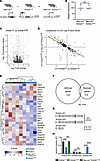 Figure 4
Transcriptional consequences of Kmt2a loss and rescue. (A) A schematic overview of the nestin-Cre strategy. By exposing the Kmt2a+/LSL mice to nestin-Cre, Kmt2a levels are expected to be restored in utero in the nervous system of the Nes-Cre+/– Kmt2a+/LSL mice in utero, allowing us to test in utero rescue. (B) qPCR demonstrates that relative Kmt2a mRNA expression is unchanged in Nes-Cre+/– Kmt2a+/LSL mice compared with Nes-Cre+/+Kmt2a+/+ littermates in nervous tissue (P1, n = 3 Nes-Cre+/– Kmt2a+/+, n = 3 Nes-Cre+/– Kmt2a+/LSL, unpaired t test). (C) Volcano plot showing the log2 fold changes of differentially expressed genes comparing Kmt2a+/+ versus Kmt2a+/LSL mNPCs (P0) with significant genes labeled in blue. (D) Correlation plot showing the negative correlation between log2 fold changes between Kmt2a+/+ versus Kmt2a+/LSL and then between Kmt2a+/LSL versus Nes-Cre+/– Kmt2a+/LSL mice (R2 = 0.57988). (E) Heatmap showing clustering of Kmt2a+/LSL samples compared with Kmt2a+/+ and Nes-Cre+/– Kmt2a+/LSL samples of the 26 rescued genes from significantly overrepresented biological pathways (with FDR < 0.05). Expression values were normalized to z-scores and plotted, with increased expression represented in red and decreased expression in blue. (F) Venn diagram of overlapping rescued genes with 1,177 known ASD-risk factor genes, with 26 genes overlapping (Fisher’s exact test). (G) Representative figure of Kmt2a isoforms and their exons. (H) Isoform switch analysis reveals a shift in isoform fraction (IF) in Kmt2a+/LSL mNPCs from the longer SET domain-containing Kmt2a transcript to the short non-SET domain containing Kmt2a transcript (GLM, FDR correction). **P < 0.01, ***P < 0.001, ****P < 0.0001.
Gene expression abnormalities are rescued in Nes-Cre+/– Kmt2a+/LSL mNPCs. To evaluate rescue of transcriptional abnormalities caused by heterozygous Kmt2a-deficiency in a homogenous cell population, we dissected out the hippocampus from newborn pups (P0) and cultured mouse NPCs (mNPCs). We performed RNA-Seq using mRNA from mNPCs from both genotypes to identify gene expression changes between Kmt2a+/+ and Kmt2a+/LSL NPCs (n = 3 per genotype). We observed 64 significantly differentially expressed genes (DEGs) when comparing Kmt2a+/+ and Kmt2a+/LSL samples with a majority of genes being downregulated (47 of 64 genes), in concordance with what is expected with the loss of a transcriptional activator (Figure 4C and Supplemental Table 1). Next, we wanted to assess whether there was an in utero reversal of the abnormalities we uncovered in the RNA-Seq dataset. First, we observe a significant overlap of 438 genes (Fisher’s exact test, P < 0.0001) within the top-decile of P values for comparisons between both Kmt2a+/+ versus Kmt2a+/LSL and Kmt2a+/LSL versus Nes-Cre+/– Kmt2a+/LSL. Secondly, there is a striking negative correlation of the log2-fold change (LFC) of these genes between the comparisons, where 96.9% of genes (423 of 438 genes) demonstrated such an effect (R2 = 0.57988; Figure 4D and Supplemental Table 2). In essence, these results indicate that downregulated genes from Kmt2a+/LSL versus Kmt2a+/+ show upregulation in Kmt2a+/LSL mice in presence of the nestin-Cre and vice versa. We performed an overrepresentation analysis (ORA) of the genes showing such rescue and observed significant overrepresentation of pathways implicated in neuron development and neuron differentiation (Supplemental Figure 6A). We pooled the genes from the overrepresented pathways together and can observe a similar trend, with 20 of 26 genes downregulated in Kmt2a+/LSL samples (Figure 4E).
Notably, we observed downregulation of transcription factors, such as En2 and Sox5, in Kmt2a+/LSL mNPCs compared with the Kmt2a+/+ mNPCs. Disruption of these transcription factors has previously been linked to defects in hippocampal neurogenesis (33, 34), as well as being associated with intellectual disability and ASD (35, 36). Since up to 50% of patients with WDSTS have a diagnosis of ASD (37), we compared the rescued genes to known ASD-risk genes (38) and discovered a significant overlap of 26 genes (Fisher’s exact test, P < 0.0001; Figure 4F). Interestingly, Kmt2a was not among the significant DEGs in this dataset. However, upon further examination of individual exons in Kmt2a+/LSL cells, the majority of observed reads were limited to the first exon of Kmt2a, with an overall decrease in coverage for the full length Kmt2a transcript (Supplemental Figure 6, B and C). We then performed an isoform-specific analysis that revealed a significant shift of Kmt2a isoforms in the Kmt2a+/LSL samples, from the full-length canonical Kmt2a-201 isoform to the truncated Kmt2a-203 isoform, which only contains 9 of 36 of the Kmt2a canonical exons. This results in a product that solely has 4 of 15 KMT2A domains including 3 AT hooks and a CXXC domain but, more importantly, does not contain the enzymatic SET domain (Figure 4G). This shift is striking, with the Kmt2a-203 isoform expression increasing from 0.076% in the Kmt2a+/+ samples, to 40.2% in the Kmt2a+/LSL samples (Figure 4H). More notably, upon the LSL cassette removal in the Nes-Cre+/– Kmt2a+/LSL cells, these effects are reversed, further confirming functionality of the cassette. Taken together, our findings support the notion that a heterozygous loss of Kmt2a leads to aberrant mRNA expression in mNPCs. These changes at the molecular level are then reversed in utero in the Nes-Cre+/– Kmt2a+/LSL model.
H3K4me1 signal is rescued but does not drive gene expression changes in Nes-Cre+/– Kmt2a+/LSL mNPCs. To look further into the effects of heterozygous Kmt2a loss at the chromatin level, we performed a quantification of the H3K4me1 mark using CUT&RUN in mNPCs (n = 3 Kmt2a+/+, n = 4 Kmt2a+/LSL and Nes-Cre+/– Kmt2a+/LSL). When comparing Kmt2a+/+ and Kmt2a+/LSL samples, the majority of differential peaks (70.4%; 1,380 of 1,962 peaks) show a gain of H3K4me1 in Kmt2a+/LSL samples (Figure 5A and Supplemental Table 3). While mapping enhancer regions to genes is not trivial, when we linked the disrupted peaks to the nearest gene by distance, we found no correlation between the gene expression changes and the H3K4me1 epigenetic mark (Figure 5, B and C). Investigating the increased H3K4me1 signal further, we compared the signal over mouse NPC enhancer and neural enhancer regions from EnhancerAtlas (39). This revealed an increased signal at the neuronal enhancers but not at the NPC enhancers for Kmt2a+/LSL samples (Figure 5D). Again, the increased signal does not correlate with the nearest gene’s expression changes (Supplemental Figure 7A). To assess the rescue of this epigenetic mark in Nes-Cre+/– Kmt2a+/LSL samples, we observe a reversal of 98.0% of peaks (Supplemental Figure 7B), and when visualizing the overall H3K4me1 signal at the differential peaks on a heatmap, we observe an increased signal in Kmt2a+/LSL samples compared with Kmt2a+/+ mice, which is then reduced in Nes-Cre+/– Kmt2a+/LSL samples (Figure 5E). This effect can be more specifically visualized on tracks showing gained H3K4me1 signal at neuronal enhancers for genes Acsl3 and Bahcc1 for Kmt2a+/LSL samples (Figure 5F). When applying a more relaxed cut-off, the 4,963 peaks that fell into the top decile of P values when overlapping the results from Kmt2a+/LSL versus Kmt2a+/+ samples and the Kmt2a+/LSL and Nes-Cre+/– Kmt2a+/LSL samples, map to 3,646 individual genes. When performing an ORA of these genes, we observe pathways involved in CNS differentiation, development, and neurogenesis (Figure 5G), highlighting that the disruption is occurring at functionally relevant sites. When examining the genes with restored H3K4me1 signal and gene expression, we observe a nonsignificant overlap of genes with a gained H3K4me1 peak and increased expression in Kmt2a+/LSL samples (Figure 5H), as well as a nonsignificant overlap of genes with a lost H3K4me1 peak and decreased expression in Kmt2a+/LSL samples (Figure 5I). Collectively, we observe an increased H3K4me1 signal in Kmt2a+/LSL samples, albeit with no global effects on gene expression.
 Figure 5
Epigenetic imbalance caused by heterozygous Kmt2a loss. (A) Volcano plot showing differential H3K4me1 peaks comparing Kmt2a+/+ and Kmt2a+/LSL mNPC (P0) samples. (B and C) Expression changes for genes with lost H3K4me1 peaks (B) and gained H3K4me1 peaks (C) in Kmt2a+/LSL samples. (D) Signal plot of H3K4me1 signal for Kmt2a+/+ and Kmt2a+/LSL samples over NPC and neuronal enhancers. (E) Heatmap of H3K4me1 signal at differential sites when comparing Kmt2a+/+, Kmt2a+/LSL, and Nes-Cre+/– Kmt2a+/LSL samples. (F) Representative H3K4me1 signal figures, showing gained signal in Kmt2a+/LSL samples at neuronal enhancers (gray) at Acsl3 and Bahcc1 genes compared with WT and rescued samples. (G) Overrepresentation analysis of genes with differential H3K4me1 peak in Kmt2a+/LSL samples. Image shows enriched pathways (with FDR < 0.05). (H) Overlap of genes with a gained H3K4me1 peak and genes that have increased expression in Kmt2a+/LSL samples (Fisher’s exact test). (I) Overlap of genes with a lost H3K4me1 peak and genes that have decreased expression in Kmt2a+/LSL samples (Fisher’s exact test). *P < 0.05, **P < 0.01, ***P < 0.001, ****P < 0.0001.
WDSTS phenotypes are rescued in utero. After demonstrating that nestin-Cre leads to sufficient recombination of the LSL cassette and rescued Kmt2a expression (Figure 4 and Supplemental Figure 5) we characterized the Nes-Cre+/– Kmt2a+/LSL mice. The Nes-Cre+/– Kmt2a+/LSL mice demonstrate a growth deficiency compared with their Nes-Cre+/– Kmt2a+/+ littermates (n = 5–9; Figure 6A and Supplemental Figure 8, A and B). Furthermore, we found similar craniofacial defects of the Nes-Cre+/– Kmt2a+/LSL as previously described in Kmt2a+/LSL mice (Figure 1, E–H), indicating that there is no rescue of this phenotype (Supplemental Figure 8, C and D). This would suggest that either the growth defects of the Kmt2a+/LSL mice are not solely driven by nestin-expressing cell types or that the cause of the growth phenotypes occurs prior to when the rescue of Kmt2a takes place in utero. In contrast, the prevalence of the white abdominal spot of the Nes-Cre+/– Kmt2a+/LSL mice drastically decreased from 57.5% to 12.5% compared with the 57.5% of the Kmt2a+/LSL mice, indicating malleability of this phenotype (Fisher’s exact test, P < 0.01; Figure 6B). Behavioral testing of adult mice demonstrates no difference of arm entries between Nes-Cre+/– Kmt2a+/+ and Nes-Cre+/– Kmt2a+/LSL (n = 14-19, unpaired t test; Supplemental Figure 8E), nor of the percentage of spontaneous alterations in the Y-maze (n = 14–19, 1-way ANOVA with Dunnett’s correction; Figure 6C), indicative of nonimpaired working memory of Nes-Cre+/– Kmt2a+/LSL mice. Similarly, the brain histology of the Nes-Cre+/– Kmt2a+/LSL mice demonstrate normal hippocampal structure, with a nonsignificant difference in the size of the area of the granule layer of the DG, when compared with Nes-Cre+/– Kmt2a+/+ littermates and corrected for body weight (1-way ANOVA with Dunnett’s correction; Figure 6D). Furthermore, we observe no significant difference in the TBR1 levels in the DG nor CA3 areas of the hippocampus in Nes-Cre+/– Kmt2a+/LSL mice compared with Nes-Cre+/– Kmt2a+/+ littermates (2-way ANOVA with Dunnett’s correction; Figure 6, E and F). While NeuN levels are consistent between all genotypes, we do observe a significant increase in the TBR1 intensity when compared with the Kmt2a+/LSL mice (n = 3–5 per genotype, 2-way ANOVA with Dunnett’s correction; Figure 6, E and F). Similarly, for the cortical layers, we find no or reduced significant difference between the Nes-Cre+/– Kmt2a+/+ mice and Nes-Cre+/– Kmt2a+/LSL, but when compared with the Kmt2a+/LSL samples from Figure 3, we find a significant increase in the TBR1 intensity (2-way ANOVA with Dunnett’s correction; Figure 6G). Taken together, when bred to a nestin-Cre mouse model, we observe histological and behavioral rescue of the neurological defects of the Nes-Cre+/– Kmt2a+/LSL mice.
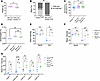 Figure 6
In utero rescue of neurological phenotypes in WDSTS mice. (A) Body weight of 8-week-old females for the Nes-Cre+/– Kmt2a+/LSL mice compared with their Nes-Cre+/– Kmt2a+/+ littermates (n = 9 Nes-Cre+/– Kmt2a+/+, n = 5 Nes-Cre+/– Kmt2a+/LSL). (B) The presence of a white belly spot in Nes-Cre+/– Kmt2a+/LSL mice (12.5%) compared with Kmt2a+/LS mice (57.5%, data from Figure 1J) (Fisher’s exact test). (C) Percentage of spontaneous alternations in the Nes-Cre+/– Kmt2a+/LSL mice compared with their Nes-Cre+/– Kmt2a+/+ littermates and Kmt2a+/LSL mice (8–10 weeks old, n = 19 Nes-Cre+/– Kmt2a+/+, n = 14 Nes-Cre+/– Kmt2a+/LSL, n = 19 for Kmt2a+/LSL; data from Figure 2E). One-way ANOVA with a Dunnett’s correction for multiple comparisons was used to calculate significance. (D) Quantification of the size of the granule cell layer area of the DG of the hippocampus corrected for body weight (9-week-old, n = 5 Nes-Cre+/– Kmt2a+/+, n = 3 Nes-Cre+/– Kmt2a+/LSL, n = 3 Kmt2a+/LSL; data from Figure 3C). One-way ANOVA with a Dunnett’s correction for multiple comparisons was used to calculate significance. (E) Quantification of NeuN and TBR1 levels in the DG (9-week-old, n = 3–5 per genotype, Kmt2a+/LSL; data from Figure 3F). (F) Quantification of NeuN and TBR1 levels in the CA3 area of the hippocampus (9-week-old, n = 5 Nes-Cre+/– Kmt2a+/+, n = 3 Nes-Cre+/– Kmt2a+/LSL, n = 5 Kmt2a+/LSL; data from Figure 3G). (G) Quantification of TBR1 levels in the in cortical layers (9-week-old, n = 2 Nes-Cre+/– Kmt2a+/+, n = 3 Nes-Cre+/– Kmt2a+/LSL, n = 4 Kmt2a+/LSL; data from Figure 3J). For E–G, a 2-way ANOVA with a Dunnett’s correction for multiple comparisons was used to calculate significance. *P < 0.05, **P < 0.01, ***P < 0.001, ****P < 0.0001.


