
Research ArticleInflammation
Open Access |  10.1172/jci.insight.184739
Neutrophils in nasal polyps exhibit transcriptional adaptation and proinflammatory roles that depend on local polyp milieu
Chen Zhang,1,2,3 Qianqian Zhang,1,2 Jiani Chen,1,2 Han Li,1,2 Fuying Cheng,1,2 Yizhang Wang,1,2 Yingqi Gao,1,2 Yumin Zhou,1,2 Le Shi,1,2 Yufei Yang,1,2 Juan Liu,1,2 Kai Xue,1,2 Yaguang Zhang,4 Hongmeng Yu,1,2 Dehui Wang,1,2 Li Hu,1,2 Huan Wang,1,2 and Xicai Sun1,2,3
1ENT Institute and Department of Otorhinolaryngology and
2High Altitude Rhinology Research Center, Eye and ENT Hospital, Fudan University, Shanghai, China.
3Department of Otolaryngology, Shigatse People’s Hospital, Shigatse City, China.
4Med-X Institute, Center for Immunological and Metabolic Diseases, The First Affiliated Hospital of Xi’an JiaoTong University, Xi’an JiaoTong University, Xi’an, Shaanxi, China.
Address correspondence to: Xicai Sun, Eye and ENT Hospital, Fudan University, 83 Fenyang Road, Shanghai 200031, China and Department of Otolaryngology, People’s Hospital of Shigatse City, Shigatse, China. Phone: 021.64377134; Email: laryngeal@163.com. Or to: Huan Wang or Li Hu, Eye and ENT Hospital, Fudan University, 83 Fenyang Road, Shanghai 200031, China. Phone: 021.64377134; Email: huanwang14@fudan.edu.cn (HW); Email: hl318ent@163.com (LH).
Authorship note: CZ and QZ contributed equally to this work.
Find articles by Zhang, C. in: PubMed | Google Scholar
1ENT Institute and Department of Otorhinolaryngology and
2High Altitude Rhinology Research Center, Eye and ENT Hospital, Fudan University, Shanghai, China.
3Department of Otolaryngology, Shigatse People’s Hospital, Shigatse City, China.
4Med-X Institute, Center for Immunological and Metabolic Diseases, The First Affiliated Hospital of Xi’an JiaoTong University, Xi’an JiaoTong University, Xi’an, Shaanxi, China.
Address correspondence to: Xicai Sun, Eye and ENT Hospital, Fudan University, 83 Fenyang Road, Shanghai 200031, China and Department of Otolaryngology, People’s Hospital of Shigatse City, Shigatse, China. Phone: 021.64377134; Email: laryngeal@163.com. Or to: Huan Wang or Li Hu, Eye and ENT Hospital, Fudan University, 83 Fenyang Road, Shanghai 200031, China. Phone: 021.64377134; Email: huanwang14@fudan.edu.cn (HW); Email: hl318ent@163.com (LH).
Authorship note: CZ and QZ contributed equally to this work.
Find articles by Zhang, Q. in: PubMed | Google Scholar
1ENT Institute and Department of Otorhinolaryngology and
2High Altitude Rhinology Research Center, Eye and ENT Hospital, Fudan University, Shanghai, China.
3Department of Otolaryngology, Shigatse People’s Hospital, Shigatse City, China.
4Med-X Institute, Center for Immunological and Metabolic Diseases, The First Affiliated Hospital of Xi’an JiaoTong University, Xi’an JiaoTong University, Xi’an, Shaanxi, China.
Address correspondence to: Xicai Sun, Eye and ENT Hospital, Fudan University, 83 Fenyang Road, Shanghai 200031, China and Department of Otolaryngology, People’s Hospital of Shigatse City, Shigatse, China. Phone: 021.64377134; Email: laryngeal@163.com. Or to: Huan Wang or Li Hu, Eye and ENT Hospital, Fudan University, 83 Fenyang Road, Shanghai 200031, China. Phone: 021.64377134; Email: huanwang14@fudan.edu.cn (HW); Email: hl318ent@163.com (LH).
Authorship note: CZ and QZ contributed equally to this work.
Find articles by Chen, J. in: PubMed | Google Scholar
1ENT Institute and Department of Otorhinolaryngology and
2High Altitude Rhinology Research Center, Eye and ENT Hospital, Fudan University, Shanghai, China.
3Department of Otolaryngology, Shigatse People’s Hospital, Shigatse City, China.
4Med-X Institute, Center for Immunological and Metabolic Diseases, The First Affiliated Hospital of Xi’an JiaoTong University, Xi’an JiaoTong University, Xi’an, Shaanxi, China.
Address correspondence to: Xicai Sun, Eye and ENT Hospital, Fudan University, 83 Fenyang Road, Shanghai 200031, China and Department of Otolaryngology, People’s Hospital of Shigatse City, Shigatse, China. Phone: 021.64377134; Email: laryngeal@163.com. Or to: Huan Wang or Li Hu, Eye and ENT Hospital, Fudan University, 83 Fenyang Road, Shanghai 200031, China. Phone: 021.64377134; Email: huanwang14@fudan.edu.cn (HW); Email: hl318ent@163.com (LH).
Authorship note: CZ and QZ contributed equally to this work.
Find articles by Li, H. in: PubMed | Google Scholar
1ENT Institute and Department of Otorhinolaryngology and
2High Altitude Rhinology Research Center, Eye and ENT Hospital, Fudan University, Shanghai, China.
3Department of Otolaryngology, Shigatse People’s Hospital, Shigatse City, China.
4Med-X Institute, Center for Immunological and Metabolic Diseases, The First Affiliated Hospital of Xi’an JiaoTong University, Xi’an JiaoTong University, Xi’an, Shaanxi, China.
Address correspondence to: Xicai Sun, Eye and ENT Hospital, Fudan University, 83 Fenyang Road, Shanghai 200031, China and Department of Otolaryngology, People’s Hospital of Shigatse City, Shigatse, China. Phone: 021.64377134; Email: laryngeal@163.com. Or to: Huan Wang or Li Hu, Eye and ENT Hospital, Fudan University, 83 Fenyang Road, Shanghai 200031, China. Phone: 021.64377134; Email: huanwang14@fudan.edu.cn (HW); Email: hl318ent@163.com (LH).
Authorship note: CZ and QZ contributed equally to this work.
Find articles by Cheng, F. in: PubMed | Google Scholar
1ENT Institute and Department of Otorhinolaryngology and
2High Altitude Rhinology Research Center, Eye and ENT Hospital, Fudan University, Shanghai, China.
3Department of Otolaryngology, Shigatse People’s Hospital, Shigatse City, China.
4Med-X Institute, Center for Immunological and Metabolic Diseases, The First Affiliated Hospital of Xi’an JiaoTong University, Xi’an JiaoTong University, Xi’an, Shaanxi, China.
Address correspondence to: Xicai Sun, Eye and ENT Hospital, Fudan University, 83 Fenyang Road, Shanghai 200031, China and Department of Otolaryngology, People’s Hospital of Shigatse City, Shigatse, China. Phone: 021.64377134; Email: laryngeal@163.com. Or to: Huan Wang or Li Hu, Eye and ENT Hospital, Fudan University, 83 Fenyang Road, Shanghai 200031, China. Phone: 021.64377134; Email: huanwang14@fudan.edu.cn (HW); Email: hl318ent@163.com (LH).
Authorship note: CZ and QZ contributed equally to this work.
Find articles by Wang, Y. in: PubMed | Google Scholar
1ENT Institute and Department of Otorhinolaryngology and
2High Altitude Rhinology Research Center, Eye and ENT Hospital, Fudan University, Shanghai, China.
3Department of Otolaryngology, Shigatse People’s Hospital, Shigatse City, China.
4Med-X Institute, Center for Immunological and Metabolic Diseases, The First Affiliated Hospital of Xi’an JiaoTong University, Xi’an JiaoTong University, Xi’an, Shaanxi, China.
Address correspondence to: Xicai Sun, Eye and ENT Hospital, Fudan University, 83 Fenyang Road, Shanghai 200031, China and Department of Otolaryngology, People’s Hospital of Shigatse City, Shigatse, China. Phone: 021.64377134; Email: laryngeal@163.com. Or to: Huan Wang or Li Hu, Eye and ENT Hospital, Fudan University, 83 Fenyang Road, Shanghai 200031, China. Phone: 021.64377134; Email: huanwang14@fudan.edu.cn (HW); Email: hl318ent@163.com (LH).
Authorship note: CZ and QZ contributed equally to this work.
Find articles by Gao, Y. in: PubMed | Google Scholar
1ENT Institute and Department of Otorhinolaryngology and
2High Altitude Rhinology Research Center, Eye and ENT Hospital, Fudan University, Shanghai, China.
3Department of Otolaryngology, Shigatse People’s Hospital, Shigatse City, China.
4Med-X Institute, Center for Immunological and Metabolic Diseases, The First Affiliated Hospital of Xi’an JiaoTong University, Xi’an JiaoTong University, Xi’an, Shaanxi, China.
Address correspondence to: Xicai Sun, Eye and ENT Hospital, Fudan University, 83 Fenyang Road, Shanghai 200031, China and Department of Otolaryngology, People’s Hospital of Shigatse City, Shigatse, China. Phone: 021.64377134; Email: laryngeal@163.com. Or to: Huan Wang or Li Hu, Eye and ENT Hospital, Fudan University, 83 Fenyang Road, Shanghai 200031, China. Phone: 021.64377134; Email: huanwang14@fudan.edu.cn (HW); Email: hl318ent@163.com (LH).
Authorship note: CZ and QZ contributed equally to this work.
Find articles by Zhou, Y. in: PubMed | Google Scholar
1ENT Institute and Department of Otorhinolaryngology and
2High Altitude Rhinology Research Center, Eye and ENT Hospital, Fudan University, Shanghai, China.
3Department of Otolaryngology, Shigatse People’s Hospital, Shigatse City, China.
4Med-X Institute, Center for Immunological and Metabolic Diseases, The First Affiliated Hospital of Xi’an JiaoTong University, Xi’an JiaoTong University, Xi’an, Shaanxi, China.
Address correspondence to: Xicai Sun, Eye and ENT Hospital, Fudan University, 83 Fenyang Road, Shanghai 200031, China and Department of Otolaryngology, People’s Hospital of Shigatse City, Shigatse, China. Phone: 021.64377134; Email: laryngeal@163.com. Or to: Huan Wang or Li Hu, Eye and ENT Hospital, Fudan University, 83 Fenyang Road, Shanghai 200031, China. Phone: 021.64377134; Email: huanwang14@fudan.edu.cn (HW); Email: hl318ent@163.com (LH).
Authorship note: CZ and QZ contributed equally to this work.
Find articles by Shi, L. in: PubMed | Google Scholar
1ENT Institute and Department of Otorhinolaryngology and
2High Altitude Rhinology Research Center, Eye and ENT Hospital, Fudan University, Shanghai, China.
3Department of Otolaryngology, Shigatse People’s Hospital, Shigatse City, China.
4Med-X Institute, Center for Immunological and Metabolic Diseases, The First Affiliated Hospital of Xi’an JiaoTong University, Xi’an JiaoTong University, Xi’an, Shaanxi, China.
Address correspondence to: Xicai Sun, Eye and ENT Hospital, Fudan University, 83 Fenyang Road, Shanghai 200031, China and Department of Otolaryngology, People’s Hospital of Shigatse City, Shigatse, China. Phone: 021.64377134; Email: laryngeal@163.com. Or to: Huan Wang or Li Hu, Eye and ENT Hospital, Fudan University, 83 Fenyang Road, Shanghai 200031, China. Phone: 021.64377134; Email: huanwang14@fudan.edu.cn (HW); Email: hl318ent@163.com (LH).
Authorship note: CZ and QZ contributed equally to this work.
Find articles by Yang, Y. in: PubMed | Google Scholar
1ENT Institute and Department of Otorhinolaryngology and
2High Altitude Rhinology Research Center, Eye and ENT Hospital, Fudan University, Shanghai, China.
3Department of Otolaryngology, Shigatse People’s Hospital, Shigatse City, China.
4Med-X Institute, Center for Immunological and Metabolic Diseases, The First Affiliated Hospital of Xi’an JiaoTong University, Xi’an JiaoTong University, Xi’an, Shaanxi, China.
Address correspondence to: Xicai Sun, Eye and ENT Hospital, Fudan University, 83 Fenyang Road, Shanghai 200031, China and Department of Otolaryngology, People’s Hospital of Shigatse City, Shigatse, China. Phone: 021.64377134; Email: laryngeal@163.com. Or to: Huan Wang or Li Hu, Eye and ENT Hospital, Fudan University, 83 Fenyang Road, Shanghai 200031, China. Phone: 021.64377134; Email: huanwang14@fudan.edu.cn (HW); Email: hl318ent@163.com (LH).
Authorship note: CZ and QZ contributed equally to this work.
Find articles by Liu, J. in: PubMed | Google Scholar
1ENT Institute and Department of Otorhinolaryngology and
2High Altitude Rhinology Research Center, Eye and ENT Hospital, Fudan University, Shanghai, China.
3Department of Otolaryngology, Shigatse People’s Hospital, Shigatse City, China.
4Med-X Institute, Center for Immunological and Metabolic Diseases, The First Affiliated Hospital of Xi’an JiaoTong University, Xi’an JiaoTong University, Xi’an, Shaanxi, China.
Address correspondence to: Xicai Sun, Eye and ENT Hospital, Fudan University, 83 Fenyang Road, Shanghai 200031, China and Department of Otolaryngology, People’s Hospital of Shigatse City, Shigatse, China. Phone: 021.64377134; Email: laryngeal@163.com. Or to: Huan Wang or Li Hu, Eye and ENT Hospital, Fudan University, 83 Fenyang Road, Shanghai 200031, China. Phone: 021.64377134; Email: huanwang14@fudan.edu.cn (HW); Email: hl318ent@163.com (LH).
Authorship note: CZ and QZ contributed equally to this work.
Find articles by Xue, K. in: PubMed | Google Scholar
1ENT Institute and Department of Otorhinolaryngology and
2High Altitude Rhinology Research Center, Eye and ENT Hospital, Fudan University, Shanghai, China.
3Department of Otolaryngology, Shigatse People’s Hospital, Shigatse City, China.
4Med-X Institute, Center for Immunological and Metabolic Diseases, The First Affiliated Hospital of Xi’an JiaoTong University, Xi’an JiaoTong University, Xi’an, Shaanxi, China.
Address correspondence to: Xicai Sun, Eye and ENT Hospital, Fudan University, 83 Fenyang Road, Shanghai 200031, China and Department of Otolaryngology, People’s Hospital of Shigatse City, Shigatse, China. Phone: 021.64377134; Email: laryngeal@163.com. Or to: Huan Wang or Li Hu, Eye and ENT Hospital, Fudan University, 83 Fenyang Road, Shanghai 200031, China. Phone: 021.64377134; Email: huanwang14@fudan.edu.cn (HW); Email: hl318ent@163.com (LH).
Authorship note: CZ and QZ contributed equally to this work.
Find articles by Zhang, Y. in: PubMed | Google Scholar
1ENT Institute and Department of Otorhinolaryngology and
2High Altitude Rhinology Research Center, Eye and ENT Hospital, Fudan University, Shanghai, China.
3Department of Otolaryngology, Shigatse People’s Hospital, Shigatse City, China.
4Med-X Institute, Center for Immunological and Metabolic Diseases, The First Affiliated Hospital of Xi’an JiaoTong University, Xi’an JiaoTong University, Xi’an, Shaanxi, China.
Address correspondence to: Xicai Sun, Eye and ENT Hospital, Fudan University, 83 Fenyang Road, Shanghai 200031, China and Department of Otolaryngology, People’s Hospital of Shigatse City, Shigatse, China. Phone: 021.64377134; Email: laryngeal@163.com. Or to: Huan Wang or Li Hu, Eye and ENT Hospital, Fudan University, 83 Fenyang Road, Shanghai 200031, China. Phone: 021.64377134; Email: huanwang14@fudan.edu.cn (HW); Email: hl318ent@163.com (LH).
Authorship note: CZ and QZ contributed equally to this work.
Find articles by Yu, H. in: PubMed | Google Scholar
1ENT Institute and Department of Otorhinolaryngology and
2High Altitude Rhinology Research Center, Eye and ENT Hospital, Fudan University, Shanghai, China.
3Department of Otolaryngology, Shigatse People’s Hospital, Shigatse City, China.
4Med-X Institute, Center for Immunological and Metabolic Diseases, The First Affiliated Hospital of Xi’an JiaoTong University, Xi’an JiaoTong University, Xi’an, Shaanxi, China.
Address correspondence to: Xicai Sun, Eye and ENT Hospital, Fudan University, 83 Fenyang Road, Shanghai 200031, China and Department of Otolaryngology, People’s Hospital of Shigatse City, Shigatse, China. Phone: 021.64377134; Email: laryngeal@163.com. Or to: Huan Wang or Li Hu, Eye and ENT Hospital, Fudan University, 83 Fenyang Road, Shanghai 200031, China. Phone: 021.64377134; Email: huanwang14@fudan.edu.cn (HW); Email: hl318ent@163.com (LH).
Authorship note: CZ and QZ contributed equally to this work.
Find articles by Wang, D. in: PubMed | Google Scholar
1ENT Institute and Department of Otorhinolaryngology and
2High Altitude Rhinology Research Center, Eye and ENT Hospital, Fudan University, Shanghai, China.
3Department of Otolaryngology, Shigatse People’s Hospital, Shigatse City, China.
4Med-X Institute, Center for Immunological and Metabolic Diseases, The First Affiliated Hospital of Xi’an JiaoTong University, Xi’an JiaoTong University, Xi’an, Shaanxi, China.
Address correspondence to: Xicai Sun, Eye and ENT Hospital, Fudan University, 83 Fenyang Road, Shanghai 200031, China and Department of Otolaryngology, People’s Hospital of Shigatse City, Shigatse, China. Phone: 021.64377134; Email: laryngeal@163.com. Or to: Huan Wang or Li Hu, Eye and ENT Hospital, Fudan University, 83 Fenyang Road, Shanghai 200031, China. Phone: 021.64377134; Email: huanwang14@fudan.edu.cn (HW); Email: hl318ent@163.com (LH).
Authorship note: CZ and QZ contributed equally to this work.
Find articles by Hu, L. in: PubMed | Google Scholar
1ENT Institute and Department of Otorhinolaryngology and
2High Altitude Rhinology Research Center, Eye and ENT Hospital, Fudan University, Shanghai, China.
3Department of Otolaryngology, Shigatse People’s Hospital, Shigatse City, China.
4Med-X Institute, Center for Immunological and Metabolic Diseases, The First Affiliated Hospital of Xi’an JiaoTong University, Xi’an JiaoTong University, Xi’an, Shaanxi, China.
Address correspondence to: Xicai Sun, Eye and ENT Hospital, Fudan University, 83 Fenyang Road, Shanghai 200031, China and Department of Otolaryngology, People’s Hospital of Shigatse City, Shigatse, China. Phone: 021.64377134; Email: laryngeal@163.com. Or to: Huan Wang or Li Hu, Eye and ENT Hospital, Fudan University, 83 Fenyang Road, Shanghai 200031, China. Phone: 021.64377134; Email: huanwang14@fudan.edu.cn (HW); Email: hl318ent@163.com (LH).
Authorship note: CZ and QZ contributed equally to this work.
Find articles by Wang, H. in: PubMed | Google Scholar
1ENT Institute and Department of Otorhinolaryngology and
2High Altitude Rhinology Research Center, Eye and ENT Hospital, Fudan University, Shanghai, China.
3Department of Otolaryngology, Shigatse People’s Hospital, Shigatse City, China.
4Med-X Institute, Center for Immunological and Metabolic Diseases, The First Affiliated Hospital of Xi’an JiaoTong University, Xi’an JiaoTong University, Xi’an, Shaanxi, China.
Address correspondence to: Xicai Sun, Eye and ENT Hospital, Fudan University, 83 Fenyang Road, Shanghai 200031, China and Department of Otolaryngology, People’s Hospital of Shigatse City, Shigatse, China. Phone: 021.64377134; Email: laryngeal@163.com. Or to: Huan Wang or Li Hu, Eye and ENT Hospital, Fudan University, 83 Fenyang Road, Shanghai 200031, China. Phone: 021.64377134; Email: huanwang14@fudan.edu.cn (HW); Email: hl318ent@163.com (LH).
Authorship note: CZ and QZ contributed equally to this work.
Find articles by Sun, X. in: PubMed | Google Scholar
Published October 3, 2024 - More info
JCI Insight. 2024;9(22):e184739. https://doi.org/10.1172/jci.insight.184739.
© 2024 Zhang et al. This work is licensed under the Creative Commons Attribution 4.0 International License. To view a copy of this license, visit http://creativecommons.org/licenses/by/4.0/.
Received: July 16, 2024; Accepted: October 2, 2024

-
Results
The scRNA-seq profiling maps of neutrophils in NPs. We constructed a single-cell transcriptome atlas via the integrated analysis and batch effect removal of 22 patient specimens from the NCBI Gene Expression Omnibus (GEO) and Genome Sequence Archive (GSA) databases, along with our own sequencing data (Figure 1A and Supplemental Figure 1, A and B; supplemental material available online with this article; https://doi.org/10.1172/jci.insight.184739DS1). We annotated 8 cell types within distinct clusters according to cell type–specific gene markers (Figure 1, B and C, Supplemental Figure 1C, and Supplemental Table 6).
 Figure 1
scRNA-seq profiling maps the heterogeneity of neutrophils in nasal polyps. (A) Graphical scheme describing the experimental workflow. (B) UMAP plot depicting the major cell types identified by scRNA-seq; bar plot depicts the proportion of cell subsets. (C) UMAP plots displaying the marker gene expression of neutrophils. (D) UMAP plot depicting the neutrophils by groups. (E) Trajectory of neutrophils along pseudotime in a 2-dimensional space. Each data point corresponds to a single cell. (F) Heatmap showing the dynamic gene expression changes over pseudotime. The differentially expressed genes were clustered hierarchically into 3 groups. (G) Volcano plot showing changes in the neCRSwNP neutrophils compared with the PB neutrophils. (H) The core network calculated by MCODE in the protein-protein interaction (PPI) network for upregulated genes in the neCRSwNP neutrophils compared with the PB neutrophils. Score = 13.000. (I) Volcano plot exhibiting changes in eCRSwNP neutrophils compared with PB neutrophils. (J) The core network calculated by MCODE in the PPI network for upregulated genes in eCRSwNP neutrophils compared with PB neutrophils. Score = 8.909.
To assess the role of neutrophils in CRSwNP, 9,735 neutrophils were further analyzed (Figure 1D). We explored neutrophil differentiation trajectories, revealing a unidirectional trajectory from peripheral blood (PB) to locally infiltrated neutrophils (Figure 1E and Supplemental Table 7). Pseudotime heatmap analysis showed heightened expression of genes linked to neutrophil activation (CXCL8 and IL1B) and IFN pathways (GBP5 and IGS15) during later differentiation stages (Figure 1F), indicating functional changes as neutrophils progressed.
Next, we performed differentially expressed gene (DEG) and functional analyses of neutrophils between CRSwNP and PB (Figure 1, G and I, and Supplemental Tables 8 and 9). With Molecular Complex Detection (MCODE) applied for module analysis in the protein-protein interaction (PPI) network, all nodes were classified and colored according to their function. The most compact MCODE module, comprising genes upregulated in both neCRSwNP and eCRSwNP neutrophils compared with PB neutrophils, primarily involved inflammatory and cytokine pathway responses (Figure 1, H and J). Functional and pathway analyses revealed enrichment of cytokine-mediated signaling and response to LPS in both neCRSwNP and eCRSwNP neutrophils (Supplemental Figure 1, F and G, and Supplemental Tables 10–15).
Neutrophils are activated in both eCRSwNP and neCRSwNP. Neutrophil activation was previously demonstrated by bulk transcriptome sequencing in CRSwNP patients from Western countries (6). Similarly, our scRNA-seq analysis revealed that the neutrophil activation (Gene Ontology [GO] term: 0042119) score was significantly greater in the eCRSwNP group than the PB group (Figure 2A, P < 0.001). Additionally, the neCRSwNP group exhibited a greater activation score than both the PB and eCRSwNP groups (P < 0.001). Notably, in neCRSwNP and eCRSwNP neutrophils, key activated molecules, such as CXCL1, CXCL8, CD44, PLAUR, NFKB1, FTH1, TNFAIP6, and IL1RN were upregulated (Figure 2A) (6, 15). In addition, the inflammasome pathway signature score was elevated in neCRSwNP and eCRSwNP neutrophils, indicating the activation of innate inflammatory responses (Figure 2B). Our DEG analysis also revealed increased expression of elements in both canonical and noncanonical inflammasome pathways (Figure 2C).
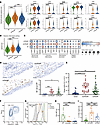 Figure 2
Neutrophils are activated in both eCRSwNP and neCRSwNP. (A) Violin plots showing the signature score of the neutrophil activation (GO: 0042119) pathway and the expression levels of pathway-related genes in each group of neutrophils. (B) Violin plot showing the signature score of the inflammasome pathway in each group of neutrophils. (C) Dot plot depicting the expression levels of inflammasome components in each group of neutrophils. (D) Representative images of neutrophil elastase (NE) immunohistochemical staining under high magnification were selected, and the number of NE-positive cells was quantified in high-power fields (HPFs) and evaluated with the Kruskal-Wallis test with Dunn’s post hoc test (control, n = 7; neCRSwNP, n = 20; eCRSwNP, n = 55). Scale bars: 50 μm. (E) Scatter plot depicting the NE expression level of tissue homogenates in the control uncinate tissues (UTs) (n = 17), neCRSwNP (n = 27), and eCRSwNP (n = 34) groups evaluated with the Kruskal-Wallis test with Dunn’s post hoc test. (F) Representative flow cytometry plot showing the activated neutrophils (CD62L–) within the live CD45+CD66B+CD16+ population. (G) Representative histogram of flow cytometry showing the levels of CD62L by geometric mean fluorescence intensity (gMFI). (H) Graph presenting the differences in the CD62L gMFI ratio on neutrophils evaluated with the Kruskal-Wallis test with Dunn’s post hoc test (PB, n = 19; neCRSwNP, n = 10; eCRSwNP, n = 11). (I) Graph presenting the frequency of CD62– neutrophils evaluated with the Kruskal-Wallis test with Dunn’s post hoc test (PB, n = 19; neCRSwNP, n = 10; eCRSwNP, n = 11). *P < 0.05; **P < 0.01; ***P < 0.001; ****P < 0.001.
We next confirmed the increased accumulation of neutrophils in both neCRSwNP and eCRSwNP by immunohistochemistry and ELISA for neutrophil elastase (NE) (Figure 2, D and E). To further validate the activation status of neutrophils in NPs, we used flow cytometry to assess the cell surface expression of CD62L, a marker of neutrophil activation (6, 16) (Figure 2, F and G, and Supplemental Figure 2B). Consistent with a prior study (6), we also detected a decrease in CD62L expression on NP neutrophils (P < 0.001, Figure 2H). Furthermore, we observed an increase in the CD62L-negative cell population in eCRSwNP neutrophils compared with that in PB neutrophils (P < 0.01), with a more pronounced increase in neCRSwNP neutrophils than in both eCRSwNP and PB neutrophils (P < 0.001, Figure 2I). Collectively, our findings indicated that neutrophils are activated and serve a proinflammatory role in CRSwNP.
Neutrophils in NPs consist of distinct transcriptional subsets. Recent studies have demonstrated that human neutrophils exist in distinct transcriptional states and exhibit heterogeneity (12, 13). We partitioned neutrophils into 10 clusters based on DEGs and calculated the ratio of observed to expected cell numbers (Ro/e) (Figure 3, A and B, and Supplemental Table 16). Cluster 9 was excluded from further analysis because it predominantly expressed the eosinophil marker CLC (Figure 3C) (17). Considering previous grouping strategies, 5 distinct transcriptional subsets of neutrophils were identified: S100A8+, GBP5+, CXCL8+, EPHB1+, and S100A12+ neutrophils (Figure 3D and Supplemental Table 17).
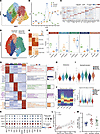 Figure 3
Neutrophils in nasal polyps consist of distinct transcriptional subsets. (A) The UMAP plot depicting 10 clusters of neutrophils. (B) Line graph presenting the ratio of observed to expected cell numbers (Ro/e) for each cluster. (C) Dot plot depicting the top 3 genes in each neutrophil cluster. (D) UMAP plot depicting 5 subsets of neutrophils. (E) Heatmap showing the Ro/e level of each subset. (F) Box-and-whisker plot depicting the proportions of neutrophil subsets in different groups. Shown are the median (line within box), IQR (box bounds), and the range (whiskers); data points beyond whiskers are outliers. (G) Heatmap visualizing the 40 genes with the highest expression levels and pathway enrichment for each neutrophil subset. (H) The violin plot showing the signature score of the senescence pathway in different neutrophil subsets. (I) The violin plot showing the signature score of the neutrophil activation pathway in different neutrophil subsets. (J) Left: The density heatmap displaying the signature score of the response to type I IFN pathway in neutrophils. Right: The violin plot showing the signature score of the response to type I IFN pathway in the neCRSwNPs. (K) The dot plot depicting the gene expression level related to the response to type I IFN pathway in different neutrophil subsets. (L) The scatter plot showing the correlation between the signature score of the response to type I IFN pathway and the average MX1 expression level in the scRNA-seq data of nasal polyps evaluated with Spearman’s rank test. (M) The scatter dot plot displaying the MX1 mRNA level in control uncinate tissues and nasal polyps evaluated with the Kruskal-Wallis test with Dunn’s post hoc test (control, n = 13; neCRSwNP, n = 14; eCRSwNP, n = 14). *P < 0.05.
We assessed neutrophil tissue enrichment using Ro/e analysis (Figure 3, E and F). S100A8+, EPHB1+, and S100A12+ neutrophils were preferentially enriched among PB neutrophils, while CXCL8+ neutrophils were enriched in both neCRSwNP and eCRSwNP neutrophils. S100A8+ and S100A12+ neutrophils exhibited upregulation of S100 family members (S100A4, S100A6, and S100A8), MME, and LST1, which are associated with the maturation state of neutrophils (18). EPHB1+ neutrophils were more prevalent among PB neutrophils whose expression of upregulated genes (IGF1R and EGR1) increased in response to insulin stimulation. CXCL8+ neutrophils displayed upregulated expression of neutrophil activation-associated genes (CXCL8, IL1B, and CD83) and senescence-associated genes (G0S2 and CCL3L1). In parallel, we observed greater neutrophil activation and senescence scores for the CXCL8+ subset (Figure 3, G–I). Pathway analysis revealed that the upregulated genes in CXCL8+ neutrophils were significantly associated with cytokine-mediated immune regulation. Therefore, CXCL8+ neutrophils represent activated states and play a proinflammatory role in CRSwNP.
We observed a higher proportion of GBP5+ neutrophils in neCRSwNP, which displayed elevated expression of IFN-inducible genes, including ISG15, IFIT1, IFIT2, MX1, and GBP5 (Figure 3, F and G). Consistent with a recent report, GBP5+ neutrophils showed increased PD-L1 (CD274) expression with a potential immunosuppressive effect (11) (Supplemental Figure 3A). The response to IFN-I pathway (GO: 0034340) was enriched in GBP5+ neutrophils (Figure 3, J and K). Transcription factor analysis further showed increased IFN regulatory factor (IRF) and signal transducer and activator of transcription (STAT) in GBP5+ neutrophils (Supplemental Figure 3B and Supplemental Table 18). MX1, as an IFN-I–regulated signature gene (19), positively associated with the response to IFN-I pathway (R = 0.64, Figure 3L) and displayed significantly higher mRNA expression in neCRSwNP than normal controls (P < 0.05, Figure 3, L and M), indicating IFN-I pathway activity in neCRSwNP.
Context-specific transcriptional features of neutrophil subsets in eCRSwNP and neCRSwNP. To further investigate the transcriptional differences in individual neutrophil subsets under distinct inflammatory backgrounds, we analyzed the DEGs in each subset (Figure 4A and Supplemental Tables 19–23). BFIFA1, encoding SPLUNC1, an antimicrobial protein, was mainly upregulated in the S100A8+, S100A12+, and CXCL8+ subsets in neCRSwNP. Additionally, CXCL8+ neutrophils from neCRSwNP patients exhibited upregulated expression of IFN-induced genes (GBP5, GBP1, and IRF1). S100A8+ and S100A12+ neutrophils in eCRSwNP patients overexpressed genes associated with neutrophil activation (ERG1 and TNFAIP3).
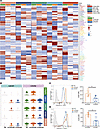 Figure 4
The transcriptional modulation of different neutrophil subsets in eCRSwNP and neCRSwNP. (A) Heatmap showing the top 5 gene expression levels for each group in different neutrophil subsets. (B) Violin plots showing the expression levels of C-X-C chemokine receptor type 1 (CXCR1) and CXCR2 in each neutrophil subset. (C) Representative flow cytometry histogram showing the levels of CXCR1. Graph shows the differences in the CXCR1 MFI ratio in nasal polyp neutrophils evaluated with the Mann-Whitney U test (neCRSwNP, n = 5; eCRSwNP, n = 6). (D) Representative flow cytometry histogram showing the levels of CXCR2 and graph showing the differences in the CXCR2 MFI ratio in nasal polyp neutrophils evaluated with the Mann-Whitney U test (neCRSwNP, n = 5; eCRSwNP, n = 6). *P < 0.05.
Interestingly, we found that CXCL8 receptor (CXCR1 and CXCR2) expression was notably lower in predominantly NP-infiltrating CXCL8+ neutrophils in eCRSwNP compared with neCRSwNP (Figure 4B). Flow cytometry confirmed decreased CXCR1 and CXCR2 expression on the eCRSwNP neutrophil surface (Figure 4, C and D, and Supplemental Figure 4A).
Overall, these results suggest that NP-infiltrating neutrophils exhibit heterogeneous functional states and are transcriptionally affected by different inflammatory patterns.
OSM secreted by neutrophils is elevated in CRSwNP. To clarify the pathogenic role of neutrophils in both CRSwNP subendotypes, we further screened the DEGs between CRSwNP and PB neutrophils. Eighty-seven genes, including OSM, CXCL8, and IL1B, were uniformly upregulated in both neCRSwNP and eCRSwNP neutrophils (Supplemental Figure 5, A and B). Next, we analyzed biologically relevant communications between neutrophils and other cell types in NPs (Figure 5, A and B, and Supplemental Figure 5, C–F). Of particular interest was OSM, as the cell type–specific networks of OSM showed that neutrophils were the prominent source of effector secretion, with fibroblasts, epithelial cells, and endothelial cells being the primary targets (Figure 5C). The scRNA-seq data revealed neutrophils, especially CXCL8+ neutrophils, as the dominant cell type expressing OSM in NPs (Figure 5, D and E). Furthermore, ELISA analysis demonstrated higher OSM protein levels in NP homogenates from both neCRSwNP and eCRSwNP (Figure 5F).
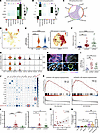 Figure 5
The level of OSM secreted by neutrophils is elevated in CRSwNP. (A) Heatmap showing the outgoing signaling patterns when neutrophils were selected as sender cells via the CellChat algorithm. (B) Heatmap showing the incoming signaling patterns when neutrophils were selected as sender cells via the CellChat algorithm. (C) Chord diagrams of the signaling pathway network displaying secreting and receiving cells of OSM signaling. (D) UMAP plot depicting the distribution of OSM in the scRNA-seq data. (E) Violin plot depicting the OSM expression level, and UMAP plot depicting the distribution of OSM in neutrophils of the scRNA-seq data. (F) Scatter dot plot depicting the protein levels of OSM in control uncinate tissue (UT) (n = 17), neCRSwNP (n = 27), and eCRSwNP (n = 34) groups in tissue homogenates evaluated with the Kruskal-Wallis test with Dunn’s post hoc test. (G) Violin plots showing the expression levels of the OSM receptors, including gp130 (IL6ST), LIFRα (LIFT), and OSMRβ (OSMR). (H) Representative images of OSMR, VWF (a biomarker of endothelial cells), E-CAD (a biomarker of epithelial cells), and COL1A1 (a biomarker of fibroblasts) immunofluorescent staining in nasal polyps. Scale bars: 5 μm. (I) Scatter dot plot displaying the OSMR mRNA level in control UTs and nasal polyps evaluated with the Kruskal-Wallis test with Dunn’s post hoc test (control, n = 9; neCRSwNP, n = 17; eCRSwNP, n = 19). (J) Heatmap presenting the correlation between the signature score of the response to LPS pathway and the expression level of common upregulated cytokines/chemokines in neCRSwNP and eCRSwNP neutrophils evaluated with Spearman’s rank test. (K) The GSEA plot showing the enrichment of response to LPS in the eCRSwNP or neCRSwNP neutrophils compared with the PB neutrophils. (L) The scatter dot plot depicting the protein levels of G-CSF and GM-CSF in control UT (n = 17), neCRSwNP (n = 27), and eCRSwNP (n = 34) tissue homogenates evaluated with the Kruskal-Wallis test with Dunn’s post hoc test. (M) The scatter plot visualizing the correlation of OSM and GM-CSF expression level in tissue homogenates of nasal polyps evaluated with Spearman’s rank test. (N) The histogram displaying OSM mRNA level in neutrophils after stimulation with LPS, G-CSF, and GM-CSF evaluated with the Kruskal-Wallis test with Dunn’s post hoc test (n = 4). *P < 0.05, **P < 0.01, ****P < 0.001.
There are 2 types of OSM receptors: type I (gp130/LIFRα complex) and type II (OSMRβ/gp130 complex). OSM receptors, including gp130 (IL6ST), LIFRα (LIFT), and OSMRβ (OSMR), are predominantly expressed in fibroblasts, epithelial cells, and endothelial cells (Figure 5G). A previous study showed that the OSMRβ/gp130 complex, not the gp130/LIFRα complex, is upregulated and mediates OSM responses in NPs (20). The localization of OSMR was confirmed through costaining of endothelial cells, epithelial cells, and fibroblasts with von Willebrand factor (VWF), E-cadherin (E-CAD), and collagen type I α1 chain (COL1A1), respectively (Figure 5H). Elevated OSMR expression was also detected in neCRSwNP and eCRSwNP (Figure 5I).
Inspired by recent findings that LPS promoted airway inflammation through OSM secretion from macrophages (21), we found a positive correlation between OSM expression and the LPS pathway response in NP-infiltrating neutrophils (Figure 5J). Functional enrichment further revealed a significantly higher response to LPS pathway in neCRSwNP or eCRSwNP neutrophils (Figure 5K).
GM-CSF and G-CSF, inducers of neutrophil differentiation and activation, exhibited elevated protein levels in neCRSwNP and eCRSwNP homogenates compared with those in control uncinate tissues (Figure 5L). GM-CSF also showed a significant positive correlation with OSM (R = 0.31, Figure 5M). To further assess the factors driving neutrophils to produce OSM, we treated PB neutrophils with LPS, G-CSF, and GM-CSF. Results suggested that LPS stimulated OSM expression and synergized with GM-CSF to enhance OSM production (Figure 5N).
OSM modulates pathogenic pathways in epithelial cells and fibroblasts depending on inflammatory milieu. Consistent with previous reports, NE expression did not significantly correlate with eosinophil marker (eosinophil cationic protein, ECP) expression in NP homogenates (6). However, we found that neutrophil-derived OSM expression was significantly positively correlated with ECP expression (R = 0.35, Figure 6A), which suggests the potential role of neutrophils in promoting eosinophilic inflammation in NPs. To further elucidate the OSM-regulated pathogenic pathway in eCRSwNP, we performed enrichment analysis of genes upregulated in OSM-targeted epithelial cells and fibroblasts. The scRNA-seq data revealed increased IL-13 signaling pathway scores in eCRSwNP epithelial cells and fibroblasts (Figure 6B). Additionally, downstream inflammatory factors of the IL-13 signaling pathway, such as CCL26 and periostin, were significantly increased in eCRSwNP polyp homogenates and mainly produced by fibroblasts and epithelial cells (Figure 6, C and D). We speculated that OSM may affect targeting cells by modulating the IL-13 immune response. Subsequently, we found that OSM significantly enhanced IL-13–dependent CCL26 and periostin production in fibroblasts, but not in epithelial cells (Figure 6, E and F). To explore the underlying mechanism, we examined IL-13 receptor distributions and changes following OSM stimulation. Interestingly, OSM significantly promoted IL4R and IL13RA2 expression in fibroblasts (Figure 6G). The scRNA-seq data also showed a significant positive correlation between IL4R expression levels in fibroblasts and OSM expression levels in NPs (Figure 6G). These results suggest that neutrophils in eCRSwNP may amplify eosinophilic inflammation by regulating the IL-13–mediated immune response in fibroblasts.
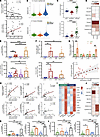 Figure 6
OSM modulates pathogenic pathways in epithelial cells and fibroblasts depending on inflammatory patterns. (A) The scatter plots showing the correlation of ECP and neutrophil elastase with OSM expression in eCRSwNP tissue homogenates. (B) The violin plots showing the signature score of the IL-13 pathway in fibroblasts and epithelial cells of the nasal mucosa. (C) The scatter dot plots depicting the protein levels of CCL26 and periostin in control uncinate tissue (UT) (n = 17), neCRSwNP (n = 27), and eCRSwNP (n = 34) tissue homogenates evaluated with the Kruskal-Wallis test with Dunn’s post hoc test. (D) The heatmap showing the expression levels of CCL26 and periostin in the scRNA-seq data. (E) The histograms displaying CCL26 and periostin secretion in culture supernatants after 24 hours of stimulation of fibroblasts. (F) The histograms displaying CCL26 and periostin secretion in culture supernatants after 24 hours of stimulation evaluated with the Kruskal-Wallis test with Dunn’s post hoc test (n = 6). (G) Top: The histogram displaying IL-13 receptor mRNA levels (IL4R, IL2RG, IL13RA1, and IL13RA2) in fibroblasts after 12 hours of stimulation with OSM evaluated with the Mann-Whitney U test (n = 4). Bottom: Scatter plot displaying the correlation between the IL4R expression level in fibroblasts and the total OSM expression level in the scRNA-seq data of nasal polyp samples evaluated with Spearman’s rank test. (H) Scatter plots showing the correlation between neutrophil elastase, IL-17A, G-CSF, IL-6, and IL-8 and the OSM expression level in neCRSwNP tissue homogenates evaluated with Spearman’s rank test. (I) Heatmap showing the IL-17 pathway score in fibroblasts and epithelial cells of healthy controls with normal ethmoid or sphenoid sinuses and nasal polyps in the scRNA-seq data. (J) Heatmap showing the expression levels of G-CSF and IL-8 in the scRNA-seq data. (K) Histograms displaying the G-CSF and IL-8 secretion in culture supernatants after 12 hours of stimulation in fibroblasts evaluated with the Kruskal-Wallis test with Dunn’s post hoc test (n = 6). (L) Histograms displaying the G-CSF and IL-8 secretion in culture supernatants after 12 hours of stimulation of HNECs evaluated with the Kruskal-Wallis test with Dunn’s post hoc test (n = 6). *P < 0.05; **P < 0.01; ***P < 0.001; ****P < 0.001.
Neutrophils are the main effector cells in neCRSwNP patients, and our previous work suggested prominent type 3 inflammation in our neCRSwNP cohort (22). We next sought to determine the regulatory role of OSM in neCRSwNP. We observed a positive correlation between OSM and NE, IL-17A, G-CSF, IL-6, and IL-8 in tissue homogenates (Figure 6H). A set of IL-17–responsive genes was commonly upregulated in epithelial cells, fibroblasts, and endothelial cells in neCRSwNP (Figure 6I). The pivotal downstream chemokines of IL-17, such as G-CSF, are predominantly expressed in epithelial cells. IL-8 was also expressed in epithelial cells and fibroblasts (Figure 6J). To investigate the modulatory effect of OSM on the type 3 inflammatory milieu, we utilized IL-17A in combination with OSM to stimulate fibroblasts and human nasal epithelial cells (HNECs). We found robust upregulation of G-CSF and IL-8 upon costimulation compared with IL-17A stimulation alone (Figure 6, K and L, and Supplemental Figure 6, E–H), suggesting neutrophils in neCRSwNP could intensify neutrophilic inflammation by releasing OSM, thereby enhancing the proinflammatory effect of IL-17A. However, this modulatory effect was not related to IL-17 receptors because their expression did not change after OSM stimulation (Supplemental Figure 6I). Nevertheless, OSM stimulation significantly upregulated NF-κB inhibitor-ζ (IκBζ) expression, a crucial mediator of IL-17A signaling in psoriasis (23), thereby possibly providing an additive effect on IL-17A’s effect in HNECs and fibroblasts (Supplemental Figure 6J).
As mentioned above, eCRSwNP and neCRSwNP patients exhibited consistently upregulated OSM expression and cellular sources from CXCL8+ neutrophils, suggesting that neutrophil-derived OSM specifically strengthens inflammation according to the tissue microenvironment.


