
Research ArticleImmunologyInflammationOphthalmology
Open Access |  10.1172/jci.insight.182616
IL-23 drives uveitis by acting on a population of tissue-resident entheseal T cells
Robert Hedley,1,2 Amy Ward,3 Colin J. Chu,3,4 Sarah E. Coupland,5 Serafim Kiriakidis,1 Peter C. Taylor,1 Stephanie G. Dakin,1 ORBIT Research Consortium,6 Christopher D. Buckley,7 Jonathan Sherlock,7,8 Andrew D. Dick,3,4 and David A. Copland3,4
1Botnar Research Centre, and
2Sir William Dunn School of Pathology, University of Oxford, Oxford, United Kingdom.
3Academic Unit of Ophthalmology, Translational Health Sciences, University of Bristol, Bristol, United Kingdom.
4NIHR Biomedical Research Centre at Moorfields Eye Hospital and UCL Institute of Ophthalmology, London, United Kingdom.
5Liverpool Ocular Oncology Research Group, University of Liverpool, Liverpool, United Kingdom.
6ORBIT Research Consortium, Oxford, United Kingdom (detailed in Supplemental Acknowledgments).
7The Kennedy Institute of Rheumatology, University of Oxford, Oxford, United Kingdom.
8Janssen Research & Development, LLC, Spring House, Pennsylvania, USA.
Address correspondence to: David Copland or Andrew Dick, Academic Unit of Ophthalmology, Translational Health Sciences, Biomedical Sciences Building, University of Bristol, BS8 1TD, Bristol, United Kingdom. Phone: 0117.3312032; Email: dave.copland@bristol.ac.uk (DC); a.dick@bristol.ac.uk (AD).
Authorship note: RH and AW contributed equally to this work.
Find articles by Hedley, R. in: PubMed | Google Scholar
1Botnar Research Centre, and
2Sir William Dunn School of Pathology, University of Oxford, Oxford, United Kingdom.
3Academic Unit of Ophthalmology, Translational Health Sciences, University of Bristol, Bristol, United Kingdom.
4NIHR Biomedical Research Centre at Moorfields Eye Hospital and UCL Institute of Ophthalmology, London, United Kingdom.
5Liverpool Ocular Oncology Research Group, University of Liverpool, Liverpool, United Kingdom.
6ORBIT Research Consortium, Oxford, United Kingdom (detailed in Supplemental Acknowledgments).
7The Kennedy Institute of Rheumatology, University of Oxford, Oxford, United Kingdom.
8Janssen Research & Development, LLC, Spring House, Pennsylvania, USA.
Address correspondence to: David Copland or Andrew Dick, Academic Unit of Ophthalmology, Translational Health Sciences, Biomedical Sciences Building, University of Bristol, BS8 1TD, Bristol, United Kingdom. Phone: 0117.3312032; Email: dave.copland@bristol.ac.uk (DC); a.dick@bristol.ac.uk (AD).
Authorship note: RH and AW contributed equally to this work.
Find articles by Ward, A. in: PubMed | Google Scholar
1Botnar Research Centre, and
2Sir William Dunn School of Pathology, University of Oxford, Oxford, United Kingdom.
3Academic Unit of Ophthalmology, Translational Health Sciences, University of Bristol, Bristol, United Kingdom.
4NIHR Biomedical Research Centre at Moorfields Eye Hospital and UCL Institute of Ophthalmology, London, United Kingdom.
5Liverpool Ocular Oncology Research Group, University of Liverpool, Liverpool, United Kingdom.
6ORBIT Research Consortium, Oxford, United Kingdom (detailed in Supplemental Acknowledgments).
7The Kennedy Institute of Rheumatology, University of Oxford, Oxford, United Kingdom.
8Janssen Research & Development, LLC, Spring House, Pennsylvania, USA.
Address correspondence to: David Copland or Andrew Dick, Academic Unit of Ophthalmology, Translational Health Sciences, Biomedical Sciences Building, University of Bristol, BS8 1TD, Bristol, United Kingdom. Phone: 0117.3312032; Email: dave.copland@bristol.ac.uk (DC); a.dick@bristol.ac.uk (AD).
Authorship note: RH and AW contributed equally to this work.
Find articles by
Chu, C.
in:
PubMed
|
Google Scholar
|

1Botnar Research Centre, and
2Sir William Dunn School of Pathology, University of Oxford, Oxford, United Kingdom.
3Academic Unit of Ophthalmology, Translational Health Sciences, University of Bristol, Bristol, United Kingdom.
4NIHR Biomedical Research Centre at Moorfields Eye Hospital and UCL Institute of Ophthalmology, London, United Kingdom.
5Liverpool Ocular Oncology Research Group, University of Liverpool, Liverpool, United Kingdom.
6ORBIT Research Consortium, Oxford, United Kingdom (detailed in Supplemental Acknowledgments).
7The Kennedy Institute of Rheumatology, University of Oxford, Oxford, United Kingdom.
8Janssen Research & Development, LLC, Spring House, Pennsylvania, USA.
Address correspondence to: David Copland or Andrew Dick, Academic Unit of Ophthalmology, Translational Health Sciences, Biomedical Sciences Building, University of Bristol, BS8 1TD, Bristol, United Kingdom. Phone: 0117.3312032; Email: dave.copland@bristol.ac.uk (DC); a.dick@bristol.ac.uk (AD).
Authorship note: RH and AW contributed equally to this work.
Find articles by
Coupland, S.
in:
PubMed
|
Google Scholar
|
1Botnar Research Centre, and
2Sir William Dunn School of Pathology, University of Oxford, Oxford, United Kingdom.
3Academic Unit of Ophthalmology, Translational Health Sciences, University of Bristol, Bristol, United Kingdom.
4NIHR Biomedical Research Centre at Moorfields Eye Hospital and UCL Institute of Ophthalmology, London, United Kingdom.
5Liverpool Ocular Oncology Research Group, University of Liverpool, Liverpool, United Kingdom.
6ORBIT Research Consortium, Oxford, United Kingdom (detailed in Supplemental Acknowledgments).
7The Kennedy Institute of Rheumatology, University of Oxford, Oxford, United Kingdom.
8Janssen Research & Development, LLC, Spring House, Pennsylvania, USA.
Address correspondence to: David Copland or Andrew Dick, Academic Unit of Ophthalmology, Translational Health Sciences, Biomedical Sciences Building, University of Bristol, BS8 1TD, Bristol, United Kingdom. Phone: 0117.3312032; Email: dave.copland@bristol.ac.uk (DC); a.dick@bristol.ac.uk (AD).
Authorship note: RH and AW contributed equally to this work.
Find articles by Kiriakidis, S. in: PubMed | Google Scholar
1Botnar Research Centre, and
2Sir William Dunn School of Pathology, University of Oxford, Oxford, United Kingdom.
3Academic Unit of Ophthalmology, Translational Health Sciences, University of Bristol, Bristol, United Kingdom.
4NIHR Biomedical Research Centre at Moorfields Eye Hospital and UCL Institute of Ophthalmology, London, United Kingdom.
5Liverpool Ocular Oncology Research Group, University of Liverpool, Liverpool, United Kingdom.
6ORBIT Research Consortium, Oxford, United Kingdom (detailed in Supplemental Acknowledgments).
7The Kennedy Institute of Rheumatology, University of Oxford, Oxford, United Kingdom.
8Janssen Research & Development, LLC, Spring House, Pennsylvania, USA.
Address correspondence to: David Copland or Andrew Dick, Academic Unit of Ophthalmology, Translational Health Sciences, Biomedical Sciences Building, University of Bristol, BS8 1TD, Bristol, United Kingdom. Phone: 0117.3312032; Email: dave.copland@bristol.ac.uk (DC); a.dick@bristol.ac.uk (AD).
Authorship note: RH and AW contributed equally to this work.
Find articles by Taylor, P. in: PubMed | Google Scholar
1Botnar Research Centre, and
2Sir William Dunn School of Pathology, University of Oxford, Oxford, United Kingdom.
3Academic Unit of Ophthalmology, Translational Health Sciences, University of Bristol, Bristol, United Kingdom.
4NIHR Biomedical Research Centre at Moorfields Eye Hospital and UCL Institute of Ophthalmology, London, United Kingdom.
5Liverpool Ocular Oncology Research Group, University of Liverpool, Liverpool, United Kingdom.
6ORBIT Research Consortium, Oxford, United Kingdom (detailed in Supplemental Acknowledgments).
7The Kennedy Institute of Rheumatology, University of Oxford, Oxford, United Kingdom.
8Janssen Research & Development, LLC, Spring House, Pennsylvania, USA.
Address correspondence to: David Copland or Andrew Dick, Academic Unit of Ophthalmology, Translational Health Sciences, Biomedical Sciences Building, University of Bristol, BS8 1TD, Bristol, United Kingdom. Phone: 0117.3312032; Email: dave.copland@bristol.ac.uk (DC); a.dick@bristol.ac.uk (AD).
Authorship note: RH and AW contributed equally to this work.
Find articles by Dakin, S. in: PubMed | Google Scholar
1Botnar Research Centre, and
2Sir William Dunn School of Pathology, University of Oxford, Oxford, United Kingdom.
3Academic Unit of Ophthalmology, Translational Health Sciences, University of Bristol, Bristol, United Kingdom.
4NIHR Biomedical Research Centre at Moorfields Eye Hospital and UCL Institute of Ophthalmology, London, United Kingdom.
5Liverpool Ocular Oncology Research Group, University of Liverpool, Liverpool, United Kingdom.
6ORBIT Research Consortium, Oxford, United Kingdom (detailed in Supplemental Acknowledgments).
7The Kennedy Institute of Rheumatology, University of Oxford, Oxford, United Kingdom.
8Janssen Research & Development, LLC, Spring House, Pennsylvania, USA.
Address correspondence to: David Copland or Andrew Dick, Academic Unit of Ophthalmology, Translational Health Sciences, Biomedical Sciences Building, University of Bristol, BS8 1TD, Bristol, United Kingdom. Phone: 0117.3312032; Email: dave.copland@bristol.ac.uk (DC); a.dick@bristol.ac.uk (AD).
Authorship note: RH and AW contributed equally to this work.
1Botnar Research Centre, and
2Sir William Dunn School of Pathology, University of Oxford, Oxford, United Kingdom.
3Academic Unit of Ophthalmology, Translational Health Sciences, University of Bristol, Bristol, United Kingdom.
4NIHR Biomedical Research Centre at Moorfields Eye Hospital and UCL Institute of Ophthalmology, London, United Kingdom.
5Liverpool Ocular Oncology Research Group, University of Liverpool, Liverpool, United Kingdom.
6ORBIT Research Consortium, Oxford, United Kingdom (detailed in Supplemental Acknowledgments).
7The Kennedy Institute of Rheumatology, University of Oxford, Oxford, United Kingdom.
8Janssen Research & Development, LLC, Spring House, Pennsylvania, USA.
Address correspondence to: David Copland or Andrew Dick, Academic Unit of Ophthalmology, Translational Health Sciences, Biomedical Sciences Building, University of Bristol, BS8 1TD, Bristol, United Kingdom. Phone: 0117.3312032; Email: dave.copland@bristol.ac.uk (DC); a.dick@bristol.ac.uk (AD).
Authorship note: RH and AW contributed equally to this work.
Find articles by Buckley, C. in: PubMed | Google Scholar
1Botnar Research Centre, and
2Sir William Dunn School of Pathology, University of Oxford, Oxford, United Kingdom.
3Academic Unit of Ophthalmology, Translational Health Sciences, University of Bristol, Bristol, United Kingdom.
4NIHR Biomedical Research Centre at Moorfields Eye Hospital and UCL Institute of Ophthalmology, London, United Kingdom.
5Liverpool Ocular Oncology Research Group, University of Liverpool, Liverpool, United Kingdom.
6ORBIT Research Consortium, Oxford, United Kingdom (detailed in Supplemental Acknowledgments).
7The Kennedy Institute of Rheumatology, University of Oxford, Oxford, United Kingdom.
8Janssen Research & Development, LLC, Spring House, Pennsylvania, USA.
Address correspondence to: David Copland or Andrew Dick, Academic Unit of Ophthalmology, Translational Health Sciences, Biomedical Sciences Building, University of Bristol, BS8 1TD, Bristol, United Kingdom. Phone: 0117.3312032; Email: dave.copland@bristol.ac.uk (DC); a.dick@bristol.ac.uk (AD).
Authorship note: RH and AW contributed equally to this work.
Find articles by Sherlock, J. in: PubMed | Google Scholar
1Botnar Research Centre, and
2Sir William Dunn School of Pathology, University of Oxford, Oxford, United Kingdom.
3Academic Unit of Ophthalmology, Translational Health Sciences, University of Bristol, Bristol, United Kingdom.
4NIHR Biomedical Research Centre at Moorfields Eye Hospital and UCL Institute of Ophthalmology, London, United Kingdom.
5Liverpool Ocular Oncology Research Group, University of Liverpool, Liverpool, United Kingdom.
6ORBIT Research Consortium, Oxford, United Kingdom (detailed in Supplemental Acknowledgments).
7The Kennedy Institute of Rheumatology, University of Oxford, Oxford, United Kingdom.
8Janssen Research & Development, LLC, Spring House, Pennsylvania, USA.
Address correspondence to: David Copland or Andrew Dick, Academic Unit of Ophthalmology, Translational Health Sciences, Biomedical Sciences Building, University of Bristol, BS8 1TD, Bristol, United Kingdom. Phone: 0117.3312032; Email: dave.copland@bristol.ac.uk (DC); a.dick@bristol.ac.uk (AD).
Authorship note: RH and AW contributed equally to this work.
Find articles by
Dick, A.
in:
PubMed
|
Google Scholar
|
1Botnar Research Centre, and
2Sir William Dunn School of Pathology, University of Oxford, Oxford, United Kingdom.
3Academic Unit of Ophthalmology, Translational Health Sciences, University of Bristol, Bristol, United Kingdom.
4NIHR Biomedical Research Centre at Moorfields Eye Hospital and UCL Institute of Ophthalmology, London, United Kingdom.
5Liverpool Ocular Oncology Research Group, University of Liverpool, Liverpool, United Kingdom.
6ORBIT Research Consortium, Oxford, United Kingdom (detailed in Supplemental Acknowledgments).
7The Kennedy Institute of Rheumatology, University of Oxford, Oxford, United Kingdom.
8Janssen Research & Development, LLC, Spring House, Pennsylvania, USA.
Address correspondence to: David Copland or Andrew Dick, Academic Unit of Ophthalmology, Translational Health Sciences, Biomedical Sciences Building, University of Bristol, BS8 1TD, Bristol, United Kingdom. Phone: 0117.3312032; Email: dave.copland@bristol.ac.uk (DC); a.dick@bristol.ac.uk (AD).
Authorship note: RH and AW contributed equally to this work.
Find articles by
Copland, D.
in:
PubMed
|
Google Scholar
|
Published August 28, 2025 - More info
JCI Insight. 2025;10(19):e182616. https://doi.org/10.1172/jci.insight.182616.
© 2025 Hedley et al. This work is licensed under the Creative Commons Attribution 4.0 International License. To view a copy of this license, visit http://creativecommons.org/licenses/by/4.0/.
Received: May 6, 2024; Accepted: August 22, 2025

-
Results
Tissue-resident IL-23R+ γδ T cells are located in the murine anterior uvea. Using light sheet fluorescence microscopy (LSFM), we assessed whether T cell populations are present within the anterior uvea and iridocorneal angle (ICA) tissue in adult albino [B6(Cg)-Tyrc-2J/J] mice. Perfused anterior segments were optically cleared (49), immunolabeled with anti-CD3 antibody and DAPI, before 3D cross-sectional images of the anterior chamber from different angles were captured. Low-magnification LSFM imaging of the anterior structure demonstrated clusters of CD3+ T cells located within different regions including the corneal limbus, sclera, and ciliary body (Figure 1A and Supplemental Figure 1; supplemental material available online with this article; https://doi.org/10.1172/jci.insight.182616DS1).
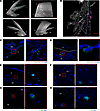 Figure 1
Tissue-resident CD3+IL-23R+ T cells are found in the mouse anterior uvea. Naive B6(Cg)-Tyrc-2J/J (albino) mice were perfused, and intact globes optically cleared, immunolabelled with CD3e and DAPI. (A) Lightsheet Z.1 acquired, immunofluorescent whole mount images (top left), rotated 90° (top right), rotated 180° (bottom left), and rotated 270° (bottom right). 3D rendered image shows expression of tissue autofluorescence (white) and CD3e (purple). Coexpression of CD3 and nuclei observed within different regions including the peripheral cornea, limbal sclera ,and ciliary body. Images captured at ×10 magnification. Scale bar: 100 μm. CP, ciliary process; CB, ciliary body; S, sclera; I, iris; C, cornea. (B) Immunofluorescence image of anterior tissue section from perfused albino mouse demonstrates presence of CD45+CD3+ T cells within extravascular tissues including the trabecular meshwork, ciliary body and sclera. Image captured at ×20 magnification. Dashed blue line, the inner limit of the sclera; dashed white line, trabecular meshwork; X, Schlemm’s canal; CP, ciliary process; CB, ciliary body; S, sclera; and R, retina. (C) CD4+ and CD8+ (single positive) cells are restricted to the juxtacanalicular tissue (JCT) region of the trabecular meshwork, proximal to the inner wall of Schlemm’s canal. Colored arrows indicating T cell subtypes; CD3+ (green), CD4 (red), and CD8+ (purple). (D) Sections also highlighted CD3+CD4–CD8– (double-negative T cells) in the region of ciliary body proximal to the limbal sclera. (E–H) Sections taken from naive IL-23R–eGFP (+/–) reporter mice IL-23R+ cells are evident within the limbal sclera, specifically the transitional region of the sclera to ciliary body (E) and the transitional region from episclera (ES) to stromal sclera (SS) and not the vascular ES (F), the folding of the inner ciliary body (G), and posterior border layer of the iris (H). Nuclei (blue) and IL-23R–eGFP (green). Red square highlights region of tissue magnified in adjacent image (C and E–H).
To determine their precise tissue location and phenotype, serial sections from perfused eyes were immunostained with additional surface markers, demonstrating that CD45+CD3+ cells reside within extravascular tissues including the trabecular meshwork (TM), ciliary body, and sclera (Figure 1B). CD4+CD8– Th cells and CD4–CD8+ cytotoxic T cell (CD8+) populations are restricted to the juxtacanalicular tissue (JCT) region of the TM, proximal to the inner wall of Schlemm’s canal (Figure 1C). Interestingly, a population of CD3+CD4–CD8– (double-negative T cells) was identified in the region of the ciliary body and ICA (Figure 1D), present in both the ciliary body and sclera parallel to the pars plana and pars plicata regions. Furthermore, using IL-23R–eGFP reporter mice, IL-23R+ cells are evident within the limbal sclera (Figure 1E) — specifically within the scleral stroma proper and not the vascular episclera (Figure 1F) — the ciliary body (Figure 1G) and posterior border of the iris (Figure 1H).
To define the phenotype and frequency of CD3+ populations, naive IL-23R–eGFP+/– (heterozygous) mouse eyes (including nonpigmented albino background) were prepared for flow cytometry (Figure 2A and Supplemental Figure 2A). Enzymatic digestion of dissected anterior uveal tissue (including the limbal sclera, cornea, iris, and ciliary body) reveals that the IL-23R+ fraction represents 10%–15% of the total CD3+ T cell pool, and in absolute numbers, 50 cells can be routinely isolated from a single anterior uvea sample (Figure 2B). Furthermore, comparison of heterozygous and homozygous IL-23R–eGFP eyes reveals that IL-23R expression may represent a critical determinant in the residency/accumulation of this T cell population within a specific ocular location. In IL-23R–eGFP+/+ (homozygous) in which eGFP reporter sequences replace both IL-23R coding sequences rendering these mice functionally deficient in IL-23R, the total number and frequency of CD3+IL23R+ T cells is significantly reduced (Supplemental Figure 2B). Consistent with published observations of MSK entheseal tissues (21, 28), CD3+CD4–CD8– γδ T cells, not αβ TCR+ T cells, constitute the majority of anterior compartment IL-23R+ T cells (Figure 2C and Supplemental Figure 2C). Typically, γδ T cell populations are classified according to the expression of the variable domain of the TCRγ (Vγ) chain (50). In the anterior compartment, all isolated γδ T cells were Vγ6+, with no detectable expression of Vγ1 or Vγ4 chains (Figure 2D and Supplemental 2D), suggesting an IL-17+ producing subset, as described for the MSK entheseal tissues, reproductive tract, lung, and skin (51, 52).
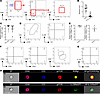 Figure 2
Naive anterior uvea contains CD3+γδTCR+IL-23R+ T cells with intrinsic pathogenic capacity. Anterior uvea tissue prepared from naive IL-23R–eGFP (+/–) reporter mice were analyzed by flow cytometry. (A) Representative flow plots showing gating strategy which identifies resident T cells as CD3+CD4–CD8–IL-23R+γδTCR+. (B and C) Graphs showing absolute counts of CD3+ and CD3+IL-23R+ populations isolated, and relative frequency of IL-23R+ cells expressing γδTCR+ (n = 25 AU samples). (D) Flow plots demonstrating CD3+IL-23R+γδTCR+ cells are Vγ6+ (no detectable expression of Vγ1 or Vγ4 chains), indicating an IL-17+ producing subset. (E) Relative frequency of IL-23R+ cells expressing CD69 and CD44 (n = 6 AU samples). (F) Resident IL-23R+γδTCR cells display a CD44hiCD62L– (effector phenotype), expressing CCR6+ but not CD27. (G) Following ex vivo stimulation (PMA/ionomycin) of single-cell anterior uvea suspensions, intracellular cytokine staining demonstrates cells only secrete IL-17A. (H). Imagestream analysis of pooled naive anterior uvea suspensions (n = 4) confirms CD3+ IL-23R+ γδ+ surface phenotype, and intracellular expression of RORγt.
Resident IL-23R+γδ+ T cells exhibit a preactivated effector phenotype. Expression of IL-23R is a recognized hallmark of IL-17–producing cells, including Th17 cells (53–55), γδ T cells (56), and Type 3 innate lymphoid cells (ILC3) (57, 58). Furthermore, expression of C-C chemokine receptor 6 (CCR6) by T cells, including IL-17–producing γδ T cells (Tγδ17), is linked to increased IL-17A secretion (59). We therefore sought to characterize the IL-23R+γδ+ T cell phenotype to define their functional capacity.
Activated and functionally differentiated effector γδ T cells express CD69 and high levels of CD44 (51, 60). In naive mice, approximately 95% of anterior compartment-resident γδ T cells are CD69+ and CD44hi (Figure 2E), and display a CD44hiCD62L– effector phenotype (Figure 2F). Expression of CCR6 and CD27 permits functional discrimination between IL-17–producing and IFN-γ– producing γδ T cell subsets (61). In the anterior compartment, the γδ T cells are CCR6+CD27– (Figure 2F), and following ex vivo stimulation, secrete IL-17A but not IFN-γ (Figure 2G and Supplemental Figure 2E). Furthermore, ImageStream analysis confirmed the CD3+IL-23R+γδ+ surface phenotype and, importantly, highlights the intracellular expression/localization of retinoid orphan receptor γ t (RORγt) in cells isolated from the naive anterior compartment (Figure 2H).
These data demonstrate that healthy anterior uvea contains a resident T cell population, defined by surface marker expression, CD3+IL-23R+Vγ6+ γδ+CD69+CD44hiCCR6+. These cells are equipped with an intrinsic capacity to secrete IL-17A and, therefore, the potential to act as pathogenic effectors in the eye, comparable with the pathogenic cells described in psoriasis and in the MSK enthesis (21, 28, 62).
IL-23 overexpression alone in the eye is sufficient to drive inflammation in vivo. To evaluate IL-23 responsiveness of this resident T cell population in vivo, we engineered a ShH10 serotype adeno-associated virus (AAV) encoding a hyper–IL-23 cytokine (63) transgene to facilitate localized secretion of cytokine within the mouse eye (Supplemental Figure 3A). The ShH10 capsid serotype permits rapid transduction of the ciliary body nonpigmented epithelium and cells of the inner retina (Müller glia, ganglion cells, and astrocytes) when injected intravitreally into the mouse eye (64) (Supplemental Figure 3B).
Following intravitreal injection of 1 × 10¹¹ vector genomes (vg)/eye of ShH10_IL-23 vector in C57BL/6J (WT) mice, posterior (retinal) inflammation, subtle optic disc swelling, retinal vascular changes, and cellular infiltration of the vitreous and aqueous cavities are manifest by day 12 (Figure 3A). In eyes receiving a control virus (ShH10_GFP; expressing a widely used reporter protein [GFP] and accepted to be noninflammatory) or vehicle (PBS) injection, no clinical inflammation or pathological changes are observed at the same time point. We performed immune profiling using flow cytometry to characterize the immune cell populations infiltrating both the anterior and posterior compartments. This demonstrates that IL-23 overexpression leads to a significant increase of CD45+ cells in each ocular compartment (Figure 3B), comprising both adaptive but also innate immune populations (Supplemental Figure 4). ShH10_GFP (control AAV) also results in subclinical accumulation of CD45+ cells compared with the naive eye, despite no obvious signs of inflammation, which reflects recognized AAV-mediated changes in the immune threshold of the tissue following intravitreal injection (65, 66).
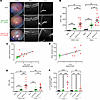 Figure 3
Ocular IL-23 expression drives increased CD45+ infiltration in the AU and retina. WT C57BL/6J mice received intravitreal injection of 1 × 10¹¹ vector genomes of ShH10_IL23, with ShH10_GFP (control AAV) administered to the contralateral eye, and were clinically monitored until day 12. Enucleated eyes dissected and anterior uvea and retina samples prepared for flow cytometric immune phenotyping. (A) Representative fundus and OCT images of the retina and anterior uvea. White arrowheads indicate peri-vascular sheathing (fundus), posterior (vitreous), and anterior (aqueous) cell infiltrate in eyes receiving ShH10_IL23 virus. C, cornea; I, iris; L, lens. OCT scale bars: 100 mm. (B) Absolute CD45+ cell counts on day 12 from anterior uvea and retina samples from naive (n = 4), ShH10_GFP (n = 9) and ShH10_IL23 (n = 13). (C and D) Absolute counts correlated with OCT clinical disease score and IL-23 cytokine (protein) expression (n = 9/group). (E) Total live CD3+ counts in anterior uvea and retina on day 12. (F) Intracellular IL-17A expression (MFI, mean fluorescence intensity) following ex vivo restimulation from γδTCR+ or αβ TCR+ T cell subsets in response to ShH10_IL-23 (n = 4 eye from naive, ShH10_GFP or ShH10_IL-23 injected eyes). Statistical analysis was performed with 1-way ANOVA. Data are expressed as mean ± SEM. **P < 0.01, ***P < 0.001, **** P < 0.0001. Data shown are combined from 2 independent experiments (B and E) or from single representative experiment (C, D, and F).
In eyes receiving ShH10_IL23 virus, increased CD45+ counts correlate with higher clinical disease severity (Figure 3C) and expression levels of IL-23 protein detected by ELISA from tissue supernatants (Figure 3D). Phenotypic analysis of the CD45+ population shows that adaptive CD3+ cells (both CD4+ and CD8+) are the predominant cell type recruited to the eye in response to IL-23 expression (Figure 3E and Supplemental Figure 4). Ex vivo restimulation (PMA/ionomycin) of anterior uvea drives significantly higher expression levels of IL-17A from the γδ T cell subset compared with αβ TCR+ T cell subset in eyes receiving ShH10_IL-23 (Figure 3F). To evaluate the long-term outcome of IL-23 overexpression in the eye, we also monitored mice over an extended time course, until day 50 after intravitreal injection. Clinical imaging (fundus and OCT) demonstrates that eyes receiving the ShH10_IL-23 progress to develop a chronic and persistent inflammation, in contrast to control (ShH10_GFP) eyes that remain normal. FACS of combined AU and retina confirms disease severity, with a 10-fold increase in the total CD45+ and CD3+ absolute counts compared with the day 12 cell numbers (Supplemental Figure 5).
CD3+γδTCR+IL-23R+ are necessary and sufficient to drive IL-23–mediated inflammation. These data support that tissue-resident T cells respond to IL-23 in the local ocular environment to elicit inflammation (uveitis). To test the dependence of uveitis on T cells, we went on to identify whether Th cells (Th17) or Tγδ17 or other cell types such as ILC3 were the central drivers for the early response to localized IL-23 expression. All these cell lineages express functional IL-23 receptors (24, 29, 55), but unlike Th17 or Tγδ17 T cells, ILC3 do not require Rag2 expression for their development (67).
C57BL/6J and B6.Cg-Thy1 (Rag2-KO) mice, receiving 1 × 10¹¹ vg ShH10_IL-23 in one eye and control ShH10_GFP vector in the contralateral eye were clinically monitored until day 12; cellular infiltrate in the anterior and posterior compartments were assessed by flow cytometry. In Rag2-deficient animals, administration of the ShH10_IL-23 (or control ShH10_GFP) did not replicate any of the clinical inflammatory changes (perivascular sheathing, vitreous infiltrate) that are observed with IL-23 overexpression in WT C57BL/6J mice (Figure 4A). The absence of clinical inflammation in the Rag2 mice is confirmed by flow cytometry analysis, demonstrating no recruitment of CD45+ infiltrating cells to either ocular compartment (Figure 4B). These data suggest that T cells (Th17 or Tγδ17) are the key effector cell type responding to IL-23 in the eye.
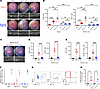 Figure 4
CD3+γδTCR+IL-23R+ are both necessary and sufficient to drive IL-23–mediated inflammation. C57BL/6J and B6.Cg-Thy1 (Rag2-KO) received intravitreal injection of 1 × 10¹¹ vector genomes of ShH10_IL23 or ShH10_GFP vectors. Clinical monitoring (fundus and OCT) performed until day 12. Eyes were enucleated and prepared for flow cytometry to quantify immune cell infiltration in the anterior uvea and retina. (A) Representative clinical images show perivascular sheathing (white arrowheads) and vitreous infiltrate present in C57BL/6J eyes receiving ShH10_IL23 only. (B) Total live CD45+ cell counts (anterior uvea or retina) from C57BL/6J or Rag2-KO mice at day 12 (naive [n = 4]; ShH10_GFP [n = 6–9] or ShH10_IL-23 [n = 6–13]; data combined from 2 independent experiments). IL-23R–eGFP (+/–) mice were bilaterally injected with ShH10_IL23 (1 × 10¹¹ vector genomes) and allocated to groups (n = 6) for repeated oral dosing with fingolimod (FTY720; 10 mg/kg) or vehicle control, administered on alternate days following AAV injection. On day 12, eyes were evaluated using clinical imaging and enucleated for flow cytometric analysis of cell infiltrate. (C) Representative images show inflammation absent in eyes receiving FTY720 treatment. (D and E) Total live CD45+ counts in the anterior uvea and retina, and CD3+ and γδTCR+IL-23R+ cells in the anterior uvea. (F) Relative frequency of γδTCR+ expressing Vγ1, Vγ4, or Vγ6 in naive (n = 6) and ShH10_IL23 injected eyes receiving vehicle or FTY720 treatment (n = 12). (G and H) Following ex vivo restimulation, representative gating of anterior uvea γδTCR+IL-23R+ cells in response to ShH10_IL23 to show relative frequency of IL-17A–expressing cells is equivalent between the FTY720 and vehicle treatment groups. Statistical analysis was performed with 1-way ANOVA. Data expressed as means ± SEM. ns = not significant. ** = P < 0.01, *** = P < 0.001 and **** =P < 0.0001 (C–E). Mann-Whitney test; * = P < 0.05 (H).
Recognizing the primed effector phenotype and pathogenic capacity of the resident IL-23R+γδ+ T cells in healthy tissue, we next explored how local IL-23 expression influences effector function (IL-17A production) and the recruitment of peripheral immune cells. IL-23R–eGFP reporter mice injected with ShH10_IL23 or vehicle (PBS) in the contralateral eye were treated with a repeated oral dosing regimen of FTY720 (10 mg/kg), a potent Sphingosine-1-phosphate receptor 1 (S1PR1) agonist that hinders T cell migration to inflammatory sites including the eye (68). At day 12 after AAV injection, no clinical disease or CD45+ infiltrate was evident, confirming that FTY720 treatment inhibits the recruitment of peripheral immune cells to both the retina and anterior uvea in response to local IL-23 expression (Figure 4, C and D). Analysis of the anterior uvea highlights that, as FTY720 inhibitory action prevents the increase in total CD3+ number, the resident CD3+IL-23R+γδ+ T cell population size remains comparable with the naive tissue. In contrast, absence of S1PR1 blockade leads to a reciprocal increase in the number of CD3+IL-23R+γδ + cells (Figure 4E), as a mixed population of cells comprising Vγ1, Vγ4, and Vγ6 subsets (Figure 4F). Following ex vivo stimulation, IFN-γ expression was not detected (Figure 4G), with the frequency of IL-23R+γδ+IL-17A+ cells similar between the vehicle and FTY720 treatment groups (Figure 4H).
The response to IL-23 exposure confirms an increase in Tγδ17, which accompanies the recruitment of αβ IL-17+ T cells to the anterior uvea during active inflammation (Supplemental Figure 6, A and B). A significant influx of αβ IFN-γ+ T cells was also observed, becoming the prevalent infiltrating population (Supplemental Figure 6, C and D). Importantly, the majority of infiltrating αβ T cells do not express IL-23R, and indicates the resident γδ T cells are the primary IL-23R+IL-17+ population in the eye following IL-23 stimulation (Supplemental Figure 7).
Human anterior uvea contains CD3+γδTCR+ cells capable of producing IL-17A. Our data from the mouse demonstrates that the anterior uvea contains resident CD3+IL-23R+γδ+IL-17A+ T cells that, when activated, drive the recruitment of peripheral CD45+ immune cell populations and promote inflammation in both ocular compartments. To understand whether a similar resident population could be identified in humans, we next characterized the immune cell biology in the equivalent insertional regions of the human eye using postmortem tissue obtained from healthy donors. Confocal microscopy reveals CD3+ T cells are present in key structural areas of the anterior uvea (AU) including the iris, ciliary body, ICA and the limbal sclera as far as the peripheral cornea (Supplemental Figure 8).
To determine whether these T cells were in the eye tissue and not intravascular artifact, eye tissue sections were costained with CD34 and podoplanin (PDPN), markers of vascular and lymphatic endothelium, respectively. This confirmed that tissue-resident T cells are located within the folds of the ciliary processes (Figure 5A); ciliary body proximal to the ciliary muscles (Figure 5B); ciliary region of the iris, proximal to the anterior epithelium and dilator muscles of the posterior border (Figure 5C); the border of the ICA, arranged alongside PDPN+ trabeculae cells (Figure 5D); and the cribriform layer of the TM adjacent to wall of Schlemm’s canal (Figure 5E). No T cells were observed in the uveal meshwork or corneoscleral meshwork except where trabeculae merge with the iris root and penetrate the ciliary body at the ICA.
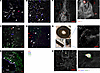 Figure 5
The human anterior uvea contains tissue resident CD3+ cells. FFP tissue sections prepared from an enucleated human eye with a healthy anterior chamber were costained with antibodies to CD3 (red), CD34 (blue), podoplanin (green), and Hoechst nuclear stain (gray). (A–E) Representative confocal immunofluorescence (IF) images showing extravascular location of CD3+ T cells in the ciliary processes (A); ciliary body proximal to the longitudinal ciliary muscles (B); within the ciliary region of the iris proximal to the anterior epithelium and dilator muscles of the posterior border layer (C); at the border of the ICA and arranged alongside PDPN+ trabeculae cells (D); and in the cribriform layer of the trabecular meshwork (TM) adjacent to the inner wall of Schlemm’s canal (E). AC, anterior chamber; BV, blood vessel; CNPE, ciliary nonpigmented epithelium; CPE, ciliary pigmented epithelium; CS, ciliary stroma; CS+M, ciliary stroma and muscle; IAE, iris anterior epithelium; IPPE, iris pigmented epithelium; IR, iris root; ICA and red arrowheaded line, iridocorneal angle; CM, cribriform meshwork; IWE, inner wall epithelium of Schlemm’s canal; OWE, outer wall epithelium of Schlemm’s canal; X, the lumen of Schlemm’s canal. Scale bar: 20 mm. (F and G) Representative immunofluorescence image showing merged expression of second harmonic resonance (SHR) collagen fibers and nuclei (gray), and CD3 (red) within a major ciliary process. Hashed squares highlight magnified region. Photographs detailing dissection of the major ciliary process from healthy human anterior uvea for whole mount staining, with SHR image showing merged expression of Col IV and CD3. Scale bar: 50 μm. (H) Images to show merged expression of SHR collagen fibers, CD3, and RORγt (blue). Hashed square highlights magnified region. All SHR images captured at ×40 magnification.
To assess the relationship of CD3+ cells with the collagenous vascular core of the ciliary processes, and the basement membrane of the ciliary pigmented epithelium (CPE), high-magnification multiphoton imaging was utilized to generate second harmonic resonance images of the collagen fibers from coronal sections of healthy tissue (Figure 5F). This demonstrates that T cells are closely associated with the fibers that constitute the dense collagen core of the ciliary processes. Most T cells were observed at the center of the collagenous cores, but cells are also located proximal to fine collagen fibers, inserting into the CPE. This was validated by whole mount imaging of ciliary body tissue to negate the potential for displacement of T cells during the sectioning process (Figure 5G). Despite low frequency, second harmonic imaging also enabled us to identify RORγt+ expression of CD3+ cells within the normal ciliary body (Figure 5H).
To exclude the potential artifact of peripheral blood contamination, we compared the relative frequencies of T cell subsets present in postmortem AU and scleral (S) tissue, with peripheral blood mononuclear cells (PBMCs) isolated from normal healthy controls (Figure 6A and Supplemental Figure 9, A and B). In comparison with blood, AU and S samples contain a significantly lower proportion of CD4+, with a higher frequency of CD8+ (Figure 6B). Flow cytometry highlights AU and S tissues possess a diverse array of leukocyte subsets, including CD3+CD4–CD8– T cells (Supplemental Figure 9, C and D). While the relative frequency of this population remains unchanged compared with PBMCs (Figure 6C), a small subset of CD3+ T cells were γδTCR+ (Figure 6D). Extended immune-phenotyping of the CD3+γδTCR+ population compared with PBMCs revealed a higher frequency of AU CD3+ T cells expressing CCR6 and CD161 (Figure 6E), producing IL-17A following ex vivo stimulation (Figure 6F).
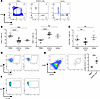 Figure 6
CD3+γδTCR+ cells in the anterior uvea and sclera can produce IL-17A. Flow cytometric analysis was used to phenotype T cell subsets from postmortem anterior uvea (AU) and sclera (S) tissue samples and compared with peripheral blood mononuclear cells (PBMCs) isolated from normal healthy controls. (A and B) Representative FACS plots showing CD3+ populations positive for CD4+ or CD8+ isolated from AU, S. and PBMCs and compiled frequency data for the percentage of different CD3+ T subsets. (C and D) Relative frequency of CD3+CD4–CD8– cells observed in ocular tissues (AU and S) and PBMCs, and representative FACS plots to show CD3+γδTCR+ cells in AU and S. Samples: anterior uvea (n = 19; data obtained from 7 independent experiments), sclera (n = 4; data obtained from 2 independent experiments), and control blood (n = 9; data obtained from 4 independent experiments). Mean percentage is represented by the central line with data shown as mean ± SEM. ***P < 0.001 and ****P < 0.0001 (Brown-Forsythe and Welch ANOVA, with Dunnett’s T3 correction for multiple comparisons). (E) Representative FACS plots to demonstrate gating of CCR6+CD161+ cells in PBMC and AU samples, and graph showing relative frequency of this population within the CD3+ T cell pool. Samples: PBMC (n = 4) AU (n = 7). ***P < 0.001 (unpaired Student’s 2-tailed t test). (F) FACS plots of AU and S following in vitro stimulation with PMA/Ionomycin to demonstrate a fraction CD3+ cells express IL-17A.
Collectively, these human data reveal that the healthy anterior tissues contain populations of T lymphocytes that are located within collagenous cores at the center of the ciliary processes, within the ciliary body and the sclera.


