
Research ArticleInflammationNephrology
Open Access |  10.1172/jci.insight.177004
Kidney mitochondrial DNA contributes to systemic IL-6 release in sepsis-associated acute kidney injury
Avnee J. Kumar,1,2 Katharine Epler,1,2 Jing Wang,3 Alice Shen,4 Negin Samandari,1 Mark L. Rolfsen,5 Laura A. Barnes,1,2 Gerald S. Shadel,6 Alexandra G. Moyzis,6 Alva G. Sainz,6,7 Karlen Ulubabyan,4 Kefeng Li,8 Kristen Jepsen,9 Xinrui Li,1 Mark M. Fuster,1,2 Roger G. Spragg,2 Roman Sasik,10 Volker Vallon,1,11 Helen Goodluck,1,11 Joachim H. Ix,1,11 Prabhleen Singh,1,11 and Mark L. Hepokoski1,2
1VA San Diego Healthcare System, San Diego, California, USA.
2Division of Pulmonary and Critical Care and Sleep Medicine, UCSD, La Jolla, California, USA.
3Department of Critical Care Medicine, Yantai Yuhuangding Hospital, Affiliated with Medical College of Qingdao University, Yantai, Shandong, China.
4Department of Medicine, School of Medicine, UCSD, La Jolla, California, USA.
5Vanderbilt University, Nashville, Tennessee, USA.
6Salk Institute for Biological Sciences, La Jolla, California, USA.
7Department of Pathology, Yale School of Medicine, New Haven, Connecticut, USA.
8Faculty of Applied Sciences, Macao Polytechnic University, Macao, China.
9Institute for Genomic Medicine (IGM),
10Center for Computational Biology & Bioinformatics, and
11Division of Nephrology and Hypertension, UCSD, La Jolla, California, USA.
Address correspondence to: Mark L. Hepokoski, Division of Pulmonary and Critical Care and Sleep Medicine, 3350 La Jolla Village Drive, MC 111-J, San Diego, California, 92161, USA. Phone: 858.552.8585 ext. 6159; Email: mhepokoski@health.ucsd.edu.
Authorship note: PS and MLH contributed equally to this work and are co–senior authors.
Find articles by Kumar, A. in: PubMed | Google Scholar
1VA San Diego Healthcare System, San Diego, California, USA.
2Division of Pulmonary and Critical Care and Sleep Medicine, UCSD, La Jolla, California, USA.
3Department of Critical Care Medicine, Yantai Yuhuangding Hospital, Affiliated with Medical College of Qingdao University, Yantai, Shandong, China.
4Department of Medicine, School of Medicine, UCSD, La Jolla, California, USA.
5Vanderbilt University, Nashville, Tennessee, USA.
6Salk Institute for Biological Sciences, La Jolla, California, USA.
7Department of Pathology, Yale School of Medicine, New Haven, Connecticut, USA.
8Faculty of Applied Sciences, Macao Polytechnic University, Macao, China.
9Institute for Genomic Medicine (IGM),
10Center for Computational Biology & Bioinformatics, and
11Division of Nephrology and Hypertension, UCSD, La Jolla, California, USA.
Address correspondence to: Mark L. Hepokoski, Division of Pulmonary and Critical Care and Sleep Medicine, 3350 La Jolla Village Drive, MC 111-J, San Diego, California, 92161, USA. Phone: 858.552.8585 ext. 6159; Email: mhepokoski@health.ucsd.edu.
Authorship note: PS and MLH contributed equally to this work and are co–senior authors.
Find articles by Epler, K. in: PubMed | Google Scholar
1VA San Diego Healthcare System, San Diego, California, USA.
2Division of Pulmonary and Critical Care and Sleep Medicine, UCSD, La Jolla, California, USA.
3Department of Critical Care Medicine, Yantai Yuhuangding Hospital, Affiliated with Medical College of Qingdao University, Yantai, Shandong, China.
4Department of Medicine, School of Medicine, UCSD, La Jolla, California, USA.
5Vanderbilt University, Nashville, Tennessee, USA.
6Salk Institute for Biological Sciences, La Jolla, California, USA.
7Department of Pathology, Yale School of Medicine, New Haven, Connecticut, USA.
8Faculty of Applied Sciences, Macao Polytechnic University, Macao, China.
9Institute for Genomic Medicine (IGM),
10Center for Computational Biology & Bioinformatics, and
11Division of Nephrology and Hypertension, UCSD, La Jolla, California, USA.
Address correspondence to: Mark L. Hepokoski, Division of Pulmonary and Critical Care and Sleep Medicine, 3350 La Jolla Village Drive, MC 111-J, San Diego, California, 92161, USA. Phone: 858.552.8585 ext. 6159; Email: mhepokoski@health.ucsd.edu.
Authorship note: PS and MLH contributed equally to this work and are co–senior authors.
Find articles by Wang, J. in: PubMed | Google Scholar
1VA San Diego Healthcare System, San Diego, California, USA.
2Division of Pulmonary and Critical Care and Sleep Medicine, UCSD, La Jolla, California, USA.
3Department of Critical Care Medicine, Yantai Yuhuangding Hospital, Affiliated with Medical College of Qingdao University, Yantai, Shandong, China.
4Department of Medicine, School of Medicine, UCSD, La Jolla, California, USA.
5Vanderbilt University, Nashville, Tennessee, USA.
6Salk Institute for Biological Sciences, La Jolla, California, USA.
7Department of Pathology, Yale School of Medicine, New Haven, Connecticut, USA.
8Faculty of Applied Sciences, Macao Polytechnic University, Macao, China.
9Institute for Genomic Medicine (IGM),
10Center for Computational Biology & Bioinformatics, and
11Division of Nephrology and Hypertension, UCSD, La Jolla, California, USA.
Address correspondence to: Mark L. Hepokoski, Division of Pulmonary and Critical Care and Sleep Medicine, 3350 La Jolla Village Drive, MC 111-J, San Diego, California, 92161, USA. Phone: 858.552.8585 ext. 6159; Email: mhepokoski@health.ucsd.edu.
Authorship note: PS and MLH contributed equally to this work and are co–senior authors.
Find articles by Shen, A. in: PubMed | Google Scholar
1VA San Diego Healthcare System, San Diego, California, USA.
2Division of Pulmonary and Critical Care and Sleep Medicine, UCSD, La Jolla, California, USA.
3Department of Critical Care Medicine, Yantai Yuhuangding Hospital, Affiliated with Medical College of Qingdao University, Yantai, Shandong, China.
4Department of Medicine, School of Medicine, UCSD, La Jolla, California, USA.
5Vanderbilt University, Nashville, Tennessee, USA.
6Salk Institute for Biological Sciences, La Jolla, California, USA.
7Department of Pathology, Yale School of Medicine, New Haven, Connecticut, USA.
8Faculty of Applied Sciences, Macao Polytechnic University, Macao, China.
9Institute for Genomic Medicine (IGM),
10Center for Computational Biology & Bioinformatics, and
11Division of Nephrology and Hypertension, UCSD, La Jolla, California, USA.
Address correspondence to: Mark L. Hepokoski, Division of Pulmonary and Critical Care and Sleep Medicine, 3350 La Jolla Village Drive, MC 111-J, San Diego, California, 92161, USA. Phone: 858.552.8585 ext. 6159; Email: mhepokoski@health.ucsd.edu.
Authorship note: PS and MLH contributed equally to this work and are co–senior authors.
Find articles by Samandari, N. in: PubMed | Google Scholar
1VA San Diego Healthcare System, San Diego, California, USA.
2Division of Pulmonary and Critical Care and Sleep Medicine, UCSD, La Jolla, California, USA.
3Department of Critical Care Medicine, Yantai Yuhuangding Hospital, Affiliated with Medical College of Qingdao University, Yantai, Shandong, China.
4Department of Medicine, School of Medicine, UCSD, La Jolla, California, USA.
5Vanderbilt University, Nashville, Tennessee, USA.
6Salk Institute for Biological Sciences, La Jolla, California, USA.
7Department of Pathology, Yale School of Medicine, New Haven, Connecticut, USA.
8Faculty of Applied Sciences, Macao Polytechnic University, Macao, China.
9Institute for Genomic Medicine (IGM),
10Center for Computational Biology & Bioinformatics, and
11Division of Nephrology and Hypertension, UCSD, La Jolla, California, USA.
Address correspondence to: Mark L. Hepokoski, Division of Pulmonary and Critical Care and Sleep Medicine, 3350 La Jolla Village Drive, MC 111-J, San Diego, California, 92161, USA. Phone: 858.552.8585 ext. 6159; Email: mhepokoski@health.ucsd.edu.
Authorship note: PS and MLH contributed equally to this work and are co–senior authors.
Find articles by Rolfsen, M. in: PubMed | Google Scholar
1VA San Diego Healthcare System, San Diego, California, USA.
2Division of Pulmonary and Critical Care and Sleep Medicine, UCSD, La Jolla, California, USA.
3Department of Critical Care Medicine, Yantai Yuhuangding Hospital, Affiliated with Medical College of Qingdao University, Yantai, Shandong, China.
4Department of Medicine, School of Medicine, UCSD, La Jolla, California, USA.
5Vanderbilt University, Nashville, Tennessee, USA.
6Salk Institute for Biological Sciences, La Jolla, California, USA.
7Department of Pathology, Yale School of Medicine, New Haven, Connecticut, USA.
8Faculty of Applied Sciences, Macao Polytechnic University, Macao, China.
9Institute for Genomic Medicine (IGM),
10Center for Computational Biology & Bioinformatics, and
11Division of Nephrology and Hypertension, UCSD, La Jolla, California, USA.
Address correspondence to: Mark L. Hepokoski, Division of Pulmonary and Critical Care and Sleep Medicine, 3350 La Jolla Village Drive, MC 111-J, San Diego, California, 92161, USA. Phone: 858.552.8585 ext. 6159; Email: mhepokoski@health.ucsd.edu.
Authorship note: PS and MLH contributed equally to this work and are co–senior authors.
Find articles by Barnes, L. in: PubMed | Google Scholar
1VA San Diego Healthcare System, San Diego, California, USA.
2Division of Pulmonary and Critical Care and Sleep Medicine, UCSD, La Jolla, California, USA.
3Department of Critical Care Medicine, Yantai Yuhuangding Hospital, Affiliated with Medical College of Qingdao University, Yantai, Shandong, China.
4Department of Medicine, School of Medicine, UCSD, La Jolla, California, USA.
5Vanderbilt University, Nashville, Tennessee, USA.
6Salk Institute for Biological Sciences, La Jolla, California, USA.
7Department of Pathology, Yale School of Medicine, New Haven, Connecticut, USA.
8Faculty of Applied Sciences, Macao Polytechnic University, Macao, China.
9Institute for Genomic Medicine (IGM),
10Center for Computational Biology & Bioinformatics, and
11Division of Nephrology and Hypertension, UCSD, La Jolla, California, USA.
Address correspondence to: Mark L. Hepokoski, Division of Pulmonary and Critical Care and Sleep Medicine, 3350 La Jolla Village Drive, MC 111-J, San Diego, California, 92161, USA. Phone: 858.552.8585 ext. 6159; Email: mhepokoski@health.ucsd.edu.
Authorship note: PS and MLH contributed equally to this work and are co–senior authors.
Find articles by Shadel, G. in: PubMed | Google Scholar
1VA San Diego Healthcare System, San Diego, California, USA.
2Division of Pulmonary and Critical Care and Sleep Medicine, UCSD, La Jolla, California, USA.
3Department of Critical Care Medicine, Yantai Yuhuangding Hospital, Affiliated with Medical College of Qingdao University, Yantai, Shandong, China.
4Department of Medicine, School of Medicine, UCSD, La Jolla, California, USA.
5Vanderbilt University, Nashville, Tennessee, USA.
6Salk Institute for Biological Sciences, La Jolla, California, USA.
7Department of Pathology, Yale School of Medicine, New Haven, Connecticut, USA.
8Faculty of Applied Sciences, Macao Polytechnic University, Macao, China.
9Institute for Genomic Medicine (IGM),
10Center for Computational Biology & Bioinformatics, and
11Division of Nephrology and Hypertension, UCSD, La Jolla, California, USA.
Address correspondence to: Mark L. Hepokoski, Division of Pulmonary and Critical Care and Sleep Medicine, 3350 La Jolla Village Drive, MC 111-J, San Diego, California, 92161, USA. Phone: 858.552.8585 ext. 6159; Email: mhepokoski@health.ucsd.edu.
Authorship note: PS and MLH contributed equally to this work and are co–senior authors.
Find articles by Moyzis, A. in: PubMed | Google Scholar
1VA San Diego Healthcare System, San Diego, California, USA.
2Division of Pulmonary and Critical Care and Sleep Medicine, UCSD, La Jolla, California, USA.
3Department of Critical Care Medicine, Yantai Yuhuangding Hospital, Affiliated with Medical College of Qingdao University, Yantai, Shandong, China.
4Department of Medicine, School of Medicine, UCSD, La Jolla, California, USA.
5Vanderbilt University, Nashville, Tennessee, USA.
6Salk Institute for Biological Sciences, La Jolla, California, USA.
7Department of Pathology, Yale School of Medicine, New Haven, Connecticut, USA.
8Faculty of Applied Sciences, Macao Polytechnic University, Macao, China.
9Institute for Genomic Medicine (IGM),
10Center for Computational Biology & Bioinformatics, and
11Division of Nephrology and Hypertension, UCSD, La Jolla, California, USA.
Address correspondence to: Mark L. Hepokoski, Division of Pulmonary and Critical Care and Sleep Medicine, 3350 La Jolla Village Drive, MC 111-J, San Diego, California, 92161, USA. Phone: 858.552.8585 ext. 6159; Email: mhepokoski@health.ucsd.edu.
Authorship note: PS and MLH contributed equally to this work and are co–senior authors.
Find articles by Sainz, A. in: PubMed | Google Scholar
1VA San Diego Healthcare System, San Diego, California, USA.
2Division of Pulmonary and Critical Care and Sleep Medicine, UCSD, La Jolla, California, USA.
3Department of Critical Care Medicine, Yantai Yuhuangding Hospital, Affiliated with Medical College of Qingdao University, Yantai, Shandong, China.
4Department of Medicine, School of Medicine, UCSD, La Jolla, California, USA.
5Vanderbilt University, Nashville, Tennessee, USA.
6Salk Institute for Biological Sciences, La Jolla, California, USA.
7Department of Pathology, Yale School of Medicine, New Haven, Connecticut, USA.
8Faculty of Applied Sciences, Macao Polytechnic University, Macao, China.
9Institute for Genomic Medicine (IGM),
10Center for Computational Biology & Bioinformatics, and
11Division of Nephrology and Hypertension, UCSD, La Jolla, California, USA.
Address correspondence to: Mark L. Hepokoski, Division of Pulmonary and Critical Care and Sleep Medicine, 3350 La Jolla Village Drive, MC 111-J, San Diego, California, 92161, USA. Phone: 858.552.8585 ext. 6159; Email: mhepokoski@health.ucsd.edu.
Authorship note: PS and MLH contributed equally to this work and are co–senior authors.
Find articles by Ulubabyan, K. in: PubMed | Google Scholar
1VA San Diego Healthcare System, San Diego, California, USA.
2Division of Pulmonary and Critical Care and Sleep Medicine, UCSD, La Jolla, California, USA.
3Department of Critical Care Medicine, Yantai Yuhuangding Hospital, Affiliated with Medical College of Qingdao University, Yantai, Shandong, China.
4Department of Medicine, School of Medicine, UCSD, La Jolla, California, USA.
5Vanderbilt University, Nashville, Tennessee, USA.
6Salk Institute for Biological Sciences, La Jolla, California, USA.
7Department of Pathology, Yale School of Medicine, New Haven, Connecticut, USA.
8Faculty of Applied Sciences, Macao Polytechnic University, Macao, China.
9Institute for Genomic Medicine (IGM),
10Center for Computational Biology & Bioinformatics, and
11Division of Nephrology and Hypertension, UCSD, La Jolla, California, USA.
Address correspondence to: Mark L. Hepokoski, Division of Pulmonary and Critical Care and Sleep Medicine, 3350 La Jolla Village Drive, MC 111-J, San Diego, California, 92161, USA. Phone: 858.552.8585 ext. 6159; Email: mhepokoski@health.ucsd.edu.
Authorship note: PS and MLH contributed equally to this work and are co–senior authors.
Find articles by Li, K. in: PubMed | Google Scholar
1VA San Diego Healthcare System, San Diego, California, USA.
2Division of Pulmonary and Critical Care and Sleep Medicine, UCSD, La Jolla, California, USA.
3Department of Critical Care Medicine, Yantai Yuhuangding Hospital, Affiliated with Medical College of Qingdao University, Yantai, Shandong, China.
4Department of Medicine, School of Medicine, UCSD, La Jolla, California, USA.
5Vanderbilt University, Nashville, Tennessee, USA.
6Salk Institute for Biological Sciences, La Jolla, California, USA.
7Department of Pathology, Yale School of Medicine, New Haven, Connecticut, USA.
8Faculty of Applied Sciences, Macao Polytechnic University, Macao, China.
9Institute for Genomic Medicine (IGM),
10Center for Computational Biology & Bioinformatics, and
11Division of Nephrology and Hypertension, UCSD, La Jolla, California, USA.
Address correspondence to: Mark L. Hepokoski, Division of Pulmonary and Critical Care and Sleep Medicine, 3350 La Jolla Village Drive, MC 111-J, San Diego, California, 92161, USA. Phone: 858.552.8585 ext. 6159; Email: mhepokoski@health.ucsd.edu.
Authorship note: PS and MLH contributed equally to this work and are co–senior authors.
Find articles by Jepsen, K. in: PubMed | Google Scholar
1VA San Diego Healthcare System, San Diego, California, USA.
2Division of Pulmonary and Critical Care and Sleep Medicine, UCSD, La Jolla, California, USA.
3Department of Critical Care Medicine, Yantai Yuhuangding Hospital, Affiliated with Medical College of Qingdao University, Yantai, Shandong, China.
4Department of Medicine, School of Medicine, UCSD, La Jolla, California, USA.
5Vanderbilt University, Nashville, Tennessee, USA.
6Salk Institute for Biological Sciences, La Jolla, California, USA.
7Department of Pathology, Yale School of Medicine, New Haven, Connecticut, USA.
8Faculty of Applied Sciences, Macao Polytechnic University, Macao, China.
9Institute for Genomic Medicine (IGM),
10Center for Computational Biology & Bioinformatics, and
11Division of Nephrology and Hypertension, UCSD, La Jolla, California, USA.
Address correspondence to: Mark L. Hepokoski, Division of Pulmonary and Critical Care and Sleep Medicine, 3350 La Jolla Village Drive, MC 111-J, San Diego, California, 92161, USA. Phone: 858.552.8585 ext. 6159; Email: mhepokoski@health.ucsd.edu.
Authorship note: PS and MLH contributed equally to this work and are co–senior authors.
Find articles by Li, X. in: PubMed | Google Scholar
1VA San Diego Healthcare System, San Diego, California, USA.
2Division of Pulmonary and Critical Care and Sleep Medicine, UCSD, La Jolla, California, USA.
3Department of Critical Care Medicine, Yantai Yuhuangding Hospital, Affiliated with Medical College of Qingdao University, Yantai, Shandong, China.
4Department of Medicine, School of Medicine, UCSD, La Jolla, California, USA.
5Vanderbilt University, Nashville, Tennessee, USA.
6Salk Institute for Biological Sciences, La Jolla, California, USA.
7Department of Pathology, Yale School of Medicine, New Haven, Connecticut, USA.
8Faculty of Applied Sciences, Macao Polytechnic University, Macao, China.
9Institute for Genomic Medicine (IGM),
10Center for Computational Biology & Bioinformatics, and
11Division of Nephrology and Hypertension, UCSD, La Jolla, California, USA.
Address correspondence to: Mark L. Hepokoski, Division of Pulmonary and Critical Care and Sleep Medicine, 3350 La Jolla Village Drive, MC 111-J, San Diego, California, 92161, USA. Phone: 858.552.8585 ext. 6159; Email: mhepokoski@health.ucsd.edu.
Authorship note: PS and MLH contributed equally to this work and are co–senior authors.
Find articles by Fuster, M. in: PubMed | Google Scholar
1VA San Diego Healthcare System, San Diego, California, USA.
2Division of Pulmonary and Critical Care and Sleep Medicine, UCSD, La Jolla, California, USA.
3Department of Critical Care Medicine, Yantai Yuhuangding Hospital, Affiliated with Medical College of Qingdao University, Yantai, Shandong, China.
4Department of Medicine, School of Medicine, UCSD, La Jolla, California, USA.
5Vanderbilt University, Nashville, Tennessee, USA.
6Salk Institute for Biological Sciences, La Jolla, California, USA.
7Department of Pathology, Yale School of Medicine, New Haven, Connecticut, USA.
8Faculty of Applied Sciences, Macao Polytechnic University, Macao, China.
9Institute for Genomic Medicine (IGM),
10Center for Computational Biology & Bioinformatics, and
11Division of Nephrology and Hypertension, UCSD, La Jolla, California, USA.
Address correspondence to: Mark L. Hepokoski, Division of Pulmonary and Critical Care and Sleep Medicine, 3350 La Jolla Village Drive, MC 111-J, San Diego, California, 92161, USA. Phone: 858.552.8585 ext. 6159; Email: mhepokoski@health.ucsd.edu.
Authorship note: PS and MLH contributed equally to this work and are co–senior authors.
Find articles by Spragg, R. in: PubMed | Google Scholar
1VA San Diego Healthcare System, San Diego, California, USA.
2Division of Pulmonary and Critical Care and Sleep Medicine, UCSD, La Jolla, California, USA.
3Department of Critical Care Medicine, Yantai Yuhuangding Hospital, Affiliated with Medical College of Qingdao University, Yantai, Shandong, China.
4Department of Medicine, School of Medicine, UCSD, La Jolla, California, USA.
5Vanderbilt University, Nashville, Tennessee, USA.
6Salk Institute for Biological Sciences, La Jolla, California, USA.
7Department of Pathology, Yale School of Medicine, New Haven, Connecticut, USA.
8Faculty of Applied Sciences, Macao Polytechnic University, Macao, China.
9Institute for Genomic Medicine (IGM),
10Center for Computational Biology & Bioinformatics, and
11Division of Nephrology and Hypertension, UCSD, La Jolla, California, USA.
Address correspondence to: Mark L. Hepokoski, Division of Pulmonary and Critical Care and Sleep Medicine, 3350 La Jolla Village Drive, MC 111-J, San Diego, California, 92161, USA. Phone: 858.552.8585 ext. 6159; Email: mhepokoski@health.ucsd.edu.
Authorship note: PS and MLH contributed equally to this work and are co–senior authors.
Find articles by Sasik, R. in: PubMed | Google Scholar
1VA San Diego Healthcare System, San Diego, California, USA.
2Division of Pulmonary and Critical Care and Sleep Medicine, UCSD, La Jolla, California, USA.
3Department of Critical Care Medicine, Yantai Yuhuangding Hospital, Affiliated with Medical College of Qingdao University, Yantai, Shandong, China.
4Department of Medicine, School of Medicine, UCSD, La Jolla, California, USA.
5Vanderbilt University, Nashville, Tennessee, USA.
6Salk Institute for Biological Sciences, La Jolla, California, USA.
7Department of Pathology, Yale School of Medicine, New Haven, Connecticut, USA.
8Faculty of Applied Sciences, Macao Polytechnic University, Macao, China.
9Institute for Genomic Medicine (IGM),
10Center for Computational Biology & Bioinformatics, and
11Division of Nephrology and Hypertension, UCSD, La Jolla, California, USA.
Address correspondence to: Mark L. Hepokoski, Division of Pulmonary and Critical Care and Sleep Medicine, 3350 La Jolla Village Drive, MC 111-J, San Diego, California, 92161, USA. Phone: 858.552.8585 ext. 6159; Email: mhepokoski@health.ucsd.edu.
Authorship note: PS and MLH contributed equally to this work and are co–senior authors.
Find articles by Vallon, V. in: PubMed | Google Scholar
1VA San Diego Healthcare System, San Diego, California, USA.
2Division of Pulmonary and Critical Care and Sleep Medicine, UCSD, La Jolla, California, USA.
3Department of Critical Care Medicine, Yantai Yuhuangding Hospital, Affiliated with Medical College of Qingdao University, Yantai, Shandong, China.
4Department of Medicine, School of Medicine, UCSD, La Jolla, California, USA.
5Vanderbilt University, Nashville, Tennessee, USA.
6Salk Institute for Biological Sciences, La Jolla, California, USA.
7Department of Pathology, Yale School of Medicine, New Haven, Connecticut, USA.
8Faculty of Applied Sciences, Macao Polytechnic University, Macao, China.
9Institute for Genomic Medicine (IGM),
10Center for Computational Biology & Bioinformatics, and
11Division of Nephrology and Hypertension, UCSD, La Jolla, California, USA.
Address correspondence to: Mark L. Hepokoski, Division of Pulmonary and Critical Care and Sleep Medicine, 3350 La Jolla Village Drive, MC 111-J, San Diego, California, 92161, USA. Phone: 858.552.8585 ext. 6159; Email: mhepokoski@health.ucsd.edu.
Authorship note: PS and MLH contributed equally to this work and are co–senior authors.
Find articles by Goodluck, H. in: PubMed | Google Scholar
1VA San Diego Healthcare System, San Diego, California, USA.
2Division of Pulmonary and Critical Care and Sleep Medicine, UCSD, La Jolla, California, USA.
3Department of Critical Care Medicine, Yantai Yuhuangding Hospital, Affiliated with Medical College of Qingdao University, Yantai, Shandong, China.
4Department of Medicine, School of Medicine, UCSD, La Jolla, California, USA.
5Vanderbilt University, Nashville, Tennessee, USA.
6Salk Institute for Biological Sciences, La Jolla, California, USA.
7Department of Pathology, Yale School of Medicine, New Haven, Connecticut, USA.
8Faculty of Applied Sciences, Macao Polytechnic University, Macao, China.
9Institute for Genomic Medicine (IGM),
10Center for Computational Biology & Bioinformatics, and
11Division of Nephrology and Hypertension, UCSD, La Jolla, California, USA.
Address correspondence to: Mark L. Hepokoski, Division of Pulmonary and Critical Care and Sleep Medicine, 3350 La Jolla Village Drive, MC 111-J, San Diego, California, 92161, USA. Phone: 858.552.8585 ext. 6159; Email: mhepokoski@health.ucsd.edu.
Authorship note: PS and MLH contributed equally to this work and are co–senior authors.
Find articles by Ix, J. in: PubMed | Google Scholar
1VA San Diego Healthcare System, San Diego, California, USA.
2Division of Pulmonary and Critical Care and Sleep Medicine, UCSD, La Jolla, California, USA.
3Department of Critical Care Medicine, Yantai Yuhuangding Hospital, Affiliated with Medical College of Qingdao University, Yantai, Shandong, China.
4Department of Medicine, School of Medicine, UCSD, La Jolla, California, USA.
5Vanderbilt University, Nashville, Tennessee, USA.
6Salk Institute for Biological Sciences, La Jolla, California, USA.
7Department of Pathology, Yale School of Medicine, New Haven, Connecticut, USA.
8Faculty of Applied Sciences, Macao Polytechnic University, Macao, China.
9Institute for Genomic Medicine (IGM),
10Center for Computational Biology & Bioinformatics, and
11Division of Nephrology and Hypertension, UCSD, La Jolla, California, USA.
Address correspondence to: Mark L. Hepokoski, Division of Pulmonary and Critical Care and Sleep Medicine, 3350 La Jolla Village Drive, MC 111-J, San Diego, California, 92161, USA. Phone: 858.552.8585 ext. 6159; Email: mhepokoski@health.ucsd.edu.
Authorship note: PS and MLH contributed equally to this work and are co–senior authors.
Find articles by Singh, P. in: PubMed | Google Scholar
1VA San Diego Healthcare System, San Diego, California, USA.
2Division of Pulmonary and Critical Care and Sleep Medicine, UCSD, La Jolla, California, USA.
3Department of Critical Care Medicine, Yantai Yuhuangding Hospital, Affiliated with Medical College of Qingdao University, Yantai, Shandong, China.
4Department of Medicine, School of Medicine, UCSD, La Jolla, California, USA.
5Vanderbilt University, Nashville, Tennessee, USA.
6Salk Institute for Biological Sciences, La Jolla, California, USA.
7Department of Pathology, Yale School of Medicine, New Haven, Connecticut, USA.
8Faculty of Applied Sciences, Macao Polytechnic University, Macao, China.
9Institute for Genomic Medicine (IGM),
10Center for Computational Biology & Bioinformatics, and
11Division of Nephrology and Hypertension, UCSD, La Jolla, California, USA.
Address correspondence to: Mark L. Hepokoski, Division of Pulmonary and Critical Care and Sleep Medicine, 3350 La Jolla Village Drive, MC 111-J, San Diego, California, 92161, USA. Phone: 858.552.8585 ext. 6159; Email: mhepokoski@health.ucsd.edu.
Authorship note: PS and MLH contributed equally to this work and are co–senior authors.
Find articles by Hepokoski, M. in: PubMed | Google Scholar
Published December 8, 2025 - More info
JCI Insight. 2025;10(23):e177004. https://doi.org/10.1172/jci.insight.177004.
© 2025 Kumar et al. This work is licensed under the Creative Commons Attribution 4.0 International License. To view a copy of this license, visit http://creativecommons.org/licenses/by/4.0/.
Received: December 12, 2023; Accepted: October 21, 2025

-
Results
Systemic cytokines are increased prior to elevations in plasma creatinine after CLP. Plasma creatinine and levels of inflammatory cytokines were evaluated after CLP at 4- and 24-hour time points (Figure 1). Plasma creatinine was significantly increased after CLP compared with sham operation at 24 hours, but no significant differences were found at the 4-hour time point (Figure 1A). Plasma tumor necrosis factor α (TNF-α), keratinocyte chemoattractant/human growth-regulated oncogene (KC/GRO), IL-1β, IL-10, IL-2, IL-5, IL-6, and IL-12p70 increased significantly at 4 hours compared with sham-operated mice. Plasma TNF-α, KC/GRO, IL-1β, and IL-10 remained significantly elevated at 24 hours compared with sham mice, while IL-2, IL-5, IL-6, and IL-12p70 did not (Figure 1, B–I). Plasma IFN-γ (Figure 1J) did not significantly differ between CLP and sham mice at 4 hours and decreased at 24 hours. Plasma IL-4 (data not shown) did not significantly differ between CLP and sham mice at either time point. The change in concentration between CLP and sham mice was greatest for IL-6 compared with all other cytokines.
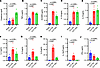 Figure 1
Systemic cytokines are increased prior to plasma creatinine in cecal ligation and puncture models of sepsis-associated AKI. Plasma creatinine (A) was significantly elevated 24 hours after cecal ligation and puncture (CLP) compared with sham operation, but no significant differences were found at the 4-hour time point. Conversely, TNF-α (B), KC/GRO (C), IL-1β (D), IL-10 (E) increased and remained increased compared with sham at 24 hours and 4 hours. IL-2 (F), IL-5 (G), IL-6 (H), and IL-12p70 (I) increased at 4 hours, but returned to sham levels at 24 hours. Plasma levels of IFN-γ (J) decreased at 24 hours in CLP compared with sham. Significant differences between groups were determined by 1-way ANOVA with Fisher’s LSD post hoc analysis. A, n = 6–7/group; B–J, n = 4–6/group.
Total CCF DNA and mtDNA are highly fragmented after CLP. There was a significant increase in fragmented CCF DNA of 100–150 bp in size in CLP versus sham mice (Figure 2A). NGS provided an mtDNA yield of 0.24%–12% relative to nuclear DNA, with 34,804–1,500,550 reads per sample mapping to the mitochondrial genome available for downstream analyses (https://www.ncbi.nlm.nih.gov/sra/PRJNA899505). Next, the size distribution of mtDNA fragments from CLP versus sham mice showed a trend toward a smaller distribution after CLP injury (Figure 2B). Size distribution analysis also revealed that roughly 10%–20% of sequenced mtDNA fragments were less than 100 bp in length. Minimum Hamming distance (minimum number of mismatches between each mtDNA fragment and the best match within the entire nuclear genome via blastn) was used to evaluate which sequences of the mitochondrial genome have the potential to exist as NUMTs. Figure 2C shows the minimum Hamming distance by location for the entire mouse mitochondrial genome compared to the nuclear genome. Several locations, such as in the cytochrome c oxidase subunit 2 (COX2), were found to have minimum Hamming distances of 0, indicating that they have exact matches within the nuclear genome. Other locations, such as within NADH dehydrogenase 1 (ND1) and cytochrome B (CytB), have very high minimum Hamming distances, suggesting they are highly unlikely to exist as NUMTs and hence are optimal regions for ddPCR target sequences with higher specificity for mtDNA.
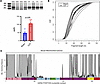 Figure 2
Circulating cell-free DNA fragments are increased after cecal ligation and puncture compared with sham operation and circulating cell-free mtDNA is highly fragmented. DNA was isolated from mouse plasma 4 hours after cecal ligation and puncture (CLP) versus sham operation. Next-generation sequencing was used to determine the size distribution of the circulating cell-free mtDNA fragments. Minimum Hamming distance for the entire mouse mitochondrial genome compared to the nuclear genome was determined by blastn in the ungapped mode. (A) The concentrations of total cell-free DNA fragments between 100 and 150 bp in length were determined by automated electrophoresis and found to be increased significantly in CLP mice versus shams. (B) Size distribution analysis of circulating cell-free mtDNA fragments showed a high degree of fragmentation after CLP, with roughly 40% of all fragments being less than 150 bp and roughly 15% being less than 100 bp in length. The overall size distribution of circulating cell-free mtDNA fragments did not differ significantly between CLP mice versus shams. (C) Several regions of the mouse mitochondrial genome, such as within the cytochrome c oxidase (COX) subunits, have very low minimum Hamming distances compared with the nuclear genome, indicating a high degree of similarity to a region of nuclear DNA. Significant differences between groups were determined by unpaired, 2-tailed t tests comparing the group means ± SEM. A, n = 4/group; B, n = 5/group. CDF, cumulative distribution function.
Plasma mtDNA concentrations are increased early after CLP. Three sets of primer/probes were identified for mice that target small mtDNA sequences in the CytB (93 bp) and ND1 genes (106 and 129 bp for ND1a and ND1b, respectively) (Table 1). The plasma mtDNA concentration determined by all 3 target sequences was significantly increased at 4 hours in CLP compared with sham mice (Figure 3, A–C). At 4 hours, CytB copy number was significantly increased compared with ND1a and ND1b (Figure 3D). However, a simple linear regression of copy number obtained by the CytB versus ND1a and ND1b target sequences showed a positive and significant correlation, indicating they may yield similar results when comparing to biological outcomes (Figure 3E).
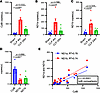 Figure 3
Circulating cell-free mtDNA is increased in mice after cecal ligation and puncture compared with sham operation. Plasma concentrations of mtDNA were determined by droplet digital PCR targeting sequences within the cytochrome b (CytB) and NADH dehydrogenase 1 (ND1) genes. These genes were chosen based on their dissimilarity from any region of the nuclear genome based on minimum Hamming distance, and small sequences were targeted to account for fragmentation. Plasma concentrations of CytB (A), ND1a (B), and ND1b (C) were all increased significantly in cecal ligation and puncture (CLP) mice compared with shams at 4 hours. CytB and ND1b remained significantly increased at 24 hours compared with shams, and CytB was also increased significantly at 4 hours versus 24 hours after CLP. (D) The smallest target sequence, CytB, was increased significantly compared with ND1a and ND1b at 4 hours after CLP. (E) Simple linear regression between plasma concentrations of CytB and ND1a and ND1b, respectively, showed a positive and significant correlation for both comparisons. Significant differences between groups were determined by 1-way ANOVA with Tukey’s post hoc analysis. n = 6/group.
Multiple plasma mtDNA SNPs match SNPs identified in the kidney. Plasma mtDNA SNPs were identified and compared to those found in the kidney, heart, liver, buffy coat, and lung tissue in mice exposed to CLP to gain insights into the potential tissue origin of CCF-mtDNA. Buffy coat was utilized for evaluation of leukocytes, as prior studies suggest circulating leukocytes are a major source of circulating mtDNA (32). The kidney had significantly more mtDNA SNPs present after CLP compared with the heart, liver, and lung; no SNPs were identified in the buffy coat (Figure 4). Plasma mtDNA SNPs from individual mice that match those found in one tissue site only are shown in Table 2. Four out of 5 mice had at least 1, and up to 8, plasma mtDNA SNPs, that were also present in the kidney, but not in the heart, liver, or lung. Two mice had plasma mtDNA SNPs that were present in plasma and only the lung. The liver and heart each only had a unique SNP matching the plasma in one mouse. Every mouse had at least 1, and up to 4, plasma SNPs that matched multiple organs as demonstrated in Supplemental Table 1 (supplemental material available online with this article; https://doi.org/10.1172/jci.insight.177004DS1), with the kidney being the only organ present in all cases of multiple tissue matches. Finally, each mouse had several plasma mtDNA SNPs that were not present in any of the tissues evaluated (data not shown, but sequencing files available at http://www.ncbi.nlm.nih.gov/bioproject/899505).
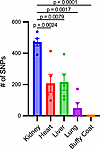 Figure 4
The kidney has increased mtDNA single-nucleotide polymorphisms. When compared with the heart, liver, lung, and buffy coat, the kidney had an absolute increase in single-nucleotide polymorphisms (SNPs) (P = 0.0068, P = 0.0216, P = 0.0049, P = 0.001 respectively). Significant differences between groups were determined by 1-way ANOVA with Fisher’s LSD post hoc analysis. n = 5/group.
Metabolome comparisons in tissues after CLP. Next-generation metabolomics was then utilized to compare the metabolic changes that occur in the kidney after CLP to those found in the heart, liver, and lung. Partial least squares discriminate analysis (PLS-DA), a supervised multivariate analysis, demonstrated a significant separation between the metabolic profile in the kidney of CLP versus sham mice (Figure 5A). A leave-one-out cross-validation (LOOCV) was performed to check the predictive ability of the PLS-DA model, and obtained a Q2 score of 0.84, which implied a high quality PLS-DA model (7). There were also significant metabolomic changes between CLP and sham mice in the heart, liver, and lung, with Q2 scores of 0.6, 0.6, and 0.8, respectively. Next, a volcano plot analysis with a fold-change threshold of 1.2 and adjusted P of less than 0.05 was conducted to identify metabolites that were either significantly increased or decreased in the kidney. This analysis showed that over 20% of the 483 total metabolites analyzed were significantly changed in CLP versus sham mice (Figure 5B). The significantly changed metabolites between CLP and sham mice were then ranked by their variable importance in projection (VIP) scores to identify the metabolites and metabolic pathways that were most impacted. Out of the top 25 metabolites most significantly altered in the kidney, 11 were phospholipids, such as phosphatidylcholine — PC(16:0/22:6) and PC(32:2) — and 6 were medium and long-chain acylcarnitines from the fatty acid oxidation (FAO) pathway such as adipoylcarnitine and decanoylcarnitine (Figure 5C). The fold change was greatest for the FAO metabolites, which were increased greater than 3-fold in CLP versus sham mice. Deoxyguanosine, 1 of the 4 deoxyribonucleosides, and chenodeoxycholic acid, a bile acid, were the only metabolites in the top 25 that were significantly decreased in CLP versus sham mice. Finally, the sum of the fractional impact of all the significantly altered metabolites in kidney, heart, liver, and lung tissue from CLP versus sham mice were compared to determine which tissue experienced the greatest metabolomic change. The sum of the fractional impact was highest in the kidney compared with the other organs evaluated (Figure 5D).
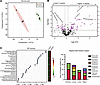 Figure 5
Kidney metabolomic changes are increased compared with other organs after sepsis by cecal ligation and puncture. Next-generation metabolomics was used to evaluate metabolic changes in the kidney after cecal ligation and puncture (CLP) compared to those in the lung, liver, and heart. (A) PLS-DA, a supervised multivariate analysis, showing a significant difference in the metabolomic profile in kidney tissue of mice after CLP versus sham operation. (B) Volcano plot analysis shows the number of significantly increased or decreased metabolites in kidney tissue of mice after CLP versus sham operation, with 20% of the 483 total metabolites analyzed showing significant differences. Fold change greater than 1.2 and FDR-adjusted P value of less than 0.05 were considered significant. (C) Top 25 metabolites contributing to metabolomic differences between CLP versus sham groups as ranked by VIP scores showed majority of the most significantly altered metabolites were phospholipids, i.e., phosphatidylcholine [PC(32:2)], or medium- and long-chain acylcarnitines (i.e., adipoylcarnitine). (D) Comparison of the sum of the fractional impact of all significantly altered metabolites shows the greatest sum in the kidney followed by the lung, heart, and liver, respectively. n = 4 for sham, n = 5 for CLP.
Kidney mtDNA causes IL-6 release from dendritic cells and plasma IL-6 is increased after kidney mtDAMP injection. Next, the impact of mtDNA with and without TLR9 inhibition on IL-6 release from dendritic cells (DCs) isolated from mouse bone marrow in vitro. We chose to focus on IL-6 since it showed the greatest absolute increase compared with other cytokines, and IL-6 is a well-established mediator of systemic inflammation that predicts mortality in the CLP model of sepsis (33). However, we had a comprehensive evaluation of additional cytokines included in our panel as well. For the in vitro experiments, DCs were plated and treated with CpG (1 μM) as a positive control or kidney (10 μg/mL) and incubated for 4 hours prior to quantification of cytokines in the cell culture supernatant. The CpG- and mtDNA-treated cells had a significant increase in IL-6 in the supernatant compared with untreated cells, which was not found with the addition of a TLR9 inhibitor (Figure 6A). Concentrations of TNF-α, KC/GRO, and IL-4 in the supernatant were also increased significantly by mtDNA treatment, which was mitigated by TLR9 inhibition in only TNF-α and KC/GRO. No other cytokines evaluated were significantly increased by mtDNA (Supplemental Figure 1). In vivo, mice were injected with kidney mtDAMP solution to mimic the concentration of mtDNA released during sepsis (15). Mice treated with kidney mtDAMPs had a significant increase in plasma IL-6 at 4 hours compared with mice treated with normal saline, and the plasma IL-6 increase was mitigated by TLR9 inhibition (Figure 6B). Plasma concentrations of IL-10 and IL-2 were also increased by mtDAMP injection, but their concentration was not significantly suppressed by treatment with the TLR9 inhibitor (Supplemental Figure 2). Finally, to test whether kidney mtDNA would lead to mtDNA release from DCs, CytB was compared in the supernatant at 1 and 6 hours after mtDNA treatment. The CytB concentration increased significantly at 6 hours compared with 1 hour after kidney mtDNA exposure, which was not found in controls (Figure 6C).
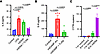 Figure 6
CpG in vitro in DCs and kidney mtDAMP in vivo contributes to IL-6 release. (A) DCs isolated from mouse bone marrow were treated with CpG (1 μM) as a positive control or kidney mtDNA (10 μg/mL) and incubated for 4 hours prior to quantification of IL-6 in the culture supernatant. Additional cells were additionally treated with TLR9 inhibitor. Cells treated with CpG and mtDNA had a significant increase in IL-6 in supernatant compared to controls. However, IL-6 concentrations in supernatants from cells treated with mtDNA and a TLR9 inhibitor decreased significantly from mtDNA treatment alone. (B) Mice were treated with mtDAMPs followed by measurement of plasma IL-6 at 4 hours with and without TLR9 inhibition. Plasma IL-6 concentrations were increased significantly in mice at 4 hours following subcutaneous injection of mtDAMPs vs normal saline (control). Plasma IL-6 concentrations decreased significantly after mtDNA plus TLR9 inhibition compared mtDNA alone. (C) mtDNA levels were measurable via CYTB. Significant differences between groups were determined by 1-way ANOVA with Fisher’s LSD (A and B) or Tukey’s (C) post hoc analysis. Experiment in A was completed 3 separate times. A, n = 5 wells/group; B, n = 4/group.
Increased plasma mtDNA is associated with S-AKI and correlates with plasma IL-6 in critically ill individuals with sepsis. We compared CCF-mtDNA concentrations in plasma from critically ill individuals with S-AKI compared to those with sepsis without AKI, as well as the association between plasma mtDNA concentrations and IL-6. Previously, we validated a human mtDNA primer/probe in the ND1 region that avoids NUMT regions in the nuclear genome and targets a small target sequence of 69 bp (30) (Table 1). In the VA San Diego Healthcare System biorepository, we identified 31 critically ill patients with sepsis at time of ICU admission in which to determine concentrations of ND1 and IL-6. Seventeen patients met criteria for AKI within 48 hours and 14 did not. Demographic data are shown in Table 3. One patient in the “no AKI” group died during hospitalization and all patients in the “AKI” group survived to discharge. The concentrations of ND1 and IL-6 were significantly increased in septic patients who developed AKI compared with those who did not (Figure 7, A and B). A simple linear regression of ND1 versus IL-6 concentrations from all septic individuals showed a positive and significant correlation (Figure 7C).
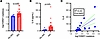 Figure 7
Circulating cell-free mtDNA concentrations are increased in individuals with sepsis-associated AKI compared with those with sepsis without AKI and correlate with plasma IL-6. mtDNA was quantified by droplet digital PCR targeting a 69-bp target sequence within the NADH dehydrogenase 1 (ND1) gene in plasma from a cohort of individuals with sepsis with and without acute kidney injury (AKI). (A) Plasma ND1 concentrations were increased significantly in individuals who developed AKI within 48 hours of ICU admission (AKI) compared with those who did not (no AKI). (B) IL-6 concentrations in septic individuals with AKI were significantly increased compared with those without AKI. Significant differences between groups were determined by unpaired, 2-tailed t tests comparing the group means ± SEM. (C) Simple linear regression of plasma ND1 with IL-6 concentrations in individuals with sepsis showed a positive and significant correlation. n = 31 patients.


