
Clinical Research and Public Health
Abstract
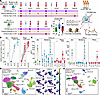
Introduction: BK polyomavirus (BKV) infection is associated with injury and subsequent graft loss due to the extent of injury or rejection. However, the molecular mechanisms driving injury and subsequent adverse outcomes remain poorly understood. Methods: In a cross-sectional study, single-cell RNA sequencing from kidney allograft biopsies was used to assess cell type-specific responses between uninfected controls and two distinct phases of BKV infection: peaking (increasing viral blood titers) and resolving (decreasing viral titers following immunosuppression reduction). Results: Genes upregulated in BK viral nephropathy (BKVN) were enriched for polyomavirus infection hallmarks, including ribosome biogenesis, translation, and energy restructuring. Additionally enriched pathways included wound healing, cellular stress, antigen presentation and immune signaling. Even without BKVN (peaking BK viremia alone), epithelial cells expressed signatures for wound healing, cellular stress, and extracellular matrix remodeling. In vivo tubular cell responses at single-cell resolution were validated against single cell transcriptomic data of BKV infected cells in a cell culture model. Despite similarities, in vivo tubular cells underwent metabolic adaptation favoring fatty acid oxidation and proinflammatory responses not observed in culture models likely due to an absent innate and adaptive immune system. Despite lymphopenia and immunosuppressive therapies, the proportion of recipient derived intrarenal adaptive immune cells was increased in biopsies associated with peaking viremia alongside activation of innate immune responses. Adaptive immune cells exhibited persistent inflammatory signaling and remodeling of energy metabolism during the resolving phase of infection. Conclusion: These not previously reported insights into BKV-associated injury may have implications for clinical management and improved allograft outcomes.
Authors
Tess Marvin, Rachel Sealfon, Phillip J. McCown, Fadhl AlAkwaa, Evan A. Farkash, Edgar A. Otto, Felix Eichinger, Ping An, Rajasree Menon, Celine C. Berthier, Tavis J. Reed, Paula Arrowsmith, Lalita Subramanian, Kelly J. Shaffer, Silas P. Norman, Ramnika Gumber, Michael J. Imperiale, James M. Pipas, Olga G. Troyanskaya, Matthias Kretzler, Chandra L. Theesfeld, Abhijit S. Naik
Abstract
BACKGROUND. Transplanting kidneys from donors with HIV to recipients with HIV has become standard clinical practice. However, donors with HIV may have higher prevalence of viral and bacterial infections and autoimmunity that could increase allograft rejection in recipients. METHODS. We included deceased kidney donors (60 with HIV and 41 without HIV) who participated in a multicenter prospective study of HIV kidney transplantation between April 2018-September 2021. Using Phage ImmunoPrecipitation Sequencing, we compared the human antibody repertoire (allergens, autoantibodies, viruses and bacterial toxins) between donors with and without HIV, and evaluated their association with recipient allograft rejection. Moderated t-tests were used to assess reactivity and a multivariate logistic regression model adjusted for donor sex and KDPI assessed the association between donor adenovirus reactivity and recipient allograft rejection. RESULTS. Compared to donors without HIV, donors with HIV had lower BMI and were more likely to be African American. The median number of positive autoantibodies was marginally higher among donors with HIV (499 [IQR = 357, 579]) compared to donors without HIV (395 [IQR = 256, 538] (P = 0.058). Donors with HIV additionally had significantly higher antibody reactivity to Epstein-Barr virus and cytomegalovirus (q < 0.05). Among all donors with and without HIV, antibodies to adenovirus were significantly associated with increased rejection among recipients, including after adjusting for false discovery (q < 0.05) and also adjusting for demographic factors using multivariable logistic regression (odds ratio = 4.97, 95% CI = 1.89–13.61). CONCLUSION. The presence of antibodies to adenovirus infection in kidney donors with HIV may be associated with allograft rejection. TRIAL REGISTRATION. ClinicalTrials.gov NCT03500315. FUNDING. US National Institute of Health
Authors
Xianming Zhu, William R. Morgenlander, Diane M. Brown, Yolanda Eby, Megan Morsheimer, Jonah Odim, Serena M. Bagnasco, Meenakshi M. Rana, Sander S. Florman, Rachel J. Friedman-Moraco, Peter G. Stock, Alexander J. Gilbert, Shikha Mehta, Valentina Stosor, Sapna A. Mehta, Marcus R. Pereira, Catherine B. Small, Michele I. Morris, Jonathan Hand, Saima Aslam, Ghady Haidar, Maricar Malinis, Carlos A.Q. Santos, Joanna Schaenman, David Wojciechowski, Karthik M. Ranganna, Emily Blumberg, Nahel Elias, Josa A. Castillo-Lugo, Emmanouil Giorgakis, Senu Apewokin, M. Kate Grabowski, Dorry L. Segev, Andrew D. Redd, Christine M. Durand, H. Benjamin Larman, Aaron A.R. Tobian
Abstract
Background: The molecular landscape of lung adenocarcinoma (LUAD) is often illustrated as a driver-oncogene “pie chart,” but identical mutations exhibit heterogeneous signaling shaped by co-mutations, transcriptional programs, and lineage context. We propose a lineage-integrated signaling framework using an EGFR mutation signature (mSig). Methods: We defined EGFR mSig using differentially expressed genes in EGFR-mutant (mt) LUADs. Semi-supervised clustering and machine learning models were used to test reproducibility in different combinations of datasets. We analyzed molecular subtypes, lineage markers, co-occurring mutations and EGFR copy number alterations in EGFR mSig-defined subtypes of LUAD. Results: EGFR mSig showed robust classification performance (AUROC = 0.83-0.95; mean NPV = 96.3%). Validated gene expression subtypes and lung lineage markers were closely aligned with EGFR mSig status. Most EGFR mSig(+) tumors, including many without EGFR mutations belonged to Bronchioid subtype. A subset of canonical RAS mutations were mSig(+) and mirrored the EGFR mutation pattern. EGFR wild-type (WT)/mSig(-) tumors were enriched for non-Bronchioid subtypes and had co-mutations in TP53 or RAS/RAF/RTKs. We highlighted a parsimonious collection of coordinated mutations identified including RAS, KEAP1, STK11, TP53, and CDKN2A, supportive of prior reports. Conclusions: A novel EGFR mSig that captures the transcriptional footprint of EGFR activation revealed a subset of EGFR WT LUADs with “mt-like” features. mSig refines LUAD taxonomy beyond mutation-only pie-chart models by incorporating lineage and co-mutation context. Lineage-directed stratification with co-alteration identifies clinically relevant groups across EGFR and RAS states and highlights new treatment opportunities for patients currently considered “oncogene-negative.” Funding: NCI U01CA272541, R01CA262296, U24CA264021, UG1CA233333, R01CA211939.
Authors
Minjeong Kim, Wisut Lamlertthon, Heejoon Jo, Yan Cui, Miyeon Yeon, Hyo Young Choi, Katherine A. Hoadley, Matthew P. Smeltzer, Michele C. Hayward, Matthew D. Wilkerson, Liza Makowski, D. Neil Hayes
Abstract
BACKGROUND Clear cell renal cell carcinoma (ccRCC) with pancreatic metastases (PM) is paradoxically associated with prolonged overall survival (OS), but the biological basis for this observation remains unclear.METHODS We analyzed matched primary and metastatic samples from an international consortium of patients with PM (n = 108) and compared them with a previously characterized ccRCC cohort without PM (n = 273).RESULTS Primary ccRCC tumors associated with PM were dominated by indolent, angiogenic phenotypes, characterized by low-grade histology and reduced mTORC1 activation (all P < 0.001). Tumors of patients with PM were often PBRM1-deficient (80.4% vs. 54.8%, P < 0.001) and rarely harbored BAP1 loss (3.7% vs. 20.7%, P < 0.001). After metastasis diagnosis, patients with PM had significantly longer median OS compared with those without PM (110 vs. 33 months, HR 0.28 [95% CI, 0.19–0.39], P < 0.001). Survival was further prolonged among patients with PBRM1 loss (143 vs. 64 months, HR 0.41 [95% CI, 0.22–0.81], P = 0.008). Notably, PM lesions were typically low-grade and PBRM1-deficient even when more aggressive and evolved clones were present in primary tumors. Finally, PBRM1 loss was associated with preferential response to angiogenesis inhibitors over immune-oncology therapy, reflected by longer time on treatment (32.1 vs. 9.1 months, HR 0.16 [95% CI, 0.06–0.39], P < 0.001).CONCLUSION These findings illustrate selective tropism of indolent, less-evolved, PBRM1-deficient ccRCC clones for pancreatic dissemination. This biological bias likely underlies therapeutic sensitivity and favorable survival, supporting the consideration of PBRM1 status and metastatic tropism in risk stratification and treatment selection.FUNDING NIH Kidney Cancer SPORE grant (P50CA196516); The Cancer Prevention and Research Institute of Texas (RP220294); Endowment from Jan and Bob Pickens Distinguished Professorship in Medical Science and Brock Fund for Medical Science Chair in Pathology.
Authors
Haitao Xu, Payal Kapur, Alana Christie, Aleksandra W. Nielsen, Averi Perny, Olivia Brandenburg, Charlotte Small, Jeffrey Miyata, Hua Zhong, Courtney Roberts, Roy Elias, Vanina Tcheuyap, Cassandra Duarte, Adrie van Bokhoven, Justine Panian, Haoran Li, Katharine A Collier, Debra Zynger, Luis Meza, Benoit Beuselinck, Neeraj Agarwal, Amir Mortazavi, Sumanta Pal, Rana McKay, Elaine T. Lam, Satwik Rajaram, James Brugarolas
Abstract
BACKGROUND. High-dose influenza vaccine, containing four times more antigen than standard-dose, is recommended for people aged ≥ 65 years, but there is a knowledge gap surrounding its effect in people with HIV (PWH), who remain more vulnerable to serious influenza infections than people without HIV (PWoH) despite virological suppression. The primary goal of this study was to assess whether high-dose improves antibody responses in PWH, with a particular focus on older PWH. METHODS. We conducted a study to assess antibody responses to sequential high- versus standard-dose influenza vaccination in PWH. Young (18-40 years) PWoH (n=55) and PWH (n=37); and older (≥ 60 years) PWoH (n=72) and PWH (n=67) received standard-dose during the 2020-2024 seasons and 123 participants, including 41 older PWH, received high-dose the consecutive season. All PWH were virologically suppressed on ART. Hemagglutination inhibition (HAI) titer and HA-specific IgG were analyzed at 0- to 180-days post-vaccination (dpv); T cell activation-induced responses were assessed by flow cytometry. RESULTS. All groups mounted significant HAI and IgG responses to all vaccine antigens at 28 dpv, after standard- and high-dose vaccination. Responses to A/H1N1 were lower in magnitude and durability in older PWH compared to young PWoH following standard-dose and were not boosted with high-dose, whereas high-dose enhanced A/H3N2 and B/Victoria IgG, and CD4+ T cell responses to all antigens, in older PWH. CONCLUSION. Our data demonstrate partial efficacy of high-dose in augmenting antibody responses of older PWH while highlighting limitations in boosting A/H1N1-specific responses. TRIAL REGISTRATION. ClinicalTrials.gov NCT04487041. FUNDING. NIH grant (5R01AG068110).
Authors
Jonah Kupritz, Sheldon Davis, TianHao Liu, Prabhsimran Singh, Daniel Andrés Díaz–Pachón, Allan Rodriguez, Scott D. Boyd, Rajendra Pahwa, Suresh Pallikkuth, Savita G. Pahwa
Abstract
BACKGROUND The SARS-CoV-2 pandemic provided a rare opportunity to study how human immune responses develop to a novel viral antigen delivered through different vaccine platforms. However, to date, no study has directly compared immune responses to all 3 FDA-approved COVID-19 vaccines at single-cell multiomic resolution.METHODS We longitudinally profiled SARS-CoV-2–naive adults (n = 31) vaccinated with BNT162b2, mRNA-1273, or Ad26.COV2.S, integrating plasma cytokines, antibody titers, and single-cell multiomic data (DOGMA-Seq).RESULTS We discovered a distinct, transient IFN program termed ISG-dim, which emerged specifically 1–2 days after the first mRNA dose in approximately 10% of myeloid cells. This state was characterized by ISGF3 complex activation and its target genes (e.g., MX1, MX2, DDX58), with transcriptional and epigenetic profiles distinct from the robust IFN program observed after mRNA boosting or a single Ad26.COV2.S dose (ISG-high). In vitro stimulation of human monocytes showed that IFN-α alone recapitulates ISG-dim, whereas both IFN-α and IFN-γ are required for ISG-high.CONCLUSION These findings define dose-dependent IFN programming in human myeloid cells and highlight mechanistic differences between priming and boosting, with implications for optimizing vaccine platform choice, dose scheduling, and formulation.FUNDING NIH grants AI142086, U19 AI135972, U01 AI165452, U01 AI165452, R01 AI160706, and P30 AG067988.
Authors
Giray Eryilmaz, Yilmaz Yucehan Yazici, Radu Marches, Eleni P. Mimitou, Lisa Kenyon-Pesce, Kim Handrejk, Sonia Jangra, Michael Schotsaert, Adolfo García-Sastre, George A. Kuchel, Jacques Banchereau, Duygu Ucar
Abstract
BACKGROUND. To construct multi-trait polygenic scores (PRS) predicting chronic obstructive pulmonary disease (COPD) and exacerbations, validate their performance in diverse cohorts, and identify PRS-related proteins for potential therapeutic targeting. METHODS. PRSmix+, a multi-trait PRS framework, is used to train a composite PRS (PRSmulti) in COPDGene non-Hispanic white participants (n=6,647). Associations of PRSmulti with COPD status (GOLD 2-4 vs. GOLD 0 or ICD) and exacerbation frequency were tested in COPDGene African American (n=2,466), ECLIPSE (n=1,858), MassGeneral Brigham Biobank (n=15,152), and All of Us (n=118,566). Protein prediction models were applied to GWAS summary statistics from traits contributing to PRSmulti and were validated with proteomic data in COPDGene (n=5,173) and UK Biobank (n=5,012). RESULTS. PRSmix+ selected 7 traits for PRSmulti. In multivariable models, PRSmulti was associated with COPD status (meta-analysis random effects (RE) OR 1.58 [95% CI: 1.28-1.94]) and exacerbation frequency (meta-analysis RE beta 0.21 [95% CI: 0.11-0.31]), with higher effect sizes observed in smoking-enriched cohorts. PRSmulti outperformed traditional single-trait PRS in all tested cohorts. Using protein prediction models, we identified 73 proteins associated with the PRS that were also validated with measured protein levels in COPDGene and UK biobank. Of these proteins, 25 were linked to approved or investigational drugs. Notable targets include RAGE/sRAGE, IL1RL1, and SCARF2, all implicated in COPD pathogenesis and exacerbations. CONCLUSIONS. Multi-trait PRS improves prediction of COPD and exacerbation risk. Integration with proteomic data identifies druggable protein targets, offering a promising avenue for precision medicine in COPD management. TRIAL REGISTRATION. COPDGene: NCT00608764; ECLIPSE: NCT00292552.
Authors
Chengyue Zhang, Iain R. Konigsberg, Yixuan He, Jingzhou Zhang, Tinashe Chikowore, William B. Feldman, Xiaowei Hu, Yi Ding, Bogdan Pasaniuc, Diana Chang, Qingwen Chen, Jessica A. Lasky-Su, Julian Hecker, Martin D. Tobin, Jing Chen, Sean Kalra, Katherine A. Pratte, Hae Kyung Im, Emily S. Wan, Ani Manichaikul, Edwin K. Silverman, Russell P. Bowler, Leslie A. Lange, Victor E. Ortega, Alicia R. Martin, Michael H. Cho, Matthew R. Moll
Abstract
CD4 T cells are essential for immunity to M. tuberculosis (Mtb), and emerging evidence indicates that IL-17-producing Th17 cells contribute to immunity to Mtb. While identifying protective T cell effector functions is important for TB vaccine design, T cell antigen specificity is also likely to be important. To identify antigens that induce protective immunity, we reasoned that, as in other pathogens, effective immune recognition drives sequence diversity in individual Mtb antigens. We previously identified Mtb genes under evolutionary diversifying selection pressure whose products we term Rare Variable Mtb Antigens (RVMA). Here, in two distinct human cohorts with recent exposure to TB, we found that RVMA preferentially induce CD4 T cells that express RoRγt and produce IL-17, in contrast to ‘classical’ Mtb antigens that induce T cells that produce IFNγ. Together with emerging evidence showing human Th17 responses are associated with prevention of progression to TB disease, our results suggest that RVMA can be valuable antigens in vaccines for those already infected with Mtb to amplify existing antigen-specific Th17 responses to prevent TB disease.
Authors
Paul Ogongo, Liya Wassie, Anthony Tran, Devin Columbus, Julia Huffaker, Lisa Sharling, Gregory Ouma, Samuel Gurrion Ouma, Kidist Bobosha, Cecilia S. Lindestam Arlehamn, Neel R. Gandhi, Sara C. Auld, Jyothi Rengarajan, Cheryl L. Day, Artur Queiroz, Mariana Araújo-Pereira, Eduardo Fukutani, Bruno B. Andrade, John D. Altman, Henry M. Blumberg, Joel D. Ernst

Abstract
BACKGROUND After identifying 2 immunomarkers of acute injury, KIM-1 and LCN2, in all kidney biopsies from 31 patients with COVID-19 pneumonia and de novo kidney dysfunction, we investigated whether circulating markers of kidney epithelial injury are common in patients with laboratory-confirmed COVID-19 who require oxygen support but do not have critical illness.METHODS We studied 196 patients admitted to 15 hospitals with moderate to severe pneumonia who were enrolled in 2 independent randomized clinical trials. We measured 41 immune mediators and markers of kidney and endothelial injury in peripheral blood in these patients within 24 hours of randomization.RESULTS We constructed a generalized linear CORIMUNO model combining serum levels of KIM-1, LCN2, IL-10, and age at hospital admission that showed high discrimination for mortality (derivation cohort: AUC = 0.82, 95% CI: 0.73–0.92; validation cohort: AUC = 0.83, 95% CI: 0.74–0.92). An early rise in circulating kidney injury markers, in the absence of acute kidney injury criteria, was markedly associated with the risk of developing a severe form of COVID-19 and death within 3 months.CONCLUSION The CORIMUNO score may be a helpful tool for risk stratification, and for the first time to our knowledge, it identifies the overlooked impact of subclinical kidney injury on pneumonia outcomes.TRIAL REGISTRATION ClinicalTrials.gov NCT04324047, NCT04324073, and NCT04331808.FUNDING This research was funded by the French Ministry of Health, Programme Hospitalier de Recherche Clinique (PHRC COVID-19–20–0151, PHRC COVID-19–20–0029), Fondation de l’Assistance Publique Hôpitaux de Paris (Alliance Tous Unis Contre le Virus), Assistance Publique Hôpitaux de Paris, and grants from the Fondation pour la Recherche Médicale (FRM) (REA202010012514) and Agence Nationale de Recherches sur le Sida and emerging infectious diseases (ANRS) (ANRS0147) from the VINTED sponsorship.
Authors
Olivia Lenoir, Florence Morin, Anouk Walter-Petrich, Léa Resmini, Mohamad Zaidan, Nassim Mahtal, Sophie Ferlicot, Victor G. Puelles, Nicola Wanner, Julien Dang, Thibaut d’Izarny-Gargas, Jana Biermann, Benjamin Izar, Stéphanie Baron, Benjamin Terrier, Ziad A. Massy, Marie Essig, Aymeric Couturier, Olivia May, Xavier Belenfant, David Buob, Isabelle Brocheriou, Hassan Izzedine, Yannis Lombardi, Hélène François, Anissa Moktefi, Vincent Audard, Aurélie Sannier, Eric Daugas, Matthieu Jamme, Guylaine Henry, Isabelle Le Monnier de Gouville, Catherine Marie, Laurence Homyrda, Céline Verstuyft, Sarah Tubiana, Ouifiya Kafif, Valentine Piquard, Maxime Dougados, Tobias B. Huber, Marine Livrozet, Jean-Sébastien Hulot, Cedric Laouénan, Jade Ghosn, France Mentré, Alexandre Karras, Yazdan Yazdanpanah, Raphaël Porcher, Philippe Ravaud, Sophie Caillat-Zucman, Xavier Mariette, Olivier Hermine, Matthieu Resche-Rigon, Pierre-Louis Tharaux, CORIMUNO-19 collaborative group
Abstract
BACKGROUND. Idiopathic pulmonary arterial hypertension (IPAH) alters right ventricular size and function, curtailing life-expectancy. Patients may experience angina and myocardial ischemia. However, the mechanisms underlying these changes are poorly understood. METHODS. A cross-sectional, case-control design of coronary pathophysiology (in vivo and ex vivo) in IPAH. Patients with IPAH (Group-1.1) undergoing clinically indicated right heart catheterization were prospectively enrolled. Participants underwent functional testing during coronary angiography using a dual pressure/temperature-sensitive guidewire. Cardiovascular magnetic resonance measured left and right ventricular mass and function. Autopsy cardiac tissues from end-stage PAH (Group-1) and control individuals were analyzed for right ventricular pathophysiology. RESULTS. Eleven participants with IPAH and 15 control participants completed the protocol (IPAH: 45±15 years, 73% female; controls: 58.3±9.1 years, 73% female). 73% (n=8) of IPAH patients had an elevated index of microcirculatory resistance (IMR >25) and 55% (n=6) had reduced coronary flow reserve (CRF <2.0). The mean IMR was significantly higher in IPAH participants (39.2±27.0 vs. 15.3±5.0, p=0.002) whereas mean CFR was lower (2.8±2.1 vs. 4.0±1.4; p=0.077). Paired right coronary artery/ventricular measurements (n=6) revealed IMR positively correlated with right ventricular mass (r=0.91, p=0.12), and negatively with CFR (r=-0.82, p=0.046). Compared to controls (n=5), PAH participants (n=4) had reduced right ventricular capillary density (111±18 vs. 167±20, p=0.032), increased cardiomyocyte area (383±118μm2 vs. 231±61μm2, p=0.0390), and increased mural area in small pre-capillary arterioles (127±10μm2 vs. 107±20μm2, p=0.041). CONCLUSIONS. Coronary microvascular dysfunction is prevalent in IPAH and correlates with increased right ventricular mass. Histopathology revealed vascular rarefaction and remodeling of pre-capillary arterioles. The clinical significance merits prospective evaluation. Invasive coronary function testing was feasible and safe in IPAH, providing a platform to assess therapeutic impacts on cardiac microvascular function.
Authors
Erin Boland, Michael G. Freeman, David S. Corcoran, Thomas J. Ford, Barry Hennigan, Damien Collison, Aida Llucià-Valldeperas, Frances S. de Man, Kanarath P. Balachandran, Martin Johnson, Colin Church, Colin Berry
No posts were found with this tag.


