
Clinical Research and Public HealthClinical ResearchOncology
Open Access |  10.1172/jci.insight.195484
Glucagon-like peptide-1 receptor agonism improves lung cancer outcomes and tumor growth control
Akhil Goud Pachimatla,1 Bailey Fitzgerald,2 Joyce Ogidigo,3 Meera Bhatia,1 Randall J. Smith Jr.,4 Kalyan Ratnakaram,1 Sukumar Kalvapudi,1 Yeshwanth Vedire,1 Deschana Washington,4 Robert Vethanayagam RR,1 Hua-Hsin Hsiao,5 Spencer Rosario,5 Viraj R. Sanghvi,3,6 Joseph Barbi,1,4 and Sai Yendamuri1
1Department of Thoracic Surgery, Roswell Park Comprehensive Cancer Center, Elm and Carlton Streets, Buffalo, New York, USA.
2Department of Medical Oncology, Roswell Park Comprehensive Cancer Center, Buffalo, New York, USA.
3Department of Medicine, Herbert Irving Comprehensive Cancer Center, Columbia University Irving Medical Center, New York, New York, USA.
4Department of Immunology, Roswell Park Comprehensive Cancer Center, Elm and Carlton Streets, Buffalo, New York, USA.
5Department of Biostatistics and Bioinformatics, Roswell Park Comprehensive Cancer Center, Buffalo, New York, USA.
6Naomi Berrie Diabetes Research Center, Columbia University Irving Medical Center, New York, New York, USA.
Address correspondence to: Sai Yendamuri or Joesph Barbi, Roswell Park Comprehensive Cancer Center, 665 Elm St., Buffalo, New York, 14203, USA. Phone: 716.364.4852; Email: sai.yendamuri@roswellpark.org (SY); Phone: 716.845.1189; Email: joseph.barbi@roswellpark.org (JB).
Authorship note: AGP and BF contributed equally to this work and are co–first authors.
Find articles by Pachimatla, A. in: PubMed | Google Scholar
1Department of Thoracic Surgery, Roswell Park Comprehensive Cancer Center, Elm and Carlton Streets, Buffalo, New York, USA.
2Department of Medical Oncology, Roswell Park Comprehensive Cancer Center, Buffalo, New York, USA.
3Department of Medicine, Herbert Irving Comprehensive Cancer Center, Columbia University Irving Medical Center, New York, New York, USA.
4Department of Immunology, Roswell Park Comprehensive Cancer Center, Elm and Carlton Streets, Buffalo, New York, USA.
5Department of Biostatistics and Bioinformatics, Roswell Park Comprehensive Cancer Center, Buffalo, New York, USA.
6Naomi Berrie Diabetes Research Center, Columbia University Irving Medical Center, New York, New York, USA.
Address correspondence to: Sai Yendamuri or Joesph Barbi, Roswell Park Comprehensive Cancer Center, 665 Elm St., Buffalo, New York, 14203, USA. Phone: 716.364.4852; Email: sai.yendamuri@roswellpark.org (SY); Phone: 716.845.1189; Email: joseph.barbi@roswellpark.org (JB).
Authorship note: AGP and BF contributed equally to this work and are co–first authors.
Find articles by Fitzgerald, B. in: PubMed | Google Scholar
1Department of Thoracic Surgery, Roswell Park Comprehensive Cancer Center, Elm and Carlton Streets, Buffalo, New York, USA.
2Department of Medical Oncology, Roswell Park Comprehensive Cancer Center, Buffalo, New York, USA.
3Department of Medicine, Herbert Irving Comprehensive Cancer Center, Columbia University Irving Medical Center, New York, New York, USA.
4Department of Immunology, Roswell Park Comprehensive Cancer Center, Elm and Carlton Streets, Buffalo, New York, USA.
5Department of Biostatistics and Bioinformatics, Roswell Park Comprehensive Cancer Center, Buffalo, New York, USA.
6Naomi Berrie Diabetes Research Center, Columbia University Irving Medical Center, New York, New York, USA.
Address correspondence to: Sai Yendamuri or Joesph Barbi, Roswell Park Comprehensive Cancer Center, 665 Elm St., Buffalo, New York, 14203, USA. Phone: 716.364.4852; Email: sai.yendamuri@roswellpark.org (SY); Phone: 716.845.1189; Email: joseph.barbi@roswellpark.org (JB).
Authorship note: AGP and BF contributed equally to this work and are co–first authors.
Find articles by Ogidigo, J. in: PubMed | Google Scholar
1Department of Thoracic Surgery, Roswell Park Comprehensive Cancer Center, Elm and Carlton Streets, Buffalo, New York, USA.
2Department of Medical Oncology, Roswell Park Comprehensive Cancer Center, Buffalo, New York, USA.
3Department of Medicine, Herbert Irving Comprehensive Cancer Center, Columbia University Irving Medical Center, New York, New York, USA.
4Department of Immunology, Roswell Park Comprehensive Cancer Center, Elm and Carlton Streets, Buffalo, New York, USA.
5Department of Biostatistics and Bioinformatics, Roswell Park Comprehensive Cancer Center, Buffalo, New York, USA.
6Naomi Berrie Diabetes Research Center, Columbia University Irving Medical Center, New York, New York, USA.
Address correspondence to: Sai Yendamuri or Joesph Barbi, Roswell Park Comprehensive Cancer Center, 665 Elm St., Buffalo, New York, 14203, USA. Phone: 716.364.4852; Email: sai.yendamuri@roswellpark.org (SY); Phone: 716.845.1189; Email: joseph.barbi@roswellpark.org (JB).
Authorship note: AGP and BF contributed equally to this work and are co–first authors.
Find articles by Bhatia, M. in: PubMed | Google Scholar
1Department of Thoracic Surgery, Roswell Park Comprehensive Cancer Center, Elm and Carlton Streets, Buffalo, New York, USA.
2Department of Medical Oncology, Roswell Park Comprehensive Cancer Center, Buffalo, New York, USA.
3Department of Medicine, Herbert Irving Comprehensive Cancer Center, Columbia University Irving Medical Center, New York, New York, USA.
4Department of Immunology, Roswell Park Comprehensive Cancer Center, Elm and Carlton Streets, Buffalo, New York, USA.
5Department of Biostatistics and Bioinformatics, Roswell Park Comprehensive Cancer Center, Buffalo, New York, USA.
6Naomi Berrie Diabetes Research Center, Columbia University Irving Medical Center, New York, New York, USA.
Address correspondence to: Sai Yendamuri or Joesph Barbi, Roswell Park Comprehensive Cancer Center, 665 Elm St., Buffalo, New York, 14203, USA. Phone: 716.364.4852; Email: sai.yendamuri@roswellpark.org (SY); Phone: 716.845.1189; Email: joseph.barbi@roswellpark.org (JB).
Authorship note: AGP and BF contributed equally to this work and are co–first authors.
Find articles by
Smith, R.
in:
PubMed
|
Google Scholar
|

1Department of Thoracic Surgery, Roswell Park Comprehensive Cancer Center, Elm and Carlton Streets, Buffalo, New York, USA.
2Department of Medical Oncology, Roswell Park Comprehensive Cancer Center, Buffalo, New York, USA.
3Department of Medicine, Herbert Irving Comprehensive Cancer Center, Columbia University Irving Medical Center, New York, New York, USA.
4Department of Immunology, Roswell Park Comprehensive Cancer Center, Elm and Carlton Streets, Buffalo, New York, USA.
5Department of Biostatistics and Bioinformatics, Roswell Park Comprehensive Cancer Center, Buffalo, New York, USA.
6Naomi Berrie Diabetes Research Center, Columbia University Irving Medical Center, New York, New York, USA.
Address correspondence to: Sai Yendamuri or Joesph Barbi, Roswell Park Comprehensive Cancer Center, 665 Elm St., Buffalo, New York, 14203, USA. Phone: 716.364.4852; Email: sai.yendamuri@roswellpark.org (SY); Phone: 716.845.1189; Email: joseph.barbi@roswellpark.org (JB).
Authorship note: AGP and BF contributed equally to this work and are co–first authors.
Find articles by Ratnakaram, K. in: PubMed | Google Scholar
1Department of Thoracic Surgery, Roswell Park Comprehensive Cancer Center, Elm and Carlton Streets, Buffalo, New York, USA.
2Department of Medical Oncology, Roswell Park Comprehensive Cancer Center, Buffalo, New York, USA.
3Department of Medicine, Herbert Irving Comprehensive Cancer Center, Columbia University Irving Medical Center, New York, New York, USA.
4Department of Immunology, Roswell Park Comprehensive Cancer Center, Elm and Carlton Streets, Buffalo, New York, USA.
5Department of Biostatistics and Bioinformatics, Roswell Park Comprehensive Cancer Center, Buffalo, New York, USA.
6Naomi Berrie Diabetes Research Center, Columbia University Irving Medical Center, New York, New York, USA.
Address correspondence to: Sai Yendamuri or Joesph Barbi, Roswell Park Comprehensive Cancer Center, 665 Elm St., Buffalo, New York, 14203, USA. Phone: 716.364.4852; Email: sai.yendamuri@roswellpark.org (SY); Phone: 716.845.1189; Email: joseph.barbi@roswellpark.org (JB).
Authorship note: AGP and BF contributed equally to this work and are co–first authors.
Find articles by Kalvapudi, S. in: PubMed | Google Scholar
1Department of Thoracic Surgery, Roswell Park Comprehensive Cancer Center, Elm and Carlton Streets, Buffalo, New York, USA.
2Department of Medical Oncology, Roswell Park Comprehensive Cancer Center, Buffalo, New York, USA.
3Department of Medicine, Herbert Irving Comprehensive Cancer Center, Columbia University Irving Medical Center, New York, New York, USA.
4Department of Immunology, Roswell Park Comprehensive Cancer Center, Elm and Carlton Streets, Buffalo, New York, USA.
5Department of Biostatistics and Bioinformatics, Roswell Park Comprehensive Cancer Center, Buffalo, New York, USA.
6Naomi Berrie Diabetes Research Center, Columbia University Irving Medical Center, New York, New York, USA.
Address correspondence to: Sai Yendamuri or Joesph Barbi, Roswell Park Comprehensive Cancer Center, 665 Elm St., Buffalo, New York, 14203, USA. Phone: 716.364.4852; Email: sai.yendamuri@roswellpark.org (SY); Phone: 716.845.1189; Email: joseph.barbi@roswellpark.org (JB).
Authorship note: AGP and BF contributed equally to this work and are co–first authors.
Find articles by Vedire, Y. in: PubMed | Google Scholar
1Department of Thoracic Surgery, Roswell Park Comprehensive Cancer Center, Elm and Carlton Streets, Buffalo, New York, USA.
2Department of Medical Oncology, Roswell Park Comprehensive Cancer Center, Buffalo, New York, USA.
3Department of Medicine, Herbert Irving Comprehensive Cancer Center, Columbia University Irving Medical Center, New York, New York, USA.
4Department of Immunology, Roswell Park Comprehensive Cancer Center, Elm and Carlton Streets, Buffalo, New York, USA.
5Department of Biostatistics and Bioinformatics, Roswell Park Comprehensive Cancer Center, Buffalo, New York, USA.
6Naomi Berrie Diabetes Research Center, Columbia University Irving Medical Center, New York, New York, USA.
Address correspondence to: Sai Yendamuri or Joesph Barbi, Roswell Park Comprehensive Cancer Center, 665 Elm St., Buffalo, New York, 14203, USA. Phone: 716.364.4852; Email: sai.yendamuri@roswellpark.org (SY); Phone: 716.845.1189; Email: joseph.barbi@roswellpark.org (JB).
Authorship note: AGP and BF contributed equally to this work and are co–first authors.
Find articles by Washington, D. in: PubMed | Google Scholar
1Department of Thoracic Surgery, Roswell Park Comprehensive Cancer Center, Elm and Carlton Streets, Buffalo, New York, USA.
2Department of Medical Oncology, Roswell Park Comprehensive Cancer Center, Buffalo, New York, USA.
3Department of Medicine, Herbert Irving Comprehensive Cancer Center, Columbia University Irving Medical Center, New York, New York, USA.
4Department of Immunology, Roswell Park Comprehensive Cancer Center, Elm and Carlton Streets, Buffalo, New York, USA.
5Department of Biostatistics and Bioinformatics, Roswell Park Comprehensive Cancer Center, Buffalo, New York, USA.
6Naomi Berrie Diabetes Research Center, Columbia University Irving Medical Center, New York, New York, USA.
Address correspondence to: Sai Yendamuri or Joesph Barbi, Roswell Park Comprehensive Cancer Center, 665 Elm St., Buffalo, New York, 14203, USA. Phone: 716.364.4852; Email: sai.yendamuri@roswellpark.org (SY); Phone: 716.845.1189; Email: joseph.barbi@roswellpark.org (JB).
Authorship note: AGP and BF contributed equally to this work and are co–first authors.
Find articles by Vethanayagam RR, R. in: PubMed | Google Scholar
1Department of Thoracic Surgery, Roswell Park Comprehensive Cancer Center, Elm and Carlton Streets, Buffalo, New York, USA.
2Department of Medical Oncology, Roswell Park Comprehensive Cancer Center, Buffalo, New York, USA.
3Department of Medicine, Herbert Irving Comprehensive Cancer Center, Columbia University Irving Medical Center, New York, New York, USA.
4Department of Immunology, Roswell Park Comprehensive Cancer Center, Elm and Carlton Streets, Buffalo, New York, USA.
5Department of Biostatistics and Bioinformatics, Roswell Park Comprehensive Cancer Center, Buffalo, New York, USA.
6Naomi Berrie Diabetes Research Center, Columbia University Irving Medical Center, New York, New York, USA.
Address correspondence to: Sai Yendamuri or Joesph Barbi, Roswell Park Comprehensive Cancer Center, 665 Elm St., Buffalo, New York, 14203, USA. Phone: 716.364.4852; Email: sai.yendamuri@roswellpark.org (SY); Phone: 716.845.1189; Email: joseph.barbi@roswellpark.org (JB).
Authorship note: AGP and BF contributed equally to this work and are co–first authors.
Find articles by Hsiao, H. in: PubMed | Google Scholar
1Department of Thoracic Surgery, Roswell Park Comprehensive Cancer Center, Elm and Carlton Streets, Buffalo, New York, USA.
2Department of Medical Oncology, Roswell Park Comprehensive Cancer Center, Buffalo, New York, USA.
3Department of Medicine, Herbert Irving Comprehensive Cancer Center, Columbia University Irving Medical Center, New York, New York, USA.
4Department of Immunology, Roswell Park Comprehensive Cancer Center, Elm and Carlton Streets, Buffalo, New York, USA.
5Department of Biostatistics and Bioinformatics, Roswell Park Comprehensive Cancer Center, Buffalo, New York, USA.
6Naomi Berrie Diabetes Research Center, Columbia University Irving Medical Center, New York, New York, USA.
Address correspondence to: Sai Yendamuri or Joesph Barbi, Roswell Park Comprehensive Cancer Center, 665 Elm St., Buffalo, New York, 14203, USA. Phone: 716.364.4852; Email: sai.yendamuri@roswellpark.org (SY); Phone: 716.845.1189; Email: joseph.barbi@roswellpark.org (JB).
Authorship note: AGP and BF contributed equally to this work and are co–first authors.
Find articles by Rosario, S. in: PubMed | Google Scholar
1Department of Thoracic Surgery, Roswell Park Comprehensive Cancer Center, Elm and Carlton Streets, Buffalo, New York, USA.
2Department of Medical Oncology, Roswell Park Comprehensive Cancer Center, Buffalo, New York, USA.
3Department of Medicine, Herbert Irving Comprehensive Cancer Center, Columbia University Irving Medical Center, New York, New York, USA.
4Department of Immunology, Roswell Park Comprehensive Cancer Center, Elm and Carlton Streets, Buffalo, New York, USA.
5Department of Biostatistics and Bioinformatics, Roswell Park Comprehensive Cancer Center, Buffalo, New York, USA.
6Naomi Berrie Diabetes Research Center, Columbia University Irving Medical Center, New York, New York, USA.
Address correspondence to: Sai Yendamuri or Joesph Barbi, Roswell Park Comprehensive Cancer Center, 665 Elm St., Buffalo, New York, 14203, USA. Phone: 716.364.4852; Email: sai.yendamuri@roswellpark.org (SY); Phone: 716.845.1189; Email: joseph.barbi@roswellpark.org (JB).
Authorship note: AGP and BF contributed equally to this work and are co–first authors.
Find articles by Sanghvi, V. in: PubMed | Google Scholar
1Department of Thoracic Surgery, Roswell Park Comprehensive Cancer Center, Elm and Carlton Streets, Buffalo, New York, USA.
2Department of Medical Oncology, Roswell Park Comprehensive Cancer Center, Buffalo, New York, USA.
3Department of Medicine, Herbert Irving Comprehensive Cancer Center, Columbia University Irving Medical Center, New York, New York, USA.
4Department of Immunology, Roswell Park Comprehensive Cancer Center, Elm and Carlton Streets, Buffalo, New York, USA.
5Department of Biostatistics and Bioinformatics, Roswell Park Comprehensive Cancer Center, Buffalo, New York, USA.
6Naomi Berrie Diabetes Research Center, Columbia University Irving Medical Center, New York, New York, USA.
Address correspondence to: Sai Yendamuri or Joesph Barbi, Roswell Park Comprehensive Cancer Center, 665 Elm St., Buffalo, New York, 14203, USA. Phone: 716.364.4852; Email: sai.yendamuri@roswellpark.org (SY); Phone: 716.845.1189; Email: joseph.barbi@roswellpark.org (JB).
Authorship note: AGP and BF contributed equally to this work and are co–first authors.
Find articles by
Barbi, J.
in:
PubMed
|
Google Scholar
|
1Department of Thoracic Surgery, Roswell Park Comprehensive Cancer Center, Elm and Carlton Streets, Buffalo, New York, USA.
2Department of Medical Oncology, Roswell Park Comprehensive Cancer Center, Buffalo, New York, USA.
3Department of Medicine, Herbert Irving Comprehensive Cancer Center, Columbia University Irving Medical Center, New York, New York, USA.
4Department of Immunology, Roswell Park Comprehensive Cancer Center, Elm and Carlton Streets, Buffalo, New York, USA.
5Department of Biostatistics and Bioinformatics, Roswell Park Comprehensive Cancer Center, Buffalo, New York, USA.
6Naomi Berrie Diabetes Research Center, Columbia University Irving Medical Center, New York, New York, USA.
Address correspondence to: Sai Yendamuri or Joesph Barbi, Roswell Park Comprehensive Cancer Center, 665 Elm St., Buffalo, New York, 14203, USA. Phone: 716.364.4852; Email: sai.yendamuri@roswellpark.org (SY); Phone: 716.845.1189; Email: joseph.barbi@roswellpark.org (JB).
Authorship note: AGP and BF contributed equally to this work and are co–first authors.
Find articles by Yendamuri, S. in: PubMed | Google Scholar
Published August 26, 2025 - More info
JCI Insight. 2025;10(19):e195484. https://doi.org/10.1172/jci.insight.195484.
© 2025 Pachimatla et al. This work is licensed under the Creative Commons Attribution 4.0 International License. To view a copy of this license, visit http://creativecommons.org/licenses/by/4.0/.

-
Results
Liraglutide does not impair murine lung cancer cell proliferation in vitro. We investigated the in vitro effect of liraglutide on Kraslox-stop-lox(lsl)-G12D/+; Tp53fl/fl-NINJA (KPN1.1) and Lewis lung carcinoma (LLC) cell proliferation. Based on reported steady-state plasma concentrations of liraglutide ranging from 20–40 nM for typical clinical doses (0.6–1.8 mg), we examined a range of concentrations: 0, 10, 30, 90, 270, and 810 nM. Cell proliferation was assessed by measuring the fold change in absorption values after 48 hours of treatment. There was no significant difference in cell proliferation for KPN1.1 cells across liraglutide concentrations, while LLC cells exhibited increased proliferation at higher drug concentrations (Supplemental Figure 1, A and B; supplemental material available online with this article; https://doi.org/10.1172/jci.insight.195484DS1).
Liraglutide inhibits the progression of implanted tumor growth in obese, but not normal-weight mice. We next investigated the effect of liraglutide on tumor growth in vivo. Here, normal-weight (lean) C57BL/6J mice and those with diet-induced obesity (DIO) were challenged with subcutaneous (s.c.) injection of KPN1.1 lung cancer cells. Upon detection of palpable s.c. tumors, mice received daily liraglutide (0.2 μg/g body weight) or a PBS vehicle intraperitoneally. While liraglutide-treated mice exhibited a slight decrease in body weight during the experiment, and control mice showed an increase (weight change: –0.78 g vs. +0.98 g, respectively; Supplemental Figure 2, A and B), no statistically significant difference was observed in mean tumor volumes or final tumor weight (0.98 g vs. 1.04 g; P = 0.67) in normal-weight/lean mice (Figure 1, A and B). In contrast, liraglutide administration significantly inhibited the progression of tumor growth, as evidenced by reductions in tumor volumes and weight (1.07 g vs. 1.86 g; P = 0.03) relative to the vehicle group (Figure 1, C and D). Of note, liraglutide-treated DIO mice demonstrated greater weight reduction compared with their respective controls (13.46 g vs. 4.06 g, respectively; Supplemental Figure 2, A and B).
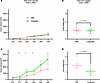 Figure 1
Liraglutide suppresses tumor growth in mice with diet-induced obesity. KPN1.1 cell lines (7.5 × 10⁴ cells each) were injected subcutaneously in the flanks of normal-weight (n = 8/group) or obese (n = 8/group) C57BL/6J mice fed a control or high-fat diet for 12 weeks, respectively. Once tumors were palpable, mice received daily intraperitoneal injections of liraglutide or vehicle (PBS). The volumes and weights of tumors in normal-weight mice were not significantly different (A and B). Tumors induced in obese mice had significantly higher volume and end weight in control mice than in liraglutide-treated mice (C and D). Shown are representative findings from at least 2 independent experiments (n = 8 mice/group/trial). *P < 0.05, results of unpaired t test.
RNA sequencing reveals GLP-1RA–altered protumor gene expression in mice with implanted lung cancers. To gain insight into the mechanism underlying the benefits of GLP-1RAs suggested by clinical and preclinical studies, tumor gene expression was compared in liraglutide- and vehicle-treated s.c. tumors harvested in DIO mouse model studies using RNA sequencing (RNA-Seq). Of the 35,141 transcripts assessed, 27 were differentially expressed significantly (adjusted P < 0.05 and |logFC| > 0.58, Figure 2A). The transcripts upregulated with liraglutide treatment (Figure 2A, green) included Igfbp7, which induces G1 phase cell cycle arrest by upregulating cyclin-dependent kinase inhibitors. Additionally, treatment was associated with increased Creb3l1, a regulator of angiogenesis (11), and Nfix, which encodes a factor with pro- and antitumor roles that are also involved with immune cell development and differentiation (12). Conversely, liraglutide exposure was also associated with decreased Anxa10, a well-known marker of poor prognosis with a role in various cell signaling pathways (13). Furthermore, the drug was linked to reduced expression of the protumor genes Higd1a and Rpl39, associated with hypoxia-induced cellular stress and metabolism, and cell proliferation and migration, respectively (14, 15).
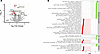 Figure 2
Gene expression changes in tumor cells from obese mice and altered pathways with liraglutide treatment. (A) Volcano plot: Differentially expressed genes in liraglutide-treated (green) versus vehicle-treated tumors (red). The x axis shows log2(fold change); the y axis shows statistical significance, which was assessed using ANOVA with Benjamini-Hochberg correction. (B) Changes in biological processes, immune, cell signaling, and metabolic pathways, as seen by changes in gene sets, expressed as normalized enrichment score (NES).
Gene set enrichment analysis (GSEA) revealed significant treatment effects on several pathways relevant to cancer outcomes (normalized enrichment score > 2, q < 0.05) spanning cell proliferation, cellular respiration, immune signaling, and cell signaling (Figure 2B). Notably, genes linked to signaling triggered by IFN-γ (an antitumor immunity–promoting cytokine) and growth factor (insulin-derived growth factor) signaling were significantly upregulated with liraglutide treatment. Several metabolic pathways important for tumor and leukocyte biology, including fatty acid (sphingolipids) and amino acid metabolism, were enhanced and disrupted, respectively, and genes important for translation-associated processes were also apparently suppressed with treatment, as were those associated with poor lung cancer survival. Finally, multiple cell signaling pathways well appreciated for driving tumor development and progression were also suppressed in GLP-1RA–treated tumors, including those involving KRAS, EGFR, MYC, and E2F transcription factors (Figure 2B). Overall, these findings link liraglutide with gene expression changes in the tumor relevant to immunity, metabolism, and tumor progression that are likely to reflect or explain the effects of GLP-1RAs seen in mice and patients.
GLP-1RA treatment enhances antitumor immune responses in mice. GLP-1R is expressed in several leukocyte populations (16), but the effects of GLP-1RAs on these cells are apparently complex, and their likely impact on the antitumor immune response is unclear. While many have found the effects of GPL-1R signaling and agonism to be immunosuppressive (17), some studies suggested enhanced antitumor immunity (18, 19). To explore whether liraglutide’s antitumor effects in our mouse model studies stem from favorable modulation of antitumor immunity, we used flow cytometry to characterize the phenotypic and functional changes among the tumor-infiltrating leukocytes (TILs) associated with treatment in harvested s.c. tumors.
Increased CD4+ T cell and natural killer (NK) cell frequencies in the tumors of GLP-1RA–treated obese mice were seen (Figure 3, A and B). Proportions of conventional (i.e., non-regulatory) CD4+ T cells (Tcon), marked by the activation marker CD69, were also elevated in liraglutide-treated mice (Figure 3C), potentially indicating an enhanced antitumor immune response. Interestingly, the fraction of intratumor CD8+ and Tcon compartments with an effector surface marker profile (CD44hiCD62Llo) was apparently reduced in favor of CD44+CD62L+ T cells (Figure 3, D and E), suggesting a potential shift toward a memory-like phenotype in these cells.
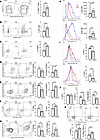 Figure 3
Characterizing the impact of GLP-1RA treatment on tumor-infiltrating leukocyte populations and phenotypes. Tumor tissues were recovered from the obese mice described in Figure 2, and, after enzymatic digestion, single-cell suspensions were generated. Immunostaining followed by spectral flow cytometry analysis revealed the effects of liraglutide (LIRA) on T cell (A–G) and myeloid cell (H–J) populations. Flow analysis was also performed to assess intracellular cytokine production by leukocytes restimulated ex vivo with PMA/ionomycin and brefeldin A (K). Shown are the mean ± SEM results from 1 of 2 independent experiments and representative flow plots (n = 5 per group/trial). *P < 0.05, **P < 0.02 by t test.
Since Foxp3+ regulatory T cells (Tregs) express relatively high levels of GLP-1R (20), and a role for its downstream signaling has been reported to maintain these suppressor cells in the periphery (21), we assessed liraglutide-triggered changes among tumor Tregs. Surprisingly, proportions of Foxp3+CD25+ cells within the TIL CD4+ pool were significantly reduced with treatment (Figure 3F). Interestingly, the functionally potent, activated (CD44+CD62L–) or “eTreg” subpopulation made up a smaller portion of the TIL-Treg pool from liraglutide-treated mice compared with vehicle-treated control mice, in favor of a population with memory-like potential (i.e., CD44+CD62L+ surface staining) (Figure 3G). In agreement with a prior study (20), GLP-1RA treatment upregulated PD-1 and PD-L1 on tumor Tregs (Supplemental Figure 3, A and B); however, increased levels of mTOR activity (indicated by phosphorylated mTOR+ [p-mTOR]+ Foxp3+ T cells) and Tbet expression were found among GLP-1RA–treated Tregs as well (Supplemental Figure 3, C and D). This combination indicates an activated but unstable Treg phenotype (22–25), less capable of restricting robust antitumor immune response suppression. Collectively, these results suggest the ability of GLP-1RAs to undermine immunosuppression in obese mice.
Additional effects of GLP-1RA treatment were evident in antigen-presenting cell (APC) populations in the tumor niche. Dendritic cells (DCs) and macrophages from treated mice displayed upregulated MHC II levels, an effect that approached and achieved statistical significance in these populations, respectively (Figure 3H). Conversely, TILs of the GLP-1RA–treated mice harbored markedly fewer APCs producing indoleamine 2,3-dioxygenase (IDO) (Figure 3I), a mediator of tumor-associated immunosuppression and a mechanism of Treg expansion and differentiation (26, 27). The mice treated with liraglutide also displayed a relative scarcity of arginase-expressing myeloid-derived suppressor cells (MDSCs) (Figure 3J). Thus, it is possible that the GLP-1RA triggers APC phenotypes poised to effectively stimulate T cell responses and cell-mediated antitumor immunity. Further supporting this notion, the pool of TIL-isolated CD4+ T cells recovered from liraglutide-treated mice capable of producing proinflammatory, tumoricidal cytokines ex vivo was expanded (Figure 3K). In all, these findings support a potent immunostimulatory effect of the GLP-1RA liraglutide impacting several leukocyte populations that may be responsible for the improved tumor growth control and clinical outcomes linked to the drug.
Semaglutide inhibits tumor progression and improves survival in a KRAS-driven mouse lung cancer model. To reduce the impact of model-specific or drug-specific factors on tumor dynamics, we repeated our experiment examining the effects of GLP-1RA administration on murine tumor growth, this time in an independent autochthonous mouse model with conditional KrasG12D activation and Trp53 deletion (KP) using the GLP-1RA semaglutide. To induce obesity, tumor-free KP mice were prefed a high-fat Western diet (60% kcal from fat) supplemented with sugar water (23.1 g/L D-fructose and 18.9 g/L D-glucose) for 13 weeks prior to tumor initiation (Figure 4A). Lung adenocarcinoma was initiated via intratracheal delivery of Cre recombinase; this precipitates spontaneous tumor growth, which more closely mimics the geographic pattern of human lung cancer metastases compared with s.c. implantation. The KP mice with DIO and induced lung adenocarcinoma were treated with semaglutide (n = 7) or vehicle control (n = 7).
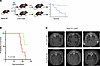 Figure 4
Semaglutide effect in an autochthonous mouse model. (A) Schematic illustrating the experimental design in the diet-induced obesity (DIO) KP mouse. (B) Kaplan-Meier survival analysis of DIO-KP mice receiving vehicle or semaglutide following tumor initiation (n = 7 per group). P = 0.01198 by log-rank test (vehicle vs. semaglutide). (C) Representative μCT images of lung tumor burden in DIO-KP mice at endpoint, comparing semaglutide- and vehicle-treated groups.
Semaglutide treatment significantly extended overall survival (HR: 0.21, 95% CI: 0.057–0.79, P = 0.012) compared with vehicle-treated control (Figure 4B). Longitudinal microcomputed tomography (μCT) revealed significantly reduced tumor burden in the semaglutide groups (Figure 4C), mirroring the results of our heterotopic models, where GLP-1RA reduced tumor growth and progression in obesity-associated lung cancer.
GLP-1RA use is associated with improved recurrence-free survival after NSCLC resection. We then performed a retrospective examination of clinical outcomes in a database of patients undergoing surgery for NSCLC at our center between 2015 and 2024. A total of 1,177 patients met criteria for inclusion in the postsurgical cohort (a flowchart of the cohort is represented in Supplemental Figure 4A). Within this cohort, 71 patients were GLP-1RA users. Demographic characteristics, including age, clinical stage, race, and smoking history were generally well balanced between the GLP-1RA users and non-users; however, GLP-1RA users had significantly higher mean body mass index (BMI) at the time of resection than the non-users (35.07 vs. 30.6; P = 0.001). Demographic data are reported in Supplemental Table 1. Most patients across both groups had clinical stage I disease 970 (82.4%), while 193 (16.4%) had stage II, and 14 (1.2%) had stage III lung cancers.
In an unmatched, univariate Cox regression model including the entire cohort, GLP-1RA use was associated with improved recurrence-free survival (RFS) (HR: 0.41; 95% CI: 0.17–1.02; P = 0.027). No such association was noted for overall survival (OS) (HR: 0.70; 95% CI: 0.43–1.16; P = 0.09).
In a propensity-matched analysis, where propensity scores were calculated using age, sex, race, BMI, cancer stage, smoking status, and histology as covariates and GLP-1RA use as the dependent variable, a matched cohort of 629 was identified that included 560 GLP-1RA non-users and 69 GLP-1RA users. This cohort did not include any patients with stage III disease (see Supplemental Table 1). Univariate Cox regression of the matched cohort showed that GLP-1RA use was associated with improved RFS (HR: 0.41, 95% CI: 0.16–1.04, P = 0.026; Figure 5A). GLP-1RA use was not significantly associated with OS (HR: 0.78, 95% CI: 0.44–1.38, P = 0.20; Figure 5B). Results of univariate analyses for all the covariates in both unmatched and matched cohorts are presented in Table 1.
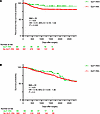 Figure 5
Clinical outcomes with adjuvant GLP-1RA use after resection in NSCLC. Recurrence-free survival (A) and overall survival (B) in overweight and obese patients who underwent resection for NSCLC and received GLP-1RA. GLP-1RA use is associated with improved RFS after propensity score matching for age, sex, race, smoking, histology, stage, and GLP-1RA use as covariates. Significance was assessed using Cox’s proportional hazards modeling for univariate models.
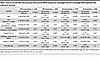 Table 1
Overall survival (OS) and recurrence-free survival (RFS) analyses for overweight and non-overweight NSCLC patients who underwent resection
GLP-1RA use improved survival in overweight patients receiving ICIs for advanced NSCLC. In light of the findings from the preclinical model and expanding use of immunotherapy in the treatment of lung cancer, we set out to test whether the apparent benefits of GLP-1RA use extend to patients on ICI therapy. A cohort of 300 patients with advanced lung cancer treated with ICI at our center between 2015 and 2023 was identified, of which 10 patients were prescribed concurrent GLP-1RA. A flowchart of the cohort is represented in Supplemental Figure 4B. All GLP-1RA users in the cohort had diabetes (reflecting FDA-approved indications during our study period), whereas 25% of non-users were diabetic. Most patients (78.7%) had stage IV disease; the remainder of the cohort was comprised of stage III NSCLC not amenable to local treatments. Treatment included immunotherapy alone for 158 patients (52.7%) and a combination of immuno- and chemotherapy for 142 (47.3%). Patients receiving GLP-1RA were significantly younger; other characteristics such as sex, BMI, race, smoking status, tumor histology, and treatment modality were similar between groups (Supplemental Table 2).
In an unmatched analysis, univariate Cox regression modeling demonstrated that GLP-1RA use was associated with improved progression-free survival (PFS) (HR: 0.39; 95% CI: 0.13–1.14; P = 0.044) and OS (HR: 0.40; 95% CI: 0.15–1.04; P = 0.031).
In a propensity-matched analysis, propensity scores were calculated using age, sex, race, smoking status, BMI, tumor histology, first-line therapy, and stage at the start of ICI therapy as covariates, with GLP-1RA use as the dependent variable. The matched cohort (n = 89) had 79 non-users and 10 GLP-1RA users (see Supplemental Table 2). Univariate Cox regression of the matched cohort showed that GLP-1RA use was associated with improved PFS (HR: 0.31, 95% CI: 0.1–0.94, P = 0.019; Figure 6A) and OS (HR: 0.41, 95% CI: 0.16–1.01, P = 0.027; Figure 6B). Results of univariate analyses for all covariates in both unmatched and matched cohorts are presented in Table 2.
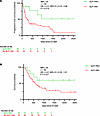 Figure 6
Outcomes with GLP-1RA use in advanced-stage NSCLC patients on ICI. Progression-free survival (A) and overall survival (B) in overweight and obese patients receiving ICI for advanced NSCLC after propensity score matching for age, sex, race, smoking, histology, stage, first-line therapy, and GLP-1RA use as covariates. Significance was assessed using Cox’s proportional hazards modeling for univariate models.
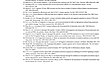 Table 2
Overall survival (OS) and progression-free survival (PFS) analyses for overweight and non-overweight NSCLC patients on immune checkpoint inhibitors


