

Abstract
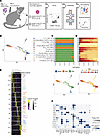
Spinal and bulbar muscular atrophy (SBMA) is a neuromuscular disease caused by an expanded CAG repeat in the androgen receptor (AR) gene. To elucidate the cell type–specific temporal gene expression in SBMA, we performed single-nucleus RNA sequencing on the spinal cords of an SBMA mouse model (AR-97Q). Among all cell types, oligodendrocytes had the highest number of differentially expressed genes before disease onset. Analysis of oligodendrocyte clusters suggested that pathways associated with cation channels and synaptic function were activated before disease onset, with increased output from oligodendrocytes to neurons in AR-97Q mice compared with wild-type mice. These changes in the early stages were abrogated at the advanced stages. An oligodendrocyte model of SBMA showed phenotypes similar to those of AR-97Q mice at early stages, such as increased transcriptional changes in synapse organization, and Ca2+ imaging of oligodendrocytes in AR-97Q mice revealed the increased Ca2+ responses. A coculture system of primary rat oligodendrocytes and neurons revealed that the mutant AR in oligodendrocytes affected the activity and synchronization of neurons. These findings suggest that dysregulated cell-to-cell communication plays a critical role in early SBMA pathology and that synaptic or ion channel–related proteins, such as contactin associated protein 2 (Cntnap2) and NALCN channel auxiliary factor 1 (Fam155a), are potential therapeutic targets for SBMA.
Authors
Madoka Iida, Kentaro Sahashi, Tomoki Hirunagi, Kenji Sakakibara, Kentaro Maeda, Yohei Iguchi, Jiayi Li, Yosuke Ogura, Masaki Iizuka, Tomohiro Akashi, Kunihiko Hinohara, Shouta Sugio, Hiroaki Wake, Masahiro Nakatochi, Masahisa Katsuno
Abstract
Tissue-resident memory T (TRM) cells play a central role in immune responses across all barrier tissues after infection. However, the mechanisms that drive TRM differentiation and priming for their recall effector function remains unclear. In this study, we leveraged newly generated and publicly available single-cell RNA-seq data generated across 10 developmental time points to define features of CD8+ TRM across both skin and small-intestine intraepithelial lymphocytes (siIEL). We employed linear modeling to capture gene programs that increase their expression levels in T cells transitioning from an effector to a memory state. In addition to capturing tissue-specific gene programs, we defined a temporal TRM signature across skin and siIEL that can distinguish TRM from circulating T cell populations. This TRM signature highlights biology that is missed in published signatures that compared bulk TRM to naive or nontissue resident memory populations. This temporal TRM signature included the AP-1 transcription factor family members Fos, Fosb, Fosl2, and Junb. ATAC-seq analysis detected AP-1–specific motifs at open chromatin sites in mature TRM. Cyclic immunofluorescence (CyCIF) tissue imaging detected nuclear colocalization of AP-1 members in resting CD8+ TRM greater than 100 days after infection. Taken together, these results reveal a critical role of AP-1 transcription factor members in TRM biology.
Authors
Neal P. Smith, Yu Yan, Youdong Pan, Jason B. Williams, Kasidet Manakongtreecheep, Shishir M. Pant, Jingxia Zhao, Tian Tian, Timothy Pan, Claire Stingley, Kevin Wu, Jiang Zhang, Alexander L. Kley, Peter K. Sorger, Alexandra-Chloé Villani, Thomas S. Kupper
Abstract
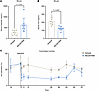
β-Thalassemia is a genetic disorder arising from mutations in the β-globin gene, leading to ineffective erythropoiesis and iron overload. Ineffective erythropoiesis, a hallmark of β-thalassemia, is an important driver of iron overload, which contributes to liver fibrosis, diabetes, and cardiac disease. Iron homeostasis is regulated by the hormone hepcidin; BMP6/hemojuvelin–mediated (BMP6/HJV-mediated) signaling induces hepatic hepcidin expression via SMAD1/5, with transmembrane serine protease 6 (TMPRSS6) being a negative regulator of HJV. Individuals with loss-of-function mutations in the TMPRSS6 gene show increased circulating hepcidin and iron-refractory iron-deficiency anemia, suggesting that blocking TMPRSS6 may be a viable strategy to elevate hepcidin levels in β-thalassemia. We generated a human mAb (REGN7999) that inhibits TMPRSS6. In an Hbbth3/+ mouse model of β-thalassemia, REGN7999 treatment led to significant reductions in liver iron, reduced ineffective erythropoiesis, and showed improvements in RBC health, running distance during forced exercise, and bone density. In a phase I, doubleblind, randomized, placebo-controlled study in healthy human volunteers (NCT05481333), REGN7999 increased serum hepcidin and reduced serum iron with an acceptable tolerability profile. Our results suggest that, by both reducing iron and improving RBC function, inhibition of TMPRSS6 by REGN7999 may offer a therapy for iron overload and impaired erythropoiesis in β-thalassemia.
Authors
Heinrich E. Lob, Nikhil Singh, Kusha Mohammadi, Larisa Ivanova, Beth Crowell, Hyon J. Kim, Leah Kravets, Nanditha M. Das, Yonaton Ray, Jee Hae Kim, Sylvie Rottey, Emily Labriola-Tompkins, Hazem E. Hassan, Lorna Farrelly, Harvey F. Chin, Marilena Preda, Leigh Spencer Noakes, Kei Saotome, Matthew Franklin, Marc W. Retter, Elif Karayusuf, John J. Flanagan, William Olson, Kalyan C. Nannuru, Vincent Idone, Michael E. Burczynski, Olivier A. Harari, Lorah Perlee, Griet Van Lancker, Andrew J. Murphy, Aris N. Economides, Sarah J. Hatsell

Abstract
Pancreatic stellate cells (PSCs) are the origin of cancer-associated fibroblasts. Type 2 diabetes mellitus (T2D) may promote pancreatic ductal adenocarcinoma (PDAC), eliciting changes in the quiescent PSC (qPSC) population from the precancerous stage. However, the details are unknown. We evaluated the subpopulations of qPSCs and the impact of T2D. PSCs isolated from 8-week-old C57BL/6J mice and diabetic db/db mice were analyzed by single-cell RNA-seq. Sorted qPSCs and PDAC cells were transplanted into allogenic mice. The isolated qPSCs were broadly classified into mesothelial cell and pancreatic fibroblast (Paf) populations by single-cell RNA-seq. Pafs were subclassified into inflammatory Pafs, myofibroblastic Pafs (myPafs) and a small population named tumor immunity- and angiogenesis-promoting Pafs (tapPafs), expressing Cxcl13. In the subcutaneous transplantation model, the tumors transplanted with myPafs were significantly larger than the tumors transplanted with tapPafs. An increase in myPafs and a decrease in tapPafs were observed from the precancerous stage in human T2D, indicating the effects of tumor progression. This study revealed the subpopulation changes in qPSCs in T2D. A therapy that increases the number of tapPafs could be a therapeutic option for patients with PDAC and T2D and even those in a precancerous stage of T2D.
Authors
Yutaro Hara, Hiroki Mizukami, Takahiro Yamada, Shuji Shimoyama, Keisuke Yamazaki, Takanori Sasaki, Zhenchao Wang, Hanae Kushibiki, Masaki Ryuzaki, Saori Ogasawara, Hiroaki Tamba, Akiko Itaya, Norihisa Kimura, Keinosuke Ishido, Shinya Ueno, Kenichi Hakamada
Abstract
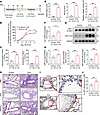
Airway smooth muscle (ASM) hyperplasia is a hallmark of airway remodeling in asthma, which still lacks an effective treatment. Low-density lipoprotein receptor-related protein 1 (LRP1) is involved in regulating the proliferation of various cell types, and the intracellular domain of LRP1 (LRP1-ICD) also exhibits unique biological functions. However, the role of LRP1 in asthma airway remodeling remains unclear. In the present study, LRP1 was increased in ASM cells of mice with OVA-induced chronic asthma, with the elevation in LRP1-ICD protein levels being significantly greater than that of the LRP1 β chain. In vivo experiments demonstrated that inhibiting LRP1 reduced ASM proliferation in these mice. Mechanistically, LRP1 knockdown inhibited the FGF2/ERK signaling pathway, thereby arresting cell cycle progression and suppressing ASM cell proliferation. Additionally, in vitro experiments revealed that the inhibitory effect of LRP1-ICD overexpression on ASM cell proliferation was lost after adjusting the levels of LRP1. LRP1-ICD overexpression inhibited full-length LRP1 protein levels by promoting its protein degradation rather than by suppressing its transcription, thus preventing further exacerbation of asthma. In conclusion, this study clarifies the molecular biological mechanism by which LRP1 regulates ASM proliferation, suggesting targeting full-length LRP1 as a strategy for therapeutic intervention in asthma airway remodeling.
Authors
Ya Deng, Jiaying Zhao, Chen Gong, Wenqian Ding, Lulu Fang, Huaqing Liu, Ming Li, Bing Shen, Shenggang Ding
Abstract
Overall survival (OS) in multiple myeloma (MM) varies between a couple of months to more than 20 years, influenced by tumor characteristics, the tumor microenvironment (TME), and patient factors such as age and frailty. We analyzed sequential BM samples from 45 MM patients with OS less than 3 years versus more than 8 years using mass cytometry and bulk TCRβ sequencing. Patients with long OS demonstrated stability in the TME and T cell environments, while those with short OS had significant changes at relapse, including fewer T cells, increased Tregs, and more activated and exhausted CD8+ T cells. Notably, higher programmed cell death 1 expression in CD8+ T cells at diagnosis correlated with short OS. Additionally, short-OS patients exhibited a more monoclonal T cell environment at relapse, with abundance of hyperexpanded clones. These findings reveal distinct immune cell differences between patients with short and long OS.
Authors
Alenka Djarmila Behsen, Esten Nymoen Vandsemb, Tobias Schmidt Slørdahl, Karen Dybkær, Maja Zimmer Jakobsen, Muhammad Kashif, Johan Lund, Vincent Luong, Astrid Marta Olsnes, Anders Waage, Anne Marit Sponaas, Kristine Misund

Abstract
Regulation of organismal homeostasis in response to nutrient availability is a vital physiological process that involves interorgan communication. The role of the heart in controlling systemic metabolic health is not clear. Adopting a mouse model of diet-induced obesity, we found that the landscape of N6-methyladenosine (m6A) on cardiac mRNA was altered following high-fat/high-carbohydrate feeding (Western diet). m6A is a critical posttranscriptional regulator of gene expression, the formation of which is catalyzed by methyltransferase-like 3 (METTL3). Through parallel unbiased approaches of Nanopore sequencing, mass spectrometry, and protein array, we found regulation of circulating factors under the control of METTL3. Mice with cardiomyocyte-specific deletion of METTL3 showed a systemic inability to respond to nutritional challenge, thereby mitigating the detrimental effects of Western diet. Conversely, increasing cardiac METTL3 level exacerbated diet-induced body weight gain, adiposity, and glucose intolerance. Our findings position the heart at the center of systemic metabolism regulation and highlight an m6A-dependent pathway to be exploited for the battle against obesity.
Authors
Charles Rabolli, Jacob Z. Longenecker, Isabel S. Naarmann-de Vries, Joan Serrano, Jennifer M. Petrosino, George A. Kyriazis, Christoph Dieterich, Federica Accornero
Abstract
Human T-lymphotropic virus type 1–associated (HTLV-1–associated) myelopathy (HAM, also known as tropical spastic paraparesis) is a rare neurodegenerative disease with largely elusive molecular mechanisms, impeding targeted therapeutic advancements. This study aimed to identify the critical molecule responsible for neuronal damage in HAM, its source, and the regulatory mechanisms controlling its expression. Utilizing patient-derived cells and established cell lines, we discovered that HTLV-1 Tax, in conjunction with specificity protein 1 (Sp1), enhanced the expression of repulsive guidance molecule A (RGMa), a protein known to contribute to neuronal damage. RGMa expression was specifically upregulated in HTLV-1–infected cells from patients with HAM, particularly in those expressing HTLV-1 Tax. Furthermore, in CD4+ cells from patients with HAM, the level of H3K27me3 methylation upstream of the RGMA gene locus was reduced, making RGMA more prone to constitutive expression. We demonstrated that HTLV-1–infected cells in HAM inflict neuronal damage via RGMa. Crucially, the neutralizing antibody against RGMa, unasnemab (MT-3921), effectively mitigated this damage in a dose-responsive manner, highlighting RGMa’s pivotal role in neuronal damage and its potential as a therapeutic target for alleviating neuronal damage in HAM.
Authors
Natsumi Araya, Makoto Yamagishi, Makoto Nakashima, Naomi Asahara, Kazuhiro Kiyohara, Satoko Aratani, Naoko Yagishita, Erika Horibe, Izumi Ishizaki, Toshiki Watanabe, Tomoo Sato, Kaoru Uchimaru, Yoshihisa Yamano

Abstract
While cytotoxic CD4+ tumor-infiltrating lymphocytes have anticancer activity in patients, whether these can be noninvasively monitored and how these are regulated remains obscure. By matching single cells with T cell receptors (TCRs) in tumor and blood of patients with bladder cancer, we identified distinct pools of tumor-matching cytotoxic CD4+ T cells in the periphery directly reflecting the predominant antigenic specificities of intratumoral CD4+ tumor-infiltrating lymphocytes. On one hand, the granzyme B–expressing (GZMB-expressing) cytotoxic CD4+ subset proliferated in blood in response to PD-1 blockade but was separately regulated by the killer cell lectin-like receptor G1 (KLRG1), which inhibited their killing by interacting with E-cadherin. Conversely, a clonally related, GZMK-expressing circulating CD4+ population demonstrated basal proliferation and a memory phenotype that may result from activation of GZMB+ cells, but was not directly mobilized by PD-1 blockade. As KLRG1 marked the majority of circulating tumor-TCR-matched cytotoxic CD4+ T cells, this work nominates KLRG1 as a means to isolate them from blood and provide a window into intratumoral CD4+ recognition, as well as a putative regulatory receptor to mobilize the cytolytic GZMB+ subset for therapeutic benefit. Our findings also underscore ontogenic relationships of GZMB- and GZMK-expressing populations and the distinct cues that regulate their activity.
Authors
Serena S. Kwek, Hai Yang, Tony Li, Arielle Ilano, Eric D. Chow, Li Zhang, Hewitt Chang, Diamond Luong, Averey Lea, Matthew Clark, Alec Starzinski, Yimin Shi, Elizabeth McCarthy, Sima Porten, Maxwell V. Meng, Chun Jimmie Ye, Lawrence Fong, David Y. Oh

Abstract
The role of gamma-delta T (γδ T) cells in immune responses to common allergens is poorly understood. Here, we utilized single-cell (sc) transcriptomic analysis of allergen-reactive γδ T cells in humans to characterize the transcriptional landscapes and TCR repertoires in response to cockroach (CR) and mouse (MO) allergens. Using a potentially novel activation-induced marker (AIM) assay that allows detection of γδ T cells combined with scRNA sequencing and TCR repertoire analysis, we identified both shared and allergen-specific γδ T cell activation patterns and gene expression profiles. While CR extract activated both Vδ1 and Vδ2 subsets, MO extract primarily stimulated Vδ2 cells. Our analysis revealed allergen-specific clusters with distinct functional signatures, including enhanced inflammatory responses and cytotoxic effector functions in MO-specific γδ T cells and natural killer cell–mediated immunity and IFN-γ signaling in CR-specific populations. Comparison of allergic and nonallergic individuals highlighted differences in gene expression and TCR repertoires, including a higher IFNG expression in the CR-allergic compared with nonallergic cohorts, suggesting that phenotypic and functional differences are associated with γδ T allergen responses. This study provides insights into the cellular and molecular heterogeneity and functionality of allergen-reactive γδ T cells, offering a foundation for understanding their role in allergic diseases and potential therapeutic interventions.
Authors
Kendall Kearns, Sloan A. Lewis, Esther Dawen Yu, Adam Abawi, Eric Wang, Synaida Maiche, Monalisa Mondal, Pandurangan Vijayanand, Grégory Seumois, Bjoern Peters, Alessandro Sette, Ricardo Da Silva Antunes
No posts were found with this tag.


