

Abstract
Alveolar hemorrhage (AH) is a life-threatening condition with high mortality, yet the immunological mechanisms governing disease severity remain poorly defined. Here, we demonstrate a protective role for T cell–intrinsic β-catenin stabilization in AH using a transgenic mouse model (CAT-Tg) in which β-catenin is stabilized under the Lck promoter. We found β-catenin stabilization induced a distinct T cell phenotype marked by expansion of central effector memory cells (CD44+CD122+Eomes+T-bet+) and suppression of proinflammatory signaling, including reduced phosphorylation of STAT1, STAT3, and JAK1. Pristane-induced AH was attenuated in CAT-Tg mice, which exhibited reduced lung injury, decreased proteinuria, and diminished pulmonary proinflammatory cytokine production compared with WT controls. Protection was associated with a marked expansion of FOXP3+ Tregs. Mechanistically, β-catenin stabilization enhanced lung expression of amphiregulin and BATF, mediators of Treg stability and tissue repair. Adoptive transfer of CAT-Tg–derived Tregs into WT mice conferred superior protection against AH, reducing lung inflammation and proteinuria. Transcriptomic analyses revealed enrichment of tissue repair and immune homeostasis pathways, including PI3K-Akt, angiogenesis, and STAT5 signaling. Collectively, these findings identify β-catenin as a regulator of a protective amphiregulin/BATF/Treg axis, highlighting an immunomodulatory pathway with therapeutic potential for AH and inflammatory lung disease.
Authors
Fiona Mason, Hui Xiong, Ali Mobeen, Md Saddam Hossain, Sara Mahmudlu, Rosanne Trevail, Mikyal Mobeen, Li Chen, Sunny Lee, Tuncay Delibasi, Jyoti Misra Sen, Mobin Karimi

Potentiation of fentanyl-induced respiratory depression by alcohol is not fully reversed by naloxone
Abstract
The high frequency of opioid overdose deaths often involves co-use of alcohol, which is reported in approximately 30% of fentanyl fatalities. Both substances depress respiratory function, and their combined effects can be lethal. The present study investigated physiological parameters of respiratory-depressant effects of fentanyl when coadministered with alcohol and their sensitivity to naloxone reversal using whole-body plethysmography in male and female Long-Evans rats. Administration of a high, sedative-like dose of alcohol alone or fentanyl alone resulted in no mortality, but fentanyl plus alcohol led to mortality rates of 42% and 33% in females and males, respectively. The fentanyl+alcohol combination reduced minute ventilation and increased apneic pauses compared with either drug alone. Lower, binge-like alcohol doses when combined with fentanyl also amplified respiratory depression. Pretreatment with naloxone did not fully restore normal respiration. Naloxone administered after fentanyl+alcohol transiently reversed the decrease in minute ventilation but did not reverse apneic pauses. Fentanyl-dependent rats were partially tolerant to fentanyl- and fentanyl+alcohol–induced respiratory depression, but alcohol-dependent rats exhibited sensitization to alcohol- and fentanyl+alcohol–induced apnea. These findings highlight physiological parameters of severe respiratory risks with fentanyl+alcohol co-use, which are inadequately reversed by naloxone, underscoring the need for targeted strategies to manage opioid+alcohol overdoses.
Authors
Emma V. Frye, Lyndsay E. Hastings, Aniah N. Matthews, Adriana Gregory-Flores, Janaina C.M. Vendruscolo, Lindsay A. Kryszak, Shelley N. Jackson, Aidan J. Hampson, Nora D. Volkow, Leandro F. Vendruscolo, Renata C.N. Marchette, George F. Koob

Abstract
Immunosuppression and metastasis are critical hallmarks of breast cancer, often linked to poor patient outcomes. The secreted cytokine chitinase-3–like 1 (CHI3L1) is frequently overexpressed in breast cancer samples and promotes an immunosuppressed tumor microenvironment. Notably, CHI3L1 expression is elevated in metastatic patient samples when compared with the matched primary breast tumor. To investigate its role in breast cancer metastasis, we generated an inducible genetically engineered mouse model that overexpresses CHI3L1 in the mammary epithelium. Ectopic expression of CHI3L1 in the polyomavirus middle T (PyMT) mouse model of breast cancer suppressed antitumor immune responses, accelerated mammary tumor onset, and enhanced lung metastasis. Mechanistically, elevated CHI3L1 expression in the mammary epithelium enhanced neutrophil recruitment, which subsequently degraded the extracellular matrix and increased the number of circulating tumor cells. These findings reveal a key mechanism driving metastatic dissemination and argue that therapeutically targeting Chi3l1 could enhance antitumor immunity and suppress metastasis.
Authors
Tarek Taifour, Adéline Massé, Yu Gu, Virginie Sanguin-Gendreau, Dongmei Zuo, Bin Xiao, Emilie Solymoss, Yunyun Shen, Hailey Proud, Sherif Samer Attalla, Vasilios Papavasiliou, Nancy U. Lin, Melissa E. Hughes, Kalie Smith, Chun Geun Lee, Suchitra Kamle, Josie Ursini-Siegel, Jack A. Elias, Peter M. Siegel, Rinath Jeselsohn, William J. Muller
Abstract
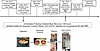
We hypothesized that bone marrow transplantation (BMT) using marrow extracted from the vertebral bodies (VBs) of an unrelated deceased lung transplant donor would be able to establish persistent hematopoiesis and generate immunity and tolerance. A teenager with severe combined immunodeficiency with lung failure due to recurrent pneumonias underwent lung transplantation in 2016 from a 1/8 HLA allele–matched unrelated donor, followed by BMT 4 months later using T cell/B cell–depleted, cryopreserved VB marrow. Rapid engraftment was followed by accelerating immune competence at 6 months, with independence from immunosuppression by 16 months. Donor T cell (>95%) and myeloid chimerism (7%–10%) has persisted for over 9 years. At 2 years after BMT, circulating T cells were hyporesponsive to host dendritic cells in vitro. T cell receptor clonotyping revealed the disappearance of host-reactive clones, and T cell RNA sequencing exhibited downmodulated signaling pathways for cytotoxicity/rejection, paired with upregulated immunomodulatory pathways, suggesting active suppression. In parallel, host monocytes upregulated certain signaling pathways, indicating active interactions between post-thymic donor T cells and host monocytes. In summary, for the first time to our knowledge, durable hematopoietic engraftment, immunity, and tolerance were demonstrable in a recipient of BMT obtained from a VB graft.
Authors
Paul Szabolcs, Xiaohua Chen, Marian G. Michaels, Memphis Hill, Evelyn Garchar, Zarreen Amin, Heather M. Stanczak, Shawna McIntyre, Aleksandra Petrovic, Dhivyaa Rajasundaram, Ansuman Chattopadhyay, Jonathan E. Spahr, Peter D. Wearden, Geoffrey Kurland

Abstract
Cachexia is a debilitating syndrome characterized by progressive skeletal muscle wasting, commonly affecting patients with cancer, particularly those with pancreatic cancer. Despite its clinical significance, the molecular mechanisms underlying cancer cachexia remain poorly understood. In this study, we utilized single-nucleus RNA-seq (snRNA-seq) and bulk RNA-seq, complemented by biochemical and histological analyses, to investigate molecular alterations in the skeletal muscle of the KPC mouse model of pancreatic cancer cachexia. Our findings demonstrated that KPC tumor growth induced myofiber-specific changes in the expression of genes involved in proteolytic pathways, mitochondrial biogenesis, and angiogenesis. Notably, tumor progression enhanced the activity of specific transcription factors that regulate the mTORC1 signaling pathway, along with genes involved in translational initiation and ribosome biogenesis. Skeletal muscle–specific, inducible inhibition of mTORC1 activity further exacerbated muscle loss in tumor-bearing mice, highlighting its protective role in maintaining muscle mass. Additionally, we uncovered new intercellular signaling networks within the skeletal muscle microenvironment during pancreatic cancer–induced cachexia. Our study reveals previously unrecognized molecular mechanisms that regulate skeletal muscle homeostasis, and it identifies potential therapeutic targets for the treatment of pancreatic cancer–associated cachexia.
Authors
Bowen Xu, Aniket S. Joshi, Meiricris Tomaz da Silva, Silin Liu, Ashok Kumar

Abstract
The chronic inflammation of Crohn’s disease frequently leads to fibrosis and muscular hypertrophy of the intestinal wall. This often culminates in strictures, a serious condition lacking directed therapy. Severe pathological changes occur in the submucosa and muscularis propria intestinal wall layers of strictures, yet stricture-associated proteome changes in these layers is unexplored. We perform unbiased proteomics on submucosa and muscularis propria microdissected from transmural sections of strictured and nonstrictured ileum. Proteome changes in strictured submucosa reflected a transition from homeostasis to tissue remodeling, inflammation, and smooth muscle changes. Top submucosal features included reduced vascular components and lipid metabolism proteins accompanied by increased proteins with immune-, ECM-, or stress-related functions, including CTHRC1, TNC, IL-16, MZB1, and TXNDC5. In parallel, predominant changes in strictured muscularis propria included increased ECM (POSTN) and immune (mast cell CPA3) proteins alongside decreased proteins with lipid metabolic, mitochondrial, or key muscle functions. Finally, trends of differentially expressed proteins along nonstrictured submucosa suggest progressive profibrotic tissue remodeling and muscle expansion as proximity to strictures increases. The comprehensive proteome map presented here offers tissue-layer-resolved insight into the stricture microenvironment and potential drivers of fibrotic disease, providing a valuable resource to fuel biomarker and therapeutic target research.
Authors
Johannes Alfredsson, Carina Sihlbom Wallem, Maja Östling, Hanna de la Croix, Elinor Bexe-Lindskog, Mary Jo Wick

Abstract
Glycosylation changes are pivotal in colorectal cancer (CRC) development. The role of bisecting GlcNAc, a specific N-glycosylation type catalyzed by glycosyltransferase MGAT3, in CRC progression remains elusive. Previous studies indicated that dietary interventions can be beneficial for patients with certain congenital disorders of glycosylation. However, the impact of dietary fatty acids, such as palmitic acid (PA), on glycosylation regulation remains largely unclear. Here, we observed markedly decreased levels of bisecting GlcNAc and MGAT3 in colonic tissues of CRC patients. Downregulation of bisecting GlcNAc in CRC cells increased cell proliferation, migration, and invasion, while decreasing apoptosis. Moreover, a PA-rich diet inhibited CRC carcinogenesis in azoxymethane/dextran sodium sulfate–induced CRC mice by elevating bisecting GlcNAc levels. However, in Mgat3fl/fl Villin-Cre mice the inhibitory effects of the PA-rich diet were abolished. Intact glycopeptide analysis revealed that PA enhanced the bisecting GlcNAc modification on desmoglein 2 (DSG2). Additionally, DSG2 was identified to inhibit CRC carcinogenesis through the EGFR/AKT signaling pathway. In conclusion, dietary PA suppresses CRC carcinogenesis by regulating bisecting GlcNAc modification on DSG2, providing a direct mechanistic link between dietary fatty acids and CRC.
Authors
Lei Lei, Juan Tang, Yuejiao Lv, Bingyi Jia, Wenqing Cai, Shuangshuang Sheng, Keying Li, Zhiwen Shi, Ning Fan, Zengqi Tan, Xiang Li, Feng Guan

Abstract
Common variable immunodeficiency (CVID) is the most prevalent symptomatic primary antibody deficiency. For unclear reasons, inflammatory complications, like gastrointestinal (GI) disease, occur in ~50% of CVID cases, worsening morbidity and mortality. NFKB1 variants are among the most frequent genetic variants in CVID. While effect of NFKB1 variants is not well understood, we previously found frameshift heterozygous NFKB1 variants to increase cytokines, monocytes, and inflammatory complications in CVID. In this report, we used induced pluripotent stem cell–derived (iPSC-derived) monocytes (iMONOs) with CRISPR/Cas9-mediated gene editing to study a heterozygous NFKB1 frameshift found in a patient with CVID with severe GI disease. The heterozygous NFKB1 variant similarly reduced NFKB1 protein in CVID patient– and healthy donor–derived iMONOs, but elevated LPS-induced IL-1β release and expression of inflammatory genes, including IL1B, IL6, TNF, and neutrophil chemoattractants, only in CVID patient iMONOs. CVID patient iMONOs also had elevations of IL-12, CCL4, and CCL12 unaffected by presence or absence of the NFKB1 variant. TNF antagonism improved the patient’s GI disease, diminishing neutrophilic gastritis, circulating neutrophils, and the neutrophil chemoattractant CXCL1 in the blood. While the biology remains complex, our approach found heterozygous NFKB1 variant–induced inflammatory changes intensified in CVID iMONOs, corresponding with clinical response to TNF antagonism.
Authors
Kevin M. Hayes, Kai Boldt, Peter J. Schnorr, Pushpinder Bawa, Miranda L. Abyazi, Matthew S. Ware, Gavin Gyimesi, Marianne James, Huaibin M. Ko, Charlotte Cunningham-Rundles, Joseph P. Mizgerd, Gustavo Mostoslavsky, Darrell N. Kotton, Paul J. Maglione

Abstract
Immune checkpoint inhibitors (ICIs) have reshaped the treatment landscape of several cancer types. However, their effectiveness remains limited to a subset of patients, in part due to insufficient preexisting antitumor immunity. In this study, we hypothesized that intracellular delivery of noncoding dsDNA encapsulated in lipid nanoparticles (DNA-LNPs), which have recently been demonstrated to activate both STING and absent in melanoma 2 (AIM2) pathways, could enhance antitumor immune responses and potentiate ICI therapy. Using multiple animal models of cancer, including hepatocellular carcinoma, acute myeloid leukemia, melanoma, and melanoma lung metastasis, we show that DNA-LNP treatment triggered strong cytokine induction and robust CD8+ T cell recruitment to the tumor microenvironment. This immune activation mediated potent CD8+ T cell–dependent antitumor effects and prolonged animal survival across multiple models. Notably, empty LNPs did not elicit potent cytokine elevation or antitumor effects, suggesting that these responses are triggered by the activation of cytosolic DNA-sensing pathways. Moreover, DNA-LNPs synergized with anti–PD-L1, substantially extending animal survival in both ICI-responsive and ICI-resistant tumor models. These findings position DNA-LNPs as a promising immunotherapy strategy, either alone or in combination with ICI therapies, to enhance antitumor immunity across diverse cancer types.
Authors
Seoyun Yum, Alba Rodríguez-Garcia, Joan Castellsagué, Marta Giménez-Alejandre, Guillem Colell, Salut Colell, Teresa Lobo-Jarne, Mark A. LaRue, Michael A. Minnier, Mustafa N. Yazicioglu, Rui Zhang, Xavier M. Anguela, Ali Nahvi, Matthew C. Walsh, Sean M. Armour, Sonia Guedan, Pedro J. Cejas

Abstract
Limb-girdle muscular dystrophy R2 (LGMD R2) is an autosomal recessive disorder caused by dysferlin deficiency, leading to progressive muscle weakness and wasting. The lack of reliable clinical biomarkers has limited disease monitoring and therapeutic evaluation. Here, we identified Disabled-2 (DAB2) as a molecular and clinical indicator of disease state in LGMD R2. Transcriptomic profiling revealed a significant upregulation of DAB2 in induced pluripotent stem cell–derived (iPSC-derived) myotubes from patients, a finding validated in muscle biopsies from 14 dysferlin-deficient individuals and in dysferlin-deficient Bla/J mice, where DAB2 levels increased with disease progression. Importantly, AAV-mediated expression of full-length dysferlin restored DAB2 levels, supporting its value as a dynamic readout of disease activity for both disease monitoring and therapeutic response. Given the established role of DAB2 in clathrin-mediated endocytosis, particularly in LDL receptor internalization and cholesterol homeostasis, and the pathological lipid accumulation reported in LGMD R2, we investigated its contribution to lipid dysregulation. High DAB2 expression paralleled lipid deposition in patient muscles, iPSC-derived myotubes, and mouse tissue, whereas siRNA-mediated DAB2 knockdown reduced lipid accumulation in LGMD R2 myotubes. Collectively, these findings suggest that DAB2 functions as a mechanistic link between dysferlin deficiency, altered lipid handling, and disease severity, and they highlight its potential as a prognostic marker and therapeutic response measure for LGMD R2.
Authors
Celine Bruge, Nathalie Bourg, Emilie Pellier, Quentin Miagoux, Manon Benabides, Noella Grossi, Hassan Hayat, Margot Jarrige, Helene Polveche, Valeria Agostini, Anthony Brureau, Stephane Vassilopoulos, Teresinha Evangelista, Gorka Fernández-Eulate, Tanya Stojkovic, Isabelle Richard, Xavier Nissan
No posts were found with this tag.


