
Research ArticleClinical ResearchInflammation
Open Access |  10.1172/jci.insight.206938
Mapping the plasma proteomic architecture of systemic lupus erythematosus
Geoffrey H.D. Leung,1 Charlotte Bottomley,1 Norzawani Buang,1 Robert T. Maughan,1 Benjamin J. Whittle,1 Boroumand Zeidaabadi,1 Yun-Ju Huang,1,2 Tabitha Turner-Stokes,1,3 Marie Condon,3 Liz Lightstone,1,3 Tom Cairns,3 Marina Botto,1,3 Matthew C. Pickering,1,3 and James E. Peters1,3
1Department of Immunology and Inflammation, Imperial College London, London, United Kingdom.
2School of Medicine, Chang Gung University and Division of Rheumatology, Allergy and Immunology, Chang Gung Memorial Hospital, Taoyuan, Taiwan.
3Imperial Lupus Centre, Imperial College Healthcare NHS Trust, London, United Kingdom.
Address correspondence to: James E. Peters, Department of Immunology and Inflammation, Imperial College London, Hammersmith Hospital Campus, Du Cane Road, London, W12 0NN, United Kingdom. Phone: 44.203.313.2315; Email: j.peters@imperial.ac.uk.
Authorship note: MB, MCP, and JEP are co–senior authors.
Find articles by Leung, G. in: PubMed | Google Scholar
1Department of Immunology and Inflammation, Imperial College London, London, United Kingdom.
2School of Medicine, Chang Gung University and Division of Rheumatology, Allergy and Immunology, Chang Gung Memorial Hospital, Taoyuan, Taiwan.
3Imperial Lupus Centre, Imperial College Healthcare NHS Trust, London, United Kingdom.
Address correspondence to: James E. Peters, Department of Immunology and Inflammation, Imperial College London, Hammersmith Hospital Campus, Du Cane Road, London, W12 0NN, United Kingdom. Phone: 44.203.313.2315; Email: j.peters@imperial.ac.uk.
Authorship note: MB, MCP, and JEP are co–senior authors.
Find articles by Bottomley, C. in: PubMed | Google Scholar
1Department of Immunology and Inflammation, Imperial College London, London, United Kingdom.
2School of Medicine, Chang Gung University and Division of Rheumatology, Allergy and Immunology, Chang Gung Memorial Hospital, Taoyuan, Taiwan.
3Imperial Lupus Centre, Imperial College Healthcare NHS Trust, London, United Kingdom.
Address correspondence to: James E. Peters, Department of Immunology and Inflammation, Imperial College London, Hammersmith Hospital Campus, Du Cane Road, London, W12 0NN, United Kingdom. Phone: 44.203.313.2315; Email: j.peters@imperial.ac.uk.
Authorship note: MB, MCP, and JEP are co–senior authors.
Find articles by Buang, N. in: PubMed | Google Scholar
1Department of Immunology and Inflammation, Imperial College London, London, United Kingdom.
2School of Medicine, Chang Gung University and Division of Rheumatology, Allergy and Immunology, Chang Gung Memorial Hospital, Taoyuan, Taiwan.
3Imperial Lupus Centre, Imperial College Healthcare NHS Trust, London, United Kingdom.
Address correspondence to: James E. Peters, Department of Immunology and Inflammation, Imperial College London, Hammersmith Hospital Campus, Du Cane Road, London, W12 0NN, United Kingdom. Phone: 44.203.313.2315; Email: j.peters@imperial.ac.uk.
Authorship note: MB, MCP, and JEP are co–senior authors.
Find articles by Maughan, R. in: PubMed | Google Scholar
1Department of Immunology and Inflammation, Imperial College London, London, United Kingdom.
2School of Medicine, Chang Gung University and Division of Rheumatology, Allergy and Immunology, Chang Gung Memorial Hospital, Taoyuan, Taiwan.
3Imperial Lupus Centre, Imperial College Healthcare NHS Trust, London, United Kingdom.
Address correspondence to: James E. Peters, Department of Immunology and Inflammation, Imperial College London, Hammersmith Hospital Campus, Du Cane Road, London, W12 0NN, United Kingdom. Phone: 44.203.313.2315; Email: j.peters@imperial.ac.uk.
Authorship note: MB, MCP, and JEP are co–senior authors.
Find articles by Whittle, B. in: PubMed | Google Scholar
1Department of Immunology and Inflammation, Imperial College London, London, United Kingdom.
2School of Medicine, Chang Gung University and Division of Rheumatology, Allergy and Immunology, Chang Gung Memorial Hospital, Taoyuan, Taiwan.
3Imperial Lupus Centre, Imperial College Healthcare NHS Trust, London, United Kingdom.
Address correspondence to: James E. Peters, Department of Immunology and Inflammation, Imperial College London, Hammersmith Hospital Campus, Du Cane Road, London, W12 0NN, United Kingdom. Phone: 44.203.313.2315; Email: j.peters@imperial.ac.uk.
Authorship note: MB, MCP, and JEP are co–senior authors.
Find articles by Zeidaabadi, B. in: PubMed | Google Scholar
1Department of Immunology and Inflammation, Imperial College London, London, United Kingdom.
2School of Medicine, Chang Gung University and Division of Rheumatology, Allergy and Immunology, Chang Gung Memorial Hospital, Taoyuan, Taiwan.
3Imperial Lupus Centre, Imperial College Healthcare NHS Trust, London, United Kingdom.
Address correspondence to: James E. Peters, Department of Immunology and Inflammation, Imperial College London, Hammersmith Hospital Campus, Du Cane Road, London, W12 0NN, United Kingdom. Phone: 44.203.313.2315; Email: j.peters@imperial.ac.uk.
Authorship note: MB, MCP, and JEP are co–senior authors.
Find articles by Huang, Y. in: PubMed | Google Scholar
1Department of Immunology and Inflammation, Imperial College London, London, United Kingdom.
2School of Medicine, Chang Gung University and Division of Rheumatology, Allergy and Immunology, Chang Gung Memorial Hospital, Taoyuan, Taiwan.
3Imperial Lupus Centre, Imperial College Healthcare NHS Trust, London, United Kingdom.
Address correspondence to: James E. Peters, Department of Immunology and Inflammation, Imperial College London, Hammersmith Hospital Campus, Du Cane Road, London, W12 0NN, United Kingdom. Phone: 44.203.313.2315; Email: j.peters@imperial.ac.uk.
Authorship note: MB, MCP, and JEP are co–senior authors.
Find articles by Turner-Stokes, T. in: PubMed | Google Scholar
1Department of Immunology and Inflammation, Imperial College London, London, United Kingdom.
2School of Medicine, Chang Gung University and Division of Rheumatology, Allergy and Immunology, Chang Gung Memorial Hospital, Taoyuan, Taiwan.
3Imperial Lupus Centre, Imperial College Healthcare NHS Trust, London, United Kingdom.
Address correspondence to: James E. Peters, Department of Immunology and Inflammation, Imperial College London, Hammersmith Hospital Campus, Du Cane Road, London, W12 0NN, United Kingdom. Phone: 44.203.313.2315; Email: j.peters@imperial.ac.uk.
Authorship note: MB, MCP, and JEP are co–senior authors.
Find articles by Condon, M. in: PubMed | Google Scholar
1Department of Immunology and Inflammation, Imperial College London, London, United Kingdom.
2School of Medicine, Chang Gung University and Division of Rheumatology, Allergy and Immunology, Chang Gung Memorial Hospital, Taoyuan, Taiwan.
3Imperial Lupus Centre, Imperial College Healthcare NHS Trust, London, United Kingdom.
Address correspondence to: James E. Peters, Department of Immunology and Inflammation, Imperial College London, Hammersmith Hospital Campus, Du Cane Road, London, W12 0NN, United Kingdom. Phone: 44.203.313.2315; Email: j.peters@imperial.ac.uk.
Authorship note: MB, MCP, and JEP are co–senior authors.
Find articles by
Lightstone, L.
in:
PubMed
|
Google Scholar
|

1Department of Immunology and Inflammation, Imperial College London, London, United Kingdom.
2School of Medicine, Chang Gung University and Division of Rheumatology, Allergy and Immunology, Chang Gung Memorial Hospital, Taoyuan, Taiwan.
3Imperial Lupus Centre, Imperial College Healthcare NHS Trust, London, United Kingdom.
Address correspondence to: James E. Peters, Department of Immunology and Inflammation, Imperial College London, Hammersmith Hospital Campus, Du Cane Road, London, W12 0NN, United Kingdom. Phone: 44.203.313.2315; Email: j.peters@imperial.ac.uk.
Authorship note: MB, MCP, and JEP are co–senior authors.
Find articles by Cairns, T. in: PubMed | Google Scholar
1Department of Immunology and Inflammation, Imperial College London, London, United Kingdom.
2School of Medicine, Chang Gung University and Division of Rheumatology, Allergy and Immunology, Chang Gung Memorial Hospital, Taoyuan, Taiwan.
3Imperial Lupus Centre, Imperial College Healthcare NHS Trust, London, United Kingdom.
Address correspondence to: James E. Peters, Department of Immunology and Inflammation, Imperial College London, Hammersmith Hospital Campus, Du Cane Road, London, W12 0NN, United Kingdom. Phone: 44.203.313.2315; Email: j.peters@imperial.ac.uk.
Authorship note: MB, MCP, and JEP are co–senior authors.
Find articles by
Botto, M.
in:
PubMed
|
Google Scholar
|
1Department of Immunology and Inflammation, Imperial College London, London, United Kingdom.
2School of Medicine, Chang Gung University and Division of Rheumatology, Allergy and Immunology, Chang Gung Memorial Hospital, Taoyuan, Taiwan.
3Imperial Lupus Centre, Imperial College Healthcare NHS Trust, London, United Kingdom.
Address correspondence to: James E. Peters, Department of Immunology and Inflammation, Imperial College London, Hammersmith Hospital Campus, Du Cane Road, London, W12 0NN, United Kingdom. Phone: 44.203.313.2315; Email: j.peters@imperial.ac.uk.
Authorship note: MB, MCP, and JEP are co–senior authors.
Find articles by
Pickering, M.
in:
PubMed
|
Google Scholar
|
1Department of Immunology and Inflammation, Imperial College London, London, United Kingdom.
2School of Medicine, Chang Gung University and Division of Rheumatology, Allergy and Immunology, Chang Gung Memorial Hospital, Taoyuan, Taiwan.
3Imperial Lupus Centre, Imperial College Healthcare NHS Trust, London, United Kingdom.
Address correspondence to: James E. Peters, Department of Immunology and Inflammation, Imperial College London, Hammersmith Hospital Campus, Du Cane Road, London, W12 0NN, United Kingdom. Phone: 44.203.313.2315; Email: j.peters@imperial.ac.uk.
Authorship note: MB, MCP, and JEP are co–senior authors.
Find articles by Peters, J. in: PubMed | Google Scholar
Published June 2, 2026 - More info
JCI Insight. 2026;11(14):e206938. https://doi.org/10.1172/jci.insight.206938.
© 2026 Leung et al. This work is licensed under the Creative Commons Attribution 4.0 International License. To view a copy of this license, visit http://creativecommons.org/licenses/by/4.0/.
Received: March 18, 2026; Accepted: May 28, 2026


-
Results
Plasma proteomic profiles of SLE. We recruited 268 patients with SLE and 86 HVs. The cohort encompassed a wide range of disease duration and disease activity (Table 1). Positivity for autoantibodies was as follows: anti-dsDNA n = 70 patients (28%), anti-Sm n = 63 (24.6%), anti-Ro60 n = 120 (46.9%), anti-Ro52 n = 79 (30.1%), anti-La n = 31 (12.1%), anti–ribonucleoprotein 68 (anti–RNP-68) n = 36 (14.1%), and anti–RNP-A n = 68 (26.6%) (Table 1). Reduced complement C3 (<0.70 g/L) was observed in 14% of samples and reduced complement C4 (<0.16 g/L) in 26%. One hundred fifty-eight patients (61%) had a history of previous lupus nephritis (LN) (Supplemental Data File 1; supplemental material available online with this article; https://doi.org/10.1172/jci.insight.206938DS1), and 10 patients had recent LN (defined as blood sampling within 3 months of a renal biopsy showing LN). Proteomic measurements were performed in 2 batches. After quality control, 260 SLE and 86 HV samples were available for analysis (Supplemental Figure 1). Batch A (“discovery set”) consisted of 207 SLE samples and 45 HV samples and batch B (“validation set”) consisted of 53 SLE samples and 41 HV samples. We examined the effects of demographic variables on the proteome (Supplemental Material and Supplemental Figures 2 and 3). No global proteomic differences between male and female SLE patients or between male and female HVs were observed on PCA (Supplemental Figure 3).
To identify proteomic signatures associated with SLE, we performed differential protein abundance testing of SLE versus HVs. For readability, where reporting the number of associations we use the term “protein” to refer to the protein target of each SOMAmer, but provide further detail of SOMAmer to protein mapping in Supplemental Data File 2. In batch A (n = 207 SLE, n = 45 HVs), we identified 1,821 proteins associated with SLE (1,065 upregulated, 756 downregulated; FDR < 0.05) (Figure 1A, Supplemental Figure 4A, and Supplemental Data File 3). In batch B (53 SLE, 41 HVs), we identified 428 differentially abundant proteins (268 upregulated, 160 downregulated; FDR < 0.05) (Supplemental Figure 4B and Supplemental Data File 4). To enhance robustness, SLE-associated proteins were only considered replicated if they were statistically significant (FDR < 0.05) independently in both batch A and batch B; a total of 215 proteins fulfilled this criterion (Figure 1A and Supplemental Data File 5). The estimated effect sizes for these replicated proteins were strongly correlated between the 2 batches (Pearson’s r 0.94) (Figure 1B). We then performed a meta-analysis of the 2 batches to obtain an overall estimate of the effect sizes for the replicated proteins (Figure 1C and Supplemental Data File 5). Notably, there was marked upregulation of IFN-stimulated proteins (ISPs) in SLE, including ISG15, MX1, STAT1, B2M, DDX58, IFIT3, and CXCL11 (Figure 1, C and D). Other strongly upregulated proteins included TNFRSF1B (TNF-R2), VSIG4 (the receptor for complement C3b and iC3b), and the complement fragment C3d. The most downregulated protein was CRISPLD2, a secreted LPS-binding glycoprotein that dampens TLR4-mediated cytokine responses (14). To evaluate whether disease chronicity or treatment impacted our results, we performed sensitivity analyses limiting to samples taken within 5 years of SLE diagnoses and excluding patients receiving particular treatments. The findings from these analyses were consistent with the primary analysis (Supplemental Figure 5). Gene set enrichment analysis (GSEA) identified 8 pathways that were significantly enriched in both batches, including multiple terms reflecting IFN signaling, as well as SRP-mediated cotranslational protein targeting, and downregulated PI3K/AKT signaling (Figure 1E and Supplemental Data File 6).
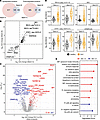 Figure 1
Differentially abundant proteins and enriched pathways in SLE versus HVs. (A) Venn diagrams of the number of significantly (FDR < 0.05) upregulated (left) and downregulated (right) proteins in SLE versus HVs in batch A (n = 207 SLE, n = 45 HVs) and B (n = 53 SLE, n = 41 HVs) data. (B) Comparison of effect size estimates (covariate-adjusted log2 fold change) for validated proteins between batch A and batch B. Each point represents the protein target of a SOMAmer; 215 protein targets that were significantly differentially abundant (FDR < 0.05) in both batch A and batch B are shown. The top 5 upregulated and downregulated protein targets (ranked by meta-analyzed effect sizes) are annotated. (C) Volcano plot showing the results from meta-analysis of batches A and B. Colored points represent protein targets replicated in both batches (FDR < 0.05). Red, upregulated; blue, downregulated; gray, not replicated or non-significant. (D) Examples of most significant differentially abundant proteins. Each point represents a sample. Orange, SLE; black, HVs. (E) Pathways enriched (FDR < 0.05) in both batches. Aggregated score was calculated using robust-rank aggregation. Red, upregulated pathways; blue, downregulated pathways. R, reactome; WP, WikiPathways; ES, effect size; PBH, Benjamini-Hochberg–corrected P value.
Plasma proteomic signatures of lupus disease activity. Samples were obtained from patients with a range of disease activities; 134 patients were in clinical remission, 51 had low disease activity (LDA), 65 had moderate disease activity (MDA), and 10 had high disease activity (HDA) (definitions in Methods). We tested for proteomic associations with SLE disease activity coded as an ordinal variable. To increase power, we analyzed both batch A and B together, adjusting for batch; 421 proteins were significantly associated (FDR <0.05) with disease activity (Figure 2A and Supplemental Data File 7). Comparison of results using an alternative approach for batch correction (ComBat) (15) yielded highly consistent results (Supplemental Material and Supplemental Figure 6). As a sensitivity analysis to explore the impact of different ways of encoding disease activity, we performed Spearman’s correlation analysis between SLE Disease Activity Index (SLEDAI) (as a numeric variable) and each protein, which showed similar results to the primary analysis (Supplemental Figure 7). Sensitivity analyses exploring the impact of disease duration and treatment produced results consistent with the primary analysis (Supplemental Figure 8). For 3 patients, longitudinal samples taken at 4 or more time points were available, which we used to qualitatively explore selected proteins that we had identified as associated with disease activity in the cross-sectional analysis (Supplemental Material and Supplemental Figure 9).
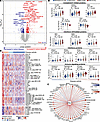 Figure 2
Proteins associated with SLE disease activity. n = 260 SLE samples. (A) Volcano plot. Linear gradient shows the magnitude and direction of change in the protein level with increasing disease activity. Dotted line = 5% FDR. Each point represents a protein. Red, significant positive association with active disease; blue, negative association; gray, non-significant. (B) Examples of disease activity–associated complement-related, IFN pathway, and immune signaling proteins. LG, linear gradient. Unique SOMAmer identifiers for displayed proteins where the SomaScan has more than 1 SOMAmer are B2M (seq.3485.28), IFN-α4 (IFNA4, seq.15405.23), IFN-γ (IFNG, seq.2989.17), TNFRSF1B (seq.3152.57), and VCAM1 (seq.2967.8). (C) Disease activity–associated proteins correlated with IFNL1. For clarity of visualization, only the proteins associated with disease activity at 1% FDR are displayed. A detailed list of proteins correlated with IFNL1 is provided in Supplemental Data 9. Edges represent pairwise protein correlations with |Pearson’s r| > 0.6. Node size, color, and edge thickness indicate the strength of correlation (Pearson’s r) with IFNL1. Edge color denotes correlation direction: blue for negative and red for positive. (D) Heatmap of significant (FDR < 0.05) disease activity–associated proteins in the KEGG “cytokine-cytokine receptor interaction” pathway. Protein levels were adjusted for sex and batch. PBH, Benjamini-Hochberg–corrected P value.
GSEA revealed significant enrichment of 90 pathways (Supplemental Data File 8), the most significant of which were “immunoregulatory interactions between a lymphoid and a non-lymphoid cell” and “cytokine-cytokine receptor interaction.” The proteins most strongly associated with disease activity by Benjamini-Hochberg–corrected P value (PBH) were CD40LG, vasoactive intestinal peptide (VIP), and C1QC (all PBH 1.77 × 10⁻⁶). Active disease was also associated with other complement-related proteins, including increased C3d and VSIG4 and decreased intact C4 and CFP (properdin) (Figure 2B). ISPs (MX1, B2M, and CXCL10) were positively associated with disease activity, with MX1 showing the greatest effect size. Levels of type I, II, and III IFNs were also associated with active disease, with IFNL1 (a type III IFN) showing the strongest effect. Evaluation of connections between IFNL1 and other disease activity-associated proteins revealed IFNL1 was co-correlated (|Pearson’s r| > 0.6) with 75 other proteins (Figure 2C and Supplemental Data File 9).
The SomaScan includes many proteins that are primarily intracellular. Their detection in plasma may reflect cell death and turnover. While such proteins may be useful biomarkers of disease activity, some are likely to be downstream readouts of tissue inflammation and injury rather than upstream pathogenic drivers. In contrast, plasma proteins associated with disease activity that have a biological role in blood may be more promising therapeutic candidates. For example, cytokines and their receptors have proven to be important therapeutic targets in inflammatory diseases. We therefore extracted a list of proteins annotated in the KEGG “cytokine-cytokine receptor interaction” pathway and intersected this with the list of SLE activity–associated proteins (Figure 2D). In active SLE, there was upregulation of TNF superfamily and TNF receptor superfamily members (e.g., TNFSF4 [OX40L], TNFSF15 [TL1A], TNFRSF1B [TNFR2], and TNFRSF10B [DR5]), chemokines (e.g., CCL2, CCL27, CXCL10, and CXCL14), interleukins (e.g., IL-6, IL-11, and IL-24), and growth factors. In contrast, there was downregulation of antiinflammatory proteins, including IL-10RA and the decoy receptor IL-1R2.
Associations with complement proteins. Given the strong links between complement proteins and disease activity in the literature and in our data, we further analyzed proteomic associations with serum complement C3 and C4 measured in the clinical laboratory (n = 260 SLE patients). Both C3 and C4 were also included on the SomaScan assay. There was very strong concordance of protein measurements between the SomaScan and the clinical laboratory for intact C4 (Spearman’s ρ 0.95 in batch A, 0.91 in batch B), and moderately strong correlation for intact C3 (ρ 0.61 in batch A, 0.45 in batch B) (Supplemental Figure 10), providing validation of SomaScan measurements. In addition, various complement cleavage fragments were measured; correlations with intact C3 and C4 are presented in Supplemental Figures 11 and 12. Sixty protein targets were correlated with clinical laboratory measured C3 (|ρ| > 0.3, FDR < 0.05; Supplemental Data File 10), including 21 associated with disease activity (Supplemental Figures 13, A and B). Sixty-two proteins were significantly correlated with C4 (Supplemental Data File 11), 13 of which were disease activity associated (Supplemental Figure 10C and Supplemental Figure 13A). In total, 24 protein targets were associated with disease activity and levels of C3 and/or C4 (Supplemental Figure 13D). Proteins associated with higher disease activity and lower C3/C4 included CD40LG, ISPs (e.g., ISG15, IFIT3, and LAG3), and C1QC, while IL-36A, complement-related proteins (CFP [properdin], FCN1 [ficolin], and C2) and IFNAR1 showed the opposite relationships. The latter may reflect compensatory downregulation in the context of chronic IFN stimulation.
Network analysis reveals protein modules associated with clinical phenotype. We used weighted gene coexpression network analysis (WGCNA) to construct a protein-protein correlation network, identifying 21 protein modules. We then tested for associations between each module and traits, including SLEDAI-2K score, ISG score (measured by quantitative PCR, qPCR), and clinical laboratory parameters. The red module, consisting of 35 proteins, was significantly associated with multiple clinical traits. It was positively correlated with SLEDAI-2K score and multiple autoantibodies and negatively correlated with neutrophil count, lymphocyte count, hemoglobin, albumin, and complement C3 and C4 (Figure 3, A–E, and Supplemental Figure 14). Notably, this module showed the strongest correlation with ISG score (ρ 0.75, PBH 2.4 × 10⁻²⁹; Figure 3B), and pathway analysis showed enrichment for IFN signaling pathways (Figure 3F). ISG15 (measured by SOMAmer seq.14148.2) was the hub protein in this IFN-associated module (Figure 3G and Supplemental Data File 12). ISG15 is an ISP and the module contained other ISPs (including CXCL10, CXCL11, DDX58, MX1, STAT1, APOL2, and LAG3) and also IFNL1.
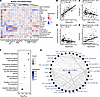 Figure 3
Network analysis identifies protein modules correlated with clinical traits. (A) Network constructed using SLE samples (n = 207). Correlation between each module and clinical traits. Asterisks represent Benjamini-Hochberg–adjusted P values (PBH) after correcting for 21 modules × 20 traits = 420 tests: *PBH < 0.05, **PBH < 0.01, ***PBH < 0.001. Color gradient represents Spearman’s ρ. (B–E) Relationships between the eigenprotein values of the red module and clinical traits: (B) ISG expression score, (C) C3 level, (D) lymphocyte count, and (E) SLEDAI-2K. Each point represents a sample. Solid line indicates best fit from linear regression. (F) Pathways enriched for proteins in the red module. (G) Network of protein members of the red module. Edges represent strength of correlation between each pair of proteins. ISG15 (measured by SOMAmer seq.14148.2) was the module hub protein.
The blue module, which had the second-highest number of clinical associations, was positively correlated with creatinine (ρ 0.52, PBH 7.1 × 10⁻¹⁴) and proteinuria (ρ 0.45, PBH 5.4 × 10⁻¹⁰) and negatively correlated with albumin (Figure 3A and Figure 4, A and B), indicating a link to renal dysfunction. Consistent with this, the module contained cystatin C (CST3, an accurate marker of glomerular filtration rate; Figure 4C), osteopontin (SPP1, a biomarker of kidney injury), and parathyroid hormone (PTH, which is dysregulated in renal impairment) (Figure 4, C and D, and Supplemental Data 13). Other kidney-related proteins included Ephrin and Ephrin receptors, which are associated with glomerular podocyte survival, angiogenic modeling, and responses to renal injury (16, 17). Comprising 611 proteins, this kidney-associated module was enriched for extracellular matrix–related (ECM-related) pathways, possibly reflecting renal scarring (Figure 4E). Moreover, the module eigenprotein was significantly higher in patients with a history of LN, particularly those with recent LN (defined as a renal biopsy showing active LN within 3 months of the blood sample), compared with those who never had LN (Figure 4F).
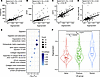 Figure 4
Kidney-associated protein module. (A–D) Relationships between the eigenprotein values of the blue module and renal markers: (A) creatinine, (B) urinary protein/creatinine ratio (uPCR), (C) cystatin C (CST3), and (D) parathyroid hormone (PTH). Each point represents an SLE sample. Solid line represents the line of best fit from linear regression. (E) Pathways enriched for proteins involved in the blue module. (F) Eigenprotein values of the blue module according to lupus nephritis (LN) status. n = 207 SLE samples. PBH, Benjamini-Hochberg–corrected P value.
To systematically evaluate all SOMAmers for association with renal parameters, we performed univariate testing versus serum creatinine and urinary protein/creatinine ratio (uPCR). Four hundred forty-six proteins were associated with creatinine and 507 with uPCR (defined as PBH < 0.05 and |ρ| > 0.3). Two hundred eighty-three proteins were associated with both creatinine and uPCR, and of these, 252 were members of the blue module identified in WGCNA (Supplemental Figure 15).
The red (IFN-associated) module was independent of the blue (kidney-associated) module (r –0.08) and not significantly associated with serum creatinine or uPCR. Given the cross-sectional nature and chronicity of disease in our study (such that both renal scarring and/or active nephritis could affect creatinine and uPCR), we then compared the red module eigenprotein values in patients who had never had LN, those with previous LN, and those with recent LN. There was no difference between the group who had never had LN and those with previous LN. However, individuals with recent LN had higher red module eigenprotein values (Supplemental Figure 16).
Autoantibody-specific proteomic endotypes. Anti-Sm autoantibodies are highly specific to SLE and are associated with worse prognosis (18, 19). To identify a proteomic signature associated with anti-Sm autoantibodies, we compared the abundance levels of each protein between anti-Sm(+) (n = 63) and anti-Sm(–) (n = 193) patients. Eighty-three proteins were differentially abundant, with 63 proteins upregulated and 20 downregulated in the anti-Sm(+) samples (Figure 5A). We considered the possibility that disease activity might be confounded with anti-Sm autoantibody positivity, since patients with anti-Sm antibodies tend to have a worse prognosis and that some of the anti-Sm–associated proteins were associated with disease activity in our previous analyses. We therefore performed multiple linear regression, adjusting for disease activity. This revealed 54 proteins associated with anti-Sm antibodies independent of disease activity (43 proteins positively and 11 negatively correlated; Figure 5B and Supplemental Data File 14). Visualization of abundance of these proteins against anti-Sm status stratified by disease activity confirmed that the association with anti-Sm antibodies was independent of disease activity (Figure 5C and Supplemental Figure 17). Pathway enrichment analysis revealed anti-Sm–associated proteins were enriched for SARS-Cov-2–related, IFN signaling, small nuclear ribonucleoprotein (snRNP) assembly, and RNA processing pathway terms (Figure 5D). These pathway enrichment terms reflected increases in ISPs and reductions in snRNPs (Figure 5E). ISPs increased in anti-Sm(+) SLE included ISG15 (SOMAmer seq.14148.2), MX1, CXCL10, GBP1, DDX58, CXCL11, APOL2, STAT1, LGALS9, EPHB2, and LAG3. Since snRNPs are the targets of anti-Sm antibodies, it is possible that the reduction in circulating snRNPs reflects autoantibody-mediated depletion. Sensitivity analyses exploring the effects of disease duration and treatment confirmed that the finding of upregulated ISPs and downregulated snRNPs in anti-Sm(+) SLE was robust (Supplemental Figure 18, A–C). Finally, these associations remained significant after adjustment for anti-dsDNA antibody status in multivariable regression (Supplemental Figure 18D).
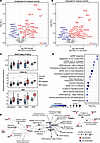 Figure 5
Proteins associated with anti-Sm autoantibodies. (A) Proteins differentially abundant in anti-Sm–positive (n = 63) versus anti-Sm–negative SLE (n = 193), without adjustment for disease activity. Each point represents a protein. Red, significantly upregulated; blue, significantly downregulated; gray, non-significant. (B) As for A, but after adjustment for disease activity. (C) IFN-stimulated proteins are associated with anti-Sm antibodies independent of disease activity. Displayed protein levels have been adjusted for batch and sex. (D) Significantly enriched pathways for proteins associated with anti-Sm antibodies after adjustment for disease activity. (E) Connections between proteins associated with anti-Sm antibody status independent of disease activity and the enriched pathways. Node size (for pathway terms) represents the number of proteins associated with the pathway. Red, upregulated proteins; blue, downregulated proteins. PBH, Benjamini-Hochberg–corrected P value.
We then analyzed the associations between proteins and anti-dsDNA antibodies. Eight hundred seventy-four proteins were associated with anti-dsDNA antibody positivity (Figure 6A). After adjusting for a modified disease activity score (which excluded anti-dsDNA antibody status), 374 proteins remained associated with anti-dsDNA antibody status (Figure 6, B and C, and Supplemental Data File 15). The most upregulated proteins included CD40LG (CD40 ligand), a costimulatory molecule that activates B and T cells and promotes inflammatory responses (20), ARID3A (a DNA-binding protein), IL-11, the neutrophil protease proteinase-3 (PRTN3), and RPS7. Proteins reduced in anti-dsDNA antibody–positive SLE included CFP, ITGAV|ITGB3 (the vitronectin receptor, an integrin heterodimer), L1CAM, BPIFB1, and C2. Unlike for anti-Sm autoantibody status, the association of canonical ISPs with anti-dsDNA antibody positivity became non-significant after adjustment for disease activity. After adjusting for anti-Sm antibody status, associations of ISPs with anti-dsDNA positivity were attenuated (Supplemental Figure 19A). As a sensitivity analysis, Spearman’s rank correlation was performed to test for correlations between the levels of anti-dsDNA autoantibodies (as a continuous trait) and each protein (Supplemental Figure 20). CD40LG, PRTN3, and ARID3A were again among the strongest associations. Additional sensitivity analyses studying the effects of disease duration and treatment also recapitulated these strongest associations (Supplemental Figure 19, B–D). Intriguingly, visualization of CD40LG’s relationship with disease activity stratified by antibody status showed this association was restricted to the anti-dsDNA antibody–positive subgroup (Figure 6D; anti-dsDNA–positive: P 4.2 × 10⁻³, β 0.07; anti-dsDNA–negative: P 0.52, β –0.005). Formal interaction analysis confirmed this effect (P 6.7 × 10⁻⁵).
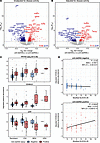 Figure 6
Proteins associated with anti-dsDNA autoantibodies. (A) Proteins differentially abundant in anti-dsDNA–positive (n = 70) versus anti-dsDNA–negative (n = 140) SLE samples, without adjustment for disease activity. Each point represents a protein. Red, significantly upregulated; blue, significantly downregulated; gray, nonsignificant. (B) As for A, but after adjustment for disease activity. (C) Examples of proteins associated with anti-dsDNA antibodies independent of disease activity. Protein levels in anti-dsDNA antibody–positive and –negative samples are shown stratified by disease activity. (D) The association of plasma CD40LG with disease activity is restricted to anti-dsDNA–positive individuals. SLEDAI-2K modified to exclude anti-dsDNA antibody status from the score. Each point represents an SLE sample. Solid line represents the line of best fit from linear regression. Protein levels in C and D have been adjusted for batch and sex. PBH, Benjamini-Hochberg–corrected P value; CI, confidence interval.
We also tested for proteomic associations with other autoantibodies against extractable nuclear antigens (ENAs) (Ro-52, Ro-60, La, RNP-A, and RNP-68). As for Sm, positivity for anti–RNP-68, anti–RNP-A, and anti–Ro-60 antibodies, but not anti–Ro-52 or anti-La, was associated with upregulated ISPs, even after adjustment for disease activity (Supplemental Figures 21–24). Antibodies against RNP-A were, like anti-Sm antibodies, associated with reduced circulating snRNPs. Anti–Ro-52 positivity was associated with reduction in circulating Ro-52 (TRIM21) and increased TNFSF13B (BAFF). Anti–Ro-60 and -La antibodies were also associated with reduced plasma Ro-52 in univariate analysis, but this association was abrogated after adjusting for anti–Ro-52 antibody status in multivariable analysis (Supplemental Figure 22C and Supplemental Figure 23C), indicating that it was being driven by concomitant anti–Ro-52 antibody positivity in patients with multiple autoantibody positivity. Finally, we found no proteomic associations with anti-phospholipid antibodies.
Comparison with anifrolumab-induced proteomic changes in TULIP-1 trial. Given the prominence of IFN pathways in proteomic signatures in our data, we examined to what extent these signatures might be reversible with anti–type I IFN receptor therapy through comparison with an external dataset from the study of Baker et al., which analyzed 169 proteins in SLE before and after anifrolumab in the TULIP-1 trial (21) using Olink and Simoa immunoassays. One hundred fifty-eight of these proteins were measured in our SomaScan dataset (reflecting 228 SOMAmers since some proteins were measured by multiple SOMAmers). Across these 158 proteins, log2 fold changes from our SLE versus HV comparison were negatively correlated with anifrolumab-versus-placebo changes at week 52 in TULIP-1 (r –0.43; Supplemental Figure 25A). Similarly, protein associations with disease activity in our study were inversely correlated with changes following anifrolumab treatment (r –0.52; Supplemental Figure 25B). Of the proteins measured in both studies, 30 were associated with disease activity in our study, with 13 significantly modulated by anifrolumab treatment. These data underscore the centrality of the IFN response in plasma proteomic signatures of SLE. However, some disease activity–associated proteins were not modulated by anifrolumab, including CD40LG, suggesting IFN-independent disease-activity related pathways (Supplemental Figure 25C). A caveat is interstudy differences, particularly the proteomic platforms used.


