
Research ArticleAgingNeuroscienceOtology
Open Access |  10.1172/jci.insight.203285
Heat shock pathway activation by TRC051384 protects spiral ganglion neurons from noise-induced hearing loss
Jintao Yu,1 Miguel A. Ramirez,1 Yi-Zhi Wang,1 Seby Edassery,1 Maxwell Shramuk,2,3 SangEun Yeom,1 Casey Jiaxi Li,1 Yuvraj Joshi,1 Mary Ann Cheatham,4,5 Mark A. Rutherford,6 Leah J. Welty,2,3 and Jeffrey N. Savas1,5
1Department of Neurology,
2Department of Psychiatry and Behavioral Sciences, and
3Department of Preventive Medicine, Northwestern University Feinberg School of Medicine, Chicago, Illinois, USA.
4Department of Communication Sciences and Disorders and
5The Hugh Knowles Center for Clinical and Basic Science in Hearing and Its Disorders, Northwestern University, Evanston, Illinois, USA.
6Department of Otolaryngology, Washington University in St. Louis School of Medicine, St. Louis, Missouri, USA.
Address correspondence to: Jeffrey N. Savas, 303 East Chicago Ave., Ward 12-102, Chicago, Illinois 60611-4296, USA. Phone: 312.503.3089; Email: Jeffrey.savas@nothwestern.edu. JY’s present address is: Department of Otorhinolaryngology, Union Hospital, Tongji Medical College, Huazhong University of Science and Technology, Wuhan, Hubei, China.
Authorship note: JY and MA Ramirez contributed equally to this work as co–first authors.
Find articles by Yu, J. in: PubMed | Google Scholar
1Department of Neurology,
2Department of Psychiatry and Behavioral Sciences, and
3Department of Preventive Medicine, Northwestern University Feinberg School of Medicine, Chicago, Illinois, USA.
4Department of Communication Sciences and Disorders and
5The Hugh Knowles Center for Clinical and Basic Science in Hearing and Its Disorders, Northwestern University, Evanston, Illinois, USA.
6Department of Otolaryngology, Washington University in St. Louis School of Medicine, St. Louis, Missouri, USA.
Address correspondence to: Jeffrey N. Savas, 303 East Chicago Ave., Ward 12-102, Chicago, Illinois 60611-4296, USA. Phone: 312.503.3089; Email: Jeffrey.savas@nothwestern.edu. JY’s present address is: Department of Otorhinolaryngology, Union Hospital, Tongji Medical College, Huazhong University of Science and Technology, Wuhan, Hubei, China.
Authorship note: JY and MA Ramirez contributed equally to this work as co–first authors.
Find articles by Ramirez, M. in: PubMed | Google Scholar
1Department of Neurology,
2Department of Psychiatry and Behavioral Sciences, and
3Department of Preventive Medicine, Northwestern University Feinberg School of Medicine, Chicago, Illinois, USA.
4Department of Communication Sciences and Disorders and
5The Hugh Knowles Center for Clinical and Basic Science in Hearing and Its Disorders, Northwestern University, Evanston, Illinois, USA.
6Department of Otolaryngology, Washington University in St. Louis School of Medicine, St. Louis, Missouri, USA.
Address correspondence to: Jeffrey N. Savas, 303 East Chicago Ave., Ward 12-102, Chicago, Illinois 60611-4296, USA. Phone: 312.503.3089; Email: Jeffrey.savas@nothwestern.edu. JY’s present address is: Department of Otorhinolaryngology, Union Hospital, Tongji Medical College, Huazhong University of Science and Technology, Wuhan, Hubei, China.
Authorship note: JY and MA Ramirez contributed equally to this work as co–first authors.
Find articles by Wang, Y. in: PubMed | Google Scholar
1Department of Neurology,
2Department of Psychiatry and Behavioral Sciences, and
3Department of Preventive Medicine, Northwestern University Feinberg School of Medicine, Chicago, Illinois, USA.
4Department of Communication Sciences and Disorders and
5The Hugh Knowles Center for Clinical and Basic Science in Hearing and Its Disorders, Northwestern University, Evanston, Illinois, USA.
6Department of Otolaryngology, Washington University in St. Louis School of Medicine, St. Louis, Missouri, USA.
Address correspondence to: Jeffrey N. Savas, 303 East Chicago Ave., Ward 12-102, Chicago, Illinois 60611-4296, USA. Phone: 312.503.3089; Email: Jeffrey.savas@nothwestern.edu. JY’s present address is: Department of Otorhinolaryngology, Union Hospital, Tongji Medical College, Huazhong University of Science and Technology, Wuhan, Hubei, China.
Authorship note: JY and MA Ramirez contributed equally to this work as co–first authors.
Find articles by Edassery, S. in: PubMed | Google Scholar
1Department of Neurology,
2Department of Psychiatry and Behavioral Sciences, and
3Department of Preventive Medicine, Northwestern University Feinberg School of Medicine, Chicago, Illinois, USA.
4Department of Communication Sciences and Disorders and
5The Hugh Knowles Center for Clinical and Basic Science in Hearing and Its Disorders, Northwestern University, Evanston, Illinois, USA.
6Department of Otolaryngology, Washington University in St. Louis School of Medicine, St. Louis, Missouri, USA.
Address correspondence to: Jeffrey N. Savas, 303 East Chicago Ave., Ward 12-102, Chicago, Illinois 60611-4296, USA. Phone: 312.503.3089; Email: Jeffrey.savas@nothwestern.edu. JY’s present address is: Department of Otorhinolaryngology, Union Hospital, Tongji Medical College, Huazhong University of Science and Technology, Wuhan, Hubei, China.
Authorship note: JY and MA Ramirez contributed equally to this work as co–first authors.
Find articles by Shramuk, M. in: PubMed | Google Scholar
1Department of Neurology,
2Department of Psychiatry and Behavioral Sciences, and
3Department of Preventive Medicine, Northwestern University Feinberg School of Medicine, Chicago, Illinois, USA.
4Department of Communication Sciences and Disorders and
5The Hugh Knowles Center for Clinical and Basic Science in Hearing and Its Disorders, Northwestern University, Evanston, Illinois, USA.
6Department of Otolaryngology, Washington University in St. Louis School of Medicine, St. Louis, Missouri, USA.
Address correspondence to: Jeffrey N. Savas, 303 East Chicago Ave., Ward 12-102, Chicago, Illinois 60611-4296, USA. Phone: 312.503.3089; Email: Jeffrey.savas@nothwestern.edu. JY’s present address is: Department of Otorhinolaryngology, Union Hospital, Tongji Medical College, Huazhong University of Science and Technology, Wuhan, Hubei, China.
Authorship note: JY and MA Ramirez contributed equally to this work as co–first authors.
Find articles by Yeom, S. in: PubMed | Google Scholar
1Department of Neurology,
2Department of Psychiatry and Behavioral Sciences, and
3Department of Preventive Medicine, Northwestern University Feinberg School of Medicine, Chicago, Illinois, USA.
4Department of Communication Sciences and Disorders and
5The Hugh Knowles Center for Clinical and Basic Science in Hearing and Its Disorders, Northwestern University, Evanston, Illinois, USA.
6Department of Otolaryngology, Washington University in St. Louis School of Medicine, St. Louis, Missouri, USA.
Address correspondence to: Jeffrey N. Savas, 303 East Chicago Ave., Ward 12-102, Chicago, Illinois 60611-4296, USA. Phone: 312.503.3089; Email: Jeffrey.savas@nothwestern.edu. JY’s present address is: Department of Otorhinolaryngology, Union Hospital, Tongji Medical College, Huazhong University of Science and Technology, Wuhan, Hubei, China.
Authorship note: JY and MA Ramirez contributed equally to this work as co–first authors.
Find articles by Li, C. in: PubMed | Google Scholar
1Department of Neurology,
2Department of Psychiatry and Behavioral Sciences, and
3Department of Preventive Medicine, Northwestern University Feinberg School of Medicine, Chicago, Illinois, USA.
4Department of Communication Sciences and Disorders and
5The Hugh Knowles Center for Clinical and Basic Science in Hearing and Its Disorders, Northwestern University, Evanston, Illinois, USA.
6Department of Otolaryngology, Washington University in St. Louis School of Medicine, St. Louis, Missouri, USA.
Address correspondence to: Jeffrey N. Savas, 303 East Chicago Ave., Ward 12-102, Chicago, Illinois 60611-4296, USA. Phone: 312.503.3089; Email: Jeffrey.savas@nothwestern.edu. JY’s present address is: Department of Otorhinolaryngology, Union Hospital, Tongji Medical College, Huazhong University of Science and Technology, Wuhan, Hubei, China.
Authorship note: JY and MA Ramirez contributed equally to this work as co–first authors.
Find articles by Joshi, Y. in: PubMed | Google Scholar
1Department of Neurology,
2Department of Psychiatry and Behavioral Sciences, and
3Department of Preventive Medicine, Northwestern University Feinberg School of Medicine, Chicago, Illinois, USA.
4Department of Communication Sciences and Disorders and
5The Hugh Knowles Center for Clinical and Basic Science in Hearing and Its Disorders, Northwestern University, Evanston, Illinois, USA.
6Department of Otolaryngology, Washington University in St. Louis School of Medicine, St. Louis, Missouri, USA.
Address correspondence to: Jeffrey N. Savas, 303 East Chicago Ave., Ward 12-102, Chicago, Illinois 60611-4296, USA. Phone: 312.503.3089; Email: Jeffrey.savas@nothwestern.edu. JY’s present address is: Department of Otorhinolaryngology, Union Hospital, Tongji Medical College, Huazhong University of Science and Technology, Wuhan, Hubei, China.
Authorship note: JY and MA Ramirez contributed equally to this work as co–first authors.
Find articles by Cheatham, M. in: PubMed | Google Scholar
1Department of Neurology,
2Department of Psychiatry and Behavioral Sciences, and
3Department of Preventive Medicine, Northwestern University Feinberg School of Medicine, Chicago, Illinois, USA.
4Department of Communication Sciences and Disorders and
5The Hugh Knowles Center for Clinical and Basic Science in Hearing and Its Disorders, Northwestern University, Evanston, Illinois, USA.
6Department of Otolaryngology, Washington University in St. Louis School of Medicine, St. Louis, Missouri, USA.
Address correspondence to: Jeffrey N. Savas, 303 East Chicago Ave., Ward 12-102, Chicago, Illinois 60611-4296, USA. Phone: 312.503.3089; Email: Jeffrey.savas@nothwestern.edu. JY’s present address is: Department of Otorhinolaryngology, Union Hospital, Tongji Medical College, Huazhong University of Science and Technology, Wuhan, Hubei, China.
Authorship note: JY and MA Ramirez contributed equally to this work as co–first authors.
Find articles by
Rutherford, M.
in:
PubMed
|
Google Scholar
|

1Department of Neurology,
2Department of Psychiatry and Behavioral Sciences, and
3Department of Preventive Medicine, Northwestern University Feinberg School of Medicine, Chicago, Illinois, USA.
4Department of Communication Sciences and Disorders and
5The Hugh Knowles Center for Clinical and Basic Science in Hearing and Its Disorders, Northwestern University, Evanston, Illinois, USA.
6Department of Otolaryngology, Washington University in St. Louis School of Medicine, St. Louis, Missouri, USA.
Address correspondence to: Jeffrey N. Savas, 303 East Chicago Ave., Ward 12-102, Chicago, Illinois 60611-4296, USA. Phone: 312.503.3089; Email: Jeffrey.savas@nothwestern.edu. JY’s present address is: Department of Otorhinolaryngology, Union Hospital, Tongji Medical College, Huazhong University of Science and Technology, Wuhan, Hubei, China.
Authorship note: JY and MA Ramirez contributed equally to this work as co–first authors.
Find articles by
Welty, L.
in:
PubMed
|
Google Scholar
|
1Department of Neurology,
2Department of Psychiatry and Behavioral Sciences, and
3Department of Preventive Medicine, Northwestern University Feinberg School of Medicine, Chicago, Illinois, USA.
4Department of Communication Sciences and Disorders and
5The Hugh Knowles Center for Clinical and Basic Science in Hearing and Its Disorders, Northwestern University, Evanston, Illinois, USA.
6Department of Otolaryngology, Washington University in St. Louis School of Medicine, St. Louis, Missouri, USA.
Address correspondence to: Jeffrey N. Savas, 303 East Chicago Ave., Ward 12-102, Chicago, Illinois 60611-4296, USA. Phone: 312.503.3089; Email: Jeffrey.savas@nothwestern.edu. JY’s present address is: Department of Otorhinolaryngology, Union Hospital, Tongji Medical College, Huazhong University of Science and Technology, Wuhan, Hubei, China.
Authorship note: JY and MA Ramirez contributed equally to this work as co–first authors.
Find articles by Savas, J. in: PubMed | Google Scholar
Published August 25, 2026 - More info
JCI Insight. 2026;11(19):e203285. https://doi.org/10.1172/jci.insight.203285.
© 2026 Yu et al. This work is licensed under the Creative Commons Attribution 4.0 International License. To view a copy of this license, visit http://creativecommons.org/licenses/by/4.0/.
Received: December 9, 2025; Accepted: August 12, 2026

-
Results
Moderate noise exposure causes cochlear synaptopathy in 16-week-old CBA/CaJ mice. ABRs are sound-evoked potentials that can be used to determine abnormalities or deviations in hearing sensitivity. The first wave in the ABR represents the synchronous auditory nerve discharge at the onset of sound, proportionate to activity of the cochlear ribbon synapses between IHCs and SGNs. Initial experiments aimed to replicate the previously reported “hidden hearing loss” phenotype in CBA/CaJ mice (22). Thus, we exposed CBA/CaJ mice at 8 and 16 weeks of age to 8–16 kHz octave-band noise at 100 dB SPL for 2 hours. ABRs and distortion product otoacoustic emissions (DPOAEs) were measured at baseline and at 1, 3, and 14 days after noise exposure. Both the 8- and 16-week-old mice exhibited significantly elevated ABR thresholds (i.e., the lowest tone level necessary to generate the ABR waveform) after noise. The largest threshold shift, 40 dB, was observed for tones of 32 kHz. Elevated thresholds persisted at frequencies above 20 kHz for at least 3 days after noise (DAN). ABR thresholds recovered to near baseline levels by 14 DAN in 16-week-old but not in the younger 8-week-old CBA/CaJ mice (Figure 1A and Supplemental Figure 1A; supplemental material available online with this article; https://doi.org/10.1172/jci.insight.203285DS1). In 16-week-old-mice, Wave I amplitudes in response to 8, 16, 24, and 32 kHz tones remained significantly reduced (~50% at frequencies > 16 kHz) at 14 DAN (Figure 1, B and C, and Supplemental Figure 1, B–D). This lasting reduction in ABR Wave I amplitude following a TTS is consistent with permanent cochlear synaptopathy. Notably, we found that, for the 8-week-old mice, Wave I amplitudes failed to recover to prenoise levels at frequencies greater than 16 kHz (Supplemental Figure 1, E–G).
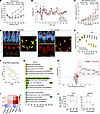 Figure 1
Two-hour exposure to 100 dB SPL noise produces temporary threshold shift, persistent cochlear synaptopathy, and induction of ER chaperone genes in 16-week-old male CBA/CaJ mice. (A) ABR thresholds recovered to baseline by 14 days after noise (DAN). (B) Representative 32 kHz ABR traces at 90 dB SPL before noise and 14 DAN. (C) Wave I amplitudes at 32 kHz remained significantly reduced at 14 DAN across 60–90 dB SPL; differences were estimated by linear mixed modeling. (D) Representative 32 kHz cochlear regions immunostained for CtBP2 (red) and GluA2 (green) from unexposed and noise-exposed mice at 14 DAN. Scale bar = 10 μm. (E) Quantification of overlapping CtBP2/GluA2 puncta revealed marked synapse loss from 20–45 kHz at 14 DAN (7.45 ± 2.53 synapses/IHC) versus unexposed controls (15.46 ± 0.89). (F) t-SNE of bulk cochlear RNA-seq profiles collected immediately, 4 h, or 8 h after noise and from unexposed controls showed clustering by exposure/recovery time. (G) Gene Ontology (GO) cellular component (CC) enrichment analysis identified endoplasmic reticulum chaperone complex (GO:0034663) as the most enriched term at 4 h. (H) Volcano plot depicting noise-induced changes in cochlear gene expression in the 4-hour postexposure group relative to unexposed controls. Significantly increased genes (P < 0.01) are red, with ER chaperone-complex genes highlighted. (I) Hsp90b1, Dnajb11, Dnajc13, Sdf2l1, and Hspa5 had elevated expression immediately following noise exposure and peaked at 4 hours postexposure. (J) Hsf1 and Hspa1a expression in cochlea. A priori contrasts comparing postnoise time points with controls yielded P = 0.026 and P = 0.43, respectively. Quantitative data are mean ± SD unless otherwise indicated. A–C, N = 6; D and E, N = 4 control/6 exposed; F–I, N = 4/group; J, N = 3/group.
DPOAEs are acoustic responses generated by vibrations along the basilar membrane when 2 pure tones stimulate the cochlea. These emissions reflect activity of the cochlear OHCs. Elevation of DPOAE thresholds indicates dysfunction of the OHCs, upstream of auditory nerve excitation by ribbon synapses. DPOAE thresholds were elevated at 1 DAN in both ages of mice (Supplemental Figure 1, H–N). In contrast to ABRs, DPOAE thresholds and amplitudes fully recovered at all tested frequencies by 14 DANs, indicating that OHCs were not permanently damaged by these noise exposures in either group of mice.
In the absence of threshold shifts, a reduction of ABR Wave I amplitude indicates damage or loss of cochlear ribbon synapses. To verify this finding, we examined immunostained whole mounts of the organ of Corti with antibodies against CtBP2 and GluA2, which stain presynaptic ribbons and postsynaptic receptors, respectively (Figure 1D). Juxtaposition of these 2 markers indicates a synapse. Consistent with our ABR data at 14 DAN, we found significant reductions in cochlear ribbon synapse density at all frequencies above 20 kHz (Figure 1E). In the 32 kHz region, the average number of ribbon synapses per IHC was 15.0 ± 1.1 in cochlea from age matched unexposed CBA/CaJ mice and 6.0 ± 1.1 at 14 DAN. Similar results were obtained when separately counting either presynaptic ribbons or postsynaptic puncta (Supplemental Figure 1, O and P). Together, our results confirm that this level of noise exposure produced a TTS while inducing cochlear synaptopathy that is thought to be permanent in CBA/CaJ mice.
A wave of protein chaperone gene expression peaking 4 hours after synaptopathic noise. We next sought to identify cellular pathways engaged acutely after synaptopathic noise exposure. We repeated our noise exposure paradigm in a new cohort of 16-week-old mice and harvested total cochlear RNA at 0, 4, or 8 hours after noise. Bulk cochlear gene expression was measured using paired-end RNA-seq analysis (29). We obtained greater than 40 million mapped reads at a total mapping rate of > 96.91% from each of the 3 biological replicates per group. To investigate the reproducibility of our transcriptomic analysis, we assessed the correlation of gene expression patterns between the individual biological datasets using t-distributed stochastic neighbor embedding (t-SNE). Notably, the biological replicates clustered according to the duration after exposure (Figure 1F).
We assessed changes in gene expression at each time point relative to unexposed controls, identifying 158, 118, and 74 genes with significantly elevated levels at 0, 4, and 8 hours after noise, respectively (Supplemental Table 1). To identify the pathways engaged in response to this noise exposure paradigm, we performed Gene Ontology (GO) cellular component (CC) enrichment analysis using DAVID (30). Among all 3 replicates, the most significantly enriched term was the GO:CC category endoplasmic reticulum chaperone complex (GO:0034663), which was detected only at 4 hours after noise (Figure 1G and Supplemental Table 2). This 159.7-fold enrichment of the ER chaperone complex was 7-fold greater than the second most enriched GO:CC term. To visualize noise-induced changes to cochlear gene expression, we graphed the fold changes observed 4 hours after noise exposure relative to unexposed controls on a volcano plot (Figure 1H). The 5 genes in our dataset associated with GO:0034663 were Hsp90b1, Hspa5, Dnajb11, Dnajc13, and Sdf2l1. Close inspection of gene expression time-course revealed a slight elevation immediately after noise, peaking 4 hours after noise, and resolving to near baseline levels by 8 hours (Figure 1I). The protein products of these genes play well-known and important roles in regulating protein quality control (QC). Hsp90b1 (i.e., endoplasmin) is an ER-resident chaperone, functioning in protein folding and QC. Hspa5 (i.e., BiP) is the master chaperone in the ER and is central to the unfolded protein response (UPR). Dnajb11 (i.e., ERdj3) is an ER cochaperone that works with BiP to assist in protein folding. Dnajc13 (i.e., RME-8) a cochaperone involved in endosomal trafficking and implicated in membrane dynamics. Sdf2l1 encodes an ER stress–induced protein, also participating in protein folding. These ER chaperones induced by noise are canonical targets of the UPR. We therefore asked whether noise also engaged, Hsf1-dependent arm of the proteostasis network. The level of Hsf1 mRNA increased approximately 1.8-fold after noise exposure relative to unexposed controls (P = 0.026), with a comparable increase immediately after noise and at 4 and 8 hours. However, it’s worth noting that Hsf1 is primarily regulated posttranslationally. Hspa1a, a cytosolic HSF1 target, did not differ significantly from controls at any time point (P > 0.4; Figure 1J).
To investigate whether expression of the ER chaperone genes is upregulated in all cells or in a select group of cells following exposure, we utilized RNAscope based in situ hybridization to visualize patterns of Hsp90b1, Hspa5, and Sdf2l1 gene expression after noise exposure. Expression of all 3 genes was markedly elevated in the spiral ganglion, IHCs, and OHCs at 4 hours after noise (Supplemental Figure 2). Interestingly, Hsp90b1 expression also appeared to increase around the spiral limbus. Thus, RNAscope in situ hybridization revealed that the primary sensorineural cells contributed to the elevated expression of genes involved in ER protein QC in the cochlea.
GeoMx spatial transcriptomics reveals elevated proteasome subunit gene expression in SGNs and support cells following noise exposure. To further investigate the transcriptional response of cochlear cells to noise exposure, we performed GeoMx spatial transcriptomic profiling on cochlear sections from mice exposed to 100 dB SPL for 2 hours, and the cochleae were harvested 4 hours after exposure, alongside mock-exposed controls. Immunofluorescence imaging identified NF200+ SGNs, which were segmented into regions of interest (ROI) for GeoMx spatial transcriptomic analysis. Each ROI was further subdivided into a neuronal mask (i.e., NF200+) and a supporting cell mask (i.e., NF200–) to distinguish expression profiles between SGNs and ganglionic supporting cells (Figure 2, A–F, and Supplemental Table 3). Dimensionality reduction using t-SNE revealed that RNA expression profiles clustered primarily by cell type and, to a lesser extent, by noise exposure condition (Figure 2G). In SGNs, noise exposure induced substantial upregulation of genes encoding the proteostasis network, particularly multiple subunits of the proteasome (Figure 2H). Consistently, GO enrichment analysis of the upregulated genes identified the proteasome complex as the only CC category significantly enriched (Figure 2I and Supplemental Table 4). Similarly, support cells also exhibited noise-induced upregulation of mRNAs encoding proteostasis factors, with GO enrichment analysis identifying significant enrichment in the proteasome complex and nucleus (Figure 2, J and K, and Supplemental Table 4). Taken together, these data suggest that both SGNs and their supporting cells activate proteasome-associated transcriptional programs in response to synaptopathic noise.
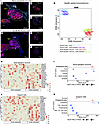 Figure 2
GeoMx spatial transcriptomics reveal that noise exposure selectively upregulates genes encoding multiple proteasome subunits in spiral ganglion neurons and associated support cells. (A–F) Representative GeoMx immunofluorescent cochlear images from a mock control mouse and an experimental mouse exposed to 100 dB SPL for 2 hours and harvested 4 hours later. NF200+ neuronal somata are in magenta; nuclei (Hoechst) are blue. Regions of interest (ROI; white outline) encompassing the spiral ganglion were segmented into a neuronal mask (B, NF200+) and a support cell mask (C, NF200+) for probe collection. (G) t-SNE plot of RNA-sequencing profiles from individual spiral ganglion neuron ROI, showing that biological replicates cluster primarily by cell type and, to a lesser extent, by noise exposure condition. Supp_CTRL (blue) = supporting cells from mice not exposed to noise, Supp_Nos (purple) = supporting cells from mice exposed to noise, Neu_CTRL (red) = SGNs from mice not exposed to noise, Neu_Nos (green) = SGNs from mice exposed to noise. (H) Heatmap showing genes encoding proteostasis-related proteins with significantly altered mRNA levels in spiral ganglion neurons (SGNs). Each row represents a gene, and each column represents a region of interest (ROI). Z-scored expression values are shown, with red indicating upregulation and blue indicating downregulation in response to noise exposure. (I) DAVID enrichment analysis of the up-regulated genes in SGNs shows only 1 term that surpasses the significance threshold: the proteasome complex (KW-0647~Proteasome). (J) Heatmap showing genes encoding proteostasis-related proteins with significantly altered mRNA levels in support cells. Each row represents a gene, and each column represents a region of interest (ROI). Z-scored expression values are shown, with red indicating upregulation and blue indicating downregulation in response to noise exposure. (K) DAVID enrichment analysis of the upregulated genes shows only 2 terms surpassing the significance threshold: the proteasome complex (KW-0647~Proteasome) and nucleus (KW-0539~Nucleus). N = 11 (exposed) and 16 (control) ROI for SGNs, N = 9 (exposed) and 17 (control) ROI for support cells from n = 5 P60–P65 mice of mixed sex per condition.
TRC051384 induces heat shock response. The heat shock response and the ER UPR are 2 parallel arms of the proteostasis network that are frequently coactivated by a single stressor and show documented bidirectional crosstalk (31, 32). Having found a robust induction of ER chaperone transcripts, we therefore examined the possibility of engaging the cytosolic Hsf1-dependent arm. TRC051384 is a small-molecule activator that robustly induces the cellular heat shock response. It belongs to the 2-propen-1-one chemical class and functions as a potent inducer of heat shock protein (Hsp) expression via activation of Hsf1 (28). To verify that TRC051384 effectively engages canonical Hsf1 signaling, we examined the transcriptional activation of Hspa1a, a well-characterized Hsf1 target gene. HEK293T cells were treated with either vehicle control or TRC051384, and transcript levels were quantified by qPCR. TRC051384 treatment led to a dramatic (>20-fold) increase in Hsp1a expression at the 4-hour time point compared with vehicle-treated cells, while Hsf1 mRNA levels remained unchanged, consistent with the mechanism of posttranslational activation of Hsf1 (Figure 3A). To determine whether this transcriptional response could be reproduced in inner ear cells, we performed qPCR on cochlear organotypic cultures derived from P4 rat pups. Remarkably, a similar expression pattern was observed, with Hspa1a showing its strongest induction at the 4-hour mark (Figure 3B), albeit with a smaller fold change than in HEK293T cells. This attenuated response in cochlear tissue may reflect cell type–specific differences in basal Hsf1 activity, accessibility of the Hspa1a promoter, or pharmacokinetic factors influencing compound uptake. Together, these findings confirm that TRC051384 is a potent pharmacological activator of the heat shock response in both immortalized human cells and ex vivo mammalian cochlear tissue, reinforcing its utility as a molecular tool for inducing Hsf1-mediated stress protection pathways.
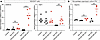 Figure 3
TRC051384 selectively enhances HSPALA gene expression without altering HSF1 expression in HEK293T cells and cochlear organotypic cultures. (A) qPCR analysis of RNA from HEK293T cells treated with TRC051384 or with a DMSO vehicle, relative to untreated controls. Cells were untreated (Control) or incubated with DMSO for 2 hours or TRC051384 for 2 or 4 hours prior to RNA collection. HSPA1A (heat shock protein family A [Hsp70] member 1A) expression was significantly increased by TRC051384 treatment, with levels rising further at 4 hours relative to DMSO and untreated controls (Control: 1.07 ± 0.45; DMSO: 1.73 ± 1.52; 2 h TRC051384: 3.75 ± 2.88; 4 h TRC051384: 20.10 ± 11.5). HSF1 mRNA levels remained unchanged across all conditions over the 4-hour period (Control: 1.09 ± 0.55; DMSO: 0.99 ± 0.84; 2 h TRC051384: 1.06 ± 0.91; 4 h TRC051384: 1.18 ± 1.20). n = 6 independent biological replicates per condition. (B) qPCR analysis of RNA collected from P4 rat cochlear organotypic cultures at DIV3. Cultures were untreated (Control) or incubated with DMSO for 2 hours or TRC051384 for 2 or 4 hours prior to RNA collection. Hspa1a gene expression significantly increased by 4 hours relative to DMSO and untreated controls (Control: 1.00 ± 0.06, DMSO 2 hour: 0.89 ± 0.02, DMSO 4 hour: 0.92 ±.32, 2 hour TRC051384: 1.17 ± 0.19, 4 hour TRC051384: 3.08 ± 0.96). n = 3 independent cultures per condition. For A and B, data are represented as mean ± SD, ***P < 0.001 and ****P < 0.0001 by 1-way ANOVA to determine significance with Tukey’s post hoc correction.
To evaluate the pharmacokinetic accessibility of TRC051384 to the inner ear, we examined its ability to penetrate the cochlea after systemic administration. Mice received i.p. injections of TRC051384 (60 mg/kg). Then, the cochleae were dissected and processed to solubilize small molecules. We analyzed TRC051384 alone and in the resulting cochlear extracts using MS1 targeted selected ion monitoring (tSIM) (33), to sensitively and selectively quantify TRC051384 based on its molecular mass (465.23 Da; +2 charge state = m/z 233.6261). Evidence of drug penetration was clearly observed; extracts from the cochleae of TRC051384-treated mice displayed a strong peak at m/z 233.62, which eluted at 30–31 minutes. This signal was entirely absent from the extracts of vehicle-treated controls (Supplemental Figure 3, A and B). To further confirm the identity of the compound within the complex biochemical environment of the cochlea, we performed a fragment ion search by coupling tSIM with data-dependent MS2 acquisition. This analysis revealed numerous diagnostic TRC051384 fragment ions, unambiguously verifying its presence in cochlear tissue (Supplemental Figure 3, C and D). These findings demonstrate that TRC051384 readily crosses the blood-labyrinth barrier and accumulates in the cochlea at quantifiable levels, establishing its pharmacological accessibility to inner ear tissues. This property provides a strong foundation for exploring TRC051384’s ability to target heat shock pathways as a potential therapeutic strategy for auditory protection and repair.
TRC051384 alleviates noise-induced impairment of the ubiquitin proteasome system (UPS) in SGNs. Our prior work showed that acoustic exposures at 94 or 105 dB SPL elicit pronounced increases in cochlear protein ubiquitylation accompanied by elevated levels of proteasome subunits (26). To follow up on this finding, we acquired the UPS activity reporter mouse line, Tg(CAG-Ub*G76V/GFP)1Dant, which broadly expresses the green fluorescent protein (GFP) fused to a constitutively active degradation signal (i.e., UbG76V) (34). Under normal circumstances, the GFP protein is readily ubiquitinated, marking it for degradation soon after the protein is synthesized (Figure 4A). However, GFP accumulates and fluorescence increases when the proteasome is impaired or overwhelmed. Thus, to determine which cochlear cells have impaired UPS in response to 94 or 105 dB SPL noise, we examined GFP fluorescence in cochlear midmodiolar sections. The 105 dB SPL intensity is included to investigate if intense noise causing PTS causes an even robust accumulation of GFP compared with 94 dB SPL. We discovered that the GFP selectively accumulated in SGNs in a noise intensity–dependent manner (Figure 4, B and C). One potential caveat to this interpretation is that the expression of the GFP gene may vary among different cochlear cell types. To rule out this possibility, we examined the distribution of the GFP mRNA within the cochlea using RNAscope in situ hybridization. Notably, we detected GFP mRNA expression among various cell types within the spiral ganglion, the organ of Corti, the spiral limbus, and the inferior spiral ligament (Supplemental Figure 4). These findings suggest that SGNs are the primarily cell type affected by proteotoxic stress in the cochlea in response to noise exposure.
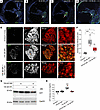 Figure 4
Prophylactic TRC051384 administration attenuates proteasomal impairments in C57BL/6NJ mice after 105 dB SPL noise exposure for 2 hours. (A–C) Representative fluorescent images from 12 μm cochlear sections near the mid-modiolar plane from P60 Tg(CAG-Ub*G76V/GFP)1Dant mice exposed for 2 hours to 70 dB SPL (ambient), 94 dB SPL, or 105 dB SPL noise, followed by a 2-hour postexposure interval. (D) Representative fluorescent images from 12 μm cochlear sections near the mid-modiolar plane from mice pretreated with TRC051384 and subsequently exposed to 105 dB SPL noise for 2 hours, followed by a 2-hour post-exposure interval. Arrows indicate the spiral ganglion region, highlighting GFP-positive signal. (E) Representative fluorescent images from 12 μm sections near the mid-modiolar plane, focusing on the spiral ganglion of P60 Tg(CAG-Ub*G76V/GFP)1Dant mice. As expected, noise exposure markedly increased the intensity and abundance of GFP signals within spiral ganglion neurons that were NF200+. Prophylactic administration of TRC051384 noticeably reduced both the size and abundance of GFP+ clusters. (F) Quantification of GFP puncta intensity from E shows that noise exposure markedly increased puncta intensity compared with unexposed cochleae (ambient: 0.08 ± 0.024; 105 dB SPL: 0.34 ± 0.11). Prophylactic administration of TRC051384 significantly reduced GFP puncta accumulation following noise exposure, as evidenced by the lower GFP signal in the Noise + TRC051384 group (0.19 ± 0.09). (G) Western blot analysis of GFP protein levels in cochlear extracts from mice treated with TRC051384, with or without 105 dB SPL noise exposure for 2 hours. The upper panel shows GFP signal intensity, and the lower panel shows GAPDH as a loading control. (H) Quantification of G GFP levels normalized to the GAPDH loading control to determine relative GFP signal intensity. TRC051384 treatment alone did not significantly alter GFP abundance compared with uninjected mice (TRC051384: 1.83 ± 0.013; Uninjected: 1.77 ± 0.016). However, TRC051384 significantly reduced GFP abundance following 105 dB SPL noise exposure compared with untreated noise-exposed mice (TRC051384 + Noise: 1.82 ± 0.002; Uninjected + Noise: 2.17 ± 0.031). (F) n = 4 P60–P65 mice of mixed sex per condition. (G) n = 3 P60–P65 mice of mixed sex per condition. Data are represented as mean ± SD, *P < 0.05, ***P < 0.001 by 1-way ANOVA determined significance with Tukey’s post hoc correction. Scale bar: 25 μm (A–D); 15 μm (E).
We next examined whether prophylactic administration of TRC051384 could reduce GFP accumulation. In line with its role as a heat shock response activator, TRC051384 significantly attenuated noise-induced UPS dysfunction, as reflected by diminished GFP signal intensity in the spiral ganglion (Figure 4D). However, the increased GFP signal observed in the axons and stria vascularis may indicate that intense noise exposure combined with TRC051384 induces off-target cellular stress within the cochlea. Such stress could increase tissue autofluorescence or promote nonspecific accumulation of GFP. To confirm that the GFP signal originated from the somata of SGNs, we performed immunostaining on the same sections using NF200 antibodies and observed strong colocalization (Figure 4E). Quantitative analysis revealed that GFP signal intensity was significantly reduced in mice treated with TRC051384 before noise exposure (0.12 ± 0.048) relative to vehicle-treated controls (0.37 ± 0.10) (Figure 4F). Further validation of the results was achieved through Western blot analysis, which showed that TRC051384 reduces the accumulation of GFP in cochlear extracts after noise exposure. Treated mice exhibited a reduced signal intensity (1.82 ± 0.002) compared with untreated controls (2.17 ± 0.03) (Figure 4, G and H). These findings together demonstrate that the administration of TRC051384 as a prophylaxis activates the heat shock pathway, preserving the function of the UPS in the cochlea following noise exposure.
Administration of TRC051384 prior to noise exposure protects against hearing loss. Hsf1 expression was previously found to be necessary for threshold recovery following noise exposure (35). However, the therapeutic potential of activating Hsf1 with small molecules to prevent hearing loss has received little attention. To explore this possibility, we investigated whether TRC051384-mediated activation of the Hsf1 pathway prior to noise exposure could confer protection in 16-week-old CBA/CaJ mice. TRC051384 (60 mg/kg) or vehicle alone was injected i.p. 2 hours before exposure to 100 dB SPL noise for 2 hours, and ABRs were measured at 1, 3, and 14 DAN. Acute threshold shifts were observed in the TRC051384 and vehicle-treated mice at 1 DAN (Figure 5A). In the vehicle-treated cohort at 3 DAN, thresholds remained significantly elevated at frequencies of 24 kHz and greater, and remained slightly elevated at 14 DAN. However, in the TRC051384-treated cohort, threshold levels fully recovered by 3 DAN at all frequencies except 32 kHz, which then fully recovered by14 DAN. ABR Wave I amplitudes in the vehicle cohort generally failed to recover at intensities > 80 dB SPL at 16 and 32 kHz by 14 DAN (Figure 5, B–D). In comparison, in the TRC051384-treated cohort, ABR Wave I amplitudes fully recovered by 3 DAN. These findings were corroborated by an independent replication cohort of 16-week-old CBA/CaJ mice, which revealed that TRC051384 treatment resulted in markedly greater Wave I amplitude recovery compared with vehicle controls by 14 DAN at 24 and 32 kHz (Supplemental Figure 5, A and B). To evaluate whether TRC051384 protects cochlear synapses, we compared ribbon synapse density between drug-treated and vehicle control groups by immunostaining cochlear whole mounts at 14 DAN with CtBP2 and GluA2 antibodies (Figure 5E). Consistent with TRC051384’s ability to mitigate noise-induced reductions in Wave I amplitude, the decrease in synapse density observed in vehicle-treated CBA/CaJ mice at 14 DAN was absent in TRC051384-treated mice (Figure 5F). In summary, prophylactic treatment with TRC051384 preserves cochlear synapse density and auditory nerve function, supporting its potential as a protective intervention against NIHL.
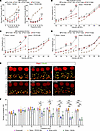 Figure 5
Prophylactic administration of TRC051384 accelerates recovery from noise exposure and prevents cochlear synaptopathy in male 16-week-old CBA/CaJ mice. (A) ABR thresholds in vehicle-treated mice remained elevated at 3 days after noise (DAN) and did not fully recover at 32 kHz by 14 DAN. In contrast, TRC051384-treated mice recovered to baseline by 3 DAN at 8 and 16 kHz and by 14 DAN at all frequencies. (B–D) ABR Wave I amplitudes at 16, 24, and 32 kHz remained persistently reduced in vehicle-treated mice at high stimulus intensities through 14 DAN, whereas TRC051384-treated mice showed recovery by 3 DAN. (E) Representative cochlear whole-mount images from the 8, 16, and 32 kHz regions immunostained for CtBP2 (red) and GluA2 (green) in TRC051384- and vehicle-treated mice at 14 DAN. Scale bar, 10 μm. (F) Quantification of colocalized CtBP2/GluA2 puncta revealed significantly greater synaptic density in TRC051384-treated mice across most cochlear frequency regions, with the largest differences at higher frequencies. Mean synapses per IHC at 32 kHz were 15.09 ± 1.38 for TRC051384 and 8.26 ± 2.01 for vehicle; at 45 kHz, 14.67 ± 0.98 and 5.99 ± 1.23, respectively. (A–D) N = 17 TRC051384-treated and 7 vehicle-treated mice. (E and F) N = 14–17 TRC051384-treated and 6–7 vehicle-treated mice. (A–D) Adjusted P value * = < 0.05, ** = < 0.01, *** = < 0.001; (F) Data are represented as mean ± SD. *P < 0.05, **P < 0.01, ***P < 0.001 by 1-way ANOVA with Tukey’s post hoc correction.


