
Research ArticleCell biologyOncology
Open Access |  10.1172/jci.insight.203262
Endoplasmic reticulum–resident α-glucosidase II drives non-small cell lung cancer progression via regulation of secretory glycoproteins
Shike Wang,1 Na Ding,2 Angelo Chen,3 Derrick Cardin,4 Yuting Xu,4 Kate Grimley,5 William K. Russell,6 Jun Xu,7 Jonathan M. Kurie,2 Guan-Yu Xiao,8 and Xiaochao Tan1
1Department of Integrative Biology and Pharmacology, The University of Texas Health Science Center at Houston, Texas, USA.
2Department of Thoracic/Head and Neck Medical Oncology, The University of Texas MD Anderson Cancer Center, Houston, Texas, USA.
3Department of Biosciences, Rice University, Houston, Texas, USA.
4Department of Medicine, Section of Hematology Oncology, Tulane University School of Medicine, Louisiana Cancer Research Center, New Orleans, Louisiana, USA.
5Hillsdale College, Hillsdale, Michigan, USA.
6Department of Biochemistry & Molecular Biology, The University of Texas Medical Branch at Galveston, Houston, Texas, USA.
7Molecular and Cellular Biology Department, The Advanced Cell Engineering and 3D Models Core, Baylor College of Medicine, Houston, Texas, USA.
8Department of Toxicology and Cancer Biology, The University of Kentucky, Lexington, Kentucky, USA.
Address correspondence to: Xiaochao Tan, Department of Integrative Biology and Pharmacology, The University of Texas Health Science Center at Houston, Texas 77030, USA; Email: Xiaochao.Tan@uth.tmc.edu. Or to: Guan-Yu Xiao, Department of Toxicology and Cancer Biology, The University of Kentucky, Lexington, Kentucky 40506, USA. Email: guan-yu.xiao@uky.edu.
Find articles by Wang, S. in: PubMed | Google Scholar
1Department of Integrative Biology and Pharmacology, The University of Texas Health Science Center at Houston, Texas, USA.
2Department of Thoracic/Head and Neck Medical Oncology, The University of Texas MD Anderson Cancer Center, Houston, Texas, USA.
3Department of Biosciences, Rice University, Houston, Texas, USA.
4Department of Medicine, Section of Hematology Oncology, Tulane University School of Medicine, Louisiana Cancer Research Center, New Orleans, Louisiana, USA.
5Hillsdale College, Hillsdale, Michigan, USA.
6Department of Biochemistry & Molecular Biology, The University of Texas Medical Branch at Galveston, Houston, Texas, USA.
7Molecular and Cellular Biology Department, The Advanced Cell Engineering and 3D Models Core, Baylor College of Medicine, Houston, Texas, USA.
8Department of Toxicology and Cancer Biology, The University of Kentucky, Lexington, Kentucky, USA.
Address correspondence to: Xiaochao Tan, Department of Integrative Biology and Pharmacology, The University of Texas Health Science Center at Houston, Texas 77030, USA; Email: Xiaochao.Tan@uth.tmc.edu. Or to: Guan-Yu Xiao, Department of Toxicology and Cancer Biology, The University of Kentucky, Lexington, Kentucky 40506, USA. Email: guan-yu.xiao@uky.edu.
Find articles by Ding, N. in: PubMed | Google Scholar
1Department of Integrative Biology and Pharmacology, The University of Texas Health Science Center at Houston, Texas, USA.
2Department of Thoracic/Head and Neck Medical Oncology, The University of Texas MD Anderson Cancer Center, Houston, Texas, USA.
3Department of Biosciences, Rice University, Houston, Texas, USA.
4Department of Medicine, Section of Hematology Oncology, Tulane University School of Medicine, Louisiana Cancer Research Center, New Orleans, Louisiana, USA.
5Hillsdale College, Hillsdale, Michigan, USA.
6Department of Biochemistry & Molecular Biology, The University of Texas Medical Branch at Galveston, Houston, Texas, USA.
7Molecular and Cellular Biology Department, The Advanced Cell Engineering and 3D Models Core, Baylor College of Medicine, Houston, Texas, USA.
8Department of Toxicology and Cancer Biology, The University of Kentucky, Lexington, Kentucky, USA.
Address correspondence to: Xiaochao Tan, Department of Integrative Biology and Pharmacology, The University of Texas Health Science Center at Houston, Texas 77030, USA; Email: Xiaochao.Tan@uth.tmc.edu. Or to: Guan-Yu Xiao, Department of Toxicology and Cancer Biology, The University of Kentucky, Lexington, Kentucky 40506, USA. Email: guan-yu.xiao@uky.edu.
Find articles by Chen, A. in: PubMed | Google Scholar
1Department of Integrative Biology and Pharmacology, The University of Texas Health Science Center at Houston, Texas, USA.
2Department of Thoracic/Head and Neck Medical Oncology, The University of Texas MD Anderson Cancer Center, Houston, Texas, USA.
3Department of Biosciences, Rice University, Houston, Texas, USA.
4Department of Medicine, Section of Hematology Oncology, Tulane University School of Medicine, Louisiana Cancer Research Center, New Orleans, Louisiana, USA.
5Hillsdale College, Hillsdale, Michigan, USA.
6Department of Biochemistry & Molecular Biology, The University of Texas Medical Branch at Galveston, Houston, Texas, USA.
7Molecular and Cellular Biology Department, The Advanced Cell Engineering and 3D Models Core, Baylor College of Medicine, Houston, Texas, USA.
8Department of Toxicology and Cancer Biology, The University of Kentucky, Lexington, Kentucky, USA.
Address correspondence to: Xiaochao Tan, Department of Integrative Biology and Pharmacology, The University of Texas Health Science Center at Houston, Texas 77030, USA; Email: Xiaochao.Tan@uth.tmc.edu. Or to: Guan-Yu Xiao, Department of Toxicology and Cancer Biology, The University of Kentucky, Lexington, Kentucky 40506, USA. Email: guan-yu.xiao@uky.edu.
Find articles by Cardin, D. in: PubMed | Google Scholar
1Department of Integrative Biology and Pharmacology, The University of Texas Health Science Center at Houston, Texas, USA.
2Department of Thoracic/Head and Neck Medical Oncology, The University of Texas MD Anderson Cancer Center, Houston, Texas, USA.
3Department of Biosciences, Rice University, Houston, Texas, USA.
4Department of Medicine, Section of Hematology Oncology, Tulane University School of Medicine, Louisiana Cancer Research Center, New Orleans, Louisiana, USA.
5Hillsdale College, Hillsdale, Michigan, USA.
6Department of Biochemistry & Molecular Biology, The University of Texas Medical Branch at Galveston, Houston, Texas, USA.
7Molecular and Cellular Biology Department, The Advanced Cell Engineering and 3D Models Core, Baylor College of Medicine, Houston, Texas, USA.
8Department of Toxicology and Cancer Biology, The University of Kentucky, Lexington, Kentucky, USA.
Address correspondence to: Xiaochao Tan, Department of Integrative Biology and Pharmacology, The University of Texas Health Science Center at Houston, Texas 77030, USA; Email: Xiaochao.Tan@uth.tmc.edu. Or to: Guan-Yu Xiao, Department of Toxicology and Cancer Biology, The University of Kentucky, Lexington, Kentucky 40506, USA. Email: guan-yu.xiao@uky.edu.
Find articles by Xu, Y. in: PubMed | Google Scholar
1Department of Integrative Biology and Pharmacology, The University of Texas Health Science Center at Houston, Texas, USA.
2Department of Thoracic/Head and Neck Medical Oncology, The University of Texas MD Anderson Cancer Center, Houston, Texas, USA.
3Department of Biosciences, Rice University, Houston, Texas, USA.
4Department of Medicine, Section of Hematology Oncology, Tulane University School of Medicine, Louisiana Cancer Research Center, New Orleans, Louisiana, USA.
5Hillsdale College, Hillsdale, Michigan, USA.
6Department of Biochemistry & Molecular Biology, The University of Texas Medical Branch at Galveston, Houston, Texas, USA.
7Molecular and Cellular Biology Department, The Advanced Cell Engineering and 3D Models Core, Baylor College of Medicine, Houston, Texas, USA.
8Department of Toxicology and Cancer Biology, The University of Kentucky, Lexington, Kentucky, USA.
Address correspondence to: Xiaochao Tan, Department of Integrative Biology and Pharmacology, The University of Texas Health Science Center at Houston, Texas 77030, USA; Email: Xiaochao.Tan@uth.tmc.edu. Or to: Guan-Yu Xiao, Department of Toxicology and Cancer Biology, The University of Kentucky, Lexington, Kentucky 40506, USA. Email: guan-yu.xiao@uky.edu.
Find articles by Grimley, K. in: PubMed | Google Scholar
1Department of Integrative Biology and Pharmacology, The University of Texas Health Science Center at Houston, Texas, USA.
2Department of Thoracic/Head and Neck Medical Oncology, The University of Texas MD Anderson Cancer Center, Houston, Texas, USA.
3Department of Biosciences, Rice University, Houston, Texas, USA.
4Department of Medicine, Section of Hematology Oncology, Tulane University School of Medicine, Louisiana Cancer Research Center, New Orleans, Louisiana, USA.
5Hillsdale College, Hillsdale, Michigan, USA.
6Department of Biochemistry & Molecular Biology, The University of Texas Medical Branch at Galveston, Houston, Texas, USA.
7Molecular and Cellular Biology Department, The Advanced Cell Engineering and 3D Models Core, Baylor College of Medicine, Houston, Texas, USA.
8Department of Toxicology and Cancer Biology, The University of Kentucky, Lexington, Kentucky, USA.
Address correspondence to: Xiaochao Tan, Department of Integrative Biology and Pharmacology, The University of Texas Health Science Center at Houston, Texas 77030, USA; Email: Xiaochao.Tan@uth.tmc.edu. Or to: Guan-Yu Xiao, Department of Toxicology and Cancer Biology, The University of Kentucky, Lexington, Kentucky 40506, USA. Email: guan-yu.xiao@uky.edu.
Find articles by Russell, W. in: PubMed | Google Scholar
1Department of Integrative Biology and Pharmacology, The University of Texas Health Science Center at Houston, Texas, USA.
2Department of Thoracic/Head and Neck Medical Oncology, The University of Texas MD Anderson Cancer Center, Houston, Texas, USA.
3Department of Biosciences, Rice University, Houston, Texas, USA.
4Department of Medicine, Section of Hematology Oncology, Tulane University School of Medicine, Louisiana Cancer Research Center, New Orleans, Louisiana, USA.
5Hillsdale College, Hillsdale, Michigan, USA.
6Department of Biochemistry & Molecular Biology, The University of Texas Medical Branch at Galveston, Houston, Texas, USA.
7Molecular and Cellular Biology Department, The Advanced Cell Engineering and 3D Models Core, Baylor College of Medicine, Houston, Texas, USA.
8Department of Toxicology and Cancer Biology, The University of Kentucky, Lexington, Kentucky, USA.
Address correspondence to: Xiaochao Tan, Department of Integrative Biology and Pharmacology, The University of Texas Health Science Center at Houston, Texas 77030, USA; Email: Xiaochao.Tan@uth.tmc.edu. Or to: Guan-Yu Xiao, Department of Toxicology and Cancer Biology, The University of Kentucky, Lexington, Kentucky 40506, USA. Email: guan-yu.xiao@uky.edu.
Find articles by Xu, J. in: PubMed | Google Scholar
1Department of Integrative Biology and Pharmacology, The University of Texas Health Science Center at Houston, Texas, USA.
2Department of Thoracic/Head and Neck Medical Oncology, The University of Texas MD Anderson Cancer Center, Houston, Texas, USA.
3Department of Biosciences, Rice University, Houston, Texas, USA.
4Department of Medicine, Section of Hematology Oncology, Tulane University School of Medicine, Louisiana Cancer Research Center, New Orleans, Louisiana, USA.
5Hillsdale College, Hillsdale, Michigan, USA.
6Department of Biochemistry & Molecular Biology, The University of Texas Medical Branch at Galveston, Houston, Texas, USA.
7Molecular and Cellular Biology Department, The Advanced Cell Engineering and 3D Models Core, Baylor College of Medicine, Houston, Texas, USA.
8Department of Toxicology and Cancer Biology, The University of Kentucky, Lexington, Kentucky, USA.
Address correspondence to: Xiaochao Tan, Department of Integrative Biology and Pharmacology, The University of Texas Health Science Center at Houston, Texas 77030, USA; Email: Xiaochao.Tan@uth.tmc.edu. Or to: Guan-Yu Xiao, Department of Toxicology and Cancer Biology, The University of Kentucky, Lexington, Kentucky 40506, USA. Email: guan-yu.xiao@uky.edu.
Find articles by Kurie, J. in: PubMed | Google Scholar
1Department of Integrative Biology and Pharmacology, The University of Texas Health Science Center at Houston, Texas, USA.
2Department of Thoracic/Head and Neck Medical Oncology, The University of Texas MD Anderson Cancer Center, Houston, Texas, USA.
3Department of Biosciences, Rice University, Houston, Texas, USA.
4Department of Medicine, Section of Hematology Oncology, Tulane University School of Medicine, Louisiana Cancer Research Center, New Orleans, Louisiana, USA.
5Hillsdale College, Hillsdale, Michigan, USA.
6Department of Biochemistry & Molecular Biology, The University of Texas Medical Branch at Galveston, Houston, Texas, USA.
7Molecular and Cellular Biology Department, The Advanced Cell Engineering and 3D Models Core, Baylor College of Medicine, Houston, Texas, USA.
8Department of Toxicology and Cancer Biology, The University of Kentucky, Lexington, Kentucky, USA.
Address correspondence to: Xiaochao Tan, Department of Integrative Biology and Pharmacology, The University of Texas Health Science Center at Houston, Texas 77030, USA; Email: Xiaochao.Tan@uth.tmc.edu. Or to: Guan-Yu Xiao, Department of Toxicology and Cancer Biology, The University of Kentucky, Lexington, Kentucky 40506, USA. Email: guan-yu.xiao@uky.edu.
Find articles by
Xiao, G.
in:
PubMed
|
Google Scholar
|

1Department of Integrative Biology and Pharmacology, The University of Texas Health Science Center at Houston, Texas, USA.
2Department of Thoracic/Head and Neck Medical Oncology, The University of Texas MD Anderson Cancer Center, Houston, Texas, USA.
3Department of Biosciences, Rice University, Houston, Texas, USA.
4Department of Medicine, Section of Hematology Oncology, Tulane University School of Medicine, Louisiana Cancer Research Center, New Orleans, Louisiana, USA.
5Hillsdale College, Hillsdale, Michigan, USA.
6Department of Biochemistry & Molecular Biology, The University of Texas Medical Branch at Galveston, Houston, Texas, USA.
7Molecular and Cellular Biology Department, The Advanced Cell Engineering and 3D Models Core, Baylor College of Medicine, Houston, Texas, USA.
8Department of Toxicology and Cancer Biology, The University of Kentucky, Lexington, Kentucky, USA.
Address correspondence to: Xiaochao Tan, Department of Integrative Biology and Pharmacology, The University of Texas Health Science Center at Houston, Texas 77030, USA; Email: Xiaochao.Tan@uth.tmc.edu. Or to: Guan-Yu Xiao, Department of Toxicology and Cancer Biology, The University of Kentucky, Lexington, Kentucky 40506, USA. Email: guan-yu.xiao@uky.edu.
Find articles by
Tan, X.
in:
PubMed
|
Google Scholar
|
Published June 8, 2026 - More info
JCI Insight. 2026;11(11):e203262. https://doi.org/10.1172/jci.insight.203262.
© 2026 Wang et al. This work is licensed under the Creative Commons Attribution 4.0 International License. To view a copy of this license, visit http://creativecommons.org/licenses/by/4.0/.
Received: December 5, 2025; Accepted: March 31, 2026


-
Results
N-glycan modification is crucial to lung cancer progression. ER-resident N-glycan modifying enzymes controls the folding, stability, and trafficking of glycoproteins (Figure 1A). To investigate whether these enzymes are involved in human cancers, we first analyzed the mRNA levels of these genes (STT3A/STT3B encoding the catalytic subunits of the oligosaccharyltransferase complex; MOGs encoding glucosidase I; GANAB encoding the catalytic subunit of glucosidase II; MAN1B1 encoding ER Mannosidase I) across multiple cancer types using The Cancer Genome Atlas (TCGA) data and found they were frequently upregulated across various cancers (Figure 1B). In lung cancer specifically, the expression signature of these 5 genes was elevated in both primary tumor tissues and metastatic sites compared with normal tissues (Figure 1C). Notably, all genes — except STT3B — were upregulated in the TCGA NSCLC cohort (Figure 1D), and their higher expression levels were associated with shorter overall survival in lung cancer patients (Figure 1E), supporting a potential role for the N-glycan modifying enzymes in NSCLC.
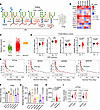 Figure 1
N-glycan–modifying enzymes are upregulated in NSCLC. (A) Overview of N-linked glycosylation in the endoplasmic reticulum (ER). The Glc3Man9GlcNAc2 glycan is transferred from its lipid-linked donor, dolichol phosphate–Glc3Man9GlcNAc2, to an asparagine (Asn) residue within the consensus sequence Asn-X-Ser/Thr of a nascent protein by the oligosaccharyltransferase (OST) complex. The glycan is then sequentially trimmed by α-glucosidase I (α-Glc I), α-glucosidase II (α-Glc II), and mannosidase I (Man I) in the ER. Once properly folded, the glycoproteins are transported to the Golgi. (B) Analysis of mRNA expression levels of genes encoding N-glycan–modifying enzymes across multiple cancer types in the TCGA cohort. P values were analyzed using cox proportional hazards model. SARC, sarcoma; PDAC, pancreatic ductal adenocarcinoma; OV, ovarian serous cystadenocarcinoma; LUSC, lung squamous cell carcinoma; LUAD, lung adenocarcinoma; LIHC, liver hepatocellular carcinoma; BLCA, bladder urothelial carcinoma; BRCA, breast invasive carcinoma; CESC, cervical and endocervical cancers; ESCA, esophageal carcinoma; HNSC, head and neck squamous cell carcinoma; KIRC, kidney renal clear cell carcinoma. (C) Expression levels of a 5-gene signature (STT3A, STT3B, MOGS, GANAB, and MAN1B1) in normal lung tissues (n = 391), primary lung tumors (n = 1865), and distant metastases (n = 8) using data from TNMplot (https://tnmplot.com). (D) mRNA levels of genes encoding N-glycan–modifying enzymes in the TCGA NSCLC cohort. (E) Kaplan-Meier survival analysis of patients with LUAD based on individual gene expression level above (high) or below (low) the median value using GENT2 (http://gent2.appex.kr/gent2/) database. P values were calculated using the log-rank test. (F) Relative cell densities by WST-1 proliferation assays. (G) Boyden chamber assays of migratory activity. (H) mRNA levels of GANAB in normal lung tissues (n = 391), primary lung tumors (n = 1865), and distant metastases (n = 8) using data from TNMplot (https://tnmplot.com/). (I) Relative GANAB protein levels in the Clinical Proteomic Tumor Analysis Consortium (CPTAC) database. P values were determined using 2-tailed Student’s t test (D and I) or 1-way ANOVA (F–H). Data indicate the mean ± SEM from a single experiment incorporating biological replicate samples (n ≥ 3) and are representative of at least 2 independent experiments.
To functionally evaluate this, we utilized small interfering RNAs (siRNAs) to knock down each of these genes in A549 NSCLC cells (Supplemental Figure 1A; supplemental material available online with this article; https://doi.org/10.1172/jci.insight.203262DS1). Most gene knockdowns significantly reduced cell proliferation and migration (Figure 1, F and G, and Supplemental Figure 1B). Among them, the depletion of GANAB showed the most profound effect, which is consistent with that α-Glc II acts as a key factor in the N-glycan modification process (16, 17). GANAB mRNA expression was positively correlated with that of other N-glycan–related genes (Supplemental Figure 1C), suggesting they were coexpressed in NSCLC. Given GANAB’s central role in the quality control of secretory proteins, we prioritized it for the subsequent studies. GANAB expression was elevated in primary lung tumors compared with normal lung tissue and further increased in metastatic lesions (Figure 1H). Similarly, proteomic data from the CPTAC database further confirmed elevated GANAB protein levels in LUAD and LUSC, compared with normal tissues (Figure 1I). In addition, GANAB protein levels were higher in NSCLC cell lines compared with noncancerous epithelial cells (Supplemental Figure 2A). Collectively, these findings highlight the importance of N-glycan–modifying enzymes in NSCLC progression and identified GANAB as a potential regulator of NSCLC progression.
GANAB expression is regulated by tumor suppressive microRNAs (miRNAs). To explore the underlying mechanism of GANAB upregulation in cancer, we first evaluated its transcriptional activity using a RNA Polymerase II chromatin immunoprecipitation assay. No significant difference in RNA Polymerase II occupancy at the GANAB promoter region was observed between noncancerous and NSCLC cell lines (Supplemental Figure 2B), suggesting that GANAB upregulation in NSCLC is unlikely due to enhanced transcription. miRNAs are a class of small noncoding RNAs that suppress the expression of their targets posttranscriptionally (18), and loss of tumor-suppressive miRNAs promotes the expression of oncogenic target genes (19). By analyzing the 3′ untranslated region (3′UTR) of GANAB, we found predicted bindings sites for several miRNAs (Figure 2A). Except for miR-199-5a and miR-103a-3p, all predicted miRNAs showed lower expression in NSCLC than in normal lung tissues (Figure 2B). Western blot (WB) analysis confirmed that ectopic expression of miR-133a and miR-145 remarkably reduced GANAB protein levels (Figure 2, C and D), suggesting that GANAB is regulated by these miRNAs. Treatment with miR-133a or miR-145 mimics suppressed the activity of GANAB reporters containing WT but not mutant 3′-UTRs lacking predicted miRNA binding sites, confirming that GANAB is a direct target of them (Figure 2, E and F). Furthermore, the inhibitory effects of miR-133a or miR-145 on cell migration were abolished by ectopic GANAB expression (Figure 2F). Together, these results demonstrate that GANAB upregulation in NSCLC is driven by reduced miRNA-mediated repression.
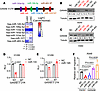 Figure 2
GANAB is a direct target of tumor-suppressive microRNAs (miRNAs). (A) Graph showing predicted miRNAs binding sites in the 3′ UTR of GANAB (top) and a heatmap showing the relative expression levels of these miRNAs in lung cancer tissues compared with normal tissues (bottom). (B and C) WB analysis of GANAB protein levels in A549 (B) and H460 (C) cells following ectopic expression of indicated miRNAs. Densitometric analysis was performed using ImageJ. (D and E) GANAB 3′-UTR reporter assays. H1299 cells were cotransfected with miR-133a mimics (D) or miR-145 mimics (E) and luciferase reporters containing either WT or miR-133a/miR-145 binding site–mutant 3′-UTRs of GANAB. P values were determined using 2-tailed Student’s t test. (F) Boyden chamber transwell assay on A549 cells cotransfected of miR-133a, miR-145, or negative control (NC) mimics and GANAB expression vector or control vector. P values were determined using 1-way ANOVA. Data indicate the mean ± SEM from a single experiment incorporating biological replicate samples (n ≥ 3) and are representative of at least 2 independent experiments.
α-Glc II activity is essential for NSCLC progression. Given that GANAB is the catalytic subunit of α-Glc II (13), a key regulator of N-glycan modification, we next sought to determine the role of GANAB-mediated α-Glc II activity in NSCLC progression. We disrupted this process by depleting GANAB using either CRISPR/Cas9-mediated KO or stable short-hairpin RNA–mediated (shRNA-mediated) knockdown in 344SQ cells (Figure 3A and Supplemental Figure 3A), a murine LUAD cell line derived from KrasG12D- and Trp53R172H-driven mouse LUAD tumors (20). In both orthotopic and s.c. models, GANAB depletion significantly reduced primary tumor growth and metastasis (Figure 3, B and C, and Supplemental Figure 3, B and C). A similar inhibitory effect was also found in human LUAD A549 cells following GANAB depletion (Figure 3, D and E). To rule out off-target effects, we reconstituted GANAB expression in GANAB-KO 344SQ cells (Figure 3F). Notably, only WT GANAB, but not the catalytically inactive mutant (D564N) (21), restored the metastatic capacity (Figure 3G), indicating that the α-Glc II activity is required for lung cancer progression.
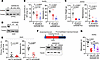 Figure 3
GANAB promotes tumor growth and metastasis in a enzymatic activity-dependent manner. (A) Validation of CRISPR-CAS9 mediated GANAB knockout (KO) in 344SQ cells by WB. P, parental cells. (B) Numbers of orthotopic lung tumors (left) and metastases to mediastinal nodes and contralateral lung (right) in syngeneic, immunocompetent mice (129/SV) (dots represent individual mouse numbers) injected orthotopically with P or GANAB-KO 344SQ cells. P values were determined using 1-way ANOVA. (C) Flank tumor weights (left) and numbers of metastases to mediastinal nodes and contralateral lung (right) in 129/SV mice (dots represent individual mouse numbers) injected s.c. with P or GANAB-KO 344SQ cells. P values were determined using 1-way ANOVA. (D) WB confirmation of GANAB expression in A549 cells stably transfected with shRNAs targeting GANAB (shGANAB) or control shRNA (shCTL). (E) Numbers of orthotopic lung tumors (left) and metastases to mediastinal and contralateral lung (right) in nude mice (dots represent individual mouse numbers) injected orthotopically with shCTL- or shGANAB-A549 cells. P values were determined using Student’s t test. (F) Top: Schematic diagram of GANAB domains highlighting the catalytic inactive site (D564). Bottom: WB confirmation of GANAB expression in P- and GANAB-KO–344SQ cells reconstituted without (Vec) or with WT GANAB or D564N mutant GANAB. (G) Numbers of orthotopic lung tumor metastases to mediastinal nodes and contralateral lung in 129/SV mice (dots represent individual mouse numbers) injected orthotopically with P- or GANAB-KO–344SQ cells reconstituted with WT or mutant (D564N) GANAB. P values were determined using 1-way ANOVA. Data indicate the mean ± SEM from a single experiment incorporating biological replicate samples (n ≥ 3) and are representative of at least 2 independent experiments.
To determine the way in which α-Glu II regulates lung cancer progression, we first evaluated the effect of GANAB depletion on cell growth and found that GANAB depletion impedes cell proliferation significantly (Figure 4, A and B, and Supplemental Figure 4). Cancer cell growth is primarily driven by alterations in cell cycle regulation and evasion of apoptosis (22). Interestingly, GANAB depletion did not induce apoptosis in monolayer cultures (Supplemental Figure 5, A–D). Instead, it led to marked G1 phase cell cycle arrest (Figure 4C and Supplemental Figure 5E), suggesting that GANAB promotes cancer cell growth mainly through regulating cell cycle progression. Boyden chamber assays revealed that GANAB depletion significantly reduced the migratory and invasive capacities of NSCLC cells (Figure 4, D–G, and Supplemental Figure 6, A–H). Notably, disruption of GANAB in BEAS-2B cells did not significantly affect cell motility (Supplemental Figure 6, I–K), suggesting that noncancerous cells are less dependent on α-Glc II function. Moreover, consistent with the in vivo results, WT GANAB — but not the catalytically inactive mutant — was able to restore the proliferation and migration abilities of GANAB-depleted cells (Figure 4, H and I). Similarly, ectopic expression of WT GANAB in NSCLC cell lines with low endogenous GANAB expression (H23, H1299) was sufficient to promote both cell growth and migration, whereas the catalytic inactive mutant was unable to recapitulate these phenotypes (Figure 4, J–M, and Supplemental Figure 7, A–C), confirming the essential role of α-Glu II catalytic activity in promoting cancer cell growth and migration/invasion.
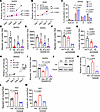 Figure 4
GANAB regulates lung cancer cell proliferation and motility. (A and B) Relative cell densities measured by WST-1 proliferation assays in 344SQ (A) and A549 (B) cells. (C) Cell cycle analysis was performed on P- and GANAB-KO–344SQ cells. P value was analyzed using 1-way ANOVA. (D–G) Boyden chamber transwell assays assessing migratory (D and F) and invasive (E and G) activity. (H) Relative cell densities measured by WST-1 proliferation assays. (I) Boyden chamber transwell assays assessing cell migratory activity. (J) WB confirmation of ectopic expression of WT or D542N mutant GANAB in H23 cells. (K) Relative cell densities measured by WST-1 proliferation assays. (L and M) Boyden chamber assays assessing migratory (L) and invasive (M) activity. P values were determined using 2-way ANOVA (A, B, and H) or 1-way ANOVA (C–G, I, and K–M). Data indicate the mean ± SEM from a single experiment incorporating biological replicate samples (n ≥ 3) and are representative of at least 2 independent experiments.
Knockdown of PRKCSH in human NSCLC cells (A549, H460) using either shRNA or siRNAs led to reduced α-subunit levels as expected, along with decreased cell proliferation, migration, and invasion (Supplemental Figure 8), closely mimicking the effects of GANAB depletion. These findings highlight the critical role of α-Glu II enzymatic activity in promoting NSCLC cancer progression.
α-Glc II activity regulates ER homeostasis. To identify the signaling pathways potentially regulated by α-Glu II, we performed RNA-seq analysis on parental and GANAB-depleted 344SQ cells. GANAB depletion led to the upregulation of over 1,000 genes and downregulation of approximately 700 genes (Supplemental Figure 9A). Gene Ontology (GO) analysis revealed that the downregulated genes were primarily associated with actin binding, growth factor binding, and ECM organization (Supplemental Figure 9B) — pathways closely linked to cell proliferation and motility, consistent with our earlier findings. Interestingly, GO analysis of the upregulated genes showed significant enrichment in oxidoreductase activity and glutathione transferase activity, both involved in cellular responses to oxidative stress (Supplemental Figure 9C) (23). We validated the upregulation of these genes in GANAB-depleted 344SQ and A549 cells by qPCR (Supplemental Figure 9, D and E). We thus hypothesized that disruption of α-Glu II activity may trigger oxidative stress. In support of this hypothesis, GANAB depletion significantly increased reactive oxygen species (ROS) production in both 344SQ and A549 cells (Figure 5, A and B). The elevated ROS levels may result from disrupted ER homeostasis. Supporting this notion, GO analysis indicated activation of the ER stress response pathway in GANAB-depleted cells, supporting the notion that GANAB deficiency leads to glycoprotein misfolding and accumulation in the ER, thereby triggering ER stress. qPCR analysis further confirmed the upregulation of ER stress–related genes following depletion of either GANAB or PRKCSH (Figure 5, C and D, and Supplemental Figure 9, F and G). Furthermore, we validated ER stress induction by measuring the protein levels of 78 KDa Glucose-Regulated Protein (GRP78), a well-established ER stress marker (24). Notably, the α-Glc II activity is essential for Grp78 reduction (Figure 5, E–G, and Supplemental Figure 9H), further supporting the role of α-Glu II in maintaining ER homeostasis.
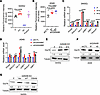 Figure 5
GANAB deficiency induces ER-stress. (A) ROS level analysis in P- and GANAB-KO–344SQ cells. Negative control (NC) and positive controls were included according to the manufacturer’s instructions for the ROS detection kit. (B) ROS level analysis in shCTL- and shGANAB-A549 cells. (C) qPCR analysis of target gene expression in P- and GANAB-KO–344SQ cells. (D) qPCR analysis of target gene expression in shCTL- and shGANAB-A549 cells. (E–G) WB confirmation of target protein levels in the indicated cell lines. P values were determined using 1-way ANOVA. *P<0.05; **P<0.01; ****P<0.0001. Data indicate the mean ± SEM from a single experiment incorporating biological replicate samples (n ≥ 3) and are representative of at least 2 independent experiments.
α-Glc II regulates a malignant secretome. Considering the essential role of N-glycan modification in the correct folding and ER-to-Golgi trafficking of secreted glycoproteins, we examined the effects of α-Glu II–mediated N-glycan processing on secretory trafficking. GANAB depletion led to a marked reduction in vesicular stomatitis virus glycoprotein (VSV-G) transport to the plasma membrane, a widely used assay for evaluating secretory pathway activity (Figure 6A). Additionally, we observed a significantly reduced colocalization of VSV-G with the Golgi apparatus in GANAB-depleted cells using the Retention Using Selective Hooks (RUSH) system (Figure 6B), suggesting impaired ER-to-Golgi trafficking and reduced secretory flux. We then evaluated the functional effect of α-Glu II–mediated secretion on cancer cell behavior. Conditioned media (CM) collected from parental or GANAB-depleted 344SQ cells were applied to 344SQ cells. Notably, CM from GANAB-depleted cells showed a diminished ability to promote cell proliferation and migration compared with that from parental cells (Figure 6, C and D), indicating that α-Glu II influences the production of a functional secretome. To further characterize α-Glu II–driven secretome, we performed proteomic analysis on the CM from parental and GANAB-depleted 344SQ cells and found that GANAB depletion reduced the secretion of many proteins (Figure 6E, Supplemental Figure 10, and Supplemental Table 2). GO analysis of these proteins indicated functional enrichment in categories related to growth factor binding (e.g., TIMP1, TGF-β1, HTRA1) and ECM organization (e.g., LH2, LOX4, COL6A1), both of which are crucial for cancer cell proliferation and motility (Figure 6F).
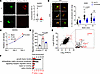 Figure 6
GANAB regulates secretion. (A) Representative images (left panel) and quantification (right panel) of VSV-G trafficking assay performed in P- and GANAB-KO–344SQ cells. P values were determined using 2-tailed Student t test. (B) Representative images (left panel) and quantification (right panel) of dynamic VSV-G trafficking assay performed in shCTL- and shGANAB-A549 cells. P values were determined using 2 tailed Student’s t test. (C) Relative cell densities measured by WST-1 proliferation assays in 344SQ cells cultured in either FBS-free medium or conditioned medium collected from parental or GANAB-KO–344SQ cells. P values were determined using 2-way ANOVA. (D) Boyden chamber assays assessing migratory activity in 344SQ cells cultured in either FBS-free medium or conditioned medium collected from parental or GANAB-KO–344SQ cells. P values were determined using 1-way ANOVA. (E) Dot plot showing reduced secreted proteins in CM of both GANAB-KO–344SQ clones compared with CM of parental 344SQ cells identified by LC-MS analysis. (F) GO analysis of overlapping downregulated proteins involved in molecular function, identified in the conditioned medium of both GANAB-KO–344SQ clones compared with parental cells. Data indicate the mean ± SEM from a single experiment incorporating biological replicate samples (n ≥ 3) and are representative of at least 2 independent experiments.
α-Glc II regulates the secretion of downstream substates. We speculate that GANAB regulates secretion through interacting and modifying the glycoprotein substrates. Our previous unbiased proteomic analysis identified GANAB as a strong LH2 interactor (Figure 7A). Coimmunoprecipitation using endogenous LH2 as a bait confirmed the interaction between LH2 and GANAB (Figure 7B). Notably, secretion of both endogenous LH2 and ectopically expressed Flag-tagged LH2 was markedly reduced in GANAB-depleted cells (Figure 7, C and D). Meanwhile, LH2 accumulated within the cell lysates of GANAB-depleted cells (Figure 7D). Immunofluorescence staining of exogenous LH2 revealed its accumulation in the ER in GANAB-depleted 344SQ cells (Figure 7E). To directly monitor LH2 trafficking, we employed the RUSH system and found the ER-to-Golgi trafficking of LH2 was significantly impaired in GANAB-depleted A549 cells (Figure 7F). Importantly, ectopic expression of LH2 promoted cell proliferation and migration in GANAB-repleted but not -depleted CALU6 NSCLC cells (Figure 7, G–I), indicating that LH2 requires α-Glu II activity for its proper function. Similarly, TIMP1, another candidate identified in the GANAB-regulated secretome, was found to interact with GANAB (Supplemental Figure 11A). GANAB depletion reduced TIMP1 secretion and caused its accumulation in the ER (Supplemental Figure 11, B, and C). Like LH2, the proproliferative effect of TIMP1 was abolished in GANAB-depleted CALU6 cells (Supplemental Figure 11D). Together, these findings suggest that α-Glu II modulates the secretion and function of its substrates, including LH2 and TIMP1.
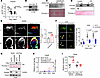 Figure 7
GANAB regulates the secretion and function of LH2. (A) Volcano plot of proteomic analysis by LC-MS of immunoprecipitation (IP) samples using LH2-Flag as bait, with IgG as a negative control. Differentially enriched proteins were identified based on a fold change ≥ 2 and adjusted P < 0.05. (B) WB analysis of target proteins in Co-IP samples using endogenous LH2 as bait in H1299 cells. (C) WB analysis of LH2 levels in conditioned medium from parental and GANAB-KO–344SQ cells. Ponceau S staining was used as a loading control. (D) WB analysis of exogenous LH2-Flag levels in cell lysates and conditioned medium from parental and GANAB-KO–344SQ cells. Tubulin served as the loading control for cell lysates, and Ponceau S staining was used as the loading control for conditioned medium. (E) Representative immunofluorescence images (top panel) showing LH2-Flag (green) and calnexin (red) staining, and relative intensity of LH2 within the ER normalized to total cellular LH2 intensity (right panel) in parental and GANAB KO 344SQ cells. Original magnification, 40×. P values were determined using 2-tailed Student t test. (F) Representative images (middle and bottom panel) and quantification (right panel) of the RUSH-LH2 dynamic trafficking assay in shCTL- and shGANAB-A549 cells. P values were determined using 2 tailed Student’s t test. (G) WB confirmation of ectopic LH2-Flag expression in shCTL- and shGANAB-Calu6 cell and secretion of LH2-Flag in CM. (H) Relative cell densities measured by WST-1 proliferation assays under the indicated conditions. P values were determined using 2-way ANOVA. (I) Boyden chamber assay assessing migratory activity under the indicated conditions. P values were determined using 2-tailed Student’s t test. Data indicate the mean ± SEM from a single experiment incorporating biological replicate samples (n ≥ 3) and are representative of at least 2 independent experiments.


