
Research ArticleImmunologyVascular biology
Open Access |  10.1172/jci.insight.201946
Endothelial MHC expression is required to initiate T cell–mediated rejection of 3D-printed skin grafts
Zuzana Tobiasova,1 Esen Sefik,1 Lingfeng Qin,2 Jennifer M. McNiff,3,4 Gwendolyn Davis,1 Richard A. Flavell,1,5 W. Mark Saltzman,3,6,7,8 and Jordan S. Pober1,3,4
1Department of Immunobiology,
2Department of Surgery,
3Department of Dermatology, and
4Department of Pathology Yale School of Medicine, Yale University, New Haven, Connecticut, USA.
5Howard Hughes Medical Institute, New Haven, Connecticut, USA.
6Department of Biomedical Engineering,
7Department of Chemical & Environmental Engineering, and
8Department of Cellular & Molecular Physiology, Yale University, New Haven, Connecticut, USA.
Address correspondence to: Jordan S. Pober, Department of Immunobiology, Section of Human and Translational Immunology, Yale School of Medicine, 10 Amistad Street, Room 401D, New Haven, Connecticut 06519, USA. Phone: 203.737.2292; Email: jordan.pober@yale.edu.
Find articles by Tobiasova, Z. in: PubMed | Google Scholar
1Department of Immunobiology,
2Department of Surgery,
3Department of Dermatology, and
4Department of Pathology Yale School of Medicine, Yale University, New Haven, Connecticut, USA.
5Howard Hughes Medical Institute, New Haven, Connecticut, USA.
6Department of Biomedical Engineering,
7Department of Chemical & Environmental Engineering, and
8Department of Cellular & Molecular Physiology, Yale University, New Haven, Connecticut, USA.
Address correspondence to: Jordan S. Pober, Department of Immunobiology, Section of Human and Translational Immunology, Yale School of Medicine, 10 Amistad Street, Room 401D, New Haven, Connecticut 06519, USA. Phone: 203.737.2292; Email: jordan.pober@yale.edu.
Find articles by Sefik, E. in: PubMed | Google Scholar
1Department of Immunobiology,
2Department of Surgery,
3Department of Dermatology, and
4Department of Pathology Yale School of Medicine, Yale University, New Haven, Connecticut, USA.
5Howard Hughes Medical Institute, New Haven, Connecticut, USA.
6Department of Biomedical Engineering,
7Department of Chemical & Environmental Engineering, and
8Department of Cellular & Molecular Physiology, Yale University, New Haven, Connecticut, USA.
Address correspondence to: Jordan S. Pober, Department of Immunobiology, Section of Human and Translational Immunology, Yale School of Medicine, 10 Amistad Street, Room 401D, New Haven, Connecticut 06519, USA. Phone: 203.737.2292; Email: jordan.pober@yale.edu.
Find articles by Qin, L. in: PubMed | Google Scholar
1Department of Immunobiology,
2Department of Surgery,
3Department of Dermatology, and
4Department of Pathology Yale School of Medicine, Yale University, New Haven, Connecticut, USA.
5Howard Hughes Medical Institute, New Haven, Connecticut, USA.
6Department of Biomedical Engineering,
7Department of Chemical & Environmental Engineering, and
8Department of Cellular & Molecular Physiology, Yale University, New Haven, Connecticut, USA.
Address correspondence to: Jordan S. Pober, Department of Immunobiology, Section of Human and Translational Immunology, Yale School of Medicine, 10 Amistad Street, Room 401D, New Haven, Connecticut 06519, USA. Phone: 203.737.2292; Email: jordan.pober@yale.edu.
Find articles by
McNiff, J.
in:
PubMed
|
Google Scholar
|

1Department of Immunobiology,
2Department of Surgery,
3Department of Dermatology, and
4Department of Pathology Yale School of Medicine, Yale University, New Haven, Connecticut, USA.
5Howard Hughes Medical Institute, New Haven, Connecticut, USA.
6Department of Biomedical Engineering,
7Department of Chemical & Environmental Engineering, and
8Department of Cellular & Molecular Physiology, Yale University, New Haven, Connecticut, USA.
Address correspondence to: Jordan S. Pober, Department of Immunobiology, Section of Human and Translational Immunology, Yale School of Medicine, 10 Amistad Street, Room 401D, New Haven, Connecticut 06519, USA. Phone: 203.737.2292; Email: jordan.pober@yale.edu.
Find articles by Davis, G. in: PubMed | Google Scholar
1Department of Immunobiology,
2Department of Surgery,
3Department of Dermatology, and
4Department of Pathology Yale School of Medicine, Yale University, New Haven, Connecticut, USA.
5Howard Hughes Medical Institute, New Haven, Connecticut, USA.
6Department of Biomedical Engineering,
7Department of Chemical & Environmental Engineering, and
8Department of Cellular & Molecular Physiology, Yale University, New Haven, Connecticut, USA.
Address correspondence to: Jordan S. Pober, Department of Immunobiology, Section of Human and Translational Immunology, Yale School of Medicine, 10 Amistad Street, Room 401D, New Haven, Connecticut 06519, USA. Phone: 203.737.2292; Email: jordan.pober@yale.edu.
Find articles by
Flavell, R.
in:
PubMed
|
Google Scholar
|
1Department of Immunobiology,
2Department of Surgery,
3Department of Dermatology, and
4Department of Pathology Yale School of Medicine, Yale University, New Haven, Connecticut, USA.
5Howard Hughes Medical Institute, New Haven, Connecticut, USA.
6Department of Biomedical Engineering,
7Department of Chemical & Environmental Engineering, and
8Department of Cellular & Molecular Physiology, Yale University, New Haven, Connecticut, USA.
Address correspondence to: Jordan S. Pober, Department of Immunobiology, Section of Human and Translational Immunology, Yale School of Medicine, 10 Amistad Street, Room 401D, New Haven, Connecticut 06519, USA. Phone: 203.737.2292; Email: jordan.pober@yale.edu.
Find articles by Saltzman, W. in: PubMed | Google Scholar
1Department of Immunobiology,
2Department of Surgery,
3Department of Dermatology, and
4Department of Pathology Yale School of Medicine, Yale University, New Haven, Connecticut, USA.
5Howard Hughes Medical Institute, New Haven, Connecticut, USA.
6Department of Biomedical Engineering,
7Department of Chemical & Environmental Engineering, and
8Department of Cellular & Molecular Physiology, Yale University, New Haven, Connecticut, USA.
Address correspondence to: Jordan S. Pober, Department of Immunobiology, Section of Human and Translational Immunology, Yale School of Medicine, 10 Amistad Street, Room 401D, New Haven, Connecticut 06519, USA. Phone: 203.737.2292; Email: jordan.pober@yale.edu.
Find articles by
Pober, J.
in:
PubMed
|
Google Scholar
|
Published April 22, 2026 - More info
JCI Insight. 2026;11(8):e201946. https://doi.org/10.1172/jci.insight.201946.
© 2026 Tobiasova et al. This work is licensed under the Creative Commons Attribution 4.0 International License. To view a copy of this license, visit http://creativecommons.org/licenses/by/4.0/.
Received: November 3, 2025; Accepted: February 12, 2026

-
Introduction
Tissue engineering can provide a potentially unlimited source of organs for therapeutic transplantation, but these tissue-engineered organs are currently restricted to thin constructs because they lack vascularization and must survive by nutrient and gas diffusion (1). Skin grafting is used to treat nonhealing ulcers and extensive skin tumor resections. Autologous skin transplantation is limited because the underlying disorders that lead to nonhealing ulcers, such as diabetes or advanced age, generally impair wound repair, complicating skin harvest (2). Allogeneic skin is among the tissues most prone to rejection (3). This need has driven development of synthetic skin substitutes. Burke and Yannas described clinical results using bilayered artificial skin as early as 1981 (4), and there are more than 10 different, approved synthetic skin substitutes that are either acellular or cellularized to form dermal, epidermal, or epidermodermal mimetics (5, 6). None are completely satisfactory (7).
Cellularized grafts respond better than acellular counterparts to environmental stresses and injuries, although acellular grafts may become cellularized after implantation through invasion of the graft material by recipient cells. To be clinically useful, grafts must be available “off the shelf.” Consequently, the currently available cellularized skin substitutes contain keratinocytes and/or fibroblasts that are allogeneic to the host. Surprisingly, unlike allogeneic natural skin, allogeneic cells in these synthetic skins do not initiate a recipient immune-mediated rejection response (8, 9). Nevertheless, the graft cells die and grafts often slough owing to the absence of microvascular graft perfusion (10). Incorporating a vascular network into the graft could avoid ischemic sloughing. A critical component of the microvascular circulation is the endothelial cell (EC) lining, which regulates blood flow, controls permselectivity, and minimizes thrombosis and inflammation (11). Moreover, cultured human ECs can spontaneously organize into a tubular network capable of perfusing acellular collagen gels or decellularized human skin (12, 13), suggesting that inclusion of ECs in a synthetic graft could provide adequate perfusion in skin and perhaps other tissues (14).
The absence of immune rejection of constructs containing allogeneic cells is puzzling but can be explained in two ways: either grafts lack specific cell types capable of alloantigen presentation to resting T cells, such as myeloid or lymphoid cells resident within normal tissues, or, alternatively, absence of a vascular system within the graft limits contact between recipient alloreactive T cells and graft cells. Thus, including ECs in grafts to form blood vessels may address lack of perfusion; it may simultaneously lead to rejection regardless of which explanation is true because human ECs express and can present both class I and II MHC molecules, activating both alloreactive CD4+ and CD8+ effector memory T cells (15). Alloreactive effector memory T cells arise as a result of prior infections because some T cell receptors (TCRs) for antigen-specific pathogen peptide that bound to self MHC cross react to non-self MHC molecules independent of the bound peptide (16). In clinical kidney transplantation, rejection is best predicted by the frequency of preexisting alloreactive effector memory T cells rather than total alloreactive T cells (17), and in immunodeficient mice bearing human skin grafts, adoptively transferred human effector memory T cells are the only T cell subpopulation capable of causing acute cell-mediated rejection (18). Much of the acute rejection response is mediated by CD8+ effector T cells, also known as cytotoxic T lymphocytes (CTLs), that directly recognize graft class I MHC molecules, but activated host CD4+ T cells can boost the CD8+ T cell response or activate natural killer cells or macrophages (19). Activation of host CD8+ or CD4+ T cells may involve recognition of non-self class I or II MHC molecules, respectively, on a graft-derived EC (called “direct recognition”) or on a host myeloid or lymphoid antigen-presenting cell that has acquired intact MHC molecules shed from the graft (called “semidirect recognition”). A third pathway (“indirect recognition”) involves host antigen-presenting cells acquiring peptides from allogeneic graft proteins and presenting them to host CD4+ T cells, but this process typically occurs with some delay. CRISPR-mediated gene disruption can be used to eliminate the expression of both class I and II MHC molecules on ECs, ablating their capacity to directly initiate an allogeneic response without compromising their capacity to self-assemble into blood vessels (20). Microvessels formed from such knockout ECs (KO-ECs) could still promote contact of T cells with graft cells but could no longer act as antigen-presenting cells.
We and others have studied the process of skin graft rejection using immunodeficient mouse strains in which the human immune system is partly reconstituted using hematopoietic cells from a donor allogeneic to the skin (12). The majority of human immune system mouse models, including the ones we have used in the past, are deficient in reconstitution of human myeloid cells (21) and may be of limited use in assessing rejection initiated by indirect or semidirect recognition. The MISTRG6 mouse — constructed by incorporating several human genes that support hematopoietic development into an immunodeficient BALB/c-derived strain lacking both Rag2 and the cytokine common γ chain (Il2rg–/–) — was developed to provide conditions that allow both human lymphoid and myeloid cells to be engrafted (22, 23). When these animals are injected as neonates with human hematopoietic stem cells (HSCs) isolated from human fetuses, neonates, or adults, they develop robust and functional circulating populations of myeloid monocyte/macrophages and dendritic cells in addition to T and B cells (22, 23). However, these animals are generally raised in specific pathogen–free environments and, thus, lack the history of infections required to generate alloreactive T memory populations, the principal orchestrators of acute cell-mediated allograft rejection (24). For this study, we developed an approach for using the MISTRG6 mouse strain in which neonates were inoculated with mobilized adult human HSCs and then engrafted with 3D-printed vascularized human skin grafts formed with a single donor source of keratinocytes, dermal fibroblasts, pericytes, and either MHC-expressing ECs (WT-ECs) or MHC-deleted ECs (KO-ECs). Three weeks later, the animals were boosted by injection of PBMCs from the same adult donor as the HSCs, thereby engrafting alloreactive effector memory T cells in an animal with functional human myeloid antigen-presenting cells (Figure 1). We used this model to study the human allogenic immune response to 3D-printed human skin grafts made with either unmodified (WT) ECs or ECs in which both class I and class II MHC molecules have been deleted, allowing us to separate the effects of increased vascularization from the immunological role of ECs.
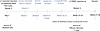 Figure 1
Experimental approach. Timelines of human HSC inoculation, 3D-printed skin grafting, and PBMC boosting using MISTRG6 mice.
-
Results
Hematopoietic reconstitution of skin-engrafted mice and 3D-bioprinted skin grafts in vivo. The goal of our study was to determine the potential consequences of vascularizing bioengineered human skin using self-assembly of human ECs to form microvessels, with pericytes and fibroblasts provided as supportive elements. As described in the Methods, all cells in the skin construct were from the same donor, and the ECs were either unmodified (WT-ECs) or altered using CRISPR/Cas9 to ablate expression of both class I and class II HLA molecules (KO-ECs). This allowed us to separate the roles of microvascular ECs as a source of perfusion and as a potential initiator of graft rejection. To create our model, we introduced several elements into use in human immune system mice to study transplantation. Although MISTRG6 mice inoculated as neonates with human HSCs develop functional human myeloid as well as lymphoid cells (25), these animals do not develop human alloreactive memory T cells when raised in specific pathogen–free animal care facilities. To address this, we combined neonatal inoculation with human HSCs and boosting of the same animals as adults with PBMCs, a source of alloreactive memory, from the same donor. Each new component was tested in preliminary experiments described in the Methods. Our final experimental scheme is summarized in Figure 1. Mice were sacrificed approximately 6–7 weeks after skin engraftment, at which time blood, grafts, and spleen were examined by histology and flow cytometry. We did not see substantial variation among litters or between sex of the mice or between results with different skin cell donors (all male, of necessity since foreskin supplies two of the cell types utilized).
We began with analysis of the blood. Mice inoculated as neonates with HSCs and boosted with autologous PBMCs as adults showed a remarkable expansion of circulating CD45+ human cells that did not occur in mice treated with either HSC or PBMC inoculation alone. The increase in circulating human cells in animals inoculated with HSCs and boosted with PBMCs was comparable to the increased levels in mice that had been implanted with WT-EC or KO-EC skin before receiving the PBMC boost. Most of these cells were CD4+ T cells. In several cases, if reconstitution was delayed and below 10% at week 3 after PBMC injection, week 4 harvest data were added for both HSC+WT-EC skin+PBMC and HSC+KO-EC skin+PBMC groups, and graphic data are presented as pooled data (Figure 2, A and B).
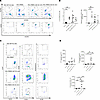 Figure 2
Circulating human cells in skin-grafted MISTRG6 mice. (A) Representative analysis of circulating hCD45+ and hCD3+ cells assessed 3–4 weeks after PBMC injection. (B) Statistically significant increase of circulating hCD45+ and hCD3+ cells shown in HSC+PBMC+WT-EC skin and HSC+PBMC groups (CD45: HSC+skin, n = 12, 3.21 ± 2.02 CD45+ cells/live cells, vs. HSC+PBMC, n = 3, 35.87 ± 7.36 CD45+ cells/live cells, P = 0.04; HSC+skin vs. HSC+WT-EC skin+PBMC, n = 11, 34.79 ± 25.41 CD45+ cells/live cells, P = 0.01; CD3: HSC+skin, n = 9, 13.55 ± 25.07 CD3+ cells/50,000 cells, vs. HSC+PBMC, n = 3, 12,258.66 ± 4,389.84 CD3+ cells/50,000 cells, P = 0.04; HSC+skin vs. HSC+PBMC+WT-EC skin, n = 11, 5,234.13 ± 4,310.6 CD3+ cells/50,000 cells, P = 0.01).(C) Representative analysis of circulating CD3+ cells. Majority of expanded cells in HSC+PBMC+WT-EC skin animals are CCR7–, CD8+, and granzyme B+, indicative of CTL. (D) Significant expansion of circulating CD3+CCR7– and CD8 cells of HSC+PBMC+WT-EC skin animals shown at week 3–4 after PBMC injection (CD8: HSC+skin vs. HSC+PBMC+WT-EC skin, n = 7, 222.1 ± 387.3 vs. n = 8, 13,483.87 ± 10,894.9 CD8+ cells/50,000 cells, P = 0.03, HSC+PBMC vs. HSC+PBMC+WT-EC skin, n = 3, 1,468.7 ± 1,068.6 CD8+ cells/50,000 cells, P = 0.03, and HSC+PBMC+WT-EC skin vs. HSC+PBMC+KO-EC skin, n = 3, 1,234 ± 492.1 CD8+ cells/50,000 cells, P = 0.03; CD3+CCR7–: HSC+skin, n = 7, 387.43 ± 471.84 CD3+CR7– cells/50,000 cells vs. HSC+PBMC, n = 3, 1747.33 ± 541 CD3+CCR7– cells, P = 0.03; HSC+skin vs. HSC+PBMC+WT-EC skin, n = 5, 14,509.6 ± 7,933.36 CD3+ CCR7– cells, P = 0.03 or HSC+PBMC vs. HSC+PBMC+WT-EC skin, P = 0.03; HSC+PBMC vs. HSC+PBMC+KO-EC skin, n = 3, 328.67 ± 445.5 CD3+ CCR7– cells, P = 0.03, HSC+PBMC+WT-EC skin vs. HSC+PBMC+KO-EC skin, P = 0.03). Statistical analysis was performed using Welch’s unpaired t test and Benjamini-Hochberg correction for multiple comparisons. *P < 0.05; **P < 0.01. Values are shown as mean ± SD.
The most striking finding is that the T cell expansion in the skin of mice bearing grafts with WT-ECs but not in mice bearing grafts made with KO-ECs additionally involved a large increase in effector or effector memory (CCR7–) CD8+ T cells expressing granzyme B, typically characterized as CTL or pre-CTL (Figure 2, C and D).
We next examined the bioprinted skin grafts. All of the skin grafts showed HLA-B+ cells, both indicating their human origin and confirming that grafts constructed with KO-ECs still expressed HLA antigens on other cell populations (Figure 3A). We also found a comparable level of human CD31-lined vessels in both types of grafts (Figure 3, B and C; HSC+WT-EC skin (n = 4, 36 ± 9.41 cells/5 fields, mean ± SD), WT-EC skin+PBMC (n = 4, 41.75 ± 16.74 cells/5 fields, mean ± SD) or KO-EC skin+PBMC (n = 3, 49.33 ± 5.13 cells/5 fields, mean ± SD), confirming that KO-ECs retained their capacity to vascularize the constructs. Both WT-EC and KO-EC skin grafts were also infiltrated by mouse EC-lined vessels (Supplemental Figure 1A; supplemental material available online with this article; https://doi.org/10.1172/jci.insight.201946DS1). In addition, skin grafts made with WT-ECs were infiltrated by human leukocytes within 3–4 weeks after the boost, largely in a perivascular distribution, and showed histologic evidence of injury. In contrast, skin grafts made with KO-ECs showed minimal evidence of injury (Figure 3, D and E) and developed only minimal levels of infiltration by human CD45RO lymphocytes (Figure 4, A and B). Human ECs in the WT-EC–rejecting grafts showed upregulation of E selectin, consistent with a human cytokine response, but KO-EC skins lacked expression of E selectin (Supplemental Figure 1B).
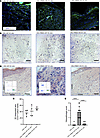 Figure 3
Vitality, vascularization, and rejection assessment of 3D-printed skin grafts. (A) Skin graft cells presenting HLA B molecules signalizing vital cells present in both HSC+WT-EC skin and HSC+PBMC+KO-EC skin grafts (although not on KO-ECs, still present on other human cells of skin graft). (B and C) IHC staining of CD31 shows comparable numbers of human ECs present in HSC+WT-EC skin or WT-EC skin+PBMC– and KO-EC skin+PBMC–implanted skin grafts. (D) 3D-printed skin with WT-EC but not KO-EC was rejected (insets show FACS hCD45 dot plots). (E) Histopathologic evaluation of tissues showing significant differences between HSC+skin and HSC+PBMC+KO-EC skin mice, in comparison with HSC+PBMC+WT-EC skin (HSC+skin, n = 9; histopathologic score, 0.06 ± 0.17 vs. HSC+PBMC+WT-EC skin, n = 12; histopathologic score, 1.79 ± 0.7; P < 0.0001, and HSC+PBMC+WT-EC skin vs. HSC+PBMC+KO-EC skin, n = 5; histopathologic score, 0.2 ± 0.27; P < 0.0001). Statistical analysis was performed using Welch’s unpaired t test and Benjamini-Hochberg correction for multiple comparisons. ****P < 0.0001. Means, SDs, and multiple comparison–corrected P values are described. Scale bar: 0.5 mm. Values are shown as mean ± SD.
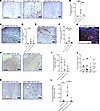 Figure 4
3D-printed skin-infiltrating cells. (A and B) IHC staining of CD45RO shows massive expansion of memory T cells in WT-EC skin+PBMC– but not in KO-EC skin+PBMC–implanted skin grafts (HSC+skin, n = 4, 0 ± 0 cells/field vs. HSC+PBMC+WT-EC skin, n = 8, 221.25 ± 131.49 cells/field, P = 0.006, HSC+PBMC+WT-EC skin vs. HSC+PBMC+KO-EC skin, n = 3, 33.67 ± 33.5 cells/field, P = 0.007). (C and D) Similar presence of CD4 lymphocytes found in WT+EC skin+PBMC or HSC+PBMC+KO-EC skin grafts (HSC+skin, n = 4, 0.12 ± 0.25 cells/field vs. HSC+PBMC+WT-EC skin n = 8, 7.98 ± 6.04, P = 0.02). (E and F) Massive expansion of CD8 lymphocytes in the HSC+PBMC+WT-EC skin group as compared with the HSC+skin or HSC+PBMC+KO-EC skin groups (HSC+skin, n = 5, 2.4 ± 2.3 cells/field vs. HSC+PBMC+WT-EC skin, n = 8, 130.46 ± 117.73 cells/field, P = 0.04; HSC+PBMC+WT-EC skin vs. HSC+PBMC+KO-EC skin, n = 5, 12.18 ± 10.06 cells/field, P = 0.04). (G) 3D-printed skin-infiltrating CD8 lymphocytes show Granzyme B positivity. (H and I) IHC staining of CD68 shows infiltration of skin grafts by macrophages present in all 3 PBMC+skin, WT-EC skin+PBMC and KO-EC skin+PBMC implanted skin grafts. (J) Stable circulating human myeloid cells (CD33+ cells) at weekly assessment for 4 weeks. (K and L) CD11c/CD68 double staining revealed infiltrating dendritic cell populations in WT-EC but not KO-EC skin mice (CD68: PBMC+skin, n = 6, 79.83 ± 43.41 cells/field; WT-EC skin+PBMC, n = 7, 54.14 ± 41.69 cells/field and KO-EC skin+PBMC, n = 4, 24.5 ± 24.24 cells/field; CD11c: HSC+skin, n = 3, 4.66 ± 4.62 cells/field vs. HSC+PBMC+WT-EC skin, n = 5, 59.9 ± 30.7 cells/field, P = 0.02, HSC+PBMC+WT-EC skin vs. HSC+PBMC+KO-EC skin, n = 5, 5.8 ± 10.87 cells/field, P = 0.02). Statistical analysis was performed using Welch’s unpaired t test and Benjamini-Hochberg correction for multiple comparisons. *P < 0.05; **P < 0.01. Means, SDs, and multiple comparison–corrected P values are described. Original magnification, ×40 (G). Scale bar: 0.5 mm. Values are shown as mean ± SD.
We then focused on the nature of the human leukocytic infiltrates in the grafts containing WT-ECs. Consistent with our analysis of circulating cells, the majority of the infiltrate consisted of CD8+ T cells that expressed granzyme B (Figure 4, C–G). Such cells were absent in the grafts containing KO-ECs (Figure 4, F and G). Infiltrates in the rejecting grafts also included CD68+ macrophages and CD68–CD11c+ cells, which we tentatively identified as dendritic cells. Grafts with KO-EC cells showed infiltrating CD68+ macrophages but lacked CD11c+ cells (Figure 4, H, I, K, and L), whereas mice receiving human HSC, WT-EC, or KO-EC skin grafts and human PBMCs showed stable numbers of circulating human myeloid cells weekly for 3 weeks after PBMC injection (Figure 4J).
Finally, to assess the systemic nature of the immune response against the skin, we examined the spleens. The spleens of the animals with rejecting skin grafts were noticeably enlarged (0.8–1.1 cm vs. 2.2–2.4 cm). Analysis of the spleens by both histology and flow cytometry confirmed the presence of hCD45+ infiltration and large numbers of human CD8+ T cells in WT-EC skin grafts (Figure 5).
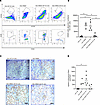 Figure 5
Characterization of spleen-infiltrating human cells. (A) Comparison of infiltrating human cells by hCD45 and hCD4/CD8 staining. hCD45 staining shows minimal hCD45 cell infiltration of spleens of HSC+PBMC+KO-EC skin animals. Consistent with circulation and skin grafts, robust expansion of CD8 lymphocytes was seen in HSC+PBMC+WT-EC skin animals, whereas low infiltration was seen in HSC+PBMC+KO-EC skin mice. (B) Comparison of circulating human leukocytes shows statistical significant hCD45 leukocytes in the HSC+WT-EC skin+PBMC group as compared with the HSC+skin or HSC+KO-EC skin+ PBMC groups. (C and D) IHC staining reveals expansion of CD8 lymphocytes in HSC+PBMC+WT-EC skin mice (hCD45: HSC+skin, n = 6, 434 ± 489.2 cells/field vs. HSC+PBMC, n = 3, 10,456.6 ± 2,738.98 cells/field, P = 0.03; HSC+skin vs. HSC+PBMC+WT-EC skin, n = 5, 10,120.46 ± 4,456.34 cells/field, P = 0.02; HSC+PBMC+WT-EC skin vs. HSC+PBMC+KO-EC skin, n = 5, 1,242.4 ± 1,485.17 cells/field, P = 0.03; HSC+PBMC vs. HSC+PBMC+WT-EC skin, P = 0.03; CD8: HSC+skin, n = 5, 1 ± 0.71 cells/field vs. HSC+PBMC+WT-EC skin, n = 6, 547.67 ± 305.78 cells/field, P = 0.04; mean ± SD). Statistical analysis was performed using Welch’s unpaired t test and Benjamini-Hochberg correction for multiple comparisons. *P < 0.05. Means, SDs, and multiple comparison–corrected P values are described. Scale bar: 0.5 mm.
Some animals receiving grafts with KO-ECs also showed splenic enlargement but did not show expanded human CD8+ T cells. Involvement of the spleen raised the issue of whether the CD8+ infiltrates were evidence of a systemic alloresponse against the graft or xenogeneic graft-versus-host disease possibly triggered by the alloresponse. To address this question, we analyzed TCRβ sequences of the human T cells in the skin and spleens of 3 pairs of the mice showing evidence of graft rejection. Strikingly, there was a large number of shared clones, including a few highly immunodominant clones in 2 of the 3 pairs, but the sequence of the immunodominant clones were not the same among the 3 animals (Figure 6). We interpret this as strong evidence for an alloresponse being systemic; the involvement of mouse tissues in addition to the skin graft is suggestive of semidirect recognition triggered by shedding of EC microparticles bearing intact MHC molecules into the circulation.
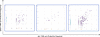 Figure 6
Immunosequencing of the T cell receptor repertoire of skin and matching spleen samples. High-throughput sequencing of the β chain of T cell receptors. x and y axes show total amount of productive TCR β sequences in the skin or spleen samples with 1–2 immunodominant clones in 2 of 3 pairs of investigated samples.


