
Research ArticleCardiologyEndocrinologyMetabolism
Open Access |  10.1172/jci.insight.201148
Semaglutide reduces murine blood pressure through the vascular smooth muscle GLP-1 receptor
Kyle D. Medak,1 Jacqueline A. Koehler,1 Laurie L. Baggio,1 Maria J. Gonzalez-Rellan,1 Chi Kin Wong,1 Xiemin Cao,1 Vivikta Rao,2 Sean Kao,2 Yu Cui,2 Jiayi Fu,2 Easton Liaw,2 M. Golam Kabir,1 Jie Zhang,2 Jin Wei,2 and Daniel J. Drucker1
1Lunenfeld-Tanenbaum Research Institute, Sinai Health System, Toronto, Ontario, Canada.
2Section of Nephrology, Department of Medicine, Boston University Chobanian & Avedisian School of Medicine, Boston, Massachusetts, USA.
Address correspondence to: Daniel J. Drucker, Mt. Sinai Hospital, 600 University Ave. Mailbox 39, Toronto, Ontario, Canada, M5G1X5. Phone: 416.361.2661; Email: drucker@lunenfeld.ca.
Find articles by Medak, K. in: PubMed | Google Scholar
1Lunenfeld-Tanenbaum Research Institute, Sinai Health System, Toronto, Ontario, Canada.
2Section of Nephrology, Department of Medicine, Boston University Chobanian & Avedisian School of Medicine, Boston, Massachusetts, USA.
Address correspondence to: Daniel J. Drucker, Mt. Sinai Hospital, 600 University Ave. Mailbox 39, Toronto, Ontario, Canada, M5G1X5. Phone: 416.361.2661; Email: drucker@lunenfeld.ca.
Find articles by Koehler, J. in: PubMed | Google Scholar
1Lunenfeld-Tanenbaum Research Institute, Sinai Health System, Toronto, Ontario, Canada.
2Section of Nephrology, Department of Medicine, Boston University Chobanian & Avedisian School of Medicine, Boston, Massachusetts, USA.
Address correspondence to: Daniel J. Drucker, Mt. Sinai Hospital, 600 University Ave. Mailbox 39, Toronto, Ontario, Canada, M5G1X5. Phone: 416.361.2661; Email: drucker@lunenfeld.ca.
Find articles by Baggio, L. in: PubMed | Google Scholar
1Lunenfeld-Tanenbaum Research Institute, Sinai Health System, Toronto, Ontario, Canada.
2Section of Nephrology, Department of Medicine, Boston University Chobanian & Avedisian School of Medicine, Boston, Massachusetts, USA.
Address correspondence to: Daniel J. Drucker, Mt. Sinai Hospital, 600 University Ave. Mailbox 39, Toronto, Ontario, Canada, M5G1X5. Phone: 416.361.2661; Email: drucker@lunenfeld.ca.
Find articles by
Gonzalez-Rellan, M.
in:
PubMed
|
Google Scholar
|

1Lunenfeld-Tanenbaum Research Institute, Sinai Health System, Toronto, Ontario, Canada.
2Section of Nephrology, Department of Medicine, Boston University Chobanian & Avedisian School of Medicine, Boston, Massachusetts, USA.
Address correspondence to: Daniel J. Drucker, Mt. Sinai Hospital, 600 University Ave. Mailbox 39, Toronto, Ontario, Canada, M5G1X5. Phone: 416.361.2661; Email: drucker@lunenfeld.ca.
Find articles by
Wong, C.
in:
PubMed
|
Google Scholar
|
1Lunenfeld-Tanenbaum Research Institute, Sinai Health System, Toronto, Ontario, Canada.
2Section of Nephrology, Department of Medicine, Boston University Chobanian & Avedisian School of Medicine, Boston, Massachusetts, USA.
Address correspondence to: Daniel J. Drucker, Mt. Sinai Hospital, 600 University Ave. Mailbox 39, Toronto, Ontario, Canada, M5G1X5. Phone: 416.361.2661; Email: drucker@lunenfeld.ca.
Find articles by Cao, X. in: PubMed | Google Scholar
1Lunenfeld-Tanenbaum Research Institute, Sinai Health System, Toronto, Ontario, Canada.
2Section of Nephrology, Department of Medicine, Boston University Chobanian & Avedisian School of Medicine, Boston, Massachusetts, USA.
Address correspondence to: Daniel J. Drucker, Mt. Sinai Hospital, 600 University Ave. Mailbox 39, Toronto, Ontario, Canada, M5G1X5. Phone: 416.361.2661; Email: drucker@lunenfeld.ca.
Find articles by Rao, V. in: PubMed | Google Scholar
1Lunenfeld-Tanenbaum Research Institute, Sinai Health System, Toronto, Ontario, Canada.
2Section of Nephrology, Department of Medicine, Boston University Chobanian & Avedisian School of Medicine, Boston, Massachusetts, USA.
Address correspondence to: Daniel J. Drucker, Mt. Sinai Hospital, 600 University Ave. Mailbox 39, Toronto, Ontario, Canada, M5G1X5. Phone: 416.361.2661; Email: drucker@lunenfeld.ca.
Find articles by Kao, S. in: PubMed | Google Scholar
1Lunenfeld-Tanenbaum Research Institute, Sinai Health System, Toronto, Ontario, Canada.
2Section of Nephrology, Department of Medicine, Boston University Chobanian & Avedisian School of Medicine, Boston, Massachusetts, USA.
Address correspondence to: Daniel J. Drucker, Mt. Sinai Hospital, 600 University Ave. Mailbox 39, Toronto, Ontario, Canada, M5G1X5. Phone: 416.361.2661; Email: drucker@lunenfeld.ca.
Find articles by Cui, Y. in: PubMed | Google Scholar
1Lunenfeld-Tanenbaum Research Institute, Sinai Health System, Toronto, Ontario, Canada.
2Section of Nephrology, Department of Medicine, Boston University Chobanian & Avedisian School of Medicine, Boston, Massachusetts, USA.
Address correspondence to: Daniel J. Drucker, Mt. Sinai Hospital, 600 University Ave. Mailbox 39, Toronto, Ontario, Canada, M5G1X5. Phone: 416.361.2661; Email: drucker@lunenfeld.ca.
Find articles by Fu, J. in: PubMed | Google Scholar
1Lunenfeld-Tanenbaum Research Institute, Sinai Health System, Toronto, Ontario, Canada.
2Section of Nephrology, Department of Medicine, Boston University Chobanian & Avedisian School of Medicine, Boston, Massachusetts, USA.
Address correspondence to: Daniel J. Drucker, Mt. Sinai Hospital, 600 University Ave. Mailbox 39, Toronto, Ontario, Canada, M5G1X5. Phone: 416.361.2661; Email: drucker@lunenfeld.ca.
Find articles by Liaw, E. in: PubMed | Google Scholar
1Lunenfeld-Tanenbaum Research Institute, Sinai Health System, Toronto, Ontario, Canada.
2Section of Nephrology, Department of Medicine, Boston University Chobanian & Avedisian School of Medicine, Boston, Massachusetts, USA.
Address correspondence to: Daniel J. Drucker, Mt. Sinai Hospital, 600 University Ave. Mailbox 39, Toronto, Ontario, Canada, M5G1X5. Phone: 416.361.2661; Email: drucker@lunenfeld.ca.
Find articles by Kabir, M. in: PubMed | Google Scholar
1Lunenfeld-Tanenbaum Research Institute, Sinai Health System, Toronto, Ontario, Canada.
2Section of Nephrology, Department of Medicine, Boston University Chobanian & Avedisian School of Medicine, Boston, Massachusetts, USA.
Address correspondence to: Daniel J. Drucker, Mt. Sinai Hospital, 600 University Ave. Mailbox 39, Toronto, Ontario, Canada, M5G1X5. Phone: 416.361.2661; Email: drucker@lunenfeld.ca.
Find articles by Zhang, J. in: PubMed | Google Scholar
1Lunenfeld-Tanenbaum Research Institute, Sinai Health System, Toronto, Ontario, Canada.
2Section of Nephrology, Department of Medicine, Boston University Chobanian & Avedisian School of Medicine, Boston, Massachusetts, USA.
Address correspondence to: Daniel J. Drucker, Mt. Sinai Hospital, 600 University Ave. Mailbox 39, Toronto, Ontario, Canada, M5G1X5. Phone: 416.361.2661; Email: drucker@lunenfeld.ca.
Find articles by Wei, J. in: PubMed | Google Scholar
1Lunenfeld-Tanenbaum Research Institute, Sinai Health System, Toronto, Ontario, Canada.
2Section of Nephrology, Department of Medicine, Boston University Chobanian & Avedisian School of Medicine, Boston, Massachusetts, USA.
Address correspondence to: Daniel J. Drucker, Mt. Sinai Hospital, 600 University Ave. Mailbox 39, Toronto, Ontario, Canada, M5G1X5. Phone: 416.361.2661; Email: drucker@lunenfeld.ca.
Find articles by
Drucker, D.
in:
PubMed
|
Google Scholar
|
Published March 3, 2026 - More info
JCI Insight. 2026;11(8):e201148. https://doi.org/10.1172/jci.insight.201148.
© 2026 Medak et al. This work is licensed under the Creative Commons Attribution 4.0 International License. To view a copy of this license, visit http://creativecommons.org/licenses/by/4.0/.
Received: October 9, 2025; Accepted: February 26, 2026

Related video:
Semaglutide and the reduction of murine blood pressure
In this episode, Kyle Medak describes how systemic semaglutide administration resulted in proteomic changes in the renal artery and kidney in pathways related to platelet aggregation, fibrin clot formation, lipid metabolism, and proapoptotic signaling that are abolished in mice lacking VSMC GLP-1R expression. Moreover, semaglutide directly induced vasorelaxation in preconstricted mesenteric arteries ex vivo. Together, these findings identify VSMCs as a key cellular target linking GLP-1R activation to BP regulation, renal electrolyte excretion, and proteomic changes in renal artery and kidney.
-
Results
Myh11-CreERT2 targets the VSMC Glp1r and abrogates renal and renal artery Glp1r expression. Studies using validated GLP-1R antisera have identified GLP-1R expression in VSMCs of mouse, monkey, rat, and human kidney arteries and arterioles (13, 16). To corroborate these findings prior to targeting the murine VSMC Glp1r, we analyzed human and murine renal transcriptomic datasets (17, 18). Kidney GLP-1R mRNA transcripts were detected primarily in VSMCs (Figure 1). In human kidney, GLP1R was detected in cells expressing α-1A adrenergic receptor (ADRA1A), a VSMC marker (19) (Figure 1, A–C). Similarly, mouse kidney single-cell transcriptomics revealed Glp1r expression in cells expressing smooth muscle myosin heavy chain 11 (Myh11), a mouse VSMC marker (20) (Figure 1, D–F).
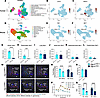 Figure 1
Renal GLP1R/Glp1r is expressed in human and murine vascular smooth muscle cells (VSMCs), and Glp1rVSM–/– mice have reduced Glp1r transcripts in renal tissues. (A–C) Annotation maps of the human kidney single-cell transcriptome (18), showing expression of GLP1R, and vascular smooth muscle marker α1A adrenergic receptor (ADRA1A). (D–F) An annotation map of the mouse kidney single-cell transcriptome (17), showing expression of Glp1r and VSMC marker myosin heavy chain 11 (Myh11). (G–L) Quantification of Glp1r expression relative to Rpl32 within the (G) kidney, (H) renal artery, (I) lung, (J) aortic arch, (K) abdominal aorta, and (L) carotid artery in control (Glp1rVSM+/+) and Glp1rVSM–/– male mice (n = 5–14). (M) Double immunofluorescence staining of α-smooth muscle actin (left panel), GLP-1R (middle panel) and both GLP-1R and α-smooth muscle actin (right panel) in Glp1rVSM+/+ and Glp1rVSM–/– kidney. (N) Average food intake per mouse within each cage of group housed mice over 24 hours with or without acute treatment with semaglutide in Glp1rVSM+/+ and Glp1rVSM–/– mice (n = 4–6). (O–Q) Body weight and oral glucose tolerance with calculated area under the curve in Glp1rVSM+/+ and Glp1rVSM–/– mice following acute semaglutide (10 μg/kg) treatment 120 minutes before oral glucose challenge (time 0) (n = 18–23). Data are presented as mean ± SD. ***P ≤ 0.001 and ****P ≤ 0.0001 by unpaired t test (G–L and O), or 2-way ANOVA followed by Tukey post hoc tests (N and Q). Sema, semaglutide; Veh, vehicle. Original magnification, ×31.5.
To delete the GLP-1R in VSMCs, we used mice expressing an inducible Myh11-Cre recombinase to generate VSMC-specific Glp1r-KO mice (Glp1rVSM–/– mice) (21). Quantitative PCR (qPCR) analysis demonstrated a 95% reduction in Glp1r mRNA transcript levels in the kidney and renal artery of Glp1rVSM–/– mice (Figure 1, G and H). In contrast, Glp1r mRNA was not reduced in lung (which is enriched in GLP-1R–expressing ECs) (12), other major and minor blood vessels (aortic arch, abdominal aorta, aortic root, carotid artery, portal vein), cardiac chambers (atria, ventricles, interventricular septum), or brain regions such as the brain stem, hypothalamus, cortex, or cerebellum (Figure 1, I–L, and Supplemental Figure 1, A–L; supplemental material available online with this article; https://doi.org/10.1172/jci.insight.201148DS1).
Double-immunofluorescence staining of GLP-1R and α-smooth muscle actin (α-SMA) in kidney sections confirmed the absence of GLP-1R expression in VSMCs of Glp1rVSM–/– mice (Figure 1M). In Glp1rVSM+/+ mice, GLP-1R expression was detected in VSMCs marked with α-SMA, whereas no GLP-1R signal was detected in VSMCs in Glp1rVSM–/– mice. Analysis of GLP-1–sensitive metabolic parameters revealed that reduction of food intake in response to acute semaglutide administration was not different in Glp1rVSM+/+ versus Glp1rVSM–/– mice (Figure 1N). Similarly, reduction of VSMC Glp1r expression did not perturb body weight, glucose tolerance, or the glycemic response to semaglutide (Figure 1, O–Q).
The VSMC GLP-1R is required for semaglutide-mediated reduction in BP in normotensive and hypertensive mice. Although VSMCs and the kidney play integral roles in BP regulation, there were no baseline differences in systolic, diastolic, or mean arterial pressure (MAP) between Glp1rVSM+/+ and Glp1rVSM–/– mice, despite a marked reduction in kidney and renal artery Glp1r expression in Glp1rVSM–/– mice (Figure 2, A–C). To assess the importance of the VSMC GLP-1R for BP regulation in response to GLP-1R agonism, we treated normotensive Glp1rVSM+/+ and Glp1rVSM–/– mice with semaglutide and recorded BP measurements. Semaglutide reduced BP in Glp1rVSM+/+ but not in Glp1rVSM–/– mice, demonstrating that GLP-1RAs acutely lower BP through mechanisms requiring the VSMC GLP-1R (Figure 2, D–F).
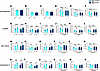 Figure 2
Semaglutide acutely lowers blood pressure in Glp1rVSM+/+ but not in Glp1rVSM–/– mice. (A) Systolic blood pressure, (B) diastolic blood pressure, and (C) mean arterial pressure (MAP) in control Glp1rVSM+/+ and Glp1rVSM–/– normotensive mice (n = 10–14). (D–F) Glp1rVSM+/+ and Glp1rVSM–/– mice were treated acutely with semaglutide (10 μg/kg) 2 hours prior to BP measurements (n = 12). (G–X) BP measurements before (control) or after (G–I) induction of hypertension with 2 weeks of access to L-NAME in drinking water and (J–L) acute semaglutide treatment in L-NAME-induced hypertensive mice (n = 17–18), (M–O) induction of hypertension 3 weeks after AAV8-Ren1d viral transfection (n = 5–7) and (P–R) acute semaglutide treatment in AAV8-Ren1d-induced hypertensive mice (n = 8-13), and (S–U) induction of hypertension 3 weeks after Ang II minipump implantation (n = 3-7) and (V–X) acute semaglutide treatment in Ang II–induced hypertensive mice (n = 6-7). Data are presented as mean ± SD. *P ≤ 0.05, **P ≤ 0.01, ***P ≤ 0.001, and ****P ≤ 0.0001 by unpaired t test (A–C), or 2-way ANOVA followed by Tukey post hoc tests (D–X). BP, blood pressure; Sema, semaglutide; Veh, vehicle; Ang, angiotensin.
We next measured the BP response to acute semaglutide using tail-cuff measurements in Glp1rVSM+/+ and Glp1rVSM–/– mice across 3 distinct experimental models of hypertension: (a) addition of the nitric oxide synthase inhibitor L-NAME to the drinking water (Figure 2, G–L), (b) AAV8-induced renin overexpression (Figure 2, M–R), and (c) continuous Ang II infusion with s.c. osmotic minipumps (Figure 2, S–X). Glp1rVSM+/+ and Glp1rVSM–/– mice achieved similar levels of hypertension under each of the 3 modalities, indicating that loss of the VSMC GLP-1R does not exacerbate the severity of experimental hypertension. Moreover, a single injection of semaglutide lowered BP in hypertensive Glp1rVSM+/+ but not Glp1rVSM–/– mice, demonstrating that the BP-lowering response to semaglutide is preserved in a hypertensive setting (Figure 2, J–L, P–R, and V–X). The tail cuff BP measurements were replicated using radiotelemetry implants in freely moving mice with Ang II–induced hypertension treated acutely with the GLP-1RA liraglutide, further implicating the VSMC GLP-1R as essential for the BP-lowering effects of GLP-1 medicines (Supplemental Figure 2).
To determine whether sustained semaglutide administration lowers BP in these models, we treated hypertensive (L-NAME in drinking water) Glp1rVSM+/+ and Glp1rVSM–/– mice with daily semaglutide for 3 weeks. Repeated semaglutide continued to reduce BP in hypertensive Glp1rVSM+/+ but not in Glp1rVSM–/– mice (Supplemental Figure 3, A–C). Consistent with these findings, left ventricular mass and heart weight were lower in hypertensive semaglutide-treated Glp1rVSM+/+ mice but not in Glp1rVSM–/– mice (Supplemental Figure 3, D and E).
Intriguingly, levels of Glp1r mRNA transcripts were increased in kidney but not the renal artery after 2 weeks of daily semaglutide treatment (Supplemental Figure 4, A and B). To determine if Glp1r mRNA levels differ between the renal artery and arterioles, we microdissected the renal vascular tree. Glp1r expression was higher in afferent arterioles than in the renal artery (Supplemental Figure 4C).
Since hypertension can alter signaling responses across the vascular tree (conduit artery versus arterioles) (22), we examined whether Glp1r mRNA expression changes over the course of hypertension. After 4 weeks of hypertension induced by AAV8 renin overexpression or continuous Ang II infusion, kidney and renal artery Glp1r expression was unchanged (Supplemental Figure 4, D and E). In contrast, after 30 weeks of AAV8 renin-induced hypertension, kidney Glp1r mRNA levels were increased, indicating a time-dependent upregulation during prolonged hypertensive stress (Supplemental Figure 4D).
We next examined the expression of genes associated with vascular remodeling. In the kidney and renal artery of Glp1rVSM+/+ and Glp1rVSM–/– mice, mRNA levels of the pro-α1 chains of type 1 and 3 collagen (Col1a1 and Col3a1), abundant forms of collagen in the vascular wall (23), were unchanged (Supplemental Figure 4, F, G, I, and J). However, Col5a1 mRNA (corresponding to COL5A1, encoding a semaglutide-regulated collagen protein in humans; ref. 24) was increased in both tissues in normotensive Glp1rVSM–/– mice (Supplemental Figure 4, H and K). The selective increase of Col5a1 in Glp1rVSM–/– mice suggests that loss of the VSMC GLP-1R may subtly alter vascular extracellular matrix composition.
GLP-1R expression within the Tie2 domain is dispensable for the BP-lowering effects of semaglutide. Previous studies of Cdh5-Cre GLP-1R–KO mice with inactivation of the EC Glp1r suggested that EC GLP-1Rs are required for the BP-lowering effect of liraglutide in mice with Ang II–induced hypertension (12). To reconcile these observations, we studied Glp1rTie2–/– mice with reduction of Glp1r expression in ECs and hematopoietic cells within the Tie2+ expression domain (25, 26). Body weight, glucose tolerance, and the glycemic response to semaglutide were similar in Glp1rTie2+/+ and Glp1rTie2–/– male (Figure 3, A–C) and female mice (Supplemental Figure 5, A–C). Levels of Glp1r mRNA were not different in the kidney or renal artery of Glp1rTie2+/+ versus Glp1rTie2–/– mice but were markedly reduced in the lung of Glp1rTie2–/– mice, a tissue enriched in ECs (Figure 3, D–F). Hence, hematopoietic and EC Tie2+ lineages do not contribute significantly to kidney Glp1r expression. Notably, semaglutide reduced BP in normotensive Glp1rTie2+/+ and Glp1rTie2–/– mice (Figure 3, G–I, and Supplemental Figure 5, D–F), indicating that GLP-1R expression in Tie2+ cells is not required for semaglutide-mediated reduction of BP in healthy mice.
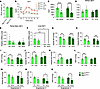 Figure 3
Loss of Glp1r expression in the Tie2 domain does not impair semaglutide-mediated reductions in BP. (A–C) Body weight and oral glucose tolerance test with calculated area under the glucose curve in control Glp1rTie2+/+ and Glp1rTie2–/– male mice with acute semaglutide (10 μg/kg) treatment 120 minutes before glucose challenge (n = 7–13). (D–F) Quantification of gene expression relative to Rpl32 within the kidney, renal artery, and lung in Glp1rTie2+/+ and Glp1rTie2–/– male mice (n = 4–6). (G–I) Systolic blood pressure, diastolic blood pressure, and mean arterial pressure (MAP) in control and Glp1rTie2–/– male mice treated acutely with semaglutide 120 minutes prior to BP measurements (n = 5-14). (J–O) BP measurements following (J–L) induction of hypertension with Ang II for 2 weeks and (M–O) acute semaglutide treatment in angiotensin II-induced hypertensive mice (n = 5–7). Data are presented as mean ± SD. *P ≤ 0.05, **P ≤ 0.01, ***P ≤ 0.001, and ****P ≤ 0.0001 by unpaired t test (A), or 2-way ANOVA followed by Tukey post hoc tests (C–O). BP, blood pressure; Sema, semaglutide; Veh, vehicle; Ang, angiotensin.
We next evaluated BP responses in Glp1rTie2–/– mice with hypertension induced by continuous Ang II infusion. Two weeks after hypertension induction, systolic BP increased to a similar extent in Glp1rTie2+/+ and Glp1rTie2–/– mice; however, the rise in diastolic BP was blunted in Ang II–infused Glp1rTie2–/– mice (Figure 3, J–L). Importantly, acute semaglutide treatment reduced BP (systolic, diastolic, and MAP) in both Glp1rTie2+/+ and Glp1rTie2–/– mice (Figure 3, M–O). Collectively, our results demonstrate that mice lacking hematopoietic and EC Glp1r expression in the Tie2+ domain retain BP-lowering responses to semaglutide under both normotensive and hypertensive conditions.
Semaglutide increases diuresis and natriuresis through VSMC GLP-1R–dependent and –independent mechanisms. One proposed mechanism by which GLP-1RAs lower BP is through changes in blood volume via their promotion of diuresis (increased urine output) and natriuresis (enhanced urinary sodium excretion). These effects reduce circulating volume and vascular filling pressure, which in turn can contribute to reductions in systemic BP (27–29). To evaluate whether loss of GLP-1RA–stimulated renal water and solute excretion could explain the lack of BP reduction in response to semaglutide in Glp1rVSM–/– mice, we treated mice with a water gavage and collected urine 3 hours thereafter. Semaglutide increased urine volume in both Glp1rVSM+/+ and Glp1rVSM–/– mice; however, this effect was relatively greater in Glp1rVSM+/+ mice (Figure 4A). Thus, the magnitude of semaglutide-induced diuresis is lower, but not completely ablated, with loss of the VSMC GLP-1R. Similarly, semaglutide increased natriuresis in Glp1rVSM+/+ mice, as shown by higher urine sodium and chloride concentrations (normalized to urine creatinine levels)—actions attenuated, but not completely eliminated, in Glp1rVSM–/– mice (Figure 4, B and C). These differences do not seem to be secondary to global changes in renal permeability, as urinary protein concentrations (normalized to urine creatinine levels) were unchanged (Figure 4D).
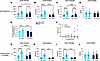 Figure 4
Semaglutide-induced diuresis and natriuresis are lower but not ablated by loss of the VSMC GLP-1R. (A–D) Urine volume, urine sodium, urine chloride, and urine protein in normotensive control Glp1rVSM+/+ and Glp1rVSM–/– male mice treated acutely with semaglutide (10 μg/kg) 60 minutes prior to water gavage; urine was collected 180 minutes following gavage (n = 15–22). (E) Glomerular filtration rate was measured in Glp1rVSM+/+ and Glp1rVSM–/– mice treated acutely with semaglutide (10 μg/kg) 30 minutes before a bolus of FITC- sinistrin (n = 5–10). (F) Myography readings depicting vasorelaxation of ex vivo mesenteric arteries, assessed after phenylephrine preconstriction (1 μM), in response to semaglutide (10–1,000 nM). (G–J) Two weeks after L-NAME–induced hypertension, mice were treated acutely with semaglutide (i.p.) 60 minutes prior to a water gavage, and urine was collected 180 minutes later. (G–J) Urine volume, urine sodium, urine chloride, and urine protein were measured (n = 18–22). Urine sodium, chloride, and protein levels were normalized to creatinine concentration. Data are presented as mean ± SD. *P ≤ 0.05, ***P ≤ 0.001, and ****P ≤ 0.0001 by 2-way ANOVA followed by Tukey post hoc-tests (A–E and G–J) or multiple unpaired t tests (F). Sema, semaglutide; Veh vehicle.
To determine the role of the VSMC GLP-1R in GLP-1RA–induced renal hemodynamic responses, GFR was measured in Glp1rVSM+/+ and Glp1rVSM–/– mice following acute semaglutide injection. Semaglutide increased GFR in Glp1rVSM+/+ mice but not in Glp1rVSM–/– mice (Figure 4E). We next examined whether semaglutide could directly modulate vasorelaxation in WT arteries ex vivo. In isolated murine mesenteric arteries preconstricted with phenylephrine, semaglutide promoted relaxation in a dose-dependent manner (Figure 4F).
To further assess whether renal excretory effects reflect the BP response, we examined the acute effects of GLP-1R activation on renal excretion in L-NAME–hypertensive mice. Semaglutide significantly increased diuresis and natriuresis in Glp1rVSM+/+ mice, whereas the diuretic effect was blunted and natriuresis absent in Glp1rVSM–/– mice (Figure 4, G–I). Urine protein excretion was unchanged in both Glp1rVSM+/+ and Glp1rVSM–/– mice (Figure 4J). These results indicate that semaglutide-induced renal excretory responses are only partially dependent on the VSMC GLP-1R and can be dissociated, at least in part, from BP reduction.
Loss of the VSMC GLP-1R affects basal and semaglutide-regulated renal artery and kidney proteome responses to semaglutide. We next examined differences in the tissue proteome between Glp1rVSM+/+ and Glp1rVSM–/– mice under basal conditions in saline-treated mice. In the renal artery, we detected clear differences between genotypes, with 13 proteins upregulated and 20 proteins downregulated in Glp1rVSM+/+ versus Glp1rVSM–/– (Figure 5A), despite no detectable basal BP differences in these mice (Figure 2). Pathway analysis of the upregulated proteins in Glp1rVSM–/– renal arteries revealed enrichment in processes related to cysteine and homocysteine degradation, sulfur amino acid metabolism, vitamin metabolism, and general amino acid metabolism (Figure 5B). In contrast, downregulated proteins were mainly associated with pathways involving platelet aggregation, chylomicron clearance, and defective coagulation factor IX activation, among others (Figure 5C). Similarly, we identified 19 upregulated proteins in Glp1rVSM–/– kidneys, primarily linked to collagen formation and extracellular matrix organization, along with 7 downregulated proteins associated with gluconeogenesis, XBP1 activity, and other metabolic functions (Figure 5, D–F). Although the smaller number of differentially expressed proteins in the kidney compared with the renal artery limits broader conclusions, these findings indicate that chronic loss of VSMC GLP-1R signaling is accompanied by detectable basal proteomic alterations at both the vascular and organ level.
 Figure 5
Identification of renal artery and kidney proteomic changes in Glp1rVSM+/+ versus Glp1rVSM–/– mice. (A) Volcano plot depicting changes in the distribution of significance and fold change of identified proteins in renal artery between Glp1rVSM+/+ and Glp1rVSM–/– mice. (B and C) Feature plots for identified Reactome pathways (B) positively and (C) negatively correlated with VSMC Glp1r knockdown. The color scheme is based on p-value distribution. (D) Volcano plot depicting changes in quantified protein between Glp1rVSM+/+ and Glp1rVSM–/– mice in the kidney. (E and F) Feature plots for identified Reactome pathways (E) positively and (F) negatively correlated with VSMC Glp1r KO. Statistical comparisons were made using unpaired t test between groups.
We next compared renal artery proteomes from semaglutide- and saline-treated Glp1rVSM+/+ and Glp1rVSM–/– mice. Male mice were treated with semaglutide or vehicle, and 4 hours later, the renal artery and kidney were obtained for analysis of protein content.
In renal arteries from Glp1rVSM+/+ mice, semaglutide administration was associated with downregulation of 19 proteins and upregulation of 11 proteins compared with saline-treated controls (Figure 6A). Pathway enrichment analysis revealed that the downregulated proteins were primarily related to platelet aggregation, fibrin clot formation, and phospholipid metabolism, whereas upregulated proteins mapped to death receptor signaling and proapoptotic pathways (Figure 6, B and C). These proteomic signatures may reflect adaptive vascular responses accompanying acute semaglutide-induced reductions in BP and enhanced renal function. In contrast, renal arteries from Glp1rVSM–/– mice exhibited only minor proteomic alterations after semaglutide treatment (9 proteins in total), none of which overlapped with the changes observed in Glp1rVSM+/+ mice (Figure 6D). Notably, the proteomic signatures identified in the renal artery of Glp1rVSM+/+ mice were completely absent in Glp1rVSM–/– mice, consistent with the loss of semaglutide-induced hemodynamic and renal effects in these animals (Figure 6, D–G).
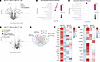 Figure 6
Identification of renal artery proteomic changes with semaglutide treatment in Glp1rVSM+/+ and Glp1rVSM–/– mice. (A) Mice were treated with semaglutide (10 μg/kg) 4 hours before renal artery excision and processing. (A) Volcano plot depicting changes in the distribution of significance and fold change of identified proteins between control mice treated with vehicle (Veh) and semaglutide (Sema). (B and C) Feature plots for identified Reactome pathways (B) positively and (C) negatively correlated with vehicle versus semaglutide treatment. The color scheme is based on P value distribution. (D) Volcano plot depicting changes in quantified protein between Glp1rVSM–/– mice treated with vehicle or semaglutide; highlighted proteins represent significantly changed targets in control mice. (E) Venn diagram depicting overlap of proteins regulated within the separate comparisons. (F and G) Heatmaps comparing proteins in control and Glp1rVSM–/– mice that are (F) positively and (G) negatively correlated with semaglutide treatment. Statistical comparisons were made using unpaired t test between groups.
Global proteomic analysis was also performed on whole-kidney tissue from saline- and semaglutide-treated mice (Figure 7). In Glp1rVSM+/+ mice, semaglutide induced modest but detectable proteomic shifts, with downregulation of 5 proteins enriched in pathways linked to apoptotic signaling, including caspase activation, second mitochondria-derived activator of caspases–dependent pathways and general regulators of programmed cell death. In parallel, 13 proteins were upregulated, mapping to inflammatory and developmental pathways, including CLEC7a (Dectin-1) signaling, NLRP3 inflammasome activation, and processes involved in nephric duct and ureteric bud formation (Figure 7, A–C). These observations may reflect secondary tissue remodeling and/or paracrine signaling responses initiated by semaglutide. In contrast, these semaglutide-responsive proteins were not regulated in Glp1rVSM–/– kidneys (Figure 7, D–G). Although a small number of proteins were altered in Glp1rVSM–/– mice following semaglutide administration (Figure 7, D and E), they did not overlap with those observed in Glp1rVSM+/+ mice. Together, these data suggest that the proteomic changes detected in the renal artery and kidney following systemic semaglutide administration are dependent on the VSMC GLP-1R.
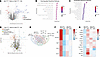 Figure 7
Identification of kidney proteomic changes with semaglutide treatment in Glp1rVSM+/+ and Glp1rVSM–/– mice. Mice were treated with semaglutide (10 mg/kg) 4 hours before kidney excision and processing. (A) Volcano plot depicting changes in the distribution of significance and fold change of identified proteins between control mice treated with vehicle (Veh) and semaglutide (Sema). (B and C) Feature plots for identified Reactome pathways (B) positively and (C) negatively correlated with vehicle versus semaglutide treatment. The color scheme is based on P value distribution. (D) Volcano plot depicting changes in quantified protein between Glp1rVSM–/– mice treated with vehicle or semaglutide; highlighted proteins represent significantly changed targets in control mice. (E) Venn diagram depicting overlap of proteins regulated within the separate comparisons. (F and G) Heatmaps comparing proteins in control and Glp1rVSM–/– mice that are (F) positively and (G) negatively correlated with semaglutide treatment. Statistical comparisons were made using unpaired t test between groups.


