
Research ArticleMetabolism
Open Access |  10.1172/jci.insight.200928
Lactate programs CRIP1 protein lactylation to drive synovial proliferation in rheumatoid arthritis
Meican Ma,1 Yu Zhou,2 Qianlin Li,1 Zhao Wang,1 Shangqi Guan,3 Xiaoxue Wang,4 Han Zhao,5 Zhenke Wen,6,7 Ting Liu,1 and Fenghong Yuan1
1Department of Rheumatology and Immunology and
2Department of Clinical Research Center, The Affiliated Wuxi People’s Hospital of Nanjing Medical University, Wuxi People’s Hospital, Wuxi Medical Center, Nanjing Medical University, Wuxi, Jiangsu, China.
3Department of Rheumatology and Immunology, National Clinical Research Center for Infectious Disease, Shenzhen Third People’s Hospital, Shenzhen, Guangdong, China.
4Department of Rheumatology and Immunology, The Second Affiliated Hospital of Harbin Medical University, Harbin Medical University, Harbin, Heilongjiang, China.
5Department of Endocrinology and Metabolism, The Affiliated Wuxi People’s Hospital of Nanjing Medical University, Wuxi People’s Hospital, Wuxi Medical Center, Nanjing Medical University, Wuxi, Jiangsu, China.
6The Fourth Affiliated Hospital of Soochow University, Institutes of Biology and Medical Sciences, Suzhou Medical College of Soochow University, Soochow University, Suzhou, Jiangsu, China.
7Jiangsu Key Laboratory of Infection and Immunity, MOE Key Laboratory of Geriatric Diseases and Immunology, Biomedical Basic Research Center of Jiangsu Province, Soochow University, Suzhou, Jiangsu, China.
Authorship note: MM and YZ contributed equally to this work.
Find articles by Ma, M. in: PubMed | Google Scholar
1Department of Rheumatology and Immunology and
2Department of Clinical Research Center, The Affiliated Wuxi People’s Hospital of Nanjing Medical University, Wuxi People’s Hospital, Wuxi Medical Center, Nanjing Medical University, Wuxi, Jiangsu, China.
3Department of Rheumatology and Immunology, National Clinical Research Center for Infectious Disease, Shenzhen Third People’s Hospital, Shenzhen, Guangdong, China.
4Department of Rheumatology and Immunology, The Second Affiliated Hospital of Harbin Medical University, Harbin Medical University, Harbin, Heilongjiang, China.
5Department of Endocrinology and Metabolism, The Affiliated Wuxi People’s Hospital of Nanjing Medical University, Wuxi People’s Hospital, Wuxi Medical Center, Nanjing Medical University, Wuxi, Jiangsu, China.
6The Fourth Affiliated Hospital of Soochow University, Institutes of Biology and Medical Sciences, Suzhou Medical College of Soochow University, Soochow University, Suzhou, Jiangsu, China.
7Jiangsu Key Laboratory of Infection and Immunity, MOE Key Laboratory of Geriatric Diseases and Immunology, Biomedical Basic Research Center of Jiangsu Province, Soochow University, Suzhou, Jiangsu, China.
Authorship note: MM and YZ contributed equally to this work.
Find articles by Zhou, Y. in: PubMed | Google Scholar
1Department of Rheumatology and Immunology and
2Department of Clinical Research Center, The Affiliated Wuxi People’s Hospital of Nanjing Medical University, Wuxi People’s Hospital, Wuxi Medical Center, Nanjing Medical University, Wuxi, Jiangsu, China.
3Department of Rheumatology and Immunology, National Clinical Research Center for Infectious Disease, Shenzhen Third People’s Hospital, Shenzhen, Guangdong, China.
4Department of Rheumatology and Immunology, The Second Affiliated Hospital of Harbin Medical University, Harbin Medical University, Harbin, Heilongjiang, China.
5Department of Endocrinology and Metabolism, The Affiliated Wuxi People’s Hospital of Nanjing Medical University, Wuxi People’s Hospital, Wuxi Medical Center, Nanjing Medical University, Wuxi, Jiangsu, China.
6The Fourth Affiliated Hospital of Soochow University, Institutes of Biology and Medical Sciences, Suzhou Medical College of Soochow University, Soochow University, Suzhou, Jiangsu, China.
7Jiangsu Key Laboratory of Infection and Immunity, MOE Key Laboratory of Geriatric Diseases and Immunology, Biomedical Basic Research Center of Jiangsu Province, Soochow University, Suzhou, Jiangsu, China.
Authorship note: MM and YZ contributed equally to this work.
Find articles by Li, Q. in: PubMed | Google Scholar
1Department of Rheumatology and Immunology and
2Department of Clinical Research Center, The Affiliated Wuxi People’s Hospital of Nanjing Medical University, Wuxi People’s Hospital, Wuxi Medical Center, Nanjing Medical University, Wuxi, Jiangsu, China.
3Department of Rheumatology and Immunology, National Clinical Research Center for Infectious Disease, Shenzhen Third People’s Hospital, Shenzhen, Guangdong, China.
4Department of Rheumatology and Immunology, The Second Affiliated Hospital of Harbin Medical University, Harbin Medical University, Harbin, Heilongjiang, China.
5Department of Endocrinology and Metabolism, The Affiliated Wuxi People’s Hospital of Nanjing Medical University, Wuxi People’s Hospital, Wuxi Medical Center, Nanjing Medical University, Wuxi, Jiangsu, China.
6The Fourth Affiliated Hospital of Soochow University, Institutes of Biology and Medical Sciences, Suzhou Medical College of Soochow University, Soochow University, Suzhou, Jiangsu, China.
7Jiangsu Key Laboratory of Infection and Immunity, MOE Key Laboratory of Geriatric Diseases and Immunology, Biomedical Basic Research Center of Jiangsu Province, Soochow University, Suzhou, Jiangsu, China.
Authorship note: MM and YZ contributed equally to this work.
Find articles by Wang, Z. in: PubMed | Google Scholar
1Department of Rheumatology and Immunology and
2Department of Clinical Research Center, The Affiliated Wuxi People’s Hospital of Nanjing Medical University, Wuxi People’s Hospital, Wuxi Medical Center, Nanjing Medical University, Wuxi, Jiangsu, China.
3Department of Rheumatology and Immunology, National Clinical Research Center for Infectious Disease, Shenzhen Third People’s Hospital, Shenzhen, Guangdong, China.
4Department of Rheumatology and Immunology, The Second Affiliated Hospital of Harbin Medical University, Harbin Medical University, Harbin, Heilongjiang, China.
5Department of Endocrinology and Metabolism, The Affiliated Wuxi People’s Hospital of Nanjing Medical University, Wuxi People’s Hospital, Wuxi Medical Center, Nanjing Medical University, Wuxi, Jiangsu, China.
6The Fourth Affiliated Hospital of Soochow University, Institutes of Biology and Medical Sciences, Suzhou Medical College of Soochow University, Soochow University, Suzhou, Jiangsu, China.
7Jiangsu Key Laboratory of Infection and Immunity, MOE Key Laboratory of Geriatric Diseases and Immunology, Biomedical Basic Research Center of Jiangsu Province, Soochow University, Suzhou, Jiangsu, China.
Authorship note: MM and YZ contributed equally to this work.
Find articles by Guan, S. in: PubMed | Google Scholar
1Department of Rheumatology and Immunology and
2Department of Clinical Research Center, The Affiliated Wuxi People’s Hospital of Nanjing Medical University, Wuxi People’s Hospital, Wuxi Medical Center, Nanjing Medical University, Wuxi, Jiangsu, China.
3Department of Rheumatology and Immunology, National Clinical Research Center for Infectious Disease, Shenzhen Third People’s Hospital, Shenzhen, Guangdong, China.
4Department of Rheumatology and Immunology, The Second Affiliated Hospital of Harbin Medical University, Harbin Medical University, Harbin, Heilongjiang, China.
5Department of Endocrinology and Metabolism, The Affiliated Wuxi People’s Hospital of Nanjing Medical University, Wuxi People’s Hospital, Wuxi Medical Center, Nanjing Medical University, Wuxi, Jiangsu, China.
6The Fourth Affiliated Hospital of Soochow University, Institutes of Biology and Medical Sciences, Suzhou Medical College of Soochow University, Soochow University, Suzhou, Jiangsu, China.
7Jiangsu Key Laboratory of Infection and Immunity, MOE Key Laboratory of Geriatric Diseases and Immunology, Biomedical Basic Research Center of Jiangsu Province, Soochow University, Suzhou, Jiangsu, China.
Authorship note: MM and YZ contributed equally to this work.
Find articles by Wang, X. in: PubMed | Google Scholar
1Department of Rheumatology and Immunology and
2Department of Clinical Research Center, The Affiliated Wuxi People’s Hospital of Nanjing Medical University, Wuxi People’s Hospital, Wuxi Medical Center, Nanjing Medical University, Wuxi, Jiangsu, China.
3Department of Rheumatology and Immunology, National Clinical Research Center for Infectious Disease, Shenzhen Third People’s Hospital, Shenzhen, Guangdong, China.
4Department of Rheumatology and Immunology, The Second Affiliated Hospital of Harbin Medical University, Harbin Medical University, Harbin, Heilongjiang, China.
5Department of Endocrinology and Metabolism, The Affiliated Wuxi People’s Hospital of Nanjing Medical University, Wuxi People’s Hospital, Wuxi Medical Center, Nanjing Medical University, Wuxi, Jiangsu, China.
6The Fourth Affiliated Hospital of Soochow University, Institutes of Biology and Medical Sciences, Suzhou Medical College of Soochow University, Soochow University, Suzhou, Jiangsu, China.
7Jiangsu Key Laboratory of Infection and Immunity, MOE Key Laboratory of Geriatric Diseases and Immunology, Biomedical Basic Research Center of Jiangsu Province, Soochow University, Suzhou, Jiangsu, China.
Authorship note: MM and YZ contributed equally to this work.
Find articles by Zhao, H. in: PubMed | Google Scholar
1Department of Rheumatology and Immunology and
2Department of Clinical Research Center, The Affiliated Wuxi People’s Hospital of Nanjing Medical University, Wuxi People’s Hospital, Wuxi Medical Center, Nanjing Medical University, Wuxi, Jiangsu, China.
3Department of Rheumatology and Immunology, National Clinical Research Center for Infectious Disease, Shenzhen Third People’s Hospital, Shenzhen, Guangdong, China.
4Department of Rheumatology and Immunology, The Second Affiliated Hospital of Harbin Medical University, Harbin Medical University, Harbin, Heilongjiang, China.
5Department of Endocrinology and Metabolism, The Affiliated Wuxi People’s Hospital of Nanjing Medical University, Wuxi People’s Hospital, Wuxi Medical Center, Nanjing Medical University, Wuxi, Jiangsu, China.
6The Fourth Affiliated Hospital of Soochow University, Institutes of Biology and Medical Sciences, Suzhou Medical College of Soochow University, Soochow University, Suzhou, Jiangsu, China.
7Jiangsu Key Laboratory of Infection and Immunity, MOE Key Laboratory of Geriatric Diseases and Immunology, Biomedical Basic Research Center of Jiangsu Province, Soochow University, Suzhou, Jiangsu, China.
Authorship note: MM and YZ contributed equally to this work.
Find articles by
Wen, Z.
in:
PubMed
|
Google Scholar
|

1Department of Rheumatology and Immunology and
2Department of Clinical Research Center, The Affiliated Wuxi People’s Hospital of Nanjing Medical University, Wuxi People’s Hospital, Wuxi Medical Center, Nanjing Medical University, Wuxi, Jiangsu, China.
3Department of Rheumatology and Immunology, National Clinical Research Center for Infectious Disease, Shenzhen Third People’s Hospital, Shenzhen, Guangdong, China.
4Department of Rheumatology and Immunology, The Second Affiliated Hospital of Harbin Medical University, Harbin Medical University, Harbin, Heilongjiang, China.
5Department of Endocrinology and Metabolism, The Affiliated Wuxi People’s Hospital of Nanjing Medical University, Wuxi People’s Hospital, Wuxi Medical Center, Nanjing Medical University, Wuxi, Jiangsu, China.
6The Fourth Affiliated Hospital of Soochow University, Institutes of Biology and Medical Sciences, Suzhou Medical College of Soochow University, Soochow University, Suzhou, Jiangsu, China.
7Jiangsu Key Laboratory of Infection and Immunity, MOE Key Laboratory of Geriatric Diseases and Immunology, Biomedical Basic Research Center of Jiangsu Province, Soochow University, Suzhou, Jiangsu, China.
Authorship note: MM and YZ contributed equally to this work.
Find articles by Liu, T. in: PubMed | Google Scholar
1Department of Rheumatology and Immunology and
2Department of Clinical Research Center, The Affiliated Wuxi People’s Hospital of Nanjing Medical University, Wuxi People’s Hospital, Wuxi Medical Center, Nanjing Medical University, Wuxi, Jiangsu, China.
3Department of Rheumatology and Immunology, National Clinical Research Center for Infectious Disease, Shenzhen Third People’s Hospital, Shenzhen, Guangdong, China.
4Department of Rheumatology and Immunology, The Second Affiliated Hospital of Harbin Medical University, Harbin Medical University, Harbin, Heilongjiang, China.
5Department of Endocrinology and Metabolism, The Affiliated Wuxi People’s Hospital of Nanjing Medical University, Wuxi People’s Hospital, Wuxi Medical Center, Nanjing Medical University, Wuxi, Jiangsu, China.
6The Fourth Affiliated Hospital of Soochow University, Institutes of Biology and Medical Sciences, Suzhou Medical College of Soochow University, Soochow University, Suzhou, Jiangsu, China.
7Jiangsu Key Laboratory of Infection and Immunity, MOE Key Laboratory of Geriatric Diseases and Immunology, Biomedical Basic Research Center of Jiangsu Province, Soochow University, Suzhou, Jiangsu, China.
Authorship note: MM and YZ contributed equally to this work.
Find articles by Yuan, F. in: PubMed | Google Scholar
Published June 8, 2026 - More info
JCI Insight. 2026;11(11):e200928. https://doi.org/10.1172/jci.insight.200928.
© 2026 Ma et al. This work is licensed under the Creative Commons Attribution 4.0 International License. To view a copy of this license, visit http://creativecommons.org/licenses/by/4.0/.
Received: October 3, 2025; Accepted: April 14, 2026


-
Results
Elevated lactate generation and robust protein lactylation portend synovial proliferation. To investigate the role of metabolic changes in RA pathogenesis, we examined lactate levels in synovial fluid and found a marked elevation in patients with RA relative to healthy individuals. Such synovial lactate of patients with RA showed a positive correlation with both Disease Activity Score in 28 joints (DAS28) and anticyclic citrullinated peptide (anti-CCP) antibodies (Figure 1A). Subsequently, synovial tissues were harvested, and samples from patients with RA showed increased expression of Ki67 and FAPα (Figure 1, B and C). As anticipated, these synovial proliferation markers correlated with DAS28 (Figure 1, D and E). Of interest, synovial lactate in patients with RA were positively linked to these proliferation markers (Figure 1, F and G). Since lactate serves as a direct precursor for lactyl-CoA and subsequent protein lactylation, we next examined changes in protein lactylation levels. In line with aforementioned results, protein lactylation was markedly elevated in RA synovial tissues (Figure 1H and Supplemental Figure 1A; supplemental material available online with this article; https://doi.org/10.1172/jci.insight.200928DS1). Given the central role of FLSs in synovial hyperplasia, we next examined the functional effect of lactate on RA-FLSs. Primary RA-FLSs were isolated from synovial tissues, and intracellular lactate levels were manipulated using the lactate donor Nala. Consistent with the tissue-level observations, Nala stimulation significantly promoted RA-FLS proliferation in a dose-dependent manner (Figure 1, I–K). In contrast, we did not detect a significant effect on apoptosis of RA-FLSs (Supplemental Figure 1, B and C). In addition, Nala modulated protein lactylation in RA-FLSs in a manner that aligned with their effects on cell proliferation (Figure 1L and Supplemental Figure 1D), further supporting the role of protein lactylation in synovial hyperplasia.
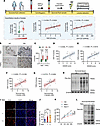 Figure 1
Enhanced lactate production and heightened protein lactylation drive synovial proliferation. (A) Quantification of synovial fluid lactate and its clinical correlation in RA. Schematic workflow illustrating synovial fluid collection, centrifugation (2,500 × g, 10 minutes), and lactate measurement. L-lactate levels in synovial fluid from patients with RA (n = 38) and healthy controls (HC, n = 32); left panel. Correlation between synovial lactate and DAS28 in patients with RA (n = 38); middle panel. Association between synovial lactate and serum anti-CCP antibody levels (n = 38); right panel. (B and C) IHC staining and quantification of Ki67 and FAPα in synovial tissues from patients with RA and healthy controls (n = 32). Scale bar: 200 μm. (D and E) Correlation of Ki67 and FAPα expression with DAS28 in patients with RA (n = 32). (F and G) Correlation of Ki67 and FAPα expression with synovial lactate levels in patients with RA (n = 32). (H) Immunoblot analysis of Pan-Kla levels in synovial tissues from patients with RA and healthy controls (n = 6). (I and J) EdU incorporation assay and quantification of proliferation in RA-FLS treated with Nala (10 mM, 20 mM) (n = 6). Scale bar: 100 μm. (K) CCK8 assay to assess cell proliferation following Nala treatment (10 mM, 20 mM) (n = 6). (L) Immunoblot analysis of Pan-Kla in RA-FLSs treated with Nala (10 mM, 20 mM) (n = 3). *P < 0.05, **P < 0.01, ***P < 0.001, ****P < 0.0001. Data are presented as mean ± SEM, and P values are calculated using unpaired 2-tailed t test (A [left] and C), or Pearson’s correlation (A [middle and right] and D–G), or 1-way ANOVA followed by Tukey’s post hoc test (J), 2-way ANOVA with Bonferroni’s post hoc test (K).
Inhibition of lactate production suppresses synovial proliferation. Given that lactate dehydrogenase A (LDHA) directly catalyzes lactate production, we examined its expression in synovial tissues. LDHA levels were significantly higher in RA samples compared with healthy controls, a finding further validated at the tissue level using IHC, immunoblotting, and immunofluorescence (Figure 2, A–F, and Supplemental Figure 1E). Building on these findings, we next investigated the functional role of lactate inhibition in RA-FLSs. Treatment with the selective LDHA inhibitor FX11 significantly reduced cell proliferation in a dose-dependent manner (Figure 2, G–I), along with a parallel decrease in protein lactylation (Figure 2J and Supplemental Figure 1F). We further extended these findings in vivo using the classical CIA mouse model (Figure 2K). Protein lactylation was markedly increased in CIA mice but was declined upon FX11 administration (Figure 2, L and M, and Supplemental Figure 1, G and H). Consistently, FX11 treatment reduced arthritis severity in CIA mice, as reflected by decreased clinical scores and paw thickness (Figure 2, N and O). These effects were further validated through histological examination, bolstering the structural basis for therapeutic effects (Figure 2P). Collectively, inhibition of lactate production and vigorous protein lactylation suppresses synovial proliferation in RA.
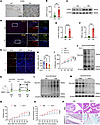 Figure 2
Inhibition of lactate metabolism reduces synovial proliferation. (A and B) IHC staining and quantification of LDHA in synovial tissues from patients with RA and healthy controls (n = 6). Scale bar: 200 μm. (C) Immunoblot analysis of LDHA in synovial tissues from patients with RA and healthy controls (n = 6). (D–F) Immunofluorescence staining and quantification of LDHA (green) and FAPα (red) in synovial tissues from patients with RA and healthy controls (n = 6). Scale bar: 200 μm. (G and H) EdU incorporation assay and quantification of RA-FLS treated with FX11 (10 μM, 20 μM) (n = 6). Scale bar: 100 μm. (I) CCK8 assay to assess proliferation cells treated with FX11 (10 μM, 20 μM) (n = 6). (J) Immunoblot analysis of Pan-Kla in synovial tissues upon FX11 treatment (n = 3). (K) Establishment of a CIA mouse model. Mice were immunized s.c. with type II collagen emulsified in complete Freund’s adjuvant (CII + CFA) on day 0 and again on day 21. FX11 (1 mg/kg, Qd) or vehicle was administered i.p. on day 21. Mice were sacrificed on day 36 for treatment evaluation. (L) Immunoblot analysis of Pan-Kla in synovial tissues from HC and CIA mice (n = 3). (M) Immunoblot analysis of Pan-Kla in synovial tissues upon FX11 treatment (n = 3). (N and O) Clinical arthritis score and paw thickness upon FX11 treatment (n = 6). (P) Histological staining with H&E and Safranin O in synovial tissues upon FX11 treatment (n = 6). Scale bar: 100 μm. *P < 0.05, **P < 0.01, ***P < 0.001, ***P < 0.001. Data are presented as mean ± SEM, and P values are calculated using unpaired 2-tailed t test (B, E, and F), or 1-way ANOVA followed by Tukey’s post hoc test (H), or 2-way ANOVA with Bonferroni’s post hoc test (I, N, and O).
CRIP1 protein lactylation controls synovial proliferation in RA. To systemically map the role of protein lactylation in RA, we conducted a comprehensive lactylome analysis on freshly obtained synovial tissue samples from both HC and patients with RA. Synovial tissues exhibiting hyperplasia were selected for this study. Proteins were digested using trypsin, and the resulting peptides were selectively enriched using antilactyl lysine antibodies. The enriched peptides were then analyzed by LC-MS/MS, which led to the identification and quantification of altered lactylation sites (Figure 3A). A total of 9,217 lysine lactylation sites were identified across 1,467 proteins. Among these, 8,781 sites in 1,438 proteins provided high-confidence quantitative data (localization probability > 0.75, FDR < 1%) (Figure 3B), which enabled robust identification of differentially lactylated proteins in subsequent analyses. Subcellular localization analysis revealed that lactylated proteins were predominantly situated in the cytoplasm (31.06%) and nucleus (26.23%), with additional representation in mitochondrial and extracellular compartments (Figure 3C). The broad subcellular distribution indicated that lactylation extensively affected nonhistone proteins involved in diverse cellular processes. Relative quantification identified the top 25 differentially expressed lactylated proteins (DELPs) that were upregulated in RA. Among them, COL1A, CILP, CNN3, AHNAK, and CRIP1 showed the most prominent increases (Figure 3D). These highly lactylated proteins were subsequently prioritized for validation and mechanistic investigation in the context of synovial proliferation.
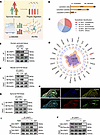 Figure 3
CRIP1 protein lactylation promotes synovial proliferation in RA. (A) Schematic workflow of lactylation proteomics in synovial tissues from patients with RA and healthy controls. (B) Summary of identified and quantified lactylation sites, peptides, and proteins. (C) Subcellular distribution of lactylated proteins. (D) Radar chart of 25 representative lactylated proteins with elevated modification levels in patients with RA. (E and F) Co-IP of CRIP1 followed by immunoblotting for Pan-Kla to detect CRIP1 protein lactylation in human (E) and mouse synovium (F). (G) Co-IP of CRIP1 followed by immunoblotting for Pan-Kla to detect CRIP1 protein lactylation in FLSs from patients with RA and healthy controls (n = 3). (H) Immunofluorescence staining of CRIP1 (red), Pan-Kla (green), PDPN (yellow), FAPα (cyan) in RA synovium. Scale bar: 100 μm. (I) Co-IP of CRIP1 followed by immunoblotting for Pan-Kla to detect CRIP1 lactylation in RA-FLSs after Nala treatment (10 mM, 20 mM) (n = 3). (J) Co-IP of CRIP1 followed by immunoblotting for Pan-Kla to detect CRIP1 lactylation in RA-FLSs after LDHA inhibition with FX11 (10 μM, 20 μM) (n = 3).
We performed sequential genetic knockdown experiments, and transfection efficiency was validated at both the mRNA and protein levels (Supplemental Figure 2). CRIP1 silencing resulted in a discernible reduction in cell proliferation, while no such effect was observed with the other candidates (Supplemental Figure 3, A and B). Besides, CRIP1 knockdown did not significantly affect other phenotypes of RA-FLSs, including apoptosis, inflammation markers IL-6 and TNF, or invasion (Supplemental Figure 3, C–H). These findings pinpoint a CRIP1-dependent mechanism by which protein lactylation controls synovial proliferation. CRIP1 is a zinc-binding protein containing a LIM domain that mediates protein–protein interactions and is involved in various cellular processes, including tumor proliferation, metastasis, autophagy, and inhibition of apoptosis (34). To further investigate the role of CRIP1 in RA, we conducted the following experiments. Immunoblotting results unveiled elevated CRIP1 protein lactylation in synovial tissues from both patients with RA and CIA mice (Figure 3, E and F). A similar pattern was observed in RA-FLSs when compared with healthy controls (HC) and patients with OA (Figure 3G and Supplemental Figure 4, A–C). Thus, we reasonably linked CRIP1 protein lactylation with RA-FLS proliferation. Corroborating this, single-cell transcriptomic analysis revealed the predominant CRIP1 expression in FLS clusters within RA synovium (Supplemental Figure 4D). Immunofluorescence analysis visually validated the colocalization of CRIP1 and lysine lactylation in pathogenic FLSs expressing FAPα and PDPN (Figure 3H). Additionally, immunoblotting of immune cells (macrophages, T cells, and B cells) did not show an increase in CRIP1 lactylation (Supplemental Figure 4, E–G). Next, we modulated protein lactylation levels in RA-FLSs, yielding a tendency comparable with that in cell proliferation. Nala treatment dose-dependently enhanced CRIP1 protein lactylation; vice versa, FX11 led to its gradual reduction (Figure 3, I and J, and Supplemental Figure 4, H and I). Based on these observations, CRIP1 protein lactylation is the critical basis for heightened proliferation in RA-FLSs.
CRIP1 K49 lactylation confers synovial proliferation in RA. To understand the intricacies of lactylation mechanism, we conducted in-depth analysis and, based on lactylome profiling, identified 5 residues (K9, K22, K30, K49, K77) upregulated in CRIP1 (Figure 4A and Supplemental Figure 5, A–E). Site-directed mutagenesis (K→R) was sequentially performed to mimic a nonlactylated form in these 5 candidate residues. Among them, K49 mutant exhibited the sharpest decrease in CRIP1 protein lactylation (Supplemental Figure 5, F and G). Thus, we postulated that CRIP1 K49 lactylation leads to the aberrant activity in RA-FLSs.
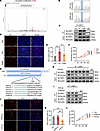 Figure 4
CRIP1 K49 lactylation facilitates synovial proliferation in RA. (A) MS/MS spectrum of lysine lactylation at the K49 locus in CRIP1. (B) Sanger sequencing of the AAG to AGG substitution at the K49 locus in CRIP1. (C) Co-IP of CRIP1 followed by immunoblotting for Pan-Kla to assess CRIP1 protein lactylation in RA-FLSs expressing WT or CRIP1 K49R. (D and E) EdU incorporation assays and quantification of cell proliferation in RA-FLSs expressing Veh, WT and CRIP1 K49R (n = 6). Scale bar: 100 μm. (F) CCK-8 assay to quantify cell proliferation in RA-FLSs expressing Veh, WT, and CRIP1 K49R (n = 6). (G) Schematic presentation of CRIP1 protein domains and sequence of the K49 region. Synthetic peptides (K49-peptide 1–5, K49R-peptide 6) were designed for the study. (H) Co-IP of CRIP1 followed by immunoblotting for Pan-Kla to detect CRIP1 protein lactylation upon treatment with K49-peptide 1–5. (I) Co-IP of CRIP1 followed by immunoblotting for Pan-Kla showing CRIP1 protein lactylation after treatment with K49R or K49-peptide. (J and K) EdU incorporation assay and quantification of cell proliferation in RA-FLSs treated with Veh, K49R, or K49-peptide (n = 6). Scale bar: 100 μm. (L) CCK-8 assay to quantify cell proliferation in RA-FLSs treated with Veh, K49R, or K49-peptide (n = 6). **P < 0.01, ***P < 0.001, ****P < 0.0001. Data are presented as mean ± SEM, and P-values are calculated using 1-way ANOVA followed by Tukey’s post hoc test (E and K), or 2-way ANOVA with Bonferroni’s post hoc test (F and L).
Protein sequence alignment confirmed the evolutionary conservation of K49 underscoring its relevance to disease pathogenesis (Supplemental Figure 5H). Subsequently, RA-FLSs were transfected with lentiviruses expressing WT or CRIP1 K49R (Figure 4, B and C). Proliferative rate was markedly lower in the K49R group compared with the WT group (Figure 4, D–F). Based on these observations, which implicated CRIP1 K49 lactylation in the aberrant activation of RA-FLSs, we reasoned that selective disruption of this PTM might provide a means to modulate CRIP1-associated functions. Accordingly, 5 synthetic peptides around K49 site were designed to competitively interfere with CRIP1 K49 lactylation (Figure 4G and Supplemental Figure 6). By immunoblotting, CRIP1 protein lactylation was shown to be inhibited by multiple peptides, with peptide 3 being the most effective (Figure 4H). And, this peptide 3 was used in the following K49-peptide experiments. K49-peptide reduced CRIP1 protein lactylation, whereas the K49R-peptide had no effect (Figure 4I). Consistent with the lactylation results, the K49 peptide significantly suppressed cell proliferation, while the K49R peptide did not (Figure 4, J–L). In combination, CRIP1 K49 lactylation controls synovial proliferation in RA.
MOF is essential for CRIP1 protein lactylation and synovial proliferation. To identify the lysine lactyltransferase responsible for CRIP1 K49 lactylation in RA-FLSs, we systematically screened 6 candidate enzymes (GCN5, PCAF, p300, Tip60, MOF, and AARS1) in RA-FLSs. Transfection efficiency was validated at both the mRNA and protein levels (Supplemental Figure 7 and Supplemental Figure 8, A–L). Among the candidates, MOF knockdown led to a striking reduction in CRIP1 K49 lactylation, while overexpression of MOF markedly enhanced this modification (Figure 5, A and B, and Supplemental Figure 8, M and N), suggesting that MOF is a key upstream regulator of CRIP1 protein lactylation. To support, Co-IP assays confirmed the physical association between these molecules (Figure 5, C and D). Immunofluorescence imaging visually depicted the colocalization of MOF and CRIP1 in RA-FLSs (Figure 5, E and F). Of note, MOF overexpression upregulated CRIP1 protein lactylation in CRIP1 WT, while this effect was abolished in the K49R mutant (Figure 5G). Further analysis using EdU and CCK-8 assays revealed that silencing MOF significantly reduced RA-FLS proliferation (Figure 5, H–J), while MOF overexpression promoted proliferation — an effect absent in the vehicle and K49R mutant (Figure 5, K and L). In consequence, MOF is identified as the primary enzyme responsible for CRIP1 protein lactylation in RA-FLSs.
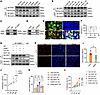 Figure 5
MOF mediates CRIP1 protein lactylation and synovial proliferation in RA. (A) Co-IP of CRIP1 followed by immunoblotting for Pan-Kla to detect CRIP1 protein lactylation in RA-FLSs after knockdown of lysine acetyltransferases (GCN5, PCAF, p300, Tip60, MOF, AARS1) (n = 3). (B) Co-IP of CRIP1 followed by immunoblotting for Pan-Kla to detect CRIP1 protein lactylation in RA-FLSs upon overexpression of lysine acetyltransferases (GCN5, PCAF, p300, Tip60, MOF, AARS1) (n = 3). (C and D) Co-IP assays to detect the interaction between CRIP1 and MOF (n = 3). (E and F) Immunofluorescence staining and quantification of CRIP1 (green) and MOF (yellow) in RA-FLSs. Scale bar: 20 μm. (G) Co-IP of CRIP1 followed by immunoblotting for Pan-Kla to detect CRIP1 protein lactylation in RA-FLSs expressing WT or K49R mutant. The assay was performed with or without MOF overexpression. (H and I) EdU incorporation and quantification of cell proliferation in RA-FLSs after MOF knockdown (n = 6). Scale bar: 100 μm. (J) CCK-8 assay evaluating proliferation in RA-FLSs after MOF knockdown (n = 6). (K and L) EdU incorporation and CCK-8 assay to quantify cell proliferation in RA-FLSs expressing Veh, WT, or CRIP1 K49R. These assays were performed with or without MOF overexpression (n = 6). **P < 0.01, ***P < 0.001, ****P < 0.0001. Data are shown as mean ± SEM and P-values are calculated using unpaired 2-tailed t test (I), or 2-way ANOVA with Bonferroni’s post hoc test (J and L), or 1-way ANOVA followed by Tukey’s post hoc test (K).
CRIP1 protein lactylation hijacks p21 from CDK2 to promote synovial proliferation. To explore how CRIP1 protein lactylation contributes to synovial proliferation, we conducted a series of cell cycle–related assays. Flow cytometry experiments revealed that the CRIP1 K49R mutant led to a G1/S phase arrest in RA-FLSs (Figure 6A). This suggests that CRIP1 protein lactylation directly controls cell cycle in RA-FLSs.
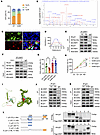 Figure 6
CRIP1 protein lactylation affects p21-CDK2 axis to promote synovial proliferation. (A) Flow cytometry analysis of the cell cycle in RA-FLSs (n = 3). (B) MS/MS spectrum confirming p21 as a binding protein of CRIP1. (C and D) Immunofluorescence staining and quantification of CRIP1 (green) and p21 (red) in RA-FLSs (n = 3). Scale bar: 20 μm. (E) Co-IP of CRIP1 followed by immunoblotting for p21 and Pan-Kla to detect CRIP1 protein lactylation and the interaction between CRIP1 and p21 in FLSs (n = 3). (F) Co-IP of CRIP1 followed by immunoblotting for Pan-Kla and p21 to assess its lactylation and interaction with p21 (20 μM) (n = 3). (G) EdU incorporation assays to quantify cell proliferation (n = 6). (H) CCK-8 assay to evaluate proliferation in RA-FLSs (n = 6). (I) Structural modeling illustrating the predicted interaction interface between CRIP1 and p21. (J) Co-IP of p21 followed by immunoblotting for CDK2 and CRIP1 to detect interactions between p21 and CRIP1, as well as between p21 and CDK2 in FLSs. (K) p21 was immunoprecipitated and analyzed by immunoblotting for CDK2 and CRIP1 to detect interaction between p21 and CRIP1, as well as between p21 and CDK2 in RA-FLSs. (L) Domain mapping of CRIP1-binding region with p21 (left panel). HEK293T cells were cotransfected with Flag-tagged CRIP1 and HA-tagged p21 constructs containing various combinations of amino acid regions. Co-IP was performed using anti-Flag antibody, followed by immunoblotting for HA-p21 (right panel). **P < 0.01, ***P < 0.001, ****P < 0.0001. Data are shown as mean ± SEM and P values are calculated using unpaired 2-tailed t test (A), 1-way ANOVA followed by Tukey’s post hoc test (G), 2-way ANOVA with Bonferroni’s post hoc test (H). The quantifications for E and F are presented in Supplemental Figure 9.
Since CRIP1 harbors a LIM domain typically involved in protein-protein interactions, immunoprecipitation-mass spectrometry was employed to systematically identify its interaction proteins (Supplemental Figure 9A). From the identified molecules, we prioritized those linked to cell cycle. p21 was utilized for further study due to its well-established role as a CDKs inhibitor (Supplemental Figure 9B and Figure 6B). EdU analysis further demonstrated that zinc binding did not mediate the pro-proliferative effect in RA-FLSs (Supplemental Figure 9C). Next, immunofluorescence analysis showed the colocalization of CRIP1 and p21 (Figure 6, C and D). Co-IP analysis validated the physical interaction between CRIP1 and p21. In patients with RA, CRIP1 protein lactylation was elevated, accompanied by an upregulation in its binding to p21 (Figure 6E and Supplemental Figure 9, D and E). Conversely, FX11 diminished CRIP1 protein lactylation, which in turn reduced its interaction with p21 (Figure 6F and Supplemental Figure 9, F and G). Meanwhile, p21 knockdown abolished the inhibitory effect of CRIP1 K49R on RA-FLS proliferation (Figure 6, G and H). These observations indicate that p21 is fundamental to the effect of CRIP1 protein lactylation on RA-FLS proliferation.
To complement corroborate the above findings, molecular docking analysis of was utilized to model the 3D interaction between CRIP1 and p21. The lactylation site K49 was mapped to the C terminal region of the LIM domain in CRIP1 (Supplemental Figure 9H). Notably, residues 53–58 within the CDK domain of p21 was shown to form the direct interface for CRIP1 binding in the predicted complex (Figure 6I). Thus, we supposed that CRIP1 binds to the CDK domain of p21, thereby influencing cell proliferation, and that CRIP1 protein lactylation may strengthen this interaction. When immunoprecipitated with p21, p21/CRIP1 binding enhanced in RA samples; as a result, the p21/CDK2 axis was impaired (Figure 6J). In contrast, the lactylation-deficient CRIP1 K49R restored the p21/CDK2 axis in RA-FLSs (Figure 6K). Truncated variants of p21 were constructed and transfected into HEK293T cells. Upon immunoprecipitation with CRIP1, only those containing the CDK domain were detected by immunoblotting (Figure 6L). Notably, despite undergoing lactylation, the K49-peptide showed no detectable binding to p21 (Supplemental Figure 9, I and J), a finding consistent with its functional role as a competitive inhibitor of full-length CRIP1 lactylation. Collectively, CRIP1 protein lactylation disrupts the p21/CDK2 axis, ultimately facilitating aberrant proliferation in RA-FLSs.
Targeting CRIP1 protein lactylation inhibits synovial proliferation and alleviates disease progression in RA models. The translational relevance of our findings was validated in vivo using a well-established CIA mouse model from DBA/1 mice. We injected AAV particles expressing WT or CRIP1 K49R intraarticularly into the knee joints of CIA mice (Figure 7, A and B). Mice in CRIP1 K49R group showed significantly reduced arthritis symptoms compared with WT CRIP1 group, as evidenced by clinical scores and decreased paw thickness (Figure 7, C–E). Histological assessment brought to reduction in synovial hyperplasia and tissue damage in these mice (Figure 7F). Meanwhile, both IHC and immunofluorescence analysis showed a markedly decrease in Ki67 and FAPα expression, indicating suppressed proliferation and FLSs activation (Figure 7, G–M). Subsequently, we generated humanized RA chimeras implanting clinical synovial tissues into NSG mice for 1 week, followed by injection of human peripheral blood mononuclear cells (PBMCs) from patients with RA (Figure 7N). Consistently, human grafts from mice injected with CRIP1 K49R showed a decrease in the proliferative phenotype compared with CRIP1 WT (Figure 7, O–Q), with reduced inflammation factors (IL-6, TNF, IL-1B) and matrix metalloproteinases (MMP1, MMP9) (Figure 7R).
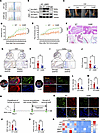 Figure 7
Inhibiting CRIP1 protein lactylation suppresses synovial proliferation and alleviates disease progression in RA disease models. (A) Sanger sequencing of the AAG to AGG substitution at the K49 locus in CRIP1. (B) CRIP1 was immunoprecipitated and analyzed by immunoblotting for Pan-Kla to detect CRIP1 protein lactylation in synovial tissues. (C) Images of forepaws from HC, Veh-treated, WT, or CRIP1 K49R CIA mice. Scale bar: 5 mm. (D) Evaluation of clinical arthritis scores in WT or CRIP1 K49R CIA mice (n = 6). (E) Paw thickness (n = 6). (F) Histological staining with H&E and Safranin O in synovial tissues (n = 6). Scale bar: 100 μm. (G and H) IHC staining and quantification of Ki67 in synovial tissues from WT or CRIP1 K49R CIA mice (n = 6). Scale bars: 100 μm (I and J) Immunohistochemical staining and quantification of FAPα in synovial tissues from WT or CRIP1 K49R CIA mice (n = 6). (K–M) Immunofluorescence staining and quantification of Ki67 (green), FAPα (red) in synovial tissues from WT or CRIP1 K49R CIA mice. Scale bar: 50 μm. (N) Establishment of a human synovial-NSG chimera. NSG mice were implanted with human synovial tissue and reconstituted with PBMCs to generate a humanized RA model. Synovial grafts were subsequently collected to evaluate treatment effects. (O–Q) Immunofluorescence staining and quantification of Ki67 (green) and FAPα (red) in synovial grafts derived from WT and CRIP1 K49R groups. Scale bar: 10 μm. (R) Heatmap depicting mRNA expression levels of inflammation-related genes (IL6, TNF, IL1B) and matrix-degrading enzymes (MMP1, MMP9) in synovial grafts derived from WT and CRIP1 K49R groups (n = 6). *P < 0.05, **P < 0.01, ***P < 0.001, ****P < 0.0001. Data are shown as mean ± SEM and P values are calculated using 2-way ANOVA with Bonferroni’s post hoc test (D and E), or unpaired 2-tailed t test (H, J, L, M, and P–R).
A synthetic peptide targeting CRIP1 lactylation reduces disease severity in RA models. The K49-peptide exhibited therapeutic effects in the aforementioned cell models. Next, we investigated the in vivo effects of the CRIP1 K49 peptide (Figure 8A). In safety assessments, the peptide did not significantly affect body weight (Supplemental Figure 10A), nor did it cause noticeable organ damage (Supplemental Figure 10, B–G). In CIA mice, i.p. injection of the K49 peptide led to a time-dependent reduction in arthritis severity and histopathological damage (Figure 8, B and C). At the molecular level, synovial tissues from these mice exhibited reduced expression of Ki67 and FAPα (Figure 8, D–G). Furthermore, experiments in humanized NSG mice revealed attenuation of the proliferative phenotype (Figure 8, H–J), accompanied by lower levels of inflammatory factors (IL-6, TNF, IL-1B) and matrix metalloproteinase production (MMP1, MMP9) (Figure 8K). Altogether, targeting CRIP1 protein lactylation effectively alleviates excessive proliferation in the synovium of RA mouse model.
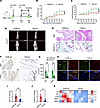 Figure 8
Targeting CRIP1 lactylation with a synthetic peptide suppresses RA progression in mouse models. (A) Peptide treatment in CIA mice. (B) Evaluation of clinical arthritis scores in K49R peptide– or K49 peptide–treated CIA mice (n = 6). (C) Paw thickness in K49R peptide– or K49 peptide–treated CIA mice (n = 6). (D) μCT images of forepaws and knee joints from K49R peptide– or K49 peptide–treated CIA mice. Scale bar: 5 mm. (E) Histological staining of H&E and Safranin O in synovial tissues with from K49R peptide– or K49 peptide–treated CIA mice. Scale bar: 100 μm. (F and G) IHC staining and quantification of Ki67 and FAPα in synovial tissues from K49R peptide– or K49 peptide–treated CIA mice (n = 6). Scale bar: 100 μm. (H–J) Immunofluorescence staining and quantification of Ki67 (green) and FAPα (red) in synovial grafts derived from K49R peptide and K49 peptide groups (n = 6). Scale bar: 10 μm. (K) Heatmap depicting mRNA expression levels of inflammation-related genes (IL6, TNF, IL1B) and matrix-degrading enzymes (MMP1, MMP9) in synovial grafts derived from K49R peptide and K49 peptide groups (n = 6). *P < 0.05, **P < 0.01, ***P < 0.001, ****P < 0.0001. Data are shown as mean ± SEM and P values are calculated using 2-way ANOVA with Bonferroni’s post hoc test (B and C), or unpaired 2-tailed t test (G and I–K).


