
Submit a comment
Abstract
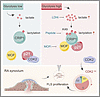
Synovial hyperplasia is a hallmark of rheumatoid arthritis (RA), yet its mechanism remains unclear. RA synovium exhibits metabolic shift, characterized by upregulated glycolysis and enhanced lactate production. In this study, we elucidated the mechanism underlying the roles of lactate metabolism and protein lactylation in RA pathology. In patients with RA, both lactate production and protein lactylation were elevated and showed a positive correlation with clinical disease activity. These changes were further implicated in driving synovial proliferation. Among the lactylated proteins, Cysteine-rich intestinal protein 1 (CRIP1) exhibited a marked increase in modification and played a central role in promoting synovial proliferation. Mechanistically, CRIP1 underwent MOF-mediated lactylation in RA synovial fibroblasts. Lactylated CRIP1 hijacked the cell-cycle regulator p21, disrupting its interaction with cyclin-dependent kinase 2 (CDK2), thereby facilitating the G1/S phase transition. Functionally, AAV-mediated delivery of a lactylation-deficient CRIP1 K49R significantly reduced synovial proliferation compared with WT CRIP1. Peptide-based interventions targeting CRIP1 K49 lactylation effectively inhibited synovial hyperplasia and disease severity in both Collagen II–induced arthritis (CIA) and humanized NSG chimeric models. Collectively, CRIP1 protein lactylation drives synovial proliferation in RA by hijacking p21 from CDK2, thereby facilitating cell cycle progression. Targeting this pathway may serve as a promising strategy for RA.
Authors
Meican Ma, Yu Zhou, Qianlin Li, Zhao Wang, Shangqi Guan, Xiaoxue Wang, Han Zhao, Zhenke Wen, Ting Liu, Fenghong Yuan
Guidelines
The Editorial Board will only consider comments that are deemed relevant and of interest to readers. The Journal will not post data that have not been subjected to peer review; or a comment that is essentially a reiteration of another comment.
- Comments appear on the Journal’s website and are linked from the original article’s web page.
- Authors are notified by email if their comments are posted.
- The Journal reserves the right to edit comments for length and clarity.
- No appeals will be considered.
- Comments are not indexed in PubMed.
Specific requirements
- Maximum length, 400 words
- Entered as plain text or HTML
- Author’s name and email address, to be posted with the comment
- Declaration of all potential conflicts of interest (even if these are not ultimately posted); see the Journal’s conflict-of-interest policy
- Comments may not include figures


