
Research ArticleImmunologyInflammationNephrology
Open Access |  10.1172/jci.insight.199694
TNF-α blockade mitigates immune checkpoint–related nephritis in a humanized mouse model
Victor D. Cuenca Narvaez,1 Coraima Nava Chavez,1 Omar Al Refai,1 Johanna E.J. Jacobs,2 Luis E. Gutierrez,1 Song Zhang,2 Xiaoyan Li,1,3 Jacob B. Hirdler,4 Michael F. Romero,1,5 Joerg Herrmann,2 Xiaogang Li,1,3 Haidong Dong,4,6 Alfonso Eirin,1,2 and Sandra M. Herrmann1
1Department of Internal Medicine, Division of Nephrology and Hypertension,
2Department of Cardiovascular Medicine,
3Department of Biochemistry and Molecular Biology,
4Department of Immunology,
5Department of Physiology and Biomedical Engineering, and
6Department of Urology, Mayo Clinic College of Medicine and Science, Rochester, Minnesota, USA.
Address correspondence to: Sandra M. Herrmann, Nephrology and Hypertension Division, 200, First St. SW, Rochester, Minnesota 55905, USA. Phone: 507.284.2511; Email: herrmann.sandra@mayo.edu.
Find articles by Cuenca Narvaez, V. in: PubMed | Google Scholar
1Department of Internal Medicine, Division of Nephrology and Hypertension,
2Department of Cardiovascular Medicine,
3Department of Biochemistry and Molecular Biology,
4Department of Immunology,
5Department of Physiology and Biomedical Engineering, and
6Department of Urology, Mayo Clinic College of Medicine and Science, Rochester, Minnesota, USA.
Address correspondence to: Sandra M. Herrmann, Nephrology and Hypertension Division, 200, First St. SW, Rochester, Minnesota 55905, USA. Phone: 507.284.2511; Email: herrmann.sandra@mayo.edu.
Find articles by Nava Chavez, C. in: PubMed | Google Scholar
1Department of Internal Medicine, Division of Nephrology and Hypertension,
2Department of Cardiovascular Medicine,
3Department of Biochemistry and Molecular Biology,
4Department of Immunology,
5Department of Physiology and Biomedical Engineering, and
6Department of Urology, Mayo Clinic College of Medicine and Science, Rochester, Minnesota, USA.
Address correspondence to: Sandra M. Herrmann, Nephrology and Hypertension Division, 200, First St. SW, Rochester, Minnesota 55905, USA. Phone: 507.284.2511; Email: herrmann.sandra@mayo.edu.
Find articles by Al Refai, O. in: PubMed | Google Scholar
1Department of Internal Medicine, Division of Nephrology and Hypertension,
2Department of Cardiovascular Medicine,
3Department of Biochemistry and Molecular Biology,
4Department of Immunology,
5Department of Physiology and Biomedical Engineering, and
6Department of Urology, Mayo Clinic College of Medicine and Science, Rochester, Minnesota, USA.
Address correspondence to: Sandra M. Herrmann, Nephrology and Hypertension Division, 200, First St. SW, Rochester, Minnesota 55905, USA. Phone: 507.284.2511; Email: herrmann.sandra@mayo.edu.
Find articles by Jacobs, J. in: PubMed | Google Scholar
1Department of Internal Medicine, Division of Nephrology and Hypertension,
2Department of Cardiovascular Medicine,
3Department of Biochemistry and Molecular Biology,
4Department of Immunology,
5Department of Physiology and Biomedical Engineering, and
6Department of Urology, Mayo Clinic College of Medicine and Science, Rochester, Minnesota, USA.
Address correspondence to: Sandra M. Herrmann, Nephrology and Hypertension Division, 200, First St. SW, Rochester, Minnesota 55905, USA. Phone: 507.284.2511; Email: herrmann.sandra@mayo.edu.
Find articles by Gutierrez, L. in: PubMed | Google Scholar
1Department of Internal Medicine, Division of Nephrology and Hypertension,
2Department of Cardiovascular Medicine,
3Department of Biochemistry and Molecular Biology,
4Department of Immunology,
5Department of Physiology and Biomedical Engineering, and
6Department of Urology, Mayo Clinic College of Medicine and Science, Rochester, Minnesota, USA.
Address correspondence to: Sandra M. Herrmann, Nephrology and Hypertension Division, 200, First St. SW, Rochester, Minnesota 55905, USA. Phone: 507.284.2511; Email: herrmann.sandra@mayo.edu.
Find articles by Zhang, S. in: PubMed | Google Scholar
1Department of Internal Medicine, Division of Nephrology and Hypertension,
2Department of Cardiovascular Medicine,
3Department of Biochemistry and Molecular Biology,
4Department of Immunology,
5Department of Physiology and Biomedical Engineering, and
6Department of Urology, Mayo Clinic College of Medicine and Science, Rochester, Minnesota, USA.
Address correspondence to: Sandra M. Herrmann, Nephrology and Hypertension Division, 200, First St. SW, Rochester, Minnesota 55905, USA. Phone: 507.284.2511; Email: herrmann.sandra@mayo.edu.
Find articles by Li, X. in: PubMed | Google Scholar
1Department of Internal Medicine, Division of Nephrology and Hypertension,
2Department of Cardiovascular Medicine,
3Department of Biochemistry and Molecular Biology,
4Department of Immunology,
5Department of Physiology and Biomedical Engineering, and
6Department of Urology, Mayo Clinic College of Medicine and Science, Rochester, Minnesota, USA.
Address correspondence to: Sandra M. Herrmann, Nephrology and Hypertension Division, 200, First St. SW, Rochester, Minnesota 55905, USA. Phone: 507.284.2511; Email: herrmann.sandra@mayo.edu.
Find articles by Hirdler, J. in: PubMed | Google Scholar
1Department of Internal Medicine, Division of Nephrology and Hypertension,
2Department of Cardiovascular Medicine,
3Department of Biochemistry and Molecular Biology,
4Department of Immunology,
5Department of Physiology and Biomedical Engineering, and
6Department of Urology, Mayo Clinic College of Medicine and Science, Rochester, Minnesota, USA.
Address correspondence to: Sandra M. Herrmann, Nephrology and Hypertension Division, 200, First St. SW, Rochester, Minnesota 55905, USA. Phone: 507.284.2511; Email: herrmann.sandra@mayo.edu.
Find articles by
Romero, M.
in:
PubMed
|
Google Scholar
|

1Department of Internal Medicine, Division of Nephrology and Hypertension,
2Department of Cardiovascular Medicine,
3Department of Biochemistry and Molecular Biology,
4Department of Immunology,
5Department of Physiology and Biomedical Engineering, and
6Department of Urology, Mayo Clinic College of Medicine and Science, Rochester, Minnesota, USA.
Address correspondence to: Sandra M. Herrmann, Nephrology and Hypertension Division, 200, First St. SW, Rochester, Minnesota 55905, USA. Phone: 507.284.2511; Email: herrmann.sandra@mayo.edu.
Find articles by Herrmann, J. in: PubMed | Google Scholar
1Department of Internal Medicine, Division of Nephrology and Hypertension,
2Department of Cardiovascular Medicine,
3Department of Biochemistry and Molecular Biology,
4Department of Immunology,
5Department of Physiology and Biomedical Engineering, and
6Department of Urology, Mayo Clinic College of Medicine and Science, Rochester, Minnesota, USA.
Address correspondence to: Sandra M. Herrmann, Nephrology and Hypertension Division, 200, First St. SW, Rochester, Minnesota 55905, USA. Phone: 507.284.2511; Email: herrmann.sandra@mayo.edu.
Find articles by Li, X. in: PubMed | Google Scholar
1Department of Internal Medicine, Division of Nephrology and Hypertension,
2Department of Cardiovascular Medicine,
3Department of Biochemistry and Molecular Biology,
4Department of Immunology,
5Department of Physiology and Biomedical Engineering, and
6Department of Urology, Mayo Clinic College of Medicine and Science, Rochester, Minnesota, USA.
Address correspondence to: Sandra M. Herrmann, Nephrology and Hypertension Division, 200, First St. SW, Rochester, Minnesota 55905, USA. Phone: 507.284.2511; Email: herrmann.sandra@mayo.edu.
Find articles by
Dong, H.
in:
PubMed
|
Google Scholar
|
1Department of Internal Medicine, Division of Nephrology and Hypertension,
2Department of Cardiovascular Medicine,
3Department of Biochemistry and Molecular Biology,
4Department of Immunology,
5Department of Physiology and Biomedical Engineering, and
6Department of Urology, Mayo Clinic College of Medicine and Science, Rochester, Minnesota, USA.
Address correspondence to: Sandra M. Herrmann, Nephrology and Hypertension Division, 200, First St. SW, Rochester, Minnesota 55905, USA. Phone: 507.284.2511; Email: herrmann.sandra@mayo.edu.
Find articles by
Eirin, A.
in:
PubMed
|
Google Scholar
|
1Department of Internal Medicine, Division of Nephrology and Hypertension,
2Department of Cardiovascular Medicine,
3Department of Biochemistry and Molecular Biology,
4Department of Immunology,
5Department of Physiology and Biomedical Engineering, and
6Department of Urology, Mayo Clinic College of Medicine and Science, Rochester, Minnesota, USA.
Address correspondence to: Sandra M. Herrmann, Nephrology and Hypertension Division, 200, First St. SW, Rochester, Minnesota 55905, USA. Phone: 507.284.2511; Email: herrmann.sandra@mayo.edu.
Find articles by Herrmann, S. in: PubMed | Google Scholar
Published March 5, 2026 - More info
JCI Insight. 2026;11(8):e199694. https://doi.org/10.1172/jci.insight.199694.
© 2026 Narvaez et al. This work is licensed under the Creative Commons Attribution 4.0 International License. To view a copy of this license, visit http://creativecommons.org/licenses/by/4.0/.
Received: October 13, 2025; Accepted: February 26, 2026

-
Results
Systemic characteristics
Demographic characteristics within experimental groups are presented in Table 1. Nephritis status was determined according to histopathological criteria described in detail in the Supplemental Methods (supplemental material available online with this article; https://doi.org/10.1172/jci.insight.199694DS1). In that context, in the ICI-Only group, 66.7% of mice developed nephritis, with a mean inflammation score of 1, consistent with mild nephritis. In contrast, in the ICI-Cyt group, 100% of mice developed a degree of nephritis, with mean inflammation score of 2.1, indicating mild to moderate severity overall. Detailed demographic characteristics by nephritis status and histological evaluation are provided in Supplemental Table 1 and Supplemental Methods.
Kidney function parameters
Mice in the ICI-Only group exhibited higher plasma creatinine and a trend toward increased BUN compared with controls (P = 0.08; Supplemental Figure 1, A and B). The ICI-Cyt group showed significantly higher BUN levels versus controls (Supplemental Figure 1B). When stratified by nephritis status, mice that developed nephritis displayed higher BUN levels compared with those without nephritis and controls (Supplemental Figure 1E). No significant differences were observed in the urine protein/creatinine ratio (UPCR) among experimental groups or between nephritis and nonnephritis mice (Supplemental Figure 1, C and F).
Inflammatory repertoire
Inflammatory immune cell infiltration in kidney tissue. Glomerular immunofluorescence (IF) analysis revealed a higher number of CD4+ cells per glomerulus in the ICI-Cyt group (P = 0.03) (Supplemental Figure 2, A and B) while CD8+ cells showed an upward trend (P = 0.06) in the same group when compared with controls (Supplemental Figure 2, C and D). Tubular analysis demonstrated an increased presence of CD4+ cells per medium power field (MPF) in both ICI-Cyt group (P = 0.0001), and ICI-Only group (P = 0.03) relative to control group (Figure 1, A and B). Similarly, the number of CD8+ cells was significantly higher in the ICI-Cyt (P = 0.0001) and ICI-Only (P = 0.002) groups compared with controls (Figure 1, A and C). When treatment groups were compared, animals receiving concomitant TNF‑α blockade exhibited reduced CD4+ and CD8+ tubular T cell infiltration compared with ICI-treated groups, reaching levels comparable with controls (Figure 2, A and B).
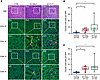 Figure 1
CD4+ and CD8+ tubular T cell number by immune checkpoint inhibitor treatment regimen. (A) Representative images of H&E staining (top row) and CD4+/CD8+ immunofluorescence (IF) staining (middle and bottom rows, respectively). White square highlight interstitial areas of interest in both H&E and IF images. (B and C) Quantification of tubular CD4+/CD8+ cells per medium power field (MPF) across groups. P values derived from Kruskal-Wallis followed by Dunn’s multiple-comparison test for post hoc analysis. Experiment was done once. *P < 0.05 for group ICI-Only (median: 5.96 CD4+ cells, 5.85 CD8+ cells) versus Control group (median: 1.9 CD4+ cells, 2.25 CD8+ cells) in post hoc test adjusted for multiple comparisons. †P < 0.05 for group ICI-Cyt (median: 8.2 CD4+ cells, 7.05 CD8+ cells) versus Control group (median: 1.9 CD4+ cells, 2.25 CD8+ cells) in post hoc test adjusted for multiple comparisons. Scale bars: 50 μm and 15 μm as indicated.
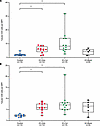 Figure 2
CD4+ and CD8+ tubular T cell number by immune checkpoint inhibitor treatment group and TNF-α blockade group. (A and B) Quantification of tubular CD4+ and CD8+ cells per medium power field (MPF) across treatment groups. P values derived from Kruskal-Wallis followed by Dunn’s multiple-comparison test for post hoc analysis. Experiment was done once. *P < 0.05 for group ICI-Only versus Control group in post hoc test adjusted for multiple comparisons. †P < 0.05 for group ICI-Cyt versus Control group in post hoc test adjusted for multiple comparisons.
The Nephritis group had significantly higher tubular CD4+ (P ≤ 0.001), and CD8+ (P ≤ 0.0001) cells compared with controls (Supplemental Figure 3, C and D). Although there was increased inflammation compared with the ICI-treated Non-Nephritis group, the difference was not statistically significant (Supplemental Figure 3, C and D).
Tubular TNF-α expression in kidney tissue. Both groups treated with ICI therapy, ICI-Cyt and ICI-Only, showed enhanced TNF-α expression in the kidney tissue compared with controls (Figure 3, A and B). When treatment groups were compared, animals receiving concomitant TNF‑α blockade exhibited reduced CD4+ and CD8+ tubular T cell infiltration compared with ICI-treated groups, reaching levels comparable with controls (Figure 2, A and B). Similarly, the Nephritis group presented with higher expression of TNF-α when compared with controls (Figure 3C).
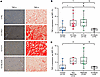 Figure 3
TNF-α expression in renal tubular compartments during immune checkpoint inhibition and TNF-α blockade. (A) Representative immunohistochemical (IHC) images showing TNF-α staining in kidney tubules across treatment groups. Left column displays TNF-α expression in brown, while right column presents red-enhanced images generated using ImageJ (NIH) highlight staining intensity. Original magnification, ×200. (B) TNF-α expression percentage per medium power field (MPF) in treatment groups. (C) TNF-α expression percentage per MPF in nephritis status groups. P values derived from Kruskal-Wallis followed by Dunn’s multiple-comparison test for post hoc analysis. Experiments were done once. Treatment groups: *P < 0.05 for group ICI-Only versus Control in post hoc test adjusted for multiple comparisons. ¶P<0.05 for group ICI-Only versus ICI-Block in post hoc test adjusted for multiple comparisons. †P < 0.05 for group ICI-Cyt versus Control in post hoc test adjusted for multiple comparisons. §P < 0.05 for group ICI-Cyt versus ICI-Block in post hoc test adjusted for multiple comparisons. Nephritis groups: #P < 0.05 for group Nephritis versus Control in post hoc test adjusted for multiple comparisons. ФP < 0.05 for group Nephritis versus ICI-Block in post hoc test adjusted for multiple comparisons.
Cytokine profile in whole kidney tissue. Qualitative cytokine array screening suggested increased renal expression of TNF-α, IFN-γ, and CXCL9 in ICI-treated mice compared with controls, particularly in the ICI-Cyt group (Supplemental Figure 4A). Based on these findings, absolute cytokine concentrations were quantified by ELISA.
TNF-α concentrations in whole kidney tissue were significantly higher in the ICI-Cyt group compared with control mice (Supplemental Figure 4B), with a trend toward higher levels compared with the ICI-Block group (P = 0.05) (Supplemental Figure 4B). By nephritis status, TNF-α levels were significantly elevated in mice with nephritis compared with all other groups (Supplemental Figure 4E). Across treatment groups, IFN-γ concentrations did not differ; however, IFN-γ levels tended to be higher in the ICI-Only group compared with controls (P = 0.05; Supplemental Figure 4C). In contrast, stratification by nephritis status revealed significantly higher IFN-γ levels in nephritic kidneys compared with both control and ICI-Block groups (Supplemental Figure 4F). CXCL-9 concentrations were higher in the ICI-Cyt group compared with control mice (Supplemental Figure 4D). When analyzed by nephritis status, CXCL-9 levels exhibited an upward trend in nephritic kidneys compared with controls (P = 0.05) (Supplemental Figure 4G).
Plasma cytokine profile
Both treatment groups, ICI-Only and ICI-Cyt, showed elevated concentrations of IL-6, MCP-1, and TNF-α compared with the control group (Supplemental Table 2). Within the ICI-treated groups, the Nephritis group exhibited higher levels of IL-6, MCP-1, and TNF-α relative to controls. Similarly, the Non-Nephritis group showed increased MCP-1 and TNF-α levels as compared with the control group (Supplemental Table 2).
Preventive effect of TNF-α blockade during ICI therapy combined with costimulation by inflammatory cytokines
Concomitant TNF-α blockade during ICI therapy, combined with costimulation by TNF-α and IFN-γ, resulted in attenuation of few renal parameters. The ICI-Block group (treated with ICIs, cytokines pump, and TNF-α blockage) presented with significantly lower BUN levels compared with both ICI-Only and ICI-Cyt groups (Supplemental Figure 5B), as well as the Nephritis group (Supplemental Figure 5E).
Although TNF-α blockade did not fully prevent CD4+ and CD8+ infiltration in the kidney, it reduced it to levels comparable with the control group not treated with ICI therapy (Figure 2, A and B). Similarly, TNF-α expression in the kidney tissue was reduced in the ICI-Block group compared with ICI-Only and ICI-Cyt (Figure 3, A and B) with comparable results observed relative to the Nephritis status (Figure 3C). Additionally, plasma concentrations of TNF-α and MCP-1 were lower in the ICI-Block group compared with the ICI-Cyt, ICI-Only, and Nephritis groups, confirming effective systemic blockade of the TNF-α pathway (Table 2).
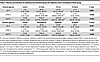 Table 2
Plasma concentration of cytokines by treatment group and nephritis status including ICI-block group
Single-cell RNA-seq reveals immune cell heterogeneity and differential T cell responses in ICI-AIN
Cells passing quality control were analyzed (Supplemental Figure 6A). After filtering and normalization of data, dot plot analysis using canonical markers from literature identified 20 cell clusters, corresponding to 12 distinct cell types (Supplemental Figure 6, B and C). Due to their critical role in the development of ICI-AIN and as targets of ICIs, NKT cell cluster was selected for in-depth analysis. Following the same cluster definition methodology and using resolution of 0.1, five cell types and clusters were identified: CD8+ effector T cells, CD4+ T cells, Tregs, NK T cells, and an undefined cluster (Figure 4, A and B). Relative abundance analysis of annotated cell types revealed increased proportions of CD4+ T cells and Tregs in both ICI-Only and ICI-Cyt groups compared with controls, whereas CD8+ effector T cells and NK cells were decreased (Figure 4C). Gene set enrichment analysis (GSEA) comparing ICI-Cyt with Controls revealed upregulation in CD4+ T cell genes involved in interspecies interactions and immune regulation (Figure 5A), whereas CD8+ effector T cell genes were enriched for monocyte extravasation pathways (Figure 5B). Comparing ICI-Cyt with ICI-Only, CD4+ T cells showed increased expression of genes related to T cell cytokine production (Figure 5C). BCL2 Related Protein A1 (Bcl2a1), Inducible T Cell Costimulator (Icos), IL-18 Receptor 1 (Il18r1), C-C Motif Chemokine Receptor 2 (Ccr2), and Junction Adhesion Molecule Like (Jaml) were identified as key genes within highest k/K gene sets (Supplemental Table 3). A similar analysis was conducted on the downregulated genes; however, no immunological genes were found to be predominantly affected (Supplemental Figure 7).
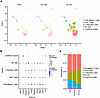 Figure 4
Single-cell transcriptomic profiling of kidney tissue across immune checkpoint inhibitor treatment groups. (A) T_NK cluster UMAP by treatment regimen. (B) Dot plot of genes used to subcluster. (C) Relative abundance percentage of cell types in cluster T_NK by treatment group.
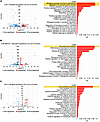 Figure 5
Biological analysis of gene expression for upregulated genes. (A and B) Volcano plot for differential gene expression and upregulated genes biological process analysis from gene set enrichment analysis (GSEA) for ICI-Cyt against Control CD4+ T cells and CD8+ effector cells, respectively. (C) Volcano plot for differential gene expression and upregulated genes biological process analysis from GSEA for ICI-Cyt against ICI-Only CD4+ T cells.


