
Research ArticleImmunologyOncology
Open Access |  10.1172/jci.insight.199498
Distinct immune landscapes characterize highly versus minimally invasive brain metastases
Sarah M. Maritan,1,2 Elham Karimi,1 Matthew Dankner,1,2 Aldo Hernandez-Corchado,3,4 Miranda W. Yu,1,5 Matthew G. Annis,1 Yashar Aghazadeh Habashi,1 Morteza Rezanejad,1 Bridget Liu,1 Nebras Koudieh,6 Emilie Pichette,7 Parvaneh Fallah,8,9 Benoit Fiset,1 Yuhong Wei,1 Ali Nehme,4 Chun Geun Lee,10 Jack A. Elias,11 Morag Park,1,12 Yasser Riazalhosseini,3,4 Hamed Najafabadi,3,4 Kevin Petrecca,13,14 Marie-Christine Guiot,7,13 Daniela F. Quail,1,5 Logan A. Walsh,1,3 and Peter M. Siegel1,2
1Goodman Cancer Institute,
2Department of Medicine, Division of Experimental Medicine,
3Department of Human Genetics, Faculty of Medicine and Health Sciences,
4Victor Phillip Dahdaleh Institute of Genomic Medicine, and
5Department of Physiology, Faculty of Medicine and Health Sciences, McGill University, Montreal, Quebec, Canada.
6Research Institute of McGill University Health Centre, Montreal, Quebec, Canada.
7Department of Pathology, Faculty of Medicine and Health Sciences, and
8Gerald Bronfman Department of Oncology, McGill University, Montreal, Quebec, Canada.
9Segal Cancer Centre, Jewish General Hospital, Montreal, Quebec, Canada.
10Intercollege, Hanyang University, Seoul, Korea.
11Division of Medicine and Biological Sciences, Brown University, Providence, Rhode Island, USA.
12Department of Oncology, Faculty of Medicine and Health Sciences, McGill University, Montreal, Quebec, Canada.
13Montreal Neurological Institute-Hospital, McGill University Health Centre, Montreal, Quebec, Canada.
14Department of Neurology and Neurosurgery, Faculty of Medicine and Health Sciences, McGill University, Montreal, Quebec, Canada.
Address correspondence to: Peter M. Siegel or Logan A. Walsh, Goodman Cancer Institute, McGill University, 1160 Pine Avenue West, Montreal, Quebec, Canada H3A 1A3. Phone: 514.398.4259; Email: peter.siegel@mcgill.ca (PMS). Phone: 514.398.3052; Email: logan.walsh@mcgill.ca (LAW).
Find articles by Maritan, S. in: PubMed | Google Scholar
1Goodman Cancer Institute,
2Department of Medicine, Division of Experimental Medicine,
3Department of Human Genetics, Faculty of Medicine and Health Sciences,
4Victor Phillip Dahdaleh Institute of Genomic Medicine, and
5Department of Physiology, Faculty of Medicine and Health Sciences, McGill University, Montreal, Quebec, Canada.
6Research Institute of McGill University Health Centre, Montreal, Quebec, Canada.
7Department of Pathology, Faculty of Medicine and Health Sciences, and
8Gerald Bronfman Department of Oncology, McGill University, Montreal, Quebec, Canada.
9Segal Cancer Centre, Jewish General Hospital, Montreal, Quebec, Canada.
10Intercollege, Hanyang University, Seoul, Korea.
11Division of Medicine and Biological Sciences, Brown University, Providence, Rhode Island, USA.
12Department of Oncology, Faculty of Medicine and Health Sciences, McGill University, Montreal, Quebec, Canada.
13Montreal Neurological Institute-Hospital, McGill University Health Centre, Montreal, Quebec, Canada.
14Department of Neurology and Neurosurgery, Faculty of Medicine and Health Sciences, McGill University, Montreal, Quebec, Canada.
Address correspondence to: Peter M. Siegel or Logan A. Walsh, Goodman Cancer Institute, McGill University, 1160 Pine Avenue West, Montreal, Quebec, Canada H3A 1A3. Phone: 514.398.4259; Email: peter.siegel@mcgill.ca (PMS). Phone: 514.398.3052; Email: logan.walsh@mcgill.ca (LAW).
Find articles by Karimi, E. in: PubMed | Google Scholar
1Goodman Cancer Institute,
2Department of Medicine, Division of Experimental Medicine,
3Department of Human Genetics, Faculty of Medicine and Health Sciences,
4Victor Phillip Dahdaleh Institute of Genomic Medicine, and
5Department of Physiology, Faculty of Medicine and Health Sciences, McGill University, Montreal, Quebec, Canada.
6Research Institute of McGill University Health Centre, Montreal, Quebec, Canada.
7Department of Pathology, Faculty of Medicine and Health Sciences, and
8Gerald Bronfman Department of Oncology, McGill University, Montreal, Quebec, Canada.
9Segal Cancer Centre, Jewish General Hospital, Montreal, Quebec, Canada.
10Intercollege, Hanyang University, Seoul, Korea.
11Division of Medicine and Biological Sciences, Brown University, Providence, Rhode Island, USA.
12Department of Oncology, Faculty of Medicine and Health Sciences, McGill University, Montreal, Quebec, Canada.
13Montreal Neurological Institute-Hospital, McGill University Health Centre, Montreal, Quebec, Canada.
14Department of Neurology and Neurosurgery, Faculty of Medicine and Health Sciences, McGill University, Montreal, Quebec, Canada.
Address correspondence to: Peter M. Siegel or Logan A. Walsh, Goodman Cancer Institute, McGill University, 1160 Pine Avenue West, Montreal, Quebec, Canada H3A 1A3. Phone: 514.398.4259; Email: peter.siegel@mcgill.ca (PMS). Phone: 514.398.3052; Email: logan.walsh@mcgill.ca (LAW).
Find articles by Dankner, M. in: PubMed | Google Scholar
1Goodman Cancer Institute,
2Department of Medicine, Division of Experimental Medicine,
3Department of Human Genetics, Faculty of Medicine and Health Sciences,
4Victor Phillip Dahdaleh Institute of Genomic Medicine, and
5Department of Physiology, Faculty of Medicine and Health Sciences, McGill University, Montreal, Quebec, Canada.
6Research Institute of McGill University Health Centre, Montreal, Quebec, Canada.
7Department of Pathology, Faculty of Medicine and Health Sciences, and
8Gerald Bronfman Department of Oncology, McGill University, Montreal, Quebec, Canada.
9Segal Cancer Centre, Jewish General Hospital, Montreal, Quebec, Canada.
10Intercollege, Hanyang University, Seoul, Korea.
11Division of Medicine and Biological Sciences, Brown University, Providence, Rhode Island, USA.
12Department of Oncology, Faculty of Medicine and Health Sciences, McGill University, Montreal, Quebec, Canada.
13Montreal Neurological Institute-Hospital, McGill University Health Centre, Montreal, Quebec, Canada.
14Department of Neurology and Neurosurgery, Faculty of Medicine and Health Sciences, McGill University, Montreal, Quebec, Canada.
Address correspondence to: Peter M. Siegel or Logan A. Walsh, Goodman Cancer Institute, McGill University, 1160 Pine Avenue West, Montreal, Quebec, Canada H3A 1A3. Phone: 514.398.4259; Email: peter.siegel@mcgill.ca (PMS). Phone: 514.398.3052; Email: logan.walsh@mcgill.ca (LAW).
Find articles by Hernandez-Corchado, A. in: PubMed | Google Scholar
1Goodman Cancer Institute,
2Department of Medicine, Division of Experimental Medicine,
3Department of Human Genetics, Faculty of Medicine and Health Sciences,
4Victor Phillip Dahdaleh Institute of Genomic Medicine, and
5Department of Physiology, Faculty of Medicine and Health Sciences, McGill University, Montreal, Quebec, Canada.
6Research Institute of McGill University Health Centre, Montreal, Quebec, Canada.
7Department of Pathology, Faculty of Medicine and Health Sciences, and
8Gerald Bronfman Department of Oncology, McGill University, Montreal, Quebec, Canada.
9Segal Cancer Centre, Jewish General Hospital, Montreal, Quebec, Canada.
10Intercollege, Hanyang University, Seoul, Korea.
11Division of Medicine and Biological Sciences, Brown University, Providence, Rhode Island, USA.
12Department of Oncology, Faculty of Medicine and Health Sciences, McGill University, Montreal, Quebec, Canada.
13Montreal Neurological Institute-Hospital, McGill University Health Centre, Montreal, Quebec, Canada.
14Department of Neurology and Neurosurgery, Faculty of Medicine and Health Sciences, McGill University, Montreal, Quebec, Canada.
Address correspondence to: Peter M. Siegel or Logan A. Walsh, Goodman Cancer Institute, McGill University, 1160 Pine Avenue West, Montreal, Quebec, Canada H3A 1A3. Phone: 514.398.4259; Email: peter.siegel@mcgill.ca (PMS). Phone: 514.398.3052; Email: logan.walsh@mcgill.ca (LAW).
Find articles by Yu, M. in: PubMed | Google Scholar
1Goodman Cancer Institute,
2Department of Medicine, Division of Experimental Medicine,
3Department of Human Genetics, Faculty of Medicine and Health Sciences,
4Victor Phillip Dahdaleh Institute of Genomic Medicine, and
5Department of Physiology, Faculty of Medicine and Health Sciences, McGill University, Montreal, Quebec, Canada.
6Research Institute of McGill University Health Centre, Montreal, Quebec, Canada.
7Department of Pathology, Faculty of Medicine and Health Sciences, and
8Gerald Bronfman Department of Oncology, McGill University, Montreal, Quebec, Canada.
9Segal Cancer Centre, Jewish General Hospital, Montreal, Quebec, Canada.
10Intercollege, Hanyang University, Seoul, Korea.
11Division of Medicine and Biological Sciences, Brown University, Providence, Rhode Island, USA.
12Department of Oncology, Faculty of Medicine and Health Sciences, McGill University, Montreal, Quebec, Canada.
13Montreal Neurological Institute-Hospital, McGill University Health Centre, Montreal, Quebec, Canada.
14Department of Neurology and Neurosurgery, Faculty of Medicine and Health Sciences, McGill University, Montreal, Quebec, Canada.
Address correspondence to: Peter M. Siegel or Logan A. Walsh, Goodman Cancer Institute, McGill University, 1160 Pine Avenue West, Montreal, Quebec, Canada H3A 1A3. Phone: 514.398.4259; Email: peter.siegel@mcgill.ca (PMS). Phone: 514.398.3052; Email: logan.walsh@mcgill.ca (LAW).
Find articles by Annis, M. in: PubMed | Google Scholar
1Goodman Cancer Institute,
2Department of Medicine, Division of Experimental Medicine,
3Department of Human Genetics, Faculty of Medicine and Health Sciences,
4Victor Phillip Dahdaleh Institute of Genomic Medicine, and
5Department of Physiology, Faculty of Medicine and Health Sciences, McGill University, Montreal, Quebec, Canada.
6Research Institute of McGill University Health Centre, Montreal, Quebec, Canada.
7Department of Pathology, Faculty of Medicine and Health Sciences, and
8Gerald Bronfman Department of Oncology, McGill University, Montreal, Quebec, Canada.
9Segal Cancer Centre, Jewish General Hospital, Montreal, Quebec, Canada.
10Intercollege, Hanyang University, Seoul, Korea.
11Division of Medicine and Biological Sciences, Brown University, Providence, Rhode Island, USA.
12Department of Oncology, Faculty of Medicine and Health Sciences, McGill University, Montreal, Quebec, Canada.
13Montreal Neurological Institute-Hospital, McGill University Health Centre, Montreal, Quebec, Canada.
14Department of Neurology and Neurosurgery, Faculty of Medicine and Health Sciences, McGill University, Montreal, Quebec, Canada.
Address correspondence to: Peter M. Siegel or Logan A. Walsh, Goodman Cancer Institute, McGill University, 1160 Pine Avenue West, Montreal, Quebec, Canada H3A 1A3. Phone: 514.398.4259; Email: peter.siegel@mcgill.ca (PMS). Phone: 514.398.3052; Email: logan.walsh@mcgill.ca (LAW).
Find articles by Aghazadeh Habashi, Y. in: PubMed | Google Scholar
1Goodman Cancer Institute,
2Department of Medicine, Division of Experimental Medicine,
3Department of Human Genetics, Faculty of Medicine and Health Sciences,
4Victor Phillip Dahdaleh Institute of Genomic Medicine, and
5Department of Physiology, Faculty of Medicine and Health Sciences, McGill University, Montreal, Quebec, Canada.
6Research Institute of McGill University Health Centre, Montreal, Quebec, Canada.
7Department of Pathology, Faculty of Medicine and Health Sciences, and
8Gerald Bronfman Department of Oncology, McGill University, Montreal, Quebec, Canada.
9Segal Cancer Centre, Jewish General Hospital, Montreal, Quebec, Canada.
10Intercollege, Hanyang University, Seoul, Korea.
11Division of Medicine and Biological Sciences, Brown University, Providence, Rhode Island, USA.
12Department of Oncology, Faculty of Medicine and Health Sciences, McGill University, Montreal, Quebec, Canada.
13Montreal Neurological Institute-Hospital, McGill University Health Centre, Montreal, Quebec, Canada.
14Department of Neurology and Neurosurgery, Faculty of Medicine and Health Sciences, McGill University, Montreal, Quebec, Canada.
Address correspondence to: Peter M. Siegel or Logan A. Walsh, Goodman Cancer Institute, McGill University, 1160 Pine Avenue West, Montreal, Quebec, Canada H3A 1A3. Phone: 514.398.4259; Email: peter.siegel@mcgill.ca (PMS). Phone: 514.398.3052; Email: logan.walsh@mcgill.ca (LAW).
Find articles by Rezanejad, M. in: PubMed | Google Scholar
1Goodman Cancer Institute,
2Department of Medicine, Division of Experimental Medicine,
3Department of Human Genetics, Faculty of Medicine and Health Sciences,
4Victor Phillip Dahdaleh Institute of Genomic Medicine, and
5Department of Physiology, Faculty of Medicine and Health Sciences, McGill University, Montreal, Quebec, Canada.
6Research Institute of McGill University Health Centre, Montreal, Quebec, Canada.
7Department of Pathology, Faculty of Medicine and Health Sciences, and
8Gerald Bronfman Department of Oncology, McGill University, Montreal, Quebec, Canada.
9Segal Cancer Centre, Jewish General Hospital, Montreal, Quebec, Canada.
10Intercollege, Hanyang University, Seoul, Korea.
11Division of Medicine and Biological Sciences, Brown University, Providence, Rhode Island, USA.
12Department of Oncology, Faculty of Medicine and Health Sciences, McGill University, Montreal, Quebec, Canada.
13Montreal Neurological Institute-Hospital, McGill University Health Centre, Montreal, Quebec, Canada.
14Department of Neurology and Neurosurgery, Faculty of Medicine and Health Sciences, McGill University, Montreal, Quebec, Canada.
Address correspondence to: Peter M. Siegel or Logan A. Walsh, Goodman Cancer Institute, McGill University, 1160 Pine Avenue West, Montreal, Quebec, Canada H3A 1A3. Phone: 514.398.4259; Email: peter.siegel@mcgill.ca (PMS). Phone: 514.398.3052; Email: logan.walsh@mcgill.ca (LAW).
Find articles by Liu, B. in: PubMed | Google Scholar
1Goodman Cancer Institute,
2Department of Medicine, Division of Experimental Medicine,
3Department of Human Genetics, Faculty of Medicine and Health Sciences,
4Victor Phillip Dahdaleh Institute of Genomic Medicine, and
5Department of Physiology, Faculty of Medicine and Health Sciences, McGill University, Montreal, Quebec, Canada.
6Research Institute of McGill University Health Centre, Montreal, Quebec, Canada.
7Department of Pathology, Faculty of Medicine and Health Sciences, and
8Gerald Bronfman Department of Oncology, McGill University, Montreal, Quebec, Canada.
9Segal Cancer Centre, Jewish General Hospital, Montreal, Quebec, Canada.
10Intercollege, Hanyang University, Seoul, Korea.
11Division of Medicine and Biological Sciences, Brown University, Providence, Rhode Island, USA.
12Department of Oncology, Faculty of Medicine and Health Sciences, McGill University, Montreal, Quebec, Canada.
13Montreal Neurological Institute-Hospital, McGill University Health Centre, Montreal, Quebec, Canada.
14Department of Neurology and Neurosurgery, Faculty of Medicine and Health Sciences, McGill University, Montreal, Quebec, Canada.
Address correspondence to: Peter M. Siegel or Logan A. Walsh, Goodman Cancer Institute, McGill University, 1160 Pine Avenue West, Montreal, Quebec, Canada H3A 1A3. Phone: 514.398.4259; Email: peter.siegel@mcgill.ca (PMS). Phone: 514.398.3052; Email: logan.walsh@mcgill.ca (LAW).
Find articles by Koudieh, N. in: PubMed | Google Scholar
1Goodman Cancer Institute,
2Department of Medicine, Division of Experimental Medicine,
3Department of Human Genetics, Faculty of Medicine and Health Sciences,
4Victor Phillip Dahdaleh Institute of Genomic Medicine, and
5Department of Physiology, Faculty of Medicine and Health Sciences, McGill University, Montreal, Quebec, Canada.
6Research Institute of McGill University Health Centre, Montreal, Quebec, Canada.
7Department of Pathology, Faculty of Medicine and Health Sciences, and
8Gerald Bronfman Department of Oncology, McGill University, Montreal, Quebec, Canada.
9Segal Cancer Centre, Jewish General Hospital, Montreal, Quebec, Canada.
10Intercollege, Hanyang University, Seoul, Korea.
11Division of Medicine and Biological Sciences, Brown University, Providence, Rhode Island, USA.
12Department of Oncology, Faculty of Medicine and Health Sciences, McGill University, Montreal, Quebec, Canada.
13Montreal Neurological Institute-Hospital, McGill University Health Centre, Montreal, Quebec, Canada.
14Department of Neurology and Neurosurgery, Faculty of Medicine and Health Sciences, McGill University, Montreal, Quebec, Canada.
Address correspondence to: Peter M. Siegel or Logan A. Walsh, Goodman Cancer Institute, McGill University, 1160 Pine Avenue West, Montreal, Quebec, Canada H3A 1A3. Phone: 514.398.4259; Email: peter.siegel@mcgill.ca (PMS). Phone: 514.398.3052; Email: logan.walsh@mcgill.ca (LAW).
Find articles by Pichette, E. in: PubMed | Google Scholar
1Goodman Cancer Institute,
2Department of Medicine, Division of Experimental Medicine,
3Department of Human Genetics, Faculty of Medicine and Health Sciences,
4Victor Phillip Dahdaleh Institute of Genomic Medicine, and
5Department of Physiology, Faculty of Medicine and Health Sciences, McGill University, Montreal, Quebec, Canada.
6Research Institute of McGill University Health Centre, Montreal, Quebec, Canada.
7Department of Pathology, Faculty of Medicine and Health Sciences, and
8Gerald Bronfman Department of Oncology, McGill University, Montreal, Quebec, Canada.
9Segal Cancer Centre, Jewish General Hospital, Montreal, Quebec, Canada.
10Intercollege, Hanyang University, Seoul, Korea.
11Division of Medicine and Biological Sciences, Brown University, Providence, Rhode Island, USA.
12Department of Oncology, Faculty of Medicine and Health Sciences, McGill University, Montreal, Quebec, Canada.
13Montreal Neurological Institute-Hospital, McGill University Health Centre, Montreal, Quebec, Canada.
14Department of Neurology and Neurosurgery, Faculty of Medicine and Health Sciences, McGill University, Montreal, Quebec, Canada.
Address correspondence to: Peter M. Siegel or Logan A. Walsh, Goodman Cancer Institute, McGill University, 1160 Pine Avenue West, Montreal, Quebec, Canada H3A 1A3. Phone: 514.398.4259; Email: peter.siegel@mcgill.ca (PMS). Phone: 514.398.3052; Email: logan.walsh@mcgill.ca (LAW).
Find articles by Fallah, P. in: PubMed | Google Scholar
1Goodman Cancer Institute,
2Department of Medicine, Division of Experimental Medicine,
3Department of Human Genetics, Faculty of Medicine and Health Sciences,
4Victor Phillip Dahdaleh Institute of Genomic Medicine, and
5Department of Physiology, Faculty of Medicine and Health Sciences, McGill University, Montreal, Quebec, Canada.
6Research Institute of McGill University Health Centre, Montreal, Quebec, Canada.
7Department of Pathology, Faculty of Medicine and Health Sciences, and
8Gerald Bronfman Department of Oncology, McGill University, Montreal, Quebec, Canada.
9Segal Cancer Centre, Jewish General Hospital, Montreal, Quebec, Canada.
10Intercollege, Hanyang University, Seoul, Korea.
11Division of Medicine and Biological Sciences, Brown University, Providence, Rhode Island, USA.
12Department of Oncology, Faculty of Medicine and Health Sciences, McGill University, Montreal, Quebec, Canada.
13Montreal Neurological Institute-Hospital, McGill University Health Centre, Montreal, Quebec, Canada.
14Department of Neurology and Neurosurgery, Faculty of Medicine and Health Sciences, McGill University, Montreal, Quebec, Canada.
Address correspondence to: Peter M. Siegel or Logan A. Walsh, Goodman Cancer Institute, McGill University, 1160 Pine Avenue West, Montreal, Quebec, Canada H3A 1A3. Phone: 514.398.4259; Email: peter.siegel@mcgill.ca (PMS). Phone: 514.398.3052; Email: logan.walsh@mcgill.ca (LAW).
Find articles by Fiset, B. in: PubMed | Google Scholar
1Goodman Cancer Institute,
2Department of Medicine, Division of Experimental Medicine,
3Department of Human Genetics, Faculty of Medicine and Health Sciences,
4Victor Phillip Dahdaleh Institute of Genomic Medicine, and
5Department of Physiology, Faculty of Medicine and Health Sciences, McGill University, Montreal, Quebec, Canada.
6Research Institute of McGill University Health Centre, Montreal, Quebec, Canada.
7Department of Pathology, Faculty of Medicine and Health Sciences, and
8Gerald Bronfman Department of Oncology, McGill University, Montreal, Quebec, Canada.
9Segal Cancer Centre, Jewish General Hospital, Montreal, Quebec, Canada.
10Intercollege, Hanyang University, Seoul, Korea.
11Division of Medicine and Biological Sciences, Brown University, Providence, Rhode Island, USA.
12Department of Oncology, Faculty of Medicine and Health Sciences, McGill University, Montreal, Quebec, Canada.
13Montreal Neurological Institute-Hospital, McGill University Health Centre, Montreal, Quebec, Canada.
14Department of Neurology and Neurosurgery, Faculty of Medicine and Health Sciences, McGill University, Montreal, Quebec, Canada.
Address correspondence to: Peter M. Siegel or Logan A. Walsh, Goodman Cancer Institute, McGill University, 1160 Pine Avenue West, Montreal, Quebec, Canada H3A 1A3. Phone: 514.398.4259; Email: peter.siegel@mcgill.ca (PMS). Phone: 514.398.3052; Email: logan.walsh@mcgill.ca (LAW).
Find articles by Wei, Y. in: PubMed | Google Scholar
1Goodman Cancer Institute,
2Department of Medicine, Division of Experimental Medicine,
3Department of Human Genetics, Faculty of Medicine and Health Sciences,
4Victor Phillip Dahdaleh Institute of Genomic Medicine, and
5Department of Physiology, Faculty of Medicine and Health Sciences, McGill University, Montreal, Quebec, Canada.
6Research Institute of McGill University Health Centre, Montreal, Quebec, Canada.
7Department of Pathology, Faculty of Medicine and Health Sciences, and
8Gerald Bronfman Department of Oncology, McGill University, Montreal, Quebec, Canada.
9Segal Cancer Centre, Jewish General Hospital, Montreal, Quebec, Canada.
10Intercollege, Hanyang University, Seoul, Korea.
11Division of Medicine and Biological Sciences, Brown University, Providence, Rhode Island, USA.
12Department of Oncology, Faculty of Medicine and Health Sciences, McGill University, Montreal, Quebec, Canada.
13Montreal Neurological Institute-Hospital, McGill University Health Centre, Montreal, Quebec, Canada.
14Department of Neurology and Neurosurgery, Faculty of Medicine and Health Sciences, McGill University, Montreal, Quebec, Canada.
Address correspondence to: Peter M. Siegel or Logan A. Walsh, Goodman Cancer Institute, McGill University, 1160 Pine Avenue West, Montreal, Quebec, Canada H3A 1A3. Phone: 514.398.4259; Email: peter.siegel@mcgill.ca (PMS). Phone: 514.398.3052; Email: logan.walsh@mcgill.ca (LAW).
Find articles by Nehme, A. in: PubMed | Google Scholar
1Goodman Cancer Institute,
2Department of Medicine, Division of Experimental Medicine,
3Department of Human Genetics, Faculty of Medicine and Health Sciences,
4Victor Phillip Dahdaleh Institute of Genomic Medicine, and
5Department of Physiology, Faculty of Medicine and Health Sciences, McGill University, Montreal, Quebec, Canada.
6Research Institute of McGill University Health Centre, Montreal, Quebec, Canada.
7Department of Pathology, Faculty of Medicine and Health Sciences, and
8Gerald Bronfman Department of Oncology, McGill University, Montreal, Quebec, Canada.
9Segal Cancer Centre, Jewish General Hospital, Montreal, Quebec, Canada.
10Intercollege, Hanyang University, Seoul, Korea.
11Division of Medicine and Biological Sciences, Brown University, Providence, Rhode Island, USA.
12Department of Oncology, Faculty of Medicine and Health Sciences, McGill University, Montreal, Quebec, Canada.
13Montreal Neurological Institute-Hospital, McGill University Health Centre, Montreal, Quebec, Canada.
14Department of Neurology and Neurosurgery, Faculty of Medicine and Health Sciences, McGill University, Montreal, Quebec, Canada.
Address correspondence to: Peter M. Siegel or Logan A. Walsh, Goodman Cancer Institute, McGill University, 1160 Pine Avenue West, Montreal, Quebec, Canada H3A 1A3. Phone: 514.398.4259; Email: peter.siegel@mcgill.ca (PMS). Phone: 514.398.3052; Email: logan.walsh@mcgill.ca (LAW).
Find articles by Lee, C. in: PubMed | Google Scholar
1Goodman Cancer Institute,
2Department of Medicine, Division of Experimental Medicine,
3Department of Human Genetics, Faculty of Medicine and Health Sciences,
4Victor Phillip Dahdaleh Institute of Genomic Medicine, and
5Department of Physiology, Faculty of Medicine and Health Sciences, McGill University, Montreal, Quebec, Canada.
6Research Institute of McGill University Health Centre, Montreal, Quebec, Canada.
7Department of Pathology, Faculty of Medicine and Health Sciences, and
8Gerald Bronfman Department of Oncology, McGill University, Montreal, Quebec, Canada.
9Segal Cancer Centre, Jewish General Hospital, Montreal, Quebec, Canada.
10Intercollege, Hanyang University, Seoul, Korea.
11Division of Medicine and Biological Sciences, Brown University, Providence, Rhode Island, USA.
12Department of Oncology, Faculty of Medicine and Health Sciences, McGill University, Montreal, Quebec, Canada.
13Montreal Neurological Institute-Hospital, McGill University Health Centre, Montreal, Quebec, Canada.
14Department of Neurology and Neurosurgery, Faculty of Medicine and Health Sciences, McGill University, Montreal, Quebec, Canada.
Address correspondence to: Peter M. Siegel or Logan A. Walsh, Goodman Cancer Institute, McGill University, 1160 Pine Avenue West, Montreal, Quebec, Canada H3A 1A3. Phone: 514.398.4259; Email: peter.siegel@mcgill.ca (PMS). Phone: 514.398.3052; Email: logan.walsh@mcgill.ca (LAW).
Find articles by
Elias, J.
in:
PubMed
|
Google Scholar
|

1Goodman Cancer Institute,
2Department of Medicine, Division of Experimental Medicine,
3Department of Human Genetics, Faculty of Medicine and Health Sciences,
4Victor Phillip Dahdaleh Institute of Genomic Medicine, and
5Department of Physiology, Faculty of Medicine and Health Sciences, McGill University, Montreal, Quebec, Canada.
6Research Institute of McGill University Health Centre, Montreal, Quebec, Canada.
7Department of Pathology, Faculty of Medicine and Health Sciences, and
8Gerald Bronfman Department of Oncology, McGill University, Montreal, Quebec, Canada.
9Segal Cancer Centre, Jewish General Hospital, Montreal, Quebec, Canada.
10Intercollege, Hanyang University, Seoul, Korea.
11Division of Medicine and Biological Sciences, Brown University, Providence, Rhode Island, USA.
12Department of Oncology, Faculty of Medicine and Health Sciences, McGill University, Montreal, Quebec, Canada.
13Montreal Neurological Institute-Hospital, McGill University Health Centre, Montreal, Quebec, Canada.
14Department of Neurology and Neurosurgery, Faculty of Medicine and Health Sciences, McGill University, Montreal, Quebec, Canada.
Address correspondence to: Peter M. Siegel or Logan A. Walsh, Goodman Cancer Institute, McGill University, 1160 Pine Avenue West, Montreal, Quebec, Canada H3A 1A3. Phone: 514.398.4259; Email: peter.siegel@mcgill.ca (PMS). Phone: 514.398.3052; Email: logan.walsh@mcgill.ca (LAW).
Find articles by
Park, M.
in:
PubMed
|
Google Scholar
|
1Goodman Cancer Institute,
2Department of Medicine, Division of Experimental Medicine,
3Department of Human Genetics, Faculty of Medicine and Health Sciences,
4Victor Phillip Dahdaleh Institute of Genomic Medicine, and
5Department of Physiology, Faculty of Medicine and Health Sciences, McGill University, Montreal, Quebec, Canada.
6Research Institute of McGill University Health Centre, Montreal, Quebec, Canada.
7Department of Pathology, Faculty of Medicine and Health Sciences, and
8Gerald Bronfman Department of Oncology, McGill University, Montreal, Quebec, Canada.
9Segal Cancer Centre, Jewish General Hospital, Montreal, Quebec, Canada.
10Intercollege, Hanyang University, Seoul, Korea.
11Division of Medicine and Biological Sciences, Brown University, Providence, Rhode Island, USA.
12Department of Oncology, Faculty of Medicine and Health Sciences, McGill University, Montreal, Quebec, Canada.
13Montreal Neurological Institute-Hospital, McGill University Health Centre, Montreal, Quebec, Canada.
14Department of Neurology and Neurosurgery, Faculty of Medicine and Health Sciences, McGill University, Montreal, Quebec, Canada.
Address correspondence to: Peter M. Siegel or Logan A. Walsh, Goodman Cancer Institute, McGill University, 1160 Pine Avenue West, Montreal, Quebec, Canada H3A 1A3. Phone: 514.398.4259; Email: peter.siegel@mcgill.ca (PMS). Phone: 514.398.3052; Email: logan.walsh@mcgill.ca (LAW).
Find articles by Riazalhosseini, Y. in: PubMed | Google Scholar
1Goodman Cancer Institute,
2Department of Medicine, Division of Experimental Medicine,
3Department of Human Genetics, Faculty of Medicine and Health Sciences,
4Victor Phillip Dahdaleh Institute of Genomic Medicine, and
5Department of Physiology, Faculty of Medicine and Health Sciences, McGill University, Montreal, Quebec, Canada.
6Research Institute of McGill University Health Centre, Montreal, Quebec, Canada.
7Department of Pathology, Faculty of Medicine and Health Sciences, and
8Gerald Bronfman Department of Oncology, McGill University, Montreal, Quebec, Canada.
9Segal Cancer Centre, Jewish General Hospital, Montreal, Quebec, Canada.
10Intercollege, Hanyang University, Seoul, Korea.
11Division of Medicine and Biological Sciences, Brown University, Providence, Rhode Island, USA.
12Department of Oncology, Faculty of Medicine and Health Sciences, McGill University, Montreal, Quebec, Canada.
13Montreal Neurological Institute-Hospital, McGill University Health Centre, Montreal, Quebec, Canada.
14Department of Neurology and Neurosurgery, Faculty of Medicine and Health Sciences, McGill University, Montreal, Quebec, Canada.
Address correspondence to: Peter M. Siegel or Logan A. Walsh, Goodman Cancer Institute, McGill University, 1160 Pine Avenue West, Montreal, Quebec, Canada H3A 1A3. Phone: 514.398.4259; Email: peter.siegel@mcgill.ca (PMS). Phone: 514.398.3052; Email: logan.walsh@mcgill.ca (LAW).
Find articles by Najafabadi, H. in: PubMed | Google Scholar
1Goodman Cancer Institute,
2Department of Medicine, Division of Experimental Medicine,
3Department of Human Genetics, Faculty of Medicine and Health Sciences,
4Victor Phillip Dahdaleh Institute of Genomic Medicine, and
5Department of Physiology, Faculty of Medicine and Health Sciences, McGill University, Montreal, Quebec, Canada.
6Research Institute of McGill University Health Centre, Montreal, Quebec, Canada.
7Department of Pathology, Faculty of Medicine and Health Sciences, and
8Gerald Bronfman Department of Oncology, McGill University, Montreal, Quebec, Canada.
9Segal Cancer Centre, Jewish General Hospital, Montreal, Quebec, Canada.
10Intercollege, Hanyang University, Seoul, Korea.
11Division of Medicine and Biological Sciences, Brown University, Providence, Rhode Island, USA.
12Department of Oncology, Faculty of Medicine and Health Sciences, McGill University, Montreal, Quebec, Canada.
13Montreal Neurological Institute-Hospital, McGill University Health Centre, Montreal, Quebec, Canada.
14Department of Neurology and Neurosurgery, Faculty of Medicine and Health Sciences, McGill University, Montreal, Quebec, Canada.
Address correspondence to: Peter M. Siegel or Logan A. Walsh, Goodman Cancer Institute, McGill University, 1160 Pine Avenue West, Montreal, Quebec, Canada H3A 1A3. Phone: 514.398.4259; Email: peter.siegel@mcgill.ca (PMS). Phone: 514.398.3052; Email: logan.walsh@mcgill.ca (LAW).
Find articles by Petrecca, K. in: PubMed | Google Scholar
1Goodman Cancer Institute,
2Department of Medicine, Division of Experimental Medicine,
3Department of Human Genetics, Faculty of Medicine and Health Sciences,
4Victor Phillip Dahdaleh Institute of Genomic Medicine, and
5Department of Physiology, Faculty of Medicine and Health Sciences, McGill University, Montreal, Quebec, Canada.
6Research Institute of McGill University Health Centre, Montreal, Quebec, Canada.
7Department of Pathology, Faculty of Medicine and Health Sciences, and
8Gerald Bronfman Department of Oncology, McGill University, Montreal, Quebec, Canada.
9Segal Cancer Centre, Jewish General Hospital, Montreal, Quebec, Canada.
10Intercollege, Hanyang University, Seoul, Korea.
11Division of Medicine and Biological Sciences, Brown University, Providence, Rhode Island, USA.
12Department of Oncology, Faculty of Medicine and Health Sciences, McGill University, Montreal, Quebec, Canada.
13Montreal Neurological Institute-Hospital, McGill University Health Centre, Montreal, Quebec, Canada.
14Department of Neurology and Neurosurgery, Faculty of Medicine and Health Sciences, McGill University, Montreal, Quebec, Canada.
Address correspondence to: Peter M. Siegel or Logan A. Walsh, Goodman Cancer Institute, McGill University, 1160 Pine Avenue West, Montreal, Quebec, Canada H3A 1A3. Phone: 514.398.4259; Email: peter.siegel@mcgill.ca (PMS). Phone: 514.398.3052; Email: logan.walsh@mcgill.ca (LAW).
Find articles by Guiot, M. in: PubMed | Google Scholar
1Goodman Cancer Institute,
2Department of Medicine, Division of Experimental Medicine,
3Department of Human Genetics, Faculty of Medicine and Health Sciences,
4Victor Phillip Dahdaleh Institute of Genomic Medicine, and
5Department of Physiology, Faculty of Medicine and Health Sciences, McGill University, Montreal, Quebec, Canada.
6Research Institute of McGill University Health Centre, Montreal, Quebec, Canada.
7Department of Pathology, Faculty of Medicine and Health Sciences, and
8Gerald Bronfman Department of Oncology, McGill University, Montreal, Quebec, Canada.
9Segal Cancer Centre, Jewish General Hospital, Montreal, Quebec, Canada.
10Intercollege, Hanyang University, Seoul, Korea.
11Division of Medicine and Biological Sciences, Brown University, Providence, Rhode Island, USA.
12Department of Oncology, Faculty of Medicine and Health Sciences, McGill University, Montreal, Quebec, Canada.
13Montreal Neurological Institute-Hospital, McGill University Health Centre, Montreal, Quebec, Canada.
14Department of Neurology and Neurosurgery, Faculty of Medicine and Health Sciences, McGill University, Montreal, Quebec, Canada.
Address correspondence to: Peter M. Siegel or Logan A. Walsh, Goodman Cancer Institute, McGill University, 1160 Pine Avenue West, Montreal, Quebec, Canada H3A 1A3. Phone: 514.398.4259; Email: peter.siegel@mcgill.ca (PMS). Phone: 514.398.3052; Email: logan.walsh@mcgill.ca (LAW).
Find articles by Quail, D. in: PubMed | Google Scholar
1Goodman Cancer Institute,
2Department of Medicine, Division of Experimental Medicine,
3Department of Human Genetics, Faculty of Medicine and Health Sciences,
4Victor Phillip Dahdaleh Institute of Genomic Medicine, and
5Department of Physiology, Faculty of Medicine and Health Sciences, McGill University, Montreal, Quebec, Canada.
6Research Institute of McGill University Health Centre, Montreal, Quebec, Canada.
7Department of Pathology, Faculty of Medicine and Health Sciences, and
8Gerald Bronfman Department of Oncology, McGill University, Montreal, Quebec, Canada.
9Segal Cancer Centre, Jewish General Hospital, Montreal, Quebec, Canada.
10Intercollege, Hanyang University, Seoul, Korea.
11Division of Medicine and Biological Sciences, Brown University, Providence, Rhode Island, USA.
12Department of Oncology, Faculty of Medicine and Health Sciences, McGill University, Montreal, Quebec, Canada.
13Montreal Neurological Institute-Hospital, McGill University Health Centre, Montreal, Quebec, Canada.
14Department of Neurology and Neurosurgery, Faculty of Medicine and Health Sciences, McGill University, Montreal, Quebec, Canada.
Address correspondence to: Peter M. Siegel or Logan A. Walsh, Goodman Cancer Institute, McGill University, 1160 Pine Avenue West, Montreal, Quebec, Canada H3A 1A3. Phone: 514.398.4259; Email: peter.siegel@mcgill.ca (PMS). Phone: 514.398.3052; Email: logan.walsh@mcgill.ca (LAW).
Find articles by Walsh, L. in: PubMed | Google Scholar
1Goodman Cancer Institute,
2Department of Medicine, Division of Experimental Medicine,
3Department of Human Genetics, Faculty of Medicine and Health Sciences,
4Victor Phillip Dahdaleh Institute of Genomic Medicine, and
5Department of Physiology, Faculty of Medicine and Health Sciences, McGill University, Montreal, Quebec, Canada.
6Research Institute of McGill University Health Centre, Montreal, Quebec, Canada.
7Department of Pathology, Faculty of Medicine and Health Sciences, and
8Gerald Bronfman Department of Oncology, McGill University, Montreal, Quebec, Canada.
9Segal Cancer Centre, Jewish General Hospital, Montreal, Quebec, Canada.
10Intercollege, Hanyang University, Seoul, Korea.
11Division of Medicine and Biological Sciences, Brown University, Providence, Rhode Island, USA.
12Department of Oncology, Faculty of Medicine and Health Sciences, McGill University, Montreal, Quebec, Canada.
13Montreal Neurological Institute-Hospital, McGill University Health Centre, Montreal, Quebec, Canada.
14Department of Neurology and Neurosurgery, Faculty of Medicine and Health Sciences, McGill University, Montreal, Quebec, Canada.
Address correspondence to: Peter M. Siegel or Logan A. Walsh, Goodman Cancer Institute, McGill University, 1160 Pine Avenue West, Montreal, Quebec, Canada H3A 1A3. Phone: 514.398.4259; Email: peter.siegel@mcgill.ca (PMS). Phone: 514.398.3052; Email: logan.walsh@mcgill.ca (LAW).
Find articles by Siegel, P. in: PubMed | Google Scholar
Published May 22, 2026 - More info
JCI Insight. 2026;11(10):e199498. https://doi.org/10.1172/jci.insight.199498.
© 2026 Maritan et al. This work is licensed under the Creative Commons Attribution 4.0 International License. To view a copy of this license, visit http://creativecommons.org/licenses/by/4.0/.
Received: August 25, 2025; Accepted: March 31, 2026


-
Results
IMC reveals distinct immunological landscapes between MI and HI BrMs. To comprehensively profile the cellular composition and spatial organization of BrMs, we leveraged our previously published cohort of BrM samples that underwent IMC (20). This cohort includes 119 histopathological images from 46 patients with BrMs from various primary sites (n = 51 lung, n = 29 breast, n = 19 melanoma, n = 20 other). Patient-matched images of the center of the metastatic lesion (core) and the brain-tumor interface (margin) were included when possible (20). Highly multiplexed staining and subsequent cell segmentation identified 20 unique cell types representing a variety of lymphoid, myeloid, and structural (e.g., endothelial, astrocytic, cancer) cell populations (Figure 1, A and B) (20).
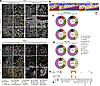 Figure 1
MI BrMs are characterized by a greater degree of immune infiltration when compared with HI lesions. (A) Representative images illustrating cell lineage assignments from imaging mass cytometry (IMC) data are shown for the center (Cores) and brain-tumor interface (Margins) of patient BrMs. Examples from lung cancer (top), melanoma (middle), and breast cancer (bottom) are provided, and representative images of MI and HI BrMs are shown. High-magnification images, denoted by white squares, are provided to the right of each low-magnification image. The color code for lineage assignment is provided below. Scale bars: 100 μm (all images). (B) Distribution of cell populations as a percentage of stroma in the tumor microenvironment, sorted by sampling region (cores, left; margins, right) and invasion pattern (MI, brown; HI, blue). Cell frequencies in each image are displayed by the vertical bars; color code corresponds to cell lineages described in A. (C and D) Cell populations as a percentage of stroma in the tumor microenvironment for cores and margins of HI and MI BrMs from all primary sites (C) or only lung cancer (D). Color codes for each cell assignment are shown below. (E) Bubble plot depicting cell frequency as a proportion of stromal content between HI and MI BrMs from all primary sites (top) or only lung cancer (bottom). Both core and margin samples are shown. Bubble size indicates P value; bubble color indicates the invasion pattern that exhibits the greater representation of the indicated cell population. Data (C–E) correspond to Supplemental Figure 1, B and C. Cl Mo, classical monocyte; non-Cl Mo, nonclassical monocyte; Int Mo, intermediate monocyte.
Following classification by histopathological growth pattern (Supplemental Figure 1A; supplemental material available online with this article; https://doi.org/10.1172/jci.insight.199498DS1) (4), and amalgamating BrMs from all primary sites, we observed elevated frequencies of B and T cells in MI BrM cores and margins, and undefined cells in HI BrM cores (Figure 1C and Supplemental Figure 1B). To avoid potential confounding issues associated with different primary cancer types that have spread to the brain, we sought to perform a focused analysis on BrMs originating from a specific primary tumor type. While melanoma and breast cancer BrMs lacked sufficient samples to perform primary tumor–specific analyses, the lung cancer BrM cohort possessed samples that were more evenly distributed between MI and HI lesions (MI: n = 9 cores, n = 6 margins; HI: n = 20 cores, n = 16 margins), thus enabling further analysis (Supplemental Figure 1A). Across lung cancer BrM cores, MI lesions possessed higher frequencies of dendritic cells, T helper (TH) cells, and total T cell populations compared with HI samples, which were enriched in cells that were undefined by our antibody panel (“undefined”) (Figure 1D and Supplemental Figure 1C). When the lung cancer BrM margins were evaluated, B cells, TH cells, regulatory T (Treg) cells, and total T cells were more abundant in MI versus HI samples (Figure 1D and Supplemental Figure 1C). These data argue that our findings are representative of the MI growth pattern independent of primary source (Figure 1E). We additionally observed that astrocytes were more abundant in HI versus MI margins, consistent with previous work implicating astrocytes in cancer cell invasion in the brain (Figure 1, C–E) (8, 21–23). Intriguingly, Treg and cytotoxic T (TC) cells were found to be enriched in MI versus HI BrMs only at the tumor margin, while TH cells and Other T cells (CD3+, CD4–, and CD8–) were enriched in both the cores and margins of MI versus HI samples (Figure 1, C–E). These data demonstrate enrichment of lymphocyte populations in MI compared with HI BrMs and are suggestive of an immune-hot microenvironment in MI lesions.
Spatial transcriptomics analysis confirms that an inflammatory microenvironment is associated with MI BrMs. While the IMC data reveal differences in immune cell frequencies between MI and HI BrMs, we next sought to characterize transcriptional differences within cancer cells that constitute MI and HI BrMs. We performed NanoString Digital Spatial Profiling using the Cancer Transcriptome Atlas to characterize transcriptional differences between cancer cells of HI and MI BrMs. We profiled 1,825 RNA targets in invading cancer cells (HI samples) or noninvading cancer cells at the brain-tumor interface (MI samples) in a cohort of breast and lung cancer BrM patient samples (Figure 2A and Supplemental Figure 2A). In lung cancer BrMs (n = 7 HI, n = 4 MI), 21 differentially expressed genes (DEGs) were identified between the 2 invasion patterns (adjusted P value [Padj] < 0.1) (Figure 2, B and C); the top 4 most differentially expressed genes were IFI27 (log2 fold change [log2FC] = 3.8769, Padj = 0.0006), ISG15 (log2FC = 2.8957, Padj = 0.0006), ASCL1 (log2FC = 2.9208, Padj = 0.0044), and MX1 (log2FC = 1.6105, Padj = 0.0044), which were elevated in MI versus HI samples (Figure 2, B and C, and Supplemental Table 1). Notably, IFI27, ISG15, and MX1 are known effectors of the interferon-γ (IFN-γ) pathway. Indeed, many of the genes that were elevated in MI versus HI lung cancer BrMs (Supplemental Table 1) are implicated in the IFN-γ pathway, such as IFI6, IRF7, IFIH1, and IFI35. Interestingly, several of the DEGs identified in the lung cohort were also identified as differentially expressed when the analyses were expanded to BrMs from both lung and breast primary sites (n =14 HI, 5 MI; Supplemental Figure 2, B and C, and Supplemental Table 2). Indeed, IFI27, ISG15, ASCL1, and MX1 remained the top 4 DEGs in this expanded cohort (Supplemental Figure 2, B and C, and Supplemental Table 2).
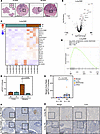 Figure 2
NanoString Digital Spatial Profiling reveals augmented interferon-γ signaling in MI BrMs. (A) Schematic depicting cancer cells selected for NanoString Digital Spatial Profiling in HI (left panels) and MI (right panels) patient BrMs. Invaded cancer cells (HI samples) or cancer cells at the brain-tumor interface (MI samples) underwent profiling. Scale bars: 750 μm. (B) Volcano plot illustrating differentially expressed genes (red, n = 21) in MI versus HI lung cancer BrM samples. Genes to the left of center are upregulated in HI samples, while genes to the right of center are upregulated in MI samples. (C) Heatmap depicting normalized gene expression (z score of log10-normalized gene counts) of differentially expressed genes (Padj < 0.1; n = 21) in HI (blue) and MI (brown) lung cancer BrMs. (D) Gene set enrichment analysis enrichment plot for the interferon-γ (IFN-γ) response pathway in lung cancer BrMs. (E) Quantification of p-STAT1 staining (H score) of BrM tissue microarrays. Samples were taken at the tumor core (left; n = 125 MI, n = 258 HI) and tumor-brain margins (right; n = 9 MI, n = 28 HI). P values were calculated using 2-tailed Student’s t test. (F) Representative images of p-STAT1 staining (brown) in MI (top) and HI (bottom) margin samples, corresponding to data in E. Scale bars: 1 mm (left), 100 μm (middle and right). (G) Quantification of p-STAT1 staining (H score) in tumor cells in patient-matched core and margin regions of BrMs from any primary site (n = 16 HI, 14 MI). H scores were calculated by multiplication of staining intensity scores (0 to 3) by the percentage of positively stained tumor cells (1%–100%) for a maximum H score of 300. For each patient tissue, 10 regions of interest (ROIs) (200,000 μm2 each) were captured at the brain-tumor interface, and 10 ROIs were captured within the metastasis core (more than 1.5 mm distance from any brain-tumor interface). Margin/core H score ratio was calculated per sample. (H) Representative p-STAT1 staining (brown) in 2 lung cancer BrM samples (MI, top; HI, bottom), corresponding to data in G. Images of the brain-tumor interface (margin) and within the metastatic lesion (core) are shown for each sample, with high-magnification panels provided (right). Scale bars: 100 μm (all images).
We next performed gene set enrichment analysis (GSEA) to identify differentially regulated pathways between MI and HI BrMs. Pathways found to be differentially regulated in either the lung cancer BrM–only cohort or the combined breast and lung cancer BrM cohort are shown in Supplemental Figure 2D. Interestingly, in both cohorts, the IFN-γ and IFN-α response pathways were the 2 most significantly upregulated pathways in MI versus HI samples (Figure 2D, Supplemental Figure 2E, and Supplemental Table 3), suggestive of enriched immune cell–mediated signaling in MI versus HI BrMs. As canonical IFN-γ signaling induces STAT1 activation (24), we sought to validate our transcriptomic findings though immunohistochemical (IHC) staining for phosphorylated STAT1 (p-STAT1; Y701; Supplemental Figure 2F) as a marker of IFN-γ pathway activation. We began with tissue microarrays of patient BrMs from a variety of primary sources (including lung cancer, breast cancer, melanoma) with samples taken at the tumor core or the brain-tumor margin. Although we observed no differences in p-STAT1 levels between MI and HI core samples, we observed significantly elevated p-STAT1 staining in the margins of MI versus HI BrMs (Figure 2, E and F), suggestive of a spatial gradient of STAT1 activation. For further validation, we performed IHC on whole-sample sections of surgically resected patient BrMs and quantified the margin/core ratio of p-STAT1 staining in tumor cells. We observed significantly elevated margin/core ratio of p-STAT1 signal in MI versus HI BrMs from patients with diverse primary cancers (lung, breast, melanoma, other) (Figure 2, G and H). These data reveal higher p-STAT1 positivity at the tumor margin relative to the core, and that this difference was more pronounced in MI versus HI BrMs. Such observations suggest that an elevated stromal source of IFN-γ exists in MI BrMs, consistent with an immune-hot tumor microenvironment (24).
Spatial analyses reveal uniquely arranged lymphoid-rich regions in MI BrMs. We next sought to evaluate how the positional architecture of the tumor immune microenvironment differs between MI and HI BrMs. Cell colocalization was quantified through permutation tests to reveal interaction or avoidance behaviors between cell type pairs (Figure 3A) (25). Across the BrM margin samples from all primary sites, we found that B cells were significantly more likely to interact with other B cells, TC cells, TH cells, and monocyte-derived macrophages (MDMs), including M1-like MDMs and M2-like MDMs, in MI samples compared with HI samples (Figure 3A, box 1, and Supplemental Table 4). Similarly, TC and TH cells were significantly more likely to interact with T cells (including TC, TH, Treg, and Other T cells), B cells, M1-like and M2-like MDMs, and microglia (MG) in MI samples compared with HI samples (Figure 3A, box 2, and Supplemental Table 4). These data indicate that not only do MI BrMs possess more lymphoid cells than HI BrMs (Figure 1), but they are spatially organized in discrete lymphoid-rich regions rather than a diffuse lymphoid infiltrate. Additionally, astrocytes tended to interact with TC and TH cells in MI samples, yet this was not observed in HI samples (Figure 3A, box 3). Although direct astrocyte–T cell interactions have been best described in neurodegenerative disorders and viral infections where astrocytes contribute to T cell priming (26), the role of such interactions in brain tumors remains incompletely understood (27). In brain tumors, astrocyte–T cell interactions did not necessarily correlate with antitumor effects (28), with some evidence implicating such interactions in immune checkpoint activation and T cell inhibition (29). It has additionally been suggested that T cell–astrocyte interactions may be attributed to the act of lymphocyte transendothelial migration, where extravasating T cells encounter astrocytic end-feet (26). Indeed, our data show that TC and TH cells had significantly enhanced interactions with endothelial cells in MI versus HI samples (Figure 3A, box 2, and Supplemental Table 4), supporting the notion of increased T cell extravasation into MI tumors. Finally, we observed that M2-like MDMs tended to avoid cancer cells in MI samples yet favored interactions with cancer cells in HI samples (Figure 3A, box 4). This is consistent with previous work implicating direct M2-like MDM-cancer interactions in brain cancer cell proliferation and invasive growth (30).
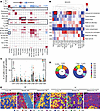 Figure 3
Spatial profiling reveals immune cell localization to the brain-tumor interface in MI BrMs. (A) Heatmap of pairwise cell-cell interaction (red) or avoidance (blue) behaviors for MI (top of square) and HI (bottom of square) BrM margin samples. Boxes highlight specific cellular associations of interest. Associations between cell types are to be read row-to-column. NK cells and dendritic cells were omitted from the heatmap owing to the absence of significant interaction or avoidance behaviors. (B) Heatmap of cell type distribution across 9 cellular neighborhoods (CNs) identified in BrM margins (n = 47 images) using N = 10 nearest neighbors. Boxes highlight cell populations of interest. (C) Bar graph depicting percentage of cells in each CN across HI (blue, n = 34 images) and MI (brown, n = 13 images) BrM margins. P values were calculated using 2-tailed Student’s t test. (D) Average abundance of each CN in HI (left) and MI (right) BrM margins. For each image, the percentage of cells in each CN was quantified and then averaged across all images in a category. (E) Representative Voronoi diagrams of CNs in MI (left) and HI (right) BrM margins from lung cancer (left), breast cancer (middle), and melanoma (right). Color code for CNs is provided.
We next explored the organization of multicellular structures within the tumor microenvironment through cellular neighborhood (CN) analyses. Two variables affect the evaluation of CNs: the total number of CNs generated (K), and the number of nearest neighbors evaluated for each cell that constitutes the neighborhood (N) (20). Using all BrM margin samples (n = 47 images), we first defined a constant number of CNs (K = 9, as in previous work) (20, 31), and altered the number of nearest neighbors evaluated (N = 3, 5, 10). We observed that lower N values (N = 3, 5) resulted in CNs that were largely pan-immune, with limited enrichment in specific immune cell types across CNs (Supplemental Figure 3, A and B). A higher N value (N = 10) resulted in CNs with improved discrimination between cell types (Figure 3B). The 9 CNs generated using N = 10 nearest neighbors represented various tissue features, including the tumor compartment (CN6) or tumor boundary (CN2), vascular niche (CN5), distant brain (CN3), immune-dense regions rich in lymphoid cells (CN1) or microglia (CN7), regions rich in M1-like (CN8) or M2-like (CN4) MDMs, and one mast cell–rich region (CN9) (Figure 3B).
When CN abundance was compared between MI and HI BrMs, 2 CNs were significantly different between the 2 growth patterns. CN9, which is enriched in mast cells, was significantly more abundant in HI versus MI BrMs (Figure 3, C and D). Mast cells have previously been found to enhance BrM cell proliferation and maintain a pro-metastatic brain microenvironment (32). Given that the mast cell–rich neighborhood (CN9) was associated with HI BrMs while mast cell frequency alone was not increased in HI BrMs (Figure 1, C–E, and Supplemental Figure 1, B and C), it is suggestive that the spatial arrangement of mast cells in BrMs is important for their pro-metastatic effects. In addition to mast cells, CN9 possessed moderate numbers of neutrophils (Figure 3B). Indeed, mast cells have been shown to recruit neutrophils to the central nervous system (CNS) (33), warranting further investigation into the role of mast cell–neutrophil interactions in HI BrMs. Secondly, CN1, which possesses abundant B cell, TH cell, Treg, TC cell, and Other T cell subsets (Figure 3B, black boxes), was significantly enriched in MI versus HI BrMs (Figure 3, C and D). Interestingly, irrespective of the N value used to define the CNs (N = 3, 5, or 10) or the number of CNs defined (K = 9 or 30), CNs that were significantly more abundant in MI versus HI BrMs consistently were those that were enriched in B and T cell populations (Figure 3B and Supplemental Figure 3, A–F, black boxes). This suggests that lymphoid cells are a core component of CNs that characterize MI BrMs. To localize CNs within the brain-metastatic lesions, Voronoi projections were constructed (20, 34). CN1 (Figure 3B; K = 9, N = 10) localized to the brain-tumor interface of MI BrMs, forming a lymphoid-rich band separating the metastatic cancer cells from the surrounding brain (Figure 3E). This is consistent with previous reports of peritumoral lymphocytes being abundant in a subset of patient BrMs (35, 36).
MI BrMs possess more cytotoxically active and antigen-exposed T cells when compared with HI BrMs. We next characterized the functional states of T cells in HI and MI BrMs. Multiplex immunohistofluorescence (IHF) staining was performed on a panel of 18 lung cancer BrMs (n = 9 HI, n = 9 MI) for CD8, CD4, PD-1, granzyme B (GZB), and pan-cytokeratin (PanCK, cancer cell marker). At the brain-tumor margins, but not the cores, there were significantly more PD-1+ stromal cells (PanCK–) in MI versus HI BrMs (Figure 4, A and B, and Supplemental Figure 4, A and B). When specifically examining T cells, we observed more CD8+ PD-1+ cells in the margins, and CD4+ PD-1+ cells in the cores and margins, of MI versus HI BrMs (Figure 4, C and D, and Supplemental Figure 4, C and D). Additionally, there were more abundant CD8+ GZB+ cells in the cores and margins of MI versus HI BrMs (Figure 4E and Supplemental Figure 4E). These data demonstrate that MI BrMs are more enriched in cytotoxically active and antigen-exposed T cells compared with HI BrMs.
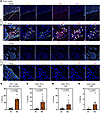 Figure 4
MI BrMs are characterized by granzyme B+ and PD-1+ T cells. (A) Representative immunohistofluorescence (IHF) staining for CD8 (yellow), CD4 (green), PD-1 (red), granzyme B (GZB; pink), and pan-cytokeratin (PanCK; cyan) in tumor margins of MI (top) and HI (bottom) lung cancer BrM patient samples. Scale bars: 100 μm (low magnification), 50 μm (high magnification). (B–E) Quantification of PD-1+ (B), CD8+PD-1+ (C), CD4+PD-1+ (D), and CD8+GZB+ (E) cells as a percentage of stroma (PanCK– cells) in HI and MI BrM samples. P values were calculated using 2-tailed Student’s t test.
CHI3L1 contributes to tumor burden and immune-cold microenvironments in HI BrMs. The immune-hot tumor microenvironment of MI BrMs with abundant active lymphoid cells may be conducive to response to existing therapies that leverage the immune system, such as ICIs (37). However, fewer therapeutic options exist for BrMs that are typically characterized by a lymphocyte-poor/immune-cold microenvironment, such as that observed in HI BrMs (20, 38). We therefore investigated potential mechanisms contributing to the immunosuppressive environment of HI BrMs. We previously demonstrated that chitinase 3–like-1 (CHI3L1), a secreted glycoprotein, is abundantly expressed in the tumor microenvironment of HI BrMs (8). Specifically, we determined that a subpopulation of reactive astrocytes with activated STAT3 (phosphorylated STAT3) secrete CHI3L1, which can induce cancer cell invasion into the brain parenchyma (8). However, in addition to pro-invasive functions, CHI3L1 has also been shown to induce an immunosuppressive microenvironment in both CNS and non-CNS tumors (39–45). We therefore investigated a potential role for CHI3L1 in modulating the immune microenvironment in BrMs and regulating the growth of these lesions.
To do so, we used transgenic C57BL/6 mice lacking Chi3l1, either as full-body knockouts (Chi3l1–/–) or as heterozygotes (Chi3l1+/–) (Supplemental Figure 5, A and B) (46). We orthotopically injected syngeneic melanoma murine cells (YUMM1.7, YUMM5.2) into the brains of Chi3l1–/–, Chi3l1+/–, and wild-type (Chi3l1+/+) mice. We observed that the YUMM1.7 cells, which grow as HI lesions in the brain, showed decreased tumor burden in the Chi3l1–/– versus Chi3l1+/– or Chi3l1+/+ mice, which was not observed following intracranial injection of MI YUMM5.2 melanoma cells (Figure 5, A–D). RNAscope staining for Chi3l1 confirmed abundant Chi3l1 in Chi3l1+/+ mouse brains bearing HI YUMM1.7 tumors, with less Chi3l1 present in the Chi3l1+/+ mouse brains bearing MI YUMM5.2 tumors (Figure 5, E–G). Importantly, Chi3l1 was expressed at low levels in the tumor compartment, and no significant difference in Chi3l1 abundance was found in the tumor compartments of YUMM1.7 versus YUMM5.2 models (Supplemental Figure 5C). These observations are in agreement with our previously published observations demonstrating that astrocytes are the predominant source of CHI3L1 in the brain (8). Consistent with reduced tumor burden, Chi3l1–/– mice bearing intracranially injected YUMM1.7 cells displayed prolonged overall survival compared with Chi3l1+/– or Chi3l1+/+ mice (Figure 5H).
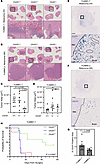 Figure 5
Loss of CHI3L1 decreases tumor burden in murine models of HI, but not MI, BrMs. (A and B) Representative H&E staining of brains of wild-type (+/+, left) and heterozygous (+/–, middle) and homozygous (–/–, right) Chi3l1-knockout mice bearing orthotopically injected HI YUMM1.7 (A) or MI YUMM5.2 (B) melanoma cells. Scale bars: 2 mm (top), 400 μm (bottom). (C and D) Quantification of tumor area across H&E images of Chi3l1+/+, Chi3l1+/–, and Chi3l1–/– mice bearing intracranially injected YUMM1.7 (C) or YUMM5.2 (D) cells. (E and F) Representative RNAscope staining for Chi3l1 (blue) in wild-type mouse brains bearing intracranially injected YUMM1.7 (melanoma, HI) (E) or YUMM5.2 (melanoma, MI) (F) cells. Scale bars: 1 mm (top), 100 μm (bottom). (G) Quantification of RNAscope staining for Chi3l1 in wild-type mouse brains bearing intracranially injected YUMM1.7 or YUMM5.2 syngeneic melanoma cells. (H) Kaplan-Meier survival curves for Chi3l1+/+, Chi3l1+/–, and Chi3l1–/– mice bearing intracranially injected YUMM1.7 melanoma cells. P value was calculated using log-rank (Mantel-Cox) test.
We next asked whether loss of Chi3l1 in the full-body-knockout mice affected the formation of metastases to other sites. Immunoblot analysis of lung tissue protein lysates revealed detectable Chi3l1 expression in Chi3l1+/+ mice that was absent in Chi3l1–/– animals (Supplemental Figure 5B). Interestingly, tail vein injections of YUMM1.7 melanoma cells revealed no significant difference in lung metastatic burden between Chi3l1+/+ and Chi3l1–/– mice (Supplemental Figure 5, D and E). These data reveal an important contribution of stromally derived CHI3L1 in the formation of CNS metastases.
To investigate how loss of Chi3l1 affects the immune landscape of BrMs, we performed IHC staining on brain lesions derived from YUMM1.7 cells injected intracranially into Chi3l1+/+, Chi3l1+/–, and Chi3l1–/– mice. Lesions in Chi3l1–/– mice possessed significantly more CD8+ cells in the tumor cores and margins compared with Chi3l1+/+ or Chi3l1+/– mice (Figure 6, A and B). CD4+ cells were also enriched at the tumor margins of YUMM1.7 lesions in Chi3l1–/– mice relative to the Chi3l1+/+ or Chi3l1+/– cohorts (Figure 6, C and D). Representative locations of the margin and core regions of interest and the representative algorithm to detect CD4+ cells are shown (Supplemental Figure 6A). We next validated these observations in an independent, HI syngeneic lung cancer model (HKP1). We first confirmed that, like the YUMM1.7 melanoma model, wild-type mouse brains bearing HKP1 lesions possessed abundant Chi3l1 expression in the brain parenchyma (Supplemental Figure 6B). In agreement with the results from the YUMM1.7 model, HKP1 lesions growing in Chi3l1–/– mice possessed significantly more CD8+ cells in the tumor cores and margins in comparison with Chi3l1+/+ or Chi3l1+/– mice (Supplemental Figure 6, C and D), whereas CD4+ cells were only increased in the margins of Chi3l1–/– mice relative to Chi3l1+/+ or Chi3l1+/– mice (Supplemental Figure 6, E and F). In both HI models, CD4+ cells were not enriched in the tumor cores of Chi3l1–/– mice, indicating that lack of Chi3l1 led to enhanced CD4+ cell recruitment but not infiltration into the lesion (Figure 6, C and D, and Supplemental Figure 6, E and F). Together, these data demonstrate a negative association between Chi3l1 levels and T cell recruitment within the tumor microenvironment of mouse BrM models.
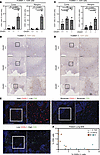 Figure 6
CHI3L1 levels are negatively associated with T cell infiltrate in murine models and patient BrMs. (A) Quantification of CD8+ cells in the tumor cores (left) and margins (right) of Chi3l1+/+, Chi3l1+/–, and Chi3l1–/– mice bearing intracranially injected YUMM1.7 melanoma cells. (B) Representative images of immunohistochemical (IHC) staining for CD8 in YUMM1.7-derived brain lesions. Scale bars: 1 mm (left), 100 μm (right). (C) Quantification of CD4+ cells in the tumor cores (left) and margins (right) of Chi3l1+/+, Chi3l1+/–, and Chi3l1–/– mice bearing intracranially injected YUMM1.7 melanoma cells. (D) Representative images of IHC staining for CD4 in YUMM1.7-derived brain lesions. Scale bars: 1 mm (left), 100 μm (right). (E) Representative IHF staining for CHI3L1 (red) and CD8 (green) in patient lung cancer BrM samples. Scale bars: 500 μm (left images), 100 μm (right images). (F) Quantification of CHI3L1 and CD8 IHF staining of patient lung cancer BrM samples, corresponding to the data presented in E. Samples are color-coded by histopathological growth pattern (MI, brown; HI, blue). Spearman’s correlation coefficient (rs) and P value are provided.
To investigate this association in humans, we performed IHF staining for CHI3L1 and CD8 on a panel of 16 lung cancer BrM samples (n = 8 MI, n = 8 HI). We observed a negative correlation between CHI3L1+ cells within the brain parenchyma and infiltrating CD8+ cells at the brain-tumor interface, such that samples with low CHI3L1+ cells possessed abundant CD8+ cells, whereas relatively few CD8+ cells were evident in samples with high stromal CHI3L1 expression (Figure 6, E and F). Indeed, the samples high in CD8+ cells were found to be MI tumors, while those high in CHI3L1+ cells were largely HI tumors (Figure 6F).
Low CHI3L1 confers improved response to immune checkpoint inhibition. Multiplex IHF staining confirmed elevated CD8+ and CD4+ cells and further revealed elevated B cells, CD4+ FoxP3+ (Treg) cells, and CD8+ GZB+ cells in the brains of YUMM1.7 tumor–bearing Chi3l1–/– mice relative to Chi3l1+/+ or Chi3l1+/– mice (Supplemental Figure 6, G–M). Given this lymphocyte-rich immune microenvironment in tumor-bearing Chi3l1–/– mice, we next asked whether loss of Chi3l1 conferred response to ICI. We intracranially injected Chi3l1+/+ and Chi3l1–/– mice with YUMM1.7 cells and treated mice with anti–PD-1 antibodies or an IgG isotype control (Figure 7A). Tumor volume was monitored over time by MRI, and cohorts were sacrificed upon reaching clinical endpoint (day 12 for all Chi3l1+/+ mice, day 15 for all Chi3l1–/– mice; Figure 7A). MRI revealed that Chi3l1–/– mice treated with anti–PD-1 possessed smaller tumors at clinical endpoint compared with mice treated with IgG, while this was not observed with the Chi3l+/+ cohort (Figure 7, B–D).
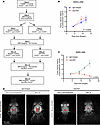 Figure 7
Genetic loss of Chi3l1 improves response to anti–PD-1 therapy. (A) Schematic illustrating experimental design. (B and C) Volume of intracranial YUMM1.7 lesions in Chi3l1+/+ (B) and Chi3l1–/– (C) mice treated with IgG isotype or anti–PD-1 antibody as measured by MRI. Tumor volume is normalized to volume at day 4 (pretreatment). (D) Representative MRI images of intracranial YUMM1.7 lesions in Chi3l1–/– mice at pretreatment (day 4) and clinical endpoint (day 15) time points, treated with IgG isotype (left) or anti–PD-1 antibody (right). Red denotes tumor. Scale bar: 10 mm.
We next evaluated whether stromal CHI3L1 levels could serve as a predictive biomarker for patient response to ICI. Across patients with BrMs from diverse primary sites treated with ICI (n = 17 patients), we observed that patients with low (below median) stromal CHI3L1 had prolonged intracranial progression-free survival compared with those with high stromal CHI3L1 (Figure 8, A and B). Sub-analysis of only the lung cancer BrM patients revealed a similar trend; however, there was a limited sample size (n = 9 patients), in part due to the fact that adoption of ICIs for treatment of lung cancer BrMs is quite recent (Figure 8C) (1, 3).
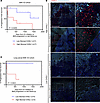 Figure 8
Low CHI3L1 expression in patient BrMs is associated with improved response to immune-checkpoint inhibition. (A) Kaplan-Meier curve showing intracranial progression-free survival of patients treated with immune-checkpoint inhibitors (ICIs). Patients were classified as having high or low stromal CHI3L1 based on median frequency of CHI3L1+ stromal cells at the brain-tumor margin of surgically resected samples. Patient cohorts include BrM from all primary types (n = 9 lung, 5 melanoma, 2 renal, 1 bladder). (B) Representative IHF staining for CHI3L1 (red) and cancer cells (blue, melanoma [MelanA] or pan-cytokeratin [PanCK, other primary]). Samples were classified as low or high stromal CHI3L1 based on median frequency of CHI3L1+ MelanA–/PanCK– cells. (C) Kaplan-Meier curve showing intracranial progression-free survival of patients with lung cancer BrMs (n = 9, same samples were included in A) that were treated with ICIs. Patients were classified as having high or low stromal CHI3L1 based on median frequency of CHI3L1+ stromal cells at the brain-tumor margin of surgically resected samples.


