
Research ArticleAIDS/HIVCell biologyInfectious disease
Open Access |  10.1172/jci.insight.198415
Effect of ligands and HIV latency-reversing agents on estrogen receptor α in CD4+ T cells
Cristina Ceriani,1,2 Priya Khetan,1,3 Anthony Abeyta-Lopez,1,4 Kena J. Lemu,1 Prachi Meher,1 Brigitte Allard,1,2 Katherine S. James,1,2 Anne-Marie W. Turner,1,2 David M. Margolis,1,2,3 and Nancie M. Archin1,2
1UNC HIV Cure Center, and
2Department of Medicine, The University of North Carolina (UNC) at Chapel Hill, Chapel Hill, North Carolina, USA.
3Department of Microbiology and Immunology, UNC at Chapel Hill, Chapel Hill, North Carolina, USA.
4Division of Translational Informatics, Department of Internal Medicine, University of New Mexico, Albuquerque, New Mexico, USA.
Address correspondence to: Nancie M. Archin, UNC Chapel Hill, 120 Mason Farm Rd, CB-7240 Chapel Hill, NC 27599, USA. Email: nancie_archin@med.unc.edu. CC’s present address is: Emory National Biomedical Research Center, Emory University, Atlanta, Georgia, USA. AAL’s present address is: Department of Pharmacology and Molecular Sciences, Johns Hopkins University School of Medicine, Baltimore, Maryland, USA.
Find articles by Ceriani, C. in: PubMed | Google Scholar
1UNC HIV Cure Center, and
2Department of Medicine, The University of North Carolina (UNC) at Chapel Hill, Chapel Hill, North Carolina, USA.
3Department of Microbiology and Immunology, UNC at Chapel Hill, Chapel Hill, North Carolina, USA.
4Division of Translational Informatics, Department of Internal Medicine, University of New Mexico, Albuquerque, New Mexico, USA.
Address correspondence to: Nancie M. Archin, UNC Chapel Hill, 120 Mason Farm Rd, CB-7240 Chapel Hill, NC 27599, USA. Email: nancie_archin@med.unc.edu. CC’s present address is: Emory National Biomedical Research Center, Emory University, Atlanta, Georgia, USA. AAL’s present address is: Department of Pharmacology and Molecular Sciences, Johns Hopkins University School of Medicine, Baltimore, Maryland, USA.
Find articles by Khetan, P. in: PubMed | Google Scholar
1UNC HIV Cure Center, and
2Department of Medicine, The University of North Carolina (UNC) at Chapel Hill, Chapel Hill, North Carolina, USA.
3Department of Microbiology and Immunology, UNC at Chapel Hill, Chapel Hill, North Carolina, USA.
4Division of Translational Informatics, Department of Internal Medicine, University of New Mexico, Albuquerque, New Mexico, USA.
Address correspondence to: Nancie M. Archin, UNC Chapel Hill, 120 Mason Farm Rd, CB-7240 Chapel Hill, NC 27599, USA. Email: nancie_archin@med.unc.edu. CC’s present address is: Emory National Biomedical Research Center, Emory University, Atlanta, Georgia, USA. AAL’s present address is: Department of Pharmacology and Molecular Sciences, Johns Hopkins University School of Medicine, Baltimore, Maryland, USA.
Find articles by Abeyta-Lopez, A. in: PubMed | Google Scholar
1UNC HIV Cure Center, and
2Department of Medicine, The University of North Carolina (UNC) at Chapel Hill, Chapel Hill, North Carolina, USA.
3Department of Microbiology and Immunology, UNC at Chapel Hill, Chapel Hill, North Carolina, USA.
4Division of Translational Informatics, Department of Internal Medicine, University of New Mexico, Albuquerque, New Mexico, USA.
Address correspondence to: Nancie M. Archin, UNC Chapel Hill, 120 Mason Farm Rd, CB-7240 Chapel Hill, NC 27599, USA. Email: nancie_archin@med.unc.edu. CC’s present address is: Emory National Biomedical Research Center, Emory University, Atlanta, Georgia, USA. AAL’s present address is: Department of Pharmacology and Molecular Sciences, Johns Hopkins University School of Medicine, Baltimore, Maryland, USA.
Find articles by Lemu, K. in: PubMed | Google Scholar
1UNC HIV Cure Center, and
2Department of Medicine, The University of North Carolina (UNC) at Chapel Hill, Chapel Hill, North Carolina, USA.
3Department of Microbiology and Immunology, UNC at Chapel Hill, Chapel Hill, North Carolina, USA.
4Division of Translational Informatics, Department of Internal Medicine, University of New Mexico, Albuquerque, New Mexico, USA.
Address correspondence to: Nancie M. Archin, UNC Chapel Hill, 120 Mason Farm Rd, CB-7240 Chapel Hill, NC 27599, USA. Email: nancie_archin@med.unc.edu. CC’s present address is: Emory National Biomedical Research Center, Emory University, Atlanta, Georgia, USA. AAL’s present address is: Department of Pharmacology and Molecular Sciences, Johns Hopkins University School of Medicine, Baltimore, Maryland, USA.
Find articles by Meher, P. in: PubMed | Google Scholar
1UNC HIV Cure Center, and
2Department of Medicine, The University of North Carolina (UNC) at Chapel Hill, Chapel Hill, North Carolina, USA.
3Department of Microbiology and Immunology, UNC at Chapel Hill, Chapel Hill, North Carolina, USA.
4Division of Translational Informatics, Department of Internal Medicine, University of New Mexico, Albuquerque, New Mexico, USA.
Address correspondence to: Nancie M. Archin, UNC Chapel Hill, 120 Mason Farm Rd, CB-7240 Chapel Hill, NC 27599, USA. Email: nancie_archin@med.unc.edu. CC’s present address is: Emory National Biomedical Research Center, Emory University, Atlanta, Georgia, USA. AAL’s present address is: Department of Pharmacology and Molecular Sciences, Johns Hopkins University School of Medicine, Baltimore, Maryland, USA.
Find articles by Allard, B. in: PubMed | Google Scholar
1UNC HIV Cure Center, and
2Department of Medicine, The University of North Carolina (UNC) at Chapel Hill, Chapel Hill, North Carolina, USA.
3Department of Microbiology and Immunology, UNC at Chapel Hill, Chapel Hill, North Carolina, USA.
4Division of Translational Informatics, Department of Internal Medicine, University of New Mexico, Albuquerque, New Mexico, USA.
Address correspondence to: Nancie M. Archin, UNC Chapel Hill, 120 Mason Farm Rd, CB-7240 Chapel Hill, NC 27599, USA. Email: nancie_archin@med.unc.edu. CC’s present address is: Emory National Biomedical Research Center, Emory University, Atlanta, Georgia, USA. AAL’s present address is: Department of Pharmacology and Molecular Sciences, Johns Hopkins University School of Medicine, Baltimore, Maryland, USA.
Find articles by James, K. in: PubMed | Google Scholar
1UNC HIV Cure Center, and
2Department of Medicine, The University of North Carolina (UNC) at Chapel Hill, Chapel Hill, North Carolina, USA.
3Department of Microbiology and Immunology, UNC at Chapel Hill, Chapel Hill, North Carolina, USA.
4Division of Translational Informatics, Department of Internal Medicine, University of New Mexico, Albuquerque, New Mexico, USA.
Address correspondence to: Nancie M. Archin, UNC Chapel Hill, 120 Mason Farm Rd, CB-7240 Chapel Hill, NC 27599, USA. Email: nancie_archin@med.unc.edu. CC’s present address is: Emory National Biomedical Research Center, Emory University, Atlanta, Georgia, USA. AAL’s present address is: Department of Pharmacology and Molecular Sciences, Johns Hopkins University School of Medicine, Baltimore, Maryland, USA.
Find articles by
Turner, A.
in:
PubMed
|
Google Scholar
|

1UNC HIV Cure Center, and
2Department of Medicine, The University of North Carolina (UNC) at Chapel Hill, Chapel Hill, North Carolina, USA.
3Department of Microbiology and Immunology, UNC at Chapel Hill, Chapel Hill, North Carolina, USA.
4Division of Translational Informatics, Department of Internal Medicine, University of New Mexico, Albuquerque, New Mexico, USA.
Address correspondence to: Nancie M. Archin, UNC Chapel Hill, 120 Mason Farm Rd, CB-7240 Chapel Hill, NC 27599, USA. Email: nancie_archin@med.unc.edu. CC’s present address is: Emory National Biomedical Research Center, Emory University, Atlanta, Georgia, USA. AAL’s present address is: Department of Pharmacology and Molecular Sciences, Johns Hopkins University School of Medicine, Baltimore, Maryland, USA.
Find articles by
Margolis, D.
in:
PubMed
|
Google Scholar
|
1UNC HIV Cure Center, and
2Department of Medicine, The University of North Carolina (UNC) at Chapel Hill, Chapel Hill, North Carolina, USA.
3Department of Microbiology and Immunology, UNC at Chapel Hill, Chapel Hill, North Carolina, USA.
4Division of Translational Informatics, Department of Internal Medicine, University of New Mexico, Albuquerque, New Mexico, USA.
Address correspondence to: Nancie M. Archin, UNC Chapel Hill, 120 Mason Farm Rd, CB-7240 Chapel Hill, NC 27599, USA. Email: nancie_archin@med.unc.edu. CC’s present address is: Emory National Biomedical Research Center, Emory University, Atlanta, Georgia, USA. AAL’s present address is: Department of Pharmacology and Molecular Sciences, Johns Hopkins University School of Medicine, Baltimore, Maryland, USA.
Find articles by Archin, N. in: PubMed | Google Scholar
Published July 10, 2026 - More info
JCI Insight. 2026;11(15):e198415. https://doi.org/10.1172/jci.insight.198415.
© 2026 Ceriani et al. This work is licensed under the Creative Commons Attribution 4.0 International License. To view a copy of this license, visit http://creativecommons.org/licenses/by/4.0/.
Received: August 12, 2025; Accepted: June 18, 2026

-
Results
No biological sex differences observed in ESR1 gene expression. As mentioned previously, while estrogen signals predominantly through ERα and ERβ, ERα is the predominant form expressed in CD4+ T cells and has been reported to have a suppressive effect on HIV transcription (8, 9). We therefore first evaluated gene expression levels of ERα and assessed any sex differences. We compared the gene expression of ESR1 in peripheral blood mononuclear cells (PBMC) and CD4+ T cells from seronegative donors. Consistent with other studies in HIV seronegative individuals and PLWH, levels of ESR1 mRNA expression in CD4+ T cells and in unfractionated total PBMC isolated from men and women were similar (Figure 1A) (5, 18). When comparing levels of expression between PBMC and isolated CD4+ T cells, we observed a modest but statistically significant increase in expression of ESR1 mRNA in PBMC compared with CD4+ T cells (Figure 1B). This most likely reflects expression in cell types other than CD4+ T cells in unfractionated PBMC. ESR2 mRNA (encoding ERβ) levels were confirmed in unfractionated PBMC and CD4+ T cells and were comparatively lower than ESR1 levels (not shown) as previously reported (17, 18).
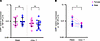 Figure 1
ESR1 mRNA expression in male and female. (A) ESR1 mRNA baseline expression in peripheral blood mononuclear cells (PBMCs) and purified CD4+ T cells from seronegative female (PBMC, n = 11; CD4, n = 14) and male donors (PBMC, n = 8; CD4, n = 13). (B) Paired ESR1 mRNA expression in PBMCs and CD4+ T cells isolated from the same donors (n = 7). Each point represents an individual sample. Geometric mean with geometric SD shown. Statistical significance was calculated using Mann-Whitney U test or Wilcoxon test compared with DMSO as appropriate. *P < 0.05; **P < 0.005, ***P < 0.001.
Downregulation of ESR1 gene expression by LRAs in PBMC and CD4+ T cells. Given the extensive effect of estrogen signaling on immune function, and the widespread use of LRAs in clinical testing as part of HIV cure strategies, we next sought to determine whether LRA exposure causes any modulation of ERα. We evaluated the effect of LRAs on ESR1 gene expression and ERα protein levels, in both, unfractionated PBMCs, and CD4+ T cells. LRAs evaluated included the T cell receptor activator phytohemagglutinin A (PHA), the PKC agonists PEP005 and phorbol-12-myristate-13-acetate with the calcium ionophore, ionomycin (PMAi), the HDAC inhibitors romidepsin (ROM) and vorinostat (VOR), the bromodomain inhibitor iBET-151 (iBET), the IAP inhibitor AZD-5582 (AZD), and a STING pathway agonist (22).
To evaluate the effect of these commonly used LRAs on ESR1 gene expression, we treated PBMC and CD4+ T cells with LRAs for 6 hours and 24 hours. ESR1 mRNA was significantly downregulated by the majority of the LRAs tested in both PBMCs (Figure 2A) and CD4+ T cells (Figure 2B) compared with untreated conditions, with similar trends observed between the 2 cell populations. Given that the HIV reservoir is primarily contained within CD4 T cells, henceforth, we focused primarily on the CD4+ T cell population.
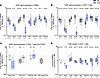 Figure 2
LRAs significantly downregulate ERα gene expression and decrease ERα protein. (A–C) ESR1 mRNA fold expression, relative to DMSO, after 6 hours and 24 hours exposure with LRAs in PBMC (A) and CD4+ T cells (B) from seronegative individuals, and CD4+ T cells and resting CD4+ T cells from PLWH (C). (D) ERα protein quantification, relative to DMSO, after 6 hours and 24 hours exposure with LRAs in CD4+ T cells from seronegative individuals. Sample sizes (n) are indicated below each group on the x axis. Each point represents an individual sample. Boxes show the interquartile range with median; whiskers span the full range. Fold change is relative to DMSO, with the horizontal line at 1 indicating baseline; values > 1 reflect upregulation, < 1 reflect downregulation. Wilcoxon test was performed by comparing each LRA treatment to the untreated control (DMSO) at the same time point. *P < 0.05; **P < 0.005, ***P < 0.001.
As shown in Figure 2B, at 6 hours, the highest ESR1 mRNA downregulation was observed with PMAi (0.05-fold change, P < 0.001), while at 24-hours, ROM exhibited the highest downregulation (0.02-fold change, P < 0.01). Significant rapid downregulation was observed at 6-hour time point for all LRAs, except AZD treatment which results in minimal downregulation only at the 24-hour time point (0.73-fold change, P < 0.001) consistent with the slower onset of pathway signaling induced by AZD (23). The rapid downregulation observed at the 6-hour time point was followed by an incremental decrease at 24 hours for PHA, PMAi, and STINGa and a partial restoration for VOR and PEP005.
No significant sex differences were observed in ESR1 downregulation in either CD4+ T cells or unfractionated PBMC (Supplemental Figure 1; supplemental material available online with this article; https://doi.org/10.1172/jci.insight.198415DS1).
These findings were recapitulated in HIV ART-suppressed donors, as shown in Figure 2C, specifically with VOR treatment for 6 hours in resting CD4+ T cells (rCD4) and VOR, PMAi, and PEP005 treatments for 24 hours in CD4+ T cells. However, statistical significance was not reached for VOR and PEP005 at 6 hours. This could be due to the limited number of participants evaluated. Due to limited cell availability from PLWH donors, not all LRAs could be tested across all individuals, and therefore, only a subset of LRAs is shown in this analysis. VOR treatment was performed in resting CD4+ T cells using samples from a parallel study; responses were comparable with those observed in total CD4+ T cells.
Correlation between ESR1 gene expression and ERα protein level downregulation in response to LRAs. We next assessed the effect of ESR1 gene expression downregulation by LRAs on ERα protein levels using Western blot analysis. As shown in Figure 2D, we observed a significant decrease in ERα protein levels after 6 hours of treatment with PMAi and after 24 hours of treatment with PMAi, ROM, and PEP005.
We further investigated the temporal relationship between ESR1 mRNA downregulation and ERα protein level changes (Figure 2, B and D). Interestingly, a temporal delay was observed, where mRNA downregulation at 6 hours resulted in a more pronounced decrease in protein levels at the 24-hour time point. Significant mRNA downregulation at 6 hours following PMAi treatment led to the highest observed protein level decrease at 24 hours (0.37-fold change, P < 0.001). Similarly, the induction of mRNA downregulation by PEP005 at 6 hours resulted in a significant protein level decrease at 24 hours (0.57-fold change, P < 0.001). On the other hand, ROM, which demonstrated the highest downregulation at the 24-hour time point, results in only a minimal decrease at the same time point, likely as a result of a temporal lag in the decrease of protein synthesis as less transcripts become available for the translation machinery.
Absence of ERα degradation by potent ERα degraders in CD4+ T cells. To gain a better understanding of the relationship of the downregulation of the estrogen receptor and reactivation of HIV by LRAs, as well as the effect of this phenotype on immune function, we endeavored to use traditional tools to modulate ERα in CD4+ T cells. Selective estrogen receptor modulators (SERM) and selective estrogen receptor degraders (SERD) have shown promise in selectively targeting and degrading ERα protein in the breast cancer field. In this study, we evaluated ERα protein levels in CD4+ T cells exposed to Fulvestrant (FULV) a well-known SERD and ARV-471 (vepdegestrant), a PROTAC protein degrader, selective for ERα (21). Surprisingly, we did not observe any significant decrease in ERα protein levels after treatment with FULV at different concentrations and time points (Figure 3, A and C). Similarly, treatment with ARV-471 did not lead to significant ERα protein degradation in CD4+ T cells, even at higher doses and longer exposure times (Figure 3, B and C).
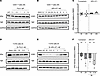 Figure 3
Comparison ERα degradation in CD4+ T cells vs T-47D. (A and B) Representative WB of ERα total protein from CD4+ T cells of seronegative donors after 24 hours of Fulvestrant or ARV-471 treatment at indicated concentrations. (C) Quantification of ERα total protein expression from CD4+ T cells after 6 or 24 hours of Fulvestrant (1 μM) treatment from n = 8 donors or ARV-471 treatment from n = 3 donors. (D and E) Representative WB of ERα total protein from T-47D cells after Fulvestrant or ARV-471 treatment at indicated concentrations at 2 hours post-treatment. (F) Quantification of ERα total protein from T-47D cells after Fulvestrant (1 μM) treatment 6 hours (n = 3) and 24 hours (n = 5) time points or after 6 hours ARV-471 treatment (n = 3) at 1 nM and 10 nM. Each point represents an individual sample. Geometric mean with geometric SD shown for C and F. *P < 0.05; **P < 0.005. One-sample t test was performed by comparing each treatment to the theoretical mean at the same time point.
In contrast, as shown in Figure 3, D–F, consistent with previous findings (21), both FULV and ARV-471 successfully decreased ERα protein levels in T-47D breast cancer cells, demonstrating their efficacy as ERα degraders. Furthermore, we observed a dose- and time-dependent degradation of ERα in T-47D cells (Figure 3, D–F).
To confirm the degradation mechanisms in breast cancer cells, we examined ESR1 gene expression in T-47D cells upon treatment with ERα selective modulators and degraders. After treatment of cells with these compounds, minor, nonsignificant changes in ESR1 mRNA expression were observed (Supplemental Figure 2A), confirming that the decrease in ERα protein was directly related to targeting the protein for degradation and not a consequence of gene expression decrease. Similarly, in CD4+ T cells, we confirm that ERα modulators do not have an effect on ESR1 expression (Supplemental Figure 2B). Of note, no sex differences were observed in these outcomes (data not shown).
Collectively, these results suggest a differential protein regulation in CD4+ T cells compared with breast cancer cells (T-47D cells), where ERα modulators were originally developed and extensively studied. The differential response of CD4+ T cells to ERα degraders raises intriguing questions regarding the regulation of ERα protein in immune cells and the ERα pathway involved in cell differentiation and cytokine modulation.
Absence of ERα protein nuclear localization and translocation in CD4+ T cells. Given our unexpected results with the ERα degraders in CD4+ T cells, we next investigated the subcellular localization and translocation of ERα in CD4+ T cells, along with its modulation by β-estradiol (βEST) treatment. Estrogen receptor signaling is complex and occurs through both ligand-dependent and ligand-independent pathways. Ligand-dependent signaling is initiated by the binding of endogenous or synthetic estrogen to the ER receptor in the cytosol, triggering a conformational change leading to the translocation of the receptor to the nucleus where it binds to the estrogen-response element (ERE) of estrogen-responsive genes to regulate transcription. We therefore exposed CD4+ T cells to physiologically relevant concentrations of βEST and assessed nuclear translocation of ERα. Surprisingly, we observed a prevalent cytoplasmic localization of ERα (95%) in CD4+ T cells, indicating a minimal presence in the nucleus. Furthermore, despite varying concentrations and treatment durations of βEST, no significant nuclear translocation of ERα was induced (Figure 4, A and B). This was true even for brief 30-minute (Figure 4A) or extended 24-hour exposure to βEST (data not shown).
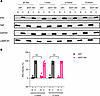 Figure 4
Absence of ERα protein nuclear localization and translocation in CD4+ T cells. (A) Representative WB of ERα nuclear (N) and cytoplasmic (C) protein fraction from CD4+ T cells of seronegative donors after β-estradiol (300 pg/mL) treatment from 30 minutes to 6 hours. (B) Quantification of ERα protein expression in the N and C compartment from n = 4 donors after 2 hour and 6 hours in untreated conditions and treatment with β-estradiol (300 pg/mL). Each point represents an individual sample. Mean ± SD shown for B. Statistical significance was calculated using Mann-Whitney U test between nucleus protein quantification with and without treatment at the same time point.
To validate these findings and evaluate the bioactive properties of βEST, parallel experiments were conducted in the breast cancer cell line T-47D. In contrast to CD4+ T cells, untreated T-47D cells demonstrated predominant nuclear localization of ERα (70%). Notably, βEST treatment induced significant translocation of the ERα from the cytoplasm to the nucleus (Supplemental Figure 3, A and B). Additionally, βEST-treated T-47D cells exhibited significant enhanced metabolic activity (Supplemental Figure 3C) and duplication rate (Supplemental Figure 3D) compared with untreated conditions, confirming the bioactivity of the βEST used in this study. Similarly, pretreatment of CD4 T cells with βEST prior to HIV infection resulted in a decrease in HIV p24 production compared with untreated control cells as previously reported (24), confirming the biological activity of our stock of βEST in primary cells (Supplemental Figure 4). These results highlight the differential modulation of ERα in CD4+ T cells and breast cancer cells, suggesting distinct regulatory mechanisms requiring further investigations.


