
Research ArticleHematologyOncology
Open Access |  10.1172/jci.insight.193779
Characterization of the clonal hierarchy and immunophenotype of PTPN11 mutations in acute myeloid leukemia
Sydney Fobare,1,2 Chia Sharpe,2 Kate Quinn,2 Kinsey Bryant,2 Linde A. Miles,3,4,5 Robert L. Bowman,6 Carolyn Cheney,2 Casie Furby,2 Marissa Long,2 Kaytlynn Fyock,2 Ben Wronowski,2 James R. Lerma,2 Krzysztof Mrózek,7 Deedra Nicolet,7,8 Thomas M. Sesterhenn,2 Megan E. Johnstone,2 Jianmin Pan,9,10,11 Shesh N. Rai,9,10,11 Chandrashekhar Pasare,4 Nives Zimmermann,12 Wen-Mei Yu,13 Cheng-Kui Qu,13 Andrew Carroll,14 Richard Stone,15 Eunice S. Wang,16 Jonathan Kolitz,17 Bayard Powell,18 John P. Perentesis,5 Ann-Kathrin Eisfeld,7,19 Erin Hertlein,2 and John C. Byrd2
1Medical Scientist Training Program, The Ohio State University, Columbus, Ohio, USA.
2Department of Internal Medicine, University of Cincinnati, Cincinnati, Ohio, USA.
3Division of Experimental Hematology and Cancer Biology, Cincinnati Children’s Hospital, Cincinnati, Ohio, USA.
4Department of Pediatrics, Cincinnati Children’s Hospital Medical Center, Cincinnati, Ohio, USA.
5Cancer and Blood Diseases Institute, Cincinnati Children’s Hospital, Cincinnati, Ohio, USA.
6Department of Cancer Biology, University of Pennsylvania, Philadelphia, Pennsylvania, USA.
7Clara D. Bloomfield Center for Leukemia Outcomes Research, and
8Alliance Statistics and Data Management Center, The Ohio State University Comprehensive Cancer Center, Columbus, Ohio, USA.
9Biostatistics and Informatics Shared Resource, University of Cincinnati Cancer Center, Cincinnati, Ohio, USA.
10Cancer Data Science Center, and
11Department of Biostatistics, Health Informatics and Data Sciences, University of Cincinnati College of Medicine, Cincinnati, Ohio, USA.
12Pathology and Laboratory Medicine, University of Cincinnati, Cincinnati, Ohio, USA.
13Aflac Cancer and Blood Disorders Center, Department of Pediatrics, Winship Cancer Institute, Emory University School of Medicine, Atlanta, Georgia, USA.
14Department of Genetics, University of Alabama at Birmingham, Birmingham, Alabama, USA.
15Dana-Farber/Partners CancerCare, Boston, Massachusetts, USA.
16Roswell Park Comprehensive Cancer Center, Buffalo, New York, USA.
17Monter Cancer Center, Zucker School of Medicine at Hofstra/Northwell, Lake Success, New York, USA.
18Wake Forest Baptist Comprehensive Cancer Center, Winston-Salem, North Carolina, USA.
19Division of Hematology, Department of Internal Medicine, The Ohio State University Comprehensive Cancer Center, Columbus, Ohio, USA.
Address correspondence to: John C. Byrd, UPMC Hillman Cancer Center, Associate Vice Chancellor for Cancer Affairs, University of Pittsburgh, UPMC Cancer Pavilion, Suite 500, 5150 Centre Avenue, Pittsburgh, Pennsylvania, 15232, USA. Phone: 412.623.3205; Email: byrdjc@upmc.edu. Or to: Erin Hertlein, Division of Hematology-Oncology, University of Cincinnati College of Medicine, 231 Albert Sabin Way, ML 0551, Room 7009, Cincinnati, Ohio, 45267, USA. Phone: 513.558.0858; Email: hertleek@ucmail.uc.edu.
Authorship note: SF and CS contributed equally to this work and have been designated as co–first authors. EH and JCB contributed equally to this work and have been designated as co–senior authors.
Find articles by Fobare, S. in: PubMed | Google Scholar
1Medical Scientist Training Program, The Ohio State University, Columbus, Ohio, USA.
2Department of Internal Medicine, University of Cincinnati, Cincinnati, Ohio, USA.
3Division of Experimental Hematology and Cancer Biology, Cincinnati Children’s Hospital, Cincinnati, Ohio, USA.
4Department of Pediatrics, Cincinnati Children’s Hospital Medical Center, Cincinnati, Ohio, USA.
5Cancer and Blood Diseases Institute, Cincinnati Children’s Hospital, Cincinnati, Ohio, USA.
6Department of Cancer Biology, University of Pennsylvania, Philadelphia, Pennsylvania, USA.
7Clara D. Bloomfield Center for Leukemia Outcomes Research, and
8Alliance Statistics and Data Management Center, The Ohio State University Comprehensive Cancer Center, Columbus, Ohio, USA.
9Biostatistics and Informatics Shared Resource, University of Cincinnati Cancer Center, Cincinnati, Ohio, USA.
10Cancer Data Science Center, and
11Department of Biostatistics, Health Informatics and Data Sciences, University of Cincinnati College of Medicine, Cincinnati, Ohio, USA.
12Pathology and Laboratory Medicine, University of Cincinnati, Cincinnati, Ohio, USA.
13Aflac Cancer and Blood Disorders Center, Department of Pediatrics, Winship Cancer Institute, Emory University School of Medicine, Atlanta, Georgia, USA.
14Department of Genetics, University of Alabama at Birmingham, Birmingham, Alabama, USA.
15Dana-Farber/Partners CancerCare, Boston, Massachusetts, USA.
16Roswell Park Comprehensive Cancer Center, Buffalo, New York, USA.
17Monter Cancer Center, Zucker School of Medicine at Hofstra/Northwell, Lake Success, New York, USA.
18Wake Forest Baptist Comprehensive Cancer Center, Winston-Salem, North Carolina, USA.
19Division of Hematology, Department of Internal Medicine, The Ohio State University Comprehensive Cancer Center, Columbus, Ohio, USA.
Address correspondence to: John C. Byrd, UPMC Hillman Cancer Center, Associate Vice Chancellor for Cancer Affairs, University of Pittsburgh, UPMC Cancer Pavilion, Suite 500, 5150 Centre Avenue, Pittsburgh, Pennsylvania, 15232, USA. Phone: 412.623.3205; Email: byrdjc@upmc.edu. Or to: Erin Hertlein, Division of Hematology-Oncology, University of Cincinnati College of Medicine, 231 Albert Sabin Way, ML 0551, Room 7009, Cincinnati, Ohio, 45267, USA. Phone: 513.558.0858; Email: hertleek@ucmail.uc.edu.
Authorship note: SF and CS contributed equally to this work and have been designated as co–first authors. EH and JCB contributed equally to this work and have been designated as co–senior authors.
Find articles by Sharpe, C. in: PubMed | Google Scholar
1Medical Scientist Training Program, The Ohio State University, Columbus, Ohio, USA.
2Department of Internal Medicine, University of Cincinnati, Cincinnati, Ohio, USA.
3Division of Experimental Hematology and Cancer Biology, Cincinnati Children’s Hospital, Cincinnati, Ohio, USA.
4Department of Pediatrics, Cincinnati Children’s Hospital Medical Center, Cincinnati, Ohio, USA.
5Cancer and Blood Diseases Institute, Cincinnati Children’s Hospital, Cincinnati, Ohio, USA.
6Department of Cancer Biology, University of Pennsylvania, Philadelphia, Pennsylvania, USA.
7Clara D. Bloomfield Center for Leukemia Outcomes Research, and
8Alliance Statistics and Data Management Center, The Ohio State University Comprehensive Cancer Center, Columbus, Ohio, USA.
9Biostatistics and Informatics Shared Resource, University of Cincinnati Cancer Center, Cincinnati, Ohio, USA.
10Cancer Data Science Center, and
11Department of Biostatistics, Health Informatics and Data Sciences, University of Cincinnati College of Medicine, Cincinnati, Ohio, USA.
12Pathology and Laboratory Medicine, University of Cincinnati, Cincinnati, Ohio, USA.
13Aflac Cancer and Blood Disorders Center, Department of Pediatrics, Winship Cancer Institute, Emory University School of Medicine, Atlanta, Georgia, USA.
14Department of Genetics, University of Alabama at Birmingham, Birmingham, Alabama, USA.
15Dana-Farber/Partners CancerCare, Boston, Massachusetts, USA.
16Roswell Park Comprehensive Cancer Center, Buffalo, New York, USA.
17Monter Cancer Center, Zucker School of Medicine at Hofstra/Northwell, Lake Success, New York, USA.
18Wake Forest Baptist Comprehensive Cancer Center, Winston-Salem, North Carolina, USA.
19Division of Hematology, Department of Internal Medicine, The Ohio State University Comprehensive Cancer Center, Columbus, Ohio, USA.
Address correspondence to: John C. Byrd, UPMC Hillman Cancer Center, Associate Vice Chancellor for Cancer Affairs, University of Pittsburgh, UPMC Cancer Pavilion, Suite 500, 5150 Centre Avenue, Pittsburgh, Pennsylvania, 15232, USA. Phone: 412.623.3205; Email: byrdjc@upmc.edu. Or to: Erin Hertlein, Division of Hematology-Oncology, University of Cincinnati College of Medicine, 231 Albert Sabin Way, ML 0551, Room 7009, Cincinnati, Ohio, 45267, USA. Phone: 513.558.0858; Email: hertleek@ucmail.uc.edu.
Authorship note: SF and CS contributed equally to this work and have been designated as co–first authors. EH and JCB contributed equally to this work and have been designated as co–senior authors.
Find articles by Quinn, K. in: PubMed | Google Scholar
1Medical Scientist Training Program, The Ohio State University, Columbus, Ohio, USA.
2Department of Internal Medicine, University of Cincinnati, Cincinnati, Ohio, USA.
3Division of Experimental Hematology and Cancer Biology, Cincinnati Children’s Hospital, Cincinnati, Ohio, USA.
4Department of Pediatrics, Cincinnati Children’s Hospital Medical Center, Cincinnati, Ohio, USA.
5Cancer and Blood Diseases Institute, Cincinnati Children’s Hospital, Cincinnati, Ohio, USA.
6Department of Cancer Biology, University of Pennsylvania, Philadelphia, Pennsylvania, USA.
7Clara D. Bloomfield Center for Leukemia Outcomes Research, and
8Alliance Statistics and Data Management Center, The Ohio State University Comprehensive Cancer Center, Columbus, Ohio, USA.
9Biostatistics and Informatics Shared Resource, University of Cincinnati Cancer Center, Cincinnati, Ohio, USA.
10Cancer Data Science Center, and
11Department of Biostatistics, Health Informatics and Data Sciences, University of Cincinnati College of Medicine, Cincinnati, Ohio, USA.
12Pathology and Laboratory Medicine, University of Cincinnati, Cincinnati, Ohio, USA.
13Aflac Cancer and Blood Disorders Center, Department of Pediatrics, Winship Cancer Institute, Emory University School of Medicine, Atlanta, Georgia, USA.
14Department of Genetics, University of Alabama at Birmingham, Birmingham, Alabama, USA.
15Dana-Farber/Partners CancerCare, Boston, Massachusetts, USA.
16Roswell Park Comprehensive Cancer Center, Buffalo, New York, USA.
17Monter Cancer Center, Zucker School of Medicine at Hofstra/Northwell, Lake Success, New York, USA.
18Wake Forest Baptist Comprehensive Cancer Center, Winston-Salem, North Carolina, USA.
19Division of Hematology, Department of Internal Medicine, The Ohio State University Comprehensive Cancer Center, Columbus, Ohio, USA.
Address correspondence to: John C. Byrd, UPMC Hillman Cancer Center, Associate Vice Chancellor for Cancer Affairs, University of Pittsburgh, UPMC Cancer Pavilion, Suite 500, 5150 Centre Avenue, Pittsburgh, Pennsylvania, 15232, USA. Phone: 412.623.3205; Email: byrdjc@upmc.edu. Or to: Erin Hertlein, Division of Hematology-Oncology, University of Cincinnati College of Medicine, 231 Albert Sabin Way, ML 0551, Room 7009, Cincinnati, Ohio, 45267, USA. Phone: 513.558.0858; Email: hertleek@ucmail.uc.edu.
Authorship note: SF and CS contributed equally to this work and have been designated as co–first authors. EH and JCB contributed equally to this work and have been designated as co–senior authors.
Find articles by Bryant, K. in: PubMed | Google Scholar
1Medical Scientist Training Program, The Ohio State University, Columbus, Ohio, USA.
2Department of Internal Medicine, University of Cincinnati, Cincinnati, Ohio, USA.
3Division of Experimental Hematology and Cancer Biology, Cincinnati Children’s Hospital, Cincinnati, Ohio, USA.
4Department of Pediatrics, Cincinnati Children’s Hospital Medical Center, Cincinnati, Ohio, USA.
5Cancer and Blood Diseases Institute, Cincinnati Children’s Hospital, Cincinnati, Ohio, USA.
6Department of Cancer Biology, University of Pennsylvania, Philadelphia, Pennsylvania, USA.
7Clara D. Bloomfield Center for Leukemia Outcomes Research, and
8Alliance Statistics and Data Management Center, The Ohio State University Comprehensive Cancer Center, Columbus, Ohio, USA.
9Biostatistics and Informatics Shared Resource, University of Cincinnati Cancer Center, Cincinnati, Ohio, USA.
10Cancer Data Science Center, and
11Department of Biostatistics, Health Informatics and Data Sciences, University of Cincinnati College of Medicine, Cincinnati, Ohio, USA.
12Pathology and Laboratory Medicine, University of Cincinnati, Cincinnati, Ohio, USA.
13Aflac Cancer and Blood Disorders Center, Department of Pediatrics, Winship Cancer Institute, Emory University School of Medicine, Atlanta, Georgia, USA.
14Department of Genetics, University of Alabama at Birmingham, Birmingham, Alabama, USA.
15Dana-Farber/Partners CancerCare, Boston, Massachusetts, USA.
16Roswell Park Comprehensive Cancer Center, Buffalo, New York, USA.
17Monter Cancer Center, Zucker School of Medicine at Hofstra/Northwell, Lake Success, New York, USA.
18Wake Forest Baptist Comprehensive Cancer Center, Winston-Salem, North Carolina, USA.
19Division of Hematology, Department of Internal Medicine, The Ohio State University Comprehensive Cancer Center, Columbus, Ohio, USA.
Address correspondence to: John C. Byrd, UPMC Hillman Cancer Center, Associate Vice Chancellor for Cancer Affairs, University of Pittsburgh, UPMC Cancer Pavilion, Suite 500, 5150 Centre Avenue, Pittsburgh, Pennsylvania, 15232, USA. Phone: 412.623.3205; Email: byrdjc@upmc.edu. Or to: Erin Hertlein, Division of Hematology-Oncology, University of Cincinnati College of Medicine, 231 Albert Sabin Way, ML 0551, Room 7009, Cincinnati, Ohio, 45267, USA. Phone: 513.558.0858; Email: hertleek@ucmail.uc.edu.
Authorship note: SF and CS contributed equally to this work and have been designated as co–first authors. EH and JCB contributed equally to this work and have been designated as co–senior authors.
Find articles by Miles, L. in: PubMed | Google Scholar
1Medical Scientist Training Program, The Ohio State University, Columbus, Ohio, USA.
2Department of Internal Medicine, University of Cincinnati, Cincinnati, Ohio, USA.
3Division of Experimental Hematology and Cancer Biology, Cincinnati Children’s Hospital, Cincinnati, Ohio, USA.
4Department of Pediatrics, Cincinnati Children’s Hospital Medical Center, Cincinnati, Ohio, USA.
5Cancer and Blood Diseases Institute, Cincinnati Children’s Hospital, Cincinnati, Ohio, USA.
6Department of Cancer Biology, University of Pennsylvania, Philadelphia, Pennsylvania, USA.
7Clara D. Bloomfield Center for Leukemia Outcomes Research, and
8Alliance Statistics and Data Management Center, The Ohio State University Comprehensive Cancer Center, Columbus, Ohio, USA.
9Biostatistics and Informatics Shared Resource, University of Cincinnati Cancer Center, Cincinnati, Ohio, USA.
10Cancer Data Science Center, and
11Department of Biostatistics, Health Informatics and Data Sciences, University of Cincinnati College of Medicine, Cincinnati, Ohio, USA.
12Pathology and Laboratory Medicine, University of Cincinnati, Cincinnati, Ohio, USA.
13Aflac Cancer and Blood Disorders Center, Department of Pediatrics, Winship Cancer Institute, Emory University School of Medicine, Atlanta, Georgia, USA.
14Department of Genetics, University of Alabama at Birmingham, Birmingham, Alabama, USA.
15Dana-Farber/Partners CancerCare, Boston, Massachusetts, USA.
16Roswell Park Comprehensive Cancer Center, Buffalo, New York, USA.
17Monter Cancer Center, Zucker School of Medicine at Hofstra/Northwell, Lake Success, New York, USA.
18Wake Forest Baptist Comprehensive Cancer Center, Winston-Salem, North Carolina, USA.
19Division of Hematology, Department of Internal Medicine, The Ohio State University Comprehensive Cancer Center, Columbus, Ohio, USA.
Address correspondence to: John C. Byrd, UPMC Hillman Cancer Center, Associate Vice Chancellor for Cancer Affairs, University of Pittsburgh, UPMC Cancer Pavilion, Suite 500, 5150 Centre Avenue, Pittsburgh, Pennsylvania, 15232, USA. Phone: 412.623.3205; Email: byrdjc@upmc.edu. Or to: Erin Hertlein, Division of Hematology-Oncology, University of Cincinnati College of Medicine, 231 Albert Sabin Way, ML 0551, Room 7009, Cincinnati, Ohio, 45267, USA. Phone: 513.558.0858; Email: hertleek@ucmail.uc.edu.
Authorship note: SF and CS contributed equally to this work and have been designated as co–first authors. EH and JCB contributed equally to this work and have been designated as co–senior authors.
Find articles by Bowman, R. in: PubMed | Google Scholar
1Medical Scientist Training Program, The Ohio State University, Columbus, Ohio, USA.
2Department of Internal Medicine, University of Cincinnati, Cincinnati, Ohio, USA.
3Division of Experimental Hematology and Cancer Biology, Cincinnati Children’s Hospital, Cincinnati, Ohio, USA.
4Department of Pediatrics, Cincinnati Children’s Hospital Medical Center, Cincinnati, Ohio, USA.
5Cancer and Blood Diseases Institute, Cincinnati Children’s Hospital, Cincinnati, Ohio, USA.
6Department of Cancer Biology, University of Pennsylvania, Philadelphia, Pennsylvania, USA.
7Clara D. Bloomfield Center for Leukemia Outcomes Research, and
8Alliance Statistics and Data Management Center, The Ohio State University Comprehensive Cancer Center, Columbus, Ohio, USA.
9Biostatistics and Informatics Shared Resource, University of Cincinnati Cancer Center, Cincinnati, Ohio, USA.
10Cancer Data Science Center, and
11Department of Biostatistics, Health Informatics and Data Sciences, University of Cincinnati College of Medicine, Cincinnati, Ohio, USA.
12Pathology and Laboratory Medicine, University of Cincinnati, Cincinnati, Ohio, USA.
13Aflac Cancer and Blood Disorders Center, Department of Pediatrics, Winship Cancer Institute, Emory University School of Medicine, Atlanta, Georgia, USA.
14Department of Genetics, University of Alabama at Birmingham, Birmingham, Alabama, USA.
15Dana-Farber/Partners CancerCare, Boston, Massachusetts, USA.
16Roswell Park Comprehensive Cancer Center, Buffalo, New York, USA.
17Monter Cancer Center, Zucker School of Medicine at Hofstra/Northwell, Lake Success, New York, USA.
18Wake Forest Baptist Comprehensive Cancer Center, Winston-Salem, North Carolina, USA.
19Division of Hematology, Department of Internal Medicine, The Ohio State University Comprehensive Cancer Center, Columbus, Ohio, USA.
Address correspondence to: John C. Byrd, UPMC Hillman Cancer Center, Associate Vice Chancellor for Cancer Affairs, University of Pittsburgh, UPMC Cancer Pavilion, Suite 500, 5150 Centre Avenue, Pittsburgh, Pennsylvania, 15232, USA. Phone: 412.623.3205; Email: byrdjc@upmc.edu. Or to: Erin Hertlein, Division of Hematology-Oncology, University of Cincinnati College of Medicine, 231 Albert Sabin Way, ML 0551, Room 7009, Cincinnati, Ohio, 45267, USA. Phone: 513.558.0858; Email: hertleek@ucmail.uc.edu.
Authorship note: SF and CS contributed equally to this work and have been designated as co–first authors. EH and JCB contributed equally to this work and have been designated as co–senior authors.
Find articles by Cheney, C. in: PubMed | Google Scholar
1Medical Scientist Training Program, The Ohio State University, Columbus, Ohio, USA.
2Department of Internal Medicine, University of Cincinnati, Cincinnati, Ohio, USA.
3Division of Experimental Hematology and Cancer Biology, Cincinnati Children’s Hospital, Cincinnati, Ohio, USA.
4Department of Pediatrics, Cincinnati Children’s Hospital Medical Center, Cincinnati, Ohio, USA.
5Cancer and Blood Diseases Institute, Cincinnati Children’s Hospital, Cincinnati, Ohio, USA.
6Department of Cancer Biology, University of Pennsylvania, Philadelphia, Pennsylvania, USA.
7Clara D. Bloomfield Center for Leukemia Outcomes Research, and
8Alliance Statistics and Data Management Center, The Ohio State University Comprehensive Cancer Center, Columbus, Ohio, USA.
9Biostatistics and Informatics Shared Resource, University of Cincinnati Cancer Center, Cincinnati, Ohio, USA.
10Cancer Data Science Center, and
11Department of Biostatistics, Health Informatics and Data Sciences, University of Cincinnati College of Medicine, Cincinnati, Ohio, USA.
12Pathology and Laboratory Medicine, University of Cincinnati, Cincinnati, Ohio, USA.
13Aflac Cancer and Blood Disorders Center, Department of Pediatrics, Winship Cancer Institute, Emory University School of Medicine, Atlanta, Georgia, USA.
14Department of Genetics, University of Alabama at Birmingham, Birmingham, Alabama, USA.
15Dana-Farber/Partners CancerCare, Boston, Massachusetts, USA.
16Roswell Park Comprehensive Cancer Center, Buffalo, New York, USA.
17Monter Cancer Center, Zucker School of Medicine at Hofstra/Northwell, Lake Success, New York, USA.
18Wake Forest Baptist Comprehensive Cancer Center, Winston-Salem, North Carolina, USA.
19Division of Hematology, Department of Internal Medicine, The Ohio State University Comprehensive Cancer Center, Columbus, Ohio, USA.
Address correspondence to: John C. Byrd, UPMC Hillman Cancer Center, Associate Vice Chancellor for Cancer Affairs, University of Pittsburgh, UPMC Cancer Pavilion, Suite 500, 5150 Centre Avenue, Pittsburgh, Pennsylvania, 15232, USA. Phone: 412.623.3205; Email: byrdjc@upmc.edu. Or to: Erin Hertlein, Division of Hematology-Oncology, University of Cincinnati College of Medicine, 231 Albert Sabin Way, ML 0551, Room 7009, Cincinnati, Ohio, 45267, USA. Phone: 513.558.0858; Email: hertleek@ucmail.uc.edu.
Authorship note: SF and CS contributed equally to this work and have been designated as co–first authors. EH and JCB contributed equally to this work and have been designated as co–senior authors.
Find articles by Furby, C. in: PubMed | Google Scholar
1Medical Scientist Training Program, The Ohio State University, Columbus, Ohio, USA.
2Department of Internal Medicine, University of Cincinnati, Cincinnati, Ohio, USA.
3Division of Experimental Hematology and Cancer Biology, Cincinnati Children’s Hospital, Cincinnati, Ohio, USA.
4Department of Pediatrics, Cincinnati Children’s Hospital Medical Center, Cincinnati, Ohio, USA.
5Cancer and Blood Diseases Institute, Cincinnati Children’s Hospital, Cincinnati, Ohio, USA.
6Department of Cancer Biology, University of Pennsylvania, Philadelphia, Pennsylvania, USA.
7Clara D. Bloomfield Center for Leukemia Outcomes Research, and
8Alliance Statistics and Data Management Center, The Ohio State University Comprehensive Cancer Center, Columbus, Ohio, USA.
9Biostatistics and Informatics Shared Resource, University of Cincinnati Cancer Center, Cincinnati, Ohio, USA.
10Cancer Data Science Center, and
11Department of Biostatistics, Health Informatics and Data Sciences, University of Cincinnati College of Medicine, Cincinnati, Ohio, USA.
12Pathology and Laboratory Medicine, University of Cincinnati, Cincinnati, Ohio, USA.
13Aflac Cancer and Blood Disorders Center, Department of Pediatrics, Winship Cancer Institute, Emory University School of Medicine, Atlanta, Georgia, USA.
14Department of Genetics, University of Alabama at Birmingham, Birmingham, Alabama, USA.
15Dana-Farber/Partners CancerCare, Boston, Massachusetts, USA.
16Roswell Park Comprehensive Cancer Center, Buffalo, New York, USA.
17Monter Cancer Center, Zucker School of Medicine at Hofstra/Northwell, Lake Success, New York, USA.
18Wake Forest Baptist Comprehensive Cancer Center, Winston-Salem, North Carolina, USA.
19Division of Hematology, Department of Internal Medicine, The Ohio State University Comprehensive Cancer Center, Columbus, Ohio, USA.
Address correspondence to: John C. Byrd, UPMC Hillman Cancer Center, Associate Vice Chancellor for Cancer Affairs, University of Pittsburgh, UPMC Cancer Pavilion, Suite 500, 5150 Centre Avenue, Pittsburgh, Pennsylvania, 15232, USA. Phone: 412.623.3205; Email: byrdjc@upmc.edu. Or to: Erin Hertlein, Division of Hematology-Oncology, University of Cincinnati College of Medicine, 231 Albert Sabin Way, ML 0551, Room 7009, Cincinnati, Ohio, 45267, USA. Phone: 513.558.0858; Email: hertleek@ucmail.uc.edu.
Authorship note: SF and CS contributed equally to this work and have been designated as co–first authors. EH and JCB contributed equally to this work and have been designated as co–senior authors.
Find articles by Long, M. in: PubMed | Google Scholar
1Medical Scientist Training Program, The Ohio State University, Columbus, Ohio, USA.
2Department of Internal Medicine, University of Cincinnati, Cincinnati, Ohio, USA.
3Division of Experimental Hematology and Cancer Biology, Cincinnati Children’s Hospital, Cincinnati, Ohio, USA.
4Department of Pediatrics, Cincinnati Children’s Hospital Medical Center, Cincinnati, Ohio, USA.
5Cancer and Blood Diseases Institute, Cincinnati Children’s Hospital, Cincinnati, Ohio, USA.
6Department of Cancer Biology, University of Pennsylvania, Philadelphia, Pennsylvania, USA.
7Clara D. Bloomfield Center for Leukemia Outcomes Research, and
8Alliance Statistics and Data Management Center, The Ohio State University Comprehensive Cancer Center, Columbus, Ohio, USA.
9Biostatistics and Informatics Shared Resource, University of Cincinnati Cancer Center, Cincinnati, Ohio, USA.
10Cancer Data Science Center, and
11Department of Biostatistics, Health Informatics and Data Sciences, University of Cincinnati College of Medicine, Cincinnati, Ohio, USA.
12Pathology and Laboratory Medicine, University of Cincinnati, Cincinnati, Ohio, USA.
13Aflac Cancer and Blood Disorders Center, Department of Pediatrics, Winship Cancer Institute, Emory University School of Medicine, Atlanta, Georgia, USA.
14Department of Genetics, University of Alabama at Birmingham, Birmingham, Alabama, USA.
15Dana-Farber/Partners CancerCare, Boston, Massachusetts, USA.
16Roswell Park Comprehensive Cancer Center, Buffalo, New York, USA.
17Monter Cancer Center, Zucker School of Medicine at Hofstra/Northwell, Lake Success, New York, USA.
18Wake Forest Baptist Comprehensive Cancer Center, Winston-Salem, North Carolina, USA.
19Division of Hematology, Department of Internal Medicine, The Ohio State University Comprehensive Cancer Center, Columbus, Ohio, USA.
Address correspondence to: John C. Byrd, UPMC Hillman Cancer Center, Associate Vice Chancellor for Cancer Affairs, University of Pittsburgh, UPMC Cancer Pavilion, Suite 500, 5150 Centre Avenue, Pittsburgh, Pennsylvania, 15232, USA. Phone: 412.623.3205; Email: byrdjc@upmc.edu. Or to: Erin Hertlein, Division of Hematology-Oncology, University of Cincinnati College of Medicine, 231 Albert Sabin Way, ML 0551, Room 7009, Cincinnati, Ohio, 45267, USA. Phone: 513.558.0858; Email: hertleek@ucmail.uc.edu.
Authorship note: SF and CS contributed equally to this work and have been designated as co–first authors. EH and JCB contributed equally to this work and have been designated as co–senior authors.
Find articles by Fyock, K. in: PubMed | Google Scholar
1Medical Scientist Training Program, The Ohio State University, Columbus, Ohio, USA.
2Department of Internal Medicine, University of Cincinnati, Cincinnati, Ohio, USA.
3Division of Experimental Hematology and Cancer Biology, Cincinnati Children’s Hospital, Cincinnati, Ohio, USA.
4Department of Pediatrics, Cincinnati Children’s Hospital Medical Center, Cincinnati, Ohio, USA.
5Cancer and Blood Diseases Institute, Cincinnati Children’s Hospital, Cincinnati, Ohio, USA.
6Department of Cancer Biology, University of Pennsylvania, Philadelphia, Pennsylvania, USA.
7Clara D. Bloomfield Center for Leukemia Outcomes Research, and
8Alliance Statistics and Data Management Center, The Ohio State University Comprehensive Cancer Center, Columbus, Ohio, USA.
9Biostatistics and Informatics Shared Resource, University of Cincinnati Cancer Center, Cincinnati, Ohio, USA.
10Cancer Data Science Center, and
11Department of Biostatistics, Health Informatics and Data Sciences, University of Cincinnati College of Medicine, Cincinnati, Ohio, USA.
12Pathology and Laboratory Medicine, University of Cincinnati, Cincinnati, Ohio, USA.
13Aflac Cancer and Blood Disorders Center, Department of Pediatrics, Winship Cancer Institute, Emory University School of Medicine, Atlanta, Georgia, USA.
14Department of Genetics, University of Alabama at Birmingham, Birmingham, Alabama, USA.
15Dana-Farber/Partners CancerCare, Boston, Massachusetts, USA.
16Roswell Park Comprehensive Cancer Center, Buffalo, New York, USA.
17Monter Cancer Center, Zucker School of Medicine at Hofstra/Northwell, Lake Success, New York, USA.
18Wake Forest Baptist Comprehensive Cancer Center, Winston-Salem, North Carolina, USA.
19Division of Hematology, Department of Internal Medicine, The Ohio State University Comprehensive Cancer Center, Columbus, Ohio, USA.
Address correspondence to: John C. Byrd, UPMC Hillman Cancer Center, Associate Vice Chancellor for Cancer Affairs, University of Pittsburgh, UPMC Cancer Pavilion, Suite 500, 5150 Centre Avenue, Pittsburgh, Pennsylvania, 15232, USA. Phone: 412.623.3205; Email: byrdjc@upmc.edu. Or to: Erin Hertlein, Division of Hematology-Oncology, University of Cincinnati College of Medicine, 231 Albert Sabin Way, ML 0551, Room 7009, Cincinnati, Ohio, 45267, USA. Phone: 513.558.0858; Email: hertleek@ucmail.uc.edu.
Authorship note: SF and CS contributed equally to this work and have been designated as co–first authors. EH and JCB contributed equally to this work and have been designated as co–senior authors.
Find articles by Wronowski, B. in: PubMed | Google Scholar
1Medical Scientist Training Program, The Ohio State University, Columbus, Ohio, USA.
2Department of Internal Medicine, University of Cincinnati, Cincinnati, Ohio, USA.
3Division of Experimental Hematology and Cancer Biology, Cincinnati Children’s Hospital, Cincinnati, Ohio, USA.
4Department of Pediatrics, Cincinnati Children’s Hospital Medical Center, Cincinnati, Ohio, USA.
5Cancer and Blood Diseases Institute, Cincinnati Children’s Hospital, Cincinnati, Ohio, USA.
6Department of Cancer Biology, University of Pennsylvania, Philadelphia, Pennsylvania, USA.
7Clara D. Bloomfield Center for Leukemia Outcomes Research, and
8Alliance Statistics and Data Management Center, The Ohio State University Comprehensive Cancer Center, Columbus, Ohio, USA.
9Biostatistics and Informatics Shared Resource, University of Cincinnati Cancer Center, Cincinnati, Ohio, USA.
10Cancer Data Science Center, and
11Department of Biostatistics, Health Informatics and Data Sciences, University of Cincinnati College of Medicine, Cincinnati, Ohio, USA.
12Pathology and Laboratory Medicine, University of Cincinnati, Cincinnati, Ohio, USA.
13Aflac Cancer and Blood Disorders Center, Department of Pediatrics, Winship Cancer Institute, Emory University School of Medicine, Atlanta, Georgia, USA.
14Department of Genetics, University of Alabama at Birmingham, Birmingham, Alabama, USA.
15Dana-Farber/Partners CancerCare, Boston, Massachusetts, USA.
16Roswell Park Comprehensive Cancer Center, Buffalo, New York, USA.
17Monter Cancer Center, Zucker School of Medicine at Hofstra/Northwell, Lake Success, New York, USA.
18Wake Forest Baptist Comprehensive Cancer Center, Winston-Salem, North Carolina, USA.
19Division of Hematology, Department of Internal Medicine, The Ohio State University Comprehensive Cancer Center, Columbus, Ohio, USA.
Address correspondence to: John C. Byrd, UPMC Hillman Cancer Center, Associate Vice Chancellor for Cancer Affairs, University of Pittsburgh, UPMC Cancer Pavilion, Suite 500, 5150 Centre Avenue, Pittsburgh, Pennsylvania, 15232, USA. Phone: 412.623.3205; Email: byrdjc@upmc.edu. Or to: Erin Hertlein, Division of Hematology-Oncology, University of Cincinnati College of Medicine, 231 Albert Sabin Way, ML 0551, Room 7009, Cincinnati, Ohio, 45267, USA. Phone: 513.558.0858; Email: hertleek@ucmail.uc.edu.
Authorship note: SF and CS contributed equally to this work and have been designated as co–first authors. EH and JCB contributed equally to this work and have been designated as co–senior authors.
Find articles by Lerma, J. in: PubMed | Google Scholar
1Medical Scientist Training Program, The Ohio State University, Columbus, Ohio, USA.
2Department of Internal Medicine, University of Cincinnati, Cincinnati, Ohio, USA.
3Division of Experimental Hematology and Cancer Biology, Cincinnati Children’s Hospital, Cincinnati, Ohio, USA.
4Department of Pediatrics, Cincinnati Children’s Hospital Medical Center, Cincinnati, Ohio, USA.
5Cancer and Blood Diseases Institute, Cincinnati Children’s Hospital, Cincinnati, Ohio, USA.
6Department of Cancer Biology, University of Pennsylvania, Philadelphia, Pennsylvania, USA.
7Clara D. Bloomfield Center for Leukemia Outcomes Research, and
8Alliance Statistics and Data Management Center, The Ohio State University Comprehensive Cancer Center, Columbus, Ohio, USA.
9Biostatistics and Informatics Shared Resource, University of Cincinnati Cancer Center, Cincinnati, Ohio, USA.
10Cancer Data Science Center, and
11Department of Biostatistics, Health Informatics and Data Sciences, University of Cincinnati College of Medicine, Cincinnati, Ohio, USA.
12Pathology and Laboratory Medicine, University of Cincinnati, Cincinnati, Ohio, USA.
13Aflac Cancer and Blood Disorders Center, Department of Pediatrics, Winship Cancer Institute, Emory University School of Medicine, Atlanta, Georgia, USA.
14Department of Genetics, University of Alabama at Birmingham, Birmingham, Alabama, USA.
15Dana-Farber/Partners CancerCare, Boston, Massachusetts, USA.
16Roswell Park Comprehensive Cancer Center, Buffalo, New York, USA.
17Monter Cancer Center, Zucker School of Medicine at Hofstra/Northwell, Lake Success, New York, USA.
18Wake Forest Baptist Comprehensive Cancer Center, Winston-Salem, North Carolina, USA.
19Division of Hematology, Department of Internal Medicine, The Ohio State University Comprehensive Cancer Center, Columbus, Ohio, USA.
Address correspondence to: John C. Byrd, UPMC Hillman Cancer Center, Associate Vice Chancellor for Cancer Affairs, University of Pittsburgh, UPMC Cancer Pavilion, Suite 500, 5150 Centre Avenue, Pittsburgh, Pennsylvania, 15232, USA. Phone: 412.623.3205; Email: byrdjc@upmc.edu. Or to: Erin Hertlein, Division of Hematology-Oncology, University of Cincinnati College of Medicine, 231 Albert Sabin Way, ML 0551, Room 7009, Cincinnati, Ohio, 45267, USA. Phone: 513.558.0858; Email: hertleek@ucmail.uc.edu.
Authorship note: SF and CS contributed equally to this work and have been designated as co–first authors. EH and JCB contributed equally to this work and have been designated as co–senior authors.
Find articles by
Mrózek, K.
in:
PubMed
|
Google Scholar
|

1Medical Scientist Training Program, The Ohio State University, Columbus, Ohio, USA.
2Department of Internal Medicine, University of Cincinnati, Cincinnati, Ohio, USA.
3Division of Experimental Hematology and Cancer Biology, Cincinnati Children’s Hospital, Cincinnati, Ohio, USA.
4Department of Pediatrics, Cincinnati Children’s Hospital Medical Center, Cincinnati, Ohio, USA.
5Cancer and Blood Diseases Institute, Cincinnati Children’s Hospital, Cincinnati, Ohio, USA.
6Department of Cancer Biology, University of Pennsylvania, Philadelphia, Pennsylvania, USA.
7Clara D. Bloomfield Center for Leukemia Outcomes Research, and
8Alliance Statistics and Data Management Center, The Ohio State University Comprehensive Cancer Center, Columbus, Ohio, USA.
9Biostatistics and Informatics Shared Resource, University of Cincinnati Cancer Center, Cincinnati, Ohio, USA.
10Cancer Data Science Center, and
11Department of Biostatistics, Health Informatics and Data Sciences, University of Cincinnati College of Medicine, Cincinnati, Ohio, USA.
12Pathology and Laboratory Medicine, University of Cincinnati, Cincinnati, Ohio, USA.
13Aflac Cancer and Blood Disorders Center, Department of Pediatrics, Winship Cancer Institute, Emory University School of Medicine, Atlanta, Georgia, USA.
14Department of Genetics, University of Alabama at Birmingham, Birmingham, Alabama, USA.
15Dana-Farber/Partners CancerCare, Boston, Massachusetts, USA.
16Roswell Park Comprehensive Cancer Center, Buffalo, New York, USA.
17Monter Cancer Center, Zucker School of Medicine at Hofstra/Northwell, Lake Success, New York, USA.
18Wake Forest Baptist Comprehensive Cancer Center, Winston-Salem, North Carolina, USA.
19Division of Hematology, Department of Internal Medicine, The Ohio State University Comprehensive Cancer Center, Columbus, Ohio, USA.
Address correspondence to: John C. Byrd, UPMC Hillman Cancer Center, Associate Vice Chancellor for Cancer Affairs, University of Pittsburgh, UPMC Cancer Pavilion, Suite 500, 5150 Centre Avenue, Pittsburgh, Pennsylvania, 15232, USA. Phone: 412.623.3205; Email: byrdjc@upmc.edu. Or to: Erin Hertlein, Division of Hematology-Oncology, University of Cincinnati College of Medicine, 231 Albert Sabin Way, ML 0551, Room 7009, Cincinnati, Ohio, 45267, USA. Phone: 513.558.0858; Email: hertleek@ucmail.uc.edu.
Authorship note: SF and CS contributed equally to this work and have been designated as co–first authors. EH and JCB contributed equally to this work and have been designated as co–senior authors.
Find articles by Nicolet, D. in: PubMed | Google Scholar
1Medical Scientist Training Program, The Ohio State University, Columbus, Ohio, USA.
2Department of Internal Medicine, University of Cincinnati, Cincinnati, Ohio, USA.
3Division of Experimental Hematology and Cancer Biology, Cincinnati Children’s Hospital, Cincinnati, Ohio, USA.
4Department of Pediatrics, Cincinnati Children’s Hospital Medical Center, Cincinnati, Ohio, USA.
5Cancer and Blood Diseases Institute, Cincinnati Children’s Hospital, Cincinnati, Ohio, USA.
6Department of Cancer Biology, University of Pennsylvania, Philadelphia, Pennsylvania, USA.
7Clara D. Bloomfield Center for Leukemia Outcomes Research, and
8Alliance Statistics and Data Management Center, The Ohio State University Comprehensive Cancer Center, Columbus, Ohio, USA.
9Biostatistics and Informatics Shared Resource, University of Cincinnati Cancer Center, Cincinnati, Ohio, USA.
10Cancer Data Science Center, and
11Department of Biostatistics, Health Informatics and Data Sciences, University of Cincinnati College of Medicine, Cincinnati, Ohio, USA.
12Pathology and Laboratory Medicine, University of Cincinnati, Cincinnati, Ohio, USA.
13Aflac Cancer and Blood Disorders Center, Department of Pediatrics, Winship Cancer Institute, Emory University School of Medicine, Atlanta, Georgia, USA.
14Department of Genetics, University of Alabama at Birmingham, Birmingham, Alabama, USA.
15Dana-Farber/Partners CancerCare, Boston, Massachusetts, USA.
16Roswell Park Comprehensive Cancer Center, Buffalo, New York, USA.
17Monter Cancer Center, Zucker School of Medicine at Hofstra/Northwell, Lake Success, New York, USA.
18Wake Forest Baptist Comprehensive Cancer Center, Winston-Salem, North Carolina, USA.
19Division of Hematology, Department of Internal Medicine, The Ohio State University Comprehensive Cancer Center, Columbus, Ohio, USA.
Address correspondence to: John C. Byrd, UPMC Hillman Cancer Center, Associate Vice Chancellor for Cancer Affairs, University of Pittsburgh, UPMC Cancer Pavilion, Suite 500, 5150 Centre Avenue, Pittsburgh, Pennsylvania, 15232, USA. Phone: 412.623.3205; Email: byrdjc@upmc.edu. Or to: Erin Hertlein, Division of Hematology-Oncology, University of Cincinnati College of Medicine, 231 Albert Sabin Way, ML 0551, Room 7009, Cincinnati, Ohio, 45267, USA. Phone: 513.558.0858; Email: hertleek@ucmail.uc.edu.
Authorship note: SF and CS contributed equally to this work and have been designated as co–first authors. EH and JCB contributed equally to this work and have been designated as co–senior authors.
Find articles by Sesterhenn, T. in: PubMed | Google Scholar
1Medical Scientist Training Program, The Ohio State University, Columbus, Ohio, USA.
2Department of Internal Medicine, University of Cincinnati, Cincinnati, Ohio, USA.
3Division of Experimental Hematology and Cancer Biology, Cincinnati Children’s Hospital, Cincinnati, Ohio, USA.
4Department of Pediatrics, Cincinnati Children’s Hospital Medical Center, Cincinnati, Ohio, USA.
5Cancer and Blood Diseases Institute, Cincinnati Children’s Hospital, Cincinnati, Ohio, USA.
6Department of Cancer Biology, University of Pennsylvania, Philadelphia, Pennsylvania, USA.
7Clara D. Bloomfield Center for Leukemia Outcomes Research, and
8Alliance Statistics and Data Management Center, The Ohio State University Comprehensive Cancer Center, Columbus, Ohio, USA.
9Biostatistics and Informatics Shared Resource, University of Cincinnati Cancer Center, Cincinnati, Ohio, USA.
10Cancer Data Science Center, and
11Department of Biostatistics, Health Informatics and Data Sciences, University of Cincinnati College of Medicine, Cincinnati, Ohio, USA.
12Pathology and Laboratory Medicine, University of Cincinnati, Cincinnati, Ohio, USA.
13Aflac Cancer and Blood Disorders Center, Department of Pediatrics, Winship Cancer Institute, Emory University School of Medicine, Atlanta, Georgia, USA.
14Department of Genetics, University of Alabama at Birmingham, Birmingham, Alabama, USA.
15Dana-Farber/Partners CancerCare, Boston, Massachusetts, USA.
16Roswell Park Comprehensive Cancer Center, Buffalo, New York, USA.
17Monter Cancer Center, Zucker School of Medicine at Hofstra/Northwell, Lake Success, New York, USA.
18Wake Forest Baptist Comprehensive Cancer Center, Winston-Salem, North Carolina, USA.
19Division of Hematology, Department of Internal Medicine, The Ohio State University Comprehensive Cancer Center, Columbus, Ohio, USA.
Address correspondence to: John C. Byrd, UPMC Hillman Cancer Center, Associate Vice Chancellor for Cancer Affairs, University of Pittsburgh, UPMC Cancer Pavilion, Suite 500, 5150 Centre Avenue, Pittsburgh, Pennsylvania, 15232, USA. Phone: 412.623.3205; Email: byrdjc@upmc.edu. Or to: Erin Hertlein, Division of Hematology-Oncology, University of Cincinnati College of Medicine, 231 Albert Sabin Way, ML 0551, Room 7009, Cincinnati, Ohio, 45267, USA. Phone: 513.558.0858; Email: hertleek@ucmail.uc.edu.
Authorship note: SF and CS contributed equally to this work and have been designated as co–first authors. EH and JCB contributed equally to this work and have been designated as co–senior authors.
Find articles by Johnstone, M. in: PubMed | Google Scholar
1Medical Scientist Training Program, The Ohio State University, Columbus, Ohio, USA.
2Department of Internal Medicine, University of Cincinnati, Cincinnati, Ohio, USA.
3Division of Experimental Hematology and Cancer Biology, Cincinnati Children’s Hospital, Cincinnati, Ohio, USA.
4Department of Pediatrics, Cincinnati Children’s Hospital Medical Center, Cincinnati, Ohio, USA.
5Cancer and Blood Diseases Institute, Cincinnati Children’s Hospital, Cincinnati, Ohio, USA.
6Department of Cancer Biology, University of Pennsylvania, Philadelphia, Pennsylvania, USA.
7Clara D. Bloomfield Center for Leukemia Outcomes Research, and
8Alliance Statistics and Data Management Center, The Ohio State University Comprehensive Cancer Center, Columbus, Ohio, USA.
9Biostatistics and Informatics Shared Resource, University of Cincinnati Cancer Center, Cincinnati, Ohio, USA.
10Cancer Data Science Center, and
11Department of Biostatistics, Health Informatics and Data Sciences, University of Cincinnati College of Medicine, Cincinnati, Ohio, USA.
12Pathology and Laboratory Medicine, University of Cincinnati, Cincinnati, Ohio, USA.
13Aflac Cancer and Blood Disorders Center, Department of Pediatrics, Winship Cancer Institute, Emory University School of Medicine, Atlanta, Georgia, USA.
14Department of Genetics, University of Alabama at Birmingham, Birmingham, Alabama, USA.
15Dana-Farber/Partners CancerCare, Boston, Massachusetts, USA.
16Roswell Park Comprehensive Cancer Center, Buffalo, New York, USA.
17Monter Cancer Center, Zucker School of Medicine at Hofstra/Northwell, Lake Success, New York, USA.
18Wake Forest Baptist Comprehensive Cancer Center, Winston-Salem, North Carolina, USA.
19Division of Hematology, Department of Internal Medicine, The Ohio State University Comprehensive Cancer Center, Columbus, Ohio, USA.
Address correspondence to: John C. Byrd, UPMC Hillman Cancer Center, Associate Vice Chancellor for Cancer Affairs, University of Pittsburgh, UPMC Cancer Pavilion, Suite 500, 5150 Centre Avenue, Pittsburgh, Pennsylvania, 15232, USA. Phone: 412.623.3205; Email: byrdjc@upmc.edu. Or to: Erin Hertlein, Division of Hematology-Oncology, University of Cincinnati College of Medicine, 231 Albert Sabin Way, ML 0551, Room 7009, Cincinnati, Ohio, 45267, USA. Phone: 513.558.0858; Email: hertleek@ucmail.uc.edu.
Authorship note: SF and CS contributed equally to this work and have been designated as co–first authors. EH and JCB contributed equally to this work and have been designated as co–senior authors.
Find articles by Pan, J. in: PubMed | Google Scholar
1Medical Scientist Training Program, The Ohio State University, Columbus, Ohio, USA.
2Department of Internal Medicine, University of Cincinnati, Cincinnati, Ohio, USA.
3Division of Experimental Hematology and Cancer Biology, Cincinnati Children’s Hospital, Cincinnati, Ohio, USA.
4Department of Pediatrics, Cincinnati Children’s Hospital Medical Center, Cincinnati, Ohio, USA.
5Cancer and Blood Diseases Institute, Cincinnati Children’s Hospital, Cincinnati, Ohio, USA.
6Department of Cancer Biology, University of Pennsylvania, Philadelphia, Pennsylvania, USA.
7Clara D. Bloomfield Center for Leukemia Outcomes Research, and
8Alliance Statistics and Data Management Center, The Ohio State University Comprehensive Cancer Center, Columbus, Ohio, USA.
9Biostatistics and Informatics Shared Resource, University of Cincinnati Cancer Center, Cincinnati, Ohio, USA.
10Cancer Data Science Center, and
11Department of Biostatistics, Health Informatics and Data Sciences, University of Cincinnati College of Medicine, Cincinnati, Ohio, USA.
12Pathology and Laboratory Medicine, University of Cincinnati, Cincinnati, Ohio, USA.
13Aflac Cancer and Blood Disorders Center, Department of Pediatrics, Winship Cancer Institute, Emory University School of Medicine, Atlanta, Georgia, USA.
14Department of Genetics, University of Alabama at Birmingham, Birmingham, Alabama, USA.
15Dana-Farber/Partners CancerCare, Boston, Massachusetts, USA.
16Roswell Park Comprehensive Cancer Center, Buffalo, New York, USA.
17Monter Cancer Center, Zucker School of Medicine at Hofstra/Northwell, Lake Success, New York, USA.
18Wake Forest Baptist Comprehensive Cancer Center, Winston-Salem, North Carolina, USA.
19Division of Hematology, Department of Internal Medicine, The Ohio State University Comprehensive Cancer Center, Columbus, Ohio, USA.
Address correspondence to: John C. Byrd, UPMC Hillman Cancer Center, Associate Vice Chancellor for Cancer Affairs, University of Pittsburgh, UPMC Cancer Pavilion, Suite 500, 5150 Centre Avenue, Pittsburgh, Pennsylvania, 15232, USA. Phone: 412.623.3205; Email: byrdjc@upmc.edu. Or to: Erin Hertlein, Division of Hematology-Oncology, University of Cincinnati College of Medicine, 231 Albert Sabin Way, ML 0551, Room 7009, Cincinnati, Ohio, 45267, USA. Phone: 513.558.0858; Email: hertleek@ucmail.uc.edu.
Authorship note: SF and CS contributed equally to this work and have been designated as co–first authors. EH and JCB contributed equally to this work and have been designated as co–senior authors.
Find articles by Rai, S. in: PubMed | Google Scholar
1Medical Scientist Training Program, The Ohio State University, Columbus, Ohio, USA.
2Department of Internal Medicine, University of Cincinnati, Cincinnati, Ohio, USA.
3Division of Experimental Hematology and Cancer Biology, Cincinnati Children’s Hospital, Cincinnati, Ohio, USA.
4Department of Pediatrics, Cincinnati Children’s Hospital Medical Center, Cincinnati, Ohio, USA.
5Cancer and Blood Diseases Institute, Cincinnati Children’s Hospital, Cincinnati, Ohio, USA.
6Department of Cancer Biology, University of Pennsylvania, Philadelphia, Pennsylvania, USA.
7Clara D. Bloomfield Center for Leukemia Outcomes Research, and
8Alliance Statistics and Data Management Center, The Ohio State University Comprehensive Cancer Center, Columbus, Ohio, USA.
9Biostatistics and Informatics Shared Resource, University of Cincinnati Cancer Center, Cincinnati, Ohio, USA.
10Cancer Data Science Center, and
11Department of Biostatistics, Health Informatics and Data Sciences, University of Cincinnati College of Medicine, Cincinnati, Ohio, USA.
12Pathology and Laboratory Medicine, University of Cincinnati, Cincinnati, Ohio, USA.
13Aflac Cancer and Blood Disorders Center, Department of Pediatrics, Winship Cancer Institute, Emory University School of Medicine, Atlanta, Georgia, USA.
14Department of Genetics, University of Alabama at Birmingham, Birmingham, Alabama, USA.
15Dana-Farber/Partners CancerCare, Boston, Massachusetts, USA.
16Roswell Park Comprehensive Cancer Center, Buffalo, New York, USA.
17Monter Cancer Center, Zucker School of Medicine at Hofstra/Northwell, Lake Success, New York, USA.
18Wake Forest Baptist Comprehensive Cancer Center, Winston-Salem, North Carolina, USA.
19Division of Hematology, Department of Internal Medicine, The Ohio State University Comprehensive Cancer Center, Columbus, Ohio, USA.
Address correspondence to: John C. Byrd, UPMC Hillman Cancer Center, Associate Vice Chancellor for Cancer Affairs, University of Pittsburgh, UPMC Cancer Pavilion, Suite 500, 5150 Centre Avenue, Pittsburgh, Pennsylvania, 15232, USA. Phone: 412.623.3205; Email: byrdjc@upmc.edu. Or to: Erin Hertlein, Division of Hematology-Oncology, University of Cincinnati College of Medicine, 231 Albert Sabin Way, ML 0551, Room 7009, Cincinnati, Ohio, 45267, USA. Phone: 513.558.0858; Email: hertleek@ucmail.uc.edu.
Authorship note: SF and CS contributed equally to this work and have been designated as co–first authors. EH and JCB contributed equally to this work and have been designated as co–senior authors.
Find articles by Pasare, C. in: PubMed | Google Scholar
1Medical Scientist Training Program, The Ohio State University, Columbus, Ohio, USA.
2Department of Internal Medicine, University of Cincinnati, Cincinnati, Ohio, USA.
3Division of Experimental Hematology and Cancer Biology, Cincinnati Children’s Hospital, Cincinnati, Ohio, USA.
4Department of Pediatrics, Cincinnati Children’s Hospital Medical Center, Cincinnati, Ohio, USA.
5Cancer and Blood Diseases Institute, Cincinnati Children’s Hospital, Cincinnati, Ohio, USA.
6Department of Cancer Biology, University of Pennsylvania, Philadelphia, Pennsylvania, USA.
7Clara D. Bloomfield Center for Leukemia Outcomes Research, and
8Alliance Statistics and Data Management Center, The Ohio State University Comprehensive Cancer Center, Columbus, Ohio, USA.
9Biostatistics and Informatics Shared Resource, University of Cincinnati Cancer Center, Cincinnati, Ohio, USA.
10Cancer Data Science Center, and
11Department of Biostatistics, Health Informatics and Data Sciences, University of Cincinnati College of Medicine, Cincinnati, Ohio, USA.
12Pathology and Laboratory Medicine, University of Cincinnati, Cincinnati, Ohio, USA.
13Aflac Cancer and Blood Disorders Center, Department of Pediatrics, Winship Cancer Institute, Emory University School of Medicine, Atlanta, Georgia, USA.
14Department of Genetics, University of Alabama at Birmingham, Birmingham, Alabama, USA.
15Dana-Farber/Partners CancerCare, Boston, Massachusetts, USA.
16Roswell Park Comprehensive Cancer Center, Buffalo, New York, USA.
17Monter Cancer Center, Zucker School of Medicine at Hofstra/Northwell, Lake Success, New York, USA.
18Wake Forest Baptist Comprehensive Cancer Center, Winston-Salem, North Carolina, USA.
19Division of Hematology, Department of Internal Medicine, The Ohio State University Comprehensive Cancer Center, Columbus, Ohio, USA.
Address correspondence to: John C. Byrd, UPMC Hillman Cancer Center, Associate Vice Chancellor for Cancer Affairs, University of Pittsburgh, UPMC Cancer Pavilion, Suite 500, 5150 Centre Avenue, Pittsburgh, Pennsylvania, 15232, USA. Phone: 412.623.3205; Email: byrdjc@upmc.edu. Or to: Erin Hertlein, Division of Hematology-Oncology, University of Cincinnati College of Medicine, 231 Albert Sabin Way, ML 0551, Room 7009, Cincinnati, Ohio, 45267, USA. Phone: 513.558.0858; Email: hertleek@ucmail.uc.edu.
Authorship note: SF and CS contributed equally to this work and have been designated as co–first authors. EH and JCB contributed equally to this work and have been designated as co–senior authors.
Find articles by Zimmermann, N. in: PubMed | Google Scholar
1Medical Scientist Training Program, The Ohio State University, Columbus, Ohio, USA.
2Department of Internal Medicine, University of Cincinnati, Cincinnati, Ohio, USA.
3Division of Experimental Hematology and Cancer Biology, Cincinnati Children’s Hospital, Cincinnati, Ohio, USA.
4Department of Pediatrics, Cincinnati Children’s Hospital Medical Center, Cincinnati, Ohio, USA.
5Cancer and Blood Diseases Institute, Cincinnati Children’s Hospital, Cincinnati, Ohio, USA.
6Department of Cancer Biology, University of Pennsylvania, Philadelphia, Pennsylvania, USA.
7Clara D. Bloomfield Center for Leukemia Outcomes Research, and
8Alliance Statistics and Data Management Center, The Ohio State University Comprehensive Cancer Center, Columbus, Ohio, USA.
9Biostatistics and Informatics Shared Resource, University of Cincinnati Cancer Center, Cincinnati, Ohio, USA.
10Cancer Data Science Center, and
11Department of Biostatistics, Health Informatics and Data Sciences, University of Cincinnati College of Medicine, Cincinnati, Ohio, USA.
12Pathology and Laboratory Medicine, University of Cincinnati, Cincinnati, Ohio, USA.
13Aflac Cancer and Blood Disorders Center, Department of Pediatrics, Winship Cancer Institute, Emory University School of Medicine, Atlanta, Georgia, USA.
14Department of Genetics, University of Alabama at Birmingham, Birmingham, Alabama, USA.
15Dana-Farber/Partners CancerCare, Boston, Massachusetts, USA.
16Roswell Park Comprehensive Cancer Center, Buffalo, New York, USA.
17Monter Cancer Center, Zucker School of Medicine at Hofstra/Northwell, Lake Success, New York, USA.
18Wake Forest Baptist Comprehensive Cancer Center, Winston-Salem, North Carolina, USA.
19Division of Hematology, Department of Internal Medicine, The Ohio State University Comprehensive Cancer Center, Columbus, Ohio, USA.
Address correspondence to: John C. Byrd, UPMC Hillman Cancer Center, Associate Vice Chancellor for Cancer Affairs, University of Pittsburgh, UPMC Cancer Pavilion, Suite 500, 5150 Centre Avenue, Pittsburgh, Pennsylvania, 15232, USA. Phone: 412.623.3205; Email: byrdjc@upmc.edu. Or to: Erin Hertlein, Division of Hematology-Oncology, University of Cincinnati College of Medicine, 231 Albert Sabin Way, ML 0551, Room 7009, Cincinnati, Ohio, 45267, USA. Phone: 513.558.0858; Email: hertleek@ucmail.uc.edu.
Authorship note: SF and CS contributed equally to this work and have been designated as co–first authors. EH and JCB contributed equally to this work and have been designated as co–senior authors.
Find articles by Yu, W. in: PubMed | Google Scholar
1Medical Scientist Training Program, The Ohio State University, Columbus, Ohio, USA.
2Department of Internal Medicine, University of Cincinnati, Cincinnati, Ohio, USA.
3Division of Experimental Hematology and Cancer Biology, Cincinnati Children’s Hospital, Cincinnati, Ohio, USA.
4Department of Pediatrics, Cincinnati Children’s Hospital Medical Center, Cincinnati, Ohio, USA.
5Cancer and Blood Diseases Institute, Cincinnati Children’s Hospital, Cincinnati, Ohio, USA.
6Department of Cancer Biology, University of Pennsylvania, Philadelphia, Pennsylvania, USA.
7Clara D. Bloomfield Center for Leukemia Outcomes Research, and
8Alliance Statistics and Data Management Center, The Ohio State University Comprehensive Cancer Center, Columbus, Ohio, USA.
9Biostatistics and Informatics Shared Resource, University of Cincinnati Cancer Center, Cincinnati, Ohio, USA.
10Cancer Data Science Center, and
11Department of Biostatistics, Health Informatics and Data Sciences, University of Cincinnati College of Medicine, Cincinnati, Ohio, USA.
12Pathology and Laboratory Medicine, University of Cincinnati, Cincinnati, Ohio, USA.
13Aflac Cancer and Blood Disorders Center, Department of Pediatrics, Winship Cancer Institute, Emory University School of Medicine, Atlanta, Georgia, USA.
14Department of Genetics, University of Alabama at Birmingham, Birmingham, Alabama, USA.
15Dana-Farber/Partners CancerCare, Boston, Massachusetts, USA.
16Roswell Park Comprehensive Cancer Center, Buffalo, New York, USA.
17Monter Cancer Center, Zucker School of Medicine at Hofstra/Northwell, Lake Success, New York, USA.
18Wake Forest Baptist Comprehensive Cancer Center, Winston-Salem, North Carolina, USA.
19Division of Hematology, Department of Internal Medicine, The Ohio State University Comprehensive Cancer Center, Columbus, Ohio, USA.
Address correspondence to: John C. Byrd, UPMC Hillman Cancer Center, Associate Vice Chancellor for Cancer Affairs, University of Pittsburgh, UPMC Cancer Pavilion, Suite 500, 5150 Centre Avenue, Pittsburgh, Pennsylvania, 15232, USA. Phone: 412.623.3205; Email: byrdjc@upmc.edu. Or to: Erin Hertlein, Division of Hematology-Oncology, University of Cincinnati College of Medicine, 231 Albert Sabin Way, ML 0551, Room 7009, Cincinnati, Ohio, 45267, USA. Phone: 513.558.0858; Email: hertleek@ucmail.uc.edu.
Authorship note: SF and CS contributed equally to this work and have been designated as co–first authors. EH and JCB contributed equally to this work and have been designated as co–senior authors.
Find articles by
Qu, C.
in:
PubMed
|
Google Scholar
|
1Medical Scientist Training Program, The Ohio State University, Columbus, Ohio, USA.
2Department of Internal Medicine, University of Cincinnati, Cincinnati, Ohio, USA.
3Division of Experimental Hematology and Cancer Biology, Cincinnati Children’s Hospital, Cincinnati, Ohio, USA.
4Department of Pediatrics, Cincinnati Children’s Hospital Medical Center, Cincinnati, Ohio, USA.
5Cancer and Blood Diseases Institute, Cincinnati Children’s Hospital, Cincinnati, Ohio, USA.
6Department of Cancer Biology, University of Pennsylvania, Philadelphia, Pennsylvania, USA.
7Clara D. Bloomfield Center for Leukemia Outcomes Research, and
8Alliance Statistics and Data Management Center, The Ohio State University Comprehensive Cancer Center, Columbus, Ohio, USA.
9Biostatistics and Informatics Shared Resource, University of Cincinnati Cancer Center, Cincinnati, Ohio, USA.
10Cancer Data Science Center, and
11Department of Biostatistics, Health Informatics and Data Sciences, University of Cincinnati College of Medicine, Cincinnati, Ohio, USA.
12Pathology and Laboratory Medicine, University of Cincinnati, Cincinnati, Ohio, USA.
13Aflac Cancer and Blood Disorders Center, Department of Pediatrics, Winship Cancer Institute, Emory University School of Medicine, Atlanta, Georgia, USA.
14Department of Genetics, University of Alabama at Birmingham, Birmingham, Alabama, USA.
15Dana-Farber/Partners CancerCare, Boston, Massachusetts, USA.
16Roswell Park Comprehensive Cancer Center, Buffalo, New York, USA.
17Monter Cancer Center, Zucker School of Medicine at Hofstra/Northwell, Lake Success, New York, USA.
18Wake Forest Baptist Comprehensive Cancer Center, Winston-Salem, North Carolina, USA.
19Division of Hematology, Department of Internal Medicine, The Ohio State University Comprehensive Cancer Center, Columbus, Ohio, USA.
Address correspondence to: John C. Byrd, UPMC Hillman Cancer Center, Associate Vice Chancellor for Cancer Affairs, University of Pittsburgh, UPMC Cancer Pavilion, Suite 500, 5150 Centre Avenue, Pittsburgh, Pennsylvania, 15232, USA. Phone: 412.623.3205; Email: byrdjc@upmc.edu. Or to: Erin Hertlein, Division of Hematology-Oncology, University of Cincinnati College of Medicine, 231 Albert Sabin Way, ML 0551, Room 7009, Cincinnati, Ohio, 45267, USA. Phone: 513.558.0858; Email: hertleek@ucmail.uc.edu.
Authorship note: SF and CS contributed equally to this work and have been designated as co–first authors. EH and JCB contributed equally to this work and have been designated as co–senior authors.
Find articles by Carroll, A. in: PubMed | Google Scholar
1Medical Scientist Training Program, The Ohio State University, Columbus, Ohio, USA.
2Department of Internal Medicine, University of Cincinnati, Cincinnati, Ohio, USA.
3Division of Experimental Hematology and Cancer Biology, Cincinnati Children’s Hospital, Cincinnati, Ohio, USA.
4Department of Pediatrics, Cincinnati Children’s Hospital Medical Center, Cincinnati, Ohio, USA.
5Cancer and Blood Diseases Institute, Cincinnati Children’s Hospital, Cincinnati, Ohio, USA.
6Department of Cancer Biology, University of Pennsylvania, Philadelphia, Pennsylvania, USA.
7Clara D. Bloomfield Center for Leukemia Outcomes Research, and
8Alliance Statistics and Data Management Center, The Ohio State University Comprehensive Cancer Center, Columbus, Ohio, USA.
9Biostatistics and Informatics Shared Resource, University of Cincinnati Cancer Center, Cincinnati, Ohio, USA.
10Cancer Data Science Center, and
11Department of Biostatistics, Health Informatics and Data Sciences, University of Cincinnati College of Medicine, Cincinnati, Ohio, USA.
12Pathology and Laboratory Medicine, University of Cincinnati, Cincinnati, Ohio, USA.
13Aflac Cancer and Blood Disorders Center, Department of Pediatrics, Winship Cancer Institute, Emory University School of Medicine, Atlanta, Georgia, USA.
14Department of Genetics, University of Alabama at Birmingham, Birmingham, Alabama, USA.
15Dana-Farber/Partners CancerCare, Boston, Massachusetts, USA.
16Roswell Park Comprehensive Cancer Center, Buffalo, New York, USA.
17Monter Cancer Center, Zucker School of Medicine at Hofstra/Northwell, Lake Success, New York, USA.
18Wake Forest Baptist Comprehensive Cancer Center, Winston-Salem, North Carolina, USA.
19Division of Hematology, Department of Internal Medicine, The Ohio State University Comprehensive Cancer Center, Columbus, Ohio, USA.
Address correspondence to: John C. Byrd, UPMC Hillman Cancer Center, Associate Vice Chancellor for Cancer Affairs, University of Pittsburgh, UPMC Cancer Pavilion, Suite 500, 5150 Centre Avenue, Pittsburgh, Pennsylvania, 15232, USA. Phone: 412.623.3205; Email: byrdjc@upmc.edu. Or to: Erin Hertlein, Division of Hematology-Oncology, University of Cincinnati College of Medicine, 231 Albert Sabin Way, ML 0551, Room 7009, Cincinnati, Ohio, 45267, USA. Phone: 513.558.0858; Email: hertleek@ucmail.uc.edu.
Authorship note: SF and CS contributed equally to this work and have been designated as co–first authors. EH and JCB contributed equally to this work and have been designated as co–senior authors.
Find articles by Stone, R. in: PubMed | Google Scholar
1Medical Scientist Training Program, The Ohio State University, Columbus, Ohio, USA.
2Department of Internal Medicine, University of Cincinnati, Cincinnati, Ohio, USA.
3Division of Experimental Hematology and Cancer Biology, Cincinnati Children’s Hospital, Cincinnati, Ohio, USA.
4Department of Pediatrics, Cincinnati Children’s Hospital Medical Center, Cincinnati, Ohio, USA.
5Cancer and Blood Diseases Institute, Cincinnati Children’s Hospital, Cincinnati, Ohio, USA.
6Department of Cancer Biology, University of Pennsylvania, Philadelphia, Pennsylvania, USA.
7Clara D. Bloomfield Center for Leukemia Outcomes Research, and
8Alliance Statistics and Data Management Center, The Ohio State University Comprehensive Cancer Center, Columbus, Ohio, USA.
9Biostatistics and Informatics Shared Resource, University of Cincinnati Cancer Center, Cincinnati, Ohio, USA.
10Cancer Data Science Center, and
11Department of Biostatistics, Health Informatics and Data Sciences, University of Cincinnati College of Medicine, Cincinnati, Ohio, USA.
12Pathology and Laboratory Medicine, University of Cincinnati, Cincinnati, Ohio, USA.
13Aflac Cancer and Blood Disorders Center, Department of Pediatrics, Winship Cancer Institute, Emory University School of Medicine, Atlanta, Georgia, USA.
14Department of Genetics, University of Alabama at Birmingham, Birmingham, Alabama, USA.
15Dana-Farber/Partners CancerCare, Boston, Massachusetts, USA.
16Roswell Park Comprehensive Cancer Center, Buffalo, New York, USA.
17Monter Cancer Center, Zucker School of Medicine at Hofstra/Northwell, Lake Success, New York, USA.
18Wake Forest Baptist Comprehensive Cancer Center, Winston-Salem, North Carolina, USA.
19Division of Hematology, Department of Internal Medicine, The Ohio State University Comprehensive Cancer Center, Columbus, Ohio, USA.
Address correspondence to: John C. Byrd, UPMC Hillman Cancer Center, Associate Vice Chancellor for Cancer Affairs, University of Pittsburgh, UPMC Cancer Pavilion, Suite 500, 5150 Centre Avenue, Pittsburgh, Pennsylvania, 15232, USA. Phone: 412.623.3205; Email: byrdjc@upmc.edu. Or to: Erin Hertlein, Division of Hematology-Oncology, University of Cincinnati College of Medicine, 231 Albert Sabin Way, ML 0551, Room 7009, Cincinnati, Ohio, 45267, USA. Phone: 513.558.0858; Email: hertleek@ucmail.uc.edu.
Authorship note: SF and CS contributed equally to this work and have been designated as co–first authors. EH and JCB contributed equally to this work and have been designated as co–senior authors.
Find articles by Wang, E. in: PubMed | Google Scholar
1Medical Scientist Training Program, The Ohio State University, Columbus, Ohio, USA.
2Department of Internal Medicine, University of Cincinnati, Cincinnati, Ohio, USA.
3Division of Experimental Hematology and Cancer Biology, Cincinnati Children’s Hospital, Cincinnati, Ohio, USA.
4Department of Pediatrics, Cincinnati Children’s Hospital Medical Center, Cincinnati, Ohio, USA.
5Cancer and Blood Diseases Institute, Cincinnati Children’s Hospital, Cincinnati, Ohio, USA.
6Department of Cancer Biology, University of Pennsylvania, Philadelphia, Pennsylvania, USA.
7Clara D. Bloomfield Center for Leukemia Outcomes Research, and
8Alliance Statistics and Data Management Center, The Ohio State University Comprehensive Cancer Center, Columbus, Ohio, USA.
9Biostatistics and Informatics Shared Resource, University of Cincinnati Cancer Center, Cincinnati, Ohio, USA.
10Cancer Data Science Center, and
11Department of Biostatistics, Health Informatics and Data Sciences, University of Cincinnati College of Medicine, Cincinnati, Ohio, USA.
12Pathology and Laboratory Medicine, University of Cincinnati, Cincinnati, Ohio, USA.
13Aflac Cancer and Blood Disorders Center, Department of Pediatrics, Winship Cancer Institute, Emory University School of Medicine, Atlanta, Georgia, USA.
14Department of Genetics, University of Alabama at Birmingham, Birmingham, Alabama, USA.
15Dana-Farber/Partners CancerCare, Boston, Massachusetts, USA.
16Roswell Park Comprehensive Cancer Center, Buffalo, New York, USA.
17Monter Cancer Center, Zucker School of Medicine at Hofstra/Northwell, Lake Success, New York, USA.
18Wake Forest Baptist Comprehensive Cancer Center, Winston-Salem, North Carolina, USA.
19Division of Hematology, Department of Internal Medicine, The Ohio State University Comprehensive Cancer Center, Columbus, Ohio, USA.
Address correspondence to: John C. Byrd, UPMC Hillman Cancer Center, Associate Vice Chancellor for Cancer Affairs, University of Pittsburgh, UPMC Cancer Pavilion, Suite 500, 5150 Centre Avenue, Pittsburgh, Pennsylvania, 15232, USA. Phone: 412.623.3205; Email: byrdjc@upmc.edu. Or to: Erin Hertlein, Division of Hematology-Oncology, University of Cincinnati College of Medicine, 231 Albert Sabin Way, ML 0551, Room 7009, Cincinnati, Ohio, 45267, USA. Phone: 513.558.0858; Email: hertleek@ucmail.uc.edu.
Authorship note: SF and CS contributed equally to this work and have been designated as co–first authors. EH and JCB contributed equally to this work and have been designated as co–senior authors.
Find articles by Kolitz, J. in: PubMed | Google Scholar
1Medical Scientist Training Program, The Ohio State University, Columbus, Ohio, USA.
2Department of Internal Medicine, University of Cincinnati, Cincinnati, Ohio, USA.
3Division of Experimental Hematology and Cancer Biology, Cincinnati Children’s Hospital, Cincinnati, Ohio, USA.
4Department of Pediatrics, Cincinnati Children’s Hospital Medical Center, Cincinnati, Ohio, USA.
5Cancer and Blood Diseases Institute, Cincinnati Children’s Hospital, Cincinnati, Ohio, USA.
6Department of Cancer Biology, University of Pennsylvania, Philadelphia, Pennsylvania, USA.
7Clara D. Bloomfield Center for Leukemia Outcomes Research, and
8Alliance Statistics and Data Management Center, The Ohio State University Comprehensive Cancer Center, Columbus, Ohio, USA.
9Biostatistics and Informatics Shared Resource, University of Cincinnati Cancer Center, Cincinnati, Ohio, USA.
10Cancer Data Science Center, and
11Department of Biostatistics, Health Informatics and Data Sciences, University of Cincinnati College of Medicine, Cincinnati, Ohio, USA.
12Pathology and Laboratory Medicine, University of Cincinnati, Cincinnati, Ohio, USA.
13Aflac Cancer and Blood Disorders Center, Department of Pediatrics, Winship Cancer Institute, Emory University School of Medicine, Atlanta, Georgia, USA.
14Department of Genetics, University of Alabama at Birmingham, Birmingham, Alabama, USA.
15Dana-Farber/Partners CancerCare, Boston, Massachusetts, USA.
16Roswell Park Comprehensive Cancer Center, Buffalo, New York, USA.
17Monter Cancer Center, Zucker School of Medicine at Hofstra/Northwell, Lake Success, New York, USA.
18Wake Forest Baptist Comprehensive Cancer Center, Winston-Salem, North Carolina, USA.
19Division of Hematology, Department of Internal Medicine, The Ohio State University Comprehensive Cancer Center, Columbus, Ohio, USA.
Address correspondence to: John C. Byrd, UPMC Hillman Cancer Center, Associate Vice Chancellor for Cancer Affairs, University of Pittsburgh, UPMC Cancer Pavilion, Suite 500, 5150 Centre Avenue, Pittsburgh, Pennsylvania, 15232, USA. Phone: 412.623.3205; Email: byrdjc@upmc.edu. Or to: Erin Hertlein, Division of Hematology-Oncology, University of Cincinnati College of Medicine, 231 Albert Sabin Way, ML 0551, Room 7009, Cincinnati, Ohio, 45267, USA. Phone: 513.558.0858; Email: hertleek@ucmail.uc.edu.
Authorship note: SF and CS contributed equally to this work and have been designated as co–first authors. EH and JCB contributed equally to this work and have been designated as co–senior authors.
Find articles by Powell, B. in: PubMed | Google Scholar
1Medical Scientist Training Program, The Ohio State University, Columbus, Ohio, USA.
2Department of Internal Medicine, University of Cincinnati, Cincinnati, Ohio, USA.
3Division of Experimental Hematology and Cancer Biology, Cincinnati Children’s Hospital, Cincinnati, Ohio, USA.
4Department of Pediatrics, Cincinnati Children’s Hospital Medical Center, Cincinnati, Ohio, USA.
5Cancer and Blood Diseases Institute, Cincinnati Children’s Hospital, Cincinnati, Ohio, USA.
6Department of Cancer Biology, University of Pennsylvania, Philadelphia, Pennsylvania, USA.
7Clara D. Bloomfield Center for Leukemia Outcomes Research, and
8Alliance Statistics and Data Management Center, The Ohio State University Comprehensive Cancer Center, Columbus, Ohio, USA.
9Biostatistics and Informatics Shared Resource, University of Cincinnati Cancer Center, Cincinnati, Ohio, USA.
10Cancer Data Science Center, and
11Department of Biostatistics, Health Informatics and Data Sciences, University of Cincinnati College of Medicine, Cincinnati, Ohio, USA.
12Pathology and Laboratory Medicine, University of Cincinnati, Cincinnati, Ohio, USA.
13Aflac Cancer and Blood Disorders Center, Department of Pediatrics, Winship Cancer Institute, Emory University School of Medicine, Atlanta, Georgia, USA.
14Department of Genetics, University of Alabama at Birmingham, Birmingham, Alabama, USA.
15Dana-Farber/Partners CancerCare, Boston, Massachusetts, USA.
16Roswell Park Comprehensive Cancer Center, Buffalo, New York, USA.
17Monter Cancer Center, Zucker School of Medicine at Hofstra/Northwell, Lake Success, New York, USA.
18Wake Forest Baptist Comprehensive Cancer Center, Winston-Salem, North Carolina, USA.
19Division of Hematology, Department of Internal Medicine, The Ohio State University Comprehensive Cancer Center, Columbus, Ohio, USA.
Address correspondence to: John C. Byrd, UPMC Hillman Cancer Center, Associate Vice Chancellor for Cancer Affairs, University of Pittsburgh, UPMC Cancer Pavilion, Suite 500, 5150 Centre Avenue, Pittsburgh, Pennsylvania, 15232, USA. Phone: 412.623.3205; Email: byrdjc@upmc.edu. Or to: Erin Hertlein, Division of Hematology-Oncology, University of Cincinnati College of Medicine, 231 Albert Sabin Way, ML 0551, Room 7009, Cincinnati, Ohio, 45267, USA. Phone: 513.558.0858; Email: hertleek@ucmail.uc.edu.
Authorship note: SF and CS contributed equally to this work and have been designated as co–first authors. EH and JCB contributed equally to this work and have been designated as co–senior authors.
Find articles by
Perentesis, J.
in:
PubMed
|
Google Scholar
|
1Medical Scientist Training Program, The Ohio State University, Columbus, Ohio, USA.
2Department of Internal Medicine, University of Cincinnati, Cincinnati, Ohio, USA.
3Division of Experimental Hematology and Cancer Biology, Cincinnati Children’s Hospital, Cincinnati, Ohio, USA.
4Department of Pediatrics, Cincinnati Children’s Hospital Medical Center, Cincinnati, Ohio, USA.
5Cancer and Blood Diseases Institute, Cincinnati Children’s Hospital, Cincinnati, Ohio, USA.
6Department of Cancer Biology, University of Pennsylvania, Philadelphia, Pennsylvania, USA.
7Clara D. Bloomfield Center for Leukemia Outcomes Research, and
8Alliance Statistics and Data Management Center, The Ohio State University Comprehensive Cancer Center, Columbus, Ohio, USA.
9Biostatistics and Informatics Shared Resource, University of Cincinnati Cancer Center, Cincinnati, Ohio, USA.
10Cancer Data Science Center, and
11Department of Biostatistics, Health Informatics and Data Sciences, University of Cincinnati College of Medicine, Cincinnati, Ohio, USA.
12Pathology and Laboratory Medicine, University of Cincinnati, Cincinnati, Ohio, USA.
13Aflac Cancer and Blood Disorders Center, Department of Pediatrics, Winship Cancer Institute, Emory University School of Medicine, Atlanta, Georgia, USA.
14Department of Genetics, University of Alabama at Birmingham, Birmingham, Alabama, USA.
15Dana-Farber/Partners CancerCare, Boston, Massachusetts, USA.
16Roswell Park Comprehensive Cancer Center, Buffalo, New York, USA.
17Monter Cancer Center, Zucker School of Medicine at Hofstra/Northwell, Lake Success, New York, USA.
18Wake Forest Baptist Comprehensive Cancer Center, Winston-Salem, North Carolina, USA.
19Division of Hematology, Department of Internal Medicine, The Ohio State University Comprehensive Cancer Center, Columbus, Ohio, USA.
Address correspondence to: John C. Byrd, UPMC Hillman Cancer Center, Associate Vice Chancellor for Cancer Affairs, University of Pittsburgh, UPMC Cancer Pavilion, Suite 500, 5150 Centre Avenue, Pittsburgh, Pennsylvania, 15232, USA. Phone: 412.623.3205; Email: byrdjc@upmc.edu. Or to: Erin Hertlein, Division of Hematology-Oncology, University of Cincinnati College of Medicine, 231 Albert Sabin Way, ML 0551, Room 7009, Cincinnati, Ohio, 45267, USA. Phone: 513.558.0858; Email: hertleek@ucmail.uc.edu.
Authorship note: SF and CS contributed equally to this work and have been designated as co–first authors. EH and JCB contributed equally to this work and have been designated as co–senior authors.
Find articles by Eisfeld, A. in: PubMed | Google Scholar
1Medical Scientist Training Program, The Ohio State University, Columbus, Ohio, USA.
2Department of Internal Medicine, University of Cincinnati, Cincinnati, Ohio, USA.
3Division of Experimental Hematology and Cancer Biology, Cincinnati Children’s Hospital, Cincinnati, Ohio, USA.
4Department of Pediatrics, Cincinnati Children’s Hospital Medical Center, Cincinnati, Ohio, USA.
5Cancer and Blood Diseases Institute, Cincinnati Children’s Hospital, Cincinnati, Ohio, USA.
6Department of Cancer Biology, University of Pennsylvania, Philadelphia, Pennsylvania, USA.
7Clara D. Bloomfield Center for Leukemia Outcomes Research, and
8Alliance Statistics and Data Management Center, The Ohio State University Comprehensive Cancer Center, Columbus, Ohio, USA.
9Biostatistics and Informatics Shared Resource, University of Cincinnati Cancer Center, Cincinnati, Ohio, USA.
10Cancer Data Science Center, and
11Department of Biostatistics, Health Informatics and Data Sciences, University of Cincinnati College of Medicine, Cincinnati, Ohio, USA.
12Pathology and Laboratory Medicine, University of Cincinnati, Cincinnati, Ohio, USA.
13Aflac Cancer and Blood Disorders Center, Department of Pediatrics, Winship Cancer Institute, Emory University School of Medicine, Atlanta, Georgia, USA.
14Department of Genetics, University of Alabama at Birmingham, Birmingham, Alabama, USA.
15Dana-Farber/Partners CancerCare, Boston, Massachusetts, USA.
16Roswell Park Comprehensive Cancer Center, Buffalo, New York, USA.
17Monter Cancer Center, Zucker School of Medicine at Hofstra/Northwell, Lake Success, New York, USA.
18Wake Forest Baptist Comprehensive Cancer Center, Winston-Salem, North Carolina, USA.
19Division of Hematology, Department of Internal Medicine, The Ohio State University Comprehensive Cancer Center, Columbus, Ohio, USA.
Address correspondence to: John C. Byrd, UPMC Hillman Cancer Center, Associate Vice Chancellor for Cancer Affairs, University of Pittsburgh, UPMC Cancer Pavilion, Suite 500, 5150 Centre Avenue, Pittsburgh, Pennsylvania, 15232, USA. Phone: 412.623.3205; Email: byrdjc@upmc.edu. Or to: Erin Hertlein, Division of Hematology-Oncology, University of Cincinnati College of Medicine, 231 Albert Sabin Way, ML 0551, Room 7009, Cincinnati, Ohio, 45267, USA. Phone: 513.558.0858; Email: hertleek@ucmail.uc.edu.
Authorship note: SF and CS contributed equally to this work and have been designated as co–first authors. EH and JCB contributed equally to this work and have been designated as co–senior authors.
Find articles by Hertlein, E. in: PubMed | Google Scholar
1Medical Scientist Training Program, The Ohio State University, Columbus, Ohio, USA.
2Department of Internal Medicine, University of Cincinnati, Cincinnati, Ohio, USA.
3Division of Experimental Hematology and Cancer Biology, Cincinnati Children’s Hospital, Cincinnati, Ohio, USA.
4Department of Pediatrics, Cincinnati Children’s Hospital Medical Center, Cincinnati, Ohio, USA.
5Cancer and Blood Diseases Institute, Cincinnati Children’s Hospital, Cincinnati, Ohio, USA.
6Department of Cancer Biology, University of Pennsylvania, Philadelphia, Pennsylvania, USA.
7Clara D. Bloomfield Center for Leukemia Outcomes Research, and
8Alliance Statistics and Data Management Center, The Ohio State University Comprehensive Cancer Center, Columbus, Ohio, USA.
9Biostatistics and Informatics Shared Resource, University of Cincinnati Cancer Center, Cincinnati, Ohio, USA.
10Cancer Data Science Center, and
11Department of Biostatistics, Health Informatics and Data Sciences, University of Cincinnati College of Medicine, Cincinnati, Ohio, USA.
12Pathology and Laboratory Medicine, University of Cincinnati, Cincinnati, Ohio, USA.
13Aflac Cancer and Blood Disorders Center, Department of Pediatrics, Winship Cancer Institute, Emory University School of Medicine, Atlanta, Georgia, USA.
14Department of Genetics, University of Alabama at Birmingham, Birmingham, Alabama, USA.
15Dana-Farber/Partners CancerCare, Boston, Massachusetts, USA.
16Roswell Park Comprehensive Cancer Center, Buffalo, New York, USA.
17Monter Cancer Center, Zucker School of Medicine at Hofstra/Northwell, Lake Success, New York, USA.
18Wake Forest Baptist Comprehensive Cancer Center, Winston-Salem, North Carolina, USA.
19Division of Hematology, Department of Internal Medicine, The Ohio State University Comprehensive Cancer Center, Columbus, Ohio, USA.
Address correspondence to: John C. Byrd, UPMC Hillman Cancer Center, Associate Vice Chancellor for Cancer Affairs, University of Pittsburgh, UPMC Cancer Pavilion, Suite 500, 5150 Centre Avenue, Pittsburgh, Pennsylvania, 15232, USA. Phone: 412.623.3205; Email: byrdjc@upmc.edu. Or to: Erin Hertlein, Division of Hematology-Oncology, University of Cincinnati College of Medicine, 231 Albert Sabin Way, ML 0551, Room 7009, Cincinnati, Ohio, 45267, USA. Phone: 513.558.0858; Email: hertleek@ucmail.uc.edu.
Authorship note: SF and CS contributed equally to this work and have been designated as co–first authors. EH and JCB contributed equally to this work and have been designated as co–senior authors.
Find articles by Byrd, J. in: PubMed | Google Scholar
Published February 23, 2026 - More info
JCI Insight. 2026;11(4):e193779. https://doi.org/10.1172/jci.insight.193779.
© 2026 Fobare et al. This work is licensed under the Creative Commons Attribution 4.0 International License. To view a copy of this license, visit http://creativecommons.org/licenses/by/4.0/.
Received: March 27, 2025; Accepted: January 2, 2026


-
Results
PTPN11-mutated AML demonstrates multiple-ancestor origins. Previous work from our group demonstrated that PTPN11 mutations occur at a wide range of VAFs (0.05 up to 0.54), suggesting that PTPN11 mutations may occur early in leukemogenesis (19). Previous studies that have evaluated PTPN11 mutations using single-cell sequencing techniques have mainly included low-frequency PTPN11 mutations (22–24). To further elucidate the genomic characteristics of dominant PTPN11 mutations, we assembled a cohort of patients enriched with those that had a VAF of greater than 0.3 and mutations that fell within the PTPN11 amplicons generated by the Tapestri single-cell DNA sequencing (scDNA-seq) Myeloid Clonal Evolution Published Panel (Mission Bio). All Alliance patient samples that we had access to and met these 2 requirements were included in the study. Four patients with confirmed PTPN11 mutations without a co-occurring NPM1 mutation by bulk sequencing and 9 with concurrent PTPN11 and NPM1 mutations were analyzed. The demographics and mutation profile identified by bulk sequencing (VAF > 0.05) of the included patients are summarized in Table 1. All 4 patients without NPM1 mutations had a strong driver translocation or inversion involving EVI1 together with monosomy 7 (cases AML-1 to AML-3) or t(6;11) (q27;q23) (case AML-5). However, chromosomal changes are not captured by this scDNA-seq panel, so in these samples a single PTPN11-mutated clone was identified (representative case AML-3; Figure 1A and Supplemental Figure 1; supplemental material available online with this article; https://doi.org/10.1172/jci.insight.193779DS1).
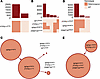 Figure 1
Clonal architecture of PTPN11-mutated AML patient samples. Clonographs demonstrating the frequency of co-occurring mutations determined using scDNA-seq in representative samples. (A) PTPN11 mutation without NPM1 mutation (AML-3; total n = 4). (B) Subclonal PTPN11 mutation (AML-16, total n = 4). (C) Inferred clonal relationship for B. (D) Early PTPN11 mutation (AML-9, total n = 5). (E) Inferred clonal relationship for D.
Among the 9 patients with both PTPN11 and NPM1 mutations, we identified that half the patients had subclonal PTPN11 mutations and the other half had PTPN11 mutations in the first leukemic clone identified. Two patient samples (AML-11 and AML-16) showed evidence of an NPM1-mutated clone that lacked a PTPN11 mutation (representative case AML-16; Figure 1B and Supplemental Figure 1), suggesting that the NPM1 mutation preceded the PTPN11 mutation. However, the double-mutant cells still generated the dominant clone (Figure 1C). Two patient samples (AML-13 and AML-15) had the acquisition of a TET2 or DNMT3A mutation followed by PTPN11 and then NPM1 mutations. The clonal architecture in these 4 samples aligns with the predominant understanding of PTPN11 mutations as a late acquired signaling mutation akin to FLT3 or RAS family mutations and is supported by previous reports of scDNA-seq performed on samples from patients with AML (22, 23). In the remaining 5 patients (AML 6–10), we observed PTPN11 mutations in the earliest detectable clone (representative case AML-9; Figure 1D and Supplemental Figure 1). In 4 of these 5 patients, no single-mutant clone was identified, which precluded the ability to confirm the initiating mutation in these samples. Nevertheless, these data support the early emergence of a PTPN11 mutation in the clonal evolution of these patients (Figure 1E). These data align with previous single-cell sequencing studies where signaling mutations can occur prior to NPM1 mutations (24). In 1 patient sample, we identified a PTPN11 single-mutant clone in addition to a PTPN11 and DNMT3A double-mutant clone and a PTPN11, DNMT3A, and NPM1 triple-mutant clone. This suggests that in some patients PTPN11 mutations may be an early event in AML leukemogenesis and can occur prior to the acquisition of other mutations typically described as driver mutations (AML-8; Supplemental Figure 1). Collectively, these data support the conclusion that while PTPN11 mutations are frequently a late acquired event, in contrast to other RAS family mutations, they can also serve as a driver or codriver mutations in AML when coupled with mutations or chromosomal abnormalities that are strongly associated with myeloid oncogenesis.
Most myeloid cells in PTPN11-mutated AML have leukemic mutations at diagnosis. Concurrent with the scDNA-seq results (Figure 1), we performed simultaneous single-cell immunophenotyping in primary AML samples using an antibody panel against 42 antigens (Mission Bio Tapestri). Distinct immunophenotypic clusters were identified using shared nearest neighbor clustering. We first generated a uniform manifold approximation and projection (UMAP) for data reduction based on the surface marker expression. As expected, the AML clones clustered separately from the wild-type (WT) cells within a patient sample (AML-6; Figure 2A). Heatmaps were also generated to visualize the coexpression of cell surface markers. Here we can identify clusters of lymphoid cells without leukemic mutations (yellow, teal, tan, and dark green clusters). Within the clusters associated with leukemic mutations, there are cells that express very few myeloid markers (light green cluster), immature myeloid markers such as CD117, CD34, and CD123 (navy cluster), and clusters that express mature myeloid markers such as CD14, CD11b, and HLA-DR (pink cluster) or CD11c and CD141 (red cluster, Figure 2B). However, we could not identify a cluster with mature myeloid markers composed of predominately WT cells, thus verifying that the mature myeloid cells in these patients are leukemia derived (Figure 2C). This trend was consistent across all 13 samples analyzed (Supplemental Figure 2). Therefore, our data suggest that AML patients with PTPN11 mutations have a diverse immunophenotype, with leukemic cells expressing a variety of mature myeloid markers and very few WT myeloid cells at diagnosis.
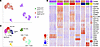 Figure 2
Mutated AML cells comprise most myeloid cells at diagnosis. Immunophenotypic clusters were identified using shared nearest neighbor clustering on a representative early PTPN11-mutated sample (AML-6). (A) UMAP overlaid with WT, NPM1287/PTPN11D61V, and NPM2288*fs/PTPN11D61V/DNMT3AR882H clone identity and nearest neighbor clustering. (B) Heatmap of select lineage defining markers. A total of 9 samples were analyzed. (C) UMAP overlaid with the identity of the clusters from the heatmap in B.
The diverse immunophenotype of PTPN11-mutated AML is recapitulated with flow cytometry. To further validate the diverse immunophenotype of the AML cells as suggested by the single-cell immunophenotype, we developed a spectral flow cytometry immunophenotyping antibody panel against 38 antigens (gating strategy in Supplemental Figure 3). AML leukemic stem cells are canonically defined as CD34+ cells (25), but interestingly, we did not identify a large portion of CD34+ cells within the PTPN11-mutated samples (Figure 3A). This is consistent with previous data showing that NPM1 mutations are associated with decreased CD34 expression (26). We did, however, note the presence of cells committed to a mature myeloid lineage. In our cohort, we found that about half the patients had an expansion of CD14+ monocytes above the mean; however, this was not statistically significant (Figure 3B). There was also a trend toward an increase in pre-conventional dendritic cells (pre-cDCs) in bone marrow of patients with PTPN11 mutations at diagnosis (FDR-adjusted P = 0.0781; Figure 3C). There were a couple of patients with increased plasmacytoid DCs (pDCs) in the peripheral blood but not sufficient to be characterized as pDC-AML (Figure 3D). There was also an expansion of immature DCs in both the peripheral blood and bone marrow compared with healthy controls (FDR-adjusted P = 0.0004 and FDR-adjusted P = 0.0681, respectively; Figure 3E). Overall, we found that the tumor-derived myeloid cells exhibit a range of early differentiated cells predominantly of monocytic and DC lineages. When these cells are stimulated with CpG overnight, they have a reduced capacity to produce IFNs compared with healthy controls, highlighting a functional difference from normal, nonmutant cells (Supplemental Figure 4). Therefore, the combination of scDNA-seq and flow cytometry data highlights the presence of mutated leukemia cells with a variable immune phenotype representing both immature and mature populations.
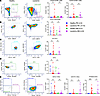 Figure 3
Immunophenotypic diversity of primary PTPN11- and NPM1-mutated AML peripheral blood and bone marrow samples at diagnosis. (A) Percentage of CD34+CD38– and CD34+CD38+ cells in healthy and leukemic peripheral blood (PB) and bone marrow (BM) with representative flow plots. (B) Percentage of CD14+ monocytes in healthy and leukemic PB and BM with representative flow plots. (C) Percentage of pre-conventional dendritic cells (pre-cDCs) in healthy and leukemic PB and BM with representative flow plots. (D) Percentage of plasmacytoid DCs (pDCs) in healthy and leukemic PB and BM with representative flow plots. (E) Percentage of CD1c+ DCs, CD141+ DCs, and immature DCs in healthy and leukemic PB and BM, respectively, with representative flow plots. Percentages are based on CD45+ cells. Data are presented as mean ± SD of 2 independent experiments. Statistical analysis by 1-way ANOVA with Benjamini-Hochberg FDR correction applied. *FDR-adjusted P ≤ 0.05, ***FDR-adjusted P ≤ 0.001.
Npm1cA/Ptpn11E76K mice consistently develop AML. Our AML patient data suggest that PTPN11 mutations can constitute a driving transformative event and can produce a diverse myeloid phenotype. Therefore, we aimed to develop a Ptpn11-mutated AML mouse model that would allow further investigation of the role of Ptpn11 mutations in leukemogenesis and pathogenesis. Analysis of co-occurring mutations with PTPN11 aberrations demonstrated NPM1 to be most co-associated in AML. We therefore combined Ptpn11E76K (18) and Npm1cA (27) mutant alleles, which are both driven by Mx-Cre (28) and are inducible with IFN or polyinosinic-polycytidylic acid [poly(I:C)]. Mice expressing both mutant alleles (Npm1cA/Ptpn11E76K) exhibited a fully penetrant lethal disease phenotype with a median overall survival of 13.4 weeks after induction, significantly faster than either Ptpn11E76K/Mx-Cre (Ptpn11E76K; 39.2 weeks) or Npm1cA/Mx-Cre (Npm1cA; 35 weeks) mice (Figure 4A). When comparing overall survival of Npm1cA/Ptpn11E76K mice based on sex, female mice had a significantly shorter survival compared with male mice (Supplemental Figure 5).
 Figure 4
Characterization of the Npm1cA/Ptpn11E76K mouse model. (A) Overall survival of Npm1cA, Ptpn11E76K, and Npm1cA/Ptpn11E76K mice. (B) Representative picture of a spleen collected from a Npm1cA/Ptpn11E76K mouse at survival endpoint compared with age-matched Mx-Cre mouse spleen. Summary of spleen weights (in grams) of Npm1cA/Ptpn11E76K mice at time of death compared with aged-matched controls. (C) White blood cell (WBC), red blood cell (RBC), and platelet (PLT) counts of Npm1cA/Ptpn11E76K mice at time of death compared with aged-matched controls. (D) Representative peripheral blood flow cytometry plot (gated on CD45+CD3–CD19–NK1.1– cells; percentage based on total CD45+ cells) of Mx-Cre and Npm1cA/Ptpn11E76K mice 4 weeks after poly(I:C) induction (total n of 11 Mx-Cre mice and 14 Ptpn11E76K/Npm1cA mice). Data are presented as mean ± SD. Statistical analysis by 1-way ANOVA with Benjamini-Hochberg FDR correction applied. *FDR-adjusted P ≤ 0.05, ***FDR-adjusted P ≤ 0.001, ****FDR-adjusted P ≤ 0.0001.
At time of sacrifice, Npm1cA/Ptpn11E76K mice had significant splenomegaly compared with age-matched Mx-Cre and single-gene control mice (Figure 4B). Npm1cA/Ptpn11E76K mice also exhibited significant leukocytosis, anemia, and thrombocytopenia compared with age-matched single-gene controls (Figure 4C). There was no difference in splenomegaly, leukocytosis, anemia, or thrombocytopenia between sexes at time of death (Supplemental Figure 5). As previously published, the Ptpn11E76K mouse can develop multilineage leukemias; therefore, we wanted to confirm that the addition of an Npm1cA mutation would result in a consistent myeloid phenotype. We performed flow cytometric analysis, showing that all Npm1cA/Ptpn11E76K mice have a clear expansion of CD11b+c-Kit+ cells in the blood as early as 4 weeks after induction, which progressively expanded throughout disease development (Figure 4D).
Broad immunophenotyping identifies diverse myeloid populations in the Npm1cA/Ptpn11E76K mice reflective of human AML. As we noted a diverse immunophenotype in primary human AML samples at diagnosis, we comprehensively characterized the Npm1cA/Ptpn11E76K murine disease immunophenotype to see how well this represented human disease. To this end, we developed a spectral flow cytometry immunophenotyping antibody panel against 35 antigens to characterize both the lymphoid and myeloid populations in the spleen (gating strategy in Supplemental Figure 6). Compared with age-matched single-gene controls, the Npm1cA/Ptpn11E76K mice exhibited an expansion of multiple distinct myeloid populations, including neutrophils (CD11b+Ly6G+) and monocytic cells (CD11b+Ly6C+) (Figure 5A). As PTPN11-mutated AML is associated with a monocytic phenotype (21), it was unsurprising to find that the Npm1cA/Ptpn11E76K mice have an increase in the percentage of monocytes compared with control mice. However, in addition to the expected expansion of the CX3CR1–c-Kit+ population of “immature” monocytic cells, we also observed a significant expansion of the CX3CR1+c-Kit– population of “mature” monocytes (Figure 5, B and C). This suggests that while Npm1 mutations have been associated with differentiation block, in the context of a co-occurring Ptpn11 mutation, there is an expansion of variably differentiated myeloid cells, including those immunophenotypically consistent with mature monocytes.
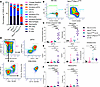 Figure 5
Immunophenotyping of Npm1cA/Ptpn11E76K splenocytes. Flow cytometric analysis of splenocytes from Mx-Cre (n = 5), Npm1cA (n = 6), Ptpn11E76K (n = 5), and Npm1cA/Ptpn11E76K (n = 10) mice. Percentages were calculated as a fraction of total CD45.2+ cells and all control mice were age matched. (A) Percentage of immune subsets in the spleen. (B) Representative flow plots CX3CR1 and c-Kit expression on myeloid cells in a representative Mx-Cre and Npm1cA/Ptpn11E76K mouse. (C) Percentage of immature myeloid cells and monocytes. (D) Representative flow plots of dendritic cell (DC) gating from a Npm1cA/Ptpn11E76K mouse. (E) Percentages of conventional DC 1 (cDC1), cDC2, and immature DC populations. (F) Percentages of immature and mature plasmacytoid DC (pDC) populations. Data are presented as mean ± SD from 3 independent experiments. Statistical analysis by 1-way ANOVA with Benjamini-Hochberg FDR correction applied. *FDR-adjusted P ≤ 0.05, **FDR-adjusted P ≤ 0.01, ***FDR-adjusted P ≤ 0.001, ****FDR-adjusted P ≤ 0.0001. NK cells, natural killer cells.
In addition to the expansion of monocytes, we also saw an expansion of variably differentiated DCs in the murine splenocytes comparable to the primary AML samples (Figure 3). Specifically, the Npm1cA/Ptpn11E76K mice have an expansion of cDC1s and cDC2s in the spleen. There was also an expansion of immature DCs (CD11c+MHClo/–) compared with Mx-Cre and Npm1cA control mice but not to the Ptpn11E76K mice, suggesting a relationship to the Ptpn11 mutation (Figure 5, D and E). There was also an increased percentage of immature (CD11c+B220+) and mature pDCs (CD11c+B220+Siglec H+CD317+) in the Npm1cA/Ptpn11E76K mice compared with controls (Figure 5F). There was no difference in the immunophenotype of the splenocytes from the male and female Npm1cA/Ptpn11E76K mice, suggesting that the difference in survival is not related to an expansion of a specific myeloid cell (data not shown). Therefore, our Npm1cA/Ptpn11E76K mouse can recapitulate the monocytic and cDC expansion of human PTPN11-mutated AML and also exhibits an expansion of pDCs.
Npm1cA/Ptpn11E76K splenocytes can recapitulate a leukemic phenotype in primary and secondary recipients. Thus far, we have demonstrated that co-induction of Npm1cA and Ptpn11E76K in mice is comparable to our human data and that these 2 mutations are sufficient to develop a 100% penetrant, aggressive AML. However, a hallmark of a true AML model requires that it can be adoptively transferred with preservation of its immunophenotypic features. We therefore wanted to determine whether AML cells from the Npm1cA/Ptpn11E76K mice formed a lethal leukemia in a primary recipient. We found that these splenocytes, when injected via the tail vein of NCG recipients, were able to recapitulate a leukemic phenotype with an average overall survival of 8.2 weeks after engraftment (individual donors [n = 8] ranged from 7.5 to 17 weeks, Figure 6A). While all individual AML donors formed a lethal leukemia in some recipients, 2 of the 8 donors tested (S0283 and S0500) had slightly more inconsistent engraftment, resulting in failed engraftment in 2 of 5 and 1 of 4 recipients, respectively. We then took passaged splenocytes from 3 donors (S0200, S0437, and S0500) and engrafted them into additional recipients (n = 5 recipients per donor) and found they were capable of engrafting into a secondary recipient with an average overall survival of 8.5 weeks after engraftment (individual donors [n = 3] ranged from 7.6 to 9.7 weeks, Figure 6B). The consistency increased with the secondary engraftment, with all 5 recipients from each donor resulting in a lethal leukemia. To confirm that the leukemic cells developing in the recipients phenotypically matched the original donor cells, we performed the immunophenotyping panel on splenocytes from mice with overt leukemia, as described above. We found the overall diversity of cell subsets shows a similar profile to that of the donor in both the primary and secondary engraftment. The variability of differentiated monocytes and DCs was maintained at similar proportions in both the primary and secondary recipients (Figure 6C), suggesting stability of the diverse immunophenotype of Npm1cA/Ptpn11E76K leukemia cells.
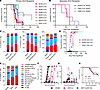 Figure 6
Engraftment of Npm1cA/Ptpn11E76K splenocytes into immunodeficient mice. (A) Overall survival in primary NCG engraftment in 3 independent experiments. (B) Overall survival in secondary NCG engraftment. (C) Summary of spleen immune subsets as a proportion of total CD45.2+ cells in primary AML donors compared to primary and secondary NCG recipients meeting the survival endpoint from 2 independent experiments. (D) Frequency of donor-derived CD45.2+ cells over time in the peripheral blood from NCG mice engrafted with LSK cells. (E) Immune cell subsets in spleen from 1 donor (S0200) and recipients of either bulk splenocytes (n = 4 recipients) or LSK cells (n = 3 recipients) at endpoint. FACS-isolated CD45+, CD11c+, or CD11c–CD11b+ cells were sorted from 3 donors. (F) Frequency of donor-derived CD45.2+ cells over time in the peripheral blood. (G) White blood cell (WBC) and (H) overall survival of NCG mice engrafted with CD45+ (n = 12), CD11c+ (n = 11), or CD11c–CD11b+ (n = 8) cells. Data are presented as the mean. pDCs, plasmacytoid dendritic cells; cDC2s, conventional dendritic cells 2; cDC1s, conventional dendritic cells 1; DCs, dendritic cells; NK cells, natural killer cells.
Npm1cA/Ptpn11E76K LSKs can recapitulate the immune subset diversity in primary recipients. With Mx-Cre–driven expression, all hematopoietic lineage cells in the Npm1cA/Ptpn11E76K mice express the driver mutations. However, not all leukemia populations are expected to have the same capacity to engraft into primary recipients. Given the relative stability of the immune diversity of the Npm1cA/Ptpn11E76K leukemic cells, we wanted to determine whether lineage–Sca-1+cKit+ (LSK) cells, which previous studies in mice have identified as containing leukemia-initiating cells (29), were capable of generating diversity of immune subsets identified in the transgenic mice. Therefore, LSKs were sorted from the spleens of individual donors (n = 3) and injected via the tail vein into NOD-Prkdcem26Cd52Il2rgem26Cd22/NjuCrl (NCG) recipients (n = 3; sorting strategy in Supplemental Figure 7). There was considerable variability in the engraftment of the LSK cells into NCG recipients, with donors producing a lethal leukemia in 1 of 3, 2 of 3, and 3 of 3 recipients (Figure 6D). We again performed immune profiling of the splenocytes from recipient mice that developed a lethal leukemia, and the immune subset diversity in LSK-engrafted mice was comparable to bulk-engrafted recipients (Figure 6E). This suggests that the diverse mature myeloid populations in Npm1cA/Ptpn11E76K AML are derived from a stem or progenitor population within the LSK cells.
CD11c+ Npm1cA/Ptpn11E76K splenocytes form a lethal leukemia in primary recipients. We observed that the rate of engraftment failure in recipients of sorted LSK cells was higher than when bulk splenocytes were engrafted. We therefore hypothesized that a population expressing a lineage marker may also contribute to engraftment. To test this, we sorted 3 populations: (a) total CD45+, (b) CD11c+ cells (DC lineage) and (c) CD11c–CD11b+ (monocyte/macrophage lineage) from Npm1cA/Ptpn11E76K splenocytes (n = 3; sorting strategy in Supplemental Figure 8). The frequency of donor-derived (CD45.2+) engraftment in NCG recipients shows that both the CD45+ and CD11c+ populations engrafted at an equivalent rate, while the CD11c–CD11b+ population exhibited highly sporadic and short-lived engraftment (Figure 6F). Both the CD45+ and CD11c+ populations, but not CD11c–CD11b+ cells, exhibited increased white blood cell (WBC) counts (Figure 6G), leading to the formation of a lethal leukemia (Figure 6H). Importantly, the survival in mice engrafted with the CD11c+ population was similar to NCG mice engrafted with total bulk spleen cells (as in Figure 6A).
FLT3 ligand differentiates Npm1cA/Ptpn11E76K bone marrow cells into monocytes and DCs that have an altered cytokine response to CpG. Given the expansion of a DC population in these mice, we wanted to determine whether the leukemic cells isolated from Npm1cA/Ptpn11E76K mice can respond to antigen by stimulating Npm1cA/Ptpn11E76K bone marrow cells with CpG. We first differentiated the cells for 9 days in vitro with FLT3 ligand to ensure that there was a sufficient population of DCs, particularly in the Mx-Cre mice where these cells are more limited. The Mx-Cre control mice developed mainly mature pDCs and cDC1s, with a smaller proportion of cDC2s, immature pDCs, immature DCs, and very few monocytes. The Npm1cA bone marrow cells developed into mainly mature pDCs, while the Ptpn11E76K bone marrow cells differentiated into mainly cDC1s. Finally, the Npm1cA/Ptpn11E76K bone marrow cells differentiated into monocytes, followed by immature pDCs and immature DCs (Figure 7A). After overnight stimulation with CpG, the Npm1cA/Ptpn11E76K cells produced an equal amount of IFN-α compared to Mx-Cre controls but less IFN-γ and TNF-α (Figure 7, B–D). Compared with Mx-Cre, Npm1cA, and Ptpn11E76K controls, the Npm1cA/Ptpn11E76K cells produced more immunosuppressive IL-10 after CpG stimulation (Figure 7E). These results suggest that the bone marrow cells from Npm1cA/Ptpn11E76K mice can be differentiated into monocytes and immature DCs with a potentially immunosuppressive phenotype.
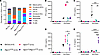 Figure 7
Murine Npm1cA/Ptpn11E76K bone marrow DC differentiation and in vitro CpG stimulation. (A) Immune subsets of bone marrow cells from Mx-Cre (n = 3), Npm1cA (n = 3), Ptpn11E76K (n = 3), and Npm1cA/Ptpn11E76K (n = 3) mice after 9 days of differentiation with FLT3 ligand in vitro. (B) IFN-α (pg/mL), (C) IFN-γ (pg/mL), (D) TNF-α (pg/mL), and (E) IL-10 (pg/mL) in the supernatant of DC-differentiated Mx-Cre (n = 3), Npm1cA (n = 3), Ptpn11E76K (n = 3), and Npm1cA/Ptpn11E76K (n = 3) bone marrow cells after overnight stimulation with 0.1 μg/μL of CpG. Data are presented as mean ± SD. Statistical analysis by 1-way ANOVA with Benjamini-Hochberg FDR correction applied. *FDR-adjusted P ≤ 0.05, **FDR-adjusted P ≤ 0.01, ***FDR-adjusted P ≤ 0.001, ****FDR-adjusted P ≤ 0.0001.


