
Research ArticleImmunology
Open Access |  10.1172/jci.insight.193054
Rheumatoid arthritis synovial fibroblasts modulate T cell activation
Melissa R. Romoff,1 Preethi K. Periyakoil,2 Edward F. DiCarlo,3 Daniel Ramirez,3 Susan M. Goodman,4,5 Christina S. Leslie,2 Alexander Y. Rudensky,6 Laura T. Donlin,1,5 and Melanie H. Smith1,4,5
1Research Institute, Hospital for Special Surgery, New York, New York, USA.
2Computational and Systems Biology Program, Memorial Sloan Kettering Cancer Center, New York, New York, USA.
3Department of Pathology and Laboratory Medicine, and
4Division of Rheumatology, Department of Medicine, Hospital for Special Surgery, New York, New York, USA.
5Weill Cornell Medical College, New York, New York, USA.
6Howard Hughes Medical Institute and Immunology Program at Sloan Kettering Institute, Ludwig Center for Cancer Immunotherapy, Memorial Sloan Kettering Cancer Center, New York, New York, USA.
Address correspondence to: Melanie H. Smith, 535 East 70th Street, New York, New York 10021, USA. Phone: 212.224.7960; Email: smithmel@hss.edu.
Find articles by Romoff, M. in: PubMed | Google Scholar
1Research Institute, Hospital for Special Surgery, New York, New York, USA.
2Computational and Systems Biology Program, Memorial Sloan Kettering Cancer Center, New York, New York, USA.
3Department of Pathology and Laboratory Medicine, and
4Division of Rheumatology, Department of Medicine, Hospital for Special Surgery, New York, New York, USA.
5Weill Cornell Medical College, New York, New York, USA.
6Howard Hughes Medical Institute and Immunology Program at Sloan Kettering Institute, Ludwig Center for Cancer Immunotherapy, Memorial Sloan Kettering Cancer Center, New York, New York, USA.
Address correspondence to: Melanie H. Smith, 535 East 70th Street, New York, New York 10021, USA. Phone: 212.224.7960; Email: smithmel@hss.edu.
Find articles by Periyakoil, P. in: PubMed | Google Scholar
1Research Institute, Hospital for Special Surgery, New York, New York, USA.
2Computational and Systems Biology Program, Memorial Sloan Kettering Cancer Center, New York, New York, USA.
3Department of Pathology and Laboratory Medicine, and
4Division of Rheumatology, Department of Medicine, Hospital for Special Surgery, New York, New York, USA.
5Weill Cornell Medical College, New York, New York, USA.
6Howard Hughes Medical Institute and Immunology Program at Sloan Kettering Institute, Ludwig Center for Cancer Immunotherapy, Memorial Sloan Kettering Cancer Center, New York, New York, USA.
Address correspondence to: Melanie H. Smith, 535 East 70th Street, New York, New York 10021, USA. Phone: 212.224.7960; Email: smithmel@hss.edu.
Find articles by DiCarlo, E. in: PubMed | Google Scholar
1Research Institute, Hospital for Special Surgery, New York, New York, USA.
2Computational and Systems Biology Program, Memorial Sloan Kettering Cancer Center, New York, New York, USA.
3Department of Pathology and Laboratory Medicine, and
4Division of Rheumatology, Department of Medicine, Hospital for Special Surgery, New York, New York, USA.
5Weill Cornell Medical College, New York, New York, USA.
6Howard Hughes Medical Institute and Immunology Program at Sloan Kettering Institute, Ludwig Center for Cancer Immunotherapy, Memorial Sloan Kettering Cancer Center, New York, New York, USA.
Address correspondence to: Melanie H. Smith, 535 East 70th Street, New York, New York 10021, USA. Phone: 212.224.7960; Email: smithmel@hss.edu.
Find articles by Ramirez, D. in: PubMed | Google Scholar
1Research Institute, Hospital for Special Surgery, New York, New York, USA.
2Computational and Systems Biology Program, Memorial Sloan Kettering Cancer Center, New York, New York, USA.
3Department of Pathology and Laboratory Medicine, and
4Division of Rheumatology, Department of Medicine, Hospital for Special Surgery, New York, New York, USA.
5Weill Cornell Medical College, New York, New York, USA.
6Howard Hughes Medical Institute and Immunology Program at Sloan Kettering Institute, Ludwig Center for Cancer Immunotherapy, Memorial Sloan Kettering Cancer Center, New York, New York, USA.
Address correspondence to: Melanie H. Smith, 535 East 70th Street, New York, New York 10021, USA. Phone: 212.224.7960; Email: smithmel@hss.edu.
Find articles by Goodman, S. in: PubMed | Google Scholar
1Research Institute, Hospital for Special Surgery, New York, New York, USA.
2Computational and Systems Biology Program, Memorial Sloan Kettering Cancer Center, New York, New York, USA.
3Department of Pathology and Laboratory Medicine, and
4Division of Rheumatology, Department of Medicine, Hospital for Special Surgery, New York, New York, USA.
5Weill Cornell Medical College, New York, New York, USA.
6Howard Hughes Medical Institute and Immunology Program at Sloan Kettering Institute, Ludwig Center for Cancer Immunotherapy, Memorial Sloan Kettering Cancer Center, New York, New York, USA.
Address correspondence to: Melanie H. Smith, 535 East 70th Street, New York, New York 10021, USA. Phone: 212.224.7960; Email: smithmel@hss.edu.
Find articles by
Leslie, C.
in:
PubMed
|
Google Scholar
|

1Research Institute, Hospital for Special Surgery, New York, New York, USA.
2Computational and Systems Biology Program, Memorial Sloan Kettering Cancer Center, New York, New York, USA.
3Department of Pathology and Laboratory Medicine, and
4Division of Rheumatology, Department of Medicine, Hospital for Special Surgery, New York, New York, USA.
5Weill Cornell Medical College, New York, New York, USA.
6Howard Hughes Medical Institute and Immunology Program at Sloan Kettering Institute, Ludwig Center for Cancer Immunotherapy, Memorial Sloan Kettering Cancer Center, New York, New York, USA.
Address correspondence to: Melanie H. Smith, 535 East 70th Street, New York, New York 10021, USA. Phone: 212.224.7960; Email: smithmel@hss.edu.
Find articles by Rudensky, A. in: PubMed | Google Scholar
1Research Institute, Hospital for Special Surgery, New York, New York, USA.
2Computational and Systems Biology Program, Memorial Sloan Kettering Cancer Center, New York, New York, USA.
3Department of Pathology and Laboratory Medicine, and
4Division of Rheumatology, Department of Medicine, Hospital for Special Surgery, New York, New York, USA.
5Weill Cornell Medical College, New York, New York, USA.
6Howard Hughes Medical Institute and Immunology Program at Sloan Kettering Institute, Ludwig Center for Cancer Immunotherapy, Memorial Sloan Kettering Cancer Center, New York, New York, USA.
Address correspondence to: Melanie H. Smith, 535 East 70th Street, New York, New York 10021, USA. Phone: 212.224.7960; Email: smithmel@hss.edu.
Find articles by Donlin, L. in: PubMed | Google Scholar
1Research Institute, Hospital for Special Surgery, New York, New York, USA.
2Computational and Systems Biology Program, Memorial Sloan Kettering Cancer Center, New York, New York, USA.
3Department of Pathology and Laboratory Medicine, and
4Division of Rheumatology, Department of Medicine, Hospital for Special Surgery, New York, New York, USA.
5Weill Cornell Medical College, New York, New York, USA.
6Howard Hughes Medical Institute and Immunology Program at Sloan Kettering Institute, Ludwig Center for Cancer Immunotherapy, Memorial Sloan Kettering Cancer Center, New York, New York, USA.
Address correspondence to: Melanie H. Smith, 535 East 70th Street, New York, New York 10021, USA. Phone: 212.224.7960; Email: smithmel@hss.edu.
Find articles by Smith, M. in: PubMed | Google Scholar
Published October 7, 2025 - More info
JCI Insight. 2025;10(22):e193054. https://doi.org/10.1172/jci.insight.193054.
© 2025 Romoff et al. This work is licensed under the Creative Commons Attribution 4.0 International License. To view a copy of this license, visit http://creativecommons.org/licenses/by/4.0/.
Received: March 5, 2025; Accepted: September 25, 2025


-
Results
FLS and macrophages drive distinct T cell activation states. Using either primary FLS or monocyte-differentiated macrophages as APCs, we examined T cell activation in response to the superantigen SEB. We measured blood-derived T cell activation using flow cytometric analysis of canonical markers of T cell activation: CD69, CD25 (IL-2 receptor α chain; IL-2RA), and HLA-DR. As SEB selectively activates only specific Vβ element–expressing TCRs (11), we were able to distinguish between those T cells that were stimulated directly by SEB through TCR cross-linking (VβSEB: pooled Vβ3, 13.2, 14, and 17) versus as bystanders (Vβnon: pooled Vβ2 and 5.1).
We observed that T cells directly activated through SEB-induced TCR cross-linking (VβSEB) exhibited higher expression of activation makers than their non-SEB-reactive counterparts (Vβnon) (Figure 1A and Supplemental Figure 1A; supplemental material available online with this article; https://doi.org/10.1172/jci.insight.193054DS1). Compared with macrophages, FLS induced higher CD69, but lower CD25 and HLA-DR expression, on the T cell surface after 72 hours of SEB-induced activation (Figure 1A). Although the difference in activation marker expression between SEB-reactive (VβSEB) and nonreactive (Vβnon) T cells indicates HLA-D/TCR-dependent activation, we confirmed that both CD69 expression driven by FLS and CD25 expression driven by macrophages is HLA-DR dependent using a blocking antibody (Supplemental Figure 1B). The CD69 expression driven by FLS was primarily observed on conventional CD4+ T cells, with no significant expansion of Foxp3+ regulatory T cells in the presence of FLS (Supplemental Figure 1, C–E).
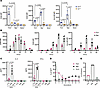 Figure 1
Antigen presentation by FLS results in altered T cell activation characterized by exaggerated and prolonged CD69 expression. Primary RA FLS or blood-derived M-CSF differentiated macrophages were used as APCs of SEB. Autologous macrophages and T cells were isolated from healthy donor PBMCs, and SEB was added to all conditions. (A) Surface expression of T cell activation markers CD69, CD25, and HLA-DR was measured via flow cytometry as mean fluorescence intensity (MFI) after 72 hours of SEB activation. The x axis indicated the APC type, where “none” denotes the absence of APCs. Data points are color-coded by T cell Vβ sequencing: VβSEB indicates T cells with SEB-reactive Vβ sequences (pooled Vβ 3, 13.2, 14, 17), and Vβnon represents T cells with nonreactive Vβ sequences (pooled Vβ 2, 5.1). N = 4. Mean ± standard deviation is shown. Statistical comparisons were made using paired 2-tailed t tests with corrections for multiple comparisons within each outcome to maintain an overall type I error rate 0.05 as described in the methods section. (B) MFI of CD69, CD25, and HLA-DR on CD3+ VβSEB T cells over the course of 96 hours. Magenta: T cells with FLS as APCs; black: T cells with macrophages as APCs. N = 4. (C) Cytokine concentrations measured by Luminex in the supernatant of APC–T cell cocultures with or without SEB stimulation for 48 hours. Statistical comparisons made using paired 2-tailed t tests. N = 4. (D) Proliferation of CD3+ VβSEB T cells after 6 days of SEB stimulation. Percentage of CD3+VβSEB T cells in each of 7 observed generations (divisions). (E) Maximal number of divisions with ≥5% CD3+VβSEB T cells. For D and E, magenta: T cells with FLS as APCs; black: T cells with macrophages as APCs; teal: no APC. N = 4.
Consistent with our findings using healthy donor T cells, synovial T cells expressed higher levels of CD69 and lower levels of CD25 when FLS were used as APCs compared with autologous macrophages differentiated from patient PBMCs (Supplemental Figure 2A). We performed cocultures using T cells, FLS, and macrophages, all isolated from RA synovium. Although there was a wide range of CD69 expression prior to culture, after 72 hours of SEB stimulation, T cells cultured with FLS consistently displayed higher CD69 and lower CD25 and HLA-DR compared with those cultures with macrophages (Supplemental Figure 2B). As RA synovial cells results paralleled those of healthy donors, and the number of T cells and macrophages obtainable from RA tissue was limited, subsequent experiments were performed with healthy donor leukocytes.
To better understand the differences in T cell dynamics induced by the 2 APC types, we conducted a time course experiment over 96 hours. While macrophages induced higher transient CD69 expression on T cells at early time points (12 and 24 hours), FLS-driven CD69 expression on T cells surpassed macrophages at later time points (72 and 96 hours) (Figure 1B). This exaggerated and prolonged CD69 expression by T cells in response to FLS was limited to CD69, as macrophages consistently induced higher CD25 and HLA-DR expression by T cells across all time points (Figure 1B). Along with these functional T cell activation markers, CD25 (IL-2RA) and HLA-DR, T cells produced more IL-2 and IFN-γ with macrophages as APCs (Figure 1C). At later time points, macrophages also induced increased CD4 expression, a feature not observed with FLS, supporting global differences in the activation profiles of T cells stimulated by these APCs (Supplemental Figure 2C). In line with previous studies and supporting global differences in T cell activation, we observed that FLS limited T cell proliferation compared with macrophages (Figure 1, D and E).
The prolonged CD69 expression by T cells induced by SEB presented by FLS prompted us to investigate differences in APC–T cell interaction dynamics. Live cell imaging revealed that FLS maintained longer average contacts with T cells compared with macrophages and showed a nonsignificant trend toward fewer contacts per FLS (Supplemental Figure 3). While prolonged T cell–APC contact is generally considered conducive to T cell activation, this does not appear to be the case with FLS as APCs. FLS may instead function to restrict T cell migration by driving exaggerated CD69 expression (12).
Prior studies have indicated that RA FLS have a decreased capacity to suppress T cell proliferation as compared with osteoarthritis (OA) FLS (13). Therefore, we compared the ability of synovial fibroblasts from patients with RA, OA, and psoriatic arthritis (PsA) as well as a dermal fibroblast line (Hs27) to support T cell CD69 expression and T cell proliferation. We found that FLS from patients with all 3 diseases, as well as the dermal fibroblasts, induced enhanced CD69 expression by T cells while suppressing their proliferation to a similar degree (Figure 2 and Supplemental Figure 4). Notably, proliferation was completely absent in dermal fibroblast cocultures, suggesting that the observed effects may not be unique to FLS. While the extreme suppression by the dermal cell line may be due to heightened responsiveness to IFN-γ, additional work will be needed to understand mechanistic differences between fibroblasts of different origins.
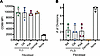 Figure 2
Immunomodulatory features are shared by FLS from rheumatoid, psoriatic, and osteoarthritis samples. CD3+ T cells activated with anti-CD3/CD28 beads in the presence of primary FLS from 4 donors each from patients with RA, osteoarthritis (OA), or psoriatic arthritis (PsA) as well as a dermal foreskin fibroblast cell line (Hs27) for 6 days. T cells activated alone served as a control (none). FLS from RA and OA patients were isolated from synovial tissue with a high degree of lymphocytic inflammation by histological scoring. CD3+ T cells from the same healthy donor were used with each of the fibroblast conditions. (A) CD69 expression on the T cell surface. (B) Proliferation measured by CellTrace Violet intensity via flow cytometry. Maximal number of divisions with ≥5% of CD3+ T cells is shown. For both A and B, individual data points in the FLS conditions indicate different primary FLS donors (N = 4). The 3 data points from the dermal fibroblast and no fibroblast condition (none) are technical replicates (N = 3).
FLS induce a distinct T cell activation program. To understand global differences in T cell activation between FLS and macrophages as APCs, we performed bulk RNA sequencing of cocultures after 48 hours of SEB activation. We compared SEB-activated APC–T cell cocultures with those without SEB stimulation (Figure 3A). To identify genes primarily expressed by the APCs, we cultured APCs in the bottom chamber of a Transwell while T cells were activated with anti-CD3/CD28 beads in the insert above.
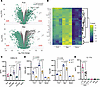 Figure 3
Distinct transcriptional and functional T cell responses to antigen presentation by FLS. (A) Volcano plots of differentially expressed genes by bulk RNA sequencing in APC–T cell cocultures with or without SEB after 48 hours (FLS: top, macrophage: bottom). Genes colored in teal are primarily expressed by the APCs. Genes colored in gray are primarily expressed by T cells. (B) Heatmap of T cell–expressed genes of interest across conditions (FLS, macrophages, none). N = 3. (C) CXCL13 concentration in supernatants of APC–T cell cocultures with SEB stimulation for 48 hours. APC identity shown on the x axis. N = 4. (D) RORγt and T-bet expression (MFI) as measured via intracellular transcription factor staining after 72 hours of SEB activation. The x axis indicated the APC type. Data points are color-coded by T cell Vβ SEB responsiveness as in Figure 1A. N = 4. (E) IL-17A concentration in supernatants of APC–T cell cocultures with SEB stimulation for 48 hours. APC identity shown on the x axis. N = 4. For C–E, mean ± standard deviation is shown, and statistical comparisons were made using paired 2-tailed t tests with corrections for multiple comparisons within each outcome to maintain an overall type I error rate 0.05 as described in the Methods section.
Analysis of differentially expressed genes revealed that a greater proportion of SEB-induced genes in FLS–T cell cocultures were expressed by the FLS, whereas macrophage–T cell cocultures showed more SEB-induced genes originating from T cells (Figure 3A). When comparing the expression of specific genes of interest across conditions (FLS, macrophages, or no APCs), transcripts of the effector cytokine IFNG as well as other cytokines (IL5, IL13) were more highly expressed with macrophages as APCs (Figure 3B and Supplemental Table 1) in agreement with our protein expression data for IFN-γ (Figure 1C). Consistent with prior findings regarding FLS suppression of T cell proliferation, cell cycle genes (CDK1), the proliferation marker gene MKI67, and IL2, which is needed for T cell growth, proliferation, and differentiation, were all more highly expressed in the condition with macrophages as APCs. Interestingly, CXCL13 was the most differentially expressed gene in T cells activated with FLS as APCs, suggesting a potential role for FLS in promoting T cell differentiation toward a peripheral or follicular helper phenotype. This was supported by higher expression of BCL6 and MAF in T cells with FLS as APCs (Supplemental Figure 5A). When we assessed soluble CXCL13 levels in the supernatant, they were equivalent with FLS versus macrophages as APCs. However, FLS cocultured with either macrophages or DCs as APC increased CXCL13 expression with only the coculture with DCs resulting in a significant difference (Figure 3C). The discrepancy between CXCL13 mRNA and protein expression data may be due to the higher number of professional APCs necessary for experiments involving differentiation of DCs (see Methods). Genes highly expressed by FLS during SEB stimulation included CSF3 (granulocyte colony-stimulating factor) and CXCL8 (IL-8), suggesting that antigen presentation by FLS may be associated with T cell–dependent support for neutrophil survival, maturation, and chemotaxis.
To understand the effect of FLS versus macrophages on T helper cell differentiation, we performed intracellular cytokine staining for key transcription factors: RORγt (RORC) and T-bet (TBX21) (Figure 3D). Consistent with RNA-sequencing results, T cells activated by macrophages expressed more of both RORγt, which regulates Th17 differentiation, and T-bet, which regulates Th1 differentiation and promotes IFN-γ expression (Figure 3D and Supplemental Figure 5A). However, IL-17A levels were higher with FLS as APCs (Figure 3E), differing from the gene expression data, indicating differences between transcriptional and translational regulation in this setting. In addition, it has previously been reported that RORγt and IL-17 expression are not as tightly linked in human as in murine cells (14), and IL-17 expression may be modulated through posttranslational modification of RORγt (15).
FLS antigen presentation to memory T cells. As most T cells in the joint exhibit a memory phenotype (16, 17), we hypothesized that FLS preferentially modulate the activation of memory T cells over the naive T cells typically found in the periphery. To test this, we sorted naive (CD45RA+CCR7+) and memory (CD45RA–) CD3+ T cells from healthy donor PBMCs (Supplemental Figure 5B) and separately stimulated them with SEB for 72 hours using FLS or macrophages as APCs. With FLS as APCs, a higher percentage of memory VβSEB T cells expressed CD69 as compared with naive VβSEB T cells (Figure 4A and Supplemental Figure 5C). In contrast, no difference was observed in the percentage of VβSEB T cells expressing CD69 between naive and memory T cells when macrophages were used as APCs. Quantification of the percentage difference in VβSEBCD69+ expression between memory and naive T cells revealed a significantly larger positive difference with FLS as APCs (Figure 4B). We also found that macrophages, but not FLS, selectively decreased the percentage of CD45RA+CCR7+ naive cells in SEB-reactive T cells (Figure 4C). The inability of FLS to activate naive T cells and convert them to a memory phenotype is expected, as they do not express costimulatory molecules CD80/CD86 (18). Given that most synovial T cells exhibit a memory phenotype, these results agree with our findings that FLS drive high T cell CD69 expression in T cells isolated from the synovium (Supplemental Figure 2, A and B).
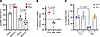 Figure 4
FLS exert a greater effect on memory T cells. (A) Sorted naive (CD45RA+CCR7+) and memory (CD45RA–) CD3+ T cells from healthy donor PBMCs were cultured with FLS or macrophages as APCs and stimulated with SEB for 72 hours. The percentage of CD69+ cells of the CD3+ VβSEB T cells with FLS (magenta/pink) versus macrophage (black/gray) as APC was determined based on starting T cell population (naive versus memory). N = 5. (B) Using data from A, the percentage difference between the memory and naive %CD69+. The difference with no APC present (none) is shown as a control. (C) The percentage of CD45RA+CCR7+ naive T cells with FLS or macrophages as APCs after stimulation with SEB for 72 hours. N = 4. For all panels, mean ± standard deviation is shown, and statistical comparisons were made using paired 2-tailed t tests.
FLS suppress T cell activation induced by macrophages as APCs. As FLS and macrophages coexist within the stromal microenvironment of the synovium, we sought to determine how T cell activation is influenced when both cell types are present to act as APCs. We cultured both FLS and macrophages together prior to adding T cells and SEB. We found that FLS exerted an antagonistic effect on macrophage-induced T cell activation (Figure 5A). Specifically, the presence of FLS reduced macrophage-induced CD25 and HLA-DR expression on the T cell surface. Interestingly, combining FLS and macrophages as APCs led to even higher CD69 expression on the T cell surface than when either APC was used alone. As the relative abundance of FLS and macrophages in the RA synovium likely varies considerably between patients, we cocultured FLS and macrophages at different ratios and found that FLS were able to drive CD69 expression and inhibit CD25 expression in T cells even when outnumbered 4:1 (Figure 5B).
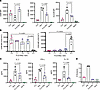 Figure 5
Dominant suppression of macrophage-induced T cell activation by FLS. (A) The surface expression of T cell activation markers CD69, CD25, and HLA-DR on CD3+ VβSEB T cells measured via flow cytometry after 72 hours of SEB activation with APCs as shown. N = 3. (B) The surface expression of T cell activation markers CD69 and CD25 on CD3+ VβSEB T cells measured via flow cytometry after 72 hours of SEB activation with the FLS/macrophage ratios shown. N = 5. (C) Cytokine concentrations measured by Luminex in the supernatant of APC–T cell cocultures with or without SEB stimulation for 48 hours. For A–C, statistical comparisons made using a paired 2-tailed t test. N = 3. (D) Proliferation of CD3+ VβSEB T cells after 6 days of SEB stimulation. Maximal number of divisions with ≥5% of CD3+ VβSEB T cells. N = 4. For A, C, and D, magenta: FLS as APC; black: macrophages as APC; purple: FLS and macrophages as APC; teal: no APC. For all panels, mean ± standard deviation is shown, and statistical comparisons were made using paired 2-tailed t tests with corrections for multiple comparisons within each outcome in B to maintain an overall type I error rate 0.05 as described in the methods section.
To further validate these observations, we measured cytokine concentrations in the supernatant by a Luminex assay. The addition of FLS to macrophages as APCs decreased T cell secretion of effector cytokines IL-2, IFN-γ, and IL-10 after SEB activation (Figure 5C). Of note, IL-10 is expressed by heterogeneous populations of T cells, including some that coexpress IFN-γ (19), and our data may more generally support a model in which FLS globally dampen T cell cytokine expression. We observed similar patterns when DCs were used as APCs in place of macrophages (Supplemental Figure 6).
Finally, we assessed the impact of FLS and macrophages on T cell proliferation. Cocultures with both FLS and macrophages as APCs led to a marked reduction of T cell proliferation compared with FLS alone, highlighting a compounding inhibitory effect on proliferation (Figure 5D).
IDO1-driven tryptophan depletion within ectopic lymphoid structures drives FLS effects on T cells. Prior work identified IFN-γ–dependent tryptophan metabolism as the primary mechanism through which FLS suppress T cell proliferation (13). In this model, IFN-γ–stimulated FLS express indoleamine 2,3-dioxygenase (IDO1), an enzyme that catabolizes tryptophan into kynurenine. This process depletes tryptophan in the culture media, limiting T cell proliferation via activation of the stress response kinase GCN2 (20). To investigate how this mechanism applies to FLS-activated T cells, we first confirmed that IDO1 is highly expressed by IFN-γ–stimulated FLS (Figure 6A). Among all genes induced by IFN-γ in cultured primary FLS, IDO1 was the most differentially expressed compared with an unstimulated control.
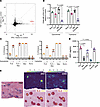 Figure 6
IDO1-induced tryptophan depletion within ectopic lymphoid structures is associated with the FLS effects on T cell activation. (A) IDO1 is the most highly induced gene in FLS stimulated with IFN-γ in vitro. RNA sequencing of FLS stimulated with IFN-γ (50 pg/mL) or TNF (100 pg/mL) for 24 hours relative to an unstimulated control (log2 fold change [FC] shown) (4). Genes shown as black dots except IDO1, which is highlighted in red. (B) IDO1 inhibition (epacadostat) or tryptophan supplementation reduced FLS-induced CD69 expression. CD69 expression (MFI) on CD3+ VβSEB T cells after 72 hours of SEB stimulation with the APC indicated and treatment with selective IDO1 inhibitor epacadostat 100 nM (left) or tryptophan 250 mM (right) relative to DMSO (for epacadostat) or media (for tryptophan) treated controls. N = 4. (C) IDO1 inhibition (epacadostat, left) or the addition of tryptophan (right) reduces FLS-induced suppression of T cell proliferation after SEB stimulation for 6 days. Proliferation measured by CellTrace Violet intensity via flow cytometry. Maximal number of divisions with ≥5% of CD3+ VβSEB T cells are shown. APC indicated below x axis. N = 4. (D) IDO1 is more highly expressed by FLS than macrophages or DCs. IDO1 expression measured by Luminex assay from supernatant of T cell–APC cultures stimulated by SEB for 48 hours. APC identified on x axis. N = 4. (E) IDO1 and CD69 expression (spatial transcriptomics) in a representative RA synovial tissue section with multiple ectopic lymphoid structures (ELS). N = 8 (22). Top, expression of IDO1 and CD69 (color scale: read counts). Bottom, coplotting of RNA capture spots containing ELS (maroon) and IDO1 or CD69 (yellow). Left, corresponding H&E. For B–D, mean ± standard deviation is shown, and statistical comparisons were made using paired 2-tailed t tests with corrections for multiple comparisons within each outcome to maintain an overall type I error rate of 0.05 as described in the Methods section.
In agreement with the published model (13), we found that both IDO1 inhibition with a selective inhibitor, epacadostat (21), as well as the addition of excess tryptophan, decreased T cell CD69 expression when FLS were present (Figure 6B). Neither intervention affected CD69 expression in the absence of an APC or when macrophages were the sole APCs. Additionally, the addition of either epacadostat or tryptophan rescued the suppression of T cell proliferation observed with FLS as APCs (Figure 6C).
To further investigate IDO1 expression, we compared IDO1 production across APC–T cell cocultures stimulated with SEB. FLS as APCs induced the highest levels of IDO1 in the culture supernatant compared with monocyte-derived macrophages or DCs (Figure 6D), verifying that IDO1 is primarily produced by FLS rather than professional APCs.
To explore the relevance of this IDO1-dependent mechanism in vivo, we analyzed spatial transcriptomics data from 8 RA synovial tissue sections (22). We hypothesized that IDO1-driven tryptophan depletion in situ would coincide with areas of high CD69 expression on T cells, reflecting FLS-driven T cell activation. In our analysis of RA synovial sections, we were able to detect both IDO1 and CD69 expression in all 8 tissue sections and noted that the expression was often, but not exclusively, within well-defined ELS, which have a high concentration of T cells (Figure 6E). Our prior work demonstrated that FLS within ELS express nuclear phosphorylated STAT1, indicative of an IFN-γ response (4), which induces IDO1 expression in FLS (Figure 6A). We assessed the colocalization of IDO1 with CD69 and macrophage/DC markers in a spatial transcriptomics dataset (22), and while the global Lee’s L spatial correlation was not significant for any of the pairwise correlations because of low transcript counts, the local Lee’s L revealed that IDO1 expression was negatively spatially correlated with CD14 but strongly positively correlated with that of CD69 and LAMP3. LAMP3 expression is a marker of mature regulatory DCs, which are known to express IDO1 (23) and localize to ELS (22) (Supplemental Figure 7). Although the synovial ELS microenvironment appears to support both IDO1 and CD69 expression, the limited spatial resolution of the dataset and the high cell density within ELS limits our ability to correlate CD69 expression on T cells with IDO1 expression by an APC. However, given the ubiquity of FLS in the synovium as one of the primary resident cell types and the high expression of IDO1 observed by FLS in vitro relative to macrophages or DCs, these findings suggest that FLS-mediated tryptophan depletion, driven by IDO1, may contribute to T cell CD69 expression and suppression within the RA synovium in vivo.


