
USP16 drives psoriasis progression by deubiquitinating and stabilizing NLRP3 in keratinocytes
Nan Wang,1 Fangqian Guan,1 Yifan Lin,1 Bohao Sun,2 Jindan Dai,1 Xiejun Xu,1,3 Weibo Tang,1,4 Yanhua Ren,5 Xuliang Huang,6 Wenjie Gao,1 Xixi Chen,1,7 Litai Jin,1,8 Weitao Cong,1 and Zhongxin Zhu1
1School of Pharmaceutical Science, Wenzhou Medical University, Wenzhou, China.
2Department of Pathology, the Second Affiliated Hospital, School of Medicine, Zhejiang University, Hangzhou, China.
3Shusheng Key Laboratory of Medical Chemical Pharmaceutical Research, Ningbo Second Hormone Factory, Ningbo, China.
4Laboratory of Tumor Targeted Therapy and Translational Medicine, Jilin Medical University, Jilin, China.
5School of Basic Medical Sciences, Wenzhou Medical University, Wenzhou, China.
6Department of Anaesthesia, the First Affiliated Hospital of Wenzhou Medical University, Wenzhou, China.
7Department of Pharmacy, Taizhou Central Hospital, Taizhou, Zhejiang, China.
8Ningbo Key Laboratory of Skin Science, Ningbo College of Health Sciences, Ningbo, China.
Address correspondence to: Zhongxin Zhu, or Weitao Cong, School of Pharmaceutical Science, Wenzhou Medical University, Wenzhou, China. Email: zhongxinzhu2010@163.com (ZZ). Email: cwt97126@126.com (WC).
Authorship note: NW and FG contributed equally to this work.
Find articles by Wang, N. in: PubMed | Google Scholar
1School of Pharmaceutical Science, Wenzhou Medical University, Wenzhou, China.
2Department of Pathology, the Second Affiliated Hospital, School of Medicine, Zhejiang University, Hangzhou, China.
3Shusheng Key Laboratory of Medical Chemical Pharmaceutical Research, Ningbo Second Hormone Factory, Ningbo, China.
4Laboratory of Tumor Targeted Therapy and Translational Medicine, Jilin Medical University, Jilin, China.
5School of Basic Medical Sciences, Wenzhou Medical University, Wenzhou, China.
6Department of Anaesthesia, the First Affiliated Hospital of Wenzhou Medical University, Wenzhou, China.
7Department of Pharmacy, Taizhou Central Hospital, Taizhou, Zhejiang, China.
8Ningbo Key Laboratory of Skin Science, Ningbo College of Health Sciences, Ningbo, China.
Address correspondence to: Zhongxin Zhu, or Weitao Cong, School of Pharmaceutical Science, Wenzhou Medical University, Wenzhou, China. Email: zhongxinzhu2010@163.com (ZZ). Email: cwt97126@126.com (WC).
Authorship note: NW and FG contributed equally to this work.
Find articles by Guan, F. in: PubMed | Google Scholar
1School of Pharmaceutical Science, Wenzhou Medical University, Wenzhou, China.
2Department of Pathology, the Second Affiliated Hospital, School of Medicine, Zhejiang University, Hangzhou, China.
3Shusheng Key Laboratory of Medical Chemical Pharmaceutical Research, Ningbo Second Hormone Factory, Ningbo, China.
4Laboratory of Tumor Targeted Therapy and Translational Medicine, Jilin Medical University, Jilin, China.
5School of Basic Medical Sciences, Wenzhou Medical University, Wenzhou, China.
6Department of Anaesthesia, the First Affiliated Hospital of Wenzhou Medical University, Wenzhou, China.
7Department of Pharmacy, Taizhou Central Hospital, Taizhou, Zhejiang, China.
8Ningbo Key Laboratory of Skin Science, Ningbo College of Health Sciences, Ningbo, China.
Address correspondence to: Zhongxin Zhu, or Weitao Cong, School of Pharmaceutical Science, Wenzhou Medical University, Wenzhou, China. Email: zhongxinzhu2010@163.com (ZZ). Email: cwt97126@126.com (WC).
Authorship note: NW and FG contributed equally to this work.
Find articles by Lin, Y. in: PubMed | Google Scholar
1School of Pharmaceutical Science, Wenzhou Medical University, Wenzhou, China.
2Department of Pathology, the Second Affiliated Hospital, School of Medicine, Zhejiang University, Hangzhou, China.
3Shusheng Key Laboratory of Medical Chemical Pharmaceutical Research, Ningbo Second Hormone Factory, Ningbo, China.
4Laboratory of Tumor Targeted Therapy and Translational Medicine, Jilin Medical University, Jilin, China.
5School of Basic Medical Sciences, Wenzhou Medical University, Wenzhou, China.
6Department of Anaesthesia, the First Affiliated Hospital of Wenzhou Medical University, Wenzhou, China.
7Department of Pharmacy, Taizhou Central Hospital, Taizhou, Zhejiang, China.
8Ningbo Key Laboratory of Skin Science, Ningbo College of Health Sciences, Ningbo, China.
Address correspondence to: Zhongxin Zhu, or Weitao Cong, School of Pharmaceutical Science, Wenzhou Medical University, Wenzhou, China. Email: zhongxinzhu2010@163.com (ZZ). Email: cwt97126@126.com (WC).
Authorship note: NW and FG contributed equally to this work.
Find articles by Sun, B. in: PubMed | Google Scholar
1School of Pharmaceutical Science, Wenzhou Medical University, Wenzhou, China.
2Department of Pathology, the Second Affiliated Hospital, School of Medicine, Zhejiang University, Hangzhou, China.
3Shusheng Key Laboratory of Medical Chemical Pharmaceutical Research, Ningbo Second Hormone Factory, Ningbo, China.
4Laboratory of Tumor Targeted Therapy and Translational Medicine, Jilin Medical University, Jilin, China.
5School of Basic Medical Sciences, Wenzhou Medical University, Wenzhou, China.
6Department of Anaesthesia, the First Affiliated Hospital of Wenzhou Medical University, Wenzhou, China.
7Department of Pharmacy, Taizhou Central Hospital, Taizhou, Zhejiang, China.
8Ningbo Key Laboratory of Skin Science, Ningbo College of Health Sciences, Ningbo, China.
Address correspondence to: Zhongxin Zhu, or Weitao Cong, School of Pharmaceutical Science, Wenzhou Medical University, Wenzhou, China. Email: zhongxinzhu2010@163.com (ZZ). Email: cwt97126@126.com (WC).
Authorship note: NW and FG contributed equally to this work.
Find articles by Dai, J. in: PubMed | Google Scholar
1School of Pharmaceutical Science, Wenzhou Medical University, Wenzhou, China.
2Department of Pathology, the Second Affiliated Hospital, School of Medicine, Zhejiang University, Hangzhou, China.
3Shusheng Key Laboratory of Medical Chemical Pharmaceutical Research, Ningbo Second Hormone Factory, Ningbo, China.
4Laboratory of Tumor Targeted Therapy and Translational Medicine, Jilin Medical University, Jilin, China.
5School of Basic Medical Sciences, Wenzhou Medical University, Wenzhou, China.
6Department of Anaesthesia, the First Affiliated Hospital of Wenzhou Medical University, Wenzhou, China.
7Department of Pharmacy, Taizhou Central Hospital, Taizhou, Zhejiang, China.
8Ningbo Key Laboratory of Skin Science, Ningbo College of Health Sciences, Ningbo, China.
Address correspondence to: Zhongxin Zhu, or Weitao Cong, School of Pharmaceutical Science, Wenzhou Medical University, Wenzhou, China. Email: zhongxinzhu2010@163.com (ZZ). Email: cwt97126@126.com (WC).
Authorship note: NW and FG contributed equally to this work.
Find articles by Xu, X. in: PubMed | Google Scholar
1School of Pharmaceutical Science, Wenzhou Medical University, Wenzhou, China.
2Department of Pathology, the Second Affiliated Hospital, School of Medicine, Zhejiang University, Hangzhou, China.
3Shusheng Key Laboratory of Medical Chemical Pharmaceutical Research, Ningbo Second Hormone Factory, Ningbo, China.
4Laboratory of Tumor Targeted Therapy and Translational Medicine, Jilin Medical University, Jilin, China.
5School of Basic Medical Sciences, Wenzhou Medical University, Wenzhou, China.
6Department of Anaesthesia, the First Affiliated Hospital of Wenzhou Medical University, Wenzhou, China.
7Department of Pharmacy, Taizhou Central Hospital, Taizhou, Zhejiang, China.
8Ningbo Key Laboratory of Skin Science, Ningbo College of Health Sciences, Ningbo, China.
Address correspondence to: Zhongxin Zhu, or Weitao Cong, School of Pharmaceutical Science, Wenzhou Medical University, Wenzhou, China. Email: zhongxinzhu2010@163.com (ZZ). Email: cwt97126@126.com (WC).
Authorship note: NW and FG contributed equally to this work.
Find articles by Tang, W. in: PubMed | Google Scholar
1School of Pharmaceutical Science, Wenzhou Medical University, Wenzhou, China.
2Department of Pathology, the Second Affiliated Hospital, School of Medicine, Zhejiang University, Hangzhou, China.
3Shusheng Key Laboratory of Medical Chemical Pharmaceutical Research, Ningbo Second Hormone Factory, Ningbo, China.
4Laboratory of Tumor Targeted Therapy and Translational Medicine, Jilin Medical University, Jilin, China.
5School of Basic Medical Sciences, Wenzhou Medical University, Wenzhou, China.
6Department of Anaesthesia, the First Affiliated Hospital of Wenzhou Medical University, Wenzhou, China.
7Department of Pharmacy, Taizhou Central Hospital, Taizhou, Zhejiang, China.
8Ningbo Key Laboratory of Skin Science, Ningbo College of Health Sciences, Ningbo, China.
Address correspondence to: Zhongxin Zhu, or Weitao Cong, School of Pharmaceutical Science, Wenzhou Medical University, Wenzhou, China. Email: zhongxinzhu2010@163.com (ZZ). Email: cwt97126@126.com (WC).
Authorship note: NW and FG contributed equally to this work.
Find articles by Ren, Y. in: PubMed | Google Scholar
1School of Pharmaceutical Science, Wenzhou Medical University, Wenzhou, China.
2Department of Pathology, the Second Affiliated Hospital, School of Medicine, Zhejiang University, Hangzhou, China.
3Shusheng Key Laboratory of Medical Chemical Pharmaceutical Research, Ningbo Second Hormone Factory, Ningbo, China.
4Laboratory of Tumor Targeted Therapy and Translational Medicine, Jilin Medical University, Jilin, China.
5School of Basic Medical Sciences, Wenzhou Medical University, Wenzhou, China.
6Department of Anaesthesia, the First Affiliated Hospital of Wenzhou Medical University, Wenzhou, China.
7Department of Pharmacy, Taizhou Central Hospital, Taizhou, Zhejiang, China.
8Ningbo Key Laboratory of Skin Science, Ningbo College of Health Sciences, Ningbo, China.
Address correspondence to: Zhongxin Zhu, or Weitao Cong, School of Pharmaceutical Science, Wenzhou Medical University, Wenzhou, China. Email: zhongxinzhu2010@163.com (ZZ). Email: cwt97126@126.com (WC).
Authorship note: NW and FG contributed equally to this work.
Find articles by Huang, X. in: PubMed | Google Scholar
1School of Pharmaceutical Science, Wenzhou Medical University, Wenzhou, China.
2Department of Pathology, the Second Affiliated Hospital, School of Medicine, Zhejiang University, Hangzhou, China.
3Shusheng Key Laboratory of Medical Chemical Pharmaceutical Research, Ningbo Second Hormone Factory, Ningbo, China.
4Laboratory of Tumor Targeted Therapy and Translational Medicine, Jilin Medical University, Jilin, China.
5School of Basic Medical Sciences, Wenzhou Medical University, Wenzhou, China.
6Department of Anaesthesia, the First Affiliated Hospital of Wenzhou Medical University, Wenzhou, China.
7Department of Pharmacy, Taizhou Central Hospital, Taizhou, Zhejiang, China.
8Ningbo Key Laboratory of Skin Science, Ningbo College of Health Sciences, Ningbo, China.
Address correspondence to: Zhongxin Zhu, or Weitao Cong, School of Pharmaceutical Science, Wenzhou Medical University, Wenzhou, China. Email: zhongxinzhu2010@163.com (ZZ). Email: cwt97126@126.com (WC).
Authorship note: NW and FG contributed equally to this work.
Find articles by Gao, W. in: PubMed | Google Scholar
1School of Pharmaceutical Science, Wenzhou Medical University, Wenzhou, China.
2Department of Pathology, the Second Affiliated Hospital, School of Medicine, Zhejiang University, Hangzhou, China.
3Shusheng Key Laboratory of Medical Chemical Pharmaceutical Research, Ningbo Second Hormone Factory, Ningbo, China.
4Laboratory of Tumor Targeted Therapy and Translational Medicine, Jilin Medical University, Jilin, China.
5School of Basic Medical Sciences, Wenzhou Medical University, Wenzhou, China.
6Department of Anaesthesia, the First Affiliated Hospital of Wenzhou Medical University, Wenzhou, China.
7Department of Pharmacy, Taizhou Central Hospital, Taizhou, Zhejiang, China.
8Ningbo Key Laboratory of Skin Science, Ningbo College of Health Sciences, Ningbo, China.
Address correspondence to: Zhongxin Zhu, or Weitao Cong, School of Pharmaceutical Science, Wenzhou Medical University, Wenzhou, China. Email: zhongxinzhu2010@163.com (ZZ). Email: cwt97126@126.com (WC).
Authorship note: NW and FG contributed equally to this work.
Find articles by Chen, X. in: PubMed | Google Scholar
1School of Pharmaceutical Science, Wenzhou Medical University, Wenzhou, China.
2Department of Pathology, the Second Affiliated Hospital, School of Medicine, Zhejiang University, Hangzhou, China.
3Shusheng Key Laboratory of Medical Chemical Pharmaceutical Research, Ningbo Second Hormone Factory, Ningbo, China.
4Laboratory of Tumor Targeted Therapy and Translational Medicine, Jilin Medical University, Jilin, China.
5School of Basic Medical Sciences, Wenzhou Medical University, Wenzhou, China.
6Department of Anaesthesia, the First Affiliated Hospital of Wenzhou Medical University, Wenzhou, China.
7Department of Pharmacy, Taizhou Central Hospital, Taizhou, Zhejiang, China.
8Ningbo Key Laboratory of Skin Science, Ningbo College of Health Sciences, Ningbo, China.
Address correspondence to: Zhongxin Zhu, or Weitao Cong, School of Pharmaceutical Science, Wenzhou Medical University, Wenzhou, China. Email: zhongxinzhu2010@163.com (ZZ). Email: cwt97126@126.com (WC).
Authorship note: NW and FG contributed equally to this work.
Find articles by Jin, L. in: PubMed | Google Scholar
1School of Pharmaceutical Science, Wenzhou Medical University, Wenzhou, China.
2Department of Pathology, the Second Affiliated Hospital, School of Medicine, Zhejiang University, Hangzhou, China.
3Shusheng Key Laboratory of Medical Chemical Pharmaceutical Research, Ningbo Second Hormone Factory, Ningbo, China.
4Laboratory of Tumor Targeted Therapy and Translational Medicine, Jilin Medical University, Jilin, China.
5School of Basic Medical Sciences, Wenzhou Medical University, Wenzhou, China.
6Department of Anaesthesia, the First Affiliated Hospital of Wenzhou Medical University, Wenzhou, China.
7Department of Pharmacy, Taizhou Central Hospital, Taizhou, Zhejiang, China.
8Ningbo Key Laboratory of Skin Science, Ningbo College of Health Sciences, Ningbo, China.
Address correspondence to: Zhongxin Zhu, or Weitao Cong, School of Pharmaceutical Science, Wenzhou Medical University, Wenzhou, China. Email: zhongxinzhu2010@163.com (ZZ). Email: cwt97126@126.com (WC).
Authorship note: NW and FG contributed equally to this work.
Find articles by Cong, W. in: PubMed | Google Scholar
1School of Pharmaceutical Science, Wenzhou Medical University, Wenzhou, China.
2Department of Pathology, the Second Affiliated Hospital, School of Medicine, Zhejiang University, Hangzhou, China.
3Shusheng Key Laboratory of Medical Chemical Pharmaceutical Research, Ningbo Second Hormone Factory, Ningbo, China.
4Laboratory of Tumor Targeted Therapy and Translational Medicine, Jilin Medical University, Jilin, China.
5School of Basic Medical Sciences, Wenzhou Medical University, Wenzhou, China.
6Department of Anaesthesia, the First Affiliated Hospital of Wenzhou Medical University, Wenzhou, China.
7Department of Pharmacy, Taizhou Central Hospital, Taizhou, Zhejiang, China.
8Ningbo Key Laboratory of Skin Science, Ningbo College of Health Sciences, Ningbo, China.
Address correspondence to: Zhongxin Zhu, or Weitao Cong, School of Pharmaceutical Science, Wenzhou Medical University, Wenzhou, China. Email: zhongxinzhu2010@163.com (ZZ). Email: cwt97126@126.com (WC).
Authorship note: NW and FG contributed equally to this work.
Find articles by Zhu, Z. in: PubMed | Google Scholar
Published January 27, 2026 - More info
JCI Insight. 2026;11(5):e193017. https://doi.org/10.1172/jci.insight.193017.
© 2026 The American Society for Clinical Investigation
Received: March 3, 2025; Accepted: January 14, 2026


-
Results
USP16 is upregulated in both psoriatic skin and in IMQ-induced psoriasis mouse models. To explore the function of USP16 in psoriasis, we initially examined publicly accessible transcriptomic data and noted a significant elevation in USP16 gene expression in psoriasis models (GSE14905), compared with the respective controls (Figure 1A). Subsequently, our investigations in psoriasis patients revealed that the expression level of USP16 was notably elevated compared with that in normal skin tissues, as indicated by IHC staining (Figure 1B). Following this, we induced psoriasis in a mouse model using IMQ and observed a significant increase in USP16 expression in the psoriatic epidermis compared with the mice coated with Vaseline determined by IHC staining (Figure 1C). In line with these findings, Western blot analysis of skin tissue revealed a notable upregulation of USP16 expression in mice with IMQ-induced psoriasis compared with mice treated with Vaseline (Figure 1D). To better characterize the cell types that primarily express USP16, we analyzed the recently published single-cell RNA-seq dataset from normal human skin tissue. The results show that USP16 was mainly expressed in KCs (Supplemental Figure 1A; supplemental material available online with this article; https://doi.org/10.1172/jci.insight.193017DS1). To replicate the characteristics of psoriatic KCs in an in vitro setting, we utilized a cytokine cocktail called pso-mix (M5), comprising IL-17A, IL-22, OSM, IL-1α, and TNF-α. This combination created an inflammatory environment that closely resembles the conditions observed in psoriasis (22, 23). In addition, upon treating KCs with M5 at various time points, we observed that the expression of USP16 peaked at 24 hours (Figure 1E and Supplemental Figure 1B). Moreover, after treating KCs with varying concentrations of M5 for 24 hours to induce psoriasis model in vitro, we discovered that the mRNA level of USP16 was most pronounced at 10 ng/mL for 24 hours (Figure 1F). Collectively, these findings indicate that the upregulation of USP16 in lesions is linked to the advancement of psoriasis.
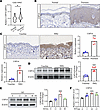 Figure 1
USP16 is upregulated in both psoriatic skin and in IMQ-induced psoriasis mouse models. (A) The mRNA level of USP16 in the skin from normal and lesional skin of psoriasis patients was analyzed using the Gene Expression Omnibus (GEO) database. (B) Representative IHC staining for USP16 expression in the skin from healthy Normal and Psoriatic patients (n = 5). Scale bar: 100 μm. (C) IHC staining and quantitative analysis of USP16 in the skin from Vaseline and IMQ-mice (n = 5). Scale bar: 100 μm. (D) Immunoblotting analysis and quantitative analysis of USP16 expression in the skin from Vaseline and IMQ-mice. β-Actin was used as a loading control (n = 6). (E) Immunoblotting analysis and quantitative analysis of USP16 protein level in HaCaT cells stimulates with M5 treatment for 0, 12, 24, and 48 hours at 10 ng/mL dose. β-Actin was used as a loading control (n = 3). (F) qPCR analysis for USP16 mRNA level in HaCaT cells stimulates with M5 for 0, 5, 10, 15 ng/mL with 24 hours treatment. β-Actin was used as a loading control (n = 3). Data are shown as the mean ± SEM. *P < 0.05; **P < 0.01; ***P < 0.001. The P value was determined using unpaired, 2-tailed Student’s t test (A–D) and 1-way ANOVA (E and F). All numbers (n) are biologically independent experiments.
USP16 ablation in KCs ameliorates the psoriasiform phenotype in IMQ-induced psoriasis mouse models. To explore the function of USP16 in psoriasis, we engineered an adeno-associated virus carrying a USP16 plasmid tagged with GFP. This construct was designed to knockdown USP16 specifically in mouse skin KCs by utilizing a KC-specific Krt14 promoter (Supplemental Figure 2, A and B). Through this approach, we aimed to investigate the effect of USP16 in KCs on the development and progression of psoriasis. H&E staining revealed that, under normal conditions, the targeted knockdown of USP16 in KCs did not show a significant effect on the thickness of the skin’s epidermal layer (Supplemental Figure 2C). This indicates that, in the absence of external stimuli or pathological conditions, the depletion of USP16 does not have a significant effect on the normal structural integrity of the skin. However, following the induction of psoriasis using IMQ in mouse models (Supplemental Figure 2D), we observed that the psoriasis area and severity index (PASI) were notably higher in AAV-GFP mice compared with AAV-Cre mice (Figure 2, A and B). Subsequently, we conducted immunoblotting analysis on the back skin tissue of the mice to assess the levels of Cyclin A1, Cyclin E1, and Bcl-2, key regulators of the cell cycle known to have a crucial role in controlling cell proliferation. Our findings reveal a downregulation of these proteins in AAV-Cre mice in comparison with AAV-GFP mice (Figure 2C). H&E images were used to measure epidermal thickness, revealing that the skin thickness of mice with USP16 KC-specific knockdown was significantly reduced compared with the control mice (Figure 2D). Similarly, the expression of proliferation marker Ki-67+ KCs in IMQ-treated AAV-Cre mice was significantly decreased compared with IMQ-treated AAV-GFP mice (Figure 2E). Finally, we examined the expression levels of skin inflammation and hyperplasia markers, such as K6, through immunofluorescence analysis to study the effect of USP16 on IMQ-induced skin inflammation. As anticipated, the expression of K6 was higher in IMQ-treated AAV-GFP mice compared with IMQ-treated AAV-Cre mice (Figure 2F). These discoveries offer valuable insights into the potential involvement of USP16 in regulating KC proliferation and inflammation following IMQ treatment.
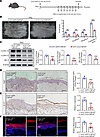 Figure 2
USP16 ablation in keratinocytes ameliorates the psoriasiform phenotype. (A) Schematic diagram demonstrating the animal experiment design. (B) Representative images of the dorsal back from mice (left) and mice PASI scores were depicted (right) (n = 4). Image acquired with digital camera. (C) Immunoblotting and quantitative analysis of Cyclin A1, Cyclin E1, and Bcl-2 protein levels in AAV-GFP and AAV-Cre mice were treated with IMQ for 7 days. β-Actin was used as a loading control (n = 5). (D) Representative histological sections of the dorsal back from AAV-GFP and AAV-Cre mice treated by IMQ for 7 days stained with H&E (left), and quantification of the epidermal thickness stained with H&E (n = 5). Scale bars: 200 μm. (E) Representative IHC staining for Ki-67 expression in the skin from AAV-GFP and AAV-Cre mice were treated with IMQ for 7 days (n = 5). Scale bar: 100 μm. (F) Immunofluorescent labeling and quantitative analysis of K6+ in the skin from AAV-GFP and AAV-Cre mice were treated with IMQ for 7 days. Nuclei were stained with DAPI (blue) (n = 5). Scale bar: 50 μm. Data are shown as the mean ± SEM. **P < 0.01; ***P < 0.001. The P value was determined using unpaired, 2-tailed Student’s t test (B–F). All numbers (n) are biologically independent experiments.
USP16 is required for KC proliferation. Given that psoriasis is marked by the abnormal proliferation of KCs, we delved deeper into exploring the potential role of USP16 in modulating the proliferation of KCs. Firstly, we employed siRNA to silence endogenous USP16 in HaCaT cells (Supplemental Figure 3A) and subjected these cells to M5 stimulation and performed RNA-seq analysis. Gene Ontology (GO) enrichment analysis demonstrated that the silencing of USP16 resulted in significant alterations in cell cycle transformation and cell proliferation of KCs. Subsequently, gene set enrichment analysis (GESA) of the data further reveals a strong association between the loss of USP16 and cell cycle transformation. These findings provide evidence for the critical role of USP16 in regulating these processes in KCs (Figure 3, A and B). Based on our findings, we then investigated the effect of USP16 on cell cycle transformation and cell proliferation in KCs. Specifically, we detected the expression levels of key cell cycle–related proteins, such as Cyclin A1, Cyclin E1, and the cell survival–promoting protein Bcl-2, and the results show that USP16 knockdown treatment significantly reduced the expression levels of these proteins (Figure 3C). These results were confirmed in normal human epidermal keratinocytes (Supplemental Figure 4A). Moreover, to evaluate the effect of USP16 knockdown on cell proliferation, we conducted EdU and Ki-67 staining to assess the presence of actively proliferating cells. Subsequent to M5 treatment, we observed a significant decrease in the number of EdU+ and Ki-67+ cells in the si-USP16 treatment group compared with the si-Scr treatment group (Figure 3, D and E). In order to bolster our understanding of the role of USP16 in facilitating cell cycle progression, we conducted flow cytometry analysis to examine cell cycle distribution. Our results reveal that USP16 knockdown resulted in cell cycle arrest at the G0/G1 phase, whereas a greater percentage of cells in the si-Scr treatment group were found in the G2/M phase (Figure 3F). These outcomes collectively indicate that the interference of USP16 not only influences cell proliferation but also disrupts the G1/S cell cycle transition in KCs.
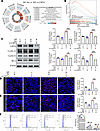 Figure 3
USP16 is required for keratinocyte proliferation. (A) RNA-seq analysis of the differentially regulated genes between si-Scr group and si-USP16 group treated with M5 for 24 hours. Differentially regulated genes were enriched in GO biological process terms. (B) GSEA results for cell cycle transition. (C) Immunoblotting and quantitative analysis of USP16, Cyclin A1, Cyclin E1, and Bcl-2 protein levels in HaCaT cells that were treated with si-Scr or si-USP16 and stimulated with or without M5 for 24 hours. β-Actin was used as a loading control (n = 3). (D) Immunofluorescence and quantitative analysis of Ki-67+ in HaCaT cells that were treated with si-Scr or si-USP16 and stimulated with or without M5 for 24 hours. Nuclei were stained with DAPI (blue) (n = 3). Scale bar: 50 μm. (E) Immunofluorescent and quantitative analysis of EdU+ in HaCaT cells that were treated with si-Scr or si-USP16 and stimulated with or without M5 for 24 hours. Nuclei were stained with Hoechst (blue) (n = 3). Scale bar: 50 μm. (F) Flow cytometric plots of cell-cycle analysis performed with PI staining on HaCaT cells treated with si-Scr or si-USP16 and stimulated with or without M5 for 24 hours (left). Quantification the percentage of cells that fall into the sub G0/G1, S, or G2/M gates (right). Data are shown as the mean ± SEM. *P < 0.05; **P < 0.01; ***P < 0.001. The P value was determined using 1-way ANOVA (C–F). All numbers (n) are biologically independent experiments.
USP16 targets and regulates NLRP3 signaling in KCs. To explore the molecular mechanism behind USP16’s effect on KC proliferation and inflammation, we conducted RNA-seq analysis to identify genes involved in the altered signaling pathways (Figure 4A). Among these DEGs, the heatmap and KEGG analysis show that the NOD-like signaling pathway was downregulated upon USP16 silencing, suggesting that USP16 promotes KC proliferation and inflammation by activating this pathway (Figure 4, B and C). GO enrichment analysis indicated that the downregulated DEGs were mainly enriched in biological processes associated with signal transduction (Figure 4D). Nod-like receptor pyrin domain-containing protein 3 (NLRP3), a key member of the NOD-like receptor family, is typically triggered in response to infection or inflammation, leading to the formation of the NLRP3 inflammasome. Western blotting analysis confirmed that, despite the stimulation of KCs by M5, the activity of the NLRP3 signaling pathway was decreased upon silencing of USP16. This was evident from the reduced protein expression levels of NLRP3 and the secretion of cytokines, including cleaved-caspase-1, IL-18, and IL-1β (Figure 4E). Meanwhile, these results were confirmed in NHEKs (Supplemental Figure 5A). In addition, immunofluorescence analysis revealed that the downregulation of USP16 in KCs led to decreased expression levels of NLRP3 and C-Caspase-1 in the cytoplasm (Supplemental Figure 6, A and B).
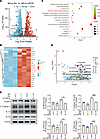 Figure 4
USP16 targets and regulates NLRP3 signaling in keratinocytes. (A and B) Volcano map and heatmap analysis for the significantly differentially regulated gene by the interference of si-Scr or si-USP16 in HaCaT cells treated by M5. (C) The Top 15 significant KEGG signaling pathways are listed. (D) The downregulated DEGs were classified based on their gene ontology (GO) terms for biological process (BP), cellular component (CC), and molecular function (MF). (E) Immunoblotting and quantitative analysis of NLRP3, C-Caspase-1, IL-18, and IL-1β protein levels in HaCaT cells that were treated with si-Scr or si-USP16 and stimulated with or without M5 for 24 hours. β-Actin was used as a loading control (n = 3). Data are shown as the mean ± SEM. *P < 0.05; ***P < 0.001. The P value was determined using 1-way ANOVA (E). All numbers (n) are biologically independent experiments.
Furthermore, our in vivo experiments provided evidence that the activity of the NLRP3 signaling pathway was significantly diminished in USP16 KC-specific knockdown mice compared with the control group by Western blot assay (Supplemental Figure 7A). These findings were further supported by the immunofluorescence assay, which demonstrated a substantial decrease in NLRP3 expression within USP16-deficient KCs (Supplemental Figure 7B). In conclusion, our results reveal a close correlation between USP16 and the activity of the NLRP3 signaling pathway in the context of psoriasis.
USP16 interacted and stabilized NLRP3 by inhibiting its K48 ubiquitination. In the next step, we investigated the effect of USP16 on NLRP3 expression. The overexpression of USP16 notably elevated the levels of NLRP3 protein level in HEK293T cells (Figure 5A). Interestingly, silencing USP16 did not result in any changes in NLRP3 mRNA levels (Figure 5B). These findings indicate that USP16 modulates NLRP3 protein expression at the posttranslational level. Subsequently, we investigated whether USP16 influences the stability of NLRP3. A cycloheximide (CHX) chase assay revealed that the upregulation of USP16 delayed the degradation of NLRP3 expression in HEK293T cells (Figure 5C). Meanwhile, MG132 (proteasome inhibitor) had the ability to reverse the downregulation of NLRP3 caused by USP16 knockdown, while CQ (autophagic lysosome inhibitor) did not show any effect on this process (Figure 5D). Following that, we conducted immunofluorescence experiments to investigate the potential binding between USP16 and NLRP3. The results indicate a binding interaction between these 2 proteins (Figure 5E). Comparable results were also noted through immunoprecipitation experiments conducted on KCs under physiological conditions (Figure 5F).
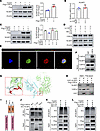 Figure 5
USP16 interacted and stabilized NLRP3 by inhibiting its K48 ubiquitination. (A) Immunoblotting and quantitative analysis of NLRP3 protein level that Flag-USP16 or Vector were transfected in HaCaT cells. β-Actin was used as a loading control (n = 4). (B) qPCR analysis for NLRP3 mRNA level that si-Scr or si-USP16 were transfected in HaCaT cells treated with M5 for 24 hours (n = 3). (C) Immunoblotting and quantitative analysis of NLRP3 protein levels that Flag-USP16 or Vector were transfected in HaCaT cells treated with cyclohexamide (CHX) for 0 and 4 hours. β-Actin was used as a loading control (n = 3). (D) Immunoblotting analysis of NLRP3 protein level that si-Scr or si-USP16 were transfected in HaCaT cells treated with MG132 or CQ for 6 hours and stimulated M5 for 24 hours. β-Actin was used as a loading control (n = 3). (E) Immunofluorescent staining of USP16 and NLRP3 in HaCaT cells. Nuclei were stained with DAPI (blue). Scale bar: 10 μm. (F) The HaCaT cell lysates were immunoprecipitated with IgG and anti-USP16 antibody and the expression of USP16 and NLRP3 were detected by Western blot. (G) Molecular docking analysis of USP16 binding to NLRP3 (confidence score: 0.8593). (H) Coimmunoprecipitation experiment was carried out to determine the specific binding domain between Flag-USP16 and GST-NLRP3. (I) USP16 amino acid fragment diagram. (J) HEK293T cells were transfected with HA-NLRP3 and several Flag-USP16 mutants. The whole-cell lysates were immunoprecipitated with anti-HA beads and immunoblotted with anti-Flag and anti-HA antibodies. (K) The HEK293T cells were cotransfected with Flag-USP16 and HA-Ub plasmids. The cell lysates were immunoprecipitated by anti-NLRP3 antibody, and then Western blot assay with anti-HA, anti-NLRP3, and anti-Flag antibody. (L) The HEK293T cells were cotransfected with Flag-USP16 and HA-Ub-K48 plasmids. The cell lysates were immunoprecipitated by anti-NLRP3 antibody, and then Western blot assay with anti-HA, anti-NLRP3, and anti-Flag antibody. Data are shown as the mean ± SEM. *P < 0.05; ***P < 0.001. The P value was determined using unpaired, 2-tailed Student’s t test (A–C). All numbers (n) are biologically independent experiments.
We attempted to explore the molecular mechanism of the USP16-NLRP3 interaction using docking software. The results indicate that USP16 may bind to SER-855 of NLRP3 by hydrogen bonding (Figure 5G). The GST-pulldown assay yielded the same result (Figure 5H). USP16 comprises a peptidase domain and a zinc finger ubiquitin binding domain (Znf-Ubp). In order to pinpoint the critical domains responsible for the interactions between NLRP3 and USP16, we also generated various truncated forms of USP16 that comprised a peptidase domain (amino acids 1–142) and a zinc finger ubiquitin binding domain (ZnF-Ubp, amino acids 184–C-terminus). (11). The results of coimmunoprecipitation assays in HEK293T cells demonstrate that the interaction between NLRP3 and USP16 was specifically mediated by the peptidase domain of USP16 (Figure 5, I and J). Given that USP16 functions as a deubiquitinating enzyme, we proceeded to investigate its effect on the ubiquitination of NLRP3. Our findings reveal that the overexpression of USP16 led to a decrease in NLRP3 polyubiquitination in HEK293T cells (Figure 5K). Furthermore, our study indicates that the overexpression of USP16 has the capacity to eliminate the K48 ubiquitin chain modification on NLRP3 (Figure 5L). Although prior studies indicate that USP16 deubiquitinates IKKβ to activate NLRP3 (8, 24), our experiments show that NLRP3 expression remained unchanged following IKKβ knockdown (Supplemental Figure 8, A and B). This finding demonstrates that USP16 regulated NLRP3 independently of IKKβ. In summary, our findings demonstrate that USP16 interacts with NLRP3 and eliminates the K48 ubiquitin chain, thereby stabilizing its protein expression.
The psoriasis alleviation driven by USP16 knockdown depends on NLRP3. To explore the effect of NLRP3 on the alleviation of psoriatic KCs through USP16 knockdown, we employed an NLRP3 activator, BMS-986299, to induce the activation of the NLRP3 signaling pathway (25). In our in vitro experiments, Western blot analysis revealed that the NLRP3 activator notably counteracted the inhibitory effect of USP16 knockdown on cell proliferation markers, including Cyclin A1, Cyclin E1, and Bcl-2 (Supplemental Figure 9A). Additionally, immunofluorescence experiments confirmed that the NLRP3 activator significantly increased the percentage of Ki-67+ and EdU+ cells when USP16 expression was inhibited (Supplemental Figure 9, B and C). Moreover, our cell cycle analysis conducted through flow cytometry demonstrated that the NLRP3 activator effectively reversed the cell cycle inhibitory effects caused by interfering with USP16 (Supplemental Figure 9D). We also performed Western blot analysis in NHEKs to validate and confirm the previously observed results (Supplemental Figure 10A).
Following this, we conducted the corresponding experimental validation in mice (Figure 6A). As shown in the Figure 6B, the PASI demonstrated that the diminishing effect resulting from USP16 knockdown is reversed by the administration of the NLRP3 activator. This indicates that the NLRP3 activator counteracts the psoriasis alleviation brought about by USP16 knockdown. Furthermore, Western blot analysis indicated a reduction in the expression levels of Cyclin A1, Cyclin E1, and Bcl-2 following USP16 deletion, with partial restoration observed upon activation of the NLRP3 signaling pathway (Figure 6C). H&E staining demonstrated that the targeted knockdown of USP16 in KCs led to a decrease in epidermal thickness. Nonetheless, these effects were reversed upon the administration of BMS-986299 (Figure 6D). Similar findings were observed through IHC staining analysis of Ki-67 (Figure 6E). Immunofluorescence staining of K6 revealed that mice with USP16 deficiency exhibited diminished inflammation and decreased proliferation of KCs, with these outcomes predominantly reversed by the NLRP3 activator (Figure 6F). Moreover, we observed that the inflammatory cytokines IL-1β and IL-6 were restored in response to the NLRP3 activator, despite the knockdown of USP16 in KCs (Supplemental Figure 9E). To eliminate confounding effects from other cell types, we verified our findings using a KC-specific NLRP3 overexpression adenovirus. Subsequent analysis revealed that NLRP3 overexpression abrogated the therapeutic effect of USP16 knockdown on the psoriatic phenotype. This was jointly demonstrated by a return to a hyperproliferative state, as indicated by elevated levels of Cyclin A1, Cyclin E1, and Bcl-2, along with histological evidence from H&E staining, Ki-67 histochemistry, and K6 immunofluorescence (Supplemental Figure 11, A–F). These data establish that the alleviation of the psoriasis phenotype by USP16 knockdown is functionally dependent on the downregulation of NLRP3. These findings suggest that the NLRP3 signaling pathway plays a crucial role in mitigating the psoriasis phenotype following the deletion of USP16.
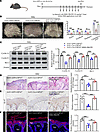 Figure 6
The psoriasis alleviation driven by USP16 knockdown depends on NLRP3. (A) Schematic diagram demonstrating the animal experiment design. (B) Representative images of the dorsal back from mice (left) and mice PASI scores were depicted (right) (n = 4). (C) Immunoblotting and quantitative analysis of Cyclin A1, Cyclin E1, and Bcl-2 protein levels in the skin from AAV-GFP, AAV-Cre, and AAV-Cre-BMS-986299 mice treated by IMQ for 7 days. β-Actin was used as a loading control (n = 5). (D) Representative histological sections of the dorsal back from AAV-GFP, AAV-Cre and AAV-Cre-BMS-986299 mice treated by IMQ for 7 days stained with H&E, and quantification of the epidermal thickness and the infiltrating cells stained with H&E (n = 5). Scale bars: 200 μm. (E) Representative IHC staining for Ki-67 expression in the skin from AAV-GFP, AAV-Cre, and AAV-Cre-BMS-986299 mice stimulated by IMQ for 7 days (n = 5). Scale bars: 100 μm. (F) Immunofluorescence and quantitative analysis of K6+ in the skin from AAV-GFP, AAV-Cre, and AAV-Cre-BMS-986299 mice induced by IMQ for 7 days. Nuclei were stained with DAPI (blue) (n = 5). Scale bars: 50 μm. Data are shown as the mean ± SEM. *P < 0.05; **P < 0.01; ***P < 0.001. The P value was determined using 1-way ANOVA (B–F). All numbers (n) are biologically independent experiments.
KC specific knockdown of USP16 alleviates IL-23–induced psoriasis phenotype. In addition, the use of intradermal administration of IL-23 in mice offers another valuable approach to studying psoriasis (26, 27). This model specifically targets the clinically relevant IL-23/IL-17A signaling axis and effectively mimics various disease features observed in human psoriasis. Subsequently, we aim to investigate the potential role of USP16 in a mouse model of IL-23–induced psoriasis (Figure 7A). The increased expression of USP16 in the epidermal layer of the skin in IL-23–induced psoriasis models (Figure 7, B and C), as well as the beneficial effects observed upon KC-specific knockdown of USP16, highlight its importance in the pathogenesis of psoriasis. The downregulation of key cell proliferating proteins and the reduction in epidermal thickness, coupled with the decreased expression of Ki-67, strongly support the notion that USP16 is involved in the dysregulated proliferation and pathology of psoriatic KCs (Figure 7, D–F). The same regulatory effects of USP16 on NLRP3 signaling pathway was also verified in the IL-23–induced psoriasis mouse model (Supplemental Figure 12, A and B).
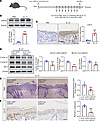 Figure 7
Keratinocyte-specific knockdown of USP16 alleviates IL-23–induced psoriasis phenotype. (A) Schematic diagram demonstrating the animal experiment design. (B) Immunoblotting and quantitative analysis of USP16 protein levels in PBS and IL-23–treated mice. β-Actin was used as a loading control (n = 5). (C) Representative IHC staining for USP16 expression in PBS and IL-23–induced psoriasis lesions (n = 5). Scale bars: 100 μm. (D) Immunoblotting and quantitative analysis of Cyclin A1, Cyclin E1, and Bcl-2 protein levels in the skin from AAV-GFP and AAV-Cre mice were treated with IL-23. β-Actin was used as a loading control (n = 5). (E) Representative histological sections of the dorsal back from AAV-GFP and AAV-Cre mice were treated with IL-23 and stained with H&E, and quantification of the epidermal thickness was analyzed (n = 5). Scale bars: 200 μm. (F) Representative IHC staining for Ki-67 expression in the skin from AAV-GFP and AAV-Cre mice treated with IL-23 (n = 5). Scale bar: 100 μm. Data are shown as the mean ± SEM. **P < 0.01, ***P < 0.001. The P value was determined using unpaired, 2-tailed Student’s t test (B–F). All numbers (n) are biologically independent experiments.
To further investigate the in vivo relationship between USP16 and NLRP3, we conducted additional validation using an IL-23–induced psoriasis mouse model. Specifically, the downregulation of proliferative protein expression, the reduction in epidermal thickness, and the decrease in the positive rate of Ki-67, which were observed upon USP16 knockdown, were all partially reversed by the administration of an NLRP3 activator (Supplemental Figure 13, A–C). Indeed, these observations provide compelling evidence for the significant role of USP16 in psoriatic KCs.
The expression of USP16 in psoriasis has been found to not only correlate with NLRP3 levels but also with the progression of the disease. To explore the potential clinical correlation between USP16 and NLRP3, we further assessed the expression of both proteins in 60 samples obtained from diverse psoriasis patients. IHC analysis revealed a positive correlation between the levels of USP16 and NLRP3 expression (Figure 8A). Immunostaining quantification and statistical analyses revealed the correlations to be significant (Figure 8B; r = 0.82, P < 0.001).
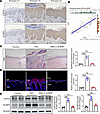 Figure 8
The expression of USP16 in psoriasis has been found to not only correlate with NLRP3 levels but also with the progression of the disease. (A) IHC staining detected the expression of USP16 and NLRP3 in 60 psoriasis specimens. Images shown are 3 representative specimens. The inserts are high magnification images (n = 60). Scale bars: 100 μm. (B) Correlation of USP16 and NLRP3 expressions was significant (Pearson correlation test; r = 0.82, P < 0.001). (C) Representative histological sections of the dorsal skin from Vaseline, IMQ, and IMQ+Cal/BDP-treated mice stained with H&E, and quantification of the epidermal thickness (n = 5). Scale bars: 200 μm. (D) Immunofluorescent and quantitative analysis of USP16 in the dorsal skin from Vaseline, IMQ, IMQ+Cal/BDP-treated mice. Nuclei were stained with DAPI (blue) (n = 5). Scale bars: 100 μm. (E) Immunoblotting and quantitative analysis of USP16 in the dorsal skin from Vaseline, IMQ, IMQ+Cal/BDP-treated mice (n = 5). Data are shown as the mean ± SEM. ***P < 0.001. The P value was determined using 1-way ANOVA (C–E). All numbers (n) are biologically independent experiments.
Currently, several clinical drugs are available for the management of psoriasis, such as Calcipotriol and Betamethasone dipropionate gel (Cal/BDP), which has been widely used in clinical practice (28, 29). In our study, we administered Cal/BDP to IMQ-induced psoriasis mice for 6 consecutive days. As a result, we observed a remarkable alleviation of psoriasis phenotype, with the mice skin returning to a normal state (Supplemental Figure 14, A and B). Subsequently, we investigated the expression of USP16 and observed that its levels correlated with the progression of psoriasis phenotype (Figure 8, C–E). Successful treatment of psoriasis corresponded with a reduction in USP16 expression, indicating its involvement in the pathogenesis of psoriasis. These findings shed light on the dynamic changes in USP16 expression during the course of psoriasis and emphasize its potential as a target for therapeutic interventions.


