
Research ArticleCell biologyHematology
Open Access |  10.1172/jci.insight.192126
Insights and modulation of RNA polymerase–dependent R-loop and dsRNA in Fanconi anemia hematopoietic stem cells
Michihiro Hashimoto,1,2,3,4 Xiaomin Feng,1,2 Jie Bai,1,2 Huimin Zeng,5 Tian Li,1,2 Jue Li,6,7,8 Terumasa Umemoto,4 Paul R. Andreassen,7,9 and Gang Huang1,2,3
1Department of Cell Systems and Anatomy, UT Health San Antonio, San Antonio, Texas, USA.
2Department of Pathology and Laboratory Medicine, UT Health San Antonio, Joe R. and Teresa Lozano Long School of Medicine, San Antonio, Texas, USA.
3Mays Cancer Center at UT Health San Antonio, San Antonio, Texas, USA.
4Laboratory of Stem Cell Engineering, International Research Center for Medical Sciences, Kumamoto University, Kumamoto, Japan.
5Pediatric Department, Peking University People’s Hospital, Beijing, China.
6Division of Pathology, and
7Division of Experimental Hematology and Cancer Biology, Cincinnati Children’s Hospital Medical Center, Cincinnati, Ohio, USA.
8Department of Hematology, The First Affiliated Hospital, Zhejiang University School of Medicine, Hangzhou, Zhejiang, China.
9Department of Pediatrics, University of Cincinnati College of Medicine, Cincinnati, Ohio, USA.
Address correspondence to: Gang Huang, MC8262 Box #14, 8403 Floyd Curl Drive, San Antonio, Texas 78229, USA. Phone: 210.450.7061; Email: huangg1@uthscsa.edu. Or to: Paul R. Andreassen, S7.419, 3333 Burnet Avenue, Cincinnati, Ohio 45229-3026, USA. Phone: 513.636.0499; Email: Paul.Andreassen@cchmc.org.
Find articles by Hashimoto, M. in: PubMed | Google Scholar
1Department of Cell Systems and Anatomy, UT Health San Antonio, San Antonio, Texas, USA.
2Department of Pathology and Laboratory Medicine, UT Health San Antonio, Joe R. and Teresa Lozano Long School of Medicine, San Antonio, Texas, USA.
3Mays Cancer Center at UT Health San Antonio, San Antonio, Texas, USA.
4Laboratory of Stem Cell Engineering, International Research Center for Medical Sciences, Kumamoto University, Kumamoto, Japan.
5Pediatric Department, Peking University People’s Hospital, Beijing, China.
6Division of Pathology, and
7Division of Experimental Hematology and Cancer Biology, Cincinnati Children’s Hospital Medical Center, Cincinnati, Ohio, USA.
8Department of Hematology, The First Affiliated Hospital, Zhejiang University School of Medicine, Hangzhou, Zhejiang, China.
9Department of Pediatrics, University of Cincinnati College of Medicine, Cincinnati, Ohio, USA.
Address correspondence to: Gang Huang, MC8262 Box #14, 8403 Floyd Curl Drive, San Antonio, Texas 78229, USA. Phone: 210.450.7061; Email: huangg1@uthscsa.edu. Or to: Paul R. Andreassen, S7.419, 3333 Burnet Avenue, Cincinnati, Ohio 45229-3026, USA. Phone: 513.636.0499; Email: Paul.Andreassen@cchmc.org.
Find articles by Feng, X. in: PubMed | Google Scholar
1Department of Cell Systems and Anatomy, UT Health San Antonio, San Antonio, Texas, USA.
2Department of Pathology and Laboratory Medicine, UT Health San Antonio, Joe R. and Teresa Lozano Long School of Medicine, San Antonio, Texas, USA.
3Mays Cancer Center at UT Health San Antonio, San Antonio, Texas, USA.
4Laboratory of Stem Cell Engineering, International Research Center for Medical Sciences, Kumamoto University, Kumamoto, Japan.
5Pediatric Department, Peking University People’s Hospital, Beijing, China.
6Division of Pathology, and
7Division of Experimental Hematology and Cancer Biology, Cincinnati Children’s Hospital Medical Center, Cincinnati, Ohio, USA.
8Department of Hematology, The First Affiliated Hospital, Zhejiang University School of Medicine, Hangzhou, Zhejiang, China.
9Department of Pediatrics, University of Cincinnati College of Medicine, Cincinnati, Ohio, USA.
Address correspondence to: Gang Huang, MC8262 Box #14, 8403 Floyd Curl Drive, San Antonio, Texas 78229, USA. Phone: 210.450.7061; Email: huangg1@uthscsa.edu. Or to: Paul R. Andreassen, S7.419, 3333 Burnet Avenue, Cincinnati, Ohio 45229-3026, USA. Phone: 513.636.0499; Email: Paul.Andreassen@cchmc.org.
Find articles by Bai, J. in: PubMed | Google Scholar
1Department of Cell Systems and Anatomy, UT Health San Antonio, San Antonio, Texas, USA.
2Department of Pathology and Laboratory Medicine, UT Health San Antonio, Joe R. and Teresa Lozano Long School of Medicine, San Antonio, Texas, USA.
3Mays Cancer Center at UT Health San Antonio, San Antonio, Texas, USA.
4Laboratory of Stem Cell Engineering, International Research Center for Medical Sciences, Kumamoto University, Kumamoto, Japan.
5Pediatric Department, Peking University People’s Hospital, Beijing, China.
6Division of Pathology, and
7Division of Experimental Hematology and Cancer Biology, Cincinnati Children’s Hospital Medical Center, Cincinnati, Ohio, USA.
8Department of Hematology, The First Affiliated Hospital, Zhejiang University School of Medicine, Hangzhou, Zhejiang, China.
9Department of Pediatrics, University of Cincinnati College of Medicine, Cincinnati, Ohio, USA.
Address correspondence to: Gang Huang, MC8262 Box #14, 8403 Floyd Curl Drive, San Antonio, Texas 78229, USA. Phone: 210.450.7061; Email: huangg1@uthscsa.edu. Or to: Paul R. Andreassen, S7.419, 3333 Burnet Avenue, Cincinnati, Ohio 45229-3026, USA. Phone: 513.636.0499; Email: Paul.Andreassen@cchmc.org.
Find articles by Zeng, H. in: PubMed | Google Scholar
1Department of Cell Systems and Anatomy, UT Health San Antonio, San Antonio, Texas, USA.
2Department of Pathology and Laboratory Medicine, UT Health San Antonio, Joe R. and Teresa Lozano Long School of Medicine, San Antonio, Texas, USA.
3Mays Cancer Center at UT Health San Antonio, San Antonio, Texas, USA.
4Laboratory of Stem Cell Engineering, International Research Center for Medical Sciences, Kumamoto University, Kumamoto, Japan.
5Pediatric Department, Peking University People’s Hospital, Beijing, China.
6Division of Pathology, and
7Division of Experimental Hematology and Cancer Biology, Cincinnati Children’s Hospital Medical Center, Cincinnati, Ohio, USA.
8Department of Hematology, The First Affiliated Hospital, Zhejiang University School of Medicine, Hangzhou, Zhejiang, China.
9Department of Pediatrics, University of Cincinnati College of Medicine, Cincinnati, Ohio, USA.
Address correspondence to: Gang Huang, MC8262 Box #14, 8403 Floyd Curl Drive, San Antonio, Texas 78229, USA. Phone: 210.450.7061; Email: huangg1@uthscsa.edu. Or to: Paul R. Andreassen, S7.419, 3333 Burnet Avenue, Cincinnati, Ohio 45229-3026, USA. Phone: 513.636.0499; Email: Paul.Andreassen@cchmc.org.
Find articles by Li, T. in: PubMed | Google Scholar
1Department of Cell Systems and Anatomy, UT Health San Antonio, San Antonio, Texas, USA.
2Department of Pathology and Laboratory Medicine, UT Health San Antonio, Joe R. and Teresa Lozano Long School of Medicine, San Antonio, Texas, USA.
3Mays Cancer Center at UT Health San Antonio, San Antonio, Texas, USA.
4Laboratory of Stem Cell Engineering, International Research Center for Medical Sciences, Kumamoto University, Kumamoto, Japan.
5Pediatric Department, Peking University People’s Hospital, Beijing, China.
6Division of Pathology, and
7Division of Experimental Hematology and Cancer Biology, Cincinnati Children’s Hospital Medical Center, Cincinnati, Ohio, USA.
8Department of Hematology, The First Affiliated Hospital, Zhejiang University School of Medicine, Hangzhou, Zhejiang, China.
9Department of Pediatrics, University of Cincinnati College of Medicine, Cincinnati, Ohio, USA.
Address correspondence to: Gang Huang, MC8262 Box #14, 8403 Floyd Curl Drive, San Antonio, Texas 78229, USA. Phone: 210.450.7061; Email: huangg1@uthscsa.edu. Or to: Paul R. Andreassen, S7.419, 3333 Burnet Avenue, Cincinnati, Ohio 45229-3026, USA. Phone: 513.636.0499; Email: Paul.Andreassen@cchmc.org.
Find articles by Li, J. in: PubMed | Google Scholar
1Department of Cell Systems and Anatomy, UT Health San Antonio, San Antonio, Texas, USA.
2Department of Pathology and Laboratory Medicine, UT Health San Antonio, Joe R. and Teresa Lozano Long School of Medicine, San Antonio, Texas, USA.
3Mays Cancer Center at UT Health San Antonio, San Antonio, Texas, USA.
4Laboratory of Stem Cell Engineering, International Research Center for Medical Sciences, Kumamoto University, Kumamoto, Japan.
5Pediatric Department, Peking University People’s Hospital, Beijing, China.
6Division of Pathology, and
7Division of Experimental Hematology and Cancer Biology, Cincinnati Children’s Hospital Medical Center, Cincinnati, Ohio, USA.
8Department of Hematology, The First Affiliated Hospital, Zhejiang University School of Medicine, Hangzhou, Zhejiang, China.
9Department of Pediatrics, University of Cincinnati College of Medicine, Cincinnati, Ohio, USA.
Address correspondence to: Gang Huang, MC8262 Box #14, 8403 Floyd Curl Drive, San Antonio, Texas 78229, USA. Phone: 210.450.7061; Email: huangg1@uthscsa.edu. Or to: Paul R. Andreassen, S7.419, 3333 Burnet Avenue, Cincinnati, Ohio 45229-3026, USA. Phone: 513.636.0499; Email: Paul.Andreassen@cchmc.org.
Find articles by Umemoto, T. in: PubMed | Google Scholar
1Department of Cell Systems and Anatomy, UT Health San Antonio, San Antonio, Texas, USA.
2Department of Pathology and Laboratory Medicine, UT Health San Antonio, Joe R. and Teresa Lozano Long School of Medicine, San Antonio, Texas, USA.
3Mays Cancer Center at UT Health San Antonio, San Antonio, Texas, USA.
4Laboratory of Stem Cell Engineering, International Research Center for Medical Sciences, Kumamoto University, Kumamoto, Japan.
5Pediatric Department, Peking University People’s Hospital, Beijing, China.
6Division of Pathology, and
7Division of Experimental Hematology and Cancer Biology, Cincinnati Children’s Hospital Medical Center, Cincinnati, Ohio, USA.
8Department of Hematology, The First Affiliated Hospital, Zhejiang University School of Medicine, Hangzhou, Zhejiang, China.
9Department of Pediatrics, University of Cincinnati College of Medicine, Cincinnati, Ohio, USA.
Address correspondence to: Gang Huang, MC8262 Box #14, 8403 Floyd Curl Drive, San Antonio, Texas 78229, USA. Phone: 210.450.7061; Email: huangg1@uthscsa.edu. Or to: Paul R. Andreassen, S7.419, 3333 Burnet Avenue, Cincinnati, Ohio 45229-3026, USA. Phone: 513.636.0499; Email: Paul.Andreassen@cchmc.org.
Find articles by Andreassen, P. in: PubMed | Google Scholar
1Department of Cell Systems and Anatomy, UT Health San Antonio, San Antonio, Texas, USA.
2Department of Pathology and Laboratory Medicine, UT Health San Antonio, Joe R. and Teresa Lozano Long School of Medicine, San Antonio, Texas, USA.
3Mays Cancer Center at UT Health San Antonio, San Antonio, Texas, USA.
4Laboratory of Stem Cell Engineering, International Research Center for Medical Sciences, Kumamoto University, Kumamoto, Japan.
5Pediatric Department, Peking University People’s Hospital, Beijing, China.
6Division of Pathology, and
7Division of Experimental Hematology and Cancer Biology, Cincinnati Children’s Hospital Medical Center, Cincinnati, Ohio, USA.
8Department of Hematology, The First Affiliated Hospital, Zhejiang University School of Medicine, Hangzhou, Zhejiang, China.
9Department of Pediatrics, University of Cincinnati College of Medicine, Cincinnati, Ohio, USA.
Address correspondence to: Gang Huang, MC8262 Box #14, 8403 Floyd Curl Drive, San Antonio, Texas 78229, USA. Phone: 210.450.7061; Email: huangg1@uthscsa.edu. Or to: Paul R. Andreassen, S7.419, 3333 Burnet Avenue, Cincinnati, Ohio 45229-3026, USA. Phone: 513.636.0499; Email: Paul.Andreassen@cchmc.org.
Find articles by Huang, G. in: PubMed | Google Scholar
Published February 26, 2026 - More info
JCI Insight. 2026;11(7):e192126. https://doi.org/10.1172/jci.insight.192126.
© 2026 Hashimoto et al. This work is licensed under the Creative Commons Attribution 4.0 International License. To view a copy of this license, visit http://creativecommons.org/licenses/by/4.0/.
Received: February 10, 2025; Accepted: February 12, 2026


-
Results
R-loop and dsRNA accumulation results in ribosomal biogenesis defects in FANCA-deficient cells. Multiple reports have shown accumulation of R-loops in FA mutant cells (42-44). Thus, to better understand cellular defects associated with FA, we initially assessed the levels of R-loops in corrected (FANCA corrected) and uncorrected (FANCA deficient) pairs of FA patient–derived fibroblasts. Indeed, R-loops were expressed at higher levels in FANCA-deficient cells compared with FANCA-corrected cells (Figure 1, A and B). Additionally, when R-loops are formed in certain genes, they can trigger the production of another type of RNA, dsRNA (46). Strikingly, FANCA-deficient cells also had higher levels of dsRNA than FANCA-corrected cells (Figure 1, A and C). Given that R-loops were more abundant in FANCA-deficient cells, and since RNAPI-dependent rRNAs are among the most active sites of transcription in the cell (43, 53), we hypothesized that rRNAs might be compromised by deficiency for FANCA. As anticipated, all rRNAs transcribed in nucleoli, as well as RNAPIII-dependent 5S, were downregulated in patient-derived FANCA-deficient fibroblasts (Figure 1D).
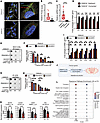 Figure 1
Human FANCA-deficient cells from a patient with FA display accumulation of R-loops and dsRNA and errors in ribosomal biogenesis. (A) Visualization of R-loops detected by S9.6 mAb (red) and dsRNA detected by rJ2 mAb (green) and via immunofluorescence microscopy in FANCA-corrected or -deficient cells from a patient with FA. Nuclei shown by counterstaining with DAPI (blue). Original magnification is ×63. (B and C) Quantification of R-loops (B) and dsRNA (C) based upon the area integrated intensity measured by ImageJ (NIH). One-tailed Student’s t test; n = 37 for each condition. (D) Quantification of the expression of ribosomal genes using qRT-PCR. One-tailed Student’s t test; n = 3 for each condition. (E) DNA dot blots detecting R-loop levels using S9.6 antibody in FANCA-deficient cells reconstituted with 2 RNases (RNASEH1 or DICER1) or vector alone (Vec). (F) Quantification of R-loop levels shown in E. One-way ANOVA with Tukey’s multiple-comparison test; n = 3 for each condition. (G) RNA dot blots detecting levels of dsRNA in FANCA-deficient cells reconstituted with 2 RNases (RNASEH1 or DICER1) or Vec. n = 3 for each condition. (H) Quantification of dsRNA levels shown in G. One-way ANOVA with Tukey’s multiple-comparison test; n = 3 for each condition. (I) Quantification of specific rRNA forms in FANCA-deficient cells containing empty vector with or without overexpression of RNASE H1 or DICER1. One-way ANOVA with Tukey’s multiple-comparison test; n = 3 for each condition. (J) Visual summary. (K and L) For patient-derived cells, we utilized FANCA-deficient GM6935 cells (84). (K) Relative expression levels of SETD2, ALDH2, ADH5, and TP53 in healthy donors (n = 11) and FA patients (n = 21) were analyzed using normalized microarray data (GSE16334). Expression values presented as log2-transformed intensities. One-tailed Student’s t test. (L) Reactome pathway enrichment analysis comparing HD and FA gene clusters performed using compareCluster function (fun = “enrichPathway”, pvalueCutoff = 0.05) from clusterProfiler and ReactomePA. Top 10 enriched pathways are shown in dot plot: color indicates adjusted P value; dot size represents gene ratio. *P < 0.05, **P < 0.01, ***P < 0.001, ****P < 0.0001.
To address the role of R-loops and dsRNA in regulating transcription within nucleoli, we conducted ectopic expression experiments of RNASEH1 and DICER1 in FANCA-deficient cells (Figure 1, E–I). The expression of RNASEH1 led to a significant reduction in both R-loop and dsRNA levels, while DICER1 expression specifically resolved dsRNA in FANCA-deficient cells (Figure 1, E–H). Importantly, ectopic expression of both RNASEH1 and DICER1 resulted in upregulated expression of various rRNAs (Figure 1I). Taken together, these results suggest that resolving the accumulation of R-loops and, somewhat surprisingly dsRNA, may rescue ribosomal biogenesis defects associated with FA (Figure 1J). In support of this, levels of mono-ribosomes and polysomes were indeed decreased in FA patient cells (Supplemental Figure 1; supplemental material available online with this article; https://doi.org/10.1172/jci.insight.192126DS1). Additionally, we analyzed microarray data from low-density BM cells derived from patients with FA (GSE16334). This analysis revealed that, in addition to genes previously implicated in FA-associated BMF mouse models, such as ALDH2 and ADH5 (54), SETD2 expression was also significantly downregulated in FA patient samples (Figure 1K and Supplemental Figure 2), as were genes related to translation/ribosome biogenesis (Figure 1L).
Development of an FA mouse model with BMF. Single-KO mouse models of FA, such as the Fanca-KO model, do not fully recapitulate the human disease including an absence of BMF (55). However, since FA patient–derived fibroblasts displayed accumulation of R-loops and dsRNA, as well as ribosomal biogenesis defects, we hypothesized that enhancing RNAP-dependent elongation in mice might produce a BMF phenotype. Importantly, SETD2 restricts RNAPs (47), and SETD2 was downregulated in FA patient–derived low-density BM cells (Figure 1K). Thus, we generated a compound mutant mouse model: Setd2+/– Fanca–/–. Furthermore, we demonstrated that the Setd2–/– mutant is embryonic lethal in our previous report (47). Indeed, Setd2+/– Fanca–/– mice exhibited phenotypes reminiscent of those seen in patients with FA, including defects of eyelids and eyeballs (Figure 2A). Importantly, as compared with Setd2+/– and/or Fanca–/– mice, Setd2+/– Fanca–/– mice exhibited further reductions in the total numbers of WBCs, neutrophils, monocytes, eosinophils, RBCs, platelets, BM cells, and HSCs and increased reticulocytes, mean corpuscular volume (MCV), and mean corpuscular hemoglobin (MCH) (Figure 2, B–M). For further insight into the effects of the combination of Setd2+/– and Fanca–/– mutations on HSC function, we evaluated the cell cycle status of HSCs from adult-stage mice. As compared with HSCs from control mice, those from Setd2+/– Fanca–/– mice, but not Setd2+/– or Fanca–/– single-mutant mice, displayed a decrease in quiescent (G0) cells accompanied by an increase in G1 cells (Figure 2N). Interestingly, while Fanca–/– single-mutant HSCs had elevated DNA damage compared with WT HSCs, as measured by relative levels of γH2A.X, DNA damage was further elevated in Setd2+/– Fanca–/– HSCs to similar levels as in Setd2+/– single mutants (Figure 2O). As a measure of replication stress (56), in addition to γH2AX, pRPA2, pCHK1, and pCHK2 were significantly upregulated in Setd2+/– Fanca–/– HSCs (Figure 2, O and P, and Supplemental Figure 3). In this context, it should be noted that hypersensitivity to DNA cross-linking agents, such as MMC, is a well-known characteristic of FA cells, including FA-A cells deficient for FANCA (57), and HSCs from FA single-gene KO mice (58). An examination of the MMC sensitivity of c-Kit–positive cells further supports the conclusion that the combination of the Setd2+/– and Fanca–/– mutations enhances FA phenotypes. Cells from Setd2+/– and Fanca–/– single-mutant mice exhibited increased sensitivity to MMC, as compared with WT control cells, and this was enhanced even further in cells from double-mutant Setd2+/– Fanca–/– mice (Figure 2Q). To further analyze HSC function in Setd2+/– Fanca–/– mice, we performed a competitive BM transplantation assay. The results indicate that, as compared with Setd2+/– or Fanca–/– mouse-derived BM cells (BMCs), Setd2+/– Fanca–/– mouse–derived BMCs exhibited a dramatic loss of engraftment capacity from the first month after BM transplantation (Figure 2R). Taken together, these findings suggest that the combination of Setd2+/– and Fanca–/– mutations results in more pronounced DNA damage and defects in HSC maintenance, leading to BMF.
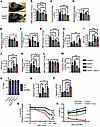 Figure 2
Characterization of BMF in a mouse model for FA. (A) Representative photos of eyes in control and Setd2+/– Fanca–/– mice. (B–K) Peripheral blood (PB) analysis between control (black), Setd2+/– (blue), Fanca–/–(green), and Setd2+/– Fanca–/– (red) mice. WBCs (B), neutrophils (D), monocytes (E), eosinophils (F), RBCs (G), reticulocytes (H), MCV (I), MCH (J), platelets (K). One-way ANOVA with Tukey’s multiple-comparison test. (L) Total BM cell number in control (black, n = 3), Setd2+/– (blue, n = 3), Fanca–/– (green, n = 4), and Setd2+/– Fanca–/– (red, n = 4) mice. One-way ANOVA with Tukey’s multiple-comparison test. (M) Absolute HSC [lineage (–), c-Kit (+), EPCR (+), CD48 (–), and CD150 (+)] numbers for control (black, n =4), Setd2+/– (blue, n = 3), Fanca–/– (green, n = 3), and Setd2+/– Fanca–/– (red, n = 3) mice. One-way ANOVA with Tukey’s multiple-comparison test. (N) Cell cycle status by flow cytometry utilizing Ki67 to distinguish G0 cells from G1/S/G2/M cells with DAPI stain to measure DNA content. Graphs show distribution of cells to indicated cell cycle phases. One-way ANOVA with Tukey’s multiple-comparison test; n = 4 for each condition. (O) Levels of DNA damage in HSCs from control (black, n = 4), Setd2+/– (blue, n = 3), Fanca–/– (green, n = 3), and Setd2+/– Fanca–/– (red, n = 5) mice as measured by γH2A.X levels. One-way ANOVA with Tukey’s multiple-comparison test. (P) Levels of pRPA2 in HSC from control (black, n = 3), Setd2+/– (blue, n = 3), Fanca–/– (green, n = 3), and Setd2+/– Fanca–/– (red, n = 3) mice. One-way ANOVA with Tukey’s multiple-comparison test. (Q) MMC sensitivity for c-Kit+ cells from control (black), Setd2+/– (blue), Fanca–/– (green), and Setd2+/– Fanca–/– (red) mice. c-Kit+ cells were cultured with MMC for 3 days when cell numbers were counted using Celigo. Two-way ANOVA with Tukey’s multiple-comparison test; n = 4 for each condition. (R) BM transplantation of CD45.2+ control (black), Setd2+/– (blue), Fanca–/– (green), and Setd2+/– Fanca–/– (red) BMCs into CD45.1 mice. After recipient mice received lethal irradiation, BMCs from control, Setd2+/–, Fanca–/–, and Setd2+/– Fanca–/– were injected into recipient mice. PB was analyzed at 1, 3, and 5 months after transplantation. Two-way ANOVA followed by Tukey’s multiple-comparison test; n = 5 for each condition. Data shown as mean ± SEM. *P < 0.05, **P < 0.01, ***P < 0.001, ****P < 0.0001.
Next, we investigated whether BMF and other FA-related phenotypes of HSCs in our Setd2+/– Fanca–/– mouse model might be associated with dysregulation of R-loops and rRNA levels since these were seen in FANCA-deficient fibroblasts (Figure 1). Indeed, similar to patient-derived FA-A cells, Setd2+/– Fanca–/– mice showed accumulation of R-loops and dsRNA that were elevated in comparison to HSCs from WT controls and Setd2+/– and Fanca–/– single mutants (Figure 3, A and B). Importantly, R-loop levels could be reduced in HSCs from Setd2+/– Fanca–/– mice via expression of various RNases (Figure 3C). Further, most rRNAs, such as 5S, 18S, 28S, and 45S, were significantly downregulated in Setd2+/– Fanca–/– mouse HSCs as compared with the WT or each single mutant (Figure 3D). Additionally, an immunofluorescent imaging analysis showed that the upstream binding factor, a marker for ribosomal loci (59), mostly colocalized with R-loops at nucleoli in Setd2+/– Fanca–/– HSCs (Figure 3E and Supplemental Figure 4A). Since upstream binding factor is related to RNAP I (60), and RNAP III localizes to nucleoli (61), accumulation of R-loops at nucleoli and resulting ribosome biogenesis defects in Setd2+/– Fanca–/– HSCs may be related to RNAPI and maybe also RNAPIII. Further, because R-loops accumulated at ribosomal loci, and there was a defect in various rRNA levels (Figure 3E), similar to that observed in cells from patients with FA, our Setd2+/– Fanca–/– double-mutant mice may serve as a model for FA-associated BMF driven by ribosomal biogenesis defects.
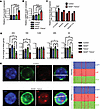 Figure 3
R-loop accumulation and ribosomal biogenesis defect in Setd2+/– Fanca–/– mouse model HSCs. (A) Levels of R-loop in HSC from control (black, n = 3), Setd2+/– (blue, n = 3), Fanca–/– (green, n = 3), and Setd2+/– Fanca–/– (red, n = 3) mice. One-way ANOVA with Tukey’s multiple-comparison test. (B) Levels of dsRNA in HSC from control (black, n = 3), Setd2+/– (blue, n = 3), Fanca–/– (green, n = 3), and Setd2+/– Fanca–/– (red, n = 3) mice. One-way ANOVA with Tukey’s multiple-comparison test. (C) Levels of R-loops in HSCs from control and Setd2+/– Fanca–/– mice, with or without treatment of various RNases, were analyzed by flow cytometry using S9.6 antibody. One-tailed Student’s t test; n = 3 for each condition. (D) Ribosomal gene expression in control, Setd2+/–, Fanca–/–, and Setd2+/– Fanca–/– HSCs measured utilizing qRT-PCR. Control (black, n = 4), Setd2+/– (blue, n = 3), Fanca–/– (green, n = 3), and Setd2+/– Fanca–/– (red, n = 4). One-way ANOVA with Tukey’s multiple-comparison test. (E) Measures of colocalization of R-loops (green, detected using S9.6 antibody) with RNA polymerase I (red, detected using Ubf antibody); DNA is counterstained with DAPI (blue). Data are shown as mean ± SEM. *P < 0.05, **P < 0.01, ***P < 0.001, ****P < 0.0001.
Mitotic errors in Setd2+/– Fanca–/– HSCs. Since a failure to enter the quiescent-G0 phase may cause BMF in our Setd2+/– Fanca–/– mouse model (Figure 2N), and cell division defects have been reported in fibroblasts deficient for FA factors including FANCA (62), we conducted liquid culture experiments of HSCs to carefully examine their cell division process (Figure 4A). Notably, as compared with the control, Setd2+/– Fanca–/– double-mutant HSCs exhibited diminished proliferation seen as a decreased HSC population (Figure 4, B and C). Additionally, we analyzed the cell division history via single-cell culture (Figure 4D) and CytoTell green–based cell division history assay (Figure 4, E–H) with sorted HSCs from control or Setd2+/– Fanca–/– mice. This experiment indicates that almost 40% of Setd2+/– Fanca–/– HSCs underwent a first cell division within 2 days, whereas only 20% of control HSCs did so (Figure 4D). However, an examination of 5-day cultures revealed that, in comparison to the control, Setd2+/– Fanca–/– HSCs showed an arrest during their first cell division and failed to complete successive cell divisions (Figure 4, E–H). To clarify the basis for the arrested cell division in Setd2+/– Fanca–/– HSCs, we examined nuclear morphologies utilizing immunofluorescence microscopy. There was an increased number of abnormal binucleated and micronucleated cells in Setd2+/– Fanca–/– HSCs (Figure 4, I and J). These results suggest that mitotic errors underlie defects in Setd2+/– Fanca–/– HSC function, including decreased proliferation (Figure 2N and Figure 4, E–K) and decreased chimerism in BM transplants (Figure 2R).
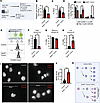 Figure 4
HSCs from Setd2+/– Fanca–/– mice display cell division defects. (A) Schematic of the experimental setup for B–D. (B and C) Proliferative capacity (B) and HSC [lineage (–), c-Kit (+), EPCR (+), CD48 (–), and CD150 (+)] frequency (C) of control (WT) or Setd2+/– Fanca–/– HSCs, determined as number of cells after 5 days of liquid culture relative to number at day 1, and HSCs as percentage of total at day 5, respectively. Cultures of HSCs were counted with Celigo in B and were analyzed by flow cytometry in C; for each condition, n = 3 in B and n = 4 in C. One-tailed Student’s t test. (D) Counts by hand of the number of cells in each well at 2 days after establishing single-cell cultures of control or Setd2+/– Fanca–/– HSCs. One-tailed Student’s t test; n = 3 for each condition. (E–H) Analysis comparing the cell division histories of control versus Setd2+/– Fanca–/– HSCs in 5-day liquid cultures. HSCs were sorted and stained with CytoTell green, then cultured for 5 days. At day 5, HSCs were stained with surface markers, and cell division history was analyzed with flow cytometry based on the CytoTell green signal in various peaks. Low division, medium division, and high division numbers were based on CytoTell green signal associated with 1–3, 4–8, and 9 or more divisions, respectively. One-tailed Student’s t test; n = 3 for each condition. (I) Visualization of nuclei in HSCs from control and Setd2+/– Fanca–/– mice, as a measure of mitotic errors, after 5 days in liquid culture. (J) Quantification of cells with abnormal nuclei (binucleated or micronucleated), indicating mitotic errors. One-tailed Student’s t test; n = 3 for each condition. (K) Schematic depicting nuclear morphologies and mitotic errors in controls and Setd2+/– Fanca–/– HSCs during cell proliferation. Data are shown as mean ± SEM. *P < 0.05, **P < 0.01, ***P < 0.001.
Inhibition of RNAPs rescues ribosomal biogenesis defects and survival of HSCs in Setd2+/– Fanca–/– mice. One approach to translating our findings of excessive cycling of Setd2+/– Fanca–/– HSCs, ultimately leading to mitotic errors and BMF into a potential therapy for BMF in patients with FA, is to reduce R-loop accumulation. Ideally, a drug treatment to reduce R-loop accumulation would suppress DNA damage and/or rescue HSC mitotic defects. Thus, for this purpose, we employed a stimulator of mRNA translation (L-leucine) (52), an RNAP I inhibitor (CX5461) (50), and a pan-RNAP inhibitor (Juglone) (51) in liquid cultures of isolated HSCs. Given that FA cells exhibit ribosomal defects (Supplemental Figure 1), activating mRNA translation through L-leucine, or inhibiting transcription and thus R-loop generation, may ameliorate HSC function. To validate these hypotheses, we treated Setd2+/– Fanca–/– hematopoietic stem and progenitor cells (HSPCs) in liquid culture with 200 μM of L-leucine, 1 pM of CX5461, or 0.1 μM of Juglone and measured R-loop (S9.6) and dsRNA (J2) levels. CX5461, L-leucine, and Juglone treatment reduced the levels of both R-loops and dsRNA (Figure 5, A and B). As a measure of whether this reduction in R-loop levels aids HSC function, we conducted single cell–based paired-daughter assays. Symmetric division maintains stemness, while asymmetric division leads to 1 HSC and 1 cell committed to division that eventually generates 4 myeloid lineages (47). Treatment with L-leucine and CX5461, and especially Juglone, increased symmetric cell divisions and decreased committed asymmetric cell divisions of Setd2+/– Fanca–/– HSCs (Figure 5, C–E). This suggests that low doses of L-leucine, CX5461, and Juglone help maintain the stemness of Setd2+/– Fanca–/– HSCs. Interestingly, Juglone treatment also improved symmetric division in control HSCs.
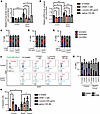 Figure 5
Inhibition of RNA polymerases reduces R-loops and cell cycle defects and rescues self-renewal capacity and BMF of Setd2+/– Fanca–/– HSCs. (A and B) The levels of S9.6 (R-loops) in untreated (black, control: n = 4, Setd2+/– Fanca–/–: n = 6) versus CX5461 (orange, control: n = 4, Setd2+/– Fanca–/–: n = 3), L-leucine (purple, control: n = 4, Setd2+/– Fanca–/–: n = 3), and Juglone-treated (green, control: n = 3, Setd2+/– Fanca–/–: n = 3) HSPCs (A) and J2 (dsRNA) in untreated (black, control: n = 3, Setd2+/– Fanca–/–: n =7) versus CX5461 (orange, control: n =4, Setd2+/– Fanca–/–: n = 3), L-leucine (purple, control: n = 4, Setd2+/– Fanca–/–: n = 3), and Juglone-treated (green, control: n = 4, Setd2+/– Fanca–/–: n = 5) HSPCs (B). One-way ANOVA with Tukey’s multiple-comparison test. (C–E) Paired-daughter assay with or without CX5461(C), L-leucine (D), and Juglone (E). One-way ANOVA with Tukey’s multiple-comparison test. (F–H) Cell cycle and apoptotic effects of CX5461, L-leucine, and Juglone treatment of control or Setd2+/– Fanca–/– HSCs are shown. (F) Ki67 staining after Juglone treatment as shown in FACS plots. (G) Frequency of apoptosis and of each cell cycle stage in HSCs. One-way ANOVA with Tukey’s multiple-comparison test; n = 3 for each condition. (H) Frequency of apoptotic or pre-apoptotic cells. One-way ANOVA, Tukey’s multiple-comparison test; n = 3 each condition. Data are shown as mean ± SEM. *P < 0.05, **P < 0.01, ***P < 0.001, ****P < 0.0001.
To further analyze the mechanism of how L-leucine, CX5461, and Juglone facilitate the maintenance of Setd2+/– Fanca–/– HSC stemness, we performed cell cycle assays with treated cells. Unlike CX5461 and L-leucine, Juglone rescued survival of Setd2+/– Fanca–/– HSCs by reducing the number of apoptotic cells and restored levels of G0 and G1 cells to those similar to untreated controls (Figure 5, F–H). These results suggest that Juglone may have the potential to reverse BMF, as Juglone treatment was found to maintain HSC survival from Setd2+/– Fanca–/– mice.
The pan-RNAP inhibitor Juglone slows cell division, which ameliorates the maintenance of stemness in Setd2+/– Fanca–/– HSCs. To evaluate the effects of Juglone on the maintenance of HSCs, Setd2+/– Fanca–/– HSCs were cultured in vitro with Juglone. This resulted in reduced proliferation of both control and Setd2+/– Fanca–/– cells (Figure 6A) and significantly increased the frequency of control HSCs; there was a trend toward upregulation of the frequency of Setd2+/– Fanca–/– HSCs (Figure 6B). To further validate effects of Juglone on the rate of cell division, a single cell–based cell division assay was performed, which showed that Juglone treatment slowed the first cell division (Figure 6C). We then performed a CytoTell-based cell division history assay, which indicated that Juglone treatment reduced the number of Setd2+/– Fanca–/– cells with a medium division history and increased the number of both control and Setd2+/– Fanca–/– cells with a low division history (Figure 6, E–G). These results are consistent with Juglone treatment slowing cell division and allowing HSCs sufficient time to resolve R-loops and/or dsRNA, and thereby preparing for the next cell division. To determine whether Juglone might improve the proliferation of Setd2+/– Fanca–/– HSCs by reducing mitotic errors, liquid cultures were performed. Indeed, while Juglone treatment did not alter levels of mitotic errors in control HSCs, it significantly reduced mitotic errors by Setd2+/– Fanca–/– HSCs (Figure 6H). Finally, to affirm the hypothesis that R-loop accumulation contributes to BMF in FA, we performed a BM transplantation assay using treated or untreated control or Setd2+/– Fanca–/– c-Kit–positive cells (Figure 6, I and J). Notably, c-Kit–positive Setd2+/– Fanca–/– cells and not controls, treated with Juglone but not CX5461 or L-leucine, showed significantly higher engraftment (Figure 6J and Supplemental Figure 5B). Importantly, Juglone treatment enhanced long-term engraftment capacity for cells from Setd2+/– Fanca–/– mice, as confirmed by secondary BM transplant (Figure 6K). In addition to the in vitro Juglone treatment experiments, we performed in vivo Juglone treatments. Juglone was administered as a single i.p. injection to P5 neonatal mice. Four weeks after injection, we analyzed total BM cell numbers and HSC numbers. This analysis revealed that Juglone treatment significantly rescued both total BM cellularity and HSC numbers in WT controls and Setd2+/– Fanca–/– mice (Figure 6, M and N).
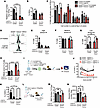 Figure 6
Treatment with Juglone slows cell division and facilitates the maintenance of stemness and improves engraftment of Setd2+/– Fanca–/– HSCs. (A and B) Proliferation capacity counted by Celigo (A) and HSC frequency analyzed by flow cytometry (B) of WT control or Setd2+/– Fanca–/– HSCs after 5 days of liquid culture. N = 3 each condition. (C) Single-cell culture of control or Setd2+/– Fanca–/– cells with or without Juglone (0.1 µM) for 2 days. Cell numbers per well counted at day 2. N = 3 for each condition. (D–G) Cell division history analysis of control and Setd2+/– Fanca–/– HSCs with or without Juglone (0.1 µM). HSCs were sorted, labeled with CytoTell Green, and cultured for 5 days before analysis by flow cytometry. Representative CytoTell plots (D) and quantification of high (E), medium (F), and low (G) division histories are shown. N = 3 for each condition. (H) Mitotic errors (binucleated or micronucleated cells) in Setd2+/– Fanca–/– HSCs after 5 days of Juglone treatment (0.1 µM) in liquid culture. N = 3 for each condition. (I) Experimental scheme of BM transplantation with drug-treated HSPCs. (J) BM transplantation of control (black) and Setd2+/– Fanca–/– (red) HSCs, with or without Juglone treatment. Engraftment was measured as the percentage of CD45.2+ PB cells at 4, 8, and 12 weeks. N = 5 for each condition. (K) Secondary transplantation of control (black) and Setd2+/– Fanca–/– (red) BMCs, with or without Juglone treatment; engraftment measured as CD45.2+ PB cells at 10 weeks. N = 4 for each condition. (L) Experimental scheme of Juglone in vivo treatment. (M and N) Total BMC numbers (M) and absolute HSC numbers (N) in control (black) and Setd2+/– Fanca–/– (red) mice with or without Juglone treatment. N = 3 for each point. Data are shown as mean ± SEM. Statistical significance was determined by 1-way ANOVA with Tukey’s multiple-comparison test unless otherwise indicated; panel J was analyzed by 2-way ANOVA with Tukey’s multiple-comparison test. *P < 0.05, **P < 0.01, ***P < 0.001, ****P < 0.0001.
Taken together, these results suggest that Juglone treatment slows cell division and gives HSCs enough time to resolve R-loops and dsRNA, and thereby suppress mitotic errors and rescue Setd2+/– Fanca–/– HSC stemness and engraftment capacity.
-
Methods
Sex as a biological variable. Sex was not considered as a biological variable in this study.
Animals. We bred Fanca+/– and Setd2+/– mice (47, 82) to generate Setd2+/– Fanca–/– offspring on a C57BL/6 background where Fanca-KO mice develop reduced numbers of HSCs and craniofacial defects (83). All animal experiments were performed according to the guidelines of the IACUC.
Cell preparation. Whole BM cells were obtained by flushing the femur and tibia bones with DMEM (Sigma-Aldrich) containing 10% FBS (Biowest). The collected BM cells were then washed once with Dulbecco’s PBS (Sigma-Aldrich) containing 2% FBS. For HSC sorting, BM cells were first stained with a microbead-conjugated antibody for c-Kit (Miltenyi Biotec), and c-Kit+ cells were initially separated using an autoMACS Pro Separator (Miltenyi Biotec) before further staining with fluorescence-conjugated antibodies, lineages CD4 (RM4-5, BioLegend) CD8 (53-6.7, BioLegend), CD3 (17A2, BioLegend), CD11b (M1/70, BioLegend), Gr1 (RB6-8C5, BD Biosciences), B220 (RA3-6B2, BioLegend), and TER119 (TER-119, BD Pharmingen), along with CD117 (2B8, BioLegend), EPCR (eBio1560, eBioscience), CD48 (HM48-1, BioLegend), and CD150 (TC15-12F12.2, BioLegend).
Cell culture. Sorted E-SLAM HSCs were cultured with StemSpan (STEMCELL Technologies) treated with mouse thrombopoietin (100 ng/mL, PeproTech) and stem cell factor (100 ng/mL, PeproTech). For MMC treatment, E-SLAM HSCs were treated with different concentrations of MMC (0.01, 0.1, 1, 10 ng/mL) and cultured for 2 days. After 2 days of culture, HSC numbers were counted using Celigo (Revvity). For cell division assays, sorted E-SLAM HSCs were stained with CytoTell-green (AAT Bioquest) and cultured for multiple days, varying for each experiment.
Single-cell paired-daughter assay. Individual E-SLAM HSCs were initially cultured in StemSpan medium supplemented with murine stem cell factor and thrombopoietin (each at 100 ng /mL) for 48 hours. Subsequently, cells were transferred to IMDM containing 10% FBS along with murine SCF, TPO, G-CSF, EPO, and IL-3. After 14 days of culture, individual clones derived from LSK-SLAM cells were harvested and analyzed for differentiation into myeloid lineages, including neutrophils, erythrocytes, macrophages, and megakaryocytes.
Transient transfections and lentiviral transductions. Lentiviruses were generated by cotransfecting HEK293T cells with lentiviral vector plasmids (pLenti-IRES-eGFP, pLenti-RNASEH1-IRES-eGFP, or pLenti-DICER-IRES-eGFP) and packaging plasmids using calcium phosphate and collected virus at a 24-hour interval. HEK293T cells were maintained in DMEM with 10% FBS in a humidified incubator at 37°C and 5% CO2. c-Kit+ (CD117) cells collected from control or Setd2+/– Fanca–/– mouse BM were transduced twice with collected lentiviruses using RetroNectin (Takara Bio).
Antibodies for flow cytometry. The following monoclonal antibodies were used as surface markers for cell sorting and flow cytometric analyses: anti-c-Kit (2B8), anti-CD150 (TC15-12F12.2), anti-CD48 (HM48-1), anti-EPCR (eBio1560; eBioscience), anti–Sca-1 (E13-161.7), anti-CD45.2 (104), anti-CD45.1 (A20), anti-B220/CD45R (RA3-6B2), anti–Mac-1 (M1/70), anti-Gr-1 (RB6-8C5), anti-CD4 (RM4-5), and anti-CD8 (53-6.72) antibodies. All antibodies were obtained from BioLegend unless otherwise noted. For R-loop and dsRNA detection, we utilized anti-DNA-RNA hybrid antibody (S9.6) (Kerafest) and dsRNA antibody (J2) (Cell Signaling Technology). Flow cytometric analysis and cell sorting were performed by using FACSCelesta (Becton Dickinson), FACSAria III (Becton Dickinson), and FACSMelody (Becton Dickinson), respectively. Obtained data were analyzed using FlowJo software (v. 10. 6. 1).
Transplantation. As described previously (57), C57BL/6 Ly5.1 recipient mice were lethally irradiated (total 9.5 Gy). Within 24 hours after irradiation, 1 × 10⁶ whole BM cells (test cells; Ly5.2) were transplanted with 1 × 10⁶ or 1 × 10⁵ whole BM cells (competitor cells; Ly5.1). At 1, 3, and 5 months after the transplantation, the chimerism in peripheral blood was analyzed using flow-cytometric analyses. For secondary transplantation, 5 months after the first transplantation, BM cells were harvested, and 1 × 10⁶ BM cells were transplanted to lethally irradiated (total 9.5 Gy) C57BL/6 Ly5.1 recipient mice. Five months after the secondary transplantation, peripheral blood chimerism was analyzed using flow-cytometric analysis.
Confocal microscopy. FA patient–derived cells were seeded into a chamber plate (Nunc). For HSC seeding, we used fibronectin coating. After cells were attached to the bottom of the chamber plate, they were fixed with 2% paraformaldehyde (Thermo Fisher Scientific) for 10 minutes and permeabilized with 0.1% Triton X-100 (Thermo Fisher Scientific) for 15 minutes, both at room temperature. After permeabilization, samples were blocked with 3% BSA in Tris-buffered saline with Tween 20 (TBST; Sigma-Aldrich) for 30 minutes. Then, samples were stained with primary and secondary antibodies in 3% BSA in TBST for 30 minutes at room temperature. Primary antibodies included S9.6 (ENH001, Kerafast), J2 (76651, Cell Signaling Technology), and Ubf1 (ab244287, Abcam). After secondary antibody staining, samples were incubated with DAPI (Invitrogen) for 10 minutes in TBST and mounted with ProLong Diamond Antifade Mountant (Invitrogen). After enclosing with cover glasses, samples were observed with an ECHO spinning disk confocal microscope.
In vivo treatment with Juglone. Juglone was diluted in a PEG-based vehicle. Mice were i.p. administered Juglone at a dose of 100 μg/kg body weight in a total volume of 20 μL per mouse.
qPCR for ribosomal genes. For mouse HSCs, total RNA was isolated using the RNeasy micro kit (QIAGEN) and converted to cDNA using SuperScript VILO (Invitrogen). The cDNA was amplified using an Applied Biosystems Step One Plus thermal cycler (Applied Biosystems). Specific probes for each gene were used and are listed in Table 1.
Statistics. Statistical analyses were performed using GraphPad Prism version 8.4.3. Data are presented as mean ± SEM unless otherwise indicated. Statistical significance was determined using a 1-tailed Student’s t test for comparisons between 2 groups or 1-way ANOVA with appropriate post hoc tests for multiple comparisons. A P value of less than 0.05 was considered statistically significant.
Study approval. All animal studies were conducted according to an approved IACUC protocol (20210066AR) and federal regulations at UT Health San Antonio.
Data availability. Values for all data points found in graphs are in the Supporting Data Values file.


