
Research ArticleGeneticsImmunologyInfectious disease
Open Access |  10.1172/jci.insight.190875
Inherited human CARD9 deficiency impairs lymphoid cell, but not fibroblast, IL-17–mediated immunity
Erika Della Mina,1,2,3 Carlos G. El-Haddad,4,5,6 Timothy A. West,7 Clara W.T. Chung,8,9 Jing Jing Li,10 Vivienne Lea,10 Elissa K. Deenick,1,3,11 Filomeen Haerynck,12,13 Jean-Laurent Casanova,14,15,16,17,18 Anne Puel,14,15,16 Cindy S. Ma,1,2,3 Stuart G. Tangye,1,2,3 and Alisa Kane3,6,7,19,20
1Garvan Institute of Medical Research, Darlinghurst, New South Wales, Australia.
2School of Clinical Medicine, Faculty of Medicine and Health, UNSW Sydney, Sydney, Australia.
3Clinical Immunogenomics Research Consortium Australasia, Darlinghurst, New South Wales, Australia.
4Rheumatology Department, Liverpool Hospital, Liverpool, New South Wales, Australia, and University of New South Wales (UNSW) Sydney, Australia, Western Sydney University, Sydney, Australia.
5School of Medicine, Western Sydney University, Sydney, New South Wales, Australia.
6South Western Sydney Clinical School, Faculty of Medicine and Health, UNSW Sydney, Sydney, New South Wales, Australia.
7Immunology and HIV Department, Liverpool Hospital, Sydney, New South Wales, Australia.
8Department of Clinical Genetics, Liverpool Hospital, Liverpool, New South Wales, Australia.
9School of Women’s and Children’s Health, UNSW, Sydney, New South Wales, Australia.
10Department of Anatomical Pathology, Liverpool Hospital, Liverpool, New South Wales, Australia.
11Kirby Institute, Faculty of Medicine and Health, UNSW Sydney, Sydney, Australia.
12Department of Pediatric Pulmonology, Infectious Diseases and Immunology, and
13Primary Immunodeficiency Research Lab, Centre for Primary Immunodeficiency Ghent, Jeffrey Modell Diagnosis and Research Centre, Ghent University Hospital, Ghent, Belgium.
14Laboratory of Human Genetics of Infectious Diseases, Necker Branch, INSERM UMR1163, Paris, France.
15Paris Cité University, Imagine Institute, Paris, France.
16St. Giles Laboratory of Human Genetics of Infectious Diseases, Rockefeller Branch, The Rockefeller University, New York, New York, USA.
17Howard Hughes Medical Institute, New York, New York, USA.
18Department of Pediatrics, Necker Hospital for Sick Children, Paris, France.
19Immunology and HIV Department, St Vincent’s Hospital, Sydney, New South Wales, Australia.
20St Vincent’s Clinical School, Faculty of Medicine and Health, UNSW Sydney, Sydney, New South Wales, Australia.
Address correspondence to: Erika Della Mina or Stuart G. Tangye, 384 Victoria Street, Darlinghurst, New South Wales 2010, Australia. Phone: 61.2.9295.8465; Email: e.dellamina@garvan.org.au (EDM). Phone: 61.2.9295.8455; Email: s.tangye@garvan.org.au (SGT). Or to: Alisa Kane, 390 Victoria Street, Darlinghurst, New South Wales 2010, Australia. Phone: 61.2.8382.3707; Email: alisa.kane@svha.org.au.
Authorship note: AK and SGT contributed equally to this work.
Find articles by Della Mina, E. in: PubMed | Google Scholar
1Garvan Institute of Medical Research, Darlinghurst, New South Wales, Australia.
2School of Clinical Medicine, Faculty of Medicine and Health, UNSW Sydney, Sydney, Australia.
3Clinical Immunogenomics Research Consortium Australasia, Darlinghurst, New South Wales, Australia.
4Rheumatology Department, Liverpool Hospital, Liverpool, New South Wales, Australia, and University of New South Wales (UNSW) Sydney, Australia, Western Sydney University, Sydney, Australia.
5School of Medicine, Western Sydney University, Sydney, New South Wales, Australia.
6South Western Sydney Clinical School, Faculty of Medicine and Health, UNSW Sydney, Sydney, New South Wales, Australia.
7Immunology and HIV Department, Liverpool Hospital, Sydney, New South Wales, Australia.
8Department of Clinical Genetics, Liverpool Hospital, Liverpool, New South Wales, Australia.
9School of Women’s and Children’s Health, UNSW, Sydney, New South Wales, Australia.
10Department of Anatomical Pathology, Liverpool Hospital, Liverpool, New South Wales, Australia.
11Kirby Institute, Faculty of Medicine and Health, UNSW Sydney, Sydney, Australia.
12Department of Pediatric Pulmonology, Infectious Diseases and Immunology, and
13Primary Immunodeficiency Research Lab, Centre for Primary Immunodeficiency Ghent, Jeffrey Modell Diagnosis and Research Centre, Ghent University Hospital, Ghent, Belgium.
14Laboratory of Human Genetics of Infectious Diseases, Necker Branch, INSERM UMR1163, Paris, France.
15Paris Cité University, Imagine Institute, Paris, France.
16St. Giles Laboratory of Human Genetics of Infectious Diseases, Rockefeller Branch, The Rockefeller University, New York, New York, USA.
17Howard Hughes Medical Institute, New York, New York, USA.
18Department of Pediatrics, Necker Hospital for Sick Children, Paris, France.
19Immunology and HIV Department, St Vincent’s Hospital, Sydney, New South Wales, Australia.
20St Vincent’s Clinical School, Faculty of Medicine and Health, UNSW Sydney, Sydney, New South Wales, Australia.
Address correspondence to: Erika Della Mina or Stuart G. Tangye, 384 Victoria Street, Darlinghurst, New South Wales 2010, Australia. Phone: 61.2.9295.8465; Email: e.dellamina@garvan.org.au (EDM). Phone: 61.2.9295.8455; Email: s.tangye@garvan.org.au (SGT). Or to: Alisa Kane, 390 Victoria Street, Darlinghurst, New South Wales 2010, Australia. Phone: 61.2.8382.3707; Email: alisa.kane@svha.org.au.
Authorship note: AK and SGT contributed equally to this work.
Find articles by El-Haddad, C. in: PubMed | Google Scholar
1Garvan Institute of Medical Research, Darlinghurst, New South Wales, Australia.
2School of Clinical Medicine, Faculty of Medicine and Health, UNSW Sydney, Sydney, Australia.
3Clinical Immunogenomics Research Consortium Australasia, Darlinghurst, New South Wales, Australia.
4Rheumatology Department, Liverpool Hospital, Liverpool, New South Wales, Australia, and University of New South Wales (UNSW) Sydney, Australia, Western Sydney University, Sydney, Australia.
5School of Medicine, Western Sydney University, Sydney, New South Wales, Australia.
6South Western Sydney Clinical School, Faculty of Medicine and Health, UNSW Sydney, Sydney, New South Wales, Australia.
7Immunology and HIV Department, Liverpool Hospital, Sydney, New South Wales, Australia.
8Department of Clinical Genetics, Liverpool Hospital, Liverpool, New South Wales, Australia.
9School of Women’s and Children’s Health, UNSW, Sydney, New South Wales, Australia.
10Department of Anatomical Pathology, Liverpool Hospital, Liverpool, New South Wales, Australia.
11Kirby Institute, Faculty of Medicine and Health, UNSW Sydney, Sydney, Australia.
12Department of Pediatric Pulmonology, Infectious Diseases and Immunology, and
13Primary Immunodeficiency Research Lab, Centre for Primary Immunodeficiency Ghent, Jeffrey Modell Diagnosis and Research Centre, Ghent University Hospital, Ghent, Belgium.
14Laboratory of Human Genetics of Infectious Diseases, Necker Branch, INSERM UMR1163, Paris, France.
15Paris Cité University, Imagine Institute, Paris, France.
16St. Giles Laboratory of Human Genetics of Infectious Diseases, Rockefeller Branch, The Rockefeller University, New York, New York, USA.
17Howard Hughes Medical Institute, New York, New York, USA.
18Department of Pediatrics, Necker Hospital for Sick Children, Paris, France.
19Immunology and HIV Department, St Vincent’s Hospital, Sydney, New South Wales, Australia.
20St Vincent’s Clinical School, Faculty of Medicine and Health, UNSW Sydney, Sydney, New South Wales, Australia.
Address correspondence to: Erika Della Mina or Stuart G. Tangye, 384 Victoria Street, Darlinghurst, New South Wales 2010, Australia. Phone: 61.2.9295.8465; Email: e.dellamina@garvan.org.au (EDM). Phone: 61.2.9295.8455; Email: s.tangye@garvan.org.au (SGT). Or to: Alisa Kane, 390 Victoria Street, Darlinghurst, New South Wales 2010, Australia. Phone: 61.2.8382.3707; Email: alisa.kane@svha.org.au.
Authorship note: AK and SGT contributed equally to this work.
Find articles by West, T. in: PubMed | Google Scholar
1Garvan Institute of Medical Research, Darlinghurst, New South Wales, Australia.
2School of Clinical Medicine, Faculty of Medicine and Health, UNSW Sydney, Sydney, Australia.
3Clinical Immunogenomics Research Consortium Australasia, Darlinghurst, New South Wales, Australia.
4Rheumatology Department, Liverpool Hospital, Liverpool, New South Wales, Australia, and University of New South Wales (UNSW) Sydney, Australia, Western Sydney University, Sydney, Australia.
5School of Medicine, Western Sydney University, Sydney, New South Wales, Australia.
6South Western Sydney Clinical School, Faculty of Medicine and Health, UNSW Sydney, Sydney, New South Wales, Australia.
7Immunology and HIV Department, Liverpool Hospital, Sydney, New South Wales, Australia.
8Department of Clinical Genetics, Liverpool Hospital, Liverpool, New South Wales, Australia.
9School of Women’s and Children’s Health, UNSW, Sydney, New South Wales, Australia.
10Department of Anatomical Pathology, Liverpool Hospital, Liverpool, New South Wales, Australia.
11Kirby Institute, Faculty of Medicine and Health, UNSW Sydney, Sydney, Australia.
12Department of Pediatric Pulmonology, Infectious Diseases and Immunology, and
13Primary Immunodeficiency Research Lab, Centre for Primary Immunodeficiency Ghent, Jeffrey Modell Diagnosis and Research Centre, Ghent University Hospital, Ghent, Belgium.
14Laboratory of Human Genetics of Infectious Diseases, Necker Branch, INSERM UMR1163, Paris, France.
15Paris Cité University, Imagine Institute, Paris, France.
16St. Giles Laboratory of Human Genetics of Infectious Diseases, Rockefeller Branch, The Rockefeller University, New York, New York, USA.
17Howard Hughes Medical Institute, New York, New York, USA.
18Department of Pediatrics, Necker Hospital for Sick Children, Paris, France.
19Immunology and HIV Department, St Vincent’s Hospital, Sydney, New South Wales, Australia.
20St Vincent’s Clinical School, Faculty of Medicine and Health, UNSW Sydney, Sydney, New South Wales, Australia.
Address correspondence to: Erika Della Mina or Stuart G. Tangye, 384 Victoria Street, Darlinghurst, New South Wales 2010, Australia. Phone: 61.2.9295.8465; Email: e.dellamina@garvan.org.au (EDM). Phone: 61.2.9295.8455; Email: s.tangye@garvan.org.au (SGT). Or to: Alisa Kane, 390 Victoria Street, Darlinghurst, New South Wales 2010, Australia. Phone: 61.2.8382.3707; Email: alisa.kane@svha.org.au.
Authorship note: AK and SGT contributed equally to this work.
Find articles by Chung, C. in: PubMed | Google Scholar
1Garvan Institute of Medical Research, Darlinghurst, New South Wales, Australia.
2School of Clinical Medicine, Faculty of Medicine and Health, UNSW Sydney, Sydney, Australia.
3Clinical Immunogenomics Research Consortium Australasia, Darlinghurst, New South Wales, Australia.
4Rheumatology Department, Liverpool Hospital, Liverpool, New South Wales, Australia, and University of New South Wales (UNSW) Sydney, Australia, Western Sydney University, Sydney, Australia.
5School of Medicine, Western Sydney University, Sydney, New South Wales, Australia.
6South Western Sydney Clinical School, Faculty of Medicine and Health, UNSW Sydney, Sydney, New South Wales, Australia.
7Immunology and HIV Department, Liverpool Hospital, Sydney, New South Wales, Australia.
8Department of Clinical Genetics, Liverpool Hospital, Liverpool, New South Wales, Australia.
9School of Women’s and Children’s Health, UNSW, Sydney, New South Wales, Australia.
10Department of Anatomical Pathology, Liverpool Hospital, Liverpool, New South Wales, Australia.
11Kirby Institute, Faculty of Medicine and Health, UNSW Sydney, Sydney, Australia.
12Department of Pediatric Pulmonology, Infectious Diseases and Immunology, and
13Primary Immunodeficiency Research Lab, Centre for Primary Immunodeficiency Ghent, Jeffrey Modell Diagnosis and Research Centre, Ghent University Hospital, Ghent, Belgium.
14Laboratory of Human Genetics of Infectious Diseases, Necker Branch, INSERM UMR1163, Paris, France.
15Paris Cité University, Imagine Institute, Paris, France.
16St. Giles Laboratory of Human Genetics of Infectious Diseases, Rockefeller Branch, The Rockefeller University, New York, New York, USA.
17Howard Hughes Medical Institute, New York, New York, USA.
18Department of Pediatrics, Necker Hospital for Sick Children, Paris, France.
19Immunology and HIV Department, St Vincent’s Hospital, Sydney, New South Wales, Australia.
20St Vincent’s Clinical School, Faculty of Medicine and Health, UNSW Sydney, Sydney, New South Wales, Australia.
Address correspondence to: Erika Della Mina or Stuart G. Tangye, 384 Victoria Street, Darlinghurst, New South Wales 2010, Australia. Phone: 61.2.9295.8465; Email: e.dellamina@garvan.org.au (EDM). Phone: 61.2.9295.8455; Email: s.tangye@garvan.org.au (SGT). Or to: Alisa Kane, 390 Victoria Street, Darlinghurst, New South Wales 2010, Australia. Phone: 61.2.8382.3707; Email: alisa.kane@svha.org.au.
Authorship note: AK and SGT contributed equally to this work.
Find articles by Li, J. in: PubMed | Google Scholar
1Garvan Institute of Medical Research, Darlinghurst, New South Wales, Australia.
2School of Clinical Medicine, Faculty of Medicine and Health, UNSW Sydney, Sydney, Australia.
3Clinical Immunogenomics Research Consortium Australasia, Darlinghurst, New South Wales, Australia.
4Rheumatology Department, Liverpool Hospital, Liverpool, New South Wales, Australia, and University of New South Wales (UNSW) Sydney, Australia, Western Sydney University, Sydney, Australia.
5School of Medicine, Western Sydney University, Sydney, New South Wales, Australia.
6South Western Sydney Clinical School, Faculty of Medicine and Health, UNSW Sydney, Sydney, New South Wales, Australia.
7Immunology and HIV Department, Liverpool Hospital, Sydney, New South Wales, Australia.
8Department of Clinical Genetics, Liverpool Hospital, Liverpool, New South Wales, Australia.
9School of Women’s and Children’s Health, UNSW, Sydney, New South Wales, Australia.
10Department of Anatomical Pathology, Liverpool Hospital, Liverpool, New South Wales, Australia.
11Kirby Institute, Faculty of Medicine and Health, UNSW Sydney, Sydney, Australia.
12Department of Pediatric Pulmonology, Infectious Diseases and Immunology, and
13Primary Immunodeficiency Research Lab, Centre for Primary Immunodeficiency Ghent, Jeffrey Modell Diagnosis and Research Centre, Ghent University Hospital, Ghent, Belgium.
14Laboratory of Human Genetics of Infectious Diseases, Necker Branch, INSERM UMR1163, Paris, France.
15Paris Cité University, Imagine Institute, Paris, France.
16St. Giles Laboratory of Human Genetics of Infectious Diseases, Rockefeller Branch, The Rockefeller University, New York, New York, USA.
17Howard Hughes Medical Institute, New York, New York, USA.
18Department of Pediatrics, Necker Hospital for Sick Children, Paris, France.
19Immunology and HIV Department, St Vincent’s Hospital, Sydney, New South Wales, Australia.
20St Vincent’s Clinical School, Faculty of Medicine and Health, UNSW Sydney, Sydney, New South Wales, Australia.
Address correspondence to: Erika Della Mina or Stuart G. Tangye, 384 Victoria Street, Darlinghurst, New South Wales 2010, Australia. Phone: 61.2.9295.8465; Email: e.dellamina@garvan.org.au (EDM). Phone: 61.2.9295.8455; Email: s.tangye@garvan.org.au (SGT). Or to: Alisa Kane, 390 Victoria Street, Darlinghurst, New South Wales 2010, Australia. Phone: 61.2.8382.3707; Email: alisa.kane@svha.org.au.
Authorship note: AK and SGT contributed equally to this work.
Find articles by Lea, V. in: PubMed | Google Scholar
1Garvan Institute of Medical Research, Darlinghurst, New South Wales, Australia.
2School of Clinical Medicine, Faculty of Medicine and Health, UNSW Sydney, Sydney, Australia.
3Clinical Immunogenomics Research Consortium Australasia, Darlinghurst, New South Wales, Australia.
4Rheumatology Department, Liverpool Hospital, Liverpool, New South Wales, Australia, and University of New South Wales (UNSW) Sydney, Australia, Western Sydney University, Sydney, Australia.
5School of Medicine, Western Sydney University, Sydney, New South Wales, Australia.
6South Western Sydney Clinical School, Faculty of Medicine and Health, UNSW Sydney, Sydney, New South Wales, Australia.
7Immunology and HIV Department, Liverpool Hospital, Sydney, New South Wales, Australia.
8Department of Clinical Genetics, Liverpool Hospital, Liverpool, New South Wales, Australia.
9School of Women’s and Children’s Health, UNSW, Sydney, New South Wales, Australia.
10Department of Anatomical Pathology, Liverpool Hospital, Liverpool, New South Wales, Australia.
11Kirby Institute, Faculty of Medicine and Health, UNSW Sydney, Sydney, Australia.
12Department of Pediatric Pulmonology, Infectious Diseases and Immunology, and
13Primary Immunodeficiency Research Lab, Centre for Primary Immunodeficiency Ghent, Jeffrey Modell Diagnosis and Research Centre, Ghent University Hospital, Ghent, Belgium.
14Laboratory of Human Genetics of Infectious Diseases, Necker Branch, INSERM UMR1163, Paris, France.
15Paris Cité University, Imagine Institute, Paris, France.
16St. Giles Laboratory of Human Genetics of Infectious Diseases, Rockefeller Branch, The Rockefeller University, New York, New York, USA.
17Howard Hughes Medical Institute, New York, New York, USA.
18Department of Pediatrics, Necker Hospital for Sick Children, Paris, France.
19Immunology and HIV Department, St Vincent’s Hospital, Sydney, New South Wales, Australia.
20St Vincent’s Clinical School, Faculty of Medicine and Health, UNSW Sydney, Sydney, New South Wales, Australia.
Address correspondence to: Erika Della Mina or Stuart G. Tangye, 384 Victoria Street, Darlinghurst, New South Wales 2010, Australia. Phone: 61.2.9295.8465; Email: e.dellamina@garvan.org.au (EDM). Phone: 61.2.9295.8455; Email: s.tangye@garvan.org.au (SGT). Or to: Alisa Kane, 390 Victoria Street, Darlinghurst, New South Wales 2010, Australia. Phone: 61.2.8382.3707; Email: alisa.kane@svha.org.au.
Authorship note: AK and SGT contributed equally to this work.
Find articles by
Deenick, E.
in:
PubMed
|
Google Scholar
|

1Garvan Institute of Medical Research, Darlinghurst, New South Wales, Australia.
2School of Clinical Medicine, Faculty of Medicine and Health, UNSW Sydney, Sydney, Australia.
3Clinical Immunogenomics Research Consortium Australasia, Darlinghurst, New South Wales, Australia.
4Rheumatology Department, Liverpool Hospital, Liverpool, New South Wales, Australia, and University of New South Wales (UNSW) Sydney, Australia, Western Sydney University, Sydney, Australia.
5School of Medicine, Western Sydney University, Sydney, New South Wales, Australia.
6South Western Sydney Clinical School, Faculty of Medicine and Health, UNSW Sydney, Sydney, New South Wales, Australia.
7Immunology and HIV Department, Liverpool Hospital, Sydney, New South Wales, Australia.
8Department of Clinical Genetics, Liverpool Hospital, Liverpool, New South Wales, Australia.
9School of Women’s and Children’s Health, UNSW, Sydney, New South Wales, Australia.
10Department of Anatomical Pathology, Liverpool Hospital, Liverpool, New South Wales, Australia.
11Kirby Institute, Faculty of Medicine and Health, UNSW Sydney, Sydney, Australia.
12Department of Pediatric Pulmonology, Infectious Diseases and Immunology, and
13Primary Immunodeficiency Research Lab, Centre for Primary Immunodeficiency Ghent, Jeffrey Modell Diagnosis and Research Centre, Ghent University Hospital, Ghent, Belgium.
14Laboratory of Human Genetics of Infectious Diseases, Necker Branch, INSERM UMR1163, Paris, France.
15Paris Cité University, Imagine Institute, Paris, France.
16St. Giles Laboratory of Human Genetics of Infectious Diseases, Rockefeller Branch, The Rockefeller University, New York, New York, USA.
17Howard Hughes Medical Institute, New York, New York, USA.
18Department of Pediatrics, Necker Hospital for Sick Children, Paris, France.
19Immunology and HIV Department, St Vincent’s Hospital, Sydney, New South Wales, Australia.
20St Vincent’s Clinical School, Faculty of Medicine and Health, UNSW Sydney, Sydney, New South Wales, Australia.
Address correspondence to: Erika Della Mina or Stuart G. Tangye, 384 Victoria Street, Darlinghurst, New South Wales 2010, Australia. Phone: 61.2.9295.8465; Email: e.dellamina@garvan.org.au (EDM). Phone: 61.2.9295.8455; Email: s.tangye@garvan.org.au (SGT). Or to: Alisa Kane, 390 Victoria Street, Darlinghurst, New South Wales 2010, Australia. Phone: 61.2.8382.3707; Email: alisa.kane@svha.org.au.
Authorship note: AK and SGT contributed equally to this work.
Find articles by Haerynck, F. in: PubMed | Google Scholar
1Garvan Institute of Medical Research, Darlinghurst, New South Wales, Australia.
2School of Clinical Medicine, Faculty of Medicine and Health, UNSW Sydney, Sydney, Australia.
3Clinical Immunogenomics Research Consortium Australasia, Darlinghurst, New South Wales, Australia.
4Rheumatology Department, Liverpool Hospital, Liverpool, New South Wales, Australia, and University of New South Wales (UNSW) Sydney, Australia, Western Sydney University, Sydney, Australia.
5School of Medicine, Western Sydney University, Sydney, New South Wales, Australia.
6South Western Sydney Clinical School, Faculty of Medicine and Health, UNSW Sydney, Sydney, New South Wales, Australia.
7Immunology and HIV Department, Liverpool Hospital, Sydney, New South Wales, Australia.
8Department of Clinical Genetics, Liverpool Hospital, Liverpool, New South Wales, Australia.
9School of Women’s and Children’s Health, UNSW, Sydney, New South Wales, Australia.
10Department of Anatomical Pathology, Liverpool Hospital, Liverpool, New South Wales, Australia.
11Kirby Institute, Faculty of Medicine and Health, UNSW Sydney, Sydney, Australia.
12Department of Pediatric Pulmonology, Infectious Diseases and Immunology, and
13Primary Immunodeficiency Research Lab, Centre for Primary Immunodeficiency Ghent, Jeffrey Modell Diagnosis and Research Centre, Ghent University Hospital, Ghent, Belgium.
14Laboratory of Human Genetics of Infectious Diseases, Necker Branch, INSERM UMR1163, Paris, France.
15Paris Cité University, Imagine Institute, Paris, France.
16St. Giles Laboratory of Human Genetics of Infectious Diseases, Rockefeller Branch, The Rockefeller University, New York, New York, USA.
17Howard Hughes Medical Institute, New York, New York, USA.
18Department of Pediatrics, Necker Hospital for Sick Children, Paris, France.
19Immunology and HIV Department, St Vincent’s Hospital, Sydney, New South Wales, Australia.
20St Vincent’s Clinical School, Faculty of Medicine and Health, UNSW Sydney, Sydney, New South Wales, Australia.
Address correspondence to: Erika Della Mina or Stuart G. Tangye, 384 Victoria Street, Darlinghurst, New South Wales 2010, Australia. Phone: 61.2.9295.8465; Email: e.dellamina@garvan.org.au (EDM). Phone: 61.2.9295.8455; Email: s.tangye@garvan.org.au (SGT). Or to: Alisa Kane, 390 Victoria Street, Darlinghurst, New South Wales 2010, Australia. Phone: 61.2.8382.3707; Email: alisa.kane@svha.org.au.
Authorship note: AK and SGT contributed equally to this work.
Find articles by
Casanova, J.
in:
PubMed
|
Google Scholar
|
1Garvan Institute of Medical Research, Darlinghurst, New South Wales, Australia.
2School of Clinical Medicine, Faculty of Medicine and Health, UNSW Sydney, Sydney, Australia.
3Clinical Immunogenomics Research Consortium Australasia, Darlinghurst, New South Wales, Australia.
4Rheumatology Department, Liverpool Hospital, Liverpool, New South Wales, Australia, and University of New South Wales (UNSW) Sydney, Australia, Western Sydney University, Sydney, Australia.
5School of Medicine, Western Sydney University, Sydney, New South Wales, Australia.
6South Western Sydney Clinical School, Faculty of Medicine and Health, UNSW Sydney, Sydney, New South Wales, Australia.
7Immunology and HIV Department, Liverpool Hospital, Sydney, New South Wales, Australia.
8Department of Clinical Genetics, Liverpool Hospital, Liverpool, New South Wales, Australia.
9School of Women’s and Children’s Health, UNSW, Sydney, New South Wales, Australia.
10Department of Anatomical Pathology, Liverpool Hospital, Liverpool, New South Wales, Australia.
11Kirby Institute, Faculty of Medicine and Health, UNSW Sydney, Sydney, Australia.
12Department of Pediatric Pulmonology, Infectious Diseases and Immunology, and
13Primary Immunodeficiency Research Lab, Centre for Primary Immunodeficiency Ghent, Jeffrey Modell Diagnosis and Research Centre, Ghent University Hospital, Ghent, Belgium.
14Laboratory of Human Genetics of Infectious Diseases, Necker Branch, INSERM UMR1163, Paris, France.
15Paris Cité University, Imagine Institute, Paris, France.
16St. Giles Laboratory of Human Genetics of Infectious Diseases, Rockefeller Branch, The Rockefeller University, New York, New York, USA.
17Howard Hughes Medical Institute, New York, New York, USA.
18Department of Pediatrics, Necker Hospital for Sick Children, Paris, France.
19Immunology and HIV Department, St Vincent’s Hospital, Sydney, New South Wales, Australia.
20St Vincent’s Clinical School, Faculty of Medicine and Health, UNSW Sydney, Sydney, New South Wales, Australia.
Address correspondence to: Erika Della Mina or Stuart G. Tangye, 384 Victoria Street, Darlinghurst, New South Wales 2010, Australia. Phone: 61.2.9295.8465; Email: e.dellamina@garvan.org.au (EDM). Phone: 61.2.9295.8455; Email: s.tangye@garvan.org.au (SGT). Or to: Alisa Kane, 390 Victoria Street, Darlinghurst, New South Wales 2010, Australia. Phone: 61.2.8382.3707; Email: alisa.kane@svha.org.au.
Authorship note: AK and SGT contributed equally to this work.
Find articles by
Puel, A.
in:
PubMed
|
Google Scholar
|
1Garvan Institute of Medical Research, Darlinghurst, New South Wales, Australia.
2School of Clinical Medicine, Faculty of Medicine and Health, UNSW Sydney, Sydney, Australia.
3Clinical Immunogenomics Research Consortium Australasia, Darlinghurst, New South Wales, Australia.
4Rheumatology Department, Liverpool Hospital, Liverpool, New South Wales, Australia, and University of New South Wales (UNSW) Sydney, Australia, Western Sydney University, Sydney, Australia.
5School of Medicine, Western Sydney University, Sydney, New South Wales, Australia.
6South Western Sydney Clinical School, Faculty of Medicine and Health, UNSW Sydney, Sydney, New South Wales, Australia.
7Immunology and HIV Department, Liverpool Hospital, Sydney, New South Wales, Australia.
8Department of Clinical Genetics, Liverpool Hospital, Liverpool, New South Wales, Australia.
9School of Women’s and Children’s Health, UNSW, Sydney, New South Wales, Australia.
10Department of Anatomical Pathology, Liverpool Hospital, Liverpool, New South Wales, Australia.
11Kirby Institute, Faculty of Medicine and Health, UNSW Sydney, Sydney, Australia.
12Department of Pediatric Pulmonology, Infectious Diseases and Immunology, and
13Primary Immunodeficiency Research Lab, Centre for Primary Immunodeficiency Ghent, Jeffrey Modell Diagnosis and Research Centre, Ghent University Hospital, Ghent, Belgium.
14Laboratory of Human Genetics of Infectious Diseases, Necker Branch, INSERM UMR1163, Paris, France.
15Paris Cité University, Imagine Institute, Paris, France.
16St. Giles Laboratory of Human Genetics of Infectious Diseases, Rockefeller Branch, The Rockefeller University, New York, New York, USA.
17Howard Hughes Medical Institute, New York, New York, USA.
18Department of Pediatrics, Necker Hospital for Sick Children, Paris, France.
19Immunology and HIV Department, St Vincent’s Hospital, Sydney, New South Wales, Australia.
20St Vincent’s Clinical School, Faculty of Medicine and Health, UNSW Sydney, Sydney, New South Wales, Australia.
Address correspondence to: Erika Della Mina or Stuart G. Tangye, 384 Victoria Street, Darlinghurst, New South Wales 2010, Australia. Phone: 61.2.9295.8465; Email: e.dellamina@garvan.org.au (EDM). Phone: 61.2.9295.8455; Email: s.tangye@garvan.org.au (SGT). Or to: Alisa Kane, 390 Victoria Street, Darlinghurst, New South Wales 2010, Australia. Phone: 61.2.8382.3707; Email: alisa.kane@svha.org.au.
Authorship note: AK and SGT contributed equally to this work.
Find articles by
Ma, C.
in:
PubMed
|
Google Scholar
|
1Garvan Institute of Medical Research, Darlinghurst, New South Wales, Australia.
2School of Clinical Medicine, Faculty of Medicine and Health, UNSW Sydney, Sydney, Australia.
3Clinical Immunogenomics Research Consortium Australasia, Darlinghurst, New South Wales, Australia.
4Rheumatology Department, Liverpool Hospital, Liverpool, New South Wales, Australia, and University of New South Wales (UNSW) Sydney, Australia, Western Sydney University, Sydney, Australia.
5School of Medicine, Western Sydney University, Sydney, New South Wales, Australia.
6South Western Sydney Clinical School, Faculty of Medicine and Health, UNSW Sydney, Sydney, New South Wales, Australia.
7Immunology and HIV Department, Liverpool Hospital, Sydney, New South Wales, Australia.
8Department of Clinical Genetics, Liverpool Hospital, Liverpool, New South Wales, Australia.
9School of Women’s and Children’s Health, UNSW, Sydney, New South Wales, Australia.
10Department of Anatomical Pathology, Liverpool Hospital, Liverpool, New South Wales, Australia.
11Kirby Institute, Faculty of Medicine and Health, UNSW Sydney, Sydney, Australia.
12Department of Pediatric Pulmonology, Infectious Diseases and Immunology, and
13Primary Immunodeficiency Research Lab, Centre for Primary Immunodeficiency Ghent, Jeffrey Modell Diagnosis and Research Centre, Ghent University Hospital, Ghent, Belgium.
14Laboratory of Human Genetics of Infectious Diseases, Necker Branch, INSERM UMR1163, Paris, France.
15Paris Cité University, Imagine Institute, Paris, France.
16St. Giles Laboratory of Human Genetics of Infectious Diseases, Rockefeller Branch, The Rockefeller University, New York, New York, USA.
17Howard Hughes Medical Institute, New York, New York, USA.
18Department of Pediatrics, Necker Hospital for Sick Children, Paris, France.
19Immunology and HIV Department, St Vincent’s Hospital, Sydney, New South Wales, Australia.
20St Vincent’s Clinical School, Faculty of Medicine and Health, UNSW Sydney, Sydney, New South Wales, Australia.
Address correspondence to: Erika Della Mina or Stuart G. Tangye, 384 Victoria Street, Darlinghurst, New South Wales 2010, Australia. Phone: 61.2.9295.8465; Email: e.dellamina@garvan.org.au (EDM). Phone: 61.2.9295.8455; Email: s.tangye@garvan.org.au (SGT). Or to: Alisa Kane, 390 Victoria Street, Darlinghurst, New South Wales 2010, Australia. Phone: 61.2.8382.3707; Email: alisa.kane@svha.org.au.
Authorship note: AK and SGT contributed equally to this work.
Find articles by Tangye, S. in: PubMed | Google Scholar
1Garvan Institute of Medical Research, Darlinghurst, New South Wales, Australia.
2School of Clinical Medicine, Faculty of Medicine and Health, UNSW Sydney, Sydney, Australia.
3Clinical Immunogenomics Research Consortium Australasia, Darlinghurst, New South Wales, Australia.
4Rheumatology Department, Liverpool Hospital, Liverpool, New South Wales, Australia, and University of New South Wales (UNSW) Sydney, Australia, Western Sydney University, Sydney, Australia.
5School of Medicine, Western Sydney University, Sydney, New South Wales, Australia.
6South Western Sydney Clinical School, Faculty of Medicine and Health, UNSW Sydney, Sydney, New South Wales, Australia.
7Immunology and HIV Department, Liverpool Hospital, Sydney, New South Wales, Australia.
8Department of Clinical Genetics, Liverpool Hospital, Liverpool, New South Wales, Australia.
9School of Women’s and Children’s Health, UNSW, Sydney, New South Wales, Australia.
10Department of Anatomical Pathology, Liverpool Hospital, Liverpool, New South Wales, Australia.
11Kirby Institute, Faculty of Medicine and Health, UNSW Sydney, Sydney, Australia.
12Department of Pediatric Pulmonology, Infectious Diseases and Immunology, and
13Primary Immunodeficiency Research Lab, Centre for Primary Immunodeficiency Ghent, Jeffrey Modell Diagnosis and Research Centre, Ghent University Hospital, Ghent, Belgium.
14Laboratory of Human Genetics of Infectious Diseases, Necker Branch, INSERM UMR1163, Paris, France.
15Paris Cité University, Imagine Institute, Paris, France.
16St. Giles Laboratory of Human Genetics of Infectious Diseases, Rockefeller Branch, The Rockefeller University, New York, New York, USA.
17Howard Hughes Medical Institute, New York, New York, USA.
18Department of Pediatrics, Necker Hospital for Sick Children, Paris, France.
19Immunology and HIV Department, St Vincent’s Hospital, Sydney, New South Wales, Australia.
20St Vincent’s Clinical School, Faculty of Medicine and Health, UNSW Sydney, Sydney, New South Wales, Australia.
Address correspondence to: Erika Della Mina or Stuart G. Tangye, 384 Victoria Street, Darlinghurst, New South Wales 2010, Australia. Phone: 61.2.9295.8465; Email: e.dellamina@garvan.org.au (EDM). Phone: 61.2.9295.8455; Email: s.tangye@garvan.org.au (SGT). Or to: Alisa Kane, 390 Victoria Street, Darlinghurst, New South Wales 2010, Australia. Phone: 61.2.8382.3707; Email: alisa.kane@svha.org.au.
Authorship note: AK and SGT contributed equally to this work.
Find articles by Kane, A. in: PubMed | Google Scholar
Published April 22, 2026 - More info
JCI Insight. 2026;11(8):e190875. https://doi.org/10.1172/jci.insight.190875.
© 2026 Mina et al. This work is licensed under the Creative Commons Attribution 4.0 International License. To view a copy of this license, visit http://creativecommons.org/licenses/by/4.0/.
Received: January 3, 2025; Accepted: February 19, 2026

-
Results
Clinical case. We report the case of a 16-year-old male patient (P1) of Lebanese ancestry, born to consanguineous parents (Figure 1A, III.1, and Table 1), who presented with a 3-month history of progressive left elbow swelling and pain and a 5 cm painful, tender left tibial lesion. No other joints were affected. His background medical history included congenital cleft palate without facial dysmorphism and recurrent episodes of CMC. At 7 years of age, he experienced an episode of sternal candida osteomyelitis. A chest CT scan performed at this time showed a prominent thymus. He did not have a history of other fungal infections, sinopulmonary infections, allergy, or autoimmune disease, nor did he have cardiac disease. He did have an episode of acute disseminated encephalomyelitis in early childhood. However, further details are not known as records of this episode could not be obtained because he had emigrated to Australia at age 13 years with his mother, stepfather, and half-siblings, limiting access to early medical records. Family history was notable for cleft palate affecting his father and paternal grandfather, and a maternal uncle who died of recurrent fevers at 2 years of age. A younger brother died of an undefined neurological condition at age 3 months (Figure 1A). There was no known family history of candidiasis or other immune disease. Investigations of P1 at the time of prerythrocyte sedimentation rate (43 mm/hr) and C-reactive protein (29 mg/L). Total white cell count was 8.8 × 10⁹/L (reference range, 4 × 10⁹ to 10 × 109/L) with normal differential counts including neutrophils (5.2 × 10⁹/L; reference range, 2 × 10⁹ to 7 × 10⁹/L), lymphocytes (2.9 × 10⁹/L; reference range, 1 × 10⁹ to 3 × 10⁹/L) and eosinophils (0.4 × 10⁹/L; reference range, 0.2 × 10⁹ to 1 × 10⁹/L). There were no abnormalities of lymphocyte subsets including CD4+ T cell count (0.77 × 10⁹/L; reference range, 0.26 × 10⁹ to 1.32 × 10⁹/L). Levels of IgG (10.8 g/L), IgA (2.34 g/L), and IgM (1.89 g/L) were within the normal range, but IgE was elevated (503 kU/L). P1 had protective levels of IgG against childhood vaccines including tetanus, Haemophilus influenzae B, and Diphtheria, as well as serum total and neutralizing antibody titers against SARS-CoV-2. Frequencies of SARS-CoV2–binding B cells after vaccination were similar to vaccinated healthy donors. P1 underwent imaging investigations with a CT scan and MRI of the left elbow, which showed effusion and synovitis. Plain radiography of his left tibia and fibula showed a well-defined lucent lesion anterior to the tibia with intact cortex. He underwent surgical debridement of the elbow and tibial lesion. Synovial fluid culture grew Candida albicans, and histopathology of the tibial lesion showed fungal elements (Figure 1B). P1 was diagnosed with disseminated candidiasis with candida septic arthritis and commenced a treatment regimen of fluconazole (400 mg daily) for 9 months followed by long-term prophylactic fluconazole (200 mg daily). At the time of last review, 6 years after presentation of septic arthritis at age 16 years, P1 remains well with a single episode of uncomplicated pityriasis versicolor with Malassezia furfur at age 18 years, but he has had no further episodes of Candida infection or other fungal disease and continues fluconazole prophylaxis.
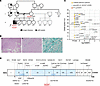 Figure 1
Identification of a homozygous nonsense K225*/K225* variant in CARD9 in a single patient with recurrent fungal infections. (A) Pedigree showing familial segregation of the homozygous chr9 (GRCh37):g.139265108T>A, c.673A>T, pK225* substitution in NM_052813.5 exon 5 CARD9. Individuals affected by recurrent fungal infections are shown by closed black symbols (III.1, P1), whereas individuals who presented with cleft palate are shown by gray symbols (I.1, II.1, II.2, III.1). (B) Histopathological features of the fungus in P1’s biopsy of pretibial lesion: (a) H&E staining showing mixed inflammatory infiltrate including necrotizing granulomas, lymphocytes, plasma cells, neutrophils, and occasional eosinophils; (b, c) fungal organisms with morphology consistent with Candida are present in (b) periodic acid Schiff (PAS) and (c) Grocott Methenamine silver stains (original magnification, ×20). (C) Minor allele frequency (MAF) and CADD score for variants found in previously reported CARD9-deficient patients (yellow circles), homozygous CARD9 variants reported in public databases (light blue circles), and variant found in P1 (red circle). The mutation significance cutoff (MSC, 99% CI) is indicated by the dotted line. (D) Schematic representation of human CARD9 protein. The main isoform of CARD9 is a 536 aa protein with a CARD domain and a coiled-coil domain (CCD). The proband’s variant (P1) is shown in red; variants identified in previously reported patients with CARD9 deficiency shown in black. The 13 exons are indicated by Roman numerals, and the first exon is nonprotein-coding.
Genetics. Massively parallel sequencing using genomic DNA isolated from the index case P1 (III.1 in Figure 1A) was performed by the Molecular Genetics Department at The Children’s Hospital Westmead (Westmead, New South Wales, Australia) in June 2019. Genes examined belonged to the “Intrinsic and Innate Immunodeficiencies” (v3.0, 92 genes), the “T and B Cell Immunodeficiency” (v3.0, 151 genes), and the “Immune Dysregulation” (v3.0, 56 genes) panels, for a total of 278 unique genes (Supplemental Table 1). This approach identified a homozygous variant in CARD9 (c.673A>T) and a heterozygous variant in CHD7 (c.817C>T).
CHD7 (chromodomain helicase DNA-binding 7) is a transcriptional regulator involved in chromatin remodeling, which plays a key role in many developmental pathways (40). Variants in CHD7 cause a life-threatening disease known as CHARGE (coloboma, heart defects, choanal atresia, growth restriction, genital abnormalities, and ear abnormalities) syndrome (OMIM #214800) (41, 42). More than 1,000 CHD7 variants have been identified in patients with CHARGE syndrome. The vast majority are de novo and typically lead to absent or reduced CHD7 protein function (43). The CHD7 heterozygous variant found in P1 (NM_017780.3; c.817C>T) was classified as a variant of unknown significance, and it is absent from P1’s mother (II.3). This variant is reported in a heterozygous state in gnomAD (v4.1.0, https://gnomad.broadinstitute.org/) with an overall allele frequency of 0.000006816 (1/146,713). However, the allele frequency for people of Middle Eastern ancestry, which is relevant as P1 is Lebanese, is 0.0004931 (1/2,027). CHD7 c.817C>T is also reported in ClinVar (n = 1, ID: 1023183) and classified as “likely benign.” Notably, CHD7 c.817C>T is absent from the CHD7 Database (https://www.chd7.org/), which collects published and unpublished CHD7 variants and phenotypes and currently contains 554 pathogenic variants from 895 patients (44). Overall, these data suggest that CHD7 c.817C>T is unlikely to be associated with the infectious phenotype exhibited by P1.
The CARD9 c.673A>T variant is located in exon 5 (NM_052813.5) (Figure 1D) and changes an AAG codon encoding Lys225 (K225) to a premature stop codon (TAG). The CARD9 p.K225* (hereafter K225*) variant is exclusive to this family, being absent from public databases (gnomADv4.1.0: https://gnomad.broadinstitute.org/, TOPMedBravo: https://bravo.sph.umich.edu). The calculated combined annotation-dependent depletion (CADD) score for CARD9 c.673A>T is 35, well above the mutation significance cutoff of 14.1, and higher than the CADD score of CARD9 homozygous variants found in healthy donors in gnomAD (Figure 1C). Furthermore, the CADD/minor allele frequency score of K225* was found to be the fifth highest CADD score among all previously identified disease-causing variants reported in patients with CARD9-deficiency (Figure 1C), thereby establishing this variant as a strong candidate for further investigation. P1’s mother (II.3, Figure 1A) was a heterozygous carrier of the c.673A>T variant (Figure 1A and Supplemental Figure 1A; supplemental material available online with this article; https://doi.org/10.1172/jci.insight.190875DS1). No other relatives were available for genetic testing.
CARD9 K225* expression and function in HEK293T cells. To characterize the impact of the homozygous CARD9 c.673A>T variant, we studied expression and function of the encoded CARD9 K225* protein. First, we evaluated the consequences of the CARD9 K225* variant on protein expression by Western blot analysis of total cell extracts of HEK293T cells, which lack endogenous CARD9, after transfection with pcDNA3 vectors encoding WT CARD9 protein or the CARD9 K225* variant found in P1. An Ab specific for the C-terminal domain of CARD9 detected a protein at the expected molecular weight of 62kDa in HEK293T cells transfected with WT CARD9 (Figure 2A). In contrast, no signal was detected in protein lysates from cells transfected with CARD9 K225* (Figure 2A). As expected, the same signal in HEK293T cells transfected with WT CARD9 was detected when using an N-terminal anti-CARD9–specific Ab (Figure 2A), which also detected a truncated protein in cells transfected with CARD9 K225* (calculated molecular weight: 25 kDa). This data demonstrated that the CARD9 c.673A>T homozygous variant encodes a truncated protein (CARD9 K225*) that can be detected in an overexpression system.
 Figure 2
Expression of WT and mutant CARD9 protein in HEK293T cells and patient’s primary cells. (A) Total extracts of HEK293T cells transfected with plasmids encoding WT or K225* CARD9 or empty vector (EV) were subjected to Western blotting. CARD9 protein levels were assessed using mAbs specific for CARD9 (left) C-terminal or (right) N-terminal domains and anti-GAPDH (loading control). Similar results obtained in 3 independent experiments. (B) NF-κB transcriptional activity in HEK293T cells transfected with reporters alone (a), plus DECTIN1, SYK, and BCL10 (b), plus CARD9 WT (c); or CARD9 K225* (d) or Q289* (e). Cells were stimulated with Curdlan or HKCA. Each symbol represents the ratio of firefly RLU to Renilla RLU control. The mean ± SD for 2 independent experiments is shown. NS, not stimulated. (C) CARD9 mRNA levels in PBMCs from HDs (n = 10, black) and from P1 (red). Mean ± SD from 4 independent experiments, *P < 0.05 using unpaired 2-tailed t test. (D and E) PBMCs from HDs (black) or P1 (red) were stained with anti-CD3, CD19, CD14, CD16 (surface), and CARD9 (intracellularly) mAbs. CARD9 expression was determined in total lymphocytes (D and E), T cells, B cells, and CD14+CD16+ cells (E, right panel). The histogram (D) depicts CARD9 expression in total lymphocytes from 1 HD (dark gray), P1 (red), and an isotype control (filled light gray). The graphs in E represents the mean MFI ± SD of CARD9 (subtracted from MFI of isotype control). (F) Western blot showing CARD9 protein levels in total extracts from PBMCs from HDs (n = 3) and from P1 after IP. Similar results obtained in 3 independent experiments. (G) IL-6 (left) and TNF (right) production by PBMCs after 24 hours of stimulation with the indicated ligands for HDs (n = 6, white) and P1(gray). NS, not stimulated. Each data point corresponds to individual HDs or P1 samples, mean ± SEM from 3 independent experiments.
Activation of CARD9 in vivo in response to fungal infection ultimately leads to NF-κB activation (3). Thus, we assessed NF-κB transcriptional activity using a reporter assay. HEK293T cells were transfected with (a) NF-κB firefly and Renilla reporter vectors (as internal control) alone or in combination with (b) vectors encoding dectin-1, BCL10, and SYK; or vectors from condition (b) plus vectors encoding (c) WT CARD9, (d) CARD9 K225*, or (e) CARD9 Q289*, one of the most frequent mutations reported in patients with CARD9 deficiency (1). Transfected cells were activated for 24 hours with dectin-1 agonists Curdlan and heat-killed Candida albicans (HKCA), and then NF-κB firefly and Renilla luciferase-specific signals were measured (Figure 2B). NF-κB transcriptional activity in cells transfected to express dectin-1, BCL10, and Syk (Figure 2B, condition [b]) was substantially increased in the presence of WT CARD9 (Figure 2B, condition [c]) in response to both Curdlan and HKCA; it was also higher at basal level (nonstimulated), as previously shown (45, 46). In contrast, CARD9 K225* (Figure 2B, condition [d]) or the previously identified disease-causing variant CARD9 Q289* that served as a control (28, 46) (Figure 2B, condition [e]) failed to amplify NF-κB transcriptional activity, with levels similar to those of cells lacking CARD9 (Figure 2B, condition [b]). These results suggest that in HEK293T cells, despite being expressed at similar levels as full-length protein, truncated CARD9 K225* is unable to induce NF-κB transcriptional activity in response to dectin-1 activation.
CARD9 expression on patients’ primary cells. Next, we assessed CARD9 expression in patients’ primary immune cells. First, we measured CARD9 mRNA in PBMCs isolated from P1 and healthy donors (HDs) (Figure 2C). Using commercial reverse transcription-quantitative PCR (RT-qPCR) primers that span the junction encompassing exons 2 and 3 (upstream of the variant in P1), we found that CARD9 mRNA was significantly lower in PBMCs from P1 compared with HDs (n = 10, Figure 2C). This likely reflects CARD9 c.673A>T mRNA being subjected to nonsense-mediated decay.
Next, we then determined CARD9 protein expression in PBMCs by flow cytometry using a CARD9 N-terminal domain–specific Ab (Figure 2, D and E). Specificity of this Ab was tested on HEK293T cells transiently transfected with CARD9-expressing vectors (Supplemental Figure 1B). When testing total PBMCs, CARD9 expression was similar in cells from P1 and HDs (average ΔMFI: HDs = 2,220, P1 = 2,330). We then tested CARD9 expression in leukocyte subsets. CARD9 was highly expressed in monocytes and also CD3+ T cells and CD19+ B cells, albeit at lower levels than monocytes (Figure 2E). This confirms recently published data (2). Importantly, in all subsets tested, CARD9 expression by P1’s cells was comparable to HDs. Lastly, to extend this data, we performed Western blot analysis on PBMC extracts from P1 and HDs (n = 3) that had undergone IP with the same N-terminal–specific anti-CARD9 Ab used for HEK293T cells and flow cytometry (Figure 2F). This revealed that immunoprecipitates from HDs contained a protein of approximately 60–70 kDa corresponding to WT CARD9 (Figure 2F). This approximately 60 kDa protein was absent in immunoprecipitates from P1 PBMCs; however, a smaller molecular weight protein (25–30 kDa) corresponding to truncated CARD9 K225* protein was detected (Figure 2F). Together, these results suggest that P1’s PBMCs, despite showing low CARD9 total mRNA levels, expressed a truncated CARD9 K225* protein at similar levels to full-length WT CARD9 protein detected in HD PBMCs.
Impact of CARD9 K225* on PBMC response to fungal challenge. To evaluate the functional consequences of the CARD9 K225* homozygous variant on patient cells, we tested fresh whole blood and PBMCs from HDs (n = 6, aged 24–57 years old) and P1 (n = 4 independent experiments) for cytokine production after 24 hours of stimulation in the absence or presence of LPS (TLR-4 agonist), heat-killed Staphylococcus aureus (HKSA, TLR-2 agonist), Zymosan depleted (an insoluble preparation of Saccharomyces cerevisiae cell wall depleted of its TLR-stimulating properties), Curdlan, HKCA, or PMA plus ionomycin (PMA/iono) as a positive control. P1’s PBMCs showed impaired IL-6 and TNF production after stimulation with Zymosan depleted, Curdlan, and HKCA compared with PBMCs from HDs cultured under the same conditions (100-fold difference between P1 and HD) (Figure 2G). In contrast, production of IL-6 and TNF by CARD9K225*/K225* PBMCs in response to LPS (TLR-4), HKSA (TLR-2), or PMA/iono was intact and comparable to HDs (Figure 2G). Similarly, when whole blood from P1 was stimulated with dectin-1 agonists (Zymosan depleted, Curdlan, HKCA), IL-6 and TNF production were strongly impaired (100-fold reduced compared with HD). In contrast, these responses were intact after stimulation with TLR-2 and/or TLR-4 agonists or PMA/iono (Supplemental Figure 1C). Thus, the K225*/K225* variant significantly impairs the ability of CARD9 to activate immune response downstream of dectin-1 in response to fungal-specific antigens.
Effect of CARD9 K225* in patient’s PBMC immunophenotype. To identify the impact of CARD9K225*/K225* on the phenotype of PBMCs, we examined immune cell subsets in HDs (n = 15), P1 (n = 6, 6 samples collected over 5-years and analyzed in 6 independent experiments), P1’s mother (CARD9K225*/WT, II.3 Figure 1A), 4 previously reported CARD9-deficient patients: P2 (46), P3 (28), and P4 (47) are homozygous for the CARD9 Q289* nonsense variant; P5 is homozygous for the CARD9 R70W variant (48) (Table 1). P1 had normal proportions of total T cells, B cells, and NK cells (Figure 3A). Moreover, proportions of MAIT, CD4+, and CD8+ T cells (Figure 3, B and C), as well as CD21lo, transitional, naive, and memory B cells (Supplemental Figure 2, A–C) and of total as well as CD56hi and CD56lo NK cells (Supplemental Figure 2D) were all comparable to HD cells. Within the CD4+ T cell compartment, P1 showed increased proportions of naive (60.2% vs. 45.6% in HDs; mean 46.2% in P2–P4, 42% in P5), decreased proportions of central memory (TCM) cells, and intact proportions of TEM cells (Figure 3D). Similarly, proportions of naive CD8+ T cells were increased in P1 and CD8+ TEM cells were decreased compared with HDs and CARD9Q289*/Q289*-deficient patients P2–P5 (Figure 3E). Frequencies of CD4+ Treg and T follicular helper cells in all patients with CARD9 deficiency tested (P1–P5) were similar to HDs (Figure 3, F and G). Interestingly, within the memory CD4+ T cell subpopulation, P1 (CARD9K225*/K225*) consistently showed significantly decreased proportions of TH17-type cells (CCR6+CXCR3–; 7.4% vs. 20% in HDs, P1’s heterozygous mother, II.3, 15.8%) compared with HDs, a finding similar to that in the additional CARD9-deficient patients tested (P2–P5, range from 9.78% to 14.1%) (Figure 3H). In contrast, P1 showed slightly increased TH1 cells (CCR6–CXCR3+; 32.3% in P1 vs. 18.1% in HDs 18.2% in P2–P4) compared with HDs and patients P2–P4 but a similar level to P5 (41%) (Figure 3H). The heterozygous mother II.3 (CARD9 K225*/WT) showed cell frequencies largely comparable to HDs for each cell subset tested (Figure 3, A–H, red circles).
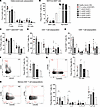 Figure 3
CARD9 K225* affects the frequency of memory CD4+ TH17 cells. PBMCs from HDs (n = 15, white bars), from the heterozygous P1’s mother (CARD9 K225*/WT, red circles among HDs), from the patient with homozygous CARD9 K225* variant (P1, light gray bars), and from previously reported in the literature P2 and P3 (CARD9 Q289*/Q289*, dark gray bars, rhombus and square, respectively) were stained to determine the proportions of (A) T cells (CD3+), B cells (CD20+), and NK cells (CD56+); (B) MAIT (CD3+CD161+TCR-Vα7.2+) cell frequency; (C) CD4+ helper (CD4+ CD8–) and CD8+ cytotoxic (CD4–CD8+) T cell frequency; (D) CD4+ helper T cell subsets: naive (CD4+CCR7+CD45RA+), central memory (TCM, CD4+CCR7+CD45RA–), effector memory (TEM, CD4+CCR7–CD45RA–); (E) CD8+ cytotoxic T cells subsets: naive (CD8+ CCR7+CD45RA+), TCM (CD8+ CCR7+CD45RA–), TEM (CD8+ CCR7–CD45RA–), effector revertant memory (TEMRA, CD8+ CCR7–CD45RA+). (F) Representative contour plots gated on P1 showing frequency of Tregs (CD25hiCD127lo) (left panel) and proportion of Tregs (CD25hiCD127lo) in HDs, P1’s mother, P1–P5 (right panel). (G) Representative contour plots gated on P1 showing Tfh frequency (CD25lo/–CXCR5+CD45RA–) (left panel) and corresponding histograms showing Tfh proportion in HDs, P1’s mother, P1–P5 (right panel). (H) Representative contour plots gated on 1 HD and P1 showing frequency of TH1 (CD25lo/–CXCR5–CD45RA–CXCR3+CCR6–), TH17 (CD25lo/– CXCR5–CD45RA–CXCR3–CCR6+), TH2/9 (CD25lo/–CXCR5–CD45RA–CXCR3–CCR6), TH1/17 (CD25lo/–CXCR5–CD45RA–CXCR3+CCR6+) (left panel) and corresponding histograms showing proportion of TH1, TH17, TH2/9, TH1/17 in HDs, P1’s mother, P1, P2, and P3 (right panel). The data represent the mean ± SD of 6 independent experiments. *P < 0.05 using ANOVA or Kruskal-Wallis test.
CARD9 K225* affects production of Th17-type cytokines by memory and naive CD4+ T cells in vitro. Approximately 60% of patients with reported CARD9 deficiency and susceptibility to fungal infection exhibited impaired T cell–dependent IL-17–mediated immunity (1). To decipher the potential impact of the CARD9 K225* homozygous variant on CD4+ T cell function, we first sort-purified memory (CD45RA–) CD4+ T cells from healthy donors (n = 8) and P1 (n = 3 independent experiments), which were then stimulated under different polarizing conditions for 5 days. After this time, expression and secretion of TH1 (IFN-γ, TNF-α), TH2 (IL-4, IL-13, IL-5), TH9 (IL-9), TH17 (IL-17A, IL-17F, IL-22), and TFH (IL-21) cytokines were determined (Figure 4 and Supplemental Figure 3).
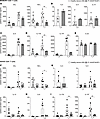 Figure 4
CARD9 K225* memory and naive CD4+ T cells have impaired TH17 polarization. Sort-purified memory (A–E) and naive (F–I) CD4+ T cells from HDs (n = 8) and P1 (n = 3 experiments) were cultured for 5 days with TAE beads under TH0, TH1, TH17-polarizing conditions. (A–E) Memory CD4+ T cell secretion of (A) TH1, (B) TH2, (C) IL-9, and (D) TH17 cytokines were determined by cytometric bead arrays. (E) IL-22 expression was determined by ELISA. (F–I) Production of (F) TH1 cytokines, (G) TH2 cytokines, (H) IL-9, and (I) TH17 cytokines by naive CD4+ T cells from HDs and P1 under TH0 and the indicated polarizing culture conditions were determined by cytometric bead arrays. The mean ± SD for 3 independent experiments is shown. *P < 0.05 using a Mann-Whitney U test.
Memory CD4+ T cells from P1 exhibited preserved production but reduced secretion of IFN-γ and TNF-α under TH1 conditions (Figure 4A and Supplemental Figure 3A). Production of IL-2 (not shown), IL-4, IL-5, IL-13, and IL-21 by CARD9K225*K225* memory CD4+ T cells was comparable to HDs (Figure 4B and Supplemental Figure 3, B and E), suggesting TH2 and TFH polarization is not affected by CARD9 deficiency. Under TH17 conditions, IL-9 production from P1 remained at the lower end of the range observed in HDs (Figure 4C and Supplemental Figure 3C). In contrast, P1’s memory CD4+ T cells showed significantly decreased production of the canonical TH17 cytokines IL-17A and IL-17F under TH0 and TH17-polarizing conditions (Figure 4D and Supplemental Figure 3D). Interestingly, IL-22 was almost intact (Figure 4E and Supplemental Figure 3D). Thus, CARD9 deficiency results in a selective defect in the ability of memory CD4+ T cells to differentiate into TH17-type cells in vivo.
To determine whether these Th17 cytokine-specific defects in CARD9K225*/K225* memory CD4+ T cells are caused by extrinsic defects such as impaired induction by myeloid cells or are T cell intrinsic, we tested the ability of sort-purified naive CD4+ T cells from P1 and HDs to differentiate into TH1, TH2, TH9, and TH17-type cells under in vitro culture conditions (Figure 4, F–I, and Supplemental Figure 3, F–H). Similar to ex vivo cytokine production by P1 memory CD4+ T cells, we observed decreased but not abolished production of TH1 (IFN-γ, TNF-α) and TH9 (IL-9) cytokines and intact production of TH2 (IL-4, IL-13, IL-5) cytokines compared with HDs (Figure 4, F–H, Supplemental Figure 3, F–H). Furthermore, differentiation of CARD9K225*/K225* naive CD4+ T cells into IL-17A– and IL-17F–secreting cells under Th17 polarizing conditions was significantly impaired (Figure 4I). These data suggest that a CD4+ T-cell–intrinsic defect contributes to the impaired secretion of Th17 cytokines shown by CARD9K225*/K225* memory CD4+ T cells.
CARD9-deficient CD4+ T cells have impaired Candida-specific T cell responses. To further assess the functionality of CARD9K225*/K225*, we performed activation-induced marker assays to quantify Candida-specific cells by assessing induction of OX40 and CD25 coexpression on CD4+ T cells in PBMCs in response to in vitro challenge with HKCA, as previously described (49, 50). These assays were also performed on PBMCs from P4 (CARD9Q289*/Q289*) and P5 (CARD9R70W/R70W) (Table 1), 2 previously described patients with CARD9 deficiency, to establish whether the results were unique to P1 or a generalized defect affecting other unrelated cases of CARD9 deficiency. Candida-specific CD45RA–OX40+CD25+ T cells were detected in all HDs tested (n = 18, range: 1.07%–10.4% of CD4+CD45RA–, Figure 5A). In stark contrast, frequencies of Candida-specific CD45RA–CD4+ T cells in PBMCs from P1, P4, and P5 were extremely low, similar to the nonstimulated conditions (negative control; Figure 5A). We next assessed intracellular cytokine expression by Candida-specific CD4+ T cells present in these cultures. Consistent with the previous results, Candida-specific CD4+ T cells producing IL-2, IFN-γ, TNF-α, IL-17A, and IL-17F were consistently observed in all tested HDs (Figure 5B). In contrast, Candida-specific CD4+ T cells producing these cytokines were not detectable in PBMCs from P1, nor in PBMCs from P4 or P5 (Figure 5B). To confirm that impaired responses of CARD9-deficient CD4+ T cells did not result from a general inability to upregulate OX40 and CD25 or produce cytokines during short-term culture, we also assessed CD4+ T cell responses after activation with the polyclonal mitogen phytohemagglutinin (PHA). In response to PHA, similar proportions of CD45RA–OX40+CD25+ (Figure 5C), as well as cytokine-producing T cells, were detected in PBMCs from HDs and P1, P4, and P5 (Figure 5D). These data establish that CARD9 deficiency is associated with an inability to elicit antigen-specific CD4+ T cell responses after exposure to Candida. Such a defect is independent of the disease-causing variant, as this was observed for all CARD9-deficient patients who were tested (p.K225* from P1, p.Q289* from P4, and p.R70W from P5).
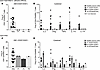 Figure 5
Defect in Candida-specific T cell response by P1’s CD4+ T cells. HDs (n = 20), P1 CARD9K225* (n = 2 samples), P4 CARD9Q289* (n = 1), and P5 CARD9R70W (n = 1) patient PBMCs were stimulated in vitro with heat-killed C. albicans (HKCA) (A and B) or PHA (C and D). Frequency of Ag-specific CD4+ T cells measured by flow cytometry are reported. Total viable OX40+CD25+ CD4+ T cells upon HKCA (A) or PHA (C) were background-subtracted against nonstimulated culture (negative control). Brefeldin A was added during the last 4 hours of stimulation, and intracellular staining of IL-2, IFN-γ, TNF-α, IL-17A, and IL-17F cytokines was performed (B and D); frequency of cytokine-producing cells upon HKCA (B) or PHA (D) was background-subtracted against non-stimulated culture. ND, not detected. Each point represents a different individual (for HDs) or sample (P1, P4, and P5); mean ± SD for 3 independent experiments is shown.
Human fibroblasts do not respond to fungal challenge in vitro. Both invasive and superficial fungal disease (i.e., CMC, dermatophytosis, phaeohyphomycosis) typical of patients with CARD9 deficiency largely involve the skin (1, 2, 17, 18, 21, 26, 45, 46). Despite this, there is a paucity of compelling data regarding the role of immune responses elicited in the skin in these patients. The skin consists of the epidermis, dermis, cutaneous appendages, and subcutaneous tissue. The epidermis contains keratinocytes, melanocytes, and Langerhans cells; the dermis houses a larger population of specialized immune cells including macrophages, DCs, NKs, mast cells, CD4+ T cells, γδ T cells, and nonhematopoietic cells such as fibroblasts. A previous study showed that in human primary fibroblasts, NF-κB activation downstream of dectin-1 (as well as TLR2/6 and TLR4) was BCL-10 dependent (51). Other studies have suggested that in keratinocytes, the CBM complex downstream of dectin-1 consists of BCL10, MALT1, and CARD14, while in other nonhematopoietic cells, CARD10 may be part of the CBM complex (52). To clarify the requirement for CARD9 in responses of skin cells, we generated primary fibroblasts from P1 and HDs (n = 2). Primary fibroblasts were cultured for 24 hours in the absence or presence of LPS (TLR-4 agonist), Zymosan depleted, Curdlan, HKCA (dectin-1 agonists), and TNF as a positive control (Figure 6). CARD9-deficient fibroblasts from P1 produced IL-6 to the same level as CARD9-sufficient fibroblasts from HDs after stimulation with either LPS or TNF (Figure 6). In contrast, stimulation of primary fibroblasts from either HDs or P1 with any of the dectin-1 agonists tested (depleted Zymosan, Curdlan, or HKCA) had no effect on IL-6 production over that observed for unstimulated fibroblasts. These results suggest that impaired host defense in patients with CARD9 deficiency is predominantly due to defective immunity in leukocytes rather than nonhematopoietic cells, though characterization of other skin cells would further refine this conclusion.
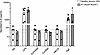 Figure 6
CARD9 K225* primary fibroblast response to fungal-specific antigens. IL-6 production by primary fibroblasts from HDs (n = 2) and P1 after 24 hours of stimulation with LPS (TLR-4 agonist), Zymosan depleted, Curdlan, HKCA (all dectin-1 agonists), and TNF. Results shown as mean ± SEM for 3 independent experiments. The horizontal dotted lines indicate IL-6 production in primary fibroblast culture with media only (condition NS, nonstimulated cells).


