
Research ArticleGastroenterologyHepatology
Open Access |  10.1172/jci.insight.190690
Loss of fungal sensing exacerbates liver injury in a murine model of MASLD
Vijay Pandyarajan,1 So Yeon Kim,1 Takashi Tsuchiya,1 Selena Liu,1 Sadam H. Bhat,1 Jieun Kim,1 David M. Underhill,1,2 Mazen Noureddin,1,3,4 Shelly C. Lu,1 and Ekihiro Seki1,2
1Karsh Division of Gastroenterology and Hepatology, Department of Medicine, and
2Department of Biomedical Sciences, Cedars-Sinai Medical Center, Los Angeles, California, USA.
3Houston Methodist Hospital, Houston, Texas, USA.
4Houston Research Institute, Houston, Texas, USA.
Address correspondence to: Ekihiro Seki, Karsh Division of Gastroenterology and Hepatology, Department of Medicine, Cedars-Sinai Medical Center, 8700 Beverly Blvd., Davis Building 2099, Los Angeles, California, 90048, USA. Phone: 310.423.6605; Email: Ekihiro.Seki@csmc.edu.
Find articles by Pandyarajan, V. in: PubMed | Google Scholar
1Karsh Division of Gastroenterology and Hepatology, Department of Medicine, and
2Department of Biomedical Sciences, Cedars-Sinai Medical Center, Los Angeles, California, USA.
3Houston Methodist Hospital, Houston, Texas, USA.
4Houston Research Institute, Houston, Texas, USA.
Address correspondence to: Ekihiro Seki, Karsh Division of Gastroenterology and Hepatology, Department of Medicine, Cedars-Sinai Medical Center, 8700 Beverly Blvd., Davis Building 2099, Los Angeles, California, 90048, USA. Phone: 310.423.6605; Email: Ekihiro.Seki@csmc.edu.
Find articles by Kim, S. in: PubMed | Google Scholar
1Karsh Division of Gastroenterology and Hepatology, Department of Medicine, and
2Department of Biomedical Sciences, Cedars-Sinai Medical Center, Los Angeles, California, USA.
3Houston Methodist Hospital, Houston, Texas, USA.
4Houston Research Institute, Houston, Texas, USA.
Address correspondence to: Ekihiro Seki, Karsh Division of Gastroenterology and Hepatology, Department of Medicine, Cedars-Sinai Medical Center, 8700 Beverly Blvd., Davis Building 2099, Los Angeles, California, 90048, USA. Phone: 310.423.6605; Email: Ekihiro.Seki@csmc.edu.
Find articles by Tsuchiya, T. in: PubMed | Google Scholar
1Karsh Division of Gastroenterology and Hepatology, Department of Medicine, and
2Department of Biomedical Sciences, Cedars-Sinai Medical Center, Los Angeles, California, USA.
3Houston Methodist Hospital, Houston, Texas, USA.
4Houston Research Institute, Houston, Texas, USA.
Address correspondence to: Ekihiro Seki, Karsh Division of Gastroenterology and Hepatology, Department of Medicine, Cedars-Sinai Medical Center, 8700 Beverly Blvd., Davis Building 2099, Los Angeles, California, 90048, USA. Phone: 310.423.6605; Email: Ekihiro.Seki@csmc.edu.
Find articles by Liu, S. in: PubMed | Google Scholar
1Karsh Division of Gastroenterology and Hepatology, Department of Medicine, and
2Department of Biomedical Sciences, Cedars-Sinai Medical Center, Los Angeles, California, USA.
3Houston Methodist Hospital, Houston, Texas, USA.
4Houston Research Institute, Houston, Texas, USA.
Address correspondence to: Ekihiro Seki, Karsh Division of Gastroenterology and Hepatology, Department of Medicine, Cedars-Sinai Medical Center, 8700 Beverly Blvd., Davis Building 2099, Los Angeles, California, 90048, USA. Phone: 310.423.6605; Email: Ekihiro.Seki@csmc.edu.
Find articles by Bhat, S. in: PubMed | Google Scholar
1Karsh Division of Gastroenterology and Hepatology, Department of Medicine, and
2Department of Biomedical Sciences, Cedars-Sinai Medical Center, Los Angeles, California, USA.
3Houston Methodist Hospital, Houston, Texas, USA.
4Houston Research Institute, Houston, Texas, USA.
Address correspondence to: Ekihiro Seki, Karsh Division of Gastroenterology and Hepatology, Department of Medicine, Cedars-Sinai Medical Center, 8700 Beverly Blvd., Davis Building 2099, Los Angeles, California, 90048, USA. Phone: 310.423.6605; Email: Ekihiro.Seki@csmc.edu.
Find articles by Kim, J. in: PubMed | Google Scholar
1Karsh Division of Gastroenterology and Hepatology, Department of Medicine, and
2Department of Biomedical Sciences, Cedars-Sinai Medical Center, Los Angeles, California, USA.
3Houston Methodist Hospital, Houston, Texas, USA.
4Houston Research Institute, Houston, Texas, USA.
Address correspondence to: Ekihiro Seki, Karsh Division of Gastroenterology and Hepatology, Department of Medicine, Cedars-Sinai Medical Center, 8700 Beverly Blvd., Davis Building 2099, Los Angeles, California, 90048, USA. Phone: 310.423.6605; Email: Ekihiro.Seki@csmc.edu.
Find articles by
Underhill, D.
in:
PubMed
|
Google Scholar
|

1Karsh Division of Gastroenterology and Hepatology, Department of Medicine, and
2Department of Biomedical Sciences, Cedars-Sinai Medical Center, Los Angeles, California, USA.
3Houston Methodist Hospital, Houston, Texas, USA.
4Houston Research Institute, Houston, Texas, USA.
Address correspondence to: Ekihiro Seki, Karsh Division of Gastroenterology and Hepatology, Department of Medicine, Cedars-Sinai Medical Center, 8700 Beverly Blvd., Davis Building 2099, Los Angeles, California, 90048, USA. Phone: 310.423.6605; Email: Ekihiro.Seki@csmc.edu.
Find articles by Noureddin, M. in: PubMed | Google Scholar
1Karsh Division of Gastroenterology and Hepatology, Department of Medicine, and
2Department of Biomedical Sciences, Cedars-Sinai Medical Center, Los Angeles, California, USA.
3Houston Methodist Hospital, Houston, Texas, USA.
4Houston Research Institute, Houston, Texas, USA.
Address correspondence to: Ekihiro Seki, Karsh Division of Gastroenterology and Hepatology, Department of Medicine, Cedars-Sinai Medical Center, 8700 Beverly Blvd., Davis Building 2099, Los Angeles, California, 90048, USA. Phone: 310.423.6605; Email: Ekihiro.Seki@csmc.edu.
Find articles by Lu, S. in: PubMed | Google Scholar
1Karsh Division of Gastroenterology and Hepatology, Department of Medicine, and
2Department of Biomedical Sciences, Cedars-Sinai Medical Center, Los Angeles, California, USA.
3Houston Methodist Hospital, Houston, Texas, USA.
4Houston Research Institute, Houston, Texas, USA.
Address correspondence to: Ekihiro Seki, Karsh Division of Gastroenterology and Hepatology, Department of Medicine, Cedars-Sinai Medical Center, 8700 Beverly Blvd., Davis Building 2099, Los Angeles, California, 90048, USA. Phone: 310.423.6605; Email: Ekihiro.Seki@csmc.edu.
Find articles by
Seki, E.
in:
PubMed
|
Google Scholar
|
Published March 10, 2026 - More info
JCI Insight. 2026;11(8):e190690. https://doi.org/10.1172/jci.insight.190690.
© 2026 Pandyarajan et al. This work is licensed under the Creative Commons Attribution 4.0 International License. To view a copy of this license, visit http://creativecommons.org/licenses/by/4.0/.
Received: January 3, 2025; Accepted: March 4, 2026

-
Results
The microbiota profiles of those with mild and severe liver fibrosis are distinct in a diverse population of patients with MASLD. We first began our investigation by determining whether the intestinal microbiome is associated with MASLD development. We performed targeted next-generation sequencing for both bacterial and fungi DNA via amplicon sequencing of the 16S region of bacterial DNA and the internally transcribed spacer region 1 (ITS1) region of the rRNA region of fungi, respectively. We obtained 17,322 average reads per sample (range 1471–119,264). We analyzed a total of 62 patients. These patients were stratified based on hepatic fibrosis status into mild (F0–F1, n = 34) and severe categories (F2–F4, n = 28) (Table 1). Fibrosis status was determined either through liver biopsy or through non-invasive studies (transient elastography or magnetic resonance elastography). There was a significant difference in the fibrosis determination method, as assessed by χ2 tests showing a slight increase in biopsies in the more advanced liver fibrosis group. The average age of our cohort was 57.1 ± 12.1 years and 60.6 ± 8.6 years for the mild and severe fibrosis categories, respectively. There was a male predominance in both categories (61.8% and 53.6%). The average BMI for each category (mild, 32.7 ± 5.7 kg/m2 and severe, 31.2 ± 6.8 kg/m2) placed each fibrosis group into the obese designation. In contrast to prior studies where the fecal mycobiome had been described in patients with MASLD, our cohort consisted of a diverse ethnic population that included a large proportion of individuals of Hispanic origin (mild, 35.3% and severe 21.4%), a population with elevated rates of fibrosis progression (22). Aspartate aminotransferase (AST) and platelet counts were found to be significantly increased and decreased respectively in the F2–F4 fibrosis group.
At the bacterial level, taxonomic analysis revealed that the top 10 represented genera included Bacteroides, Blautia, Lachnospiraceae family, Faecalibacterium, Ruminococcaceae family, Colinsella, Lactobacillus, Coprococcus, Eubacterium, and Streptococcus. Genera outside of these were grouped into an “other” category (Figure 1A). We observed an expansion of Lactobacillus and Eubacterium and a reduction in Bacteroides and Faecalibacterium when we compared the severe and mild categories. In contrast to bacteria where changes in the microbiota had only slight changes, fungal mycobiota changes were greater in magnitude. The top 10 fungal mycobiota by relative abundance across both disease categories were Penicillium, Candida, Aspergillus, Rhodotorula, Meyerozyma, Cladosporium, Cyberlindnera, Coniochaeta, Saccharomyces, and Mrakia. Of these, Penicillium displayed the most dramatic reduction in abundance in the severe category (Figure 1B). Genera that were expanded in the severe category included Aspergillus, Rhodotorula, Meyerozyma, Cladosporium, Sacchromyces, and Mrakia. Coniochaeta was found to only be present in large quantities in the more severe category. No differences in α diversity were detected between the 2 groups but there was a significant difference in β diversity for the fungal data when comparing the 2 groups (Supplemental Figures 1 and 2; supplemental material available online with this article; https://doi.org/10.1172/jci.insight.190690DS1).
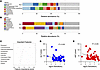 Figure 1
Microbiota changes in a cohort of patients with MASLD stratified by F0–F1 (n = 34) and F2–F4 (n = 28) fibrosis stages. (A) Bacterial 16S sequencing (top) and (B) fungal ITS1 sequencing (bottom) of stool. (C) Mean Gini decrease in important features identified in combined bacterial/fungal sequencing data. (D) Correlation of log of relative abundance with ALT and (E) AST.
To determine which features, bacterial or fungal, may be important for discriminating between the mild and severe groups, we performed random forest analysis. When we combined both our bacterial and fungal data into a single data set for analysis, we interestingly found that Penicillium led to the greatest mean decrease in Gini accuracy, indicating it was the most important discriminative factor to distinguish between mild and severe groups (Figure 1C). Furthermore, we found significant negative correlations between aminotransferases and the abundance of Penicillium (Figure 1, D and E). Together, these results indicate that Penicillium is potentially a beneficial fungus given its decreased abundance in the severe fibrotic group.
Amphotericin B treatment ameliorates liver injury and fibrosis under metabolic stress conditions. Given the changes in fungal mycobiota in our patients, we posited that changes in the mycobiota might be associated with the development of MASLD. We therefore used a murine diet-induced model of high-fat, high-glucose/-fructose (HFHGF) feeding to induce hepatic steatosis and fibrosis in wild-type (WT) mice and coupled this to amphotericin B treatment, an antifungal compound with poor bioavailability and compared this to animals on a normal diet (ND). We found that amphotericin B–treated mice on an HFHGF diet have improved hepatic injury markers, steatosis and fibrosis, suggesting a functional contribution of gut fungi in the development of MASLD (Figure 2, A–D) and further confirming prior published results (16). At the mRNA level, there was a concomitant reduction in fibrosis markers, including Col1a1, Col3a1, and Col4a1 and a marked reduction in Tnf expression in the liver (Figure 2, E–H). We then sought to define the changes in the gut microbiota in these animals using next-generation sequencing given the antifungal role of amphotericin B.
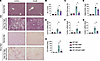 Figure 2
Amphotericin B ameliorates MASLD. (A) H&E and Sirius red staining of liver sections from WT mice fed normal diet (WT-ND, n = 6), WT-ND mice with amphotericin B (WT-ND-AMP, n = 6), WT mice fed high-fat, high-glucose/-fructose diet (WT-HFHGF, n = 6), and WT-HFHGF-AMP mice (n = 6). Original magnification, ×20. (B) Serum ALT. (C) Sirius red quantitation. (D) Hepatic triglyceride content. (E–F) mRNA expression for (E) Col1a1, (F) Col3a1, (G) Col4a1, and (H) Tnf. Statistical significance was calculated with 1-way ANOVA followed by Holm-Šídák multiple-comparison test (B–H). *P < 0.05.
At the bacterial level, the greatest changes were between the ND and HFHGF groups. This includes the complete loss of Turicibacter and Clostridiaceae family, a reduction in the S24-7 family, growth of the Clostridiales order, Bacteroides, and Akkermansia and the appearance of Peptostreptococcaceae family and Allobaculum (Figure 3A). Only subtle differences existed between the amphotericin B–treated and non-treated groups were apparent within our cohort. Like bacteria, the greatest differences were apparent between the ND and HFHGF groups. These changes include a marked reduction in Aspergillus and Ascochyta and expansion of Eutypella, Vishniacozyma, and Fomitopsis genera (Figure 3B). When examined more closely, amphotericin B treatment appeared to reduce Aspergillus in both the ND and HFHGF conditions with an expansion of the Stenocarpella genus in the ND condition. Notably, as described in our human cohort, animals under metabolic stress appeared to have a reduction in the Penicillium genus, with a slight reduction in abundance in the amphotericin B–treated groups. These results suggest that amphotericin B treatment reduces MASLD-promoting fungi.
 Figure 3
Treatment with amphotericin B (AMP) alters gut microbiota. WT mice fed normal diet (WT-ND, n = 6), WT-ND mice with AMP (WT-ND-AMP, n = 6), WT mice fed high-fat, high-glucose/-fructose diet (WT-HFHGF, n = 6), and WT-HFHGF mice with AMP (WT-HFHGF-AMP, n = 6). (A) Top 10 bacterial genera by relative abundance determined by 16S sequencing of stool and (B) top 20 fungal genera determined by ITS1 sequencing. Data represented as average relative abundance.
CARD9 deficiency leads to worse liver injury and fibrosis under metabolic stress conditions. Our human cohort and amphotericin B–treated mouse data suggested the importance of the gut mycobiota in MASLD fibrosis. We therefore focused on fungal immune system mediators. While MyD88 and NLRP3 have a broad range of effects, including responses to bacteria and fungi, CARD9 is a protein that has specific antifungal effects and has been well linked to the pathogenesis of inflammatory bowel disease and metabolic disease (21, 23). We subjected Card9–/– mice to a diet-induced steatotic liver disease to determine what role a lack of fungal immunity would have on the disease model progression of MASLD (24). After a 6-month period of HFHGF feeding, we found that Card9–/– mice exhibited worsened liver injury and fibrosis, but not worsened steatosis and hepatic triglyceride content when compared to their WT counterparts (Figure 4, A–D). Serum lipopolysaccharide (LPS) was also elevated under metabolic stress in Card9–/– mice (Figure 4E). These changes were accompanied by increased liver fibrosis markers, including Col1a1, Col3a1, and Col4a1. Furthermore, Card9 deficiency increased the expression of proinflammatory marker Tnf (Figure 4, F–I). Notably, Card9 deficiency by itself under ND conditions was not sufficient to lead to significant liver injury or fibrosis. These results demonstrate that CARD9 inhibits MASLD-induced liver injury, inflammation, and fibrosis, but not steatosis.
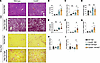 Figure 4
CARD9 deficiency exacerbates MASLD. (A) H&E and Sirius red staining of liver sections from WT mice fed normal diet (WT-ND, n = 6), CARD9-deficient mice fed ND (Card9–/– ND, n = 6), WT mice fed high-fat, high-glucose/-fructose diet (WT-HFHGF, n = 6), and Card9–/– mice fed HFHGF diet (n = 9). Original magnification, ×20. (B) Serum ALT. (C) Sirius red quantitation. (D) Hepatic triglyceride content. (E) Serum lipopolysaccharide (LPS). (F) Col1a1 (G) Col3a1 (H) Col4a1 and (I) Tnf mRNA expression. Statistical significance was calculated with 1-way ANOVA followed by Holm-Šídák multiple-comparison test (B–H). *P < 0.05. NS, not significant.
Card9 deficiency in mice leads to microbial dysbiosis. We next sought to determine what changes might have occurred at the microbiota level given CARD9’s role in fungal immunity. Large microbiota changes were apparent within both bacteria and fungi in the murine MASLD (Figure 5). Card9–/– mice appear to have slightly more S24-7 family under normal and HFHGF diet feeding compared with controls, although it appears diminished under HFHGF feeding at baseline. Allobaculum showed a similar trend within Card9–/– mice; there was a large expansion of this genus under HFHGF feeding. Lactobacillus, on the other hand, showed the opposite trend; it was diminished at both baseline and under HFHGF in Card9–/– mice (Figure 5A). Coriobacteriaaceae and Peptostreptococcaceae families appear to have expanded in HFHGF feeding conditions but were less pronounced in the Card9–/– mice. In fungi, the largest differences occurred between ND-fed and HFHGF-fed animals, with minimal overlap in fungal species except for Apiotrichum (purple) (Figure 5B). Notably, the genera Penicillium (dark red) (Figure 5B) and Ascochyta (light blue) (Figure 5B) were abundant in the ND groups, Ascochyta in fact was more abundant in the Card9–/– as compared with the WT ND groups. Both genera showed substantial reductions in the WT HFHS group, with Penicillium being nearly undetectable in the Card9–/– mice on an HFHGF diet (Figure 5B). These results parallel the similar reduction in Penicillium we detected in our human cohort. Additionally, Candida, which was absent in WT animals under ND conditions, was detected at baseline in the Card9–/– mice and expanded under HFHGF feeding. Taken together, these results indicate that CARD9 deficiency has profound effects on inducing a gut microbial dysbiosis that only worsens under conditions of metabolic stress.
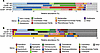 Figure 5
CARD9 deficiency causes microbial dysbiosis. WT mice fed normal diet (WT-ND, n = 6), CARD9-deficient mice fed ND (Card9–/– ND, n = 6), WT mice fed high-fat, high-glucose/-fructose diet (WT-HFHGF, n = 6), and Card9–/– mice fed HFHGF diet (n = 9). (A) Top 10 bacterial genera by relative abundance determined by 16S sequencing of stool and (B) top 20 fungal genera determined by ITS1 sequencing. Data represented as average relative abundance.
We performed Spearman’s correlation analysis, comparing the top 10 bacteria to the top 10 fungi across all our data sets to determine whether the reduction in Penicillium was merely an epiphenomenon emerging from the overgrowth of other organisms (Figure 6). We found a significant inverse correlation between Aspergillus and Lactobacillus, a bacteria thought to be beneficial (25). In terms of correlations between fungi, significant positive correlations were found between the following pairs: (a) Ascochyta: Trichoderma, Cladosporium, Aspergillus; (b) Aspergillus: Ascochyta, Trichoderma; (c) Cladosporium: Trichoderma and (d) one inverse correlation with Trichoderma and Apiotrichum. Numerous significant correlations were found between bacteria. Notably, the S24-7 family, a genus that consumes mucin, was found to be correlated with Lactobacillus, Turicibacter, Bacteroides, the Peptostreptococcaceae family, and the Rikenellaceae family (26). The Peptostreptococcae family, which has also been correlated with MASLD, was found to be inversely correlated with Turicibacter, the aforementioned S24-7 family, and positively correlated with the Coriobacteriaceae family and Oscillospira (27).
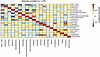 Figure 6
Spearman’s correlation between top 10 fungi and bacteria found in the Card9–/– animal cohort. Cells with numbers represent Spearman’s correlation coefficients of less than –0.3 or greater than 0.3 that were found to be significant.
CARD9 expression extends beyond myeloid cells to include intestinal enterocytes. CARD9 expression has been well described to be expressed within in myeloid cells, so we sought to identify the tissue compartment driving liver injury in this model. We therefore examined CARD9 expression in the small intestine and liver, the 2 main compartments where a disease phenotype was present (microbial dysbiosis and liver injury/fibrosis). To accomplish this, we used publicly available single-cell RNA sequencing (scRNA-seq) data sets that examined the murine small intestine under normal and high-fat feeding conditions and the human liver (28, 29).
We first investigated the CARD9 expression in human liver. We found that CARD9 is primarily expressed in liver myeloid cells, with some scattered expression within hepatocytes and lymphocytes as shown by scRNA-seq analysis (Figure 7, A and B), and with no changes in expression pattern between non-injured and MASH livers (Figure 7, C and D). We confirmed this finding in murine liver using RNA in situ hybridization targeting both the gene for F4/80, encoded by Adgre, a murine macrophage marker, and Card9, highlighting their coexpression in specific macrophage populations in the liver (Figure 7E). We found only limited expression of CARD9 in hepatocytes.
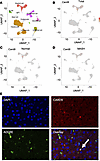 Figure 7
CARD9 expression is found in a subset of human liver and murine macrophages. (A) scRNA-seq data analyzed from database SCP2154 showing expression of (B) CARD9 in macrophages. CARD9 expression patterns in both normal (C) and metabolic dysfunction–associated steatohepatitis (MASH) conditions (D) remain relatively unchanged in macrophages. (E) RNA in situ hybridization targeting Adgre (F4/80) and Card9 in WT murine liver. Overlap of Card9 and Adgre probe in nuclei indicate coexpression. Representative microscopic images of 3 independent experiments are shown. Original magnification, ×40.
Since we did not observe differences in CARD9 expression between normal and MASLD livers but did observe increased gut permeability in Card9–/– mice as evidenced by increased LPS levels, we analyzed Card9 expression in the intestine as the mechanism of increased gut permeability in MASLD. We confirmed that Card9 is expressed mostly in intestinal murine macrophages, as reported with some scattered expression in T, B, and plasma and dendritic cells (Figure 8A) (30). Notably, Card9 was also present in enterocytes. Under HFHGF diet feeding, Card9 expression was similar in intestinal myeloid cells but diminished in enterocytes (Figure 8B). Given the low overall low quality of the data, we sought to confirm whether this finding was true in mouse small intestine. We therefore utilized RNA in situ hybridization to directly examine Card9 expression within the murine small intestine. We confirmed robust Card9 expression in enterocytes under ND conditions (Figure 8C) but a marked reduction under HFHGF diet feeding (Figure 8D). Of note, the cells expressing Card9 did not appear to be expressed in crypts where Paneth cells reside. Cells expressing Card9 within the lamina propria are expected to be mostly macrophage in origin given the scRNA-seq data. This expression data along with the observed increased intestinal permeability suggest the pivotal role of CARD9 in enterocytes for MASLD development.
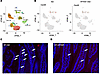 Figure 8
Card9 is expression is not restricted to myeloid cells. Analysis of scRNA-seq data from GSE221006 examining the expression of Card9 in murine small intestine under normal diet (ND) and high-fat, high-glucose/-fructose (HFHGF) diet conditions (29). RNA in situ hybridization targeting Card9 in murine small intestine. Expression was detected in both enterocytes and in the lamina propria (arrows) in ND (C) and was almost entirely absent in enterocytes under HFHGF diet conditions (D). Representative microscopic images of 3 independent experiments are shown. (C and D) Original magnification, ×40.
Functional role of CARD9 in the intestinal epithelium. Given the finding that CARD9 was found expressed in enterocytes, we sought to understand whether there was any functional consequence to its expression in enterocytes. Prior literature indicated that Card9–/– mice had a reduction in Reg3g, an antimicrobial peptide that could be used to regulate the gut microbiota and is notably expressed in enterocytes and not immune cells (31). We therefore derived intestinal organoids, which recapitulate all enterocyte lineages, from WT mice (32). Using this system, we examined the expression of Reg3g, peptide YY (PYY), an antifungal peptide, and ZO-1, a tight junction molecule, in the small intestine. We found robust expression of Reg3g, PYY, and ZO-1 in cells as evidenced by positive immunofluorescence in the epithelial enterocytes (Figure 9, A, C, and E). We then exposed intestinal organoids to BRD55229, a CARD9-specific inhibitor (33). Under CARD9-inhibited conditions, we found Reg3g, PYY, and ZO-1 expression to all be markedly diminished (Figure 9, B, D, and F–I). These results indicate that under steady-state conditions, CARD9 function is required to help drive the expression of these critical gut barrier function proteins, which then regulate gut bacterial and fungal composition and gut permeability for MASLD development.
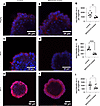 Figure 9
CARD9 inhibition leads to reduced expression of Reg3g in WT small intestinal organoids. (A, C, and E) Whole-cell mount of WT small intestinal organoids showing positive immunofluorescence in small granules for Reg3g (A), peptide YY (PYY, C), and ZO-1 (E) in enterocytes counterstained with DAPI (blue). (B, D, and F) Exposure of organoids to 2 μM BRD5529, a CARD9-specific inhibitor, results in a marked decrease in expression of Reg3g (B), PYY (D), and ZO-1 (F). Representative microscopic images of 3 independent experiments are shown. Average fluorescence intensity per organoid for (G) Reg3g, (H) PYY, (I) ZO-1. n = 10 randomly selected organoids. Statistical significance was calculated with 2-tailed Student’s t test (G–I). *P < 0.05, **P < 0.01, ****P < 0.0001.


