
Research ArticleOncologyTherapeutics
Open Access |  10.1172/jci.insight.190531
IL-21 enhances the cytotoxicity of intratumoral CD8+ T cells, improving radiation efficacy
Xin-yang Li,1 Xue-qi Xie,1 Bao-chao Wei,2 Xiao-zheng Sun,1 Min-xin Chen,1 Ru-fei Liu,1 Qing-xu Tao,1 Yi-heng Huang,1,2 Qian Wang,1 Shuang-shuang Ma,1,2 Ling Wei,1,2 Rong Xiao,1,2 Zhao-yun Liu,1,2 Jin-ming Yu,1,2 Meng Wu,1,2 and Dawei Chen1,2
1Department of Radiation Oncology and Shandong Provincial Key Laboratory of Precision Oncology, Shandong Cancer Hospital and Institute Shandong First Medical University and Shandong Academy of Medical Sciences, Jinan, Shandong, China.
2Cancer Center, Shandong University, Jinan, Shandong, China.
Address correspondence to: Da-wei Chen, Meng Wu, or Jin-ming Yu, 440 Jiyan Road, Jinan, 250117, Shandong, China. Phone: 86.531.67626150; Email: dave0505@yeah.net (DWC).Phone:86.531.67626150; Email: wumeng7777@163.com (MU). Phone: 86.531.67626971; Email: sdyujinming@126.com (JMY).
Authorship note: XYL, XQX, and BCW contributed equally to this work. DWC, MW, and JMY are co-senior authors.
Find articles by Li, X. in: PubMed | Google Scholar
1Department of Radiation Oncology and Shandong Provincial Key Laboratory of Precision Oncology, Shandong Cancer Hospital and Institute Shandong First Medical University and Shandong Academy of Medical Sciences, Jinan, Shandong, China.
2Cancer Center, Shandong University, Jinan, Shandong, China.
Address correspondence to: Da-wei Chen, Meng Wu, or Jin-ming Yu, 440 Jiyan Road, Jinan, 250117, Shandong, China. Phone: 86.531.67626150; Email: dave0505@yeah.net (DWC).Phone:86.531.67626150; Email: wumeng7777@163.com (MU). Phone: 86.531.67626971; Email: sdyujinming@126.com (JMY).
Authorship note: XYL, XQX, and BCW contributed equally to this work. DWC, MW, and JMY are co-senior authors.
Find articles by Xie, X. in: PubMed | Google Scholar
1Department of Radiation Oncology and Shandong Provincial Key Laboratory of Precision Oncology, Shandong Cancer Hospital and Institute Shandong First Medical University and Shandong Academy of Medical Sciences, Jinan, Shandong, China.
2Cancer Center, Shandong University, Jinan, Shandong, China.
Address correspondence to: Da-wei Chen, Meng Wu, or Jin-ming Yu, 440 Jiyan Road, Jinan, 250117, Shandong, China. Phone: 86.531.67626150; Email: dave0505@yeah.net (DWC).Phone:86.531.67626150; Email: wumeng7777@163.com (MU). Phone: 86.531.67626971; Email: sdyujinming@126.com (JMY).
Authorship note: XYL, XQX, and BCW contributed equally to this work. DWC, MW, and JMY are co-senior authors.
Find articles by Wei, B. in: PubMed | Google Scholar
1Department of Radiation Oncology and Shandong Provincial Key Laboratory of Precision Oncology, Shandong Cancer Hospital and Institute Shandong First Medical University and Shandong Academy of Medical Sciences, Jinan, Shandong, China.
2Cancer Center, Shandong University, Jinan, Shandong, China.
Address correspondence to: Da-wei Chen, Meng Wu, or Jin-ming Yu, 440 Jiyan Road, Jinan, 250117, Shandong, China. Phone: 86.531.67626150; Email: dave0505@yeah.net (DWC).Phone:86.531.67626150; Email: wumeng7777@163.com (MU). Phone: 86.531.67626971; Email: sdyujinming@126.com (JMY).
Authorship note: XYL, XQX, and BCW contributed equally to this work. DWC, MW, and JMY are co-senior authors.
Find articles by Sun, X. in: PubMed | Google Scholar
1Department of Radiation Oncology and Shandong Provincial Key Laboratory of Precision Oncology, Shandong Cancer Hospital and Institute Shandong First Medical University and Shandong Academy of Medical Sciences, Jinan, Shandong, China.
2Cancer Center, Shandong University, Jinan, Shandong, China.
Address correspondence to: Da-wei Chen, Meng Wu, or Jin-ming Yu, 440 Jiyan Road, Jinan, 250117, Shandong, China. Phone: 86.531.67626150; Email: dave0505@yeah.net (DWC).Phone:86.531.67626150; Email: wumeng7777@163.com (MU). Phone: 86.531.67626971; Email: sdyujinming@126.com (JMY).
Authorship note: XYL, XQX, and BCW contributed equally to this work. DWC, MW, and JMY are co-senior authors.
Find articles by Chen, M. in: PubMed | Google Scholar
1Department of Radiation Oncology and Shandong Provincial Key Laboratory of Precision Oncology, Shandong Cancer Hospital and Institute Shandong First Medical University and Shandong Academy of Medical Sciences, Jinan, Shandong, China.
2Cancer Center, Shandong University, Jinan, Shandong, China.
Address correspondence to: Da-wei Chen, Meng Wu, or Jin-ming Yu, 440 Jiyan Road, Jinan, 250117, Shandong, China. Phone: 86.531.67626150; Email: dave0505@yeah.net (DWC).Phone:86.531.67626150; Email: wumeng7777@163.com (MU). Phone: 86.531.67626971; Email: sdyujinming@126.com (JMY).
Authorship note: XYL, XQX, and BCW contributed equally to this work. DWC, MW, and JMY are co-senior authors.
Find articles by Liu, R. in: PubMed | Google Scholar
1Department of Radiation Oncology and Shandong Provincial Key Laboratory of Precision Oncology, Shandong Cancer Hospital and Institute Shandong First Medical University and Shandong Academy of Medical Sciences, Jinan, Shandong, China.
2Cancer Center, Shandong University, Jinan, Shandong, China.
Address correspondence to: Da-wei Chen, Meng Wu, or Jin-ming Yu, 440 Jiyan Road, Jinan, 250117, Shandong, China. Phone: 86.531.67626150; Email: dave0505@yeah.net (DWC).Phone:86.531.67626150; Email: wumeng7777@163.com (MU). Phone: 86.531.67626971; Email: sdyujinming@126.com (JMY).
Authorship note: XYL, XQX, and BCW contributed equally to this work. DWC, MW, and JMY are co-senior authors.
Find articles by Tao, Q. in: PubMed | Google Scholar
1Department of Radiation Oncology and Shandong Provincial Key Laboratory of Precision Oncology, Shandong Cancer Hospital and Institute Shandong First Medical University and Shandong Academy of Medical Sciences, Jinan, Shandong, China.
2Cancer Center, Shandong University, Jinan, Shandong, China.
Address correspondence to: Da-wei Chen, Meng Wu, or Jin-ming Yu, 440 Jiyan Road, Jinan, 250117, Shandong, China. Phone: 86.531.67626150; Email: dave0505@yeah.net (DWC).Phone:86.531.67626150; Email: wumeng7777@163.com (MU). Phone: 86.531.67626971; Email: sdyujinming@126.com (JMY).
Authorship note: XYL, XQX, and BCW contributed equally to this work. DWC, MW, and JMY are co-senior authors.
Find articles by Huang, Y. in: PubMed | Google Scholar
1Department of Radiation Oncology and Shandong Provincial Key Laboratory of Precision Oncology, Shandong Cancer Hospital and Institute Shandong First Medical University and Shandong Academy of Medical Sciences, Jinan, Shandong, China.
2Cancer Center, Shandong University, Jinan, Shandong, China.
Address correspondence to: Da-wei Chen, Meng Wu, or Jin-ming Yu, 440 Jiyan Road, Jinan, 250117, Shandong, China. Phone: 86.531.67626150; Email: dave0505@yeah.net (DWC).Phone:86.531.67626150; Email: wumeng7777@163.com (MU). Phone: 86.531.67626971; Email: sdyujinming@126.com (JMY).
Authorship note: XYL, XQX, and BCW contributed equally to this work. DWC, MW, and JMY are co-senior authors.
Find articles by Wang, Q. in: PubMed | Google Scholar
1Department of Radiation Oncology and Shandong Provincial Key Laboratory of Precision Oncology, Shandong Cancer Hospital and Institute Shandong First Medical University and Shandong Academy of Medical Sciences, Jinan, Shandong, China.
2Cancer Center, Shandong University, Jinan, Shandong, China.
Address correspondence to: Da-wei Chen, Meng Wu, or Jin-ming Yu, 440 Jiyan Road, Jinan, 250117, Shandong, China. Phone: 86.531.67626150; Email: dave0505@yeah.net (DWC).Phone:86.531.67626150; Email: wumeng7777@163.com (MU). Phone: 86.531.67626971; Email: sdyujinming@126.com (JMY).
Authorship note: XYL, XQX, and BCW contributed equally to this work. DWC, MW, and JMY are co-senior authors.
Find articles by Ma, S. in: PubMed | Google Scholar
1Department of Radiation Oncology and Shandong Provincial Key Laboratory of Precision Oncology, Shandong Cancer Hospital and Institute Shandong First Medical University and Shandong Academy of Medical Sciences, Jinan, Shandong, China.
2Cancer Center, Shandong University, Jinan, Shandong, China.
Address correspondence to: Da-wei Chen, Meng Wu, or Jin-ming Yu, 440 Jiyan Road, Jinan, 250117, Shandong, China. Phone: 86.531.67626150; Email: dave0505@yeah.net (DWC).Phone:86.531.67626150; Email: wumeng7777@163.com (MU). Phone: 86.531.67626971; Email: sdyujinming@126.com (JMY).
Authorship note: XYL, XQX, and BCW contributed equally to this work. DWC, MW, and JMY are co-senior authors.
Find articles by Wei, L. in: PubMed | Google Scholar
1Department of Radiation Oncology and Shandong Provincial Key Laboratory of Precision Oncology, Shandong Cancer Hospital and Institute Shandong First Medical University and Shandong Academy of Medical Sciences, Jinan, Shandong, China.
2Cancer Center, Shandong University, Jinan, Shandong, China.
Address correspondence to: Da-wei Chen, Meng Wu, or Jin-ming Yu, 440 Jiyan Road, Jinan, 250117, Shandong, China. Phone: 86.531.67626150; Email: dave0505@yeah.net (DWC).Phone:86.531.67626150; Email: wumeng7777@163.com (MU). Phone: 86.531.67626971; Email: sdyujinming@126.com (JMY).
Authorship note: XYL, XQX, and BCW contributed equally to this work. DWC, MW, and JMY are co-senior authors.
Find articles by Xiao, R. in: PubMed | Google Scholar
1Department of Radiation Oncology and Shandong Provincial Key Laboratory of Precision Oncology, Shandong Cancer Hospital and Institute Shandong First Medical University and Shandong Academy of Medical Sciences, Jinan, Shandong, China.
2Cancer Center, Shandong University, Jinan, Shandong, China.
Address correspondence to: Da-wei Chen, Meng Wu, or Jin-ming Yu, 440 Jiyan Road, Jinan, 250117, Shandong, China. Phone: 86.531.67626150; Email: dave0505@yeah.net (DWC).Phone:86.531.67626150; Email: wumeng7777@163.com (MU). Phone: 86.531.67626971; Email: sdyujinming@126.com (JMY).
Authorship note: XYL, XQX, and BCW contributed equally to this work. DWC, MW, and JMY are co-senior authors.
Find articles by Liu, Z. in: PubMed | Google Scholar
1Department of Radiation Oncology and Shandong Provincial Key Laboratory of Precision Oncology, Shandong Cancer Hospital and Institute Shandong First Medical University and Shandong Academy of Medical Sciences, Jinan, Shandong, China.
2Cancer Center, Shandong University, Jinan, Shandong, China.
Address correspondence to: Da-wei Chen, Meng Wu, or Jin-ming Yu, 440 Jiyan Road, Jinan, 250117, Shandong, China. Phone: 86.531.67626150; Email: dave0505@yeah.net (DWC).Phone:86.531.67626150; Email: wumeng7777@163.com (MU). Phone: 86.531.67626971; Email: sdyujinming@126.com (JMY).
Authorship note: XYL, XQX, and BCW contributed equally to this work. DWC, MW, and JMY are co-senior authors.
Find articles by Yu, J. in: PubMed | Google Scholar
1Department of Radiation Oncology and Shandong Provincial Key Laboratory of Precision Oncology, Shandong Cancer Hospital and Institute Shandong First Medical University and Shandong Academy of Medical Sciences, Jinan, Shandong, China.
2Cancer Center, Shandong University, Jinan, Shandong, China.
Address correspondence to: Da-wei Chen, Meng Wu, or Jin-ming Yu, 440 Jiyan Road, Jinan, 250117, Shandong, China. Phone: 86.531.67626150; Email: dave0505@yeah.net (DWC).Phone:86.531.67626150; Email: wumeng7777@163.com (MU). Phone: 86.531.67626971; Email: sdyujinming@126.com (JMY).
Authorship note: XYL, XQX, and BCW contributed equally to this work. DWC, MW, and JMY are co-senior authors.
Find articles by
Wu, M.
in:
PubMed
|
Google Scholar
|

1Department of Radiation Oncology and Shandong Provincial Key Laboratory of Precision Oncology, Shandong Cancer Hospital and Institute Shandong First Medical University and Shandong Academy of Medical Sciences, Jinan, Shandong, China.
2Cancer Center, Shandong University, Jinan, Shandong, China.
Address correspondence to: Da-wei Chen, Meng Wu, or Jin-ming Yu, 440 Jiyan Road, Jinan, 250117, Shandong, China. Phone: 86.531.67626150; Email: dave0505@yeah.net (DWC).Phone:86.531.67626150; Email: wumeng7777@163.com (MU). Phone: 86.531.67626971; Email: sdyujinming@126.com (JMY).
Authorship note: XYL, XQX, and BCW contributed equally to this work. DWC, MW, and JMY are co-senior authors.
Find articles by Chen, D. in: PubMed | Google Scholar
Published January 8, 2026 - More info
JCI Insight. 2026;11(4):e190531. https://doi.org/10.1172/jci.insight.190531.
© 2026 Li et al. This work is licensed under the Creative Commons Attribution 4.0 International License. To view a copy of this license, visit http://creativecommons.org/licenses/by/4.0/.
Received: December 23, 2024; Accepted: January 2, 2026


-
Results
High expression of IL-21 is positively correlated with the prognosis of radiotherapy in various types of cancer. Cytokines of the IL-2 family are known to exert significant effects on the initiation, progression, and therapeutic response of tumors. To elucidate the prognostic relevance of IL-2 family members, the Kaplan-Meier plotter database was utilized to assess the correlation between the expression levels of IL2, IL4, IL7, IL9, IL15, and IL21 with overall survival across a broad spectrum of cancer types. However, in the datasets collected in the Kaplan-Meier plotter database, the expression of IL-2 family members, especially IL2, IL4, IL9, and IL21, was too low for meaningful statistical analysis. We therefore investigated the correlation between the expression of the receptors of IL-2 family, IL2RA, IL4R, IL7R, IL9R, IL15RA, and IL21R, and prognosis of various cancer types. The results indicated that among these cytokine receptors, only the expression level of IL21R was positively correlated with the prognosis of multiple tumor types, such as cervical squamous cell carcinoma, lung adenocarcinoma, ovarian cancer, pheochromocytoma and paraganglioma, rectum adenocarcinoma, and uterine corpus endometrial carcinoma (Supplemental Figure 1, A–F; supplemental material available online with this article; https://doi.org/10.1172/jci.insight.190531DS1). To further investigate the correlation between IL-2 family members and the prognosis of radiotherapy, The Cancer Genome Atlas (TCGA) database was utilized to perform correlation analysis of the expression of IL2, IL4, IL7, IL9, IL15, and IL21 and their corresponding receptors with radiotherapy prognosis. To conduct a valid statistical analysis, raw data were downloaded from the latest TCGA database (version v43.0, released on May 7, 2025). Patients who received radiotherapy were included, and patients with undetectable mRNA expression of IL-2 family members and corresponding receptors were excluded for respective analysis. As for the head and neck squamous cell carcinoma (HNSC) cohort, since HPV status significantly affects radiotherapy prognosis (26), we integrated the previously reported HPV status of patients with HNSC (27) with the radiotherapy-treated HNSC cohort we obtained from TCGA dataset for analysis. Subsequently, the correlation between the expression of relevant genes and prognosis was analyzed in various cancer types with the screened data according to the above inclusion and exclusion criteria using R scripts (https://github.com/susiexueqi/TGCA_HNSC; commit ID 71b6545). The results showed that the expression of IL21 and its receptor IL21R was consistently positively correlated with radiotherapy prognosis in the HNSC and colon adenocarcinoma, breast cancer, and skin cutaneous melanoma cohorts (Figure 1, A and B, and Supplemental Figure 2). Furthermore, we observed that the expression of IL21 and IL21R was positively correlated with radiotherapy prognosis in both HPV+ and HPV– patients with HNSC (Supplemental Figure 3A). These findings highlight the distinct role of IL21 in modulating cancer progression and patient survival. Previous research has established that the infiltration level of immune cells, especially T cells in the TME, is commonly positively correlated with the prognosis of patients with cancer (28). Therefore, multiplex immunofluorescence was further employed to detect and analyze the expression and correlation of IL-21, IL-21R, CD45, CD3, and CD8 in the TME of lung adenocarcinoma. Consistent with the aforementioned database analysis, we found that high IL-21 expression predicted a better prognosis (Figure 1C). Additionally, we observed that high expression of IL-21 was positively correlated with increased infiltration of CD45+ immune cells, CD3+ T cells, and CD8+ T cells, and high expression of IL-21R was also positively associated with greater enrichment of CD3+ T cells (Figure 1, D and E, and Supplemental Figure 3B). In summary, these results suggest that high levels of IL-21 may improve the TME and enhance the efficacy of radiotherapy.
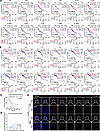 Figure 1
Expression of IL21 in the TME is correlated with favorable prognosis of radiotherapy and increased CD8+ T cell infiltration. (A) Kaplan-Meier analysis of the overall survival of radiotherapy-treated patients with HNSC with high or low expression of IL2, IL4, IL7, IL9, IL15, and IL21 and corresponding receptors (IL2RA, IL4R, IL7R, IL9R, IL15RA, and IL21R) from TCGA database. (B) Kaplan-Meier analysis of the overall survival of radiotherapy-treated patients with breast cancer and high or low expression of IL2, IL4, IL7, IL9, IL15, and IL21 and corresponding receptors (IL2RA, IL4R, IL7R, IL9R, IL15RA, and IL21R) from TCGA database. (C) Kaplan-Meier analysis of overall survival of patients with lung adenocarcinoma with high or low IL21 expression. (D) Correlation analysis of expression of IL-21 and CD8+ T cells in lung adenocarcinoma samples. (E) Representative data of IL-21, IL-21R, CD45, CD3, CD8, and panCK expression in lung adenocarcinoma samples. Scale bars: 0.1 mm and 0.2 mm.
Exogenous administration of IL-21 synergistically enhances radiation efficacy. Although IL-21 has antitumor effects, its safety and efficacy are the main factors that limit clinical outcomes. It has been reported that compared with IL-21, an engineered fusion protein combining IL-21 with an anti–human serum albumin nanobody (IL-21-αHSA) exhibits better bioavailability and stability with an extended half-life and has demonstrated antitumor effects in murine tumor models (29). Therefore, IL-21-αHSA was used in our study and was termed IL-21 in the following experiments. The antitumor effects and drug safety of exogenous administration of IL-21 were explored. A subcutaneous tumor model derived from the murine colorectal carcinoma cell line MC38 was established, and varying doses of IL-21 were administered intraperitoneally. The results showed that 1.0–3.0 mg/kg IL-21 significantly inhibited MC38 tumor growth (Supplemental Figure 4A) without apparent drug toxicity observed, since there was no significant weight loss in the mice (Supplemental Figure 4B) and no significant changes were found in vital organs, such as the heart, brain, lung, thymus, liver, kidney, spleen, and lymph nodes (Supplemental Figure 4C). Therefore, 1.0 mg/kg for subsequent in vivo experiments was utilized in the following experiments.
To further investigate whether exogenous administration of IL-21 could synergistically enhance the efficacy of radiation treatment, multiple murine tumor cell lines (including murine colorectal carcinoma cell lines MC38 and CT26, murine fibrosarcoma cell line MCA205, murine melanoma cell lines B16 and B16F10, murine lung adenocarcinoma cell line CMT167, and murine breast cancer cell line 4T1) were used to establish subcutaneous tumor models in immunocompetent mice, and exogenous IL-21 was administered concurrently with a single fraction of radiation (Figure 2A). Tumor growth curves revealed that although IL-21 alone did not markedly inhibit tumor growth in most tumor models, the combination of IL-21 and radiation showed synergistic antitumor effects in tumors of various immunogenicities (Figure 2, B–D, and Supplemental Figure 4, D–G). To further validate the role of IL-21 in enhancing radiation efficacy, an orthotopic lung tumor model in immunocompetent mice was established using luciferase-labeled CMT167 cells (Figure 2E and Supplemental Figure 4H). The combination of IL-21 and precise radiotherapy led to significant tumor attenuation, as evidenced by CT imaging and bioluminescence, and also dramatically extended the survival of tumor-bearing mice (Figure 2, F–H). According to previous reports, IL-21 primarily acts on various immune cells to exert its immunomodulatory effects. It is well known that radiotherapy can promote irradiated tumor regression as well as activate systematic antitumor immune responses, leading to abscopal effects (1). To further explore whether exogenous administration of IL-21 could enhance the abscopal effects of radiation, bilateral MC38 tumor models were established in immunocompetent mice, and 1 fraction of 15 Gy was administered to each tumor along with systemic administration of IL-21 (Figure 2I). The results showed that the addition of IL-21 notably inhibited the growth of the irradiated tumor and strikingly enhanced the abscopal effect, leading to the regression of the abscopal tumors (Figure 2I). This also indicated that IL-21 could enhance radiation-mediated antitumor immune responses.
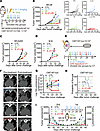 Figure 2
Exogenous administration of IL-21 synergistically enhances the antitumor effects of radiation. (A) Schematic diagram of IL-21 combined with radiation treatment for subcutaneous tumor models. (B–D) Tumor growth of MC38, MCA205, and B16 tumors in immunocompetent C57BL/6J mice treated with radiation with or without IL-21. (E) Schematic diagram of lung orthotopic tumor implantation and treatment process. (F) Representative data of CT images of lung orthotopic tumors. (G) Quantified total flux of luminescence of lung orthotopic tumor–bearing mice treated as in E. (H) Survival curves of lung orthotopic tumor–bearing mice. (I) Tumor growth of bilateral MC38 tumors treated with radiation of tumor on the right flank with or without systematic administration of IL-21. Data are shown as mean ± SEM (n = 5–8 per group). Statistical analysis was performed using a mixed-effects model with Šidák’s multiple-comparison test (B), 2-way ANOVA with Šidák’s multiple-comparison test (C, D, and I), and log-rank (Mantel-Cox) test (H). *P < 0.05, **P < 0.01, ****P < 0.0001.
In summary, these findings indicate that exogenous IL-21 could synergistically enhance the efficacy of radiation, which may be attributed to boosted antitumor immunity.
Exogenous administration of IL-21 combined with radiation improves the TME. To further validate that the synergistic effects of exogenous administration of IL-21 in enhancing radiation efficacy were mediated by augmentation of antitumor immune responses, CD45+ tumor-infiltrating lymphocytes from MC38 tumors treated with radiation (IR group) or IL-21 combined with radiation (IL-21+IR group) were isolated 9 days after radiation followed by single-cell RNA-Seq (scRNA-Seq) (Figure 3A). After quality control, 27,818 CD45+ immune cells were collected and grouped into 9 cell types and 16 clusters (Figure 3B and Supplemental Figure 5, A and B). According to the marker genes, clusters 0, 2, 8, and 10 were identified as CD8+ T cells; clusters 1, 4, 12, 13, and 15 as macrophages and monocytes; clusters 3 and 14 as CD4+ T cells and B cells; and clusters 6, 9, 5, and 11 as neutrophils, DCs, NK cells, and Tregs, respectively (Supplemental Figure 5C). The abundance of different cell types was thoroughly analyzed, and the results illustrated that CD8+ T cells and macrophages exhibited the most pronounced changes in the IL-21+IR group compared with the IR group, with increased CD8+ T cell enrichment and decreased macrophage enrichment in the IL-21+IR group (Figure 3C). This indicated that CD8+ T cells and macrophages may be key contributors to the synergistic effects of IL-21 and radiation therapy. It has been reported that IL-21R is primarily expressed in various immune cells, including CD4+ T cells, CD8+ T cells, B cells, NK cells, DCs, macrophages, and mast cells (19), whereas the primary target immune cells of IL-21 are CD8+ T cells and NK cells in cancer immunotherapy (30). To rule out the key cell type in IL-21 enhancing radiation efficacy, the expression of Il21r in all immune cells was reanalyzed, and higher expression levels of Il21r were detected in CD8+ T cells than in macrophages (Figure 3D and Supplemental Figure 5D). Although the expression level of Il21r in CD8+ T cells was slightly lower than that in DCs, the proportion of DCs was unaltered in the IL-21+IR group subset (Figure 3, C and D, and Supplemental Figure 5D). Additionally, gene set enrichment analysis (GSEA) of the 2 groups using the Gene Ontology (GO) database and the Kyoto Encyclopedia of Genes and Genomes (KEGG) database revealed that T cell activation and T cell receptor signaling pathways were significantly enriched in the IL-21+IR group (Supplemental Figure 5, E and F). These analyses suggested that CD8+ T cells might be the predominant contributor. This hypothesis was validated by in vivo experiments, where the antitumor effects of the combination of IL-21 and radiation were completely abolished by depletion of CD8+ T cells (Figure 3E). Taken together, these findings demonstrated that CD8+ T cells are pivotal for the synergistic effects of IL-21 and radiation treatment.
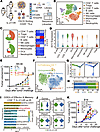 Figure 3
IL-21 combined with radiation reshapes the TME and increases the infiltration of CD8+ T cells. (A) Schematic diagram for scRNA-Seq of CD45+ immune cells sorted from MC38 tumors of IR group and IL-21+IR group 9–10 days after radiation. (B) t-SNE plot showing sorted CD45+ immune cells. (C) Nightingale rose chart and heatmap showing the proportion of different subtypes of CD45+ immune cells. (D) Violin plots showing Il21r expression in the different subtypes of CD45+ immune cells. (E) Tumor growth of MC38 tumors subjected to radiation and/or IL-21 with or without anti-CD8 depletion antibody. (F) t-SNE plot showing the subtypes of CD8+ T cells. (G) Pseudo-time analysis of the subtypes of CD8+ T cells. (H) Bar plot showing the proportion of different subtypes of CD8+ T cells. (I) GSEA of upregulated genes for effector and memory CD8+ T cells (C1) in IL-21+IR group versus IR group. (J) Violin plots showing the expression levels of Gzma, Gzmb, Pdcd1, and Havcr2 of effector and memory CD8+ T cells of IR and IL-21+IR group from scRNA-Seq data. (K) Tumor growth of B16 tumors treated with radiation and/or IL-21 with or without anti–PD-1. Data shown as mean ± SEM in E (n = 5 per group) and K (n = 7 per group). Statistical analysis was carried out using 2-way ANOVA with Tukey’s multiple-comparison test (E and K). For panel J, differences between the 2 groups were assessed using the pairwise.wilcox.test() function in clusterProfiler. *P < 0.05; **P < 0.01; ***P < 0.001; ****P < 0.0001.
A detailed analysis of CD8+ T cell subsets within the TME was conducted. A total of 9,832 CD8+ T cells were grouped into 4 clusters (Figure 3F and Supplemental Figure 5G). Cluster 0 was identified as naive CD8+ T cells, characterized by high expression of Ccr7, Lef1, and Tcf7. Cluster 1 cells were identified as effector and memory CD8+ T cells for marked expression of Cxcr3, Gzmk, Gzma, and Ccl5. Exhaustion-related genes (Pdcd1, Havcr2, Tigit, and Tox) were enriched in cluster 2, defined as exhausted CD8+ T cells, and cluster 3 was identified as proliferating CD8+ T cells due to the high expression of Mki67 and Top2a (Supplemental Figure 5, H and I). The trajectory of CD8+ T cells (clusters 0, 1, 2, and 3) suggested a possible path for CD8+ T cell exhaustion, with naive CD8+ T cells (cluster 0) positioned at the root site, followed by effector and memory CD8+ T cells (cluster 1) and exhausted CD8+ T cells (cluster 2); proliferating CD8+ T cells (cluster 3) constituted another branch (Figure 3G). Further analysis of the proportion of each subset of CD8+ T cells showed notably increased effector and memory CD8+ T cells and reduced exhausted CD8+ T cell enrichment in the IL-21+IR group compared with the IR group (Figure 3H). GSEA of effector and memory CD8+ T cells revealed that the upregulated gene sets in the IL-21+IR group were mainly enriched in the T cell receptor signaling pathway (Figure 3I). In contrast, no immune-related pathway was significantly activated in the other 3 CD8+ T cell subgroups (Supplemental Figure 5, J–L). These results suggest that the addition of IL-21 exerted strong effects on T cell activation function for effector and memory CD8+ T cells.
Considering that CD8+ T cell activation is usually associated with the release of cytotoxic cytokines, the expression of representative cytokines Ifng, Tnf, Gzma, and Gzmb was analyzed in each subgroup. Consistently, the expression of Gzma and Gzmb of effector and memory CD8+ T cells was significantly higher in the IL-21+IR group than in the IR group (Figure 3J). IL-21 combined with IR could significantly reduce the expression of Pdcd1 and Havcr2 in exhausted T cells (Figure 3J). Interestingly, Ifng was highly expressed in the exhausted CD8+ T cell subset, indicating that exhausted CD8+ T cells still maintained cytotoxic functions (Supplemental Figure 5I). Also, these transcriptome data suggest that IL-21 boosted the effector and cytotoxic function of CD8+ T cells after radiation. According to previous research, the fusion antibody of PD-1 and IL-21 can enhance antitumor efficacy by reversing CD8+ T cell exhaustion (31). In line with this, our study found that the addition of anti–PD-1 dramatically enhanced the antitumor effects of IR combined with IL-21 in both B16 and CMT167 tumor models (Figure 3K and Supplemental Figure 5M). Furthermore, IL-21 significantly boosted the abscopal effects induced by anti–PD-1 combined with radiation in B16 tumor models (Supplemental Figure 5N). Altogether, these observations demonstrated that exogenous administration of IL-21 boosted the infiltration and cytotoxicity of CD8+ T cells in the TME after radiation, improving therapeutic efficacy.
IL-21+IR enhances cytotoxicity of CD8+ T cells in the TME. To further validate the impact of IL-21+IR on the TME, particularly on CD8+ T cells, the TMEs of various tumors treated with radiation with or without IL-21 were analyzed based on gating strategies using flow cytometry (Supplemental Figure 6, A–C). The results showed that in the TME of MC38 tumors, the combination of IL-21 and radiation significantly enhanced the infiltration of CD45+ and CD8+ T cells (Figure 4A). Further examination of the function of tumor-infiltrating CD8+ T cells revealed that the expression of cytotoxic markers such as granzyme B (Gzmb), IFN-γ, and TNF-α, as well as the markers for effector CD8+ T cells, PD-1, and CD69, were significantly upregulated in the IL-21+IR group (Figure 4A, Supplemental Figure 6, D and E, and Supplemental Figure 7A). In contrast, combination treatment failed to affect the infiltration of exhausted CD8+ T cells (Tim3+CD8+ T cells and PD-1+Tim3+CD8+ T cells) in the TME (Supplemental Figure 7A). Analysis of the TMEs of 2 other tumors that were less immunogenic, CMT167 and MCA205, and 1 “cold” tumor, B16, yielded similar results; the combination therapy promoted the infiltration of CD45+ immune cells and CD8+ T cells in the TME, particularly the enrichment of effector CD8+ T cells characterized by high expression of Gzmb, IFN-γ, and TNF-α (Figure 4, B–D, Supplemental Figure 6, D and E, Supplemental Figure 7B, and Supplemental Figure 8). These findings corroborated the data from the scRNA-Seq analysis. Flow cytometry analysis showed that the combination of IL-21 and radiation led to the downregulation of B cell infiltration across the 4 tumor models and reduced infiltration of tumor-associated macrophages in the TME of MC38 tumors and MCA205 tumors (Supplemental Figure 7, A and B, and Supplemental Figure 8, A and B). In contrast, the remodeling effects of the combination treatment on DCs and myeloid-derived suppressor cells (MDSCs) varied among different tumors. For instance, in MC38 tumors, IL-21+IR significantly reduced the proportion of DCs and increased the proportion of polymorphonuclear MDSCs (Supplemental Figure 7A). In contrast, in CMT167 tumors, the combination treatment increased the proportion of DCs and decreased the proportion of polymorphonuclear MDSCs (Supplemental Figure 7B), while in the MCA205 tumors, the combination treatment primarily promoted the infiltration of monocytic MDSCs and reduced DC infiltration (Supplemental Figure 8A). In B16 tumors, only increased enrichment of monocytic MDSCs was observed in the combination treatment group (Supplemental Figure 8B). These distinctive effects on various cell subsets may be attributed to the heterogeneity of different TMEs and various responses to radiation. To prominently illustrate the impact of IL-21+IR on CD8+ T cells in the TME, multicolor immunofluorescence was used to examine MC38 tumors treated with radiation in the presence or absence of IL-21. These findings were consistent with the flow cytometry results, revealing that the combination of IL-21 and radiation significantly increased the infiltration of CD8+ T cells and the expression of Gzmb and PD-1, whereas the expression of IL-21 and Tim-3 did not show significant changes (Supplemental Figure 9, A and B). Collectively, these findings demonstrate that the combination of IL-21 and radiation elevates the antitumor function of effector CD8+ T cells in the TME.
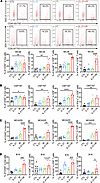 Figure 4
IL-21 combined with radiation enhances the cytotoxicity of CD8+ T cells in the TME. (A) Representative data and quantitative analysis of CD45+ cells, CD8+ T cells, Gzmb+CD8+ T cells, and IFN-γ+CD8+ T cells from MC38 tumors subjected to radiation with or without IL-21. (B–D) Quantitative analysis of CD45+ cells and CD8+ T cells from CMT167, MCA205, and B16 tumors subjected to radiation with or without IL-21. Data are shown as mean ± SEM (n = 5–8 per group). Statistical analysis was carried out using 1-way ANOVA followed by Tukey’s multiple-comparison test (A–D). *P < 0.05; **P < 0.01; ***P < 0.01; ****P < 0.0001.
IL-21 directly amplifies the activation and function of CD8+ T cells. Previous studies have reported that IL-21 can act directly on CD8+ T cells to enhance their function. Therefore, we hypothesized that exogenous administration of IL-21 augments radiation efficacy via direct action on CD8+ T cells. To validate this hypothesis, primary CD8+ T cells isolated from mouse spleens and human peripheral blood were stimulated in vitro with anti-CD3 and anti-CD28, with or without the addition of IL-21. Flow cytometry analysis revealed that IL-21 significantly enhanced the expression of effector and cytotoxic markers in both mouse and human CD8+ T cells, such as Gzmb/GZMB, IFN-γ, TNF-α, and CD69, whereas markers of exhausted CD8+ T cells did not show significant changes (Figure 5, A and B, and Supplemental Figure 9C). These results suggest that IL-21 can directly promote the activation of CD8+ T cells, consistent with previous reports. To further verify that IL-21 could activate the antitumor immune responses of human CD8+ T cells induced by radiation, humanized mouse tumor models were established using the human lung adenocarcinoma cell line A549 and PBMCs from healthy donors, and the tumor growth showed that the combination treatment of IL-21 and radiation induced synergistic antitumor effects (Figure 5C). Moreover, the addition of IL-21 enhanced the infiltration and function of CD8+ T cells in the TME (Figure 5, D and E, and Supplemental Figure 9D). Notably, the addition of IL-21 inhibited CD8+ T cell exhaustion to a certain degree (Supplemental Figure 9D). Additionally, in A549 tumor–bearing immunodeficient NSG mice, IL-21 failed to show synergic antitumor effects combined with radiation (Supplemental Figure 9E), suggesting that IL-21 enhances radiation-induced antitumor efficacy via immune activation. This was further validated in surgical samples from patients with esophageal squamous cell carcinoma who received neoadjuvant radiotherapy. Multicolor immunofluorescence results showed that the expression of IL-21 in tumor tissues after radiotherapy was significantly positively correlated with the expression levels of CD8 and GZMB and negatively correlated with TIM-3, the exhaustion marker of CD8+ T cells (Figure 5, F and G, and Supplemental Figure 9F). In summary, these results indicate that IL-21 can enhance the antitumor effect of radiation by promoting the effector function and inhibiting the exhaustion of CD8+ T cells.
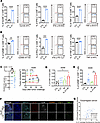 Figure 5
IL-21 directly boosts the activation and cytotoxicity of CD8+ T cells. (A) Quantitative analysis and representative data of GzmB+, IFN-γ+, and TNF-α+ murine CD8+ T cells stimulated with anti-CD3 and anti-CD28 in the presence or absence of IL-21. (B) Quantitative analysis and representative data of GZMB+, IFN-γ+, and TNF-α+ human CD8+ T cells stimulated with anti-CD3 and anti-CD28 in the presence or absence of IL-21. (C) Tumor growth of A549 cells in NSG mice with PBMC engraftment subjected to radiation with or without systematic administration of IL-21. (D and E) Quantitative analysis of CD8+ T cells (D) and GZMB+CD8+ T cells (E) from A549 tumors treated with radiation with or without IL-21 by flow cytometry. (F) Representative immunofluorescence data of IL-21, CD8, GZMB, PD-1, TIM-3, and panCK expression in radiotherapy-treated esophageal squamous cell carcinoma tissues. Scale bar: 0.2 mm. (G) Correlation analysis of the MFI of IL-21 and CD8 of radiotherapy-treated esophageal squamous cell carcinoma tissues. Data shown as mean ± SEM in A–E (n = 3–4 per group) and representative data are shown from 2–3 independent experiments. Statistical analysis was performed using an unpaired 2-tailed Student’s t test (A and B), 2-way ANOVA with Tukey’s multiple-comparison test (C), and 1-way ANOVA with Tukey’s multiple-comparison test (D and E). *P < 0.05; **P < 0.01; ***P < 0.001; ****P < 0.0001.


